



Abstract
This study explores the impact of a peer-led HIV intervention, based on the health belief model and social cognitive theory of behavior change, on a sample of African American college students. Certified peer educators were trained by the researcher to implement the four-module HIV prevention intervention. Pre-/postassessments revealed that after the intervention, students were less embarrassed to put a condom on themselves or on their partner, were more likely to use a condom, and ask their sex partner if they had ever been tested for HIV. It was concluded that peer education, which focuses on susceptibility, severity, benefits, self-efficacy (components of the health belief model), skill building, and peer influence (social cognitive theory) is an effective strategy in reducing HIV risk behaviors among African American college students.
Keywords
Although significant progress has been made in addressing the HIV/AIDS epidemic, the human immunodeficiency virus (HIV) and acquired immune deficiency syndrome (AIDS) continue to be a major health concern, especially among African American youth. In the United States, youth aged 15 to 29 years comprised 21% of the population in 2010; however, 38% of all new HIV infections were among youth aged 13 to 29 years in 2009. Seventy-five percent of the youth diagnosed with HIV infection were aged 20 to 24 years, which represents the highest number and rate of HIV diagnosis of any age-group (36.9 new HIV diagnosis/100,000 people; Centers for Disease Control and Prevention [CDC], 2011). This is the traditional age of college students. Furthermore, among youth aged 13 to 24 years, Blacks accounted for 65% of HIV diagnoses (CDC, 2011). There is limited research on the efficacy of HIV prevention interventions specifically designed for African American college students, especially those attending a predominately or historically Black college/university (HBCU). In a comprehensive look at HIV prevention interventions, Albarracin et al. (2005) revealed that the inclusion of African American college students was extremely limited.
It has been documented that a majority of college students report engaging in sexual activity. In a survey on the health and habits of college students at a predominately White university (University of Minnesota, 2007), most of the participants (77.6%) reported having been sexually active in their lifetime, and 72.1% reported being sexually active in the past 12 months. Similarly, three fourths of African American college students stated that they were sexually active (Poulson, Bradshaw, Huff, Peebles, & Hilton, 2008). Unprotected sex (i.e., sex without a condom) is a risk factor for HIV infection, and alcohol and other drug use increases the probability of engaging in unprotected sex.
Studies suggest that adolescents and young adults (age 13-24 years) are more likely to take risk in comparison to older individuals and are less likely to view themselves as vulnerable to the consequence of risk taking (CDC, 2012; Steinberg, 2008). In a study of African American females (Poulson et al., 2008), a significant number (44%) would accept not using a condom if their partner did not want to use one. In addition, most of the participants (57%) reported inconsistent condom use. These findings are consistent with other studies (CDC, 2011; Duncan et al., 2002), which reported sex without a condom and four or more sex partners in their lifetime among female African American college students. El Bcheraoui, Sutton, Hardnett, and Jones (2013) surveyed students at a HBCU and found that more than one third of the students surveyed did not use a condom during their last sexual intercourse. Spontaneity of sexual encounters, not feeling at risk of HIV, and partner-related perceptions were associated with non–condom use during the last sexual intercourse. A focus group of students attending a HBCU (Thompson-Robinson et al., 2005) revealed that engaging in a discussion about HIV could be detrimental to their relationship. This result suggests a need to enhance communication and negotiation skills to reduce barriers to safer sex.
Peer influence on behavior is well documented, specifically as it relates to alcohol and other drug use and sexual activity. White, Park, Israel, and Cordero (2009) suggest that peers can be used to educate and positively influence the behavior of their peers more than adults. Rittenour and Butterfield (2006) investigated college students’ discussion with their peers about sexual health topics and concluded that most students feel comfortable discussing sexual health topics with their peers, with females reporting a slighter higher comfort level than males. A systematic review of peer education intervention for HIV prevention in European studies reveals no clear evidence of effectiveness (Tolli, 2012). However, Merakou and Kourea-Kremastinou (2006) conducted a study in Athens and concluded that the peer educator approach can influence the behavior of young people in reducing their risk of HIV infection. Specifically, students participating in the intervention were slightly empowered to increase their personal responsibility and to adopt safer behavior in sexual practice. A number of systematic reviews have investigated the effectiveness of peer intervention to reduce health risk behaviors, including HIV/AIDS. Maticka-Tyndale and Barnett (2010) revealed that some peer-led interventions resulted in a positive change in knowledge and condom use and some success in changing community attitudes and norms. Webel, Okonsky, Trompeta, and Holzemer (2010) concluded that some peer-based interventions facilitated changes in health-related behavior, including condom use. Simoni, Nelson, Franks, Yard, and Lehavot (2011) suggest the overall effectiveness of peer intervention programs in specific areas such as attitudes and cognitions, HIV knowledge, and sexual risk behavior. In another study, Simoni, Franks, Lehavot, and Yard (2011) state that many of the peer interventions do not have a theoretical or conceptual framework that used established theories of behavior change. Medley, Kennedy, O’Reilly, and Sweat (2009) contend that peer education interventions were moderately effective at improving behavioral outcomes. The systemic reviews revealed that there is very limited data on the efficacy of peer interventions for HIV prevention among African American college students who attend HBCUs.
To have a significant impact on reducing and preventing HIV infection, and other sexually transmitted infections (STIs) among African American college students, risk behaviors such as unprotected sex, alcohol, or drug use before sex and not knowing one’s HIV status need to be changed. Peer educators are a valuable resource that can be used to help prevent HIV infection and other STIs in this population. Peer educators are trained to promote healthy behavior practices and to influence positive peer norms. Furthermore, theories of behavior change suggest that there are a variety of factors and constructs that affect the decision to change behaviors. The specific constructs from the health belief model (HBM) that were addressed in this study are perceived susceptibility, perceived severity, cues to action, and self-efficacy. Cognitive competencies, social influences, and the environment were the constructs focused on that are included in social cognitive theory (SCT). This research contends that combining the peer education approach with specific components of these behavior change theories may have a positive impact on reducing risk behaviors.
Based on this premise, a peer-led intervention, titled “Playing it Safe: Protecting Yourself from HIV/AIDS and other STIs” was developed by the researcher, based on aspects of the HBM and the SCT of behavior change.
Purpose
The purpose of this study was to test the efficacy of a peer-led HIV/AIDS intervention designed for African American college students. To our knowledge, no CDC evidenced-based behavioral intervention exists that focuses on college students and specifically on African American college students. The study sought to answer three research questions: (a) What is the general knowledge of HIV/AIDS among African American college students? (b) After exposure to a peer-led intervention, is there an increase in HIV prevention self-efficacy and a reduction in risk behaviors? (c) Are the changes significantly different between the control and intervention groups?
Method
Participants
After obtaining the university’s institutional review board approval for the study protocol, a total of 129 freshmen seminar students were recruited to participate in the study. Freshmen seminar classes were randomly assigned to either the control or intervention group. Because of attrition, only 97 students had both pre- and postassessment results, 46 of whom were in the intervention group. Most of the participants were African American (92%) and female (79%). The age range of the students was 16 to 21 years. Most of the students (84%) were 18 years old; while 11% were 17 years old. The mean age was 18 years.
Procedure
Certified peer educators were trained by the researchers to administer the four-module “Playing it Safe: Protecting Yourself from HIV/AIDS and other STIs” intervention. To be certified as a peer educator, students were required to complete the Health Science for Peer Educators course, the Bacchus Gamma Peer Educator Training, and the Red Cross, HIV Starter Course. The certified peer educators used to conduct the intervention were female sophomores and juniors who completed the required certifications as well as the two (2-hour) training sessions of the four module intervention. A training manual was developed by the researchers, which included background information on the prevalence of HIV/AIDS and other STIs among African American youth and slides detailing each module. Peer educators practiced presenting the modules during the training.
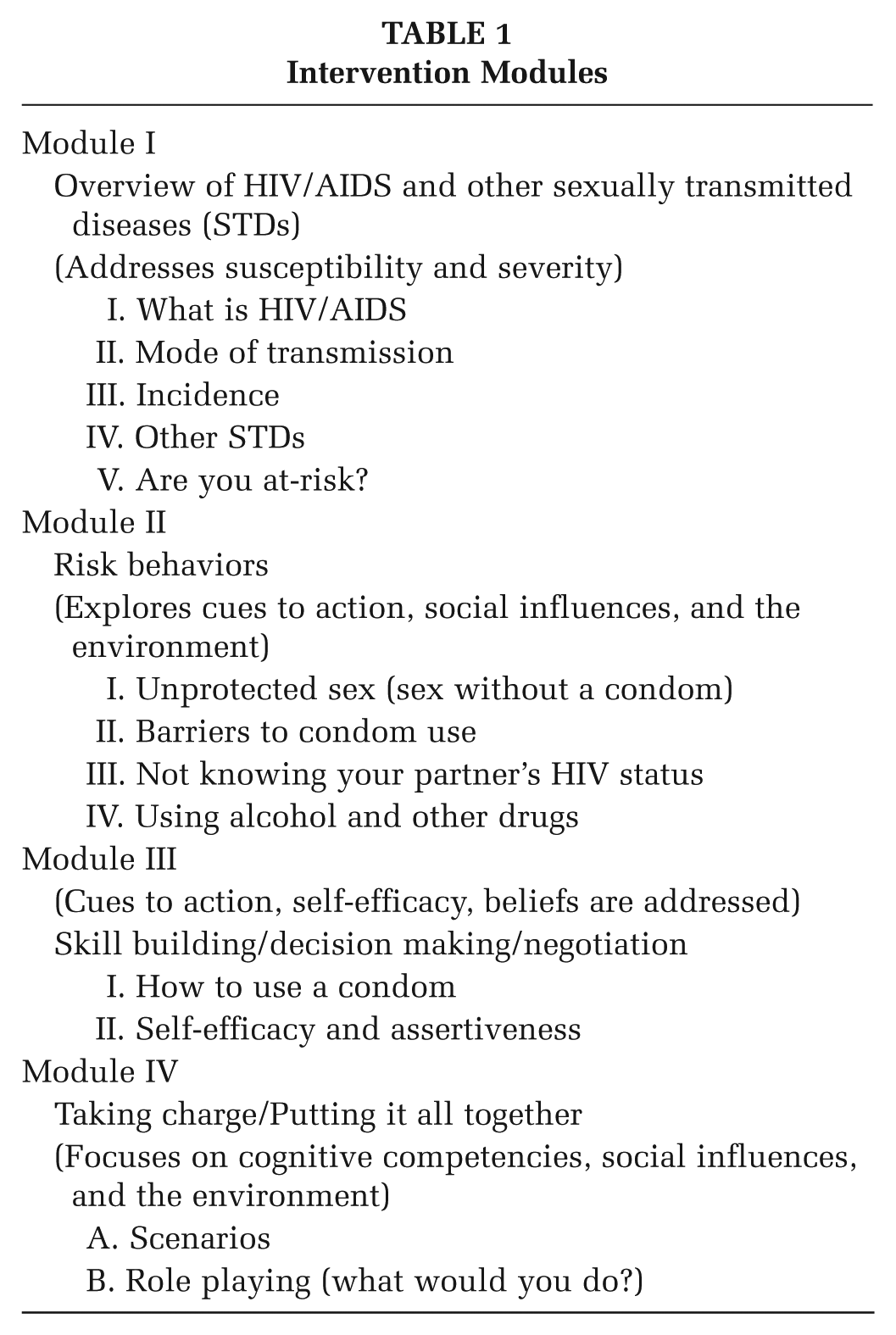
The prepackaged PowerPoint interactive intervention contains four modules: Module I addresses susceptibility and severity of HIV/AIDS and other STIs among African American youth, which is a construct of the HBM. Information on the prevalence of HIV/AIDS and other STIs, impact of the disease on the body, mode of transmission, symptoms, and the importance of knowing one’s HIV status are covered in Module I. Module II focuses on risk behaviors and explores cues to action, social influences, and the environment, including barriers to condom use. Cues to action is a construct in the HBM, and social influences and the environment are a part of SCT. Module II provides an opportunity for participants to explore behaviors that increase the risk of infection and barriers to reducing risk behaviors. Specifically, attitudes toward condom use and barriers to condom use are discussed. Module III highlights the constructs in SCT, skill building, decision making, and negotiation, as related to the effective use of a condom and negotiating safer sex practices. Cues to action, self-efficacy, and assertiveness are also addressed. Module IV includes scenarios developed by their peers and role playing that focuses on cognitive competencies, social influences, and the environment as it relates to HIV prevention. The four modules of the intervention are described in Table 1.
Intervention Modules
Professors who taught freshmen seminar were recruited and requested to allow their intact classes to participate in either the intervention group or control group. Ten freshman seminar classes were targeted for the study. Five classes were randomly selected as the intervention sites while the remaining five were selected as the control sites.
The intervention group completed a preassessment at the beginning of the semester, participated in four 50-minute modules/sessions and completed a posttest at the end of the semester. The control group completed a preassessment at the beginning of the semester and a postassessment at the end of the semester.
Ten-dollar gift cards were provided as incentives to encourage students in the intervention group to attend all of the sessions and to complete the pre-/postassessment. The control group also received the incentive for completing the pre- and postassessments.
Instrument
The pre-/postassessment instrument was composed of 46 items, which could be categorized into one of five areas—participant demographics, knowledge of HIV status, HIV/AIDS general knowledge, HIV prevention self-efficacy, and sexual risk behaviors. A unique identifier was assigned to each participant in order to match pre- and postassessment responses. Participant demographic information included gender, age, ethnicity, and classification. Knowledge of HIV status was determined by the response to the following questions: Do you know your HIV status? Have you ever been tested for HIV? When was the last time you were tested? (Indicate month and year). Response formats for the HIV/AIDS general knowledge and HIV prevention self-efficacy sections of the survey were 5-point Likert-type scales ranging from very likely (1) to absolutely unlikely (5) and strongly agree (1) to strongly disagree (5).
HIV/AIDS general knowledge was measured using 11 items from the survey instrument with 5 items reverse coded. The combined possible score ranged from 0 to 55 with 55 representing the highest general knowledge on HIV/AIDS. The Cronbach alpha for this instrument was .70.
Five items from the survey assessed HIV prevention self-efficacy. The 5-point Likert-type scale questions were reverse coded to reflect higher self-efficacy for those stating strong agreement with the skills-based statements. Possible scores ranged from 0 to 25 with 25 representing the highest HIV prevention self-efficacy. The Cronbach alpha score for this instrument (.84) indicated high overall internal consistency among the 5 items.
Sexual risk behaviors were assessed based on the student’s response to the use of alcohol and other drugs as well as sex without a condom, alcohol or drug use before sex, and sex without knowing the partner’s HIV status.
Data Analysis
The Statistical Package for Social Science (SPSS) version 20 was used to calculate Cronbach’s alpha and perform all analysis including means and standard deviations. The independent-samples t test was used to compare the means of the scores for HIV/AIDS general knowledge and HIV prevention self-efficacy between the two groups. The paired t test was used to assess if changes in HIV/AIDS general knowledge and HIV prevention self-efficacy mean scores within groups were significant. Significance was set at the α = .05 level.
Results
Knowledge of HIV Status
Three questions, “Do you know your HIV status?,” “Have you ever had a HIV test?,” and “If you have had a HIV test when was the last time you had the HIV test?” were used to assess knowledge of HIV status. Overall, among preassessment respondents, 68% reported that they knew their HIV status, and 44% reported that they had been tested for HIV. No significant differences were found between intervention and control group participants in these areas. Similarly, among postassessment responders, 70% reported that they knew their HIV status, and 48% said that they had been tested for HIV. Although there was a slight increase among intervention participants who reported being tested, there was no significant difference between the two groups.
Sexual Risk Behaviors
Overall, among preassessment respondents, 31% reported that they engaged in anal or vaginal sex without a condom in their lifetime. During the preassessment, 24% of the intervention group reported that they had engaged in anal or vaginal sex without a condom in their lifetime compared to 38% of control group participants. Among postassessment respondents, 39% of the intervention group compared to 41% of the control group reported having anal or vaginal sex without a condom on the postassessment. There was no significant difference between the pre- and postassessment responses in this area.
The incidence of students engaging in sex without knowing their partners’ HIV status in their lifetime was 27% among preassessment respondents. Among preassessment respondents, 31% of the control group compared with 23% of the intervention group reported engaging in sex without knowing their partners’ HIV status in their lifetime. Overall, 33% of postassessment respondents reported engaging in sex without knowing their partners’ HIV status in their lifetime. Thirty-six percent of control group participants compared to 29% of the intervention group participants reporting engaging in sex without knowing their partners’ HIV status in their lifetime. This was found to be statistically significant.
Little variance was seen among pre- and postassessment control and intervention groups when examining alcohol and drug use before sex. Among preassessment control group and intervention group respondents, 13% of both groups reported using alcohol before sex in their lifetime. Among postassessment respondents, 16% of the control group and 15% of the intervention group reported using alcohol before engaging sex in their lifetime. Overall, 6% of preassessment and 6% of postassessment respondents reported using drugs prior to having sex in their lifetime.
Thirteen percent of both the control and intervention group respondents reported using alcohol before sex in their lifetime. Closer examination of postassessment results revealed little variance between the two groups in this area. Fifteen percent of the intervention group respondents and 16% of the control group respondents reported using alcohol before sex in their lifetime. Among preassessment respondents, 2% of intervention group compared to 3% of control group respondents reported using drugs before sex in the past 30 days. There was a slight decline in reported drug before sex in the past 30 days among the control group. None of the control group participants reported using drugs before sex for the postassessment compared with 3% of the intervention group.
HIV/AIDS General Knowledge
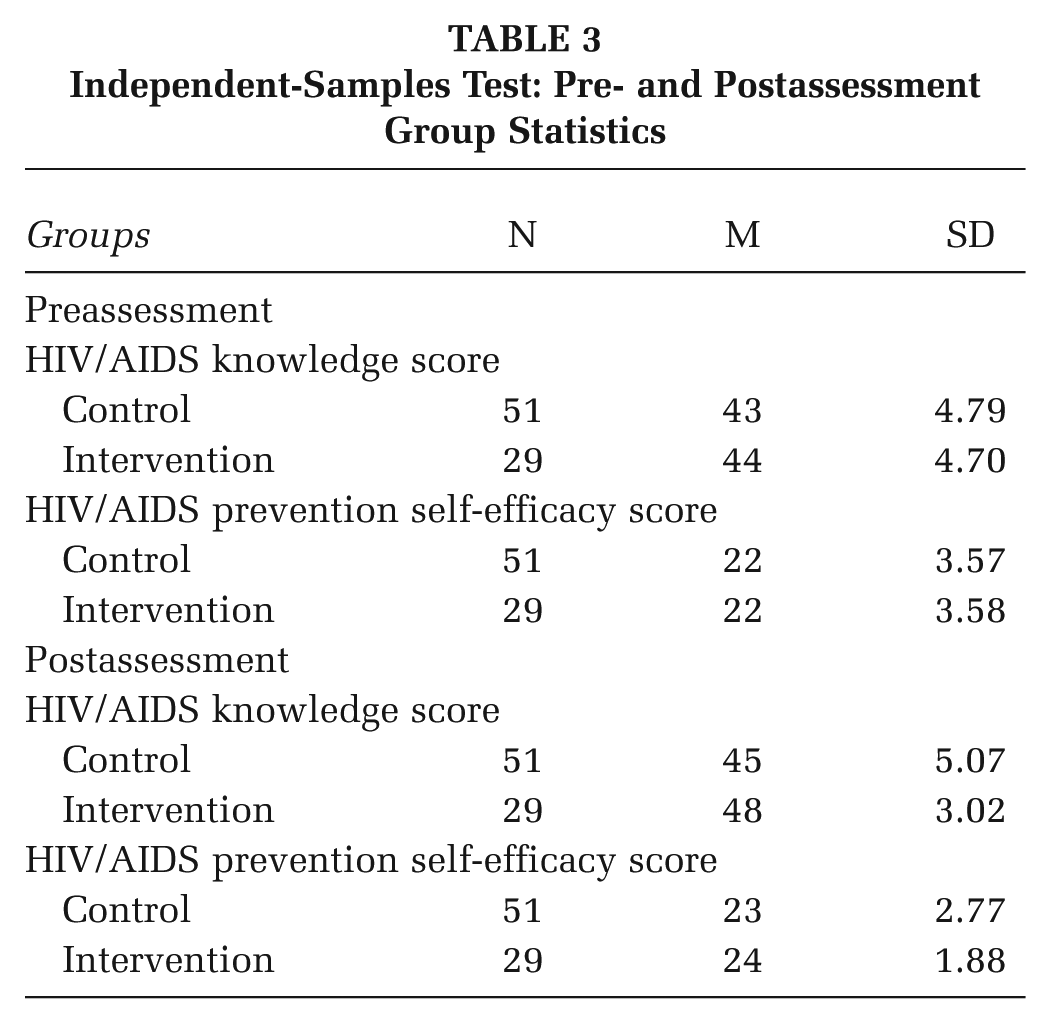
There was no significant difference in the overall mean preassessment score for HIV/AIDS general knowledge between the control and intervention groups, 43 and 44, respectively. However, there was a difference between the two groups in this area for the postassessment scores. The independent samples t test comparing the mean HIV/AIDS general knowledge score of the intervention and control group found a significant difference between the means of the two groups, t(77) = −3.71, p < .001 (see Table 2). Specifically there was an increase of approximately 4 points in the mean HIV/AIDS general knowledge score for the intervention group compared with only a 2-point increase for the control group (see Table 3). Moreover, the mean difference between pre- and postassessment HIV/AIDS general knowledge scores among the intervention group was statistically significant (M = −3.724, SD = 5.424, N = 28, p = .001; see Table 4).
Independent-Samples Test: Postassessment
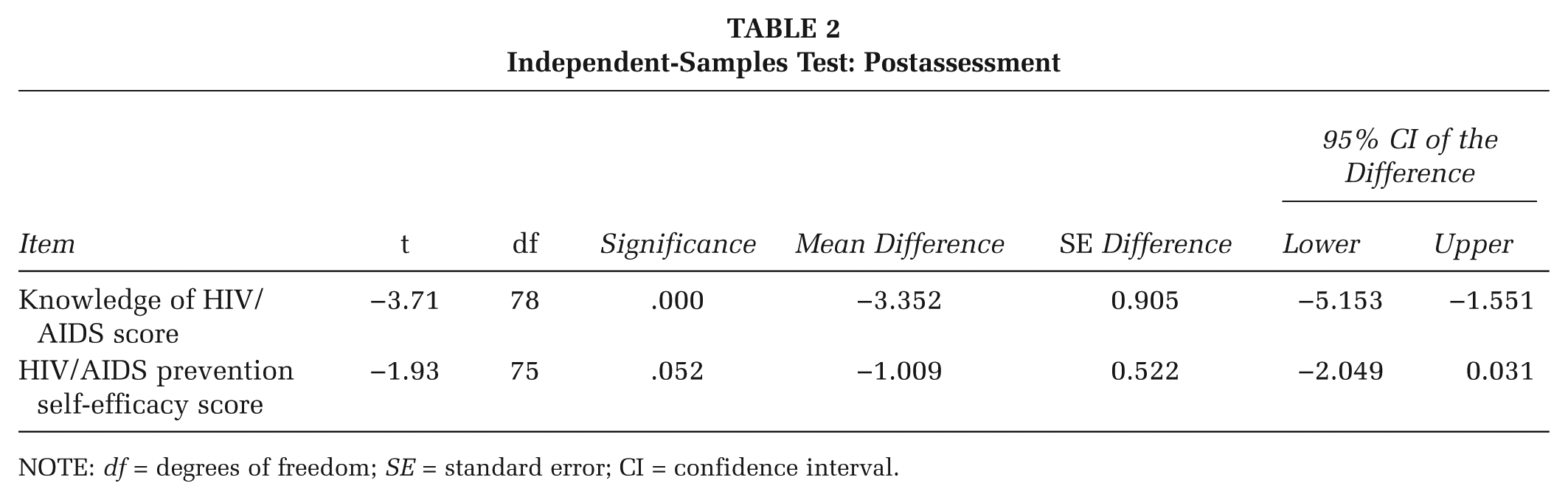
NOTE: df = degrees of freedom; SE = standard error; CI = confidence interval.
Independent-Samples Test: Pre- and Postassessment Group Statistics
Intervention Group Paired t-Test Results
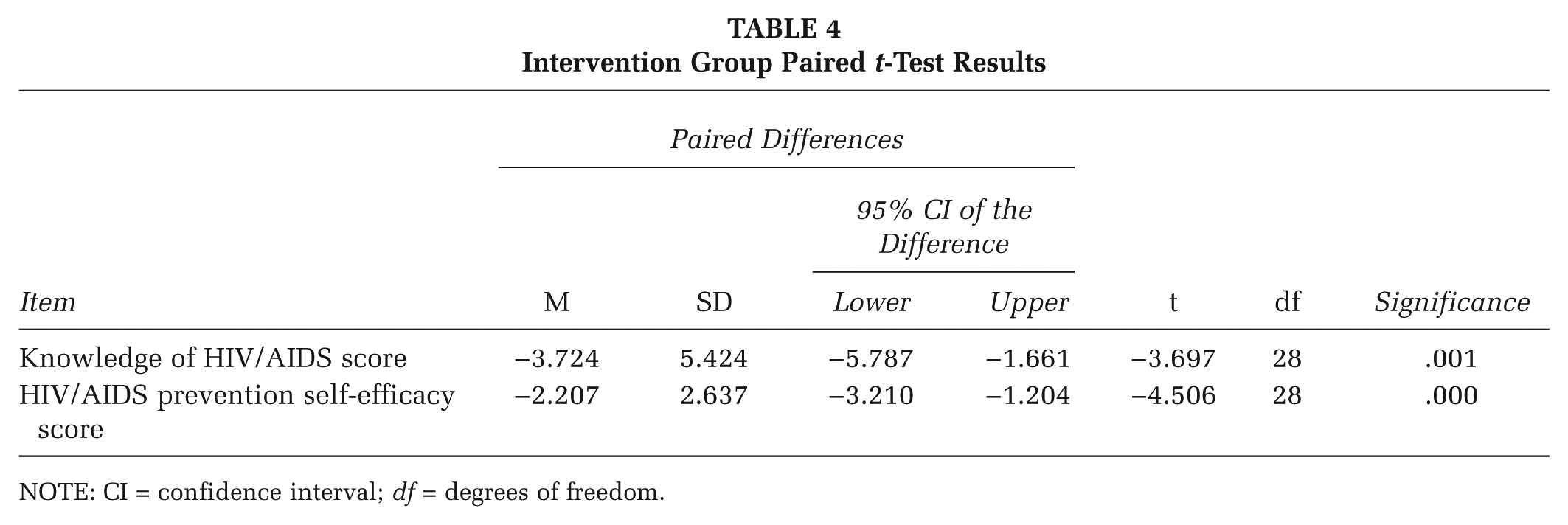
NOTE: CI = confidence interval; df = degrees of freedom.
Overall, participants who received the HIV intervention were more knowledgeable about HIV/AIDS than the control group. Differences in knowledge were seen in three areas: “Using a condom (rubber) during sexual intercourse can prevent the spread of AIDS,” “Young black women are increasingly at risk for HIV infection through heterosexual contact,” and “The test for AIDS will not always identify a recently infected person.” The terms HIV and AIDS are not synonymous. The HIV test is designed to detect antibodies to the human immunodeficiency virus. HIV is the virus that causes the infection and can lead to AIDS. AIDS is the result of a compromised immune system and is diagnosed when the T-cell count is less than 200 (CDC, 2013). However, the jargon used by the lay public was the rationale for phrasing the questions as indicated. Postintervention results revealed an increase in the number of intervention respondents reporting that the use of a condom during sexual intercourse would prevent the spread of AIDS compared with the control group, 95% and 77%, respectively. Ninety-five percent of postassessment intervention group respondents reported that young Black women were at an increased risk for HIV infection through heterosexual contact compared with 87% of postassessment control group respondents.
HIV/AIDS Prevention Self-Efficacy
As with the preassessment HIV/AIDS general knowledge mean scores, there was no significant difference between the control and intervention groups for the preassessment HIV/AIDS prevention self-efficacy mean scores (22 and 22, respectively). However, there was a significant difference found in the postassessment HIV/AIDS prevention self-efficacy mean scores between the two groups, t(75) = −1.96, p = .05 (see Table 2). There was approximately a 2-point difference in the mean HIV/AIDS prevention self-efficacy score for the intervention group compared with only a 1-point increase for the control group (see Table 3). In addition, the mean difference between pre- and postassessment HIV/AIDS prevention self-efficacy scores among the intervention group was statistically significant (M = −2.207, SD = 2.637, N = 28, p = .001; see Table 4).
Differences in HIV/AIDS prevention self-efficacy were seen in three areas: “I am able to ask my sex partner if they ever used IV [intravenous] drugs,” “I am able to ask my sex partner if he/she has ever been tested for HIV,” and “I feel confident I could purchase condoms without feeling embarrassed.” Specifically, at the time of the postassessment, 93% of the intervention group participants and only 81% of the control group participants reported that they could ask their sex partner if they ever used intravenous drugs. Similarly, a slight increase among intervention group participants between the pre- and postassessments and a slight decrease among control group participants between pre- and postassessments was found in the area of asking a partner about ever being tested for HIV. Eighty-four percent of preassessment intervention group participants reported that they would be able to ask their sex partner if he or she has been tested for HIV compared with 92% of preassessment control group participants. However, at the postassessment measurement, there was a slight difference. Eighty-eight percent of intervention group participants compared with 81% of control group participants reported that they could ask their partner if he or she has ever been tested for HIV. Among preassessment respondents, 78% of the intervention group compared with 76% of the control group reported feeling confident to purchase condoms without feeling embarrassed. During the postassessment, the rate of intervention group participants who reported feeling confident to purchase condoms without feeling embarrassed remained the same (78%). However, there was a decrease in the proportion at the postassessment measurement among control group participants in this area. Only 68% of the control group participants reported that they felt confident they could purchase condoms without feeling embarrassed.
Discussion
The results of the intervention revealed that there were significant differences between the control and intervention groups on their HIV/AIDS general knowledge and HIV/AIDS prevention self-efficacy scores at the conclusion of the intervention. Whereas both the intervention and control groups had adequate knowledge of the fact about HIV/AIDS, there were differences in knowledge related to specific risk factors, namely, using a condom during sexual intercourse to prevent the spread of HIV/AIDS and HIV infection of Black women through heterosexual contact. HIV/AIDS was identified about 30 years ago. The students in the intervention are from a generation where HIV/AIDS has always existed. So they grew up learning about HIV/AIDS. So, it is not surprising that students in this age group are knowledgeable about HIV/AIDS facts. In comparing the control and intervention group, the intervention group was more likely to indicate that condom use is a viable means to protect oneself from HIV and other STIs. This intervention emphasized condom use as a preventive measure and focused on condom negotiation skills. In addition, the barriers to condom use were explored and dispelled.
The intervention group was more likely to know that young Black women are increasingly at risk of HIV infection through heterosexual contact. HIV/AIDS was initially referred to as a male, homosexual (gay), predominately White disease that also affected intravenous drug users. Homosexuals and intravenous drug users were considered high-risk groups. Consequently, these beliefs are still prevalent, and if one does not fall into the previously designated high-risk group, the perception is, I am not susceptible. One of the first constructs in the HBM is perceived susceptibility. If students believe that they are not susceptible, because they are female and heterosexual, the use of a condom may not be important to them. The female/male ratio in this study population is about 10 to 1, that is, 10 females for every 1 male. This ratio increases the probability of man sharing and the likelihood of males having sexual contact with a number of different females.
The intervention group reported higher rates of agreement that the test for AIDS will not always identify a recently infected person. The window period was covered during the intervention, which emphasized the fact that it takes approximately 3 months for the HIV virus to be detected after exposure to the virus. Campus HIV testing data reveal a significant number of repeat testers, which may mean that students want to be sure that they are not infected or that students may be using HIV testing as a gauge that they have escaped infection, while continuing risky sexual behavior.
This study found differences between intervention and control group participants in three HIV prevention self-efficacy areas. The three areas were (a) discussions of partner intravenous drug use, (b) condom negotiation, and (c) discussions on HIV testing. Self-efficacy has been shown to be a protective factor for both young and older adolescents. It is also one of the strongest predictors of all constructs in the SCT and HBM. Adolescents who feel able to discuss their sexual history and negotiate condom use with their partners are more likely to use a condom and protect themselves from sexually transmitted diseases. The intervention group was more likely to inquire about their partner’s intravenous drug use and the partner’s HIV testing status, which suggest a willingness to have a conversation about HIV and risk prior to intimacy.
Condom self-efficacy is an important factor in HIV/STI prevention. The intervention group was more likely to feel confident about purchasing condoms without feeling embarrassed when compared to the control group. If one is embarrassed to purchase condoms, this may be an indication of a reluctance to insist that their partner use condoms during sexual intimacy.
Future studies should deploy full implementation of the intervention to all incoming freshmen and assess the longitudinal effects of the peer-led program on the cohorts. The present study demonstrates its potential usefulness as a promising practice in the fight against the spread of HIV/AIDS among African American college students using peer educators, particularly in the areas of HIV/AIDS knowledge and HIV/AIDS prevention self-efficacy.
Limitations
There were three key limitations to the study: (a) a small sample size; (b) a predominately female sample, which prevented generalizability; and (c) although participants were asked how many HIV prevention activities/events they attended over the semester, the study was unable to assess the extent to which the information they received influenced their knowledge and skills.
Translation to Health Education Practice
The present study demonstrates its potential usefulness as a promising practice in the fight against the spread of HIV/AIDS among African American college students using peer educators, particularly in the areas of HIV prevention self-efficacy. Perceived susceptibility, condom use self-efficacy, cognitive competencies, and social influences should be incorporated into the curriculum as a model for behavior change. In addition to students having knowledge about health-related issues, the relationship between the health issue and the strategies needed for behavior change should be emphasized.
In order to change risk behaviors related to HIV infection and other STIs, it is important to consider variables that contribute to behavior change. However, for more significant reductions in risk behaviors related to HIV/AIDS and other STIs to occur, more time needs to be allotted for the skills-based, decision-making, and negotiation modules of the intervention. Additionally, follow-up or booster sessions may further enhance the impact of the intervention and result in a decrease in behaviors that increase the risk of HIV/AIDS and other STIs over a longer period of time.