



Abstract
Compared with randomized trials, community-based interventions are delivered by a wider variety of professionals with varied training backgrounds. When evidence-based programs are scaled into larger formats and disseminated to a wider audience, little is understood about how clients experience these interventions. To understand the experience of clients after meetings with nutrition, exercise, and health behavior professionals, researchers surveyed participants after 6 months in a weight management program. A total of 958 participants were recruited in monthly cohorts beginning September 2011 to complete a program evaluation survey. Qualitative inductive analysis was completed on several open-text items querying respondents as to what they found helpful from meetings with a registered dietitian, personal trainer, and health behavior counselor. Results indicate participants benefitted from gaining knowledge, learning new behavioral skills, or from interpersonal interactions. Findings suggest that the various professional services are valued by clients and that professionals appear to stay within their scope of practice. Implications for those working in weight management are discussed.
The obesity epidemic plaguing the United States is well documented (U.S. Department of Health and Human Services, 2010). Researchers are investigating an array of social, economic, and environmental factors that negatively influence our health as a nation, as well as the interventions that address these factors. Common interventions include diet, physical activity (PA), and behavioral therapy (Jones & Wadden, 2006; National Heart, Lung, and Blood Institute and the North American Association for the Study of Obesity, 2000; Wadden, Webb, Moran, & Bailer, 2012). In a review of the literature, Wadden et al. (2012) found empirical support for each intervention, but each approach presents its own weaknesses. Many of the randomized control trials on diet change and weight loss show short-term success; however, once the behavioral services have stopped, weight regain is often experienced (Barte et al., 2010). Various researchers, therefore, have concluded that improving diet alone is not sufficient to achieve long-term weight loss maintenance (Mann et al., 2007). Likewise, some studies have shown PA to be effective as a tool for weight loss maintenance, but researchers suggest that many people do not engage in enough PA to induce weight loss (Wadden et al., 2012).
Position statements by both the Academy of Nutrition and Dietetics and the American College of Sports Medicine have supported a combination of diet and PA, as well as behavior therapy when facilitating weight loss (Donnelly et al., 2009; Seagle, Strain, Makris, & Reeves, 2009). Behavioral therapy can be delivered face-to-face or via telephone, and it is often conducted by registered dietitians, exercise psychology professionals, counselors, or other health professionals. In this context, behavioral therapy encompasses a number of different techniques, including self-monitoring, cognitive restructuring, and stimulus control, as well as identifying and planning for potential barriers (Jones & Wadden, 2006). Results of studies that include diet, PA, and behavior therapy show positive results related to both weight loss and weight loss maintenance (Abildso, Zizzi, & Reger-Nash, 2010; Orchard et al., 2005). A useful foundation underlying many behavioral approaches is self-regulation theory (Baumeister, Heatherton, & Tice, 1994). This approach focuses on helping clients identify and build the skills necessary to independently control their health behaviors. With specific reference to weight management, clients are taught to become aware of and manage their own impulses related to eating and PA so they may train themselves in a new set of behaviors to reach their goals. In a review of 34 weight reduction interventions using a self-regulation perspective, researchers noted that those interventions scoring higher in self-regulation characteristics produced better effects related to the regulation of A1c, a common marker for the management of diabetes (Huisman, De Gucht, Dusseldorp, & Maes, 2009). The most useful elements of self-regulation identified across studies were goal reformulation and emotional regulation. Adopting this theoretical approach to behavioral interventions in weight management, therefore, may help health practitioners promote the maintenance of behaviors on the long-term, which has been a limitation in previous research.
Despite the growing evidence in support of behavioral interventions in weight management, there are two gaps in a literature that have been primarily filled with randomized controlled trials of weight loss techniques. First, there is a lack of evidence from community-based studies and a slow translation of lab-based protocols into real-world settings. Green (2001, 2006) suggests future studies in health promotion should focus on identifying the best processes for “practice-based evidence” that account for differences in social, cultural, or economic factors across settings. This argument suggests the evidence-based approach results in too much data resulting from artificially controlled environments that do not match the natural, complex environments in which people work, play, and learn. Second, there is a growing movement to include qualitative studies to understand the experiences of those individuals living with obesity (Brown & Gould, 2013). There is also a small, but growing extension of this work using qualitative methods to study the specific experiences of those who are actively trying to lose weight through various methods (Byrne, Cooper, & Fairburn, 2003; Reyes et al., 2012). Together, these two areas of research are helping practitioners identify the unique characteristics of clients with obesity, the specific thoughts or behaviors used in successful and unsuccessful weight loss attempts, and the social, cultural, and environmental factors that influence this complex process.
Authors of nearly every published trial or systematic review suggest that future efforts in weight management must tackle the issue of translating evidence-based findings into a larger scale within communities. Randomized trials provide specific protocols for each type of service to be delivered and often document the fidelity of these intervention components. As these programs are disseminated into community settings, what is lost in translation? The current study seeks to explore the experiences of weight management clients in their meetings with registered dietitians, personal trainers, and health behavior counselors. The goal of the study is to explain how these services are perceived and received by participants in a community-based intervention so that specific recommendations can be made to health professionals working with similar populations and in similar settings.
Method
Weight Management Program Description
Study participants were recruited from the West Virginia public employees’ insurance agency weight management program (WMP), which is open to insured members that have a body mass index (BMI) greater than 25 kg/m2. Many individuals who participate also self-report at least one additional chronic condition, such as high blood pressure, diabetes, or heart disease. The public employees’ insurance agency is a public entity and part of the government of the state of West Virginia. The WMP is a 2-year long benefit, and a $20 monthly copayment allows participants to meet with a registered dietitian, exercise physiologist, and certified personal trainer at various points throughout their time in the program. The majority of individuals in the program also speak with a health behavior counselor via telephone every 6 to 8 weeks. The WMP is offered at approximately 60 approved exercise facilities in West Virginia, such as YMCAs, wellness centers, fitness centers, and physical therapy clinics. These facilities are located in a variety of rural, suburban, and small urban areas across the state, and they vary widely in terms of size, equipment, and staffing. Individuals in the program are required to visit their fitness center at least twice a week, attend all appointments with health professionals, and improve in weight, body composition, body measurements, fitness, and/or medication usage.
Services Delivered Within the Program
The program provides a schedule of services for each month that dictates how many minutes of each health professional’s time is reimbursable to the facility. Facilities are required to document those services on a secure, web-based system and then bill the agency at the end of each month for services rendered. In the first 6 months of the program, participants are allotted a maximum of 2 hours of personal training per month. For dietary and behavior services, participants are allotted a maximum of three meetings of 30 to 60 minutes each. There is not a specific protocol that each professional must follow for each session, or during each month. Each professional is allowed the freedom to function within their own scope of practice to deliver medical nutrition therapy, personal training, or health behavior services. Licensed, registered dietitians provide all medical nutrition therapy services at the facility or via video conference technology. Personal trainers must have a certification that is accredited by the National Commission for Certifying Agencies, and all sessions are conducted in person at the facility. Exercise physiologists at the facility conduct fitness assessments and oversee the fitness services. Sometimes, at smaller facilities, the exercise physiologist also provides the personal training services in the program. Behavior services are provided via phone by master’s level specialists with degrees in counseling, social work, exercise science, or public health. These professionals receive training in health behavior change and basic counseling techniques. Voluntary trainings for all staff members associated with program were held yearly in a central location with the state. The purpose of these trainings is to familiarize staff members with programmatic changes, the schedule of services, and best practices from top performing facilities related to scheduling or participant interaction. Additionally, all affiliated staff members have access to a secure, web-based system where participant data and progress notes can be shared among health professionals. Additional details on the WV public employees’ WMP, including single- and multisite evaluations, long-term weight loss outcomes, are available elsewhere (Abildso et al., 2010; Abildso, Schmid, Byrd, & Zizzi, 2014; Abildso, Zizzi, Gilleland, Thomas, & Bonner, 2010; Zizzi, Abildso, Henderson, & Shaffer, 2014).
Participants and Sampling Methods
The study received institutional review board approval before contacting any potential participants. As part of ongoing program evaluation work, the research team recruited survey participants in monthly cohorts beginning September 2011. In the first cohort, all active members were surveyed who had completed at least 6 months of the program (n = 365). Starting in October 2011, each monthly cohort was comprised of the group of members that completed their sixth month of the program in the month prior to the survey. These cohorts varied in size, and the total number of people recruited to participate between October 2011 and August 2012 was 593, resulting in a total eligible population for this study of 958.
Demographic and Health Characteristics of the Population
When entering the program, based on objectively measured weights paired with health information surveys, there are several characteristics of this population worth noting. First, all participants are insurance policy holders in the State of WV, either as the policy holder (employee or retiree of State of WV) or the spouse or dependent of the policy holder. Second, during this specific time period in the program, the enrollment was approximately 80% female, 95% Caucasian, and 82% of participants could be classified as obese (mean BMI of 36.6 kg/m2; SD = 7.7). Specifically, 31% of participants were measured with Class I obesity (30 < BMI < 34.9), 23% with Class II obesity (35 < BMI < 39.9), and 28% with Class III extreme obesity (BMI ≥ 40). Prior to enrolling in the program, participants self-reported medication usage for a variety of comorbid conditions, including the following: (1) heart disease or high blood pressure (36%), (2) anxiety or depression (31%), (3) high cholesterol (21%), (4) diabetes (12.7%), and (5) sleep apnea (9%).
Recruiting Methods
Each eligible participant with a valid email address was recruited to complete the survey using Survey Monkey, and subsequently received up to two, weekly reminder emails. Those who did not respond via email after three contacts were mailed a hard copy of the survey to the address they provided at the start of the program. This mailing included a cover letter and postage-paid return envelope. Those eligible participants without a valid email address received this mailing as their initial contact and were then sent a postcard reminder approximately 3 to 4 weeks later. This postcard reminder encouraged them to return the survey and provided a web link to access the online survey if they preferred. Dillman (2007) recommends this tailored approach to recruitment with multiple methods of contact to maximize response rate. These recruitment methods resulted in a final sample of 567 usable surveys, which represents a response rate of 59.2%.
Program Evaluation Survey
The insurance agency contracts the research team to conduct ongoing evaluation of the program’s effectiveness. The 6-month program evaluation survey was developed with input from the different stakeholders in the program, including the research team, members of the insurance agency’s health promotion staff, and staff members in the affiliated exercise facilities. The research team conducted piloting of the survey prior to implementation with program administrators and health professionals. The survey includes the following categories: (1) overall experiences, (2) satisfaction with the WMP, (3) current health, (4) diet information, (5) PA, and (6) medical information.
Within the satisfaction section of the survey, researchers designed three open-ended items to capture participant experiences with professional services in the program. Because the training background varies significantly for the fitness professionals, and there is wide variety in the methods of program delivery across dozens of sites, these items were deemed essential to understanding the experiences of participants. Specifically, respondents were given the following prompt: “Please tell us what you found to be most helpful from your meetings with your [insert health professional] (or give us feedback on how to improve this service).” This item was repeated three times in the survey using each of the health professional titles in the stem. There was no limit on the length of the response and answers were not required for any item.
Data Analysis
Though the primary design of the program evaluation survey is quantitative in nature, researchers support the inclusion of open text items to add depth to data analysis and to answer specific research questions (Looker, Denton, & Davis, 1989). As noted earlier, researchers have used qualitative methodologies extensively in the weight loss literature (Brown & Gould, 2013) to understand the perceptions and stigma of living with obesity, or less commonly, the strategies used to lose and maintain weight successfully. Open-ended responses to the benefit items on the survey were reviewed independently by three members of the research team using an inductive analysis approach (Elo & Kyngäs, 2008). Similar topics emerging from the raw data were grouped together and then coded (labeled) into higher order themes. The coding schema emerged through several rounds of data analysis and discussion among the research team until consensus was reached. During each round, researchers first coded the raw data independently then shared their results with team members, including any new or edited coding schemes. Prior to the final round of coding, a codebook was developed with detailed definitions of each theme. This method, along with the use of a standardized codebook, allowed for triangulation of the data across researchers (Patten, 2009), thus adding reliability and validity to the approach. The final coding tree is presented in Figure 1.
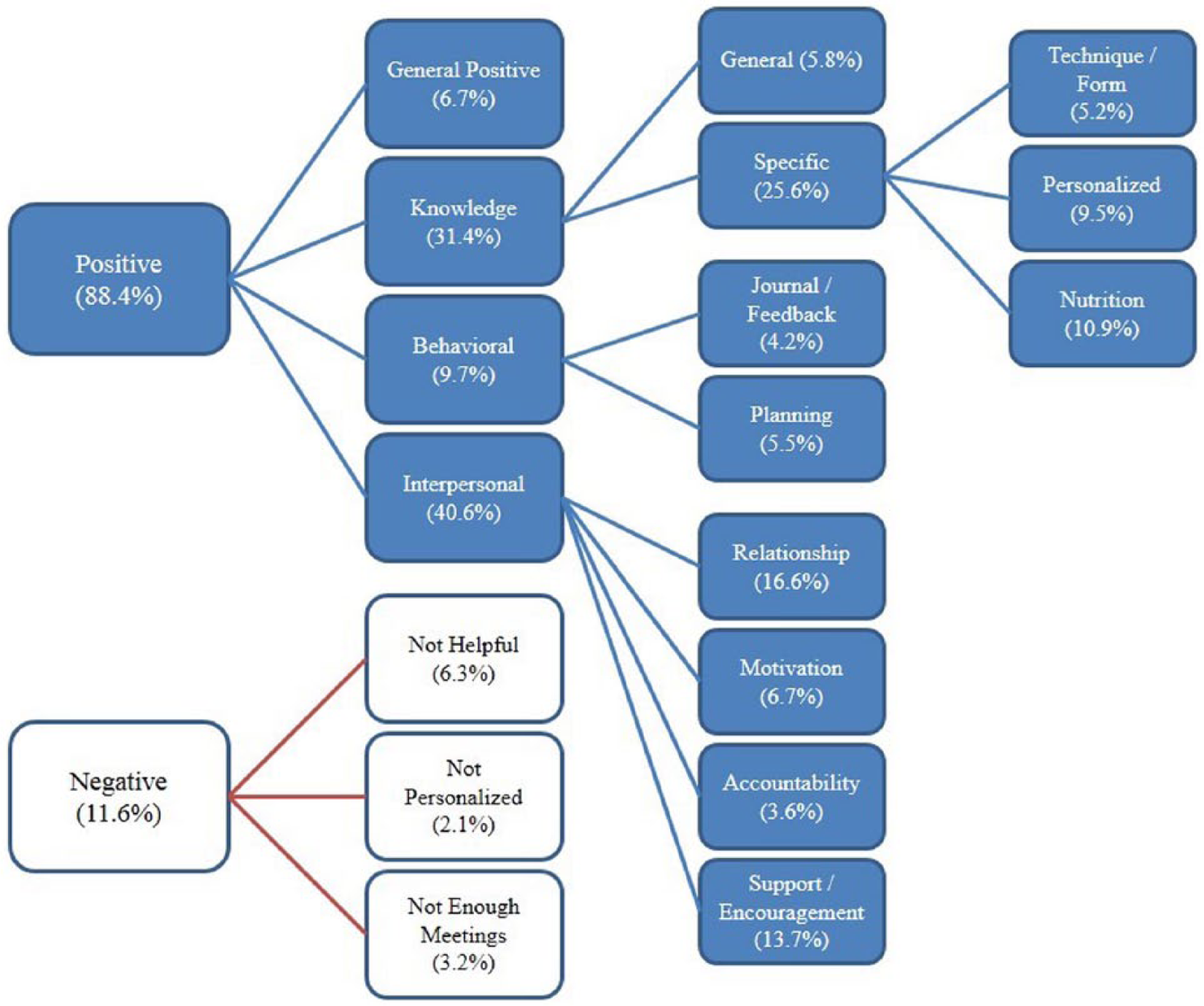
“Most Helpful” Themes From Meetings With Dietitians, Personal Trainers, and Health Behavior Counselors Reported by 567 Weight Management Program Participants
Results
Among the 567 respondents to the survey, the median age was 51 years, and the majority (77%) was female. The respondents to the survey produced a total of 1,429 usable responses to the three questions that included 1,872 independent codes (see Table 1). The themes that emerged from the data were categorized into three higher order groups, including positive, negative, and neutral/other coded themes. The neutral/other codes were removed from subsequent analysis as they did not reflect useful feedback related to the program or research question. These neutral responses represented less than 5% of all themes coded. Once these data were removed, the positive and negative responses accounted for 88.4% and 11.6% of the data, respectively. The positive higher order theme included a variety of subcategories expressing knowledge (31.4%) or skills (9.7%) learned, or interpersonal interactions experienced (40.6%).
Qualitative Themes From 567 Weight Management Survey Respondents Organized by Type of Professional Encounter

NOTE: RD = registered dietitian; CPT = certified personal trainer; HBC = health behavior counselor.
In the interpersonal grouping, several subthemes emerged. The most common subtheme included relationship comments, which focused on rapport, trust, or competence of the professional (e.g., “Gina was awesome. I loved meeting with her.”). Additional interpersonal themes emerged as well, including comments related to support and encouragement (e.g., “I appreciated her positive feedback”), accountability (e.g., “He kept me invested”), and motivation (e.g., “She pushed me harder than I pushed myself”).
In the next most common group were comments related to knowledge gained, which include both general (e.g., “I learned a lot”) and specific responses. The specific knowledge subcode was one of the most common themes, representing more than a quarter of all responses (25.6%). These specific pieces of information mentioned by respondents included knowledge related to nutrition (10.9%), personalized exercise or diet information linked to an individual’s fitness level or disease state (9.5%), and knowledge of techniques related to exercise equipment or movements (5.2%).
The last positive theme represented comments related to behavioral skills learned, and these comments included action words such as “how to,” “strategies,” or “planning.” The subcategories included comments focused on planning (e.g., “I learned how to prepare for upcoming barriers”) and journal/feedback (e.g., “feedback on my food logs”). Finally, the negative higher order theme included three subcategories of not helpful (6.3%), not enough meetings (3.2%), and not personalized (2.1%).
Results by Professional Context
The research team compared percentages of each higher and lower order theme grouping across the three professionals to identify differences in experiences. A complete listing of percentages for each subcategory sorted by professional is displayed in Table 1. The personal trainers (92.1%) and health behavior counselors (89.8%) received the highest percentage of positive codes, followed by dietitians (82.0%). Specific themes that emerged within each context mirrored the scope of practice for each professional. For personal trainers, the highest percentage of themes related to interpersonal experiences (45.4%) and knowledge gained related to specific exercise techniques or personalized programs (34.9%). For dietitians, the majority of themes emerged related to the learning of specific nutrition knowledge (33.0%) and behavioral skills (20.6%). The dietitians’ themes had the lowest percentage of coded themes (17.3%) reflecting interpersonal experiences of the three professionals. The majority of themes reflecting respondents’ experiences with the health behavior counselors were coded into the interpersonal group (58.4%), mostly by comments focusing on feelings of support and encouragement.
Discussion
The current study sought to describe and categorize experiences of weight management clients in their meetings with registered dietitians, personal trainers, and health behavior counselors. The vast majority of survey respondents reported learning positive skills and strategies from each professional with nearly 90% of usable codes representing a skill or strategy learned, or a positive relationship experienced. This primary finding suggests that weight loss participants find value in the educational and therapeutic services provided by personal trainers, dietitians, and health behavior counselors. This finding may seem obvious and simplistic to most health promotion professionals; however, these data provide validation that evidence-based practices translated from large trials and delivered by trained professionals are received positively by clients.
As represented in Figure 1, the specific skills and strategies learned by participants are complimented by interpersonal experiences and relationships that develop during the program. These dominant themes support the belief that there is both a science and an art to practicing health promotion (Malterud, 2001). Some clients may be inclined to want detailed, tailored information regarding their health; however, others may appreciate a caring, professional relationship just as much. Other clients may want both. If we make the assumption that a certified or licensed professional in any area is competent to provide a proper assessment and detailed information, it seems the interpersonal skills may be worthy of further attention. Resources are available to educate professionals on the art of building collaborative relationships and to cultivate motivation in clients within a health care setting (Rollnick, Miller, & Butler, 2008). Other professional development opportunities focused on counseling skills and rapport building may help health education professionals develop competencies in the interpersonal domain. These competencies in the interpersonal domain may help professionals tune into the psychological, social, or cultural factors that affect a client’s progress. Substantial research from qualitative studies has documented the existence of unique themes related to living with obesity, such as obesity stigma, emotional eating, body image, and the management/support of family members toward eating and PA (Byrne et al., 2003; Reyes et al., 2012).
When the themes were compared across professional domains, there is evidence that each professional provides a unique benefit to participants. Dietitians and personal trainers are viewed as the knowledge providers, whereas the health behavior counselors are viewed as a critical piece of the support system. Personal trainers were also perceived as supporters and motivators of behavior change (an “ally”) far more often than were dietitians, likely reflecting the structure of the program and training of the professionals.
As a result of the reimbursement schedule of services in this WMP, personal trainers play a central role in the delivery of this comprehensive program as the participants’ most consistent in-person contact. By the end of Month 6 of the program, a personal trainer would have spent considerably more time with the participant than the dietitian and health behavior counselor, respectively. Furthermore, personal trainers are the only of the three professionals that is likely to be a full-time employee of the facility, and thus will be “hanging out” a lot for frequent, brief interactions. Interpersonal factors were highlighted as many participants noted the support, motivation, and accountability that personal trainers provided. These professionals may find value in focusing on the person’s support system and motivational profile while delivering accurate information relevant to the client’s health status.
Participants clearly viewed dietitians as “experts.” The large majority of emergent themes focused on a specific or general piece of information. However, this group was also noted for having the highest amount of negative feedback among respondents, and rarely did respondents note that they appreciated the encouragement and support of this professional above all other things. Thus, it is possible, that respondents did not feel as though the dietitian was their ally in their path to behavior change. It is also possible that due to the extensive previous weight loss attempts by participants in this program, some respondents may have been less affected by the dietitian due to previous knowledge. However, anecdotal reports from participants and registered dietitians in the program suggest that some clients can be resistant to intervention based on the perception of “I already know how to eat properly/diet.” This feedback is supportive of recent professional practice commentaries from the Academy of Nutrition and Dietetics that suggest a motivational interviewing approach fits within the scope of practice of dietitians (Hollis, Williams, Collins, & Morgan, 2014) and may be a useful approach to improve communication with clients regarding behavior change (Balla Kohn, 2014).
The health behavior counselors, who deliver services by phone in this program, received the most comments for developing a supportive relationship with the participants. The primary focus of these behavioral services is how to make exercise and nutrition changes (prescribed by personal trainers and dietitians) permanent parts of a client’s lifestyle. Given this role, it follows that the services offered by health behavior counselors are client centered and personalized in nature. Nearly half of all codes focused on either the quality of the relationship or the support and encouragement provided. There is evidence supporting the effectiveness of use of phone-based approaches with weight loss participants (Perri et al., 2008) especially in rural settings or multisite studies, and thus the themes identified from current participants suggest that it is possible to build effective therapeutic relationships via this medium and with fairly infrequent contact (every 4-8 weeks).
Though the negative responses represented a minority of the data, they are still useful to help refine and improve service delivery. The themes within the negative codes were focused on services that were “not helpful,” “not frequent enough,” or “not personalized.” Knowing these areas in advance may allow a health professional to regularly inquire about a participant’s experience to prevent barriers to effective service delivery from emerging. Using questions such as “What did you find helpful about today’s session?” or “Was there anything missing from our work today or that you found confusing?” may give clients an opportunity to express constructive feedback in a timely way. The negative feedback from respondents related to not receiving enough services may also be useful feedback for the insurance agency as they consider future changes to the schedule of services in this and other, health promotion programs.
Future studies may want to choose mixed methods designs to compare the experiences of participants with more and less success in terms of fitness gains, weight loss, or program adherence. These comprehensive approaches would allow researchers to connect specific elements of services received to program outcomes. Finally, as technological advances continue with the delivery of health information, there will be more tools at each professional’s disposal to supplement in-person services with more frequent, tailored feedback to maximize reach and satisfaction with their services. Once these technology-supported interventions are initiated, however, it will be important for future research to assess the clients’ experiences with them and the impact on program outcomes.
A few limitations are worth noting when interpreting the data. Self-selection bias is present in the data. Thus, the themes may reflect a more positive tone than exists within all possible participants, including those who chose not to respond. It is also possible the themes are biased toward the personal characteristics of the professional, especially since there is not a standardized protocol to follow. Additionally, the item in the survey focused on the “most helpful” thing learned from each professional and not necessarily everything they were taught. Additionally, we do not have data in the current study on how many times each person met with each professional, so we are not able to assess or comment on the dose-response relationship as it relates to participant themes. However, as noted in the methods, the highest frequency of contact would be with a personal trainer (2-4 per month for the first 6 months). By comparison, the average participant would be expected to meet with the dietitian and health behavior counselor 2 to 3 times in the first 6 months. Finally, these data are subject to recall bias as those who were more successful may have seen all of their encounters in a more positive light. However, the response rate for the study was strong and the characteristics of the sample mirror those in the larger program. Extrapolation of these results may be limited to those health promotion professionals working with a predominance of adult female clients who are of a Caucasian background or those professionals working with weight management clients from fitness facilities.
Summary
It is useful for health promotion professionals to understand the positive and negative experiences of patients under their care. The data show encouraging findings supporting the notion that interdisciplinary programs where patients interact with a team of health professionals have the potential to both teach the skills and to provide the necessary support for health behavior change.