Abstract
Safe N’ Sound (SNS), a computer-based childhood injury prevention program, provides individually tailored information to parents about their child’s injury risks with specific behavioral recommendations. We translated SNS for implementation in a home visitation organization in order to increase its capacity to effectively address injury prevention and decrease the burden of injury experienced by high-need families. The aim of this study was to identify behavioral and organizational barriers and facilitators to translating and implementing SNS in a home visitation setting. Nurse home visitors (NHVs) participated in semistructured interviews that examined perceptions of program implementation, intervention characteristics, individual characteristics of NHVs, and recommendations for improving implementation. The utility of the program for promoting injury prevention systematically and its alignment with the organization’s mission were facilitators of successful implementation. Barriers included NHVs’ concerns about overburdening clients and missed educational opportunities related to injury risks not addressed by the program and delayed delivery of educational reports. Findings illustrate the dynamic interactions of intervention characteristics with organizational and individual factors and suggest that customizing implementation to organizational capacity and specific needs may better support successful program implementation in home visitation settings.
Introduction
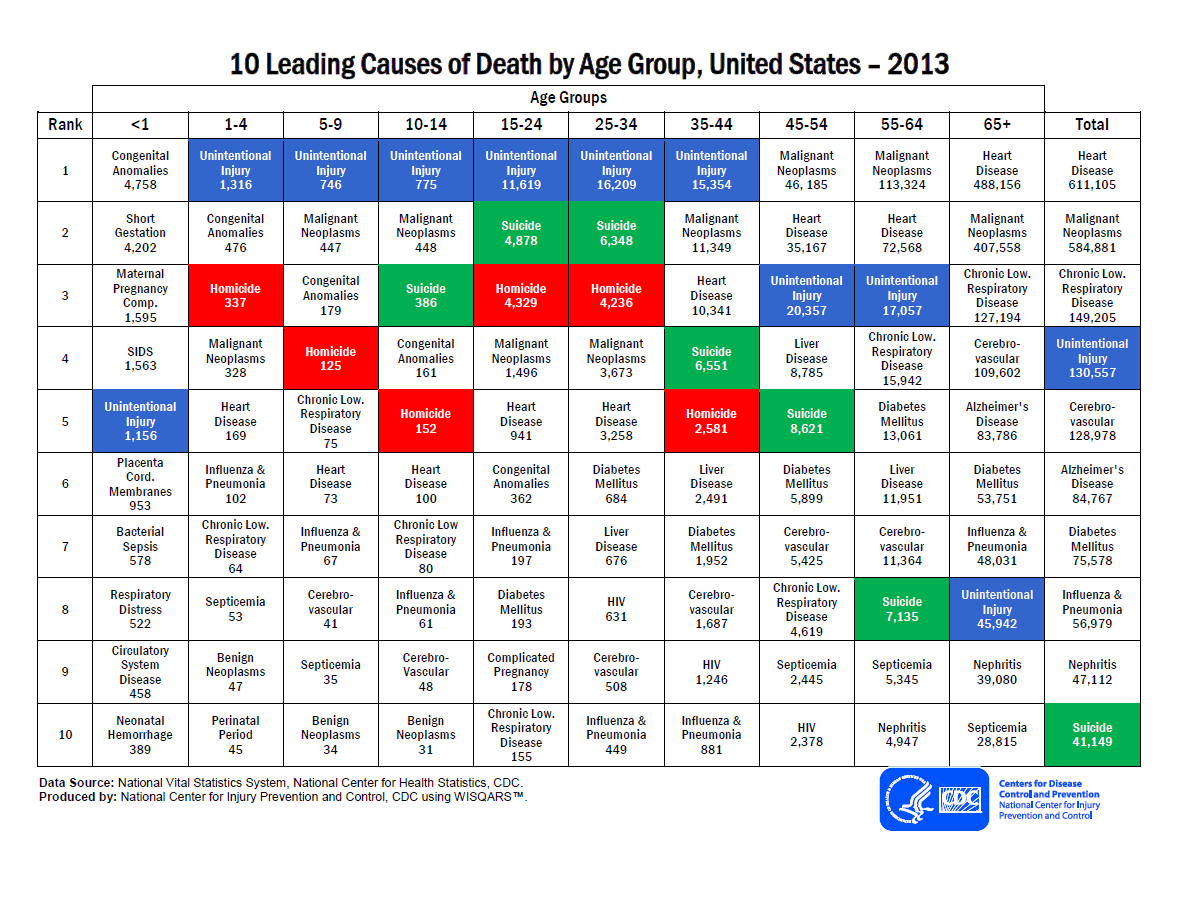
Translating, implementing, and adopting evidence-based practices is an important aspect of effectively promoting childhood injury prevention. Unintentional childhood injuries are the leading cause of morbidity and mortality in children, accounting for approximately half of all deaths in children 1 to 4 years old in 2013 (Centers for Disease Control and Prevention, 2013). Drownings, motor vehicle crashes, and suffocation are the leading causes of these injuries (Centers for Disease Control and Prevention, 2013). There are also significant racial and ethnic and socioeconomic disparities in unintentional childhood injuries in the Unites States. Black children experience nearly twice the mortality rate of White, Asian, and Hispanic children, and the mortality rate among children in low-income families is approximately 2 to 3 times higher than among their counterparts in high-income families (Singh & Kogan, 2007). Although there are many ways to prevent injuries, Safe Kids USA found that many parents failed to incorporate important safety measures in their homes or cars (Safe Kids USA, 2008).
One method for increasing safety prevention behaviors among parents is to incorporate safety discussions into home visitation programs. Through these programs, nurse home visitors (NHVs) often provide direct services to vulnerable pregnant women and first-time mothers and their children, linking families to needed health, education, and social services (Davidov, Nadorff, Jack, & Coben, 2012). NHVs assess and intervene with families to provide support, information, and training about maternal and child health in an attempt to improve parenting practices and prevent an array of developmental and societal issues, including child maltreatment and unintentional injury (Bilukha et al., 2005).
Safe N’ Sound (SNS) is a computer-based childhood injury prevention program that provides information tailored to individual parents on their child’s injury risks along with specific behavioral recommendations. Parents respond to a computer-based injury risk assessment, and the program generates a printed report tailored to the child’s age, risk factors, and parent perceptions. The context and structure of SNS were designed to affect the determinants of parents’ injury prevention behaviors as understood from several theoretical perspectives, most notably, social learning theory, and are detailed in previously published SNS literature (Nansel, Weaver, Jacobsen, Glasheen, & Kreuter, 2008; Vladutiu, Nansel, Weaver, Jacobsen, & Kreuter, 2006). SNS has been evaluated and implemented in multiple clinical settings and has demonstrated effectiveness in promoting injury prevention behaviors, especially among low-income families (Nansel et al., 2008; Vladutiu et al., 2006).
We translated SNS for implementation in a pediatric home visitation organization to enhance organizational capacity to address injury prevention effectively and decrease the burden of injury experienced by high-need families. Concurrent to program implementation, qualitative methods were used to explore factors contributing to implementation success and failure (Tse, Nansel, Weaver, Williams, & Botello-Harbaum, 2013). Previous research on the adoption of computer-based programs in health care and community settings has focused largely on measuring their reach or effectiveness, resulting in insufficient data on organizational and behavioral factors related to implementation and maintenance of evidence-based programs (Bergman, Beck, & Rahm, 2009; Kreuter, Alcaraz, Pfeiffer, & Christopher, 2008; Trinks, Festin, Bendtsen, & Nilsen, 2010; Walton et al., 2010). As such, the purpose of this article is to describe results from this qualitative study, including implementation facilitators and barriers, and to provide recommendations to enhance program implementation in other home visitation settings.
Method
Intervention Translation
To implement SNS in the home visitation setting, the project team made three substantive modifications to the existing program. First, we added injury prevention content for injury topics that were important to the organization, including injury risks resulting from the use of space heaters and extension cords. While these injuries are not as associated with the high degree of morbidity and mortality as other injuries, the NHVs determined that they were important areas to cover with their clients. Second, we modified the full content of the SNS program so that only primary message components were used with the organization’s existing case management software. Last, we included an environmental audit component so that NHVs could systematically identify injury risks in the home. Prior to implementation, we trained NHVs to conduct each component of this injury risk assessment.
The fully translated SNS program, referred heretofore as Safe N’ Sound–Home Visitation (SNS-H), was designed for NHVs to complete with clients in their homes. Based on client responses to SNS-H and the results of the environmental audit of the client’s home, NHVs provided injury prevention education to clients tailored to the two highest injury risks for their child. This tailored education was guided by a printed report generated by SNS-H that provided information to clients about their child’s injury risks along with tips and strategies to address those risks. Consistent with the organization’s service model, NHVs also supplied safety products, when appropriate, to aid in addressing identified injury risks.
Intervention Implementation
SNS-H was used in two ways to determine the implementation approach most feasible for successful adoption by the organization. In the first approach, SNS-H, as described above, was installed in its entirety on the laptop computers of six registered NHVs separately from the current case management software used by the organization. These six NHVs were selected because of their previous involvement and certification in human subjects research. These NHVs used the printed injury prevention report (which was then left with the parent) when providing education and also provided safety products when appropriate.
In the second implementation approach, key message components were extracted from SNS-H and integrated as an injury risk assessment into the organization’s current case management software (SNS-I). Nursing staff not assigned to use SNS-H in its entirety were asked to complete this integrated injury risk assessment along with the environmental audit of client homes and provide only education on identified injury risks. SNS-I NHVs did not use the printed injury prevention report to guide client education nor did they provide study-related safety products, distributing only those safety products typically provided through the organization’s standard practice. Key differences in these implementation approaches are highlighted in Table 1.
Comparison of Implementation Approaches

NOTE: SNS-H = Safe N’ Sound–Home Visitation; SNS-I = Safe N’ Sound–Integrated.
Interviews
To explore organizational and behavioral factors affecting implementation, semistructured interviews were conducted with 15 NHVs: six NHVs who implemented SNS-H, five NHVs who implemented SNS-I, and four NHVs who continued to use the organization’s previous standard practice for injury prevention. Interview guides were developed for each group and were designed to collect data regarding NHVs’ perspectives of implementation within the organization. Specifically, interview questions explored the implementation setting, including organizational culture and current injury prevention practices, characteristics of SNS-H and SNS-I, organizational and individual barriers and facilitators to conducting SNS-H or SNS-I, and individual characteristics of NHVs, including the perceived capacity of NHVs to conduct injury prevention counseling. Interviews also explored NHVs’ perceptions of the implementation process (Table 2).
Content Areas of Interviews

NOTE: SNS-H = Safe N’ Sound–Home Visitation; SNS-I = Safe N’ Sound–Integrated.
All interviewers (Master of Public Health–level researchers) were trained in interviewing methods. Interviews were recorded and transcribed. Field notes were taken during interviews and captured important information on the interview environment and participant responses, including tone of voice and body language. Transcripts of interviews were reviewed individually by two research team members who identified emerging themes. A coding guide was then developed based on those themes. Coders worked individually and then met to discuss and reach consensus on their independent codes. If consensus could not be reached then the Project Principle Investigator made the final decision. Atlas ti (Muhr, 2002) was used to group the codes across transcripts. Once grouped, the collection of excerpts for each code was summarized by two independent researchers who later met to come to consensus for each code. The Consolidated Framework for Implementation Research guided consideration of these summaries, along with interview field notes, in formulating recommendations (Damschroder et al., 2009). Approval for this study was obtained from the academic partner’s institutional review board; informed consent was obtained from all participants.
Results
Themes revealed in the analysis related to perceptions of program characteristics, individual NHV characteristics, and organizational characteristics. These are described below as facilitators and barriers to implementation, along with recommendations.
Facilitators of SNS-H Implementation
Facilitators of SNS-H implementation and use pertained primarily to perceptions of the utility of the overall program. The majority of NHVs interviewed felt SNS-H should be expanded organization-wide. Generally, NHVs felt that program use had positive effects on their visits with clients, noting that injury prevention was now being covered more systematically and injury risks not covered prior to SNS-H implementation were now being addressed (Table 3, Item A). NHVs also noted that using this program broadened their awareness of injury risks, bringing specific injury risks not typically covered to the forefront of the education provided (Table 3, Item B) and helping NHVs become more aware of safety hazards in clients’ homes (Table 3, Item C).
Facilitators and Barriers of SNS-H Implementation With Example Quotes

NOTE: SNS-H = Safe N’ Sound–Home Visitation; SNS-I = Safe N’ Sound–Integrated.
All NHVs interviewed reported feeling that SNS-H, including the environmental audits of client homes, aligned with the mission of the organization, which focuses on preventing infant mortality and child abuse and neglect. NHVs reported that many of the injury risks commonly found in their clients’ homes, such as unsafe sleep environments and the lack of car seats and smoke detectors, were addressed by the program. Many NHVs also reported that it was easy to use the program on their laptops (Table 3, Item D) and appreciated having all injury prevention materials organized and together in one tool (Table 3, Item E).
Barriers to SNS-H Implementation
Several factors hindering program implementation were identified. While the majority of NHVs within the organization used SNS-H or SNS-I, some NHVs opted to use neither and instead continued to address injury prevention as they had previously. These NHVs reported feeling that injury prevention was already being done well during home visits, and they were unsure how this program would improve already sufficient practices (Table 3, Item F). In addition, many NHVs felt that the organization already used too many assessment tools with clients, and the focus on injury prevention would take away from discussions of other areas.
NHVs also reported several injury risks often seen in client homes that were not addressed by SNS-H. These risks included those related to having older siblings, older homes in disrepair, weapons, using the oven to heat the home, wood-burning stoves or furnaces, pet-related injury risks, loose rugs, doors that children can open, and poorly lit staircases. Many NHVs felt strongly that to be effective, the program must comprehensively address the injury risks prevalent within the high-risk population served by the organization.
NHVs also emphasized the importance of providing safety products to clients. The six NHVs who provided study-related safety products to clients reported that this component of the program allowed them to not only identify high-priority injury risks but also provide solutions for these high-risk families. The remaining NHVs interviewed expressed frustration with being unable to provide resources needed to make client homes safer (Table 3, Item G).
Using SNS-H required NHVs to print the tailored educational report in color, which meant NHVs needed to return to the organization and then make an additional visit to clients or to wait until the next scheduled visit to deliver the printed report. This was particularly concerning for NHVs in terms of providing education to their clients, as many felt that having to wait until the next visit to present the printed educational report did not allow for natural teaching moments to occur (Table 3, Item H). While some NHVs felt that their clients liked the personalization of the printed educational report, the majority of NHVs using SNS-H felt the printed educational report was not effective in their client populations, noting that clients receive copious amounts of paper, and many struggle to read (Table 3, Item I).
The environmental audit of client homes was also a concern for some NHVs, who reported feeling uncomfortable noting these observations and questioned the willingness of clients to allow NHVs to move throughout their homes in order to do so (Table 3, Item J). Despite these concerns, few NHVs interviewed who conducted the environmental audit component in client homes reported encountering problems. For the few who did encounter problems, barriers identified included being unable to complete the observations due to clients living in other family members’ homes, family members sleeping in other rooms of the home, or clients feeling the home was not clean enough (Table 3, Item K). Many NHVs also noted that the environmental audit instrument was too long, and some observations, such as locating the hot water heater to record water temperature, were too difficult.
Home Visitation Recommendations
NHVs provided recommendations to support successful implementation of SNS-H. All NHVs suggested that involving NHVs in all aspects of the implementation process would promote buy-in and encourage program adoption. Incorporating hands-on training for SNS-H and all other technology and products to be used by NHVs was also suggested to aid NHVs in troubleshooting and to minimize problems when they arise.
With regard to SNS-H components, NHVs recommended providing all NHVs with resources to supply safety products to clients or to help clients find affordable safety products in their area. Additionally, NHVs recommended shortening the environmental audit instrument, perhaps by conducting the assessment over a number of visits or tailoring the observations to the client’s current situation and finding alternative ways to conduct difficult observations. All NHVs interviewed emphasized that observations are more likely to be completed if the NHVs have established strong rapport with their clients and suggested strategically selecting the client visits in which injury prevention is addressed. To improve the impact of the printed educational report and to eliminate the need for NHVs to make additional visits, NHVs recommended printing the educational report in black and white using portable printers during the client visit. This would allow for natural teaching moments to occur using the report, maximizing the potential impact of SNS-H.
Discussion
Home visitation programs deliver direct client services and provide an established and trusted resource for high-need families. Once limited to nursing care, home visitation programs have begun to incorporate many other health issues relevant to young families, including mental health, asthma control, and obesity (Meghea et al., 2013; Roman et al., 2007; Smith, Montaño, Dishion, Shaw, & Wilson, 2015; Welsh, Hasan, & Li, 2011; Yonemoto, Dowswell, Nagai, & Mori, 2014). With numerous health threats to address and limited time, evidence-based health promotion programs that assist NHVs in addressing priority injury risks efficiently are warranted.
Findings from implementation of SNS-H reveal dynamic interactions between implementer, user, setting, and intervention that inform key considerations for successful implementation. The Consolidated Framework for Implementation Research synthesizes the relationships between implementation setting, implementer, user, and intervention, incorporating a number of conceptual domains (Damschroder et al., 2009). These conceptual domains include intervention characteristics, inner and outer settings, characteristics of the individuals involved, and the process of implementation. This framework provides a useful structure for interpreting findings regarding implementation of SNS-H.
Intervention characteristics of SNS-H proved to act as both facilitators and barriers to implementation. Overall, NHVs liked SNS-H, noting that its systematic approach to injury prevention allowed for broader, more efficient client education and benefited their clients. However, because injury risks were prioritized in order of impact such that SNS-H addressed the two highest injury risks for a client’s child, an apparent tension between the desire for NHVs to be comprehensive and focusing on high-priority injury risks emerged. In using this focused approach, NHVs educated families and provided strategies and supplies that would lessen the greatest threat to the safety of their child. Despite this, challenges regarding injury risks not addressed by the program, conducting environmental audits of client homes, and using the printed report for client education suggested that SNS-H may not offer a substantial advantage over SNS-I or the organization’s current injury prevention practices.
NHVs’ concerns about injury risks not addressed by the program, the difficulty of conducting environmental audits, and the perceived lack of impact of the printed educational report for clients may have reduced perceptions of the program’s value for some NHVs. Given this, using SNS-I may be the more viable implementation approach in this home visitation setting. By tailoring injury prevention counseling, future iterations of SNS-I could be customized for individual home visitation settings, including message concepts and resources for each injury risk deemed important to address for that specific setting. This customizable translation and implementation approach has emerged in previous research as important for promoting adoption of SNS in individual clinic settings (Tse et al., 2013; Weaver et al., 2008). Using this approach would still allow NHVs to provide tailored injury prevention counseling while maintaining a familiar format that may reduce issues related to the environmental audit and printed educational report, increasing the likelihood of adoption and maintenance of this evidence-based program.
Challenges associated with implementing SNS-H can be understood within the contexts of the inner (organization’s culture and climate) and outer (economic, political, and social context) cultures of the setting. While the NHVs appreciated the availability of safety products, they did express frustration that the supplies were to be provided for only the two highest injury risks and not for every risk that might have been present in the client’s home, again illustrating the tension between a comprehensive approach and a more focused approach to injury prevention. It is important to note, however, that because injury risks were prioritized in order of impact, NHVs gave the family the two safety products that would lessen the greatest threat to the safety of their child. While this was a departure from the typical practice of many NHVs, providing safety products without the appropriate education and support may result in safety products going unused by families (Kendrick et al., 2007). Understanding whether giving supplies for only high-priority risks results in greater use than when supplies are given for all risks would be ideal. Future research examining this might better inform the most efficacious approach to providing safety products as a component of childhood injury prevention efforts.
Individual characteristics influencing program implementation included NHVs’ perceptions of client needs and of their own abilities. NHVs operate independently in their day-to-day activities and use their own discretion for many decisions related to providing client services. Many NHVs expressed specific ideas about how clients would feel regarding particular aspects of program components, reporting concerns about clients’ willingness to allow environmental audits and clients viewing the printed educational report as “just another piece of paper.” Despite these concerns, few NHVs reported problems with clients while using SNS-H. It is possible that barriers associated with these aspects of the program influenced NHVs’ perceptions of how clients might react to them, reflecting personal perceptions rather than those of clients. Future research examining parental perceptions of SNS-H will help identify aspects of the program that are truly problematic for clients and may result in strategies to address these problems.
Additionally, NHVs who continued to use standard practice rather than SNS-H or SNS-I felt strongly that their current efforts to educate their clients on injury prevention were sufficient. While these NHVs may be well equipped to provide quality injury prevention counseling, their lack of familiarity with SNS-H may have influenced their overall perceptions of the program. Given that the majority of NHVs identified aspects of the program that were useful and beneficial to clients over and above what has been done through current organizational injury prevention practices, it is possible that personal perceptions hindered program implementation.
NHVs also made additional recommendations for addressing barriers. NHVs emphasized the importance of engaging NHVs in the implementation process to promote buy-in and encourage adoption. NHVs also offered strategies for troubleshooting potential problems that might emerge during implementation, including incorporating periodic hands-on NHV trainings and allowing aspects of the program to be adapted for specific client circumstances. While we introduced the program to NHVs during staff meetings, had specific training sessions prior to implementation, and had the organization’s program manager available to meet with NHVs, these strategies proved insufficient for troubleshooting many of the problems emerging during implementation. Important consideration should be given to developing feasible strategic plans for engaging NHVs in the implementation process. Nevertheless, NHVs’ recommendations suggest that the majority of NHVs recognized the need to address implementation barriers rather than attributing barriers to a failure of the program to meet client needs within the home visitation setting.
Conclusion
Home visitation programs provide important services to high-need families. With numerous priority areas on which to focus, it is important for NHVs to address topics systematically during home visits that most affect the health and safety of the family. NHVs must be able to identify the most important topics and needs for each family efficiently and implement evidence-based approaches to address these needs. This study assessed the translation and implementation of an evidence-based injury prevention program in a home visitation setting designed specifically for this purpose. Findings illustrate the dynamic interactions of intervention characteristics with organizational and individual factors, and suggest that customizing implementation to the capacity of the adopting organization and the specific needs of those they serve may better support successful program implementation and maintenance in the home visitation setting.