



Abstract
Given the growing diversity in the United States, responsiveness to the needs of diverse communities is paramount. Latinx communities in the United States often state mistrust in outside institutions because of adverse experiences. Community-based participatory research (CBPR) is considered a trust-building process and is one approach to understand disparities. However, the conceptualization and evaluation of trust as a CBPR outcome are understudied. This article summarizes a community-engaged research process conducted for the cultural and linguistic refinement of a partnership trust survey tool to assess partnership trust as an outcome of CBPR (CBPR-PTS), by using Perinatal Awareness for Successful Outcomes (PASOs) as a case study and cross-cultural cognitive interviewing (CCCI) methodology. The participants were 21 diverse stakeholders of PASOs, a community-based health organization that serves the Latinx population in South Carolina. A modified version of the multidimensional measure of trust model informed instrument development. The team analyzed the CCCI data using compiling informal analysis to identify which survey items’ wordings must be changed or adapted based on the participants’ accounts. Sixteen of 28 questions subjected to CCCI required modifications due to translation errors, culturally specific errors, or general cognitive problems. The new survey instrument has 19 scales and 195 items categorized into nine dimensions of the modified multidimensional measure of trust model. CCCI was a useful tool to address the cross-cultural understanding issues of the CBPR-PTS. Measurement instruments should be able to capture the socioeconomic, cultural, and geographic/environmental variability of community stakeholders to help understand the diversity of the comprehension and views of the communities involved in disparities’ reduction efforts.
Keywords
Background
Partnership trust is critical to successful community-based participatory research (CBPR), a key strategy to eliminating health disparities (Lucero, 2013). CBPR systematically adapts empirically supported science through the active engagement of key stakeholders (Wallerstein & Duran, 2010) and can be used to mediate mistrust among underrepresented populations (Lucero & Wallerstein, 2013). A rich literature identifies numerous trust-building processes embedded in CBPR best practices (Lucero, 2013; Lucero, Wright, & Reese, 2018; Lucero & Wallerstein, 2013; M. C. Miller, 2012). Many accounts of successful CBPR partnerships report trust as an outcome of participation. However, the relationship between specific CBPR trust-building processes and trust in the partnership as a dynamic outcome is not well understood (U.S. Department of Health and Human Services [DHHS], 2013; Lucero, 2013; Sandoval et al., 2012).
Partnership trust has been defined as setting shared goals based on the principles of common values and responsibility among partners (Lucero, 2013). Lucero (2013) said that the ability to measure CBPR trust-related determinants and processes could enhance effectiveness of community-engaged interventions and research. The National Institutes of Health (NIH; 2017) posited that we need to move beyond anecdotal understanding of trust as perceived by community members, calling for development of good measurement tools to assess partnership trust across cultural groups, time, and socioecological contexts. However, partnership trust measurement tools’ development and adaptation processes are particularly complex when partnerships involve stakeholders with different language and cultural frames of reference.
In a multiphase collaboration, our interdisciplinary team developed a CBPR–Partnership Trust Survey (CBPR-PTS), building on the literature and a previous study that was conducted through a community–academic partnership with Perinatal Awareness for Successful Outcomes (PASOs), a Latinx-serving community-based health organization (CBHO) in the U.S. state of South Carolina (Moore de Peralta et al., 2020). We then translated and back-translated the CBPR-PTS into Spanish and English and pilot tested it with a group of four PASOs volunteer community health workers (CHWs) for refinement. This article presents the most recent phase of this interdisciplinary collaboration, using cross-cultural cognitive interviewing (CCCI) methodology for the analysis of linguistic and conceptualization differences between the two languages, and refinement of the CBPR-PTS based on stakeholder’s feedback.
Trust can be particularly challenging in populations with the greatest disparities, such as Latinx communities in the United States. The Latinx population often expresses a historic mistrust of “outside” institutions due to the influences of discrimination, U.S. immigration policies, and institutional racism (I. Martinez et al., 2009; Sage et al., 2018). Addressing historical mistrust is critical to attaining U.S. public health goals since it represents a significant challenge to engaging members of Latinx communities in health research and interventions (Lucero & Wallerstein, 2013), and related partnership development processes (Lucero, 2013). Building capacity within communities, through CBPR, can decrease mistrust and help to eliminate health disparities (Michael et al., 2008).
Investigating trust in CBPR partnerships can advance understanding of the relationship between CBPR processes and actions and trust development (Lucero, 2013). Lucero, Wallerstein, et al.’s (2018) posited that the ability to measure CBPR-related determinants and processes that influence trust in partnerships in a reliable and valid manner could facilitate the translation of these partnerships’ trust-facilitating processes to policy, practice, and health outcomes across diverse and local communities. In addition, the existence of valid and reliable quantitative instruments to measure CBPR-promoted partnership trust could facilitate mixed-method research, which is relevant for understanding CBPR processes and outcomes (Lucero, Wallerstein, et al., 2018).
However, although measures of partnership trust exist at the organizational level (Centers for Disease Control and Prevention, 2008), the conceptualization and evaluation of partnership trust as a CBPR outcome are understudied (DHHS, 2013; Lucero, 2013; Sandoval et al., 2012). The NIH (2017) stated that cultural and linguistic understanding and conceptualization of trust, as perceived by community members, are essential for promoting their respect for community engagement efforts designed to ameliorate health disparities. To promote this understanding, tools used to guide cross-cultural health programs and research must complement (linguistically and culturally) all persons involved. One approach that may contribute to developing culturally and linguistically relevant measurement instruments is cognitive interviewing, which is advocated as a vital step to ensuring the compatibility of resources across languages, nationalities, and cultures (Agans et al., 2006; Willis et al., 2005; Willis & Miller, 2011).
In a previous study, the interdisciplinary research team incorporated CBPR-related principles and determinants into Dietz and Den Hartog’s (2006) multidimensional measure of trust model (MMTM) to develop a CBPR-PTS (Moore de Peralta et al., 2020). The team focused on a dyadic relationship (trustor and trustee) between community stakeholders and CBHOs. In the present study the CBPR-PTS was refined and tested across languages and cultural groups through back-translation (Bracken & Barona, 1991), pilot testing, and CCCI, following Levin et al.’s (2009) recommendations to add CCCI to the traditional back-translation and pilot testing procedures.
Purpose of the Study
Our research team sought to measure partnership trust as a CBPR outcome hypothesizing that CBPR-related activities and processes can promote partnership trust and other desired outcomes of CBHOs and their stakeholders (Tumiel-Berhalter et al., 2011). The specific aim of this study was to refine a bilingual (i.e., English and Spanish) CBPR-PTS using CCCI, by collaborating with English- and Spanish-speaking stakeholders of a CBHO (PASOs).
Literature Review
CBPR is considered a trust-building process (Lucero, 2013), yet there are few measures of partnership trust as a CBPR outcome (DHHS, 2013). The cultural and linguistic adaptation of quantitative measurement instruments is highly relevant in cross-cultural research. Therefore, instruments used to measure trust in partnerships between Latinx stakeholders of CBHOs must be conceptually equivalent across languages. Particularly considering that a major threat to the analysis of survey data collected across language or cultural groups is that the items do not function similarly when administered across groups (Willis & Miller, 2011). A previous study (Carrasco, 2003) showed that some correctly translated questions still pose conceptual problems for Spanish-speaking respondents. For this purpose, CCCI has emerged as an extension to cross-cultural research, incorporating qualitative evaluation steps (Kudela et al., 2004; Levin et al., 2009; Merenda, 2005; K. Miller et al., 2005). In this study, we applied CCCI methods to pretest and evaluate a newly developed CBPR-PTS in English and Spanish.
Lucero (2013) argued that the CBPR literature has overlooked the trust development process and that trust has been conceptualized as a dichotomous outcome, thus denying its multidimensionality. Sandoval et al. (2012) conducted a literature review and concluded that most studies described CBPR processes and methods but not outcomes (Cargo & Mercer, 2008; Schaufeli & van Dierendonck, 1992). The DHHS (2013) stated that despite the relevance of trust as a community engagement outcome, gaps remain in understanding how the influence of CBPR in fostering trust can be measured. Thus, comprehensive, valid, and reliable tools are needed that measure partnership trust from the perspective of those who perceive historic mistrust (Costa & Anderson, 2011;M. C. Miller, 2012; Sandoval et al., 2012), as well as from a multidimensional, rather than a binary (i.e., whether a person trusts someone), perspective (Dietz & Den Hartog, 2006; Egede & Ellis, 2008).
Lucero (Lucero, 2013; Lucero & Wallerstein, 2013; Lucero, Wright, & Reese, 2018) and M. C. Miller (2012) advanced the understanding of partnership trust in the context of CBPR qualitatively, and their findings represent a basis for our study. In the absence of an existing theoretical framework on CBPR partnership trust to inform our CBPR-PTS instrument development in a previous study (Moore de Peralta et al., 2020), the research team decided to adapt Dietz and Den Hartog’s (2006) MMTM by shifting it from an intraorganizational focus to a CBPR focus (Figure 1). The MMTM was selected because, in this model, trust is conceptualized as a dyadic (i.e., trustor and trustee) and dynamic process consisting of attitudinal and behavioral elements and requiring inputs or determinants that foster trust. In our study, CBPR processes, methods, and context-specific conditions that foster collaboration and provide the opportunity to trust the partnership represent these determinants (Lucero, 2013; Oetzel, 2009).

Partnership Trust Process as a CBPR Outcome: Modified Version of the Intraorganizational Trust Multidimensional Integrated Framework
In the previous study (Moore de Peralta et al., 2020), the research team identified all partnership trust determinants in the literature, categorized and defined them into the six input categories of the MMTM including items from Lucero’s (2013) CBPR trust study about the type and perceptions of trust, and the relevant factors that influence trust development in the context of CBPR; Wallerstein and Duran’s (2010) CBPR conceptual logic model; Costa and Anderson’s (2011) formative and reflective indicators of team trust; M. C. Miller’s (2012) psychometric analysis and exploration of trust, group characteristics and health among community-based and congregation-based groups; Oetzel’s (2009) intercultural communication concepts; and the Centers for Disease Control and Prevention’s (2008) partnership trust survey. Finally, the research team conducted a literature review to determine whether the MMTM has been previously used to inform partnership trust instrument development, and we did not find empirical evidence of this. Therefore, our study could be the first to use the MMTM to inform the development of a CBPR-partnership trust measurement tool.
Method
Setting
An ongoing community–academic partnership between Clemson University and PASOs, a CBHO based at the University of South Carolina’s Arnold School of Public Health that delivers participatory health-promotion programming with Latinx families and communities, facilitated the application of CBPR principles to the design and implementation of this study. PASOs (which means “Steps” in Spanish) was established in 2005, to build a stronger state by supporting Latinx communities through education, advocacy, and leadership development. CHWs are the core of the organization since they assist community participants (CPs) in navigating complex health and social service systems and provide feedback to partner organizations. PASOs provides culturally tailored educational workshops to promote the health and well-being of South Carolina Latinx families; helps navigate the health care, social service, and early childhood resource systems; partners with mainstream organizations so they can provide more effective health and social services to the Latinx population; and conducts leadership development for grassroots Latinx leaders.
Procedures
Sample
The stakeholder sample included four groups of participants aged 18 years and older and residing in Richland County, South Carolina, as follows, CPs (n = 5), volunteer CHWs (n = 5), organizational partners (OPs, n = 6), and PASOs staff CHWs (staff CHWs, n = 5). The CBPR-PTS was made applicable to all stakeholders by adapting the questions to their different degrees and nature of involvement with PASOs (program design and/or research) and levels of linguistic skill and education. To apply the MMTM framework dyadically, it was necessary to determine who represented the trustor and the trustee when considering PASOs’ type of collaborations and stakeholders (Figure 2). The CPs were depicted as the trustor party for all other stakeholders. The volunteer CHWs mediate most of the interactions between the CPs and the other stakeholders; as such, they were depicted as trustees for the CPs and trustors for the OPs and PASOs’ staff CHWs and leaders. The OPs were depicted as trustees for the CPs and volunteer CHWs and as trustors for the staff CHWs and leaders. PASOs’ staff CHWs and leaders are considered trustees for all other stakeholders.
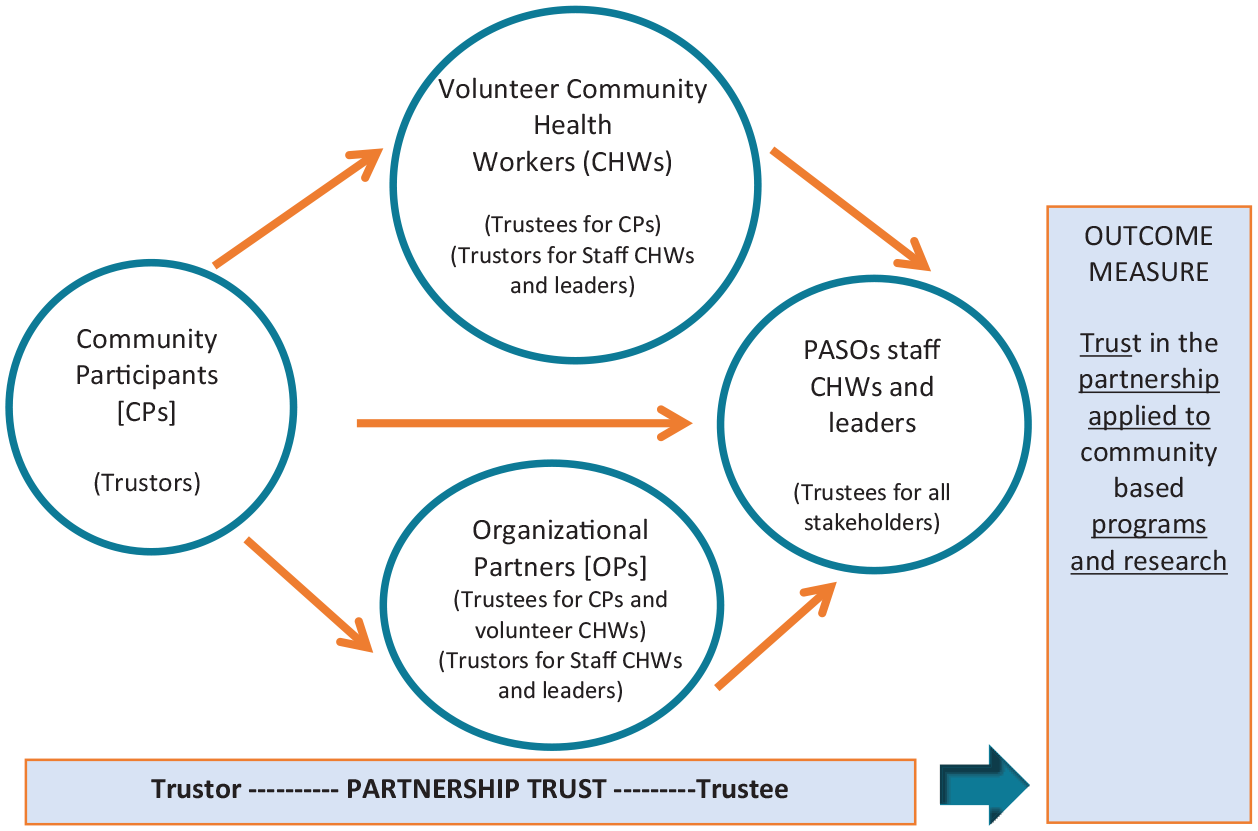
Defining Roles in CBPR Partnership Trust: The Case of PASOs Stakeholders
Participant Recruitment
Participant recruitment varied depending on the type of stakeholder. Personal contact using a recruitment flyer was the most effective tool for recruiting respondents. To recruit the CPs, a volunteer CHW used her participation lists from previous organizational events. A staff CHW contacted the volunteer CHWs via email and/or phone. To recruit the OPs, the organization’s executive director provided a detailed list of all OPs to the principal investigator.
Interviewers’ Profile and Roles
Interviews were conducted by members of our interdisciplinary research team representing epidemiology, demography, social work, and qualitative health research. A bilingual (Spanish and English) researcher administered the survey and conducted the interviews with the Spanish-speaking stakeholders (CPs and volunteer CHWs). An English-speaking researcher conducted two and a bilingual researcher conducted four of the surveys and interviews with the English-speaking stakeholders (staff CHWs and OPs). To ensure that all interviewers applied the same process and methods for the surveys and interviews, the team met to establish the CCCI procedures.
Instruments
The team used the first version of the CBPR-PTS, to develop a second version of the survey by translating it to Spanish, and then back-translating it to English (Moore de Peralta et al., 2020). The team also pilot tested the Spanish version of this second version of the CBPR-PTS with four of the volunteer CHWs. After the team applied the pilot testing–suggested changes, the final version of the survey instrument consisted of 19 scales ranging from two to 18 items per scale for a total of 185 items. These items corresponded to the nine dimensions of partnership trust as per the modified MMTM (Figure 1). Supplemental Table 1 presents the details of all the survey scales, including the number of items, two example items, the type of scale, and to which MMTM dimensions (9) and constructs these items are connected.
The team evaluated the constructs’ face validity (Gravetter & Forzano, 2012) of the second version of the CBPR-PTS to determine whether the constructs covered the meanings and concepts as intended using CCCI. The team used Willis’s (2011) framework to develop the CCCI questionnaire for the interviews. This framework assesses the type of issues that could affect survey participants’ responses. Table 1 shows examples of the most recurrent issues that might affect survey responses related to the original survey questions (OSQs = 28) that were analyzed for specific issues and the corresponding CCCI questions.
Examples of Potential Issues That Might Have Affected Survey Questions and Were Addressed Using CCCI
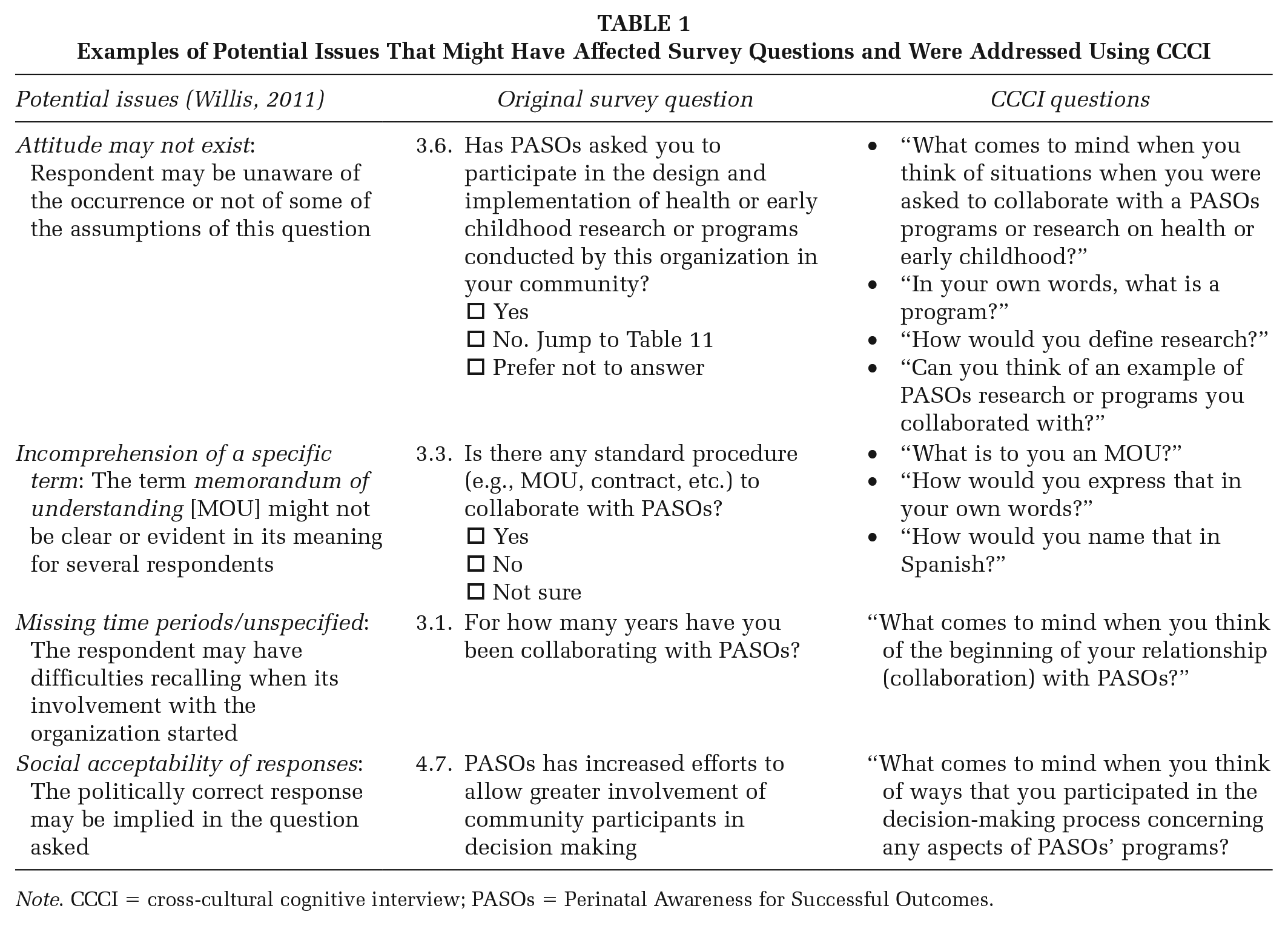
Note. CCCI = cross-cultural cognitive interview; PASOs = Perinatal Awareness for Successful Outcomes.
Data Collection
Clemson University’s institutional review board approved the study protocol and related instruments. The team administered the survey and conducted the interviews at places convenient and accessible for the participants (not at PASOs’ facilities). The researcher read the informed consent and obtained verbal approval from the participants for both the survey and the interview. The participants self-completed the survey in an average of 30 to 40 minutes with the researcher present to answer potential questions. Using retrospective probing (Levin et al., 2009) the researcher conducted 60- to 80-minute interviews immediately after the participant completed the survey. The only sociodemographic information requested was about the stakeholder type, gender, ethnicity (Latinx or not), and education. All of the surveys were analyzed as aggregated data, and the participants received a gift card as an incentive.
Data Analysis
The research team used a compiling informal analysis technique (Willis, 2011) to analyze the CCCI data and to identify which survey items’ wordings must be changed or adapted based on participant accounts. This analytical method allows results to be aggregated to identify trends across the interviews, resulting in the production of a more summarized, question-oriented version of the results, which facilitated decision making on the instrument’s refinement. This qualitative summary allowed us to find the problems and compare across interviews. The first and second authors conducted the first data analysis phase, which consisted of the following: (1) reading the interviews, (2) organizing the responses by probe and stakeholder type, (3) summarizing the responses by probe and stakeholders, and (4) determining whether to modify the questions. The entire team gathered to review the survey modifications suggested in the first data analysis phase. As a result, 16 of 28 evaluated questions were modified, replaced, or deleted to create a new survey tool.
Results
Table 2 includes the sociodemographic characteristics of the 21 survey and CCCI participants. All the CPs self-identified as foreign-born Latinx, and four of the five volunteer CHWs self-identified as Latinx. All CPs, volunteer CHWs, and staff CHWs completed the Spanish version of the survey. Four of the six OPs self-identified as Latinx. However, all six OPs opted to complete the English version of the survey and interview.
Demographic Characteristics of Partnership Trust Survey and CCCI Participants (n = 21)

Note. CCCI = cross-cultural cognitive interviewing; CHW = community health worker.
The Results section was organized according to our nine MMTM CBPR-related dimensions as follows: First, the OSQ was displayed; second, the CCCI probe question was displayed; and third, a new phrasing of the original item (new survey question [NSQ]) was presented. We explored cognitive issues on 28 questions. We did not find issues (translation errors, culturally specific errors, or general cognitive problems) in 12 of the 28 questions. However, we did find issues in 16 questions within the dimensions of (1) trustor’s predisposition to trust; (2) trustees’ characters, motives, abilities, and behaviors; (3) quality and nature of trustee–trustor relationship; (4) situational/organizational/institutional constraints; (5) socioeconomic, cultural, and geographic/environmental aspects; and (6) trust as a process. Each of these dimensions is briefly described below. After the CCCI deliberations, the new survey tool had 195 items, 10 more than the original survey.
Trustors’ Predisposition to Trust
The team included a probe in the CCCI instrument to explore whether a participant considers the length of one’s relationship with the organization when deciding whether to trust a CBHO (OSQs 2.1, 2.2). The respondents identified several factors as key elements that affected their decision to trust PASOs. However, none of the respondents mentioned length of time in the partnership. As a result, two NSQs were added to account for length of time in the partnership as a determinant of partnership trust (Table 3). Table 3 also presents other emerging factors (a to d) that were named by respondents as predictors of trust and that we included in an NSQ. The participants could select up to three reasons that motivate them to trust PASOs from this list, depending on the type of collaboration they have with the organization.
CCCI Questions and New Survey Questions for the MMTM Dimension Trustor’s Predisposition to Trust
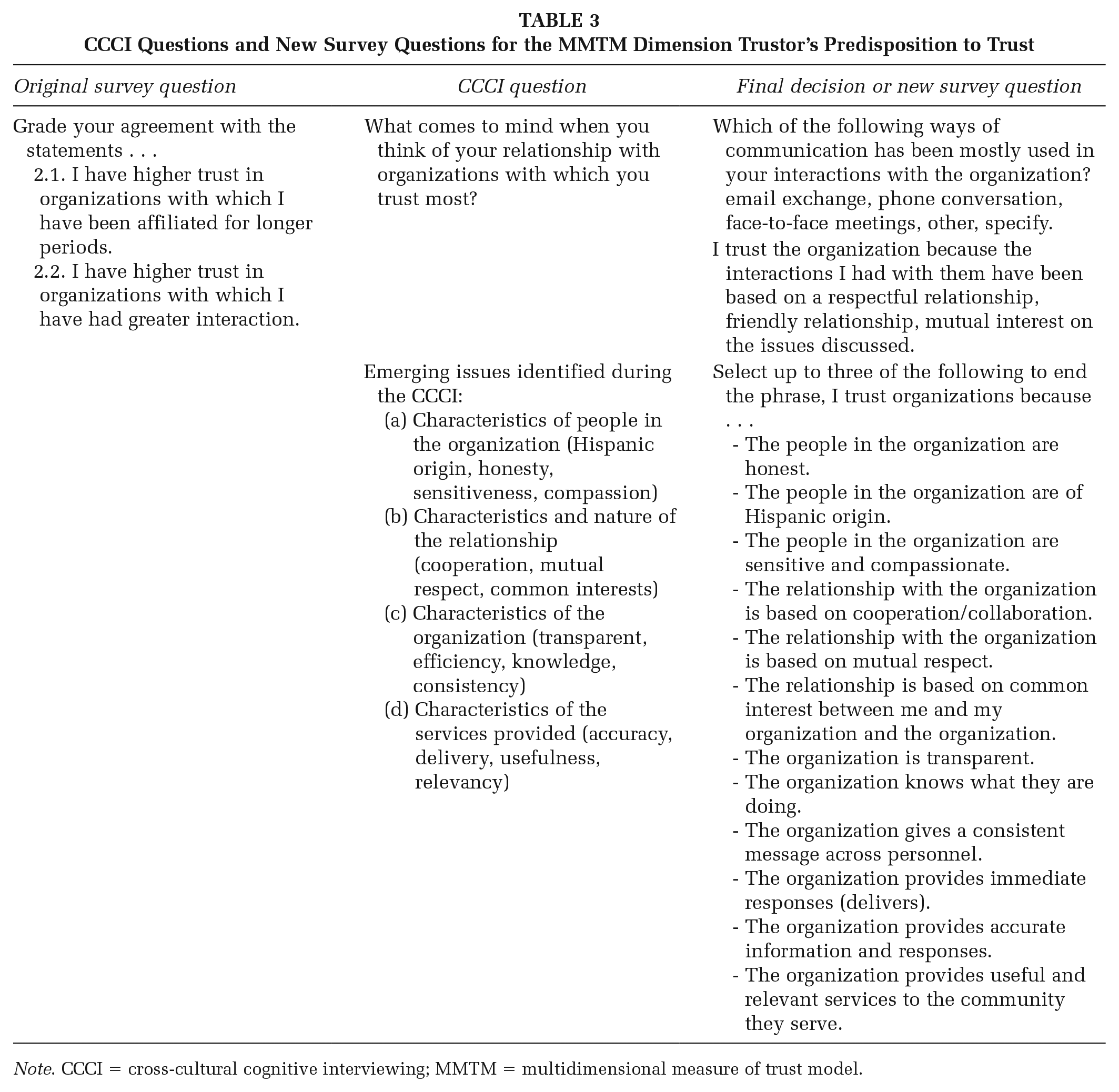
Note. CCCI = cross-cultural cognitive interviewing; MMTM = multidimensional measure of trust model.
Trustees’ Characters, Motives, Abilities and Behaviors
OSQs 5.8 to 5.10 aimed to explore the reasons people collaborate with the organization, including recognition of the work performed by and the accountability of the organization. We detected a comprehension issue for OSQ 5.10, which is related to “perceived trustworthiness,” as the stakeholders stated that they were confused by the word “accountable” (Table 4). The CPs and volunteer CHWs described the word “as being related to transparency” possibly because all of the CPs and volunteer CHWs opted to complete the Spanish version of the survey where the word “transparente” was used because the word “accountable” has no direct translation in Spanish. Therefore, we found a translation issue affecting the comprehension of this item (Willis et al., 2005). In the NSQ, the team agreed to add a definition of accountability instead of using this term, as follows: I have stayed involved with PASOs because (1) they explain what they do to the community and (2) they are held responsible for what they do (Table 4).
Cross-Cultural Cognitive Interview Questions and New Survey Questions for the MMTM Dimension Trustee’s Character, Motives, Abilities, and Behaviors
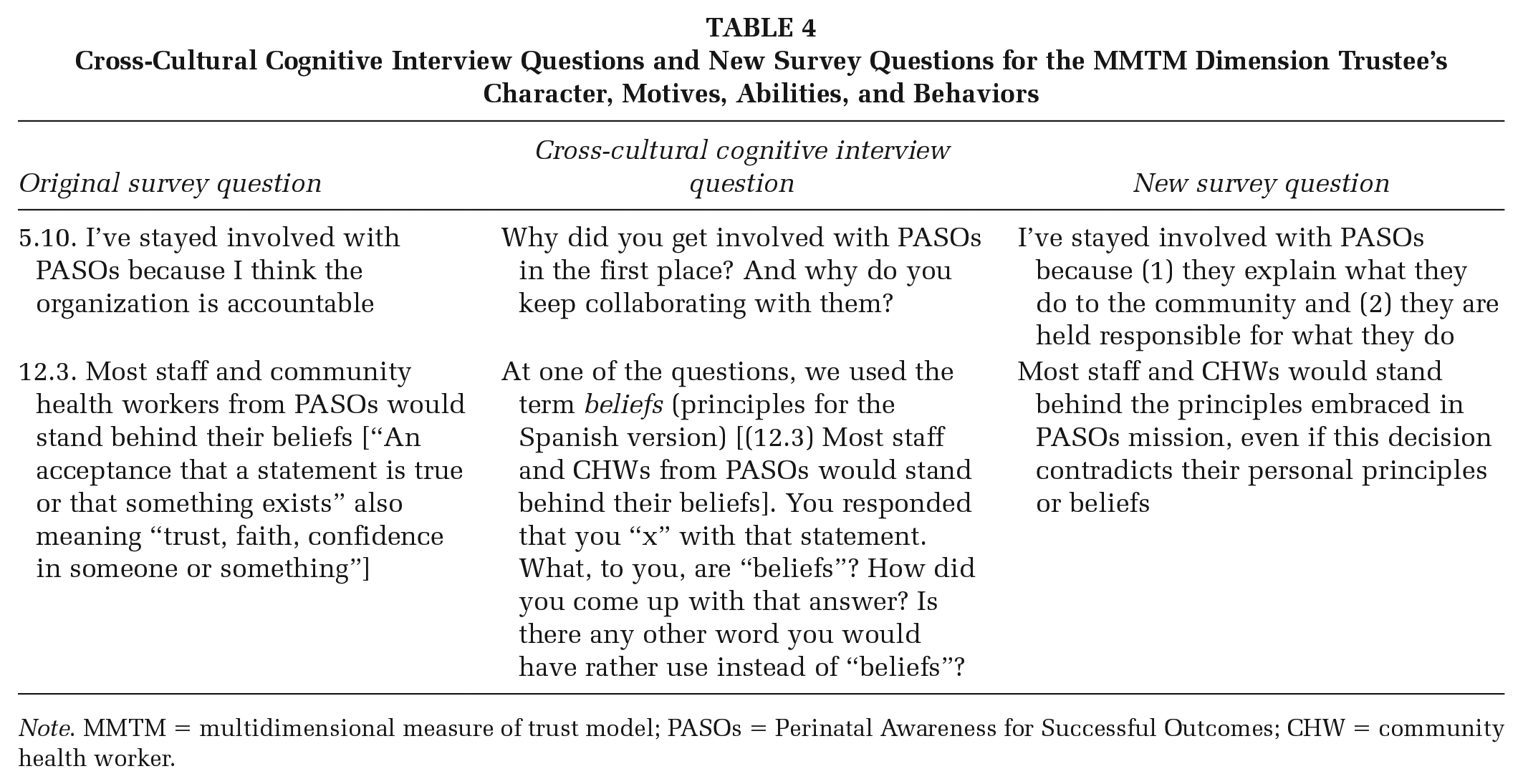
Note. MMTM = multidimensional measure of trust model; PASOs = Perinatal Awareness for Successful Outcomes; CHW = community health worker.
OSQ 12.3 explored the trustor’s perceptions of the trustee’s trustworthiness (Table 4). We considered that some of the participants would provide a socially desirable response to this question (Arredondo et al., 2008). Respondents’ narratives revealed a general cognitive problem by differentiating between the concepts of “beliefs” and “principles,” where principles seemed to be the term most accepted by the participants. Some of the interviewees stated, “Beliefs are something more related with spiritual values” and “It is more like something, you believe in, and principles are more about what shaped you . . .” In addition, a volunteer CHW answered OSQ 12.3 by considering personal principles versus organizational principles. Since all of the volunteer CHWs are Latinx, we considered that the responses to this question might have presented a culturally specific error by been influenced by the participants’ cultural values personalismo (a personal connection) and simpatía (empathy and shared common interests; García et al., 2017; C. R. Martinez et al., 2012; Willis et al., 2005). Hence, we considered both personal and organizational principles in the NSQ to account for the participants’ consideration of the personal principles of those in the organization (Table 4).
Quality and Nature of the Trustee–Trustor Relationship
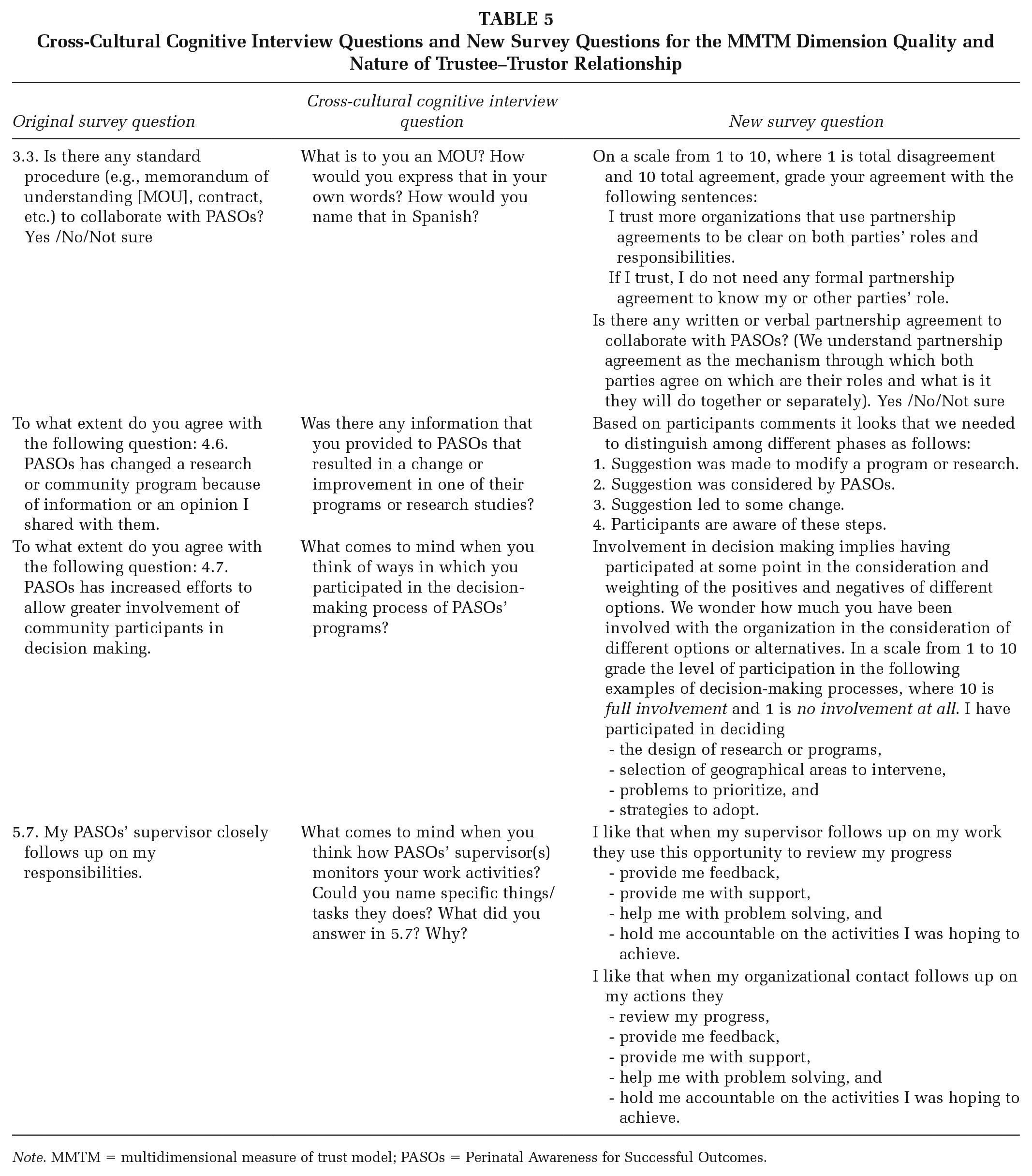
Table 5 includes OSQs 3.3, 4.6, 4.7, and 5.7; their corresponding CCCI questions; and the NSQs. In CBPR, an important component of the dimension “quality and nature of trustee–trustor relationship” is having formal agreements to establish the role of each party. We considered it was important to test the comprehension of the memorandum of understanding in OSQ 3.3. The participants’ responses differed across stakeholders, reflecting a general cognitive problem. For the CPs, a memorandum of understanding was defined as “a verbal agreement” or “what the organization is going to do.” The volunteer CHWs defined it as a “formal procedure that establishes what the organization would expect from them” and rejected the word “contract” as a synonym, stating that this word “. . . may involve paid services.” The OPs also disagreed with the use of the word “contract” in this context and suggested “partnership agreement” or acuerdo in Spanish. Additionally, the team discussed whether the existence of formal agreements is always a predictor of trust. In certain instances and with some groups, when trusting relationships exist, a formal agreement might be seen as a signal of mistrust, representing a culturally specific error (Willis et al., 2005). To address the ambiguity in the relationship between trust and formal partnership agreements, which could operate differently across cultures, we modified the term in OSQ 3 and preceded it with an NSQ (Table 5).
Cross-Cultural Cognitive Interview Questions and New Survey Questions for the MMTM Dimension Quality and Nature of Trustee–Trustor Relationship
Note. MMTM = multidimensional measure of trust model; PASOs = Perinatal Awareness for Successful Outcomes.
We explored the construct “participation of all parties in decision making” (Lucero, 2013). This construct was addressed in OSQs 4.6 and 4.7 (Table 5). In OSQ 4.6, we wondered whether stakeholders have been involved in programming and research decision making at PASOs. This question was understood as asked, confirming the existence of the attitude or behavior of sharing information or opinions with PASOs’ stakeholders. However, based on the participants’ comments, we distinguished among the different phases of programming and research in an NSQ.
OSQ 5.7 referred to the participants’ perceptions of their supervisors’ monitoring behaviors. We concluded that social desirability was not an issue for OSQ 5.7. However, the team also explored the need to distinguish between different stages of opinion sharing by asking them to name specific tasks that were monitored by PASOs’ supervisor. The volunteer CHWs provided responses that suggested that they understood the concepts of monitoring and follow-up. However, they distinguished between meetings (coaching and feedback) and the cloud-based data collection and monitoring system used by PASOs’ supervisors (Apricot). The staff CHWs distinguished between monitoring styles. For instance, a staff member stated “. . . closely . . . yeah they follow up but it’s not constant and not super close either.” Therefore, we clarified this question by explicitly mentioning follow-up tasks. Additionally, since the OPs mentioned they perceived that OSQ 5.7 did not apply to them, we included an NSQ (Table 5).
Situational/Organizational/Institutional Constraints
OSQ 3.6 was intended to identify participation in research and programs to explore the construct of the community’s capacity for research. During the pilot testing, the volunteer CHWs were unsure if they had participated in research with PASOs. This answer could be considered an “understanding issue” or general cognitive problem as per Willis’s (2011) framework. Most of the CPs were not sure if they had participated in a research experience while collaborating with PASOs. Only the OPs provided responses suggesting they recognized research in the context of collaboration with PASOs. We concluded that a definition of research was needed in the new survey and that the best way to address this concept would be by separating it into different research-related activities in an NSQ.
Socioeconomic, Cultural, and Geographic/Environmental Aspects
Stakeholders’ socioeconomic, cultural, and geographic environments and their relationships with the organizations with which they interact (Wallerstein & Duran, 2010) mediate the integration of communities’ knowledge and experience in CBPR. We addressed the understanding of the expression “knowledge and experience of this community” in OSQ 5.4. The analysis of the responses showed that most of the stakeholders understood the question and could mention relevant examples. However, some of the OPs inquired about the community referred to in OSQ 5.4; thus, we specified the organization’s target community or population in an NSQ.
Trust as a Process
According to the MMTM, along with “trust the belief,” “trust the decision” is a key dimension of trust as a process. To explore the concept of “trust as a process,” we included OSQ 6.3 to determine whether the participant decided to trust PASOs based on proper knowledge of the organization’s mission and objectives. The responses revealed that all four types of stakeholders understood the concepts since most were able to explain PASOs’ mission and objectives. However, an emergent issue was that some of the staff CHWs were confused about the concept of “participation” as used in OSQ 6.3. In the words of a staff CHW, “I put agree but I am not a participant in their programs . . . but rather a staff member.” Hence, we decided to add other verbs in an NSQ. In addition to “participate,” we included other types of stakeholder involvement as follows: “My knowledge about the mission and objectives of PASOs influences my willingness to work, collaborate, and participate in their programs.”
Study Limitations
One of the limitations of this study is that the sample size was not sufficiently large to account for the variability of the Latinx language and subcultures as the scope of this study was limited to residents of an urban area of a single county in South Carolina. Therefore, the perspectives and knowledge of stakeholders with characteristics different from those of the participants might not have been represented in this study. Data self-reported by Latinx participants might have been influenced by a cultural inclination to appear cooperative or simpatía (Arredondo et al., 2008). The research team sought to minimize this social desirability bias by using a self-completed survey, not using names of people or organizations in the interviews, and assuring participants that the PASOs representatives involved in the research team would see only aggregated data.
Discussion and Implications for Practice, Policy, and/or Research
Findings of this study support previous research findings about the importance of trust for teams functioning at the community level, and its role as a mediator in community engaged health research and programs (Lucero & Wallerstein, 2013; Lucero, Wallerstein, et al., 2018). All participant stakeholders (CPs, volunteer CHWs, staff CHWs, and OPs) provided responses in the CCCI that support the notion of CBPR as a trust-building process (Lucero, 2013). CBPR processes and methods function as determinants that are expressed within the social, cultural, and geographical environments where CBHOs and their stakeholders interact and collaborate in research and programs.
Our study advanced the process to address an existing gap in the availability of valid quantitative instruments to measure partnership trust as a CBPR outcome (DHHS, 2013; Lucero, 2013; NIH, 2017; Sandoval et al., 2012). Our CBPR-PTS could facilitate the translation of CBPR-related partnerships’ trust-facilitating processes to policy, practice, and health outcomes across diverse and local communities (Lucero, Wallerstein, et al., 2018). In particular, the CBPR-PTS would contribute to measuring partnership trust from the perspective of Latinx communities who often perceive historic mistrust (Costa & Anderson, 2011; M. C. Miller, 2012; Sandoval et al., 2012).
In this study, we accounted for the important role played by participants and community stakeholders in developing an ecologically valid and culturally sensitive assessment tool (Arora et al., 2015). The early incorporation of CBPR principles into the development of the CBPR-PTS contributed to the team’s efforts to identify MMTM-related constructs (Dietz & Den Hartog, 2006) that were meaningful for and aligned with the life experiences of the four types of stakeholders. We used information generated from those working in a partnership for health to ensure that the CBPR-PTS was culturally appropriate from its conception. Our experience taught us that CBPR approaches contribute to developing culturally and linguistically effective measurement instruments.
Any quantitative instrument could be adapted to function between two different groups provided one considers the nuances of both groups’ cultures, languages, types of engagement, and organizational contexts. In this study, the team captured the valuable participant stakeholders’ feedback through CCCI and used it to improve the quality of the new survey and its applicability to Latinx participants. The CCCI highlighted three categories of problems—translation errors, culturally specific issues, and general cognitive problems (Willis et al., 2005)—which were addressed in 16 questions by rephrasing or breaking up down a question into categories.
In some questions, the translation of our CBPR-PTS from English into Spanish required separating a few concepts into multiple items to ensure the Spanish-speaking participants’ understanding. Researchers must consider that Spanish is an elaborate language in the ways that ideas are constructed and understood, and more concepts might be required to convey an idea originally written in English when translating it into Spanish. In addition, we determined in our study that the organizational context in which stakeholders operate influenced their roles and types of engagement and thus their trust in the partnership (Wallerstein & Duran, 2010). For example, in the pilot testing of the CBPR-PTS, PASOs’ stakeholders reported being more involved in implementing programs than in research; thus, to account for this nuance, we had to separate research- and program-related items in the survey. We also learned that researchers and practitioners who assess partnership trust should distinguish among different phases of community-engaged programs and research to account for stakeholders’ different types and levels of organizational involvement.
Researchers and practitioners should consider that, as in our study, the length of a measurement instrument might increase when incorporating all nuances (e.g., culture, language, type of engagement, and organizational context). After the CCCI analysis and decision making regarding questions’ modifications, the new CBPR-PTS consists of 195 items (increased from 185 in the original version) categorized in nine dimensions of the MMTM framework and separated by stakeholder type (CPs, volunteer CHWs, OPs, and staff CHWs) and forms of organizational involvement (different stages of research and/or programs).
Finally, our findings support the notion that to assess partnership trust in community-engaged research and programs, researchers must ensure the assessment of the perspectives of community stakeholders and not only those of academic researchers (Arora et al., 2015). Moreover, measurement instruments should be able to capture the socioeconomic, cultural, and geographic/environmental variability of community stakeholders to help understand the diversity of the comprehension and views of the communities involved in disparities’ reduction efforts. Our findings are relevant for health promotion and other practitioners wanting to strengthen collaborations and partnerships with Spanish-speaking stakeholders by considering the influence of Latinx cultural values, perceptions, and facilitators of partnership trust in program planning, research, and policy development.
Supplemental Material
sj-docx-1-hpp-10.1177_15248399211004622 – Supplemental material for A Contribution to Measure Partnership Trust in Community-Based Participatory Research and Interventions With Latinx Communities in the United States
Supplemental material, sj-docx-1-hpp-10.1177_15248399211004622 for A Contribution to Measure Partnership Trust in Community-Based Participatory Research and Interventions With Latinx Communities in the United States by Arelis Moore de Peralta, Victoria Prieto Rosas, Julie Smithwick, Shirley M. Timmons and Myriam E. Torres in Health Promotion Practice
Footnotes
Authors’ Note:
The research team acknowledges the participation and contributions of all stakeholders who donated their time, knowledge, and experience to enrich this study. This publication was supported by the College IMPACT Seed grant funded by the College of Behavioral, Social and Health Sciences, Clemson University, South Carolina.

References
Supplementary Material
Please find the following supplemental material available below.
For Open Access articles published under a Creative Commons License, all supplemental material carries the same license as the article it is associated with.
For non-Open Access articles published, all supplemental material carries a non-exclusive license, and permission requests for re-use of supplemental material or any part of supplemental material shall be sent directly to the copyright owner as specified in the copyright notice associated with the article.
