



Abstract
Fruit and Vegetable Prescription (FVRx) programs rely on diverse community and clinic partnerships to improve food security and fruit and vegetable consumption among medically underserved patient populations. Despite the growth in these programs, little is known about the feasibility or effectiveness of the unique partnerships developed to implement FVRx programs conducted in both community and free safety-net clinic settings. A 6-month nonrandomized controlled trial of an FVRx program was pilot tested with 54 Supplemental Nutrition Assistance Program (SNAP)–eligible adults with diet-related chronic conditions. The intervention combined monthly produce prescriptions for local produce at a farmers market, SNAP-Ed direct nutrition education, and health screenings for low-income adults. Process and outcome evaluations were conducted with respective samples using administrative program data (recruitment, retention, and prescription redemption) and self-administered pre- and postintervention surveys with validated measures on dietary intake, nutrition knowledge and behavior, and food purchasing practices. Descriptive statistical analyses were conducted. The FVRx program retained 77.3% of participants who spent nearly 90% of their prescription dollars. After the intervention, the FVRx group reported significantly increased total intake of fruits and vegetables, knowledge of fresh fruit and vegetable preparation, purchase of fresh fruits and vegetables from a farmers market, and significantly altered food purchasing practices compared with the control group. Community-based nutrition education organizations enhance the feasibility and effectiveness of community and clinic-based FVRx programs for improving low-income adults’ ability to enhance food and nutrition-related behaviors.
Keywords
Consuming adequate amounts of fruits and vegetables is vital for diet quality and chronic disease prevention and management (Bellavia et al., 2013). However, low-income populations are at an increased risk for low fruit and vegetable consumption and cost-related trade-off decisions negatively affecting the management of chronic conditions (Grimm et al., 2012; Seligman et al., 2010).
Fruit and Vegetable Prescription (FVRx) programs are typically clinic-based interventions that use provider-generated “prescriptions” for locally grown food, direct nutrition education, and health screenings to address nutrition-related barriers for low-income patients with existing diet-related chronic diseases. As described by the social ecological model (SEM), these interventions address behavioral influences across various policies and sectors and the communities, organizations, and individuals they influence (McLeroy et al., 1988). At the policy and health sector level, the produce prescription as a monetary incentive has demonstrated positive improvements in fruit and vegetable intake among low-income clinic populations (Berkowitz et al., 2019). The documented positive impact of nutrition education on individual-level attitudes and self-efficacy toward nutrition-related behaviors (e.g., purchasing, cooking, and consuming fruits and vegetables) support its use as a critical component of FVRx programs (Gans et al., 2009; Murimi et al., 2016.). However, there is a limited exploration of the role community-based nutrition education organizations and farmers markets in FVRx programs and their influence on participants’ individual-level nutrition-related knowledge, behaviors, and food purchasing decisions in low-income patients (Trapl et al., 2018).
This study reports the effects of the Athens Pilot FVRx program, which provided produce prescriptions combined with culturally tailored direct nutrition education and health screenings for low-income adult patients in free safety-net clinic, community, and farmers market settings. In particular, we examined changes in participants’ individual-level fruit and vegetable consumption, nutrition-related knowledge and behavior, and food purchasing practices while employing a nonrandomized controlled trial design.
Method
Study Design and Study Sample
This study employed a nonrandomized controlled trial design. The intervention period was 6 months, from June to December 2017. Eligibility criteria for the study included being adults (>18 years and older), being Supplemental Nutrition Assistance Program (SNAP)–eligible or otherwise underserved, with a diagnosis of one or more of the diet-related chronic conditions: (1) overweight and obesity, (2) diabetes, (3) prediabetes, (4) hypertension, and (5) hyperlipidemia. The FVRx and control groups were recruited, screened, and enrolled at the clinic and community sites using nonprobability sampling methods. Recruitment for the FVRx program began 1-month before the intervention start date. The control group was recruited at the same clinic to reach those with similar characteristics to the FVRx group. Control group participants only received their standard health care from the charitable care clinic. After completing postassessments, control participants received $40 gift cards for their participation and were provided information about ongoing SNAP-Ed classes. The majority of the study sample (n = 54) were female (79.6%), White (57.4%), uninsured (90.7%), and low-income (98.1% with an annual household income ≤$25,000). All participants consented to study procedures on enrollment.
Analytic Sample
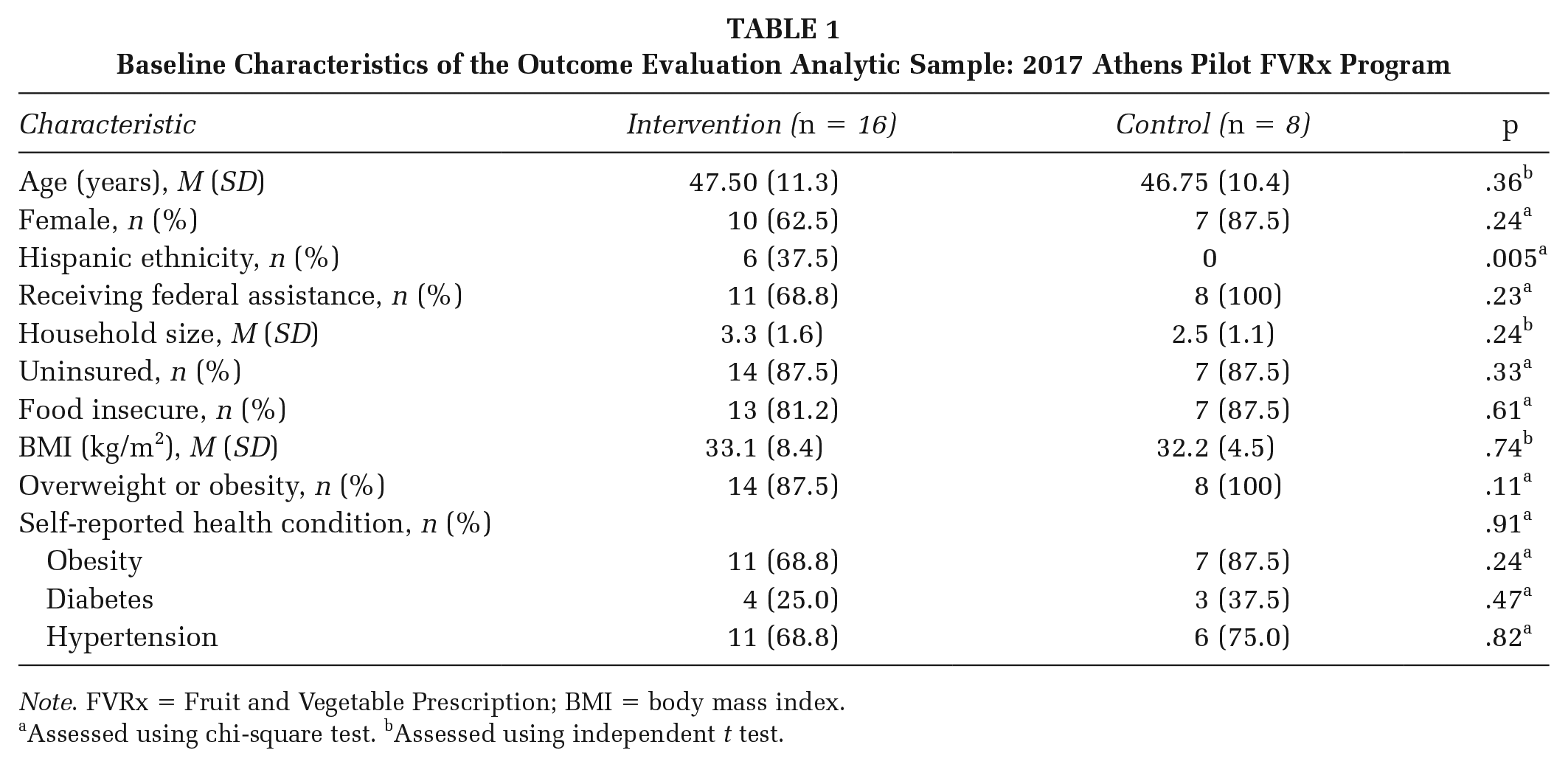
The analytic sample (n = 24) included 16 intervention participants and eight control group participants (see the Appendix). At baseline and postintervention, the intervention group included a higher percentage of individuals with Hispanic ethnicity, but no other significant differences were found between intervention and control groups.
Intervention
The Athens Pilot FVRx program was established and implemented based on a unique partnership among Wholesome Wave Georgia, University of Georgia SNAP-Education (UGA SNAP-Ed), University of Georgia County Extension Office, Athens Farmers Market, Athens Nurses Clinic, and Pinewoods Hispanic community. Given the required intervention components, each partnering organization contributed resources and support for the pilot program implementation (Figure 1).
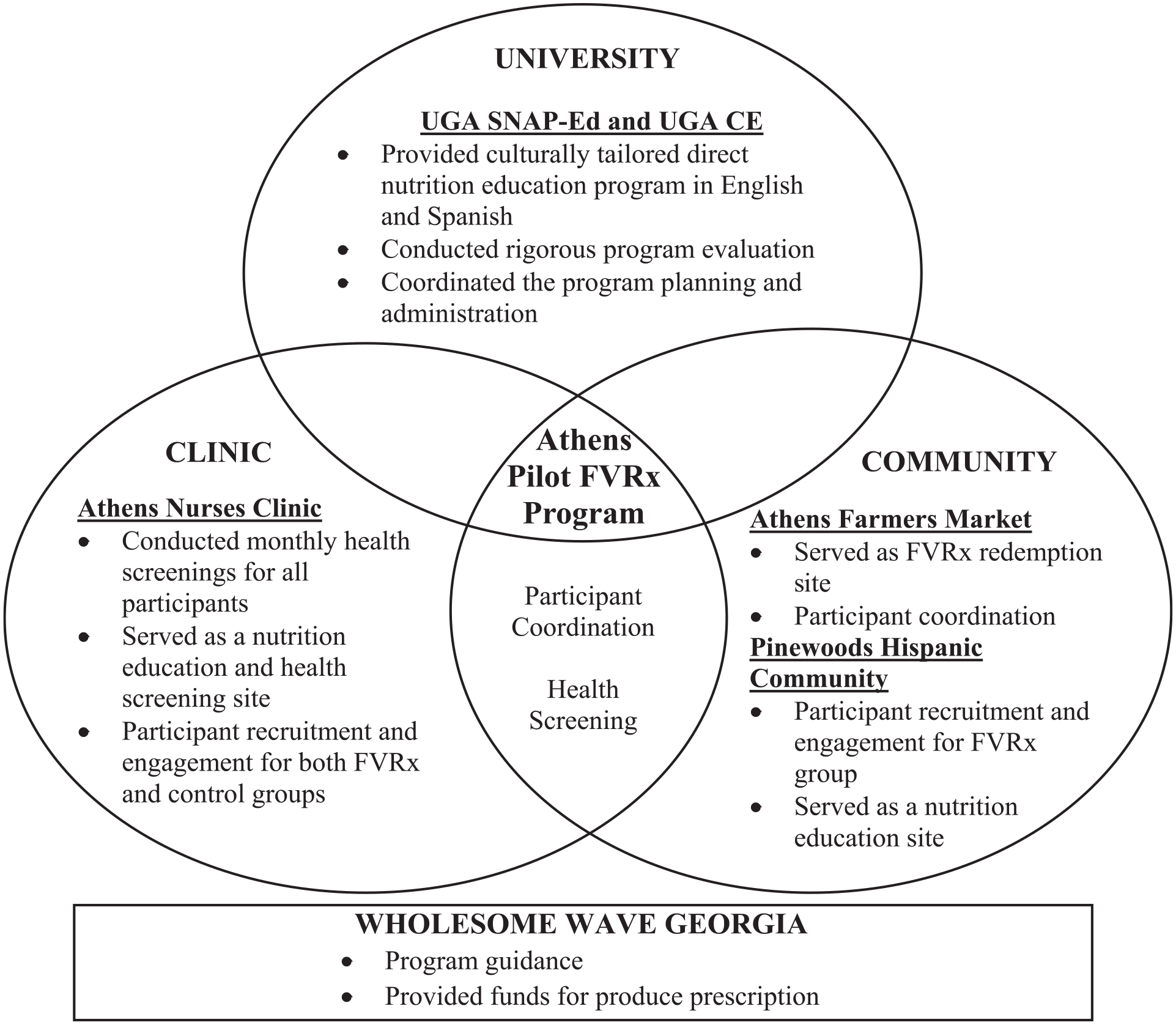
2017 Athens Pilot FVRx Program Partnership Model
The Athens Pilot FVRx program provided produce prescriptions, nutrition education, and health screenings. Participants received a monthly produce prescription worth $1/day per household member. These prescriptions could be redeemed up to once a week for tokens as payment to produce vendors at the Athens Farmers Market. Each produce prescription expired at the end of every month and was renewed by the clinic’s nurse practitioner during the monthly health screening and nutrition education classes. A community-based participant coordinator connected participants with transportation to and from the farmers market and nutrition education sessions and tracked participant redemption and spending. The nutrition education included 6-monthly, group-based, Food Talk program lessons taught by peer educators in English and Spanish from UGA SNAP-Ed. The Food Talk curriculum was developed explicitly for low-income Georgian families and guided by the health belief model and Dietary Approaches to Stop Hypertension diet (Sacks et al., 1995). Each month included a didactic lesson, interactive activities, a cooking demonstration, and food tasting opportunities. The demonstration recipes featured traditional and seasonal Georgia agricultural products. Lesson content also encouraged participants to increase the intake of fruits and vegetables and low-fat dairy and limit dietary sodium. Before each nutrition education session, trained clinic staff, volunteers, and researchers conducted a monthly health screening assessing each participant’s blood pressure and anthropometrics.
Data Collection
Outcome measures were collected at baseline and postintervention of both FVRx and control groups. Dietary intake for both groups was assessed using an interviewer-administered 24-hour dietary recall and a two-item fruit and vegetable screener. Dietary recalls were entered into the Automated Self-Administered–24-Hour Dietary Assessment Tool to calculate cup equivalents for various foods or food groups, nutrient values, as well as 2015 Healthy Eating Index (HEI) scores (Schap et al., 2017). A validated two-item fruit and vegetable screener (National Cancer Institute, 2001) was used to assess average daily servings of fruits and vegetables. Self-reported nutrition knowledge and behaviors were assessed using measures developed by Wholesome Wave Georgia and validated measures used by UGA SNAP-Ed following the SNAP-Ed Evaluation Framework (U.S. Department of Agriculture, 2018). Food purchasing practice measures included the primary food store, frequency of shopping and amount spent, the primary location for fruit and vegetable purchases (e.g., grocery store, farmers market), amounts of particular food and nonfood items purchased (e.g., fruits, vegetables, processed foods, household supplies), and frequency of eating out (Walker et al., 2015). The University of Georgia Institutional Review Board approved the study (StudyNo. 00004504).
Data Analysis
Descriptive statistics were calculated for sociodemographics, dietary intake, nutrition knowledge and behaviors, and food purchasing practices of the study sample and by group across the intervention period. Changes between or within the intervention and control groups were assessed using chi-square or Fisher’s exact tests for categorical variables, and independent or paired t tests for continuous variables. For independent t tests, if the F statistic determined variance to be significantly different, the Welch-Satterthwaite method was used to correct this variance. All analyses were conducted using SPSS Statistics for Windows (Version 24, Armonk, NY: IBM Corp.). The significance level was set at p < .05.
Results
The characteristics of the analytic sample (n = 24) are shown in Table 1.
Baseline Characteristics of the Outcome Evaluation Analytic Sample: 2017 Athens Pilot FVRx Program
Note. FVRx = Fruit and Vegetable Prescription; BMI = body mass index.
Assessed using chi-square test. bAssessed using independent t test.
Baseline total fruit and vegetable intake and HEI-2015 Total Vegetable and Fruit Scores were not significantly different between the FVRx and control groups. Based on the NCI FV screener, the FVRx group reported significantly increased total fruit and vegetable intake, 0.81 (standard deviation [SD] = 0.91) serving/day, compared with the control group, −0.25 (SD = 0.99) serving/day (p = .02). Following the intervention, the FVRx group’s reported total vegetable and dark green vegetable intake, as well as HEI-2015 Total Vegetable (p = .005) and Greens and Beans (p = .03) scores, increased significantly compared with baseline; however, these changes did not reach statistical significance when compared with those in the control group. There were no significant changes within the control group for any dietary measures.
Compared with the control group, the FVRx group was significantly more likely to increase self-reported knowledge of preparing fruits and vegetables (p = .02). Additionally, the FVRx group were significantly more likely to ‘Think about healthy food choices when deciding what to feed your family’ (p = .04) and “Plan meals ahead of time” (p = .04) after the intervention.
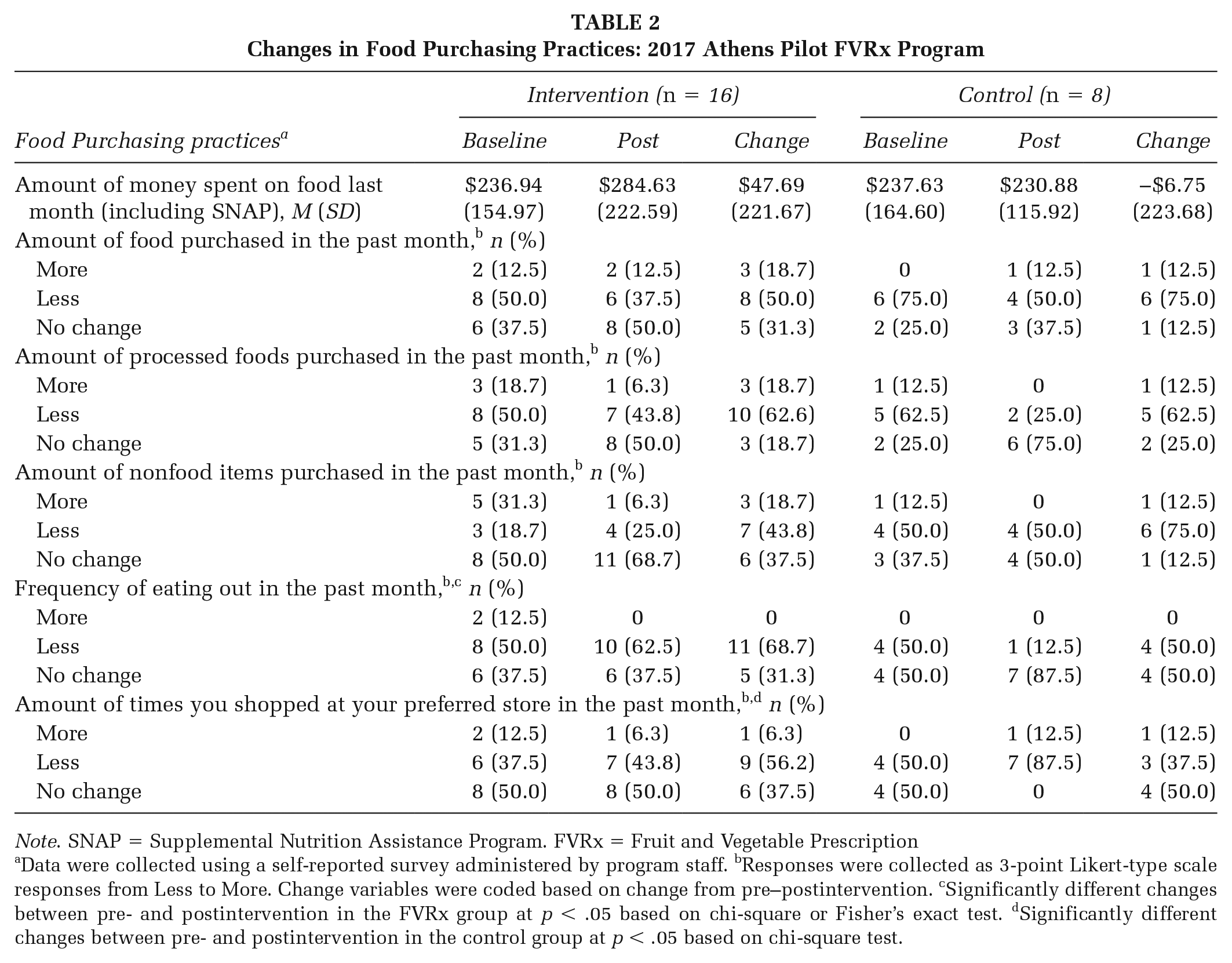
At baseline and postintervention, FVRx and control group participants shopped for most of their food at grocery stores (e.g., Kroger, Publix) or mass merchandisers (e.g., Walmart, Target). Following the intervention period, the FVRx participants were significantly more likely to increase purchasing the majority of fruits and vegetables at the farmers market compared with the control group from 6.3% to 75.0% (p = .001; Table 2). The FVRx participants also reported a marginally significant increase in the amount of fresh vegetables purchased compared with the control group following the intervention (p = .05). The FVRx group also reported significant reductions in the frequency of eating out (p = .01); however, this change was not significantly different from those in the control group.
Changes in Food Purchasing Practices: 2017 Athens Pilot FVRx Program
Note. SNAP = Supplemental Nutrition Assistance Program. FVRx = Fruit and Vegetable Prescription
Data were collected using a self-reported survey administered by program staff. bResponses were collected as 3-point Likert-type scale responses from Less to More. Change variables were coded based on change from pre–postintervention. cSignificantly different changes between pre- and postintervention in the FVRx group at p < .05 based on chi-square or Fisher’s exact test. dSignificantly different changes between pre- and postintervention in the control group at p < .05 based on chi-square test.
Discussion
To the authors’ knowledge, this is the first controlled study of a community- and clinic-based FVRx program model that provided produce prescriptions and culturally tailored direct nutrition education. Our findings suggest the Athens Pilot FVRx model increased participant access and purchase of produce from a local farmers market, dietary intake of fruits and vegetables, and nutrition knowledge and behaviors. In particular, group-based and culturally tailored nutrition education is feasible in both clinic and community settings and may enhance the direct benefits provided by produce prescriptions.
Unlike previous studies utilizing health care provider-based nutrition counseling, this study relied on SNAP-Ed and County Extension to provide nutrition education activities and content to FVRx participants. Tying the curriculum and cooking demonstrations to seasonal and culturally appropriate produce available at the farmers market likely improved individual-level outcomes such as knowledge of fruit and vegetable preparation, food purchasing practices, and food resource management behaviors like eating out less and planning meals ahead of time (Cotter et al., 2017). These changes, combined with produce prescription and community-level support, may have reduced common food access barriers by increasing familiarity with local produce and improving the cultural acceptability of the market setting.
Our study also suggests that university–community–clinic partnerships provide organizational and community-level support for effective FVRx program implementation and research. The Athens Pilot FVRx program model allocated funding for transportation and social support from a community-based participant coordinator to connect participants to each aspect of the FVRx program model, addressing common barriers to the priority population. These program implementation processes combined with the produce prescription and nutrition education may have supported prescription redemption at the farmers market and may have increased the amount and variety of fresh vegetables purchased and consumed by participants.
Given the vulnerability of the priority population, the use of a randomized controlled trial was not feasible. For the same reason, it was a challenge recruiting and retaining an equivalent control group at both community and safety-net clinic sites. The use of nonprobability sampling methods made recruitment feasible and critical in demonstrating the intervention effects but did not allow us to control for potential biases between groups. The retention rates highlight the unique challenges of conducting controlled trials to study FVRx and produce prescription programs in low-income and medically underserved populations. Other limitations include low final sample size and the use of primarily self-reported data. Despite these limitations, findings from this study suggest community- and clinic-based FVRx programs address multiple levels of behavioral influence among medically underserved and food insecure populations.
Implications for Practice
The findings reported are noteworthy, given the growing interest of connecting medically underserved populations with diet-related conditions and food insecurity to locally sourced fruits and vegetables (Parks et al., 2019). Because free safety-net clinics rely on fundraising through donations and grants, implementing multiple program components such as recruitment, health screenings, nutrition education, and evaluation may not be sustainable. Our study demonstrates that SNAP-Ed and County Extension agencies can serve as vital partners to produce prescription programs, given their mandate and capacity to serve low-income families in both community and clinic program settings. Programs working with safety-net clinic and community populations should allocate funding for program and participant coordinators to ensure effective participant retention and outcomes. Lastly, until secure funding is in place, university–community–clinic partnerships can effectively harness other critical resources to administer the programs, conduct research, and demonstrate program impact and viability for future funding.
Footnotes
Appendix
Authors’ Note:
We wish to express appreciation to the Athens Farmers Market and Athens Nurses Clinic staff and volunteers for supporting the program and research. This study was funded in part by Wholesome Wave Georgia, USDA SNAP-Ed, and the University of Georgia Office of Sustainability. None of the authors have financial disclosures.
