



Abstract
Live Well Allegheny: Lifting Wellness for African Americans (LWA2) is a coalition in Allegheny County, Pennsylvania, funded by the Centers for Disease Control and Prevention’s (CDC) Racial and Ethnic Approaches to Community Health (REACH) initiative. LWA2 consists of partner organizations addressing chronic disease prevention in six Black communities through nutrition, physical activity, and community–clinical linkage strategies. This analysis focuses on qualitative data exploring the influence of COVID-19 on coalition functioning and communities. We conducted focus groups with residents in REACH communities and collected evaluation reports from partner organizations. Three focus groups assessed awareness of and participation in the REACH initiative, feedback, and the impact of COVID-19 when applicable. An additional focus group included questions related to flu vaccine messaging and the COVID-19 vaccine. These data sources provided insight regarding how COVID-19 affected planned tasks. Evaluation team members analyzed focus groups and collated summaries as part of a larger comprehensive evaluation. Partner organizations experienced an increase in food stamp applications, delays in opening farmers’ markets, a shift to virtual preventive health programs, canceled in-person events, and programmatic interruptions that shifted long-term goals. Community resident concerns included difficulty accessing public transportation, decreased physical activity, fear of in-person interactions, and increased wait times for mental health services. Coalition members developed methods to continue functioning and sustaining program activities. Residents were able to engage differently with chronic illness prevention techniques. Reports from the ongoing analysis will be used to adapt coalition functioning.
Keywords
In Allegheny County, Pennsylvania, Black residents have a higher mortality rate for stroke, cardiovascular disease, heart disease, and cancer than the national average and are more likely to be diagnosed with chronic illnesses at younger ages than White residents (Allegheny County Health Department, 2017, 2018; Centers for Disease Control and Prevention, National Center for Health Statistics, 2021). Despite improved health disparities between Black and White residents for asthma, cholesterol, and stroke, diabetes and hypertension remain more common in Black residents (Devaraj et al., 2020). The Allegheny County Health Department (ACHD) and its advisory committee performed a Community Needs Assessment in 2015 to determine immediate health needs and a plan to achieve health equity. In 2018, ACHD’s Racial and Ethnic Approaches to Community Health (REACH) coalition was established as part of the Centers for Disease Control and Prevention’s (CDC) REACH initiative (O’Toole et al., 2022). The initiative provides community-level coalitions with financial, technical, network, and advisory support to reduce racial health disparities. Known locally as Live Well Allegheny: Lifting Wellness for African Americans (LWA2), the REACH coalition consists of the ACHD, an evaluation team from the University of Pittsburgh School of Public Health, and 10 partner organizations that focus on addressing nutrition, physical activity, and access to clinical services with particular emphasis on reducing disparities among Black residents. Coalition members shifted how they addressed health disparities and needs during the COVID-19 pandemic as described through qualitative analyses in this article.
Coalition Infrastructure
Our capacity to address health inequities is demonstrated through our infrastructure. The Component Model of Infrastructure (CMI) was developed for public health programs and comprises interrelated nonhierarchical five core components (engaged data, multilevel leadership, managed resources, responsive plans and planning, and networked partnerships) and three supporting components (strategic understanding, operations, and contextual factors) that interact with and envelop the core components. Together, these components impact capacity, outcomes, and sustainability (Lavinghouze et al., 2014). Multilevel leaders from national and local organizations oversee the coalition: ACHD, CDC support, the University evaluators, and partner organizations. Our leadership facilitated networked partnerships among local organizations, managed resources from the CDC, engaged data through an ongoing process evaluation, and developed plans that adapted to contextual factors. LWA2’s infrastructure and dedication to health equity have defined its capacity to address health disparities, produce positive health outcomes, and be sustained through a pandemic.
Impact of COVID-19
When the COVID-19 pandemic began, the coalition leveraged its existing infrastructure to address and evaluate COVID-19’s impact on partner organizations and priority communities. Black residents of Allegheny County have borne the brunt of COVID-19 cases and hospitalizations. Through the end of 2020 and between June and September 2021, they had a higher COVID-19 mortality rate than White, Asian, and other residents (Black Equity Coalition [BEC], 2021b). By July 2020, the cumulative incidence of COVID-19 cases among Black residents was 2.8 times higher than White residents, and except for the autumn of 2020, it has been higher than any other racial group (see Figure 1). Since March 2020, COVID-19 hospitalization rates among Black residents have consistently been the highest among all racial groups in Allegheny County—2 to 3 times greater than White residents, and, at times, even higher (BEC, 2021b).
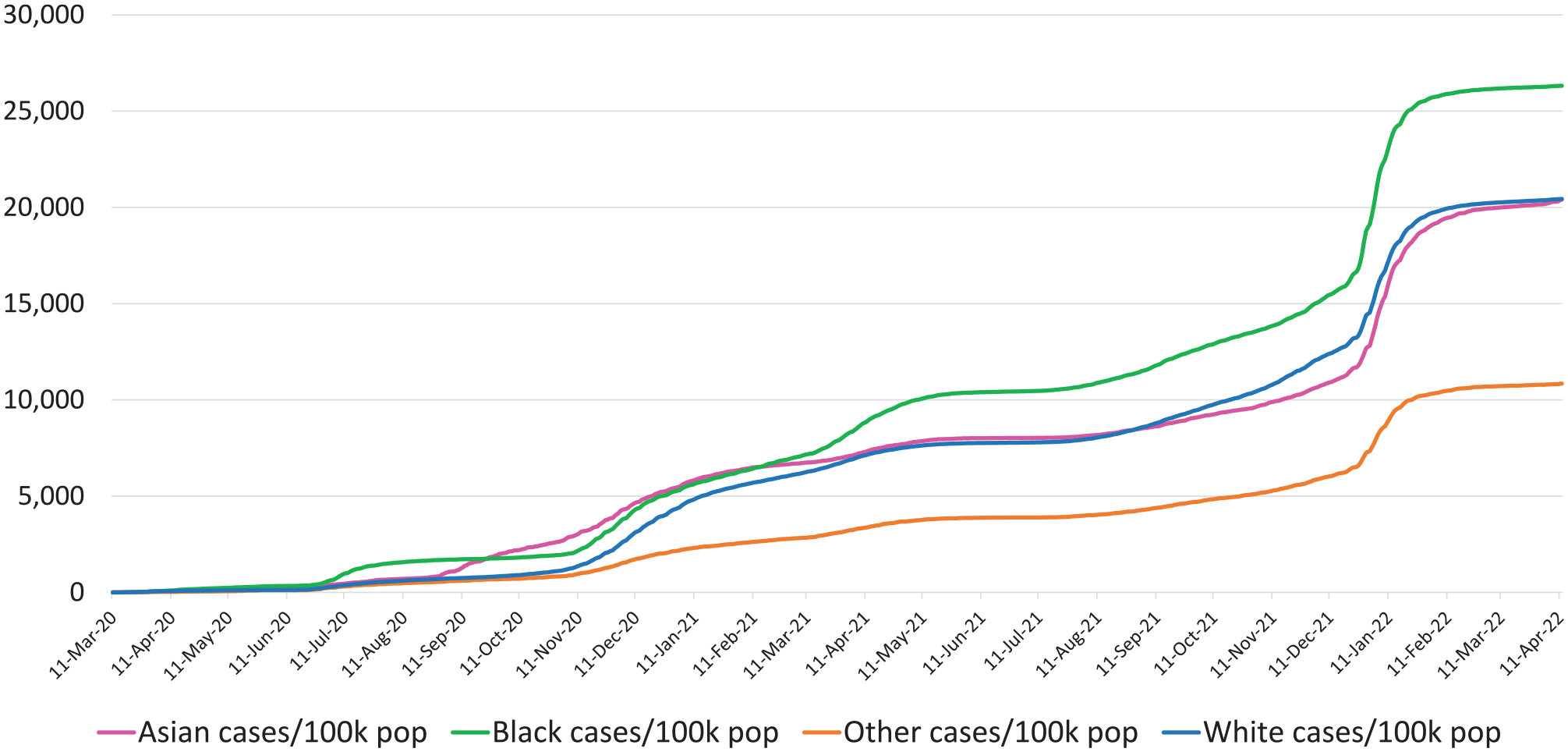
Cumulative Cases of COVID-19 per 100,000 Population in Allegheny County, Pennsylvania From March 2020 to April 2022
Stark disparities are also evident in COVID-19 vaccination rates. By December 2021, while more than 65% of all residents were fully vaccinated, less than 40% of Black residents were fully vaccinated (Pennsylvania Department of Health, 2021). During that same time period, among the 10 ZIP codes with the largest populations of Black residents, vaccination rates ranged from 34% to 53% (BEC, 2021a). Low vaccination numbers are especially concerning since 59.3% of jobs held by people of color (including Black workers) are essential jobs, indicative of higher COVID-19 risk for Black residents and other racial inequities (Beery et al., 2021).
LWA2 collaborated with vaccine equity efforts by the ACHD and the BEC, a local coalition of predominately Black professionals in public health, medicine, philanthropy, and business development, to prioritize racially equitable vaccine distribution. In addition, LWA2 received two supplemental CDC grants related to residents’ flu vaccine perspectives and to COVID-19 vaccines. These grants have expanded LWA2’s racial health equity efforts in priority communities to address COVID-19 disparities and are deepening partnerships between LWA2 partners, priority community gatekeepers, organizations, public health ambassadors, and residents.
Theoretical Framework
Kilbourne et al. (2006) proposed a conceptual framework for researching health care–related disparities. The framework consists of three phases: detecting, understanding, and reducing. The first phase defines vulnerable populations and detects disparities while considering possible selection effects and confounding factors. The second phase challenges researchers to consider the cause and impact of the disparities throughout various health care system levels. The third involves reducing disparities by intervening, evaluating, translating, disseminating findings, and informing policy changes.
Thomas et al. (2011) adapted this framework to health disparities research within nonclinical settings with the Health Equity Action Research Trajectory (HEART) paradigm. HEART is similar to Kilbourne’s work, but expands on the second generation and adds a fourth generation. The second generation of HEART broadens Kilbourne’s initial scope of determining health care system–related causality to include all social determinants of health. The authors also recognize CDC’s REACH as an example of eliminating disparities in their third generation phase. Their additional fourth generation uses the Public Health Critical Race (PHCR) praxis as a framework to call for researchers to work with communities to develop multilevel interventions that address multiple social determinants of health while using evaluation practices and self-reflection by the researcher (Ford & Airhihenbuwa, 2010; Thomas et al., 2011).
We used HEART to organize the research of LWA2’s work toward health equity by centering Black communities (see Figure 2). We did this by detecting (first generation) and understanding (second generation) these disparities. The coalition was formed (third generation) with a specific purpose to address chronic illnesses within these Black communities. Our continued work with this population and evaluation procedures during the pandemic remains centered on feedback from partners and Black community members (fourth generation).
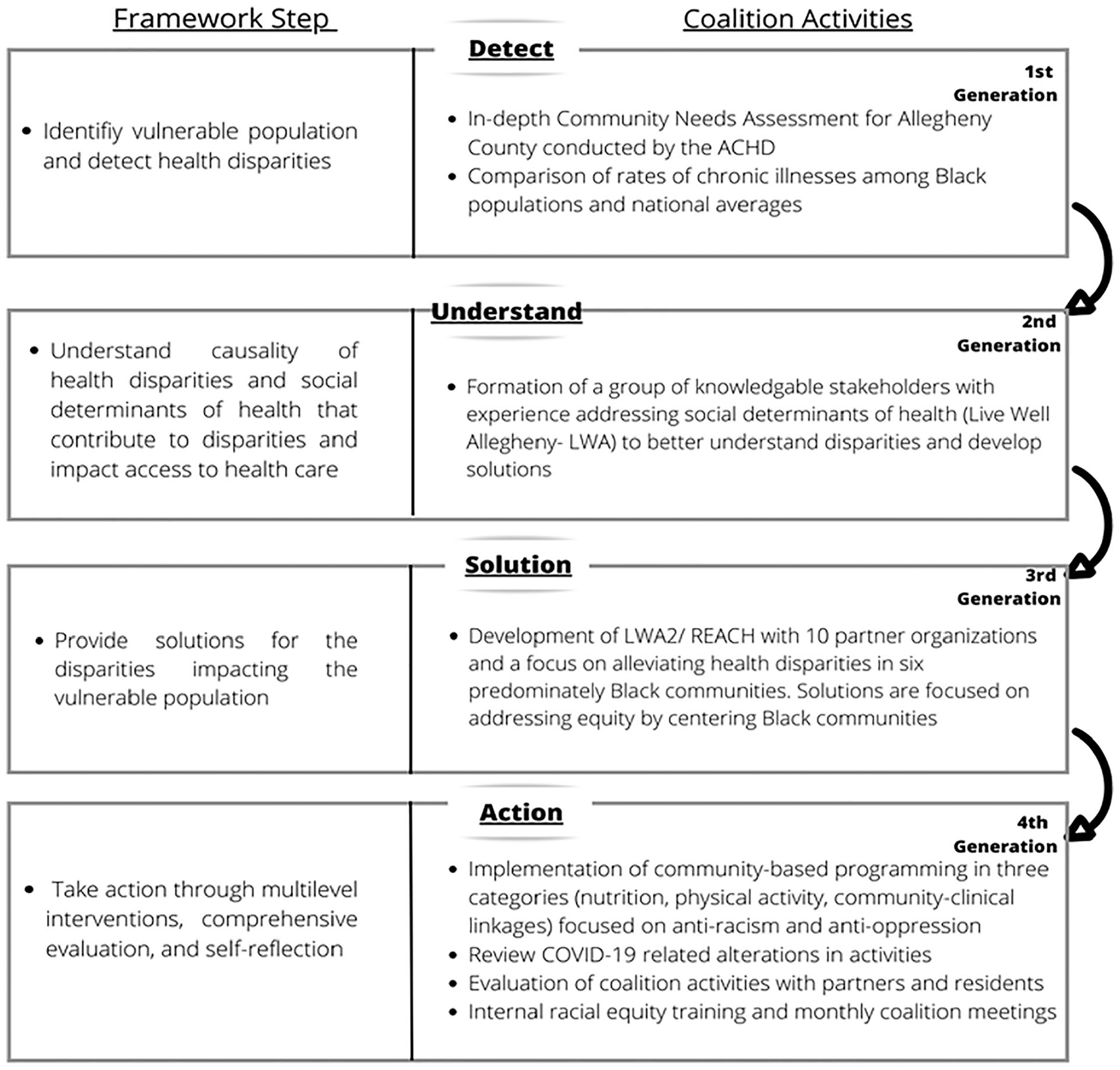
LWA2 Coalition Adapted Conceptual Framework
Purpose
This analysis explores COVID-19’s impact on coalition functioning and communities through qualitative data collected from partner organizations’ evaluation reports and resident focus groups. The results will provide implications for sustainability for community-based interventions.
Method
Focus Groups
This analysis centers focus groups held with adults in REACH priority neighborhoods between December 2020 and April 2021. The topic for three groups was coalition-centered and discussed residents’ needs, LWA2’s impact, and COVID’s effect; the other, perspectives on flu vaccines and the pandemic’s influence on COVID-19 vaccine views (see Table 1). Evaluation team members with external facilitator feedback developed discussion guides covering familiarity with the coalition, how the pandemic impacted residents, residents’ views on the vaccine, and priorities for nutrition, physical activity, and community–clinical linkages. The guide also contained community-specific questions regarding resources, such as the impact of closing a grocery store in one neighborhood. A focus group guide is available as supplemental material (see Supplemental Material).
Description of Focus Groups in Priority Neighborhoods Used in the COVID-19 Analysis
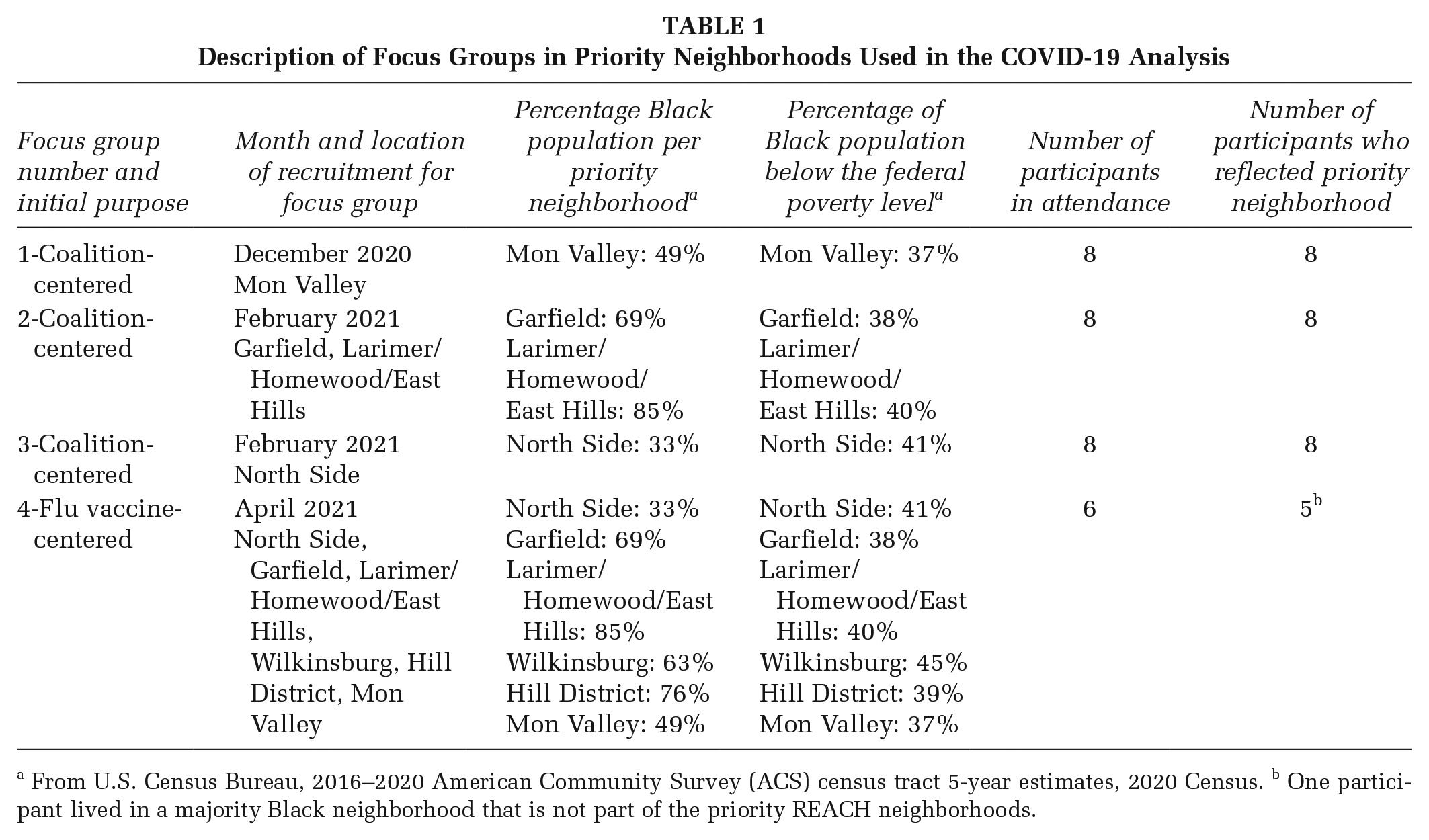
From U.S. Census Bureau, 2016–2020 American Community Survey (ACS) census tract 5-year estimates, 2020 Census. b One participant lived in a majority Black neighborhood that is not part of the priority REACH neighborhoods.
Researchers recruited participants for the coalition-centered groups through social media flyers, community ambassador recommendations, and word of mouth. Each focus group was approximately 90 minutes long, comprised eight participants, and all participants were compensated for their time. Due to the pandemic, focus groups were conducted via videoconference on Zoom. Sessions were recorded, transcribed, and analyzed in NVivo 12. Two evaluation team members developed a codebook through an inductive and deductive process. The original codebook was developed through themes found in the focus group guide. Researchers added and edited codes in the codebook when new themes emerged. The team frequently met to discuss consensus among coders regarding new codes, definitions, methodology for application, and emerging themes. The agreement among coders was validated by assessing inter-rater reliability for all resident focus groups (Cohen’s kappa = 0.62). The evaluation team members also drafted memos for each focus group that analyzed emergent themes.
The 90-minute flu vaccine-centered focus group, held via Zoom, included six participants recruited through word of mouth and flyers shared via social media, emphasizing the recruitment of residents from priority neighborhoods. Three evaluation team members developed the codebook for the focus group in the same manner as the coalition-centered focus group guides. Two members coded the transcripts, and inter-rater reliability was assessed (Cohen’s kappa = 0.68). All three members drafted memos which providing additional thematic analyses. We asked participants their neighborhood of residence at the beginning of each session. Focus group participants were not required to keep their Zoom videos on but most chose to do so. All participants were compensated for their time via mailed gift cards. This study was not considered human subjects research by the University of Pittsburgh Human Research Protection Office (HRPO), and the evaluation team received documentation stating that no institutional review board (IRB) approval was required.
Coalition Partner Reports
As part of the larger comprehensive evaluation of the coalition’s work, evaluation team members collect data from coalition partners regarding the prior year’s progress. Data include performance measures for annual submission to the CDC and in-house data to track progress. In this context, coalition members from each organization, 10 in total, answered open-ended questions regarding successes and challenges they faced. In 2020 and 2021, we evaluated the impact of the COVID-19 pandemic on their work. Two evaluation team members assessed submitted responses for themes regarding barriers and progress made during the pandemic.
Focus group results
Impact on Access
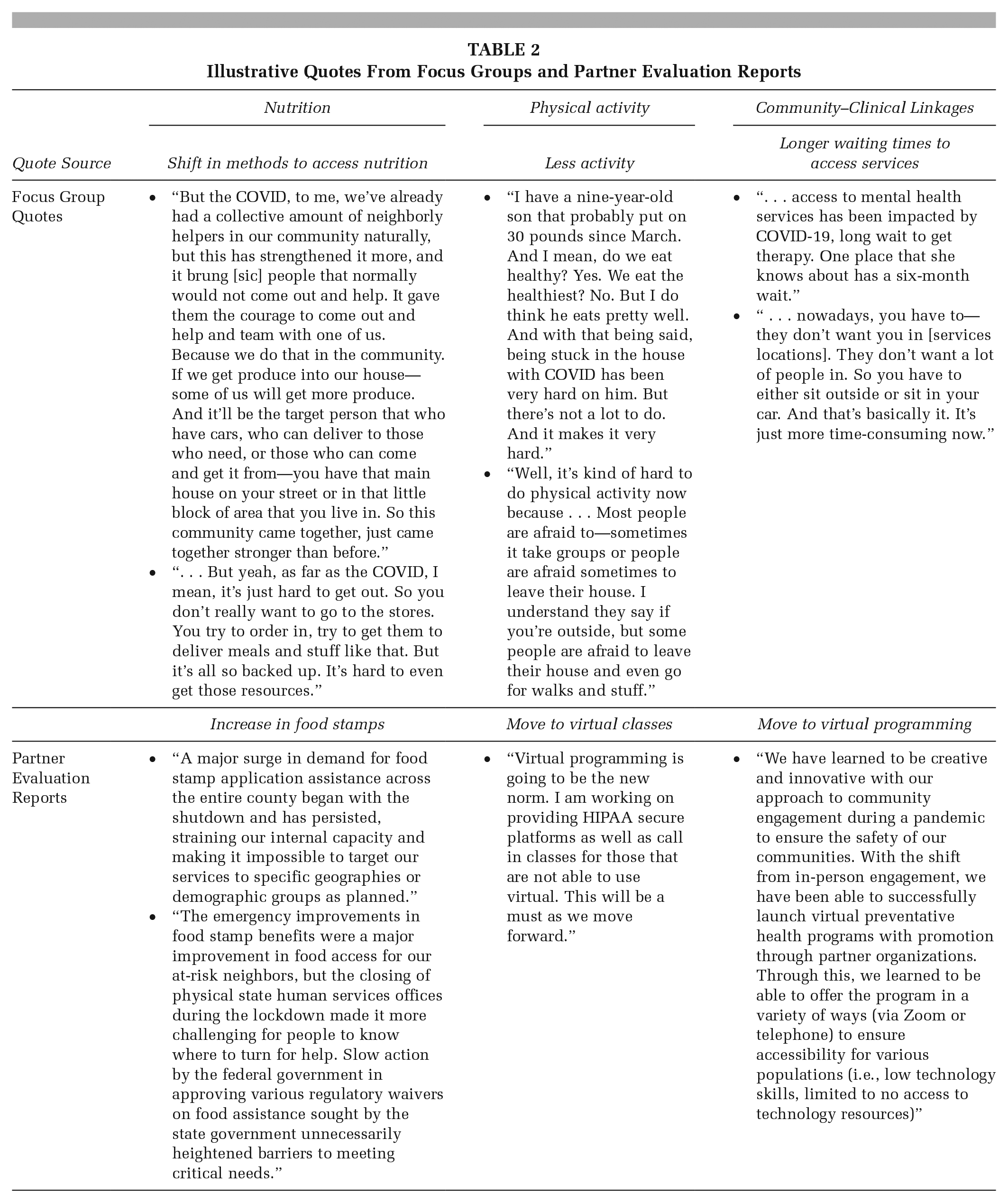
In addition to feedback on the coalition and their communities, focus group participants discussed how COVID-19 impacted their access to nutrition and public transportation, their ability to engage in physical activity and receive clinical services, and other general changes to daily activities (see Table 2). Participants expressed that changing their usual methods of attaining their needs to either comply with new regulations or out of caution for their safety hindered their ability to tend to their health. Despite altered routines, they expressed how adapting led them to new resources, enabling them to address needs through different means.
Illustrative Quotes From Focus Groups and Partner Evaluation Reports
Nutrition
Regarding the impact on nutrition, participants discussed alternatives to getting their meals in grocery stores, such as picking up boxes and meals and relying on family and community members. One participant spoke about the hardship families with children were enduring when obtaining meals. When children were attending school virtually, the public schools offered meals to families to ensure nutritional needs of families were met (Stinelli, 2020). They reported a lack of variety in the food and confusion regarding when and how to receive it. Although some residents struggled maintaining healthy nutrition, participants discussed successful alternatives to grocery shopping, such as having family members assist them and relying on community members to share produce. One participant discussed how the community came together to ensure residents had food and described innovative methods for residents to aid each other (see Table 2).
Physical Activity
Participants reported that COVID-19 hindered their personal fitness goals due to lack of available in-person resources and not wanting to be close to other people. Although exercising alone was not viewed as ideal, participants stated that they would try exercising with others virtually. In addition to their own goals being deterred, one participant discussed the impact of lack of physical activity on her child. The combination of not eating healthy and the lack of movement caused substantial weight gain (see Table 2).
Traveling and Being in Public
Participants also discussed how traveling in public changed for them during the pandemic. While some reported that traveling was safe because fewer people were using public transportation and people were required to wear masks, others felt cautious about being near others in public. Participants noted an increase in the cost of using rideshare services, making them unaffordable to those experiencing financial difficulties during the pandemic. They also discussed stigma around contracting COVID-19 and mask wearing. Participants expressed wariness of being near someone diagnosed with COVID-19 and risking infection. When discussing masks in public, one participant stated that wearing one may be challenging because they may be mistaken for a gang member. They stated, Yes. I just wanted to make the comment that I was accustomed—I grew up not wearing a mask or nothing but it came up to the fact that it was mandatory that you wore the mask and everything. And I said, and I told my wife, I said, “It’s like we’re all gang members. We getting ready to rob a bank or something.” I was afraid to go to the bank because you got mask on . . . . And it’s really affected me in a negative way . . .
Vaccine Feedback
Regarding the COVID-19 vaccine, most participants in the coalition-centered groups shared a willingness to be fully vaccinated or already being vaccinated. When discussing the impression of the vaccine within their communities, participants stated knowing people were cautious about receiving it due to the possibility of being injected with the coronavirus, believing the vaccine is unnecessary, or believing the vaccine would not help. The flu vaccine-centered focus group echoed COVID-19 vaccine skepticism. One participant expressed that offering monetary incentives made them question the motives behind the promotion of the vaccine and that focus should be placed on other chronic illnesses, such as diabetes or cancer, that have also been fatal in their community. They questioned the sincerity in vaccinating communities of color, believing that the primary motivation to vaccinate them is that their susceptibility to the virus puts the rest of the population at risk for onset of COVID-19 disease.
Regarding dissemination of vaccine information, participants preferred that information come from trusted messengers in the community. Specifically, they would prefer hearing about the vaccine and personal experiences with it from people in the Black community, doctors of the same ethnicity, and pastors. Confusion about how the vaccine works and the safety after the distribution of one COVID-19 vaccine was stopped then restarted caused hesitation. One participant noted that the scientific community seemed to be learning about the vaccine as they were trying to teach the public about it, which confused the accuracy of the information presented:
With COVID, I felt like they were teaching us while they were learning . . . It was just too much information that had to be retracted. And while that’s what happens in medicine, I don’t feel like we should have been front row center for it. I feel like the information was fed to us as they were getting it, and it was just very confusing.
Partner Evaluation Report Results
Nutrition Challenges
Partner organizations experienced challenges of delays in food processing services, arranging for new service sites, limited in-person activities, increases in the need for food assistance, and strains on internal processes and staff. Other challenges included delivering food, conducting outreach, or screening for food insecurity. One partner who works with health care providers reported, . . . A number of healthcare partners reported that they have not been screening for food insecurity or distributing food boxes due to COVID-19 and clinical workflow changes. Additionally, it was not realistic to try to engage new healthcare providers on screening for food insecurity since many were altering their patient visit models due to COVID-19 and the elements of creating a successful partnership were limited due to the public health crisis.
This time also highlighted existing inequities, and partners had to be flexible in meeting these needs. As one partner reported, The pandemic has exposed the economic consequences of deep and structural racial inequity as never before and we continue to learn how to best respond. We have had to gain new flexibility in outreach strategy, social media, and communications technology in order to respond to the need for remote operations and other consequence of the emergency.
Although faced with their programming and operations challenges, the partners successfully developed innovative ways to reach community members and continue programming. Organizations reported developing new partnerships and new relationships with other partners to promote each other’s work and distribute food. One partner reported, We now do home deliveries of food boxes, have a Community Partner Organization (CPO) Program where we provide emergency food boxes to organizations that don’t typically do direct food assistance (including healthcare facilities) so they can get those to community members that they see in need, and do Drive-Up Food Distributions.
In addition, those providing in-person services, such as breastfeeding classes, shifted to interactive, virtual activities in compliance with state and federal guidelines. One partner reported hosting virtual events and celebrations for the community. Finally, the shift to virtual programming also opened the possibility of attending conferences virtually for internal staff development.
Community–Clinical Linkages and Physical Activity Challenges
Challenges faced by community–clinical linkages and physical activity partners included canceling in-person outreach and events, fewer clients initially, shifting organizational priorities, and delays in grant opportunities. One organization reported calling for grant-funded opportunities a few days before businesses closed for in-person activities, which led to delays in the process and therefore delays in reaching their goals for the year. Another organization reported that in-person events such as fitness courses and health screenings could no longer meet. However, as the pandemic progressed, that same organization reported shifting to virtual programming for the third year of program implementation (August 2020–July 2021), in which community members were able to exercise at home. They reported success with virtual or hybrid fitness programming making it sustainable even after the pandemic.
Partner organizations canceled or reorganized in-person health screening and preventive health events. For example, one partner organization engaged in preventive health programming, developing virtual versions for health behaviors such as smoking cessation. They also stopped in-person health screenings and aided other partner organizations in pandemic relief by assisting with COVID testing, immunization clinics, and providing food resources. When restrictions eased for in-person events, they shifted their events to new venues including outdoor spaces in compliance with local public health regulations, and altered their focus by adding both flu and COVID-19 vaccinations to their events.
Discussion
In addition to the health disparities, our partners and community residents experienced drastic changes during the pandemic similar to other Black populations throughout the nation. In one study, half of the nearly 800 Black participants had reduced income or someone in their household lost a job, and one third reported a major negative impact on affording basic needs such as housing, food, and utilities. In that same study, about half of the Black participants stated they would not want the COVID-19 vaccine if it was free and deemed safe by scientists (Hamel et al., 2020). In another survey of 207 Black Americans, participants attributed medical mistrust in the COVID vaccine and in general to systemic racism including mistreatment and discrimination found in the government and health care (Bogart et al., 2021). These concerns are also found within our populations as our partners and residents recognize economic consequences and vaccine hesitancy. During this pandemic, practitioners working with marginalized communities had to address these established disparities while dealing with additional disproportionate burdens and barriers. The pandemic heavily impacted our coalition’s operations and the population we serve. Black populations in our county suffered disproportionately from the pandemic, but residents adapted to meet their health needs. When our initial methods for program delivery were inadequate, our partner organizations were flexible, creative, and dependent on one another to continue to serve the county which reinforced their commitment to our mission.
We leveraged existing infrastructure and adapted initial plans to address immediate health needs and added methods to understand the pandemic’s impact on communities. We found some communities faced difficulties accessing their health-related programming needs, fear of being diagnosed with COVID-19, questioning vaccination acceptability, and adjusting to social distancing and virtual interactions. Partner organizations grappled with the influx of inquiries to address immediate needs, shifting to virtual programming, and developing new programming strategies that rely on partnerships to aid the community. The infrastructure leveraged, maintained, altered, and enhanced through this crisis to meet the communities’ needs ultimately facilitate sustainability. Culturally tailored community-based interventions like REACH with a health equity lens can better respond to community needs because residents may prefer to hear information from trusted community members. REACH programs have proven infrastructure and capacity to be trusted communicators and community partners (O’Toole et al., 2022). To continue their missions throughout the pandemic and ensure contextual factors are addressed, initiatives should gather and understand the specific barriers their communities face and alter their methods to address the needs. Our willingness to reassess our goals, activities, and methods through this process evaluation supported sustainability.
To inform further programming, the results of the focus groups were summarized and disseminated to organizers, participants, and partner organizations. The results of the flu-centered focus group were shared with ACHD and coalition partners. The partner summaries were included in a comprehensive report to the CDC as part of the yearly evaluations.
Limitations
Limitations include possible selection bias through the recruitment process and accessibility concerns. Recruitment relied on word-of-mouth processes, and participants opted into participating. Due to the restraint of the pandemic, participation required internet or phone access to attend the focus group, which may not have been possible for all members of the community. To preserve resident identities, we did not collect formal demographic data, although we asked about their neighborhoods of residence during the focus group. Given that our study advertisements were targeted to recruit from REACH priority neighborhoods and that most participants stated they were residents of these priority neighborhoods and appeared to reflect Black residents from the Zoom video view, we believe that focus groups were reflective of the priority population. Limitations of the partner summaries include the potential for social-desirability bias. Although their results can be confirmed through the quantitative data they also reported (e.g., writing in the open-ended section about canceling events and then confirming through quantitative data on the number of events they reported took place), social-desirability bias may still be present.
Implications for Policy and Practice
Through in-depth qualitative data we have evaluated innovative practices and concerns that are applicable to our communities. Some of our innovative practices include communicating virtually, hosting socially distant events, safely distributing resources, and reliance on other partners. Our strategies and practices may be useful for vulnerable populations, such as those who may usually have difficulty accessing our services. Our findings show that it would be beneficial for community-based interventions to include sustainable alternative methods to meet needs of those who may need socially distanced activities, like virtual or contactless activities. Trusted public health professionals with proven infrastructure to accommodate the needs of their communities should incorporate flexibility into their methods, including methods of program delivery, organization interaction, and evaluation, to re-examine their understanding of needs and how to address them when the context of the delivery method changes to ensure sustainability. Moving forward, both during and after the pandemic, professionals can leverage data gathered through internal process evaluations to reassess needs of their communities. Methods for this include engaging with providers and residents through mixed-methods research guided with a health equity lens like the HEART paradigm.
Although faced with new emerging and shifting challenges that threatened health and safety, the residents and partner organizations proved that the challenges were not insurmountable. They adjusted to meet one another’s needs, and through the process of evaluation, we have highlighted successes and challenges of adjusting community-based interventions during emergent health crises.
Supplemental Material
sj-docx-1-hpp-10.1177_15248399221112965 – Supplemental material for Impact of COVID-19 on a Community Health Coalition and Its Residents in Allegheny County, Pennsylvania: Insights Into Adaptation From Focus Groups and Evaluation Reports
Supplemental material, sj-docx-1-hpp-10.1177_15248399221112965 for Impact of COVID-19 on a Community Health Coalition and Its Residents in Allegheny County, Pennsylvania: Insights Into Adaptation From Focus Groups and Evaluation Reports by Stephanie N. Christian, Andrea D. Casas, Krissy Moehling Geffel, Tiffany L. Gary-Webb, Hannah E. Hardy, Roderick Harris and Dara D. Mendez in Health Promotion Practice
Footnotes
Authors’ Note:
We would like to acknowledge and thank our REACH partners: Allegheny County Economic Development Department, Duquesne University Center for Integrative Health, Greater Pittsburgh Community Food Bank, Healthy Start, Inc., Pittsburgh Black Breastfeeding Circle, Pittsburgh Food Policy Council, The Food Trust, UPMC Children’s Hospital of Pittsburgh, and YMCA. We would also like to thank our community ambassadors and community residents for their participation in the coalition activities. This project was funded by Grant NU58DP006582 from the Centers for Disease Control and Prevention under the REACH (Racial and Ethnic Approaches to Community Health) program (REACH CDC DP18-1813).
Supplement Note:
This article is part of the Health Promotion Practice supplement, “Reducing Chronic Disease through Physical Activity and Nutrition: Public Health Practice in the Field.” The purpose of the supplement is to showcase innovative, community-centered, public health actions of SPAN, REACH, and HOP programs to advance nutrition and physical activity among priority populations in various settings. The Society for Public Health Education is grateful to the Centers for Disease Control and Prevention, Division of Nutrition, Physical Activity, and Obesity for providing support for the issue. The entire supplement issue is available open access at  .
.