



Abstract
The purpose of this survey was to examine Speech-Language Pathologists’ (SLPs) confidence in their ability to support student outcomes by addressing language-literacy needs, to align therapy to educational standards, and to align therapy to student content areas. A total of 237 school-based SLPs in Virginia completed a 19-item survey. Results indicated school-based SLPs were largely unfamiliar with the concept of disciplinary literacy and only 53% of the respondents indicated that they were “Very confident” or “Somewhat confident” in their ability to align their therapy to students’ content areas. Confidence level was found to be negatively correlated with SLPs’ experience level (rs = −.14–−.24, p < .05) and positively correlated with their rating of their education (rs = .28–.39, p < .01). These results suggest school-based SLPs could benefit from professional development in the area of disciplinary literacy as well as the broader area of adolescent language and literacy interventions.
Introduction
With the adoption of rigorous state learning standards (e.g., Common Core State Standards [CCSS]; National Governors Association Center for Best Practices & Council of Chief State School Officers, 2010), students are expected to learn at higher levels than ever before. They must possess more than basic and intermediate skills, such as decoding, generic comprehension strategies, and basic reading fluency. Academic rigor calls for students to create their own meaning out of what they have learned, organize information so that they can create their own mental models, and apply what they have learned to novel situations (Jackson & Lambert, 2010). Students need these skills to read challenging text in specific disciplines such as science, technology, history, literature, and mathematics. According to T. Shanahan and Shanahan (2012), students need to acquire disciplinary literacy to be successful in post-secondary settings and in the workforce. Disciplinary literacy is defined as the use of discipline-specific practices to reveal how reading and writing are uniquely used in the discipline being studied (e.g., chemistry, history, literature, math) to access, apply, and communicate content knowledge (Fang, 2012a; T. Shanahan & Shanahan, 2008). In other words, disciplinary literacy involves teaching the language and literacy demands of a specific subject area. School-based speech-language pathologists (SLPs) have an expertise in language. This skill set puts SLPs in the position to make important contributions to adolescents’ proficiency in literacy. This is especially true with adolescents who struggle, for whom difficulty understanding or manipulating language may be at the root of their problem (Ehren, Murza, & Malani, 2012). The purpose of this study was to gather information about school-based SLPs’ knowledge and use of disciplinary literacy techniques in their therapy. Specifically, the study was designed to examine SLPs’ confidence in their ability to support student outcomes by addressing language-literacy needs, to align therapy to educational standards, and to align therapy to student content areas.
Background
A top priority for educational leaders in U.S. schools is to prepare students to meet the challenges of a more global economy (Dobbs, Ippolito, & Charner-Laird, 2017). There has been a recent focus on preparing students for science, technology, engineering, and mathematics (STEM) careers to keep the United States in the forefront of research, innovation, and technology (Cervetti & Pearson, 2012). However, the most recent National Assessment of Educational Progress (NAEP) data show students, specifically adolescents (grades 4–12), continue to perform below proficient levels in reading and writing. These data suggest that the nation’s position as a leader in the global economy may be in jeopardy because adolescents are not acquiring the advanced literacy skills to become successful in the workplace. To address this concern, the National Governors Association and the Council of Chief State School Officers released the publication of new academic standards, CCSS to improve U.S. educational outcomes by focusing on more rigorous standards that are internationally benchmarked (Zygouris-Coe, 2012). However, the commonwealth of Virginia never adopted the CCSS. Teaching and learning in Virginia are measured by rigorous academic standards known as the Standards of Learning (SOL). The Virginia Department of Education published two reports (VDOE, 2010, 2011) comparing the SOL with CCSS. The reports concluded that although the CCSS and SOL English, literacy, and mathematic standards are not identical, the content is generally aligned, with some instances of SOL demonstrating more rigor in mathematics. According to the NAEP (2015) report, average scores of Virginia students in the area of reading and science are higher than the average scores of public school students across the nation. However, 64% of Virginia’s eighth graders’ reading scores fell below proficient levels, while 57% of fourth graders preformed below proficient levels. Furthermore, 60% of eighth graders performed below proficient levels in the content area of science, while 64% of fourth graders performed below proficient levels. NAEP (2015) defines “Proficient Levels” as the ability to provide relevant information, summarize main ideas, analyze and evaluate text, make predictions and draw conclusion. “Advance Levels” are characterized by the ability to make connections across texts and explain the relationship, evaluate evidence and construct justifications, and identify the various purposes of text information. According to Greenleaf (2007), students need to acquire high literacy skills—such as drawing inferences from various academic texts, synthesizing information from various sources, presenting oral language to debate issues and negotiating ideas—to succeed in the workforce and post-secondary settings. Greenleaf’s description of high literacy skills aligns well with NAEP’s Advance Levels, in which on average only 3% of fourth and eighth graders are performing.
To address these concerns, educational leaders have turned their attention to issues of adolescent literacy with a focus on disciplinary literacy (Ehren & Little, 2014; Fang, 2014; Moje, 2007; T. Shanahan & Shanahan, 2008). For example, the Reading Next Report (Biancarosa & Snow, 2006) made specific recommendations for improving adolescent literacy which included the suggestion to use, “Effective instructional principles embedded in content, including language arts teachers using content-area texts and content-area teachers providing instruction and practice in reading and writing skills specific to their subject area” (p. 4). Clearly, adolescent literacy includes literacy within the disciplines but an explicit explanation of each may be warranted. Adolescent literacy refers to students’ (grades 4–12) ability to read, write, understand, interpret, and discuss multiple texts across multiple contexts (Berman & Biancarosa, 2005; International Reading Association [IRA], 2012). Disciplinary literacy is more specific as it is the use of discipline-specific practices to reveal how reading and writing are uniquely used in the discipline being studied (e.g., chemistry, history, literature, math) to access, apply, and communicate content knowledge (Fang, 2012a; T. Shanahan & Shanahan, 2008).
Traditionally, a content-literacy approach has been utilized to teach literacy within subjects of science, math, history, and literature at the secondary level. This approach is characterized by the use of general literacy strategies (e.g., predicting, summarizing, paraphrasing, making connections, generating questions, visualizing) across content-area subjects to teach reading: often referred to as one-size-fits-all strategies (Snow & Moje, 2010). Although this approach has been helpful for students, mostly struggling readers, literacy experts (e.g., O’Brien, Moje, & Stewart, 2001; T. Shanahan & Shanahan, 2008; Snow & Moje, 2010) have advocated for a disciplinary literacy approach. For example, C. Shanahan (2015) indicated that the content-literacy approach can take students only so far because it does not teach what knowledge is important within a content area. Educators who adopt a disciplinary literacy approach emphasize what information is important within discipline areas (e.g., chemistry, U.S. history, calculus) and teach their students strategies that are specific to a discipline. For example, instead of focusing solely on learning new vocabulary when reading an historical text, a history teacher who has adopted a disciplinary literacy approach might focus on how the language used in primary sources reveals clues about the time period or the author’s intent (Dobbs et al., 2017). Researchers have made recommendations regarding strategies for content-area teachers to use in specific subjects, such as history, science, and mathematics (Elish-Piper, Allier, & Manderino Domenico, 2016; Schleppegrell, 2004; C. Shanahan, 2015); however, SLPs have not typically been included in these discussions.
The American Speech-Language-Hearing Association (ASHA, 2010) professional issues statement, entitled roles and responsibilities of SLPs in schools, indicates that SLPs must accept their expanded roles with curriculum in general and literacy specifically, provide curriculum-relevant intervention, and design and implement service delivery models based on the demands of the educational setting. Because language forms the foundation for reading and writing, it makes sense that SLPs would be involved in supporting the reading and writing of students on their caseload with language disorders. This also provides the opportunity for SLPs to showcase their added-value to students’ academic success. SLPs’ knowledge about language places them in a position to impact reading and writing instruction (Ehren et al., 2012). Farquharson, Tambyraja, Logan, Justice, and Schmitt (2015) found that SLPs contribute significantly to children’s gains in grammar, vocabulary, and word decoding. However, according to the ASHA 2016 SLP Schools Survey, only 33% of SLPs regularly serve students in the area of reading and writing. As students progress in school, the language demand of the classroom increases, suggesting that the secondary school SLP’s reading and writing intervention focus might also increase.
According to Ehren et al. (2012), language growth in syntax and semantics has important implications for the academic language used during adolescence. Adolescents have to comprehend and produce increasingly complex sentences (Nippold, Mansfield, Billow, & Tomblin, 2008; Scarborough, 1990). Specifically, the language demands found in the content areas of science and history call for students to attend to vocabulary, clause structures, and other syntactic structures (Fang & Schleppegrell, 2008). According to Ehren (2002), SLPs are needed more than ever at the secondary level, but many SLPs are often not certain how to help or serve adolescents at this level. Although researchers have investigated SLPs’ confidence and competence within various areas of communication disorders (e.g., voice [Teten, DeVeney, & Friehe, 2016], autism spectrum disorder [Plumb & Plexico, 2013], traumatic brain injury [Duff & Stuck, 2014], dysphagia [Hutchins, Gerety, & Mulligan, 2011], language sampling use [Pavelko, Owens, Ireland, & Hahs-Vaughn, 2016], and reading [Casby, 1988]), disciplinary literacy has not yet been examined. The results of Casby’s study indicated that participants believed SLPs should be involved working with students with reading disorders but lacked the necessary knowledge and training. Since Casby’s report, there are limited studies examining factors impacting SLPs’ confidence in their clinical services in the area of reading and writing: particularly disciplinary literacy (e.g., Blood, Mamett, Gordon, & Blood, 2010). According to Bandura (1977), individuals who perceive high levels of confidence in their ability to achieve are less likely to question their ability to succeed at a given task. Confidence in one’s abilities to bring about positive outcomes, or self-efficacy, is related to student achievement and outcomes (Bandura, 1997; Tschannen-Moran & Hoy, 2007). Educators with high self-efficacy are more committed to teaching, more likely to experiment with educational reforms, more likely to engage in collaborative and team approaches to learning than educators with low self-efficacy (Butler, Lauscher, Jarvis-Selinger, & Beckingham, 2004; Goddard, Hoy, & Hoy, 2000; Tschannen-Moran & Hoy, 2007).
Although ASHA clearly supports the role of SLPs in literacy, even disciplinary literacy, it remains unclear how school-based SLPs’ perceive their role. The aim of the present study was to examine the training and confidence of school-based SLPs in the commonwealth of Virginia in serving adolescents by addressing their language and literacy needs. The specific intent of the survey was to elicit quantifiable indicators of knowledge of disciplinary literacy and confidence in targeting disciplinary literacy and the broader adolescent literacy among practising public school SLPs throughout Virginia. The following research questions were posed:
Method
All procedures involved in this study were approved by the Institutional Review Board (IRB) of Radford University before initiation of data collection. To investigate the knowledge of and experiences related to disciplinary literacy approaches, a 19-question survey was developed. Some of the survey questions were modified from a survey tool utilized in Bennett’s (2013) dissertation research on teachers’ beliefs, knowledge, and implementation of disciplinary pedagogy in Advanced Placement U.S. history classrooms. This survey departs from Bennett’s (2013) in two specific ways. First, question wording was modified to reflect terminology related to speech-language pathology, instead of U.S. history teachers. Second, the survey included questions and Likert-type scales regarding kinds of tasks and interventions employed by SLPs to support students with language and literacy needs.
The survey was then created in Qualtrics, an electronic survey development, distribution, and management system (see appendix). The survey consisted of multiple-choice questions, Likert-type scales, and two open-ended questions. The survey was piloted with three graduate research assistants for content clarity, survey duration, and accessibility.
School-based SLPs were contacted with the help of the Virginia Department of Education Specialist for Speech-Language Pathology. The specialist sent emails to county coordinators of speech language pathology asking the coordinators to pass along the survey to their SLPs. Using Dillman’s (2006) approach to Internet survey strategies, initial emails were sent out and then followed up with two reminder emails. Potential participants were invited to participate in the online survey about their knowledge and experiences with disciplinary literacy. The participants received an email consisting of a greeting and explanation of the purpose of the survey. The introductory message emphasized that the survey was voluntary. The participants were able to access the survey from any location with Internet access. The link to access the survey was provided in the email. After 2 weeks of the initial distribution of the survey, a reminder email was sent to the participants to encourage participation or remind participants to complete surveys that may have been initiated.
Results
Participants
The recruitment method for this study relied on Virginia county coordinators of speech-language pathology to email their school-based SLPs to participate in the survey. Typically, researchers do not have access to school-based SLPs without going through a district administrator or through a district IRB. Therefore, the authors were unable to determine how many SLPs were actually contacted. However, state-level employment data do exist and can be used to provide a response rate estimate. The Virginia Department of Health Professions conducted a survey of its SLP licensees in 2015 and of the 90% of licensed SLPs who completed the survey, 1,109 were employed in a school. A total of 237 school-based SLPs in Virginia completed the present survey. Using the Virginia Department of Health Professions data, the response rate was 21%. Because survey participants were not required to answer all questions, the number of participants who responded varied across items. Specific ns are provided in the results tables and figures for each survey question.
Table 1 outlines the characteristics of the participants who completed the survey. Most participants were employed full-time (92%) for a school district (96%) and had at least 10 years of experience as an SLP working in any setting (62%) and also as a school-based SLP (53%). The results also suggest that the participants worked with a variety of grade levels but the bulk of their caseloads included students in preschool–fifth grade (63%). Although most of the participants worked in suburban school districts (54%), SLPs who worked in rural (26%) or urban (19%) districts were also represented.
Characteristics of Participants.
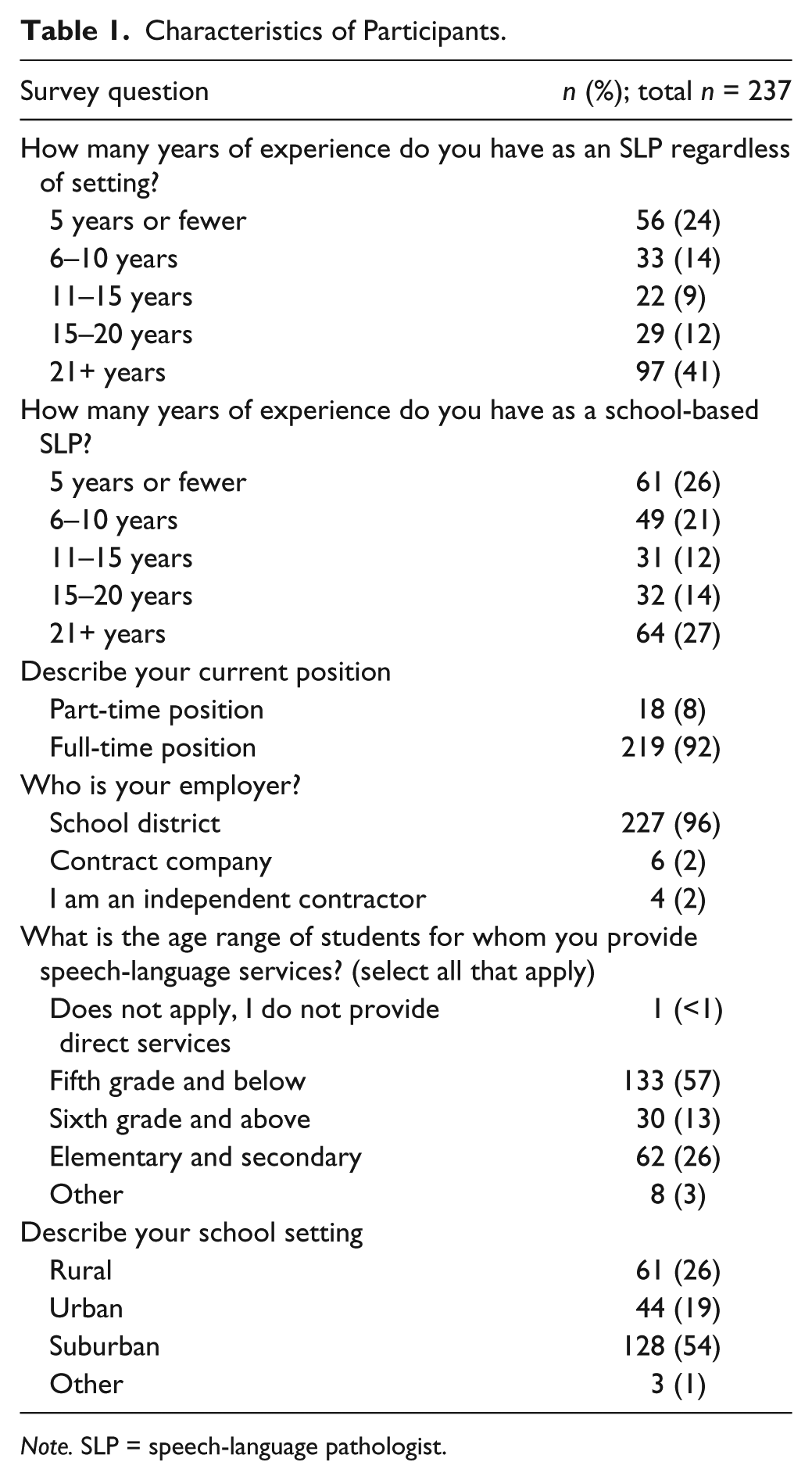
Note. SLP = speech-language pathologist.
Table 2 provides the characteristics of students served by the SLPs who completed this survey. Overall, 63% of the participants reported that at least half of their caseloads comprised students identified as language impaired or speech and language impaired. Conversely, only 13% of the participants reported caseloads comprised over half of students with speech-only labels. For a majority of the participants (74%), less than half of their caseloads included students with IEP goals connected to literacy achievement.
Characteristics of Students Served.
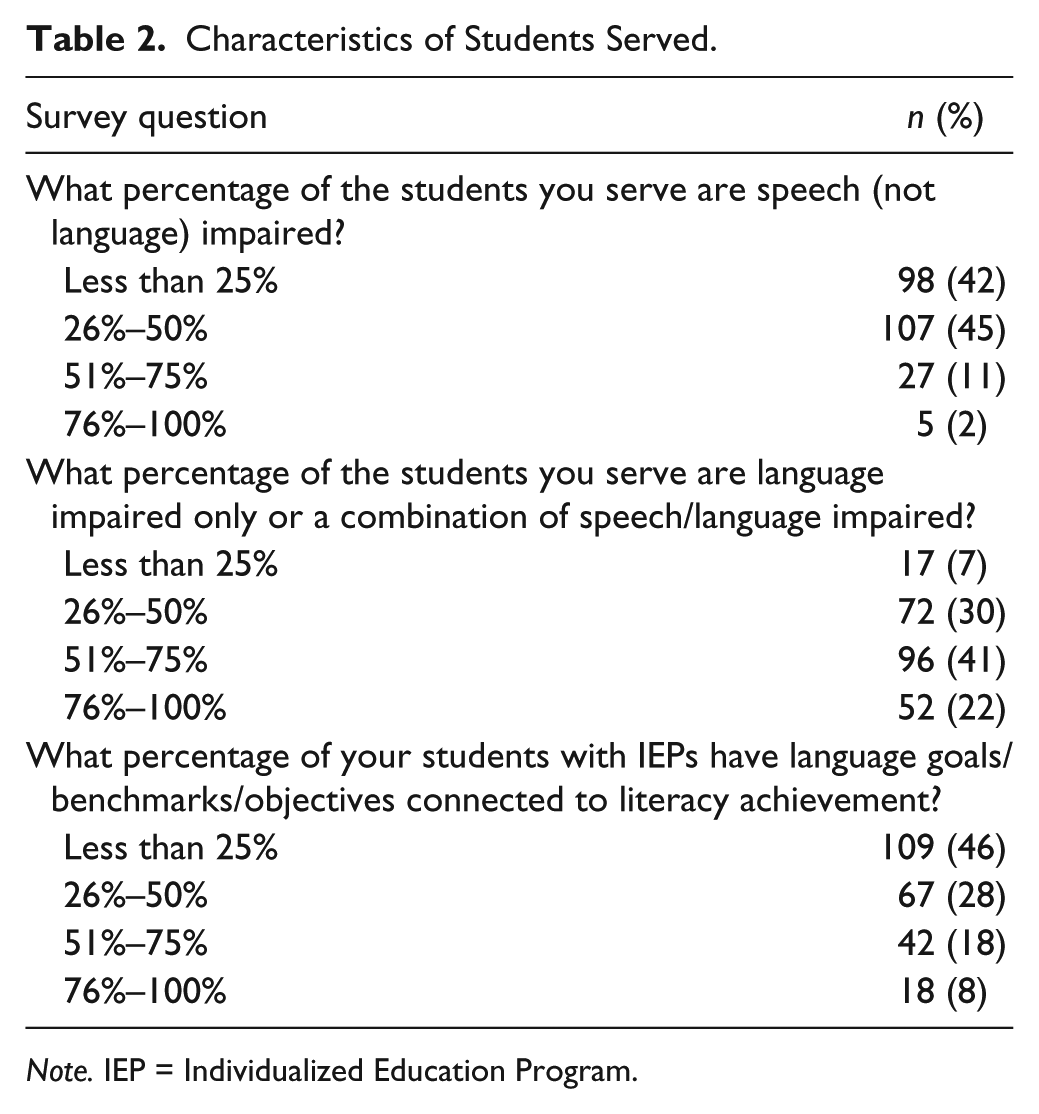
Note. IEP = Individualized Education Program.
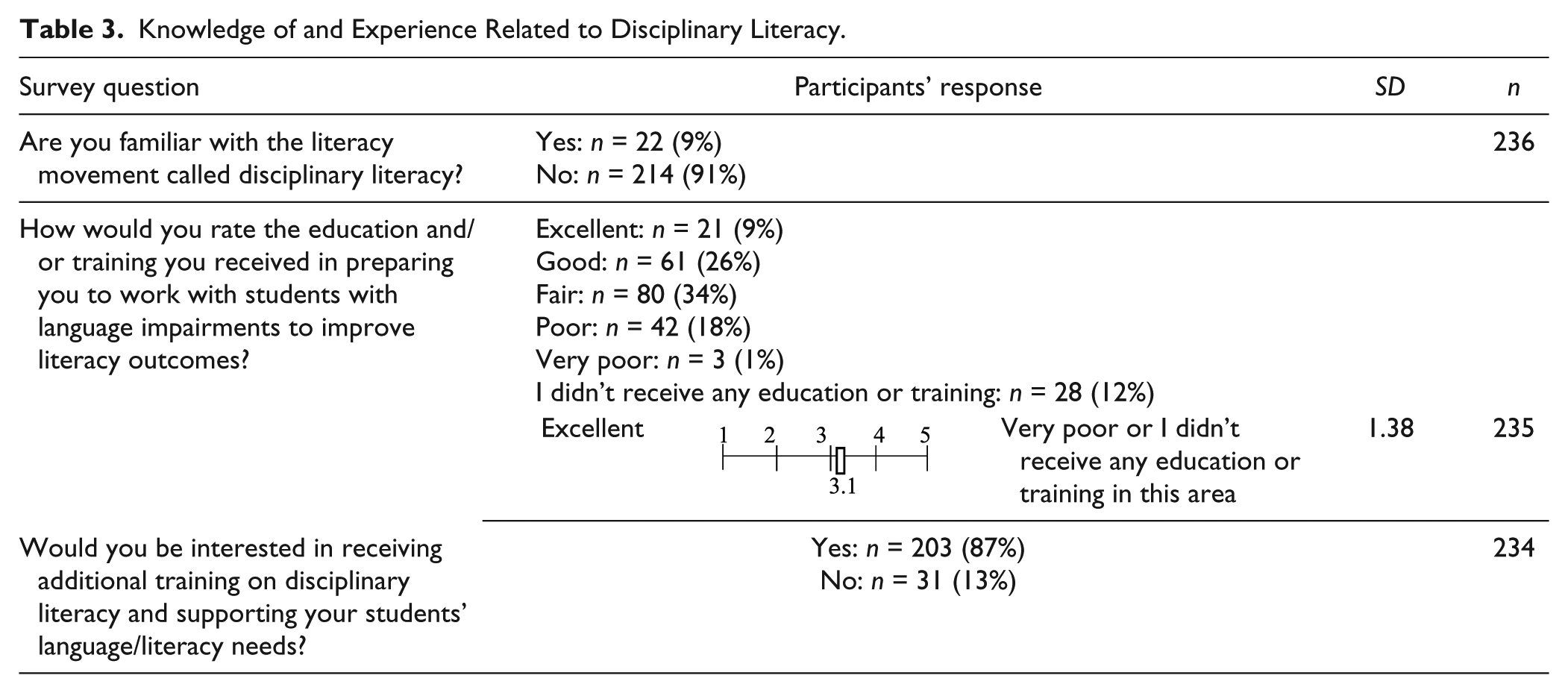
Research Questions 1 to 3 focused specifically on disciplinary literacy (see Table 3). A majority (91%) of the participants were unfamiliar with disciplinary literacy (Research Question 1), many rating their education or training they received on the topic fair, poor, or very poor (53%) or did not receive any education or training (12%; Research Question 2). Not surprisingly, most of the participants (87%) were interested in receiving additional training on the topic (Research Question 3).
Knowledge of and Experience Related to Disciplinary Literacy.
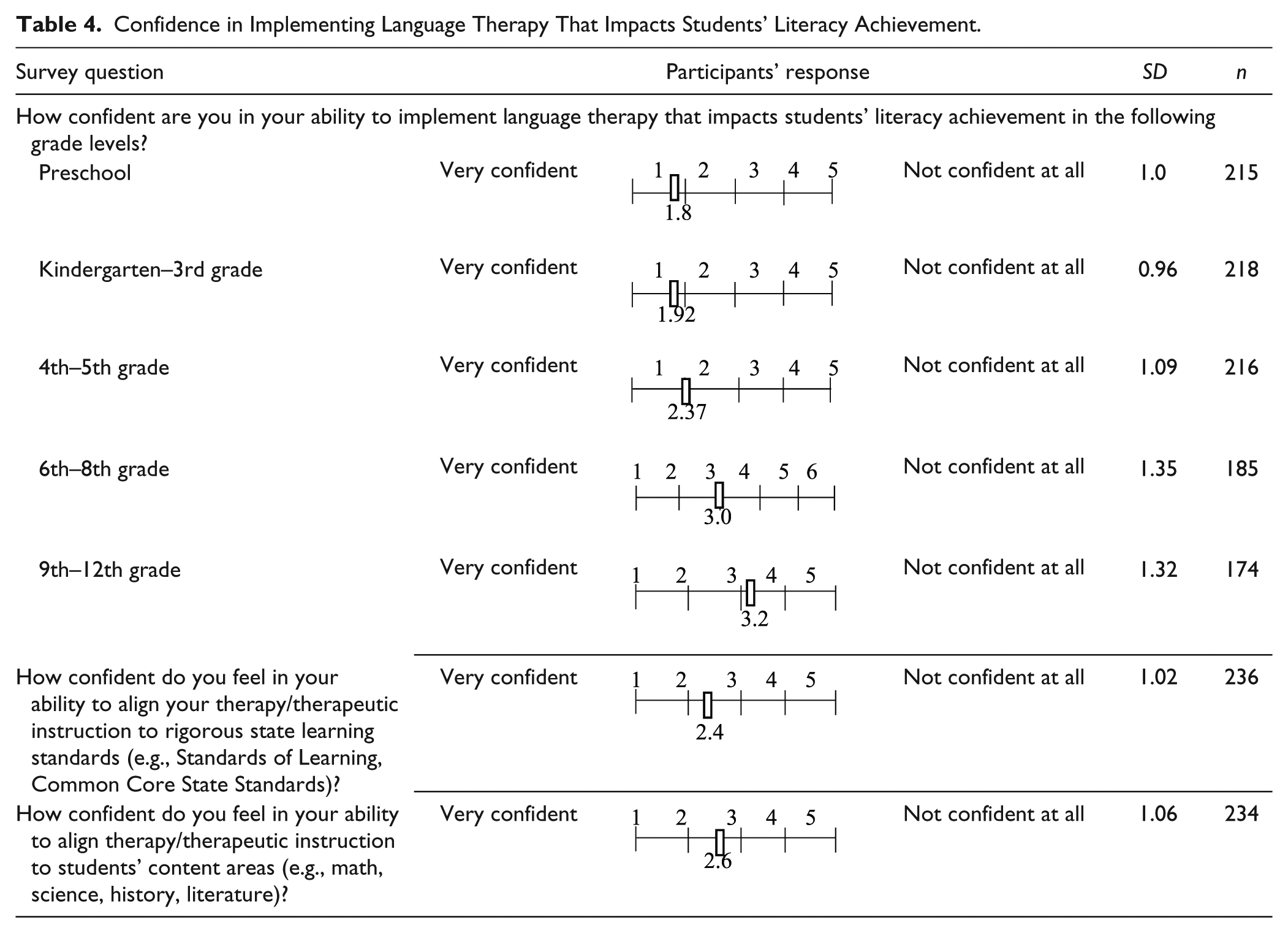
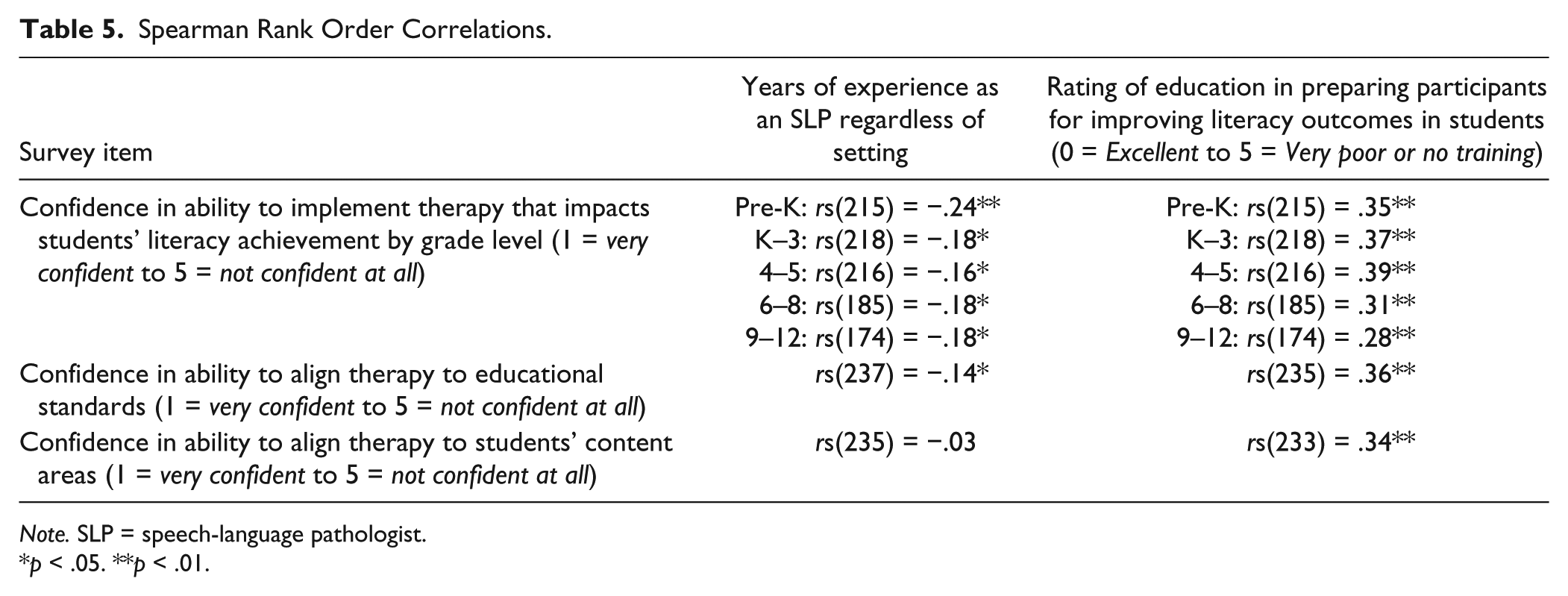
The participants varied in reported confidence in their ability to implement language therapy that impacts literacy achievement at different grade levels, as well as their ability to align therapy to state standards and students’ content areas (see Table 4). As grade level increased, participants’ confidence level in supporting literacy achievement decreased. A Spearman rank order correlation procedure was used to answer Research Question 4: Is experience or education/training related to confidence in ability to support student outcomes by addressing their language/literacy needs? The Spearman’s rho revealed weak but significant negative correlations between participants’ years of experience and confidence in ability to implement language therapy that impacts students’ literacy achievement (see Table 5). The data show that as years of experience increased, confidence level decreased. The results also show weak but significant correlations between participants’ rating of their educational preparation and their confidence in their ability to impact literacy achievement across grade levels. Specifically, participants who rated their educational preparation in literacy more positively also felt more confident in their ability to support their students’ literacy achievement.
Confidence in Implementing Language Therapy That Impacts Students’ Literacy Achievement.
Spearman Rank Order Correlations.
Note. SLP = speech-language pathologist.
p < .05. **p < .01.
A Spearman rank order correlation procedure was also used to answer Research Question 5: Is experience or education/training related to confidence in ability to align therapy to educational standards (e.g., SOL, CCSS)? A very weak but significant correlation was found between confidence and years of experience (see Table 5). Similar to Research Question 4 findings, this suggests as experience increased confidence level decreased. A weak but slightly stronger and significant correlation was found between educational preparation rating and confidence in aligning therapy to educational standards. Consistent with Research Question 4 findings, participants who rated their educational preparation more positively were more confident in their ability to align their therapy with educational standards.
Similar results were found when participants were asked to rate their confidence level in aligning therapy to content areas (Research Question 6). Findings suggest participants who rated their educational preparation more positively were more confident in their ability to align therapy to students’ content areas. However, a correlation was not found between participants’ level of experience and their confidence in this area (see Table 5).
Finally, a Spearman rank order correlation procedure was used to answer Research Question 7: Is there a relationship between perceived confidence in impacting students’ literacy achievement and percentage of students on caseload with IEP goals connected to literacy achievement? A weak but significant negative correlation was found, rs(234) = −.22, p = .001, suggesting as the percentage of students on participants’ caseload with IEP goals connected to literacy increased, their confidence level in impacting students’ literacy achievement also increased.
Discussion
The purpose of this study was to explore the knowledge and confidence level of Virginia school-based SLPs in the area of disciplinary literacy as well as literacy more broadly. A total of 237 SLPs completed the survey. Similar to national data, SLPs in Virginia serve more preschool and elementary-aged students than secondary students. Specifically, 57% of the Virginia school-based SLP participants work with preschool and elementary students while only 13% work with secondary students. Data on ASHA (2017) membership across the country show of SLP members who work in schools, 30.7% work primarily in a preschool or elementary school, while only 3.7% work primarily in a secondary school. Surprisingly, the vast majority of responding SLPs were not familiar with disciplinary literacy (91%) although ASHA (2010) has pushed for SLPs’ involvement in literacy and specifically supporting students’ curricular achievement. One possible explanation for this finding is the fact that there is little research in the field in how exactly to support the literacy achievement of students in the disciplines, as well as the effectiveness of discipline literacy strategies (Davis, 2014). Furthermore, SLPs’ role in supporting reading and writing in general has not always been well accepted and may not have been a significant part of pre-service education prior to the last 10 years (Sanger, Hux, & Griess, 1995). Results of this study support that notion; as participants with more experience, and thus out of school longer, felt less confident in their ability to affect their students’ literacy achievement than their less experienced and more recently graduated colleagues.
A similar argument could be made for confidence in aligning therapy to educational standards. The findings suggest as experience increased, respondents were less confident in their ability to align therapy to educational standards such as the CCSS. Although the same ASHA (2010) Roles and Responsibilities document reminds SLPs that their therapy should address the linguistic and metalinguistic underpinnings of school curriculum, many SLPs are unsure of how exactly to do that (Murza, Malani, & Hahs-Vaughn, 2014). This could be due to the fact that it is a relatively newer idea in the field of speech-language pathology.
Research question 7 examined whether there was a relationship between percentage of students with IEP goals connected to literacy achievement and perceived confidence in impacting students’ literacy achievement. Predictably, respondents with a higher percentage of students with literacy goals felt more confident in supporting their literacy achievement. It remains unclear if their confidence level led them to write more literacy goals for their students. A different possible explanation may be that they had a higher percentage of students with literacy goals and, therefore, worked more on literacy, which built their confidence.
Limitations and Future Directions
There are several methodological limitations in the present study. First, the sample (n = 237) is unlikely to represent the 70,983 school-based SLPs in the United States (ASHA, 2017). Also, it’s unclear how well the findings represent the population of Virginia school-based SLPs since an estimated response rate of only 21% was achieved. It is also possible, that Virginia school-based SLPs with an interest in disciplinary literacy were more inclined to participate than those SLPs without an interest. School-based SLPs were also not asked whether they worked in a public or private school. It is unclear whether SLPs working in public versus private schools would respond differently to the survey questions. Finally, it is important to note that though the survey was developed based on examples of similar type of survey in the literature (Bennett, 2013) and was piloted with individuals who were not SLPs to provide input regarding the formatting and clarity of questions, the instrument itself was not validated.
Despite these limitations, the study does appear to provide some preliminary information about the confidence level of school-based SLPs in regards to disciplinary literacy and adolescent literacy more generally. The results provide several implications for professionals interested in supporting students with literacy needs. First, the findings suggest that although ASHA (2010) is clear in their position that SLPs take on a literacy and curricular focus when serving their students with language impairments, it appears school-based SLPs are less clear in how to accomplish this. This suggests an added emphasis in how to most effectively support the needs of students with literacy deficits is warranted at the pre-service level and in the continuing education offered to school-based SLPs. In fact, 87% of the SLPs respondents were interested in receiving additional training on disciplinary literacy and supporting their students’ language and literacy needs.
There are also several implications of these results for researchers. Clearly, additional research is needed to explore adolescent literacy interventions, specifically those that focus on the disciplinary knowledge, skills, and strategies students need to achieve in the content areas as well as in college and workplace. It also remains unclear how school-based SLPs are currently supporting their students with literacy needs, for example as follows: What specifically are they targeting in therapy? How do they support students who are having trouble in specific content areas? How do they support teachers who are working with students with language impairment in the content areas?
Conclusion
This study demonstrated that Virginia school-based SLPs are largely unfamiliar with the concept of disciplinary literacy and their confidence in supporting their students’ literacy achievement decreases with the student’s grade level. Most feel they would benefit from additional training and also feel their educational preparation in language and literacy could be improved. Future studies should specifically explore how school-based SLPs support their students’ literacy achievement. Additional research exploring knowledge of disciplinary literacy and confidence in impacting literacy achievement should be conducted with school-based SLPs across the country.
Footnotes
Appendix
Declaration of Conflicting Interests
The author(s) declared no potential conflicts of interest with respect to the research, authorship, and/or publication of this article.
Funding
The author(s) received no financial support for the research, authorship, and/or publication of this article.