




Abstract
Objective:
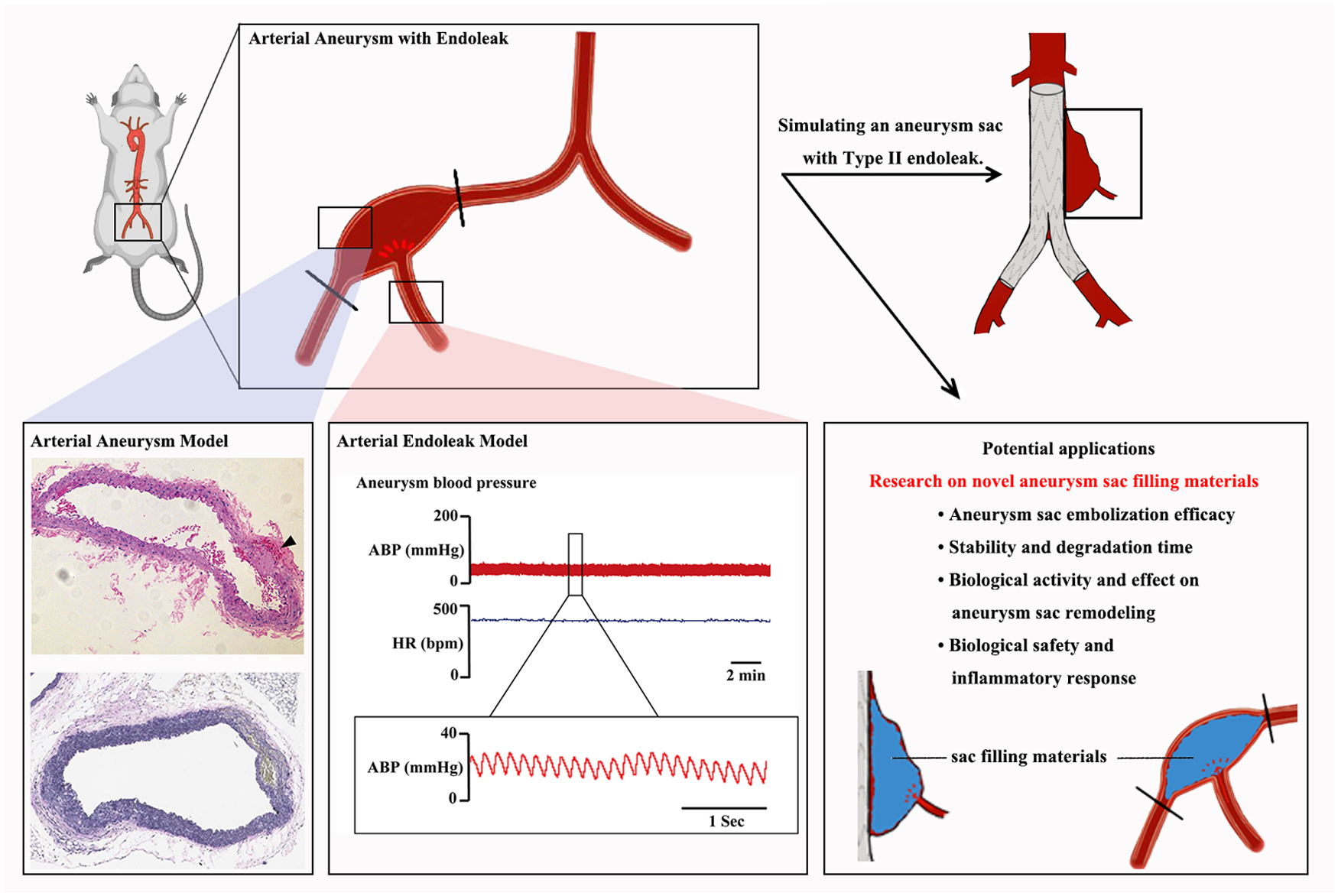
To develop a novel arterial aneurysm model that replicates sustained endoleak flow while also preserving a biologically active environment within the aneurysm sac. This model serves as a platform for assessing and refining aneurysm sac-filling materials aimed at improving the prevention and management of endoleaks following endovascular aneurysm repair.
Methods:
To create an aneurysm model, this study involved the surgical induction of vessel wall dilation and damage in the common iliac artery and external iliac artery of rats. Subsequently, the internal iliac artery was retained as a single collateral vessel of the aneurysm sac. Retrograde branch flow from the internal iliac artery contributed to the pressurization of the aortic aneurysm sac and continued expansion of the aneurysm. This approach established type II endoleak models. Aneurysm sac diameter was measured regularly to monitor model progression dynamically. Histological analysis was employed to assess the structural integrity of the aneurysm walls. Furthermore, both systemic and intra-aneurysmal blood pressure and heart rate in rats were monitored to ascertain the presence of endoleaks.
Results:
Twenty rats were allocated into four groups, with 15 model rats surviving to 1, 2, and 4 weeks. Aneurysm diameter in the model groups significantly increased compared to that in the sham group (P < .05) and remained stable over time. Histological analysis showed greater elastic fiber fragmentation at 4 weeks (3.600 ± 0.547 vs. 1.200 ± 0.447; P < .001). Endoleaks were confirmed through arterial blood aspiration and arterial waveform detection. Intra-sac pressure averaged 28.2 ± 5.4 mm Hg (28.7 ± 4.9% of systemic mean arterial pressure), with pulse pressure recorded at 15.4 ± 6.9 mm Hg. No pressure decline was observed over 4 weeks, indicating persistent, stable endoleaks.
Conclusions:
This research successfully developed a novel type IIa endoleak aneurysm model, providing a robust experimental platform for the advancement of EVAR studies and the development of sac-filling materials.
Clinical Impact
This study presents an innovative aneurysm model that effectively simulates a bioactive environment within the aneurysm sac and exhibits the characteristics of Type II endoleaks, responding to the pressing demand for appropriate models aimed at evaluating aneurysm sac-filling methodologies. By employing in situ arterial mechanical injury along with dilation techniques, this model facilitates a straightforward, swift, and highly reproducible method for creating an active aneurysm wall. Furthermore, it reproduces a persistent Type II endoleak through the internal iliac artery, thereby authentically mirroring the hemodynamic conditions seen in patients. In this way, this advancement equips clinicians with an essential resource for exploring novel materials and techniques, which could enhance patient outcomes in endovascular aneurysm repair interventions.
Get full access to this article
View all access options for this article.
References
Supplementary Material
Please find the following supplemental material available below.
For Open Access articles published under a Creative Commons License, all supplemental material carries the same license as the article it is associated with.
For non-Open Access articles published, all supplemental material carries a non-exclusive license, and permission requests for re-use of supplemental material or any part of supplemental material shall be sent directly to the copyright owner as specified in the copyright notice associated with the article.
