



Abstract
Although air pollution is an important practical and theoretical issue, the impact of air pollution on game outcomes has not yet been comprehensively investigated. Therefore, by using data from the Chinese Football Association Super League, this study examined the impact of the Air Quality Index and six major air pollutants on game outcomes. Results show that air pollution is negatively and significantly related to game outcomes and is heterogeneous between home teams and away teams. The results extend the knowledge of air pollution studies and sports studies and provide insights into both environmental regulations and sports markets.
Introduction
Air pollution is an important environmental risk for human health and the economy (Li & Peng, 2016; Lichter et al., 2017). It is one of the top three global risk factors for disease and death. According to World Health Organization, more than six million people die annually due to air pollution (World Health Organization, 2018). To solve this problem, the economic costs have been estimated to be more than 5,000 billion dollars (World Bank, 2016). Nowadays, air pollution is becoming a more serious environmental problem, particularly in some fast-growing areas (Gao et al., 2018). Taking China for instance, there have been more frequent haze events in recent years: in 2017, there are 2,311 heavily polluted days and 802 severe polluted days in 338 cities in China; and 70.7% of the 338 cities exceeded China's Ambient Air Quality Standards in 2017 (Ministry of Environmental Protection of the People's Republic of China, 2018). Therefore, air pollution has sparked high interest in various research fields.
In the field of sport management, it has been recognized that air pollution substantially affects athletes’ physical health (Shah et al., 2015; Weiss & Rundell, 2011; Xing et al., 2016) and mental health (Bos et al., 2014). Short-term air pollution can cause great respiratory and cardiovascular harm to the heart and lungs of strenuous athletes (Watanabe et al., 2019). Not only that, recent research also demonstrated that air pollution strongly negatively impacts sports’ labor productivity, mainly embodied in the athletes’ performance and the umpires’ judgment. For instance, Lichter et al. (2017) found that an increase in PM10 concentration by 1% led to a decrease in the number of passes by professional soccer players by 0.021%. Furthermore, the increase in the concentrations of CO and PM2.5 caused an increase in the probability of MLB umpires making incorrect calls (Archsmith et al., 2018). Based on these consensuses, Qin et al. (2022) attempted to figure out whether the athletes have the adaptability to air pollution and uncovered that the pass success rate of away teams is more easily negatively affected by the air pollution gap. This conclusion first time proves the possibility that the air pollution effect is not the same on teams in the match. Nevertheless, it is worth noting that applying the gap measure of air pollution could only illustrate the impact of the change range of pollutants, but not precisely reflect the severity of higher air pollution level and the danger to athletes; meanwhile, the pass success rate is poor for measuring team performance (Lago-Peñas et al., 2016). Hence, it still lacks rigorous and empirical discussion about whether air pollution level impact exists a difference between home and away teams, which direct bearing on the fairness of game outcomes.
The victory and fairness of the game outcome are the two foundations of sports competition, especially the latter is the moral nucleus of sport (Serrano-Durá et al., 2020). Besides the fairness of following rules (e.g., Mumford, 2010; Pérez-Triviño, 2012), the existing studies discussed sport fairness almost exclusively on three aspects: (1) gender fairness, which mainly emphasis on the discrimination and exclusion of transsexual and intersexual individuals; (2) physical fairness, such as mental deficiency or disability; (3) organization system fairness, highlighting the injustices caused by competition conditions, such as the structure of schedules (Serrano-Durá et al., 2020). However, the potential impact of air pollution has been long overlooked despite its negative effect having been wildly proven in sports performance. It is because there is no age, nationality, and ability difference between athletes in adapting to air pollution during the match (Qin et al., 2022). Therefore, it is easy to exert a preconceived perception that air pollution reduces game performance by both the home team and the away team equally and has no effect on the fairness of game outcome, which might not be true. Following Qin et al. (2022)'s study, it is reasonable to speculate that the air pollution impact on game outcome fairness. Further investigating this question is significant for two reasons. On the one hand, this is directly related to the layout of the game strategy of teams for victory. On the other hand, the game outcome represents international prestige among countries (Allison & Monnington, 2002) and is the proof of the athlete's effort and ability. The answer decides whether the tournament organizer is obliged to allocate more resources to solve the air pollution problem to maintain the fairness of the game outcomes.
To solve the above questions, this study applies data from 1,190 games over five seasons (2014-2018) in the Chinese Super League (CSL) to examine the impact of air pollution on the game outcome as measured by home team goals and away team goals. There are three contributions to the literature. Firstly, this study assesses the air pollution effect on team game outcomes. Secondly, this study distinguishes the difference in the impact of air pollution on the performance of home and away teams. Thirdly, based on the result, this study confirms that air pollution can lead to unfair game outcomes, with a more significant negative impact on the home team.
Literature Review
The Environment Condition and Athletes Performance
As the activities that highly relay on the natural environment, the close relationship between sports and the natural environment has received sparkling interest in research field and has widespread and fruitful discussions among scholars (McCullough et al., 2016). Some studies attempted to clarify how sports contribute positively or negatively to environmental issues (Blankenbuehler & Kunz, 2014; Bunds et al., 2019; Dolf & Teehan, 2015; Inoue & Kent, 2012; Mallen & Chard, 2012). For instance, by tracking the carbon footprint of active sports participation, Wicker (2019) reveal the environmental damage of carbon emissions brought by sports behavior and performance. Nevertheless, it is worth noting that the environment may simultaneously affect sports as well (Mallen & Chard, 2011).
Professional athletes are known to be sensitive to the game environment conditions, one of the most significant influential factors besides the team's strength (Chmura et al., 2021). To date, a wealth of research has expounded on the impact of prematch environment change on athletes performance. A view is that with the prevalence of international sports events, athletes have to travel long distances, preventing athletes from getting enough rest and resulting in fatigue, which will affect team performance and game outcome (Brown et al., 2002; Goumas, 2014). Another view notes that for athletes not in the same time zone as the host countries, a time-of-day effect may also occur; namely, the rhythms in athletes performance could be interfered with due to the body clock and environmental factors (Reilly & Waterhouse, 2009). On the other hand, previous research also highlights that the impact of natural environmental conditions during the match on athletes performance should not be ignored as well (Watanabe & Soebbing, 2017). Athletes often require a large amount of strenuous exercise during the match; thus, extreme weather conditions will significantly challenge their physical fitness and performance (Grantham et al., 2010), such as a series of dehydration, hypothermia, and heatstroke problems caused by hot and humid weather (Watanabe & Soebbing, 2017).
Meanwhile, many scholars extensively discuss the influence of air quality on sports during the matches (Guo & Fu, 2019; He et al., 2019). As an important environmental factor related to human health and economic development (Li & Peng, 2016; Lichter et al., 2017), the negative impact of air pollution on competitive sports is a well-established consensus. Some existing studies chiefly attempt to explain this from the health outcome perspective: athletes will inhalation of higher concentrations of air pollution than others during the intense match, which will bring about more serious physiological reactions on the respiratory and the cardiovascular systems and reduce physical efficiency (Rundell, 2012; Zacharko et al., 2021). Moreover, most other research also focused chiefly on the impact of air pollution on the athletes productivity and performance (e.g., Lichter et al., 2017; Guo & Fu, 2019) and abundant persuasive evidence has supported the negative impact of air pollution on competitive sports. Nevertheless, it is surprising that compared with the extensive above literature on athletes’ performance, the impact of air pollution on game outcomes, that is, win/loss in matches is largely ignored. Considering team performance is not exactly equal to the sum of each member's results, often has additive effects (Lago-Peñas et al., 2016), the impact of air pollution on team outcome may differ from its effect on individual performance.
Air Pollution and Game Outcome
In sports-related studies, researchers investigate the impact of air pollution on two areas, leisure sports and competitive sports. In leisure sports, researchers have found that there are two types of negative effects of air pollution. First, air pollution will reduce the frequency of people’s outdoor activities or exercises. Hu et al. (2017) analyzed data from an exercise app and found that people were less likely to do outdoor running, biking, and walking in air pollution days. In a survey conducted by Oltra and Sala (2018), about 21% people tend to avoid outdoor exercises due to air pollution. Second, exercising in polluted air may reduce the benefits of exercising and may even cause adverse effect (Wang, 2016). Tainio et al. (2016) found that when the concentrations of PM2.5 above 100 µg/m3, the harms of exercises would exceed the benefits after cycling for 1 h and 30 min or walking 10 h per day. In competitive sports, El Helou et al. (2012) analyzed data from 60 European and American marathon races and found that ozone and NO2 exerted the greatest negative effects on the performance of marathon athletes, whereas PM10 had no significant impact. Guo and Fu (2019) used a sample of 56 marathon races in China and reported that an increase in Air Quality Index (AQI) by 1% caused a 0.0408% increase in the finish time of marathon runners. However, only a few sports research rough mention the impact of air pollution and game outcomes.
Game outcome is an actual measure of team performance (Buraimo et al., 2009; Carmichael & Thomas, 2005) and a key dimension of sport service quality (Theodorakis et al., 2013). Recent studies point out that exposure to air pollution would reduce the mental output for highly skilled professional work; in the sports field, it reflected in the increase of the concentrations of carbon monoxide (CO) and fine particulate matter (PM2.5), causing amplification of the probability of incorrect calls by umpires (Archsmith et al., 2018). On the other hand, breathing polluted air in the short term will negatively impact the efficiency of labor productivity (Guo & Fu, 2019). As the typical high-intensity labor force, Qin et al. (2022) found no personal attribute advantageous of athletes in the adaptability to air pollution, but the home advantage may exist. That is, in contrast with the away team, home advantage can offset the negative air pollution influence on the home team's performance. Nevertheless, on the contrary, some researchers also point out that home teams are more likely to be offensive than defensive (Carlos & Joaquin, 2011) and do more physically demanding tasks (Lichter et al., 2017). Considering air pollution commonly has a more significant impact on people with more strenuous physical work (Lichter et al., 2017), it is deducted that the home team's performance may be affected more by air pollution. These controversial views provided a reasonable basis for the assumption that air pollution may cause team performance heterogeneity and eventually influence game outcomes, which has yet to be quantitatively researched.
So far, the majority of literature usually takes the number of passes (Lichter et al., 2017), finish time (Fu & Guo, 2017), and the pass success (Qin et al., 2022) rate as a proxy of sports outcome. These measurements highlight the impact of air pollution on individual athletes by comparing it with previous sports performance, which is hard to reveal the impact on game outcomes among teams. The environment is closely related to the operations of sports (Mallen & Chard, 2011; Thibault, 2009), and it is necessary to discuss the relationship between the two under diverse subjects and frameworks to enhance the knowledge of relevant research theories (Mallen, 2017). Hence, understanding air pollution's impact on game outcomes is helpful to clarify the relationship between the environment and sports from a competition outcome–oriented perspective, rather than a process-related perspective. Given this background, to bridge this research gap, this study aims to investigate the impact of air pollution on game outcomes in a professional soccer setting.
Method
Study Samples
Chinese Super League is the highest level of professional soccer in China and ranks among the most popular professional soccer leagues in Asia with high attendance. The CSL season lasts approximately nine months, with 16 teams competing in each season in multiple cities in China, spanning a wide range of locations and air quality conditions.
Objective data were collected for 1,190 out of 1,200 available matches played from 2014 to 2018; this time frame was chosen as it comprised the most recent five seasons. Among them, one match was played in an empty stadium as a punishment, and nine other matches were played in temporary stadiums. Considering these above matches are not belong to standard matches and only occupy a tiny number of games, not representative, to ensure the stability of the data, this study follows Watanabe et al. (2019)'s study to exclude them from the analysis.
Variables
Game Outcome
Game outcome was the dependent variable in measuring the impact of air pollution. In accordance with previous studies (e.g., Lichter et al., 2017; Watanabe et al., 2019), the home team goals scored (HOMEGOALS) and the away team goals scored (AWAYGOALS) were used as two measures of game outcome. Other studies have also used the absolute difference in goals (e.g., Nichols, 2014; Taylor et al., 2016), ordinal points (e.g., Scoppa, 2015), or home team wins or losses (e.g., Leard & Doyle, 2011; Weimar & Wicker, 2017) to measure game outcome. However, we argue that absolute goals scored by home teams and away teams are more appropriate than relative outcomes (i.e., difference in goals scored): home team performance and away team performance are correlated, and air pollution may simultaneously affect both the home and the away teams. The game outcome and match schedules were collected from the CSL database of Sina Sports (http://sports.sina.com.cn/csl/fixtures/).
Air Pollution
Air Quality Index and PM2.5, PM10, SO2, CO, NO2, and O3 were used to measure air pollution levels in this study. Air Quality Index is a synthesized index adopted to measure how polluted the air is. In China, this index synthesizes information of six major pollutants, including inhalable particles (PM10), fine particles (PM 2.5), sulphur dioxide (SO2), carbon monoxide (CO), nitrogen dioxide (NO2), and ozone (O3). Therefore, we use these seven measures of match day air pollution (AIRPOLLUTION) as our key independent variables. Daily air pollution data of the seven measures in each host city were downloaded from China Air Quality Online Monitoring and Analysis Platform.
Control Variables
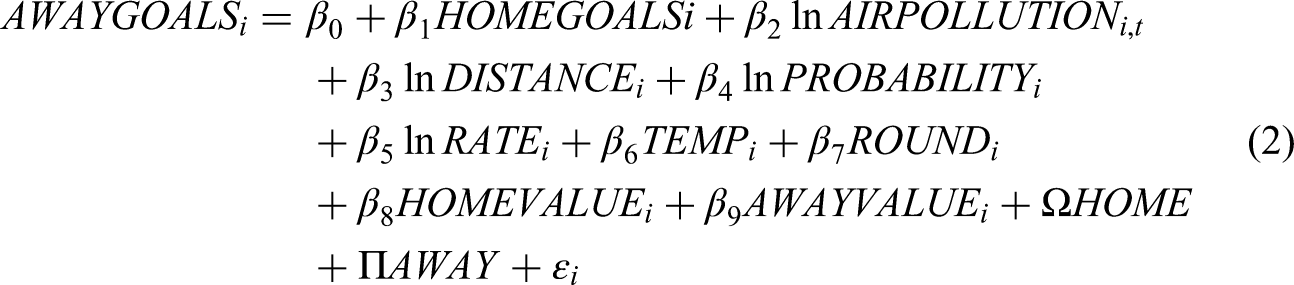
According to previous studies, the control variables are set from four dimensions as follows. Firstly, team quality is an important contributing factor to game outcomes (Carlos & Joaquin, 2011; Leard & Doyle, 2011), which often be measured by team market values (Schreyer et al., 2018; Serrano et al., 2015). This study collects the team market value data of the home team (HOMEVALUE) and away team (AWAYVALUE), respectively, from the transfermarkt website as a proxy of the previous team quality. The market value is commonly assessed by the willing to pay of a club to sign the player (Herm et al., 2014), which has a strong tie with players’ on-field performance (Torgler & Schmidt, 2007). Also, considering the economic growth background of China in the 2010s, these factors might boost the team market value to present an increasing trend gradually year by year. Hence, these variables are log-transformed to reduce skewness. Besides, the team dummy variables can also reflect unobservant factors such as team identity (LeFeuvre et al., 2013) and capture ticket price effects (Babatunde Buraimo & Simmons, 2009). Thus, home team (HOME) and away team (AWAY) dummy variables were applied to represent the team quality of current match. Since the performance of the opposing team has the potential to affect team efforts and team performance, the goals scored by the opposing team were included in the model. That is, in the HOMEGOALS model, AWAYGOALS was used as a control variable, and vice versa.
Secondly, the betting odds market has been said to be the best predictor of game quality and game outcome (Boulier & Stekler, 2003) since it can reflect all the available market information (Weimar & Wicker, 2017). Thus, many researchers have used betting odds to measure game outcome uncertainty and game quality (e.g., Coates et al., 2014; Weimar & Wicker, 2017). Additionally, researchers have noticed the effects of attendance on game outcome (Paul & Mitra, 2008; Smith & Groetzinger, 2009; Yiannakis et al., 2006). Hence, this study uses the winning probability of home teams (PROBABILITY) as an index of game outcome uncertainty to measure game quality. The data are calculated according to Benz et al. (2009) based on betting odds data. Furthermore, attendance rate (RATE) is taken as a control variable to measure the effect on game quality brought by audiences.
Thirdly, considering fatigue or stress caused by long distance travel may negatively influence team performance (Ashman et al., 2010; Nichols, 2014; Taylor et al., 2016). This study calculates the distance (DISTANCE) based on the longitude and latitude data between stadia.
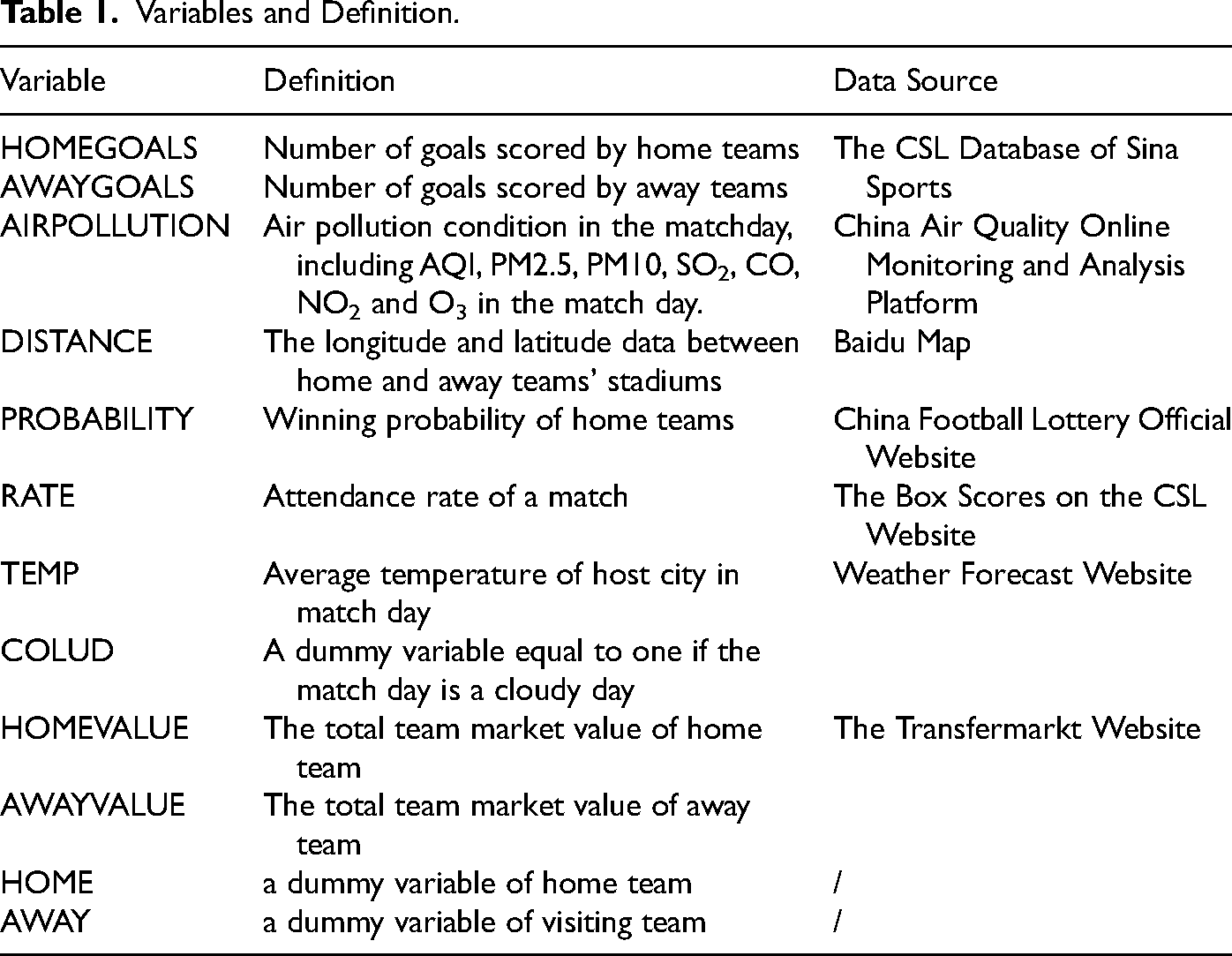
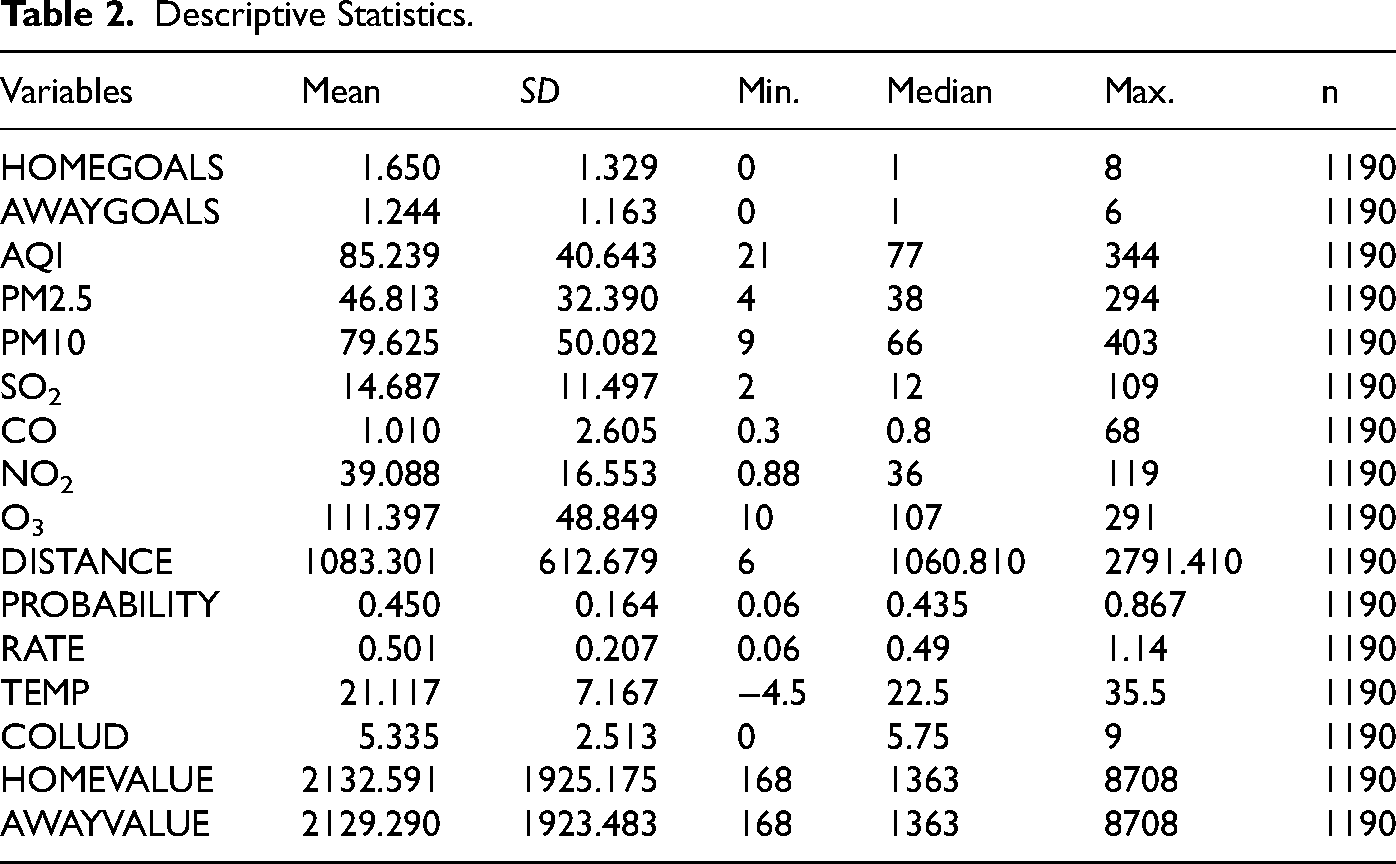
Lastly, some researchers have noted the impact of environmental factors, particularly weather conditions, on game outcome (Hoffmann et al., 2002a; Smith & Groetzinger, 2009). Referring to prior studies (Baidina & Parshakov, 2017; Hoffmann et al., 2002b; Schreyer et al., 2018; Smith & Groetzinger, 2009), the daily average temperature (TEMP) of each city and a dummy variable about whether the match day was cloudy (CLOUD) are considered as weather-related variables. The definitions and data sources of all variables are detailed in Table 1. Descriptive Statistics of all variables are provided in Table 2. All independent variables are tested for multicollinearity and the results indicate noncorrelation among variables. Considering that teams with high market value are commonly located in well-developed urban areas, which the public might subconsciously recognize as relatively higher air pollution areas than other teams’ locations. This paper conducts a correlation coefficient test on each independent variable to prevent the potential biasing of the results caused by it. The results show that the correlation coefficient between the team market value and air pollution is −0.036, and the p-value is larger than .05 (no correlation). The minus sign of the results might be because the one hand, most first-tier Chinese cities mainly develop economies through commerce rather than traditional high-polluting industries. On the other hand, first-tier cities such as Shanghai and Guangzhou are commonly located in coastal areas where the climate condition is helpful for the relief of air pollution problems. That is, China's urban and geographic characteristics enable these cities to have less impact from air pollution.
Variables and Definition.
Descriptive Statistics.
Data Analysis
The first objective of the present study was to investigate the relationship between air pollution and game outcome. Given that the influencing factors and game outcome both contain multiple variables and that the HOMEGOALS and AWAYGOALS are correlated, CCA was used to simultaneously evaluate the correlation between the two variable sets (Li et al.2013).
Subsequently, the impact of air pollution on game outcome as measured by the goals scored by home and away teams was analyzed. HOMEGOALS and AWAYGOALS were used as two measures of game outcome, and AIRPOLLUTION was employed as the key independent variable. With other control variables being considered, the following ordinary least squares (OLS) regression model for game outcome is estimated: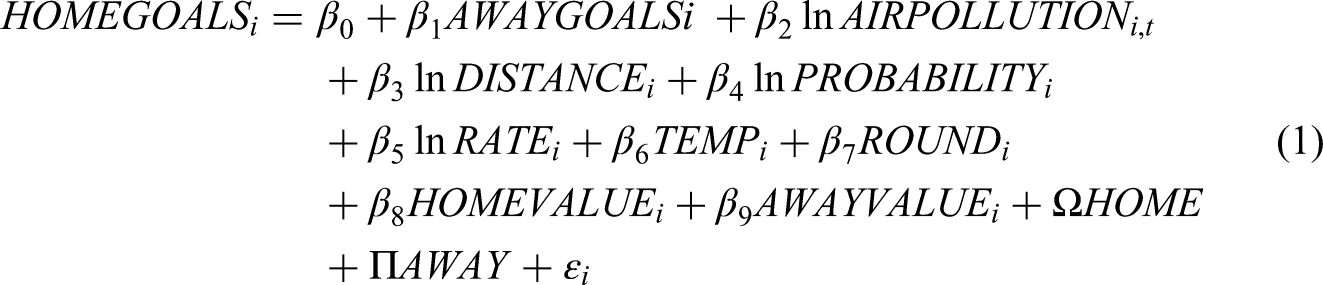
Results
Relationship Between Air Pollution and Game Outcome
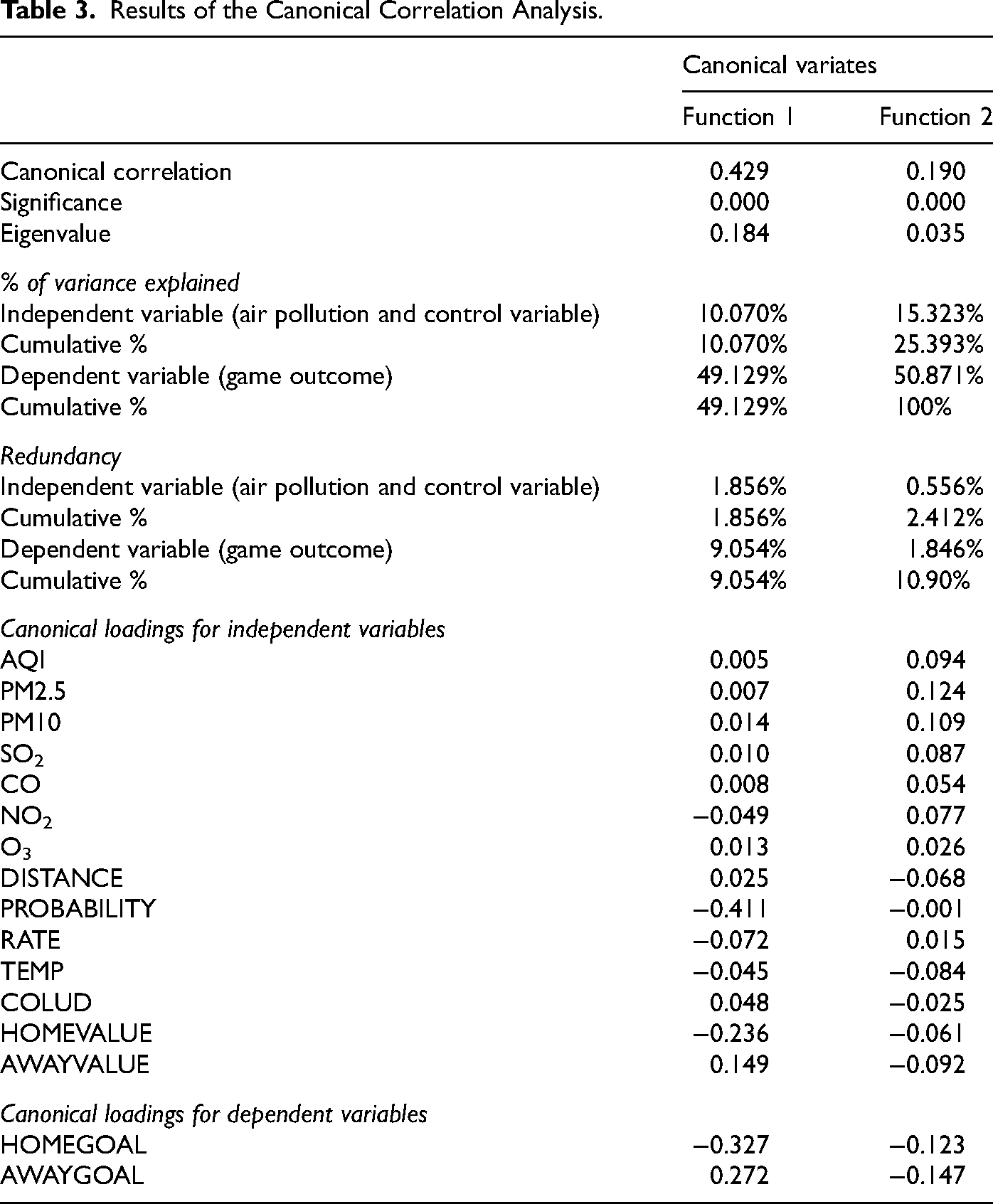
This study first used CCA to explore the relationship between air pollution and game outcome. The independent variable set comprised seven air pollution and other control variables, and the dependent variable set consisted of HOMEGOALS and AWAYGOALS. Canonical loadings were used to identify the relationships between the pairs of variates (Li et al., 2013). In Table 3, the CCA of the two variable sets resulted in two statistically significant canonical functions (p < .01). The canonical correlations (0.429 and 0.190, respectively) demonstrated a moderate correlation between the independent variables and game outcome measures.
Results of the Canonical Correlation Analysis.
Impact of Air Pollution on Game Outcome
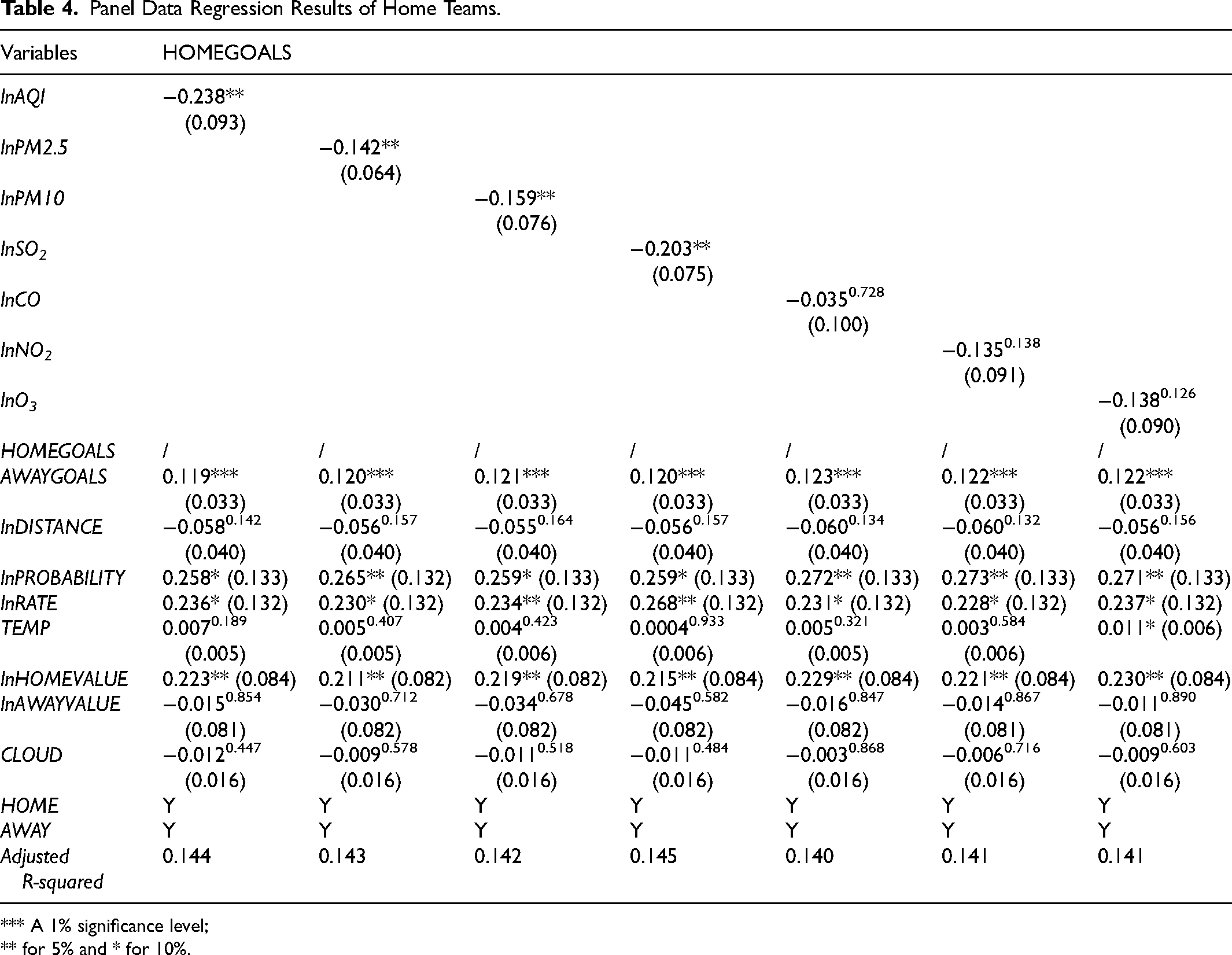
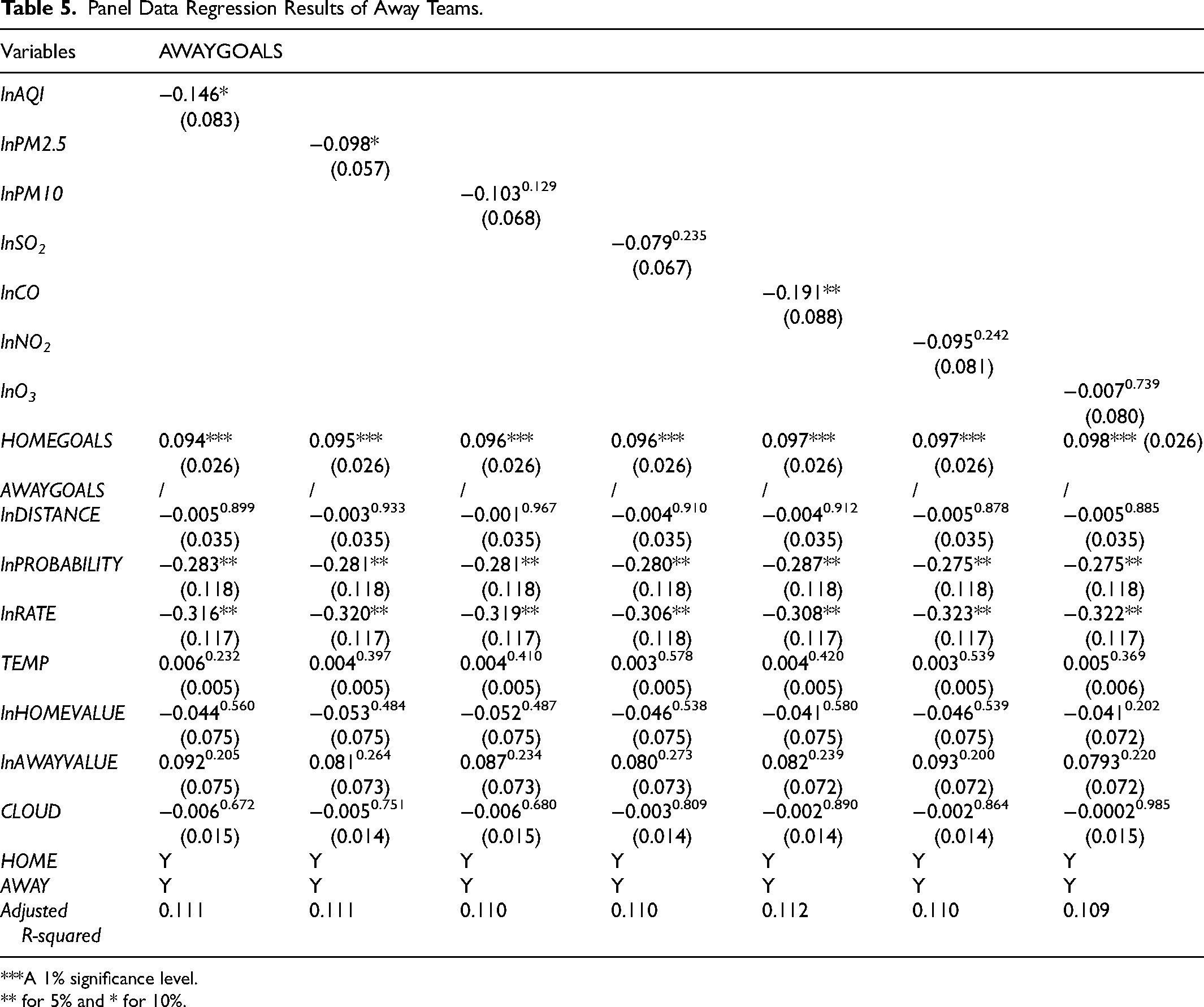
According to the results of CCA, AIRPOLLUTION is negatively and significantly related to game outcome. Next, the specific impact of AIRPOLLUTION on game outcome was assessed using HOMEGOALS and AWAYGOALS as two measures; the results are presented in Tables 4 and 5, respectively.
Panel Data Regression Results of Home Teams.
*** A 1% significance level;
** for 5% and * for 10%.
Panel Data Regression Results of Away Teams.
***A 1% significance level.
** for 5% and * for 10%.
Table 4 reveals that AQI (β = −0.238, p < .05) is statistically significant and negative concerning HOMEGOALS, among which PM2.5, PM10, and SO2 are the three primary out of six air pollutants influencing HOMEGOALS with the regression coefficients are −0.142, −0.159, and −0.203, respectively (p < .05). The finding indicates that for every air pollution increase by 1%, the home team's performance will decrease by 0.238%, which, further speaking, particulate matter (PM2.5 and PM10) has more pronounced effect on it. In terms of control variables, PROBABILITY (β = 0.258, p < .1), RATE (β = 0.236, p < .1) and HOMEVALUE (β = 0.223, p < .01) applied positive and significant effects on HOMEGOALS which is consistent with the predictions of this study; while the weather condition (TEMP and CLOUD) and distance factor (DISTANCE) did not show a statistically significant influence.
Table 5 reports the results of several variables that affect AWAYGOALS. Compared with HOMEGOALS, the away team is less influenced by the air pollution condition with the regression coefficient −0.146 (p < .1), which means that with a 1% rise in air pollution, the negative impact on the performance of the away team would be lower 0.92% than it of the home team. Additionally, although the coefficient of PM2.5 (β = −0.098, p < .1) reflects major and negative impact on performance of away team, PM10 and SO2 do not exert the same impact on the performance of the away team as the home team. Correspondingly, CO has a significant effect on the away team's performance, with a regression coefficient is −0.191 (p < .05).
Based on these results, this study compared the 95% confidence intervals for the coefficients of AQI and PM2.5 in Tables 4 and 5. The confidence intervals of AQI in the HOMEGOALS and AWAYGOALS regression are located at [−0.424, −0.052] and [−0.308, 0.016]. And the confidence intervals of PM2.5 in the two regressions are located at [−0.267, −0.018] and [−0.209, 0.013], respectively. The results reveal that for home teams the team performance is significantly and negatively impacted by air pollution as the 95% confidence interval is less than 0. In contrast, the 95% confidence intervals of the AWAYGOALS regression located include 0. Combining the above results, the coefficient of AQI in the HOMEGOALS is significantly lower than that in the AWAYGOALS regression. Therefore, the impact of AQI on game outcome is heterogeneous between home teams and away teams and provides more reliable evidence about the negative impact on game outcomes.
Robustness Tests
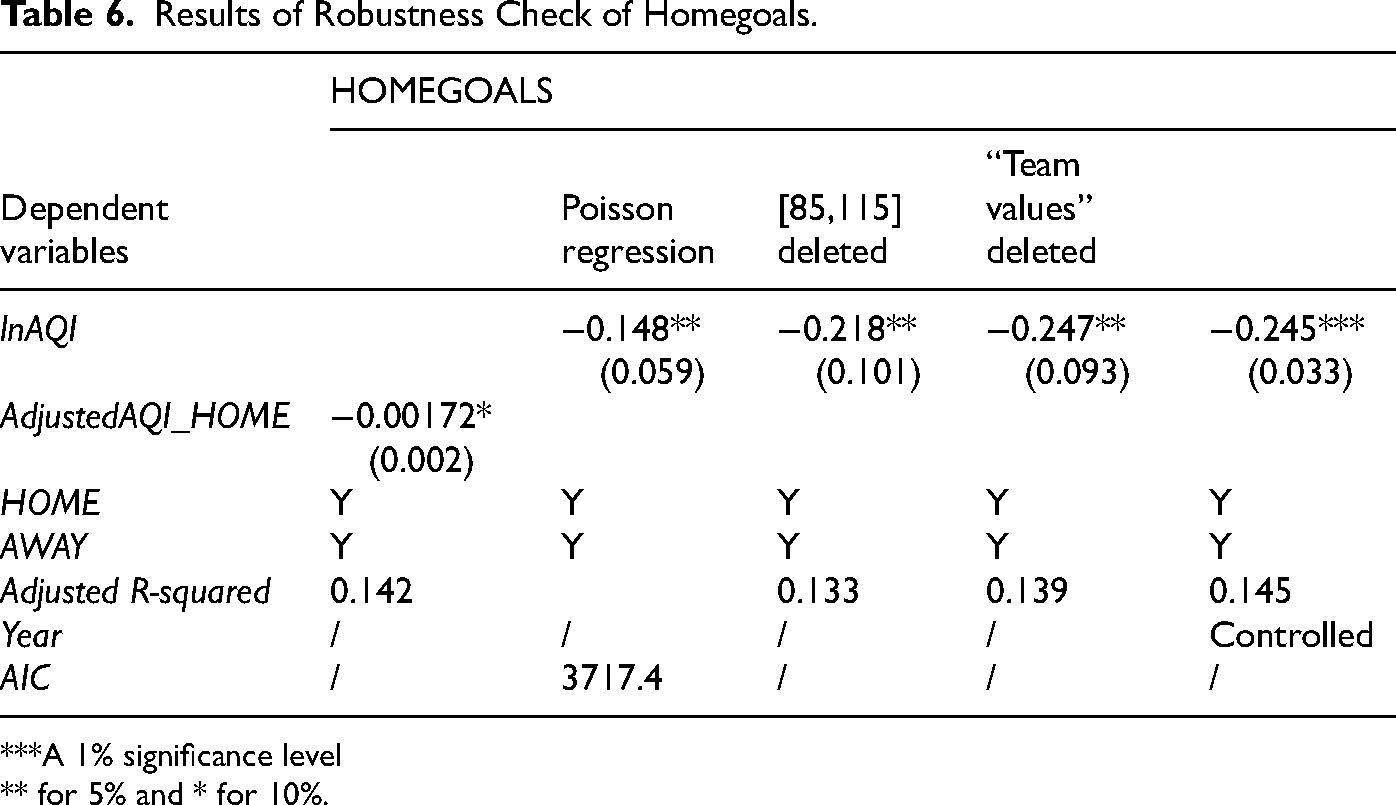
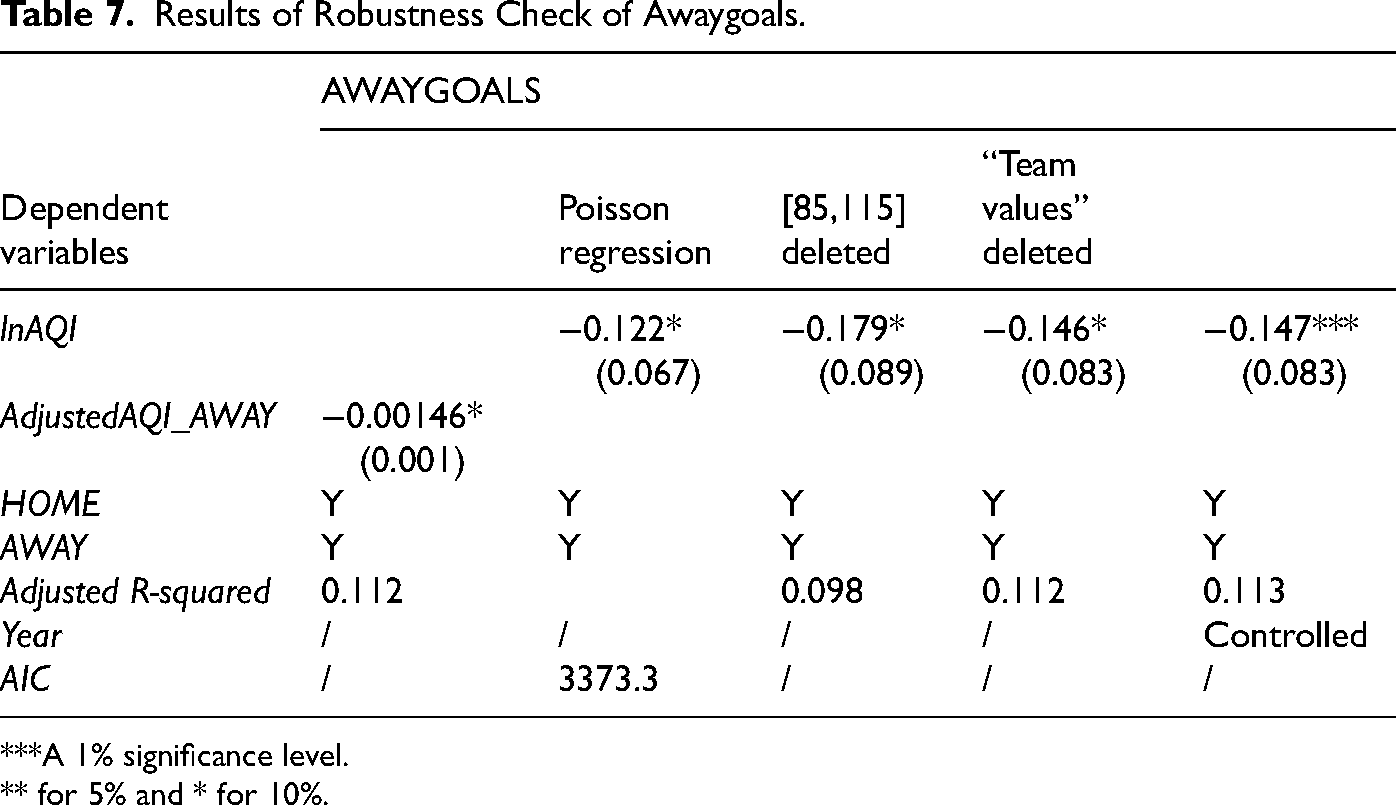
Tables 6 and 7 display the result of the robustness check. Firstly, some prior research used the adjusted level of air pollution to prevent the differential of accustomed to different baseline air quality for home and away teams, which may influence the results robustness. Therefore, referring to Watanabe et al. (2019) applied the adjusted AQI to test the robustness of the independent variable, hereafter denoted AdjustedAQI_HOME and AdjustedAQI_AWAY. The equation is as follows, where average pollution is calculated as the yearly averages for each host and away city:
Results of Robustness Check of Homegoals.
***A 1% significance level
** for 5% and * for 10%.
Results of Robustness Check of Awaygoals.
***A 1% significance level.
** for 5% and * for 10%.
As shown in Tables 6 and 7, the results are still consistent with our finding, air pollution exerting significant and negative effects on both HOMEGOALS (β = −0.00172, p < .1) and AWAYGOALS (β = −0.00146, p < .1), and the home team is more affected than the away team.
Second, OLS regression models were used in the previous analysis following related, extant research (Nichols, 2014; Paul & Mitra, 2008; Scoppa, 2015). However, since HOMEGOALS and AWAYGOALS are not purely random (Berrar et al., 2019), some researchers have also used Poisson regression in game outcome models (Azhari et al., 2018; Scoppa, 2015). Therefore, instead of using simple OLS regression, an alternative model, Poisson regression, was also used in this study since it was more appropriate as a robustness check for the type of dependent variables utilized for the current investigation. The results still report negatively and significantly related to HOMEGOALS (β = −0.148, p < .05) and AWAYGOALS (β = −0.12, p < .1) in Poisson regression models, again confirming the robustness of the findings.
Thirdly, studies on China's air pollution have observed that some cities manipulate air pollution data in performance evaluations of air pollution (Chen et al., 2012; Ghanem & Zhang, 2014). Chen et al. (2012) observed that the air pollution index (API) exhibits significant discontinuity at the threshold of 100, indicating that some cities are more likely to report API below 100 when the actual API is slightly higher than 100. Hence, considering the effects of data manipulation on the results, the data in the closed interval between 85 and 115 were deleted to test the robustness of the air pollution data. As can be seen in Tables 6 and 7, the coefficient of AQI is virtually unchanged, −0.218 (p < .05) and −0.179 (p < .1) for HOMEGOALS and AWAYGOALS, respectively, after deleting possibly manipulated data. Therefore, the finding that air pollution has significant and negative effects on game outcomes remained robust after accounting for data manipulation.
Fourthly, since 2010, the Chinese real estate group, pharmaceutical companies, and the government have become solid funding support to Chinese soccer clubs, especially certain top teams (Watanabe & Soebbing, 2017). Thus, there would be different growths in the team values during this period, which might influence the validity and credibility of the impact of team values on the outcome. To eliminate this concern, the last two columns of Tables 6 and 7 examine the model without control variables HOMEVALUE and AWAYVALUE and the model with time controlled, respectively. As the results show, AQI has a significant effect on the home team's performance, with a regression coefficient, is −0.247 (p < .05) when the model excludes team value variables and −0.245 (p < .01) when the model with time controlled. Correspondingly, AQI exerts a significant effect on the away team's performance, with a regression coefficient is −0.146 (p < .1) when the model excludes team value variables and −0.147 (p < .01) when the model with time controlled, which proves the results hold with robustness.
Conclusion and Discussion
Although the effects of environmental issues such as air pollution on sports performance have been considered an important practical and theoretical concern (Guo & Fu, 2019), few studies have explored the impact of environmental issues on the performance of sports teams and game outcomes. Especially after the global epidemic, as a low-resilience industry (Khan & Bibi, 2021), the impact of environmental issues on the sports industry has attracted wider attention. Our research objective was to investigate the impacts of air pollution on game outcomes in outdoor sports events. Specifically, this study used CSL games’ data to examine air pollution's impacts in a professional soccer setting with AQI and six major pollutants (including PM2.5, PM10, SO2, CO, NO2, and O3). Among them, PM2.5, as one of the most well-known and concerned air pollutants, negatively affect both home team and away team outcome, while PM10, SO2, and CO only negatively affect the side of teams separately. The heterogeneous results indicate our hypothesis that air pollution negatively affects the game outcome.
Theoretical Implications
Firstly, this study explores the impact of air pollution on team game outcomes. In previous sports research, athletes’ performance, such as the number of shots or pass rate, has been widely discussed; but the information it revealed might be subjective, and much less is known about team performance (Lago-Peñas et al., 2016). Sports team is a complex interactions among players, which the team performance could not be simply predicted at individual level (Lago-Peñas et al., 2016). Therefore, this study in response to the call from Bunds and Casper (2018) to further explore the interaction between sport and the environment, supplementing insight into the air pollution effect on team performance more comprehensively, enriching current team sports theories.
Secondly, this study verifies the team performance heterogeneity that air pollution affects the home team's performance more pronounced. One possible explanation for this result is that home teams prefer to apply offensive strategies because of the familiarity of facilities and crowd effects. (Carlos & Joaquin, 2011), which may cause more inhalation of air pollutants. The finding in this study rejects the notion of home advantage of the home teams are more adapted to climatic conditions (Pollard et al., 2008). It confirms the differential role of air pollution on home teams and away teams which further to a certain extent lights the mechanisms of the effects of air pollution on sports outcomes.
Lastly, the results of this study indicate that air pollution may cause pollution fairness issue. In other words, although air pollution level is all the same to home teams and away teams, the impact of air pollution on game outcome is heterogeneous between home teams and away teams. Despite previous research having discussed sport fairness almost exclusively on gender fairness, physical fairness, and organization system fairness, this paper points out the environment fairness caused by environment such air pollution should also be concerned. The unfair impact on game outcomes spotlights the necessity to dedicate more resources to improving air pollution problems on match day. Thus, these findings enlarge our understanding and discussion layer of the relationship between sports outcomes and the environment.
Practical Implications
From a managerial perspective, the surprising finding that home teams are more easily negatively influenced by air pollution, rather than away teams, provides insights for stakeholders. Firstly, considering there exists team performance heterogeneity due to air pollution, it may cause an unfair game environment. Therefore, the sports markets need to take more interventions on air pollution and other environmental factors, not only for the health and safety of athletes but also for the fairness of the game outcome. For example, the Korea Football Association specified that games could be canceled when pollutants in the air exceeded 300 µg/m3 for more than 2 h (Roh, 2018). Sports leagues should consider rescheduling games following air quality or AQI guidance, holding games in alternative stadiums in areas with lower pollution, or delaying or canceling games on highly polluted days, such as when AQI is higher than 150. Secondly, this finding breaks the previous perception of the home advantage. The influence of air pollution that the home team may have underestimated in the past, thinking that the players have acclimated to the local weather conditions. The results of this study suggest that sports leagues and organizations must be more aware of the air pollution effect on home teams and apply proper game strategies to reduce polluted air inhalation, for instance, weakened offensive strategy, which would help raise the team's grades. Lastly, for the away team, most players commonly feel uncomfortable in an unfamiliar environment, which affects their performance. However, the results of this study can switch their understanding of the impact of air pollution on them and, to a certain extent, help them minimize the psychological burden.
Limitations
This study acknowledges certain limitations. First, soccer is a high exposure sport in terms of air quality, but the impact of air pollution may vary across different sports and areas. Thus, future research investigating other sporting events in other countries or areas must be conducted, for example, in professional baseball, football, or basketball. Second, game outcome may not be best represented by goals alone. There are several other measures of game outcome and team performance in soccer, such as the absolute difference in goals (e.g., Nichols, 2014; Taylor et al., 2016), ordinal points (e.g., Scoppa, 2015), or home team wins or losses (e.g., Leard & Doyle, 2011; Weimar & Wicker, 2017). Since the present study identified a new determinant of game outcome measured by goals alone, future studies may use other measures to demonstrate the relationship between air pollution and game outcome. Third, although the present study attempted to control for as many factors influencing game outcomes as possible, the choice of control variables can be further optimized. There is a view to question the reliability of taking team market value as the proxy of team quality and speculate the team market value is often shaken by factors other than on-field performance, for instance, wages or commercial value of players. Thus, future investigations could consider other measures of team quality to render the results more valid and convincing.
Footnotes
Declaration of Conflicting Interests
The author(s) declared no potential conflicts of interest with respect to the research, authorship, and/or publication of this article.
Funding
The author(s) disclosed receipt of the following financial support for the research, authorship, and/or publication of this article: This work was supported by the Humanities and Social Science Fund of Ministry of Education of China, China under Grant number17YJA630031; National Natural Science Foundation of China, China under Grant number 71502019; Innovation Spark Project of Sichuan University, China under Grant number 2018hhf-37; Scientific Research Project for Talent Introduction of Sichuan University, China under Grant number 20822041A4222; and Fundamental Research Funds for the Central Universities, China under Grant number 201849.
