



Abstract
Background:
Tick-borne diseases are an endemic and emerging public health concern in the United States. Ongoing tick range expansion, invasive species, and newly identified pathogens are rapidly altering disease epidemiology. Surveillance is critical to understanding vector ecology and disease risk. Harris County, Texas, with nearly five million residents and diverse ecological zones, offers a unique setting to study local tick dynamics.
Methods:
From January 2021 to December 2022, we conducted weekly tick surveillance across 63 sites in Harris County (City of Houston), Texas. Ticks were morphologically identified and tested for Rickettsia, Borrelia, Ehrlichia, and Anaplasma via real-time PCR. Samples positive by initial screening were confirmed to the species level using endpoint PCR and sequencing.
Results:
We collected 1,219 ticks—primarily Ixodes scapularis and Amblyomma maculatum—with distinct seasonal and spatial patterns. Of 1,195 tested ticks, 61% were positive for Rickettsia, with multiple species identified. Notably, Rickettsia parkeri was detected in 23.1% of Rickettsia-positive A. maculatum ticks.
Conclusion:
Our findings reveal significant tick-borne pathogen activity in Harris County, highlighting the need for continued surveillance and public health efforts in urban and peri-urban Texas.
Tick-borne diseases represent a major public health problem in the United States, accounting for 75 − 95% of all vector-borne illnesses reported in the country (Paddock et al., 2016; Rosenberg et al., 2018). Tick-borne pathogens also represent an emerging threat as many medically important tick species are expanding beyond their historic geographic ranges (Gubler et al., 2001; Rochlin and Toledo, 2020; Sagurova et al., 2019), novel tick-borne pathogens continue to be discovered (CDC, 2019; Kosoy et al., 2015; McMullan et al., 2012; Paddock et al., 2016; Rochlin and Toledo, 2020), and rates of tick-borne diseases are increasing, with reports more than doubling between 2004 and 2016 (Rosenberg et al., 2018). Additionally, in 2017, the United States experienced the first invasive tick species in the United States in nearly 80 years, the Asian longhorned tick (Haemaphysalis longicornis), which has now been reported in 18 states (USDA, 2023). This rapidly changing tick vector ecology and tick-borne disease epidemiology means surveillance of local tick populations is more critical than ever to detect and control disease.
Passive clinical disease surveillance systems are insufficient to address the rapidly evolving threats posed by tick-borne disease. Conventional human diagnostic tools for most tick-borne diseases rely on serology, which may be cross-reactive and often cannot distinguish causative agents to the species level (Binder et al., 2019; Chapman et al., 2006). Additionally, many tick-borne diseases present with nonspecific symptoms, meaning clinical suspicion is required to make an accurate diagnosis. Therefore, cases are likely often underdiagnosed or missed completely. These issues have made tick collection and testing an ideal method of understanding pathogen prevalence and threat to human health (Eisen and Paddock, 2021; Mader et al., 2021). Data on local tick ecology and prevalence of tick-borne pathogens are critical for informing area clinicians of disease risk and for developing effective public health interventions (CDC, 2020).
Texas is largely overlooked in surveillance efforts, likely due to the low reported burden of tick-borne disease (TXDSHS, 2024). The state is uniquely located at the intersection of the established ranges of many medically important ticks, with spotted fever group Rickettsia (SFGR), Borrelia spp., Anaplasma spp., Ehrlichia spp., and Babesia spp. pathogens all reported in tick populations in Texas (Guerrero et al., 2007; Hodo et al., 2020; Mendell et al., 2019; Olafson et al., 2020; Scoles and Ueti, 2013; Williamson et al., 2010). SFGR cases in humans have also been reported in the state (Billings et al., 1998; Braun et al., 2021; Erickson et al., 2018), with an average of 14 cases per year reported to the Texas Department of State Health Services between 2020 and 2023 (TXDSHS, 2024). Additionally, there is growing evidence that green spaces within urban centers are at higher risk for tick exposure (Hansford et al., 2022; VanAcker et al., 2019). Texas is home to many large urban centers, with four metropolitan statistical areas with over a million residents. This includes Harris County (county seat for the City of Houston) with approximately 5 million residents. The combination of multiple established medically important tick vectors and sprawling urban development has resulted in a pressing need for a better understanding of local tick ecology and the risk of tick-borne disease in the region. Here, we present a surveillance study, in collaborating with Harris County Public Health, that aims to evaluate questing ticks collected in Harris County, Texas, and to better define local vector ecology and tick-borne disease risks.
Materials and Methods
Tick collection
Passive and active tick collection methods were performed weekly between January 2021 and December 2022. Regular collection efforts occurred in 63 unique locations across Harris County, TX (Fig. 1). Ticks were collected by dragging—using a white muslin cloth along trails, grasses, and brush—and inspecting the cloth drags for ticks every 20–30 paces. Dry ice traps were also used during each collection trip, with dry ice being placed on the center of a small square of white muslin cloth, left for 1 h, and checked for ticks upon returning. A survey was completed at each collection attempt to record weather conditions, location, and collection data. Stata 17.0 (StataCorp, College Station, TX) was used for data cleaning and descriptive analysis. ArcGIS Pro 3.4 (Esri, Redlands, CA) was used to generate maps showing species distribution in Harris County.
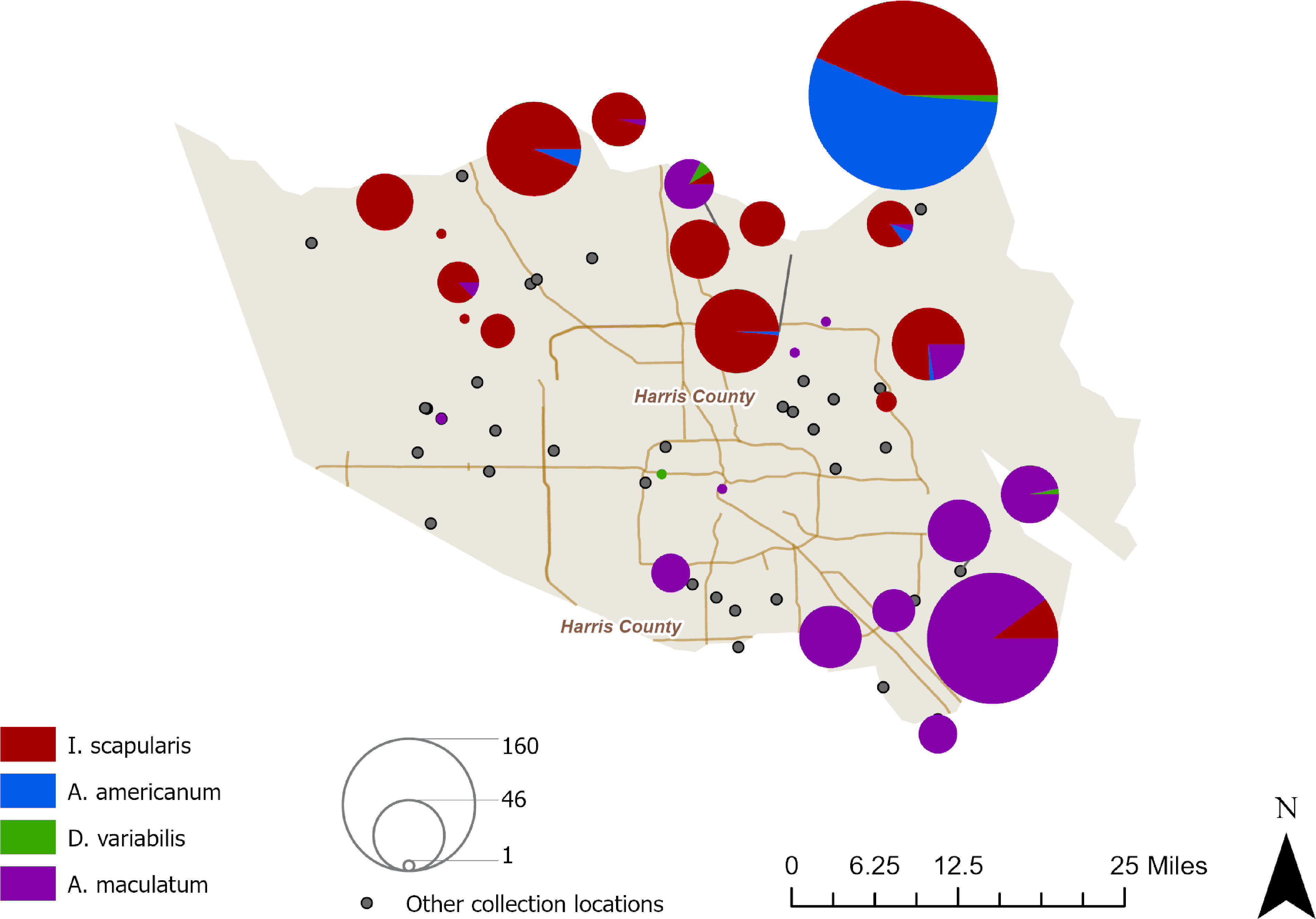
Map of Tick Species Distribution in Harris County. Shows location for field-collected adult ticks, along with unsuccessful collection attempt locations (gray dots).
Morphological identification and nucleic acid extraction
Adult ticks were identified to species by a trained entomologist using multiple identification keys (Cooley, 1946; Guzmán-Cornejo C, 2011; Keirans and Clifford, 1978; Keirans and Durden, 1998; Keirans and Litwak, 1989; Yunker et al., 1986), and subadults were identified to genus. Ticks were washed using 3% bleach for 5 min 1.7% hydrogen peroxide for 5 min, then rinsed with water. After washing, adult ticks were bisected on the sagittal plane using a sterile scalpel, with one tick half used for nucleic acid extraction. Subadults were cut to ensure all parts of the tick were exposed to extraction reagents, and the entire subadult was used for extraction. Genomic DNA was extracted using the Qiagen DNeasy Blood and Tissue kit (Qiagen, Valencia, CA) following the manufacturer’s protocol with an overnight incubation at 56°C after adding proteinase K. Subadults and adult male Ixodes scapularis were eluted in 65 µL of buffer Elution Buffer while all other adults were eluted in 205 µL. DNA was quantified using a NanoVue spectrophotometer (GE, Louisville, KY).
Polymerase chain reaction
DNA was first tested using genus-level pan-Rickettsia, pan-Borrelia, and pan-Anaplasmataceae real-time polymerase chain reaction assays using conditions previously described (Eremeeva et al., 2007; Kato et al., 2013; Kingry et al., 2018). Samples were considered positive if they had a cycle threshold (CT) ≤35. Positive samples with a CT ≤30 were evaluated using endpoint PCR assays that allow for Sanger sequencing of the amplicon and detection to the species level. Samples with a CT less than 35 but above 30 were considered positive but were not amplified using the end-point assay due to a low likelihood of amplification. Rickettsia-positive samples were tested using a semi-nested assay targeting the outer membrane protein A (ompA) gene (Regnery et al., 1991; Roux et al., 1996). Pan-Borrelia positive samples were tested using assays targeting the gyrB and flagellin (flaB) genes (Bissett et al., 2018; Krishnavajhala et al., 2021).
End-point PCR products were visualized on a 1% agarose gel using electrophoresis. For samples with two or more bands, bands of the appropriate size were excised from the gel using a sterile scalpel. Genetic material in the gel band was extracted using the Qiagen Gel Extraction kit (Qiagen, Valencia, CA) per kit protocol. For samples with a single band, PCR products were cleaned per protocol using the QiaQuick PCR Purification kit (Qiagen, Valencia, CA). Extracted DNA was sent to Lone Star Labs (Houston, TX) for Sanger sequencing, and forward and reverse sequences were obtained. The chromatograph of each sequence was reviewed using SnapGene viewer (San Diego, CA) for quality. The forward sequence and reverse complement of the reverse sequences were aligned in Molecular Evolutionary Genetics Analysis 11 (MEGA11) (MEGA Software, Temple University, Philadelphia, PA). The aligned sequence was searched using a nucleotide query (BLASTn) (NIH, n.d., Sayers et al., 2022). Species identification, accession number, and percent match were recorded for the highest percent identity match for each sequence.
Results
Tick collection
A total of 1,219 ticks were collected from 30 of the 63 locations in Harris County, TX, between January 2021 and December 2022. Collection efforts occurred on 121 days in 2021 and 133 days in 2022, with an average of 2.8 days between collection attempts and a maximum of 22 days between attempts. A total of 1,031 adults (518 female and 513 male), 187 nymphs, and 1 larva were collected (Table 1). The majority of ticks collected were Ixodes spp. (n = 502, 41.2%), followed by A. maculatum (n = 337, 27.7%) and A. americanum (n = 192, 15.8%). A significantly smaller portion of collected ticks were Dermacentor variabilis (n = 5, 0.4%), and Rhipicephalus sanguineus (n = 1, 0.08%) was collected.
Number of Ticks Collected by Species, Sex, and Life Stage
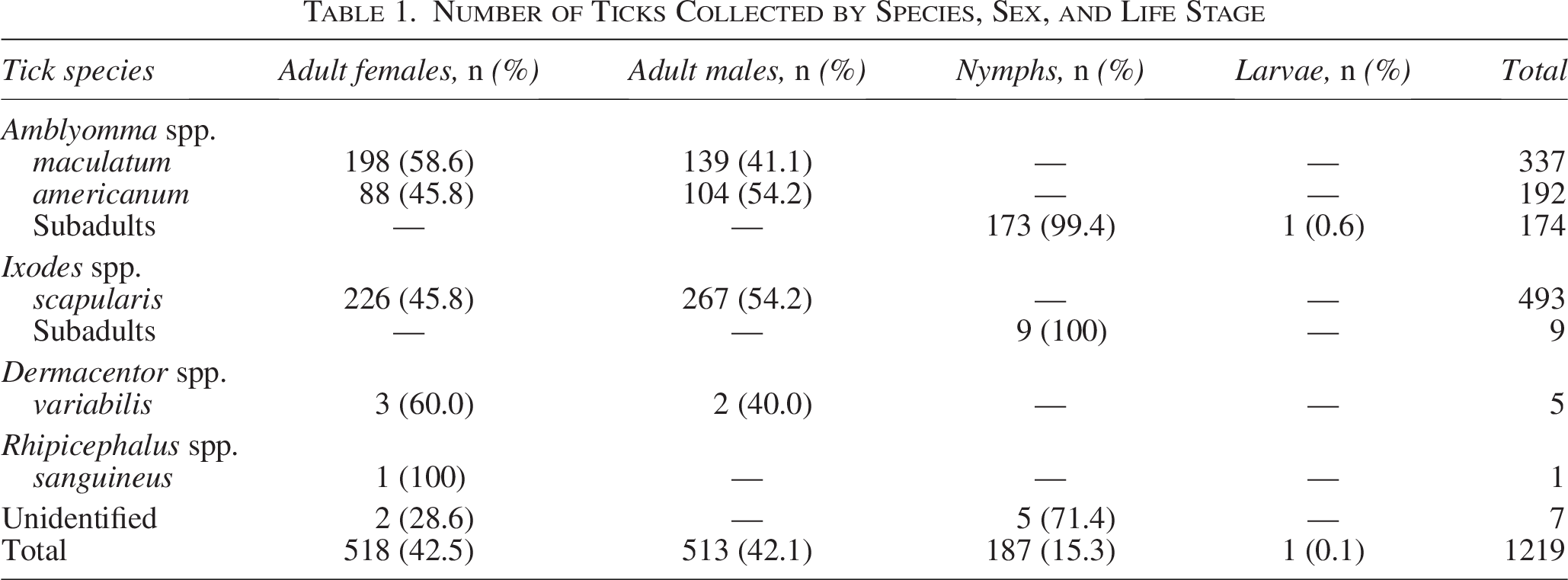
The ticks collected varied by collection method, with 98% of A. americanum ticks collected using a dry ice trap. A. maculatum and I. scapularis were both primarily collected by dragging, with limited numbers collected using dry ice traps. Additionally, A. maculatum were commonly collected off of field technicians with a total of 26 ticks collected from technicians, clothing while collecting.
The ticks collected demonstrated a seasonal and geospatial pattern, with I. scapularis found mostly in the northern portion of the county between November and February (Fig. 1). A. americanum ticks were found mostly in the spring months between February and April, with some collected in the summer months (Fig. 2). The majority of A. maculatum ticks (71.6%) were collected in August, and only 14 (4.0%) were collected outside of July through September. The collection of I. scapularis and A. americanum ticks occurred primarily in the more wooded northern part of the county compared to A. maculatum ticks found in southern parts of the county, which include more grasslands and coastal plains (Stahman and Deborah, 2023).
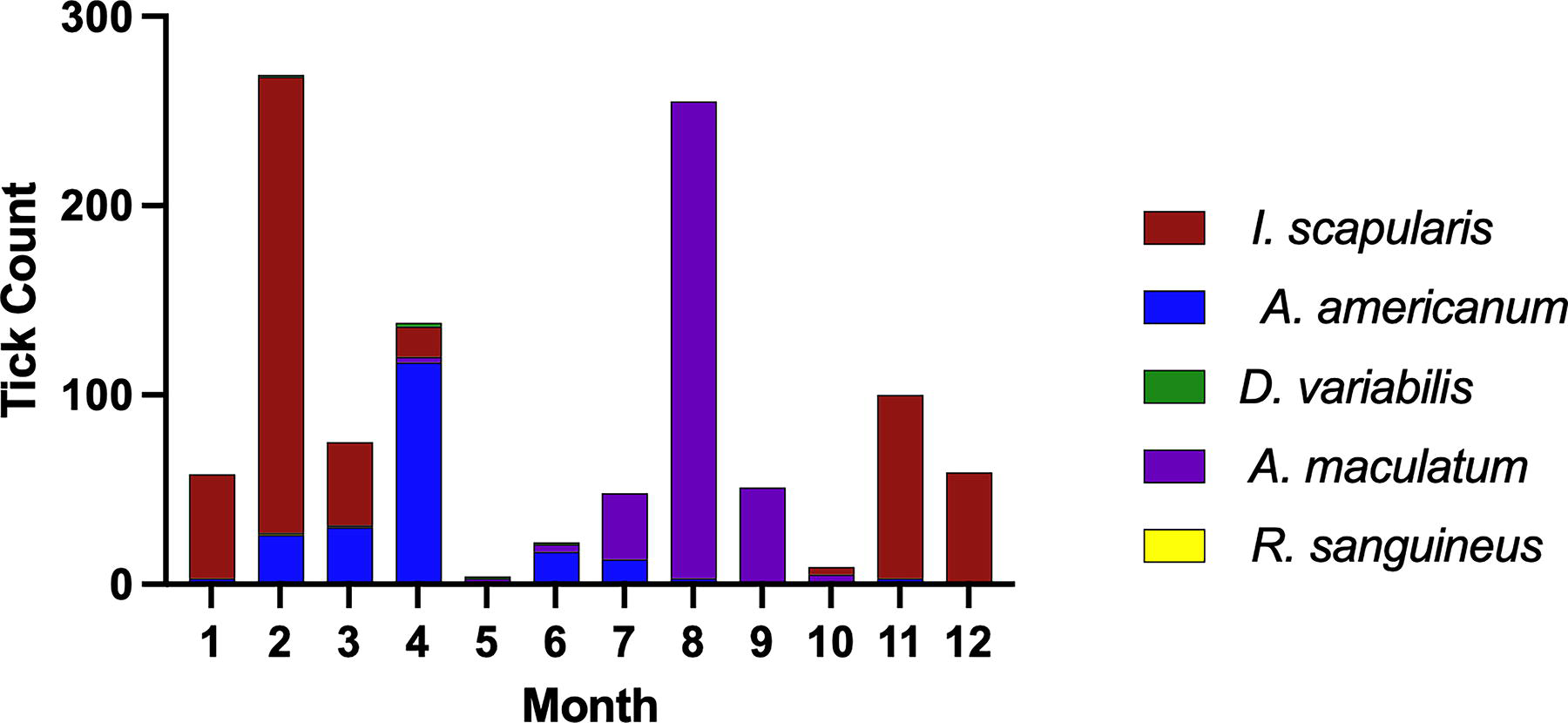
Number of Ticks Collected by Species and Month. Combined results by month for 2021 and 2022.
The majority of nymphs collected (92.9%) were in the Amblyomma genus, as compared to only 1.8% Ixodes spp. and 0.7% all other species. These Amblyomma nymphs followed the same general seasonal trends as the adult A. americanum ticks, with the most Amblyomma nymphs collected in April (112, or 64.7% of Amblyomma spp. nymphs) and the majority (86.7%) collected between February and April (Fig. 2). A single collection event in April 2021, where 110 Amblyomma spp. subadults were collected, accounts for 63.2% of Amblyomma subadults, making interpretation of any seasonal trends for this group difficult.
Seasonality was assessed by analyzing the data in four defined three-month periods (Fig. 3). We identified a mix of species in spring (March–May; Fig. 3A). Summer (June–August; Fig. 3B) was almost entirely A. maculatum, mostly in the southern parts of the county. Fall (September–November; Fig. 3C) shows the transition from A. maculatum to I. scapularis as well as the geographic divide between the tick populations. Ticks found in the winter (December–February; Fig. 3D) were almost all I. scapularis and clustered in the northern areas of the county.
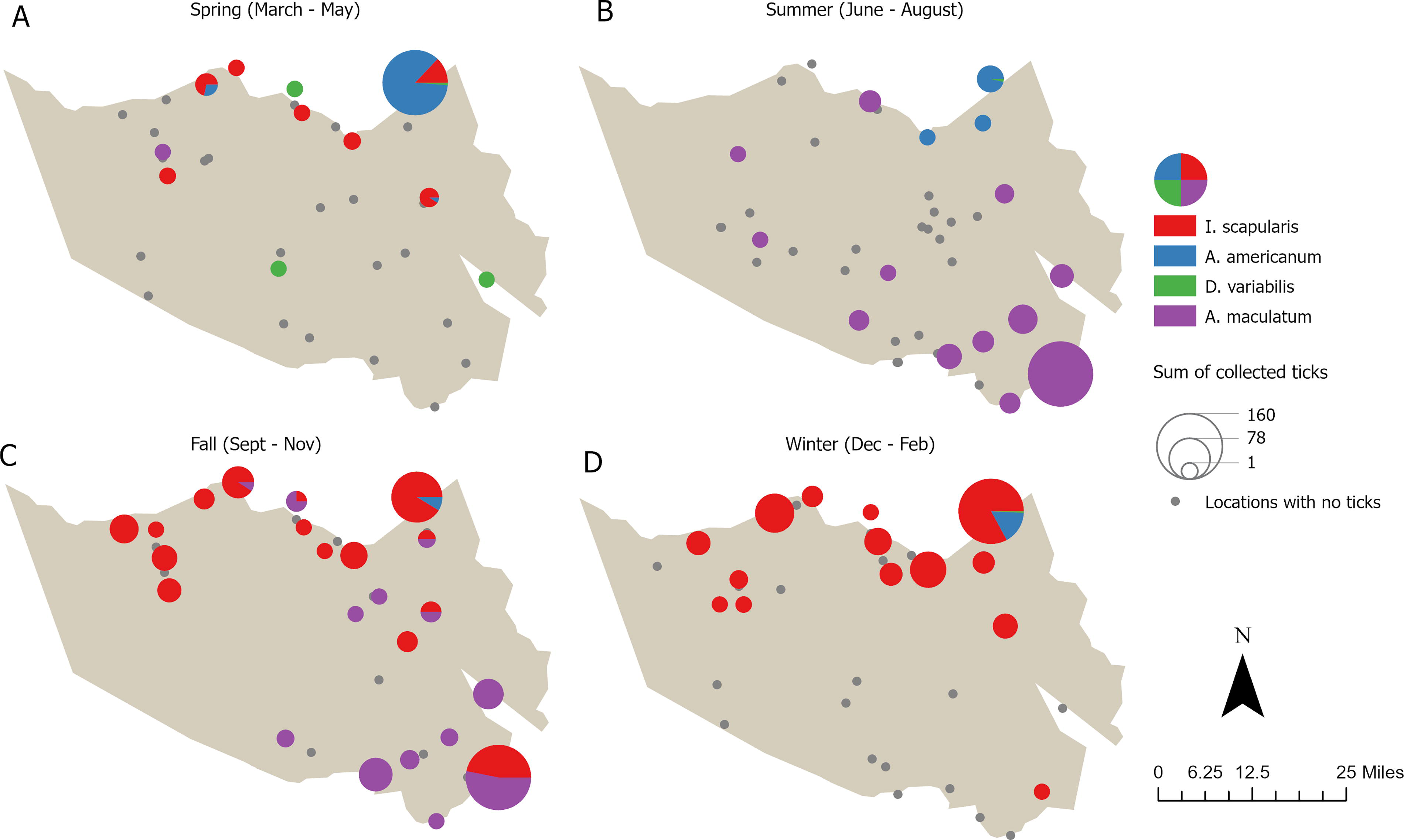
Map of Ticks Collected by Season and Species. Adult ticks collected in all four seasons, combined data for 2021 and 2022, by species showing
Finally, weather variables at the time of collection were assessed. Trends in ambient temperature when the ticks were collected reflect the seasonal distribution of the respective species (Fig. 4). The highest average collection temperature was 87.1°F for A. maculatum, which, as shown, was found during the summer months. The lowest average collection temperature was 69.5°F for I. scapularis. There was no association between collected species, humidity, or precipitation status.
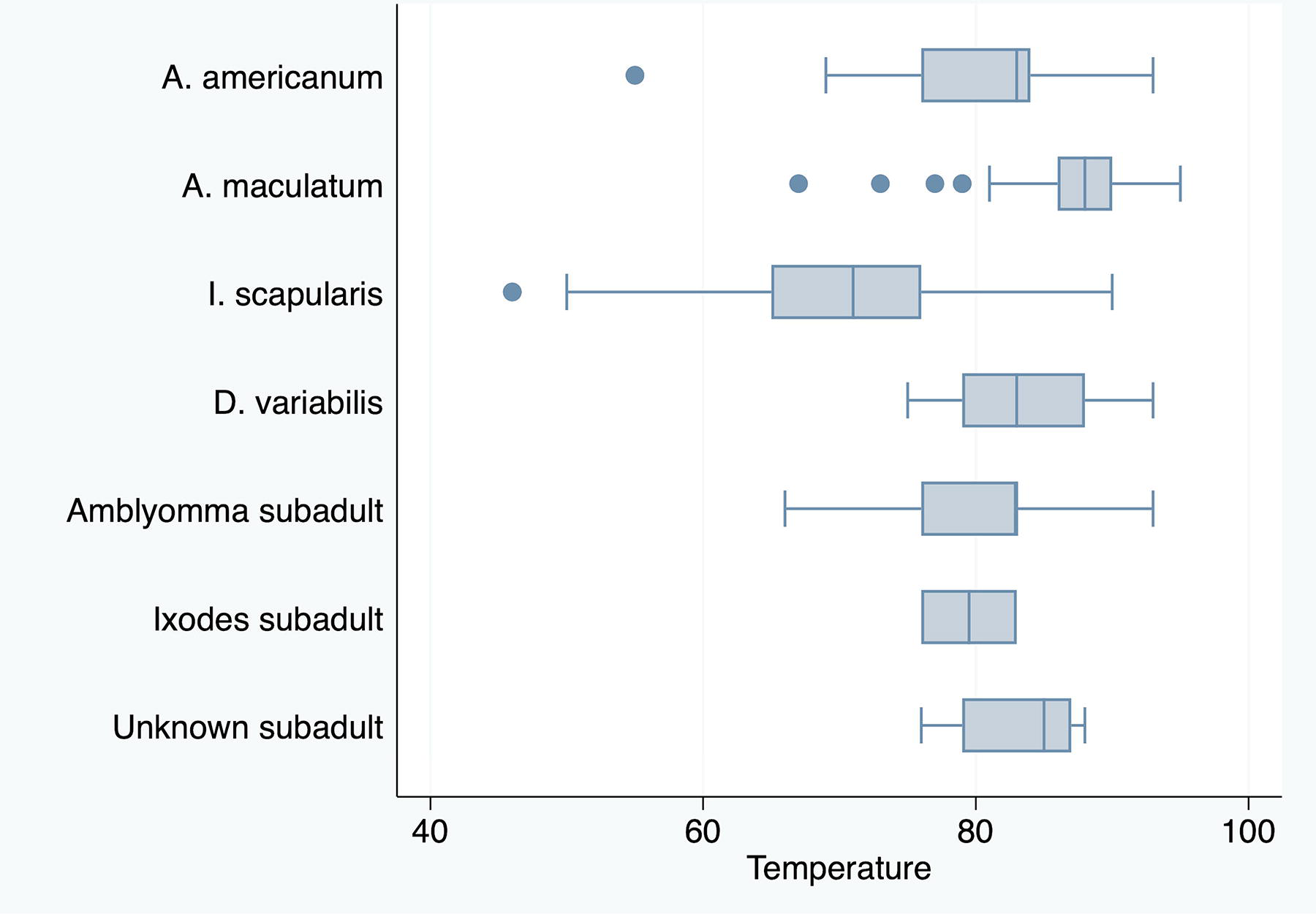
Box Plot of Collection Date Temperatures(°F). Shows the species of tick collected and a box and whisker plot of the temperature in Fahrenheit when the ticks were collected.
Pathogen testing
A total of 1,195 (98%) collected ticks were available for testing (Table 2). The majority of Ixodes spp. ticks (72.1%), A. maculatum (54.6%), A. americanum (52.1%), and Amblyomma spp. subadults (50.6%) carried Rickettsia. A total of 24 samples were Anaplasmataceae positive, comprised mostly of Ixodes spp. ticks (79.1%), with some A. americanum (16.6%) and one R. sangeuineus (4.2%). Only two Amblyomma subadults were identified as Borrelia positive. Overall, 729 ticks tested positive for a Rickettsia-genus bacteria. Of these, 115 had a CT value between 30 and 35 and were excluded from further analysis. All Anaplasmataceae-positive samples had a CT value over 30 and were not further evaluated. Both Borrelia-positive Amblyomma samples were tested using flaB, but usable amplicons were not obtained, which prevented further speciation.
Number of Bacterial Species Identified in Collections by Tick Species
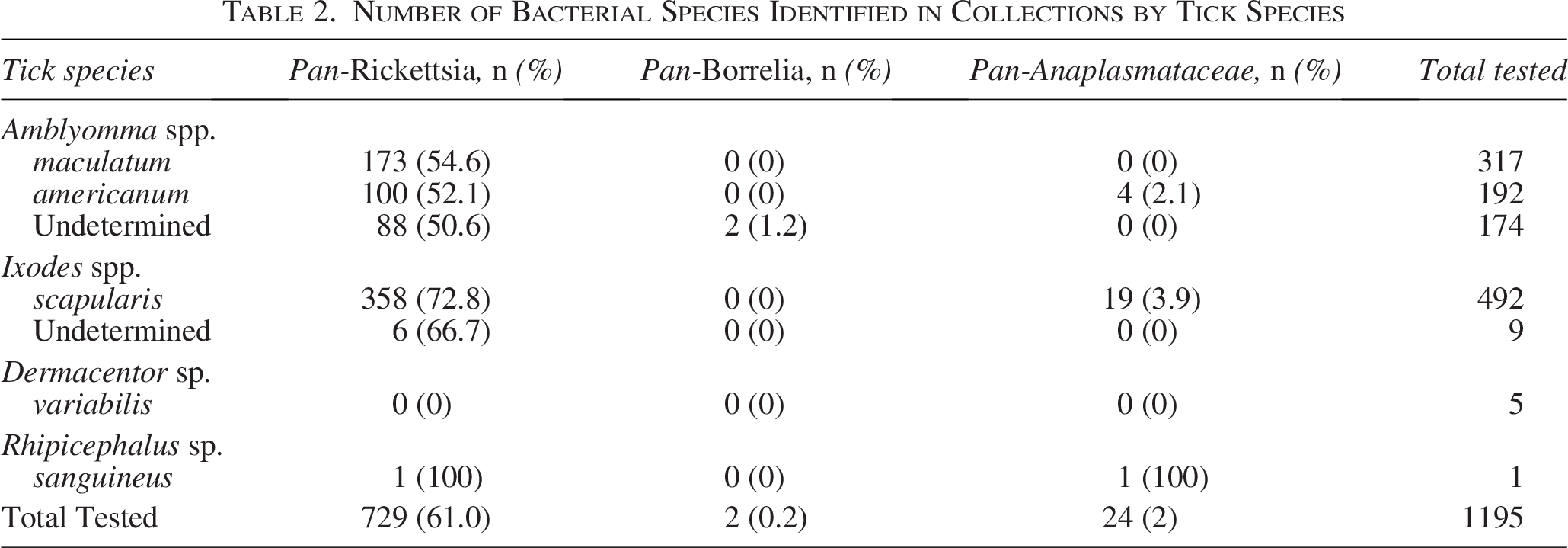
A total of 614 samples were eligible for endpoint PCR testing and Sanger sequencing to further evaluate the Rickettsia species. Of those, 322 amplified well enough to obtain a usable sequence (Table 3). All the Rickettsia spp. from I. scapularis ticks able to be sequenced (n = 148) were an I. scapularis-specific endosymbiont such as R. buchneri or related species. All the Rickettsia samples that were able to be sequenced from A. americanum ticks were R. amblyommatis, this bacterium species remain of questionable pathogenicity to humans (Richardson et al., 2023).
Rickettsia Species Identified by Tick Species. Number of Ticks Carrying Each Species of Bacterium with Percentage in Parentheses

We identified multiple Rickettsia species in collected A. maculatum ticks, with 23.1% of A. maculatum carrying R. parkeri, a known human pathogen (Paddock et al., 2010), and 32.9% carrying Candidatus R. andeanae, a species of unknown pathogenicity (Allerdice et al., 2019). The spatial distribution of the ticks carrying these two pathogens was analyzed using the geographic locations where ticks carrying each respective pathogen were collected (Fig. 5). There does not appear to be a clear geospatial pattern with regard to where the positive ticks were collected, with some ticks collected on the same day from the same location carrying different Rickettsia species.
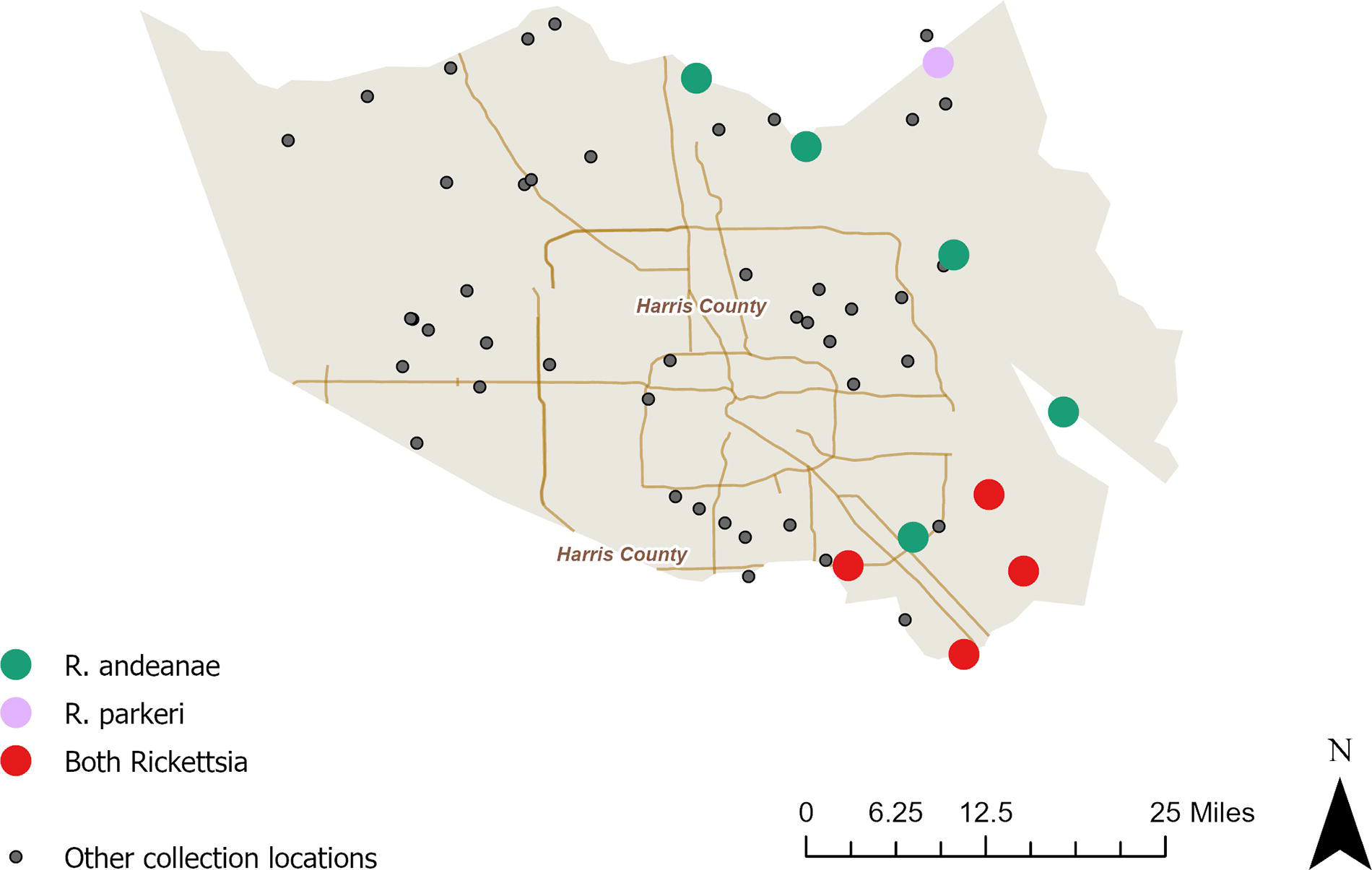
Distribution of R. parkeri and Candidatus R. andeanae in A. maculatum ticks in Harris County. Green dots represent locations where ticks carrying Candidatus R. andeanae were found, purple dots represent locations where ticks carrying R. parkeri were found. Red dots represent locations where ticks carrying Candidatus R. andeanae and R. parkeri were found. Gray dots represent collection locations where no pathogenic Rickettsia was identified.
Discussion
The present study identified R. parkeri in 23.1% of Rickettsia positive A. maculatum ticks, placing it within the 11–43% range identified across other studies (Paddock et al., 2010; Sumner et al., 2007; Trout et al., 2010; Wright et al., 2011). This is the first known report of R. parkeri, a pathogen within the spotted fever group, being detected in ticks in a densely populated urban area of southeastern Texas. This is a high percentage of Rickettsia as compared to R. rickettsii, which is reported in <1% of human-biting potential vector species (Paddock, 2009), despite Rocky Mountain Spotted Fever (RMSF) being the most commonly reported SFGR in the United States (Raoult and Parola, 2008). Current commonly used serologic diagnostic tools are incapable of distinguishing between infections caused by different SFGR species (Binder et al., 2019; Chapman et al., 2006). There is a high potential for misdiagnosis of infection with R. parkeri or other SFGR infections given the cross-reactivity of antigens within this group (Raoult and Paddock, 2005; Raoult and Parola, 2008). Thus, R. parkeri may potentially explain the reporting of RMSF in regions with little to no detection of R. rickettsii in the local tick population or the drastic changes in RMSF case fatality rates by region and over time (Raoult and Parola, 2008). Additionally, the identification of high proportions of ticks carrying endosymbiont Rickettsia or species of unknown pathogenicity (Candidatus R. andeanae and R. ambylommatis) may impact our ability to evaluate the burden of disease in this community through serosurveys, as there is significant cross-reactivity between the members of the SFGR family.
Carriage of both R. parkeri and Candidatus R. andeanae in a tick has occasionally been reported (Ferrari et al., 2012; Lee et al., 2017), although other reports have shown the two pathogens existing in the same area without detecting cocarriage (Allerdice et al., 2019). A limitation of this study is the lack of ability to detect cocarriage due to the use of Sanger sequencing, which only produces a single forward and reverse sequence. Given the number of sites where both R. parkeri and Candidatus R. andeanae are present in this tick population, using further sequencing methods capable of detecting cocarriage could provide insight into the dynamics of these two Rickettsia spp.
The 2-year timeframe for collection provided clear insight into seasonal and geospatial trends for different tick populations in Harris County, in turn providing an understanding of where and when humans and animals may be exposed to ticks and the pathogens they carry. There was a clear spatio-temporal pattern to the tick populations collected in this study. The increase in A. maculatum activity, the species with the highest carriage rates of pathogenic Rickettsia, in the summer months may correspond to a higher risk for human disease between July and September. This differs from the national peak of spotted fever rickettsiosis onset in June (CDC, 2024), providing a more locally accurate temporal risk assessment.
I. scapularis ticks were primarily collected in the winter months, in contrast to peak activity rates seen in the northern parts of the USA, which occur in April (Burtis et al., 2023). Another notable difference from tick collections conducted in the Northeast is the low number of I. scapularis nymphs collected in Harris County. Collection efforts from the Northeast regularly report high numbers of I. scapularis nymphs, between 24% and 48% of I. scapularis ticks collected (Bajwa et al., 2024; Burtis et al., 2023). However, the lack of nymphs collected in this study (1.8% of Ixodes spp. ticks) is expected for the southern US region, where nymphal I. scapularis ticks have been shown to have different questing patterns from northern nymphs, to include questing at a lower height, resulting in less contact with people (Arsnoe et al., 2015; Bajwa et al., 2024; Tietjen et al., 2020). Finally, we did not identify any Lyme disease-causing bacteria in our I. scapularis population, a phenomenon that has been documented previously but is in stark contrast to the northeast, which reports roughly half of adults of this species are positive for B. burgdorferi (Hodo et al., 2020; Mendell et al., 2019; Prusinski et al., 2014; Rounsville et al., 2021; Salomon et al., 2025; Thapa et al., 2019).
Conclusion
This study identified an ongoing risk for SFGR transmission in Harris County, indicating a likely risk for transmission in surrounding regions with similar ecology. Our work adds to the growing body of evidence that urban and peri-urban green spaces are suitable habitats for medically important ticks and can maintain enzootic transmission, potentially impacting millions of people. We believe that further studies are needed to clearly define the burden of SFGR in the surrounding populations. This study demonstrates the need to support continued and year-round field surveillance of questing tick vectors to understand the risk of tick-borne disease transmission in humans.
Footnotes
Author Disclosure Statement
No competing financial interests exist.
Funding Information
This study was funded by a grant from the NIH NIAID R03AI151609.