




Abstract
This article presents a historical preface to the Astrobiology special collection by introducing the actors, timeline, and intellectual framework involved in the National Aeronautics and Space Administration's (NASA) Viking mission. The authors pull information from scholarly articles, historical records, and the personal notes of Viking scientists uncovered this year and currently en route to the National Archives. Revisiting the legacy of Viking here provides a brief look into the science that continues to inform the practice of astrobiology and the creative spirit that inspires its scientists. All figures presented in this article have not previously been publicly available and will be made so later this year in the Exobiology Branch Collection at NASA’s Ames Research Center Archives (collection ARC11.17). The authors encourage space history and astrobiology researchers to consult the soon-to-be accessioned Viking-era records housed in the Ames archives for new insights into America’s first landing on Mars.
Introduction
NASA’s Viking program marked one of the most ambitious undertakings in the history of planetary exploration. It represents the first time fully autonomous scientific laboratories were delivered to the surface of another world (NASA, 2024). Two spacecraft, Viking 1 and Viking 2, launched in 1975. Their successful landing and transmission of scientific measurements transformed humanity’s conception of Mars from a distant, largely speculative world into a place that could be studied directly. Viking returned the first high-resolution global images of Mars, provided detailed analyses of its atmosphere and regolith (NASA PDS Geosciences Node, 2025), and conducted the only metabolism-based life detection experiments ever flown to another planetary surface (Klein, 1978; Levin and Straat, 1976b).
The concept behind the Viking mission pursued a bold scientific vision: To characterize Mars as a geological, chemical, and potentially biological world. The mission’s goals involved generating global and regional orbital images (NASA, 2024), studying the geological history of Mars by conducting the initial in situ analyses of atmospheric composition and soil chemistry, and searching for evidence of chemical evolution—or life—through experiments tailored to identify active metabolism (Klein, 1978; Snyder, 1979).
The Viking mission arose from small, interdisciplinary lab initiatives across the NASA centers. Over time, initial research in exobiology, atmospheric science, contamination control, and autonomous experimentation began to unify into a cohesive scientific structure (Ezell and Ezell, 1984). At the NASA Ames Research Center, a small group of planetary biologists transformed fundamental inquiries about the search for life, environment, and available tools into concepts suitable for flight. This aided Viking not just as a reconnaissance initiative but as a comprehensive exploration of planetary habitability (Klein, 1978). In doing so, Viking created the intellectual and technical frameworks that still guide Mars exploration as an integrated surface–atmosphere system, incorporating the search for life within its environmental context (Mustard et al., 2013; NASA, 2014).
Origins of NASA’s First Life-Detection Experiments?
In December 1963, just as the Mercury program concluded, the Exobiology Division at NASA’s Ames Research Center began a proposal to create a “5,000-pound payload for the detection and study of life on Mars” (Young, 1963). As shown in Figure 1, notes scratched onto a memo initiating this proposal paint a vivid picture of the then-current criteria for life, methods of detection, and optimal landing site selection (Fig. 1; Young, 1963). The expertise at NASA Ames Research Center was first tested onsite in the lunar biological laboratory, which was used to search for signs of life in the Apollo samples (Fig. 2). The ideas jotted down would influence final design and, through Viking’s eventual success, the tenets of astrobiology practiced today.
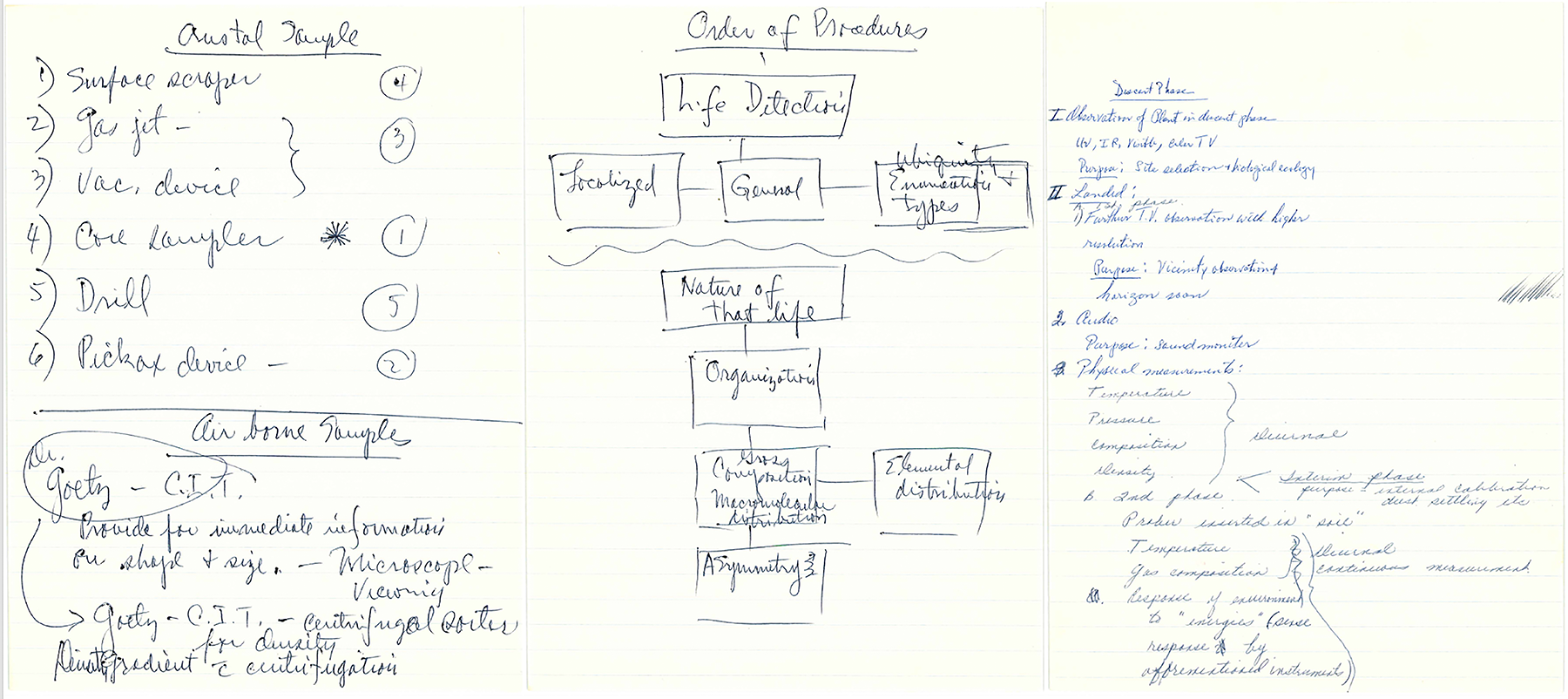
Handwritten notes from the Exobiology Division at NASA Ames Research Center in preparation for a meeting to plan the design of a biological payload for the detection of life on Mars (Young, 1963). The notes describe the nature of life as it was understood at the time, methods for active biology detection, and available instruments for sample collection. The Apollo missions afforded Ames’s scientists the opportunity to test their conceptions of an exobiology experiment with returned samples (Tierney, 1968). These returned Apollo lunar samples were NASA’s first experiment to search for extraterrestrial life. Grains of lunar regolith were exposed to nutrients and gases to observe for chemical changes that could have signaled active metabolism by lunar organisms. Although no microorganisms were detected in the returned lunar samples, exobiologists at Ames expanded upon these experiments and miniaturized their instruments for their design of Viking’s Gas Exchange and Pyrolytic Release experiments (Ezell and Ezell, 1984; Smith and Anderson, 2019).
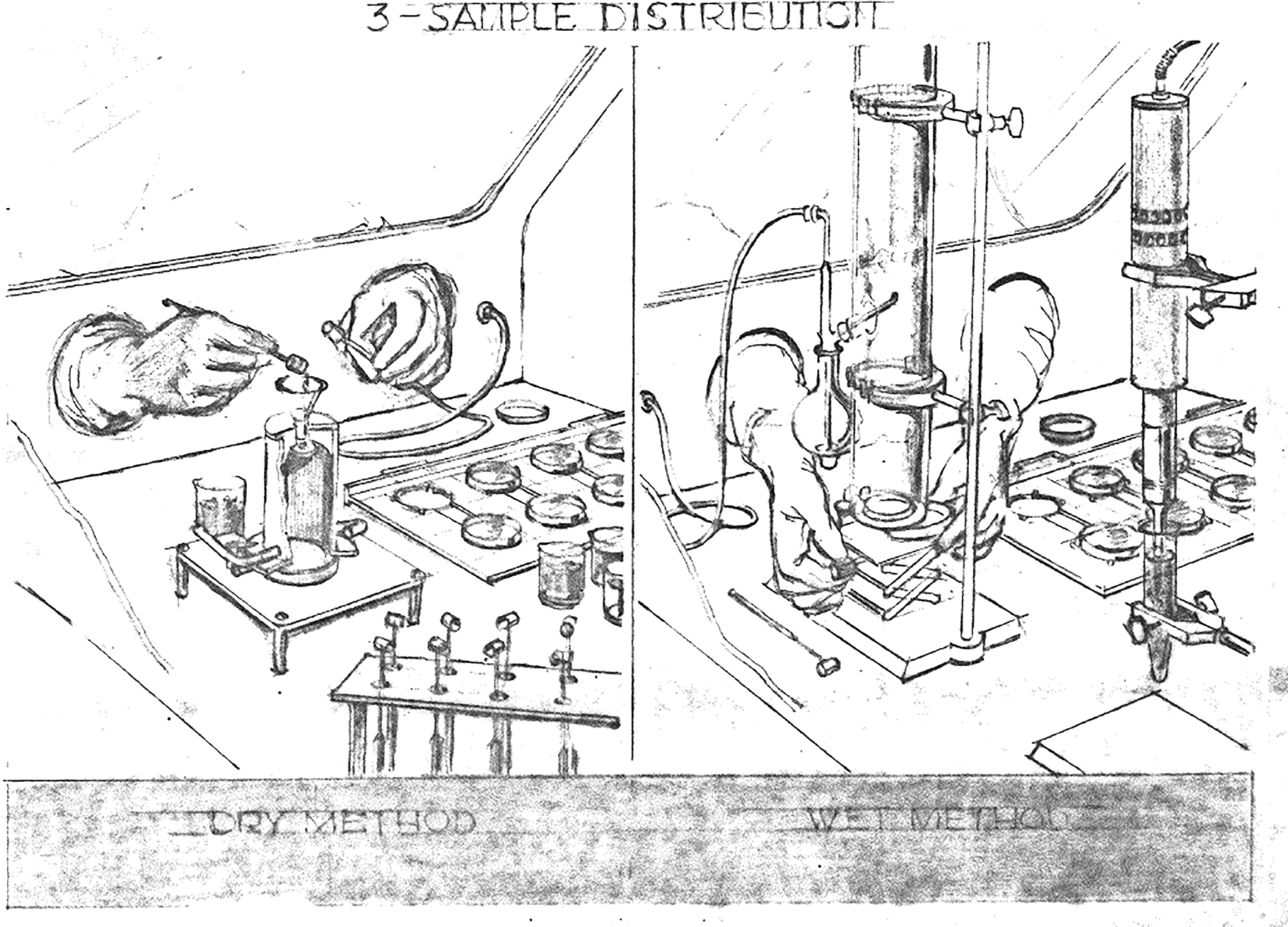
Hand-drawn instructions from the Lunar Biological Lab protocol for wet and dry methods of sample distribution (NASA, 1969). Left: Gloved hands distribute lunar regolith with a short cylindrical rotary sample distributor called the Lunar Soil Distribution System, an invention by Dr. Vance Oyama (NASA, 2019), which allocates granular material onto Petri dish targets. Right: Wet (slurry-based) distribution employing an extended cylindrical sample distribution column, featuring fluid inlet tubing and a regulated dispensing outlet to provide homogenized aliquots to Petri dishes. Both methods depend on specialized cylindrical sample handling and distribution systems, a design concept later applied in automated fashion on the Viking landers.
NASA tasked scientists at its Ames Research Center with selecting the biological experiments to be flown aboard the Viking mission. Ames had winnowed a broad selection of life detection experiments a decade prior in the lead up to the canceled Voyager Mars lander (Ezell and Ezell, 1984). With the Viking science requirements defined in 1968, Ames revisited experiments that had reached the breadboard demonstration stage, colloquially known as Technology Readiness Level 4, to meet an initial launch window in 1973 (Fig. 3; Ames Research Center, 1968). Notably, Ames rejected NASA’s first life detection experiment called the Wolf Trap, developed in 1958, which was not sufficient for the scope of Viking but helped internally to promote the idea of searching for life beyond Earth (Ezell and Ezell, 1984).
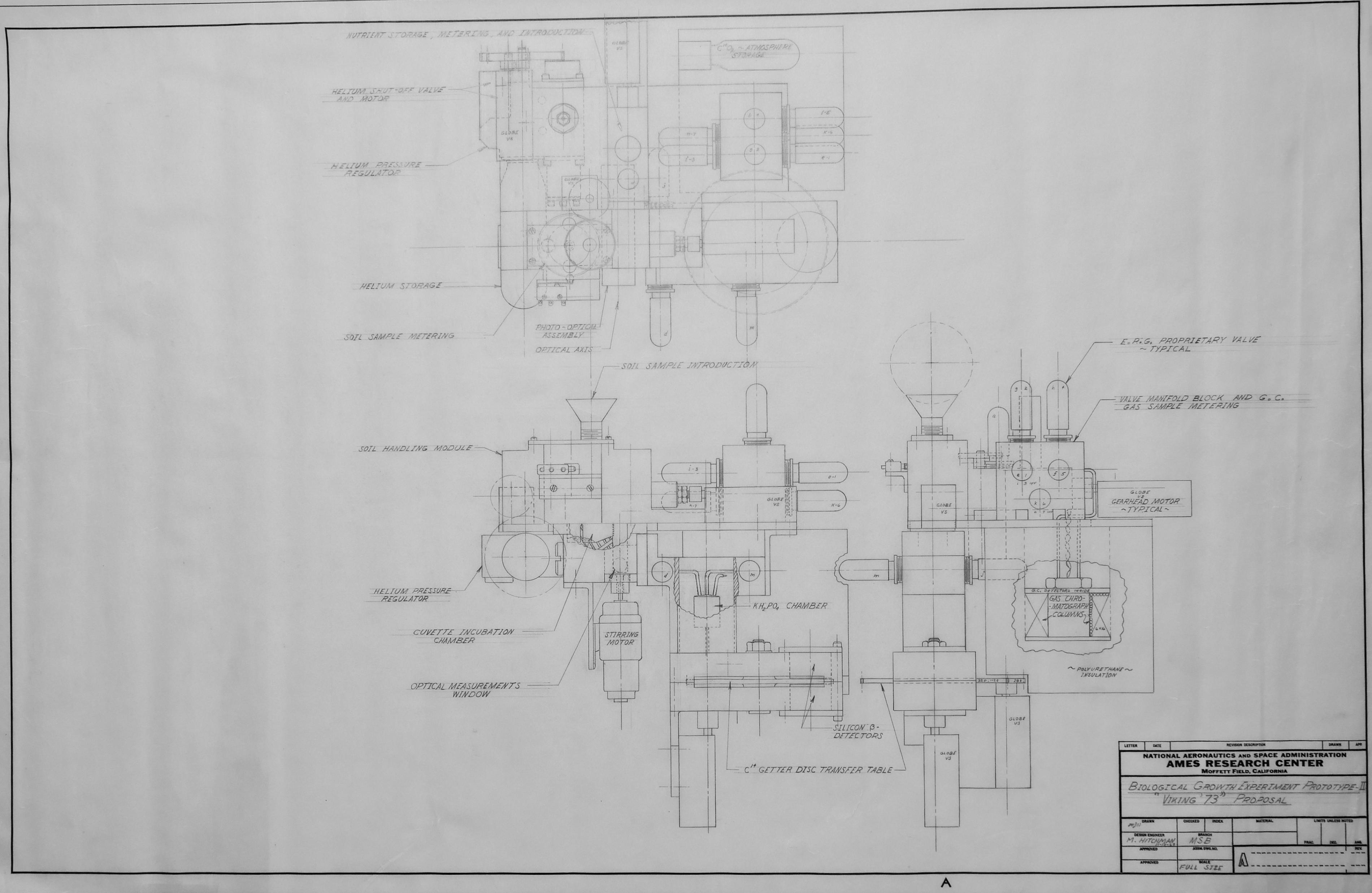
A schematic of an early iteration of the Gas Exchange life detection experiment titled “Viking Biological Growth Experiment Prototype-II, Viking ‘73 Proposal.”
The Viking landers brought together a complementary suite of scientific instruments to characterize the geological, atmospheric, and biological nature of Mars. Three biological experiments searched for evidence of metabolic processes as signs of life (Levin and Straat, 1976b), the scope of which is described first-hand in the special collection article “Viking Science” by Clark (2026 in this issue). Meteorological sensors documented the first daily climate patterns on another planet, and imaging systems captured both wide-angle and detailed views of the Martian landscape (Jones et al., 1979). A gas chromatograph–mass spectrometer searched for organic compounds (Biemann et al., 1976). The orbiters enhanced these measurements by charting surface features, examining atmospheric behavior, and providing communication relay connections that extended mission duration.
The Americans and Soviets made great technological advancements during the Cold War era in their efforts to land on Mars. The Soviets had succeeded in a soft landing of their Mars 3 lander in 1971, although it only sent data back to Earth for 14.5 s. Mars 3 carried a clandestine rover called PrOP-M with geological instruments that ultimately failed to deploy (Anderson, 1990). Meanwhile, NASA maintained focus on the hard landing Viking. While the initial launch targeted 1973, budget constraints pushed Viking’s launch to August 20, 1975 (NASA, 1975).
The first of Viking’s orbiters and carried lander arrived at Mars on June 19, 1976. The second orbiter arrived 45 days later. Unexpected dust storms thwarted a planned descent of the first lander on July 4, 1976. As the day of America’s bicentennial passed, scientists began the longest continuous meeting in NASA’s history to determine a safe landing spot (NASA, 1980a). After 3 weeks of continuous observation and deliberation, scientists selected a site on a sandy plain in the northern equatorial region of Mars deemed safe for the lander’s first touchdown. On July 20, 1976, the Viking 1 lander touched down and, within minutes, sent its first black and white image of the Martian surface back to Earth.
Life Detection Results and Interpretation
Viking’s Gas Exchange and Pyrolytic Release experiments for life detection yielded no positive results. Incredibly, the Labeled Release (LR) experiment in 1976 initially indicated the presence of viable microbial life. LR tests conducted by the two Viking landers produced comparable, consistent, positive results (Levin and Straat, 2016). This indicated the existence of a highly reactive soil and the potential existence of biological activity within the soil of Mars (Levin, 1976).
The LR experiment was founded on the idea that early Mars and Earth had comparable primordial environments, which each generated Miller–Urey-type organic compounds that were accessible for the origin of life and its later metabolism and evolution (Levin, 1972). In the LR experiment, a nutrient solution made of Miller–Urey compounds labeled with 14C was incorporated into a sample of Martian soil, and the blend was constantly observed for the release of radioactive gas. Initial laboratory tests demonstrated that the technology was highly rapid and remarkably sensitive, identifying as few as 30 cells in a sample (Levin, 1956).
The most perplexing outcome emerged from the molecular analysis experiments conducted on Martian soil (Mazur et al., 1978). In these experiments, soil underwent thermal volatilization and gas chromatography, a process that quickly heats soil to evaporate small molecules and fragment larger ones into smaller organic compounds, with the resulting components being separated by each instrument. Surprisingly, organic material, which contains the building blocks of life, was not detected (Biemann et al., 1976).
Together with Viking’s measurements of highly oxidizing solid chemistry, the conflicting results led scientists to favor an abiotic explanation for the LR experiment (National Research Council, 1977). It was not until the Phoenix lander’s discovery of perchlorates in 2007 that scientists realized Viking’s sample heating may have destroyed any organics through oxidation (Navarro-González et al., 2006; Kounaves et al., 2010). Perchlorate acts as a powerful oxidizer when heated, breaking down organic molecules into simpler compounds that obscured the LR results (McKay et al., 2025).
NASA has not launched a follow-up biological experiment to Mars. Instead, the agency has prioritized the geological characterization of Mars to understand, in part, if Mars could have once harbored life. The agency’s position remains that Viking did not detect signs of life (NASA Astrobiology, 2022).
Viking’s Impact on Mars Exploration and Climate Science
While Viking did not answer whether life is present on Mars, it significantly transformed the search efforts. Beyond its scientific goals and achievements, Viking profoundly shaped the future of Mars exploration by demonstrating precision entry, descent, and landing technologies, establishing long-duration autonomous robotic surface operations, and pioneering innovative orbiter-to-lander communication frameworks employed by all later missions (NASA, 2024).
Viking’s surface and atmospheric data revealed Mars to be more active and complex than once thought. The observations revealed a thin atmosphere dominated by carbon dioxide, with pressures ranging from 7 to 9 mbar that contribute to large temperature shifts, seasonal frost development, and planet-wide dust storms. Additionally, geological features that resemble channels and outflow areas pointed to past river activity (French, 1977; NASA, 2024). These findings created the initial quantitative framework for understanding the climate and geological development of Mars.
NASA’s Mars Climate Modeling Center (MCMC) personnel and their predecessors have been involved in nearly every US mission to Mars since Mariner 4, contributing to entry, descent, and landing studies for landed missions and providing support for aerobraking activities. Surface pressure observations from the Viking landers serve as a key baseline for validating Mars global climate models (GCMs). The seasonal pressure cycle recorded by Viking is used to constrain the carbon dioxide condensation-sublimation cycle in GCMs, including polar cap properties and subsurface ice table characteristics (NASA GCM Mars Climate Modeling Center, 2023). Synoptic-period pressure oscillations detected by Viking lander 2 provide insight into transient eddy behavior; comparison with Curiosity’s Rover Environmental Monitoring Station (REMS) data 18 Martian years later demonstrated that frontal systems associated with flushing dust storms can extend across the equator (Haberle et al., 2018). Viking descent and surface wind data have also been used to validate planetary boundary layer models and identify phenomena such as Western Boundary Currents (Haberle et al., 1993; Joshi et al., 1995). By leveraging these multidecadal observations alongside newer datasets, the MCMC advances model accuracy and supports mission planning for future Mars exploration.
Perhaps most importantly, Viking catalyzed the modern field of astrobiology by revealing both the promise and the challenges of searching for life in a chemically reactive, oxidizing environment (Klein, 1978). Environmental data collected by Viking established the standard for assessing Martian habitability and ultimately steered mission planning for the Phoenix, Curiosity, Perseverance, and ExoMars missions (NASA, 2024). Viking also set the highest planetary protection standards ever applied to a spacecraft, influencing international space research policy for decades to come (Rummel, 2001; NASA, 2019).
Post-Viking Exploration Strategy and Mission Concept
Following the success of Viking, NASA sought to harness the momentum of technological advancements and demonstrated space logistics brought about through the mission. NASA’s Solar System Exploration Committee considered proposals to probe the outer planets with new space science and geochemistry technology. A lineup of rovers for Mars, landers to Enceladus and Europa, and even Mars aircraft were proposed in the following years (Figs. 4 and 5; NASA, 1980b). A changing political landscape, however, shifted NASA’s attention to manned space missions in low Earth orbit through the US shuttle program and participation in the Soviet MIR program (Hogan, 2007). NASA’s Mars rover program was reignited in the 1980s by studies done at NASA's Jet Propulsion Laboratory (JPL) and Ames, such as the American field tests of the canceled Mars rover Marsokhod, acquired by NASA from Russia at the fall of the Union of Soviet Socialist Republics (USSR) (Stoker, 1998). Twenty-one years after Viking landed on Mars, the Pathfinder lander and its Sojourner rover touched down.
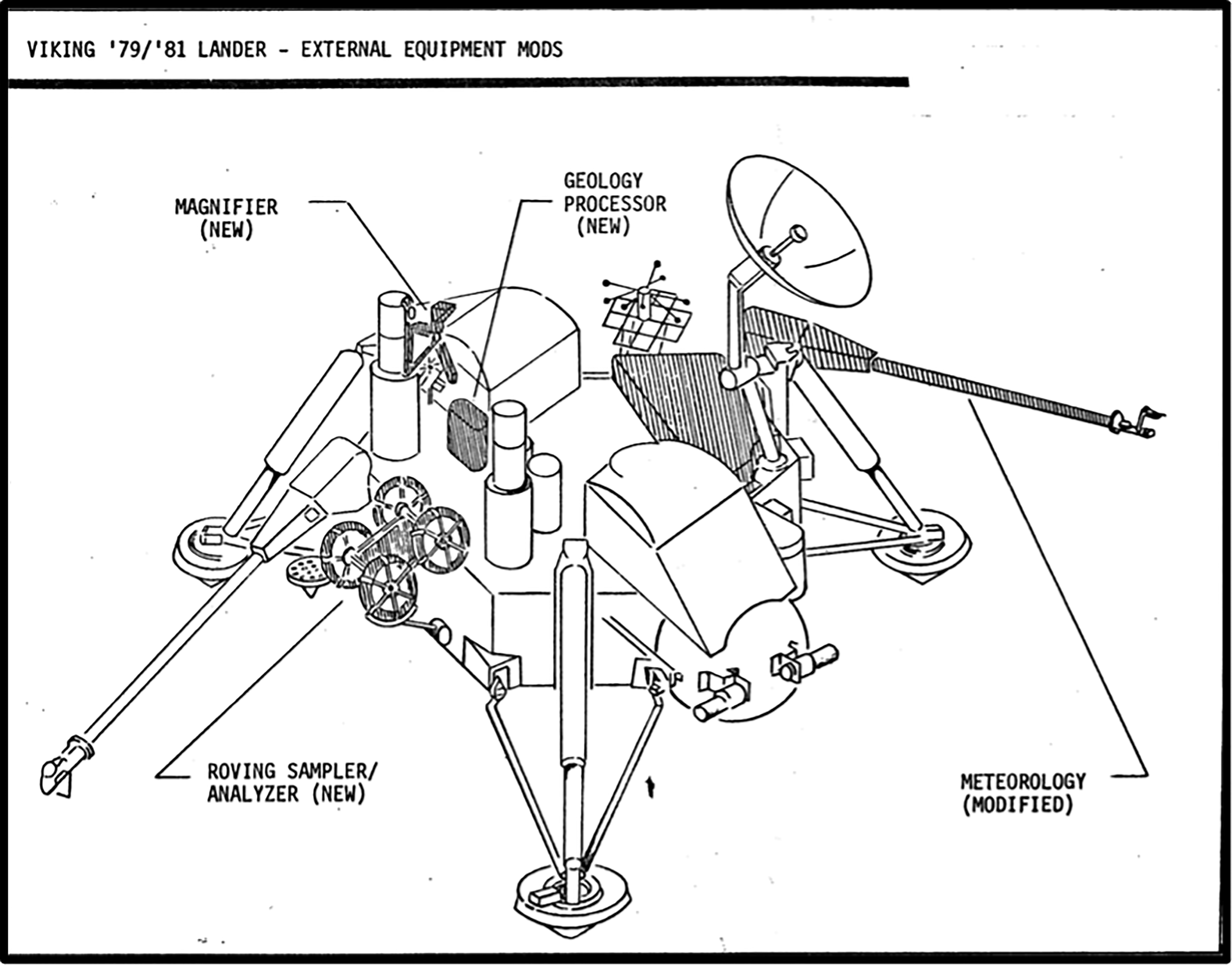
A follow-up to Viking that featured a similar chassis, enhanced geological instrumentation, and a small rover that was proposed but never flown (NASA, 1972).
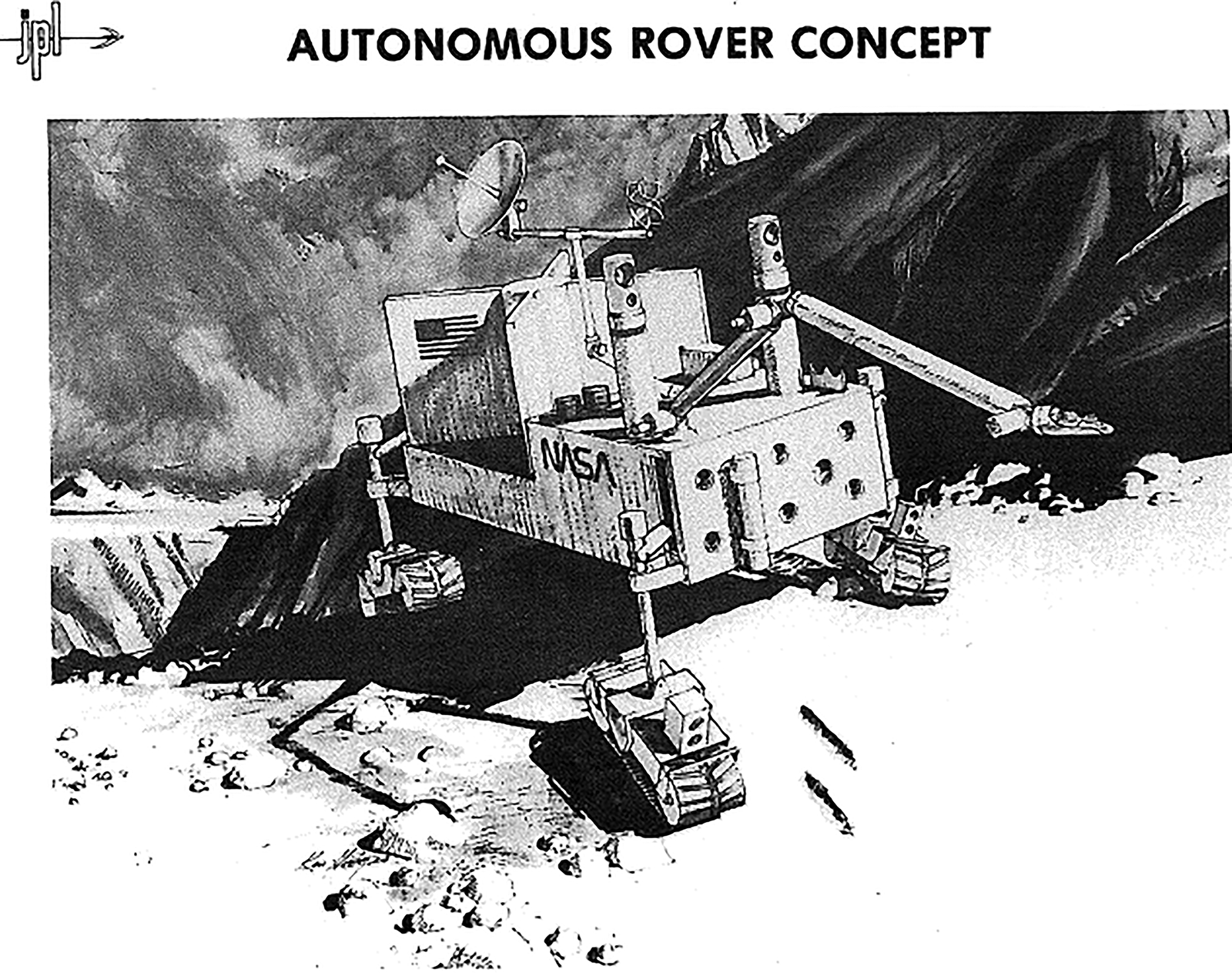
Autonomous Rover Concept pitched for NASA’s Solar System Exploration Committee (NASA, 1981). NASA’s Jet Propulsion Laboratory completed a cost review of this autonomous Mars rover in 1980 to study the geomorphology and habitability of Mars. Rovers presented the next practical evolution of autonomous Mars exploration, able to traverse harsh landscapes and take geophysical measurements across large areas.
NASA’s Viking mission transformed centuries of speculation about Mars’ surface and the possibility of life into direct scientific inquiry. From its origins in small exobiology lab programs at NASA Ames and its partners, the biological science of Viking transformed exploratory uncertainty into structured scientific pathways and shaped decades of space mission design and astrobiologically focused questions (Forget et al., 1999). The legacy of Viking continues today; it influences the creation of advanced life-detection tools, particularly those intended for subsurface, icy, or otherwise hidden environments, and remains a touchstone for how astrobiologists design, interpret, and aspire to the exploration of other worlds.
Authors’ Contributions
A.M. conceived the study. A.M. and N.N. conducted archival research, A.M. assembled the historical figures, and A.M. and N.N. wrote the article.
Data Availability
Figures presented in this article from archival material are housed in the NASA’s Ames Research Center Archives collection ARC11.17 and accessed with permission from the Jet Propulsion Laboratory. To access referenced documents from the collection ARC11.17, please send a request to the NASA Ames Research Center Archives and reference the FRC number.
Footnotes
Acknowledgments
The authors thank Milan Loiacono for careful proofreading. They are grateful to Dr. Melinda Khare for insights into the role of Viking in Mars Climate Modeling Center activities and to Dr. Jeff Moore and Dr. Orkan Umurhan for sharing their scientific expertise on Viking’s geophysical investigations. The authors also thank April Gauge, archivist at NASA Ames Research Center, for assistance in accessing historical documents related to the Viking biological experiments.
Author Disclosure Statement
No competing financial interests exist.
Funding Information
No funding was received for this article.
Associate Editor: Michael A. Meyer