



Abstract
As our nation struggles to make sense of the pathologies of conspiracy thinking and hyper-polarization in our body politics, this study investigates why some members of the House GOP caucus used Twitter to promote conspiracy theories surrounding the 2020 election. Our study first examines the predictors of conspiracy theory tweeting, and second, whether this messaging was related to voting for or against the certification of presidential election results in Arizona and Pennsylvania on January 6th. Our results suggest President Trump’s election performance in 2020, conspiratorial tweeting, and freshman status of House members were the driving factors of voting behavior on January 6th.
Introduction
The conspiracy theory that the 2020 presidential election was stolen from President Donald Trump has been referred to as the “big lie” in the popular press as well as political circles. The inflammatory rhetoric of these conspiracy theories ultimately exploded in the January 6, 2021, insurrection at the U.S. Capitol. This study initially documents how the 2016 presidential election foreshadowed claims of a stolen election and then how conspiracy thinking and conspiratorial rhetoric proliferated during and in the wake of the 2020 presidential election. Our study incorporates uses and gratification theory (UGT) to explain the underlying motivations of why some House GOP members also took to social media to promote Trump’s election fraud conspiracy theories. The heart of our analysis investigates how social media engagement, incumbent characteristics, and Trump’s election performance shaped the strategic decision among House GOP members to object to the certification of presidential election results in Arizona and Pennsylvania on January 6th. We conclude with a discussion on the implications of politicians using social media to promote disinformation and conspiracy theories to their audiences as well as the troubling pattern of election denialism that continues to permeate Republican primary contests in 2022 and 2024.
2016 as a Foreshadowing of 2020 Election Conspiracy Theories
Trump was promoting election conspiracies and sowing the seeds of doubt in our electoral process well before the 2020 presidential election. Trump charged that Obama only won in 2008 and 2012 because of voter fraud (Olmsted, 2019, p. 254). Throughout the 2016 Republican primaries and then the general election, Trump beat the drum of voter fraud and a rigged election that would steal victory from his supporters (Olmsted, 2019, p. 253). His increasingly sophisticated conspiratorial rhetoric about the election pointed to three key culprits “plotting to destroy America: undocumented immigrants, the news media, and the new world order” (Olmsted, 2019, p. 253). In fact, social media posts throughout Election Day in 2016 “predicted a ‘stolen’ election victory for Clinton and suggested armed, violent means to oppose it” (Olmsted, 2019, p. 255–256).
Despite securing an election victory through the Electoral College, losing the popular vote to Hillary Clinton was a particularly difficult pill for Trump to swallow. Trump’s accusation that three million illegal immigrants voted in the presidential election was no coincidence as it matched the margin of Clinton’s win in the popular vote. In fact, the number would actually give him a popular vote victory of a little more than 100,000 votes (Olmsted, 2019, p. 257–258). Trump persisted in these charges despite the lack of any credible evidence (Olmsted, 2019, p. 258) which would echo throughout the aftermath of the 2020 presidential election. The charges of voter fraud even resulted in the creation of the Presidential Advisory Commission on Election Integrity with Vice President Mike Pence as the chair and Kris Kobach (the Kansas Secretary of State who was a full-throated promoter of conspiracy theories of voter fraud) as the vice chair (Brennan Center for Justice, 2017). The commission found no evidence of widespread voter fraud and was disbanded in 2018 (Villeneuve, 2018).
Olmsted (2019, p. 258) reminds us that “in addition to the familiar villains of biased reporters and alien voters, the post-election theories featured a new foe, potentially even more insidious than the New World Order: the ‘deep state.’” Fascinatingly, in a bizarre twist of the long narrative of conspiracy theories throughout American history, “never before had the winners of a major U.S. election—those allegedly in charge of the government—publicly complained that they were the victims of the secret government or deep state” (Olmsted, 2019, p. 259). Revelations about Russian interference in the 2016 election only further fueled voter distrust and cynicism. While Trump was quick to dismiss any charges of Russian interference aiding his campaign, a myriad of conspiracy theories about Trump and the Russians proliferated on the left-wing of American politics. Olmsted (2019, p. 256) emphasizes that “the liberal appetite for the Russiagate story created a cottage industry of anti-Trump conspiracy theorists on social media.” The rise of conspiracy theories on the left and right in the aftermath of the 2016 presidential election is yet another reflection of the political polarization of our body politic in the United States.
Election Conspiracy Theories on Steroids in the 2020 Presidential Election
While 2016 set the stage for the conspiracy theories to come in Trump’s 2020 re-election bid, two key factors served as steroid injections for those election fraud conspiracy theories: a global pandemic that exacted a huge toll on the United States of America and Trump as the incumbent in the White House desperate to avoid the label of a one-term “loser” like Jimmy Carter or George H.W. Bush. As states dealt with the tremendous challenge of conducting elections during a 100-year pandemic, mail-in voting and early voting were expanded at unprecedented rates. Trump constantly hammered away at mail-in voting as a tool for mass voter fraud. A Pew Research Center (Mitchell et al., 2020) survey of more than 9000 adults in the United States during the summer of 2020 discovered that “43% of Republicans and Republican-leaning independents identify voter fraud as a ‘major problem’ associated with mail-in ballots. By contrast, only 11% of Democrats and Democratic-leaning independents say the same thing.” The survey also revealed that among Republicans who list the Trump campaign as a major source of political and election news, 61% view mail-in fraud as a major problem, while only 36% of Republicans who do not list the Trump campaign as a major news source hold the same view (Mitchell et al., 2020).
Although Biden won the popular vote by a little more than 7 million votes, he won several key battleground states by razor-thin margins: Arizona by roughly 10,500 votes, Wisconsin by a little more than 20,000 votes, and a surprising win in Georgia by almost 11,800 votes. Trump seized upon these close margins to promote claims of a stolen election. Trump also hammered home that he was leading in key states on election night when voters went to bed and then trailed the next day. Given Biden’s razor-thin margin of victory in key battleground states coupled with the peculiarities across states of how Election Day ballots were counted in contrast to how early/mail-in votes were tabulated days after the election, a perfect storm existed to fuel election fraud conspiracy thinking among some elected officials as well as voters.
While a variety of conspiracy theories were served up in the wake of the 2020 election by President Trump and his supporters, the following were some of the most popular charges: • Dominion voting machines changed or deleted votes for Trump; • People used mail-in ballots to vote multiple times; • Ballots were shipped in from China; • Thousands of fraudulent ballots were cast in the names of dead people; • Poll watchers were blocked from observing the election; • Election fraud prevented Trump from winning Georgia; • Sharpie markers invalidated Trump votes in Arizona (Cohen, 2021; Solis, 2021).
As “stop the steal” became a battle cry for Trump supporters across the country, the media labeled these accusations of massive voter fraud and a stolen election the “big lie.” Numerous state-level recounts, court hearings, and journalistic investigations found no evidence of widespread voter fraud. To quote Yogi Berra, “it’s like deja vu all over again.” However, the difference between the conspiratorial rhetoric of 2016 and 2020 was that Trump sat in the White House as the incumbent president with the hope of clinging to power. Recent revelations have made clear how Trump attempted to pressure the Department of Justice and utilize the Vice President and/or congressional Republicans to prevent the 2020 presidential election results from being certified (Woodward and Costa, 2021). The legal ramifications continue to unfold with Trump’s indictment on four charges in the January 6th investigation by Special Counsel Jack Smith.
Recent scholarship has unpacked the relationship between conspiracy theories and the violence at the U.S. Capitol on January 6, 2021, among not only the rioters but also public support for such violence. These studies call attention to the role of presidential eschatology where presidents become a messiah figure (Bond and Neville-Shepard, 2023), misinformation on social media platforms (Boulianne and Lee, 2022), Christian nationalism (Armaly et al., 2022), and the intriguing combination of internal political efficacy and depression (Baum et al., 2021). While an analysis of the causes and consequences of the insurrection at the U.S capitol is beyond the scope of this paper, the tragedy and turmoil of that day serve as a powerful reminder of the democratic destabilization which can come from conspiracy theories. The notion that the democratic institutions of the United States of America are immune to such danger was another casualty of the events of that day.
Politicians and Strategic Use of Social Media
The most central question to this study is why some House GOP members so fervently took to social media to promote Trump’s election fraud conspiracy theories, despite any credible evidence of widespread and coordinated election fraud, and the extent to which these tweets were correlated with voting behavior on January 6th. Although an enormous literature exists on how and why politicians strategically communicate with voters, the traditional Mayhewian model is less adept at explaining why politicians might promote fringe conspiracy theories that fragment the party’s voters. Among the handful of studies that have investigated why politicians use social media to spread disinformation or conspiracy theories, findings suggest this behavior is largely driven by right-wing populists seeking to legitimize opposition narratives against elites and empirical evidence (Campos-Domínguez et al., 2022; Hameleers and Minihold, 2020; Hameleers, 2022).
We argue that uses and gratifications theory (UGT) offers a helpful framework for understanding why politicians may promote disinformation and conspiracy theories on social media, even when it may seem electorally disadvantageous to do so. While early studies on politicians’ social media usage have argued these engagements are fundamentally driven by traditional electoral incentives like voter targeting, issue positioning, and information-sharing (Baines et al., 2002; Grant et al., 2010; Shapiro, 2007), UGT rests upon the assumption that media users engage in social media to satisfy more subjective and individual needs (Hoffmann et al., 2016). Recent research on UGT has identified two broad, overarching motivations specifically regarding politicians’ social media usage: (1) connection uses, such as strengthening relationships with voters, colleagues, and cultivating identity; and (2) self-promotion uses, such as sharing issue positions, agenda-setting, and circumventing traditional news media (Hoffmann et al., 2016; Seidman, 2013; Towner & Dulio, 2011; Wattal et al., 2010).
While electoral incentives undeniably play a role in shaping how politicians strategically communicate with voters, they are certainly not the only motivating factor. As the electorate grows more distrustful of traditional news media and establishment politicians, against the backdrop of an increasingly polarized and candidate-centric political landscape, politicians have found great success galvanizing the electorate by building group identity and intense loyalty through counter-narratives and polarizing rhetoric on social media. In particular, junior politicians, who are still building their own brand or reputation, may be more inclined to use social media as a means of satisfying discrete subjective needs, such as the need to develop a social/political identity or the need to promote (dis)information supporting a specific worldview, as a stepping stone to greater electability.
Many of the factors that attract individuals to conspiracy theories share similarities with the uses and motivations of social media engagement. Douglas et al. (2017) argue that belief in conspiracy theories is largely driven by epistemic, existential, and social motivations. Conspiracy theories can help individuals make sense of an uncertain world or tragic random events (epistemic motivation), make individuals feel more secure by exposing untrustworthy actors (existential motivation), or they can foster a sense of empowerment, belonging, or group identity by rallying around a specific cause or narrative (social motivation). Moreover, recent studies show extremist, underdog, minority-party politicians are significantly more likely to engage with social media (Ballard et al., 2022; Hong et al., 2019). We speculate that one of the driving motivations underlying politicians’ willingness to engage in election fraud conspiracy theories on Twitter was not necessarily the belief in such claims, but the desire to capitalize on growing electoral resentment and distrust in government. As such, electoral strategies that prioritize forging social cleavages around unsubstantiated, oppositional counter-narratives may well come to define political campaigns in the years ahead.
Although we cannot directly observe or measure politicians’ discrete motivations for promoting election fraud conspiracy theories on Twitter, or whether subjective Trump loyalties were the driving factor in these behaviors, we argue that measuring Trump’s 2020 vote share by congressional district serves as a useful proxy for measuring the relationship between Trump’s popularity and members’ willingness to echo the President’s election fraud rhetoric. Altogether, we argue that the culmination of an increasingly fragmented political landscape, the rampant proliferation of conspiracy theories spearheaded by President Trump, and concerns surrounding new voting and ballot-counting procedures created a unique incentive for some House GOP members to capitalize on voters’ fear and confusion despite lacking any credible evidence of widespread voter fraud.
Twitter Content Analysis
We analyze the content of all Republican House members’ tweets from November 3, 2020 to January 6, 2021. In particular, we are interested in measuring the extent to which users promoted election fraud conspiracy rhetoric on Twitter. To collect this data, we relied on Twitter’s application programming interface (API) using the Academic Research product track. Originally, we had intended to only analyze tweets from users’ official congressional accounts. However, considering that the 117th Congress was sworn in on January 3rd, just days before the certification vote, it was necessary to include personal accounts in order to collect data from first-time office seekers. Thus, the total population of this study includes all 209 official Republican congressional accounts and 129 verified personal accounts.
Descriptive Statistics on Total User Tweets by Account Type.

While the total frequency of tweets was highest among official congressional accounts, the volume of tweets per user was higher for personal accounts. As inferred by Table 1, about 62% of House GOP members had both official and verified personal accounts. Among official congressional accounts, Rep. Don Bacon (NE-02) produced the most tweets over the specified timeline with 519 tweets. Rep. Chip Roy (TX-21) handily wins the most tweets on personal accounts with over 2,000 unique tweets. The second most frequent Twitterer among personal accounts was Rep. Lauren Boebert (CO-03) with 529 tweets.
Frequency of Tweets Containing 2020 Election Conspiracy Theories.

We also included mentions of the word “Parler” to identify tweets and accounts that may be more prone to promoting conspiratorial theories. Parler, a microblogging social media platform similar to Twitter, launched in 2018 and quickly gained notoriety over the platform’s affinity for absolutist free speech and lack of censorship or moderation. The platform quickly became a hotbed for 2020 presidential election conspiracy theories as well as a hub for white supremacy, Holocaust denial, and anti-vaccination rhetoric (Yurieff et al., 2021).
Of the 20,651 total tweets that were analyzed in this study, about 5% promoted at least one election fraud conspiracy theory.
1
While that figure might appear insignificant, it is worth remembering that, on average, members tweeted about 100 times between Election Day and January 6th. Perhaps most astonishing is the finding that 145 members, nearly 70%, mentioned at least one type of election conspiracy on Twitter. Mentions of election and voting “fraud” were most common, appearing in approximately 1.6% of all tweets. Overall, 86 (41%) members explicitly tweeted about “fraud” in the 2020 presidential election. The first tweet explicitly claiming election fraud was posted on Jeff Duncan’s (SC-03) re-election campaign account just two days after the election on November 5th (see Figure 1). First House GOP Tweet claiming election fraud.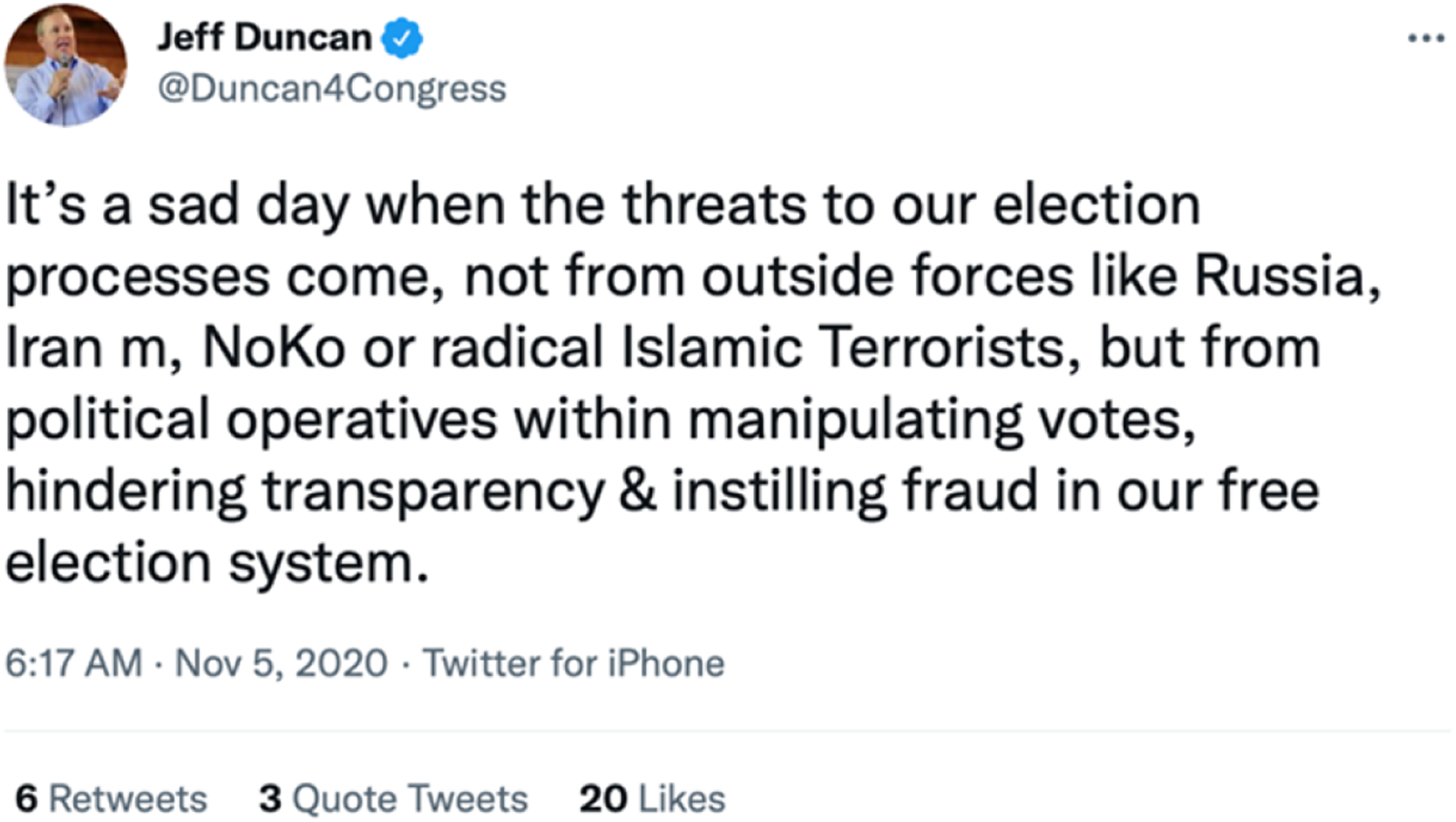
Four long days after the final votes were cast on Election Day, CNN became the first major media outlet to call the election for Joe Biden on November 7th at 11:34am. During that four-day window, 32 tweets mentioning election fraud were posted by 26 House GOP members. Only after CNN and others declared Trump would not be returning to the White House for a second term did members begin posting a flurry of tweets about election fraud. From November 7th to January 6th, a total of 298 tweets asserting a fraudulent election were posted by 77 members.
As January 6th crept ever closer, a noticeable shift in tone occurred in the way members tweeted about election fraud. Rather than pointing to the deficiencies of mail-in-voting, the repression of poll watchers, or calls for a federal investigation into voting fraud, members instead began issuing statements about their intention to object to the certification of electoral votes and encouraged their followers to not sit idly as tyranny ensued (see Figure 2). House GOP member calling for an official objection to election results.
Posts mentioning election integrity was the second most tweeted topic in the dataset. A total of 280 (1.3%) tweets were posted by 96 (46%) House GOP members. Among the tweets claiming that the integrity of the 2020 election had been undermined, repugnance toward mail-in voting was the crux of discontent. Many members expressed dissatisfaction with the amount of time it was taking to count mail-in ballots (see Figure 3). Sample tweets questioning election integrity.
Moreover, in response to the COVID-19 pandemic, many states expanded access to absentee or mail-in voting in four distinct ways: (1) expanding eligibility for absentee voting; (2) offering online ballot request systems to vote absentee; (3) state-provided prepaid postage for mail ballots and secure ballot drop-off boxes; and (4) expanding fair counting rules to allow ballots postmarked on Election Day but received afterwards to be counted (Weiser et al., 2020). State policies which extended ballot receipt deadlines, removed witness/notary requirement for mail-in ballot signatures, and expanded eligibility for absentee voting faced an “onslaught of litigation” in 2020 (Weiser et al., 2020). After a series of unsuccessful legal challenges and growing frustration over the perceived lack of accountability measures to prevent fraudulent voting, House GOP members began to draw distinctions between “legal votes” (generally synonymous with in-person voting on Election Day) and “illegal votes” (mostly describing mail-in ballots postmarked on Election Day but received and counted afterwards).
Lastly, posts mentioning an intention to object to the certification of electoral votes was the third most tweeted topic in the dataset. Mo Brooks (AL-05) was the first member to publicly tweet his intention to object to the certification of votes on December 4th. Nearly three weeks passed before the next House GOP member publicly tweeted their intention to object to the certification of election results. On December 21st, Rep. Matt Gaetz (FL-01) became the second member to tweet his intention to object. A total of 259 (1.3%) tweets mentioning the intention to object to the certification of electoral votes were posted by 83 (40%) House GOP members.
For the next stage of our analysis, we created a variable that measures the magnitude of tweets that were conspiratorial in nature. To do this, we created a dichotomous variable that flagged each tweet if it contained at least one of the 19 words or phrases from Table 2. We then calculated the total number of tweets across users’ official and verified personal accounts. The total number of flagged tweets was then divided by the users’ total tweets to estimate the percentage of tweets that were conspiratorial in nature. 2
House Republicans With the Highest Percentage of Election Fraud Conspiracy Tweets.

The user with the largest percentage of tweets promoting election conspiracy theories was Rep. Pete Sessions (TX-17). Rep. Sessions only tweeted four times between Election Day and January 6th, but two of those tweets directly reference #StopTheSteal and a vow to object to the certification of electoral votes. Rep. Mo Brooks (AL-05) tweeted a total of 115 times, 48 of which made at least one mention of election fraud conspiracy theories. Rep. Devin Nunes (CA-22) rarely posted on Twitter, frequently remarking he was fearful of being censored or silenced for speaking the truth about election fraud. When Rep. Nunes did tweet, he mostly encouraged his followers to follow him on Parler where he could freely speak the truth. Of the 22 tweets that mention Parler, most were posted by Devin Nunes (CA-22), Lauren Boebert (CO-03), and Ronny Jackson (TX-13). Interestingly, of the twelve most vociferous promoters of election fraud rhetoric on Twitter, all but three were from the South.
Modeling the Promotion of Election Conspiracy Theories on Twitter
In this section of our analysis we rely on multivariate regression analyses to predict why some members of the House GOP were more likely to promote election fraud conspiracy theories on Twitter. 3 Our dependent variable measures the percentage of each users’ tweets that contained election fraud conspiracy theory rhetoric between Election Day and January 6. Our independent variables capture incumbent characteristics as well as Trump’s election performance in each member’s district. Incumbent characteristic variables include home state representation (a dichotomous variable for whether the member represents Arizona or Pennsylvania), freshman status (a dichotomous variable indicating whether the member was newly elected in 2020), and leadership (a dichotomous variable indicating whether or not the member possesses a party leadership position or serves as ranking member on a standing committee). Two variables measure Trump’s election performance in congressional districts: (1) Trump’s margin of victory over Joe Biden in 2020, and (2) Trump’s vote share change, which measures Trump’s change in vote share between 2016 and 2020.
Originally we considered controlling for district-level variables and demographics such as population, racial diversity, poverty rate, education level, and median household income as predictors in our analysis of both Twitter engagement and certification of election results. However, since we theorize both of these decisions are primarily driven by use and gratification motives, we exclude district-level demographic predictors from our analyses. It is important to note that the inclusion of district-level variables do not alter the directionality or statistical significance of the coefficients presented in our analyses.
Multivariate Regression Analysis Predicting Conspiratorial Tweets.

N = 209. R2 = .09 p
Our results provide powerful evidence that conspiracy tweeting was strongly related to Trump’s election performance. For every one unit increase in Trump’s margin of victory over Joe Biden, conspiratorial tweeting increased by .16% (p < .01). In other words, representatives from districts where Trump won overwhelmingly were quick to jump to his defense. Alternatively, there is a statistically significant negative relationship between Trump’s change in vote share and conspiracy tweeting. This finding suggests that House GOP members were significantly more likely (p < .01) to tweet about election fraud when Trump received a smaller vote share in their district in 2020 compared to 2016. For every one unit decrease in Trump’s comparative vote share, conspiracy tweets increased by nearly half a percentage point. Examining post-election tweets, as seen in Figure 4, reveal that not only were these members highly skeptical of such “improbable” swings, but also that these suspicious Democratic swing victories were justification enough to object to the certification of electoral votes on January 6th. Sample tweets questioning Trump’s declining vote share (2016–2020).
Modeling House GOP Members’ Objection to Certification in Arizona and Pennsylvania
Next, we model House GOP members’ vote choice with respect to the certification of election results on January 6th. Among the 209 Republican House members, a total of six voting outcomes were possible: (1) certification for both states (n = 63); (2) one abstention and one certification (n = 3); (3) abstention for both states (n = 4); (4) certification for one state and objection for another state (n = 18); (5) one abstention and one objection (n = 1); and finally, (6) objection for both states (n = 120). Initially we suspected that the act of abstaining may have been a strategic choice. However, after examining social media posts and press releases from the eight members who abstained, almost all indicated they would not be voting on January 6th due to testing positive for or close exposure to COVID-19. By removing abstentions from the analysis, the dependent variable consists of three categories: 1 = certify both, 2 = split votes, and 3 = object both. Figure 5 maps vote choice by congressional district. Vote outcome by congressional district.
Figure 5 reveals that House GOP members voting against certification in Arizona and Pennsylvania, as expected, are dominant throughout the South, border South, the Great Plains, and the West. Interestingly, GOP members voting for certification are clustered around the Great Lakes with, of course, the exception of PA where only one GOP member voted to certify. Beyond the Great Lakes there are six discernable regional pockets of House GOP members voting to certify: western Kentucky, southern Indiana, and southern Ohio; Iowa and eastern Nebraska; western Arkansas; the center of the Mountain states; eastern Washington; and southwest Texas.
Multinominal Logistic Regression of Vote Outcome.

N = 201. Pseudo R2 = .20. Base outcome: y = 1 (Certify Both) p ≤ .1*; p ≤ .05**; p ≤ .01***.
Figure 6 reports the predicted probability for each voting outcome when varying the percentage of conspiratorial tweets variable from its minimum to maximum value. As expected, we see a strong positive relationship between conspiratorial tweeting and the probability that a member objects to both states. Increasing the conspiratorial tweet variable from its minimum to maximum value (0–50) increases the probability of voting to object to both states from .45 to .99. This finding provides strong evidence for the claim that members’ promotion of conspiratorial rhetoric on Twitter was not merely symbolic, but strongly associated with their intention to object to the certification of election results on January 6th. Percentage of conspiratorial tweets and vote outcome.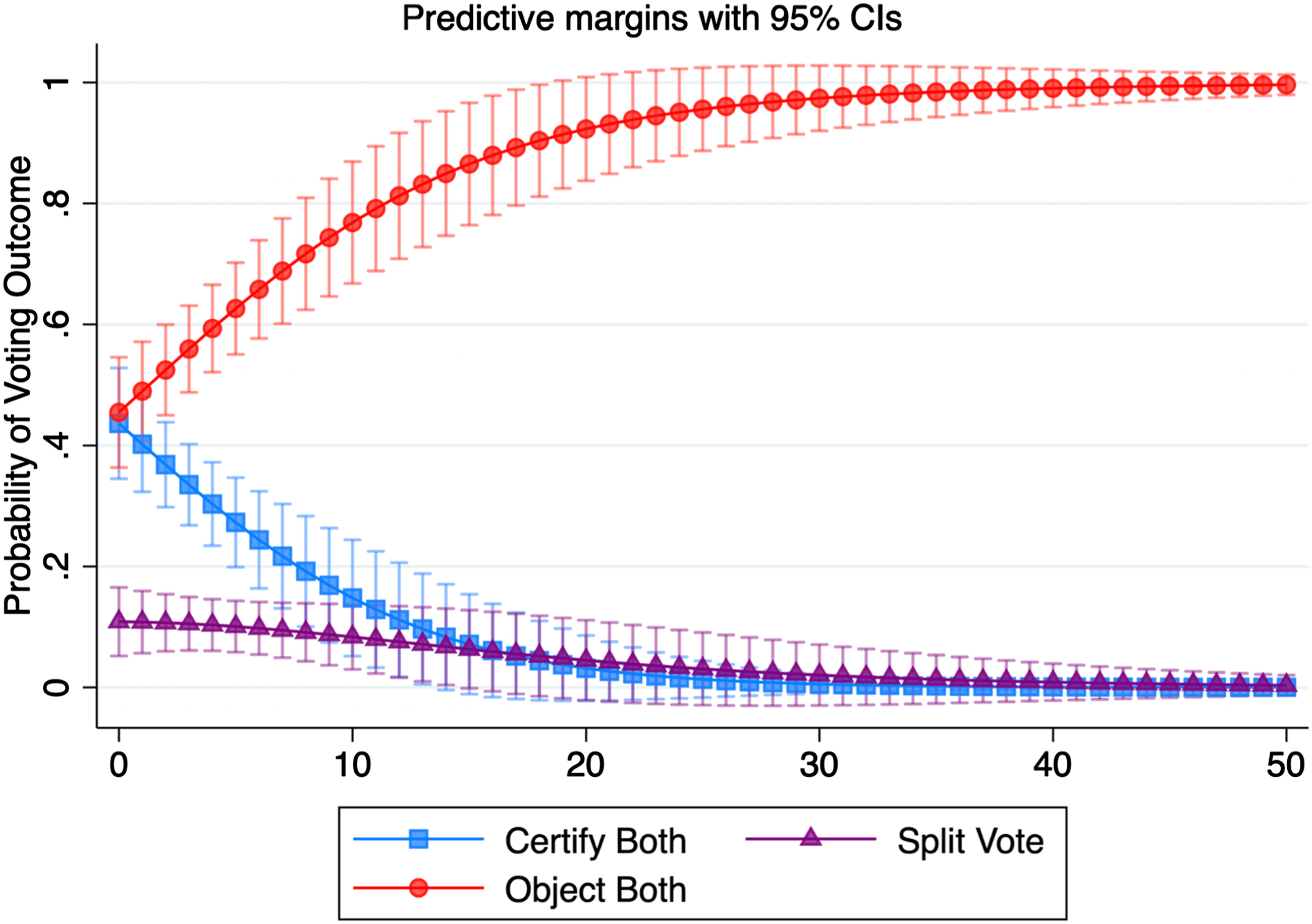
According to Figure 7, members of the House GOP who drove the effort to object to electoral certification in Arizona and Pennsylvania witnessed an overwhelming defeat of Joe Biden in their districts. Our analysis indicates a strong positive relationship between Trump’s margin of victory over Joe Biden and the predicted probability of objecting to the certification of election results in both Arizona and Pennsylvania. Increasing Trump’s margin of victory from its minimum to maximum value (−10–63) increases the probability of objecting to both states from .31 to .89. Out of the 120 members who objected to both states, Donald Trump defeated Joe Biden in every contest with the exception of California’s 25th congressional district, where Trump lost by approximately 10 points. Although Trump lost in only eight districts with a Republican representative (including a tie in Missouri’s 2nd district), these members were overwhelmingly more likely to vote for certification. Among members who voted to object to both states, Trump’s average margin of victory was 26 points. On the other hand, members who voted to certify both states witnessed a much smaller average margin of victory for Trump in their districts, approximately 15 points. For members with split votes, Trump’s average margin of victory was 21 points. Trump margin of victory in 2020 and vote outcome.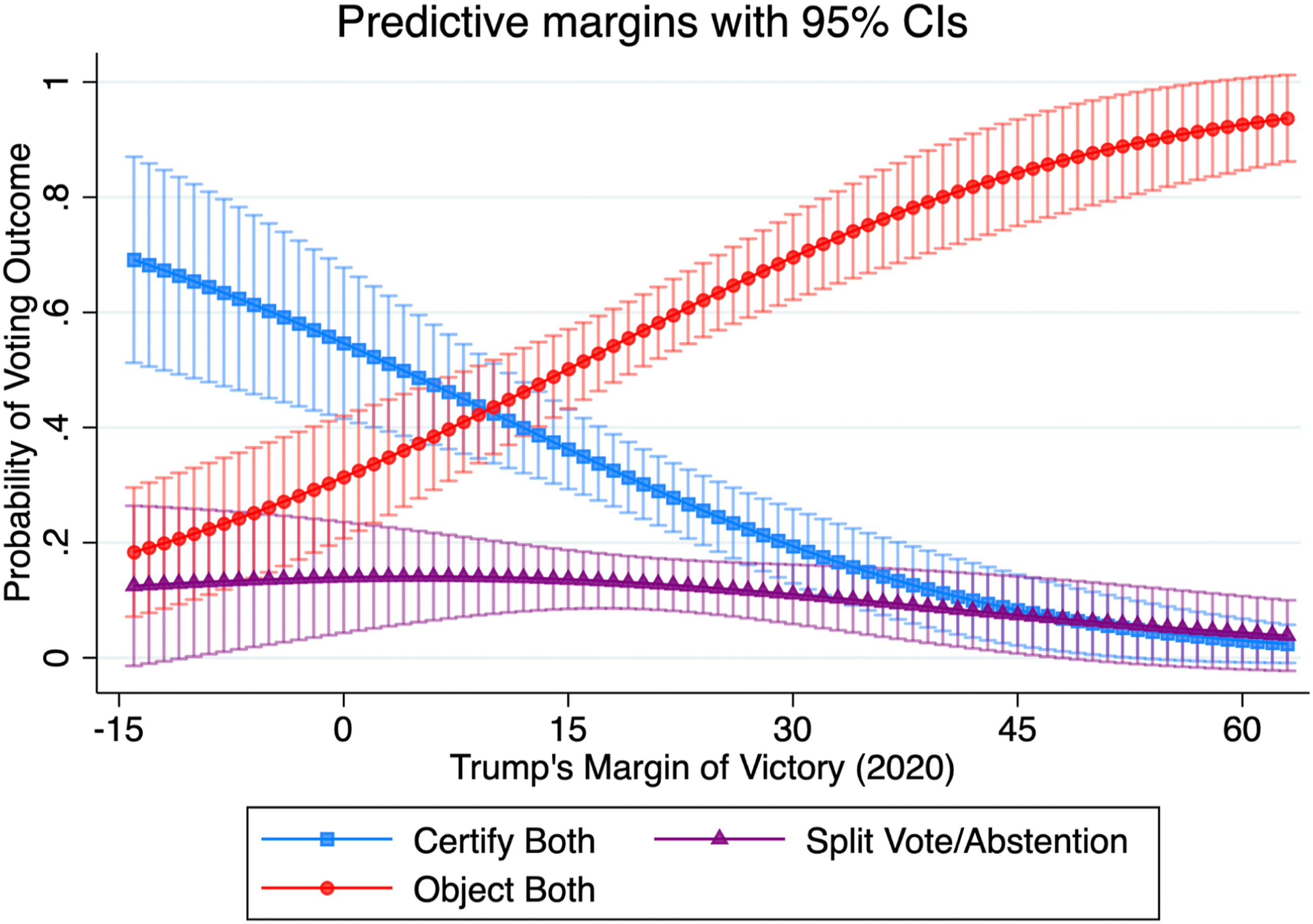
Another key factor correlated with members’ vote choice is the change in Trump’s vote share from 2016 to 2020. As seen in Figure 8, increasing Trump’s vote share change from its minimum to maximum value (−5–15) decreased the probability of objecting to both states from .73 to .24 and increased the probability of certifying both states from .22 to .53. Among districts with Republican representatives, Trump received a smaller vote share in 2020 compared to 2016 in 102 districts (49%). In districts where Trump received a smaller vote share in 2020 compared to 2016, objecting to the certification of election results in both Arizona and Pennsylvania was the most likely voting outcome. Moreover, out of the 120 members who objected to both states, 52% of these districts witnessed Trump receiving a smaller vote share compared to 2016. Thus, members representing districts where Trump took less vote share in 2020 compared to his performance in 2016 may have been particularly motivated to support election fraud rhetoric. Trump vote share change from 2016–2022 and vote outcome.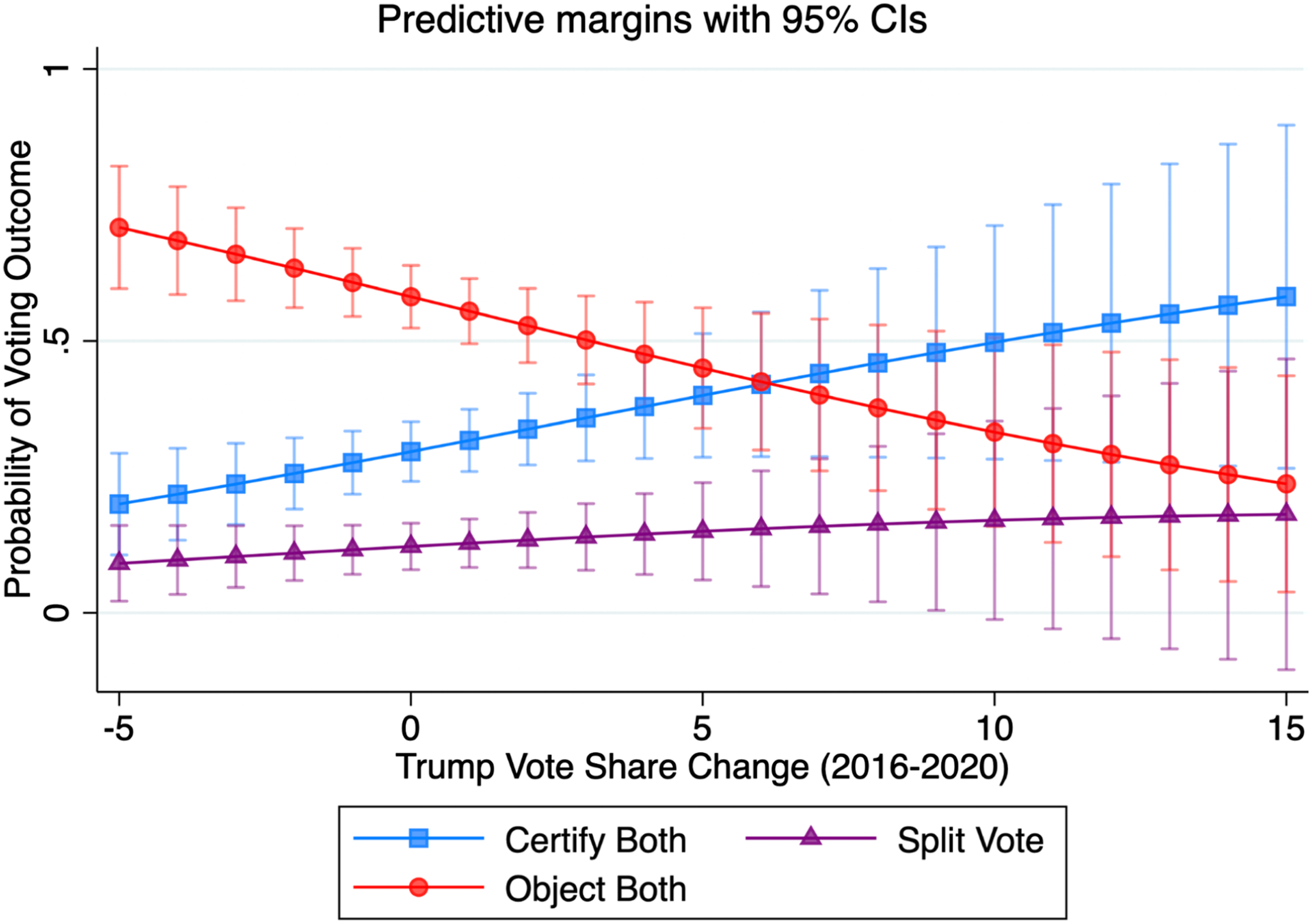
Figure 9 also highlights the powerful relationship between freshman status and vote choice. The probability of objecting to both states was significantly higher than any other vote choice among freshmen members. Of the 40 freshmen Republicans in this study, 65% objected to both states compared to 55% of multi-term Republican members who voted to object to both states. The probability of certification was also significantly higher among multi-term members compared to freshmen at p < .10. Incumbency status and vote outcome.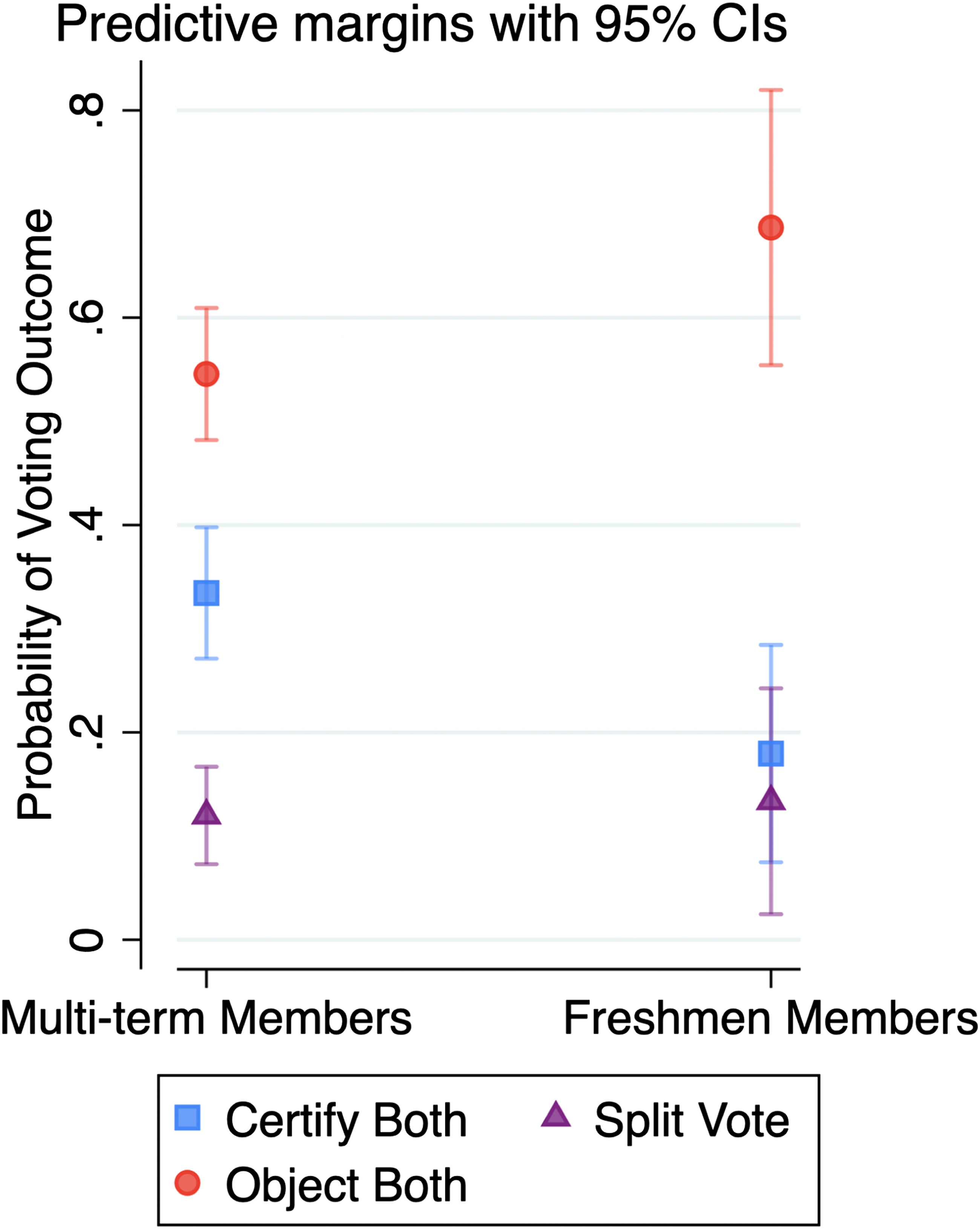
Our analysis also indicates that voting behavior varied significantly among representatives of Arizona and Pennsylvania. Among the four Republican representatives from Arizona, three objected to both states while one voted to certify Arizona but object to Pennsylvania. Among the nine Republican representatives from Pennsylvania, four objected to both states, four certified Arizona but objected to Pennsylvania, and one voted to certify both states. As seen in Figure 10, the most significant difference with respect to home state representation is the probability of vote splitting. Members from Arizona and Pennsylvania were significantly more likely (p < .05) to split their vote than other members, suggesting that home state representation factored in to members’ decision-making. Figure 10 also shows that certifying both states was significantly more likely (p < .05) among members outside of Arizona and Pennsylvania. Home state representation and vote outcome.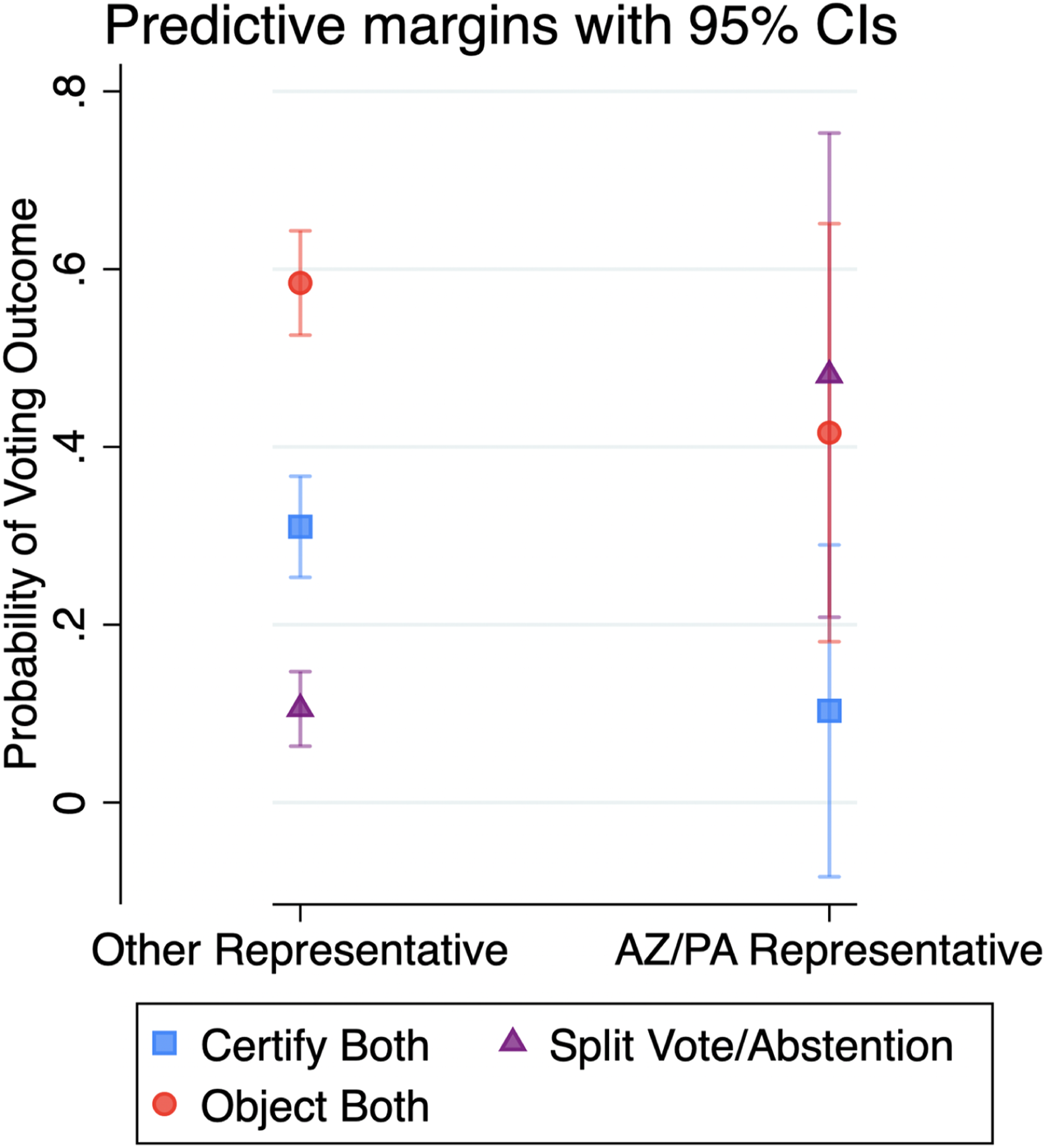
Conclusion
For many Americans, conspiracy theories are entertaining and even amusing in many cases, such as the drunk uncle at Thanksgiving who always carries on about how we never went to the moon. The family humors him or ignores him. The insurrection of January 6, 2021, was of course no laughing matter. Even after the bloodshed and trauma of the storming of the US Capitol, nearly 60% of House Republicans voted against certifying the presidential election results in the battleground states of Arizona and Pennsylvania. Whether they genuinely believed in the election conspiracies or not, these members of Congress made a strategic decision to embrace the unsubstantiated conspiracy theories promoted by President Trump. None of this bodes well for the health or well-being of our republic. The nationally televised hearings during the summer of 2022 by the U.S. House Select Committee to Investigate the January 6th Attack on the US Capitol reminded the nation of the origin, proliferation, and gravity of the threat to our democracy from the 2020 presidential election conspiracy theories. The deep divisions in this nation are still evident in that the first hearing attracted roughly 20 million viewers although the most watched network on cable, Fox News, chose not to air any of the hearings (Koblin, 2022). With respect to the 2022 midterm elections, it is evident that former President Trump and his rhetoric continue to exert enormous influence over the Republican Party. In an analysis conducted by the Washington Post, over 100 Republican primary winners championed Trump’s election fraud claims (Gardner and Arnsdorf, 2022). Even more concerning is the number of election deniers running for high-level positions with the power to oversee state election rules and procedures. In at least 10 states, voters nominated Republican candidates for secretary of state who had publicly supported some of Trump’s wildest conspiracy theories such as Dominion voting machines deleting votes, rampant fraud with mail-in voting, and that it was actually antifa who attacked the Capitol on January 6th (Parks, 2022).
Our multivariate regression analysis suggests that incumbent characteristics and Trump’s election performance were strongly associated with members’ decision to support Trump’s election fraud claims on Twitter. First, we find evidence that members with leadership positions were significantly less likely to engage in conspiracy tweeting, suggesting that more senior members or those with powerful, high-profile positions were less compelled to defend the “big lie.” This is precisely the behavior we would expect if uses and gratifications were the underlying motivation for politicians sharing conspiracy theories with their audiences on social media. If members are motivated to build reputation and cultivate identity, something party leaders ostensibly already possess, then we should reasonably expect more junior members to engage in behavior that achieves this goal. Moreover, Republican candidates and politicians have increasingly attempted to emulate Trump’s popularity and cult following by adopting his rhetoric. This strategic imitation is precisely why conspiracy tweeting was significantly more likely in districts that voted overwhelmingly for Trump in 2020, and was also a powerful litmus test for Republicans in the 2022 midterm elections. Lastly, the desperate attempt to build social connection at the expense of centering electability has been on full display during the lead up to the 2024 Republican presidential primaries where Trump has maintained a comfortable lead in public polling. During the first televised Republican presidential debate in late August, in which Trump declined to participate, almost every major candidate vying for the Republican presidential nomination, with the exception of Chris Christie and perhaps Mike Pence, ostensibly spent more time discussing what they had in common with their biggest opponent rather than convincing voters why they should receive their vote instead of Trump. Our findings not only shed light on why politicians may be more likely to prioritize building social connections at the expense of promoting their own electability, but also foreshadow the consequences of such strategies.
Our analysis further highlights that conspiracy tweeting was not merely a symbolic gesture, but was strongly associated with the objection to election results in both Arizona and Pennsylvania. Our content analysis of tweets by House GOP members from Election Day to the January 6th insurrection found that about 5% of all tweets by House Republicans were conspiratorially oriented with nearly 70% of Republican members tweeting at least one election conspiracy theory. Of the dozen members with the highest percentage of election conspiracy theory tweets, three-quarters were from the South. Republican House members voting against certification were heavily clustered in the South, border South, Great Plains, and West. Interesting regional pockets were evident among House GOP members voting to certify the presidential election results in Arizona and Pennsylvania. President Trump’s margin of victory in 2020, change in vote share from 2020–2016, and freshman status were also highly predictive of objecting to both states’ election results.
While we do not wish to presume definitive knowledge over the discrete motivations of House GOP members’ behavior, our findings make clear that Trump’s election performance in members’ respective districts was a driving factor in both the decision to promote election fraud conspiracies on social media and the objection to certifying election results in Arizona and Pennsylvania. We suspect that House GOP members who witnessed a Trump landslide victory in their district saw an opportunity to voice and defend the will of their constituencies. In the 12 districts where Trump defeated Biden by 50% or more, every member objected to certifying Arizona and Pennsylvania’s presidential election results. Intriguingly, in districts where Trump’s vote share declined from 2016 to 2020, House GOP members were also significantly more likely to tweet about election fraud and object to certification in Arizona and Pennsylvania. Rather than interpreting the shift in election results as a referendum on Trump, or simply being out-mobilized by the opposition, our examination of post-election tweets among these members appear to reveal shock and denial. Again, while we can only speculate on the degree to which members genuinely believed fraud had occurred in their districts, our findings nonetheless suggest that many GOP House members found it strategically advantageous to promote such rhetoric on social media as well as object to the certification of the election results.
It is important to note that President Trump still enjoyed large margins of victory in districts where he received a smaller comparative vote share: only 17% of these races were competitive (Trump winning with less than a 5% margin). More research is warranted on how the changing dynamics of a district over time may influence politicians’ propensity for conspiracy and paranoia. Finally, the relationship between freshman status, conspiratorial tweeting, and the objection to election results demonstrates how new House GOP members are acutely aware of Republican voters’ appetite for Trumpian politicking. Fundamentally, the findings of this study address three of the most troubling developments in contemporary American politics: our deepening conspiracy theory culture, widening political polarization, and growing distrust in elections. Our content analysis of tweets pertaining to election fraud conspiracy theories highlights the intensity of emotions among House Republicans that drove the vote against certification of the presidential election results in Arizona and Pennsylvania. Furthermore, the multivariate analysis of tweeting and voting behavior notes the powerful role of Trump’s electoral performance across Republican House districts. Polarization is on display in the regional voting patterns of whether or not to certify the presidential election results in Arizona and Pennsylvania. An intriguing mix of polarization and distrust in elections has been identified in recent research that trust in American elections continues to plummet among Republicans while rising among Democrats since the 2020 presidential election (Stewart, 2022). We are left to wonder if the entangling of conspiracy theories, polarization, and distrust in elections will eventually strangle the body politic in this nation.
Footnotes
Declaration of Conflicting Interests
The author(s) declared no potential conflicts of interest with respect to the research, authorship, and/or publication of this article.
Funding
The author(s) received no financial support for the research, authorship, and/or publication of this article.
