




Abstract
This article shares the sociopolitical images of merging that established Eastern Polynesian artists created at a Putahi (gathering), with particular reference to the Cola-nization© of indigenous peoples in Tahiti and Aotearoa/New Zealand. Perceptions and representations of contemporary indigenous health and well-being are considered to highlight the issues of tino rangatiratanga (self-determination) from localized and personal experience.
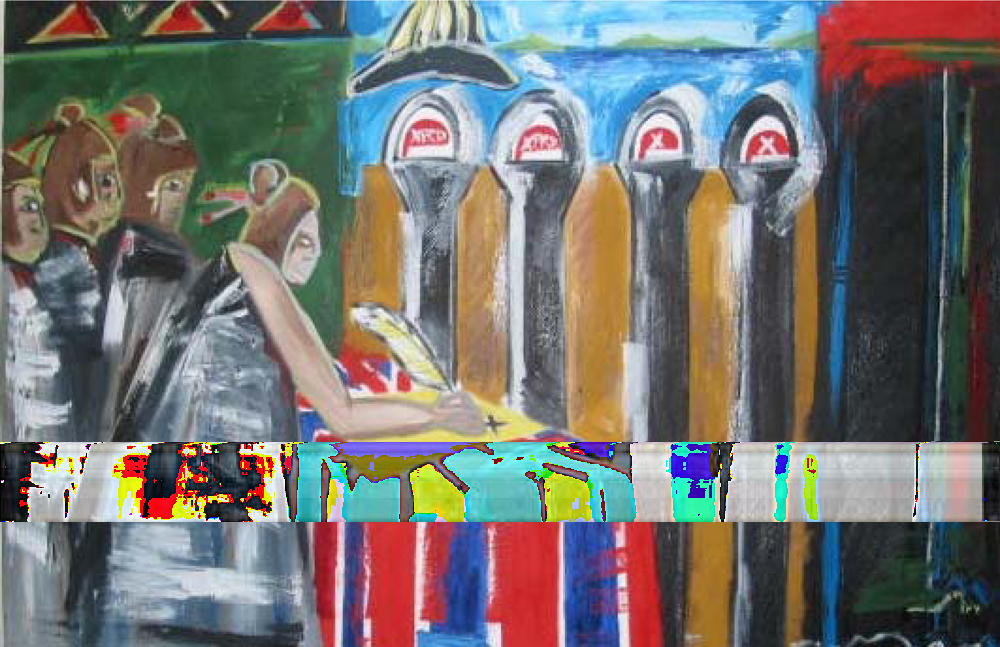
Treaty of Waitangi Signing, 1840
A long time ago a great journey was begun.
“Take care my brother, the gods go with you.”
“Yeah bro, see you.”
I imagine the scene of a huge migration would not be portrayed in such a relaxed and colloquial manner. The voyagers and their relatives would have been involved in a very emotional farewell.
Hawaiki nui, Hawaiki roa Hawaiki pama mao How do I feel about going to Tahiti nui, Tahiti roa, Tahiti Pama mao?
Am I going there to help or to hinder their understanding of sociopolitical art making?
Like Aotearoa/New Zealand, Tahiti is colonized by a European country. The French claimed all of French Polynesia as part of France. The French were also keen on annexing Aotearoa/New Zealand, but the British government quickly decided to secure sovereignty over New Zealand with the “Treaty of Waitangi”: It was a great era for helping yourself to other people’s stuff with the help of manipulative advisors.
It is not too difficult to portray the colonizer as the bad guy. Many indigenous artists have been making sociopolitical artwork on the injustices suffered during the colonization and some will continue to do so:
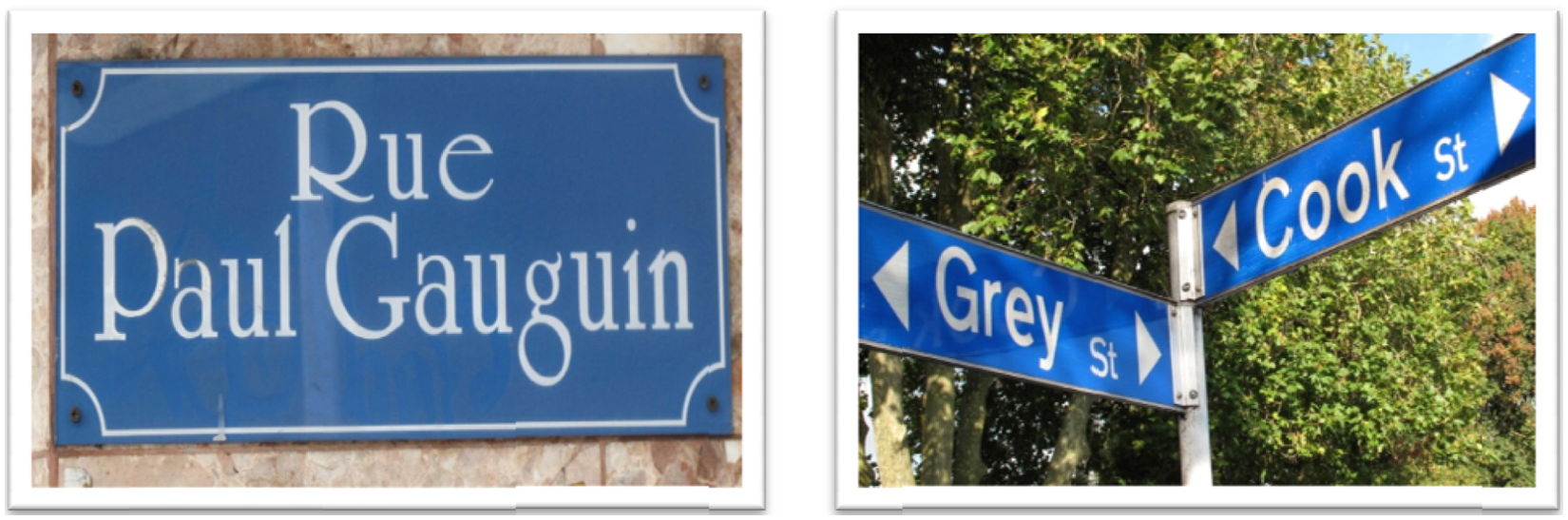
When I arrived in Papeete [Tahiti] I immediately started to look at the influences of the French on the Tahitian people. The names of the streets—Rue Paul Gauguin, Rue De Gaulle—are very similar to those in Aotearoa/New Zealand, where the second name of a place [English] overshadows the original name with all its stories and histories.
I immediately climbed on my high horse (with a ladder because I am a little vertically challenged) and started to curse the French for the all the ills of colonization, forgetting that the English had done exactly the same in Aotearoa (New Zealand). Our first language is English. Quite a number of Māori are of mixed heritage. So what’s the problem, Donn?
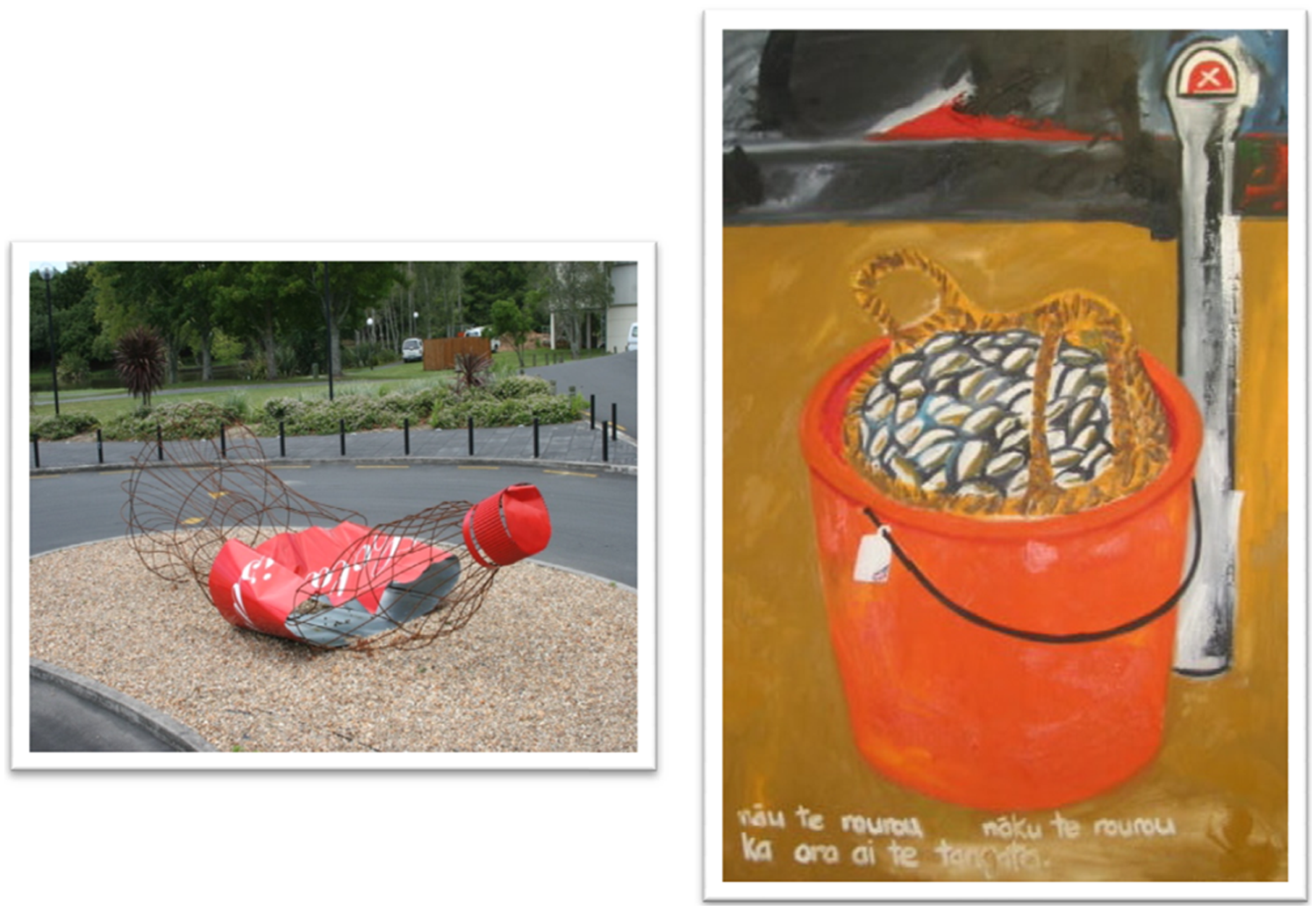
Eel Trap, Cola-nization© “Your food basket, my food basket”

I decided to settle down and look at an area that involved Polynesians making a choice about contemporary Cola-nization©.
I selected the topic of health and well-being. We can choose to eat either more customary foods or go with the easier packaged, processed foods. The most difficult hurdle was to narrow the focus—bring the subject close to the artist, make the artist take ownership of the work. I did not want these emerging artists to look at the topic without having some personal relationship, some experience, some understanding of the struggle that Tahitians and Māori make when selecting a lifestyle of health and well-being in a contemporary society.
I posed the question, “Who do you know who has suffered poor health and well-being because of processed foods?”
It didn’t take too long for the students to start talking about whanau [family] relations; friends who have suffered, or are still suffering, through eating and drinking processed foods.
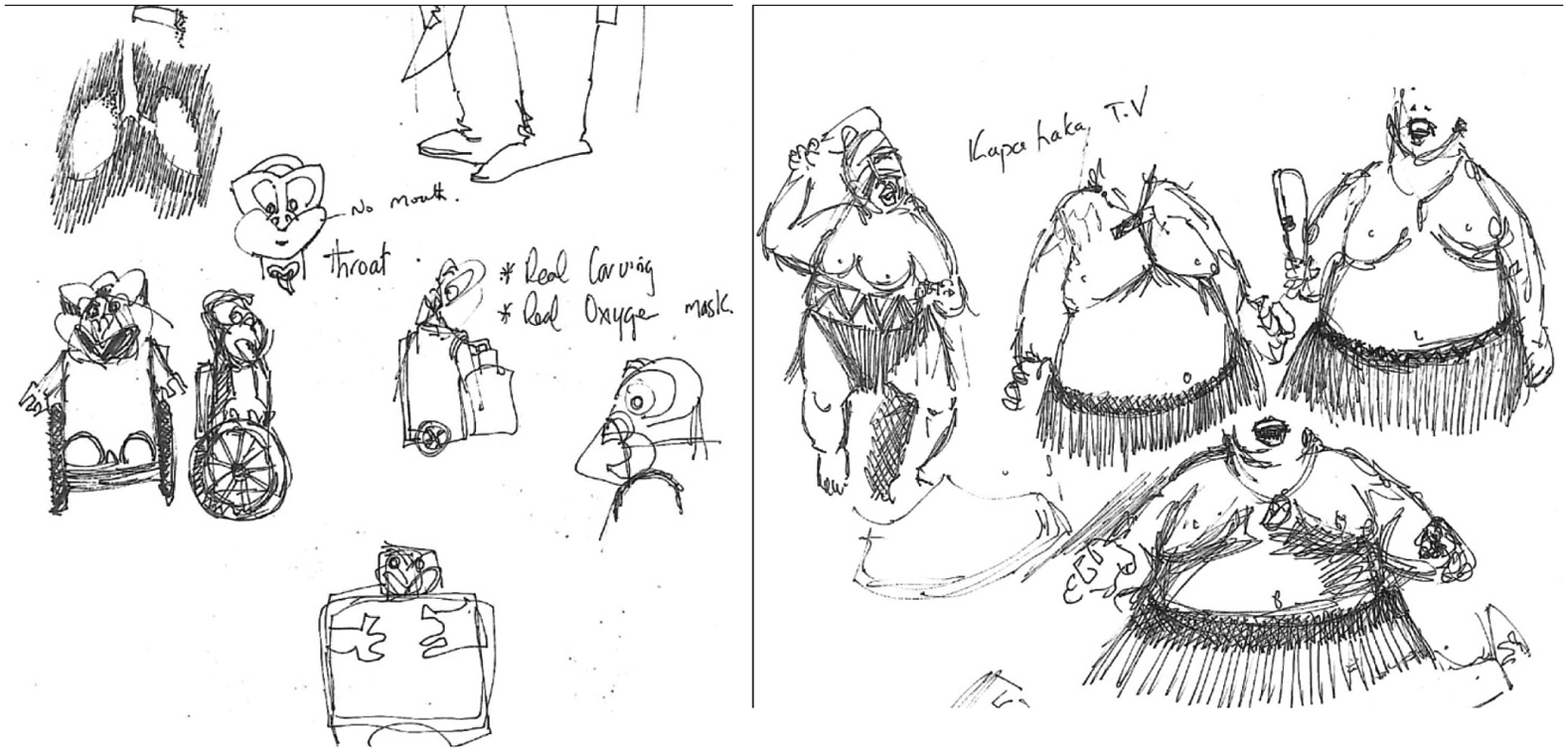
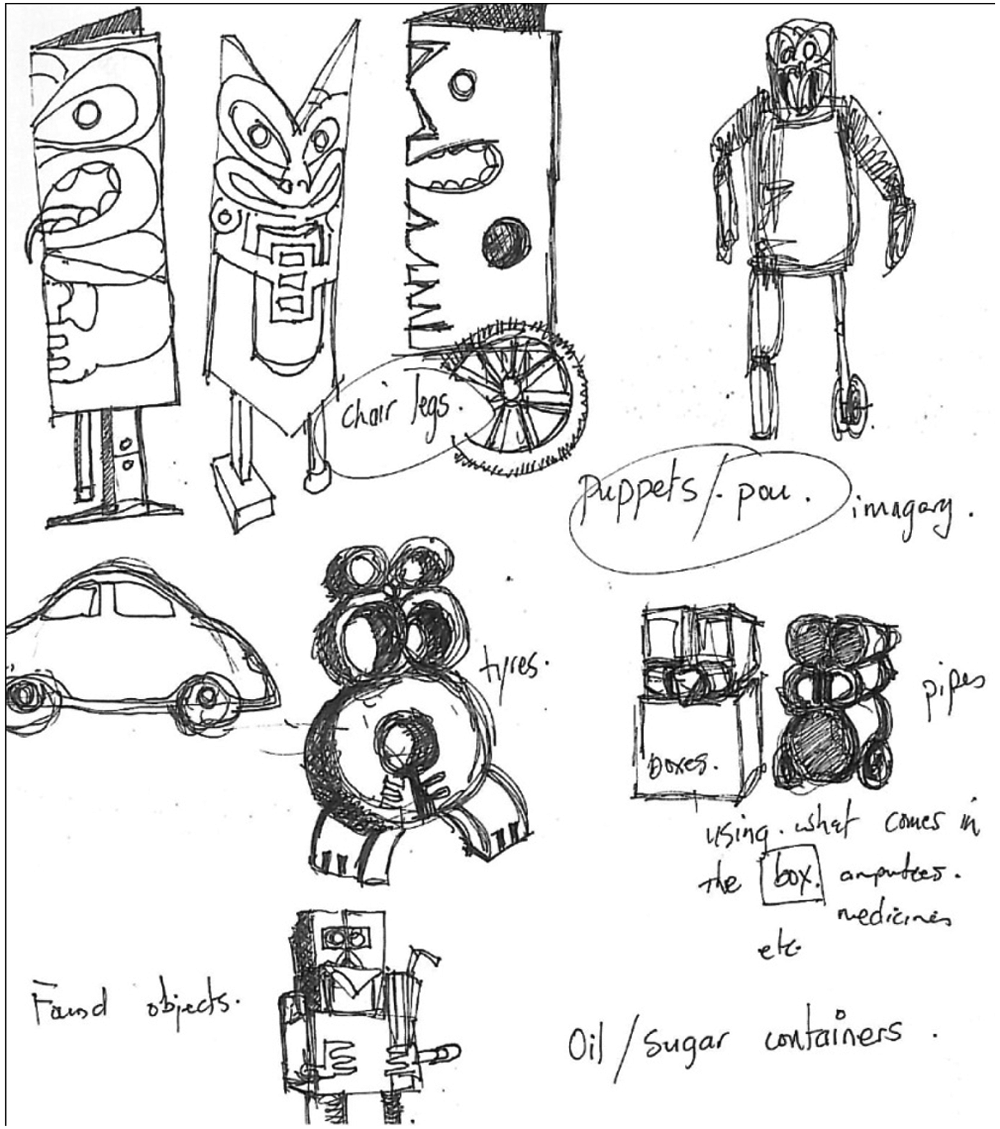
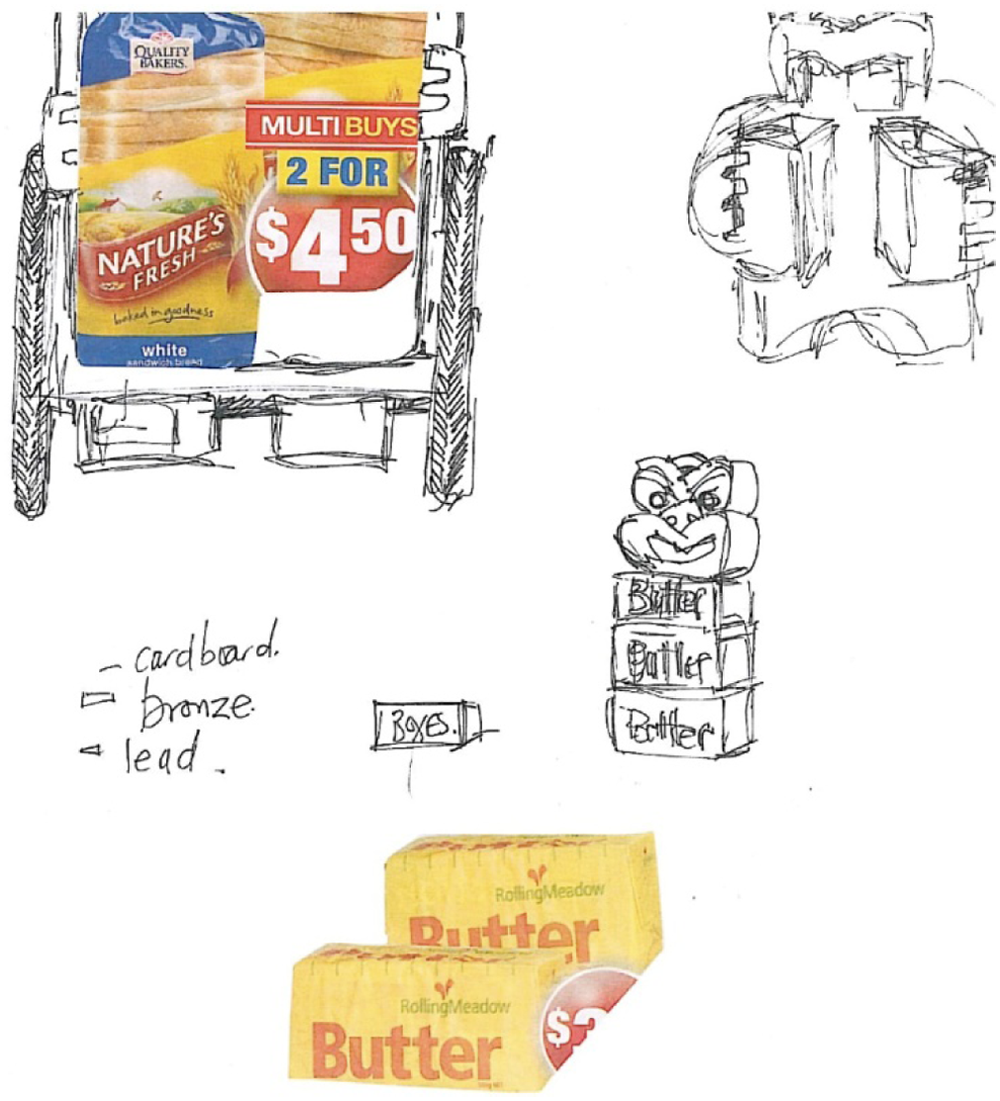
Obesity, Lung Cancer, Alcoholism, Diabetes, Rheumatoid Arthritis
Easy pickings for experienced artists, but a little difficult for emerging artists to comprehend the world past, to the world present. They don’t have the awareness of introduced diseases that decimated their ancestors, possibly more so than the muskets and cannon.
Okay, I Have a Topic—Now What?
Is the work going to be for the artist, so that I feel good about my contribution to social injustice, colonization? Does the artwork make a difference to people’s lives now or in the future? If I’m honest, possibly it won’t make one little bit of difference to the way they think about health and well-being. But the artist in me says maybe, maybe, there might be one person who will go away with the idea of thinking about the issue of good health and well-being either for themselves or for someone they know or care about—maybe for their children or for future generations.
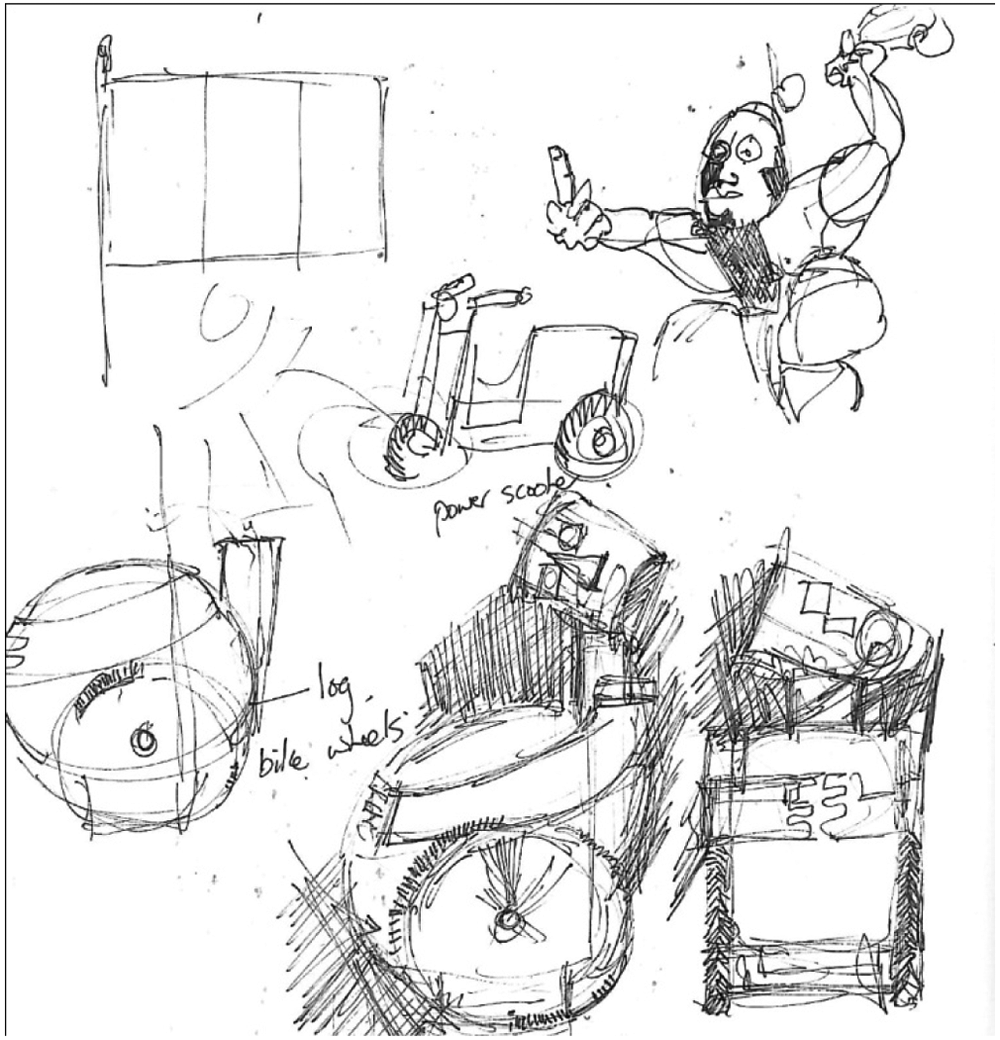

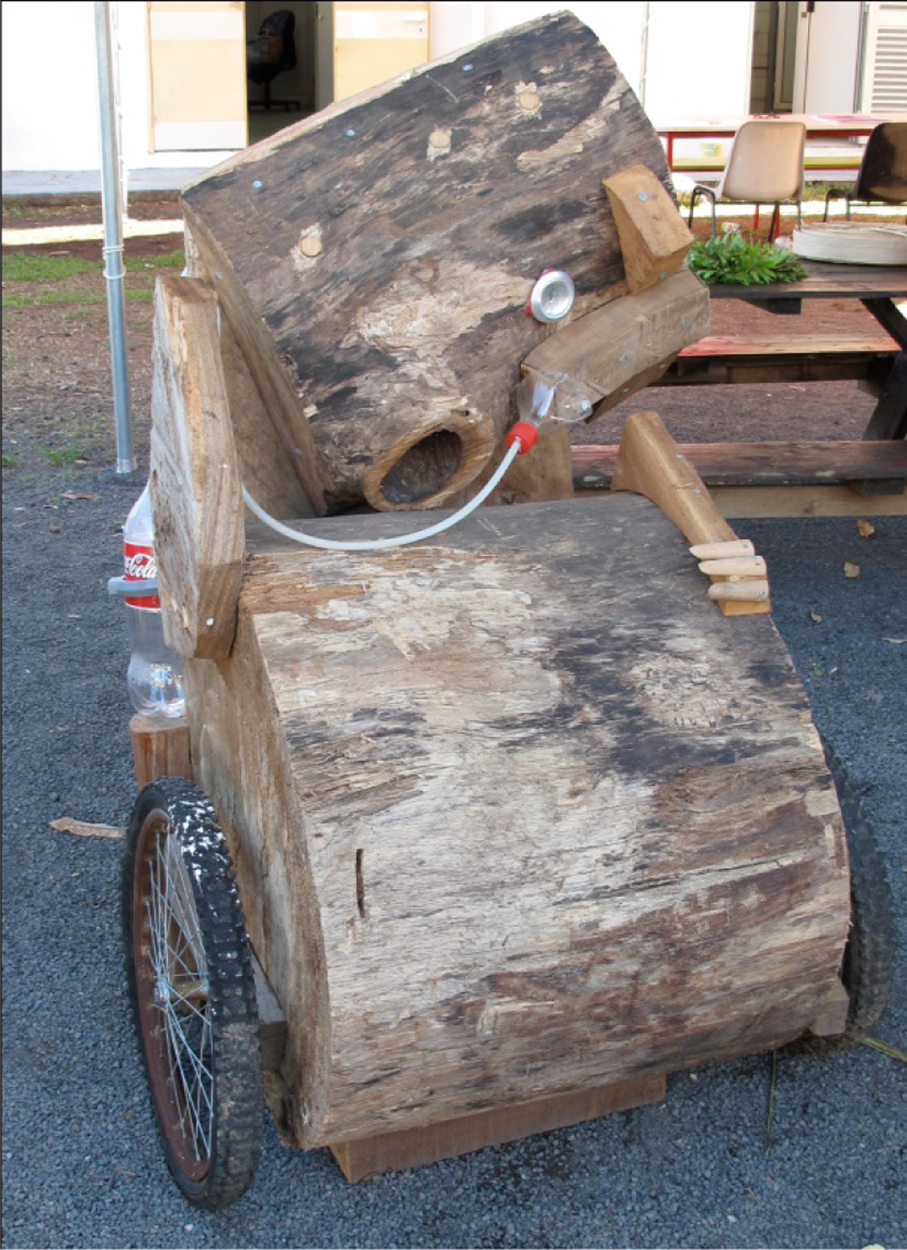
I started working on my assemblage, which represented an obese person confined to a wheelchair, who was on an oxygen mask. The representation (sculpture) was also of a diabetic. I was fairly literal with the image. I used plastic hose and a plastic Coca Cola® bottle to represent the breathing apparatus used by the patient, hopefully making the viewer aware of the unhealthiness of regular consumption of fast food. Along with Coke® and other sugar-based sodas come a number of unhealthy foods that contribute to obesity and diabetes in Polynesian peoples. Coca Cola® is the instant sugar fix of a large number of unhealthy, obese, and diabetic individuals.
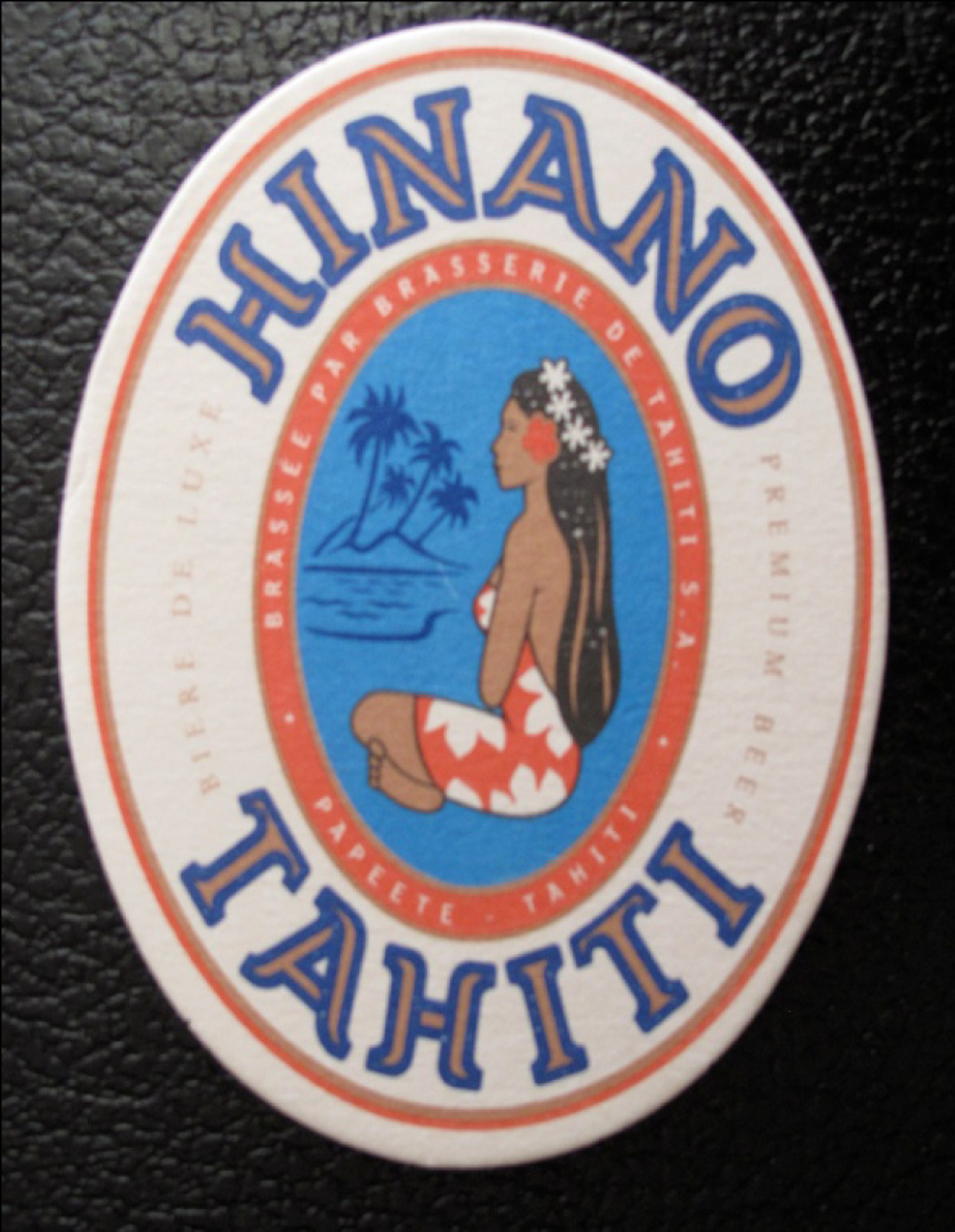
Even as I worked on my sculpture, my imagination was going full tilt; ideas were popping up all the time. I noticed the local beer was called Hinano®; a picture of a beautiful Caucasian semi-Tahitian woman (vahine) was the branded image. I decided to look at the work of Toulouse Lautrec, the famous French artist who captured the life of entertainers and prostitutes. I was interested in his drawings of prostitutes because I wanted to portray a similar figure on a beer can that replicated the “Hinano vahine,” which I called Le Fleur.
Once I had developed some working drawings I returned to my assemblage sculpture to make sure the essence of the work was maintained.
The response from most of the emerging artists was, “Hey! This is interesting.” But there wasn’t an emotional link to people that they knew. It was only my prodding and questioning of the students about personal experiences with takeaway or fast foods that made them aware of the significant symbolism in the sculpture. They were able to start naming relatives or friends who were suffering or had suffered due to an unhealthy lifestyle.
The emerging artists, I think, grasped the idea of sociopolitical art from my perspective, but I’m not too sure whether they understood or had a deep appreciation of how to give their own ideas a visual form. We also had to contend with the language barrier: They couldn’t understand me using English and Māori, and I couldn’t understand their French and Tahitian, although the Māori–Tahitian language connection was easier to cope with in conversation. The communication of instruction and understanding the essence of what I was on about with sociopolitical commentary was very difficult.
A. T. (an emerging Tahitian artist) struggled with the idea of cancer and ill-health associated with the consumption of cigarettes. A. T. decided that he couldn’t think of an idea, so he decided to use one of the images in my work journal.
A number of the other students and lecturers noted his decision to copy the image and came to inform me about his decision. I always leave my art journal around the space that I work in, so that students and others can see how I explore and develop ideas before resolution. So it doesn’t really surprise me when other artists decide to go with one of my images or extend or tweak it in a different direction.
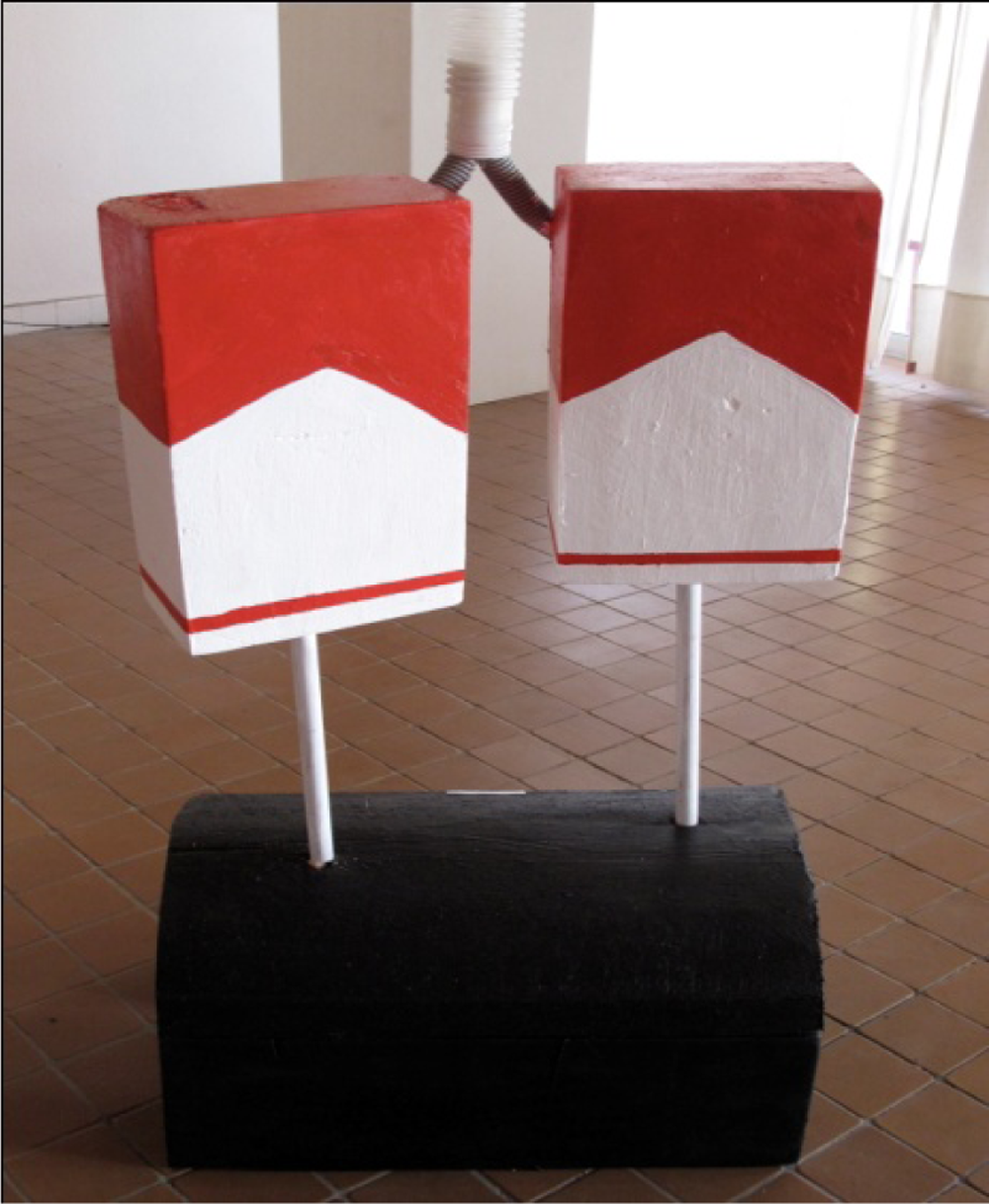
I decided to let the student run with the image from my journal because I felt that he didn’t quite grasp the concept of sociopolitical visual commentary. I can always take it to a different place some time in the future. I decided to assist him as much as possible. He did spend many hours replicating the drawn image, which was based on the lungs looking like two packets of cigarettes.

W. T., another emerging Tahitian artist, decided to use the Coca Cola® and fast food theme by creating a traditional ava ladle (umete) and a Coke® glass purchased from the local McDonald’s® outlet.
He spent a number of hours creating the ladle (umete), giving it a very smooth finish. I think his concept of fast food affecting the health and well-being of fellow Tahitians was a clever twist of image and story.
The use of a traditional vessel and a very unhealthy link to the nontraditional (Coke® glass) was enlightening for me to see that he was able to make a visual social statement. He had thought quite deeply about the link of fast foods (fats and sugar) to the health and well-being of Polynesian people. Not only was the narrative clear but also the artwork itself showed great skill and balance of form.
“Well done, W. T.” This was a very good beginning for a young emerging art maker who hopes to earn a living as a full-time artist.
While W. T. was working on his art piece I came up with the idea of using the “Hinano®” beer can as a decorative necklace: reuse the cans and plastic bags as a tourist souvenir. Sell the rubbish back to the visitors as prized articles: an excellent way of reducing landfill on a tiny island.
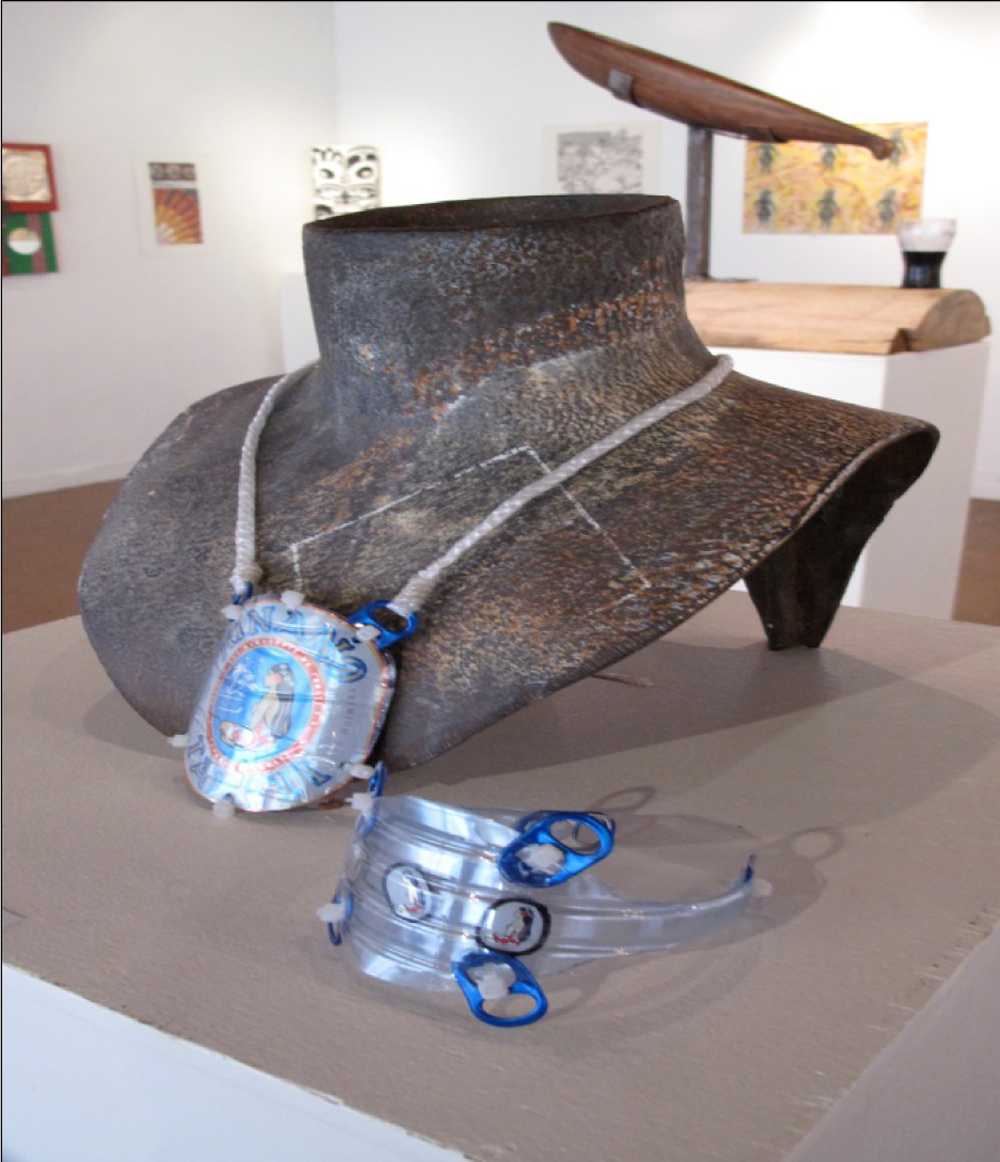
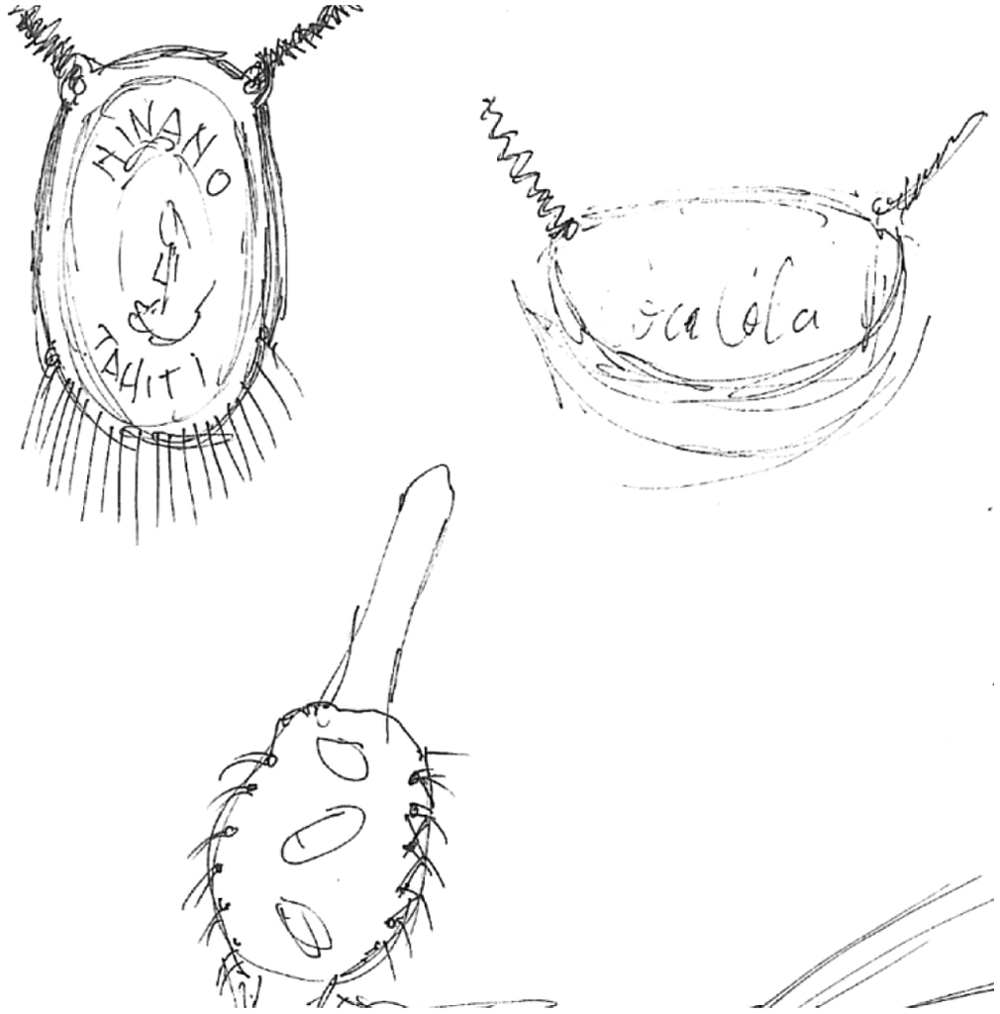

One of the Tahitian students decided to work with the whole idea on recycled jewellery. His ideas and skills developed some good-looking pieces.
The other Tahitian students explored a number of ideas with different media. D. T. (Tahitian) looked at the land issue and the negative police interaction with young male Tahitians.
I still keep thinking about my involvement in challenging them to look at the topic of sociopolitical visual imagery. Was it my right, even as an invited art educator/artist, to force the students to move away from what they believed was their art? Here comes a Tuhoe art colonist—I will show you how to do art and I will give you the topics around which you should be creating your visual imagery.
I think in future maybe I will work more as an artist in residence who happens to make sociopolitical statements, and the students or emerging artists can korero (talk) to me about my ideas, skills, and knowledge.
Footnotes
The author declared no potential conflicts of interest with respect to the research, authorship, and/or publication of this article.
The author disclosed receipt of the financial support for the research, authorship, and/or publication of this article from the Faculty of Education, University of Waikato.