




Abstract
Pulse and rhythm are found in our heartbeats, our breaths, and our physical movements. Pitch and tone give our voices distinct expressive and communicative qualities that serve as articulations of our relationship to space and time. Sound constantly surrounds us, embeds us, and embraces us. Yet, in the academy, conversations on Hip Hop as a field of study tend to focus almost exclusively on lyrical analyses. We do not have to completely abandon this mode of engagement, but we seem to forget that Hip Hop is not simply about empirics or measurement. And so, this paper seeks to re-think, re-consider, and re-articulate how we theorize Hip Hop—its politics, its culture, and its ways of being—by attending to the vibrations in the air, nonlexical expressions, and the practices of looking and listening. Drawing from Black feminist studies as well as the methods of ethnography, autobiography, and social and oral history, I discuss the interiority of sound, the contexts of reception, and the sets of relations that exist between sonic phenomena. I argue that these creative approaches not only compel us to ask better questions about cultural moments but are foundational to understanding that Hip Hop is not just rap music; it is a practice, process, and lived experience.
“Hip-Hop was born through people who didn’t necessarily have traditional musical training, the best tools, and in some cases even instruments but found a way to express themselves despite that. My art exists because it has a will to exist, like Hip Hop.”
There was beauty and love in the way we argued. Flesh bound by something real I could feel everything you would have been deep inside my bones. Like a scar slowly fading with all the warmth left by your touch, you were and still are, here.
Introduction
Pulse and rhythm are found in our heartbeats, our breaths, and our physical movements. Pitch and tone give our voices distinct expressive and communicative qualities that serve as articulations of our relationship to space and time. To paraphrase Zenzele Isoke (2018, p. 160), word, image, rhythm, sound, color, emotion, corporeal orature—that verse, that melody, that buzz—represent a particular kind of poetic imagination, one that simultaneously lays claim to the self and the social world. Scholars from ethnomusicology, sound studies, and cultural studies, to name a few, have asked that we remain attentive to the ebbs and flows of sounds and take on holistic investigations of music in its cultural contexts. Although Hip Hop Studies have grown exponentially over the years, lyrical analysis still tends to be the dominant way of engaging with Hip Hop (Harris, 2019). Artifacts like records, CDs, and music videos oftentimes become seen as solely textual objects, where their scholarly relevance is dependent on our abilities to transform them into essays or academic monographs. As Alexander Weheliye (2005, p. 37) poses: “What happens when Black voices are disembodied, severed from their sources, re-contextualized, and re-embodied and appropriated, or even before these points?” For Weheliye, this question is not exclusively a matter of music. Rather, it magnifies the ways that subjectivity and modernity are both constituted by sound.
Zachary Wallmark (2022) argues that the timbral aspects of our voices play an important role in identity construction and reception. Through an investigation of the signature ad-lib vocable of Megan Thee Stallion—a creaky-voiced [æ] vowel—Wallmark delineates how certain flows and timbre trademarks become “unique, memorable, and immediately recognizable sonic icons of brand persona.” For Wallmark, these vocables are not neutral acoustical techniques; they are “sociophonetic registers,” communicative strategies to signal important information about speaker identities and social positions. Embedded in the article written by Wallmark is a series of audio samples from Megan Thee Stallion and others like Sylvia Robinson and Donna Summer to situate phonetic and timbral features—singing, inhalations, whispers, and creaky groans to sonically convey intimacy and pleasure—within an interpretive, cultural context. This seemed to be intentional on behalf of Wallmark: “By defaulting to poetic and rhythmic structures as the sole bearer of meaning in the rapped voice, we risk obscuring the phatic, nonverbal elements that serve as a potent though often invisible structures and semiotic forces of Hip Hop expression and politics.” Can we allow the sounds that reside in each of us to guide our commentary on epistemology, phenomenology, ontology, and ethnography? Can this drive inform our teaching, our writing, and our embodied interpretation of Black life on the page? (Isoke, 2018, p. 160). As Tao Leigh Goffe (2020) says, The syllabus is a mixtape [. . .] each week I ask students to choose a song connected to the readings on the syllabus to form a collective weekly playlist, housed on our course blog. Students are required to write a few sentences explaining the reasoning for their choice, be it thematic or affective [. . .] Sound, like light, is energy comprised of waves, a series of perceived reflections and refractions that orient us in time and space. Sound reflects our relation to other bodies and objects.
In spite of the primacy of visuals and language, many of us can still orient ourselves in this world through sound. To use the words of Edouard Glissant (1989, p. 248), “[. . .] music, gesture, and dance are all forms of communication just as important as the gifts of speech.” And so, this paper seeks to re-think, re-consider, and re-articulate how we theorize Hip Hop—its politics, its culture, and its ways of being—by attending to the vibrations in the air, nonlexical expressions, and the practices of looking and listening. Drawing from Black feminist studies as well as the methods of ethnography, autobiography, and social and oral history, I discuss the interiority of sound, the contexts of reception, and the sets of relations that exist between sonic phenomena. Scholars such as Lester Spence (2020, p. 565) encourage us to develop approaches that still include but are not limited to text because in doing so, we can transform our scholarship into something “far less individualized, less andro-centric, and less elitist.” I argue that these creative approaches not only compel us to ask better questions about cultural moments but are foundational to understanding that Hip Hop is not just rap music; it is a practice, process, and lived experience.
Multisensorial Methodologies: Listening and Re-Listening as Wake Work
The sensory plays a significant role in stretching the fabric of academic inquiry. For example, in the case of archives, they are as tactile as they are visual. As Jenny Sharpe (2020, p. 6), to see writing on the page from the hand of a person that was once alive and run our fingers alongside the parchment, we may feel as though we are touching the past. Although archives are not static, they are subject to processes and practices of silencing and being silenced (Carby, 2021). In Dispossessed Lives: Enslaved Women, Violence, and the Archive, Marisa Fuentes (2016) discusses the endless tensions between the multiple forms of narration. Still, she delineates a series of Black feminist critiques, practices, and methodologies that can effectively help us write counter-histories into being. In her chapter entitled, Molly: Enslaved Women, Condemnation, and Gendered Terror, Fuentes describes the sights, smells, sounds, and textures of terror encountered by enslaved women in Barbados. Sometime around December 17, 1768, an enslaved woman named Molly was executed after she allegedly tried to poison a Councilman. The extant documents available on Molly generally reference the “elevated wooden gallows built” (p. 101) to ensure a public spectacle of her hanging and the “doleful sounds” (p. 120) among the voices of enslaved people as they commemorated the deceased. Refusing to yield to the empirical limitations around the exact manner in which enslaved women died, Fuentes discusses how these sensorial descriptions become crucial entry points to understanding the ways that archives misrepresent Black death and enslaved burial practices. Colonial authorities not only have the power to define history but also define the sonances of disposal. For Fuentes, by attending to historical utterances such as the swinging of bodies and the echoes, screams, and cries of enslaved people, we come to understand precisely how subjects enter and encounter the archives. In a sense, sound disturbs the alleged unity between documents and materials. As Ana María Ochoa Gautier (2015) says, there is an “acoustic tone” to the written archive, one that reveals how local expressive aural practices are entangled with national and civil histories. When we enter these archives, different temporal schemes emerge, and the archive gets “messed up” (Nachbar, 2012). Nothing quite fits according to design. Layered through visuals of the spatial remnants of slavery (Miles, 2022a), the sounds of the archive can also become visible through our bodies. In other words, the body can make the archive visible, transforming statements into events and things into words (Lepecki, 2010). Paraphrasing Dionne Brand (2001), our bodies “sit in the waiting room of history.”
At the same time, listening is not a practice that is necessarily available in a single document; instead, it is enmeshed across multiple textual genres, often mentioned in passing, and subsumed under different grammars, poetics, and rituals (Gautier, 2015). Sarah Bruno (2022) theorizes embodied memory in the aftermath of Hurricane Maria, showing how “bomberas”—practitioners of the traditional dance and music style, Bomba—use rhythms and physical movements as ways to describe how colonialism wreaks havoc on Black life. Bomba, first documented as a rebellion tool among enslaved people working on sugar plantations in Puerto Rico, sits at the nexus of devastation and liberation; the dance was produced by colonialism but also simultaneously confronts it. For Bruno, in times of disaster and racial violence, these embodied archives, poses, and vocabularies of movement become sites of emotional dexterity, mirrors that preserve our feelings of what was lost, what can be found, and what survives. The body, as Bruno describes, stores a plethora of mutually constitutive histories, memories, and senses within and outside the bounds of translatability (King, 2019). Abdoumaliq Simone (2022) further attends to the question of untranslatability with the notion of the surrounds. For Simone, the surrounds are physical spaces where nothing quite fits, products of relational location: They are not just some alternate reality, just over there, just beyond the tracks or near the tracks [. . .] they are infrastructural in that they entail the possibilities within any event, situation, setting, or project for something incomputable and unanticipated to take its place. (p. 3)
As a concept, the surrounds consider the local sounds and voices of different entities and people, the spectral figurations of aural perception which are central to the very definitions of life and the urban imagination.
Like Simone, Corey Miles (2022a) discusses the spectrality of sound and the need to “listen to images.” Through an ethnographic investigation of Hip Hop aesthetics and visuals in North Carolina, specifically the 252-area code, Miles considers the ways that local identities are expressed, inhabited, imagined, and transformed. In a conversation with the Hip Hop videographer, TDot, he says to Miles, “As an artist your brand is all you have. Your vibe has to carry as an artist, your vision has to carry as an artist and videos make that brand and show it to the world” (p. 19). Drop, another local artist from the 252 who has also done work with TDot, tells Miles, “[. . .] I just want to be known. I want us to matter” (p. 19). For Miles, artist images forged through Hip Hop serve as alternative means of representation. While marginalized communities do not always have great control over the structural processes that impact their everyday lives, aesthetics “question the analytic work of capturing and the desire of capture” (McKittrick, 2021, p. 4). This does not mean that Hip Hop videography produces a generalizable representation of Blackness. Rather, as Miles contends, Hip Hop videography enables vernacular possibilities; it provides new ways to hear and know the sounds of local communities. In some of his related work, Miles (2022b) offers an additional framework to understand these moments. Through the framework termed the vibe, Miles theorizes the use of affective registers to learn, interpret, and make sense of racial processes and social locations. Independent of having a language to approximate an experience, the vibe posits a grammar of Black feeling, one that considers bodily changes, feelings of settled and unsettledness, and our broader relationship to space, place, and time. Taken together, Miles generally attends to what he calls the “nonwordness of forces,” that is, how moments that are not easily indexable are taken for granted and unacknowledged.
From these insights, listening, as an act, goes beyond merely understanding what one hears. To paraphrase Deborah Thomas (2019), it is neither straightforward nor unmediated; it is relational and profoundly inter-subjective. To listen is to walk toward meaning “that is not immediately accessible” (Nancy, 2007, p. 5), to contend with invisibility yet highly perceptible and profoundly felt immateriality. Sometimes things are hard to see, even harder to describe, but no less potent in their relevance. Many of these gestures lead directly back to Christina Sharpe (2016), who Bruno and Miles explicitly reference in their own work. In her seminal text, In the Wake: On Blackness and Being, Sharpe offers a kind of lyrical framework—the water behind the ship, the line recoil of a gun, the rituals that honor the deceased—to understand the ways the Middle Passage haunts contemporary social life (Geter, 2023). To be in the wake, as Sharpe says, is to recognize the [. . .] air currents behind a body in flight, a region of disturbed flow [. . .] In the wake, the semiotics of the slave ship continues: from the forced movements of the enslaved to the forced movements of the migrant and the refugee, to the regulation of Black people in North American streets and neighborhoods, to those ongoing crossings of and drownings in the Mediterranean Sea, to the brutal colonial re-imaginings of the slave ship and the ark; to the reappearances of the slave ship in everyday life in the form of the prison, the camp, and the school. (p. 21)
Sharpe is adamant that we must stay attentive—awake—because the reverberations of transatlantic racial slavery and the Middle Passage can still be felt around us. We must constantly think through containment, regulation, punishment, capture, captivity, and the various representations of Black flesh and Black optics. For Sharpe, these analytics are not merely theoretical abstractions: “At stake is not recognizing anti-Blackness as total climate. At stake, too, is not recognizing an insistent Black visual sonic resistance to that imposition of non/being” (Sharpe, 2016, p. 22). The wake is an active verb; though it still follows us, it demands that we seek being/feeling/knowing with intention, to listen and look for Black life against the repetition of racist logics (Geter, 2023).
Shifting the Burden of Proof: Hiphopography and Critical Reflection as a Method
Despite academic publications asking that we abide by rather narrow means of writing—neat abstracts, cohesive findings, and succinct conclusions, thereby excluding knowledge that may lend itself to alternative forms of representation (Molinari, 2022)—AD Carson recently had great success pushing the boundaries of academic disciplines. Carson worked with the University of Michigan Press to publish the first-ever peer-reviewed rap album. A combination of storytelling and academic scholarship that uses sampled and live instrumentation, repurposed music, film, news clips, and original rap lyrics to perform an engaging meditation on belonging and home, Carson (2021) recalled a moment in which his classmates said that it was “unfair” they had to write papers, learn different languages, and read required texts when “all he had to do was write rap songs.” Reflecting on his doctoral studies and the publication of his album, Carson offered the following: No rules were changed. No rubrics were altered. My faculty advisers and I had to illustrate how my project met the requirements. This critical discussion demanded reflection and made all parties involved smarter. To ensure I’d left no questions unanswered, I was also required to include a significant prose component that appeared as liner notes. In that sense, I felt I had to write two projects. But I proceeded precisely so that when I talk about these issues, I’m doing so as a recipient of a doctoral degree. [. . .] Lots of my most brilliant friends are rappers. Some have PhDs [. . .] This refusal to engage with the knowledge-making practices of young Black people—practices that are consumed by most of the planet, means that the decision-makers lack key literacies themselves [. . .] My hope is that all higher education institutions expand what they view as rigorous prerequisites for their programs and perhaps tune in to what Hip Hop may offer in this regard. Of course, the naysayers will protest loudly that a change of this magnitude won’t benefit colleges and universities and is somehow lowering standards or even promoting racism. And I guess I’d say in response, to borrow a line [from Brandon Alexander Williams], that that don’t make no sense, like odorless potpourri. (Carson, 2021)
Certain practices have been excluded to prioritize certain “canons” and their ideological priorities while not engaging substantially with others. But as Carson says, we need a broader range of perspectives to inform the study of Hip Hop. Over the years, growing inquiries into Hip Hop as a conceptual model for research theory-building have looked to blend a host of critical methodological practices (Marsh, 2012). For example, the invention of Hiphopography, first coined by James Spady, seeks to “combine the methods of ethnography, biography, and social and oral history” (Alim, 2006, p. 969). Spady argues that hierarchical divisions between the “researcher” and the “researched” should be purposely kept to a minimum when engaging with Hip Hop because the aesthetics, the values, the use of language, and the modes of interaction are so deeply personal (Johnson, 2022). Drawing from D. Soyini Madison’s (2005) work on critical ethnography, Spady contends that Hiphopography should be a “self-reflective ethnographic approach” (Johnson, 2022), one that holds in view an autobiographic impulse at the intersections of history and culture. It is not just about interviews and fieldwork. Hiphopography prioritizes our own lived experiences, working from the premise that Hip Hop is more than just a musical genre; it is a voice; it is an identity; it is a movement; it is a force; it is a community of people seeking justice and higher learning; it is an environment for those seeking spiritual solace and cathartic release; it is performance art; it is [. . .] a place where both marginal and mainstream voices can be heard and flourish. (Miller et al., 2014)
First-person narratives help capture our longings, our desires, our ambitions, and our vulnerabilities. Kevin Quashie (2012, p. 4) identifies a need to re-think the study of Black life and consider how interiority is both lived and expressed: “The determination to see Blackness only through a social public lens, as if there were no inner life, is racist [. . .] and is a practice intended to dehumanize Black people.” Through the metaphor of the quiet, Quashie theorizes a kind of stillness, a notion that is neither motionless nor without sound; our inner lives are full of expression: “[. . .] anything we do is shaped by the range of desires and capacities of our inner life.” (p. 8). The quiet posits a new politics of representation, a world in which Black subjectivity is not asked to offer something more (Allen & Randolph, 2020). As Leniqueca Welcome and Deborah Thomas pose (2019, p. 392): What happens when we move away from evidentiary visual modes, away from trying to represent what really happened or trying to explain who people really are as central imperatives? What happens if we experiment with form to generate new kinds of conversations and to generate new relations and feelings?
Reflecting on the use of multimodal and extra-textual methodologies to document abstract phenomena, Welcome discusses how she was guided in assembling her first collage by the unintentional yet very real effects of layering images and the stories they represented. For Welcome, at its core, collaging is a Black feminist praxis that “produces intimacies through the development of affective archives and reveals the ways we maintain the conjectures of power within which we live” (Welcome & Thomas, 2021). Who we are is written on our bodies, our hearts, our souls, and in each of us, there is a desire to be known and felt (Brant, 1994, p. 74). As a means of watching, listening, and feeling—what some anthropologists refer to as witnessing—Welcome also characterizes the practice of collaging as another form of wake work, “[. . .] a sitting with, a gathering, and a tracking of phenomena as well as a plotting of the ways we resist, rupture, and disrupt that immanence and imminence aesthetically and materially” (Sharpe, 2016, p. 13). Although these “quiet forms” of artistic and scholarly practice can be powerful methodologies that create new conditions to know and see the world differently, we must also acknowledge that affective spheres can circulate in ways we cannot predict (Welcome & Thomas, 2021). Nevertheless, perhaps we can begin to imagine archiving as more than a paranoiac process of connecting with the past (Nachbar, 2012).
The First Time I Heard
Not everything needs to be transformed into an academic publication. While ideas should not have to be published to be considered legimate, breaking into these regimes can be an important step toward novel, innovative scholarly inquries. With this in mind, I believe that our scholarship needs the sounds of Hip Hop. As Imani Perry (2004, p. 1) says, “To listen to Hip Hop is to enter a world of complexity and contradiction.” And so, what can we produce through different audible techniques? The concept of a song denotes a single entity with two constituents—words and melodies—elements that individuals seem to remember quite easily. In an interview with Nayantara Dutta (2022) of Time Magazine, music psychologist Kelly Jakubowski offered the following insight: Music is inherently bound up with personal identity, and so [when people can] identify pieces of music without a lot of information, it’s often music from their youth [which can trigger] what we call the reminiscence bump in autobiographical memory [. . .] Older adults have a really good memory for certain songs from their youth because they listened to that same record over and over [. . .] It can bring back your memories from that time period when you were having these self-defining experiences.
Music is constantly in the background, whether we are studying at our favorite coffee shop, on an elevator, driving to work, or even just walking down the street (Dutta, 2022). Rhyme and rhythm together help give our brains a cadence of words that are easy to remember. In a study also done by Kelly Jakubowski et al. (2015), they found that even nonmusicians can quickly recall musical tempos: “It’s not that they are deliberately trying to memorize a piece of music, they’re just getting exposed so much that they become musical experts in a different sort of way” (Dutta, 2022). For years, psychologists and neuroscientists have studied brain regions and memory. Taken together, the results of their findings reveal that our brains have “musical memory areas” (MMAs) that enable us to remember our favorite songs, even when conditions like amnesia and dementia have set in. As Francine Foo and Elizabeth Johnson (2017) outline in their research on MMAs: Our brains possess a remarkable ability to make, store, and retrieve memories of music, even when we are not aware of doing so. For example, if you hear a catchy song, you will most likely be able to remember parts of it a few days later. After hearing it several times, you might know it by heart. Think about how much more effort it takes to learn information from a textbook, or to remember the details of day-to-day events in your life. Even more fascinating, musical memories seem to be very well preserved in people who suffer from amnesia—that is the clinical term for memory loss.
Despite profound memory loss and even a loss of knowledge about who we are, in the words of Foo and Johnson, “Music is the last thing we forget.” When we first hear a song, it stimulates our auditory cortex and facilitates what some psychologists call a “time machine effect” (Dass, 2018). Music can take us back in time and open forgotten doors to our memories (Stein, 2014). While I thoroughly enjoy funk, soul, R&B, jazz, gospel, and the blues—and firmly believe there are endless synergies between these musical genres—Hip Hop functions as a very particular memory map in my own life.
Since entering the academy, I have yearned to find ways to write about some of my favorite Hip Hop artists, not simply because I enjoy their music but because as Noelle Chaddock (2014) argues, if we understand philosophy as a study of existence, knowledge, and reality, then Hip Hop deserves consideration as a philosophical discourse. Reflecting on one of their favorite artists, Queen Latifah (someone I, too, adore), Chaddock says, “When I think of Hip Hop philosophy, Queen Latifah is the first philosopher that comes to mind, and she was a big influence on my framework for teaching philosophy” (p. 23). This sort of claim asserts that many of the everyday moments and conversations that we have with one another have very real political implications. As Miles (2022b) also says, “All Black people are theorists.”
How might we create and assemble new archives–archives that embrace a range of Hip Hop theorists and philosophers? Like Chaddock, my love for Hip Hop grew when I realized just how much was available in its varied forms. In recent years, for me, artists/thinkers such as Smino, WESTSIDE BOOGIE, and Saba have been great sources of joy, laughter, comfort, and critical inquiry. I remember the first time I heard what is now one of my favorite songs, I Deserve (featuring NOS). Immediately, it made me think about a question that continues to drive much of my research: Given the pervasiveness of anti-Black violence, for Black people, what does it mean to rest? In the track, Smino (2021) says, “Sometimes when I get like this I might Run that check up I deserve it Bring them cups up I deserve it Fully loaded and it got me swerving”
I listen to this song multiple times a week, sometimes multiple times a day. I absolutely love it. Whether it is going through my morning routine, running errands, or driving to campus, this song has become a staple in my everyday life. It reminds me that we all deserve to have fun, to splurge on ourselves every once in a while. As someone that enjoys a nice drive, I love the line “fully loaded and it got me swerving.” It makes me think about travel, space, and place. These modes of geography, as Katherine McKittrick (2006, p. xi) says, are not just containers for social relations; they calibrate and normalize where, and therefore who, we are. Lives that are often displaced and rendered un-geographic are made visible. We move. We experience. We live. I can recall many of the occasions where I have blasted this song on a drive. This is actually quite similar to many of the reasons I love WESTSIDE BOOGIE. In his track, Silent Ride, BOOGIE (2019) opens with saying, “Out of sight but out of mind, yeah I can’t lie, I’m detached, I need guidance I’ve been dying, I’ve been fighting Got this voice in my mind, won’t be quiet Silent ride home, silent ride Silent ride home, silent ride Silent ride home”
Although it is somewhat paradoxical, that is, to need of a silent ride home and yet still be listening to music, I find there can be a kind of silence in sound, not too far removed from how Quashie conceives of the quiet. For me, a silent ride home can still full of thought and expression. Both songs have an up-tempo vibe, reminding me of what Travis Harris et al. (2022) call “that Hip Hop feel.” Despite this rather fast, lively pace, I oftentimes still feel at ease, at peace, and rested.
Countless scholars such as CLR James (1993), Stuart Hall (1993), Paul Gilroy (1993), Tricia Rose (1994, 2008), Mark Anthony Neal (2002), Murray Forman (2002), Imani Perry (2004), Richard Iton (2010), Melissa Harris-Lacewell (2010), Britney Cooper (2013), and Raphael Travis (2015), to name few, have theorized the creative freedom and liberatory ethos of Hip Hop aesthetics. These individuals make several complex arguments regarding the nature of Hip Hop in our contemporary society but a common denominator remains: Hip Hop cannot be easily pigeonholed. Drawing from these advancements and claims, I find that rest—like the quiet—cannot be easily absorbed into many of our preexisting academic frameworks. In fact, like Saidiya Hartman and Frank Wilderson (2003) and Marissa Fuentes (2016), I would argue that certain analytics like liberation and resistance, at times, obscure more than they reveal. For me, these songs are not solely critiques of our social world; they are touching—physically, mentally, existentially, and socially. I remember the first time I saw the music videos for both I Deserve and Silent Ride. In I Deserve, Smino and his friends hold a rent party for a neighbor, Mr. Lewis, who receives an eviction notice at the beginning of the video. By the conclusion of the video, Mr. Lewis holds a jar full of cash and smiles into at camera (Figure 1). As I saw it, the message seemed to be quite clear: we all deserve housing; we all deserve health; we all deserve justice. In an interview with Teddy Ray on the show, What Say What, Smino performs I Deserve and follows the song with another track of his, Black Luv Ain’t Dead. 1 I have not had the privilege of meeting Smino or asking him what kinds of messages he hopes to convey. Still, I know that artists/philosophers/theorists are intentional about their stylistic performances and selections. And so, I feel as though these framings run together. That is, I wonder if Smino might also be saying this: We all deserve love; Black people deserve love. Perhaps, as Crystal Laura (2013, p. 290) says, love-based ambitions are a form of data, evidence of our desires for change.
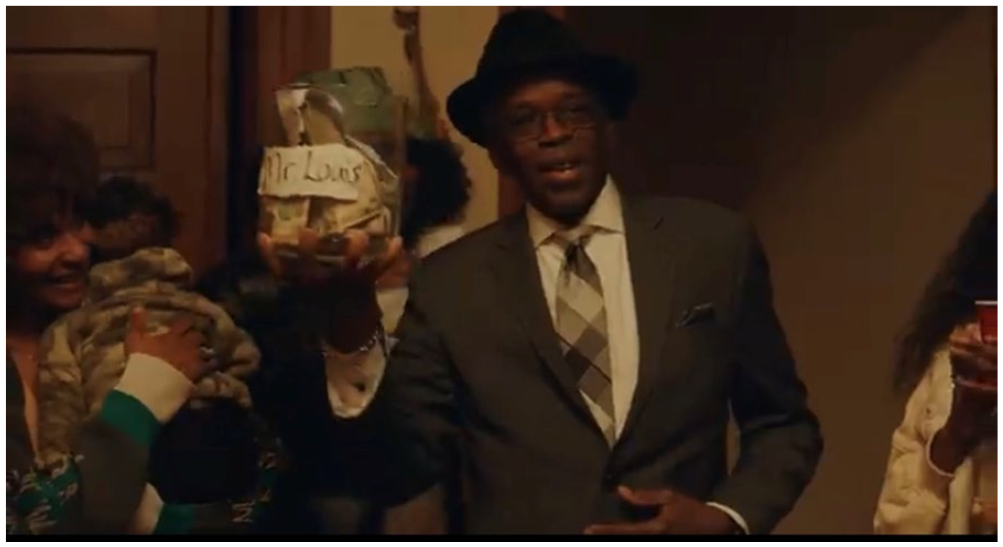
Mr. Lewis at his rent party in the music video, I Deserve.
In my view, Silent Ride tells a slightly different story but nevertheless, contrasts well with I Deserve. As WESTSIDE BOOGIE walks to his car in the still of the night, the porch lights shine brightly behind him yet he is almost invisible, portrayed as though he is merely a cartoon character (Figure 2). When he reflected on the release of the album, Everythings for Sale, WESTSIDE BOOGIE said, “I wanted this project to take people on an emotional roller coaster [. . .] I don’t want it to be this thing that’s all rapping or all melodies and you just get bored. I really wanted to be myself on the songs and take you through all these different feelings.” WESTSIDE BOOGIE was clear that Silent Ride and the album as a whole express a litany of affective states, possibly still including but not entirely limited to feelings of love or deservingness. Immediately, however, the bleak, shadow-like imagery reminds me of a set of scholarly conversations and debates that often emerge from the lexicon of Sylvia Wynter. Wynter (2003) asks a profound question, one that regularly uproots our epistemological and methodological bases across disciplines: What does it mean to be human? Throughout her oeuvre, Wynter interrogates the ways that Western modernity constructs visions of the world that render certain people outside the category of the human. Scholars like Frank Wilderson (2020) have continued along this chain of thought, arguing that Blackness is oftentimes made to be synonymous with nonhumanness.
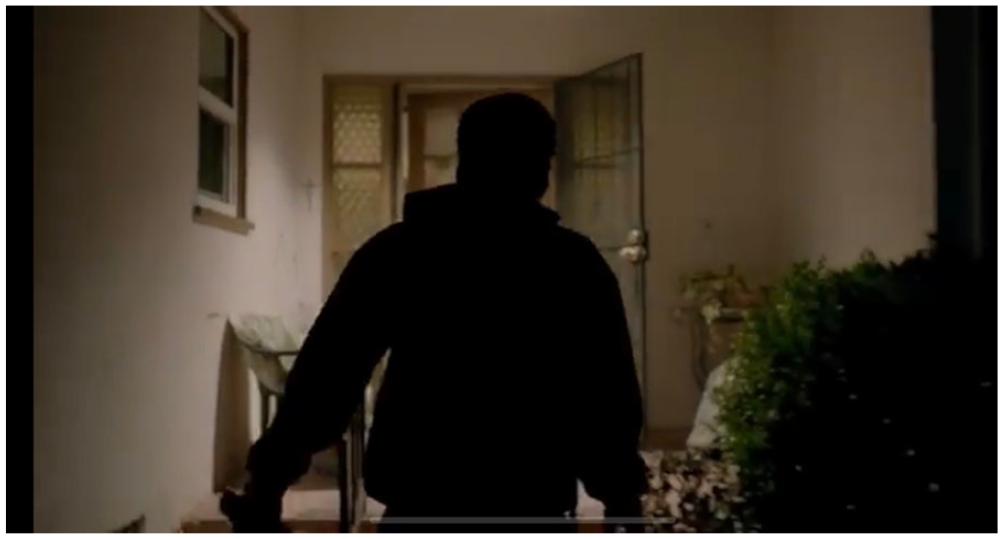
Silhouette of WESTSIDE BOOGIE in the music video, Silent Ride.
On that point, I would like to quickly turn to Saba. For me, Saba is a remarkable conversation partner when it comes to the topics of rest, the quiet, and stillness. In the song 2012, Saba (2022a) reflects on his adolescent years in Chicago. He says, “I’ve always struggled to converse if it wasn’t a verse Social anxiety, got me stumblin’ on words But I always speak my mind and shit when I’m with her Corner store to the porch with my new thing Yeah, a new thing, yeah, We’ll get lost in the world like we wanted Hey, you know me, yeah Corner store, can’t afford shit but your chips Hey, the choices, hey, yeah We don’t gotta mature, we’re just young kids Aye, so fuck it I had everything I needed, everything Yeah, I had everything I needed, everything”
Again, unfortunately, I have never met Saba. And so, I am not entirely sure who he is referring to when he says, “I always speak my mind and shit when I’m with her.” Is she a childhood crush? Is she an allusion to the city of Chicago? In either case, she seems to bring a sense of comfort, a kind of fullness to the everyday. To use the language of Quashie (2021, p. 10), I feel as though Saba imagines a Black world, Blackness as totality, Blackness as “capacious and right—not more-right-than, just right-as-is. Life-as-is.” In his short film, A Few Good Things, Saba (2022b) opens with the song 2012 playing in the background. The video is slow-moving; it focuses on faces (Figure 3/Figure 4), memories (Figure 5/Figure 6), and photographs (Figure 7/Figure 8), building up to the line “I had everything I needed, everything.” On one level, one could surely read this slow, focused portrayal as a critique—and perhaps even a form of resistance—to the logics of racial capitalism. Put differently, why rush? Be still. And yet, it is also quite possible that this is not a story about racial capitalism, or at the very least, racial capitalism may not be the central frame to understand these performances and the sensibilities they activate. When I first heard the song, I do not remember thinking about racial capitalism. Given that I was on my way to campus for a graduate seminar on Black Marxism, I actually find that to be rather amusing. Instead, I just remember the vibe. I remember feeling good. I remember smiling. I remember saying to myself, “I really love this album.”
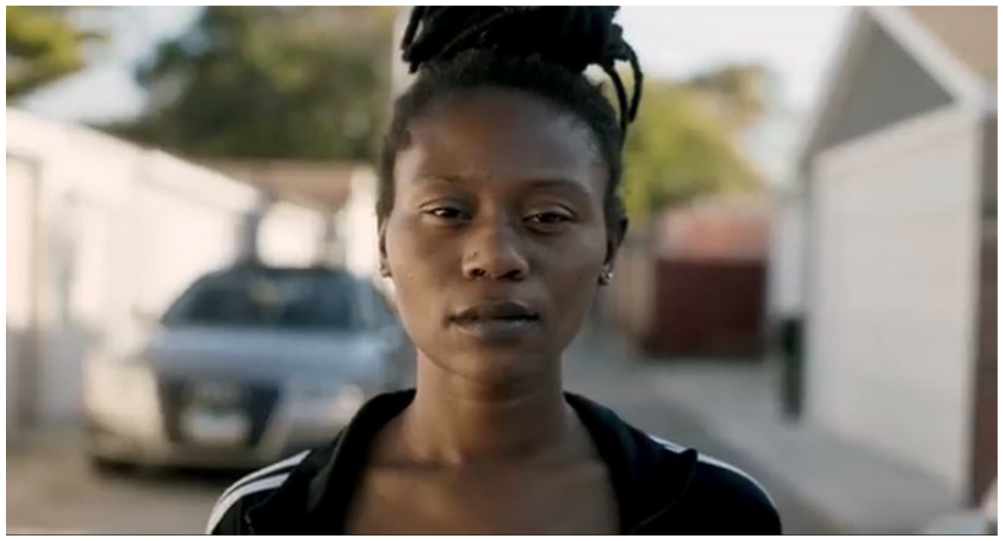
Deep focus on family and friends in the short film, A Few Good Things.
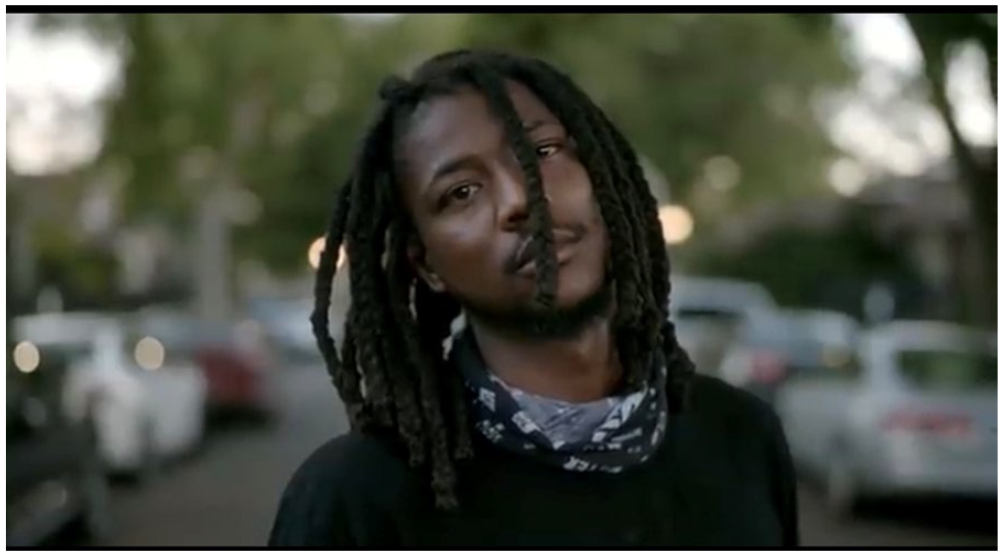
Deep focus on family and friends in the short film, A Few Good Things.
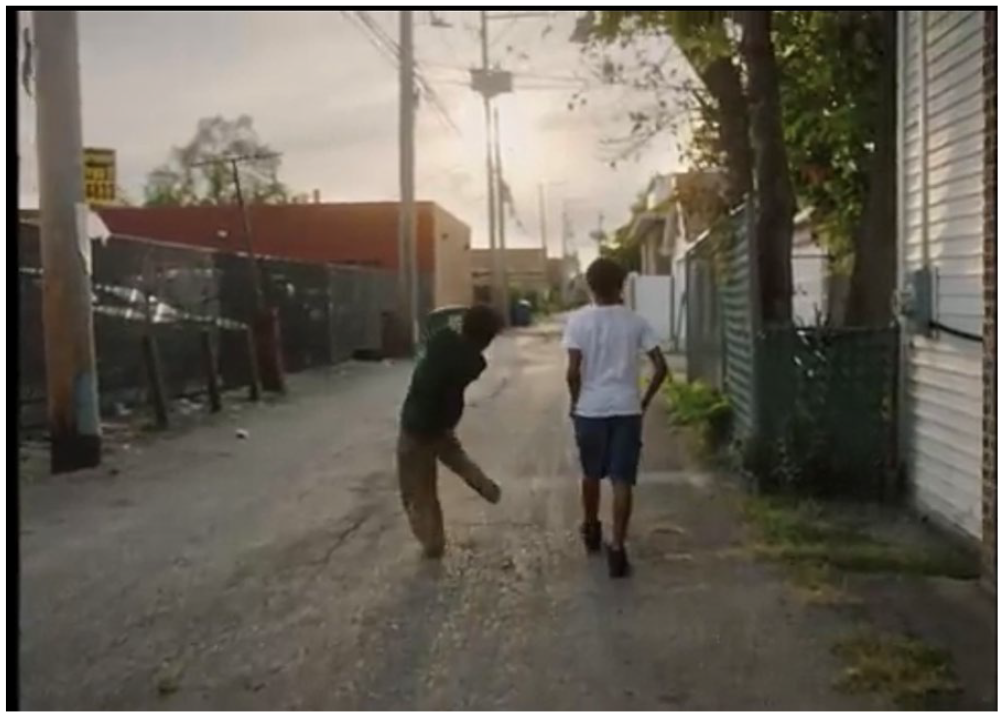
Portrayal/Recollection of childhood in the short film, A Few Good Things.
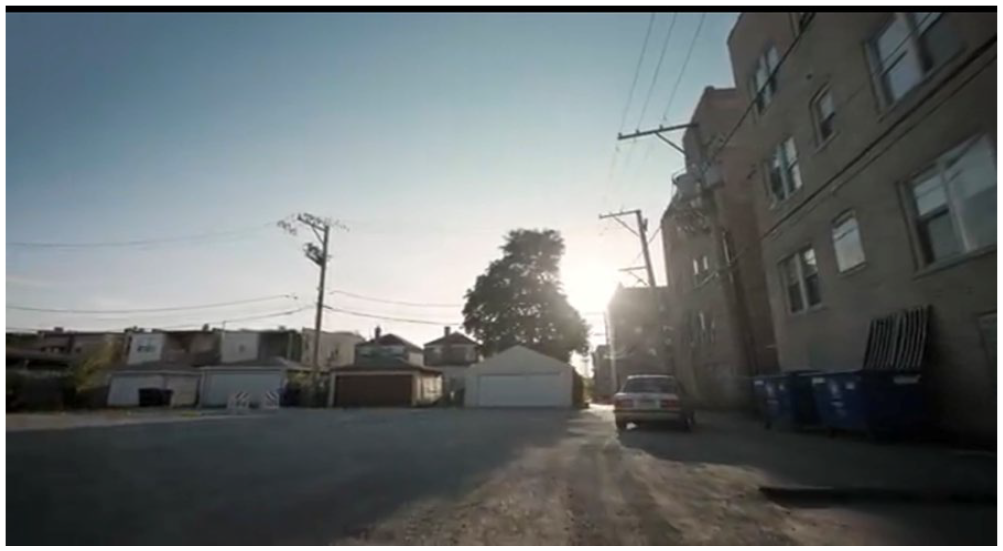
Long shot of the neighborhood in the short film, A Few Good Things.
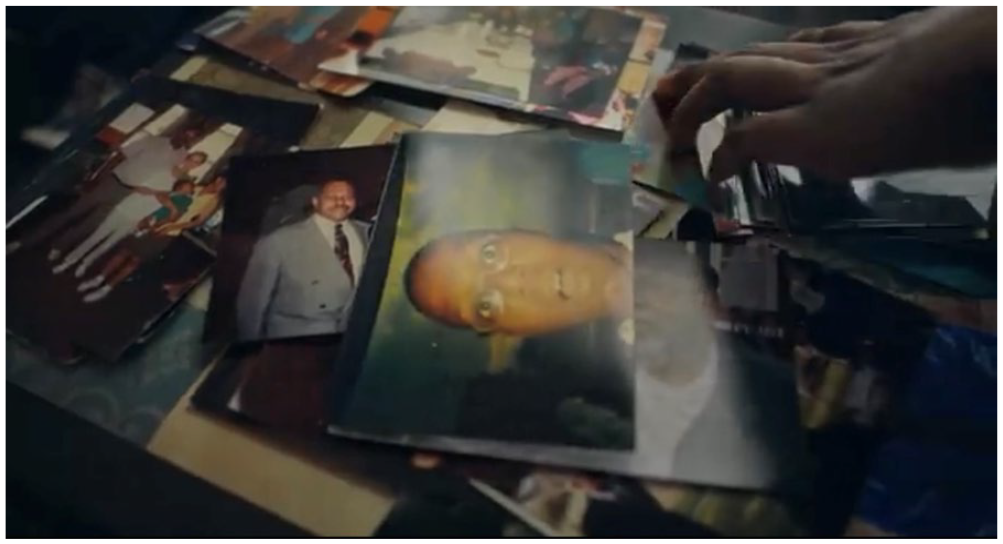
Saba going through old photographs with a relative in the short film, A Few Good Things.
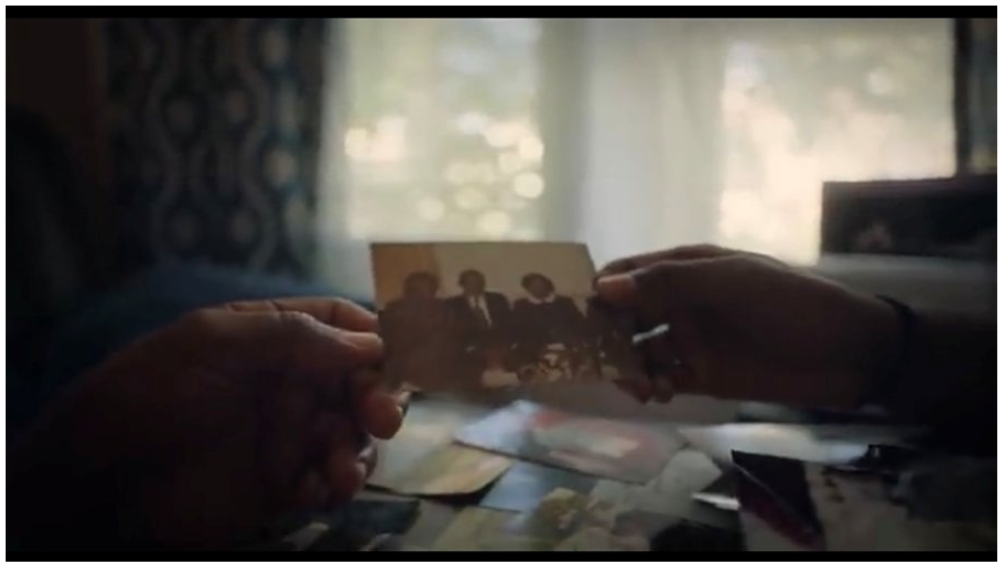
Saba going through old photographs with a relative in the short film, A Few Good Things.
Personally, I do not believe that rest means “the end of racism and anti-Black violence,” nor do I believe that it necessarily instills humanity into spaces that are pervasively anti-human. I would concede, however, that rest could very well follow the words of Saba. Rest might simply be a feeling, a moment where we feel as though we have everything we need, everything. What do we make of these moments? What does it mean to have everything you need? What does it mean to feel as though you have everything you need? How might these very provocations fundamentally re-shape the question of the human? In all honesty, I am not entirely sure that I have succinct resposnes to any of these questions. For phenomena that exist at the confluence of the physical and the perceptual, it can be notoriously hard to describe. But maybe – just maybe – having everything you need asks that we take a silent ride home. Perhaps having everything you need is just what we deserve.
Footnotes
Declaration of Conflicting Interests
The author(s) declared no potential conflicts of interest with respect to the research, authorship, and/or publication of this article.
Funding
The author(s) received no financial support for the research, authorship, and/or publication of this article.
