



Abstract
How can we take transnationality as a space of in-betweenness to generate new possibilities, moving beyond geographically bounded spans between countries? This article presents five authors’ collective inquiry on transnational positionalities, which we practiced through the relational, transformative, and reflective writing of the self in a community space. We staged the collaborative writing into two processes: the emergent process of thematic writing and the relay writing. Interweaving “I” and “we” voices that cannot be captured through categorical thinking, our collaborative quest resists normative identity politics, proposing writing as a method of collective inquiry for the nuanced understanding of the transnationality that embraces flows, margins, and uncertainties. Collaborative writing, we argue, is a transformative opportunity for methodologizing transnationality and decolonizing qualitative inquiry.
Keywords
(Re)writing In-Betweenness as New Potentials on the Pacific Currents
How are we coming to see our transnationality not merely as bound to geographical origins, but as a space of in-betweenness, fractures, fissures, flows, or nonconforming to readily available social dominance, which would generate new possibilities? If we find this is something possible and imaginable, and if we already experience those alternatives in our multifaceted lives, how can we (re)present this space more than as the conventional form of scholarly writing, in radical, ethical, and creative ways while making it readable to the audience?
We continue the collective inquiry, which we began to dispel the fear imposed on our race, ethnicity, gender, nationality, and immigrant status (T. Kim et al., 2023). Together we aimed at navigating the imposed label of “Asian/Asian American” against the surge of anti-Asian hate crimes during the COVID-19 pandemic. Our shared story as Korean immigrant scholars in the United States helped us recognize the paradoxical nature of the Asianization process that is conceptualized by the Western gaze but needed for building the Asian/Asian American solidarity. At the same time, we felt unfitting to the “Asian/Asian American” frame that is part of the “American equity grammar” (T. Kim et al., 2023, p. 9). Instead of relying on theories that are readily available but do not fully address our onto-epistemic realms, we collectively and continuously wondered, desired, and dreamed of creating a space that would allow us to center our transnational positionalities that are multiplicated and constantly constructed.
In this collective writing project, we take a different entry point, positioning ourselves on the Pacific Ocean currents that are always on the move. Like the water in the Pacific Ocean, we are always on the move in-between the Asian and American continents, whose in-betweenness is embedded and emerging in everyday lives wherever we are. Unlike the borderline that often exists on the land, our border floats on the sea, or over the sea, in which the edges of the continents are separated but intimate through colonial history, militarism, western imperialism, and American exceptionalism (Lowe, 2015). This intimacy is not only about the Pacific Ocean. Much like the water that flows across the globe, our positionality on the Pacific Ocean currents is also part of the global current circulation, passage, and swirling, while our temporal positioning might be different from the positioning in other places at other times. Like the water whose shape is formed through its interrelations with the surroundings, our identity also grows out of our ongoing interactions. As Anzaldúa (2015) writes: “We discover, uncover, create our identities as we interrelate with others and our alrededores/surroundings. Identity grows out of our interactions, and we strategically reinvent ourselves to accommodate our exchanges. Identity is an ongoing story, one that changes with each telling” (p. 75).
Like the water, which flows through its own process of movements—encompassing temporal, spatial, and relational aspects of being and becoming—we conceived this collective writing as a “relational flow” (Smith & Lloyd, 2020). When we regathered to continue our collective inquiry, we did not necessarily start with specific goals as a so-called research group. Instead, we wanted to be experimental, hoping to continue the spiritual awakening that we experienced as uniquely possible in our group. We wanted to continue to shape our collective space while waiting to see what emerges, that has allowed us to share the ambiguous boundaries between our personal and professional lives. In this space, we not only encountered the interaction of our multiple identities; we also began to name the “yet unnamed features” (Anzaldúa, 2015, p. 75) of the transnational identities through our interactions, exchanges, and changes within the group.
Continuing from the wonders (Gale & Wyatt, 2017; MacLure, 2013), we created a space to write experimentally, creatively, and reflexively to collectively inquire about our identities and positionalities as Korean transnationals. The process of collaborative writing as a mode of inquiry (e.g., Alhayek et al., 2023; Jandrić et al., 2023) was not a pre-designed qualitative research per se. Instead, through monthly thematic writings and meetings for six months, we shared what we were pondering, feeling, and encountering at the temporal and spatial points of our personal and professional lives, and based on this conversation, each of the five authors suggested writing themes and prompts for everyone to write about until the next meeting. As an emerging qualitative inquiry, this collective journey can only be described in retrospect. It was through this emergent, relational, rhizomatic, and collaborative process that we came up with five related themes for inquiry through writing: “I,” “language,” “relationship,” “home,” and “immigration” (see Appendix for detailed writing prompts).
The five of us became “writing comadres” (Anzaldúa, 2009; Keating, 2015). After the thematic writing, we embarked the relay writing, in which we took turns to write layer upon layer, interweaving “I” and “we” voices, reflecting on our dialogues. Through this reflexive practice of writing, we felt a sense of connection, guidance, and support from one another, even when writing individually. Our trust in each other, as well as in ourselves, deepened as we sensed and experienced. These words by Gloria Anzaldúa speak to our experience: I don’t write in a vacuum. I have helpers, guides from both the outer realm like my writing comadres and invisible ones from the inner world. I write in-community, even when I sit alone in my room. Whatever I do I have to put my trust in a deeper order, an unknowable trapo (fabric) of divine and creative plan. I must trust in unseen helping guides, must surrender to the mysterious forces that guide me. I rely on the part of myself that has this ability to connect with these forces, to the imaginal world. (Anzaldúa, 2009, p. 293)
We collectively envisioned the “imaginal world” where the “/” in “Asian/Asian Americans” represents a space for creative forces. Writing became a political site and a responsible method as we “critique[d]” the “reality, identity, language, and dominant culture’s representation and ideological control” (Anzaldúa, 2015, p. 2) that normatively defines our identities and positionalities. Through the relational writing as collective inquiry, we took the ethical responsibility that we hold as transnational researchers, resisting the ongoing and historical labeling of Asian/Asian Americans as perpetual foreigners and model minorities. Acknowledging the inseparable coagulations of qualitative inquiry with truth-telling and social justice (Kuntz, 2021), we do not intend to flatten the historical contingency of inequity, injustice, and coloniality on which we stand (Mignolo & Walsh, 2018). Rather, we take those unjust pasts as the immanent conditions of possibilities in our writing project (Carlson et al., 2023). While we still feel the Western gaze (Chen, 2010; Said, 1978) that continuously defines us as Asians/Asian Americans—both as geographically distant and intimately familiar—we “strategically reinvent ourselves” (Anzaldúa, 2015, p. 75) through our writing. We seek the fluid intersections where Asia, the West, and the Global South intermingle, illustrating how these identities naturally blend in our writing as a form of collective inquiry.
Writing About “I”: Revisiting Our Floating and Unresolved Selves
We write for our own sake, to be transformative. From the moment we embarked on our journey of navigating the imposed label of “Asian/Asian American” against the surge of anti-Asian hate crimes during the COVID-19 pandemic (T. Kim et al., 2023), our relationality has grown resilient and strong. We mourned our racialized past and present and the collective struggles our Asian/Asian American communities faced. And here, we bring our agentic selves. Rather than conforming to the labels and norms imposed on us (see Bhattacharya, 2021; Boveda & Bhattacharya, 2019; Liou, 2023), we initiated an exploration of “I,” asking, “what makes me feel I am not being myself?” This introspective question, posed by me (Taeyeon), emerged organically from our collective conversations surrounding the complex dimensions of (de)coloniality and the lingering fragments of unresolved identities we wrestled with.
The specter of coloniality haunts both our professional lives and everyday experiences. Born in Korea—a country scarred by the aftermath of imperialism, colonialism, and a forced division driven by foreign powers—I am familiar with the existential fear of Koreans in our struggle for survival as a peripheral nation. To mend these historical wounds, the nation1 has promoted agile learning and the adoption of hegemonic subjectivity, striving to align itself with the global center and escape the margins (S. Kim et al., 2023). Yet the pursuit of the center perpetually leaves us donning borrowed garments as true ownership of the center eludes our grasp. It is within this context that I discern the interplay of a colonial legacy, entangled within the broader tapestry of world history, exerting its influence over the shaping of our evolving transnational identities.
Our exploration of coloniality was ignited by Soo Bin’s reflection on her “unresolved [professional] identities,” which is structured by academic imperialism. During our first discussion of planning this project, she explained that the academic imperialism pervasive on a global scale propelled her to pursue her doctoral degree in the United States, recognizing the prestigious value of an American degree in academia even in Korea. Now as a faculty member in the United States, she found herself questioning the U.S.-centric language, citations, and modes of thinking and writing that she had adopted. Adding another layer to our understanding of coloniality, Sun Young highlighted the dimension of epistemic injustice (Bacevic, 2023), a form of marginalization she often encounters in racial discourses, which are predominantly framed by a Black-and-White binary (Liou & Boveda, 2022). As Asian individuals who do not fit neatly into the racial categories of black, white, or brown, we perceive our skin color in a state of constant flux.
As I witnessed the inherent tensions, conflicts, and disparate fragments shaping our identities, each layer imposing its own expectations and limitations, I shared my understanding of coloniality as a way of seeing ourselves: Coloniality, to me, consists of things that lead me astray from my authentic self. We navigate our daily lives by trying simultaneously to live by certain norms and frameworks, and at the same time, to decenter them to reclaim our identities.
Our dialogic recognition of what makes us not feel like ourselves served as a pause amid the relentless waves that surround and (re)shape us. It laid the groundwork for our engagement with decoloniality, prompting us to reflect on the ways in which we can reclaim agency. It is in this pursuit that we discovered the significance of writing about the self, not for external validation or conformity, but as a profound act of self-recognition and self-expression. Thus, our choice to write about “I” echoes the sentiments of decoloniality suggested by Mignolo and Walsh (2018): “it [decoloniality] is indicative of the ongoing nature of struggles, constructions, and creations that continue to work within coloniality’s margins and fissures to affirm that which coloniality has attempted to negate” (p. 17).
I sought my writing about “I” as a way to avoid becoming subordinate to the discourses that negate my true selves and voices. I composed a poem titled in Korean, 그렇게 또 하루를 살아낸다 (“Like this, I continue to live another day” in English translation). I used to write poems to be myself until I entered the PhD program in the United States. The expectations imposed by academic writing in English dampened my joy as a poet. However, that night I reclaimed that part of myself. Sitting alone, I wrote the poem, listening to the whispers of my inner voice, but I felt the presence of my friends in writing: Sun Young, Soo Bin, Jin Kyeong, and Minhye. My poem reflected aspects of my presence that others often do not welcome (e.g., Korean flagged English, my habits of being and thinking). Simultaneously, my poem reminded us that these experiences on the margins have fueled my pursuit of restoring myself and forging my own paths. I persist in my journey of lives against despair. Like transmuting the deep resonance of 한 (“Han”) into a flourishing spirit, 흥 (“Heung”), as countless Korean writers have taught me.

The subsequent group circle revealed the power of my poem, written in our mother tongue. I saw it stirring deep-seated emotions, agony, and hope that resonated within each of us. Through the silence, words, and the unstoppable tears of my friends, we forged moments of connection. Minhye said, “I felt such a strong sense of empathy. It provided me with immense comfort, more so than any other words ever could.” The solace we found stemmed from our embodied knowing of what it means to exist on the margins, to be “hovering around the periphery.” In this kind of life, we have willingly shed parts of ourselves in attempts to be seen as “not foreign,” “flawless,” and “adequate enough” through the lens of whiteness. This solace made us laugh, looking back on our past selves who suffered, and our present selves who still face challenges but with newfound nonconformity. Perhaps we’ve been longing for such a space where we can fearlessly share and comfort our vulnerable selves.
With the flow of our shared space, we asked, “what does it mean to be myself?” Minhye’s essay about “I” answered this question: I perceive being true to myself as a state of freedom from the gaze and judgments of others, where I can fully express my thoughts and desires. In this state, there is no room for value judgments, only respect for my authentic self, just as I am. When I am not being true to myself, I feel unnatural, uncomfortable, and lacking in confidence. If such moments persist, I may find myself rejecting or negating my own being.
Our reflective discussion on our essays converged to a realization that we are embracing our scattered selves. Living authentically involves accepting ourselves in our entirety, not necessarily seeking validation from others. Like Jin Kyeong said, we longed for “celebrating ourselves” through our writing in this relational space, acknowledging and honoring our own worth.
Our relational writing became a continual journey of self-reinvention (Anzaldúa, 2015). We gather and weave our fragmented selves into a cohesive narrative. We write on our own terms, for our ongoing versions of ourselves and for our yet-to-be-discovered selves (Anzaldúa, 2015). By creating swirls and currents, we persistently (re)define our positionalities, seeking to “transform ourselves into who we each want to be,” as Soo Bin suggested.
Amid the Sound of Waves: Creating Language as We Speak
The theme of “language” surfaced during our collective exploration of our transnational identities. Upon analyzing our discussions and writings, it became apparent that all five of us carry elements of post-traumatic stress disorder, the enduring scars of our transition to the United States—an experience deeply mediated by the English language. Like relentless waves crashing against a rigid, imposing sea wall, our initiation into this foreign environment was marked by profound humiliation, persistent misunderstandings, and overwhelming confusion. Our struggle with English, which serves as the fortress walls of this empire, amplified these feelings of ineptitude and disregard, instilling a deep-seated fear of exclusion. Our narratives, therefore, are not just about linguistic transition, but also about the tumultuous journey of water meeting an unyielding boundary.
Emerging from our shared narratives, I (Soo Bin) noticed that we were not only navigating unfamiliar linguistic territory but also grieving nuances lost in English translation. Taeyeon, for instance, entered U.S. academia and found it challenging to showcase her intellectual abilities due to the predominance of the English-speaking world. She expended most of her energy merely staying afloat amid conversations, leaving scant room to fully exhibit her scholarly depth. Minhye, conversely, found her humor often became diluted in English, getting lost in the chasm of cultural disparities. Revealing oneself as a nonnative English speaker has implications that go beyond mere linguistic barriers; it signals a deviation from the norms associated with white, monolingual, native speakers of “standard American English” (Chávez-Moreno, 2021; Flores, 2016). The richness of emotion, wit, comfort, and clarity sometimes evaporate in translation (Rosa, 2016), leading to feelings of diminishment. As Jin Kyeong described, in this vast linguistic ocean, we often become strangers not only to native English speakers but also to ourselves, continuously reshaping our identities amid its ever-changing waves.
In our second session, Taeyeon’s Korean poem “I fear I may have lost the flavorful language of the time when writing kept me alive,” deeply resonated with me. In reflecting on her writing, I realized that existing theories cannot fully capture my analysis of South Korean educational praxis. Given that my academic training in Korea has been heavily influenced by the prevailing U.S. educational paradigms (Lee, 1992; Tröhler, 2022), I felt I had not mastered the academic language necessary to describe, analyze, critique, and envision Korean education history, systems, and practices. In my pursuit of the academic language of the empire–namely, English and Western academic conventions (Altbach, 2013; Phan, 2016)—I constantly found myself negotiating between my sense of truth and U.S. academic norms. In my thought process, I perceive the world through a comprehensive and relational lens inherent to my Korean background. Yet, when communicating in U.S. academia, I often wrestle with bringing that depth to the simpler, linear narrative expected by a Western audience. This juxtaposition not only underlines the compartmentalization of our lives and identities through language but also brings to the forefront the power dynamics inherent within academia (Flores & Rosa, 2015). Echoing Spivak’s (1992) pivotal query, “Can the subaltern speak?” I mull over its academic contextualization: Can scholars from non-Western backgrounds convey our perspectives without yielding to the empirical language of the academic empire? Might this space empower us to challenge the colonial power matrix and explore “delinking” from colonial ideologies (Mignolo & Walsh, 2018)? Can we pivot a praxis of living? Will we craft a language that mirrors our essence as we communicate?
In our writings, we navigated the deep strains of “native speakerism” in the United States, capturing moments of internal struggles and seeking acceptance. Minhye wrote of her “struggle with my own anxiety, insecurity, and inferiority when I speak English” and how she is “not 100% me when speaking English.” She elaborated on the perception that not speaking in white American English is considered a “shortcoming” or “weakness,” with the standard often being set by “white monolingual native English speakers.” Jin Kyeong described the impact of her Korean-accented English on others’ perceptions of her, while Taeyeon remarked on how her everyday English carries traces of her native language, a reality accompanied by both pride and discomfort.
Sun Young reflected on her preschool-age children’s linguistic adaptability. When her daughters whispered, “엄마, 우리만 코리안 해 (Mom, we are the only ones speaking Korean)” and “엄마, 이제부터 나 영어로 말할게 (Mom, I’ll speak in English from now on),” they were highlighting their compartmentalized linguistic experiences and cultural identities: the Korean self and the American self. These children were already detecting the societal undertones suggesting that speaking in Korean, or any non-English language, marked them as different or othered. These perceptions infiltrated their awareness, prompting them to demarcate certain environments as English-only. Through the experiences of Sun Young’s children, we recognize the balance between empowerment through bicultural flexibility and the ongoing struggle for belonging.
As we draw from our shared narratives, we recognize it is evident that we are on a journey to decolonize native speakerism and craft pathways to linguistic empowerment. Sun Young, for instance, discovered strength as a nonnative English speaker, boldly underscoring to her students the distinct perspectives she brings to teaching English literacy/reading as a result. Similarly, among my husband’s Singaporean friends, I found myself playfully echoing their Singlish inflections, recalling, “Every non-standard pronunciation that distinctively deviated from American Standard English that I’d mimic gave me an inexplicable thrill. It felt like a proclamation: ‘English is but a tool for communication, not an instrument for assimilation into the white American mainstream!’” Echoing Anzaldúa’s (1987/1999) poignant declaration, “I am my language. . . I will no longer be made to feel ashamed of existing. I will have my voice” (p. 81), the writings we have done collectively emphasize our ongoing efforts toward linguistic self-assertion and breaking free from the confines of native speakerism.
Embodying Positionalities Through Relational Flow
Our ongoing dialogue, inquiring into thinking about our positionalities, expanded further to the discussion of “relationship.” Mohanty (1993) posited that the concept of identity prompts essential questions that require a thorough reevaluation of how individual experiences correlate with societal interpretations. This involves both the subjective choices and evaluations we make and our objective positioning within society. Echoing this sentiment, Anzaldúa (2015) observed, “We discover, uncover, and create our identities as we interrelate with others and our surroundings. Identity grows out of our interactions, and we strategically reinvent ourselves to accommodate our exchanges. Identity is an ongoing story” (p. 75). As well, “Identity is relational” (p. 69).
We reflected on our personal, social, and professional relationships both within and outside academia. We pondered the intricate interplay between our “being” and “becoming” selves as we undergo transformation, embrace change, and navigate the journey of survival in this new land. Ultimately, we contemplated the affordances and dissonances of relationships between how we present ourselves to the world and make sense of it. To what extent can we be connected to our authentic selves and others in these multiple relationships? Can our relationships reveal the reality of our positionalities? Our dialogue has been sparked in part with the hope of responding to some of these questions.
Such questions rose to the surface organically as we discussed stories that permeate our lives, focusing on the theme of “in-betweenness.” We explored defining relationships in our lives by asking, “How do we see ourselves through our relationships, and how does that influence our work as a scholar?” We sought to understand how we are situated in moment-to-moment relational positionalities vis-à-vis our cultural and historical identities. This situatedness and the standpoint of knowledge (Haraway, 1991; Harding, 1993) played a pivotal role in this project. We realized that we cannot just use terms like “Asian” or “Asian American” in the positionality section of any paper without engaging in rigorous critical self-reflection. This critical self-reflexibility allowed us to write and theorize from our lived experiences (Mignolo & Walsh, 2018), rooted in our group’s deep trust and transparency (Saveendra & Salazar Pérez, 2017).
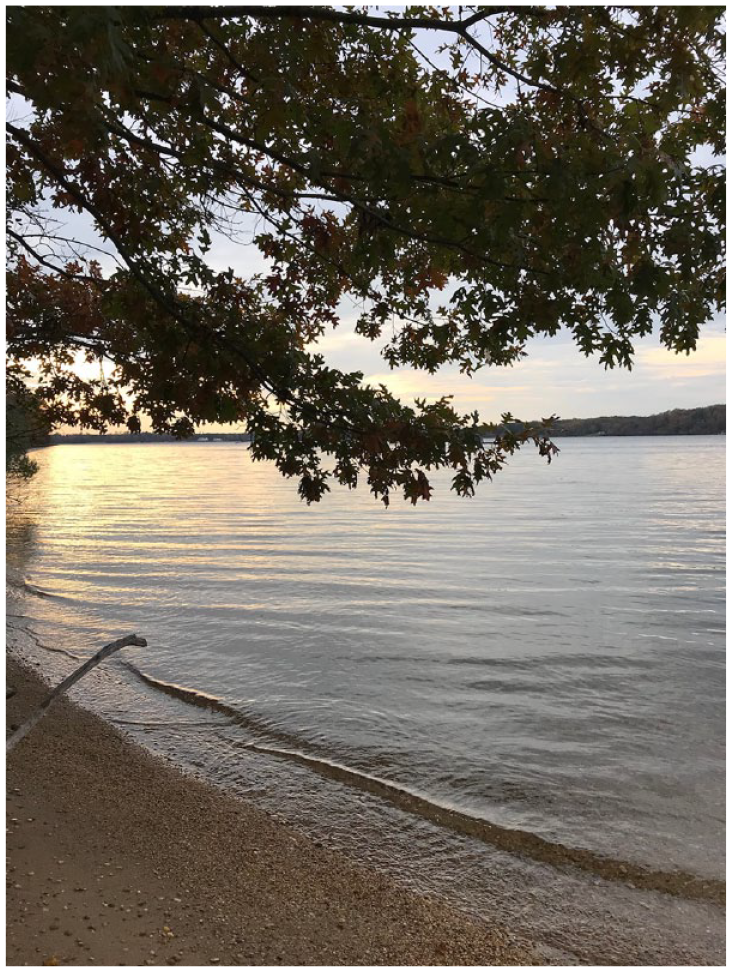
Everyone in this group undertook a significant voyage across the Pacific Ocean, arriving on unfamiliar shores (see Figure 1). We all still have the persistent feeling of being adrift within the territory where we landed, navigating through enclaves of strangers. For Taeyeon, “water” connecting different islands resembles relationships: Everyone is an island. The sea surrounding these islands connects them. Sometimes we are the ship; at other times, we are merely the water. The relationships I form seem to encapsulate my life. (Reflection paper, Taeyeon)
Shorea
Our journeys are nonlinear. We do not just land or arrive at a positionality; instead, we are continually navigating our positionalities in specific ways within a complex network of relationships (Giametta, 2018; Mignolo & Walsh, 2018). Our positionalities are in motion according to when and where we are in the world (Jacobson & Mustafa, 2019).
For Jin Kyeong, “distance” is a defining aspect of relationality. She reflected on the continuous crossing of both visible and invisible boundaries in our relationships. The “distance” she senses, marked by feelings of both comfort and discomfort, encapsulates her understanding of relationships. Deliberating on the desire to bridge or uphold this distance deepens our exploration of our positionalities within academia.
For me (Minhye) and Sun Young, relationality manifests as both transnational and generational. We pondered our transnational positionality, considering our frequent interactions with people close at hand (e.g., family and friends in the United States), and those far (e.g., family and friends in Korea). We also thought about our connections on psychological levels (e.g., immigrant communities, Korean diaspora) and symbolic fronts (e.g., academic audiences). We focused in our writing on the communication patterns, emotions, and feelings within these relationships. Even with our active participation and advocacy in academia, we often feel deeply vulnerable when faced with immigration instability, despite our significant contributions to agency and voice-raising movements in the academic world.
Building on these reflections, Sun Young and I recognized our roles as MotherScholars (Yu et al., 2022) as a reminder that our own children significantly shape our understanding of how our positionalities relate to our duties as intellectuals. Sun Young recounted her mixed feelings of representing as an Asian American Pacific Islander faculty: In the midst of countless relationships, how others and societal structures perceive me, I need to break free and consider how I see myself . . . I discovered that these concerns were interpreted through the lens of relationality with me. (Reflection paper, Sun Young)
Similarly, my academic positionality underwent significant shifts as I cultivated relationships with my children. The intersection of my identities as a MotherScholar and a teacher educator informs each role, influencing my interactions with students and research participants (Kwon et al., in press). This dynamic positionality is instrumental in framing daily experiences, guiding my engagement with specialized knowledge. It compels me to pose critical inquiries: What type of knowledge am I fostering? Who benefits from my research? Whose agendas are being advanced? Recognizing the complexity inherent in these relationships allows me to carve my own narratives. It infuses my endeavors with profound purpose and intention, challenging conventions and expanding boundaries as I navigate and define my positionalities.
Soo Bin reminds us how the act of writing carries relational significance as building a “village” can help us find our place—within academia, in unfamiliar lands, and amid the tapestry of multifaceted relationships. She states, “Encompassing acts of greeting, remembering, and cherishing others . . . It is through these interactions that I realized my journey of establishing roots in this foreign land had commenced.” Relationships are not confined to mere connections; instead, we strive to expand them into meaningful encounters. This expansion process of inquiry into relationships is also an embodiment of positionalities.
In this community of horizontal communication (Dussel, 2011), we found solace as we wrote, read, and pondered our identities and positionalities together. The space and time dedicated to writing emerged as both a sacred and luxurious opportunity. This process was liberating and confessional while also being collective, echoing Lugones’s (2003) concept of “I→We” (p. 227). Here, an individual acknowledges their interconnectedness with others while still valuing both their own and others’ unique needs and preferences. We remain in motion, crossing and connecting borders on land, along the edges of continents, and over the sea. We venture to various islands—both existing and emerging—constantly exploring and expanding our positionalities.
Home as Living in Transnational Multiplicities
Throughout our writings and conversations, we have created a space to navigate the fluidities of our transnational identities and positionalities. This is bolstered by a strong sense of community where we can express our uncertainties and tentative feelings. During our last meeting, I (Sun Young) began to ponder the connections between the themes of “I,” “language,” “relationship,” and the concept of “home,” which I then suggested as a subsequent writing topic. While “home” inherently suggests spatiality (Blunt, 2007; Brickell, 2012) and connotes a sense of origin and belonging, we chose not to approach “home” solely in a retrospective sense or from a strictly spatial perspective. Home transcends time, representing the past, the present, and, inevitably, the future. Home is epitomized by relationships (Liu, 2014). It signifies both staying and leaving (Ahmed, 1999). Home encompasses feelings, memories, and everyday practices (Tang et al., 2022).
As transnationals, we live amid multiplicities. Often, we make sense of the home through the borderlines that are reminded whenever we cross them over. While we didn’t start from seeing home from the relationships between South Korea (the country of origin) and the United States (the country of residence), we found commonalities to bring the transnational perspectives to our understanding of home. Living in transnational homes does not mean feeling the lack of a sense of belonging in one country or wandering around the periphery. Rather, the multiple encounters have led us to challenge the socially dominant view of seeing Asian/Asian Americans as foreigners, as Soo Bin shared her recent border-crossing experience at the airport as a moment to assert that we have something to share in this land.
“What is the purpose of your travel?”
[Long pause.] “Well, I live here.”
For those of us holding Korean passports, it might seem routine to be asked about the purpose of our visit to the U.S., implying a temporary stay. We might not expect to hear a greeting like “Welcome back home.” Yet, when crossing the U.S. border, we find ourselves having to explain and justify that we reside here. This experience led Taeyeon to equate her sense of “home” with “rightful presence”: The meaning of “home” seems to be the meaning of my “rightful presence.” At home, I do not have to justify the legitimacy of my existence, my [Asian] appearance and my [Korean native] language. Home is not the place where I was born with my willingness, but the place with the right that was naturally given to me.
We acknowledge that home is not just there, but the sense of homeness emerges when we encounter the sense of homelessness, which we frequently experience as immigrants. Minhye shared her memory about feeling unsafe living at home, particularly when the anti-immigration policies made her feel the ontological fear of potentially leaving the country because of her immigration status. We felt the same way as there is always “an imminent threat that can directly harm the existence of me and my family in this country,” which Minhye shared as “beyond just a feeling.”
While sharing our feelings and memories about “home” as immigrants through writings, we also considered that our reflections are not only about our experiences as individuals but as effects of the systemic conditions of possibilities that often depict immigrants as abject (Kirchgasler, 2021; Thomas, 2019). Whereas we encounter multiple boundaries, it seems that the most obvious boundary is the national border, which we have been constantly reminded of through the immigration process. In the process of searching for a new home, we are asked to justify our status as foreigners, particularly at the level of immigration law, in the system that requires us to prove and document why we are here. Filling out the forms for permanent residency and foreign addresses at the same time, we are again reminded of our status in-between nativeness and foreignness. Even beyond that clearest boundary, other boundaries that define us also exist endlessly, and, depending on whose eyes define us and how we respond to those external eyes, we become something.
Probably, searching for “home” is nothing but finding new possibilities from the cracks, living from the in-betweens. I shared my feeling of crack that comes from speaking two languages: Korean and English. When I speak, write, and think in English—using phrases like “living on the border”—the inclusion of the preposition “on” nudges me toward Western, English-speaking epistemologies for boundary-making, which I don’t have to do with my native Korean language because there is no preposition in Korean. The ways to frame, identify, characterize, represent, and render “my” and “our” identity are the reflection of the settler colonial grammar on racialization, which involves the paradoxical potential of inclusive/exclusive spatializing in identity politics. Understanding “home” as a contested assemblage leads us to search for alternative possibilities to Westernized identity politics, celebrating our lives, identities, and positionalities on the blurred boundaries of belonging and unbelonging.
We have come to feel that it is okay to be unclear, living on the blurred borders. Like water that is always flowing, we sometimes stay in certain places and moments, but we always keep moving. Water is molded by its surroundings, rarely setting its own boundaries. With time and persistence, it can even erode the barriers that stand in its path. As transnational scholars, we live within multiple boundaries—nations, cultures, races, religions, classes, and many other borders—that define the hierarchies of power, giving us a mixed sense of privileges and oppressions, as Jin Kyeong stated. Those multiple boundaries and labels constantly lead us to ponder “What is/was home? Where is/was home? When is/was home? Who is/was home?” Perhaps the pursuit of home mirrors the journey of a river: occasionally settling but mostly flowing, its depths varying from shallow to profound. As if swimming in waters that constantly oscillate between the inside and the outside (Snowber, 2023), our quest for identities and positionalities is shaped by distance and intimacy. We live on the mixed, blurred, and unclear boundaries of in-betweenness that define who we are and should be, which we consistently strive to fly away from.
Border Crossing Through Emotion, Labor, and Transnational Existence
Using relational writing as a method of qualitative research, we thoroughly explored our immigration experiences as Korean transnationals. We confront not only the emotional and financial implications intrinsic to our journeys but also the collective memory and shared struggles embedded in our transnational existence. In discussions on the theme of “home,” I (Jin Kyeong) detailed the financial investments I made in border crossings between Korea and the United States. Concurrently, Soo Bin drew attention to the financial challenges immigrants face, which often get sidelined in academic discourses. This mutual understanding deepened our exploration of the intricate layers enveloping “immigration” and “border crossings.”
Seeking a richer understanding, we turned to Gloria Anzaldúa’s (2015) influential work, Light in the Dark/Luz en lo Oscuro. Anzaldúa’s introspections, rooted in the U.S.-Mexico border experiences, offered us an alternative lens. While our Korean transnational contexts differ from the U.S.-Mexico dynamics Anzaldúa explored, her philosophical and metaphorical discussions about borders provided us with invaluable insights. These reflections on the border as both a physical and metaphorical space resonated deeply with our own experiences, albeit in different geographical contexts.
Our experiences transcend geographical boundaries, becoming intricately woven into our everyday existence. Moments of unease, such as witnessing the objectification of Asian/Asian Americans at social gatherings, amplify the emotional weight of these encounters. Sun Young shared instances in her writing when she felt discomfort, recounting experiences of Asian Americans being sexualized at events or singing along to songs from the Disney movie Mulan while wearing tight dresses. As a Korean transnational and Asian/Asian American, her reflections struck a chord of empathy among us. Minhye also expressed how she grapples with her emotions during physical border crossing events, where we collectively experienced undercurrents of tension and anxiety. These emotions manifest in various forms, from seeking approval from U.S. immigration officials to practicing English and assembling required documentation. Minhye explained: I am conscious of my demeanor and comportment during U.S. immigration inspections. I wear an extra warm smile and interact with the immigration officer with the highest degree of respect. I attempt to project an image of safety, legality, and excellence, as a diligent student studying at a reputable institution.
In unison, we responded by acknowledging the fluid dynamics of emotions and tensions inherent in these circumstances, understanding how the emotional labor we invest fluctuates and transforms as we cultivate relationships with family, friends, and colleagues in the United States.
Minhye’s story illustrates how the emotional experiences of Asian/Asian Americans can be shaped by their individual circumstances, including their cultural background, immigration status, and personal relationships. Drawing inspiration from Anzaldúa’s reflections, Minhye deeply resonated with the concept of “Nepantla”—as Anzaldúa (2015) describes it, a liminal space, a space of in-betweenness, where transformation and transition occur, often accompanied by challenges and confrontations of one’s identities and beliefs. Through this lens, Minhye portrayed her struggle for survival, highlighting the stark differences she perceives between life in the United States and her native Korea: “My Nepantla is not a peaceful place; here, if I don’t kick under the water, I could sink.” Her narrative paints a vivid picture of navigating unfamiliar terrains among strangers, underlining the continuous efforts, resilience, and fear essential for endurance. I furthered this dialogue by recounting my emotional voyage on my return to the United States after a solo trip to Korea (see Figure 2).

Jin Kyeong’s Reflection on Border Crossing Using a Google Slide.
In my written reflection on the theme of border crossings, I characterized the journey as a solitary endeavor that elicited complex feelings, a mix of excitement, alienation, and disconnection from my loved ones in Korea. “Sometimes, I do not know where to go,” I said, encapsulating the complexities of self-navigation amid the unpredictable currents that mark our transnational lives, traversing across the vast ocean.
Minhye expressed a similar sentiment when she reflected on her move to the United States, “Here, I am alone. In Korea, I have family and friends, and many people who can help me, but here, I am truly alone. There’s no one to help me. To survive on my own, I must become stronger.” While our Asian ethnicity often positions us as a model minority in the United States, it is important to note that socioeconomic challenges persist. As Soo Bin recalls a colleague’s words, “even to be able to dream, money is needed.” Our perception of our efforts as “endless” stems from the multifaceted emotions and experiences associated with living as immigrants. This involves not only seeking financial stability but also the complexities of cultural navigating, battling stereotypes, and carving out a sense of belonging in a foreign land.
Our shared narratives highlight that our journeys as border-crossers can significantly diverge from those of other immigrant or transnational groups. Through the nuanced lens of immigration, our story recalls the multitude of border crossings, both laborious and emotional, inherently tied to our valuable transnational experiences. Our inquiry has taken us on a journey of exploration, unraveling the complex tapestry of transnational realities, encompassing diverse experiences and personal growth. We endeavor through our interconnected narratives to reinterpret our continuous border crossings. Such crossings are not merely obscure but crucial parts of our identity development. With a sense of humility, we recognize the privileges intertwined in our journeys and understand the underlying tensions. Our growth, however, is clear and tangible, cultivated through communal readings, writings, and insightful dialogues as our transnational journey continuously unfolds.
Our Journey Through Decolonial Collective Writing and Methodologizing Transnationality
Our relational writing as collective inquiry has been transformative. As a continuation from our first collaborative investigation (T. Kim et al., 2023), we have inquired into elucidating our positionalities in academia and beyond, interweaving the emergent themes and voices through a collaborative writing process. By shedding light on the intricacies of our collaborative inquiry and writing process, we present three implications for research methodologies. First, moving away from the dominant research paradigm (Bhattacharya, 2007; Denzin & Lincoln, 2005) and normatively fixed identities and positionalities (Anzaldúa, 1987/1999, 2015), this project offers the possibility of decolonial collective writing as a method of inquiry. Second, we reaffirm the possibilities and power of writing as a collaborative inquiry to methodologize transnationality as an outsider-within (Collins, 1986). Third, this project’s transformative aspiration prompts us to rethink and reimagine writing in qualitative inquiry as an ethical endeavor, performing responsible research methodologies.
The process of writing as collective inquiry is our way of practicing decoloniality in qualitative inquiry (Mafile’o et al., 2022; Mignolo & Walsh, 2018). The decolonial approach foregrounds modes of thinking, knowing, and being that resist colonial paradigms and structures that continue to shape our knowledge, life, and thought (Pitts, 2017). Our inquiry cuts across geographical and cultural boundaries, delving into the liminal spaces—the flows, margins, and uncertainties that often go unexplored (Mignolo & Walsh, 2018). Throughout our writing journey, we have deliberately refrained from perceiving our narratives as “data” that would have led us to find “codes” or patterns; instead, we sought the multiple layers, cultivating both “I” and “We” voices that cannot be captured through categorical thinking (Freeman, 2016). We embraced the unfamiliarity of this process, especially during our relay writing: as we write layer upon layer, our transnational narrative unfolds, simultaneously clarifying our writing with each addition. By weaving our voices, where themes are intertwined rather than being linear, we resist normative and fixed identities, advancing nuanced understanding in onto-epistemology and reclaiming our positionalities.
Our exploration suggests the method of writing as collaborative inquiry to reconsider the taken-for-granted notion of positionality. We challenged the idea of positionality as given or static (Boveda & Annamma, 2023). Rather, we constituted, constructed, and (re)searched our positionalities through a cyclical and connected writing process (Gale & Wyatt, 2017; Richardson & St Pierre, 2005), in which we became “writing comadres” (Anzaldúa, 2009). We experienced writing as a communal act, fostering a unique sense of identity through collective creation, and we cultivated trust in both visible and invisible relationships. We also found alignment with Anzaldúa’s “wild tongue” notion (Anzaldúa, 1987/1999), gaining the audacity to articulate and reclaim our experiences. We wrote with a wild tongue, the boldness to speak, reaffirming horizontal relationships as essential for sharing, theorizing, and writing from one’s lived experiences that do not fit into the available frames. This space allowed us to deepen our inquiry about our positionalities through multilayered reflection. We were liberated in this space as it anchored us again in pursuit of our own positionalities.
Our collaborative inquiry contributes to diversifying transnational scholars’ identity that is the constituents of a continuously woven narrative, emerging not from singular self-aspects but diverse intersections. We embodied our interaction, reliance, and solidarity that led us to write about who I am and who we are with a sense of sincere trust. We experienced and developed ways to understand our writing practice and process as living on the ambiguous borderland that is always in flow. We came to acknowledge that an evolving state of restlessness and perplexity is part of our identity, which has fostered a deeper understanding of the world and where we are positioned. Our transnational perspectives allow us to navigate toward opportunities for self-definition in and through relations with our surroundings. We reflected upon the contextual, historical, and colonial nature of knowledge and self-understanding to challenge the things that are rooted in Eurocentric racialized hierarchies (Liou, 2023). This critical inquiry explicates the multifaceted and contingent positionalities through exercising critical reflexivity and embracing other ways of knowing and self-determination (Thambinathan & Kinsella, 2021). Our collective project opens up the potential of collaborative writing as a transformative opportunity for methodologizing transnationality and decolonizing qualitative inquiry.
Water’s Edge: Our Journey Persists
We invite readers into our relational space of writing to show how we constructed our writing as collective inquiry. This epilogue is a polished conversation from the whole group discussion that surged soon after our quintet reached the shoreline of our relay writing. Navigating the currents of our relational dynamics, we naturally shaped our understanding of writing as inquiry.

Footnotes
Appendix
Thematic Writing: Topics & Prompts

| Writing Topics | Writing Prompts |
|---|---|
| Writing about “I” |
In our last discussion, we wondered what we wanted to explore, and I found writing about ourselves would be helpful. Let’s start writing about “I.” More specifically: What makes me feel not being myself? |
| Language | • When was the moment you felt your intentions were misread/misunderstood? • When was the moment you were required to make an extra effort not to be misunderstood? • Have you ever felt you exist outside of the realm of meanings? • When and how is anxiety experienced? • What’s the tension between relating to the world in two different languages? For example, When Korean doesn’t translate nicely to English. • When do two languages intertwine? When we come back as a group, I hope to discuss how we experience cracks between two languages and how we create something new through these cracks, with positive directions. |
| Relationship | • How do you build and maintain relationships in your personal and professional lives? • How do you see yourself through your relationships? (These relationships could be person to person, but they can also be beyond human beings.) • How do relationships/relationality help and/or undermine your searching of yourself and finding “home”? • What significant changes have you experienced in your relationships throughout your life? • Why did they happen? How have they impacted your own work as a scholar? |
| Home | For our fourth writing, I would like us to think about home. • What is/was home? Where is/was home? When is/was home? Who is/was home? • How does “home” work through the feelings/ideas/everyday practices of “homeness,” “homelessness,” and “between-ness”? • We opened our first paper with the shared reflection on “경계를 살아가는 느낌 (the feeling of living on the border)” (Kim et al., 2023, p. 1). Revisit the moment that we shared this feeling as a group about two years ago. What is this “feeling of living on the border” as of April/May 2023? • Home country/countries, home language(s), home food(s), nation(s), nationality(ies), transnationality, spatiality… What is your geography of “home”? I am sharing various thoughts related to “home” here. You could answer each of the questions above, but you don’t need to do. You can express your feeling and thinking through textual writing, non-representational form, multimodal representation, etc. Since our “research” will not take an inductive approach, it is not necessary to approach what we produce in this fourth writing as “data” that will be used in the final paper (it is possible that the final paper will be completely different from what we produce in each meeting). I hope this set of prompts helps you think about “home” within and beyond the spatial sense. |
| Border crossings/ Immigration |
Suggested Reading: Anzaldua, G. (2015). Light in the Dark/Luz en lo Oscuro: Rewriting Identity, Spirituality, Reality (Latin America Otherwise). Duke University Press. Immigrants and transnational individuals cross borders. I would like us to reflect on the border crossing and immigration experiences of immigrants who started with studying abroad. Here are some questions I would like to ask: • What was your reason for studying abroad in the United States? Did you think you would live in the United States for over 10 years with a permanent resident status and a job? • Do you have any episodes related to immigration interviews? • What are your thoughts and feelings when you come to the United States from Korea? • What are your thoughts and feelings when you come to Korea from the United States? • Do you have any episodes or experiences you would like to share about the immigration status of your family, children, or husbands, even if it is not you, such as student visas, work visas, permanent resident status, or citizenship? • Sometimes we don't talk about money with people other than close family members, but I think it would be good to talk about the economic costs of visas, permanent resident status, and studying abroad. • Even if it is not money, please tell us briefly and freely about border crossing and immigration, including labor, energy, and emotional consumption. You can use photos, audio, images, English, and Korean freely. |
Correction (August 2024):
Article updated to correct the “Appendix” section to remove duplicate sentences and the first column titled “Date”. See (DOI: 10.1177/15327086241275808) for more details.
Declaration of Conflicting Interests
The author(s) declared no potential conflicts of interest with respect to the research, authorship, and/or publication of this article.
Funding
The author(s) received no financial support for the research, authorship, and/or publication of this article.
