



Abstract
Given the growth of the literature addressing the issue of the research–practice gap in human resource development (HRD) and related applied fields, the study provides an integrative review of the literature in the management, applied psychology, and HRD fields. We synthesize the targeted literature across the three fields into seven major themes. Informed by the review, we suggest a comprehensive model of key components of knowledge production in applied fields affecting the interplay between research and practice. We close with discussing the potential actions for HRD scholars and practitioners to facilitate the convergence between research and practice.
Keywords
The research–practice gap has been a topic of interest in applied fields for a considerable amount of time (e.g., Anderson, Herriot, & Hodgkinson, 2001; Rynes, Bartunek, & Daft, 2001; Short, 2006), and, according to Bartunek (2014) and Scully-Russ, Lehner, and Shuck (2013), it continues to be so. More than a decade ago, Anderson et al. (2001) raised concerns about researchers and practitioners moving further apart in the field of industrial, work, and organizational psychology. Short, Bing, and Kehrhahn (2003) questioned the survival of human resource development (HRD), observing that “HRD research and, to some degree, practice appear divorced from real-time problems in organizations” (p. 239). Similarly, linking theory to practice was also declared as the “grand challenge” for management research (Tranfield & Denyer, 2004).
These and similar calls have been addressed by a number of forums and special issues in the respective fields (e.g., Heracleous, 2011; Rynes et al., 2001). Specifically, in the HRD field, two issues of Advances in Developing Human Resources (Scully-Russ et al., 2013; Short, Kormanik, & Ruona, 2009), and, more recently, a book edited by Hughes and Gosney (2016), explicitly focused on exploring the links between theory and practice. Novel and promising approaches to bridging “the gulf between research and practice” have been offered in the management field (e.g., Rousseau, 2006, 2012; Van de Ven & Johnson, 2006). New publishing outlets have emerged aiming to specifically strengthen academic–practitioner links, for example, Industrial and Organizational Psychology: Perspectives on Science and Practice. Also, new (empirical) evidence has been obtained in response to some of the previously offered solutions to narrowing the gap (e.g., Nicolai, Schulz, & Göbel, 2011).
Despite these and other achievements, the relationship between the producers of knowledge and organizational actors continues to be “a log-standing and thorny theme” in HRD and related applied fields (Kuchinke, 2016, p. xii). Although the literature on the research–practice gap has been growing, the utilization of academic research in practice still remains problematic (Bartunek & Rynes, 2014). Some scholars also observed that “progress in this area . . . is seriously hampered by the fragmentation of research” and argued that a more systemic analysis of the literature is necessary (Kieser, Nicolai, & Seidl, 2015, p. 144).
As creating stronger linkages between research and practice has been a concern in various fields (Short, Keefer, & Stone, 2009), the general purpose of this inquiry was to integrate the literature on the research–practice gap in HRD and related applied fields. Specifically, this study aimed to review and synthesize the literature on the topic across the following distinct yet intersecting fields: management, applied psychology (industrial, work, and organizational psychology [I-O psychology]), and HRD. The three fields were selected based on our perceptions of their close associations with one another. The focus of this study was also on scholarly and practitioner-oriented literature published between 2000 and 2016. Therefore, this review is limited to the more current state of literature regarding the research–practice gap. To wit, we attempted to gain a more holistic perspective on the issue by integrating the literature across the three fields. The main research question guiding this inquiry was as follows:
Answering this question could inform scholars about the current state of research on the issue and provide useful insights for both researchers and practitioners with regard to narrowing the gap between theory and practice in their respective fields. The decision to incorporate the literature from other related fields was purposeful; such approach seemed to be in line with the HRD’s strength—interdisciplinarity. In other words, by examining the literature across three fields (as opposed to limiting our review to the field of HRD), we hoped to illuminate some new aspects and also gain a broader perspective on the phenomenon, thus offering more possibilities for creating stronger linkages between research and practice in HRD.
The article is structured as follows. First, we discuss the method that we undertook to explore and integrate the targeted literature. Then, we present our findings—the seven themes that became evident as a result of our review. Building on the findings, we suggest a comprehensive model of the key components of knowledge production in applied fields that influence the interplay between research and practice. We elaborate on the model and, in the closing section, discuss the limitations of the study as well as how our findings can contribute to a greater convergence between theory and practice.
Method
While preparing for the review, we were informed by several seminal works that provided guidelines for conducting literature reviews and also studies that employed the literature review methods (e.g., Cho & Egan, 2009; Torraco, 2005, 2016; Tranfield, Denyer, & Smart, 2003). At the planning stage, the review panel, comprised of the authors, met several times to define and clarify the problem statement of the inquiry, the scope of the study, and the inclusion and exclusion of sources for the review. Separate scoping studies were conducted to assess the relevance and size of the literature in each of the selected fields. Given the results of the studies, we further polished our research objectives, reformulated our plans for the data search, analysis, and synthesis, as well as for disseminating the study findings (Tranfield et al., 2003). An integrative literature review was selected as a method of inquiry. According to Torraco (2005), “the integrative literature review is a form of research that reviews, critiques, and synthesizes representative literature on a topic in an integrated way such that new frameworks and perspectives on the topic are generated” (p. 356). The beginning of the millennium was selected as a starting point for our review. Although some academic forums on the use of research findings and research relevance took place early in the 1980s (Rynes et al., 2001), we noted that scholars’ attention to the research–practice gap started gaining momentum after the publication of several forums and special issues concerning different aspects of the research–practice gap phenomenon (e.g., Bailey, 2002; Hodgkinson, 2001; Tranfield, 2002).
Search and Selection of Articles
Scholarly journals
Building on the results of our scoping studies, we preselected and thoroughly reviewed 15 academic journals in HRD, management, and applied psychology (see Table 1). We employed the following keywords in our search: “theory practice,” “research practice,” “research gap,” “researcher practitioner,” and “scholar-practitioner.” While performing this step, we selected the literature by conducting an initial review of abstracts (Torraco, 2005). All identified articles were thoroughly reviewed with close attention being paid to their sources (references) that led to subsequent extraction and review of new articles (the so-called snowball method). When our database reached approximately 100 publications, all publications were printed out and thoroughly reviewed by the first and second authors. During the review process, the reviewers met several times to discuss categories assigned to each of the article and the emerging broad themes. A report with preliminary findings was drafted and presented at a conference as well as shared with colleagues. Informed by the feedback, we extended the scope of the review and added three new scholarly journals and five practitioner-oriented periodicals to the list of preselected publication outlets. We continued our search until we felt that we reached so-called data saturation point, that is, when new publications did not provide new insights with regard to the purpose of the inquiry. As a result, our database entailed 221 publications (124 in management, 54 in applied psychology, and 43 in HRD) that were reviewed to answer our research question.
Academic Journals and Practitioner-Oriented Periodicals Preselected for the Review.
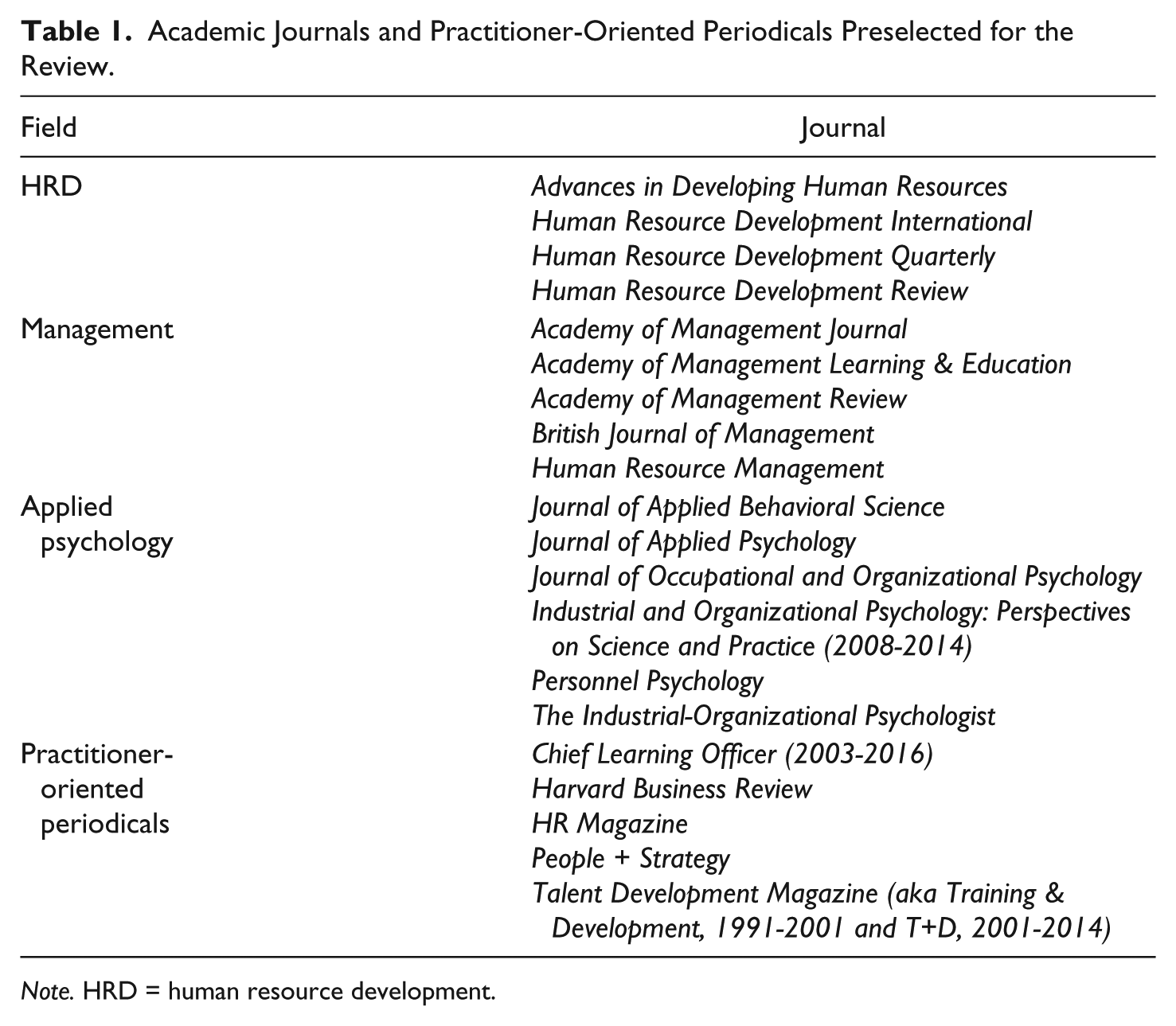
Note. HRD = human resource development.
With regard to the inclusion/exclusion criteria employed in the study, we were primarily guided by the inductive nature of our inquiry. For instance, although we identified multiple articles featuring some parts of the 2008 and 2015 Practitioner Needs Surveys, only two final reports from the surveys (Oliver, Ferro, Napper, & Porr, 2015; Silzer, Cober, Erickson, & Robinson, 2008) and the article that led to the identification of the studies (as an example) were included for review. At the same time, as the final reports referenced some relevant sources that we did not have in our database, we included those publications in our review. Similarly, we excluded all editorials that only briefly introduced an issue. At the same time, when an editorial contributed to the topic (e.g., Gubbins & Rousseau, 2015), we included it in our review.
Practitioner-oriented periodicals
To gain a broader perspective on the research–practice gap in the literature, we reviewed five practitioner-oriented periodicals (see Table 1). These five publication outlets were selected in consultation with (a) our colleagues affiliated with the respective fields and (b) previous research that examined the practitioner-oriented outlets (e.g., Deadrick & Gibson, 2007). We started our search using the same keywords that we employed in our search of scholarly journals. The use of the keywords resulted in a handful of publications. After a closer look, we decided to exclude those publications as they were not relevant to the focus of inquiry. Following Torraco (2016), we ran an additional search while adding such key words as “application,” “link,” “connection,” and “integration,” in connection with either “research,” “theory,” and/or “practice.” The review of the identified practitioner-oriented periodicals revealed that they did not explicitly discuss or address the issue of research–practice gap. The connection was primarily on the application side, that is, the identified publications focused on providing key insights from recent academic research that had direct application to business practice. An example would be a series of articles published in the “Linking Theory & Practice: Recent Academic Research on People and Strategy” section in the People & Strategy journal. The section features “translated” research papers that were adapted for the practitioner audience and that used minimal academic jargon. We elaborate on the finding in the following section.
Data Analysis and Synthesis
To analyze the data, the following steps were undertaken:
Analysis of all 221 selected publications with regard to the broad themes they represented. Specifically, each publication was analyzed with regard to a particular issue(s) that it aimed to address. At this stage, we were also aided by several special issues and research forums that we had identified in our search (as their publications were grouped around an issue or a broad theme). Table 2 below illustrates all special issues and research forums that informed the inquiry. We also coded all articles as empirical, conceptual, or normative. The latter category contained various viewpoints, commentaries, and essays. This step was performed to get a better understanding on what conceptual, empirical, and normative works represented a particular theme.
All empirical articles (51) were reviewed in depth using the Matrix Method (Garrard, 2011). The Matrix Method provides both a process and a structure for systematically reviewing literature (Cho & Egan, 2009). In particular, the review matrix table was employed as a structured abstracting form, in which 51 empirical studies were grouped in their respective fields (30 in management, 13 in applied psychology, and eight in HRD) and evaluated in ascending chronological order. The matrix table contained the following nine columns: #, lead author’s name, publication year, journal, study purpose, conceptual framework, participants, study design, and key study findings. The purpose of this step was to gain an understanding on the nature of empirical research that presented each theme. Studies that received the most attention in the literature are highlighted in the following section.
Special Issues and Research Forums in the Management, Applied Phycology, and HRD Literature (2000-2016).
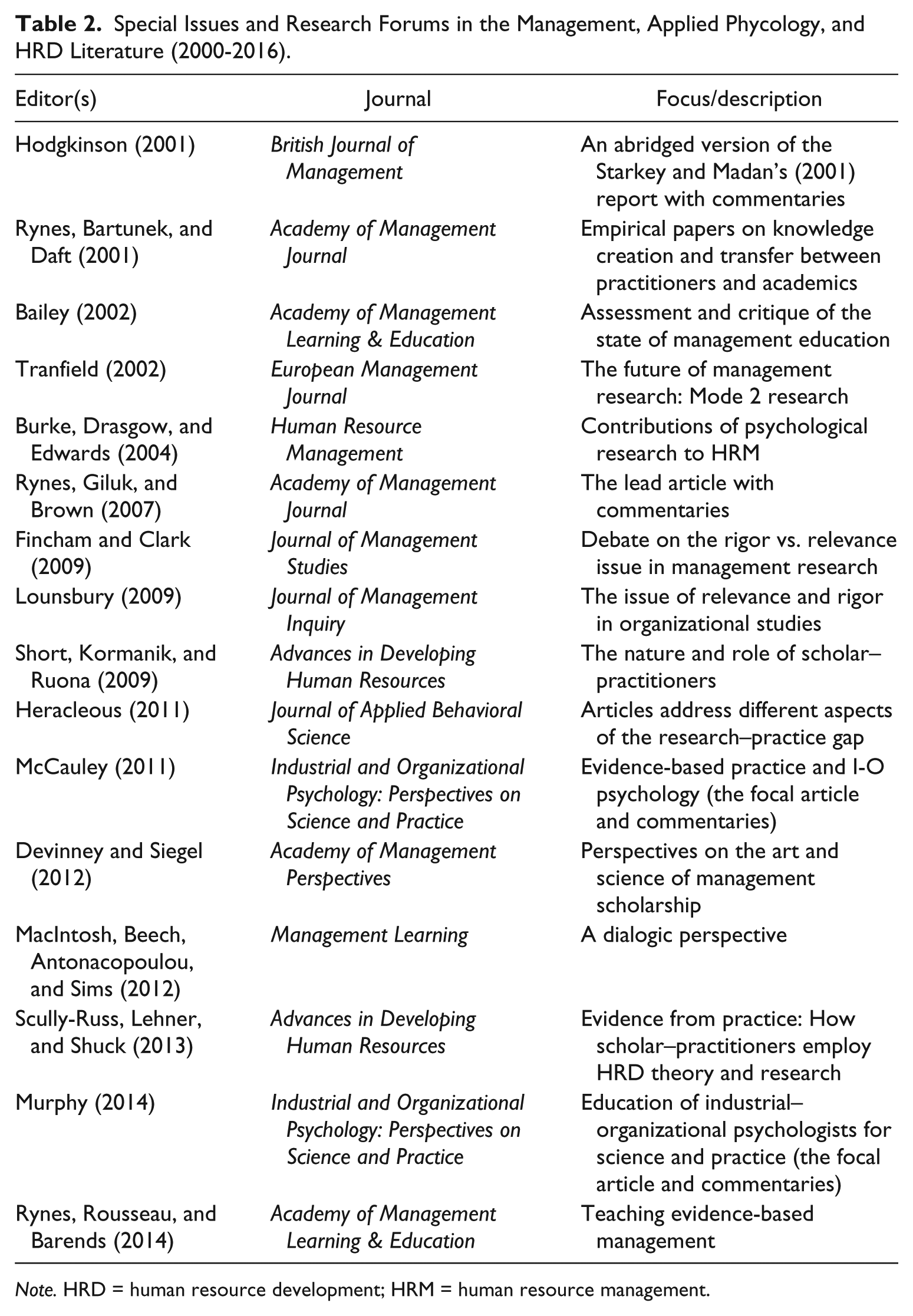
Note. HRD = human resource development; HRM = human resource management.
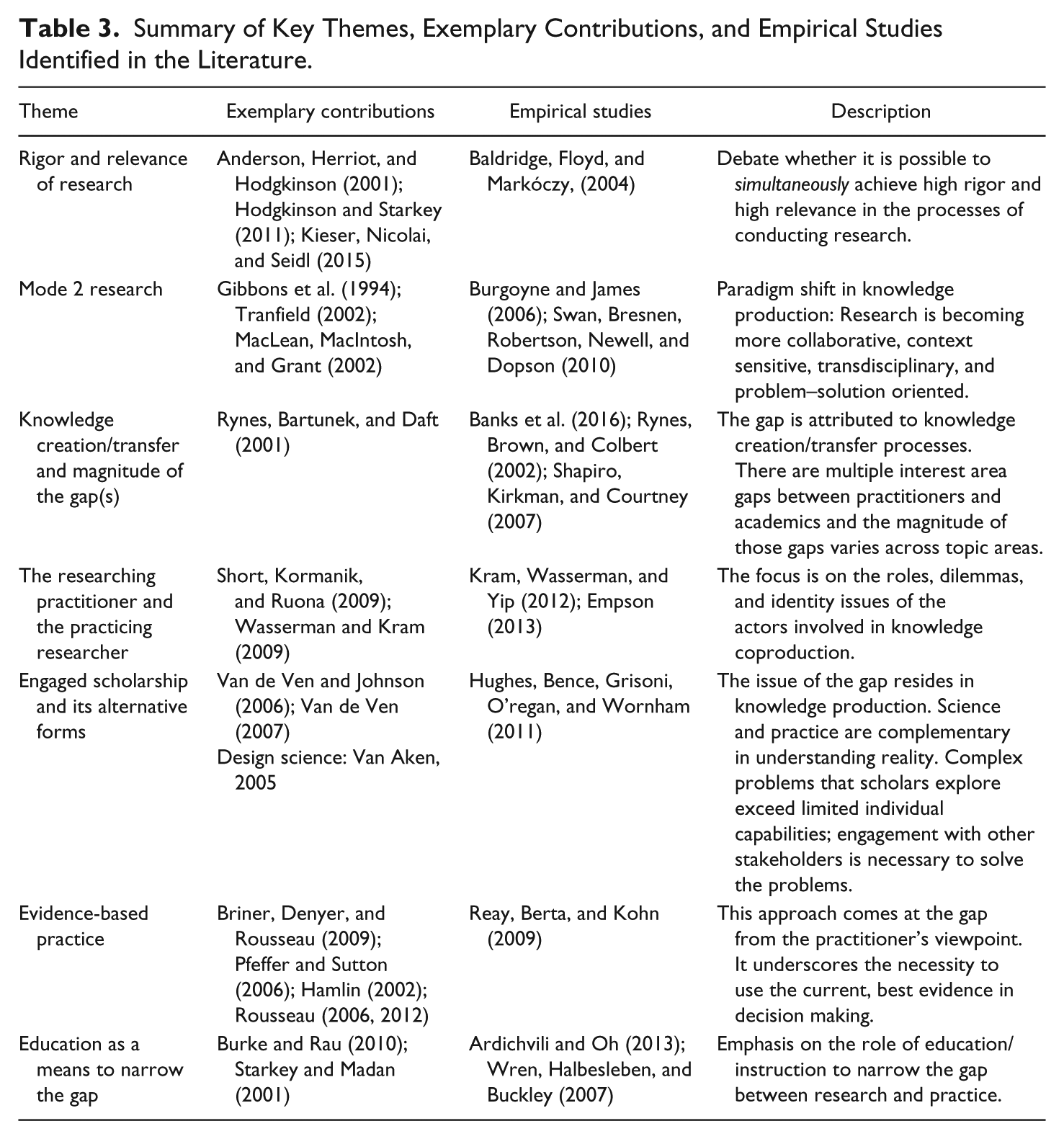
To synthesize our findings, we employed the thematic structuring. According to Torraco (2016), “the themes for thematic structuring are broad issues that encompass streams of related ideas in the literature. The themes used for structuring the review often transcend the time periods covered by the literature” (p. 12). In our review, we looked for themes that were representative of at least two fields. As a result, seven broad themes were conceived, as presented in the following section. Table 3 provides a summary of the identified themes. The table is structured as follows: theme, exemplary works, empirical studies, and description. Exemplary works were regarded as foundational (typically the most cited) works that either introduced or substantially advanced the “stream of thought.” Empirical works featured in the table were selected using the so-called hierarchy of evidence logic, when the rigor of employed methods is taken as key criteria to prioritize the importance of findings.
Summary of Key Themes, Exemplary Contributions, and Empirical Studies Identified in the Literature.
According to Torraco (2016), “synthesis integrates existing ideas with new ideas to create a new formulation of the topic” (p. 17). While reviewing the literature, we paid attention to the existing models that address the research–practice gap issue in the literature. In the process, we came to an understanding of the absence of a comprehensive model that would holistically portray the key components affecting interplay between research and practice. Informed by the review, we suggested a model of key components of knowledge production in applied fields affecting the research–practice interplay. We present the model and discuss how it can inform HRD scholarship in the following section.
Findings
As a result of review, the following seven major themes were identified that characterize the literature on research–practice gap in the respective fields: (a) the rigor and relevance of research, (b) Mode 2 research, (c) knowledge creation/transfer and magnitude of the gap(s), (d) the researching practitioner and the practicing researcher, (e) engaged scholarship and its alternative forms, (f) evidence-based practice, and (g) education as a means to narrow the gap. Table 3 provides an overview of the findings while highlighting the exemplary contributions, examples of empirical research, and key points characterizing each of the themes.
Similar to Deadrick and Gibson’s (2007) study that revealed multiple interest area gaps between human resource (HR) professionals and academics, we found that the way the issue of research–practice gap is discussed in the academia has received little attention in practitioner-oriented outlets. In particular, Deadrick and Gibson (2007) observed that the magnitude of the (interest area) gaps varied across different topic areas. The authors reported that compensation and rewards were one of the key topics covered in professional journals (14%, as compared with 2% of articles in academic journals), while organisational behaviour (OB) and motivation-related topics received considerable interest in academic publications (14%, as compared with less than 4% in professional journals). This finding also indicates that the translation of research into the format that is understood by practitioners is one of the ways that characterize the research–practice interaction in the examined fields. In the section that follows, “Moving Forward With Narrowing the Gap,” we underscore several other (recent) initiatives that publishing outlets have undertaken to strengthen the links between research and practice.
While conducting the review, we also noted that scholars often employed the terms gap, divide, or gulf (or similar metaphors) interchangeably, that is, implying the same meaning. Similarly, the verbs closing, narrowing, and bridging were employed without explicating the difference between these actions. In the following sections, we purposefully employed the original sources’ terminology. At the same time, it appears that getting conceptual clarity on some of the key definitions (especially actions) could be one of the ways to addressing the gap at least from the theory standpoint, and the latter could contribute to formulating some practical strategies with respect to the gap in the future.
The Rigor and Relevance of Research
In the reviewed literature, the issue of research–practice gap has received significant attention through the lens of so-called rigor–relevance debate (Anderson et al., 2001; Fincham & Clark, 2009; Starkey & Madan, 2001). The “rigor–relevance” debate relates to scholars’ argument about whether it is possible to simultaneously achieve high rigor (generalizability) and high relevance (practical solutions) in the processes of conducting research. Anderson et al.’s (2001) model, known as the fourfold typology of research, is often seen as the landmark that started the discussion. The model is built around two dimensions: (a) theoretical and methodological rigor and (b) practical relevance. According to the authors, the resulting four quadrants—Pragmatic Science, Popularist Science, Pedantic Science, and Puerile Science—present the four types of science. Pragmatic Science is research that is high on rigor and high on relevance. Popularist Science is low on rigor but high on relevance. Research that is high on rigor but low on relevance is termed as Pedantic Science, while Puerile Science is research that is low on both dimensions. According to Anderson et al. (2001), there is a drift from Pragmatic Science toward Pedantic and Popularist forms of science. Specifically, the academic community, by means of peer reviews, academic journal requirements, and tenure processes, pushed for Pedantic Science. At the same time, stakeholders mainly interested in quick solutions on practical issues were a catalyst for Popularist Science.
There continues to be discussions on the rigor and relevance of research, and substantive arguments on the issue have been made from both sides (Hodgkinson & Starkey, 2011). Thus, Kieser and Leiner (2009) argued that the rigor–relevance gap in management research is unbridgeable as researchers and the researched populate separate social systems. In contrast, Hodgkinson and Rousseau (2009) asserted that while there are examples in the areas where the gap is perceived as large, there are also multiple examples of fruitful collaborations that produced high-quality research and outputs. In turn, Gulati (2007) blamed scholars for creating “either/or” camps around the rigor and relevance issues and argued that this thinking was “ultimately damaging for our field, with excessive energy going to tribal conflicts rather than collaborations” (p. 779).
Several scholars attempted to empirically examine the state of research using the “rigor–relevance” framework. Thus, Baldridge, Floyd, and Markóczy (2004) explored the relationship between practical relevance and academic quality by employing a stratified, random sample of scholarly publications from the management literature. The authors observed a positive correlation between an objective measure of an article’s academic quality and the ratings of an expert panel regarding its practical relevance. At the same time, Baldridge et al. (2004) noted that the results “leave room for considerable differences in the way practitioners and academicians evaluate management research” (p. 1063). In turn, Palmer, Dick, and Freiburger (2009) analyzed articles published in the Administrative Science Quarterly (between 1956 and 2004). In their approach, the authors distinguished between methodological and theoretical rigor. Palmer et al. (2009) discussed that while theoretical rigor may undermine relevance, methodological rigor does not. More recently, building on the results of their empirical study, Nicolai et al. (2011) questioned the utility of joint academic–practitioner review as a means to reconcile rigor and relevance (as often proposed in the literature). The authors observed that the demands of practitioner and academic reviewers are “hardly compatible, and, to some extent, inversely correlated” (p. 53).
Mode 2 Research
In the literature, “Mode 2 research” has often been used as an umbrella term to underscore a paradigm shift in how research is conducted. The term became popularized after Gibbons et al.’s (1994) work, The New Production of Knowledge: The Dynamics of Science and Research in Contemporary Societies. According to Gibbons et al. (1994), we are entering Mode 2 of knowledge production, under which research is increasingly becoming collaborative, context sensitive, transdisciplinary, and problem–solution oriented. As Gibbons et al. (1994) noted, while
mode 1 problems are set and solved in a context governed by the, largely academic, interests of a specific community . . . [Mode 2] includes a wider, more temporary and heterogeneous set of practitioners, collaborating on a problem defined in a specific and localized context. (p. 3)
In contrast with Mode 1, Mode 2 research is more reflexive and socially accountable. According to the authors, Mode 2 is also
characterized by a constant flow back and forth between . . . the theoretical and the practical . . . discovery occurs in contexts where knowledge is developed for, and put to use, while results which would have been traditionally characterized as applied—fuel further theoretical advances. (Gibbons et al., 1994, p. 9)
Tranfield and Starkey (1998) were among the first who brought the discussion of Mode 2 research into the management literature (Bartunek & Rynes, 2014). A special issue in the European Management Journal (Tranfield, 2002), titled “Mode 2 Management Research,” explicitly discussed the nature of management research through the “Mode 2” lens. Tranfield (2002) noted that Mode 2 is not a methodological technique but rather an approach to knowledge production. Specifically, three papers featured in the special issue employed context-specific research methodologies. MacLean, MacIntosh, and Grant (2002) also elaborated on the use of action research, cooperative inquiry, grounded theory, and clinical method as relevant approaches to employ in Mode 2 management research. More recently, Gray, Iles, and Watson (2011) discussed Mode 2 research in the context of HRD. The authors outlined the potential and challenges for the development of Mode 2 research and also showcased a number of examples of academic–practitioner partnerships that could be seen as representative of Mode 2 research.
Despite the term’s popularity, Bartunek (2011) argued that “while Mode 2 has stimulated thinking, it has not bridged academia and practice as much as had been hoped for” (p. 556). Although some scholars employed the Mode 2 approach as a theoretical lens to explore the work of research groups (e.g., Harvey, Pettigrew, & Ferlie, 2002), empirical research explicitly exploring the approach has been limited (Bartunek & Rynes, 2014). Burgoyne and James (2006) examined the tensions inherent in Mode 2 research in a U.K. government initiative to improve leadership and management capability. More recently, Swan, Bresnen, Robertson, Newell, and Dopson (2010) explored the impact of a U.K. policy initiative aimed at promoting “Mode 2” knowledge production in genetics research.
Knowledge Creation/Transfer and Magnitude of the Gap(s)
There is extant literature that explored possible reasons causing the gap and the magnitude of the gap(s) across various interest areas. In the management literature, the divide between theory and practice was often attributed to the processes of knowledge creation and transfer. Shapiro, Kirkman, and Courtney (2007) observed that both management scholars and practitioners seem to perceive problems of knowledge creation (lost in translation) and knowledge transfer (lost after translation) as “separate and distinct” (p. 252). The problem of knowledge transfer—“translation” of knowledge from research into various contexts of practice—received significant attention in the literature (e.g., Rynes et al., 2001). Most recently, Gubbins and Rousseau (2015) discussed two types of translational research in the context of management and HRD: (a) the translation of discoveries from the basic sciences into the development of new models, guidelines, interventions, or products, and (b) the use/evaluation of those interventions and products in real-world settings. The authors noted that while the first type requires “experts in fields of science,” the second type of translational research requires “masters of implementation” (p. 110).
Several studies attempted to empirically examine the gap between HR practitioners’ knowledge and beliefs and HR research findings (e.g., Rynes, Brown, & Colbert, 2002; Rynes, Colbert, & Brown, 2002; Sanders, van Riemsdijk, & Groen, 2008). Rynes et al. (2002) surveyed nearly 950 HR practitioners (mainly in the United States) using well-established (often derived meta-analytically) research results and found that “the transfer of knowledge from research to practice remains imperfect” (p. 100). In particular, the authors found large discrepancies in the areas of selection and performance management. The replication study by Sanders et al. (2008), in which Dutch HR professionals were surveyed, found “remarkable similarities” with Rynes et al.’s study. In turn, Silzer and Cober (2015) discussed that I-O practice was perceived ahead of research in 14 out of 26 I-O psychology content areas, including (a) organizational development, (b) succession/workforce planning, (c) talent management, (d) consulting, (e) coaching, (f) strategic planning, (g) employment branding, and (h) employee relations. The authors noted that research was seen as ahead of practice in only two areas: (a) measurement and statistics and (b) job/work analysis.
Various forms of knowledge representation (outcomes of knowledge creation/transfer) also appear to have different effects on (and interest among) practitioners and academics. Specifically, Boland et al. (2001) found that the general form of knowledge representation (an article) was less stimulating for managers’ creativity. The authors asserted that even though some practitioner-oriented journals do offer some more particular representation for managers, there are vast unrealized opportunities for the writing/publishing of narrative, interpretive, allegorical, and metaphorical knowledge. When exploring the perceived usefulness of seven traditional and nontraditional article formats among the Society for Industrial and Organizational Psychology (SIOP) members, Halfhill and Huff (2003) also found that the traditional empirical article was rated as least practical by both practitioners and academics. At the same time, academics reported a positive likelihood of submission for the empirical article format only.
The Researching Practitioner and the Practicing Researcher
There is vast literature in scholarly journals that focused on the actors rather than the process or product of knowledge production. These studies examined roles, dilemmas, and identity issues that concern (a) practitioners who employ and/or contribute to theory (Ruona & Gilley, 2009), (b) academics who substantially engage with the practice (Empson, 2013), or (c) both practitioners and academics in relation to theory and practice (e.g., Hughes, Bence, Grisoni, O’regan, & Wornham, 2011). In our review, we saw no unanimity regarding what to call such actors as different titles were employed across the literature, for example, practitioner–researcher (Hodgkinson, 2006), scientist–practitioner (Rupp & Beal, 2007), and practitioner–scholar (Bartunek, 2008). In the HRD field, the term scholar–practitioner has been predominantly used to describe someone who acts as a connector between theory and practice (Short & Shindell, 2009).
The 2009 Academy of HRD issue edited by Short, Kormanik, and Ruona (2009) is groundwork on the conceptualization of the scholar–practitioner in the field of HRD. In this issue, Short and Shindell (2009) explored the meaning of HRD scholar–practitioners and outlined four actions that describe them from other practitioners: (a) grounding their practice in research and theory, (b) championing research and theory in the workplace, (c) conducting and disseminating research and partnering with academic researchers, and (d) acting as a bridge between research and practice in seeking the further development of the HRD. In turn, Ruona and Gilley (2009) suggested a model for categorizing four different types of practitioners that is based on how practitioners utilize and contribute to research and practice: (a) atheoretical practitioner, (b) practitioner, (c) reflective practitioner, and (d) scholar–practitioner. Kormanik, Lehner, and Winnick (2009) also identified the general competencies of HRD scholar–practitioners. More recently, building on interviews with scholar–practitioners, Hughes, Wang, Zheng, and McLean (2010) discussed scholar–practitioners’ implementation concerns.
Researchers studying scholar–practitioners have often employed qualitative research methodology and focused on examining the role and identity issues of scholar–practitioners. Thus, using a qualitative analysis of 25 interviews, Wasserman and Kram (2009) explored how the role of scholar–practitioner is enacted, and also examined the dilemmas and opportunities that the interviewed individuals experienced. Kram, Wasserman, and Yip (2012) studied how scholar–practitioners construct their professional identities using the analysis of metaphors. In turn, Empson (2013) employed autoethnographic methods to explore how an academic’s identity is influenced by continual engagement with practitioners. The author shed light on how the identity conflict is experienced and suggested tactics for conflict resolution.
Engaged Scholarship and Its Alternative Forms
Engagement between researchers and practitioners has been long recognized as an important prerequisite for narrowing the divide between research and practice (e.g., Pettigrew, 2001). Van de Ven and Johnson (2006) and Van de Ven (2007) developed this perspective further, proposing a form of participative research known as engaged scholarship. While most scholars had largely focused on either knowledge creation or knowledge transfer/translation processes to address the gap issue (as discussed above), Van de Ven and Johnson (2006) asserted that the problem rather resides in knowledge production per se, that is, before research findings get translated into publications and tools to be used for practitioners. Van de Ven and Johnson (2006) argued that researchers need to engage with practice from the stage of problem formulation and maintain a high level of engagement with practitioners (and other stakeholders) during their inquiries. Also, the authors advocated a pluralistic view of science and practice, meaning that although science and practice are distinct kinds of knowledge, they are complementary in understanding reality.
Van de Ven (2007) further elaborated on these propositions in Engaged Scholarship, where engaged scholarship was presented as a “participative form of research for obtaining the different perspectives of key stakeholders (e.g., researchers, users, clients, sponsors, and practitioners) in studying complex problems” (p. 9). Van de Ven (2007) claimed that complex problems that management scholars explore these days often exceed limited individual capabilities. Therefore, engaging with other stakeholders, who may have different perspectives on the problem, will promote a broader and more penetrating understanding of the problem than when a practitioner or an academic works on the problem alone. Van de Ven (2007) suggested the following four stages of engaged scholarship: (a) problem formulation, (b) theory building, (c) research design, and (d) problem solving. According to the author, although the degree of engagement may vary at each stage, striking a balance is important.
Depending on whether knowledge is produced with the detached “outside” or attached “inside” research perspectives, Van de Ven (2007) suggested four forms of research fitting within the engaged scholarship approach: two forms in the “outside” category, that is, (a) basic science with stakeholder advice and (b) design and evaluation research for professional practice, and two having the “inside” research perspective, that is, (c) collaborative basic research and (d) action/intervention research. Both action research and design science are often referenced in the literature as methods for addressing the gap (e.g., Bartunek, 2008; Hodgkinson & Starkey, 2011; Sadler-Smith, 2014; Van Aken, 2005; Zhang, Levenson, & Crossley, 2015).
The engaged scholarship approach has been recognized in the HRD publications as a way to further advance HRD theorizing (e.g., Gray et al., 2011; Storberg-Walker, 2003, 2007). Van de Ven’s (2007) approach has also been employed to empirically investigate some aspects of academic–practitioner engagement. Thus, Hughes et al.’s (2011) study reported three types of academics in relation to their academic–practitioner engagement: the willing and able, the theoreticians, and the willing, but underexposed. The authors also found three types of practitioners: the enthusiasts (involved in academic–practitioner networks), the uncommitted (open and sympathetic to academic work, yet not on an ongoing basis), and the cynical (closed to academia and its ideas). Hughes et al. (2011) proposed the Routes to Engagement model that outlines six routes to engagement between academics and practitioners: (a) course and programs, (b) research, (c) publication, (d) conferences, (e) knowledge networks, and (f) academic consultancy, and also highlights two intermediaries: professional bodies and commercial consultants.
Evidence-Based Practice
Evidence-based practice has been offered as another holistic perspective to address the research–practice gap in the respective fields (Briner & Rousseau, 2011; Hamlin, 2002, 2007; Rousseau, 2006, 2012); The interest toward the evidence-based practice was stimulated by developments in other professional fields (medical areas in particular). Hamlin (2002) is often seen as the first who brought the concept to the HRD field, defining evidence-based HRD as “the conscientious, explicit and judicious use of current best evidence in making decisions about the development of individuals, groups and organizations, integrating individual HRD practitioner expertise with the best available external evidence derived from systematic research” (p. 98). In turn, Rousseau (2006) and Pfeffer and Sutton (2006) have been recognized as the first to call for the evidence-based approach to management. Since then, scholars have made efforts to (a) further elaborate on evidence-based management (e.g., Briner, Denyer, & Rousseau, 2009) and evidence-based I-O psychology (Briner & Rousseau, 2011), (b) outline concerns and limitations of the evidence-based approach (Morrell, 2008), and (c) address teaching evidence-based management in business schools (e.g., Rousseau & McCarthy, 2007). More recently, the Oxford Handbook of Evidence-Based Management was published (Rousseau, 2012).
According to Briner et al. (2009), evidence-based management takes place at the intersection of (a) practitioners’ expertise and judgment, (b) external evidence, (c) the contextual situation, and (d) ethical concerns. As the authors note, the usage of the approach depends on capabilities of practitioners in “acquiring, assessing, adapting and applying research evidence to their decision (p. 24). According to Briner and Rousseau (2011), this approach does not prescribe relying on a single study or following the “best management practice.” Rather, evidence-based approach underscores a more active review process of evaluating and incorporating evidence in a conscious and systematic way to arrive at judgment (Rousseau, 2012). Although scholars highlight the role of practitioners as key for implementing evidence-based practice, the combined efforts of practitioners, educators, and researchers are necessary to build support for the approach (Briner et al., 2009; Rousseau & McCarthy, 2007). It is acknowledged that scholars can play an important role in this approach by building a consensus on interpretation and synthesis of evidence, and also by presenting critically evaluated evidence to organizations (Rousseau, 2007).
The concept and practice of the evidence-based approach are still in the emergent state. As recently observed by Gubbins and Rousseau (2015), “HRD still lacks a sound and sufficient base of relevant and generalized empirical research capable of supporting evidence-based HRD practice” (p. 112). Scholars working on the evident-based issues also recognize the current criticism that there is no conclusive evidence whether and how the evidence-based approach affects the research–practice gap. As noted by Rousseau and McCarthy (2007), “indeed an entire generation of evidence-based managers may be needed before behavioral science evidence is widely used” (p. 99).
Education as a Means to Narrow the Gap
Various scholars discussed the role of educational institutions and classroom instruction in narrowing the gap between theory and application (Burke & Rau, 2010; Wren, Halbesleben, & Buckley, 2007). In particular, Starkey and Madan’s (2001) report called for a change in academic institutions to enhance knowledge exchange and diffusion among participants of knowledge coproduction. Starkey and Madan (2001) stressed that it was necessary to create new roles and incentives in business colleges to “address the relevance gap” and noted that instruction should be responsive to the latest developments in research and practice. The three articles published in the 2002 special issue of the Academy of Management Learning & Education (AMLE) also questioned the professional relevance of management education. In particular, Pfeffer and Fong (2002) observed “little evidence that business school research is influential on management practice” (p. 78). Some scholars suggested that the criticisms should not be attributed to business schools only and there are larger meta-forces that affect management education in the United States and abroad (DeNisi, Wilson, & Biteman, 2014; Gioia & Corley, 2002). For instance, Gioia and Corley (2002) argued that the rise of the media rankings of business schools “has turned scholarly amity into scholastic animosity” (p. 115).
More recently, Burke and Rau (2010) stressed the importance of integrating research and teaching as a means to address the gap, and suggested a framework in which research, teaching, and practice are a mutually reinforcing triad. Burke and Rau (2010) argued that, although the relationships between research–practice and teaching–practice had been recognized in the literature, strengthening the links between research and teaching should lead to narrowing the gap. The authors suggested that instruction based on research would make students’ learning rich and lead to developing students’ abilities to employ evidence-based practices. Tushman, O’Reilly, Fenollosa, Kleinbaum, and McGrath’s (2007) serves as an example of an application for the teaching–research–practice approach. Tushman et al. (2007) discussed that the action-learning design that the authors employed in an executive custom-developed program had a strong impact not only on the quality of students’ learning but also on organizational results. More recently, Byrne et al.’s (22014) article and a number of commentaries explicitly discussed education and training of industrial–organizational psychologists for science and practice. To address the need for tools and methods in teaching evidence-based management, the 2014 AMLE special issue focused on methodological aspects of teaching evidence-based practice (Rynes, Rousseau, & Barends, 2014).
The need for strengthening the teaching–practice/research links has also been recognized in the HRD field. For instance, Ardichvili and Oh (2013) explored and compared areas of focus of HRD academic programs and practitioner publications. The authors identified three areas that were of interest to HRD practitioners yet did not seem to be adequately covered in academic programs: (a) leadership and leadership development, (b) organizational culture and ethics, and (c) social learning, social networking, and social media. Their findings were somewhat similar to Kuchinke’s (2002) observation. After examining 55 HRD graduate programs, Kuchinke (2002) claimed that although the majority of the programs largely focused on training and development, the leading trends in the field had received less attention.
Taking a Holistic Perspective: A Comprehensive Model
Based on the synthesis of the literature, we suggest a comprehensive model for thinking about the research–practice gap. The proposed framework is built around the research–practice interaction (around a complex problem or issue) and includes the following components: the process and product of knowledge production, individual characteristics of researchers and practitioners, and institutional and organizational forces (see Figure 1). As presented below, all these components are recognized as important cornerstones to facilitate a more penetrating interaction between research and practice. The proposed model is an attempt to bring the fragmented research into one holistic framework.
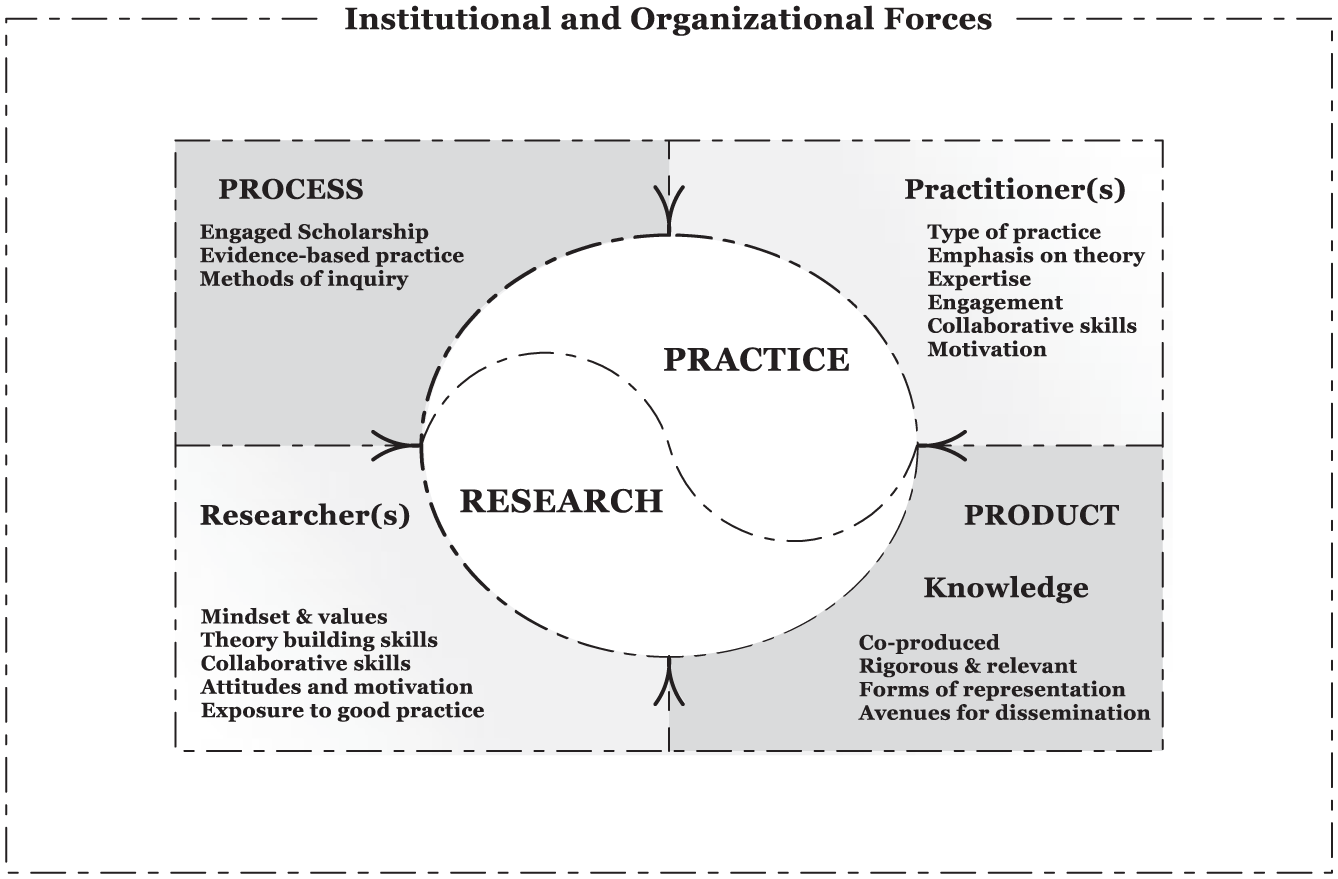
Key components of knowledge production in applied fields affecting the research–practice interplay.
The interaction between research and practice, illustrated using the so-called “Yin-Yang” sign, is at the center of the model (see Figure 1). This interaction takes place around a complex problem or issue that is of importance to both scholars and practitioners (Bank et al., 2016; Van de Ven, 2007). All the components of the model are not static and can interact with each other, as illustrated by their boundaries depicted with dashed lines. The impact of the components on the research–practice interplay is depicted with the help of arrows. The model is an open system, which means that it interacts with, and is influenced by, its contextual environment (e.g., political, technological, and economic). This aspect is illustrated by the permeable boundaries of the model.
Process of Knowledge Production
The process component relates to the application of particular approaches and/or research methods employed in knowledge production. Various scholars underscored the process perspective to knowledge production as important to bridging the gap between theory and practice (e.g., Storberg-Walker, 2003; Van de Ven, 2007). Storberg-Walker (2006) and Gray et al. (2011) discussed two process models for theory building in HRD as important for both theory building and application: Van de Ven (2007) and Lynham (2002). The engaged scholarship approach (Van de Ven, 2007) has received credit outside of the management field. In turn, Lynham’s (2002) model has been widely recognized in the HRD literature (e.g., Swanson & Chermack, 2013). In addition to the holistic perspectives on narrowing the gap—engaged scholarship and evidence-based approach—some particular methods were also highlighted in the literature as a means to narrowing the gap, for example, action research, cooperative inquiry, clinical method, grounded theory, design science, and developmental work research (e.g., MacLean et al., 2002; Sadler-Smith, 2014; Tkachenko & Ardichvili, 2017; Zhang et al., 2015). While systematic reviews have been recognized as a method for identifying the gap (e.g., Tranfield et al., 2003), case study and ethnographic methods have also been seen as contributing to narrowing the gap as they tend to generate the types of richer stories that resonate with practitioners (Gray et al., 2011; Rynes, 2007).
Product of Knowledge Production
Discussions on the relevance of management research have largely focused on the process of research itself, while neglecting the product(s) produced by the process (Van Aken, 2005). Both the process and product of management research need to be enhanced to connect the worlds of theory and practice (Pfeffer, 2007). In our model, the product relates to the output of knowledge production (knowledge) including various aspects: (a) rigor and relevance (Anderson et al., 2001); (b) whether the product was coproduced with both researcher(s) and practitioner(s) (Van de Ven, 2007); (c) various representation forms, for example, a blog entry, a story, a publication (Boland et al., 2001; Halfhill & Huff, 2003); and (d) methods and information avenues by which the product is disseminated, for example, conference presentations, workshops for practitioners, practitioner journals (Bartunek, 2014). Although one may argue the product of activity derives directly from the process, imagining/considering the final product prior to engaging in an activity affects the process. In other words, setting an objective of obtaining high-quality knowledge that is rigorous and practically useful may lead to particular steps to conducting an inquiry.
Individual Aspects of Researchers and Practitioners
When discussing the research–practice gap, various scholars emphasized strategies for both researchers and practitioners (e.g., Rynes, 2007; Short, 2006). In addition to the recognized role of scholar–practitioner (Ruona & Gilley, 2009), there is also literature that underscores the role of academics with practitioner experience in “spanning the divide” (Gray et al., 2011). Whereas the evidence-based approach comes at the gap mainly from the practitioner’s viewpoint, engaged scholarship does it from the researcher’s perspective (Tkachenko, Hahn, & Peterson, 2016). Therefore, we considered individual characteristics of both actors (researchers and practitioners) that may facilitate the convergence between research and practice.
Individual aspects of researchers
Operating on the edge of science–practice requires certain values and a mind-set (Rupp & Beal, 2007). To engage in theory-building activity, researchers need to possess certain theory-building research skills (Hodgkinson & Rousseau, 2009; Storberg-Walker 2006). Collaboration skills and certain attitudes and motivation are also seen as important constituents to successfully engaging in research with other stakeholders (Amabile et al., 2001). In the study that explored academic–practitioner engagement, Hughes et al. (2011) asserted the willing, but underexposed type of academics in relation to engagement. Therefore, we suggest that exposure to good practices in theory building that link theory and practice is another important characteristic.
Individual characteristics of practitioners
Although most of the above may be somewhat relevant to practitioners (e.g., collaborative skills and motivation), there is literature that suggests that practitioners bring their own aspects to the table with regard to linking research and practice. Ruona and Gilley (2009) underscored (a) the type of practice and (b) practitioners’ emphasis on theory in work (“use and advance theory”) as important criteria for distinguishing how practitioners can contribute to HRD scholarship. Managers with relevant experiences and skills are more prone to execute evidence-based practice than novice employees (Rousseau & McCarthy, 2007). Hughes et al. (2011) also discussed three types of practitioners in relation to their academic–practitioner engagement: the enthusiasts (e.g., involved in academic–practitioner networks), the uncommitted (open and sympathetic to academic work, yet not maintaining their links on an ongoing basis), and the cynical (closed to academia and its ideas).
Institutional and Organizational Aspects
This component relates to various regulatory, legislative, economic, and other environmental factors that affect various actors participating in knowledge production. In the literature, various institutional and organizational aspects were underscored as barriers and/or drivers for engaging researchers and practitioners in narrowing the gap between academic research and industry practice (e.g., DeNisi et al., 2014). Several institutional/organizational arrangements to enhance academics’ engagement with practice have been recognized in the literature, including (a) rewarding research that had an impact on practice (Latham, 2007), (b) revisiting academic publication practices (Anderson et al., 2001; Rynes, 2007), and (c) providing sustained funding for scholarly engagement with industry (Gray et al., 2011). The role of professional associations (e.g., the Acadmey of Management (AOM), the Academy of HRD, the Association for Talent Development (ATD), the Society for Human Resource Management (SHRM), and SIOP) was also recognized as pivotal for fostering socialization between academics and practitioners (e.g., Rynes, 2007; Short, Sherlock, & Sugrue, 2004).
The identified themes and the proposed model underscore the inherent complexity of the gap phenomenon and suggest the presence of multiple components pertinent in the research–practice interplay in HRD and other applied fields. For instance, the model suggests that the discussion on the gap cannot be reducible only to the scholar–practitioner phenomenon. Also, the gap can be fully addressed when most (or all) academic research gets translated into the format appealing to practitioners. Although these and similar steps may contribute to the convergence between research and practice, more complex and multilevel strategies are required to narrow the gap. Specifically, in relation to the HRD field, each component of the model suggests particular actions that could contribute to the greater convergence between theory and practice. For instance, the key component—the interplay between research and practice—suggests that HRD scholars should direct their efforts at studying the problems that are of practitioners’ concern, thus, creating opportunities for collaborative knowledge production. The “researcher” implies that HRD students need to be exposed to engaged scholarship in their programs and to be trained in theory-building skills with focus on conducting research that is rigorous and relevant. In turn, the “practitioner” indicates that HRD consultants should provide support and train managers so the latter can exercise evidence-based management. The “process” highlights how HRD scholars (and HRD practitioners) should perform their core activities—via engaged scholarship and evidence-based practice, respectively. The “product,” in turn, underscores the importance of presenting the (cocreated) knowledge to relevant stakeholders and in the appropriate form (not just the academic paper format). Last but not least, the “institutional and organizational forces” underscore the role of multiple institutions and organizations—Academy of HRD, universities offering HRD programs, professional associations, and so forth—with regard to creating conditions for strengthening the engagement between researchers and practitioners.
Moving Forward With Narrowing the Gap
Our search and subsequent review of scholarly and practitioner-oriented periodicals indicated that there are signs of convergence between research and practice. This relates to (relatively) recent practices of how some publication outlets address the gap. For instance, the ATD Science of Learning Blog started publishing (online) a series of articles discussing research from the Academy of HRD journals (the initiative resulted from a partnership between ATD and AHRD). The online version of Academy of Management Perspectives currently features a Research Briefs section that provides “journalistic summaries of selected empirical research articles of interest to management scholars and practitioners” (http://aom.org//AMP/ResearchBriefs). In 2016, The Industrial-Organizational Psychologist introduced the “the “Bridge” column that publishes on the subject of research and practice integration (Poteet, Zugec, & Wallace, 2016). Similarly, starting the December 2016 issue, Industrial and Organizational Psychology: Perspectives on Science and Practice features a new Practice Forum that publishes practice-oriented articles. Launched in 2012, the Journal of Organization Design has a mission “to publish theoretical and practical articles on all aspects of organization design” (http://www.orgdesigncomm.com/Journal-of-Organization-Design).
During our review, we came across a great number of commentaries and suggestions on narrowing the research–practice gap (e.g., Cohen, 2007; Latham, 2007; Rousseau, 2007; Silzer & Parson, 2015). Similar to other fields, the HRD literature comprised a high number of editorials/opinion type of papers stressing the importance of narrowing the gap and providing commentaries on the topic. What also became apparent is that the HRD publications were fewer in number with regard to quantitative studies on the topic. Therefore, we suggest that some inquiries identified in our review could provide additional lenses for HRD scholars in assessing the gap areas in HRD research and practice. In particular, Rynes, Giluk, and Brown (2007) proposed a four-step approach (“methodology”) for assessing different aspects of the gap. Offermann and Spiros (2001) also investigated the link between the science and practice of team development. Methods offered by Offermann and Spiros (2001) and Rynes et al. (2007) go beyond literature reviews and suggest a closer engagement with both academics and practitioners who become the key informants for researchers in this case.
Some large-scale initiatives aimed at strengthening the linkages between researchers and practitioners in the fields of applied psychology are also worth considering in the HRD field. For instance, the Professional Practice Committee (PPC) at SIOP conducted the 2008 and 2015 Practitioner Needs Surveys aimed at identifying perceptions regarding science–practice gaps (1,005 and 469 respondents, respectively). The survey results provided SIOP with a better understanding of its current activities and created a platform for new initiatives to facilitate the convergence between research and practice (Oliver et al., 2015; Poteet et al., 2016). Given the scale of the project, such or similar initiatives will probably require joint efforts of both AHRD and ATD, which, in turn, may lead to strengthening the collaboration between the institutions.
In closing, we would like to acknowledge several limitations regarding the interpretation of the study results. As the study is a document analysis, the authors brought their interpretive lens to filter the data (Bowen, 2009). The examined data were also limited to three fields: management, applied psychology, and HRD. Although the literature addressing the research–practice gap phenomenon is extant in these fields, a review of similar literature in other fields (e.g., health care) could have provided some additional insights on the topic. Finally, this review was limited to the literature published in English and accessible online. Although the search criteria provided access to a large number of sources, sources in other languages and available only in print remained beyond the scope of inquiry.
Conclusion
As presented in the review, it takes many constituents to narrow the gap between academic research and industry practice. We suggest that, to further facilitate the convergence between HRD theory and practice, HRD scholars should take advantage of the field’s strength—interdisciplinarity—and learn from experiences and practices in other applied fields. Drawing from the literature in three applied fields—management, applied psychology, and HRD—the article defines key themes pertinent to the topic of narrowing the research–practice gap and suggests a comprehensive model for thinking about the research–practice gap. We anticipate that the presented heuristic will contribute to fostering the existing linkages and to creating new linkages between academic research and industry practice.
Footnotes
Declaration of Conflicting Interests
The author(s) declared no potential conflicts of interest with respect to the research, authorship, and/or publication of this article.
Funding
The author(s) received no financial support for the research, authorship, and/or publication of this article.