



Abstract
This article describes the case of a 69-year-old man with a long history of swallowing difficulties and a past diagnosis of obsessive-compulsive disorder. He was seen for treatment by a speech-language pathologist and a clinical psychologist. Prior to treatment, he ate only one type of sweet dessert and some pureed foods, at restricted times of the day, and without others present. Treatment focused on increasing variety in his diet, increasing bolus size, reducing ritualistic and safety behaviors, and eating in social situations. Treatment methods included surface electromyographic biofeedback and systematic desensitization. After 19 months of treatment (49 sessions), the patient was able to eat a variety of soft/ground foods. He gained weight and was able to eat in social situations. At post-treatment, 8-month and 48-month follow-up, he reported being satisfied with his progress and did not wish to pursue further goals involving eating solid foods or increasing bolus size of liquids.
Keywords
1 Theoretical and Research Basis for Treatment
This article describes a patient, Mr. A, who was identified by a speech-language pathologist (SLP) as having psychogenic dysphagia (non-neurologically-based swallowing disturbance). The patient also had a diagnosis of obsessive-compulsive disorder (OCD) and a history of physiological esophageal abnormalities. The SLP referred him to her colleague, a clinical psychologist, who conceptualized the patient’s difficulty as a choking phobia.
The literature on psychogenic dysphagia or choking phobia is sparse, and most reports describe treatment of children. There appear to be no previously-published cases of an SLP and clinical psychologist collaborating in the treatment of an older adult with choking phobia. The following section describes issues in the differential diagnosis of psychogenic dysphagia and approaches to treatment, which have been used by SLPs and psychologists.
Differential Diagnosis of Psychogenic Dysphagia/Choking Phobia
Psychogenic dysphagia is defined as subjective difficulty with swallowing in the absence of objective physiological swallowing disturbance. Many people with psychogenic dysphagia have fear of swallowing (phagophobia) or fear of choking, often beginning following an experience of choking, witnessing another person choking, or other stressful life event (Shapiro, Franko, & Gagne, 1997). In response to this fear, patients often restrict their food intake to liquid or pureed food. This frequently leads to weight loss and malnutrition.
Although patients with psychogenic dysphagia are sometimes diagnosed as having an eating disorder, they do not have body image disturbance (Greenberg, Stern, & Weilburg, 1988). They hope to normalize their eating behavior and gain weight (McNally, 1994). In one study, the Eating Disorders Inventory-2 (EDI-2) profiles of 21 patients with psychogenic dysphagia were found to be distinct from those of patients with anorexia nervosa (AN; Barofsky & Fontaine, 1998). Psychogenic dysphagia patients were significantly different from AN patients on seven of the eight dimensions measured by the EDI-2, with Maturity Fears being the only exception. While patients with eating disorders and patients with psychogenic swallowing disturbances avoid certain foods, those with eating disorders will typically avoid foods they fear will cause them to gain weight. In contrast, psychogenic dysphagia patients will avoid foods they fear they are likely to choke on (e.g., solid food), although some also avoid liquids. Okada and colleagues (2007) note two main differences between patients with phagophobia and AN, namely, that patients with phagophobia fear eating, rather than the results of eating (e.g., weight gain), and tend to be more cooperative with treatment than AN patients. Another key difference between psychogenic dysphagia/choking phobia and AN is that AN patients do not typically report difficulty swallowing (Barofsky & Fontaine, 1998), although oropharyngeal dysphagia with aspiration pneumonia has been reported in patients with severe AN (Holmes, Gudridge, Gaudiani, & Mehler, 2012).
Difficulty swallowing can occur in the context of a conversion disorder (American Psychiatric Association [APA], 2000; Haden, 2004). The relationship between conversion disorder and psychogenic dysphagia/choking phobia is not clear. Some people who experience a medically unexplained sensation of a lump in the throat are diagnosed with globus hystericus (GH), also called globus pharyngeus (Bradley & Narula, 1987). A review describes organic disorders that must be ruled out for the diagnosis of GH (Finkenbine & Miele, 2004), but the authors do not explain whether GH is always synonymous with conversion disorder or whether other psychological conditions can be associated with this sensation. Gilbody (1991) states that GH is not a disorder of swallowing per se. He includes swallowing phobia in a category of “secondary conversion dysphagia.” Patients described in the literature who have swallowing difficulty in the context of conversion disorder typically have other associated symptoms (e.g., gait disturbance; Al-Sharbati et al., 2001) or rapid resolution of symptoms (Haden, 2004). Other factors that may be associated with conversion disorder include inconsistent symptoms, lack of concern about symptoms (“la belle indifference”), lower socioeconomic status and lack of medical knowledge, female gender, and onset of symptoms between age 10 and 35 (APA, 2000). In a sample of ear, nose, and throat clinic patients, those with globus pharyngeus were more likely to have had significant stressful life events in the previous year (Harris, Deary, & Wilson, 1996). However, the role of stressful life events in causing psychogenic swallowing problems is poorly understood. It seems that some people with psychogenic dysphagia may meet criteria for conversion disorder, whereas others do not.
There appears to be no specific literature on psychogenic dysphagia or choking/swallowing phobia in the elderly. McNally (1994) reviewed 25 cases of choking phobia (age range = 8-75) of whom 6 (24%) were age 60 and older. Thirty-eight percent of the sample described by Barofsky and Fontaine (1998) were older than age 50. Case descriptions by Solyom and Sookman (1980) included a 75-year-old and a 60-year-old, both of whom were noted to have obsessive or compulsive traits. In contrast, the 10 patients with phagophobia described by Shapiro and colleagues (1997) were all younger than 50. Our literature search found several descriptions of choking phobia, fear of vomiting, and other functional deglutition disorders in children and adolescents (Bailly & de Chouly de Lenclave, 2005; Banerjee, Bhandari, & Rosenberg, 2005; Burklow & Linscheid, 2004; Chorpita, Vitali, & Barlow, 1997; Okada et al., 2007; Zelikovsky, MacNaughton, & Geffken, 2001), including one case report of a child with OCD (Geffken, Sajid, & Macnaughton, 2005).
Speech-Language Pathology Approaches–Surface Electromyographic (sEMG) Biofeedback
sEMG biofeedback has been used as a therapeutic approach to facilitate increasing laryngeal elevation during the swallow and strengthening the pharyngeal swallowing response for patients with pathological dysphagia (Crary, Carnaby, Groher & Helseth, 2004; Huckabee & Cannito, 1999). sEMG has also been used as a tool to measure and monitor muscle activity in treatments aimed at reducing hyperfunction in individuals with temporomandibular disorders and hyperfunctional speakers (Crider, Glaros, & Gevirtz, 2005; Wong, Ma, & Yiu, 2011). In psychogenic dysphagia, sEMG patterns have demonstrated normal muscle activity in oral and pharyngeal stages, although tension in skeletal muscles not involved in deglutition was observed in 28% of cases with psychogenic dysphagia, compared with 0% in healthy controls (Vaiman, Shoval, & Gavriel, 2008). Haynes (1976) describes the use of electromyographic biofeedback to treat a patient with psychogenic swallowing problems. However, that patient’s difficulties were related to a habit of tightening her throat muscles in response to stress. She did not have a choking phobia.
Psychological Treatment Approaches
The incidence of swallowing/choking phobia is unknown. However, several case reports have documented successful resolution of symptoms following pharmacological or behavioral treatments (McNally, 1994). Ball and Otto (1994) describe three cases of patients treated with a therapy that combined psychoeducation, cognitive restructuring, interoceptive exposure (desensitizing patients to swallowing sensations), and in vivo exposure. An aversion relief procedure was used in one case. The patient was asked to pinch her hand while she chewed and to release her grip when she swallowed. A similar aversion relief technique, involving a finger shock, was used in the treatment of two of the four cases described by Solyom and Sookman (1980).
A recent case report (Evans & Pechtel, 2011) provides a review of swallowing phobia. The authors describe how anxiety can affect different stages of the swallowing process. Evans and Pechtel (2011) report the treatment of a young man who was convinced that he had a physiological problem with his throat. His anxiety about swallowing began after he was injured in a motorcycle accident and required a tracheotomy. He was afraid of eating or drinking in public because of concern that he would choke and cough. Treatment involved helping the patient learn to focus on conversations to take his mind off swallowing when out in public, to relax using progressive muscle relaxation (PMR), to eat normally at home (without using safety rituals such as cutting food into tiny pieces) while savoring his food, to recognize that coughing is a natural and beneficial physiological response, and to practice coughing and sputtering in front of others. Evans and Pechtel suggested that the latter intervention was similar to the acceptance phase of Acceptance and Commitment Therapy. However, rehearsing coughing and sputtering in front of others could also represent exposure to the scenario the patient feared would happen if he were to drink while with other people. This treatment was very successful after only two assessment/functional analysis sessions and four treatment sessions. Some aspects of the patient’s history suggest the possibility of a somatic delusion (belief that he had a physiological problem with his throat) or conversion disorder (development of symptoms following a traumatic event). However, it seems unlikely that his symptoms would have resolved so quickly with treatment designed to treat swallowing phobia if he had had one of these latter conditions.
Lind and Cigrang (2004) described treatment of a woman who began to avoid certain foods after undergoing gastric bypass surgery. She became anxious when she attempted to eat these foods because of fear that the food would get stuck in her esophagus. Treatment involved biofeedback-assisted relaxation and exposure therapy. Her thoughts and underlying beliefs about food were also addressed through cognitive-behavioral therapy (CBT). Treatment goals were met after four sessions of exposure and six sessions of CBT, although the patient continued to see a social worker for some period of time afterward.
There appear to be no previous reports of sEMG biofeedback being used specifically to treat choking phobia and none describing collaborative treatment of psychogenic dysphagia carried out simultaneously by an SLP and a clinical psychologist.
2 Case Introduction
Mr. A was a 69-year-old married man with a university education. He was raised in Great Britain and immigrated to Canada as a young adult. He and his wife were financially secure and lived in an urban area. He developed severe swallowing difficulty after his house burned down. The fire was caused by an event external to the house, and neither Mr. A nor any members of his family were home at the time. Shortly before the fire, Mr. A had experienced the death of his father, conflict with his siblings, an attempted burglary at his home, and the acute illness and hospitalization of his wife. He described that, beginning a few weeks after the fire, he felt that his throat would “constrict” if he ate solids. He restricted his food intake to the point that he lost 20 kg (44 pounds) and was hospitalized on at least three occasions for dehydration within 2 years after the fire. Based on weight estimates provided by Mr. A during a recent interview, his body mass index dropped from approximately 21.6 (6′2″ tall and a premorbid weight of 168 lbs) to 17.3 (weight estimated to be approximately 135 lbs). A psychiatrist who saw him approximately 1 year after the fire described him as “extremely thin.” He took sick leave from his job as a research scientist. He was unable to return to work and subsequently retired. He underwent a cricopharyngeal myotomy (surgical division of the horizontal muscle at the top of the esophagus) as a means to enhance the opening of the upper esophageal sphincter and allow easier movement of food from the pharynx into the esophagus. The present authors did not have access to specific information about the surgery, including whether it was done to correct an anatomical anomaly. After this procedure, he was better able to maintain his weight but continued to restrict his diet to puree textures. He also had a history of a small unrepaired Zenker’s diverticulm (pouch at the junction of the pharynx and esophagus). He saw SLPs, psychologists, and psychiatrists and was treated with the selective serotonin reuptake inhibitor (SSRI) antidepressants, Paxil, and Celexa. He was taking Celexa 10 mg per day during the treatment described in the present report. Over the years, he tried a variety of treatments, including hypnosis, biofeedback, craniosacral therapy, and couples counseling with his wife. Three years after symptom onset, Mr. A’s family physician referred him for outpatient assessment to an SLP at a tertiary care center; he was seen for assessment by C.B.-J.’s colleague and declined additional follow-up at that time. Six years later, he was referred to the same care center for reassessment and seen by an SLP (C.B.-J.). The SLP referred him to a clinical psychologist at the same center (C.M.).
3 Presenting Complaints
At the time of referral, Mr. A was pureeing all foods and was eating a very restricted diet with 76% of overall caloric intake from tiramisu, a trifle-like dessert high in sugar and fat. Mr. A blended the tiramisu with water to achieve a smooth consistency that he found easiest to swallow. He avoided all solid foods and only tolerated minimal amounts of thin liquids. He did not feel comfortable swallowing his saliva when driving and would spit into a handkerchief. Saliva would sometimes pool in his mouth at other times because he would “forget” to swallow. He did not eat in front of other people and ate most of his meals in the early hours of the morning (2:00-5:00 a.m.).
4 History
Mr. A indicated that he had experienced an episode of choking in his late teens or early 20s. This had occurred while he was eating dinner with two other people who did nothing in response to his distress. He could not recall exactly what food he had choked on at the time, but he remembered being on his hands and knees coughing for about 2 min. After this event, he ate very slowly and carefully, but his diet included a full range of food textures. He recalled another brief episode of choking in 1988, but he did not report any change in his eating pattern after that. Within a few weeks after the fire in 1996, he went from eating a regular diet to an exclusively puree textured diet and was unable to consume enough to meet his nutrition and hydration needs.
Approximately 1 year after the fire, Mr. A was diagnosed with OCD by a psychiatrist who saw him while he was hospitalized for treatment of dehydration. Mr. A was 59 years old at the time. The hospitalization was reportedly preceded by a 2-week period during which Mr. A had been preoccupied by stresses and had been unable to swallow. The psychiatrist noted that Mr. A was seeing a psychologist for treatment of his swallowing problems. During his assessment, the psychiatrist observed Mr. A seated in front of a table with food on it. Mr. A expressed that he could not eat the food because the table was not the right height, there were too many dishes, and they were not set up in a way that would make him relax. The psychiatrist gave a diagnosis of “OCD with anxiety and dysphagia.” This was apparently based on observation of Mr. A (e.g., noting that he was “very circumstantial in his descriptions and explanations”) and knowledge of his history (e.g., being “meticulous with attention to detail” in his work).
Mr. A reported that he was also given a diagnosis of posttraumatic stress disorder (PTSD) at some point after the fire, but it is not clear who made this diagnosis. He had received some treatment from psychologists and psychiatrists in the years after the fire. He was prescribed Diazepam at one point, but one of his children forced him to stop taking it due to concern that it was addictive. Mr. A subsequently experienced withdrawal symptoms and worsening anxiety. The psychiatrist who saw him in hospital in 1997 prescribed Paxil. Other previous treatments included hypnosis with a private practice psychologist and training in relaxation and biofeedback (likely some form of neurofeedback) at a private clinic. Mr. A indicated that he had continued to use a relaxation tape on a regular basis.
Aside from his swallowing difficulty, the above-noted surgery, and OCD, Mr. A’s medical history was unremarkable. The main events of Mr. A’s history prior to the start of collaborative treatment are summarized in Table 1. His only medication at the time of treatment was Celexa (10 mg). He also took some vitamin supplements (ground up) and received B12 injections.
History of Symptoms Prior to Starting Treatment.

Note: CD = obsessive-compulsive disorder; SLP = speech-language pathologist.
5 Assessment
Speech-Language Pathology Assessment
During a swallowing assessment, Mr. A was observed to have unusual patterns of repeated tongue pumping, lip smacking, and sniffing, as well as a delayed initiation of the swallow. These symptoms did not appear to be the result of physiological impairment but rather habits that initially developed because he felt that these actions made it easier for him to swallow. To “take [his] mind off” swallowing, he also engaged in a variety of additional behaviors such as removing his glasses or shoes and touching his nose. At the time of his initial assessment with C.B.-J., Mr. A had a full upper denture; however, he did not wear it when eating because he was bothered by the lack of sensation on the roof of his mouth. He retained less than half of his lower natural teeth and these were in poor condition. He indicated that he brushed his teeth regularly and felt that the condition of his teeth was a result of the high amount of sugar he consumed in the form of tiramisu. His hesitancy to swallow resulted in food remaining in his mouth for extended periods of time. In addition to his dental problems, he had required intermittent treatment for oral candidiasis.
An oral peripheral examination revealed normal structure and function of the tongue, lips, and jaw. His articulation was within normal limits. No deficits in the area of language or cognition were observed or suspected.
At the initial assessment, a videofluoroscopic swallowing study (VFSS) revealed unusual patterns, consistent with psychogenic dysphagia. Mr. A took tiny sips of liquids and minute (<¼ teaspoon) portions of puree foods. Oral transit time was generally about 5 s or longer. Excessive tongue pumping, characterized by rapid and audible motions of the tongue, was observed during the oral preparatory phase of each swallow. When asked to hold a bolus of applesauce in his mouth and relax his tongue, he was unable to keep his tongue still. After the bolus reached the vallecular space (depression between the root of the tongue and the epiglottis), Mr. A had great difficulty triggering a pharyngeal swallow, and often the bolus remained in the vallecular space from 10 to 20 or more seconds. Other physical concomitant behaviors noted while Mr. A was trying to initiate a pharyngeal swallow included pinching his nose and intermittently tapping his forehead. These behaviors, as well as the above-mentioned tongue pumping, only occurred in the context of attempts to swallow. As such, they appeared to be actions that he felt made it easier for him to swallow (i.e., safety behaviors). However, it is notable that some people with OCD have a compulsion to touch, tap, or rub (Goodman et al., 1989). Once the pharyngeal swallow was initiated, the swallow appeared normal, with no aspiration or airway penetration, and adequate clearance of the pharynx into the esophagus. Assessment was limited to small swallows of liquid, puree, and minced textures because Mr. A declined additional bolus trials.
Clinical Psychology Assessment
At the start of psychological treatment, Mr. A’s presentation and history were consistent with a swallowing or choking phobia. He was well groomed. He did not appear depressed. It was noted that he had obsessive traits (e.g., describing events in considerable detail). He was aware of his obsessive tendencies and seemed motivated to try to normalize his eating patterns. He indicated that he had been diagnosed with OCD in the past. There was no evidence of an eating disorder. He expressed a desire to gain weight. Patients with eating disorder–not otherwise specified (EDNOS) sometimes avoid swallowing food by chewing it and then spitting it out (APA, 2000). Mr. A did not attempt to eat solid food. His diet was limited by the perceived ease with which he could swallow the food. In fact, his preferred food was very high in sugar and fat. Although this was not formally assessed at the time, Mr. A did not report any symptoms suggestive of PTSD (e.g., nightmares, flashbacks). He did not demonstrate any increased anxiety when speaking about the fire. The fact that his swallowing symptoms reportedly began following a traumatic event raised the possibility of conversion disorder. However, this seemed unlikely given his age, gender, lack of symptoms affecting other body systems, and the consistency of his presentation. Body dysmorphic disorder also seemed unlikely. He did not ascribe his difficulty with swallowing to a physiological problem. He was aware that the assessment by the SLP had shown a normal swallowing mechanism, and he did not dispute these findings. Overall, Mr. A’s presentation was most suggestive of a choking phobia (listed in Diagnostic and Statistical Manual of Mental Disorders [4th ed., text rev.; DSM-IV-TR; APA, 2000] as a specific phobia).
6 Case Conceptualization
The swallowing assessment by the SLP confirmed a normal pharyngeal swallow with excessive tension and inefficient movements of the articulators prior to the swallow. From an SLP perspective, Mr. A’s presentation was consistent with a diagnosis of psychogenic dysphagia. A trial of treatment to reduce tension and extraneous movements using relaxation strategies and sEMG biofeedback appeared warranted.
From a clinical psychology perspective, the specific cause of Mr. A’s psychogenic dysphagia was felt to be a choking phobia. His fear of choking likely originated with the episode he experienced in his late teens or early 20s. After this, he was able to eat a full range of textures, albeit very slowly. A house fire, a traumatic incident that occurred shortly after several less dramatic stressful events, precipitated the onset of severe swallowing difficulties when Mr. A was in his mid-50s. His OCD and esophageal dysfunction also likely played a role in the persistence of his dysphagia symptoms. At the start of treatment, he engaged in a variety of safety behaviors that he felt made it easier for him to swallow and reduced the risk of choking. As noted by Evans and Pechtel (2011), such safety or escape behaviors lead to a reduction in anxiety, and this reduction in anxiety serves to reinforce the safety behavior. In Mr. A’s case, it seemed likely that some of his behaviors represented safety behaviors (e.g., eating foods with a specific texture); others, such as eating without shoes and tapping his forehead, were felt to be rituals related to his OCD. In either case, the treatment process would involve exposure to eating without these behaviors. Psychological treatment was planned using a systematic desensitization approach, involving imaginal and in vivo desensitization, as well as cognitive restructuring techniques, such as evaluating the likelihood of choking.
7 Course of Treatment and Assessment of Progress
SLP
Mr. A attended 25 sessions over a 19-month period with the SLP, initially weekly and eventually tapering to every 6-8 weeks. Four of these sessions were conducted jointly with the clinical psychologist.
Therapy goals were developed collaboratively by the patient and both treating professionals. Initial goals included the following: reducing facial tension prior to and during swallowing; eliminating tongue pumping, lip smacking, sniffing, and other distracting behaviors prior to swallowing; increasing bolus size; increasing variety of types and textures of foods ingested, including solid foods; eliminating night-time meals and maintaining a three meal per day pattern; wearing dentures while eating; and eating in front of others, including in public places.
Based on discussion with Mr. A, it was agreed that trying to normalize the physiological swallowing pattern was an important first step. Two initial treatment sessions focused on exercises to relax and suppress extraneous movements of the tongue, lips, jaw, and larynx. The exercises were different from PMR in that the focus was to maintain a relaxed posture and inhibit extraneous movement, rather than to incrementally progress from a tense to a relaxed state. He was instructed to maintain a relaxed neutral tongue position and initiate a dry swallow (no food or liquid) from this position, without any preceding movements of the tongue or other articulators. Mr. A was encouraged to practice these exercises twice per day for a period of 6 weeks. At his suggestion, his own relaxation tapes were incorporated into the dry swallow exercise. These tapes primarily involved imagery.
Sessions 3 to 14 incorporated the use of sEMG biofeedback to facilitate reduced extraneous muscle tension prior to the swallow. A MyoTrac3 sEMG (Thought Technology) was used during sessions to provide feedback regarding muscle movement prior to and during the swallow. Two active electrodes were placed vertically between the thyroid cartilage and the tip of the mandible. A normal swallow should be preceded by a relatively horizontal sEMG tracing with a sudden spike in the tracing during the pharyngeal swallow. Spikes in the tracing prior to the swallow are indications of increased pharyngeal and supralaryngeal muscle tension. Mr. A was instructed to try to prevent spikes in the tracing prior to the swallow by refraining from tongue pumping and lip smacking in the preparatory phase of the swallow. Number of swallows per session varied but generally ranged from 30 to 80. As sessions progressed, the use of sEMG was gradually decreased to avoid dependence on visual biofeedback and increase sensory awareness of extraneous behaviors. Only tongue pumping and lip smacking behaviors were tracked, as these were judged to be the most distracting and appeared to cause the greatest interference with the physiologic swallowing process.
In treatment with the SLP, Mr. A was able to virtually eliminate extraneous tongue and lip movement from dry swallows by the fourth session (i.e., 2 sessions using sEMG biofeedback) and maintained these gains throughout the course of treatment (Figure 1). Functional gains in his ability to produce dry swallows were reported by the second session, when he indicated that saliva was no longer pooling in his mouth, due to forgetting to swallow, and he did not have to spit while driving.
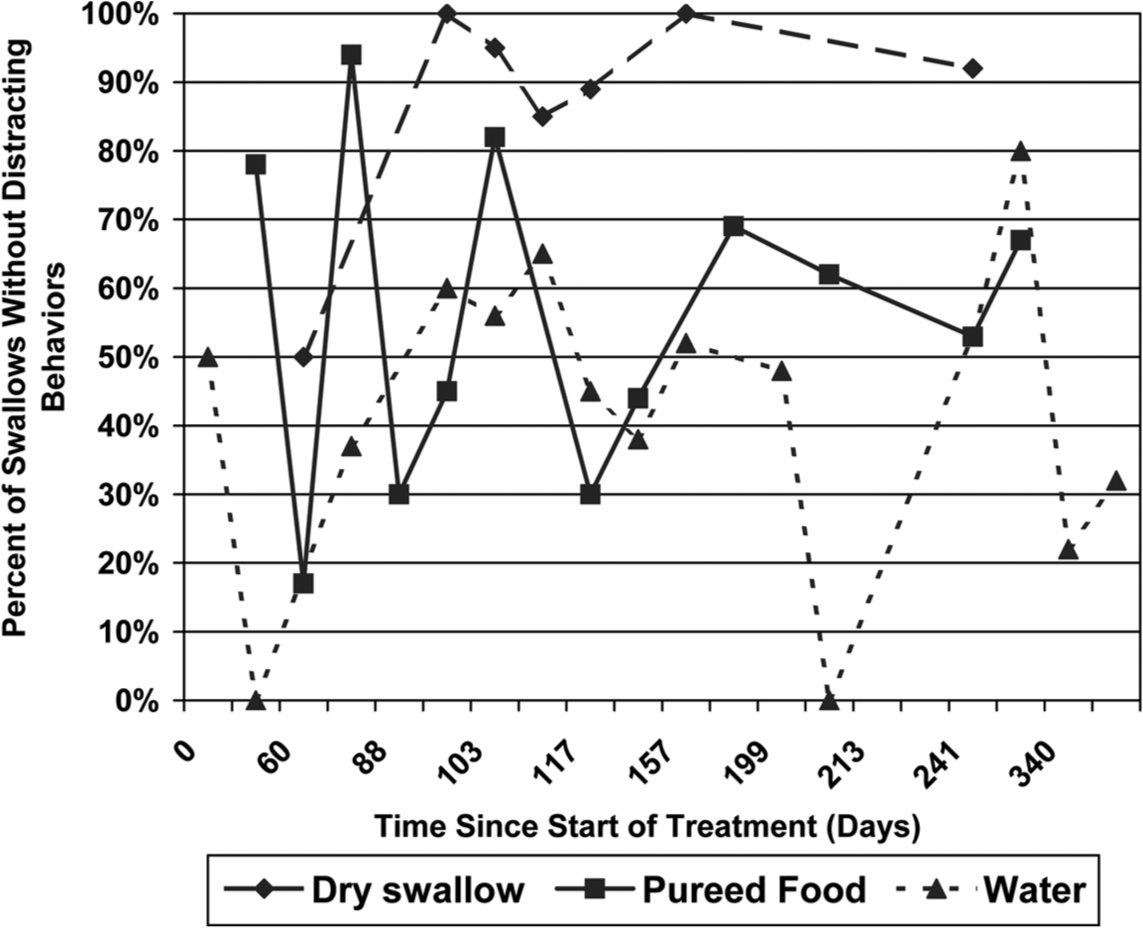
Percentage of swallows without observable tongue pumping or lip smacking.
The number of extraneous movements prior to sips of liquid and puree was inconsistent during the course of treatment (Figure 1). The percentage of swallows per session without extraneous behaviors ranged from 0% to 100%. Generally, the number of extraneous movements per swallow ranged from one to three during treatment, and never exceeded seven, whereas at the initial assessment, the number of extraneous movements averaged 27 per swallow (range = 4-60).
Clinical Psychologist
Mr. A was seen for 28 sessions on a weekly or biweekly basis over a period of 14 months, including 4 sessions conducted jointly with C.B.-J. His wife attended one of the sessions. The primary method of treatment was systematic desensitization. Mr. A prepared a hierarchy of feared situations, and this was revised as needed based on feedback from the patient. He was encouraged to practice exposure to feared situations, first in imagination and then in vivo. He listened to a relaxation tape prior to practicing imagery desensitization. The initial fear hierarchy focused on increasing the amount of food he ate (size of bites) and the variety of foods eaten. As treatment progressed, he was encouraged to eat more during the day rather than at night, to avoid engaging in physical behaviors to distract himself while swallowing (e.g., tapping his feet or moving his lips), and to eat with other people. The lowest levels of the fear hierarchy involved small amounts of familiar food eaten alone, at night, without dentures, and with distracting behaviors. Higher levels involved eating larger amounts of different foods, during the day, while wearing dentures, and avoiding distracting behaviors. Other issues addressed in treatment included beliefs about the likelihood of choking and the effectiveness of avoidance behaviors (e.g., adding “safe” foods to new foods to make them “easier to swallow”). Several sessions were conducted in the center cafeteria to give him an opportunity to practice eating in a social setting. Mr. A and his wife were encouraged to read selected sections from The Anxiety & Phobia Workbook (Bourne, 2000, Chapter 8) and Stop Obsessing (Foa & Wilson, 2001), primarily dealing with real-life desensitization, guidelines for the support person, and delaying performance of ritualistic behaviors.
Beginning at Session 16, treatment focused on increasing his ability to eat in social situations. A social eating fear hierarchy was developed (see Table 2). He was also encouraged to practice drinking water daily and keep a log of the number of sips he needed to drink a standardized amount.
Fear Hierarchy for Eating in Social Situations.

Priorities for Mr. A shifted about midpoint in treatment, at which time he indicated that he was most concerned with focusing on goals of eating in public, eating while wearing his dentures, and continuing to increase the variety of foods in his diet. He was asked to write a description of his “worst case scenario” regarding eating and to try to imagine this scenario while in a relaxed state. This exercise was not completed, although he did spend some time writing a detailed description of the scene and events leading up to his feared scenario. He appeared to have an exaggerated estimate of the risk of choking to death, and the incidence of death by choking was discussed. At the final session, Mr. A reported that other factors in his life were taking priority over eating and swallowing issues. He had become involved with volunteer work and was spending time pursuing some hobbies. He indicated that he was satisfied with the gains he had achieved in the areas of eating and swallowing.
By the end of the collaborative treatment, Mr. A was eating a variety of soft or ground up food. He had discontinued eating the sugary dessert that had been his main source of calories at the beginning of treatment. As well, he was consuming his food during the day. This would likely have had a beneficial effect on his sleep. Mr. A indicated that he napped during the day to make up for lost sleep due to nocturnal eating, and he did not complain of tiredness or appear sleep-deprived during treatment. At the end of treatment, he no longer avoided eating with his spouse. He had attended several social events and had been able to eat a small amount of soft food (e.g., soup, ice cream) at each. He was eating with his dentures in and his shoes on. Excessive facial tension and distracting behaviors during eating were reduced but not eliminated. He had been able to maintain a regular meal pattern while traveling away from home for several days. He gained 5.4 kg (14 pounds, from 165 pounds pre-treatment to 179 pounds post-treatment), at which point his body mass index was in a healthy range. He indicated that he was pleased with his progress and did not wish to pursue other treatment goals at that time (e.g., increasing his water intake or eating more subjectively-challenging foods).
8 Complicating Factors
Resolution of symptoms was less complete than in other cases reported in the literature, even though Mr. A attended many more treatment sessions than is typical. In some ways, Mr. A appears quite similar to other reported cases. For example, his diagnosis of OCD, fear of heights, and avoidance of solid foods and liquids are characteristics described in a number of other studies. Several patients were reported to have obsessive traits or diagnosed OCD (Ball & Otto, 1994; Geffken et al., 2005; Solyom & Sookman, 1980). Other phobias are frequently noted among choking phobia patients (Ball & Otto, 1994; Greenberg et al., 1988; Solyom & Sookman, 1980). Two of the patients described by Solyom and Sookman (1980) also had difficulty with liquids, as did the patient reported by Ost (1992). (The latter patient’s phobia was restricted to swallowing liquids and she was able to swallow solid food without difficulty.) A key difference between Mr. A and other reported cases is the chronic nature of his symptoms. When he began treatment, he had had severe swallowing difficulties for 9 years. His fear of choking dated back to an episode of choking that had occurred more than 40 years previously. Another difference from previous case reports was the presence of ritualistic behaviors that the patient used to distract himself from swallowing. These behaviors became a focus of treatment because they made it embarrassing for the patient to eat in public. Mr. A also had a history of esophageal dysfunction, including a small unrepaired Zenker’s diverticulum, and had undergone a cricopharyngeal myotomy. VFSS revealed normal clearance of food through the pharynx into the esophagus for minced textures; however, this was based on small bolus sizes. Solid foods and larger bolus sizes were not assessed due to Mr. A’s refusal to trial even small portions of solids. It is, therefore, not clear whether there may have been some ongoing physiological difficulties that would have impeded his ability to swallow larger bites of more challenging textures.
9 Access and Barriers to Care
There were no obvious access issues affecting the present case. The patient was seen through the outpatient service of a public hospital in Canada. Both treatment providers are salaried employees funded by the local health authority. It seems unlikely that such a lengthy treatment program would be possible in a managed care context.
10 Follow-Up
At a follow-up phone call 8 months after termination of therapy, Mr. A reported that he continued to eat a range of foods. He noted that, since the completion of treatment, he had experienced significant life changes and losses, including the death of his wife, but these had not affected his eating. He did not feel he needed additional therapy.
On further phone follow-up (approximately 4 years after the end of treatment), Mr. A said that his weight was stable. He had experienced some complications from his years of inadequate nutrition (tooth decay requiring extensive dental work, osteoporosis), but he described a very active life, including involvement in hobbies and travel.
Approximately 6 years after the end of treatment, Mr. A’s family physician referred him back for evaluation by an SLP. He had more issues with swallowing and had lost some weight. He was referred to, and met with, a dietitian and subsequently made some changes to his eating patterns, including oral intake of high calorie supplements. He also met with the clinical psychologist and discussed treatment options. His appearance was much the same as when he was in treatment, although somewhat thinner. He said that he asks his physician not to tell him his weight as he will just obsess about it. He reported that he has been undergoing treatment for osteoporosis, and he had a more stooped posture. Despite weight loss and medical issues, he maintains a relatively active lifestyle, as evidenced by a recent trip that involved some hiking. He was agreeable to seeing a clinical psychologist. His previous treatment provider (C.M.) has very limited availability due to assessment and consultation responsibilities. Therefore, a referral to another clinical psychologist was recommended. Mr. A had the means to seek treatment privately but preferred to wait for treatment at the public hospital because it was closer to where he lives. That psychologist also specializes in treating people with OCD. Unfortunately, there is a 6-month wait, and he has not yet begun his new treatment. The main events of Mr. A’s treatment and follow-up are summarized in Table 3.
Timeline of Treatment and Follow-Up.

Note: SLP = speech-language pathologist; OCD = obsessive-compulsive disorder; MINI = Mini International Neuropsychiatric Interview.
11 Treatment Implications of the Case
This article presents the case of a 69-year-old man who had experienced symptoms of psychogenic dysphagia and choking phobia for 9 years prior to the interventions described here. Following treatment by the SLP and a clinical psychologist, he had met several therapy goals. These gains were maintained at 4-year follow-up. He maintained his weight for nearly 6 years and has not required further hospitalization for nutritional issues.
Although sEMG has been used as a treatment for pathological dysphagia (e.g., Crary et al., 2004) and as an assessment tool for psychogenic dysphagia (Vaiman et al., 2008), its use as a treatment method for psychogenic dysphagia has been limited to one report of a patient whose swallowing difficulty was caused by a tendency to tighten her throat muscles in response to stress. The use of sEMG in the treatment of choking phobia has not been described previously. As shown in Figure 1, the evidence for a benefit of sEMG treatment in this case is inconclusive although overall his swallowing patterns demonstrated improvement from baseline. He had no swallows of liquid or puree without distracting behaviors during the pretreatment assessment, so these data are not shown. Mr. A reported that he enjoyed the sEMG sessions and found the treatment helped him to focus and relax. The sEMG treatment may have been more effective had the schedule of sessions been more intensive, as is typically the case in treatment of pathological dysphagia (e.g., Huckabee & Cannito, 1999, conducted 10 sessions within 1 week). Further research is recommended to investigate the value of sEMG biofeedback as an adjunctive treatment for patients with psychogenic dysphagia/choking phobia.
One limitation of the present case report is the lack of comprehensive assessment of the patient’s symptoms and eating behavior. At least one other report of a patient with choking phobia (Chorpita et al., 1997) used formal psychological assessment methods, self and family reports, food diaries, and pre- and post-treatment independent psychological evaluations to assess the degree of change in their patient’s symptoms over time. Although a thorough swallowing assessment was conducted prior to treatment by the SLP, follow-up instrumental swallowing assessments were not administered. Toward the end of treatment, some sessions were conducted in which the SLP or psychologist timed how long it took Mr. A to drink a specified amount of water. Mr. A was asked to practice this at home and record the results. He made very little progress with this. It would likely have been helpful to videotape Mr. A’s eating behavior at various points during treatment, but this was not done. Similarly, it would have been helpful to have documented variations in his weight over the course of treatment. Although mood questionnaires were not administered, Mr. A showed no signs of depression at any time during treatment. He was reported to have a diagnosis of OCD, but this was not formally assessed. We recently obtained a copy of the report from the psychiatrist who diagnosed Mr. A with OCD. This diagnosis was apparently based on a brief assessment of the patient while he was hospitalized for dehydration. Use of an instrument such as the Yale–Brown Obsessive Compulsive Scale (Y-BOCS; Goodman et al., 1989) may have been helpful to characterize his symptoms at the start and end of treatment. He acknowledged that he tended to get “involved with detail,” and this tendency was observed frequently throughout treatment. He focused on one aspect of eating at a time (e.g., time of day that he ate, followed by what he ate, followed by eating in social situations). His wife reported that he always used the same dish and spoon when eating at home. He felt that eating with a different dish would disrupt his “rhythm” of eating. It was not clear whether he had any rituals or compulsions that did not involve eating. He acknowledged that he “obsessed” about things he wanted to accomplish (e.g., a hobby project or preparing his income taxes) and tended to feel annoyed if something interfered with his plan for the day. Based on his educational and vocational background, it is likely that Mr. A has above-average intellectual ability. Webb and colleagues (2005) note that “both gifted persons and persons with OCD or obsessive-compulsive personality disorder (OCPD) attempt to manage their perfectionism, anxiety, and guilt through intellectualizing and thinking of ways to relieve tension and exert control over their environment” (p. 91). During an interview 6 years after the end of treatment, Mr. A agreed to complete selected sections of the Mini International Neuropsychiatric Inventory (MINI; Sheehan & Lecrubier, 2006). His responses suggested that he would not meet criteria for any of the following disorders: OCD, PTSD, or generalized anxiety disorder.
Other treatment methods described in the literature may have been helpful in this case. For example, other articles describe techniques to desensitize patients to sensations associated with anxiety and swallowing (e.g., holding a swallow and being aware of the tightness in the throat, Ball & Otto, 1994; or touching the tongue with a tongue depressor, Solyom & Sookman, 1980). Aversion relief techniques have been used to reduce prolonged chewing and help patients learn to initiate the swallow more quickly (Ball & Otto, 1994; Solyom & Sookman, 1980). Although some treatment sessions were conducted in a cafeteria, more effort could have been made to practice in vivo exposure during treatment sessions. It may also have been useful to have assessed and tracked Mr. A’s level of distress using a subjective units of distress (SUD) scale (e.g., Lind & Cigrang, 2004), both in session and when eating at home. His next treatment provider may wish to consider using one or more of the above techniques.
12 Recommendations to Clinicians and Students
To date, there appear to be no controlled treatment trials of choking phobia. The relative rarity of this condition makes such trials difficult to conduct. However, future studies could use a multiple baseline approach (e.g., Chorpita et al., 1997) to track more systematically the resolution of symptoms in response to specific interventions.
The present report appears to be unique in describing collaborative treatment of swallowing phobia/choking phobia in an older adult. It is not possible to determine the relative contribution of the two treatment modalities (sEMG biofeedback and systematic desensitization), but it seems likely that both played a role in the behavior change Mr. A was able to achieve. It is also relevant that he was involved in setting initial goals with both therapists and revising these goals as his priorities changed.
Following treatment, the patient demonstrated improved eating behaviors and maintained a weight within a healthy range. This, in turn, helped him to participate more fully in other areas of his life. He maintained these gains for more than 4 years after the end of treatment.
Collaborative treatment may be beneficial in treatment of other types of phobias. For example, clinical psychologists could work with respiratory therapists and sleep specialists to help patients who have claustrophobic reactions to treatment with continuous positive airway pressure (CPAP; Edinger & Radtke, 1993) or with physiotherapists to help older adults who suffer from a fear of falling.
Footnotes
Declaration of Conflicting Interests
The author(s) declared no potential conflicts of interest with respect to the research, authorship, and/or publication of this article.
Funding
The author(s) received no financial support for the research, authorship, and/or publication of this article.