



Abstract
In this study, we investigated the effects of paraoxonase 1 (PON1) activities and the variant PON1–Q192R on the ferric reducing ability of plasma (FRAP) and total thiol. In addition, we examined the distribution of genotypes of this variant and the relationship of the genotypes with age in patients with type 2 diabetes (T2D). A total of 115 patients with T2D were enrolled in this study. Paraoxonase activity (PON-para) and arylesterase activity (PON-aryl) were determined using spectrophotometric assays. The distribution of the Q192R genotypes was determined by the double substrate method. The antioxidant status was evaluated by determining FRAP and total thiol. The frequencies of Q and R allozyme were 0.78 and 0.22, respectively. The multivariate analysis identified a significant association between the variables PON1–Q192R (Wilks’ λ = 0.85, P = 0.002) and PON-aryl (Wilks’ λ = 0.896, P = 0.017), with FRAP and total thiol. The significant difference observed for PON1–Q192R and PON-aryl is primarily due to the changes in FRAP levels (η2 = 0.127, P = 0.002 for PON1–Q192R; η2 = 0.083, P = 0.011 for PON-aryl). The interaction PON1–Q192R–PON-aryl increased the effect sizes from 8 to 19% for FRAP. Only in R-carrying genotypes, there were significant correlations between both PON-para/HDL (r = −0.574, P < 0.001) and PON-aryl/HDL (r = −0.577, P < 0.001) with age. Our data suggest that the variant PON1–Q192R and PON1 activity, particularly PON-aryl, influenced the antioxidant status in T2D. The interaction of this variant and PON1 activity increased the effect size on the antioxidant capacity. Moreover, the presence of the R allozyme may potentiate the effects of age on susceptibility to cardiovascular diseases in T2D.
Introduction
Paraoxonase 1 (PON1, EC 3.1.8.1) is a serum esterase synthesized in the liver. It is secreted into blood where it binds physically to high-density lipoprotein (HDL).1–3 PON1 accounts for an important part of the antioxidative activity of HDL.4,5
The PON1 gene located on the long arm of chromosome 7 and contain two common polymorphisms including Q192R (Gln192Arg) and L55M (Leu55Met).6,7 Approximately 60% variation in PON1 levels and activity is related to the enzyme gene polymorphisms. 8 The Q192R polymorphism is a major determinant in variation of catalytic activity toward substrates such as paraoxon (paraoxonase activity), but not toward phenylacetate (arylesterase activity). 9 The 192 R and Q allozymes have different effects on oxidation of low-density lipoprotein (LDL). 10 It is believed that oxidation of LDL and production of oxidized-LDL (ox-LDL) is an important process in the development of the atherosclerotic lesions. 11 Because of the different effects of allozymes in the protection of LDL oxidation and consequently, their different functions in preventing atherosclerosis, evaluation of the genetic variation PON1–Q192R could be important. 12
There has been a growing interest in documenting PON1 role in various diseases including diabetes. Low PON1 activity is associated with increased risk of coronary artery disease in patients with type 2 diabetes (T2D). 13 PON1 administration in mice in vivo or in β cells in vitro, decreases diabetes development and increases insulin secretion from β cells. 14 The protective role of PON1 against diabetes development could be attributed to the antioxidative properties of the enzyme. 15 Despite the important role of PON1 and oxidative stress in diabetes, there are limited studies on the relationship between the variant PON1–Q192R and oxidative status in T2D. In this study, the effects of PON1 activity and the variant PON1–Q192R (as a common genetic variation in PON1 gene) on the ferric reducing ability of plasma (FRAP) and total thiol was investigated. Furthermore, we have determined the distribution of genotypes of this variant and PON1 activity parameters in patients with T2D and the relationship of the genotypes with age.
Materials and methods
Study population
A total of 115 patients with T2D (mean age ± standard deviation: 53.2 ± 10.3 y) were enrolled in this study. Patients were receiving 1 g of metformin twice a day. None of the patients were receiving insulin therapy. Subjects with type 1 diabetes, previous history of renal failure, autoimmune and liver diseases, and chronic diseases were not included in the study. Smoking was accepted if the participant is currently smoking or had stopped smoking less than 2 months prior to examination. The study protocol was approved by the university local ethic committee and all the participants submitted written consent forms.
PON1 activity assays
Arylesterase activity of PON1 (PON-aryl) was measured using phenylacetate (Fluka) as the substrate.16,17 The reaction mixture containing 1 mM phenylacetate and 1 mM CaCl2 in Tris/HCl buffer (100 mM, pH 8.0). Paraoxonase activity (PON-para) toward paraoxon (Sigma-Aldrich) was determined by the addition of serum to Tris/HCl buffer (100 mM, pH 8.0) containing paraoxon (2 mM) and CaCl2 (2 mM).16,17 The enzyme activities were measured by a double-beam spectrophotometer (UV 1800, Shimadzu, Japan) at 412 nm for PON-para and 270 nm for PON-aryl. The molar extinction coefficients were 17,100 and 1310 M−1 cm−1, respectively, for PON-para and PON-aryl. One unit of PON-aryl and PON-para are defined as 1 µmol phenol and 1 nmol p-nitrophenol formed per minute, respectively. The PON-para and PON-aryl measurements were each done in duplicate.
Salt stimulation activity and the enzyme genotype distribution
Salt-stimulated PON-para was assayed with 1 M NaCl (PON-NaCl) in the reaction mixture in which paraoxonase activity was determined. The phenotype distribution of PON1–Q192R (the individual genotypes) was determined by double substrate method.18,19 The ratio PON-para/PON-aryl was determined for each person to assign individuals to one of the three possible phenotypes (individual genotypes): QQ (homozygous with low activity), QR (heterozygous with intermediate activity), or RR (homozygous with high activity). To confirm correct assignment of the PON1–Q192R genotypes, some samples (after isolation of genomic DNA) were analyzed by PCR-RFLP as described previously. 16
FRAP and total thiol assay
Total antioxidant capacity was evaluated by the FRAP method. 20 According to the method, ferric-tripyridyltriazine (Fe3+-TPTZ) was reduced to a ferrous form, which has a blue color and an absorbance recorded at 593 nm.
Total thiol level was estimated using the ability of the –SH group to reduce 5,5′-dithio-bis (2-nitrobenzoic acid) (DTNB) as previously described. 21 Briefly, in ELISA plate wells, 12.5 µL serum was mixed with 250 µL 0.25 M Tris-EDTA buffer (pH 8.2) followed by the addition of 10 mM DTNB. Following incubation for 15 min at room temperature, the absorbance was read at 405 nm. Assays were performed in duplicate, and the concentration of total thiol was expressed as micromolar.
Statistical analyses
Normal distribution of the data was assessed by Kolmogorov–Smirnov test. To evaluate the differences between the nonparametric variables, we used the Mann–Whitney U test, whereas the t-test was used to analyze the parametric variables. Multivariate analysis of variance (MANOVA) was performed for testing the planned comparisons. The outcomes of equality test of the error variances and equality test of the covariance matrices indicated that the analyses in this study met the assumptions underlying MANOVA. To indicate effect sizes, the Wilks’ Lambda was used for the overall multivariate model. When the model was significant, the partial eta squared (η2) was performed for analyzing the protected univariate tests. Spearman′s correlation coefficient was used to test the association between the study parameters. Hardy–Weinberg equilibrium was tested by χ2 test. A P-value of less than 0.05 was accepted as statistically significant. SPSS 16.0 software was used for all calculations.
Results
Biochemical and clinical characteristics of the study subjects
Smoker number, age, and biochemical parameters of the study patients (n = 115)
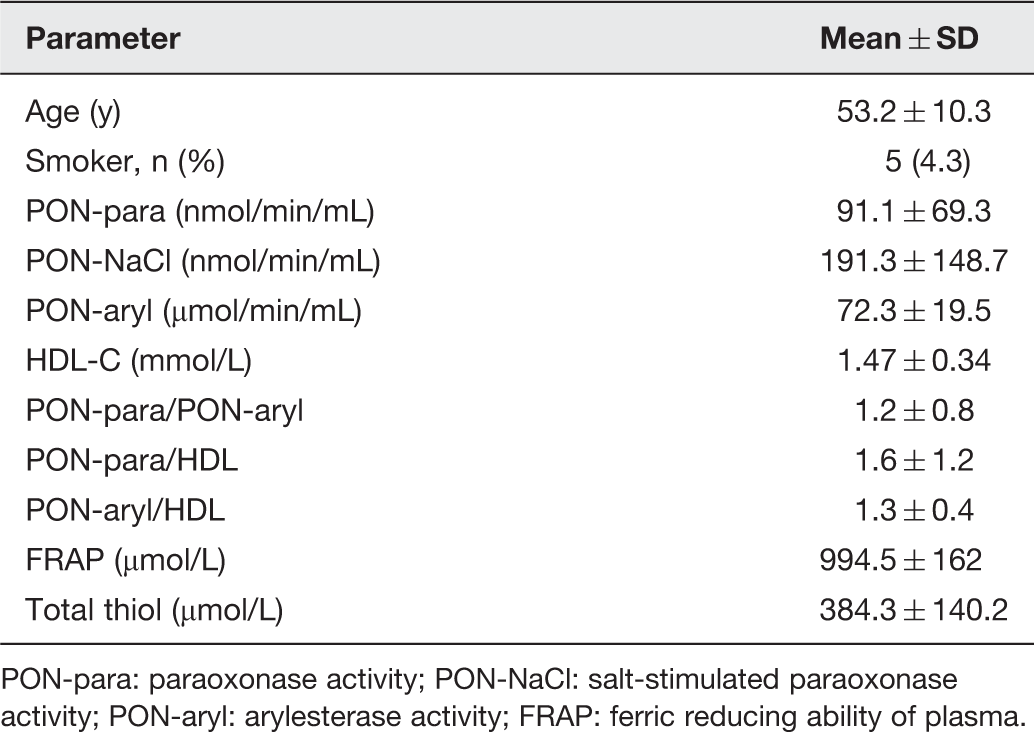
PON-para: paraoxonase activity; PON-NaCl: salt-stimulated paraoxonase activity; PON-aryl: arylesterase activity; FRAP: ferric reducing ability of plasma.
Determination of PON1 genotype distribution in the study patients
The ratio of PON-para/PON-aryl was revealed a trimodal frequency distribution in the study patients. Accordingly, the study subjects were divided into the three genotypes at the ratios of 1.3 and 2.7 (Figure 1). Patients with a ratio below 1.3 were classified as QQ genotype, between 1.3 and 2.7 as QR genotype, and above 2.7 as RR genotype. Accordingly, we identified 72 (62.6%) QQ (homozygous with low activity) genotypes, 36 (31.3%) QR (heterozygous with intermediate activity) genotypes, and 7 (6.1%) RR (homozygous with high activity) genotypes. The frequencies of Q (low activity) allozyme and R (high activity) allozyme were 0.78 and of 0.22, respectively. This was in partial agreement with Mackness et al.
22
The observed PON1 192 genotype distribution did not significantly differ from Hardy–Weinberg equilibrium expectations. Our results showed that linear regression of PON-para versus PON-aryl in each subgroup was significant: r = 0.602, P < 0.001 for QQ genotype; r = 0.837, P < 0.001 for QR genotype; r = 0.893, P = 0.007 for RR genotype.
Plot of PON1 activity toward phenylacetate versus paraoxon in patients with type 2 diabetes. The patients were divided into the three genotypes (QQ, QR, and RR) at the ratios of 1.3 and 2.7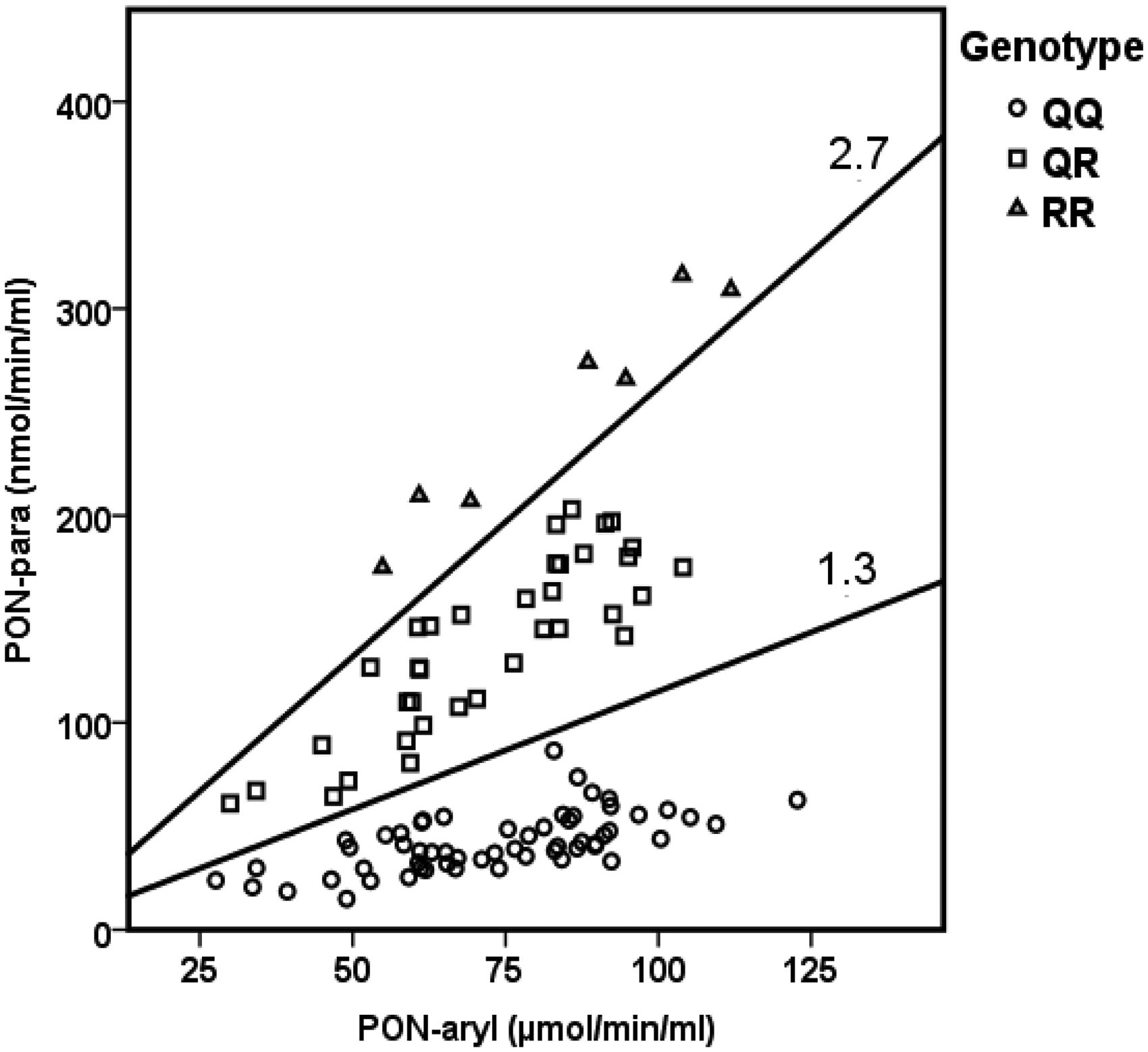
Changes in PON1 activity parameters, FRAP, and total thiol according to the genotypes of the variant PON1–Q192R
The levels of age, HDL-C, and PON1 activity parameters in the study patients according to PON1–Q192R genotypes

Values are presented as mean ± SD.
PON-para: paraoxonase activity; PON-NaCl: salt-stimulated paraoxonase activity; PON-aryl: arylesterase activity.
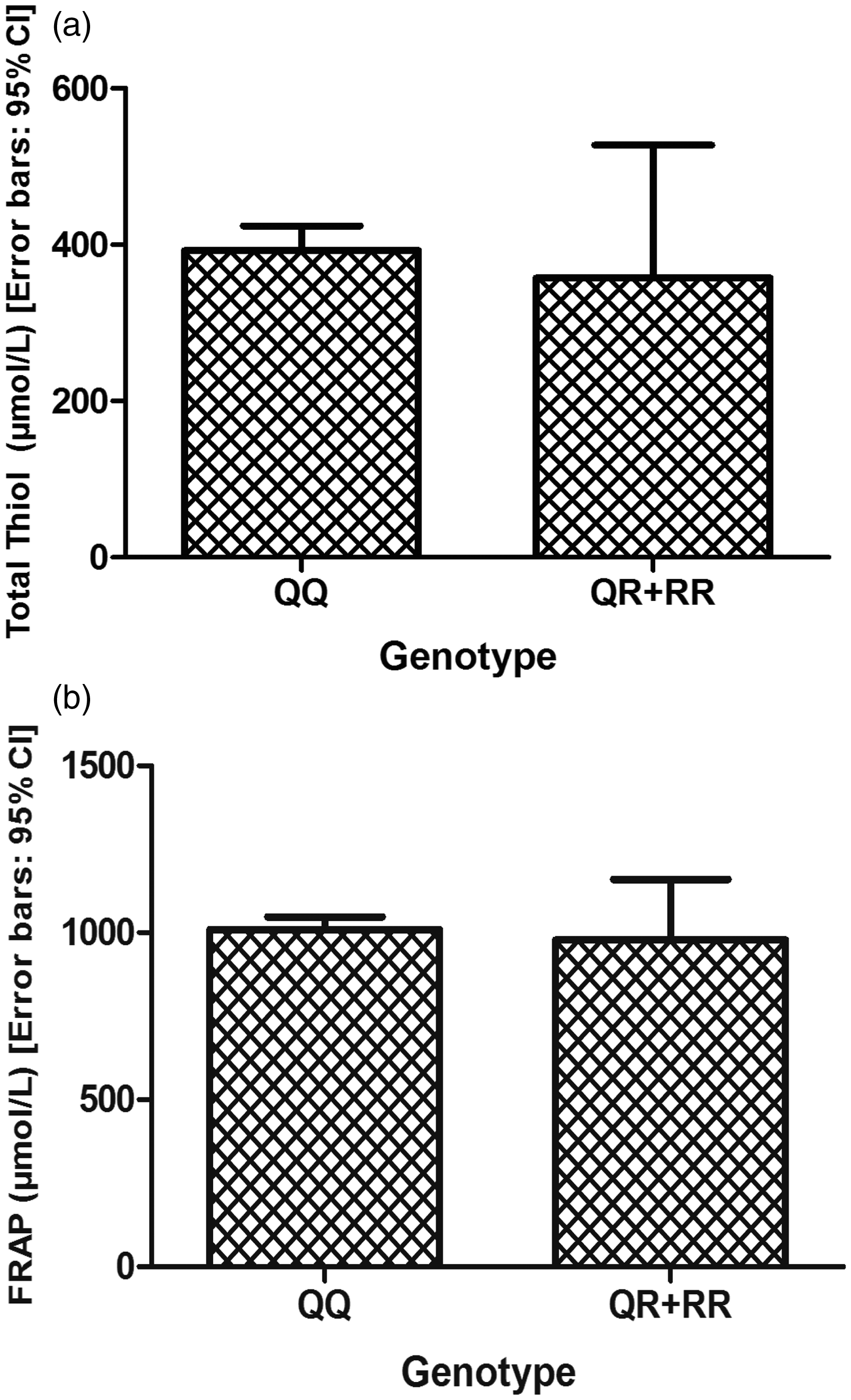
(a) Change in total thiol according to the genotypes of the variant PON1–Q192R (P > 0.05). (b) Change in FRAP (ferric reducing ability of plasma) according to the genotypes of the variant PON1–Q192R (P > 0.05)
The overall multivariate model and the related univariate tests
The overall multivariate models and the related univariate tests on the study variables

Multivariate model adjusted for age and gender.
Analysis of the interaction effects between the three variables (Q192R variant, PON-para, and PON-aryl) indicated a significant interaction effect between Q192R and PON-aryl (Table 3; Wilks’ λ = 0.802, F = 9.12, P < 0.001), as well as between PON-aryl and PON-para (Wilks’ λ = 0.911, F = 3.61, P = 0.032). As can seen in Table 3, the significant difference observed for the interaction effect of Q192R–PON-aryl and PON-aryl–PON-para are primarily due to the changes in FRAP levels (η2 = 0.193, P < 0.001 for Q192R–PON-aryl; η2 = 0.058, P = 0.035 for PON-aryl–PON-para) not total thiol (η2 = 0.005, P = 0.543 for Q192R–PON-aryl; η2 = 0.011, P = 0.372 for PON-aryl–PON-para).
The η2 shows the proportion of the variance in the dependent variables that can be described using the independent variables. With respect to PON-aryl as an independent variable, the value obtained for η2 was 0.083 for FRAP. In the other hand, 8% of the variance in FRAP can be explained by the variant. When the result of the interaction of Q192 variant and PON-aryl was calculated, the effect size increased up to 19% for FRAP.
Correlation between the ratios PON-para/HDL and PON-aryl/HDL with age according to PON1–Q192R genotypes
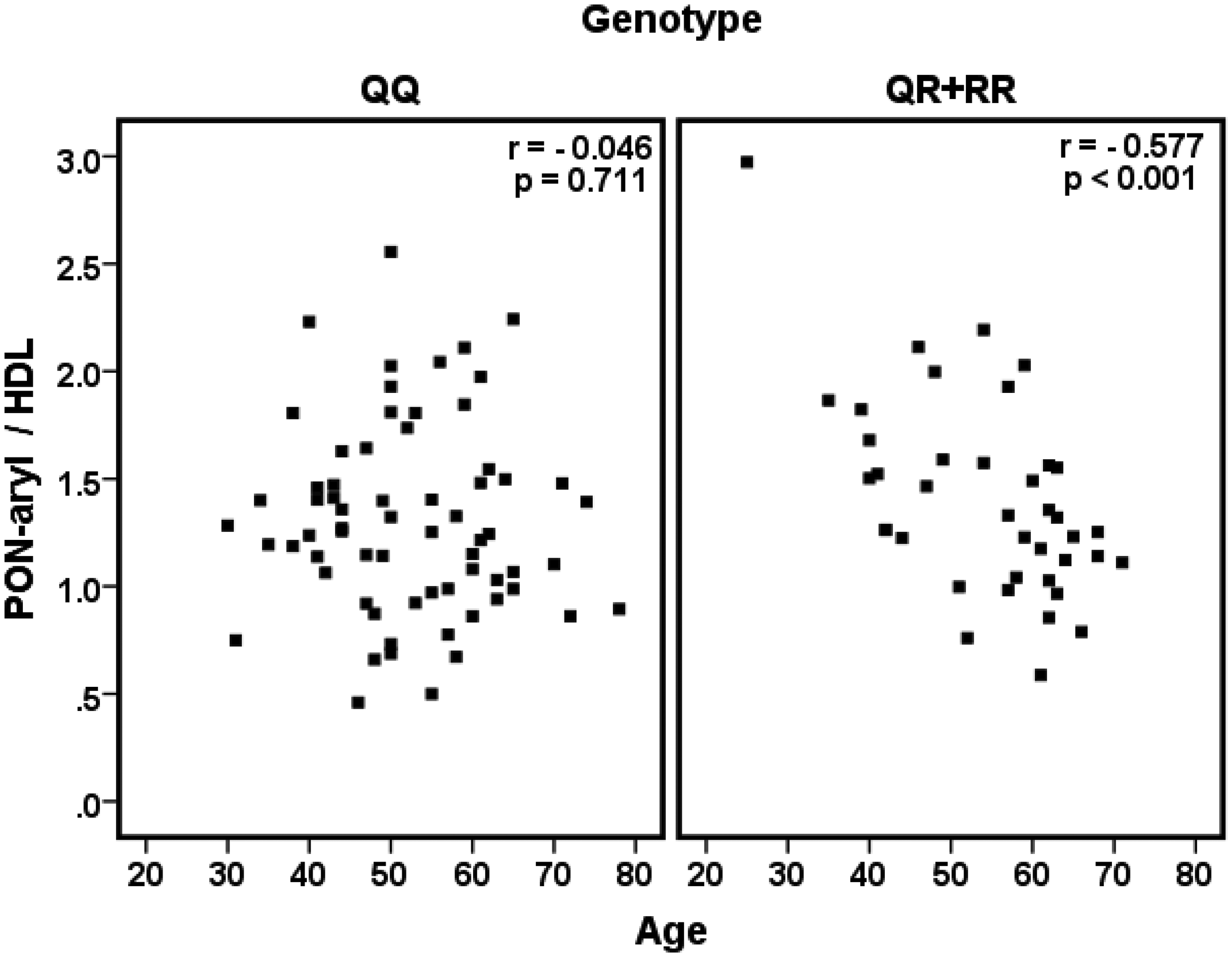
A correlation analysis was performed to study the association of the ratio PON1 activities to HDL with age according to Q/R genotypes. Our data indicated that PON-para/HDL was negatively correlated with age in QR + RR group (r = −0.574, P < 0.001). In people with QQ genotypes, there was no statistically significant correlation between PON-para/HDL and age (r = 0.063, P = 0.653) (Figure 3). As shown in Figure 4, PON-aryl/HDL were found to be negatively correlated with age in the two groups; however, only the correlation in the QR + RR group was statistically significant (r = −0.577, P < 0.001). In patients with QQ genotypes, there was no statistically significant correlation between PON-aryl/HDL and age (r = −0.046, P = 0.711).
Correlations between the ratio PON-para/HDL and age according to PON1–Q192R genotypes in patients with type 2 diabetes. Correlations between the ratio PON-aryl/HDL and age according to PON1–Q192R genotypes in patients with type 2 diabetes.
Discussion
Oxidant–antioxidant imbalance has been involved in the etiology of various diseases, including cancers, liver disorders, renal diseases, Parkinson’s disease, Alzheimer disease, and diabetes mellitus. 23 According to various studies, the production of oxidative stress-induced reactive oxygen species contributes to T2D pathogenesis.24,25 Furthermore, oxidative stress is involved in diabetes complications such as vascular diseases. 26 Therefore, evaluation of oxidative stress biomarkers can be useful for the assessment of cardiovascular risk in patients with T2D. 25 Many studies have shown that PON1 is an antioxidant and antiatherogenic enzyme and that decreased PON1 activity is related to a higher risk of atherosclerosis.4,27,28 It has been demonstrated that the activity of this antioxidant enzyme decrease in diabetes.13,29 The decreased PON1 activity in diabetes could be related to increased oxidative stress and oxidant–antioxidant imbalance in the diabetic patients.13,29,30 The development of oxidative stress and decreased PON1 activity are related to elevated lipid peroxidation, which in turn contributes to the mortality of patients with T2D due to cardiovascular diseases.24,29
In the assessment of PON1 status in a disorder, particularly in multifactor and complex disorders such as diabetes, it is important to analyze PON1 activity in addition to the enzyme genotype. 4 The variant PON1–Q192R is one of the most common molecular polymorphisms in the PON1 gene related to vascular disease and variation in the enzyme activity.9,27 As expected, the parameters of paraoxonase activity including PON-para and PON-NaCl were found to be significantly higher in R-carrying genotypes compared with QQ genotypes. However, there was no statistically significant difference between QQ genotypes and QR + RR group with respect to PON-aryl. The results are confirmed by the fact that the R allozymes have a higher activity toward the substrate paraoxon than do the Q allozyme, whereas phenylacetate is hydrolyzed at the same rate by both allozymes. 4
Studies have indicated that FRAP and total thiol levels are decreased in T2D.24,26,31,32 In the present study, the effects of PON1 activity and the variant PON1–Q192R on FRAP and total thiol was investigated. In the primary statistical analysis, our results did not show a significant change for FRAP and total thiol according to PON1 192 genotypes. A closer analysis (a gender- and age-adjusted multivariate test) revealed that both PON1–Q192R variant and PON1 activity significantly influence FRAP but not total thiol. According to several studies,33–36 oxidative stress parameters including FRAP and total thiol are affected by age and gender. Therefore, age- and gender-adjusted statistical tests should be used to evaluate the effect of a factor on these parameters. Protein and non-protein thiols constitute total thiol, and it may be better that these constituents be separately analyzed to obtain a detailed assessment of PON1 effects on thiol contents. There are limited studies on the effect of PON1–Q192R variant and PON1 activity on FRAP and total thiol levels particularly in T2D. However, Bub et al. reported that PON1–Q192R variant could influence FRAP levels in healthy subjects following 8 weeks of tomato juice consumption, 37 which is in accordance with our study. 37 In a simple statistical analysis (similar to our primary analysis), Sahin et al. 38 did not find significant differences for total antioxidant capacity and total thiol according to PON1–Q192R genotypes in healthy individuals and in patients with Familial Mediterranean fever.
It is believed that the impaired antioxidant ability of HDL was mostly attributed to reduced PON1 activity. 39 Investigation in PON1-deficient mice demonstrated that PON1 plays a direct role in the antioxidant and antiinflammatory properties of HDL.39,40 PON1 could hydrolyze the oxidized phospholipids constituents of oxidized-LDL (ox-LDL) and oxidized-HDL (ox-HDL).40,41 Oxidized-LDL plays an important role in atherosclerosis development11,12 and ox-HDL is a dysfunctional lipoprotein that loses its protective effect on LDL particles. 42 Many studies have shown that there is a strong association between increased ox-LDL levels and decreased antioxidant capacity in patients with diabetes.29,43,44 Therefore, PON1 could have a positive role in diabetes via elevating plasma antioxidant capacity and reducing ox-LDL levels. Therefore, preservation of PON1 activity can be useful in the improvement of diabetes and in decreasing its complications. Numerous studies45–47 have shown that licorice-derived glabridin and polyphenols, which are major antioxidants in fruits, can preserve PON1 activity. Therefore, the consumption of these compounds can have useful effects in patients with diabetes. In general, PON1 could be an appropriate target for future pharmacological studies to decrease cardiovascular risk.
Because PON1 is located on HDL, assay of PON1 activity to HDL ratio could be more important than assaying the enzyme alone in the assessment of PON1 status. In the present study, we evaluated the correlation between this ratio and age (an important risk factor in cardiovascular disease) with respect to PON1–Q192R genotypes. Our findings demonstrated that the ratios PON-para/HDL and PON-aryl/HDL were negatively correlated with age in T2D patients. The correlations were statistically different when the analysis was performed according to the Q/R genotypes. There were significant correlations between both PON-para/HDL and PON-aryl/HDL with age only in R allozyme containing genotypes, but a significant correlation was not observed between the ratios and age in individuals with QQ genotypes. Our results showed that the presence of R allozyme may have affected the correlations between the ratios of PON1 activity to HDL with age. PON1 activities have been shown to be significantly lower in the elderly compared with young people.48,49 Some researchers expressed that PON1–Q192R variant could affect the susceptibility of LDL and HDL to lipid peroxidation in aging. 48 Considering age as a risk factor for cardiovascular diseases, our findings may show that the presence of the R allozyme potentiate the effects of age on susceptibility to the diseases in T2D. In contrast, the presence of 192 R allozyme could negatively influence the atheroprotective and antioxidant properties of PON1 in the elderly subjects with T2D.
Our data suggest that the variant PON1–Q192R and PON1 activity particularly PON-aryl affect antioxidant status in T2D. The interaction of this variant and PON1 activity increased the effect size on FRAP. Moreover, the presence of the R allozyme may strengthen the effects of age on susceptibility to cardiovascular diseases in T2D.
Footnotes
Authors’ contributions
AM contributed to the design and conduct of the study, interpretation of data, and writing of the manuscript. MZ contributed to study design and clinical interpretation. AA and SA contributed to protocol development, analysis, and interpretation of data. FS and PM researched literature, patient recruitment, and conceived the study. All authors reviewed the manuscript and approved the final version of the manuscript.
Acknowledgements
This research was funded by Mazandaran University of Medical Sciences. The authors would like to thank Dr. Zahra Kashi and Dr. Adele Bahar for their contributions.
Declaration of conflicting interests
The author(s) declared no potential conflicts of interest with respect to the research, authorship, and/or publication of this article.