



Abstract
Introduction:
Self-driving laboratories (SDLs) are rapidly transforming the scientific enterprise by integrating artificial intelligence (AI), robotics, and automated experimentation to accelerate discovery with greater speed, autonomy, and precision. These intelligent platforms enable researchers to efficiently explore vast experimental spaces, reducing human error and increasing reproducibility. However, they introduce new and complex safety and security risks that demand proactive attention.
Methodology:
Here we discuss SDLs and how their utility in biotechnology can be harvested to drive scientific change. We also assess the security risks associated with integrating AI into SDL operations in research environments and provide mitigation strategies to address them.
Results:
We present an assessment of the vulnerabilities related to AI-driven SDLs and provide targeted, actionable mitigation strategies. These strategies are designed to help researchers and institutions address emerging risks related to system autonomy, data governance, and automation in experimental workflows.
Conclusion:
We argue that safeguarding SDLs cannot fall to any single actor; instead, it requires coordinated action among researchers, institutions, and policymakers. By grounding SDL development in principles of security, ethics, and collaborative governance, the scientific community can ensure that these powerful platforms advance research in a responsible manner. This work lays a critical foundation for secure and ethical SDL integration, supporting innovation while protecting against misuse and unintended harm.
Introduction
The rapid advancement of self-driving laboratories (SDLs)1–4 has brought significant innovations to research, particularly in biology5–7 and chemistry,8–13 where complex and high-throughput experiments can benefit immensely from this next evolution of automation. SDLs combine automated experimentation with advanced data analytics to enhance research efficiency and outcomes. 14 Unlike traditional laboratories, SDLs are designed to operate with minimal human intervention, 15 using artificial intelligence (AI), 16 robotics, 17 and automated equipment 18 to conduct experiments, 19 analyze results, and optimize processes iteratively. 20 This range of capabilities positions SDLs as pivotal resources for accelerating discovery in interdisciplinary fields, including nanotechnology, medicinal chemistry, and molecular biology, where complex and repetitive tasks can benefit from automation.21,22 While SDL integration enhances research efficiency, 23 it also introduces novel security challenges. 24 This article examines the unique SDL’s security vulnerabilities, particularly in biological and chemical research. While SDLs share risks common to other automated systems and laboratories, their handling of pathogenic organisms, hazardous chemicals, and dual-use materials introduces risks that require tailored safeguards. We discuss the unique risks associated with SDLs in biological and chemical laboratory settings and propose potential mitigation strategies.
Addressing these challenges requires a systematic risk assessment process encompassing threat identification, vulnerability analysis, risk evaluation, and the implementation of mitigation strategies, as illustrated in Figure 1. In addition, the system must be continuously monitored and reassessed to account for system modifications or the emergence of new or heightened risks.
Overview of the security risk assessment process for integrating self-driving laboratories (SDLs). SDL integration increases research efficiency while adding new security challenges. These added security challenges require using a systematic risk assessment that includes threat identification, analysis of vulnerabilities, evaluation of risks, and implementation of mitigation measures. Finally, the system requires continuous monitoring and reassessment in cases of changes to the system or increased/new risks.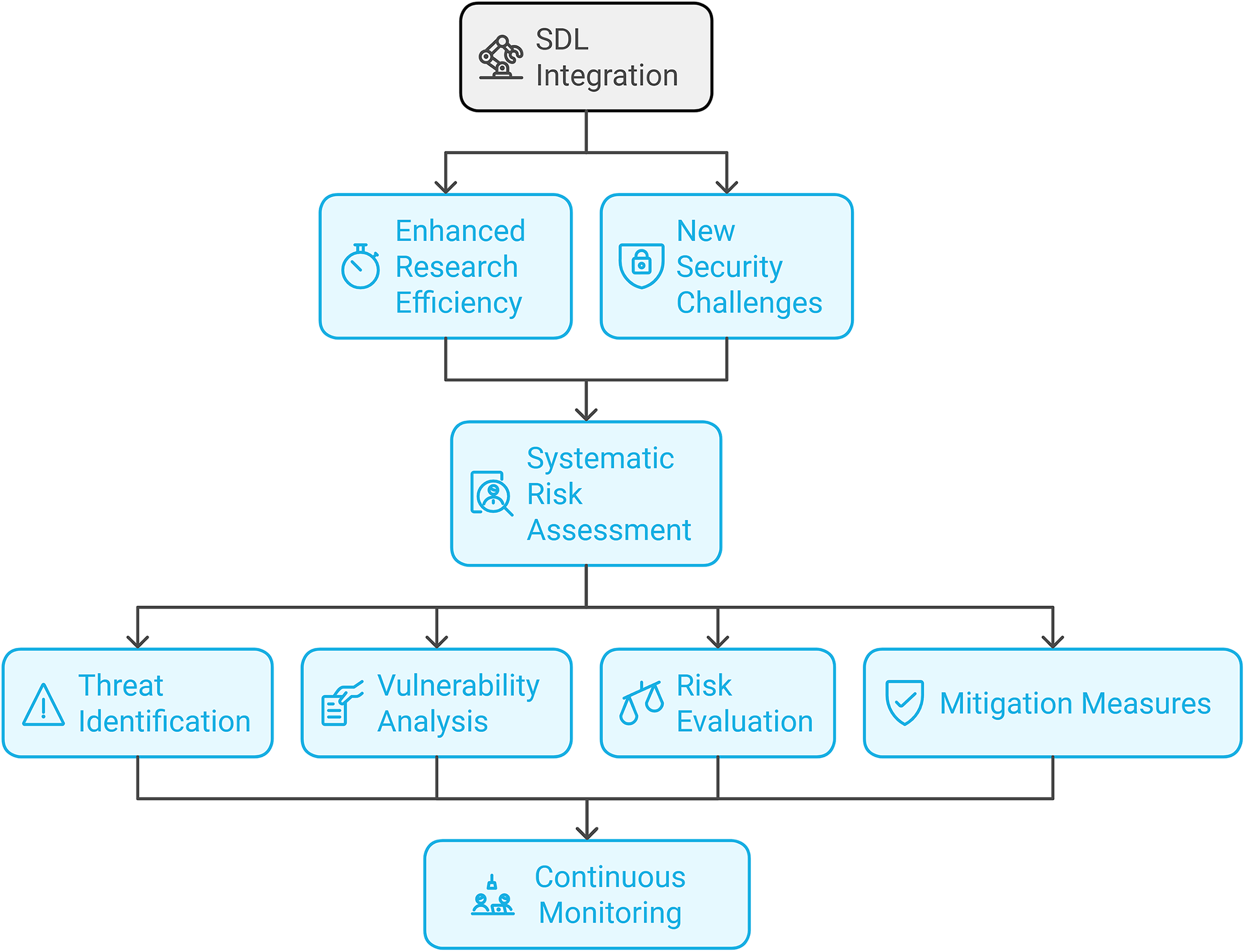
SDLs are significant for several reasons:
SDLs address the growing demand for high-throughput experimentation in fields where the sheer volume of potential experiments often surpasses the practical limits of manual labor. By automating routine tasks, SDLs free researchers from repetitive work, allowing them to focus on innovative and complex problem-solving. SDLs reduce human error and ensure experimental consistency, crucial in sensitive research areas where variability can compromise results. SDLs enhance reproducibility by using standardized protocols that can be precisely replicated in different settings or adjusted automatically to meet new parameters. The data-driven nature of SDLs also aligns with the broader trend toward open science, as SDLs generate large datasets that can be shared and analyzed collaboratively, supporting transparency and accelerating collective progress across research communities.
Methodology
Key Integrated Technologies
The operation and success of SDLs rely on an ecosystem of interdependent technologies. Key among these is AI, including machine learning (ML), robotics, and automated laboratory equipment, as summarized in Table 1. Together, these technologies enable SDLs to conduct sophisticated experiments with minimal human intervention, analyze real-time data, and adjust experimental conditions based on immediate feedback.
Key technologies necessary for self-driving laboratories to operate: artificial intelligence (machine learning), robotics, and automated laboratory equipment

SDLs, self-driving laboratories; AI, artificial intelligence; ML, machine learning.
Essentially, robots and automated laboratory equipment execute physical movements and operations based on the decisions made independently by AI (or the software/algorithm), which analyzes all the data collected in real time from sensor arrays and monitoring systems.
Core Components and Functionalities of SDLs
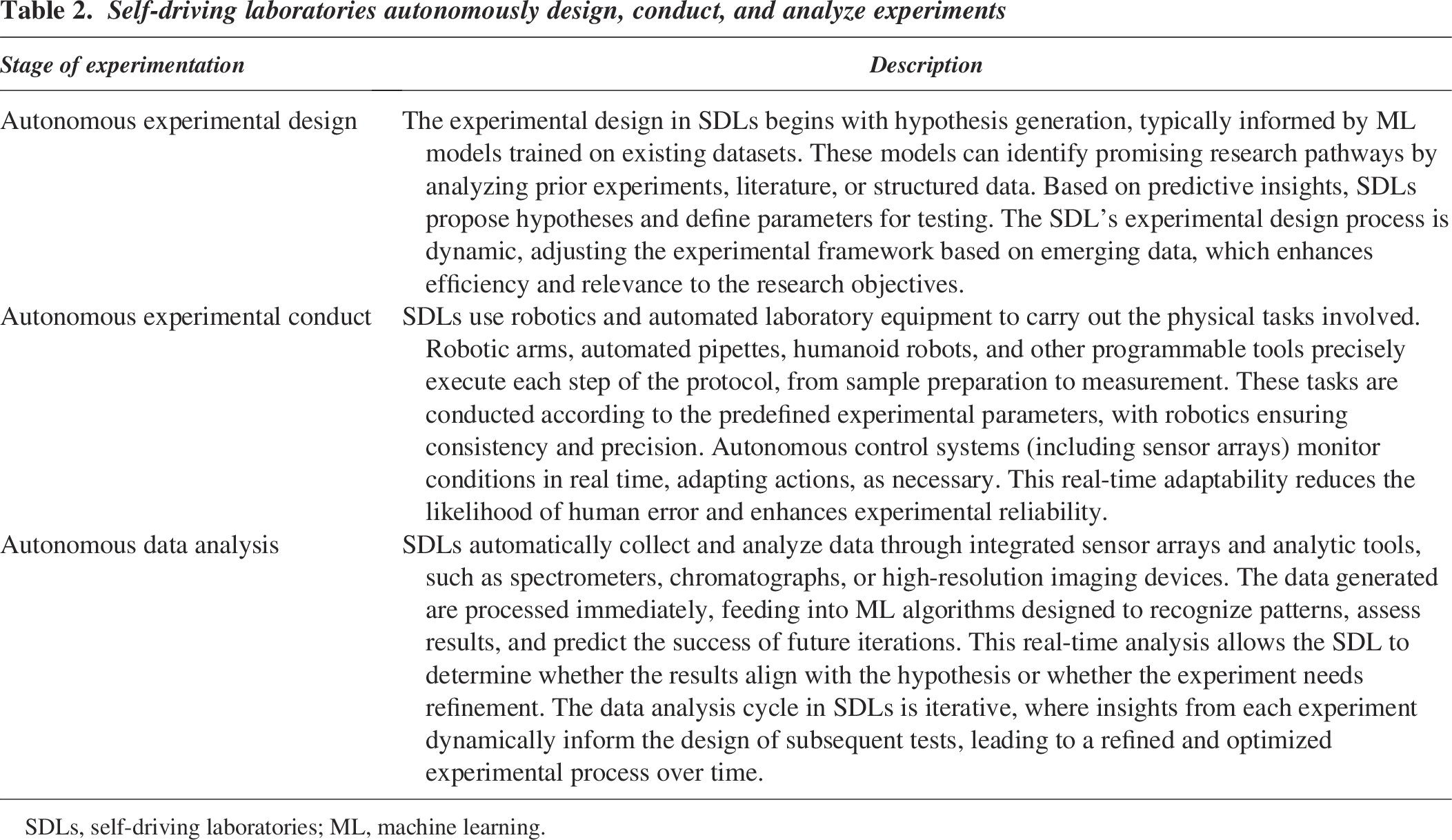
An SDL operates as a closed-loop system in which each experimental iteration informs the next, reducing reliance on human input and accelerating the pace of discovery. Table 2 provides a clear overview of the three fundamental stages involved in autonomous experimentation: (1) Autonomous Experimental Design, (2) Autonomous Experimental Conduct, and (3) Autonomous Data Analysis. Essentially, SDLs utilize AI, robotics, and automation to conduct the entire experimental cycle with minimal human intervention. SDLs optimize scientific workflows for efficiency, reliability, and adaptability by integrating ML models for hypothesis generation and experimental planning. They use robotic systems for precise and reproducible physical execution and use advanced sensor arrays and automated analytic tools for immediate data assessment. These three stages illustrate the iterative nature of SDL operations, where each stage builds upon the previous. Predictive analytics drives initial design decisions, real-time sensing and robotic automation ensure consistent experimental conduct, and rapid, automated data analysis informs whether hypotheses are supported or require further refinement.
Self-driving laboratories autonomously design, conduct, and analyze experiments
SDLs, self-driving laboratories; ML, machine learning.
Sensors in SDLs
Sensor arrays and monitoring systems can be divided into two branches:
Example of an SDL in Synthetic Biology
A recently demonstrated SDL set-up, where automated platforms produce, test, and optimize biological pathways autonomously, integrated a DNA-assembly microfluidic chip that generates variants of a metabolic pathway, such as the biofuel precursor bisabolene, transforms these into microbial hosts (e.g., E. coli or Pseudomonas putida), cultures the hosts, and measures compound production. An AI engine iteratively analyzes the data to design new genetic variants optimizing production yield, enabling rapid closed-loop experimentation without human intervention. While this level of automation accelerates discovery and reduces human error, it also exemplifies critical biosafety concerns, such as containment of genetically modified organisms and monitoring for unintended biohazards, which necessitate robust sensor systems and comprehensive risk protocols. 28
Benefits and Challenges of Developing SDL
Autonomous experimental execution in SDLs offers significant advantages, particularly in speed, scalability, and precision. This approach allows SDLs to operate continuously, exponentially increasing the volume of experiments that can be conducted within a given time frame. The continuous feedback loop between data analysis and experimental design enhances experimental efficiency, while minimizing resource waste and accelerating the path to actionable results. Furthermore, SDLs ensure high repeatability and accuracy, which are critical in disciplines where even minor inconsistencies can skew results.
However, the dependency on ML algorithms means SDLs require extensive, high-quality data to train models effectively, a requirement that may be difficult to fulfill in emerging research areas with limited datasets. 28 The complete absence of human oversight increases the risk of cascading errors if the SDL’s decision-making process encounters unforeseen variables or anomalies not accounted for by its training algorithms. Therefore, semiautonomous SDLs are preferable, as there is a trained human overseeing the whole cycle of experimentation. Security risks, particularly around data integrity and system vulnerabilities, are amplified in autonomous environments, where malicious interference could corrupt experimental outcomes or compromise sensitive research data.
Implementing SDLs presents significant technical challenges that warrant careful consideration. 29 SDLs often encounter issues requiring extensive troubleshooting and optimization, such as hardware malfunctions, software bugs, and difficulties integrating automated systems with complex biological workflows.30,31 While SDLs excel in high-throughput experimentation, we advocate for striking a balance between automation and human oversight, which is critical to ensure resource efficiency and practical utility, thus highlighting the need for hybrid systems that leverage both AI-driven autonomy and expert judgment. 32
Modular SDL Platforms for Customizable Laboratories
Modular SDL platforms are constructed with interchangeable components, enabling researchers to add, remove, or replace modules to suit different experimental set-ups. These platforms typically consist of standardized units, such as robotic arms, sensor arrays, and processing stations, each fulfilling a distinct function within the experimental workflow. For instance, a modular SDL designed for chemical synthesis might include modules for reagent mixing, reaction monitoring, and product analysis. If a new experiment requires a different synthesis method, the SDL can be reconfigured by adding or swapping out modules specific to the new protocol.
Modular SDLs are often built on a grid or frame structure, which acts as a chassis for positioning various modules. This architecture allows different experimental tools, such as pipetting stations, incubators, and spectrometers, to be easily positioned and aligned. This flexibility is enhanced through plug-and-play functionality, where modules are connected via standard interfaces, enabling seamless integration. The SDL’s control system automatically recognizes and configures each module, allowing the laboratory to adapt swiftly without requiring a significant manual set-up.
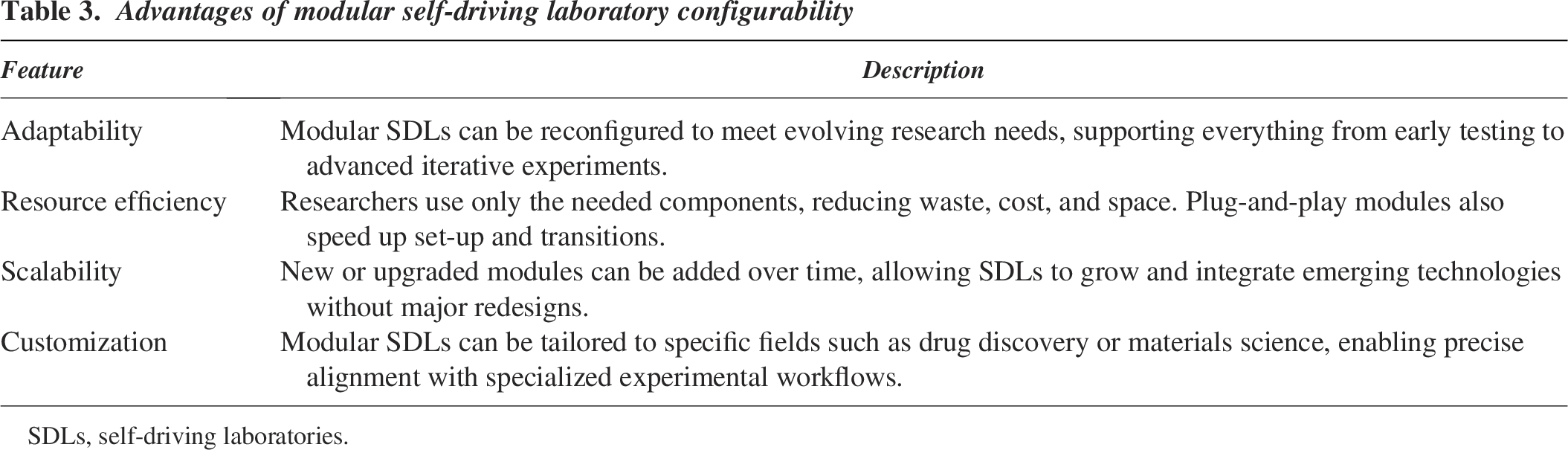
The modularity of SDLs also facilitates interoperability between different types of experimental processes. For example, a single SDL platform could support a series of biological assays, and then, with reconfiguration, switch to high-throughput chemical screening. Researchers can modify the set-up to match the experimental requirements, making SDLs highly versatile. This adaptability is particularly valuable in interdisciplinary research environments, where SDLs are required to meet the needs of multiple scientific domains. Table 3 describes different advantages of having configurable modular SDLs.
Advantages of modular self-driving laboratory configurability
SDLs, self-driving laboratories.
Role of AI (ML) in SDLs
ML is a type of AI that plays multiple roles in the operation of SDLs, from predictive modeling to experimental optimization. The integration of ML algorithms enables SDLs to continuously learn from experimental data, refine hypotheses, and adapt processes dynamically based on outcomes. This approach transforms SDLs into adaptive systems that not only execute experiments but also evolve with the research process. The following is a list of the roles AI plays in SDL operations and descriptions:
Enhancing Security and Reliability Through AI Integration
As SDLs operate autonomously, they rely on AI algorithms not only to optimize research outcomes but also to identify and mitigate security risks. 14 AI models can be trained to recognize security threats, such as data breaches or unauthorized access attempts, enabling SDLs to detect and respond to potential intrusions in real time. In addition, data science techniques such as encryption and anomaly detection contribute to the overall integrity of SDLs, protecting sensitive research data from manipulation or corruption.
AI also contributes to SDL reliability by enhancing fault tolerance. For example, predictive maintenance algorithms analyze equipment performance data to predict when components are likely to fail, allowing SDLs to schedule maintenance proactively and prevent disruptions. Furthermore, AI can adapt to system failures by rerouting experimental workflows or reallocating resources to maintain continuity in the research process.
Integration of AI with Automation/Robotics for SDLs
SDLs can leverage AI-driven algorithms to predict reaction outcomes, optimize synthesis conditions, and analyze complex datasets, while robotic systems handle precise reagent mixing, reaction monitoring, and high-throughput screening. For example, Google’s DeepMind SDL synthesized 41 novel compounds in 17 days by combining AI predictive models with robotic execution, demonstrating unparalleled speed and autonomy. 9 In 2023, DeepMind introduced GNoME (Graph Networks for Materials Exploration), a deep learning model that invented 2.2 million novel materials, ∼380,000 of which are considered stable and potentially viable for experimental synthesis. 37 This is the equivalent of 800 years’ worth of knowledge created in a few months. 38 SDLs can apply AI to analyze genomic data, design genetic circuits, or optimize microbial strains, with robotic automation performing tasks such as pipetting, culturing, and high-throughput assays. This convergence allows SDLs to navigate vast experimental spaces, such as testing thousands of genetic variants or chemical combinations, with minimal human intervention.
Results
Security Risks Associated with SDLs
While these innovations drive efficiency and enable high-throughput experimentation, they also expose SDLs to a variety of potential security threats. These threats can compromise the integrity of research data, the safety of experimental processes, and the intellectual property (IP) generated within these systems. In SDL-driven research environments, where autonomy and automation are substantial, each type of threat can disrupt research outcomes, compromise data integrity, and pose significant safety hazards. The following is a list of risks for SDLs:
Dual-Use Research of Concern in SDL Contexts
Dual-use research of concern (DURC) in SDL contexts refers to research and experimentation that could be expected to produce knowledge, information, products, or technologies that may have both legitimate and harmful applications. 28 Because SDLs minimize human intervention, these harmful applications could be pursued with limited oversight or awareness, making stringent governance and monitoring essential to prevent misuse.
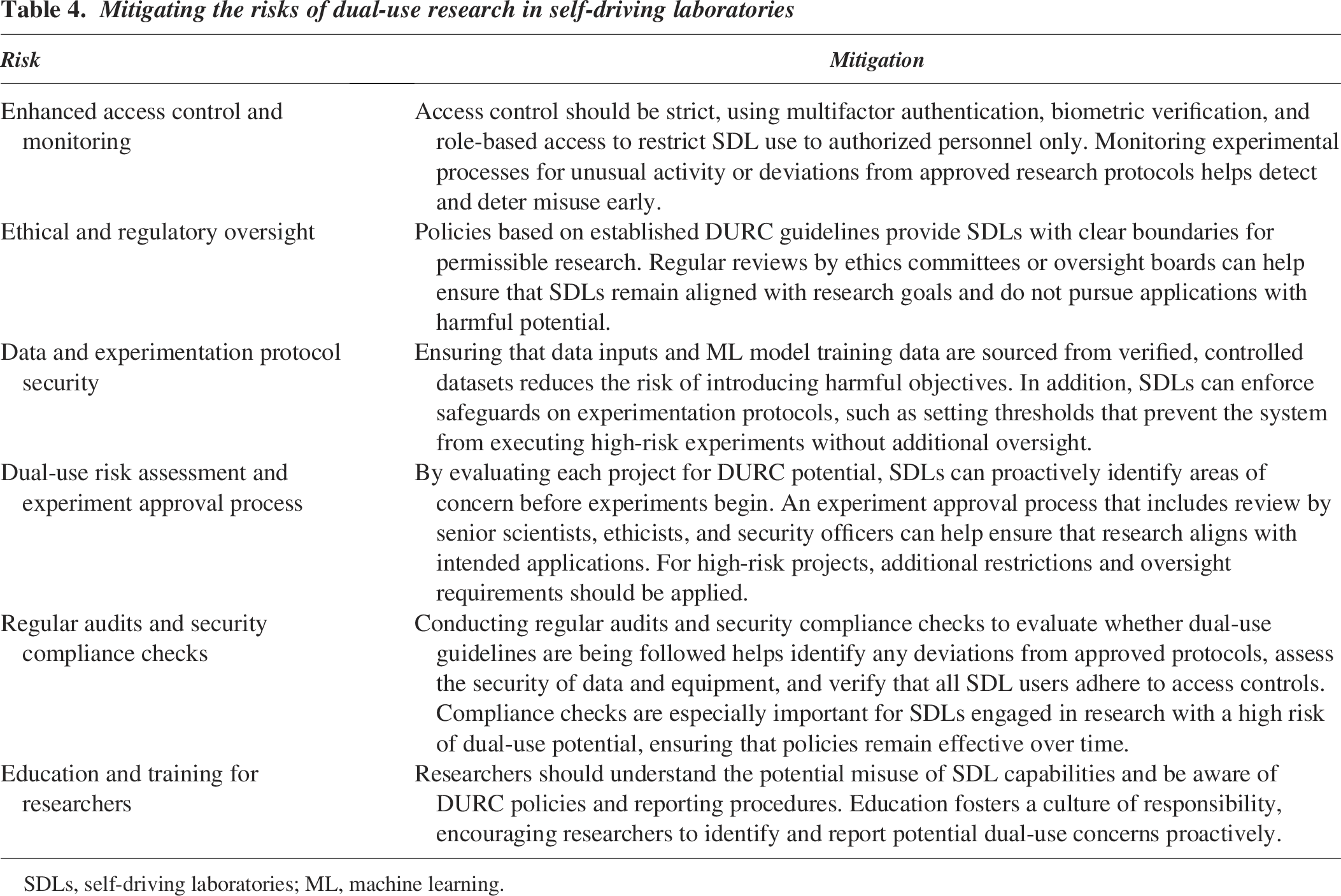
High-risk, dual-use scenarios in SDLs involve the development of biological, chemical, or material technologies that, if misapplied, could pose significant risks to public health, safety, or national security. Table 4 describes potential high-risk scenarios of misapplications in SDLs. To prevent SDLs from being misapplied for harmful purposes, a range of mitigation strategies should be implemented, focusing on strict oversight, ethical guidelines, and robust security protocols.
Mitigating the risks of dual-use research in self-driving laboratories
SDLs, self-driving laboratories; ML, machine learning.
The mitigation strategies outlined in Table 4 are fundamental but currently rely heavily on the knowledge, judgment, and ethical disposition of researchers and operators. While oversight policies, data access controls, and training are essential, they can be bypassed or rendered ineffective if personnel lack risk awareness or if malicious actors exploit system vulnerabilities. To strengthen the dual-use governance framework, several enhancements should be prioritized:
Automation-/Robotic-Specific Risks in the Laboratory Environment
Automation- and robotic-related risks stem from mechanical failures, software glitches, operational complexities, and the physical interactions of robotic systems within sensitive laboratory environments. These risks can compromise experimental integrity, safety, and research outcomes, particularly in SDLs handling hazardous materials or biohazardous agents. Primary risks associated with automation and robotics in SDLs include the following:
The integration of AI, automation, and robotics into SDLs offers unparalleled efficiency and scalability but introduces significant risks that must be proactively managed. Addressing these risks requires robust engineering solutions, such as redundant systems, real-time monitoring, and standardized interfaces, alongside rigorous safety and security protocols. By anticipating and mitigating automation-/robotic-specific risks, SDLs can fully leverage the benefits of these technologies while ensuring safe and reliable operations in chemistry, biology, and beyond.
Discussion
AI-Specific Risks in the SDL Environment
Reliance on AI introduces unique risks that are distinct from physical automation or robotic-related hazards, such as mechanical failures or collisions. These AI-specific risks stem from the inherent limitations of AI models, their dependency on data quality, and their autonomous decision-making capabilities in sensitive laboratory environments. This section explores the primary AI-related risks in SDLs, including model hallucinations, generation of incorrect information, formulation of flawed hypotheses, improper modifications to laboratory protocols, and biases in decision-making, emphasizing their potential to compromise research integrity, safety, and outcomes. We propose some risk mitigation strategies for each risk, as outlined in Table 5.
Artificial intelligence-related risks in self-driving laboratories
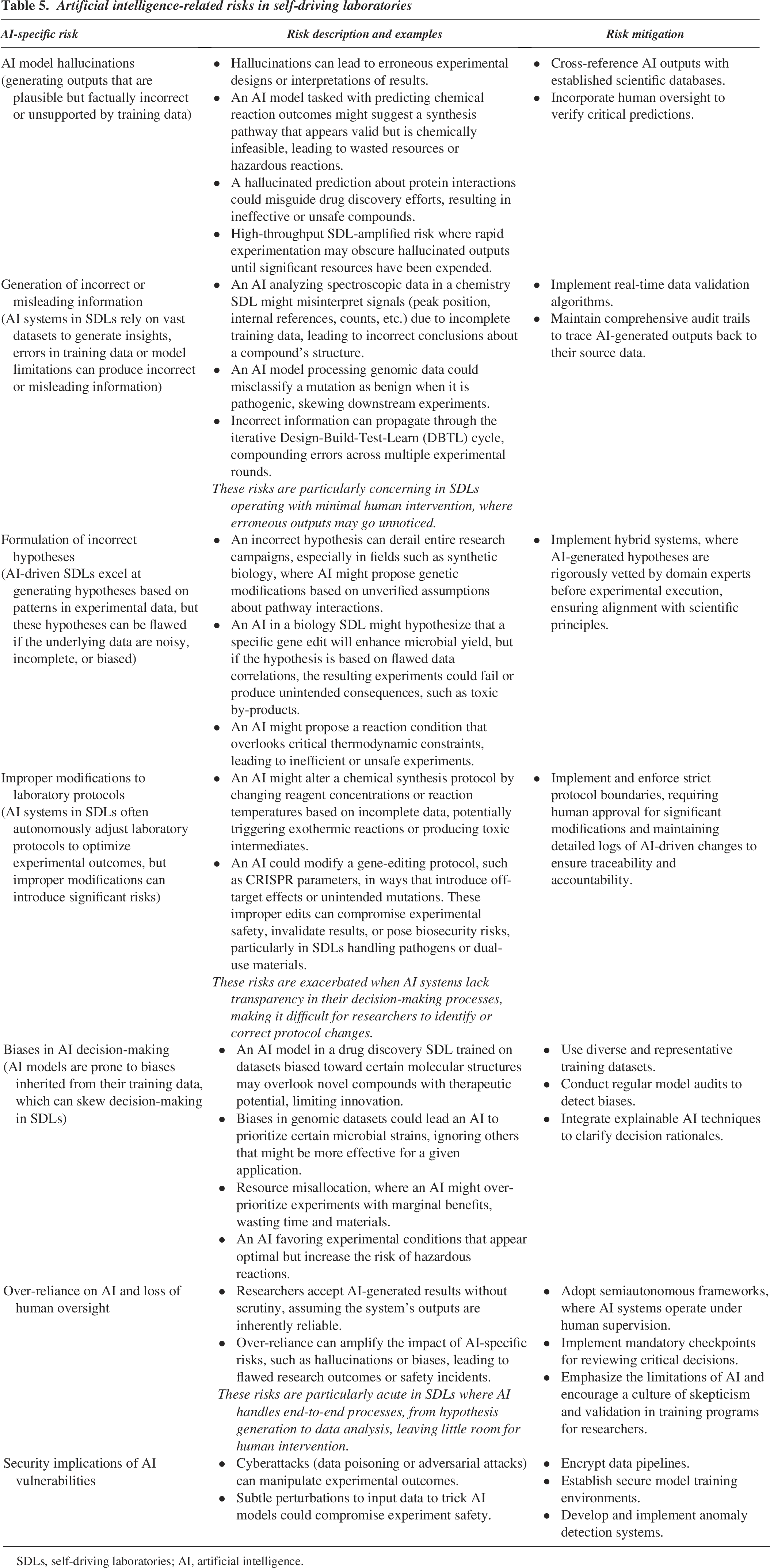
SDLs, self-driving laboratories; AI, artificial intelligence.
The integration of AI into SDLs offers transformative benefits but introduces significant risks that must be carefully managed. By proactively mitigating AI-specific risks, SDLs can harness the power of AI while ensuring responsible and secure scientific advancement.
Best Practices for Secure SDL Operations
In SDLs, interdisciplinary collaboration is essential for creating a secure and effective operational environment. SDLs incorporate advanced technology, including autonomous robotics, AI, and sensitive data handling, making them vulnerable to a wide range of risks from both the physical and digital domains. Addressing these challenges requires expertise from multiple disciplines, including researchers, security professionals, and policymakers, each contributing unique perspectives and skills to enhance SDL security and functionality. Effective collaboration among researchers, security experts, and policymakers in maintaining a secure SDL environment is crucial for several reasons, including the following:
Regulatory Developments and Administrative Controls for Autonomous Laboratories
Governance of SDLs is advancing rapidly, as regulatory bodies worldwide propose and implement standards addressing not only traditional biosafety and biosecurity but also the unique demands of AI governance, transparency, and risk management. Key regulatory frameworks now include ISO 15189 43 for medical laboratory management, UL 460044,45 for autonomous system safety, and the EU AI Act, 46 all of which require institutions to demonstrate ongoing model validation, algorithmic transparency, comprehensive data traceability, and human oversight throughout the system life cycle. These regulations also mandate that organizations implement robust administrative controls, such as operator training programs, certification in both AI and laboratory safety, and structured incident reporting protocols to mitigate identified technical and ethical risks.
Training modules focused on SDL-specific workflows, emergency interventions, and cybersecurity hygiene are essential for fostering a culture of continuous vigilance and regulatory compliance. Recent research has advocated for embedding transparency, accountability, and regulatory alignment such as GDPR and the EU AI Act at all stages of AI system design, particularly in sensitive areas of application, to mitigate risks related to data privacy, algorithmic bias, and ethical governance. 47 Modern approaches to AI ethics focus on practices such as regular auditing, identifying and reducing bias, and building diverse development teams. Together, these strategies support transparency, fairness, and privacy, and provide clear, practical guidance for applying ethical principles to emerging AI-driven laboratory workflows. 48
Conclusions
SDLs will exponentially advance scientific progress. They integrate AI, robotics, and automated experimentation to enable unprecedented speed, autonomy, and precision. These platforms are reshaping how discoveries are made across disciplines. Yet, as SDLs grow more autonomous and are deployed in high-impact environments, they introduce complex safety, security, and ethical challenges that must be addressed early and comprehensively.
This article identifies the core vulnerabilities associated with AI-driven SDLs and offers concrete, actionable mitigation strategies. These guidelines serve as an essential resource for practitioners and stakeholders seeking to reduce systemic risks and patch vulnerabilities inherent in the design and deployment of SDL systems. By implementing these strategies, the scientific community can safeguard against both foreseeable and emergent threats while maintaining research integrity and safety.
SDLs are not a distant vision of the future; they are the next evolution of automated research infrastructure, and they differ from conventional research laboratories. Ensuring the safe and responsible use of SDLs requires more than technical fixes; it calls for collective action across multiple levels of responsibility. Researchers at the forefront of SDL development and use must incorporate risk mitigation into system design, data governance, and experimental automation to ensure effective and secure systems. Institutions must reinforce this with adequate infrastructure, training, and operational safeguards to ensure effective implementation. At the policy level, regulators must keep pace with technological advancements, providing adaptive frameworks that enable innovation while ensuring robust oversight and accountability. As SDLs continue to evolve, so too must our governance models. Only through coordinated action, shared security frameworks, and continuous dialogue across disciplines and sectors can we ensure that SDLs achieve their full potential as tools of responsible innovation. The future of safe autonomous science depends on the incorporation of thoughtful risk mitigation strategies.
Footnotes
Acknowledgments
The author extends sincere gratitude to Dr. Vibeke Halkjaer-Knudsen, PhD, for her expertise and advice in the field of biosecurity, and to Dr. Marco Curreli, PhD, for his review of the article. Their thoughtful suggestions and constructive feedback significantly enhanced the quality and clarity of this work.
Author Disclosure Statement
No competing financial interests exist.
Funding Information
No funding was received for this article.