




Abstract
Using data from the Cooperative Institutional Research Program from University of California Los Angeles (n = 523), this study investigates curricular and co-curricular experiences that influence the odds of volunteering for Latina/o students who attend private institutions. Results show that Latinas/os who rated themselves highly on leadership ability, attended religious services, voted in a student election, had taken an Ethnic Studies course, and/or participated in study abroad had significantly higher odds of volunteering while in college. The implications of these results are relevant to policy and practice, as colleges provide opportunities that shape civic attitudes and behaviors.
American higher education institutions play an important role in shaping attitudes, values, beliefs, and civic dispositions of college students (Bowen & Bok, 1998; Pascarella & Terenzini, 2005). Student volunteerism is a core value of higher education and increased participation among students is a goal of many colleges and universities (Boyte & Kari, 2000; Colby, Ehrlich, Beaumont, & Stephens, 2003). Research suggests that students who attend private institutions have different experiences that impact their levels of volunteering than their counterparts at public institutions, which lead to more opportunities for character development and engagement in civic activities (Kuh & Umbach, 2004). Many of these private institutions, religious affiliated colleges in particular, tend to build volunteer opportunities into academic and student life (Gasiorski, 2009). Research has shown that students who volunteer are more likely to have educational outcomes such as increased leadership ability, higher retention rates, attend graduate school, and volunteer after graduating from college (e.g., A. W. Astin & Sax, 1998; Bowen & Bok, 1998; Pascarella & Terenzini, 2005; Sax, Astin, & Avalos, 1999). In addition, student volunteerism is correlated with positive gains in citizenship confidence, civic responsibility, self-knowledge, and self-efficacy outcomes (A. W. Astin & Sax, 1998; Eyler & Giles, 1999; Litke, 2002; Vogelgesang & Astin, 2000). This study investigates college experiences that influence volunteer behaviors of Latina/o students who attend private colleges.
The Bureau of Labor Statistics, U.S. Department of Labor (2010) found that 14.7% of Latinas/os (as a population) volunteered, with 17.4% of Latinas and 12.2% of Latino males reporting that they volunteered. Between 2001 and 2002, 35.9% of Latinas/os volunteered at religious activities, 35.7% at educational or youth services, 10.9% at social or community services, and 5.3% at hospital or other health organization (Boraas, 2003). Within the Latina/o subpopulation of college students 25 years and older, educational attainment is a strong predictor of volunteer rates (Boraas, 2003). Boraas found that 31.9% of Latinas/os who graduated with a bachelor’s degree or higher volunteered after college; however, when comparing Latinas/os with only a high school diploma and no college experience, volunteer rates drop to 16.3%. Therefore, it is important to understand how college experiences impact volunteerism among Latina/o students because they appear to shape their behaviors into adulthood.
This quantitative study estimates binomial logistic regression models to understand how the college experience impacts the odds of volunteering for Latina/o college seniors who attend a small subset of private colleges. Most service activities experienced in college can fall under two broad forms: service-learning and volunteering. In the broadest sense, service-learning is “a teaching and learning strategy that integrates meaningful volunteering with instruction and reflection to enrich the learning experience, teach civic responsibility, and strengthen communities” (The National Service-Learning Clearinghouse, 2010). Service-learning attains educational objectives through coursework, such as reflective essays, small group discussions, and class presentations (Bringle & Hatcher, 1996; Eyler & Giles, 1999). Volunteering is a charitable action in which individuals and groups donate time and effort to benefit others (Serow & Dreyden, 1990). While volunteering can be a part of a college course, the spirit of it does not require it to be. This study focuses on volunteerism as an indicator of voluntary actions, which show an emotional and physical investment beyond that required of a class.
Review of the Literature
There is extant literature about the precollege influences and the curricular and co-curricular experiences in college that explain volunteer participation (see, for example, Gándara & Bial, 2001; Gándara & Contreras, 2009). However, there is limited research about the factors that influence community service outcomes for Latina/o college students, especially those who attend private colleges. The literature review for this study is organized around the conceptual areas of precollege characteristics, attitudes and perceptions, curricular involvement, co-curricular involvement, and institutional characteristics. We selected variables for our models and the discussion of our results is based on these conceptual areas.
Precollege characteristics, including sociodemographics and experiences in secondary education, provide insight into volunteer participation for Latinas/os. In general, studies have found women are more likely to volunteer in college than men (A. W. Astin & Sax, 1998; A. W. Astin, Sax, & Avalos, 2000; Cruce & Moore, 2007; Fitch, 1991; Marks & Jones, 2004). For secondary education experiences, research has found that students who had an A average in high school, tutor another student in high school, and had at least one parent with some college experience or a college degree were more likely to volunteer in college (A. W. Astin & Sax, 1998; Cruce & Moore, 2007; Gasiorski, 2009; Serow & Dreyden, 1990). Therefore, precollege variables are considered in this model to understand the volunteering experiences among Latina/o college seniors.
Students’ attitudes and perceptions have also been shown to influence volunteer participation. Students who rate themselves highly in leadership ability, those who are inclined to promote a racial understanding, and those who have a commitment to activism were more likely to have higher rates of volunteering (Astin & Sax, 1998; Vogelgesang & Astin, 2000). Students who value making more money as a reason to attend college were less likely to volunteer (Astin et al., 2000). As these variables measure the thoughts and perceptions that influenced previous models that investigated volunteering, they are also hypothesized to explain volunteer participation of Latina/o students.
Research shows that co-curricular and curricular experiences influence volunteer participation. For example, attending a religious service, involvement with a fraternity or sorority, living on campus, being a guest in a teacher’s home, working fewer than 15 hr per week, attending a racial-cultural awareness workshop, and participation in college organizations (on or off-campus) had positive effects on volunteering (Asel, Seifert, & Pascarella, 2009; A. W. Astin & Sax, 1998; Cruce & Moore, 2007; Cruce & Moore, 2007; Fitch, 1991; Gasiorski, 2009; Gurin, 1999; Marks & Jones, 2004). Curricular experiences that have shown to influence volunteering include academic majors (e.g., biological sciences, professional occupations, education, and business majors), full-time enrollment, taking an Ethnic Studies course, and college grades (Cruce & Moore, 2007; Gasiorski, 2009; Gurin, 1999; Gurin, Dey, Hurtado, & Gurin, 2002; Serow & Dreyden, 1990). These variables are included in the model and are hypothesized to explain some of the variance in volunteering for Latina/o college students.
Studies have found that institutional characteristics also influence volunteerism. For example, students who attended smaller institutions were more likely to volunteer than students who attended larger institutions (Cruce & Moore, 2007). The odds of volunteering are significantly lower for students who attend either a public institution or a private secular institution when compared with their counterparts at private religious institutions (Cruce & Moore, 2007; Gasiorski, 2009; Serow & Dreyden, 1990). More specifically, studies have shown that Catholic and Protestant colleges have direct and positive effects on the importance students attach with civic responsibility, volunteerism, and civic and social values (A. W. Astin et al., 2000; Kuh & Umbach, 2004; Rhee & Dey, 1996). We also considered the impact of institutional selectivity on volunteerism because it has been influential in a range of college students’ outcomes (Pascarella & Terenzini, 2005), but there is limited research about its impact on volunteerism of Latina/o students in college.
We also included variables not included in prior studies that investigate volunteering, such as voting in a student election, studying abroad, and/or being involved in a women’s studies course. These opportunities have been found to increase student empowerment and self-discovery as well as develop leadership skills (Agha-Jaffar, 2000; A. W. Astin & Sax, 1998; Chang, Astin, & Kim, 2004; Hart, Donnelly, Youniss, & Atkins, 2007; Hurtado, 2007; Luebke & Reilly, 1995; Salisbury, Umbach, Paulsen, & Pascarella, 2009; Sevelius & Stake, 2003; Vogelgesang & Astin, 2000). Because these experiences result in outcomes that promote civic engagement and responsible citizenship (Eyler & Giles, 1999), they are also hypothesized to explain volunteering behaviors of Latina/o students in college.
Most of the institutions in our study are highly selective. Studies have shown that students who attend highly selective institutions tend to come from middle to upper class socioeconomic status and nonminority backgrounds (e.g., Carnevale & Rose, 2003). Using the High School and Beyond data set, Bowen and Bok (1998) found that Latina/o and African American students who attended selective institutions of higher education were more likely than their Caucasian counterparts to be engaged in their communities beyond college. Many of these students went on to start or lead nonprofit organizations in their respective communities. Thus, volunteer and civic activities in college have the potential for considerable impact on future behaviors and community engagement for Latina/o students who attend private institutions.
Conceptual Framework
Extant literature provides guidance in understanding the college experiences that shape our understanding of volunteering behaviors of college students. The goal of this study is to build on previous work and test how certain variables related to the college experiences are correlated with a Latina/o college student sample. Given the increasing proportions of Latinas/os in the educational pipeline (Contreras, 2011), and the many benefits volunteering yields, it is important to understand what experiences in college may increase the likelihood of Latina/o college students to volunteer. Latino college students’ involvement in curricular and co-curricular activities impacts a multitude of outcomes, including volunteering. For Latina/o college students, volunteering not only develops civic leadership, but it also has the potential to expand the networks of the community members that they serve. These networks could play a major role in creating human capital for existing and rising generations (Coleman, 1988; Gandara, 1995; Gándara & Bial, 2001). This study investigates precollege experiences and college experiences that impact the odds of volunteering for Latinas/os at private institutions.
Given the above, the following questions guide this study: What is the relationship between (a) precollege characteristics and experiences, (b) attitudes and perceptions, (c) co-curricular experiences, (d) curricular experiences, (e) institutional characteristics, and (f) volunteering for Latina/o private-college seniors?
Data and Variables
Data
The data used for this study are from a longitudinal sample of public and private 4-year institutions that participated in the Cooperation Institutional Research Program (CIRP) sponsored by the Higher Education Research Institute (HERI) at the University of California Los Angeles (UCLA). CIRP was founded more than 40 years ago to identify practices that lead to positive outcomes for students. The concepts and items included in the survey design are based on involvement theory (Wolf-Wendel, Ward, & Kinzie, 2009). This study used data collected from incoming freshmen in 2000 using the Student Information Form (SIF) along with a follow-up survey in 2004 using the College Student Survey (CSS). Both surveys assess background characteristics, values, attitudes, and behaviors of students at the time of college entry, and again in follow-up studies, to understand the impact of college experiences (A. W. Astin et al., 2006).
Our subsample of Latina/o college students were drawn from a larger data set that included 12,138 students. There was a total sample of 559 Latina/o college seniors in our study. As only 29 of these students went to public institutions, it is not possible to estimate comparative models between public and private institutions. Therefore, this study focused on 530 Latina/o private-college students that exist in our sample, which includes Mexican Americans (n = 227), Puerto Ricans (n = 81), and other Latina/o populations (n = 222). Latinas/os (n = 12) with multiple Latino race responses (e.g., Mexican American and Puerto Rican) were considered and placed in the subgroup labeled “other Latina/o.” Of these Latinas/os enrolled at private 4-year institutions, 35% were Latino males (n = 188) and 65% were Latina females (n = 342). Within this institutional category, two private religious institutions accounted for 45.5% of students in the sample (n = 241) and three private secular institutions accounted for 54.5% of the students in the sample (n = 289). CIRP provides estimated standard errors for comparison groups of various sizes and response percentages to calculate the precision of the data using confidence interval estimates (Pryor et al., 2012; Sax, Astin, Korn, & Mahoney, 2000). The CIRP data precision for Latinas/os in this sample used a 95% response percentage for a sample size of 500. The confidence interval for this study to be replicated using this survey and the same sample size falls between 96.9% and 93.1%, 95 times of out of 100.
Variables
The dependent variable for this study is a dichotomous variable that represented whether or not a student participated in volunteer work during college. The original variable came from the CSS and students responded to the prompt “performed volunteer work.” This variable had three response categories: (1) no, (2) occasionally, and (3) frequently. A dummy variable was created in which students who participated in volunteer service were coded 1 and students who did not were coded 0.
Independent variables selected in this study are based on extant literature that found them to influence volunteering (see Table 1 for variable definitions). Variables are categorized by type: (a) precollege characteristics/experiences, (b) attitudes and perceptions, (c) institutional co-curricular experiences, (d) institutional curricular experiences, (e) and institutional characteristics (see Table 1 for full list of independent variable definitions and coding schemes). Precollege characteristics/experiences were drawn from the SIF survey and the remaining variables in the model come from the CSS.
Variable Definitions.
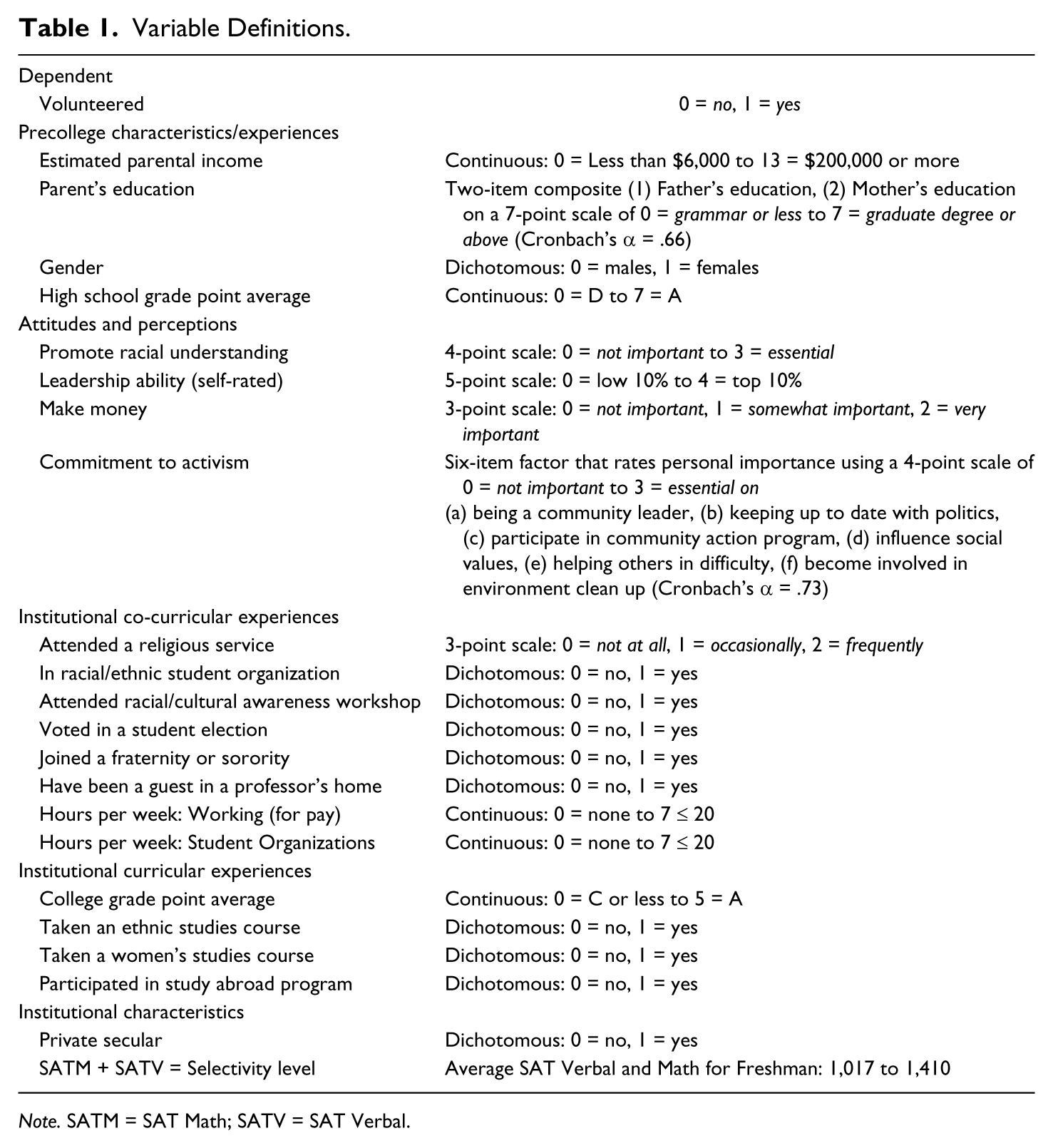
Note. SATM = SAT Math; SATV = SAT Verbal.
Analytic Strategy
A binomial logistic regression analysis was the most appropriate data analytic technique for this study given the dichotomous nature of the dependent variable. Logistic regression allows researchers to explore associations between a binary outcome (dependent variable) and predictors (independent variables). The outcome is the propensity for the event to occur. The binomial logistic regression represents the effect of unit change in the independent variable on the odds of having volunteered relative to having not volunteered (Cruce & Moore, 2007). Variables were entered in five sequential blocks (e.g., precollege experiences, attitudes and perceptions, curricular experiences, etc.) to allow for the analysis of the change or effect on volunteering by blocks (see Table 2 for descriptive information about variables).
Statistical Description of Variables.
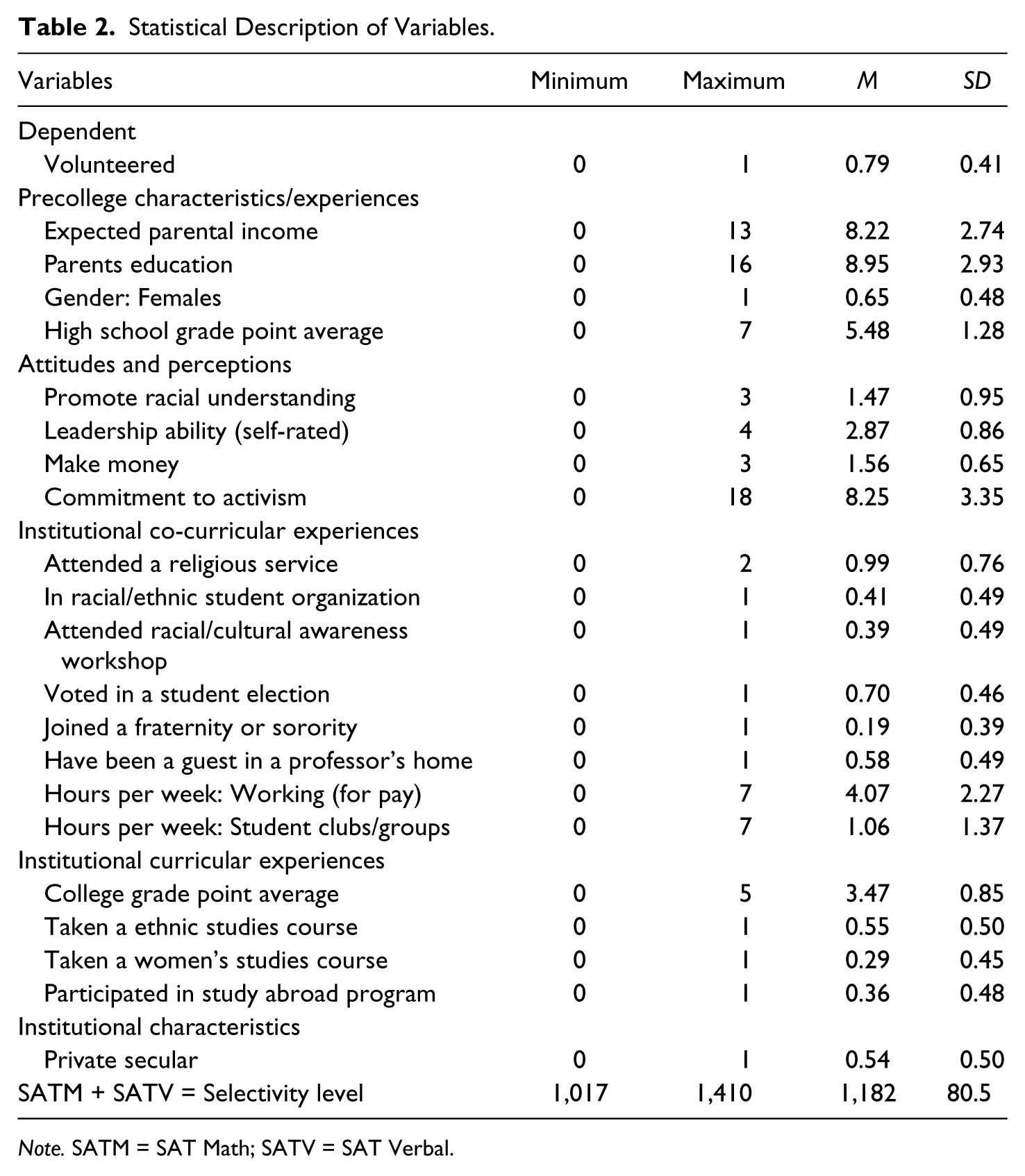
Note. SATM = SAT Math; SATV = SAT Verbal.
The data set revealed a small range of missing data (0%-9%). To maximize the information, missing values were replaced using the expectation-maximization (EM) algorithm function in SPSS. The EM algorithm is a general method for finding maximum likelihood estimates when a small proportion of the data is missing (Allison, 2002). This method allowed the study to include 523 Latinas/os, which accounted for 98.7% of the sample. The data were also checked for multicollinearity assumptions and there were no concerns. The results were interpreted by the exponentiated beta (B), which represents the change in odds resulting from a one-unit change in the independent variable.
Results
Five binomial logistic regression models were estimated. The first model included precollege background characteristics and experiences. The second model added students’ attitudes and perceptions. The third model added institutional co-curricular experiences and the fourth model added institutional curricular experiences. Finally, the fifth model added institutional variables. The final model correctly predicted 81.3% of cases with the predictor variables and volunteering. The −2 log likelihood decreased significantly with each of the five sequential blocks, indicating that the addition of each of the blocks significantly improved the fit of the overall model. In addition, the pseudo R2 using Nagelkerke increased with the addition of each block, indicating improved model fit (see Table 3 for complete results).
Odds Ratios From Binomial Logistic Regression Estimates on Latinas/os Volunteerism (n = 523).
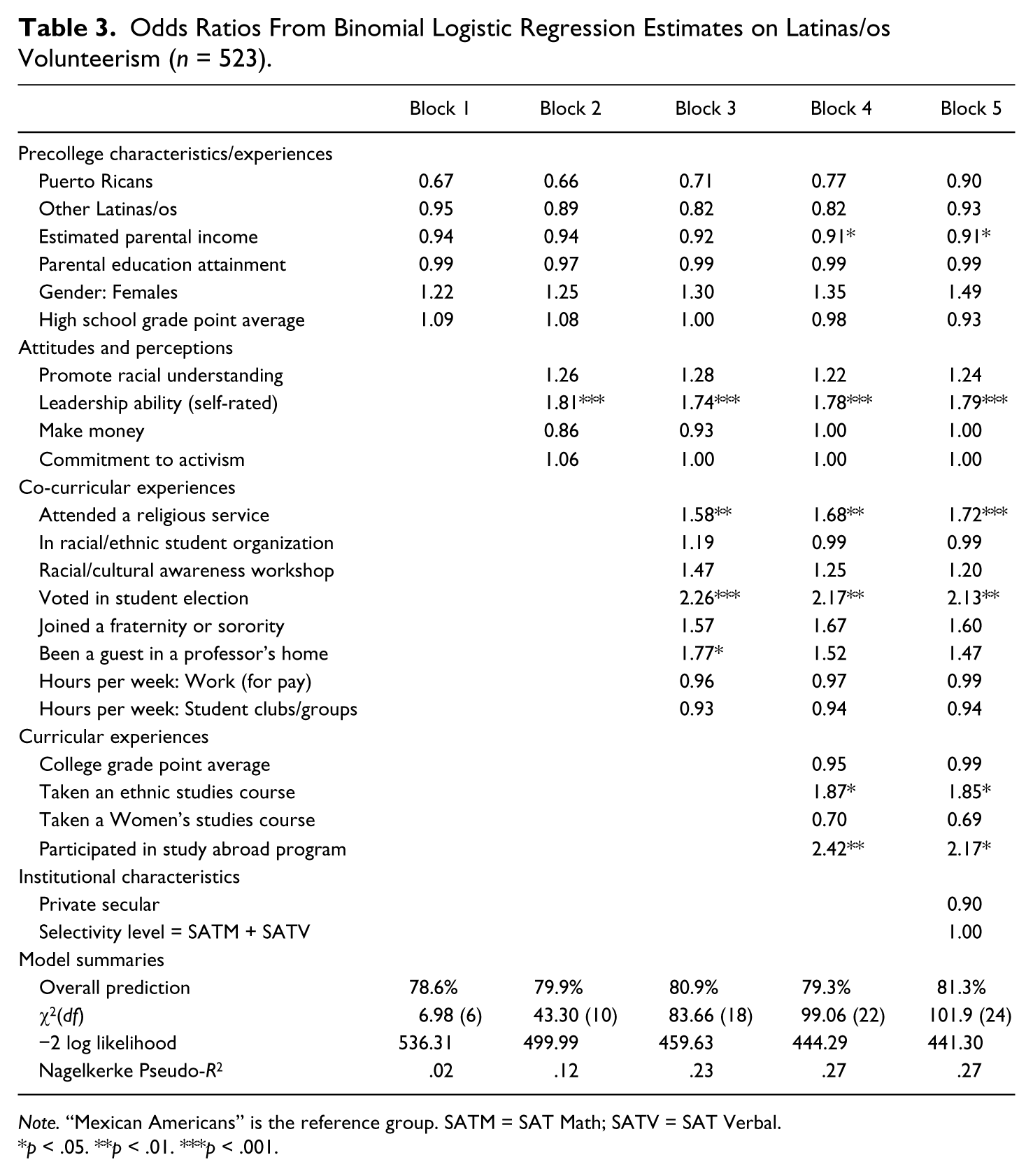
Note. “Mexican Americans” is the reference group. SATM = SAT Math; SATV = SAT Verbal.
p < .05. **p < .01. ***p < .001.
After controlling for all variables in the model, this study found six statistically significant positive effects on volunteering in the final model: (R2 = .27), χ2(df = 24, N = 523) = 101.9. One precollege background characteristic variable was found to be significant. Latina/o private-college students estimated parental income is a statistically significant negative predictor of volunteering (β = −.91, p < .05). For every unit increase in parent income, the odds of volunteering decrease by 8%. Regarding attitudes and perceptions, only leadership ability is statistically significant. As students rating in their leadership ability increases, so do their odds of volunteering (β = 1.79, p < .001). Two variables under the construct of institutional co-curricular experiences were found to be significant. The odds of volunteering are 2.13 times higher for students who voted in a student election than those who do not vote (β = 2.13, p ≤ .01). In addition, students who attended a religious service have significantly higher odds of volunteering than their Latina/o counterparts who did not attend a religious service (β = 1.72, p ≤ .001). Regarding curricular experiences, the odds of volunteering are 2.17 times higher for students who participated in study abroad versus those who did not (β = 2.17, p ≤ .05). Students who took an Ethnic Studies course had 1.85 times higher odds of volunteering than students who did not (β = 1.85, p ≤ .05). While we included institutional comparisons (i.e., private religious vs. private secular), and institutional selectivity, they did not have a significant effect on the model.
Limitations
There are several limitations to consider when interpreting the results of this study. The small sample of Latinas/os and private institutions in the CIRP data does not allow this study to be generalized to all Latina/o college students and private institutions. Latinas/os in this sample attended private institutions and the majority of those surveyed were full-time students. Undergraduate enrollment in 2008 found that Latinas/os had a greater enrollment rate at public institutions than private institutions (Aud, Fox, & KewalRamani, 2010). In addition, 74% of Latina/o students in college are enrolled full-time (Fry, 2003). This study does not fully represent part-time, low income, transfer, returning, commuter, and generational status students. The size of the sample did not allow comparison among Latino subgroups.
In addition to sample size limitations, incomplete survey responses and missing variables (e.g., volunteering as a requirement in high school, college aspirations, college major, off-campus involvement, volunteering as a college requirement, etc.) prevented a complete analysis of all of the independent variables that we intended to analyze and that previous literature has found to strongly predict volunteerism. Finally, this study demonstrates experiences that are correlated with volunteering among a subset of Latina/o college students who attend selective, private institutions and who have more opportunities to volunteer. They are therefore a highly selective sample. Future studies should attempt to capture a more representative sample of Latina/o college students who attend various institutional types, including community colleges, public institutions, and private institutions.
Discussion
This study investigates college experiences that influence volunteer behaviors of Latina/o students who attend private colleges. Few studies have focused on volunteering among the Latina/o private-college student populations. Volunteering is an important function that promotes internal rewards for college students and helps the communities in which they serve. Institutions provide a catalyst for Latina/o students to experience curricular and co-curricular involvement that impact volunteerism. The findings suggest that precollege background characteristics and experiences, attitudes and perceptions, co-curricular experiences, and curricular experiences are significantly correlated with volunteer participation for Latinas/os at private institutions.
Parental Income
Parental income negatively correlated with volunteerism among Latina/o students. This finding is not consistent with other studies that have found income and volunteering to be a positive relationship (Clary & Snyder, 1991; Smith, 1994; Sundeen & Raskoff, 1994). Gasiorski (2009) noted the relationship with income and volunteering is not as easy to track with college students who often do not possess much of their own wealth, rather the influence is due to the socioeconomic status of their family. Across all Latina/o age groups, people with higher levels of education, better English language skills, and some degree of financial security were seen as the most likely candidates to volunteer (Hobbs, 2001). Studies have found that college students from higher socioeconomic status have more opportunities to become involved in community activities when they are younger, which increases their likelihood to volunteer in college (Oesterle, Johnson, & Mortimer, 2004; Wilson, 2000). However, this is not the case for our sample of Latina/o students who attend private institutions. One plausible explanation for this finding is that Latina/o who attend private institutions are not reliant on parents for a source of financial support; or they have received institutional support. We believed that our zero-order correlations would provide information about the differences in bivariate relationship between income categories and other predictors in our model that are correlated with volunteering. However, follow-up data analyses did not provide additional insight on this finding. Future studies should further investigate the relationship between socioeconomic status and volunteering to better understand how precollege and college experiences may result in varying rates of volunteering for Latina/o college students across the income categories. Such analyses would allow a richer understanding of potential class-based differences among Latina/o students in college in regards to volunteering outcomes.
Leadership Ability
Latinas/os who rated themselves highly in leadership ability were more likely to volunteer. This finding supports research that has found positive relationships between leadership ability, leadership growth, and volunteering (Dugan, 2006; Eyler & Giles, 1999; Vogelgesang & Astin, 2000). Understanding how college students’ leadership ability develops provides more insight into Latina/o volunteer experiences. Using the social change model of leadership development, Dugan (2006) found that students who were involved with volunteering scored significantly higher than their uninvolved counterparts on the socially responsible leadership measures. These measures include consciousness of self (e.g., the things that I feel passionate about have priority in my life), congruence (e.g., I take a stand when I believe something), commitment (e.g., I am willing to devote time and energy to things that are important to me), collaboration (e.g., I believe that better outcomes result when many people work together), common purpose (e.g., I work well when I know the collective values of a group), and citizenship (e.g., it is important to me that I play an active role in my community). Therefore, Latina/o students who volunteer may also be more likely to have a socially responsible leadership disposition, which increases the likelihood of approaching situations with civic engagement implications in collaborative and socially responsible ways. Given these positive associations, we need to better understand the curricular and co-curricular experiences that develop aspects of socially responsible leadership, which include civic responsibility activities, multicultural awareness, skill development, and personal and societal awareness (A. W. Astin, 1993; Cress, Astin, Zimmerman-Oster, & Burkhardt, 2001; Posner, 2004). Our zero-ordered correlations show that leadership ability ratings is also positively and statistically associated with being involved in racial/ethnic organizations (r = .10, p < .05), attending a racial awareness workshop (r = .18, p < .01), and joining a fraternity or sorority (r = .14, p < .01). All of these experiences have been shown to promote leadership development (A. W. Astin, 1993; H. S. Astin, 1996; A. W. Astin, Vogelgesang, Ikeda, & Yee, 2000; Dugan, 2006; Vogelgesang & Astin, 2000). There are many other diversity-related experiences and student organizations that promote socially responsible leadership that were not included in this data. Future research should examine the extent to which diversity experiences and participation in student organizations influence the frequency and types of volunteer service. Such information would allow a better understanding about how certain experiences differentially promote leadership development, which may also inform the likelihood to volunteer.
Vote in a Student Election
This study found that students who voted in a student election in college had higher odds of volunteering than students who did not vote. Many civic engagement activities also expose students to political knowledge and the democratic processes (Colby, Beaumont, Ehrlich, & Corngold, 2007). Such exposure to activities that emphasize political engagement will reinforce students’ understanding of the democratic process and increases their understanding about the many parts of the process, such as understanding how to register, making sense of candidates, voting, and increasing awareness of campus issues and resolutions (Colby et al., 2007). Latina/o participation in student elections creates a trust in the voting system and a level of comfort with their civic role and responsibilities, making it more likely that they will continue to participate in collective political action in the future (McFarland & Thomas, 2006). The greatest determinant of future political involvement is past political involvement (Plutzer, 2002); therefore, not only does voting in a student election and volunteering behaviors reinforce one another but also may create future voting behaviors for Latina/o students in federal and state elections.
Religious Service
Latina/o private-college students who attend religious services are more likely to volunteer than those who do not. This finding is consistent with previous research about Latinas/os specifically (A. W. Astin & Sax, 1998), and more generally about the relationships between religious service attendance, religiosity, and volunteering (A. W. Astin & Sax, 1998; A. W. Astin et al., 2000; Fitch, 1991; M. H. Lopez, Pratap, & Conner, 2007; Marks & Jones, 2004; Serow & Dreyden, 1990). Religious institutions emphasize charity, caring for others, and volunteering (Wuthnow & Hodgkinson, 1990), and their services create conditions that promote volunteering for college students. In addition to volunteering, our zero-order correlations show that Latina/o students who attend religious service have higher commitments to activism (r = .14, p < .01) and are more likely to vote in a student election (r = .10, p < .05). These relationships are also supported by extant research (Frisco, Muller, & Dodson, 2004; Trusty & Watts, 1999; Uslaner, 2003). Latinas/os in college who attend religious services tend be engaged in mutually reinforcing thoughts and activities that lend themselves to being a civically responsible and engaged students (Colby et al., 2003; Eyler & Giles, 1999). Data for this study provide limited information about the various aspects of the religious experience that promotes volunteering, which may be different for other non-Latino students on campus. Future research should seek to understand if these processes are unique to Latina/o students, as it has implications for unearthing various cultural-specific internalizations of religious services that could be integrated into the experiences for Latina/o college students that may promote volunteering and its civic engagement correlates.
Ethnic Studies
This study also found Latina/o students who took an Ethnic Studies course increase their odds of volunteering. Studies have found diverse courses such as Ethnic Studies have a positive impact on students’ development of democratic skills and dispositions, including volunteering during and after college (A. W. Astin, 1993; Denson, 2009; Gurin et al., 2002; G. E. Lopez, 2004). Ethnic Studies exist in part because students of color (e.g., African Americans, Latinas/os, Native Americans, etc.) have demanded an education that is culturally relevant, personally meaningful, and affirming of their identities (Sleeter, 2011). In general, Ethnic Studies courses have been found to increase a student’s multicultural responsiveness by creating an awareness of other ethnicities and cultures, increasing openness to diversity, and promoting racial understanding (Pascarella & Terenzini, 2005, p. 312). LeSourd (1997) stated this is beneficial because the “ideals of democratic life cannot encompass all members of the national community until people of different traditions listen to the voices of others. (p. 159)” Ethnic Studies and volunteering both provide opportunities for students to acquire knowledge and extend one’s perspective in the community in which they live and serve. In addition to volunteering, our zero-order correlations show that Latina/o students who took an Ethnic Studies course had statistically positive relationships with parental income (r = .09, p < .05), promoting racial understanding (r = .15, p < .001), commitment to activism (r = .09, p < .05), participation in a racial/ethnic organization (r = .24, p < .001), involvement in a racial or cultural workshop (r = .28, p < .001), student election participation (r = .10, p < .05), being a guest at a professors home (r = .10, p < .05), women’s studies course enrollment (r =.25, p < .001), and studying abroad (r = .15, p < .001). Ethnic Studies course plays a tremendous role in how Latina/o students experience higher education. These experiences provide opportunities for Latinas/os to increase their multicultural involvement, and may also increase their volunteer participation. These findings have implications for how institutions of higher education can work to integrate their students into campus life.
Study Abroad
We found that participation in studying abroad increased the odds of Latinas/os to volunteer. Institutions have a long history of providing students with opportunities to study abroad. Research has shown that studying abroad increases a student’s academic achievement, cultural competence, and career aspirations (Carson, Burn, Useem, & Yachimowicz, 1990; Pascarella & Terenzini, 2005). Because studying abroad is a powerful experience that informs a number of outcomes, including volunteering, educators are encouraged to find ways to promote and support this international opportunity for Latina/o students. However, there is more work to be done to increase the percentages of Latina/o students who engage in study abroad. For instance, only 36% of Latina/o students studied abroad in this sample compared with a recent study that reported only about half of Latina/o college students study abroad (McClure, Szelenyi, Niehaus, Anderson, & Reed, 2010). Latina/o college students acknowledge several reasons for not participating in study abroad such as finances, not wanting to leave their family for long periods of time, and the pressure to complete a degree (McClure et al., 2010). Less is known about Latina/o students’ intent to study abroad. Salisbury et al. (2009) argued that the three stage decision-making process to study abroad is similar to choosing a college: (a) the development of the predisposition or intent to study abroad, (b) the search for an appropriate study program, and (c) the selection of and departure for a particular program. They further compare the two by stating that the first stage is “a process during which students examine the options and requirements of various colleges or study abroad programs and evaluate them with respect to their perceived needs, expectations, and preferences” (p. 123). Future research would benefit from a thorough investigation into Latinas/os intent to study abroad, as it has implications for understanding the extent to which their decisions are based on affordability, cultural accessibility, intellectual and professional applicability, and curricular variability (Salisbury et al., 2009); and it may also provide insight into their volunteering behaviors.
Implications
Understanding the factors that increase and decrease the likelihood to volunteer can influence future academic policy and practices, which can be structured around incentivizing more students to volunteer. Latina/o college student involvement in curricular and co-curricular activities impacts a multitude of outcomes, including volunteering. The need for Latina/o students to volunteer is imperative given the multitude of positive benefits that these service experiences yield for students and their respective institutions and communities.
Our findings have implications for how higher education institutions can work to integrate their students into campus life. Because more than half of Latina/o students tend to work more than 20 hr per week (Contreras, 2011; Perna, 2010), campus involvement and volunteerism may be a challenge. Making co-curricular activities “curricular,” is one approach to increasing volunteerism among Latina/o students and keeping students engaged in college (Contreras, Flores-Ragade, Lee, & McGuire, 2011). An example of this would be service-learning projects. Opportunities like this provide valuable learning experiences that enable students to earn college credit while serving various community-based organizations. Providing institutional support encourages faculty members to integrate service-learning into their curriculum, increasing the opportunities for students to connect academic content with service activities (McCarthy & Tucker, 2002). This also allows for faculty members to build meaningful partnerships with community organizations and community networks (Konwerski & Nashman, 2002).
The subsample of Latina/o students from private institutions who volunteer have increased potential to provide civic leadership. This leadership can increase their opportunity for personal and community-based enrichment. Volunteering not only develops civic leadership, but it also has the potential to expand the networks of the communities they serve. This style of networking can create human capital for existing and rising generations (Coleman, 1988; Gandara, 1995; Gandara & Bial, 2001). As Latina/o college students increase their community engagement, they inadvertently provide members of the community with leadership models and expanded networks in the college environment. This subsequently increases the community members’ chances for social mobility. The role of community engagement cannot be underestimated. As Konwerski and Nashman (2002) found the community’s role in educating students can be paralleled to that of the faculty member, as students interact and learn from the community. Furthermore, Bowen and Bok (1998) found many Latina/o students in their sample went on to start or lead nonprofit organizations in their respective communities.
Conclusion
This study adds tremendous insight into private-college experiences that influence volunteering for these Latina/o college students. We have shown that a number of background characteristics, attitudes and perceptions, curricular, and co-curricular experiences that inform our understanding of volunteering among Latina/o students. It is important that future research continues to expand upon these findings and provide more information about how educational experiences inform civic engagement outcomes for Latina/o students in postsecondary contexts. These students are likely to provide civic leadership across various communities. The more information about the specific types of activities and campus climates that promote volunteering may increase the likelihood that more Latina/o students will be exposed to such significant and influential service experiences that have a positive impact on their lives as students, as adults and on the broader community.
Footnotes
Declaration of Conflicting Interests
The author(s) declared no potential conflicts of interest with respect to the research, authorship, and/or publication of this article.
Funding
The author(s) received no financial support for the research, authorship, and/or publication of this article.