




Abstract
This study examined within-group differences in obesity-related dietary behaviors and the health status of 156 Latino students at risk for diabetes due to family history. Approximately 58% of students were overweight and/or obese, with female students reporting a greater risk for diabetes. Consumption of meats, fried potatoes, breads, and tortillas was associated with higher body mass index (BMI) and diabetes risk indices. Differences in dietary behaviors were found based on students’ college profile and sociodemographic characteristics. Implications for university-related intervention health initiatives are discussed.
An estimated 2.5 million Latino Americans are currently afflicted with type 2 diabetes, with dramatic increases in prediabetes and diagnosed diabetes occurring among adolescent and college-age individuals (Centers for Disease Control and Prevention [CDC], 2011, 2014b; U.S. Department of Health and Human Services [HHS], Office of Minority Health, 2015). Dietary health-related factors associated with the obesity epidemic are primary reasons for the rising prevalence rates of type 2 diabetes among young Latinos (CDC, 2014b; Flegal, Carroll, Kit, & Ogden, 2012; Kposowa, 2013; T.F. Nelson, Gortmaker, Subramanian, Cheung, & Wechsler, 2007; Ogden, Carroll, Kit, & Flegal, 2014).
The present study responds to the Latino diabetes youth health crisis by reporting on the obesity-related eating behaviors and health status of Latino college students who are at a heightened risk for onset diabetes due to family history of the disease. Understanding obesity-related eating habits of vulnerable minorities such as the Latino college student is greatly needed if we are to effectively tackle diabetes as a preventable disease threat in young adults (U.S. Department of HHS, Office of Disease Prevention and Health Promotion, 2011). Because Latinos now comprise the largest ethnic minority group within our nation’s university college population (Fry & Lopez, 2012; Page, 2013), Hispanic-serving institutions are contextually ideal for examining risky eating behaviors in Latino young adults and for implementing targeted diabetes preventive health initiatives.
Obesity in College and Latino Students
The transition from adolescence to adulthood—a time typically associated with attending college—is recognized as a risky period for significant weight gain among young adults (Ferrara, 2009; M. C. Nelson, Story, Larson, Neumark-Sztainer, & Lytle, 2008). In fact, epidemiological studies indicate that the greatest increases in weight and obesity are now observed in persons 18 to 29 years of age (Mokdad et al., 2001; Mokdad et al., 1999; Winkleby & Cubbin, 2004), and that the rates of type 2 diabetes and related health conditions have also increased in this age group (CDC, 2011; Mokdad, Marks, Stroup, & Gerberding, 2004; Morrell, Lofgren, Burke, & Reilly, 2012). Likewise, recent large-scale studies of university students indicate that an estimated 30% to 35% of students are overweight and/or obese (American College Health Association [ACHA], 2011; Huang et al., 2003; Lowry, Galuska, Fulton, Wechsler, & Kann, 2002; Lowry et al., 2000), with many at risk for continued weight gain as they progress through 3 to 4 years of college (Gropper, Simmons, Connell, & Ulrich, 2012; Racette, Deusinger, Strube, Highstein, & Deusinger, 2005). The greatest increases in weight gain—approximately 4 pounds—occur during the freshman year (Lloyd-Richardson, Bailey, Fava, & Wing, 2009; Vella-Zarb & Elgar, 2009). Finally, demographic characteristics associated with being overweight and/or obese in college include being male, single, and older, as well as being of low socioeconomic status and living off-campus (Braithwaite, Delevi, & Fincham, 2010; Brunt & Rhee, 2008; T. F. Nelson et al., 2007).
Surprisingly, only one large-scale study (comprised of a nationally representative sample of 4-year universities) was found examining ethnic/racial differences in college students’ weight status (WS) that included Latinos (T. F. Nelson et al., 2007). In line with current epidemiological findings of Latino obesity among young adults (Garcia et al., 2012; Ogden et al., 2014), this study found a high incidence rate of obesity in Latino university students (41% were identified as overweight and/or obese) who were also more likely, as a group, to be overweight when compared with White students. Results from the few small-scale university studies conducted to date that included Latino samples also indicate that a sizable percentage of these students were overweight and/or obese (body mass index [BMI] scores across studies ranged from 32% to 58%), with percentages mirroring or greatly exceeding those reported for the larger U.S. college population (Freedman, 2010; D. Hu, Taylor, Blow, & Cooper, 2011; Hurtado-Ortiz, Santos, & Reynosa, 2011). Finally, the study by Hurtado-Ortiz, Santos, and Reynosa (2011) found that acculturative forces can impact students’ health status, with more assimilated Latino students reporting higher BMI indices and a less healthy WS—a finding that is consistent with that observed in the general Latino population (Garcia et al., 2012).
Obesity-Related Behaviors in College Students
Heightened stress levels and sleep disturbances, accompanied by poor dietary practices, increased caloric intake, and physical inactivity, are often cited as primary culprits for weight gain and diminished health among university students (Ferrara, 2009; M. C. Nelson et al., 2008; Patel & Hu, 2008; Serlachius, Hamer, & Wardle, 2007). Specifically, in terms of eating patterns, “all-you-can-eat” dining halls, meal frequency, skipping meals, evening snacking, and consumption of high-fat junk foods are all implicated in weight gain during the first year of college (DeBate, Topping, & Sargent, 2000; Freedman, 2010; Levitsky, Halbmaier, & Mrdjenovic, 2004; Poddar et al., 2009). Furthermore, counter to all dietary recommendations (Adams & Colner, 2008; Thompson & Veneman, 2005), the average college student “typically consumes a diet lacking in fruits, vegetables, and dairy products and high in fat, sodium and sugar” (Brunt et al., 2008, p. 629). Most alarming is the reportedly substantial consumption of sugar-sweetened beverages and fast food high in fat among college students (Bleich, Wang, Wang, & Gortmaker, 2009; Heidal et al., 2012; Huffman & West, 2007; O’Leary, Hattersley, King, & Allman-Farinelli, 2012; Racette et al., 2005), which are two dietary practices linked to long-term weight gain and a heightened risk for metabolic syndrome, insulin resistance, and type 2 diabetes (Heidal et al., 2012; F. B. Hu & Malik, 2010).
Accordingly, sociodemographic and university-related variables have been found to influence eating patterns among students. Previous studies report that college women are more likely to choose foods low in fat, avoid meats, and consume less fast food and sugar-sweetened beverages than male college students (Boek, Bianco-Simeral, Chan, & Goto, 2012; Huffman & West, 2007; Levi, Chan, & Pence, 2006; Mooney & Walbourn, 2001; Poddar et al., 2009; West et al., 2006). Younger-aged undergraduates, when compared with older students, consume more sugar-sweetened beverages (Huffman & West, 2007; West et al., 2006). Furthermore, students with higher incomes report healthier eating patterns in terms of consuming more fruits and vegetables and fewer sweets, fast-food meals, and high-sugar soft drinks (Knight, Killion, & Knight, 2014). In terms of university characteristics, studies indicate that students who live with their parents have healthier eating habits than those living on-campus (Freedman, 2010), and commuter students who pack lunches consumed less on-campus fast food (Jackson, Berry, & Kennedy, 2009). Likewise, students who live off-campus (not with parents) report consuming a less varied diet of fruits, vegetables, and dairy compared with students residing on-campus (Brunt & Rhee, 2008). Finally, greater fruit and vegetable consumption is linked to being a full-time student, not single and/or in a committed relationship, and living in a residential hall (Adams & Colner, 2008).
Obesity-Related Behaviors Among Latino College Students
The limited research conducted on Latino students suggests that they too tend to make poor dietary choices. For instance, Latino students consume fewer fruits and vegetables than recommended (Evans, Sawyer-Morse, & Betsinger, 2000; D. Hu et al., 2011), comparatively less than their White peers, and are more likely to skip meals and consume more fast food than other ethnic students (Freedman, 2010; Knight et al., 2014). Furthermore, a recent study by Hurtado-Ortiz et al. (2011) examining within-group differences in Latino students’ health behaviors found less healthy eating patterns among (a) Latino men who made fewer efforts to include fruits/vegetables and fiber in their diet and minimize animal fats/oils and refined flours, (b) younger-aged Latinos who reported more frequent fast-food consumption and meal skipping but were less likely to consume fruits/vegetables and avoid presweetened foods and adding sugar to foods, and (c) third-generation-plus Latinos who were also less likely to avoid sugars. Although the later study added important new findings to the literature concerning obesity-related eating habits of Latino college students, results for dietary fat, fruit and vegetable intake, and sugar consumption were based on a single item from a brief lifestyle nutrition questionnaire, which arguably provided a somewhat inadequate assessment of actual dietary variety and consumption of the aforementioned foods (Brunt et al., 2008). The present study will attempt to address this limitation.
Purpose of the Study
As noted previously, there is scarcity of research regarding the dietary habits of the Latino college student. Because the numbers of type 2 diabetes linked to weight gain and obesity have increased among college-age Latinos, research examining the eating behaviors of university students identified to be at high risk for diabetes, but for whom this disease may still be delayed or prevented, seems especially warranted (Arcury, Skelly, Gesier, & Dougherty, 2004; Hurtado-Ortiz et al., 2011). Hence, one of the primary purposes of this investigation was to provide a more comprehensive examination of obesity-related eating patterns for Latino students and of the relationship of such eating habits to students’ overall health status in terms of BMI, WS, and Diabetes Risk Index. We note that most studies of Latino college students typically only use BMI scores as a health indicator; therefore, this study adds to the literature by also including an index of diabetes risk. In terms of eating habits, we focused on students’ dietary fat-related behaviors (i.e., consumption of meats, milk, refined grains, beans, fried foods, cooking fat modifications, and low-fat substitutions) and consumption of fast food, fruits and vegetables, sugary junk foods high in fat, and sugar-sweetened beverages. Second, because demographic and university student variables have both been found to influence eating habits, a second aim of this study was to identify differences among Latino students in obesity-related eating behaviors based on sociocultural background characteristics (age, gender, income, and generational status in the United States) and college student profile (marital status, work status, enrollment status, living arrangement, and class ranking; Braithwaite et al., 2010; Brunt & Rhee, 2008; Brunt et al., 2008; Hurtado-Ortiz et al., 2011; Knight et al., 2014; T. F. Nelson et al., 2007). To our knowledge, no other study has examined obesity-related eating habits and the health status of Latino college students who are at risk for diabetes that simultaneously considers both sociocultural and college variables in the same analysis. This study will attempt to address this void in the literature.
Method
Participants
Sociodemographic data were collected from 156 Latino, undergraduate college students (34% male and 66% female) from a Hispanic-serving state university located in Southern California, with participants ranging in age from 18 to 60 years of age (M = 23.3 years, SD = 6.78). The age and gender composition of the sample mirrored that of the Latino students at this university. Participants who had blood relatives afflicted with type 2 diabetes were considered to be at risk for future diabetes acquisition due to familial genetic predisposition. Approximately 42% of the participants reported having a parent with diabetes, 14.1% a sibling with diabetes, and the remaining a grandparent or aunt/uncle afflicted with this disease. The ethnic distribution of the sample was as follows: 50.4% Mexican, 22.3% Latino, 21.1% Hispanic, and 6.2% Central American. In addition, 65% of the sample indicated that they were second-generation Latinos in the United States, and 21% stated that they were first generation. The median family income of participants ranged from US$25,001 to US$35,000.
A student profile of the sample based on university characteristics was compiled. In terms of class standing, 17.9% of participants were freshmen, 16.0% sophomores, 33.3% juniors, 27.6% seniors, and 5.1% postbaccalaureates/graduates. Furthermore, 91.7% of sample participants were enrolled in college full-time whereas only 8.3% attended part-time. A large number of students (62%) stating they lived with parents while in college. The majority of students were single (83.9%), with 14.8% reporting being married or cohabitating, and 1.2% separated or divorced. Finally, 55.7% of students worked part-time, 15.4% full-time, and 28.9% were not employed.
A health status profile was also collected for the sample. To assess whether participants were underweight, normal weight, or obese, BMI scores were calculated. The mean BMI score for the total sample is considered overweight (M = 26.7), with 57.7% of the sample classified as overweight and/or obese, and 56.3% of Latinas and 60.3% of Latinos falling under this classification. A lower percentage of the sample (38.5%) was classified to be at a healthy weight. In addition, to determine future risk for diabetes acquisition, the “Type 2 Diabetes Risk Test” was used (American Diabetes Association, n.d.). This test identifies individuals who are at a low, moderate, or high risk for diabetes. Of the total sample, 30.7% were at “low risk,” 44% were at “low to moderate risk,” and 25.3% were at “high risk.”
Measures
Sociodemographic and health profile
Participants answered a demographic questionnaire pertaining to their personal background and college student profile (e.g., age, gender, ethnicity, income, generational status, class standing, etc.). Furthermore, a brief health profile questionnaire was administered which allowed computation of participants’ BMI, WS, and Diabetes Risk Score (DRS) as measured by American Diabetes Association (n.d.). The latter two measures were used as objective indicators of participants’ health status.
Fat-Related Habits Questionnaire
A modified version of the Fat-Related Habits Questionnaire (Kristal, Shattuck, & Patterson, 1999) was used. This is a two-part, 25-item questionnaire answered on a 5-point rating scale ranging from almost never (≤10%) to almost always (≥90%), which has been used previously as a fat intake screener with Latino community samples (e.g., G. Block, Gillespie, Rosenbaum, & Jenson, 2000). Part 1 assessed participants’ eating habits of meat, grains (breads and tortillas), milk, and beans. Part 2 evaluated participants’ adherence to a low-fat diet, which provides a total scale score and five subscale scores: (a) Avoid Fried Foods (e.g., chicken fried or cooked with lard/oil), (b) Avoid Adding Fat as a Flavoring (e.g., add butter, margarine, or other fats to potatoes), (c) Modify Foods to Be Low in Fat (e.g., choose low-fat milk products), (d) Substitute for Low-Fat Alternatives (e.g., choose low-fat items from sit-down or fast-food restaurants), and (e) Eat Fruits (e.g., choose fresh fruit as a snack between meals and after dinner).
Fruits and vegetables
Five items were used based on the California Health Interview Survey (CHIS, 2006) Adolescent Questionnaire and the Youth Risk Behavior Surveillance Survey (Eaton et al., 2010) to assess daily intake of fruits and vegetables. Sample items included the following: During the past week how many servings and/or times did you “drink 100% fruit juice?” or “have a green salad?” The CDC (2014a) recommends about five servings of fruits and vegetables per day to help maintain a healthy dietary lifestyle and reduce the risk of chronic conditions.
Sugar intake
Five items based on the CHIS (2006) Adolescent Questionnaire and the Youth Risk Behavior Surveillance Survey (Eaton et al., 2010) were used to create a total daily sugar intake score. In addition, two subscales were calculated, one which tapped into daily intake of liquid sugars or sugar-sweetened beverages such as sodas, fruit-flavored drinks, and blended coffees, and the second which assessed the consumption of high-fat and high-sugar junk foods such as candy bars, ice cream, cakes, and cookies. According to the American Heart Association (2014), women should limit their total daily consumption of added sugars (liquid-sweetened beverages and high-sugar solid foods such as cookies and desserts) to approximately 100 calories, and men to 150 calories. No more than 450 calories of liquid sugar should be consumed per week (equivalent to 64 daily calories) to avoid weight gain and/or obesity. Earlier reported national health guidelines recommend two or less total servings per day of foods deemed high in fat (e.g., french fries, hot dogs, etc.), which include those high in both fat and sugar (e.g., cakes, doughnuts, cookies, pies, etc.; American Cancer Society, 1990; Lowry et al., 2000).
Fast-food consumption
Participants’ frequency of fast-food intake on weekdays and weekends at mainstream (e.g., McDonald’s) and ethnic-specific (e.g., tacos) eateries was measured using six items (Lowry et al., 2000). A sample item used is, “How many times during the school week (Monday-Friday) do you typically get something to eat at McDonald’s, Burger King, Domino’s, Pizza Hut, or other fast-food carry out or drive-thru restaurants?” The recommended frequency of fast-food dining is less than 2 times per week (U.S. Department of HHS, National Institutes of Health [NIH], National Heart, Lung, and Blood Institute, 2004).
Procedure
After participants were recruited, they were screened by phone to ensure that they had a first- and/or second-degree relative afflicted with type 2 diabetes, which was the criterion for inclusion in the study. Participants were then scheduled for a 45-min appointment to complete a paper-and-pencil health dietary habits questionnaire. Participants were paid US$15 for participating in the study. Ethical guidelines stipulated by the American Psychological Association (2010) were followed by the researchers. In addition, informed consent was obtained for all participants, and payment and debriefing were given at the end of the study. As part of the debriefing procedure, participants previewed a brief NIH diabetes film and were given educational brochures about the causes of diabetes and lifestyle changes that can be adopted to delay and/or prevent this disease.
Results
Overview of Data Analyses
Descriptive analyses were first performed on the obesity-related dietary variables examined in this study. 1 ANOVA and t-test procedures were then conducted to assess group differences on the three health indicators—BMI score, WS, and DRS—and on the obesity-related eating variables based on Latinos’ sociocultural background (age, gender, generational status, and income) and college student profile (marital status, work status, college class standing, enrolled part-time/full-time, and residence status). Third, bivariate correlation analyses were executed to determine the relationship between health status indicators and specific obesity-related eating behaviors. Fourth, bivariate analyses among key obesity-related dietary variables were performed to identify high-risk eating patterns among Latino students.
Descriptive Analyses
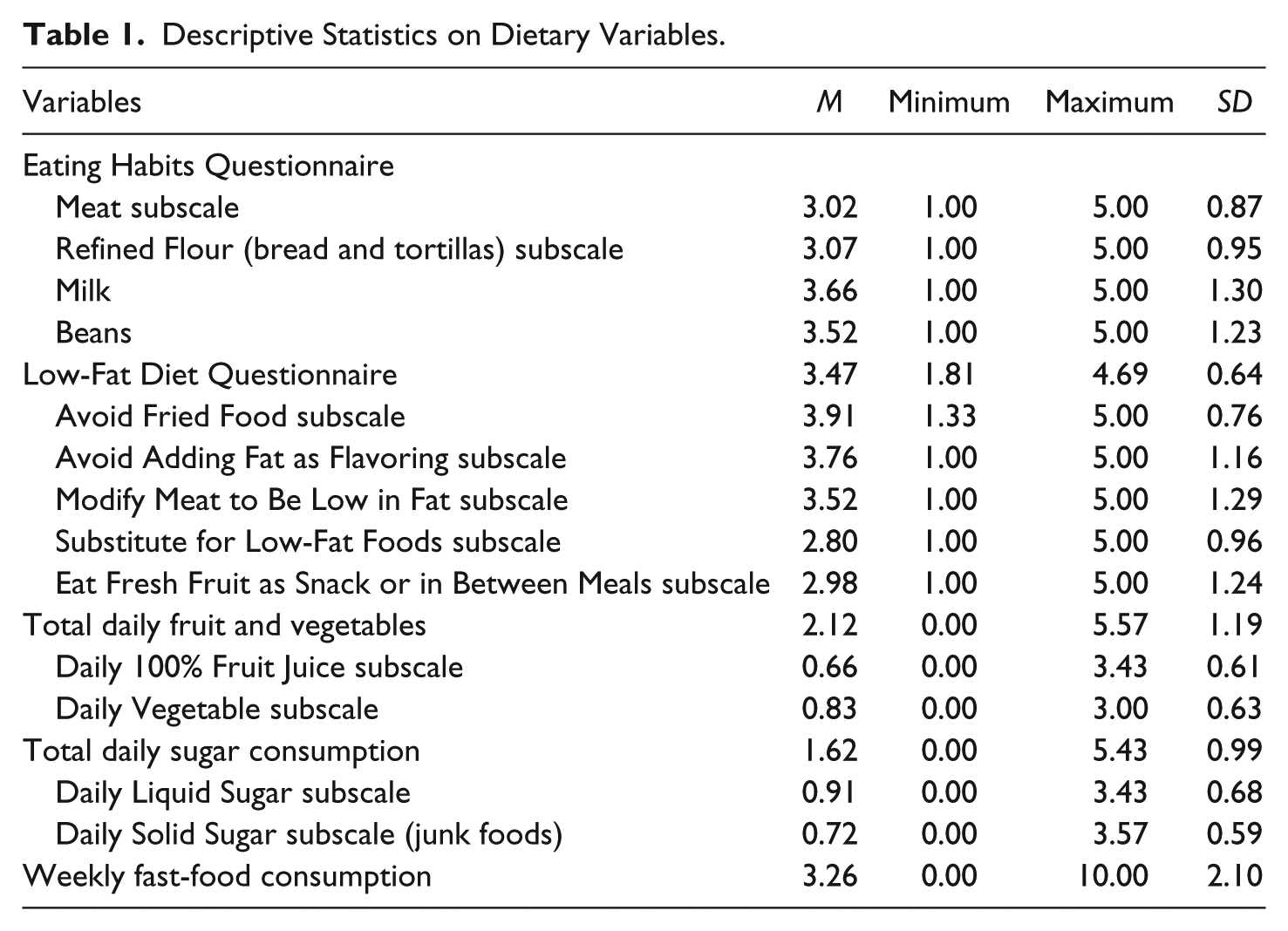
An overview of Table 1 indicates that, on average, sample participants reported they often or very often—approximately 50% to 75% or more of the time—consumed meats, milk, beans, and refined grains/flours in the form of breads and tortillas and that, in general, they attempted to follow a low-fat diet (indicated by means approximating 3-4 on the Eating Habits Questionnaire subscales and on the Low-Fat Diet Questionnaire subscales). Furthermore, we note that total daily consumption of fruits and vegetables for the sample averaged only 2.12 servings, which is considered far below the recommended national dietary guideline (ACHA, 2011) of five or more servings per day. Students on average consumed about one daily serving of 100% juice and one serving of vegetables. Furthermore, the average consumption of total sugars was high, with students reporting approximately one serving of liquid sugars (e.g., sodas, sweetened beverages, and coffee drinks) plus one serving of high-sugar high-fat junk foods (e.g., cookies, pastries, chocolate bars, ice cream, or frozen desserts) on a daily basis. Finally, during the course of a typical 7-day week, students reported eating fast foods 43% of the time (or about 3 days a week).
Descriptive Statistics on Dietary Variables.
Analyses of Health Indicators by Sociodemographic and College Profile Variables
In regard to the health indicators—BMI, WS, and DRS—women reported a higher DRS than men with no other differences observed based on age group and generational status (as reported in Hurtado-Ortiz et al., 2011) or by participants’ household income. Likewise, ANOVA and t-test analysis performed on participants’ BMI scores, WS, and DRS by the college profile variables showed no differences between groups in terms of students’ marital status (single or married/cohabitating), work status (not employed, part-time, or full-time), college enrollment status (part-time or full-time), residence status (live with parents or dorm/rent), and class standing (freshman, sophomore, junior, senior, and postbaccalaureate).
Analyses of Obesity-Related Dietary Variables by Sociodemographic Variables
The results of the t-test analysis and ANOVA conducted on dietary variables by gender, age group, generational status, and income are presented in Table 2.
Mean Differences on Dietary Variables by Gender, Age Group, Generational Status, and Income.
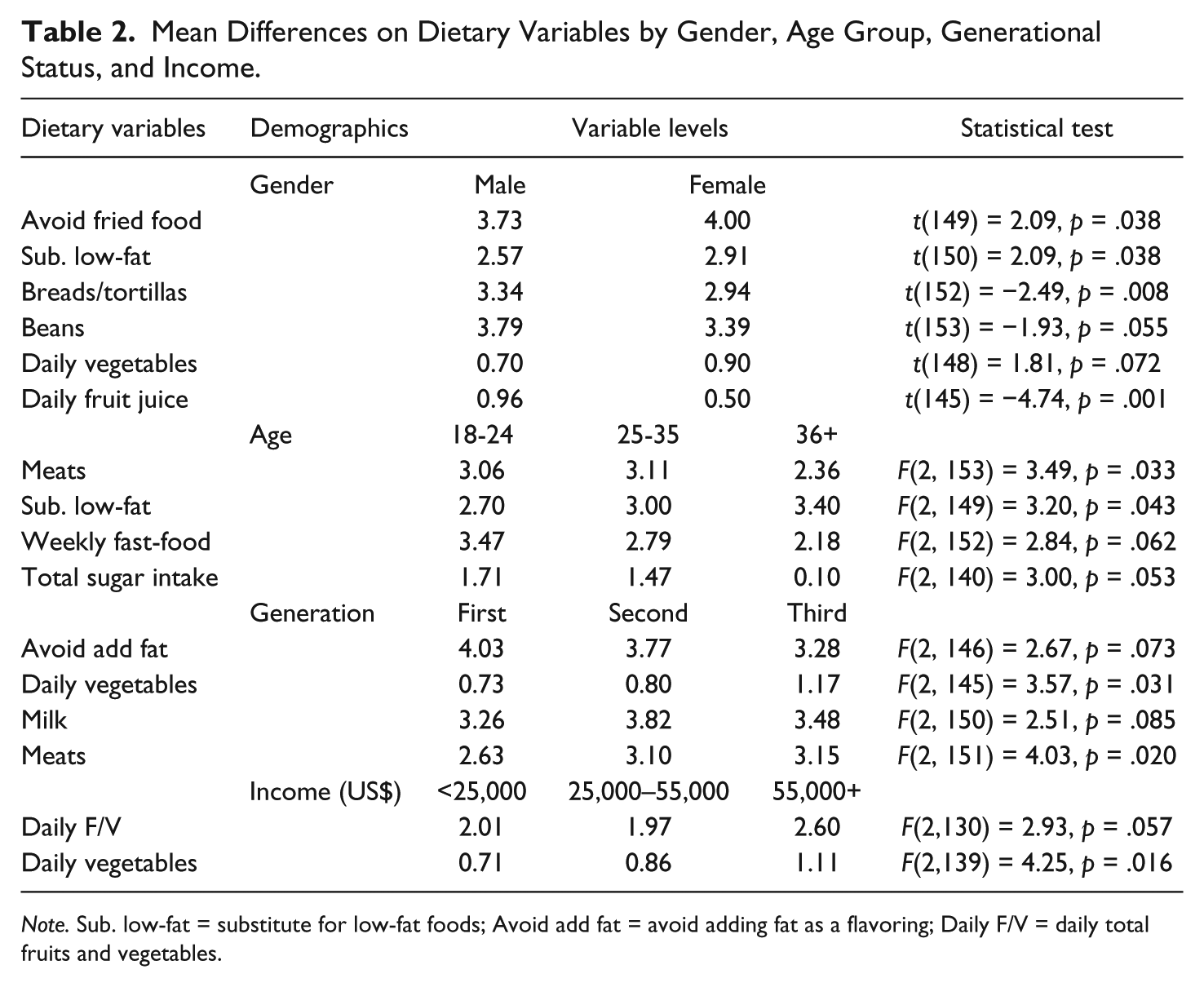
Note. Sub. low-fat = substitute for low-fat foods; Avoid add fat = avoid adding fat as a flavoring; Daily F/V = daily total fruits and vegetables.
Gender
The t-test analyses revealed that women were more likely to adhere to a low-fat diet when compared with their male counterparts. Specifically, Latina women reported avoiding fried foods (i.e., beef, chicken, and fish) more frequently than men did and were also more likely to modify meats to be low in fat and substitute for low-fat alternatives (i.e., low-fat milk products, low-fat items at sit-down restaurants). Although the genders did not differ in their total consumption of fruits and vegetables, women reported a greater daily consumption of vegetables compared with men, whereas men had a higher daily consumption of fruit juice. Finally, college men consumed more beans and refined grains/flours in the form of breads and tortillas than women did.
Age groups
The ANOVA results indicated that older college students (36 years and above) were more likely to choose low-fat alternatives than younger-aged students (18- to 24-year-olds) were. Conversely, younger-aged students reported more frequent consumption of meats and fast foods than their older counterparts (35 years and above) did. Finally, younger college students (18-24 and 25-35 years) also had a higher total daily consumption of sugars compared with older-aged students; more specifically, this came in the form of daily intake of liquid sugar (i.e., sodas, sugar-sweetened beverages, and coffee drinks).
Income
College students with household incomes of US$25,000 or less reported a lower daily consumption of fruits and vegetables compared with those earning US$55,001 or greater. More explicitly, household incomes of US$55,001 or greater consumed more vegetables daily than did household with earnings of US$25,000 or less.
Generational status
Immigrant college students were more likely to avoid adding fat as a flavoring (butter to bread and potatoes) when compared with third-generation-plus Latino students. Although no differences were found in terms of total daily intake of fruits and vegetables, immigrant and second-generation Latinos reported a lower consumption of vegetables than third-generation Latinos did. Finally, immigrant students reported a less frequent consumption of milk, as well as meats, when compared with the later generations.
Analyses of Obesity-Related Dietary Patterns by College Student Profile
Presented in Table 3 are the findings of the t-test analysis and ANOVA conducted on dietary variables by marital status, enrollment status, work status, residence status, and class standing.
Mean Differences on Dietary Variables by Marital Status, College Enrollment, Work Status, and Class Ranking.
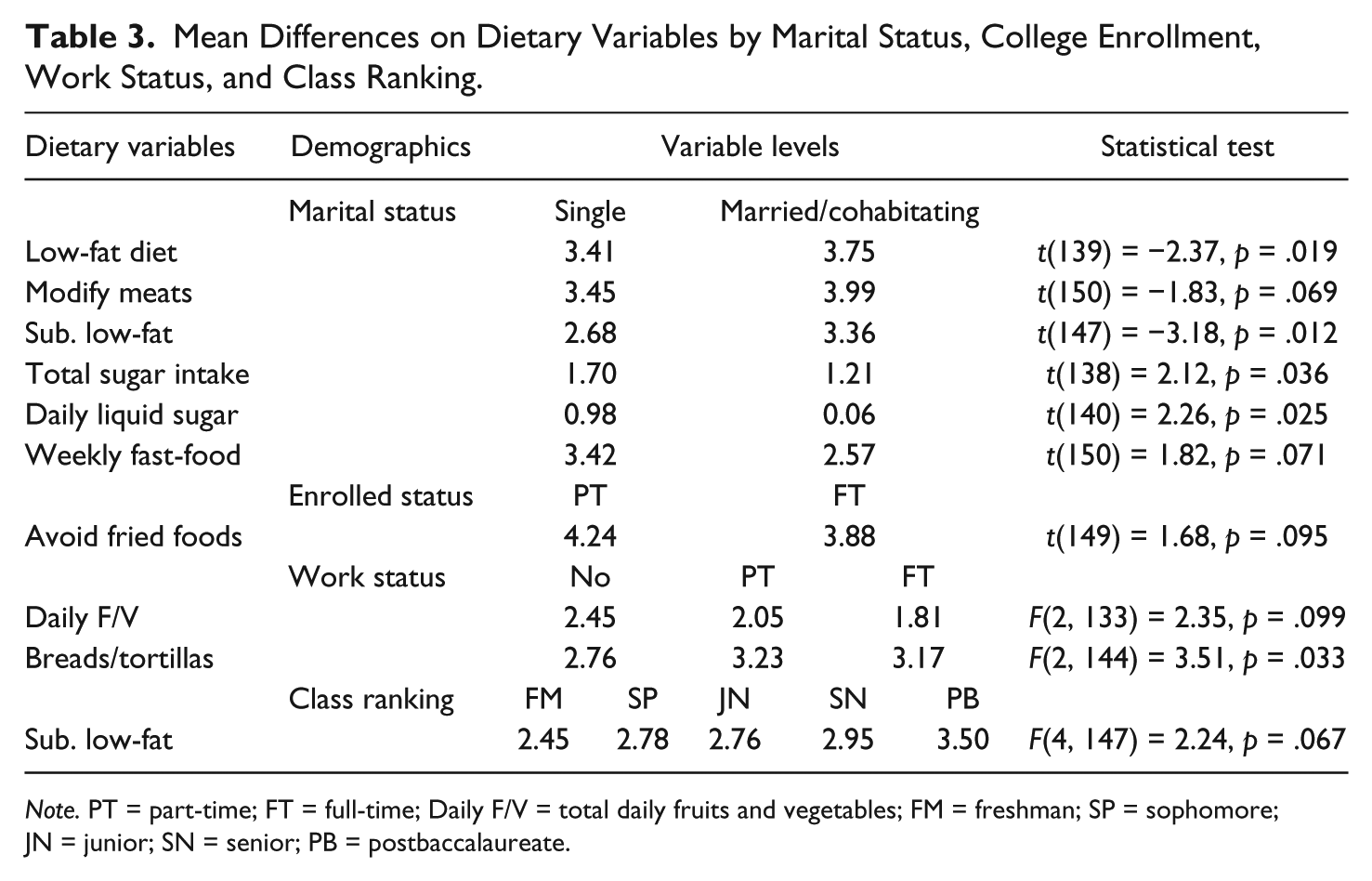
Note. PT = part-time; FT = full-time; Daily F/V = total daily fruits and vegetables; FM = freshman; SP = sophomore; JN = junior; SN = senior; PB = postbaccalaureate.
Marital status
The t-test results revealed that married/cohabitating college students were more likely to follow a low-fat diet, modify meats to be low in fat, and choose low-fat substitutes when compared with single college students. Conversely, students who were single reported a higher daily consumption of total sugars; more specifically, single students drank more liquid sugar (i.e., sodas and high-caloric sweetened beverages) and consumed more fast food on a weekly basis than married/cohabitating students did.
Enrollment status and work status
Results of the t-test analyses showed that students who attended college part-time were more likely to avoid fried foods than students enrolled full-time. Furthermore, ANOVA results indicated that students who worked full-time reported a lower daily consumption of fruits and vegetables compared with students who were working part-time or not employed. Likewise, students who worked while in college (full-time and part-time) reported a more frequent consumption of breads and tortillas (refined grains/flours) than students who were not employed.
College class ranking and residence status
College freshmen were less likely to substitute for low-fat alternatives when compared with senior and postbaccalaureate students. Likewise, juniors were less likely to substitute for low-fat alternatives when compared with postbaccalaureate students. Finally, no differences were observed on the obesity-related variables between students who lived with parents, on-campus, or off-campus.
Correlations of BMI Scores, WS, and DRS With Dietary Habits
Pearson moment bivariate correlations were performed between participants’ BMI score, WS, and DRS with the dietary total scale scores, subscale scores, and individual items. The results showed that frequent consumption of meats–BMI, r(155) = .146, p = .069; WS, r(156) = .153, p = .057; DRS, r(151) = .223, p < .007–and specifically chicken–BMI, r(155) = .217, p < .008; WS, r(156) = .206, p < .02; DRS, r(151) = .267, p < .002–was associated with having a higher BMI score, WS, and DRS among Latino college students. Likewise, a high consumption of breads and tortillas–BMI, r(153) = .232, p < .005; WS, r(154) = .249, p < .003; DRS, r(149) = .181, p < .03–and fried (not avoided) potatoes–BMI, r(153) = −.204, p < .02; WS, r(154) = −.267, p < .002; DRS, r(149) = −.280, p < .002–was related to having poorer health. Furthermore, avoiding fried foods in general, r(151) = −.146, p = .073, was associated with having a lower WS. Interestingly, the consumption of beans correlated positively with BMI scores, r(154) = .144, p = .074, and WS, r(155) = .162, p < .05; however, we note that the consumption of beans correlated negatively with avoiding cooking beans in oil/lard, r(154) = −.279, p < .001, and when participants did avoid fried beans, it was related to having a lower WS, r(155) = −.150, p = .063. Likewise, consuming fruits mixed with other foods (cereal or yogurt) was associated with having a higher BMI, r(152) = .226, p < .006, and WS, r(153) = .184, p < .03; however, fruit eaten in this manner was also positively associated with a higher daily consumption of high-fat, sugary junk foods, r(150) = .238, p < .004, and total sugars overall among participants, r(142) = .169, p < .05, which may explain this seemingly incongruent association.
Pertaining solely to DRS, we found that adhering to a low-fat diet, r(139) = −.150, p = .078, and avoiding adding fat as a flavoring, r(147) = −.284, p < .001, were associated with having a lower risk score for future diabetes onset. Furthermore, daily consumption of 100% juice, r(142) = −.150, p = .075, and eating fresh fruit as a snack in between meals or after dinner, r(151) = −.246, p < .003, were also associated with a lower DRS. Finally, a higher DRS was positively associated with more frequent fast-food consumption, r(150) = .191, p < .02 (as reported in Hurtado-Ortiz et al., 2011). We note that the consumption of fruits in either juice or solid form was not associated with a greater consumption of sugar intake (total daily sugars: p > .05) in participants, as was fruits mixed with other foods. This points to the importance of eating fruits by themselves and not added as a condiment to other foods, as well as consuming 100% fruit juices with no added sugars to obtain a health benefit.
Correlations Between Consuming Meats, a Low-Fat Diet, and Fast Foods With Other Dietary Habits
Frequent consumption of meats was positively associated with eating more breads/tortillas, r(154) = .214, p < .009; drinking milk, r(155) = .145, p = .072; a higher daily intake of total sugars, r(143) = .268, p < .002; and weekly fast-food consumption, r(155) = .286, p < .001. Conversely, frequent eating of meats was negatively associated with adhering to low-fat diet, r(143) = −.316, p < .001.
Adherence to a low-fat habit diet was positively associated with a higher daily intake of fruits and vegetables, r(131) = .275, p < .002; less frequent consumption of breads/tortillas, r(143) = −.291, p < .001; less fast foods, r(142) = −.435, p < .001; less total sugars, r(131) = −.357, p < .001, in solid junk foods, r(139) = −.257, p < .003, and liquid sugar-sweetened beverages, r(133) = −.296, p < .002.
Finally, weekly fast-food consumption correlated negatively with all four subscales of the Fat Habit Questionnaire: Avoiding Fried Foods such as fried chicken, beef, fish, potatoes, tortillas, and beans, r(150) = −.391, p < .01; Modifying Meats to Be Low in Fat, r(154) = −.192, p < .02; Avoiding Fat as a Flavoring, r(150) = −.284, p < .001; Substituting for Low-Fat Alternatives, r(151) = −.254, p < .003; and Eating Fruits as a snack in between meals or after dinner, r(155) = −.230, p < .005. Conversely, frequent fast-food consumption was positively associated with a higher total daily intake of sugars, r(143) = .454, p < .001, in both liquid form such as sodas and other sugar-sweetened beverages, r(145) = .382, p < .001, and solid junk foods such as cookies, chocolate bars, doughnuts, ice cream, or frozen desserts, r(151) = .331, p < .001.
Discussion
This study is the first to simultaneously examine the influences of sociocultural and university-related factors on eating behaviors, dietary patterns, and health status indicators of Latino college students who are at a heightened risk for future diabetes onset. The general picture to emerge from this study is that counter to all dietary recommendations (ACHA, 2011), Latino college students in our sample follow an unhealthy diet comprised of few fruits and vegetables, excessive fast-food consumption, as well as a high ingestion of sugar-sweetened beverages, high-sugar fatty junk foods, refined flours (such as breads/tortillas), and meats. These findings mirror those reported in other studies of university students (Adams & Colner, 2008; J. P. Block, Gillman, Linakis, & Goldman, 2013; Byrd-Bredbenner et al., 2012; Cohen, Sturm, Scott, Farley, & Bluthenthal, 2010; Evans et al., 2000; D. Hu et al., 2011; Larson et al., 2008). The above-mentioned dietary behaviors are generally linked to excess weight gain and increased risk for diabetes in young adults and college students (Heidal et al., 2012; Huffman & West, 2007; O’Leary et al., 2012; Racette et al., 2005).
More specifically, in reference to students’ health status, we found that a large percentage (57.7%) of Latinos in our study were indeed overweight and/or obese, exceeding the numbers observed in national studies of U.S. Latino adults and university samples (ACHA, 2011; Huang et al., 2003; Lowry et al., 2002; Lowry et al., 2000; T. F. Nelson et al., 2007). Furthermore, we note that Latina participants were at a greater risk for developing diabetes than Latino males, as indicated by their higher DRS (as reported previously by Hurtado-Ortiz et al., 2011), being the only within-group difference observed in regard to the three health indicators (BMI, WS, and DRS). Unlike prior research based on predominately White university students, we did not find an unhealthy status (BMI scores and WS) to be greater among Latino students who were older, male, of a lower income, single, and living off-campus (but not with parents), suggesting that our sample was relatively homogeneous across sociodemographic and college characteristics (Braithwaite et al., 2010; Brunt et al., 2008; T. F. Nelson et al., 2007). In sum, the findings generally pointed to a poor health status (as indicated by BMI scores and DRS) among Latino college students, regardless of their sociodemographic profile or college-related factors.
Previous researchers have attempted to identity which specific foods or eating behaviors contribute to a poor health status among college students (Brunt et al., 2008; Poddar et al., 2009). Our findings suggest that a diet that included a high intake of meats (especially poultry), or a regular consumption of fried potatoes and fried beans, as well as breads and tortillas, was linked to having a poorer health status—based on BMI scores, WS, and DRS—among Latino college students. Moreover, a diet generally high in fat, as well as frequent fast-food consumption (Hurtado-Ortiz et al., 2011), contributed to an increased risk for diabetes among sample participants, a result consistent with findings on food habits in other studies associated with obesity (Brunt et al., 2008; Knight et al., 2014; Poddar et al., 2009). Conversely, students who generally adhered to a low-fat diet that included fruits, specifically 100% fruit juice and fruits as snacks (between meals and after dinner), were at a lower risk for developing diabetes. This finding underscores the importance for students at risk for developing diabetes to increase their daily intake of fresh fruits while lowering their overall consumption of fatty foods (Carter, Gray, Troughton, Khunti, & Davies, 2010), as well as breads/tortillas made with refined flours which have a low nutritional value.
In addition, within-group differences based on Latino students’ sociodemographic characteristics were analyzed in regard to their dietary choices. Consistent with prior research, we found that women were more likely to adhere to a low-fat diet and consume more vegetables than men were (Boek et al., 2012; Hurtado et al., 2011), yet Latino males’ daily intake of fruit juice was higher. Furthermore, similar to studies of White students, we found that younger-aged Latino college students exhibited poorer dietary behaviors in regard to drinking more high-caloric, sugar-sweetened beverages and were less likely to include low-fat alternatives in their diet compared with older-aged Latino students (CDC, 2014a; Wang, Bleich, & Gortmaker, 2008). Likewise, as reported in another study with Latino students (Knight et al., 2014), we also found that lower income students consumed less fruits and vegetables, a difference we believe can be attributed in part to the higher cost of such foods (i.e., salad and fruit bars) when sold on college campuses. Finally, generational status in the United States was also an important factor influencing dietary choices in students, with immigrant Latinos being less likely to add fat such as butter to foods for flavor and report a lower consumption of milk and meats in their diet when compared with later generations. These findings are similar to other studies that also reported generational differences among Mexican Americans (Hurtado-Ortiz et al., 2011; Neuhouser, Thompson, Coronado, & Solomon, 2004).
Similarly, examination of within-group variations based on participants’ college profile also revealed important group differences in terms of healthy and unhealthy eating behaviors among Latinos. Students who were single, when compared with married/cohabitating Latinos, were less likely to follow a low-fat diet by modifying meats to be less fatty or choosing low-fat alternatives as part of their diet. This finding is consistent with previous research indicating that married persons tend to consume more nutritious meals (Braithwaite et al., 2010; Koball, Moiduddin, Henderson, Goesling, & Besculides, 2010). Upperclassmen were also found to be more likely to choose low-fat alternatives when making dietary choices than Latino freshmen and juniors were. This finding is similar to earlier research that points to poorer dietary behaviors, such as a higher consumption of junk foods and sugar-sweetened beverages, among lower ranking students (Huffman & West, 2007; Levitsky et al., 2004). A plausible explanation is that upper ranking and married/cohabitating students are more likely older, with greater life-related health experiences and education (i.e., completed a general studies health course), which enabled them to make healthier dietary choices when compared with lower classmen and single students. Furthermore, we found that students who were employed or enrolled in college full-time engaged in poorer dietary behaviors, such as consuming more fried foods, breads, and tortillas, and eating fewer fruits and vegetables, supporting the link reported in the literature between hours worked weekly and less healthy eating among young adults (Escoto, Laska, Larson, Neumark-Sztainer, & Hannan, 2012). It is clear that students who are employed or enrolled in college full-time have less time to prepare nutritious meals; yet, they are constantly surrounded by unhealthy, yet economical “grab and go” fast-food options that are high in fat and sugars (Larson, Perry, Story, & Neumark-Sztainer, 2006; Pelletier & Laska, 2013; Rydell et al., 2008).
Accordingly, the literature indicates that negative obesity-related dietary behaviors tend to cluster together to form poor eating patterns in college students (M. C. Nelson et al., 2008; Reyes-Velázquez & Hoffman, 2011). Unfortunately, frequent fast-food consumption is a common practice among young adults (Heidal et al., 2012; Racette et al., 2005), which was also linked to other unhealthy dietary choices, such as drinking high-caloric sugar-sweetened beverages and eating sugary, fatty snacks and desserts (junk foods) in our student sample. Such foods are typically packaged together as a “combo meal,” with their regular consumption leading to significant long-term weight gain in persons and increased risk for diabetes and other chronic diseases (F. B. Hu & Malik, 2010). Likewise, eating fast foods was also associated with other poor dietary behaviors, such as a higher ingestion of meats, breads, tortillas, fried foods, and added fats for flavor (such as butter), but fewer fruits as a nutritious snack. Indeed, earlier research with community Latino samples and White students also reports that a diet high in fat tends to be associated with eating less fruits and vegetables (Larson et al., 2008; Neuhouser et al., 2004). Hence, Latino students in our study who engaged in one poor eating behavior, such as regularly eating fast foods, were also more likely to be making other unhealthy dietary choices, thereby increasing their overall accumulated risk for becoming obese (Chen, Pegram, Adcock, & Johnson, 2014; Hendricks, Herbold, & Fung, 2004; Jackson et al., 2009).
Arguably, the risky eating patterns observed among Latino college students point to the intersection between American and Latino acculturative forces. For example, the diet of Latino students in our study included frequent consumption of fried beans and fried potatoes, as well as breads and tortillas. Fried potatoes are a very common side dish in most American meals at fast-food establishments and sit-down restaurants, as including fried beans as a side dish is in Latino cooking. Likewise, bread is a common compliment in American meals as tortillas are in Mexican dishes. Indeed, we found that consuming fried beans was associated with eating more tortillas among Latino students, which is said to reflect the “traditional Mexican diet” by Carrera, Gao, and Tucker (2007). Furthermore, other more Americanized dietary habits observed in Latino students, such as adding butter to foods for flavor and consuming few fruits and vegetables, are contrary to the traditional Latino diet (Neuhouser et al., 2004). Unfortunately, the incorporation of more Americanized unhealthy eating behaviors coupled with common, poor Latino dietary practices (i.e., cooking beans in lard/oil and a high consumption of tortillas) explains in part why a large percentage of this student sample was overweight and/or obese (Neuhouser et al., 2004; Perez-Escamilla & Putnik, 2007).
Accordingly, it is apparent that Latino students’ unhealthy diet is only exacerbated by the highly accessible, low-cost fast foods present within and outside the university context relative to healthy food options (Jackson et al., 2009). Hence, it is of paramount importance “that university food services” take a more active role in offering healthier and more affordable “taste satisfying food choices . . . on campus [that] promote healthy eating behaviors” among students (Jackson et al., 2009, para. 30). This is especially relevant in the case of Latino students who tend to report greater levels of psychological distress when compared with White peers in juggling academic demands with work and familial obligations (Rowland, 2008). As noted in a recent qualitative study conducted by LaCaille, Dauner, Krambeer, and Pedersen (2011), college students state that the high cost of healthy foods, coupled with limited nutritious options and meal-time preparation, all contribute to their current unhealthy eating patterns.
Limitations and Conclusions
A limitation of the present study, albeit always a concern with retrospective self-report data, is that participants’ memories of their eating behaviors could have been biased or inaccurate. Second, we note the possibility of a Type I error occurring given the number of statistical analyses performed (t tests, ANOVAs, and bivariate correlations). Furthermore, the findings are based on a single sample of Latino students recruited from one university. Although the study site is designated as a Hispanic-serving, 4-year institution, it is also a commuter campus with limited on-campus apartment housing available, and with most students driving to the university to attend classes and participate in activities. Hence, the results may have differed if sample participants were recruited from a more traditional, larger university site or a smaller institution. This sampling weakness speaks to issues related to external validity and the importance of replicating this work using a multisite design that encompasses a larger cross-section of Latino college students. Notwithstanding this single-sample, single-institution limitation, it is argued that given the scarcity of research on obesity, diabetes, and Latino college students, the results afford an important and relevant contribution to our understanding of health-related life experiences of Latino students from a moderate-sized, Hispanic-serving institution situated in a large metropolitan area in Southern California. Finally, the above sampling concern is further mitigated by the fact that the reported findings were largely in line with former studies of ethnic others as well as Latino college students, which increases our confidence in the validity and generalizability of the results.
To conclude, the typical Latino student in this study consumed a diet detrimental to long-term health and linked to obesity in young adults (Heidal et al., 2012; Huffman & West, 2007; O’Leary et al., 2012; Racette et al., 2005). Likewise, the negative obesity-related dietary behaviors observed in Latino students tended to cluster together to form an overall unhealthy lifestyle eating pattern. These findings are particularly troubling considering that the Latinos in this study were identified as having a familial genetic predisposition for type 2 diabetes, yet approximately 58% were overweight and/or obese, further augmenting their risk for early onset of this disease. Although past research has signaled emerging adulthood as a time marked by “adverse changes in diet . . . and weight” (M. C. Nelson et al., 2008, p. 2205), it is also a critical period for disease prevention where lasting healthy dietary patterns can be learned and established. Hence, in line with goals set forth by Healthy People 2020, Hispanic-serving institutions can play a pivotal role in addressing ethnic health disparities by serving as agents of change during this critical developmental stage through campus health initiatives that promote healthy lifestyle changes among young Latinos, which can lead to long-term positive health outcomes in preventing chronic diseases such as type 2 diabetes (U.S. Department of HHS, Office of Disease Prevention and Health Promotion, 2011).
Footnotes
Declaration of Conflicting Interests
The author(s) declared no potential conflicts of interest with respect to the research, authorship, and/or publication of this article.
Funding
The author(s) disclosed receipt of the following financial support for the research, authorship, and/or publication of this article: This research was supported by the National Institutes of Health, Grant NIH/NIGMS/MBRS S06 GM008156-29S10019 (Mental Models of Diabetes Among At-Risk Latino Students).