




Abstract
Research has shown the benefits of undergraduate research; however, few studies have examined mentors of undergraduate researchers. The purpose of this study was to investigate the practices of mentors who have successfully mentored Hispanic undergraduate researchers. Findings from this study suggested that mentors should focus on interacting with students, listen to and understand students’ interests, be organized, require students to be responsible, and monitor students’ work. Recommendations for practice and research have been provided.
Hispanic people make up one of the fastest growing demographic groups in the United States (Colby & Ortman, 2015; National Research Council [NRC], 2006). According to U.S. Census Bureau (Colby & Ortman, 2015) projections, by the year 2060, 119 million U.S. residents will be of Hispanic origin, up from 55 million in 2014. Despite the rapid growth of the Hispanic population, they continue to be disproportionally represented in higher education. In 2011, about 15% of the students enrolled in college identified themselves as Hispanic, whereas only about 13% of Hispanic people 25 years and older (in 2011) were college graduates (Motel & Patten, 2013) compared with 10% in the year 2000 (Llagas & Snyder, 2003).
In addition to being underrepresented in colleges and universities, Hispanic students historically have not attained the same levels of success in higher education as other groups (Aud et al., 2013). In fact, the NRC (2006) reported that Hispanic students complete less formal schooling than any other demographic group. Studies have shown that college graduation rates for Hispanic students are about half of what they are for Caucasian/White students (Aud et al., 2013; Fry, 2004). What is more, Hispanic students have the highest percent of minority enrollment in universities, but fail to graduate as frequently as students from other minority groups (Wagner, 2015). Castellanos and Gloria (2007) stated that Hispanic students “face unique challenges, feel alienated and discriminated, have limited role models, and are subjected to low educational expectations—all of which lend a sense of normlessness and high academic attrition” (pp. 379-380). However, researchers have suggested several factors that can help Hispanic students improve their chances for success in higher education, including beginning university studies at a 4-year institution, including family in college recruitment initiatives, maintaining continuous enrollment, achieving high grade point averages, and receiving support from the institution in the forms of culturally relevant programming and pedagogy, mentorship, research opportunities, and professional development, and by receiving funding to attend college (Castellanos & Gloria, 2007; Swail, Cabrera, Lee, & Williams, 2005; Wagner, 2015).
In an effort to address limited access to and improved persistence in undergraduate education, a number of undergraduate intervention programs have been implemented by institutions, federal government agencies, and private institutions to increase the number of underrepresented students who persist in undergraduate studies and become credible candidates for post-graduate study (e.g., McNair Scholars Program). Such programs often seek to encourage and enable students to continue their post-secondary education. Many of these programs focus on undergraduate research experiences and financial support. Research across the sciences (e.g., Clewell et al., 2005; Jones, Barlow, & Villarejo, 2010) and the liberal arts (e.g., Nagda, Gregerman, Jonides, von Hippel, & Lerner, 1998) has demonstrated that undergraduate research experiences are associated with lower attrition rates and higher levels of graduate school attendance (Hathaway, Nagda, & Gregerman, 2002). These studies have suggested that participation in undergraduate research can provide students, particularly underrepresented students, with regular faculty contact, collaborative academic relationships, and positive advising experiences. Further, many of these studies also have proposed that the faculty mentor’s relationship with the student may play a major role in the motivation, social integration, and overall success of the student.
Accordingly, the argument can be made that involving Hispanic students in undergraduate research experiences can be beneficial to their success. However, a need exists to extend the inquiry on academic mentoring to previously understudied populations such as Hispanic students (see Crisp & Cruz, 2009). What is more, there is a dearth of research providing pragmatic recommendations for faculty members on improving their undergraduate research mentoring capabilities. To further examine the role of the faculty mentor in the success of the undergraduate researcher, this study sought to compile a list of best practices for faculty mentors of undergraduate research in a Hispanic Serving Institution.
Review of Literature
Undergraduate Research
Benefits
Studies have suggested that participation in an undergraduate research experience (URE) is beneficial for students. Seymour, Hunter, Laursen, and Deantoni (2004) compiled the literature on undergraduate research into two typologies: studies where the hypothesized benefits of undergraduate research were claimed and supported and studies where the hypothesized benefits were stated or claimed, but not adequately demonstrated. They found nine studies met the criteria for the first typology, whereas 31 studies fell into the second typology. The implications from this are that more empirical studies examining the benefits of URE are needed. In light of this, Seymour et al. sought to determine students’ self-perceived benefits from participating in a URE. They found that 91% of students’ statements concerning URE were positive, and they categorized findings into six types of benefits realized from participating in URE. The categories reported by Seymour et al. were (a) personal/professional gains, (b) thinking and working like a scientist, (c) improved skills, (d) clarification of career paths, (e) enhancement of career/graduate school preparation, and (f) other, which included having a good summer job and access to good lab equipment.
Similarly, a multi-year study by Russell, Hancock, and McCullough (2007) found that participants in UREs realized increases in confidence, understanding of the research process, and awareness of graduate school opportunities. Results additionally showed that the URE increased students’ interest in pursuing a graduate degree in a science, technology, engineering, and math (STEM) field. Regarding race/ethnicity, Russell et al. reported that the positive outcomes of a URE were strongest among Hispanic students and weakest among non-Hispanic Whites.
Lopatto (2003) published a study in which he surveyed STEM faculty and students to determine the self-perceived benefits of undergraduate research. Both faculty and students agreed that some of the benefits of URE are (a) career planning opportunities, (b) development of research and laboratory skills, and (c) development of faculty/student relationships. However, communication skills and learning to read disciplinary literature were listed as important benefits by faculty, but not students.
Another study by Lopatto (2007) used the Survey of Undergraduate Research Experiences inventory to investigate the benefits of a URE among 1,135 undergraduate students at 41 institutions. Results showed that as a result of the URE, 91% of respondents’ interest in post-graduate education was enhanced. Additionally, for 20 items that measured learning gains, some gain to a very large gain was found across all items. Lastly, Lopatto found that Hispanic students were as likely to pursue post-graduate education as Caucasian students, and that Hispanic students reported significant gains over other groups in the areas of learning ethical conduct, skill in oral presentations, and becoming part of a learning community.
McNair Scholars Program
One undergraduate research program in particular, the McNair Scholars Program, was developed specifically with underrepresented student populations in mind. The mission of the McNair Program is “to prepare undergraduate students for doctoral studies through involvement in research and other scholarly activities” (McNair Scholars Program, 2014, para. 2) with the purpose of increasing the number of graduate students, particularly doctoral students, from underrepresented demographic groups.
Little research has been conducted concerning the McNair Scholars Program (Greene, 2007). However, Greene (2007) in her dissertation examined the perceptions of McNair alumni from three universities in Kansas. She found that the three major strengths of the program as evidenced by alumni were (a) the availability of the faculty mentor, (b) the assistance received from the faculty mentor, and (c) the stipend received from participation. Additionally, Greene reported that overall the respondents credited the McNair program as beneficial in helping them achieve educational goals.
Likewise, Grimmett, Bliss, and Davis (1998) surveyed 68 alumni of the McNair Scholars Program to determine the effectiveness of the program in preparing them for graduate school. Findings showed that financial support for McNair participants, opportunities to pursue research, participation in internships, and mentoring were among the most effective components of the program. Accordingly, Grimmett et al. concluded that the McNair Program appears to meet its intended outcomes.
Mentoring
Much of the research pertaining to the success of UREs points to mentoring as a key component. Lopatto (2006) posited that good mentoring was one of the significant factors influencing the success of an undergraduate research program; he stated that “Mentors (most often faculty members) can make or break a research experience” (p. 24). Mentoring has been defined as an individualized, mutually respectful relationship between a student protégé and an expert invested in guiding the student’s professional and personal development (Golian & Galbraith, 1996; Zimmerman & Paul, 2007). Such high-quality relationships are essential for enhancing the development of young adults (Kram, 1983). Throughout their university experience, students are potentially involved in several different mentoring relationships with peers, professors, and departmental staff members (Luna & Cullen, 1998; W. S. Myers, 1995). Of these mentoring relationships, none are more important than the relationship with a faculty mentor (Cho & Auger, 2013).
Over time the mentoring relationship tends to progress through the initiation, cultivation, separation, and redefinition phases (Kram, 1983). The initiation phase lasts roughly 1 year, during which the protégé begins to admire and respect a more experienced organizational member as a result of the mentor’s competence and ability to guide and support the protégé. Also during this time, the mentor and the protégé begin to develop expectations about a future mentor relationship. The cultivation phase lasts between 2 and 5 years, during which the mentor and protégé test the relationship expectations established in the initiation phase. The mentor begins to engage in career mentoring (i.e., behaviors intended to advance the protégé’s career development) and psychosocial mentoring (i.e., behaviors intended to enhance the protégé’s confidence and self-perceived effectiveness). The separation phase lasts between 6 months and 2 years, during which the mentor and the protégé reassess the need for a continued mentoring relationship as the protégé becomes less dependent on the mentor. The mentor gradually begins to reduce the provision of career mentoring (i.e., structural separation) and psychosocial mentoring (i.e., psychosocial separation). The redefinition phase may last indefinitely, during which the nature of the relationship transitions from a mentoring relationship to a peer or friendship relationship. Whereas Kram identified four distinct phases of mentoring relationships, researchers have tended to focus primarily on the initiation and cultivation phases of academic mentoring relationships.
Stages of mentoring development
The mentor–student relationship
The importance of academic integration and social integration has been well established as impacting college retention and completion (Tinto, 1975). In his early work, Vincent Tinto noted that family background issues (i.e., income, values, and parents’ education), individual attributes (i.e., race, sex, and ability), and pre-college success (high school GPA) were among the most important factors affecting student success. In a later study, Tinto (1993) stated that in addition to pre-college enrollment characteristics, students’ commitment to the institution, commitment to goals, and integration with the campus environment were the best predictors of student retention. According to Tinto (1993), post-enrollment variables outweigh pre-enrollment variables in students’ decisions to withdraw from college. In the context of this study, the faculty mentor–student relationship would constitute a post-enrollment variable.
Recent research (e.g., Jones et al., 2010) has suggested that the faculty mentor/student relationship may be vital for students’ social integration and academic acculturation, particularly Hispanic students. In a longitudinal study by Jones et al., an examination of faculty mentoring of undergraduate research found that faculty mentoring was a strong predictor of student graduation, especially for minority students. The researchers identified frequent faculty/student interactions as the predictive variable. Thus, minority students may have the most to gain from frequent faculty interaction.
Regarding the frequency of faculty mentor–student interaction affecting student persistence, differences exist in recommendations across studies. Pascarella, Terenzini, and Hibel (1978) found that whereas academic interaction and social interaction outside the classroom are important, the more informal interactions had diminishing returns. Similarly, more recent research (Mazer, Murphy, & Simonds, 2007) suggested that informal online interaction between faculty and students has diminishing returns. Nevertheless, students tend to seek mentors who can and do provide emotional and social support through some form of interaction (Cavendish, 2007).
Academic mentoring
Some researchers have described mentoring in terms of behaviors or activities conducted by a mentor (e.g., Bowman & Bowman, 1990; Brown, Davis, & McClendon, 1999; Campbell & Campbell, 1997; Ishiyama, 2007; Straus, Johnson, Marquez, & Feldman, 2013). While several of these researchers (e.g., Bowman & Bowman, 1990; Campbell & Campbell, 1997; Straus et al., 2013) emphasize frequent interactions with mentees, Ishiyama (2007) specified that undergraduate academic mentoring involves collaboration between a faculty mentor and mentee through undergraduate research. In line with this perspective, recent work by Straus et al. (2013) indicated that successful mentoring has five characteristics: reciprocity, mutual respect, clear expectations, personal connection, and shared values. In their investigation of students and mentors at two academic health centers, Straus and colleagues examined mentoring involving research collaboration between faculty mentors and students. In their qualitative analysis of both mentor and mentee perspectives, they found that failed mentoring relationships were characterized by poor communication, lack of commitment, personality differences, perceived (or real) competition, conflicts of interest, and the mentor’s lack of experience. In sum, effective academic mentoring tends to involve collaboration on research with some degree of interdependency (or reciprocity), where both parties involved need each other and receive some relational or instrumental benefit. Moreover, students tend to benefit greatly when the faculty mentor spends time developing a personal connection and finding common-ground with the student. Further, under this model, for effective academic mentoring to take place, the faculty mentor must communicate student expectations and demonstrate competence and credibility.
As discussed above, there are several benefits to mentoring and undergraduate research. Opportunities for undergraduate research demonstrate the ability to clarify students’ interest in research and encourage students toward graduate degrees (Lopatto, 2004), particularly among Hispanic students (Russell et al., 2007). Further, student–faculty partnerships positively affect student retention (Nagda et al., 1998). An additional positive outcome of undergraduate research is the development of the student–mentor relationship (Landrum & Nelsen, 2002).
Theoretical/Conceptual Framework
The theoretical framework that guided this study was the psychosociocultural (PSC) framework proposed by Gloria and Rodriguez (2000). They posited that the success of Hispanic students in higher education can be attributed to a combination of three factors, including psychological, social, and cultural. According to Castellanos and Gloria (2007), the psychological component of this framework focuses on Hispanic students’ attitudes and perceptions including self-efficacy, motivation, and self-esteem, while the cultural component looks at values, ethnic identity, and acculturation. Additionally, Castellanos and Gloria suggested that the social aspect of the PSC framework includes relationships with faculty mentors, peers, and family. Castellanos and Gloria argued that all aspects of the PSC framework work synergistically to contribute to Hispanic students’ success.
This study sought to examine the social aspect of the PSC framework, more specifically, the mentorship provided to Hispanic students during the undergraduate research process through the lens of the Ohio State University (OSU) leadership model (Stogdill, 1974). Lussier and Achua (2010) defined leadership as “the influencing process of leaders and followers to achieve organizational objectives through change” (p. 6). They posited that leadership is a relational process occurring between leaders and followers where the influence exerted by leaders consists of communicating ideas, gaining acceptance, motivating, supporting, and implementing changes. Thus, according to the preceding definition, faculty members who mentor students conducting undergraduate research could be considered leaders.
As a result, we adopted the OSU leadership model (Stogdill, 1974) as the conceptual framework for this study. The OSU leadership model was created to measure leadership styles, which were categorized into two types, initiating structure and consideration (Lussier & Achua, 2010). Within this model of leadership development it has been proposed that leadership ability can be recognized through the identification of effective behaviors (Northouse, 2013) and the development of leadership abilities is associated with the relationship between leader and follower.
In the OSU model, leadership behaviors related to the initiating structure style are those focused on accomplishing tasks, while the behaviors related to the consideration style are more relational in nature (Lussier & Achua, 2010). For example, leaders high in structure would focus on task-oriented behaviors such as setting deadlines, goals and being organized. Conversely, leaders high in consideration would emphasize relationally oriented behaviors such as knowing the needs of the follower, interpersonal communication, and relationship building. Leaders who demonstrate an initiating structure orientation to leadership typically “use one-way communications, and decisions are made by the managers [leaders], whereas leaders with high consideration and low structure use two-way communications and tend to share decision making” (Lussier & Achua, 2010, p. 74).
The OSU leadership model is based on a matrix where leaders can fall into categories of high structure and high consideration, high structure and low consideration, low structure and high consideration, or low structure and low consideration. However, Northouse (2013) posited that structure and consideration are not separate points on one leadership continuum; instead, they represent two intersecting styles of leadership. Consequently, in the context of mentoring, a leader who exhibits high levels of structure and consideration would be deemed most effective (Johnson, 2007).
Purpose
Accordingly, the assumption could be made that effective mentors should possess high levels of structure and consideration. In the context of this study, mentors with high structure would be those who are adept at organization, setting deadlines, communicating facts, and providing structure to the undergraduate research experience. In contrast, mentors with high levels of consideration would be able to establish relationships with students, build rapport, and help students develop personally and professionally. Participation in undergraduate research by Hispanic students can be beneficial to their academic success. The leadership provided by faculty members who mentor Hispanic undergraduate researchers can help build positive faculty/student relationships, which can contribute to students’ persistence and achievement in higher education. Additionally, participation in undergraduate research has been shown to help increase students’ knowledge, problem-solving, and critical thinking skills, all of which are desired by employers. Therefore, the purpose of this study was to investigate the practices of mentors who have been successful in mentoring Hispanic undergraduate researchers. The objectives that guided this inquiry were as follows:
Determine the practices used by mentors of undergraduate researchers that contribute to students accomplishing tasks (structure initiation), and
Determine how mentors of undergraduate researchers developed their mentoring skills (consideration).
Methods
This descriptive study was designed to identify and describe the mentoring practices used by mentors of undergraduate researchers. We chose to examine mentorship within the McNair Scholars Program at Sul Ross State University because the university is a Hispanic-serving institution with 47% Hispanic student enrollment. Additionally, the requirements for the McNair Scholars Program dictate that students must come from an underserved population or be a first-generation college student who is classified as low income. According to the McNair Scholars Program Director, on average, 55% of students who participate in the program at Sul Ross are Hispanic (M. Bennett, personal communication, April 15, 2015).
A modified Delphi technique methodology was selected due to its ability to gather opinions and form a consensus from a purposefully selected panel of experts (Dalkey, 1969, 2002; Helmer, 1966; Hsu & Sandford, 2007). The Delphi technique provides a group communication process that allows these experts to examine and discuss specific issues (Ludwig, 1997; Turoff & Hiltz, 1996; Ulschak, 1983). To ensure that participants were considered experts in their field, purposive sampling was used. According to Creswell (1998), this sampling technique is often used in research because it allows the researcher to intentionally select panelists based on pre-determined criteria. This study required potential panelists to currently hold a faculty position at Sul Ross State University and to have successfully mentored at least one McNair Scholar undergraduate to the completion of their research project. A list of former McNair Scholar Mentors was retrieved from the director of the McNair program and 28 mentors were identified who fit the criteria to participate in this study; they were from multiple disciplines across campus, including agriculture, biology, geology, languages, and liberal arts. Based on the sampling frame, the researchers were not able to make a determination of how many Hispanic students these faculty had mentored; however, based on the percentage of Hispanic students who participate in McNair, the small number of faculty mentors, and the average number of projects mentored by participants (M = 5.27), the assumption was made that these faculty had most likely worked with Hispanic students. As a result, the researchers recognize this as a limitation of the study. Upon selection by the researchers, potential panelists were sent emails describing the study and soliciting their participation in the study. It was determined that the participants did not differ from the non-participants because both groups of individuals met the same criteria and were deemed experts in their field.
The Delphi technique consisted of three rounds of data collection. Prior to the initial round of data collection, the Institutional Review Board at Sul Ross State University approved this study. A leadership faculty member at another university and the McNair Scholars Program director at Sul Ross reviewed the initial instrument to establish content validity and face validity. The instrument contained two open-ended questions based on the two constructs of the OSU leadership model. The use of only two questions for this study allowed us to initially provide direction and structure to Round 1 and for the panelists to have a frame of reference and direction when thinking about the questions asked in the study. SurveyMonkey was the online survey tool we selected to use for this study. This allowed us to generate and send electronic notifications and links to the instrument to each of the 28 panelists. Dillman, Smyth, and Christian’s (2009) suggested timings for the pre-notice, notice, and follow-up electronic mailings were followed.
Round 1
Round 1 of the study collected open-ended responses to two questions regarding mentoring. Eighteen of the 28 panelists participated in Round 1. The two researcher developed questions were put into SurveyMonkey and were sent electronically to the panelists for their responses. The first question asked, “What practices have you found that have worked particularly well in helping undergraduate researchers accomplish the tasks associated with conducting research,” whereas the second question asked, “What practices have you found that have helped you develop as a mentor to undergraduate researchers?” The responses from each question in Round 1 were compiled and synthesized into two lists, one list per question. Duplicated responses or responses with identical meanings were consolidated into one response and additional words were disregarded. Eighteen out of 28 panelists (64%) responded in Round 1 and provided 52 statements. Twenty-four of the statements pertained to “practices that help students accomplish research tasks” and the other 28 concerned “practices that helped faculty members develop as mentors.”
Round 2
Round 2 began with the 52 statements identified in Round 1. Please refer to Tables 1 and 2 to view the 52 statements distributed via the online instrument for the panelists to rate their level of agreement with each statement. Eighteen panelists participated in Round 2. Panelists’ level of agreement was determined through the use of a 5-point Likert-type scale (1 = strongly disagree to 5 = strongly agree). Means were calculated for each item according to previous Delphi literature. Harder, Place, and Scheer (2010) and others (e.g., B. E. Myers, Dyer, & Washburn, 2005; Touchstone, 2015) have recommended using two-thirds agreement or a mean level of 3.33 for each item. However, we determined a priori that the mean level of agreement for each item must be greater than 3.50 in order for the statement to advance to Round 3 to ensure adequate agreement.
Mean Levels of Agreement Toward Practices That Help Undergraduates Accomplish Research Tasks (n = 18).
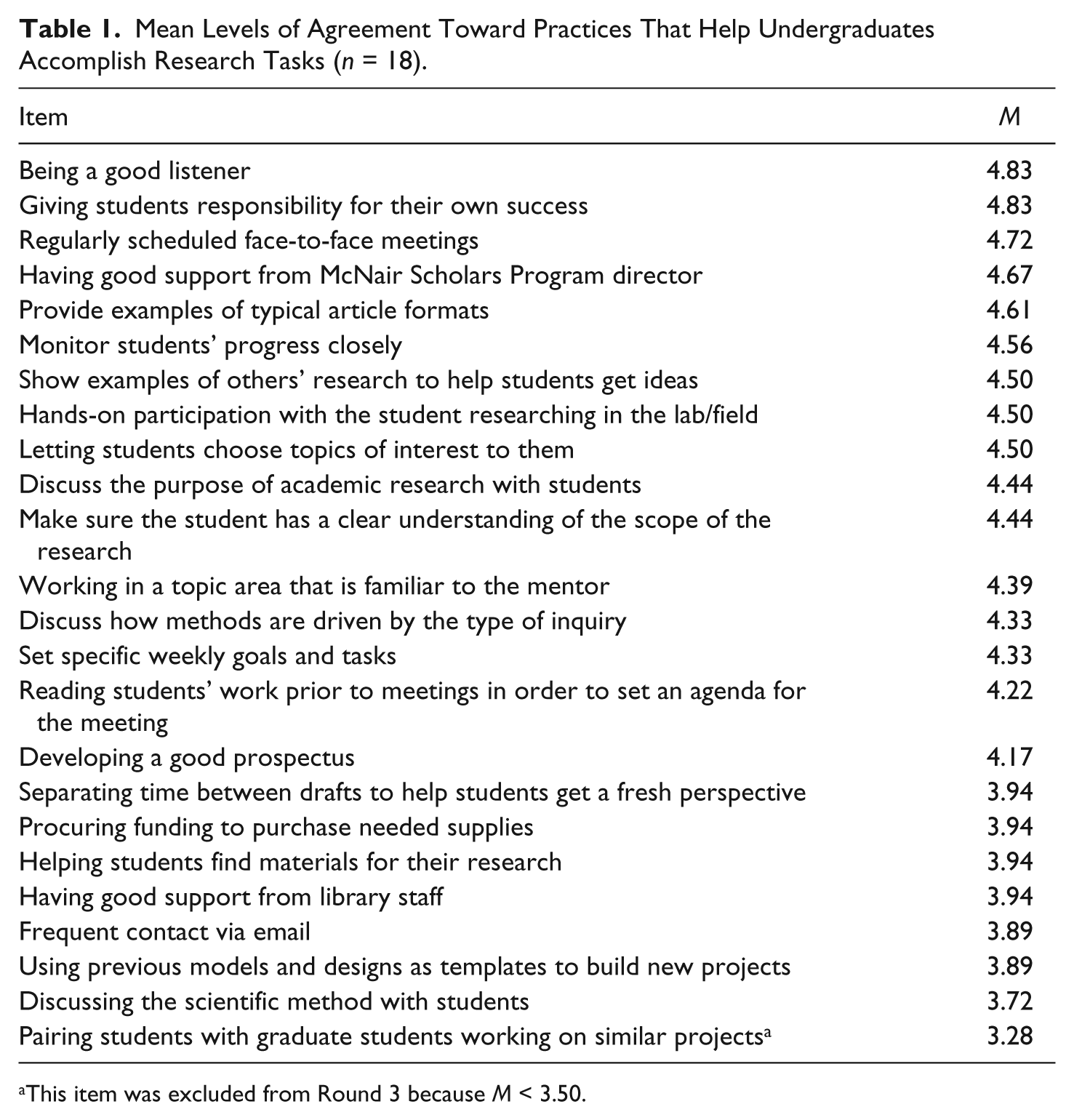
This item was excluded from Round 3 because M < 3.50.
Mean Levels of Agreement for Items Regarding Practices That Help Faculty Members Develop as Mentors (n = 18).
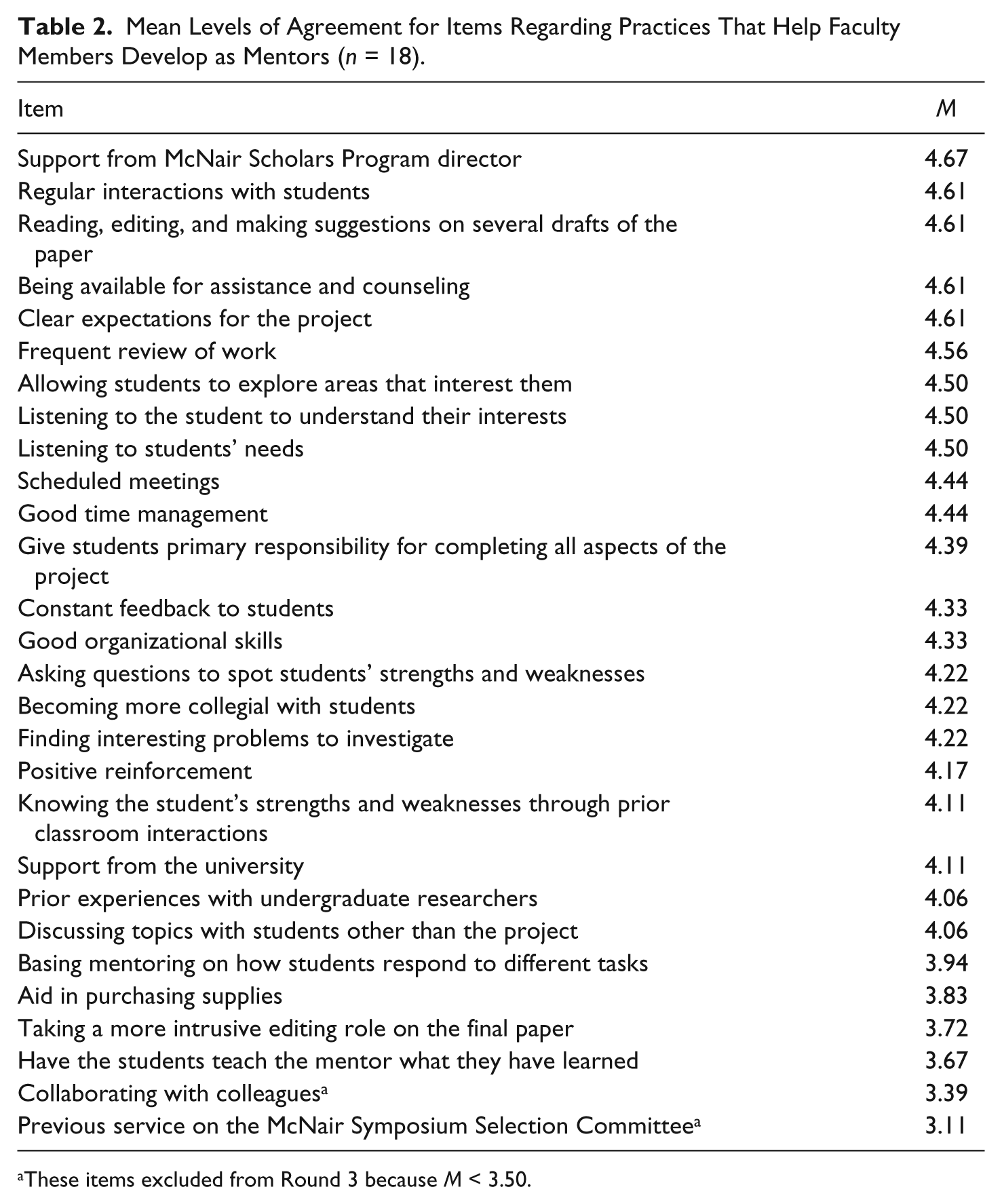
These items excluded from Round 3 because M < 3.50.
Round 3
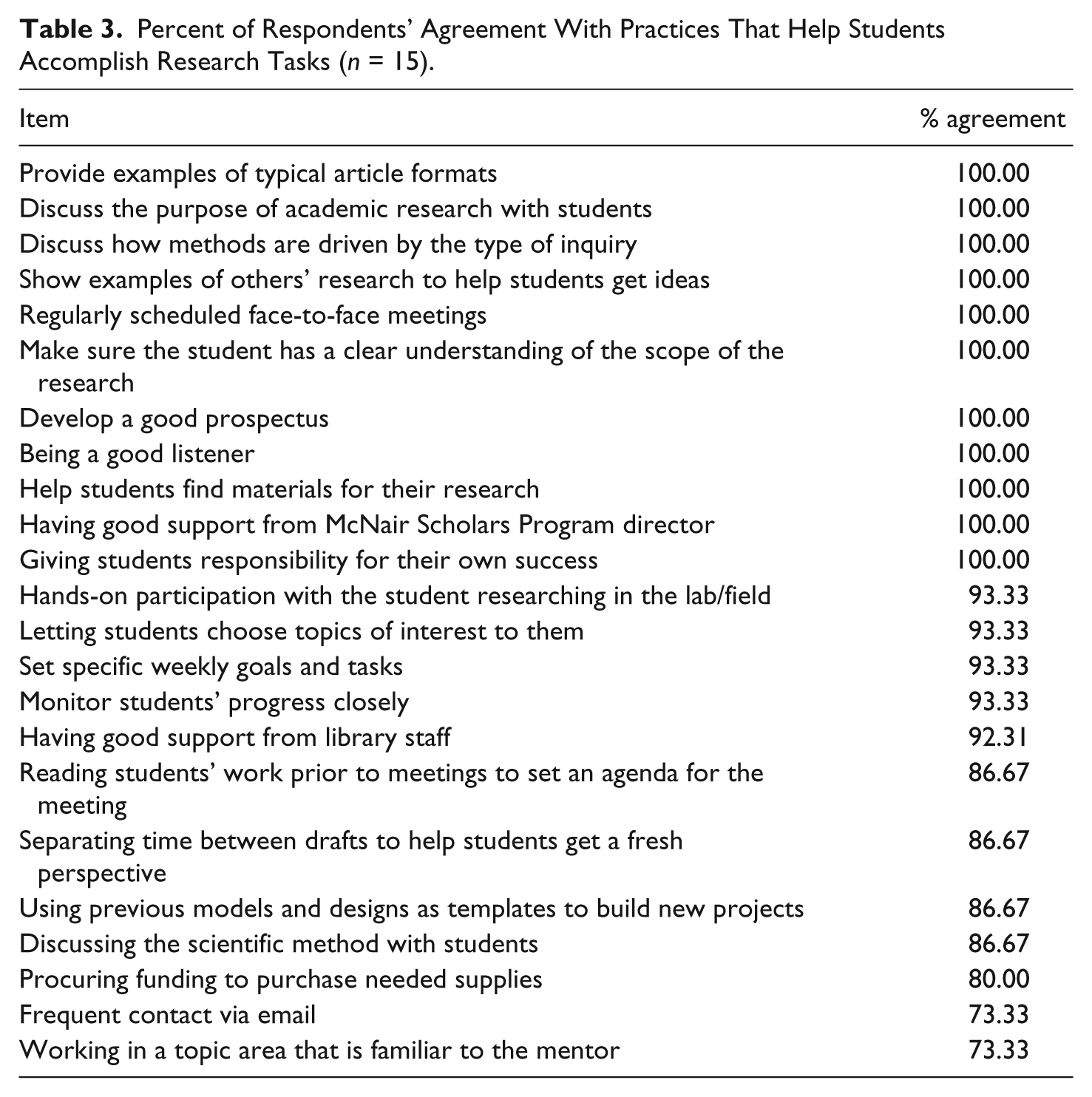
Round 3 began with 49 statements that advanced from Round 2. Fifteen panelists participated in Round 3. There were no new statements added for Round 3. Please consult Tables 3 and 4 to view the 49 statements the participants were asked to rate. Twenty-three of the statements were included under “practices that help undergraduates accomplish research tasks,” and 26 statements were included under “practices that help faculty members develop as mentors.” Items in Round 3 were sent to the participants in an online instrument, and participants were asked to “agree” or “disagree” with each item. Frequencies for agree and disagree were calculated. In an attempt to strengthen the results, we decided to deviate from the commonly used two-thirds agreement level (Harder et al., 2010; Martin, Fritzsche, & Ball, 2006; Shinn, Wingenbach, Briers, Lindner, & Baker, 2009) and use 70% as the required (a priori) agreement level for an item to remain in the list of best practices. Additionally, respondents were asked to provide demographic information during this round. As in the first two rounds, the panelists received electronic mailings in the form of a pre-notice, notice, and follow-up (Dillman et al., 2009). Fifteen out of 28 panelists participated in Round 3.
Percent of Respondents’ Agreement With Practices That Help Students Accomplish Research Tasks (n = 15).
Percent of Respondents’ Agreement With Practices That Help Faculty Members Develop as Mentors (n = 15).
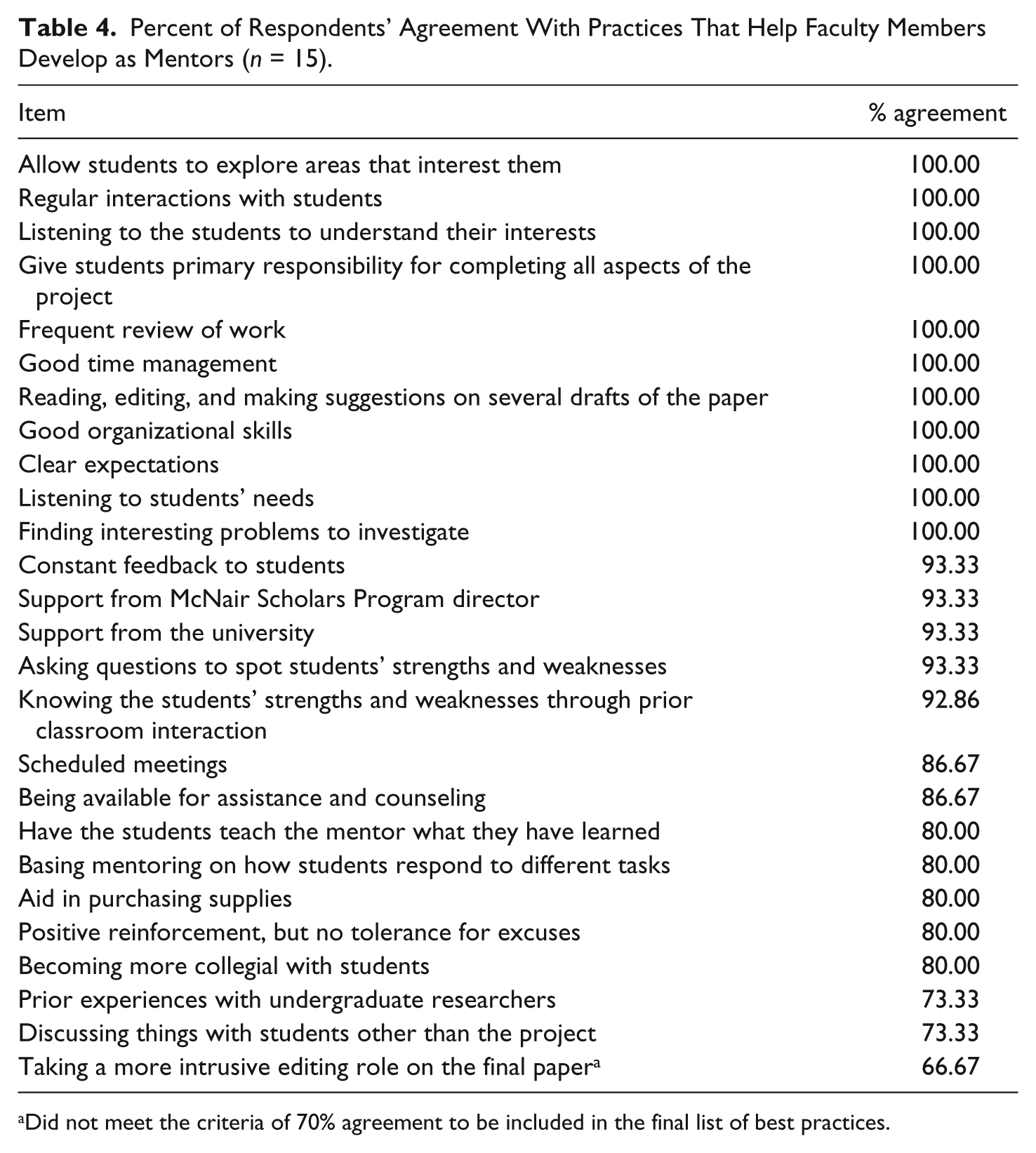
Did not meet the criteria of 70% agreement to be included in the final list of best practices.
Results
The response rate for Rounds 1 and 2 was 64%, whereas the response rate for Round 3 was 54%. Demographic questions were asked during Round 3 and the responding sample (n = 15) was 60% male and overwhelmingly Caucasian/White. About 13% of the sample reported having a master’s degree, 80% held a PhD, and 7% selected “other” for type of degree. About 33% of the sample reported the rank of assistant professor, 27% were associate professors, 27% held the rank of professor, 7% reported being instructors, and 1 respondent (7%) indicated “other” for rank. The mean age of the respondents for this study was 48.67 years (SD = 12.92). Additionally, the respondents reported having mentored an average of 5.27 undergraduate research projects (SD = 3.77).
In Round 1, a total of 52 statements were compiled for the two research questions. Twenty-four of the statements pertained to practices that help students accomplish research tasks and the other 28 concerned practices that helped faculty members develop as mentors. These 52 statements were sent out in the second round survey where participants were asked to rate their level of agreement with each. The top five practices rated by participants that help undergraduate researchers accomplish tasks were (a) being a good listener, (b) giving students responsibility for their own success, (c) holding regularly scheduled face-to-face meetings, (d) having good support from the McNair Scholars Program director, and (e) providing students examples of typical article formats. Table 1 illustrates the mean levels (in Round 2) of agreement for all 24 items relating to students accomplishing tasks.
Additionally in Round 2, participants reported their level of agreement with 28 items relating to practices that helped them develop as mentors. The top five rated practices according to participants were (a) support from the McNair Scholars Program director, (b) regular interactions with students, (c) reading, editing, and making suggestions on several drafts, (d) being available for assistance and counseling, and (e) having clear expectations for the project. Table 2 gives the mean levels of agreement for all 28 items regarding development as a mentor.
In Round 3, participants were asked to indicate whether they agreed or disagreed with the 49 statements that advanced from Round 2. Twenty-three items regarding task accomplishment and 26 items regarding developing as a mentor moved forward from Round 2 to Round 3. For task accomplishment, respondents reported 100% agreement with 11 items including (a) provide examples of typical article formats, (b) discuss the purpose of academic research with students, (c) discuss how methods are driven by the type of inquiry, (d) show examples of others’ research to help students get ideas, (e) holding regularly scheduled face-to-face meetings, (f) making sure the student has a clear understanding of the scope of the research, (g) developing a good prospectus, (h) being a good listener, (i) helping students find materials for their research, (j) having good support from the McNair Scholars Program director, and (k) giving students responsibility for their own success (see Table 3).
In addition, respondents reported 100% agreement with 11 items regarding practices that help faculty members develop as mentors. The items with 100% agreement included (a) allowing students to explore areas that interest them; (b) regular interactions with students; (c) listening to the students to understand their interests; (d) giving students primary responsibility for completing all aspects of the project; (e) frequent review of student’s work; (f) good time management; (g) reading, editing, and making suggestions on several drafts of the paper; (h) good organizational skills; (i) having clear expectations for the project; (j) listening to student’s needs; and (k) finding interesting problems to investigate (see Table 4).
Discussion
Due to the nature of Delphi study results and the fact these mentors have been successful in the context of this institution, the findings of this study are not intended to be generalized past the sample. However, several conclusions can be drawn, which may help illuminate some practical recommendations for undergraduate research program directors, as well as faculty members who mentor undergraduate researchers in Hispanic Serving Institutions. While Castellanos and Gloria (2007) suggested that the social, cultural, and psychological aspects of the PSC framework should be studied in concert, this study, which investigated the social aspect, confirms previous findings concerning mentoring and adds to the body of literature on undergraduate mentoring relationships within Hispanic Serving Institutions. Interestingly, the practices noted in this study aligned with Straus et al.’s (2013) findings that effective mentoring should include reciprocity, mutual respect, clear expectations, personal connection, and shared values, all of which were principles proposed by Castellanos and Gloria (2007).
One important finding from the study was that commonalities existed between the structure and consideration behaviors used by mentors. The participants in this study indicated that effective mentoring of undergraduate researchers embodies both task- and relationship-oriented behaviors, which is congruent with suggestions by Johnson (2007) regarding effective leadership. Mentors in the study identified behaviors such as interacting with students, listening and understanding students’ interests, being organized, requiring students to be responsible, and monitoring students’ work as being both task and relationally oriented. This leads to the conclusion that task and relational behaviors, although distinct, are interrelated. Northouse (2013) posited that on the continuum of leadership, structure and consideration are not separate points, but they represent two styles that intersect.
The implication for mentors is that they should strive to implement structural- and consideration-related mentoring behaviors; however, they need not focus on being labeled as high in structure or consideration. Instead, mentors should concentrate on their strengths and determine how their mentoring behaviors can lead to multiple outcomes. Further research might examine how mentors utilize specific behaviors in the undergraduate research process, as well as the relationships among these behaviors. Moreover, because mentors’ responses reflected overlap between structure and consideration behaviors, additional questions were raised. For example, is there congruence between how students and mentors perceive mentoring behaviors? It is plausible that mentors’ intended purposes of behaviors may be misconstrued by students as a result of how the behaviors are implemented. For instance, a mentor high in structure might emphasize task-oriented behaviors as a way of building relationships, whereas mentees may view these behaviors as highly procedural and not relational. Does the perceived emotion behind behaviors change the meaning of behaviors? Future inquiries into mentoring behaviors might investigate these questions.
The study revealed that both task and relationship behaviors were important in fostering positive undergraduate research experiences from the mentors’ standpoint. Participants in this study had high levels of agreement with most behaviors listed; thus, the researchers were able to delineate several practices to help mentors accomplish tasks (structure) and develop relationships (consideration) with undergraduate researchers. This allowed the researchers to compile the following list of practices: (a) gaining administrative support for the undergraduate research experience, (b) discussing the purposes of research with undergraduate students, (c) facilitating students’ learning through educative experiences, (d) being an engaged and active listener, and (e) giving students ownership over their success.
The first practice we determined was gaining administrative support for the undergraduate research experience. Undergraduate research experiences such as the McNair Scholars program provide students great opportunities to increase their knowledge of the research process and have been shown to foster student success. Results from this study showed that mentors perceive administrative support as key to helping students accomplish tasks, as well as helping mentors develop their mentoring capabilities. Open lines of communication with program and university administration can help keep faculty members engaged in the mentoring process and provide positive research experiences for each individual student. We recommend that faculty members pursue opportunities to partner with programs such as McNair Scholars program and build relationships with undergraduate research program and university administrators. Likewise, program administrators should seek faculty members who have an interest in undergraduate research and provide support and incentives to increase the number of faculty who mentor students. This could create stronger programs, which can in turn recruit students to the program, thus providing more opportunities for Hispanic students to pursue undergraduate research opportunities in hope of increasing their academic success. What is more, little empirical evidence was found about administrators’ perceptions of undergraduate research experiences; therefore, further studies may attempt to answer this question.
The second practice was discussing the purposes of research with undergraduate students. Mentors should not only discuss specific research projects with students, but also focus on overarching purposes of research and methodology to build students’ foundational research knowledge. Conversations might include developing a research program, how inquiry drives research methods, how to effectively implement the scientific method, and the purpose of scientific inquiry. This not only helps students carry out current research projects, but can also be beneficial for future research opportunities. This knowledge equips students with the skills to develop a strong prospectus, discern research problems, and build their own research agendas as undergraduates, as well as potential graduate students and professionals. In addition, mentors should facilitate the research process by allowing students to pursue research topics of their interest. While most faculty mentors have their own research agendas, allowing students to choose their research areas might help increase their engagement in and enjoyment of the research process. Therefore, mentors and students alike should be judicious when seeking out a mentoring relationship in order for both parties to reap the maximum benefit. Further research in this area might include investigations into the effectiveness of various strategies for helping students understand the research process.
The third practice we delineated was facilitating students’ learning through educative experiences. From the onset of the mentoring relationship it is important for the mentor to remain engaged throughout the process to provide students learning opportunities and teachable moments. For example, faculty mentors can supply students with examples of past research to help students generate ideas within the context of the scientific and research process, as well as gain an understanding of how to draft research reports through the study of other reports and typical formats of research articles. Additionally, throughout the mentoring process, the faculty mentor should frequently review a student’s work while reading and editing multiple drafts of the research manuscript. This constant review can initiate open communication leading to better relationships, as well as help keep students on task.
A fourth recommended practice was being an engaged and active listener. Faculty mentors engaged in the undergraduate research process can improve the effectiveness of their mentoring abilities by practicing active listening. Participants identified listening to students’ needs as one of the behaviors that not only improves the research process, but relationship building as well. Listening to students can aid mentors in determining how to assist in the research process as well as identifying students’ needs. Undergraduate researchers should be taught to become independent, but in the beginning stages of the research mentoring process regularly scheduled face-to-face meetings for faculty to monitor progress of the student and research can be helpful. Mentors can listen to students’ needs and be available for assistance and counseling if needed. Further research needs to be conducted in the area of mentor–student rapport. For example, how does rapport impact the undergraduate research process in terms of effectiveness of the research, student satisfaction with the process, and subsequent student success?
The final recommended practice was to give students ownership over their success. As faculty members provide guidance, they should also equip students to be responsible for their own success. Through implementation of task and relational-oriented mentoring behaviors throughout the research process, mentors can help students attain the tools to become successful. Example behaviors might include modeling good organizational and time management skills, providing clear expectations and directions, regular discourse regarding progress, and providing models of research for students to follow. Additionally, mentors should place the primary responsibility for all aspects of the project upon the student and allow them to explore their own areas of interest. This can create student ownership in the process thus leading to success, not only in the current project, but possibly in future research endeavors as well. However, while the onus of the project is upon student researchers, mentors should still provide clear direction. Faculty mentors can play an active role in the research process by providing adequate challenge and support for students.
The results of this study raised additional questions concerning Kram’s (1983) stages of mentoring development. Because faculty mentors of undergraduate researchers are limited by time, do mentors and mentees progress through all stages and at what rate? The participants in this study typically mentor undergraduate researchers for 1 year; therefore, Kram’s stages of initiation, cultivation, and separation would be accelerated. Due to this finite timeframe, it is plausible that faculty mentors need to heavily utilize task-oriented behaviors to scaffold students’ learning more frequently during the early stages while concurrently building relationships. Regarding the final stage of redefinition, how do faculty mentors and undergraduate researchers delineate their relationship at the conclusion of the project? This might redefine mentors’ and mentees’ roles throughout the stages and potentially have an effect on the social aspect of the psychosociocultural framework. Further studies might investigate how faculty mentors and their mentees progress through the stages of mentor development and if all stages are necessary for the undergraduate research mentoring process.
Footnotes
Declaration of Conflicting Interests
The author(s) declared no potential conflicts of interest with respect to the research, authorship, and/or publication of this article.
Funding
The author(s) received no financial support for the research, authorship, and/or publication of this article.