




Abstract
Extending Freeman and Alkin’s review of the literature, this systematic literature review examines the social and academic outcomes of students with extensive support needs (ESN) taught in general education settings compared with those taught in segregated settings. Six comparison design studies were analyzed for contextual factors of educational environments, participants’ characteristics, and outcomes related to social or academic attainment. Results indicate access to the general education classroom with same-age peers is associated with greater academic and social outcomes for students with ESN. There remains a need for improved reporting of participant support needs and demographic information (e.g., SES, nonbinary genders, and race and ethnicity), and a need for improved reporting of potential mediating factors (e.g., contextual factors and personnel) across settings. Detailed implications for future research are provided, particularly as they relate to providing high-quality instruction for students with ESN.
The Individuals with Disabilities Education Improvement Act (IDEA, 2004) guarantees children with disabilities including those with extensive support needs (ESN) a free, appropriate public education with specially designed instruction and supplementary aids and services. Although a continuum of placement options exists, ranging from separate schools to general education settings, IDEA requires students receive their education in the least restrictive environment (LRE): the general education environment with same-age non-disabled peers to the maximum extent possible. Thus, the general education classroom should be the automatic educational placement for all students until there is evidence special education supports and services could not be effectively delivered in that setting (Brock, 2018). Yet, access to the general education environment varies by disability category (National Center for Education Statistics, 2018), and students with ESN are the least likely to be educated in the general education setting (Kleinert et al., 2015). Students with ESN require continuous supports across multiple domains (e.g., academic and communication); they often meet the criteria to participate in their state’s alternate assessment and may have disability labels such as intellectual disability, autism, and multiple disabilities (Taub et al., 2017). These students have historically been referred to as the 1% of students with severe or profound disabilities (Kennedy & Horn, 2004).
Educational Placements
Research examining national trends in the educational placement of students with ESN demonstrates limited progress in recent years toward including these students as they continue to be predominantly placed in restrictive settings, segregated from the general education classroom (Brock, 2018; Morningstar et al., 2017). While 64% of students with disabilities spent 80% or more instructional time in general education classrooms (National Center for Education Statistics, 2018), 93% of students with ESN were primarily taught in segregated environments such as self-contained classrooms, separate schools, homes, hospitals, or residential settings; only 3% of students with ESN were taught in general education classrooms at least 80% of the time; and only 4% were taught in general education classrooms at least 40% of the time (Kleinert et al., 2015). Despite IDEA requirements, disagreements about the inclusion of students with disabilities have persisted for over 35 years with placement or where services are provided a prominent point of contention (Sailor & McCart, 2014).
Early efforts toward including students with disabilities in the general education setting often focused on physical placement and social belonging; however, these efforts have evolved in emphasizing students’ access to and progress in standards-based instruction and content (Courtade et al., 2012). A review of theory, historical records, and research indicates placement may play a fundamental role in the quality of instruction students receive (Jackson et al., 2008). Jackson and colleagues (2008) state, “although carefully planned, repeated instruction is important, it is essentially non-equivalent to the power of context in the control of learning outcomes” (p. 190). In other words, progress in the general education curriculum requires instruction connected to the general education content and context, including involvement from general education teachers and engagement with non-disabled peers. A literature review on practices for teaching all students in general education classrooms showed students with ESN learn in the general education setting when provided appropriate and accessible opportunities to learn (Taub et al., 2017). Such opportunities involve combining universal design for learning principles with evidence-based instructional methods to ensure students with ESN progress in grade-level content and general education context (Taub et al., 2017). A growing body of literature demonstrates the beneficial impact of inclusive education on teaching students with ESN in general education classrooms for the majority of their day (e.g., Agran et al., 2020; Dessemontet et al., 2012; Ryndak et al., 2013). Some of the benefits include increased access to general education curriculum (e.g., Soukup et al., 2007), higher academic achievement (e.g., Dessemontet et al., 2012), greater self-determination skills (e.g., Hughes et al., 2013), and improved communication skills (e.g., Foreman et al., 2004). Teaching students with ESN in general education classrooms also has a positive impact on students without disabilities. Students without disabilities participating in peer support arrangements increased their academic achievement, communication skills, and social interaction skills (e.g., friendships; Travers & Carter, 2022); similarly, students without disabilities taught alongside students with disabilities in general education settings made significant improvements in reading and math (e.g., Cole et al., 2004).
Supporters of segregated placements (i.e., settings outside of the general education classroom) for students with ESN claim intensive, systematic instruction is unlikely to be delivered in general education classrooms, and holding students with ESN to the high expectations of the general education environment is potentially embarrassing for students and requires exhaustive effort from teachers (Kauffman et al., 2020). However, researchers found students in self-contained classrooms are less likely to have access to grade-aligned curriculum and receive most of their instruction from non-certified staff (Kurth, Born, & Love, 2016). In a 7-year observational study of six self-contained classrooms across three states, students served in segregated environments received minimal amounts of specialized instruction and supports; in addition, they experienced frequent and severe distractions created by students and adults (Causton-Theoharis et al., 2011). There is no evidence to confirm segregated settings are more beneficial for students with ESN (Gee et al., 2020), yet once placed in self-contained classrooms, most students do not transition out of these segregated settings (White et al., 2007).
Purpose and Research Questions
Thus far, one review has synthesized the impact of educational placement on social or academic outcomes of elementary, middle school, and high school students with intellectual disability. Freeman and Alkin (2000) identified 39 studies comparing students with intellectual disability with both students without disabilities in the same placement and students with intellectual disability in different placements. The time spent in educational placements was inconsistent across comparisons, ranging from 25% to 100% of the school day. Overall, their findings suggested greater amounts of time spent in the general education classroom were correlated with positive outcomes, such as improved academic achievement and social behavior. This current article expands on Freeman and Alkin’s (2000) review by incorporating new research questions, revising the definitions of inclusive and segregated placements with explicit time allotments, and narrowing the target population to students with ESN.
Since the 2004 reauthorization of IDEA, there has not been a systematic review examining the academic and social outcomes of students with ESN across placements. Due to the continued placement of students with ESN in segregated settings, there is a need to understand the effects of segregation on progress and outcomes for students with ESN through an updated synthesis of the literature. Such a review could inform whether placement in general education or segregated settings best serves students in achieving the IDEA (2004) goals of equality of opportunity, full participation, independent living, and economic self-sufficiency (Turnbull et al., 2003); as well as preparing students for “further education” (IDEA, 2004). The purpose of this article is to examine the social and academic outcomes for students with ESN served in segregated settings (i.e., outside of the general education classroom for 50% or more of their day) compared with students with ESN served in inclusive settings (i.e., general education classroom for 80% or more of their day). The research questions guiding this review were as follows:
What are the social and academic outcomes for students with ESN in inclusive settings (i.e., general education classroom for 80% or more of their day) compared with segregated settings (i.e., outside of the general education classroom for 50% or more of their day)?
What are the characteristics of the participants with ESN included in the literature comparing inclusive and segregated settings?
How do the contextual factors (e.g., educational supports provided) of the classroom environment differ in inclusive and segregated settings for students with ESN?
Method
Search Procedures
Electronic databases, including PsycINFO and ERIC, were initially searched in March 2021 to locate relevant studies. Search terms from Freeman and Alkin’s (2000) review were utilized in combination with updated terminology for educational placements, disability labels related to students with ESN, terms related to comparison design studies, and academic or social outcomes. The database search was limited to detecting search terms anywhere except full text in scholarly journals or dissertations written in English between 2000 and 2021. The final search string was: (“significant disabilit*” OR “severe disabilit*” OR “significant cognitive disabilit*” OR “down syndrome*” OR “intellectual disabilit*” OR “mental retard*” OR “extensive support need*” OR “profound cognitive disabilit*” OR “severe cognitive disabilit*” OR “severe and profound cognitive disabilit*”) AND (“inclusive” OR “mainstream*” OR “inclusion” OR “general education”) AND (“matched pair*” OR “comparison*” OR “versus*” OR “separate”) AND (“academic outcome*” OR “social outcome*” OR outcome*). Additional studies were identified through reference harvesting (i.e., ancestral search) and an electronic search to locate any studies citing the included studies (i.e., forward search). In January 2022, the search was updated by hand searching the Research and Practice for Persons with Severe Disabilities and conducting the same electronic database search with publication dates extended to detect between 2000 and 2022. This journal was selected for hand search because it has been the primary journal publishing research related to the population of interest.
Inclusion Criteria
To be included in the literature review, articles had to meet the following criteria: (a) published in the English language prior to January 2022; (b) all participants were students with ESN; (c) quantitative or qualitative designs that included two-group comparison in which students were matched by characteristics across groups, in different educational settings such as inclusive (e.g., general education classroom for 80% or more of the school day) or segregated (e.g., resource classroom, self-contained classroom/special education classroom, or other for 50% or more of the school day); (d) measure a social or academic outcome for students with ESN as a dependent variable with educational placement as an independent variable (see definitions on p. 6), and (e) take place in the elementary, middle school, or high school (i.e., K-12) context in the United States. For the purposes of this literature review, participants with ESN had to meet one or more of the following criteria: (a) participate in their state’s alternate assessment, (b) require pervasive and continued supports across multiple domains (e.g., academic and communication), or (c) have disability labels such as intellectual disability, autism, and multiple disabilities. Participants also needed to have some denotation of severity of disability or extensiveness of support needs through additional labels or assessment scores (e.g., Down syndrome or severe intellectual disability) as reported by schools or through researcher implemented assessments.
Study Selection
The updated 2022 search yielded two additional unique studies for screening. Study selection followed PRISMA (Page et al., 2021) guidelines; a diagram documenting the selection process is displayed in Figure 1. Two authors screened all identified studies at the title and abstract level first to assess potential inclusion in the review. If a study did not meet one criterion, then it was immediately excluded. All studies that met inclusion criteria during the title and abstract screening were then screened in their entirety (e.g., full-text) to identify included studies for the review. During full-text screening, if a study failed to meet a single criterion (e.g., study occurred internationally) or if the study did not disaggregate data for participants with ESN, it was excluded from the review. The studies remaining after full-text screening were reviewed by a content expert and resulted in an additional article (Kurth & Mastergeorge, 2010) identified that did not emerge from previous search phases.
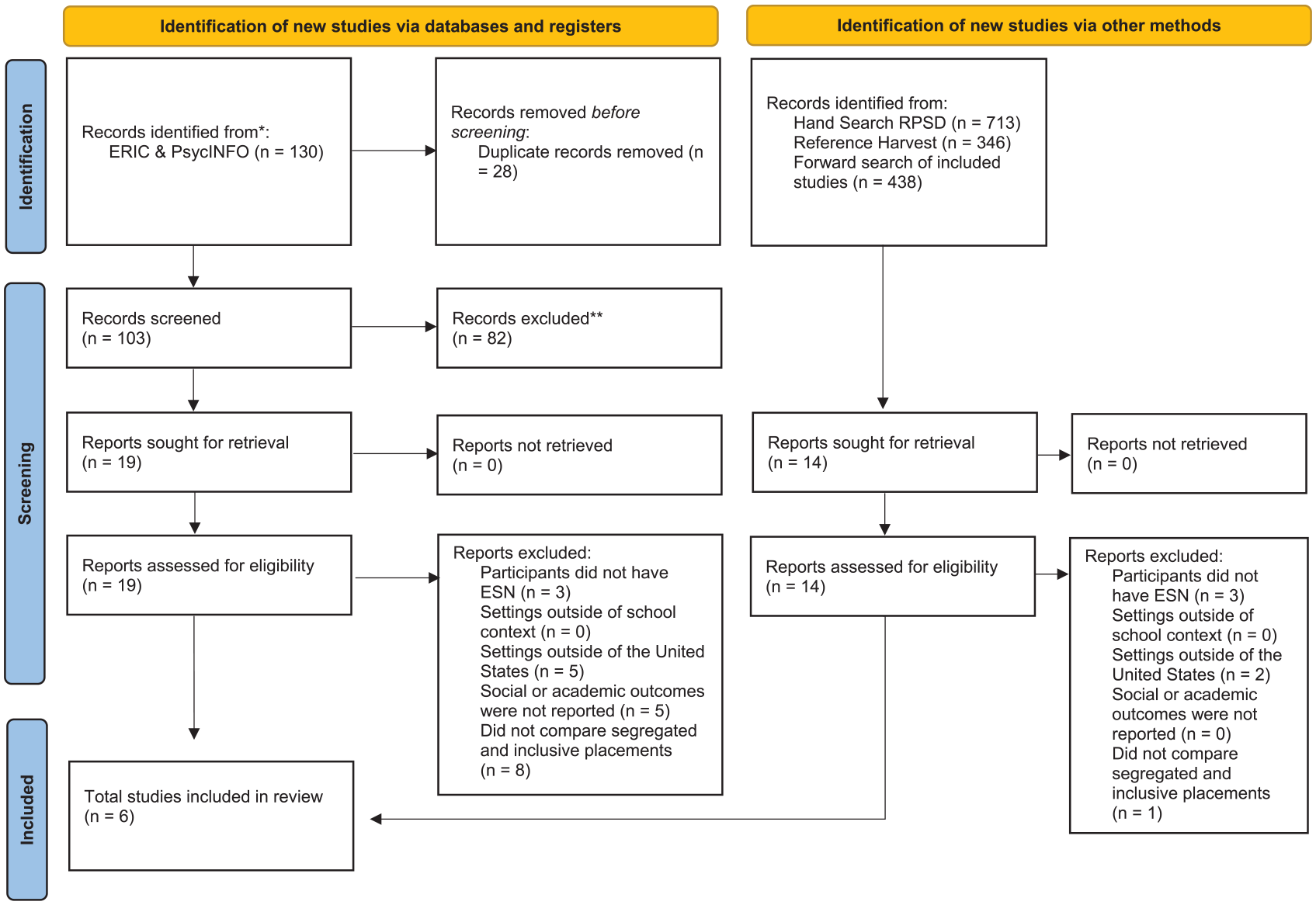
PRISMA 2020 flow diagram for updated systematic reviews which included searches of databases, registers, and other sources.
Descriptive Coding
All descriptive coding was classified by setting (i.e., inclusive and segregated). In other words, each of the following variables was coded for each participant, and those data were categorized as “inclusive” or “segregated” given the aforementioned descriptions of each setting. Definitions for all coding variables can be found on Open Science Framework (OSF): https://tinyurl.com/23esdprf.
Participants
Several aspects of participant demographic information were coded including age in years, grade level (i.e., elementary, middle, high school, or other), gender (i.e., male, female, or nonbinary), race and ethnicity (i.e., Hispanic/Latinx, Black/African American, Native Hawaiian or Pacific Islander, White/European American, Asian American, two races, and/or Other), and disability category (i.e., intellectual disability, autism, multiple disabilities, and/or other). Participants were assigned to IDEA (2004) disability categories based on their primary disability diagnosis (e.g., participants with a primary diagnosis of autism and a secondary diagnosis of intellectual disability were reported under their primary disability). If participants had multiple disability labels without specification of primary and secondary diagnosis, they were coded under the multiple disability category (e.g., autism and intellectual disability). However, if medical diagnoses were the only disability labels listed for participants with ESN, the participants were assigned to IDEA disability categories that closely aligned with the diagnosis (e.g., participants with Down syndrome or chromosomal deficiency were assigned to the category of intellectual disability; participants with cerebral palsy and high levels of support needs based on the Scales of Independent Behavior [SIB] assessment were assigned to the category of multiple disabilities). Studies were also coded for participants qualifying for the state alternative assessment, assessment scores indicating the severity of disability, pervasive and continued support need domains (e.g., communication, academic, daily living, social). Data were collected on whether socioeconomic status (SES) of participants was reported in the studies (i.e., yes or no). If studies did not report data for any of the participant characteristics, it was coded as not reported.
Experimental design and matching participant variables
The type of experimental design used in each study was coded to reflect the authors’ report of their study design (e.g., between-groups comparison design). The variable(s) used by study authors to create matched comparisons (i.e., assessment, teacher report, Individualized Education Program [IEP] characteristics, disability labels, age, gender, grade level, primary language, and/or other) across two settings (i.e., inclusive and segregated) were also coded. If studies did not report data on any dimension, it was coded as not reported.
Contextual factors of settings
Information about the contextual factors of educational environments were coded, including the type of classroom (i.e., general education classroom, resource/special education classroom, self-contained classroom, separate school/facilities, or other) and the classroom supports provided (i.e., curricular supports, peer supports, related services, and planning/collaboration, or other). The educational environments were classified as inclusive (e.g., general education classroom) or segregated (e.g., resource classroom, self-contained classroom/special education classroom, or other), and the time spent in each setting was captured by coding the percentage of instructional day spent in each environment. If a study did not report the percentage of instructional day spent across settings, but reported participants received all instruction and special education services within either general education or special education settings, this was interpreted as 100% of the instructional day spent in either the general or special education setting.
Personnel across settings
Information about adult supports in inclusive and segregated settings was coded, including the professional role of the adults providing instruction (i.e., general education teacher, special education teacher, non-certified personnel, or other), instructor characteristics (i.e., years of experience, additional credentials), and the number of personnel in the setting (i.e., the total number of certified staff, the total number of non-certified staff). If studies did not report data on any contextual factor or adult support characteristic, it was coded as not reported.
Social and academic outcomes
Information about the dependent variable(s) was coded, including how many dependent variables were assessed and what social or academic outcomes were targeted for participants with ESN. Social outcomes were defined as any social behavior (e.g., communicating, maintaining rapport with peers, engagement in social situations; cf. Ledford et al., 2018); academic outcomes were defined as any academic behavior (e.g., academic content achievement, progress in academic goals; cf. Freeman & Alkin, 2000) measured by an unbiased observer. The social and academic outcomes of students with ESN in the studies were coded to reflect the study authors’ report, including the name of the measurement tools used, whether the measure had been validated, and overall results reported by settings (i.e., inclusive and segregated). If data were not reported in any criterion, not reported was recorded.
Quality and Rigor
The Council for Exceptional Children (CEC, 2014) quality indicators for special education experimental and quasi-experimental group designs were used to assess all included studies. Each study was evaluated as a unit with yes/no responses coded across eight domains: (a) context and setting, (b) participant description, (c) intervention agent, (d) description of practices, (e) implementation fidelity, (f) internal validity, (g) outcome measures/dependent variables, and (h) data analysis. The second and fourth authors completed quality and rigor ratings and co-rated 33% of the studies (n = 2) to establish inter-rater agreement. Inter-rater agreement was calculated by dividing the number of agreements by the sum of agreements and disagreements and multiplied by 100. Inter-rater agreement was 100%.
Interobserver agreement (IOA)
Reliability data were collected at the study inclusion and descriptive coding levels. All studies were screened by two researchers to determine study inclusion at the title and abstract and full-text level. The studies meeting all inclusion criteria (n = 6 studies) were independently coded by the first author, and 50% of the included studies (n = 3 studies) were coded by the second author. IOA was calculated using point-by-point agreement in which the number of agreements is divided by the number of agreements plus disagreements multiplied by 100. There was 95% agreement at the title and abstract level, 89% agreement at the full-text level, and an overall agreement of 82% across descriptive coding criteria. All coding disagreements were discussed until consensus was reached.
Results
A total of 33 studies were selected for full-text screening. Six studies aligned with the inclusion criteria and were included in this review; see the PRISMA diagram for detailed reasons for exclusion of studies (n = 27 studies) in Figure 1.
Participants
Participant demographic information is detailed in Table 1. Across all six studies, there were 135 participants with ESN; 49.6% (n = 67) were served in inclusive settings, and 50.4% (n = 68) were served in segregated settings. The average age of participants in inclusive settings was 10.83 (range = 5–18 years); in segregated settings, the average age was 10.59 (range = 5–19 years). While all studies were conducted in K-12 school environments, including elementary schools (44.7%; n = 30 participants; Fryxell & Kennedy, 1995; Gee et al., 2020; Hunt et al., 1994), middle schools (23.8%; n = 16 participants; Gee et al., 2020; Kennedy et al., 1997; Kurth & Mastergeorge, 2010), and high schools (1.5%; n = 1 participant; Gee et al., 2020), one study did not report the grade level of the participants or setting (29.8%; n = 20 participants; Fisher & Meyer, 2002).
Participant Demographic Information for Students in Inclusive, Segregated, and Across Settings with Disability Labels.
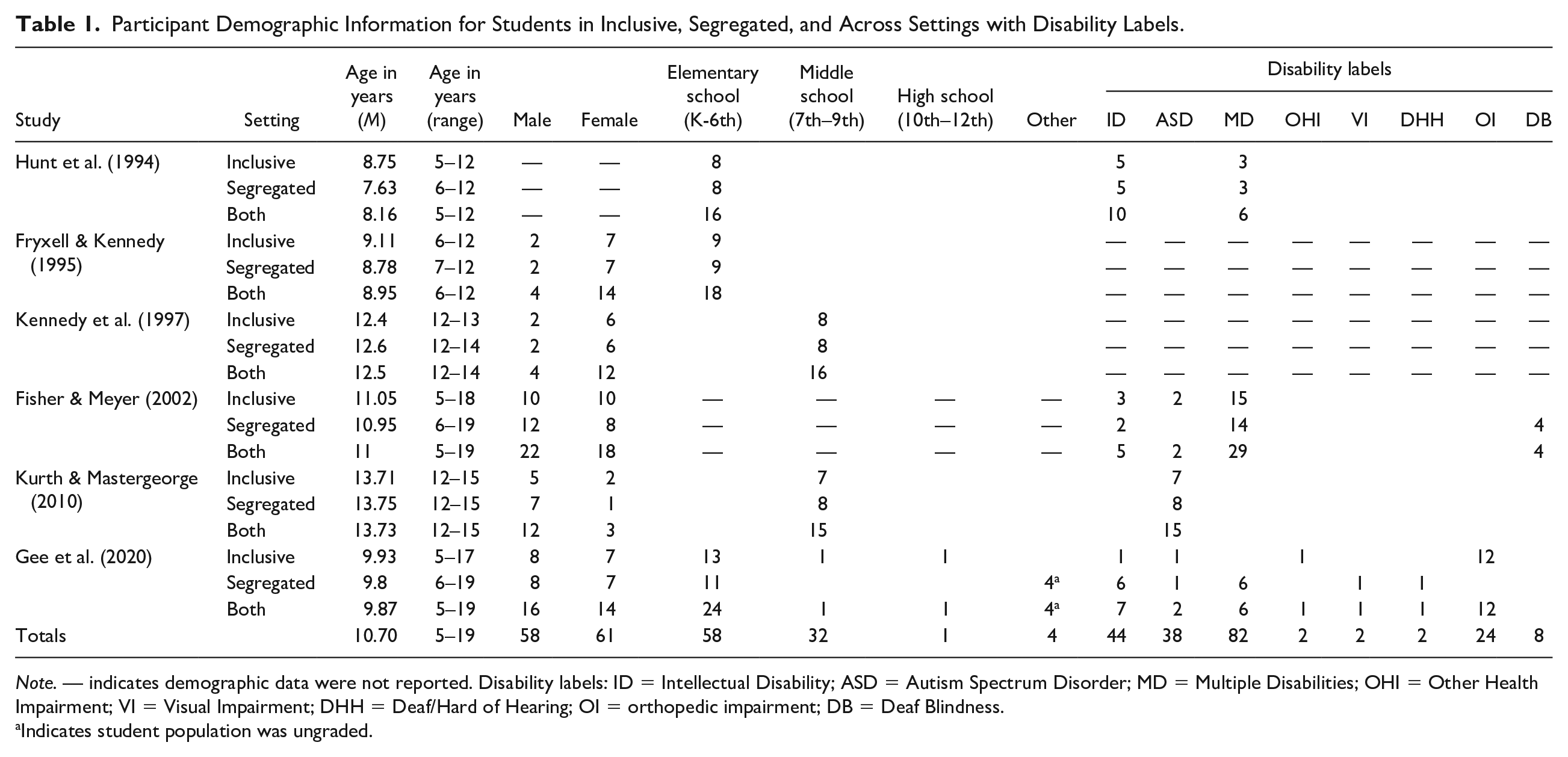
Note. — indicates demographic data were not reported. Disability labels: ID = Intellectual Disability; ASD = Autism Spectrum Disorder; MD = Multiple Disabilities; OHI = Other Health Impairment; VI = Visual Impairment; DHH = Deaf/Hard of Hearing; OI = orthopedic impairment; DB = Deaf Blindness.
Indicates student population was ungraded.
Binary genders of participants (i.e., male or female) were often reported (83.3%; n = 5 studies; Fisher & Meyer, 2002; Fryxell & Kennedy, 1995; Gee et al., 2020; Kennedy et al., 1997; Kurth & Mastergeorge, 2010); one study did not report participants’ gender (Hunt et al., 1994). Most participants were reported as female (45%; n = 61) compared with male (43%; n = 58); similarly, in inclusive settings, 48% (n = 32) of participants were female, 40.3% (n = 27) were male, and 12% (n = 8) of participants’ gender was not specified. However, 46.4% of participants (n = 32) in segregated settings and only 42% (n = 29) in inclusive settings were female with gender not specified for 11.6% (n = 8) of participants. All included studies did not report data on participants’ SES and race and ethnicity.
Assessments used in studies to indicate severity of disability include the Vineland Adaptive Behavior Scale (VABS; for example, Kurth & Mastergeorge, 2010), SIB, and the Student Descriptor Scale (SDS; for example, Hunt et al., 1994). In two studies, schools reported participants as having the highest level of support needs in the district (Fisher & Meyer, 2002) or qualifying for states alternative assessment (Gee et al., 2020). Studies that did not report disability labels for participants (33.3%: n = 2; Fryxell & Kennedy, 1995; Kennedy et al., 1997) met criteria for inclusion by indicating pervasive support needs across multiple domains (i.e., communication and socialization; VIBS scores) and identified participants as having severe or profound disability by school reports (25.2%: n = 34 participants).
Most participants were identified as having multiple disabilities (30.4%; n = 41; Fisher & Meyer, 2002; Gee et al., 2020; Hunt et al., 1994). Of those participants with multiple disabilities, 43.9% (n = 18) were taught in inclusive settings and 56.1% (n = 23) were taught in segregated settings. The next largest disability category was intellectual disability (16.3%; n = 22; Fisher & Meyer, 2002; Gee et al., 2020; Hunt et al., 1994); of those participants with intellectual disability, 40.9% (n = 9) were educated in inclusive settings and 59.1% (n = 13) were educated in segregated settings. Table 1 details all disability labels across settings.
Experimental Design and Matching Participant Variables
Across all studies, group comparison designs were used. The most common design type implemented was a post-test only control group design with matched comparisons (33.3%; Fryxell & Kennedy, 1995; Kennedy et al., 1997). Other design types include a 2-year longitudinal study with two groups (Fisher & Meyer, 2002), a between-groups comparison with two groups (Hunt et al., 1994), and a matched quasi-experimental study with participants continuously enrolled in placements since their first IEP (Gee et al., 2020), and a between-groups comparison study with participants continuously enrolled in placements since kindergarten (Kurth & Mastergeorge, 2010). The variables to identify participants with similar characteristics varied across studies; however, the most common characteristic participants were matched on was age (83.3%; n = 5 studies; Fisher & Meyer, 2002; Fryxell & Kennedy, 1995; Gee et al., 2020; Kennedy et al., 1997; Kurth & Mastergeorge, 2010). Other variables included assessment scores from the SIB (33.3%; n = 2 studies; Fisher & Meyer, 2002; Hunt et al., 1994), primary language (33.3%; n = 2 studies; Gee et al., 2020; Kurth & Mastergeorge, 2010), gender (50%; n = 3 studies; Fryxell & Kennedy, 1995; Gee et al., 2020; Kennedy et al., 1997), and disability labels (33.3%; n = 2 studies; Gee et al., 2020; Kurth & Mastergeorge, 2010). Table 2 details variables used to match participants with ESN across studies.
Participants with ESN Matched Variables Across Studies.
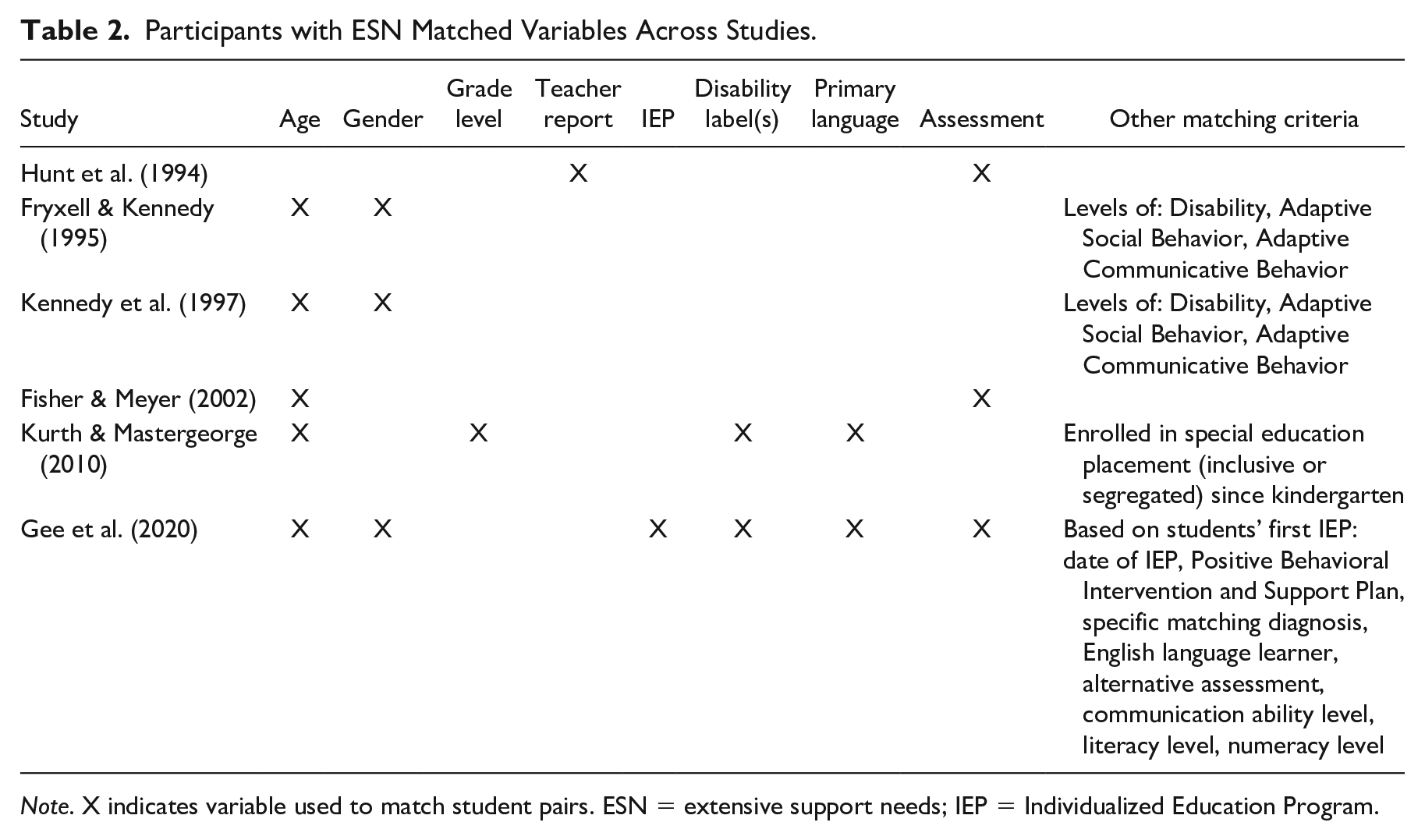
Note. X indicates variable used to match student pairs. ESN = extensive support needs; IEP = Individualized Education Program.
Contextual Factors of Settings
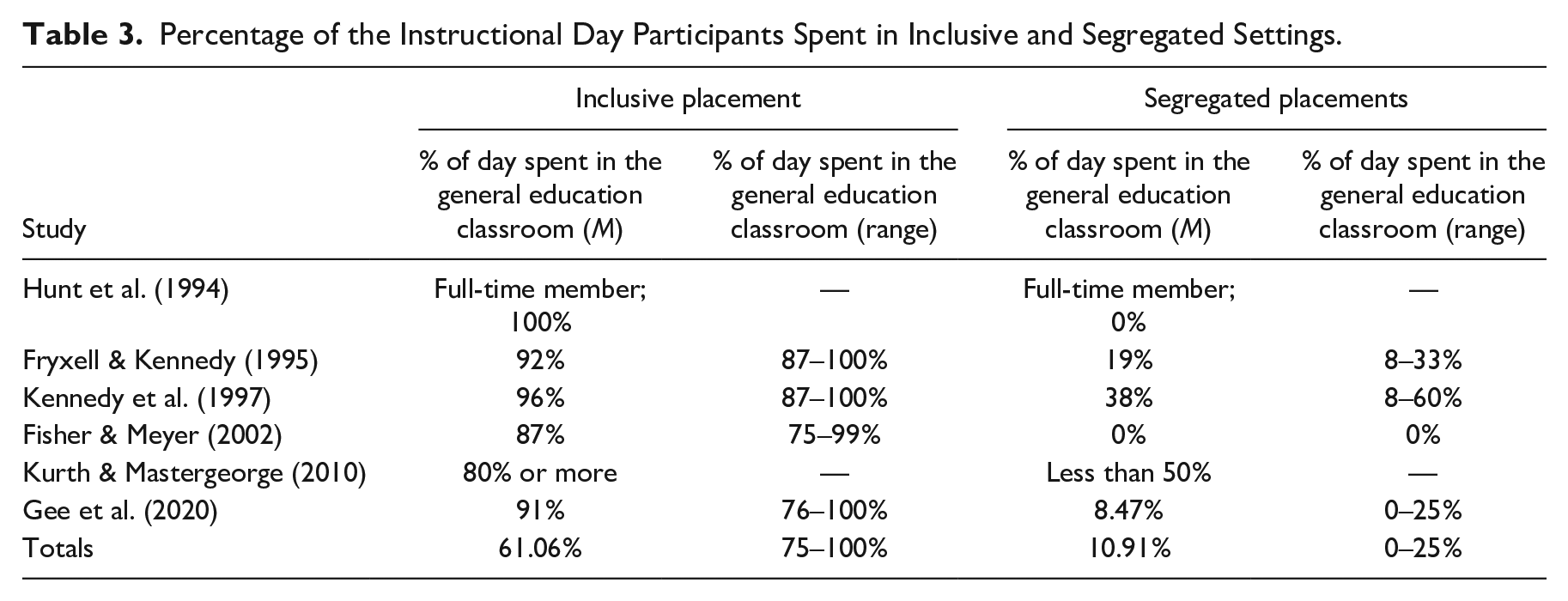
Participants taught in inclusive settings spent on average 91.1% (range = 75%–100%) of the instructional day in general education settings with same-age peers; whereas participants taught in segregated settings spent on average 19.1% (range = 0%–25%) of their instructional day in general education settings with same-age peers. The segregated setting in all six studies included self-contained classrooms; only two studies (33.3%; Fisher & Meyer, 2002; Gee et al., 2020) also included segregated participants from separate special schools. Table 3 details time in the instructional day across settings for each study.
Percentage of the Instructional Day Participants Spent in Inclusive and Segregated Settings.
Classroom supports varied across studies and settings. For instance, instructional supports were reported more often in inclusive settings (83.3%; n = 5 studies; Fisher & Meyer, 2002; Fryxell & Kennedy, 1995; Gee et al., 2020; Kennedy et al., 1997; Kurth & Mastergeorge, 2010) compared with segregated settings (50%; n = 3 studies Fisher & Meyer, 2002; Fryxell & Kennedy, 1995; Gee et al., 2020). There were also more planning and collaboration supports reported in inclusive settings (66.7%; n = 4 studies; Fisher & Meyer, 2002; Fryxell & Kennedy, 1995; Hunt et al., 1994; Kennedy et al., 1997) than segregated settings (33.3%; n = 2 studies; Fryxell & Kennedy, 1995; Kennedy et al., 1997). While 66.7% of the studies (n = 4 studies) reported peer supports and 50% (n = 3 studies) reported curricular supports, these supports were inconsistently reported across settings. Thus, peer supports are reported in only 50% of segregated settings (n = 3; Fryxell & Kennedy, 1995; Gee et al., 2020; Hunt et al., 1994) and inclusive settings (n = 3; Gee et al., 2020; Hunt et al., 1994; Kennedy et al., 1997), and curricular supports are reported in 33.3% of segregated settings (n= 2; Fryxell & Kennedy, 1995; Hunt et al., 1994) and inclusive settings (n= 2; Hunt et al., 1994; Kennedy et al., 1997). Table 4 details contextual factors data by setting.
Contextual Factors of Settings Across All Studies.
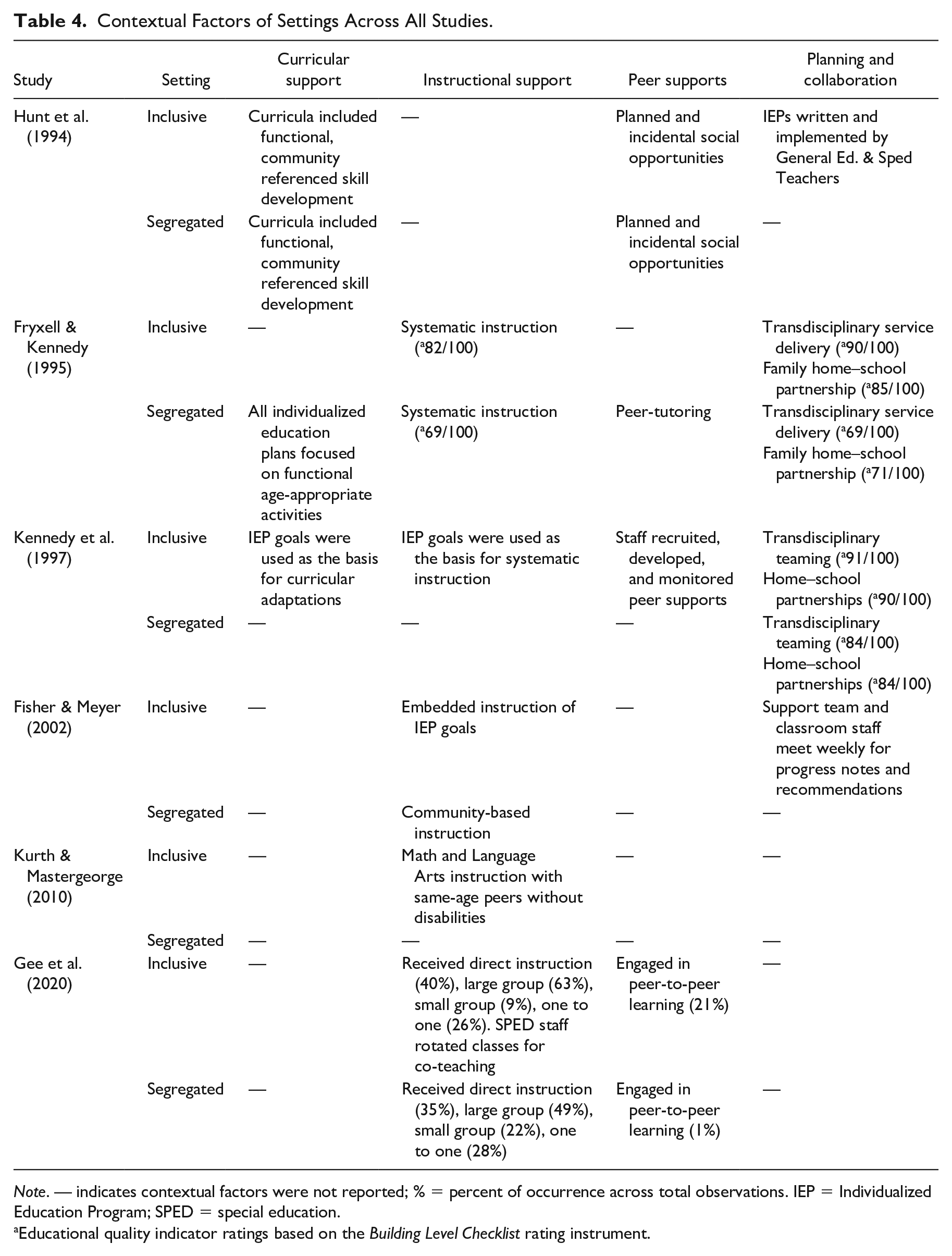
Note. — indicates contextual factors were not reported; % = percent of occurrence across total observations. IEP = Individualized Education Program; SPED = special education.
Educational quality indicator ratings based on the Building Level Checklist rating instrument.
Personnel Across Settings
Most studies (66.7%; n = 4 studies) detailed the types of certified instructors present in both the inclusive and segregated settings (Fryxell & Kennedy, 1995; Gee et al., 2020; Hunt et al., 1994; Kennedy et al., 1997). However, two studies (Fisher & Meyer, 2002; Kurth & Mastergeorge, 2010) only reported the presence of credentialed teachers and did not specify roles for either setting (e.g., general education teacher or special education teacher). Both certified general education and special education teachers were reported in inclusive settings, while segregated settings only reported involvement of special education teachers (66.7%; n = 4 studies; Fryxell & Kennedy, 1995; Gee et al., 2020; Hunt et al., 1994; Kennedy et al., 1997). The years of experience teachers have in the field were more often reported for special education teachers (50%; n = 3 studies; Fryxell & Kennedy, 1995; Gee et al., 2020; Kennedy et al., 1997) than general educators’ years of experience (Gee et al., 2020). The presence of non-certified support staff was reported in half the studies (50%; n = 3 studies; Fisher & Meyer, 2002; Gee et al., 2020; Hunt et al., 1994). Two studies (Gee et al., 2020; Hunt et al., 1994) reported the student to adult ratios across settings; one study (Fisher & Meyer, 2002) only provided the paraprofessional to student ratios of the inclusive setting (i.e., one paraprofessional to one to two students with ESN). Personnel across settings are detailed in Table 5.
Personnel Characteristics in Inclusive and Segregated Settings.
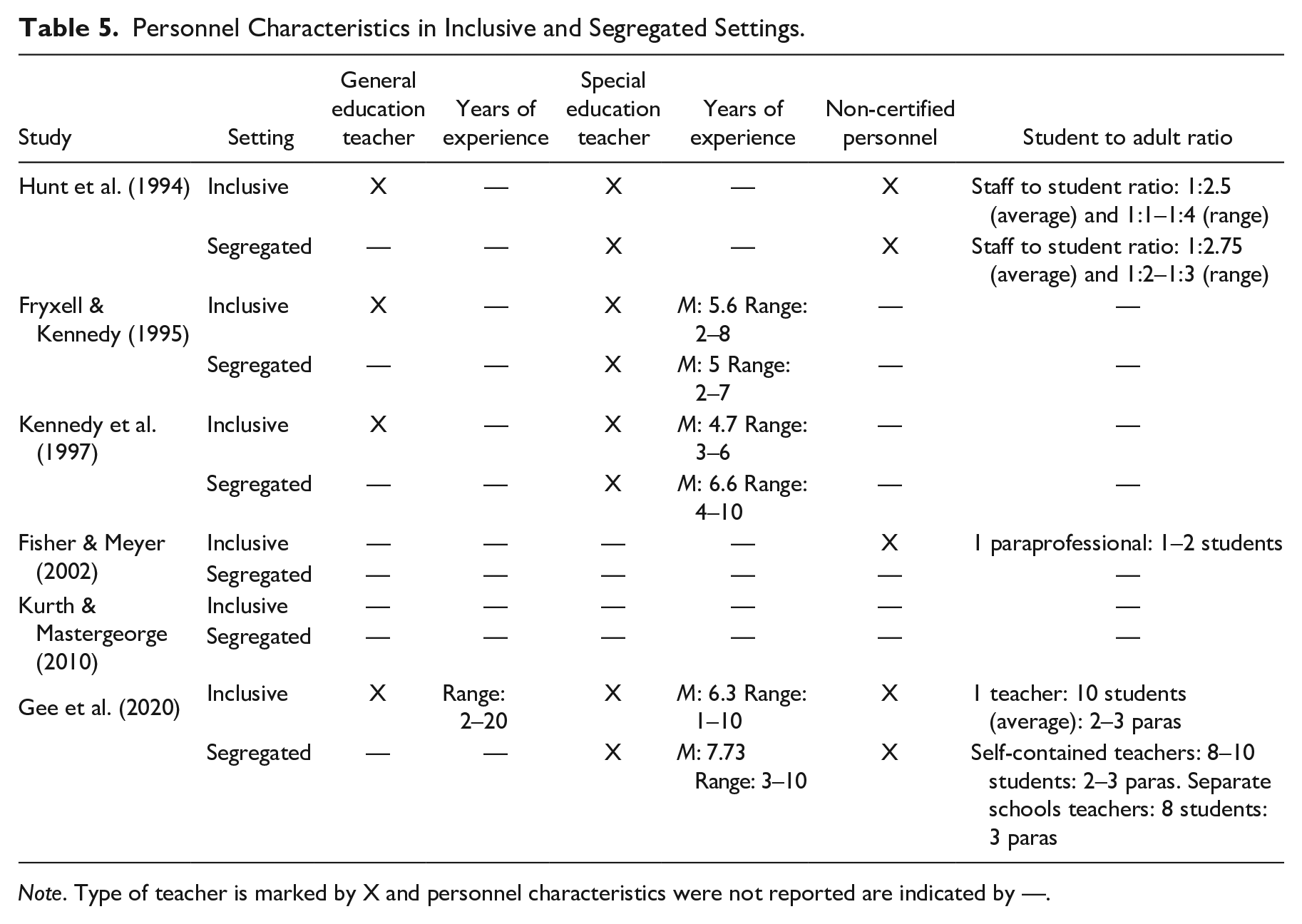
Note. Type of teacher is marked by X and personnel characteristics were not reported are indicated by —.
Social and Academic Outcomes
See Table 6 for an overview of academic and social outcomes. The studies examining the social outcomes of participants with ESN across settings (83.3%; n = 5; Fisher & Meyer, 2002; Fryxell & Kennedy, 1995; Gee et al., 2020; Hunt et al., 1994; Kennedy et al., 1997) all indicated placement in inclusive settings was associated with positive outcomes; however, not all positive outcomes were statistically significant (Fisher & Meyer, 2002). Studies measuring variables associated with students’ social relationships (33.3%; n = 2; Fryxell & Kennedy, 1995; Kennedy et al., 1997) including social contact (e.g., interactions), social support behaviors (e.g., companionship), and friendship networks (e.g., members of students’ social circle) demonstrated statistically significant differences across settings. Participants with ESN taught in inclusive settings received and provided higher levels of social support behaviors, had larger friendship networks, higher levels of social contact with peers without disabilities, (33.3%; n = 2 studies; Fryxell & Kennedy, 1995; Kennedy et al., 1997), and more durable friendships with peers without disabilities (Kennedy et al., 1997). Similarly, the number of interactions initiated by students with ESN and the number of reciprocal interactions with others (e.g., peers and adults) was greater for students served in inclusive settings (Hunt et al., 1994). However, there were no differences across settings on initiation by others (e.g., peers with or without disabilities and adults). One study (Gee et al., 2020) demonstrated participants with ESN taught in inclusive settings showed a statistically significant, large effect size in their communication level compared with their matched pairs in segregated settings. Another study (Fisher & Meyer, 2002) showed no significant differences in social competence measures between groups (i.e., participants with ESN taught in inclusive and segregated settings). Still, there were statistically significant differences in gains for those in the inclusive setting on two subscales of social competence including initiating contact and coping with negative situations. In contrast, no significant change in gains was observed for participants with ESN taught in the segregated setting (Fisher & Meyer, 2002).
Social and Academic Outcomes: Included Studies Overview.

Note. ESN = extensive support needs; GE Teacher = general education teacher; SPED teacher = special education teacher; NCS = non-certified staff; NSD = no statistical difference; CS = curricular supports; PS = peer supports; P&C = planning and collaborating; IS = instructional supports.
Tools used for measuring social outcomes varied; one study implemented a researcher-made measurement tool (Gee et al., 2020). The remaining studies (83.3%; n = 5 studies) measured social outcomes with validated tools: Social Contact Assessment Form (33.3%; n = 2 studies; Fryxell & Kennedy, 1995; Kennedy et al., 1997), School-Based Social Network Form (33.3%; n = 2 studies; Fryxell & Kennedy, 1995; Kennedy et al., 1997), Educational Assessment of Social Interaction (Hunt et al., 1994), Social Interaction Checklist (Kennedy et al., 1997), and Assessment of Social Competence (Fisher & Meyer, 2002). All social and academic outcomes were reported by either school personnel (Fisher & Meyer, 2002; Kurth & Mastergeorge, 2010) or members of the research team (Fryxell & Kennedy, 1995; Gee et al., 2020; Hunt et al., 1994; Kennedy et al., 1997).
In studies examining the academic outcomes of participants with ESN across settings (33.3%; n = 2 studies; Gee et al., 2020; Kurth & Mastergeorge, 2010), the inclusive environment was associated with higher scores and larger effect sizes in literacy (e.g., reading, writing) and math (e.g., numeracy) compared with the segregated environment. One study (Kurth & Mastergeorge, 2010) measured reading, writing, and math scores using the Woodcock–Johnson III Test of Achievement administered by the school psychologist or a credentialed teacher. The other study (Gee et al., 2020) measured literacy levels and numeracy levels by comparing participants’ first and current IEP in which experts used a 3-point rating scale (i.e., progress, no progress, regression) to evaluate participants’ progress.
Quality and Rigor
Analysis of the quality and rigor of the six included studies revealed most studies met approximately 50% of the quality indicators as seen in Table 7, with Gee et al. (2020) and Fisher and Meyer (2002) obtaining the highest ratings. All six studies failed to report adequate features of the context and setting, as well as implementation fidelity; five of the six did not report sufficient information about student participants (except for Gee et al., 2020). Reports of internal validity, outcome measures, and data analysis were typically well reported.
Quality and Rigor of Included Studies.
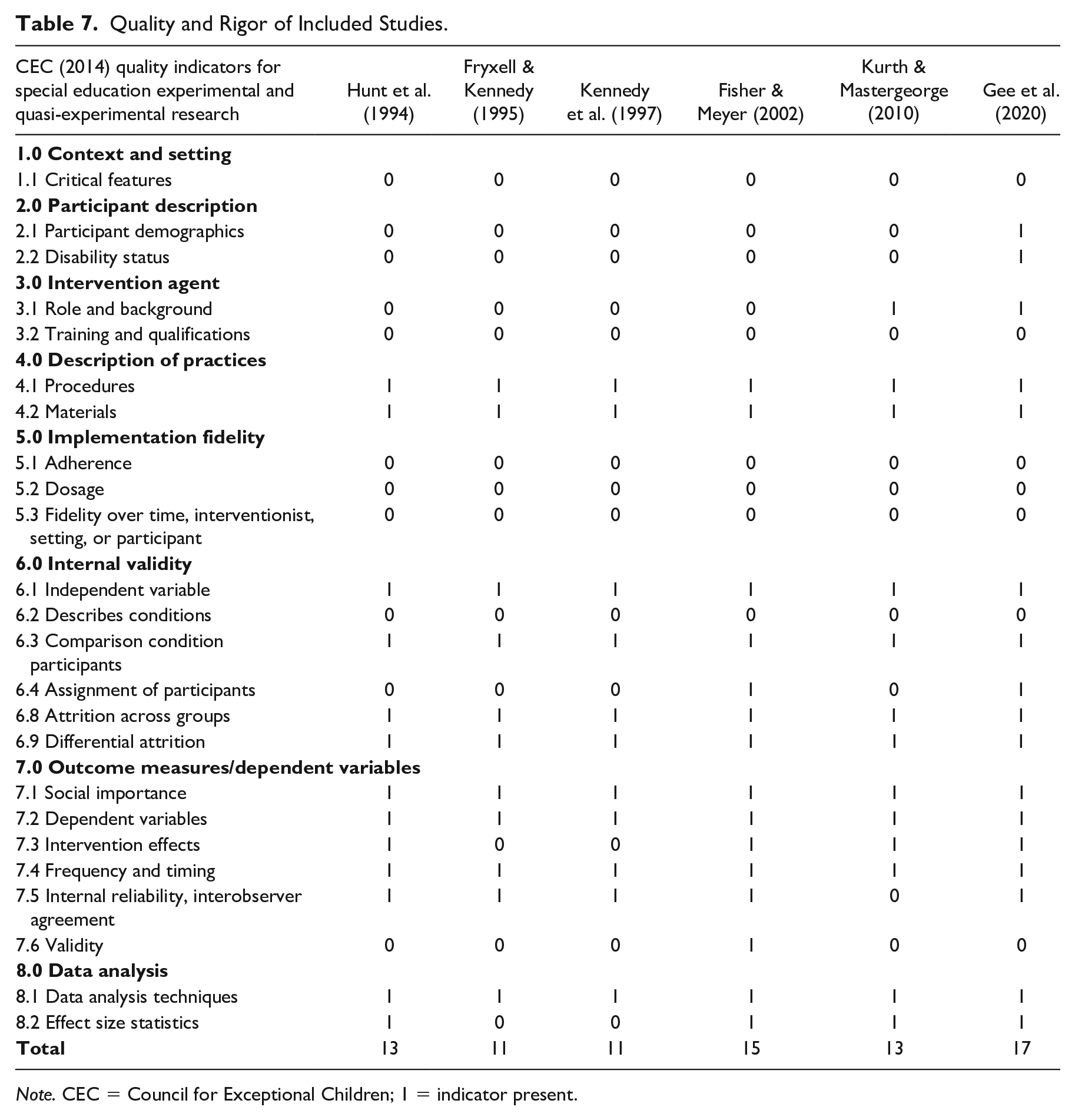
Note. CEC = Council for Exceptional Children; 1 = indicator present.
Discussion
The purpose of this review was to examine the social and academic outcomes of students with ESN taught in segregated settings compared with those taught in inclusive settings. The major findings include (a) positive outcomes associated with placement in inclusive settings, (b) potential mediating factors across settings, and (c) a need for improved reporting of participant information (e.g., SES, genders, and race and ethnicity). Each finding is discussed in detail next.
Inclusive Settings Produce Better Outcomes
Students with ESN taught in inclusive settings had greater academic and social outcomes compared with students with ESN taught in segregated settings in five out of six studies (83.3%). These are similar to findings from Kleinert et al. (2015) demonstrating a positive correlation between the outcomes of students with ESN (i.e., expressive communication, reading skills, and mathematic skills) and increasingly inclusive classroom settings. Both studies examining academic outcomes showed students with ESN served in inclusive settings had greater achievement in literacy and math. Out of the studies examining students’ social outcomes across settings (i.e., inclusive; segregated), the majority (80%) demonstrated that students with ESN served in the general education classroom alongside same-age peers had better outcomes than those served in segregated settings. While one study in this review did not find statistically significant differences in the social competence of those served in inclusive and segregated settings, it did establish that only students with ESN taught in inclusive settings demonstrated statically significant gains in social outcomes (i.e., two out of 11 subscales of social competence; Fisher & Meyer, 2002). In summary, our findings demonstrate greater gains are made for students with ESN in inclusive settings; however, our research did not address how to best promote student address and learning of the general education curriculum. Previous research has found students taught in general education classrooms have greater access to the general education curriculum (e.g., Soukup et al., 2007), IEPs that are more rigorous and aligned to the general education standards (e.g., Kurth & Mastergeorge, 2010), and higher levels of social engagement (e.g., Lyons et al., 2011). However, future research is needed to further elucidate the specific factors that convey greater benefits to students taught in inclusive settings, including access to grade-level standards. Additional factors worthy of future research are described next.
Potential Mediating Factors
Contextual factors across settings were not consistently reported; however, several important patterns did emerge. First, the percentage of instructional days spent in general education settings provides insight into how much time students with ESN were with same-age peers. Based on the average within-group percentages across all studies, the percent of time spent with same-age peers is nearly five times greater for students with ESN in inclusive settings (91%) compared with students in segregated settings (19%). Other research found students with ESN were more likely to receive academic content when peers without disabilities were present, and they were 10 times more likely to receive academic literacy exposure when taught in inclusive settings (Ruppar et al., 2018). Thus, the presence of same-age peers or lack thereof may influence students’ access to educational content and contribute to differential learning outcomes.
Second, in studies (66.7%; n = 4) that specified types of certified teachers (i.e., general and special education), there were more certified teachers supporting inclusive settings than there were in segregated settings. The staff-to-student ratios across settings were relatively similar; however, general and special education teachers and non-certified support staff were reported in inclusive settings, while in segregated settings, only special education teachers and non-certified support staff were reported. With more certified teachers in inclusive settings and fewer certified teachers in segregated settings, this may provide understanding as to why Kurth, Born, and Love (2016) found students with ESN received most of their instruction from non-certified staff within the segregated setting. Third, the type and quality of classroom supports differed. Instructional and planning and collaboration supports occurred more often in inclusive settings than in segregated settings; when rated (33.3%), these supports in inclusive settings received greater quality indicator ratings. Given the limited details reported on classroom supports in both inclusive and segregated settings, it is difficult to identify various ecological considerations as mediating factors with certainty. However, these and other contextual factors, including quality of instruction, require great research attention and should be prioritized in future research.
Limited Participant Reporting
Participants’ demographic data were inconsistently reported across studies, with some studies lacking details about the grade levels, disability labels, gender, and support needs of participants. None of the included studies reported participants’ SES, race, or ethnicity. Such information is crucial for identifying broader systemic disparities influencing inequitable access to the general education environment. For instance, other research shows students are more likely to be taught in general education classrooms when they are from higher SES backgrounds and students of color are disproportionately placed in restrictive educational settings (Kurth, Mastergeorge, & Paschall, 2016). Future research should improve participant demographic data reporting to include essential details such as gender, SES, grade level, and support needs. Explicitly reporting gender, SES, grade level, and support needs will allow a better understanding of the targeted population and the interventions and practices that best serve them. Furthermore, the continued placement of students in segregated settings should be reconsidered as such practices may limit the potential of individuals with ESN and enable educational systems to prolong repressive traditions. Considering the findings that the percent of time spent with same-aged peers is nearly five times greater for the students with ESN in inclusive settings, another important implication for future research would be to explore how placement decisions are made, particularly because students in our studies were placements at opposite ends of the LRE continuum. This finding suggests teams may take an all-or-nothing approach to LRE; a deeper understanding of how generalizable this finding is, and why these decisions are made, is necessary to reduce the number of students with ESN taught in the most segregated settings.
Quality and Rigor of Included Studies
Our analysis of quality and rigor should be interpreted with some caution. First, four of the six included studies were completed prior to the original group design standards were published (Gersten et al., 2005). Therefore, critiques of these studies should be made judiciously as these authors were not able to design studies to these standards. Second, it should be acknowledged that quasi-experimental group designs necessarily have inherent flaws (e.g., Hott et al., 2021), including threats to internal validity due to lack of random assignment (which would be unethical in addressing our research question). Another concern is that findings from these studies are reported as group means; understanding group means in large sample-size studies can provide useful information about average participants. However, large sample sizes are difficult to obtain for students with ESN who are necessarily low incidence in nature and average responses are often less socially important than the outcomes of individual students. As such, future research employing single-case research designs is needed to mitigate threats to internal validity, address sample size concerns, and fully describe individual student outcomes. Further research utilizing quasi-experimental group approaches should be carefully designed with these quality indicators in mind.
Limitations
There are several limitations that should be considered when interpreting the findings of this literature review. First, the measures used in the reviewed studies were not analyzed for their psychometric properties, including scoring criteria and specific outcome measures. This would be an important area for a follow-up study, particularly given the validity concerns when assessing a group as heterogeneous as students with ESN. In addition, this review has a narrow focus on social and academic outcomes of students with ESN in comparison design studies specifically conducted in inclusive and segregated settings. Other dimensions of the impact of educational placement on academic and social outcomes might be revealed by expanding this focus in future reviews. Second, there could be relevant research studies that are not included in this review. By not including gray literature (e.g., dissertations), there is a chance of publication bias to have affected access to potential studies for this review. A final limitation that should be considered is our requirements for settings to be considered inclusive (i.e., placement of students with ESN in general education settings for 80% or more of the school day). Inclusive settings across these studies are likely to vary greatly regarding instructional practices, curricular focus, and allocation of services and personnel. While we attempted to identify contextual factors across settings, our interpretations are limited to the information reported and not reported in studies. Future research that examines the quality of inclusive services and experiences is needed to extend our understanding of what occurs in inclusive settings and how those experiences relate to student outcomes, including, for example, studying engagement, student–teacher interactions, opportunities to learn, and curricular adaptations provided in these settings, among others.
Conclusion
Contrary to Kauffman and colleagues’ (2020) claims, none of the six studies provided evidence to support segregated settings over inclusive settings for students with ESN as all positive effects were associated with inclusive settings. The results of this literature review confirm that students with ESN taught in inclusive settings consistently demonstrate better academic and social outcomes compared with students in segregated settings. These findings should be interpreted with the understanding that placement alone does not equate to better student outcomes; however, these results corroborate prior literature (e.g., Jackson et al., 2008) highlighting content and context of placement may be fundamental in influencing student progress. Despite continued evidence of the benefits of inclusive settings for students with ESN, the tradition of segregation remains prevalent (Brock, 2018; Morningstar et al., 2017) and may limit the potential of achieving IDEA (2004) goals of equality of opportunity, full participation, independent living, and economic self-sufficiency (Turnbull et al., 2003). Thus, there is a need for future inclusive education research to align with social justice initiatives tied to schoolwide equity efforts. Better reporting on quality and frequency of supports within settings would allow for further investigation of which factors impede or enhance students’ social and academic outcomes, improve supports for students with ESN, and enhance educational practices. Future research and practice should continue to explore the mediating factors of inclusive settings and concentrate efforts toward academic and social achievement of all students, including students with ESN.
Footnotes
Declaration of Conflicting Interests
The author(s) declared no potential conflicts of interest with respect to the research, authorship, and/or publication of this article.
Funding
The author(s) received no financial support for the research, authorship, and/or publication of this article.

Editor-in-Charge: Susan R. Copeland