




Abstract
Intervening to enhance self-determination has been linked to enhanced in-school outcomes (e.g., academic and transition goal attainment and access to general education) and post-school outcomes (e.g., competitive employment, community participation) for students with and without disabilities in inclusive schools. However, research is needed to examine the extent to which students with extensive support needs (ESN) are included in this body of research. This systematic review aims to identify empirical research articles that examined the outcomes of interventions designed to promote abilities and skills associated with self-determination for students with ESN. Results suggest that research on self-determination for students with ESN in school contexts is limited across grade levels, particularly in inclusive settings. Consequently, there is a need for ongoing research to consider effective self-determination assessments to inform the design and implementation of interventions that promote self-determination for students with ESN in inclusive settings. Implications for research and practice are discussed.
A vast body of research links self-determination, or the rights and opportunities to make or cause things to happen in one’s life, to enhanced in-school and post-school outcomes for students with disabilities (Mazzotti et al., 2021; Rowe et al., 2021). However, the limited focus on including students with extensive support needs (ESN) in self-determination research in inclusive settings has been identified as a critical limitation of this body of work (Raley et al., 2020). Recent reviews have explored self-determination interventions and associated outcomes across disability populations and grade levels (Burke, Raley, et al., 2020); however, the most recent review focused explicitly on self-determination intervention research with students having ESN was in the early 2000s (Wood et al., 2005). For this reason, there is a need to examine the degree to which contemporary self-determination research has included or targeted students with ESN, the characteristics of the self-determination interventions implemented with students with ESN, and the quality and outcomes of this body of research.
Understanding how to effectively support the development of self-determination in students with ESN is important, given the established relationship between self-determination and enhanced outcomes for all students, including students with ESN. For example, research that has included students with intellectual disability, some of whom were likely students with ESN, shows that when students are supported to grow in their self-determination abilities and skills (e.g., decision-making, goal setting, and self-advocating), they are more likely to have access to the general education curriculum (Lee et al., 2008), attain transition goals (Shogren et al., 2012), and achieve valued post-school outcomes, including increased employment and community participation (Shogren, Wehmeyer, Palmer, Rifenbark, & Little, 2015). However, none of these studies specifically examined the influence of the support needs of their participants, which would allow for an examination of the implementation supports needed to engage students with ESN in self-determination interventions.
Clearly defining the population of students with ESN is essential for identifying the supports students with ESN need to engage in self-determination interventions, as many existing empirical studies and research reviews have tended to focus on students’ disability labels (e.g., autism, intellectual disability, and learning disabilities; Burke, Raley, et al., 2020). Nevertheless, not all students with disability labels, such as intellectual disability and autism, have ESN. To clearly delineate the population and implications in this article, we define students with ESN as students who (a) have disability labels of autism, intellectual disability, or multiple disabilities; (b) qualify for their state’s alternative assessment; and (c) have support needs that span multiple life domains, including academic, communication, behavior, and social (Taub et al., 2017). Historically, students with ESN have been referred to as 1% of students with a severe or profound intellectual disability (Kennedy & Horn, 2004). Students with ESN also typically have educational experiences characterized by placement in segregated settings (Morningstar et al., 2017), which may thwart rights and opportunities to build self-determination. Researchers have found a correlation between providing opportunities for students with ESN to learn and practice abilities and skills associated with self-determination in general education classrooms and enhanced self-determination outcomes (Hughes et al., 2013). However, researchers have suggested barriers to supporting the development of self-determination for students with ESN, including accessibility and targeted instructional supports in addition to universal intervention (Raley et al., 2020), which may be contributing factors that lead to the limited focus on students with ESN in self-determination intervention research.
Self-Determination
Promoting self-determination has gained considerable attention in the disability field as self-advocates and their supporters have fought for the right of people with disabilities, including people with ESN, to make or cause things to happen in their lives (Ward, 2005). Since the introduction of the self-determination constructs in the disability field, there have been significant advancements in research, theory, and practice. Casual Agency Theory is a current theory of self-determination widely adopted in the disability field, which defines self-determination as “a dispositional characteristic manifested as acting as the causal agent in one’s life” (Shogren, Wehmeyer, Palmer, Forber-Pratt, et al., 2015, p. 258). Self-determined people act as causal agents as they set and work toward their goals. Causal Agency theory suggests that providing opportunities, supports, and instruction aligned with students’ strengths and support needs can enable all students to grow in their self-determined abilities over time (Shogren & Raley, 2022). Causal Agency Theory identifies multiple abilities and skills associated with self-determination as critical to developing self-determination, including choice-making, decision-making, goal setting and attainment, problem-solving, self-advocacy, self-management, and self-monitoring (Shogren et al., 2017). However, limited work has specifically examined how intervention research has supported students with ESN to engage in self-determination intervention. This is despite the emphasis in Causal Agency Theory on the critical role of supports and modifications in inclusive settings that create opportunities to access self-determination instruction for all students, including students with ESN (Shogren & Raley, 2022).
Previous Reviews of Self-Determination Research
Multiple reviews have synthesized research on interventions designed to promote self-determination for students with disabilities. For example, Algozzine et al. (2001) conducted a comprehensive review of 51 studies published from 1972 to 2000, targeting students with a broad range of disability labels. Results suggested interventions targeting students with “a moderate or severe” intellectual disability primarily focused on enhancing choice-making skills. Burke, Raley, et al. (2020) updated the review by Algozzine et al. (2001) and extended this work through a meta-analysis of 34 studies published from 2000 to 2017. Findings suggested that empirical research on promoting self-determination increased over time, and a range of interventions could be used to promote self-determination for students with diverse support needs across grade levels and educational settings, including students with intellectual disability, autism, and multiple disabilities (Burke, Raley, et al., 2020). However, it is important to note that although Burke, Raley, et al. (2020) included research focused on students with intellectual disability, autism, and multiple disabilities, some of whom were likely students with ESN, outcomes for students with ESN were not an explicit focus (Burke, Raley, et al., 2020). The most recent review targeting students with ESN, who were identified as students with “severe disabilities” consistent with terminology at that time, was by Wood et al. (2005). Wood et al. (2005) identified 21 self-determination intervention studies that included students with severe disabilities, published between 2000 and 2005. Choice-making was the most common self-determination skill taught to participants with ESN to promote self-determination.
Given that over 15 years have passed since Wood et al. (2005), there is a need for a review of contemporary self-determination intervention research to explore what has or has not changed in self-determination intervention research targeting students with ESN, including the characteristics of intervention implementation and the quality and outcomes of the body of research. Therefore, the present review aims to provide an updated synthesis, building on and advancing the procedures of Wood et al. (2005), examining the characteristics of interventions designed to promote self-determination for students with ESN and the quality and outcomes of this body of research. The following research questions guided this review:
What are the characteristics of implementers (e.g., teachers, paraprofessionals) and participants with ESN in studies examining interventions designed to promote self-determination?
What are the characteristics of interventions designed to promote self-determination for students with ESN?
What is the rigor and quality of the body of research examining interventions designed to promote self-determination for students with ESN?
What are the outcomes of interventions designed to promote self-determination for students with ESN?
Method
Inclusion Criteria
There were six inclusion criteria for articles in this systematic review. First, studies had to be published in English in a peer-reviewed journal. Second, studies had to evaluate the impact of an intervention targeting enhanced self-determination using an empirical design, including experimental, quasi-experimental, single-case, or mixed-method design. Third, studies had to assess at least one ability or skill associated with self-determination defined by Causal Agency Theory (e.g., choice-making, decision-making, goal setting and attainment, problem-solving, self-advocacy, self-management, and self-monitoring; Shogren et al., 2017) as a dependent variable. Fourth, studies had to include at least one participant with ESN. As not all studies screened for inclusion in this review used the terminology of ESN, we engaged in a review of each study’s description of participants. To be included, studies had to describe at least one participant in the study as having a disability label of autism, intellectual disability, or multiple disabilities for which they received special education supports and services. Studies had to further describe participant(s) as meeting one of the following criteria: (a) participant(s) qualified for the state’s alternative assessment, (b) the severity of the participant(s) disability was reported with an intelligence quotient (IQ) that was at least three standard deviations below the mean (i.e., below 55) or a statement that the participant(s) had a severe or profound intellectual disability, or (c) a description of the participant(s) support needs was described and reflected ESN across multiple life domains (i.e., academics, communication, behavior, and social). IQ and the severity of disability were included in the criteria as some studies continued to use IQ scores or labels of “severe” or “profound” intellectual disability as a proxy for the student’s support needs. Furthermore, this is consistent with the procedures of Wood et al. (2005). Fifth, participants with ESN had to be of the ages covered under the Individuals with Disabilities Education Act (IDEA) Part B (i.e., 3 through 21 years old). Sixth, given the influence of IDEA (2004) on the United States’ education system, studies had to take place in the United States.
Search Procedures
PsycINFO and ERIC databases were searched in March 2021 and set to identify search terms anywhere except full-text in peer-reviewed studies written in English and published between 2005 and 2021. The publication start date was 2005 because this was the end date of Wood et al. (2005) review. The search terms were updated from those used by Wood and colleagues (2005) to include updated terminology for disability categories related to students with ESN and to align with current self-determination terminology. The final search terms are available via Supplemental Materials (Table S1 for the search terms used in this review). Following the database search, a hand search covering the same time period (2005–2021) was conducted in 10 journals that were selected to replicate the hand search conducted by Wood and colleagues (2005) and add additional journals in the special education field identified by the authors as publishing research related to the target population. Article selection followed PRISMA (Moher et al., 2009) guidelines to ensure the quality of review procedures. Supplementary Figure S1 provides a PRISMA Flow-Chart detailing the selection process. With duplicates removed (n = 258 articles), sources generated 524 articles for review. Any articles aligning with inclusion criteria during the title and abstract screening were then evaluated at the full-text level (n = 182 articles). After completing the full-text review, 10 articles met all inclusion criteria.
Descriptive Coding
Student Demographics
Multiple characteristics related to student participants were coded. First, the number of participants with disabilities and students with ESN in each study was captured. Then, for students with ESN, disability labels were coded as autism, intellectual disability, or multiple disabilities. Data were also coded if studies reported on (a) students qualifying for their state’s alternative assessment, (b) student IQ scores, and (c) student support need domains where there were ESN (i.e., communication, academic, behavioral, and social). Data on participant race and ethnicity (e.g., Asian American, Black/African American, Hispanic/Latinx, Native Hawaiian or Pacific Islander, White/European American, two or more races, and/or other) and gender (e.g., male, female, or non-binary) were captured. Any data reported on socioeconomic status (SES) were captured. Data were extracted on participants’ age in years and grade levels (e.g., elementary, middle, and high school). When article authors did not report data or data were not disaggregated for students with ESN for any of the coded demographic characteristics, they were coded as not reported.
Implementer Demographics
Data about the implementers, including the number of implementers, their professional roles (e.g., special or general education teachers, paraprofessionals, researchers), gender (e.g., male, female, or non-binary), and race and ethnicity (e.g., Asian American, Black/African American, Hispanic/Latinx, Native Hawaiian or Pacific Islander, White/European American, two or more races, and/or other), and educational degrees and licenses, were extracted from studies. Data on training characteristics for implementing the intervention were also coded if provided. This included whether training was provided, duration of the training, mode of training (e.g., online, face-to-face, or online and face-to-face), and if there was any follow-up coaching to provide ongoing support for implementers (e.g., regular meetings with teachers). When studies did not report any demographics or training characteristics, they were coded as not reported.
Intervention and Context
Information on the self-determination intervention, including the name of the intervention, its key components, and whether it was conducted alone or in combination with additional interventions, was extracted. Data were coded to indicate whether a single ability or skill or multiple abilities and skills associated with self-determination were targeted in the intervention. The delivery format was coded, including one-to-one, small group, whole class, and multiple formats. The location where the interventions were implemented was recorded by coding the setting (i.e., general education classroom, resource classroom, self-contained classroom/special education classroom, or other settings). Dosage was captured by coding the duration of interventions in days or weeks, the duration of intervention sessions in minutes, and the total number of sessions. Data on instructional and material supports (e.g., any strategies or tools implemented in the intervention by researchers, teachers, or students to support students’ acquisition and/or demonstration of skills) were narratively coded. When authors did not report any intervention or context information, it was coded as not reported.
Experimental Design and Fidelity of Implementation
Studies were coded based on their use of an experimental design, including a group design, pre-experimental design, true experimental design, quasi-experimental design, mixed-method (Creswell & Creswell, 2017), or a single-subject design, including reversal design, alternating treatment design, changing criterion design, and multiple baselines across behaviors, settings, and subjects (Ledford & Gast, 2018). In addition, data were extracted from included articles on whether any information about the fidelity of implementation was reported.
Dependent Variables and Measurement
Data on the dependent variable(s) were coded, including whether a study measured overall self-determination or specific abilities and skills associated with self-determination, including choice-making, decision-making, goal setting and attainment, problem-solving, self-advocacy, self-management, and self-monitoring. Data were collected on measures used to assess self-determination, including the type of measure used and if the measure was researcher-created or a validated measure. We defined validated measures as any self-determination measure that has been tested for validity and reliability with students having disabilities.
Outcomes
The study reported outcomes were narratively captured. Based on study descriptions, the outcomes were categorized as positive, negative, or neutral. Outcomes of self-determination interventions were captured for all studies, and data on disaggregated findings for students with ESN were captured when reported. Studies were also coded based on whether they collected social validity data, including the measure used, participants who completed social validity measures (e.g., teachers and students), and results reported (e.g., positive, negative, or both).
Rigor and Quality Indicators
Rigor and quality indicators coding processes were implemented separately for group and single-case designs. For each design, the associated What Works Clearinghouse (WWC) standards (U.S. Department of Education, 2020) were utilized to evaluate the rigor and quality indicators of included studies. In group design studies, the overall study, as designed and implemented, was evaluated as a unit of analysis, with the overall study evaluated with yes/no responses for (a) study design, (b) sample attrition, and (c) baseline equivalence. When a study used a mixed-method design, the quantitative section of WWC (2020) standards was used for the group design component of the study. In single-case designs, each separate demonstration of the experimental effect was considered one unit of analysis (e.g., a study with two separate A-B-A-B designs was evaluated as having two separate, isolated units). Each unit was coded across five domains with yes/no responses: (a) data availability, (b) independent variable manipulation, (c) reliability, (d) the number of demonstrations, and (e) number of data points.
Interrater Reliability
Reliability data were collected for study screening, descriptive coding, and coding of rigor and quality indicators of studies that met inclusion criteria. We collected interrater reliability for 100% of articles at the title and abstract screening and full-text screening levels, 40% of the included studies for descriptive coding, and 40% of the included studies for rigor and quality indicators coding. The first author, a doctoral student in special education, served as the primary screener and coder, and three co-authors who were doctoral students in special education or speech-language pathology served as the secondary screeners and coders at each step. The secondary screeners and coders were trained through written and verbal instructions provided by the first author. This training included practice screening and coding with non-included studies, feedback on screening and coding, and discussion of discrepancies. Interrater reliability was calculated using a point-by-point agreement in which the number of agreements was divided by the number of agreements plus disagreements multiplied by 100. Overall, the agreement was 95% for article screening (ranging from 92% to 97% across the two levels), 85% for descriptive coding (ranging from 78% to 97%), and 100% for rigor and quality indicators coding. All disagreements were discussed at the conclusion of each stage of screening and coding until a consensus was reached for each discrepancy.
Results
This systematic review identified 10 studies that met the inclusion criteria; 20% of these studies (n = 2) were published between 2005 and 2010, 40% (n = 4) were published between 2011 and 2016, and 40% (n = 4) were published 2017 and 2021. Table 1 provides a summary of information on all studies.
Characteristics of Included Studies.
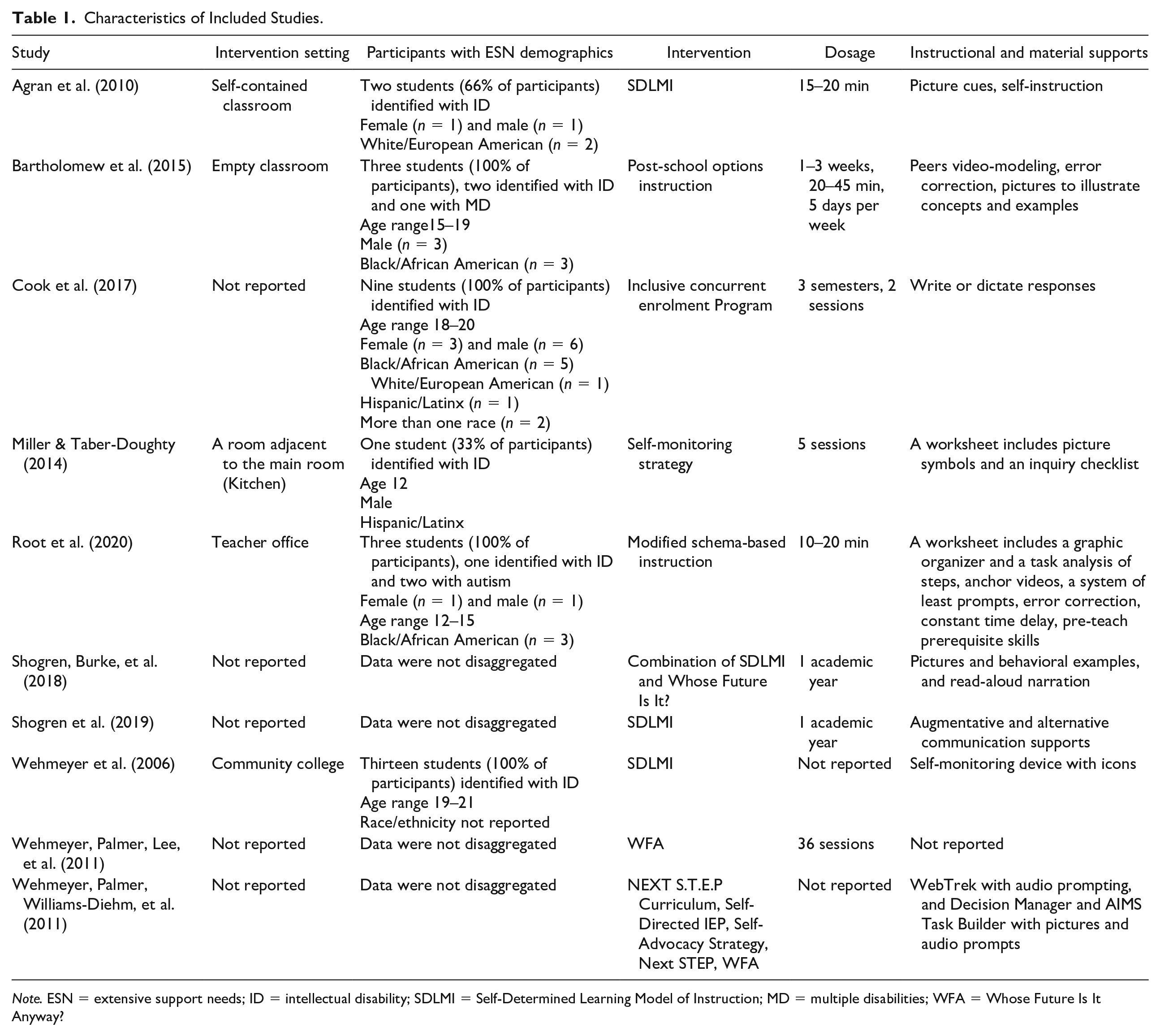
Note. ESN = extensive support needs; ID = intellectual disability; SDLMI = Self-Determined Learning Model of Instruction; MD = multiple disabilities; WFA = Whose Future Is It Anyway?
Student Participants
Across 10 studies, there were 1,247 students with disabilities. In four of the studies (40%; Shogren et al., 2019; Shogren, Burke, et al., 2018; Wehmeyer, Palmer, Lee, et al., 2011; Wehmeyer, Palmer, Williams-Diehm, et al., 2011), which included 1,211 of the total student participants, demographic information was not reported separately for students with ESN, although the description of participants made clear that some students included in the sample met our criteria for ESN. For example, Shogren, Burke, et al. (2018) targeted students with intellectual disability in their study and indicated in the participant description that some students had a “severe or profound” intellectual disability but did not specifically provide details on this number of students. Other studies reported the number of students with ESN (e.g., Wehmeyer, Palmer, Lee, et al., 2011) but did not separately report disability labels, gender, and race/ethnicity of students with ESN. These studies included participants with the following disability labels: intellectual disability (n = 846; 69%), learning disabilities (n = 358; 29%), other disabilities (n = 297; 24%), emotional disabilities (n = 84; 6%), attention-deficit hyperactivity disorder (n = 62; 5%), other health impairment (n = 56; 4%), and autism (n = 54; 4%).
In the remaining six (60%) studies, there were 36 students with disabilities. These six studies either only included students with ESN (n = 3 studies) or provided disaggregated data on students with ESN who were included with other participants without ESN (n = 3 studies). Across these six studies, 31 (86%) students met our criteria for being classified as having ESN. Most students with ESN were identified as having intellectual disability (n = 28; 90%), followed by autism (n = 2; 6%), and multiple disabilities (n = 1; 3%). Of these 31 students, the race and ethnicity of 13 students with ESN were not reported (Wehmeyer et al., 2006). When race/ethnicity data were reported for the remaining students (n = 18), most students identified as Black/African American (n = 12; 66%; e.g., Cook et al., 2017), fewer participants identified as White/European American (n = 2; 11%; e.g., Agran et al., 2010), Hispanic/Latinx (n = 2; 11%; e.g., Miller & Taber-Doughty, 2014), and two or more races (n = 2; 11%; e.g., Cook et al., 2017). Most participants identified as male (n = 13; 42%), fewer as female (n = 5; 16%), and none of the participants identified as non-binary. One study that included students with and without ESN did not separately report gender for students with ESN (n = 13; 42%; Wehmeyer et al., 2006). SES was not reported in any studies. The 31 students with ESN in these six studies were in 18 to 21 transition programs (n = 13; 42%; Wehmeyer et al., 2006), high school (n = 12; 39%; e.g., Bartholomew et al., 2015), and middle school (n = 6; 19%; e.g., Root et al., 2020). The age of participants ranged from 12 to 20 years (M = 15.36), although one study did not disaggregate age information (n = 13; 42%; Wehmeyer et al., 2006).
Across 10 studies, the description of students’ support needs was not consistently reported. In five (50%) studies, information on students’ IQ scores was provided (e.g., Bartholomew et al., 2015), and in three (30%) studies, information was provided on the severity of participants’ intellectual disability (i.e., identifying students as having a severe or profound intellectual disability; e.g., Wehmeyer, Palmer, Lee, et al., 2011). One study (10%; Root et al., 2020) reported that a student participated in the state’s alternate assessment, and another study (10%; Bartholomew et al., 2015) reported on students’ support needs across multiple life domains, including academic and communication.
Implementers
Three studies (30%; e.g., Wehmeyer, Palmer, Lee, et al., 2011) did not report the number of implementers. In the remaining seven (70%) studies, there were a total of 110 implementers, ranging from 1 (Miller & Taber-Doughty, 2014) to 64 implementers (Shogren, Burke, et al., 2018). Most implementers were special education teachers (n = 104; 95%; e.g., Shogren et al., 2019). However, researchers (n = 6; 5%; e.g., Bartholomew et al., 2015) were the primary implementers in half of the studies (n = 5 studies; 50%). Gender was not reported for nearly half of the implementers (n = 46; 41%; e.g., Shogren et al., 2019). When reported, most implementers identified as female (n = 60; 94%), fewer as male (n = 4; 6%), and none of the implementers identified as non-binary. None of the studies reported the race and ethnicity of implementers or educational degrees and licenses.
Five studies (50%) reported training to implement self-determination interventions (e.g., Root et al., 2020). The duration of training ranged from 2 hr (Wehmeyer, Palmer, Lee, et al., 2011) to 1.5 days (Shogren et al., 2019). Of these five studies, the training mode was reported in two studies (40%; e.g., Wehmeyer, Palmer, Lee, et al., 2011) and included both face-to-face and online training. Two studies (40%; e.g., Shogren, Burke, et al., 2018) included a coaching component during the implementation of the self-determination intervention, and the coaches were teachers, special education administrators, and transition coordinators. Their roles were to provide ongoing support to teachers to implement the interventions, conduct fidelity observations, and participate in regular monthly meetings with other coaches (e.g., Shogren et al., 2019).
Intervention and Context
Across 10 studies, eight (80%) multicomponent intervention studies were used to target multiple abilities and skills associated with self-determination (e.g., Shogren et al., 2019). Two single-component interventions included in the review targeted one ability or skill associated with self-determination (20%; e.g., Bartholomew et al., 2015). One (10%) study targeted goal setting, focusing on supporting students to select a post-school goal aligned with their interests (Bartholomew et al., 2015). After identifying their goals, students presented their goals, stated the rationale for choosing their goals, and provided additional ideas and details about their goals (Bartholomew et al., 2015). One (10%) study targeted self-monitoring and used self-monitoring checklists and a science notebook during science inquiry instruction (Miller & Taber-Doughty, 2014).
Of the eight (80%) studies that reported on multicomponent interventions, the most frequently used intervention was the Self-Determined Learning Model of Instruction (SDLMI; n = 4 studies; 40%; e.g., Shogren et al., 2019). The four studies that used the SDLMI targeted students with a range of support needs, including students with ESN. The SDLMI is a flexible model of instruction used by teachers to enable students to be self-directed learners and individualize instruction based on each student’s support needs (Shogren, Raley et al., 2018; Wehmeyer et al., 2000). To varying degrees, the study authors described ways in which the SDLMI was individualized by implementers to enable students with ESN to self-direct the goal-setting and attainment process toward goals they identify as meaningful in their lives. For example, Shogren et al. (2019) reported that teachers used individualized adaptions, such as picture-based and augmentative and alternative communication supports, to engage students with ESN in the SDLMI. One of these four studies (Shogren, Burke, et al., 2018) combined the SDLMI and Whose Future Is It? (Wehmeyer & Palmer, 2011), an adapted, technology-based version of Whose Future Is It Anyway? (Wehmeyer et al., 2004). One additional study (10%; Wehmeyer, Palmer, Lee, et al., 2011) used the Whose Future Is It Anyway? curriculum alone. Whose Future Is It Anyway? targets multiple skills associated with self-determination (e.g., self-advocacy and goal setting) and was designed and initially validated with students with intellectual disability with a range of support needs. It includes multiple instructional supports, including pictures and graphical representations of concepts, and the repetition of content and questions integrated into lessons used to check and ensure student understanding (Wehmeyer & Palmer, 2011). Whose Future Is It? is a technology-based version of Whose Future Is It Anyway? that adds additional universal design features, including read-aloud and interactive content.
Another multicomponent study empowered teachers to select from several interventions that targeted multiple skills associated with self-determination based on students’ needs and their current transition curriculum (10%; Wehmeyer, Palmer, Williams-Diehm, et al., 2011). The curricular options were Whose Future Is It Anyway?, NEXT S.T.E.P Curriculum (Halpern et al., 2000), the Self-Directed IEP (Martin et al., 1993), and the Self-Advocacy Strategy (Van Reusen et al., 2002). In the final two multicomponent intervention studies, one study (10%; Root et al., 2020) used a modified schema-based instructional strategy that embedded goal setting, problem-solving, and self-monitoring skills in math instruction. Specifically, the study combined the modified schema-based instruction with an iPad calculator, video anchors of the skill being used in community contexts, and goal-setting instruction with students learning to self-graph progress while learning the next dollar strategy (Root et al., 2020). The other study (10%; Cook et al., 2017) was implemented in the context of an inclusive concurrent enrollment program targeting transition and postsecondary education for students with intellectual disability. The inclusive concurrent enrollment program targeted multiple abilities and skills associated with self-determination, including goal setting, problem-solving, and self-advocacy (Cook et al., 2017). This study provided opportunities to practice and develop these skills in different components of the inclusive concurrent enrollment program, including traveling to the campus, interacting with mentors, peers, and instructors, and engaging in work and participating in campus activities (Cook et al., 2017).
Across both single and multicomponent intervention studies, descriptions of supports for students with ESN were provided, but there was no clear information provided by study authors on how these supports were specifically aligned to the support needs of students with ESN. For example, one study did not report any details on how instructional and material supports were used to make interventions accessible for students with ESN (Wehmeyer, Palmer, Lee, et al., 2011). Other studies described the use of specific instructional and material supports as part of the intervention, such as a graphic organizer, a task analysis of steps, a system of least prompts, constant time delay, error correction, and pre-teach lessons focused on prerequisite skills (Root et al., 2020); a worksheet of picture symbols and an inquiry checklist (Miller & Taber-Doughty, 2014); pictures, examples, and narration (Shogren, Burke, et al., 2018); and peers video-modeling, error correction, pictures to illustrate concepts and examples (Bartholomew et al., 2015). However, even when the provided supports were described, the alignment with student support needs was rarely elaborated. Additional information on interventions implemented and supports is provided in Table 1.
Most studies did not report the format of delivering the intervention (n = 8; 80%; e.g., Bartholomew et al., 2015). When reported, two studies (n = 2; 20%; e.g., Root et al., 2020) delivered the interventions in a one-to-one format. Four studies (40%; e.g., Shogren et al., 2019) did not report where the intervention was implemented. When reported in six (60%) studies, implementation occurred in segregated settings. One study (10%; Agran et al., 2010) was implemented in a self-contained classroom, and the remaining studies (90%) were in other segregated settings (e.g., teacher office) with students leaving their classrooms for self-determination interventions (e.g., Root et al., 2020). Most studies took place in a school (n = 8; 80%; e.g., Root et al., 2020), and the remaining studies (n = 2; 20%; e.g., Wehmeyer et al., 2006) took place at 18 to 21 programs located on community college campuses. Four studies (40%; e.g., Agran et al., 2010) reported the length of intervention sessions ranging from 10 to 45 min. Six studies (50%; e.g., Wehmeyer, Palmer, Lee, et al., 2011) reported the frequency of the intervention, ranging from 2 to 36 sessions. Three studies (30%; e.g., Shogren et al., 2019) reported how long the intervention was implemented, ranging from one week to three semesters.
Experimental Design and Fidelity of Implementation
Group designs, single-case designs, and a mixed-method design were used across studies. Five studies (50%; e.g., Shogren et al., 2019) used a group design, and all these studies used a randomized controlled trial design. Four studies (40%; e.g., Agran et al., 2010) used a single-case design. Among these studies, a multiple probe design across participants was used in three studies (30%; e.g., Bartholomew et al., 2015) and a multiple baseline design across participants in one additional study (10%; Agran et al., 2010). One study (10%) used a sequential explanatory design as a component of a mixed-method design (Cook et al., 2017). Seven studies did not report treatment fidelity (70%; e.g., Bartholomew et al., 2015). When reported, the average treatment fidelity was 89%, ranging from 77% (Shogren et al., 2019) to 96% (Root et al., 2020).
Dependent Variables and Measurement
Most studies (n = 6; 60%; e.g., Shogren et al., 2019) measured overall self-determination outcomes using validated self-report measures, such as the Self-Determination Inventory: Student Report and Parent/Teacher Report (SDI: SR/PTR; e.g., Shogren et al., 2019), The Arc’s Self-Determination Scale (e.g., Wehmeyer, Palmer, Lee, et al., 2011), Adolescent Self-Determination Assessment-Short Form (e.g., Cook et al., 2017), and the Autonomous Functioning Checklist (e.g., Wehmeyer et al., 2006). Four studies (40%; e.g., Bartholomew et al., 2015) measured specific abilities or skills associated with self-determination, such as problem-solving and goal setting, using researcher-created measures, including checklists of the steps in problem-solving skills (Miller & Taber-Doughty, 2014; Root et al., 2020), a rubric to measure students’ abilities to set their goals (Bartholomew et al., 2015), and achieving or completing a specific benchmark to measure students’ abilities in setting and attaining their goals (Agran et al., 2010).
Outcomes
Five (50%) studies provided outcome data specific to students with ESN (e.g., Agran et al., 2010), while the remaining five (50%) studies did not disaggregate outcome data for students with ESN (e.g., Shogren et al., 2019). Across the five studies that disaggregated outcomes for students, positive results were reported. For instance, Bartholomew et al. (2015) indicated that students with ESN met the mastery criteria for setting their post-school goals. Root et al. (2020) reported increases in planning and improved problem-solving skills among students with ESN. Agran et al. (2010) reported that students with ESN were able to enhance skills associated with self-determination, including goal setting and attainment as a means to access the general education curriculum.
For the other five studies that did not disaggregate outcomes data for students with ESN, overall findings from four of these studies (80%; e.g., Shogren et al., 2019) suggested that all participants, including students with ESN, showed a significant increase in their self-determination. The remaining study reported no significant differences in students’ overall self-determination on The Arc’s Self-Determination Scale (20%; Wehmeyer et al., 2006). However, this study reported a significant difference in all students’ total scores on the Autonomous Functioning Checklist (Wehmeyer et al., 2006).
Social validity data were not reported in most studies (n = 6 studies; 60%; e.g., Wehmeyer, Palmer, Lee, et al., 2011). However, when reported, data were collected through a survey (n = 4 studies; 100 %; e.g., Bartholomew et al., 2015). Four of these studies (67%; e.g., Agran et al., 2010) collected data from students, and two studies (33%; e.g., Root et al., 2020) collected data from teachers and students. Students reported they enjoyed learning and using abilities and skills associated with self-determination in ways that supported them in setting and achieving their goals. Teachers also reported that teaching abilities and skills associated with self-determination improved student self-determination and supported students to believe in their abilities.
Rigor and Quality Indicators
The five group design studies (50%; e.g., Shogren et al., 2019) met WWC standards without reservations. Of the single-case designs, one study did not meet WWC standards (25%; Agran et al., 2010), two studies (50%; e.g., Bartholomew et al., 2015) met WWC standards with reservation, and one study (25%; Root et al., 2020) met WWC standards without reservations. One study (10%; e.g., Cook et al., 2017) used a mixed-method design; the quantitative section of this design was evaluated and did not meet WWC standards because this study did not provide information on whether the equivalence was established at baseline for the group of participants. Tables 2 and 3 provide more details on group design and single-case design rigor and quality, respectively.
WWC Quality Indicators for Comparison Group Studies.
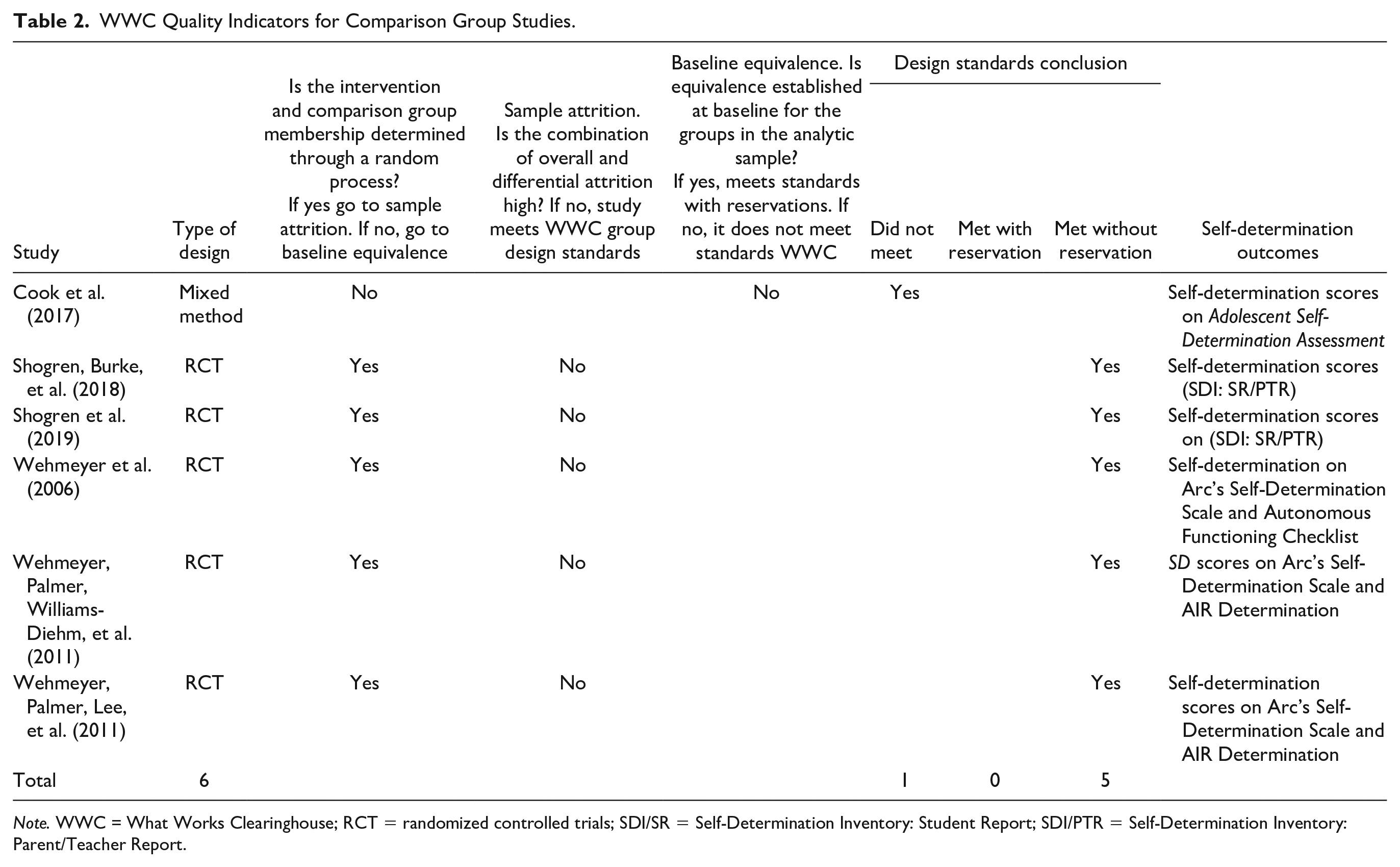
Note. WWC = What Works Clearinghouse; RCT = randomized controlled trials; SDI/SR = Self-Determination Inventory: Student Report; SDI/PTR = Self-Determination Inventory: Parent/Teacher Report.
WWC Quality Indicators for Single-Case Design Studies.
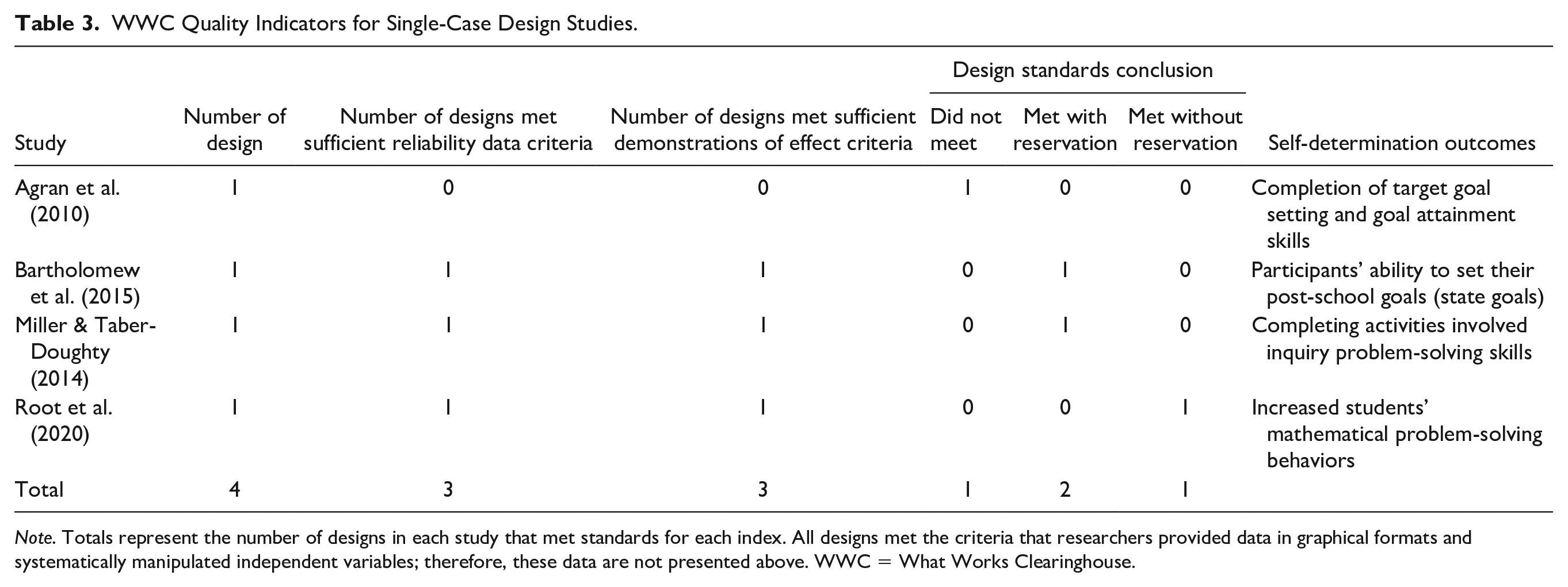
Note. Totals represent the number of designs in each study that met standards for each index. All designs met the criteria that researchers provided data in graphical formats and systematically manipulated independent variables; therefore, these data are not presented above. WWC = What Works Clearinghouse.
Discussion
The purpose of this systematic review was to provide an updated synthesis of self-determination intervention research targeting students with ESN, building on and advancing findings from Wood et al. (2005). We specifically explored the characteristics of participants, implementers, and interventions in contemporary research and the quality and outcomes. Several findings from this review highlight the need for ongoing research and practice targeting self-determination outcomes for students with ESN. First, a limited number of research studies (n = 10) examined interventions designed to promote self-determination among students with ESN, particularly when compared with the number of studies (n = 34) in a broader review of self-determination intervention research across all disability populations (Burke, Raley et al., 2020). Furthermore, studies included in the present review were concentrated in middle and high school settings, with no research in elementary schools despite an increased focus on the importance of abilities and skills associated with self-determination for elementary school students (Shogren, Zimmerman, & Toste, 2021). Second, none of the studies that reported intervention settings were conducted in inclusive, general education settings despite the growth of inclusive self-determination research (Raley et al., 2018), perhaps reflecting the ongoing and limited access to the general education classroom and curriculum experienced by students with ESN (Kurth, Born, & Love, 2016). Third, there is a critical need for the field to provide more accurate and meaningful descriptions of students with ESN in studies targeting this population, as there were limited and inconsistent descriptions of the support needs of participants and gender and race/ethnicity for students with ESN and implementers. Studies also did not robustly describe training and intervention implementation procedures to allow for replication in practice, nor did they operationally describe how decisions were made about using specific supports to align intervention implementation with the support needs of students with ESN. Fourth, despite the earlier limitations and additional research needs, the small number of studies suggested positive outcomes of self-determination interventions and the promise of ongoing development and testing of self-determination interventions in students with ESN. These key findings and the implications for research and practice will be further described next after summarizing the study’s limitations.
Limitations
Several limitations must be considered when interpreting the findings and implications. First, our inclusion criteria may have excluded studies with participants with ESN if existing studies did not provide robust descriptions of participants’ support needs and only focused on disability labels. Second, several studies did not verify students’ diagnoses and relied on teachers’ reports of students’ intelligence from multiple-choice options (i.e., within normal limits, mild intellectual impairment, moderate intellectual impairment, or severe/profound intellectual impairment) and teachers’ reports might not align with students’ diagnostic information or support needs. Third, four studies (40%; e.g., Shogren et al., 2019) included a large sample size ranging from 149 to 493 students with diverse disability labels but did not disaggregate data except by disability label, leaving no way to identify students with ESN per our definition to examine their specific outcomes. Each of these factors leads to difficulties with our focus on self-determination intervention research targeting students with ESN. Fourth, four studies (40%; e.g., Agran et al., 2010) only used researcher-created measures to measure study outcomes, creating challenges to synthesizing findings across studies as there was inconsistency in how self-determination outcomes were measured. Fifth, the inclusion criteria may have led to some interventions that targeted specific abilities or skills associated with self-determination (e.g., goal setting) but did not use the term self-determination anywhere in the text being excluded. Finally, limiting the search to only peer-reviewed articles may have led to studies being excluded that were within gray literature (e.g., dissertations).
Implications for Research
As research continues to explore the impact of interventions to promote self-determination for students with ESN, multiple areas need increased attention, including the inclusion of students with ESN in self-determination research, the implementation of self-determination research in inclusive settings for students with ESN, and the quality of self-determination research targeting students with ESN.
Self-Determination Research and Students With ESN
A limited number of intervention studies (n = 10) between 2005 and 2021 were identified that focused on promoting self-determination for students with ESN aged 3 through 21. This review confirms that students with ESN are not frequently included or targeted in self-determination intervention research, despite ongoing calls for this to be a greater area of focus (Raley et al., 2020). However, this review also suggests the usability and effectiveness of implementing self-determination interventions with individualized modifications and supports for students with ESN, although studies did not provide explicit information on what individualized modifications and supports were provided and how these were aligned with the specific student’s ESN, limiting implications for practice. For example, Shogren et al. (2019) reported that teachers were able to teach abilities and skills associated with self-determination to students with ESN using picture-based and augmentative, and alternative communication supports for the SDLMI. However, they did not describe how decision-making occurred for individual students’ modifications and accommodations. For these reasons, there is a need for additional research that examines the most effective modifications and supports, with a particular focus on how supports for communication can be individualized to enable each student with ESN to communicate their goals and dreams for their future in ways that can be scaled up in schools. Overall, a key finding is that there needs to be an increased focus on how to make self-determination interventions accessible, meaningful, and responsive to the needs of students with ESN across grade levels. The lack of research targeting students with ESN in elementary school is particularly problematic as building abilities and skills associated with self-determination in elementary school has been identified as critical to building a foundation for these skills in secondary school and throughout adulthood (Shogren, Zimmerman, & Toste, 2021).
There is also a need for an increased focus on the development and use of validated measures of self-determination for students with ESN to allow for comparisons across studies and engagement of students with ESN in self-determination research. Many existing validated measures of self-determination, including those used by some studies in this review, require students to read and comprehend text, answer open-ended questions, or rate themselves on abstract concepts, which may pose cognitive barriers for some students with ESN. Findings from this review reflect this issue, as several studies used validated proxy measures of self-determination, including Self-Determination Inventory: Parent/Teacher Report (SDI: PTR), when students with ESN could not complete self-report measures due to their support needs (e.g., Shogren, Burke, et al., 2018). However, using proxy reports can be problematic as research suggests that teacher respondents on the SDI: PTR tend to report lower levels of student self-determination than students themselves and that a teacher’s perceptions are influenced by a student’s disability labels and race/ethnicity (Shogren, Anderson, et al., 2021). Additional work is needed to determine the most effective ways to enable students with ESN to communicate their experiences of self-determination, including the exploration of emerging technologies that can support these outcomes. Future research is needed that advances cognitively accessible and validated self-determination assessments that can be used in research and by teachers to guide instructional planning and engage students with ESN in self-determination interventions.
Implementing Self-determination Interventions in Inclusive Settings in Students With ESN
When reported, studies included in this review were conducted in segregated settings (e.g., self-contained classrooms), an issue that remains prevalent in the literature on self-determination (Burke, Raley et al., 2020), although emerging research explores implementation with students with and without disabilities in inclusive general education classrooms (Raley et al., 2018). The lack of studies in inclusive settings that include students with ESN might be explained by the overall lack of access that students with ESN have to the general education classroom and curriculum (Morningstar et al., 2017). Researchers have found that students with ESN who have lower IQ scores are more likely to be placed in segregated settings (Segall & Campbell, 2014), suggesting the need to adopt strength-based approaches to describing students and the assumption that inclusive placements are the default, with individualized supports (Thompson et al., 2017). In addition, intersectionality must be considered. For example, all students with ESN are at risk of segregated placements, yet racially and ethnically marginalized students with ESN are at risk of greater inequities in placement (Kurth, Mastergeorge, & Paschall, 2016). Given the evidence that including students with ESN in general education classrooms improves self-determination as well as other educational outcomes (Hughes et al., 2013), more work is critically needed to explore and counter bias that can impact access to inclusive supports and the implementation of self-determination interventions within the general education curriculum as a part of a multitiered model of supports for all students, inclusive of students with ESN (Raley et al., 2020).
Shogren et al. (2016) described how interventions designed to promote self-determination could be integrated as a critical part of a multi-tiered model of supports to provide high-quality support for all students, including students with ESN, both in academic instruction and during transition planning. A study in this review (Root et al., 2020) showed how self-determination interventions could be embedded in math instruction for students with ESN. Exploring how this could be integrated into general education math instruction is an area of future research. For example, Raley et al. (2018) investigated the impact of implementing the SDLMI as a Tier 1 (universal) intervention to promote self-determination for all students in general education math classrooms. Although this study did not include any students with ESN, perhaps given their limited access to inclusive placements, results suggested the Tier 1 intervention effectively enhanced overall self-determination for students with and without disabilities. Future research should focus on advancing access to inclusive placements for students with ESN and the efficacy of self-determination instruction with their peers with and without disabilities. Students with ESN may require additional and more intensive supports for self-determination (e.g., more intensive Tier 2 or 3 supports), but they should have access to universal self-determination instruction first. The studies included in this review provide guidance for how more intensive supports could be structured. For example, Shogren, Burke, et al. (2018) jointly implemented the SDLMI and Whose Future Is It? to intensify instruction with students with ESN to provide individualized support in transition planning. Future research is needed to conceptualize tiered supports for students with ESN and their peers with and without disabilities.
Quality of Self-Determination Research for Students with ESN
The included studies relied heavily on IQ scores and diagnoses available in school records to describe participants; very few studies specifically reported on a student’s support needs that could inform the implementation of individualized educational supports in practice. Furthermore, as found in other reviews of the broader self-determination literature (Burke, Raley et al., 2020), there was limited information on the demographic characteristics of students and implementers in this review. However, given the impacts of multiple personal and environmental factors (e.g., race/ethnicity, SES) on educational experiences and self-determination outcomes of students with disabilities (Shogren, Shaw, et al., 2018), it is important to provide robust descriptions of participants and their school experiences to allow understanding of factors that influence intervention response for students with ESN. Such information can inform practice, specifically ways to modify and intensity of self-determination interventions to meet the needs of each student with ESN. Furthermore, information on implementer characteristics is needed, particularly past training and implementation experiences. Information on implementer sociodemographic characteristics is also needed as research suggests that students who share racial backgrounds with their teachers have more positive school outcomes (Grissom et al., 2015).
Another area where there was a lack of reporting was information on implementation fidelity, an issue noted in Burke, Raley, et al. (2020). Given the established relationship between implementation fidelity and student outcomes (Shogren, Raley, et al., 2021), reporting implementation fidelity is critically needed both to document the extent to which teachers can implement and individualize self-determination interventions and understand the various factors that impact student outcomes. Relatedly, this review found a lack of description of coaching and any ongoing support for teacher implementers in included studies. This suggests the need for exploring what implementation supports teachers need to implement self-determination instruction in students with ESN as research suggests the importance of initial training and ongoing coaching to promote fidelity in sustainable and systematic ways (Snyder et al., 2015). Future research must integrate components of implementation science throughout designing, planning, and implementing interventions to produce positive self-determination outcomes for students with ESN (Fixsen et al., 2010).
Implications for Practice
This review highlights several interventions that practitioners can use to support the development of self-determination for students with ESN, although more research is needed. The SDLMI was the most utilized intervention across all included studies (40%; e.g., Shogren et al., 2019). Teachers can use the SDLMI to promote self-regulated problem-solving as students work toward their goals, and it has been shown to benefit students with a range of support needs (Burke, Shogren, et al., 2020). However, to meet the needs of students with ESN, teachers will need to provide individualized supports aligned with the needs of each student with ESN (Raley et al., 2020). The studies included in this review provided some insight into how individualized supports can be provided. For example, teachers could change the presentation and delivery of content for interventions like the SDLMI (e.g., adding pictures and videos and other concrete examples), as well as the options for how students demonstrate their learning (e.g., verbal responses, example illustrations; Shogren, Burke, et al., 2018). Other studies highlighted how pictures could effectively illustrate abstract concepts and examples (e.g., post-school options), enabling students with ESN to practice abilities and skills associated with self-determination, including goal setting (e.g., Bartholomew et al., 2015). Other studies used a task analysis to conduct an error analysis to inform instructional decisions and supports needed (e.g., Root et al., 2020). Studies also showed how systematic instruction with prompting, including a system of least prompts and error correction, can be used to make interventions accessible for students with ESN (e.g., Bartholomew et al., 2015; Root et al., 2020).
Also, several studies showed positive outcomes of multicomponent self-determination interventions that targeted multiple abilities and skills associated with self-determination for students with ESN. Given that other research suggests the more positive impacts of multicomponent interventions (Cobb et al., 2009), teachers may want to consider adopting strategies that target multiple abilities and skills associated with self-determination, with supports for each of these abilities and skills embedded in the curriculum or intervention (e.g., Shogren et al., 2019). For example, the SDLMI provides a comprehensive method to target multiple abilities and skills associated with self-determination that can be applied in multiple learning domains (Burke, Shogren, et al., 2020). Teachers may also consider using Whose Future is it? (Wehmeyer & Palmer, 2011) in the context of transition planning, this curriculum targets multiple components of abilities and skills associated with self-determination and specific content relevant to transition planning and provides technological support to enhance accessibility. The interventions with the adaptations and supports discussed in this review, as well as practitioner papers more robustly describing implementation (Burke, Shogren, et al., 2020), may be useful in enabling teachers to promote self-determination for students with ESN, although further research is necessary to continue to inform practice.
Conclusion
This review provides an up-to-date review of interventions to promote self-determination for students with ESN in school settings. Results show a limited number of intervention studies targeting self-determination for students with ESN from 2005 to 2021, suggesting more work is needed to develop and test self-determination interventions that enable students with ESN to grow and develop their self-determination, particularly in inclusive settings. The results also suggest the ongoing need to consider effective assessments of self-determination outcomes to inform the design and implementation of self-determination interventions for students with ESN. Researchers must provide accurate and robust descriptions of students with ESN and include this population in broader research with students having other disability-related needs and without disabilities. Finally, reporting information on participants’ and implementers’ characteristics, implementation fidelity, coaching, training, and intervention conditions are needed to support replicability and the transfer of effective interventions into practice. Ongoing examination of how to break down systemic barriers to the inclusion of students with ESN in self-determination research is needed to address disparities in self-determination outcomes for students with ESN.
Supplemental Material
sj-docx-1-rps-10.1177_15407969231153397 – Supplemental material for A Systematic Review of Interventions to Promote Self-Determination for Students With Extensive Support Needs
Supplemental material, sj-docx-1-rps-10.1177_15407969231153397 for A Systematic Review of Interventions to Promote Self-Determination for Students With Extensive Support Needs by Abdulaziz Alsaeed, Mary Curran Mansouri, Karrie A. Shogren, Sheida K. Raley, Jennifer A. Kurth, Elizabeth M. Leatherman and Elissa Lockman Turner in Research and Practice for Persons with Severe Disabilities
Supplemental Material
sj-docx-2-rps-10.1177_15407969231153397 – Supplemental material for A Systematic Review of Interventions to Promote Self-Determination for Students With Extensive Support Needs
Supplemental material, sj-docx-2-rps-10.1177_15407969231153397 for A Systematic Review of Interventions to Promote Self-Determination for Students With Extensive Support Needs by Abdulaziz Alsaeed, Mary Curran Mansouri, Karrie A. Shogren, Sheida K. Raley, Jennifer A. Kurth, Elizabeth M. Leatherman and Elissa Lockman Turner in Research and Practice for Persons with Severe Disabilities
Footnotes
Declaration of Conflicting Interests
The author(s) declared no potential conflicts of interest with respect to the research, authorship, and/or publication of this article.
Funding
The author(s) received no financial support for the research, authorship, and/or publication of this article.
ORCID iDs

Supplemental Material
Supplemental material for this article is available online.
Editor in Charge: Jenny R. Root
Author Biographies
References
Supplementary Material
Please find the following supplemental material available below.
For Open Access articles published under a Creative Commons License, all supplemental material carries the same license as the article it is associated with.
For non-Open Access articles published, all supplemental material carries a non-exclusive license, and permission requests for re-use of supplemental material or any part of supplemental material shall be sent directly to the copyright owner as specified in the copyright notice associated with the article.
