



Abstract
Background:
Despite the health benefits of parental leave (PL), many physicians in the United States take little to no PL. This issue is particularly pressing in academic neurology, which faces high burnout rates and a projected shortage. This study evaluated the impact of PL on career achievements and burnout in academic neurology.
Methods:
A cross-sectional survey of neurologists in 19 U.S. institutions measured PL experience, academic achievements, and burnout. Chi-squared test was used to assess for group differences in the two groups: PL/NoPL and in subgroups: men/women. General linear regression models were used to examine the association between PL, gender, achievements, and burnout.
Results:
Among 239 respondents with children, 74.8% of women and 28.6% of men took PL (87.9% of women and 97.3% of men took less than 6 weeks). Academic achievement measures were similar for those who took PL and those who did not (NoPL) with the exception of fewer awards in the PL group (mean 2.25 for PL and 6.21 for NoPL, p = 0.018). The PL group showed higher family–work conflict score (PL-score = 22.64, NoPL-score = 18.27, p < 0.001) and higher emotional exhaustion (PL 43.2%, NoPL 34.6%, p = 0.017) than the NoPL group. Emotional exhaustion was higher in women compared with men, despite higher weekly work hours in the PL group men (p = 0.021).
Conclusion:
Faculty who took PL did not have worse academic productivity compared with NoPL. But the PL group had higher levels of burnout and emotional exhaustion, especially in women, highlighting the need for support during and when returning from PL.
Introduction
The United States trails other industrialized nations in offering paid maternity leave. A substantial body of evidence highlights its significant health benefits for both mothers and infants,1–10 including improved maternal mental health, better long-term outcomes for children, and increased career satisfaction—especially among female physicians.1–3,11 Paternity leave has been shown to reduce maternal postpartum depression and positively impact family income. Parental leave (PL), which includes maternity, paternity, and family leave, is defined as job-protected time off following the birth or adoption of a child. 3 Contrary to perceptions, PL does not reduce physicians’ performance.12–15 Evidence suggests that a lack of PL is associated with a higher rate of burnout, especially among women physicians, whereas PL, in addition to return-to-work support, is associated with better work experience and career thriving that facilitates promotion for faculty physicians.16,17
Work–life imbalance is a key contributor to burnout and career dissatisfaction. 16 This issue is particularly salient in academic neurology (physicians and scientists), 18 a field facing high rates of burnout and an anticipated shortage of practitioners. 19 Paid PL could serve as a mitigation strategy for burnout, offering faculty critical time to balance family and work responsibilities. PL policies in academic neurology can be variable and, at times, unclear or limited. As a result, some faculty may feel they do not receive sufficient support when becoming parents, and concerns about impacts on academic productivity or clinical coverage may affect decisions about the timing or duration of leave. Uncertainty around PL provisions and resource constraints can add to the challenges faced by early- and mid-career faculty during an already demanding period.20–22
The limitations of PL policies in academic medicine disproportionately affect women. Early-career women are at risk of leaving academic medicine due to a lack of supportive mechanisms, such as flexible work–life balance and maternity leave. Indeed, lack of consistency in career support during and insufficient PL duration may contribute to faculty attrition, which disproportionately affects women.23,24 In academic neurology, gender gaps are evident in many areas, including compensation, leadership, publications, and research.25–28 Childbearing and PL may be contributing to these differences. Despite previous studies on PL in academic medicine,6,8,10 the impact of PL on academic achievement measures and burnout in neurology remains unclear. This study examines the relationship between PL, academic achievements, and personal achievements among neurology faculty. We hypothesized that taking PL is associated with neurology faculty well-being without hindering academic achievements, and that the impact of PL on these measures will differ based on career level (early compared with middle and advanced career levels) for men and women. The goal of this study was to (1) compare demographic and professional differences of faculty who take PL and those who do not take PL and (2) examine associations between taking PL and academic achievements and burnout, with further examination by gender. Our findings highlight areas for improvement to support neurology faculty retention and career advancement.
Methods
Study design
This is a sub-analysis from a parent multicenter study titled “Women in Neurology Collaborative Study (WINC).” 23 This analysis focused on examining the relationship between PL, academic productivity, burnout, and career advancement in neurology. Our sample included neurology faculty with children and excluded those who did not report their gender (n = 3) for a total of 239 out of the 431 respondents to the survey of neurology faculty from 19 U.S. academic centers (Supplementary Appendix). 23 The survey consisted of 99 questions, including 48 with branching logic. PL was defined in the survey as any leave for a parental event, including maternity leave, paternity leave, and adoption. Use of sick leave, short-term disability, or paid time off is not included in the definition or the duration of PL. Survey questions are available in Supplementary Data(Supplementary Appendix). The survey was piloted at two institutions prior to broader dissemination to ensure clarity, usability, and proper functioning of the Research Electronic Data Capture (REDCap) instrument. Feedback during piloting highlighted concerns about confidentiality and fear of retaliation, particularly when discussing equity, PL, and workplace fairness. These concerns informed survey design decisions, including the exclusion of certain potentially identifying variables.
Data were collected and securely managed using REDCap, hosted at the University of Texas Southwestern Medical Center, between February 19, 2021, and April 6, 2022. Adult and pediatric neurology faculty were eligible to participate in the survey. Trainees and advanced practice providers were omitted because the focus was on academic neurologists’ career advancement.
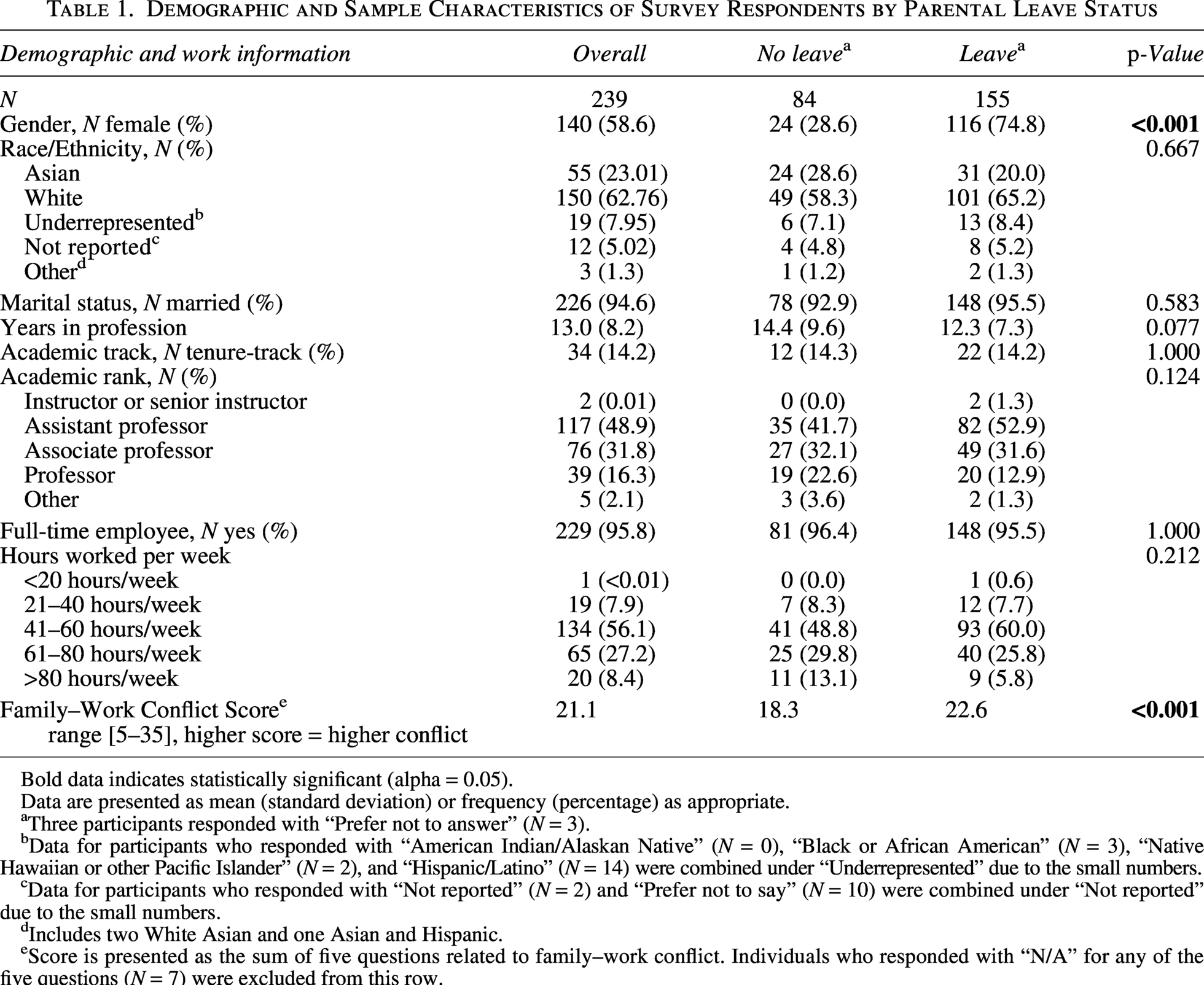
Respondents’ demographic information, marital status, years in profession, and academic track and rank were collected in the survey (Table 1). PL was defined as time off for maternity leave, paternity leave, or child adoption. This definition specifically excluded sick leave, focusing solely on leave taken in relation to the birth or the adoption of a child. This distinction was made to ensure clarity in the type of leave and to align with the study’s focus on parental roles and responsibilities.
Demographic and Sample Characteristics of Survey Respondents by Parental Leave Status
Bold data indicates statistically significant (alpha = 0.05).
Data are presented as mean (standard deviation) or frequency (percentage) as appropriate.
Three participants responded with “Prefer not to answer” (N = 3).
Data for participants who responded with “American Indian/Alaskan Native” (N = 0), “Black or African American” (N = 3), “Native Hawaiian or other Pacific Islander” (N = 2), and “Hispanic/Latino” (N = 14) were combined under “Underrepresented” due to the small numbers.
Data for participants who responded with “Not reported” (N = 2) and “Prefer not to say” (N = 10) were combined under “Not reported” due to the small numbers.
Includes two White Asian and one Asian and Hispanic.
Score is presented as the sum of five questions related to family–work conflict. Individuals who responded with “N/A” for any of the five questions (N = 7) were excluded from this row.
Outcome measures
Academic achievements were measured with two binary measures (whether or not leadership positions were held and whether or not incentivized leadership positions were held) and six quantitative measures (average number of publications in one year, number of first or last author publications over the last 5 years, number of leadership positions held, number of awards received, number of speaking invitations received, and number of funded projects). The survey asked for the average number of weeks for total PL. Then, we grouped responses into three duration ranges for analysis purposes: less than 6 weeks, 7–12 weeks, and more than 12 weeks. Among the 153 respondents who took PL, 27 individuals reported using sick time or vacation time instead of formal institutional PL, which may have been either exhausted or nonexistent at their respective institutions. Well-being was assessed with questions about contentment with PL (Table 2) and the Maslach Burnout Inventory (MBI), which measures burnout along three domains—personal accomplishment, depersonalization, and emotional exhaustion. The Family–Work Conflict Scale assesses how family-related demands and responsibilities affect work roles and obligations. It measures the intensity of this interaction using Likert-scale items, which are designed to capture the level of conflict between family and work domains. Higher scores on the scale indicate greater perceived conflict. The scale uses a 7-point Likert scale for each item, with total scores ranging from 5 to 35; higher scores indicate a stronger perception of conflict between family and work spheres.
Leave Contentment and Duration in Survey Respondents in Parental Leave Group
Bold data indicates statistically significant (alpha = 0.05).
Data for two participants who responded with “Prefer not to answer” (N = 2) are not included in the table due to the small number.
The proportions listed were computed relative to those who were not content with their parental leave, that is, 8 men and 59 women.
Note that the survey had options for 2, 4, 6, 8, and 12 weeks, as well as an “Other” option for write-in responses. There were 27 respondents who reported taking parental leave but logged a total leave time of zero weeks, mostly because they used vacation or sick days in place of official leave.
Statistical analysis
To test for differences in demographic and professional characteristics between PL and NoPL groups, and between men and women subgroups, Welch’s t-test and Pearson’s chi-squared test with Yates’s continuity correction were used for continuous and categorical variables, respectively. Fisher’s exact test was used for the categorical variables in which cell counts were small (i.e., n < 5). General linear regression models were used to test if PL status, gender, and their interaction significantly predicted academic achievement outcome measures, including adjustment for the confounding effect of academic rank. Logistic regression and quasi-Poisson regression models were used for the binary and count variables, respectively, using the same predictors and confounders.
For measurement of burnout, we used four categorical measures: overall burnout, personal accomplishment, depersonalization, and emotional exhaustion. For consistency with the three MBI-9 variables, the responses for overall burnout were pooled to create three levels; responses of “1: Not at all burned out” and “2: Slightly burned out” were considered “low,” responses of “3: Moderately burned out” were considered “moderate,” and responses of “4: Very burned out” and “5: Completely burned out” were considered “high.” Multinomial regression models were used to test if PL status, gender, and their interaction significantly predicted the four categorial measures of overall burnout, personal accomplishment, depersonalization, and emotional exhaustion, adjusting for academic rank.
Institutional review board/ethics committee information
Because the survey was confidential and no identifying information was collected, each site PI obtained neurology chair approval and institutional review board (IRB) approval with waiver of informed consent or IRB exemption, as appropriate.
Results
The respondents were predominantly White (62.76%), with substantial Asian representation (23.01%) and a smaller proportion from underrepresented groups (7.95%), which included Native Hawaiian and other Pacific Islander, Black or African American, and Hispanic/Latino due to the small sample size. Of the 239 respondents, 155 (64.9%) reported taking PL, and 84 (35.1%) did not take PL (NoPL) (Table 1). There were more women (74.8%) in the PL group than the NoPL group (28.6%) (p < 0.001). There was higher family–work conflict in the PL group (conflict score = 22.64, SD = 6.43) than the NoPL group (conflict score = 18.27, SD = 6.82) (p < 0.001). There was no significant difference by faculty rank, but there was a trend toward more faculty at the professor rank in the NoPL group (22.6%) compared with the PL group (12.9%).
About 75% of the PL group were women. Men reported more years in the profession (mean = 14.47 years, SD = 7.2) compared with women (mean = 11.47 years, SD = 7.1) (p = 0.03) (Supplementary Table S1). Women were more likely to hold assistant professor positions (56.9% versus professor 9.5%) than men (40.5% versus professor 21.6%), but the difference was not statistically significant. Weekly work hours were higher in men than in women who took PL, with 56% of women working 21–40 hours/week and 70% of men working 41–60 hours/week (p = 0.021). Family–work conflict was significantly higher among women (23.23, SD = 6.55) compared with men (20.92, SD = 5.90) (p = 0.048).
About 70% of the NoPL group were men. Men had significantly more years in the profession (mean = 15.72 years, SD = 9.8) compared with women (mean = 10.96 years, SD = 8.6) (p = 0.033) (Supplementary Table S2). Unlike the PL group, the difference in academic rank between men and women in the NoPL group was significant, with a greater proportion of men holding senior ranks such as associate professor (33.9% versus 29.2%) and professor (30.5% versus 4.2%). In comparison, 62.5% of women held an assistant professor rank versus 33.9% of men (p = 0.012). Weekly work hours did not significantly differ between the PL and NoPL groups. Men tended to work longer hours, with a higher proportion working 61–80 hours (33.9% for men versus 16.7% for women), whereas women were more likely to work 21–40 hours (25.0% for women versus 1.7% for men) (p = 0.007). No significant differences were found in race/ethnicity, marital status, academic rank, and family–work conflict score.
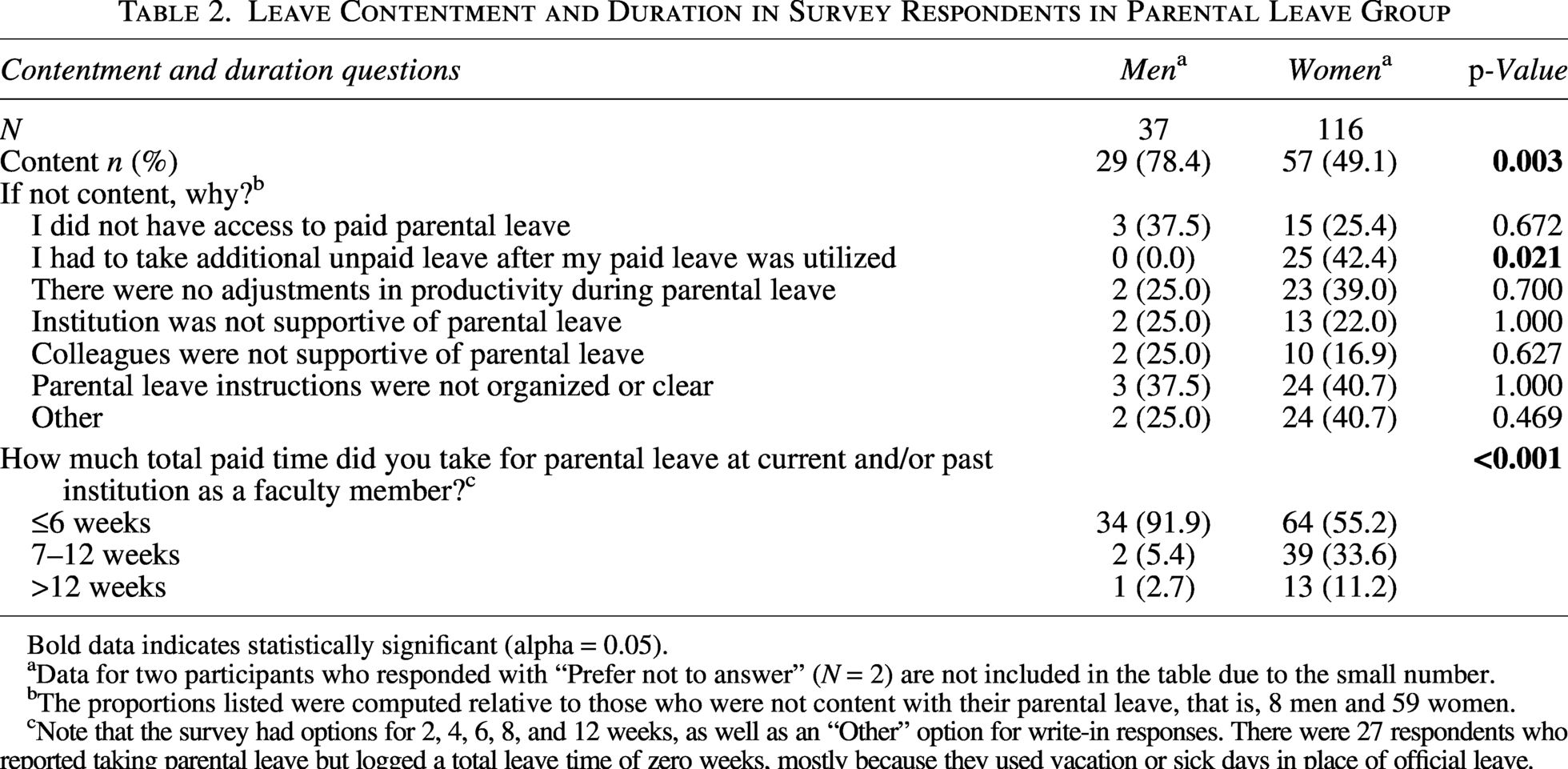
Table 2 summarizes PL contentment and duration for the PL group. While 37.5% of men and 25.4% of women did not have access to paid PL, a higher proportion of men (78.4%) were content with their PL compared with women (49.1%) (p = 0.003). Furthermore, 42.4% of women took additional unpaid leave after using paid PL, while 0% of men took additional unpaid leave (p = 0.021). In contrast, a majority of men (91.9%) took less than 6 weeks of paid leave, compared to 55.2% in women (p = 0.001). This reflects shorter PL duration for men and a higher proportion of women extending their leave with unpaid time. Similar gender differences were found for the duration of unpaid time, but this was not statistically significant. Unclear PL instructions were reported by many respondents (37.5% of men and 40% of women), likely contributing to underutilization of paid PL. A source of dissatisfaction specific to women was the need to take additional unpaid leave for childcare (42.4%). Many respondents also reported dissatisfaction with the absence of adjusted productivity targets during leave (25% of men and 39% of women).
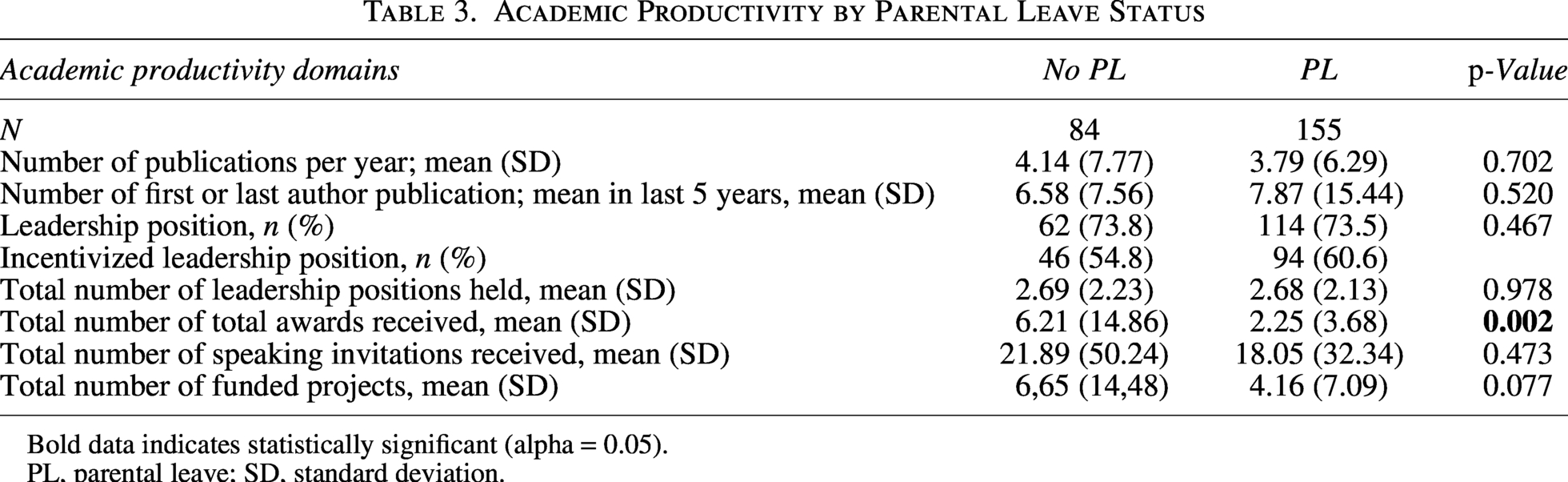
Academic achievement measures were compared for the PL and NoPL groups (Table 3). The PL group received fewer awards (2.25 for PL versus 6.21 for NoPL, p = 0.018), but there were no significant differences in other measures including publications, leadership positions, and funded projects. Gender differences were observed: women who took PL publishing fewer first or last author articles compared with men (p = 0.020), although there were no differences by gender in publications per year and leadership roles. In the regression model that controlled for academic rank, women who took PL received awards at a rate 1.2 times higher than women who did not take PL, whereas men who took PL received awards at a rate 0.34 times that of men who did not take PL. Additionally, PL women received awards at a rate 1.6 times higher than their male counterparts. However, no significant differences in other academic achievement measures, such as publications or leadership positions, were observed.
Academic Productivity by Parental Leave Status
Bold data indicates statistically significant (alpha = 0.05).
PL, parental leave; SD, standard deviation.
Academic rank in parents who took PL was impactful on academic measures with higher ranks (professors) having higher incidence of first-/last-author publication, speaking invitation, and holding leadership position, as well as being more likely to have an incentivized leadership position (OR = 5.82).
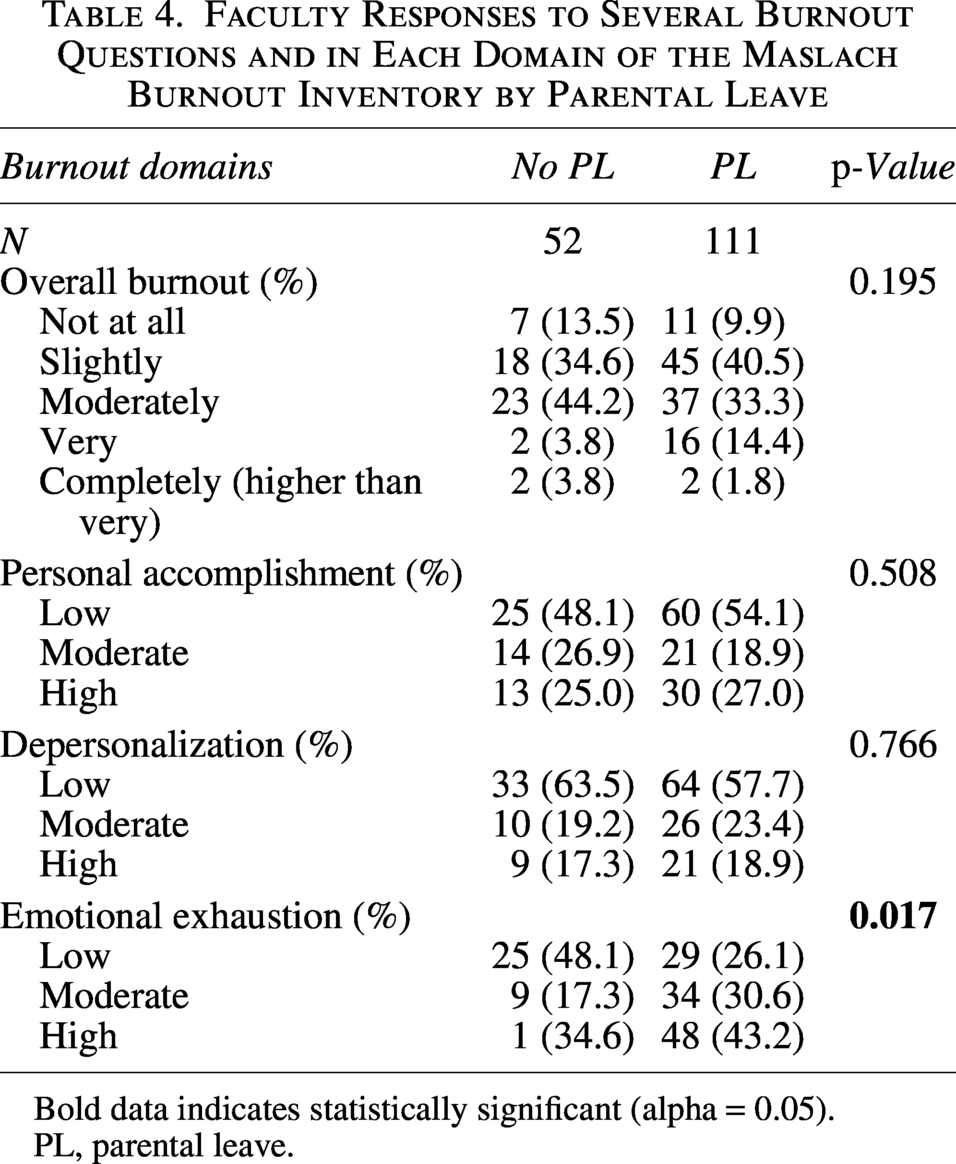
Burnout levels were assessed for the 163 respondents who completed the MBI, of whom 111 (68%) had taken PL (Table 4). Emotional exhaustion was significantly higher in the PL group (43.2%) compared with the NoPL group (34.6%) (p = 0.017). Examination of burnout in the PL group by rank revealed that, compared with assistant professors, associate professors were less likely to experience high depersonalization relative to low depersonalization (relative risk [RR] = 0.322), as were professors (RR = 0.081). Similarly, compared with assistant professors, associate professors were less likely to experience high emotional exhaustion relative to low exhaustion (RR = 0.329), as were professors (RR = 0.107).
Faculty Responses to Several Burnout Questions and in Each Domain of the Maslach Burnout Inventory by Parental Leave
Bold data indicates statistically significant (alpha = 0.05).
PL, parental leave.
Examination of burnout by gender revealed no significant differences in either depersonalization or emotional exhaustion between men and women in the entire sample (PL and NoPL). Regression models indicated that women who took PL were 1.83 times more likely to experience high burnout compared with men who took PL, after adjusting for rank. Furthermore, women who took PL were 6.75 times more likely to experience moderate emotional exhaustion compared with men. Depersonalization and sense of personal accomplishment were similar for women and men.
In the no PL group, women were less likely to experience moderate relative to low emotional exhaustion by a factor of 0.1894 when compared with men. We did not see any significant differences by gender in terms of experiencing high relative to low emotional exhaustion in either the PL group or the NoPL group. We further explored family work conflict (all parents’ neurologists mean = 21.1) with surprising results where parents who took PL had a higher family–work conflict index compared to those who did not (mean PL = 22.6, mean NoPL = 18.3, p < 0.001)—higher score indicates higher perceived conflict.
Discussion
Our findings unveil assumptions about PL and academic career. We found that, although PL duration varies across the 19 U.S. institutions, its impact on neurology faculty differed based on career level, without altering academic achievement, except for fewer awards in the PL group. Moreover, we found that the emotional exhaustion index was higher in the PL group, possibly driven by higher burnout findings in women faculty with PL (6.7 times higher in PL women compared with men). This paradox raises a crucial question: Is emotional exhaustion a contributing factor to the high turnover rates of women in academic medicine? The considerable emotional cost of balancing career and family obligations underscores the need for a better understanding of these dynamics and a concerted effort to provide better institutional support for women in academic roles.
PL variability
Our findings align with literature that demonstrates variability in PL policies across institutions, which has profound implications for faculty well-being. Slostad et al. found that many institutions provide shorter PL for birth parents compared with nonbirth parents, and some require faculty to use sick or vacation leave due to limited paid PL policies. 16 This lack of standardized support is evident in our dataset, where some women had no access to paid leave, and many women used sick or vacation days for maternity leave, highlighting variability in institutional support for new parents. Such differences may exacerbate emotional exhaustion among women who take PL. Future studies should explore the impact of institutional policies on burnout and faculty retention, especially for women neurologists.
Academic accomplishments and PL
Interestingly, although faculty members who took PL received fewer awards than their NoPL counterparts, other measures of academic achievement—publications, leadership positions, and funded projects—were not significantly different between the two groups. This suggests that PL itself may not have a direct detrimental effect on academic achievement, but rather the timing of career development stages may play a larger role. Faculty members with children tend to be in earlier stages of their careers, which may require additional time to secure awards and recognition. The pressures to “catch up” upon returning from PL can be compounded by family responsibilities and the emotional exhaustion associated with managing both work and family life. In fact, we noticed that women who did not take a paid PL were more likely to work part-time (work hours 21–40, 25.0%) than women who took PL (10.3%, Supplementary Tables S1 and S2, p = 0.37).
Our study also found that women who took PL had fewer publications as first or last author compared with their male counterparts (Fig. 1). This suggests that while PL may not decrease overall academic output, it could limit women’s ability to secure leadership roles in academic publications, which are critical for career advancement. This finding mirrors existing research by Ngamasana et al., indicating that caregiving and family responsibilities disproportionately burden women and create barriers to career progression in academic medicine. 29 Such disparities may prevent women from advancing at the same rate as their male colleagues, further contributing to the gender disparities in leadership positions. We acknowledge that the higher proportion of professors in the NoPL group may reflect historical policy limitations and gender norms, rather than an effect of PL on advancement.

Parental leave (PL) and academic achievements. The figure shows similar findings in PL (Yes) compared with NoPL group (No) in
Emotional exhaustion and PL
Emotional exhaustion was moderate to high in both the PL and NoPL groups, but higher in the PL group (moderate to high in 73.8% and 51.9% in NoPL, p = 0.017). In addition, women who took PL were significantly more likely to experience emotional exhaustion, being 6.7 times more likely to report moderate emotional exhaustion compared with their male counterparts. This increased emotional exhaustion, coupled with reported discontentment, may be an important factor influencing women’s decisions to leave medicine. Major areas of discontentment, including unclear instructions on PL at their institution, absence of adjusted productively targets, and the need to take an additional unpaid leave specifically in women, were potential drivers of the emotional exhaustion. However, women who took PL did not demonstrate a deterioration in academic achievement, with no significant differences in overall publication rates, leadership positions, or funded projects compared with men. One possible interpretation of our findings is that emotional exhaustion may be associated with increased dissatisfaction but does not necessarily translate into reduced professional output, highlighting broader systemic factors that could influence retention of women in academic medicine. Using the MBI, we captured respondents’ current burnout state. Since the MBI was collected at the time of the PL (or childbirth/adoption), our findings about burnout and exhaustion may not directly reflect PL/NoPL influence on burnout and should be interpreted with caution. Further studies are needed to address challenges in quantifying PL duration and to explore the effects of institutional policies on career outcomes and burnout.
It is also worth noting that the emotional exhaustion observed in our study may be linked to the multiple roles parent neurologists must juggle, particularly upon returning to work after PL. Faculty may face added pressures to “make up” service duties or clinical responsibilities, which could contribute to greater stress, especially for women who often have fewer institutional support systems in place compared with men. Previous research has shown that women, especially those with children, are more likely to experience work–life conflict and consider leaving academia due to the competing demands of family and career. 30 Insufficient resources and institutional infrastructure explain the emotional toll observed in our study. Addressing these concerns through better work–life balance policies could alleviate some of the stress experienced by faculty members with young families.
Our findings suggest that academic achievement could benefit from more flexible institutional policies, such as delaying the tenure clock or adjusting promotion timelines for those who take PL. This approach could provide neurologists in general, and women in particular, the space they need to recover from the emotional exhaustion while juggling work and parenthood. Moreover, the length of PL did not significantly impact academic achievement, further indicating that concerns about extended leave (12 weeks) leading to productivity gaps may be unfounded. Instead, it is the emotional toll of balancing multiple responsibilities that appears to be more detrimental to neurologists’ well-being after PL.
Institutional support to faculty parents
In terms of institutional support, it is clear that better accommodations are needed for parents, including men and women, during their leave. Institutions should consider providing clear and supportive parental PL policies. For instance, we noticed in our survey that faculty with children tend to be at an earlier career stage and need more time to develop their careers to secure awards and receive recognition. Suggested strategies such as limiting or waiving productivity metrics and call pools could reduce the emotional stressors and facilitate career advancement. Such models have been implemented in other countries. For instance, Canada has implemented policies that allow faculty members to be excluded from call pools during PL, potentially providing relief for those with family responsibilities. 31 Similar policies could be explored in the United States to reduce burnout and increase retention of faculty, especially women, in academic medicine.
The importance of strong institutional support is further emphasized by findings from other studies. Matulevicius et al. demonstrated that working parent faculty, especially women, were more likely to decline leadership opportunities and consider reducing their employment or leaving academia altogether due to work–life integration stress. 30 This suggests that faculty with children are disproportionately affected by work–life stress, and these challenges have been further exacerbated by the COVID-19 pandemic. 32 Our study also echoes these concerns, as the emotional exhaustion of women who took PL could contribute to higher burnout rates and a desire to leave the field. Unexpectedly, parents who took PL had higher family–work conflict scores. This finding should be interpreted with caution, since this survey did not collect responses immediately after a PL.
Study limitations
Despite the valuable insights provided by this study, there are limitations to consider. Recall and selection bias may affect the accuracy of the data, as only those who completed the survey were able to contribute to the findings. We acknowledge that voluntary surveys are subject to selection bias—particularly among respondents with strong views on equity-related topics—but we believe the broader academic framing of the survey may have mitigated some degree of topic-specific bias. The study relies on retrospective self-report, and some respondents may have taken PL many years prior to survey completion. Our survey collected information about PL but did not differentiate when PL was taken and was not administered directly after PL. So, the current well-being and burnout responses may not reflect a direct link to PL status. To reduce concerns about confidentiality and potential reidentification, particularly in smaller departments, we did not collect age. Instead, we used career stage and time since fellowship (end of training) as less identifying proxies, which imposed additional limitations on this work. Surprisingly, MBI scores (reflecting burnout at the time of survey completion) were higher in the PL group. We acknowledge that this finding may be related to confounding factors such as sex distribution, unequal caregiving responsibilities, and sustained workload expectations. Therefore, this should be interpreted with caution and requires future longitudinal studies or a registry to assess this relationship.
Additionally, our results may not fully represent regional and cultural differences across all U.S. academic neurology centers with heterogeneous PL policies. Future research should investigate how varying family leave policies, home support systems, and institutional accommodations impact faculty burnout, academic success, and retention, particularly for women.
Suggested items and future directions
Accommodation for PL and target adjustment (RVU, service time, etc.) to PL are crucial for faculty success and for supporting parents when they return from PL. If we are to achieve gender equality in academic medicine, we need a cultural paradigm shift that incorporates equitable resources and opportunities for faculty with families. Supporting early career faculty retention will provide more efficient physicians, happier patients, and enrichment of the neurology research field. PL provides faculty the opportunity to experience intimate and precious relationships to build their internal family structure, and this internal stability will promote the workforce and would reduce neurologists’ attrition. Our study shows that PL does not hinder academic achievement, which highlights the importance of parenting support resources during PL and when returning from PL to enhance faculty retention. Future research should investigate the benefits of family supportive interventions among neurology faculty in a longitudinal study to demonstrate better academic and personal achievements. Mental health research can better delineate the impact of major life events on faculty and their offspring and raise the need for improvement.
Conclusion
While PL does not appear to detract from academic advancement, the emotional cost for neurologists is significant, with the greatest impact on women faculty. To ensure the retention and well-being of faculty in neurology, we propose that institutional support for faculty parents, particularly women, be organized and more transparent across institutions and specialties. This could include extending tenure clocks, modifying promotion processes, and implementing back-to-work support to better accommodate the needs of faculty with young families. By addressing these challenges, we can ensure better retention of physicians in academic neurology, contributing to the continued growth and advancement of the neurological field.
Authors’ Contributions
S.P.: Conceptualization, project administration, supervision, data analysis, and writing—review/editing. P.G.: Conceptualization, project administration, data collection, guidance on data analysis, writing—initial draft, and writing—review/editing of the final article. A.H.: Project administration, data analysis, and writing—review/editing. S.S.: Data collection, guidance on data collection, and writing—review/editing. H.B.A., K.R., S.N., S.D., J.Y.-C., and K.Z.: Data collection and writing—review/editing. N.S.: Data analysis and writing—review/editing. S.A.-L. and C.O.N.: Conceptualization, project administration, data collection, guidance on data analysis, writing—initial draft, and editing. D.K.: Data collection. N.F. and N.F.-S.: Conceptualization and writing—review/editing. P.S.: Conceptualization, data collection, and writing—review/editing. C.Z.: Guidance on data analysis and writing—review/editing. S.D.J.: Data collection and analysis. D.B., N.B., L.T., S.M., and V.H.: Data collection and review/editing. L.G.: Data collection, guidance on analysis, and review/editing. A.Y.: Data collection and analysis, study administration, and review/editing. C.Z.: Project administration, writing, data analysis, and review/editing. J.S. and A.W.: Study conceptualization, guidance on analysis, and review/editing. J.B.A.: Data collection, guidance on data analysis, writing, and review/editing of the final version. M.A.: Study conceptualization, data collection, analysis, writing, review, and editing of the final version of the article.
Supplemental Material
sj-pdf-1-jwh-10.1177_15409996261461419 — Supplemental material for The Interplay of Parental Leave, Career Achievement, and Burnout in Academic Neurologists: A Multicenter Study
Supplemental material, sj-pdf-1-jwh-10.1177_15409996261461419 for The Interplay of Parental Leave, Career Achievement, and Burnout in Academic Neurologists: A Multicenter Study by Sima Patel, Parneet Grewal, Annie He, Suma Shah, Halley B. Alexander, Kamala Rodrigues, Nitya Shah, Mark B. Fiecas, Neishay Ayub, Sasha Alick-Lindstrom, Christa O’Hana Nobleza, Doris Kung, Natasha Frost, Seema Nagpal, Sarah Durica, June Yoshii-Contreras, Katherine Zarroli, Padmaja Sudhakar, Chen Zhao, Sol De Jesus, Deborah Bradshaw, Nicole Brescia, Nancy Foldvary-Schaefer, Laura Tormoehlen, Sneha Mantri, Laurie Gutmann, Ailing Yang, Cynthia Zheng, Virginia Howard, Julie Silver, Alyssa Westring, Jane B. Allendorfer, and Myriam Abdennadher
Supplemental Material
sj-docx-2-jwh-10.1177_15409996261461419 — Supplemental material for The Interplay of Parental Leave, Career Achievement, and Burnout in Academic Neurologists: A Multicenter Study
Supplemental material, sj-docx-2-jwh-10.1177_15409996261461419 for The Interplay of Parental Leave, Career Achievement, and Burnout in Academic Neurologists: A Multicenter Study by Sima Patel, Parneet Grewal, Annie He, Suma Shah, Halley B. Alexander, Kamala Rodrigues, Nitya Shah, Mark B. Fiecas, Neishay Ayub, Sasha Alick-Lindstrom, Christa O’Hana Nobleza, Doris Kung, Natasha Frost, Seema Nagpal, Sarah Durica, June Yoshii-Contreras, Katherine Zarroli, Padmaja Sudhakar, Chen Zhao, Sol De Jesus, Deborah Bradshaw, Nicole Brescia, Nancy Foldvary-Schaefer, Laura Tormoehlen, Sneha Mantri, Laurie Gutmann, Ailing Yang, Cynthia Zheng, Virginia Howard, Julie Silver, Alyssa Westring, Jane B. Allendorfer, and Myriam Abdennadher
Footnotes
Acknowledgment
The authors would like to express their gratitude to the following people for serving as the site principal investigator’s for their academic institution and for the support of their colleagues who completed the surveys. In addition to their responsibilities as site PIs, these faculty members contributed their invaluable time and insightful advice at all WINCS site meetings.
Author Disclosure Statement
S.P. has received honoraria for lectureship from Hofstra University, served as expert witness and legal consultant, is funded by drug trials for Xenon and UCB Pharma, grant support from University Minnesota, grant from American Epilepsy Society. P.G. received support from the Palatucci Advocacy Leadership Forum Grant by the American Academy of Neurology. N.A. receives consulting fees from capvision and true north insights as well as grant support from NIH NINDS. D.K. has received royalties from Springer, is a consultant for Aquifer, Inc., and received meeting/travel support from the American Academy of Neurology for the Undergraduate Education Subcommittee. S.S. has served on an advisory board for Genenntech and as a scientific advisor to Novartis. H.B.A. receives compensation from the American Academy of Neurology for her position as Deputy Editor of the Neurology Minute podcast and has received lecture honoraria from the American Epilepsy Society and North Carolina Neurological Society. She is partially employed by the Department of Veteran Affairs but the contents herein do not represent the views of the U.S. Department of Veterans Affairs or the United States Government. N.F.S. has received grant funding from Avadel, Alkermes, Harmony, Jazz, Suven, Takeda, and Vanda, and royalties from Up to Date and Oxford University Press. K.Z. has received grant funding from Eisai (investigator-initiated study grant) and has participated on the SK Life Sciences Advisory Board. N.B. has received funding from SUNY Upstate Patient Advocacy Fund for a study not related to this manuscript. L.T. received author royalties from UpToDate, payment/consulting fees for medical-legal consultation, and honoraria and support for conference fees for neurology/toxicology lectures, and participates on a Data Safety and Monitoring Board at Indiana University for studies involving ethanol infusion. S.M. has received grant support from Cerevel Therapeutics and the Parkinson Foundation, consulting fees from Deep Brain Innovations LLC and Grey Matter Tech, Inc., honoraria for lectures or presentations from Clinical Care Options, Parkinson Foundation, and Michael J Fox Foundation, and travel support for attending the American Academy of Neurology and Michael J Fox Foundation meetings. M.B.F.’s effort on this project was supported by a department contract between the Masonic Institute for the Developing Brain and the Department of Neurology at the University of Minnesota. J.S. has received support from the Binational Scientific Foundation Grant for Culinary Medicine, textbook royalties from Textbook Essentials of PM&R and Easy EMG, has stocks from Simplified for lactation consulting, and is a Third Culture Capital venture partner. J.B.A. has received funding from grants from the U.S. Department of Defense (W81XWH-17-1-0619), State of Alabama, Shor Foundation for Epilepsy Research, the Evelyn F. McKnight Brain Institute (PI), LivaNova Inc, and NIH (R01HD102723 [PI]) for studies unrelated to the current study, has received honoraria from the Cleveland Clinic, the Texas Neurological Society, Medscape Education Global, and University of Auckland and travel funds from the International League Against Epilepsy, has received consultant fees from LivaNova Inc, participates on a Data Safety and Monitoring Board at the University of Alabama at Birmingham/University of Colorado Anschutz Medical Campus, and serves as an associate editor for Epilepsy & Behavior Reports. S.D.J. has received fees as an educational consultant from Medtronic Inc. M.A. has received funding from the American Academy of Neurology for registration/speaker, and from Boston University (BU) Grinspoon Award, BU Clinical and Translational Science Institute, BU Alzheimer’s Disease Research Center, BU internal funding Blackstone, and Philips LLC for research studies unrelated to this study. All other authors report no conflict of interest to declare.
Funding Information
The WINCS and authors have not declared a specific grant for this research from any funding agency in the public, commercial, or not-for-profit sectors.
References
Supplementary Material
Please find the following supplemental material available below.
For Open Access articles published under a Creative Commons License, all supplemental material carries the same license as the article it is associated with.
For non-Open Access articles published, all supplemental material carries a non-exclusive license, and permission requests for re-use of supplemental material or any part of supplemental material shall be sent directly to the copyright owner as specified in the copyright notice associated with the article.
