



Abstract
Although Hirschi’s social bonds theory, especially the attachment component, has received a large amount of empirical support in the literature, research has not clarified whether it matters if the juvenile is attached to his or her mother or his or her father. This study addresses this issue by analyzing the impact of three attachment measures—the juveniles’ perceived attachment to their mother, their father, and both parents combined—on self-reported delinquency using a nationally representative data source. Cross-sectional and longitudinal results reveal mixed results. A discussion of the results and directions for future research are presented.
Introduction
A large body of empirical and theoretical research supports the thesis that the bond between a parent and a child affects the child’s development across a range of psychological domains (Hay, 2001; Hirschi, 1969; Loeber & Stouthamer-Loeber, 1986; Mack, Leiber, Featherstone, & Monserud, 2007; Sampson & Laub, 1993; Wright & Beaver, 2005) and much of this work has been motivated by Hirschi’s (1969) social bond theory. Alongside other control theories, the essential premise of this theory is that deviant behavior will occur when an individual’s bonds to society are weak or broken. Hirschi argued the social bond is made up of four elements, namely, attachment to prosocial others (i.e., parents and teachers), commitment (i.e., stakes in conformity), involvement in conventional activities, and belief in the morality of the law. Those who possess a high degree of each of these elements are said to be well bonded and inhibited from committing crimes due to the fear of losing those bonds. The attachment component of Hirschi’s theory has received a great deal of attention and support by contemporary research. In particular, attachment between parent and child has been found to be a salient predictor of juvenile delinquency across different samples and after controlling for other related factors such as family structure, gender, and socioeconomic status (SES; Demuth & Brown, 2004; Ingram, Patchin, Huebner, McCluskey, & Bynum, 2007; Jang & Smith, 1997). Scholars have also reported that early parental attachment has an indirect effect on the adolescent’s later serious delinquent behavior through parental supervision and peer affiliation (Ingram et al., 2007). These aforementioned studies along with others (e.g., Hay, 2001) demonstrate the importance of understanding the relationship between parental attachment and the child’s delinquent behavior.
Although the literature is consistent in revealing a link between parental attachment and a juvenile’s criminal behavior, two issues have yet to be resolved. First, the available literature has not clarified whether it matters if the juvenile is attached to his or her mother or his or her father. This raises an interesting question regarding attachment source; specifically, will the controlling effect of parental attachment emerge across both maternal attachment and paternal attachment? This study will address this issue by analyzing the impact of three attachment measures—the juvenile’s perceived attachment to his or her mother, the juvenile’s perceived attachment to his or her father, and the juvenile’s perceived attachment to both parents combined—on self-reported delinquency.
The second issue facing the available literature on the role of parental attachment on the child’s delinquency is whether the relationship is confounded by uncontrolled factors. It is important to consider all possible variables that may confound this relationship as it is relevant not only for theory evaluation but also for policy implications. For instance, several previous studies have failed to include a measure of delinquent peers, a known predictor of delinquency, possibly leading to an overestimation of the effect of attachment on delinquency (see also Ingram et al., 2007). Further, many studies have used cross-sectional samples, ignoring both the development of the social bond over time and how delinquency and social bonds interact. Longitudinal samples tend to report less supportive results of social bond theory and find a reciprocal relationship between social bonds and delinquency (see Agnew, 1985; Jang & Smith, 1997). After a brief overview of criminological theories that point to the role of parental attachment in delinquent behavior, the relevant prior literature will be discussed with a focus on the methods used to measure parental attachment and the procedures followed to assess the relationship between attachment and the child’s delinquency.
Literature Review
The central premise for control theories of delinquency rests on the assumption that when an individual is left to his or her own devices, he or she would naturally offend (Hirschi, 1969). Sometimes referred to as the Hobbesian view of human nature (Pinker, 2002), the control theory assumption that man’s instinct is toward the antisocial raises a host of interesting hypotheses in regard to the causes of offending or rather the causes of nonoffending. As opposed to focusing on the factors that cause someone to offend, control theories concentrate on the factors that constrain individuals from offending, namely, social bonds.
Social Control Theory
Influenced by the theories and theorists preceding him (Toby, 1957; Reckless, 1961), Hirschi (1969) developed a social control theory by arguing that the presence of strong social bonds is critical for preventing individuals from engaging in crime. For Hirschi, the social bond is made up of four components, namely, attachment, commitment, involvement, and belief. Hirschi believed attachment to be the most important element as it refers to one’s emotional affection for prosocial others. The second element is one’s rational commitment to conformity. Similar to Toby’s (1957) stakes in conformity, one invests personal capital into relationships, careers, and future goals. Those high in commitment rationalize that engaging in delinquent or criminal behavior would put those relationships at risk due to the possible criminal justice sanctions they could face. Third, involvement simply refers to the activities one participates in. The more prosocial activities one is involved in, the less likely he or she is to offend as he or she simply does not have time for law-breaking behavior. Hirschi also discussed the importance of an individual’s belief in the morality of the law, specifically that individuals vary in the degree to which they believe they should follow the law. Mirroring the other components, those who have low belief are more likely to offend. Those who are high in each of these elements are said to be strongly bonded to society and thus less likely to offend.
Research has found mixed support for Hirschi’s (1969) theory, with the attachment and commitment components receiving the most support (Costello & Vowell, 1999; Gottfredson, 2006; Kempf, 1993). Although a comprehensive literature review of social control theory goes beyond the scope of this article, it is important to highlight research that has assessed the role of parental attachment on delinquency. Hirschi (1969) argues that through strong parental attachment and effective parenting, adolescents are insulated from antisocial or otherwise deviant influences. Further, it is assumed that the adolescent places a high value on his or her relationship with his or her parents and abstains from delinquency in order to avoid disappointing them. Several scholars have found evidence suggesting those who are more tightly bonded to their parents are less likely to engage in delinquency (Bell, 2009; Demuth & Brown, 2004; Ingram et al., 2007; Mack et al., 2007). Utilizing a nationally representative sample of adolescents, Mack et al. (2007) examined how family structure, family processes, and economic factors predicted delinquency. Maternal attachment appeared to be the strongest predictor of delinquency, even after controlling for other predictors such as household type, parental employment, social class, and maternal supervision. Similarly, Bell (2009) found an overall parental attachment measure was significantly inversely related to later gang membership.
In a unique assessment of social control theory, Cernkovich and Giordano (1987) investigated the extent to which different family structures had an impact on delinquency, controlling for internal family dynamics inspired by Hirschi’s (1969) concept of parental attachment. These included caring, supervision, communication, and conflict. Using cross-sectional data of a sample of adolescents, they found similar effects across the different structures, including single- and two-parent households and argued the family dynamics were more important in affecting delinquency than the different types of households.
Longitudinal Research
Although much research in criminology draws on cross-sectional data sources (Kleck, Tark, & Bellows, 2006), scholars have recognized the importance of longitudinal designs in testing hypotheses drawn from social control theory (Agnew, 1985; Jang & Smith, 1997). Such longitudinal studies are important and are in keeping with the tenets of life course criminology as changes over time are able to be analyzed. Such samples allow scholars to assess the development of social bonds and their impact on delinquency over time. Additionally, possible reciprocal or interactive effects of parental attachment and delinquency can be studied. As will be discussed, scholars testing social control theory with longitudinal samples find mixed support for the theory, suggesting the relationship between bonds and delinquency does not follow a linear path.
One example is demonstrated in Ingram et al.’s (2007) study, in which information was gleaned from 152 preadolescent, Midwestern youth. Participants were interviewed at 2 time periods 6 months apart, and the researchers found an indirect relationship between parental attachment and later serious delinquency. Specifically, delinquent peer association mediated the hypothesized relationship between parental attachment and delinquency. In their longitudinal analysis of the Glueck data, Sampson and Laub (1993) found family process variables such as parental attachment mediated much of the relationship between structural background variables (e.g., family size, family socioeconomic status) and later delinquency. Jang and Smith (1997) used panel data to assess the relationship between parental attachment and delinquency. In contrast to the previously reviewed findings, their results demonstrated that at mid-adolescence, previous delinquent behavior decreased parental attachment, suggesting that a portion of the covariance between parental attachment and delinquency may be due to reciprocal influences or even an effect that runs in the opposite direction (i.e., from child to parent).
Other scholars have reported results that are opposite of the theoretical expectations. Using a longitudinal sample of youth, Agnew (1985) did not find that the youth’s initial parental attachment predicted later delinquency. A subsequent study found analogous results utilizing the data from the National Youth Survey (Agnew, 1991). Interestingly, when testing the relationship between delinquency and later parental attachment, Agnew (1991) failed to find a similar relationship with the results of Jang and Smith (1997), whereby delinquency lead to a decrease in parental attachment. Instead, it was found that early delinquency did not impact subsequent parental attachment.
Taken together, the available research demonstrates mixed support for Hirschi’s (1969) social control theory. In particular, longitudinal analyses appear to be more volatile and less consistent in their support of Hirschi’s theory. Further, all of these studies used either an overall parental attachment score or a maternal attachment score. This is an important point to bear in mind because it may be the case that maternal attachment has a different—perhaps qualitatively different—influence on adolescent delinquency when compared to measures of paternal attachment. The subsequent section will discuss this possibility.
Attachment Source and Delinquency
As discussed earlier, most research relies upon either an overall parental attachment score or a maternal attachment score. However, the issue of differential parental bonds is an important one to consider. Specifically, it is possible children form qualitatively different “types” of bonds with mother relative to father. A child may bond differently to their parents as a result of each of the parents’ behavior toward the child. For instance, maternal attachment might act as a stronger bond to the adolescent than paternal attachment, particularly in a traditional household where the mother is the primary caregiver for the adolescent (Lewis & Lamb, 2003). Foshee and Bauman (1994) found evidence for this in their longitudinal analysis of a juvenile sample. Specifically, maternal attachment, but not paternal attachment, was found to be a significant negative predictor of juvenile cigarette use. However, others have found conflicting results. For instance, Higgins, Jennings, and Mahoney (2010) studied a subsample of the longitudinal Gang Resistance Education and Training data and found evidence of both maternal and paternal attachment bonds being protective of future offending over time. Miller, Esbensen, and Freng (1999) also found evidence of both parental bonds being associated with lowered deviance among a cross-sectional sample of eighth graders. However, this was only for two-parent families. Among families that were single-mother households, paternal attachment was positively related to delinquency, while maternal attachment was negatively associated with delinquency.
This attachment issue has also been investigated in other fields such as child development (Hohmann-Marriott, 2011; Lewis & Lamb, 2003; Ramchandani et al., 2013). For instance, although many children appear to have closer emotional attachment to their mothers, paternal bonding is an important indicator of current and later psychological and physical well-being (Lewis & Lamb, 2003; Ramchandani et al., 2013). Additionally, mothers tend to be more sensitive to the unique needs and characteristics of their children than fathers. There are also differences between cultures that contribute to varying parental roles; for Western parents, fathers typically take on play roles as opposed to care-taking roles. Among other societies, however, there are little differences in paternal and maternal roles. These varying behaviors and interactions with the child may lead to differential attachment and perhaps different levels of protection for the child’s later delinquency. This is an important point to keep in mind because it suggests that an analysis of parental bonding on the child’s delinquency might expect different effects of the bond on the child’s behavior according to the source of the bond. Based on the above-discussed results, we hypothesize that maternal bonding will be more influential for the child’s delinquency when compared to the paternal bond.
Other Theoretical Explanations
Other theories from both the criminological and the psychological literatures have discussed the role of parents on delinquency. One example is self-control theory (Gottfredson & Hirschi, 1990). This theory posits that individuals with low self-control are characterized by distinct traits such as impulsivity and short-sightedness and are thus more likely to commit criminal and other analogous acts. Self-control is argued to be developed through proper socialization: The parent witnesses, recognizes, and corrects improper behavior in the child. Further, recent theoretical developments in this theory have implications for Hirschi’s (1969) social bonds theory. Although each in distinct ways, both Hirschi (2004) and Gottfredson (2006) extended self-control and integrated it with social control. Although it is beyond the scope of this article to discuss the details of their arguments, both argued that at least measurement-wise, self-control and social control are identical. As Gottfredson (2006, p. 88) stated, “affectionate parents create self-control by establishing a reciprocal bond between parent and child. Once self-control is present, it may be witnessed by…elements of the social bond.” Thus, for self-control theory, social bonds are a distal cause of delinquency, as the bond between the parent and child leads to self-control within the child, which is the main cause of delinquency and later criminal behavior.
Other theories also see the relationship between the parent and the child as a more distal cause of delinquency, such as Sampson and Laub’s (1993; Laub & Sampson, 2003) age-graded theory of informal social control. This theory argues family contextual factors including erratic or harsh discipline and poor supervision can increase attachment to delinquent peers, which then can lead to delinquency. For Hirschi (1969), however, delinquency is the direct result of a poor social bond between the adolescent and parent and he does not allow for adolescents to be attached to delinquent peers. In sum, although all agree on the importance of the parental attachment on antisocial behavior, Hirschi (1969), Sampson and Laub (1993), and Gottfredson and Hirschi (1990) argue for different causal paths leading to delinquency.
From the psychological literature, Bowlby’s (1982) attachment theory emphasizes the importance of early parental bonds on later behavior. Specifically, based on early attachment experiences with their parents, children develop a working model that has two components. The first is the self-concept model, which indicates the individual’s sense of worth. The second component, the world model, indicates the individual’s trust in important others. Thus, those with low attachment are hypothesized to believe they have low self-worth and not trust or depend on the world, while those with high attachment see themselves as having a larger degree of self-worth and do trust others. As Higgins et al. (2010) points out, these perspectives have important consequences for behavior. It is argued that those with low attachment are more likely to be delinquent as they are acting out against an environment they do not trust. Hirschi (1969), on the other hand, argued the parental attachment serves as a psychological reminder to the adolescent of what they have to lose if they were to deviate. The absence of this attachment simply frees the adolescent to behave based on his or her hedonistic desires.
The Current Study
Hirschi’s (1969) social bond theory argues juveniles who have a stronger attachment to their parents will be more likely to abstain from delinquency relative to those with weaker parental attachments. This attachment to prosocial others combines with the other aspects of commitment, involvement, and belief to form the individual’s social bond. It is theorized that those with a high level of social bonding will be less likely to commit deviant acts, as they do not want to weaken their bond and jeopardize either their prosocial roles or their relationships with prosocial others. However, as discussed, the literature has offered mixed support for the theory (Agnew, 1991; Costello & Vowell, 1999; Gottfredson, 2006; Kempf, 1993).
Further, recent psychological research has revealed the differential aspects of maternal and paternal bonding. Each attachment source is unique and has an important impact on the child’s well-being later in life (Hohmann-Marriott, 2011; Lewis & Lamb, 2003; Ramchandani et al., 2013). However, mothers, especially in Western societies, tend to be more sensitive to their child’s needs than fathers, possibly resulting in a stronger maternal attachment. Currently, the literature is inconsistent on whether the strength of the social bond and thus its influence on delinquency depend on the parent to which the juvenile is bonded (Foshee & Bauman, 1994; Higgins et al., 2010; Miller et al., 1999). Moreover, it is important that the longitudinal associations be investigated.
Based on the prior literature, several hypotheses will be tested using the public-use data set from the National Longitudinal Study of Adolescent Health (Add Health).
Methods
Sample
This research utilized the public-use files from the National Longitudinal Study of Adolescent Health (Add Health) data set. The Add Health is a nationally representative sample of American adolescents who were enrolled in middle or high school between 1994 and 1995. Since that time, the Add Health research team has followed up with most of the respondents several times, meaning the available data are prospective and longitudinal in nature. Sampling participants from the population followed a multi-stage cluster logic along with systematic sampling methods and explicit stratification in order to ensure representativeness of US schools with respect to region of the country, urbanicity, school size, school type, and ethnicity (Harris et al., 2009).
The primary sampling unit was the target school. A total of 132 schools were sampled, composed of 80 high schools and 52 feeder middle schools. At Wave I in 1994 and 1995, the students were between the ages of 12 and 18 and were in grades 7 through 12. More than 90,000 students completed the initial survey, which was conducted in the schools. From there, a representative subgroup (n = 20,745) was selected to be interviewed at home. These students, along with their primary caregivers, were given a much more in-depth and extensive interview. The in-home sample of youth was interviewed 1 year later at Wave II in 1996, 5 years later at Wave III (2001–2002), and most recently at Wave IV (2007–2008). The Add Health researchers have made available a public-use version of the Add Health data for each wave of data collection. The primary difference between the original files and the public-use version is that the latter contains information on a representative subset of the full sample (∼30%). The public-use Wave I and II data are utilized in this study.
Measures—Dependent Variable
Delinquency
During Wave I and II interviews, respondents were asked to report on their involvement in a range of delinquent activity in the previous 12 months. Drawing on this information, a 15-item delinquency scale at Wave I was created by summing across the following items: (1) painting graffiti, (2) property damage, (3) lying to authority figures, (4) robbery, (5) participating in a serious physical fight, (6) hurting someone badly enough that they needed medical attention, (7) running away from their residence, (8) driving a car without permission, (9) stealing something worth more than US$50, (10) stealing something worth less than US$50, (11) burglary, (12) using or threatening to use a weapon while stealing something, (13) selling drugs, (14) participating in a group fight, and (15) being loud, unruly, or rowdy in public. The 13-item Wave II delinquency scale included the same items with the exceptions of participating in a serious physical fight and hurting someone badly enough they needed medical attention. The responses were coded on a 0 (never) to 3 (5 or more times) scale. The responses on each of the items were summed to form the delinquency scale. The range of the responses for each participant at Wave I was from 0 to 45, with 0 indicating low delinquency and 45 indicating high delinquency. The mean score was 4.22 with an SD of 5.28 and a Cronbach’s α value of .83 (Cronbach, 1951). At Wave II, the range of responses was from 0 to 39. The mean score was 2.89 with a SD of 3.99. The Cronbach’s α value was .80. These scales have been used in past research (Barnes et al., 2014; Le & Stockdale, 2011).
Measures—Key Independent Variables
Parental bonds
The main independent variables of interest were the bond the respondent had with his or her mother and father as well as his or her overall parental bond. The respondents were asked separately how close they felt to their mother figure and their father figure at both waves. The maternal bond was measured with the following question: “How close do you feel to your [mother figure]?” The paternal bond was measured with a similar question, that is, “How close do you feel to your [father figure]?” For each respondent, his or her mother or father figure present in the home was asked about. This could include, but was not limited to, his or her biological mother or father, his or her adoptive mother or father, his or her step mother or father, or his or her foster mother or father. The responses were coded on a 1 to 5 range where “1” indicated not feeling close at all and “5” indicated feeling very close. In order to create the parental bond score, the average of the maternal and paternal bond scores was calculated. This strategy was used at both Waves I and II. For respondents who did not have one of the parental figures in the home, that parental bonding question was skipped and they were coded as missing in the present analysis.
Measures—Control Variables
Drug use
A scale was created to measure the respondent’s serious drug use at Wave I and separately for Wave II. The use of cocaine, inhalants, and other types of illegal drugs (e.g., lysergic acid diethylamide and heroin) were included in each scale. If the respondent indicated they had used any of these substances in the past, they were coded as “1” for that item. If they had not used the drug in question, they received a “0.” Summing across the answers to the three questions created a variety scale where 0 indicated the respondent had not tried any drugs, 1 indicated the respondent had tried one of the drugs in question, and so on.(Wave I α = .63; Wave II α = .53). A similar scale has been used in the past research (Barnes & Beaver, 2010).
Delinquent peers
In order to assess the respondents’ delinquent peer associations, a scale was created that measured the respondents’ perception of their three closest friends’ substance use at Wave I and again at Wave II. The respondents were asked how many of their three best friends smoked at least one cigarette a day, how many drank alcohol, and how many used marijuana once a month. The responses to these 3 items were summed to create the scale, so the responses ranged from 0 to 9 where “0” indicated no delinquent peers and “9” indicated a high presence of delinquent peers (Wave I α = .75; Wave II α = .74).
Low self-control
As self-control has been found to be a strong predictor of delinquent and analogous behavior (Pratt & Cullen, 2000), it is important to include a measure of self-control in the analysis. Replicating the index used by Perrone, Sullivan, Pratt, and Margaryan (2004), the self-control scale included questions about how much trouble the respondents have with their teachers, in completing homework and paying attention in school. The scale also measures if the respondent feels they have trouble keeping their mind focused as well as if they feel they are doing just about right with their life. The self-control scale was measured such that higher values on the scale indicate lower self-control and was created for both Waves (Wave I α = .67; Wave II α = .66).
Demographics
Race/ethnicity of the respondent was measured using information gleaned from several questions about race and ethnic heritage at Wave I. Respondents who reported an occurrence of Hispanic ethnicity were coded as Hispanic. Those who did not report Hispanic ethnicity but indicated their race as Black were coded as Black. Next, those who did not indicate Hispanic ethnicity or Black race and reported their race as White were coded as such. Given the small percentage of Asian American, Native American, and others racial designations reported, those categories were combined into an “Other” category. Thus, race/ethnicity is captured by a series of dummy variables for Hispanic (0 = no, 1 = yes), Black (0 = no, 1 = yes), White (0 = no, 1 = yes), and other (0 = no, 1 = yes). In order to control for possible age effects, age was included as a count variable coded in years based on the respondents’ answers from their in-home interviews at Waves I and II. Gender was also used as a control variable. The Wave I measure of the respondent’s sex was dichotomized where “1” indicated the respondent was a male and “0” indicated they were female. Finally, a measure of the respondent’s SES was included by measuring the parent’s highest level of education. At Wave I, the primary parent or guardian was asked how far they went in school and responses were coded on a scale ranging from 0 to 9 where “0” indicated the parent reported no education and “9” represented professional training beyond a 4-year college or university.
Analysis Plan
The analysis unfolded in several interrelated steps. The first step was to estimate a series of bivariate (i.e., zero order) correlations between each of the study variables. Bivariate correlations were assessed for preliminary associations between the focal variables—parental bond—and the dependent variable, delinquency. Additionally, the bivariate correlations help identify any potential problems due to multicollinearity between the covariates. The second step to the analysis employed multiple regression analysis. Multiple regression is an important step for this study because it will allow for the simultaneous estimation of parental bonds on delinquency net of the other covariates. In short, the multiple regression will help to rule out effects that are due to confounding influences in the association between parental bonds and delinquent behavior. The multiple regressions are estimated with the negative binomial model due to the dependent variable being coded as a count variable that was overdispersed (i.e., the variance being greater than the mean). 1 The third and final step was the longitudinal portion of the analysis, which included estimating fixed-effects models with the purpose of examining the effects of changes in the level of parental bonding from Wave I to Wave II on changes in delinquency. The fixed-effects regression model eliminates the variation that is due to the time-stable factors by computing difference scores for each variable in the model. By controlling for these factors, the model is able to estimate the effect of time-varying factors, in this case parental bonding, on changes in delinquency (Allison, 2009). As the Add Health data are clustered, survey weights were utilized in all model estimations. This ensures the results are nationally representative. All statistical analyses were estimated in Stata 12.1. 2
Results
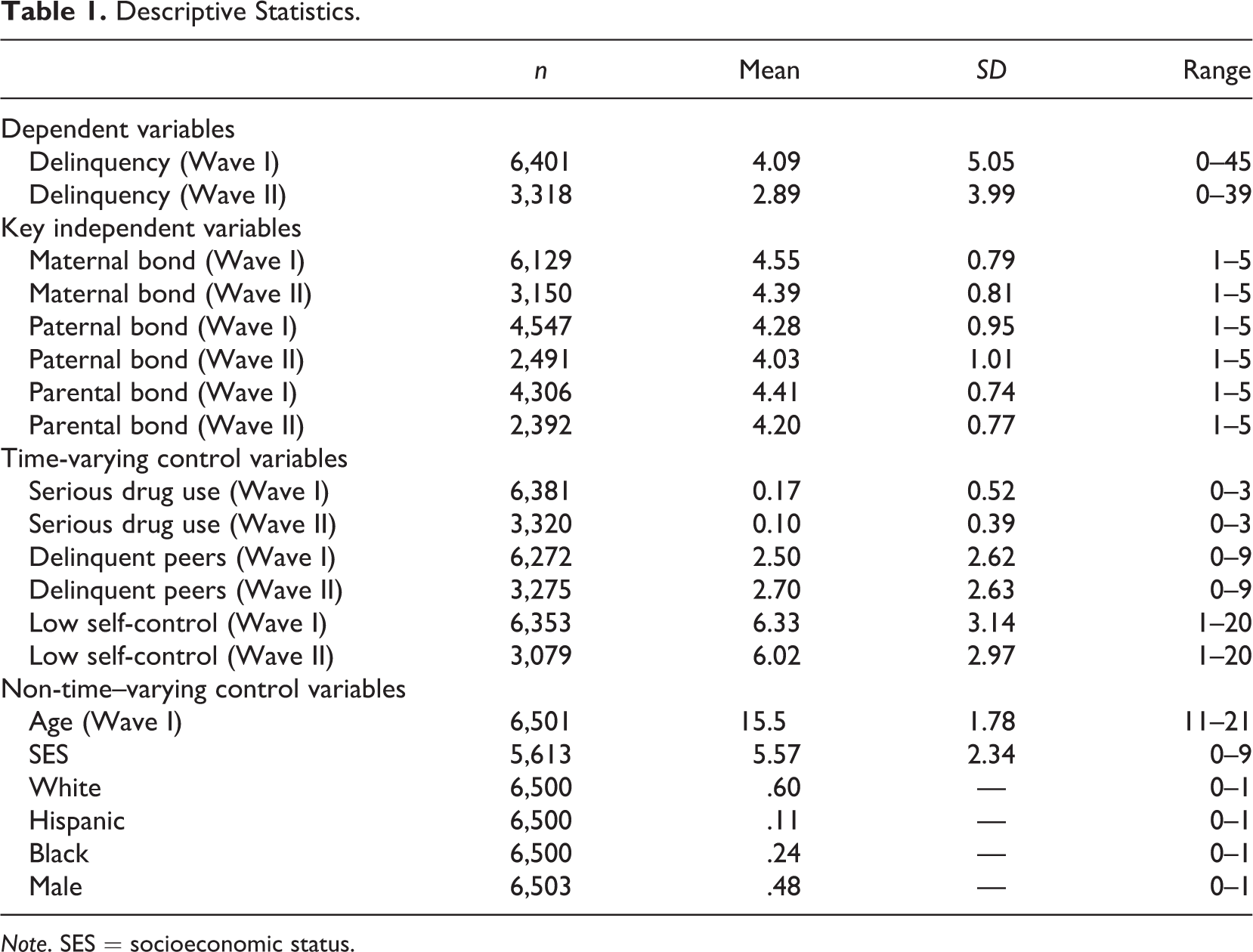
Table 1 presents the descriptive statistics for the variables of interest. The mean number of delinquent acts reported was 4.09. Most respondents were fairly well bonded to their parents; the maternal bond mean was 4.55, the paternal bond mean was 4.28, and the overall parental bond mean was 4.41, all on a scale of 1– 5. The average age of the respondents was 15.5 years old and 48% of the respondents were male. Eleven percent of the respondents indicated their race/ethnicity as Hispanic, 24% reported their race/ethnicity as Black, and 60% reported they were White. Most of the respondents’ parents had at least a high school diploma (mean = 5.57). The sample indicated a low usage of serious drug use (mean = .17) and few had a high degree of delinquent peers (mean = 2.50). Further, the average self-control score was 6.33 on a scale of 1– 20, demonstrating the sample as a whole had moderate to high self-control (recall higher values on the scale indicated lower levels of self-control).
Descriptive Statistics.
Note. SES = socioeconomic status.
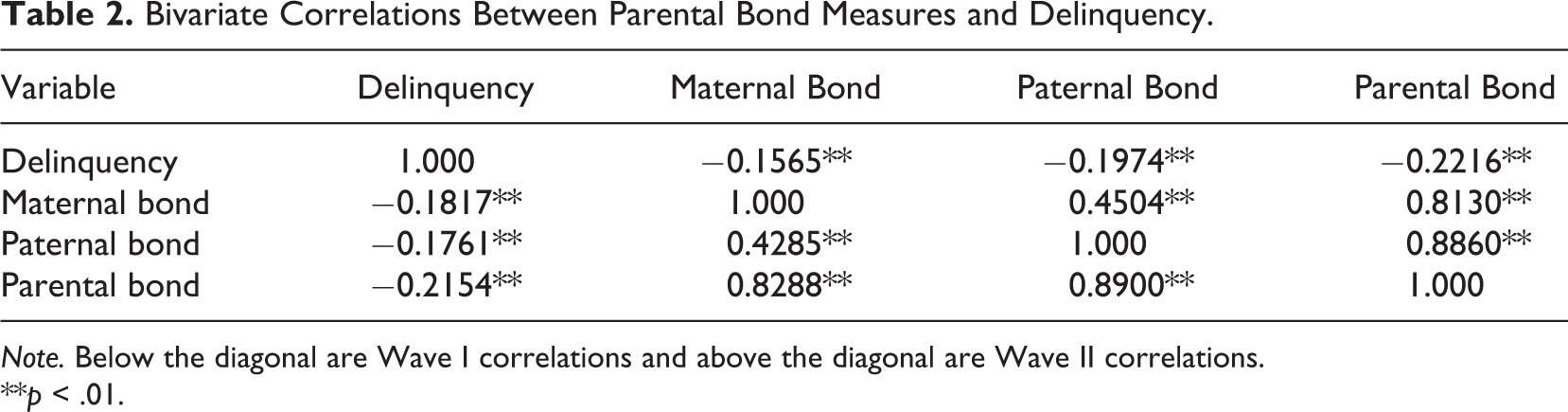
Table 2 depicts the bivariate correlations between each of the variables. The correlations below the diagonal present the correlations for the Wave I measures and those above the diagonal present the Wave II correlations. As expected, each of the parental bond measures is significantly and negatively correlated with juvenile delinquency, though the relationships were moderate in size. In essence, these correlations indicate that respondents who reported a greater bond with their parents also tended to report fewer delinquent acts. The maternal, paternal, and parental bonds are significantly and positively correlated with one another, demonstrating a large degree of overlap between the different sources of attachment. These results were consistent for both Wave I and Wave II measures.
Bivariate Correlations Between Parental Bond Measures and Delinquency.
Note. Below the diagonal are Wave I correlations and above the diagonal are Wave II correlations.
**p < .01.
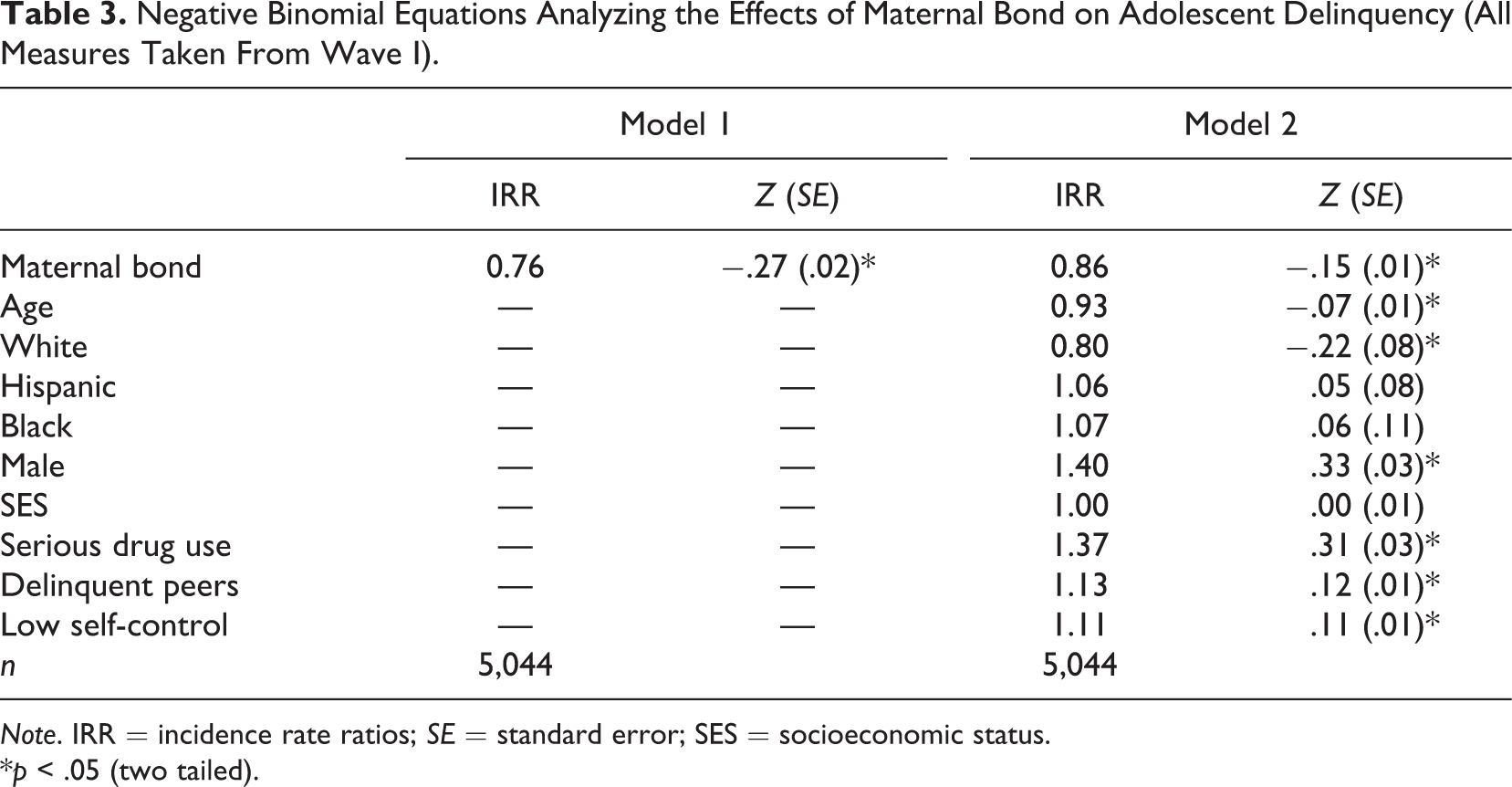
Two survey-adjusted negative binomial models are presented in Table 3. Both analyses utilize the delinquency scale as the dependent variable and the independent variable of interest is the maternal bond measure at Wave I. The regression results are presented as incidence rate ratios (IRR) for effect sizes and z-scores for hypothesis test results. An IRR greater than 1 indicates a higher rate of delinquency for every one-unit increase in the independent variable, while an IRR less than 1 demonstrates a decreased rate. Model 1 indicates a significant, negative relationship between maternal bond and delinquency, suggesting that respondents who were more strongly bonded to their mother reported fewer delinquent acts, on average, when compared to those who were not well bonded to their mother (IRR = .76, p < .05). This finding remains in the full model where, holding the control variables constant, the maternal bond still exhibited a protective effect on delinquency (IRR = .86, p < .05). Not surprisingly, low self-control (IRR = 1.11, p < .05), delinquent peers (IRR = 1.13, p < .05), and serious drug use (IRR = 1.37, p < .05) acted in the expected crime-inducing direction. Males were also likely to commit more delinquent acts than females (IRR = 1.40, p < .05) as were those who were younger (IRR = .93, p < .05). White respondents were significantly less likely to offend (IRR = .80, p < .05) than respondents coded as Other.
Negative Binomial Equations Analyzing the Effects of Maternal Bond on Adolescent Delinquency (All Measures Taken From Wave I).
Note. IRR = incidence rate ratios; SE = standard error; SES = socioeconomic status.
*p < .05 (two tailed).
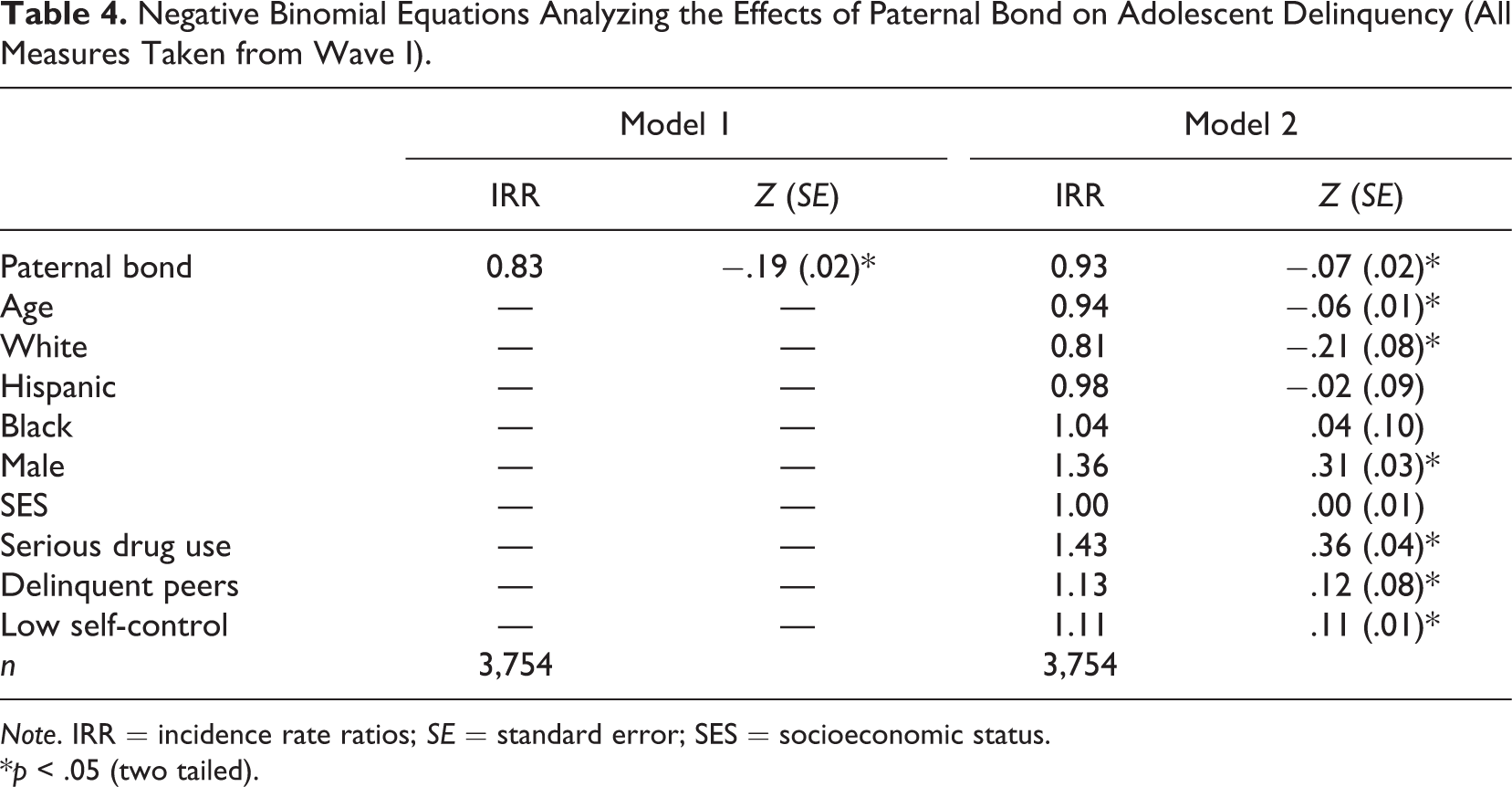
The impact of the paternal bond on adolescent delinquency at Wave I is presented in Table 4. Similar to the impact of the maternal bond on delinquency, those who were well bonded to their father were significantly less likely to report delinquent acts (IRR = .83, p < .05) as seen in Model 1. In the full model presented in Model 2, the relationship was still significant and acted as a protective factor for delinquency (IRR = .93, p < .05).
Negative Binomial Equations Analyzing the Effects of Paternal Bond on Adolescent Delinquency (All Measures Taken from Wave I).
Note. IRR = incidence rate ratios; SE = standard error; SES = socioeconomic status.
*p < .05 (two tailed).
Because a central focus of this study was to compare the effect of maternal bonding to the effect of paternal bonding, predicted values were generated based on the results presented in Tables 3 and 4 and then plotted in Figure 1. 3 The figure depicts the predicted delinquency scores based on both the maternal bond (lines with the triangle marker) and the paternal bond (lines with the square marker). Note also that predicted scores were generated for both the bivariate models (the solid lines) and the multiple regression models that included the covariates (the dashed lines). In all, the figure allows for the visual observation of the differences between the maternal and the paternal bonds in predicting delinquency scores. The figure suggests that maternal bonding may have a greater “controlling” effect when compared to the paternal bond. As the maternal bond increases, the protective effect it has on delinquency is stronger than that of the paternal bond. Further, this also demonstrates the importance of including control variables in the analysis, as the slopes of the multivariate lines are flatter than the slopes for the bivariate lines, indicating that much of the effect of attachment on delinquency was confounded by the influences of the control variables.
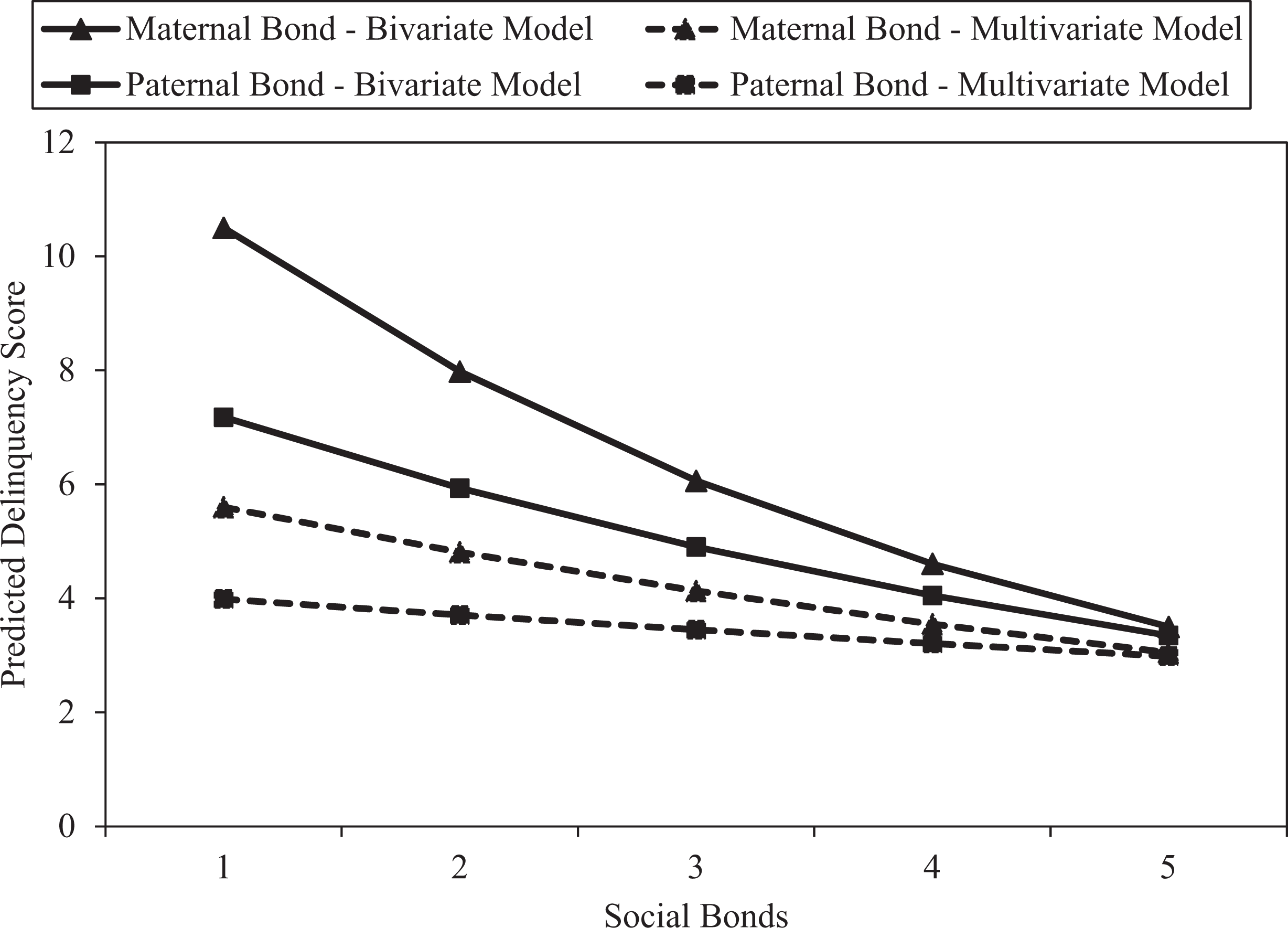
Predicted delinquency scores based on maternal and paternal bonds.
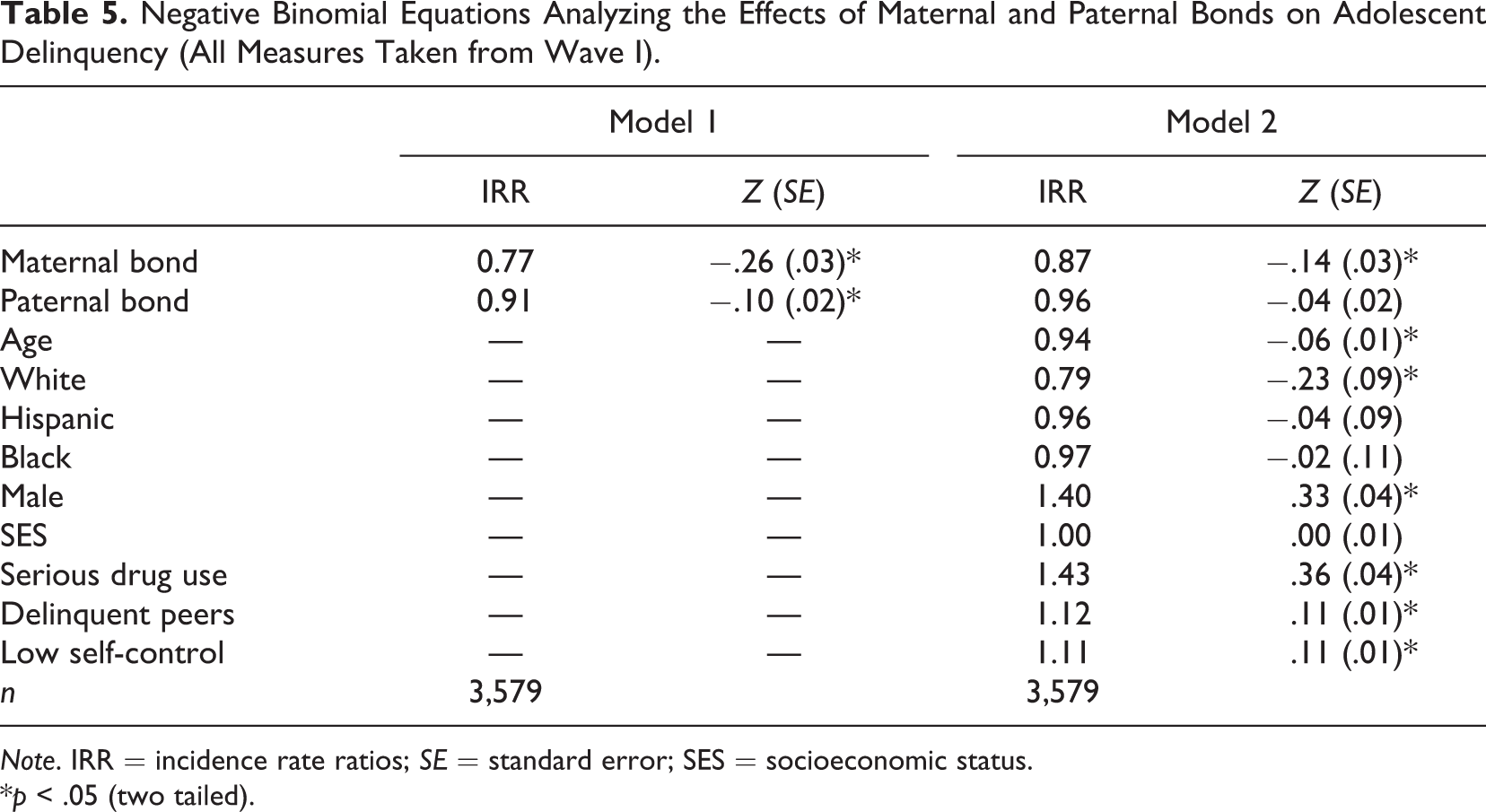
Table 5 presents the separate impact of the maternal and paternal bonds on delinquency at Wave I. In the first model, those who were well bonded to both their mother and their father were significantly less likely to be delinquent (IRR = .77, p < .05; IRR = .91, p < .05, respectively). As seen in Model 2, that pattern did not completely hold with the addition of control variables; the maternal bond remained significant (IRR = .87, p < .05) but the paternal bond was no longer a significant predictor of delinquency. The results for the control variables are similar to the prior analyses.
Negative Binomial Equations Analyzing the Effects of Maternal and Paternal Bonds on Adolescent Delinquency (All Measures Taken from Wave I).
Note. IRR = incidence rate ratios; SE = standard error; SES = socioeconomic status.
*p < .05 (two tailed).
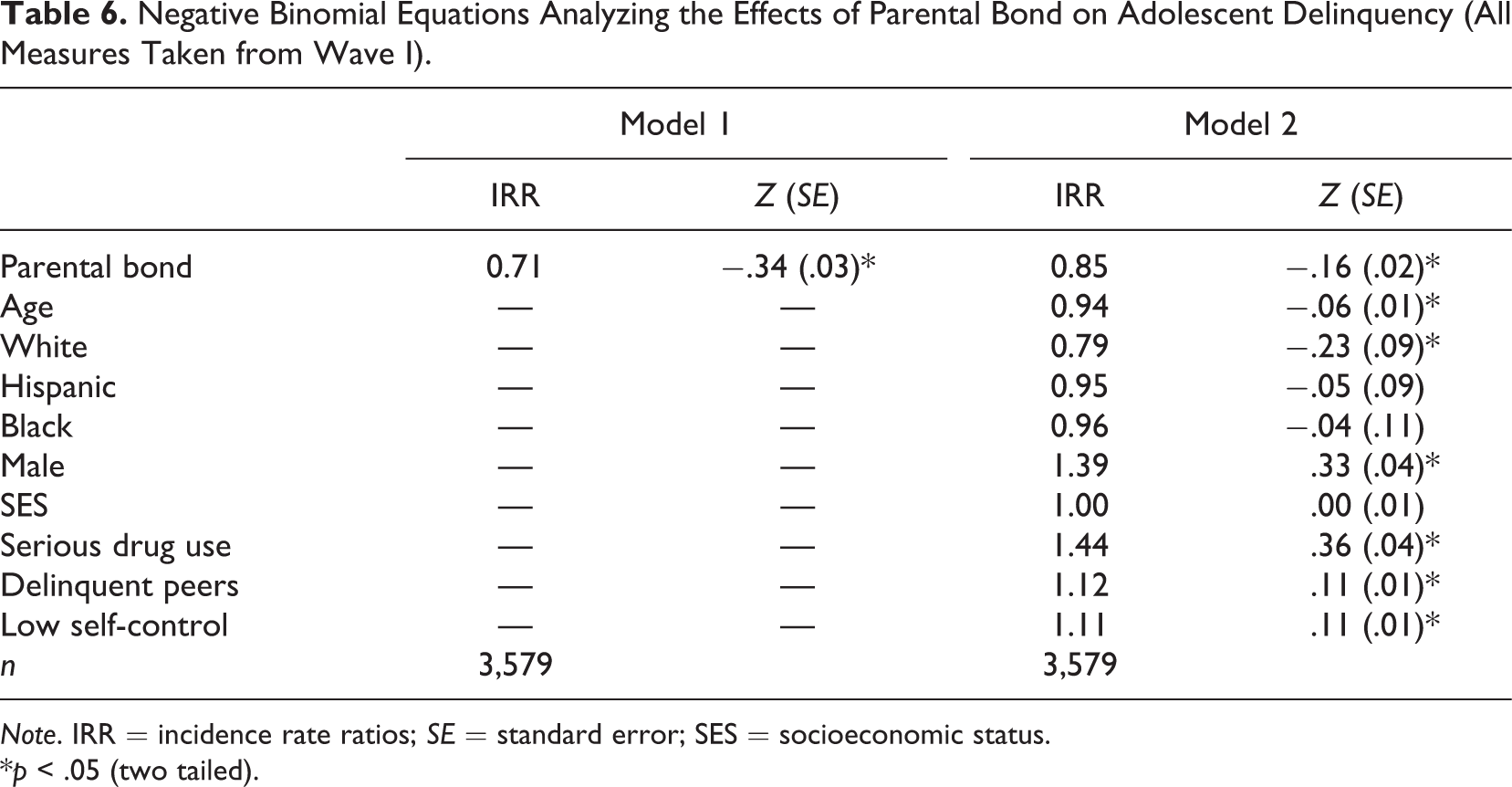
The impact of the overall parental bond on delinquency at Wave I is depicted in Table 6. In the first model, those who were well bonded to both of their parents were significantly less likely to be delinquent (IRR = .71, p < .05). As seen in Model 2, that pattern held with the addition of control variables (IRR = .85, p < .05).
Negative Binomial Equations Analyzing the Effects of Parental Bond on Adolescent Delinquency (All Measures Taken from Wave I).
Note. IRR = incidence rate ratios; SE = standard error; SES = socioeconomic status.
*p < .05 (two tailed).
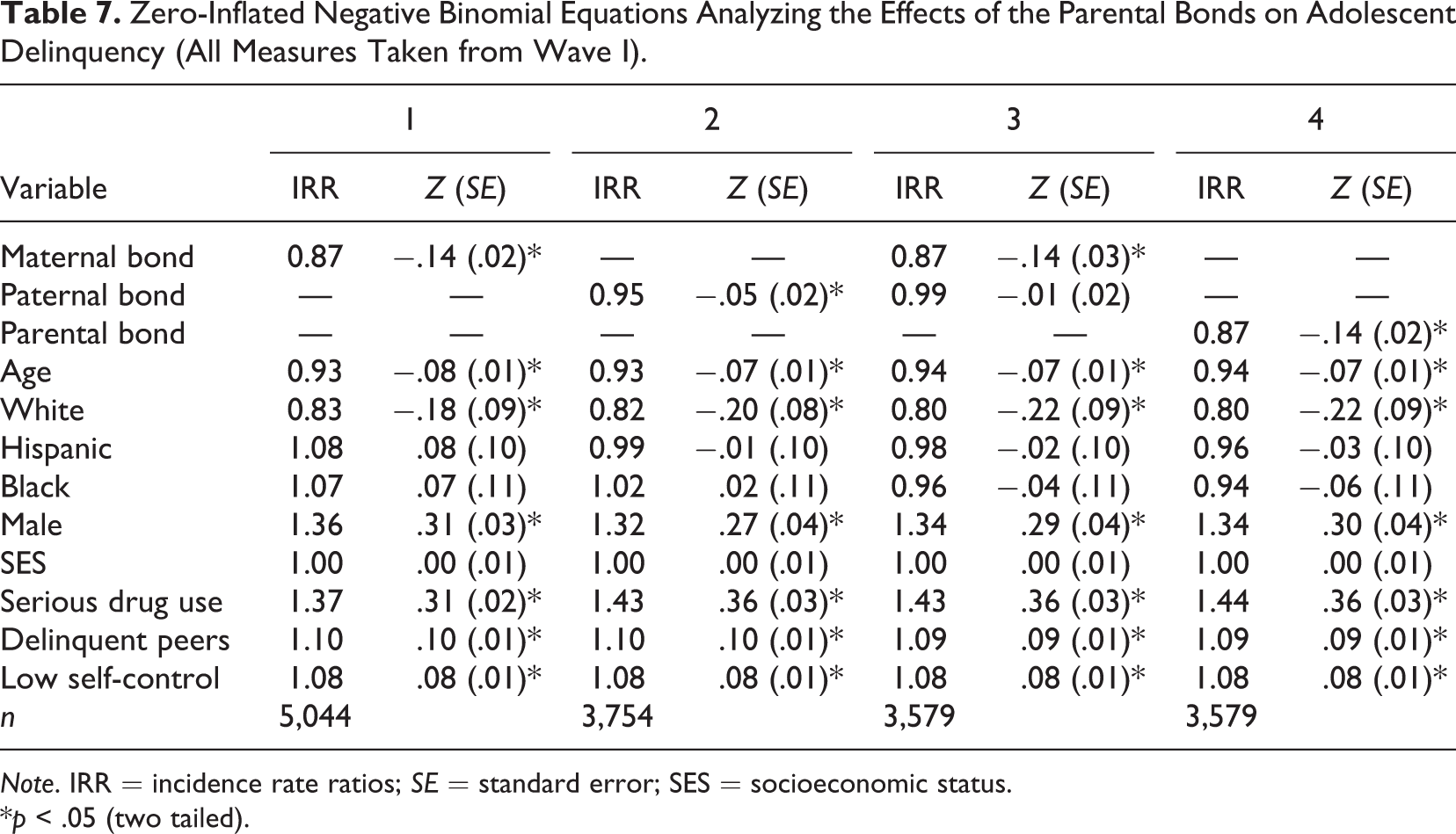
Zero-inflated negative binomial equations were also estimated on the sample, although only the full models were able to converge using the survey-adjusted sample. These results are presented in Table 7. The results are substantively similar to those found from the negative binomial models. Model 1 indicates the maternal bond was a significant negative predictor of delinquency (IRR = .87, p < .05), while Model 2 indicates the paternal bond was also a significant predictor of delinquency (IRR = .95, p < .05). However, as seen in Model 3, when these separate indicators of the social bond were included in the same model, only the maternal bond remained significant (IRR = .87, p < .05). Finally, Model 4 presents the results of the overall parental bond. Those with a stronger overall bond to their parents were significantly less delinquent than those with a weaker bond (IRR = .87, p < .05).
Zero-Inflated Negative Binomial Equations Analyzing the Effects of the Parental Bonds on Adolescent Delinquency (All Measures Taken from Wave I).
Note. IRR = incidence rate ratios; SE = standard error; SES = socioeconomic status.
*p < .05 (two tailed).
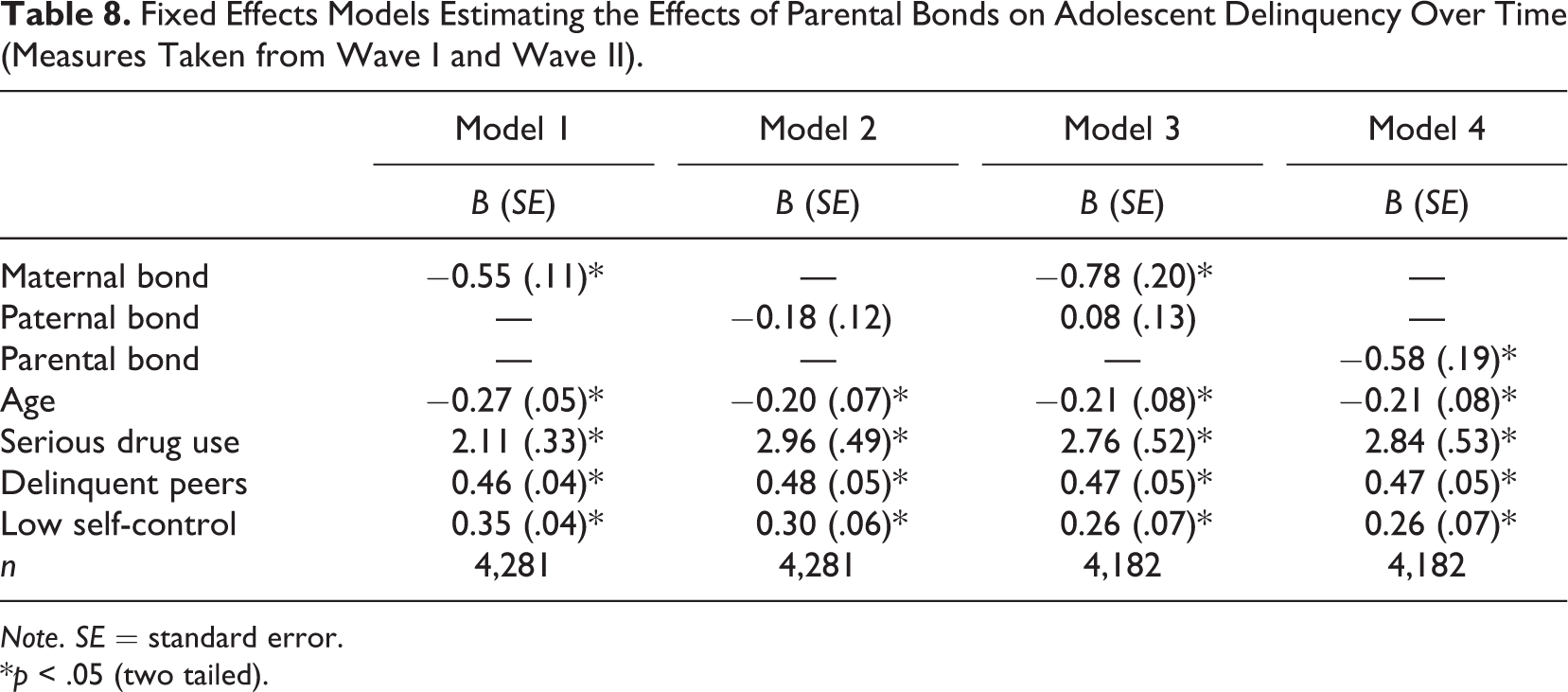
The final analyses estimated the effects of changes in maternal, paternal, and parental bonds on changes in self-reported delinquency. Table 8 presents the results of these survey-adjusted fixed-effects regression models. The first model analyzed changes in the maternal bond on changes in delinquency. The maternal bond had a significant influence on changes in delinquency; those who reported a stronger maternal attachment were less delinquent at Wave II (b = −.55, p < .05). Model 2 presents a similar picture for the paternal bond. Those whose bond to their father increased from Waves I to II decreased their delinquency from Waves I to II but this result was not significant. The next model, Model 3, presents the results from the model with both the maternal and paternal bonds. Respondents whose bond to their mother increased from Waves I to II demonstrated significant decreases in their delinquency (b = –.78, p < .05). However, the same results did not hold for the paternal bond. The final model demonstrated those whose overall parental bond increased from Waves I to II decreased their delinquency over time (b = –.58, p < .05).
Fixed Effects Models Estimating the Effects of Parental Bonds on Adolescent Delinquency Over Time (Measures Taken from Wave I and Wave II).
Note. SE = standard error.
*p < .05 (two tailed).
Discussion & Conclusion
This study sought to further Hirschi’s (1969) social bonds theory by examining the effects of attachment to each parent on delinquency using a nationally representative sample. Further, longitudinal analyses were conducted to assess changes in each parental bond on changes in delinquency. The fixed effects models utilized were especially powerful as they were able to control for past delinquency and time-stable factors. Overall, the results offered mixed support for Hirschi’s theory. In the cross-sectional analyses, regardless of how the parental bond was operationalized, whether it be the maternal bond, the paternal bond, or the overall parental bond, youth who reported feeling closer to their parents were less likely to be delinquent, lending support to the first hypothesis. However, in mixed support of the second hypothesis, youths were more likely to decrease their delinquency, given a growth in those bonds with their mother and both parents overall. The same was not true for a growth in paternal bonds, as changes in the paternal bonds had no significant effect on changes in delinquency. Finally, the third hypothesis was supported as when the two parental bonds were combined in the same fixed-effects model, the maternal bond retained its significant relationship on changes in delinquency, while the paternal bond was not significant.
These effects held even with the introduction of various control variables. However, it is telling that many of these variables were also significant contributors to delinquency, independent of one’s social bonds to his or her parents. Specifically, those who were younger, those who engaged in serious drug use, those with more delinquent peers, those with low self-control, males, and non-Whites had significantly higher self-reported delinquency than their reference groups. This has implications for Hirschi’s (1969) social bonds theory by demonstrating that other theoretically relevant variables such as self-control and delinquent peers are also significant contributors to delinquency. Ingram and his colleagues (2007) made a similar argument when they found the impact of parental attachment on delinquency was mediated by delinquent peer association. Although the present findings did not find evidence of complete mediation by other variables, these findings in conjunction with others support the inclusion and perhaps integration of various theories in order to more fully explain and predict delinquency (see also Jang & Smith, 1997).
These results also partially support the arguments of other theorists discussed earlier, such as Gottfredson and Hirschi (1990) and Sampson and Laub (1993). Specifically, self-control was consistently found to be a significant predictor of delinquency in all models, though it did not account for the effects of the other variables in the model. Further, Sampson and Laub (1993) proposed poor parenting abilities could lead to delinquency through increased attachment to delinquent peers. As the current analysis found that the presence of delinquent peers was significantly associated with delinquency, this lends partial support to their hypothesis. However, as discussed previously, both Gottfredson and Hirschi (1990) and Sampson and Laub (1993) posited that the parental relationship should have a distal effect on delinquency through either self-control or delinquent peers. As the current analyses found the parental bond retained its significant relationship with delinquency upon the introduction of these other theoretical variables, it does not fully support those theorists’ arguments. Finally, attachment theory (Bowlby, 1982) also discussed the importance of parental bonds in leading to delinquency and other antisocial acts. Although this study did not test the mechanisms Bowlby (1982) specified in this association, such as an individual’s sense of self-worth, the results supported both Bowlby (1982) and Hirschi’s (1969) arguments that parental attachment is important in determining a youth’s later delinquency.
This study was not without its limitations. First, it relied upon self-reported delinquency and some have questioned its validity, especially for more serious forms of delinquency (Farrington et al., 1996). Second, the Add Health delinquent peer measure is not without its weaknesses. As it measures the respondent’s perceptions of their three closest friends’ substance use, it is not able to establish the accuracy of those perceptions or the antisocial behavior of other friends and acquaintances. Third, the respondents who only had a mother figure present in their lives but not a father figure were out of necessity dropped from the paternal bond and parental bond analyses. These missing cases call into question not only the comparability of the strength of the maternal versus paternal bonds in predicting delinquency, but also suggest the possibility of a selection effect. Perhaps those who only have one parent present, in this case a mother, are different than those who have both, and this difference impacts their delinquency independent of their emotional bond. This may operate through other theoretically relevant variables such as differences in supervision which were not able to be included in the current analysis.
These limitations highlight several possible directions for future research. First, scholars should work to improve the validity and reliability of its measures, especially those that are used in many criminological studies such as self-reported delinquency and delinquent peers. Additionally, although it appears one’s bond to one parent is not necessarily more important than another in preventing delinquency, it would be interesting to investigate the mechanisms through which each bond operates in preventing delinquency. Cernkovich and Giordano (1987) argued Hirschi’s (1969) concept of the attachment bond was multidimensional and identified several dimensions that were associated with delinquency. These included conflict, caring, supervision, and communication. Researchers could assess the extent to which each of these dimensions varied between the juvenile and each of their parents. Additionally, qualitative research could reveal possible differences such that the maternal bond may prevent a juvenile from delinquency through fear of disapproval, while the paternal bond may operate through fear of punishment. Further, including measures of the parents’ perceived attachment to their child would be interesting in assessing its relationship with delinquency as well as the concordance between parent-perceived and child-perceived attachment scores. Although the Add Health data set includes a measure of the primary parent’s perceived attachment, both parents were not interviewed, and thus, this information is incomplete.
This study supports the further implementation of crime prevention programs that seek to increase the bond between the child and the parents. As Piquero, Farrington, Welsh, Tremblay, and Jennings (2009) discussed, early family prevention and parent training programs have been found to be effective in reducing behavioral problems among children. Further, these protective effects continue into adulthood. Many of these programs aim to strengthen the parent–child relationship by encouraging adequate supervision as well as fair and consistent punishment. The results presented here offer theoretical support for these programs, underscoring the importance of crime prevention programs being not only evidence based but theoretically based as well.
Footnotes
Acknowledgments
Special acknowledgment is due to Ronald R. Rindfuss and Barbara Entwisle for assistance in the original design. The author would like to thank Dr. J. C. Barnes and Dr. Alex Piquero for their assistance with the manuscript.
Authors’ Note
This research uses data from Add Health, a program project directed by Kathleen Mullan Harris and designed by J. Richard Udry, Peter S. Bearman, and Kathleen Mullan Harris at the University of North Carolina at Chapel Hill. Information on how to obtain the Add Health data files is available on the Add Health website ( ). No direct support was received from grant P01-HD31921 for this analysis.
Declaration of Conflicting Interests
The author declared no potential conflicts of interest with respect to the research, authorship, and/or publication of this article.
Funding
The author disclosed receipt of the following financial support for the research, authorship, and/or publication of this article: Funded by grant P01-HD31921 from the Eunice Kennedy Shriver National Institute of Child Health and Human Development, with cooperative funding from 23 other federal agencies and foundations.