



Abstract
The present study investigates whether self-reported psychopathic traits moderate the relationships between delinquent career features (i.e., age of first detention in a juvenile detention center, crime frequency, crime diversity, crime charges, and Conduct Disorder) and 1-year general delinquency and violent delinquency recidivism outcomes. The sample was composed of male youth (N = 214, M = 16.4 years, SD = 1.3 years) originating from the juvenile detention centers managed by the Ministry of Justice of Portugal. Results mostly suggest that neither the Antisocial Process Screening Device––Self-Report total score nor its Callous-Unemotional, Impulsivity, and Narcissism factor scores moderate the relationships between the delinquent career variables and general and violent delinquency recidivism outcomes. The notable exception was the interaction between crime frequency and callous-unemotional traits in predicting general recidivism. The current findings question the relevance of self-reported psychopathic traits as moderators of recidivism among juveniles despite the general association between psychopathy and conduct problems among youth.
Introduction
Psychopathy is among the most consistent predictors of diverse forms of antisocial behavior, juvenile delinquency, violence, and recidivism among youth. Conceptualized as a suite of personality features, psychopathy is characterized by emotional deficits, callousness, impulsivity, interpersonal manipulation, narcissism, hedonistic lifestyle, and self-regulation deficits. Some scholars suggest that the association between psychopathy and antisocial/delinquent conduct is so robust that psychopathy is implicated in general theories and conceptual models of antisocial behavior spanning the social sciences (e.g., Andrade, 2008; DeLisi, 2009, 2016; Hare, 1999; McCord & McCord, 1956). Its empirical association with delinquency is also well-established. For instance, meta-analytic research of 87 studies using 74 independent samples, and 358 effect sizes (Geerlings et al., 2020) and of 53 studies using 60 independent samples with more than 10,000 participants (Asscher et al., 2011) similarly found that psychopathic features were significantly associated with delinquency, violent delinquency, general recidivism, or violent recidivism after justice system contact.
Due to its association with diverse forms of conduct problems, several studies of adjudicated youth examined whether youth with greater psychopathic features also had more severe delinquent careers evidenced by earlier onset of conduct problems, earlier onset of justice system intervention, more police contacts, greater referrals and adjudications, and more frequent diverse out-of-home placements to residential facilities, detention centers, or confinement facilities. Diverse studies using samples of youth from Canada (McCuish et al., 2015), China (Wang et al., 2021), the Netherlands (Sijtsema et al., 2019), Portugal, (Pechorro et al., in press), the United Kingdom (Farrington & Bergstrøm, 2022), and the United States (Baglivio et al., 2020; Neo & Kimonis, 2021; Vaughn et al., 2008) substantiate that youth who exhibit greater psychopathic features have more extensive offending histories and follow a more challenging developmental course. In short, multiple studies using data from multiple nations indicate that higher psychopathic features generally portend more serious and severe delinquent careers.
The evidence is less clear for psychopathy and recidivism among youth involved in the juvenile justice system. Despite studies reporting significant linkages between juvenile psychopathy and recidivism outcomes (e.g., Stockdale et al., 2010) including meta-analytic research (Edens et al., 2007), multiple researchers employing diverse data sources of adjudicated youth reported associations between psychopathy and recidivism outcomes that were variously null, contingent on model specification, or, when significant, modest in effect size (see, Boccaccini et al., 2007; Colins et al., 2012a; Douglas et al., 2008; Edens & Cahill, 2007). For instance, a study of male delinquents recruited from a juvenile detention center found that psychopathy as measured by the Psychopathy Checklist Youth Version (PCL: YV) had classification accuracy for general reconviction, felony reconviction, and violent reconviction at levels that were at or below chance (AUC values ∼.46 to .51). Additional research indicates that psychopathy has limited predictive validity for recidivism among females (Colins et al., 2017; Schmidt et al., 2006; Vincent et al., 2008) and limited predictive validity among diverse types of recidivism outcomes (Edens et al., 2007; Schmidt et al., 2006).
The variegated interrelation between psychopathy, delinquent careers, and recidivism suggests moderation effects, but thus far prior research on whether psychopathy moderates conduct problems among youth is also generally mixed and has implicated multiple variables (e.g., Boduszek et al., 2016; Kerr et al., 2012; Muñoz et al., 2008; Silva & Stattin, 2016). Longitudinal research found that psychopathic features moderated the effects of peer influences on delinquency whereby less psychopathic youth were more heavily influenced by their peers, but highly psychopathic youth intensified antisocial conduct among their peers. Moreover, highly psychopathic youth were generally impervious to the conduct of their peers suggesting they are the antisocial leaders explaining peer effects in delinquency (Kerr et al., 2012).
In a longitudinal study using Pathways to Desistance data, a project involving serious and violent juveniles selected from two large cities in the United States, Ray et al. (2020) found that psychopathic features moderated the effects of perceived psychic rewards and perceived risk of arrest on recidivism. Specifically, more psychopathic delinquents reported greater psychic rewards from engaging in delinquency and reported lower risk perceptions for arrest. Compared to their less psychopathic peers, the most psychopathic delinquents most enjoyed engaging in crime and were least likely to worry about getting caught.
Some research suggests that more psychopathic youth are more likely to be incarcerated which contributes to a criminal social identity that in turn fosters additional conduct problems and noncompliance with the justice system (Boduszek et al., 2016). Still other studies indicated that psychopathic features moderated the effects of verbal ability (Muñoz et al., 2008), treatment interventions (Manders et al., 2013), and criminal thinking (Dembo et al., 2007) on delinquency and justice system involvement.
Current Focus
The balance of studies examining the moderation effects of psychopathy on delinquency and recidivism suggest a linear progression whereby the most acutely psychopathic youth are at risk for the most severe behavioral outcomes although the downstream consequences for recidivism are less clear. Since psychopathy is usually indicative of earlier onset and more severe developmental course, it potentially conditions the effects of criminal history on post-release recidivism. Here, we hypothesize that psychopathic traits moderate the association between criminal history predictors assayed by age at first detention, crime frequency, crime charges, crime diversity, and Conduct Disorder (CD) symptoms on general recidivism and violent recidivism.
Method
Participants
Our current sample consisted of male youth offenders (N = 214, M = 16.4 years, SD = 1.3 years) originating from Portuguese juvenile detention centers. The participants were tried at specialized youth courts according to the Portuguese youth justice legislation, and agreed to participate voluntarily in the present investigation. Most were Portuguese nationals (84%), came from a low socioeconomic status (SES) urban background (e.g., underprivileged areas of cities such as Lisbon, Porto), and self-identified as ethnically white Europeans (57.5%). They initiated their criminal activities in preadolescence (M = 11 years, SD = 2 years). Their mean age of detention in a juvenile detention center was around 15 years (SD = 1 year).
Instruments
Antisocial Process Screening Device––Self-Report (APSD-SR; Caputo et al., 1999). This self-report version of the APSD (Frick & Hare, 2001) consists of 20 items designed to assess psychopathic traits among youth. Items are scored on a 3-point ordinal Likert scale (from 0 = Not at all true, to 2 = Definitely true). The APSD-SR consists of three factors: Callous-Unemotional (e.g., You hide your feelings or emotions from others), Impulsivity (e.g., You do risky or dangerous thinks), and Narcissism (e.g., You think you are better or more important than other people). Scores are obtained by reverse scoring the inverted items and then adding the items of each factor; a total APSD-SR score can also be used. Higher scores indicate elevated levels of youth psychopathic traits. The APSD-SR Portuguese version was used (Pechorro et al., 2013, 2016). Item 2 and item 6 were not included in the factor model, and item 20 was excluded from the CU dimension (see Frick & Hare, 2001; Poythress et al., 2006). The internal consistency/reliability for the current study, estimated by the Omega coefficient (ω) and Cronbach’s alpha (α), was: APSD-SR total ω = .79, α = .77; Callous-Unemotional ω = .67, α = .66; Impulsivity ω = .63, α = .62; and Narcissism ω = .73, α = .72.
Conduct Disorder (CD) symptoms were assessed during the interview using the DSM-5 (American Psychiatric Association, 2013) criteria for diagnosing CD (15 items coded No = 0 or Yes = 1). The 15 dichotomous items were added to obtain a total continuous score that can also be used to estimate internal consistency/reliability. Higher scores indicated elevated levels of CD symptoms. 93.5% (n = 200) of the participants presented criteria for a CD diagnosis. Internal consistency/reliability for the present study was CD symptoms total ω = .79, α = .77.
Official records of the Ministry of Justice were used to obtain information about the criminal past of each participant (e.g., age of first crime, legal problem, and detention in a juvenile detention center). The Ministry of Justice classifies crimes in diverse criminal categories: (I) against persons, (II) against property, (III) against cultural identity, (IV) against society, (V) against the State, (VI) crimes from detached legislation. Such categories were considered to provide a measure of criminal diversity (that is, types of crimes committed). The total amount of crimes committed was operationalized as crime frequency. The total amount criminal prosecutions (that is, of charges filled by prosecutors) was operationalized as crime charges.
Procedures
The Ministry of Justice of Portugal was contacted to obtain permission to conduct the current investigation, which it granted. Potential participants from the nation-wide Youth Detention Centers were requested to collaborate voluntarily. The rate of participation was 92%. Ethical procedures required obtaining written informed consent from the participants. No form of compensation was given for participating. Some potential participants were later excluded from the current final sample (due to e.g., adult prison transfer, unavailable official data). Data collection was obtained from individual interviews, self-report measures, and official institutional files.
The Ministry of Justice supplied the official 1-year criminal recidivism data for the purpose of the current study. We operationalized recidivism by considering that recidivists were juveniles who had new criminal charges during the 1-year follow-up period after they were released from the detention centers. Juveniles with no new charges during the 1-year follow-up period were considered non-recidivists. An extra 6 months were used to guard against delays in the administrative processing of the recidivism data at a national level. The data was sourced from the registration system software managed by the Ministry of Justice and official institutional files, that are used for minors (up to age 16, according to the Portuguese legislation) and adults. Official institutional files were used to complement the information provided by the registration system software. According to the data supplied, 37.9% of the youth were general recidivists, and 20.3% of the youth were violent recidivists.
Data Analysis
The IBM SPSS Statistics v28 software (IBM SPSS, 2021) and the PROCESS macro v4.0 (Hayes & Rockwood, 2020; Rockwood & Hayes, 2020) were used to perform data analysis. We tested for moderation using the PROCESS macro-Model number 1: W is defined as the moderator, Y is defined as the (dichotomous) dependent variable, and X is defined as the independent variable. Moderation occurs when the relationship between two variables is different depending on the level of a third variable. Before being used to test for moderation all the variables were standardized. Goodness of fit of the mediation model to de data was evaluated with regular logistic regression statistics, namely -2LL (the smaller the best), and pseudo-R2 (Cox-Snell, and Nagelkerke). The correlations between the variables were considered high if >.50, low if <.20 (Ferguson, 2009). The Omega (ω) coefficient was used to estimate reliability (Deng & Chan, 2017; Hayes & Coutts, 2020), and the traditional Cronbach’s alpha (α) was also provided.
Results
Correlation Matrix.

Note. APSD = Antisocial Process Screening Device––Self-Report; CD symptoms = Conduct Disorder symptoms.
***p < .001, **p < .01, *p < .05.
Effects of the Predictors (Criminal Variables) at Values of the Moderator (APSD total) on the Outcome (General Recidivism).
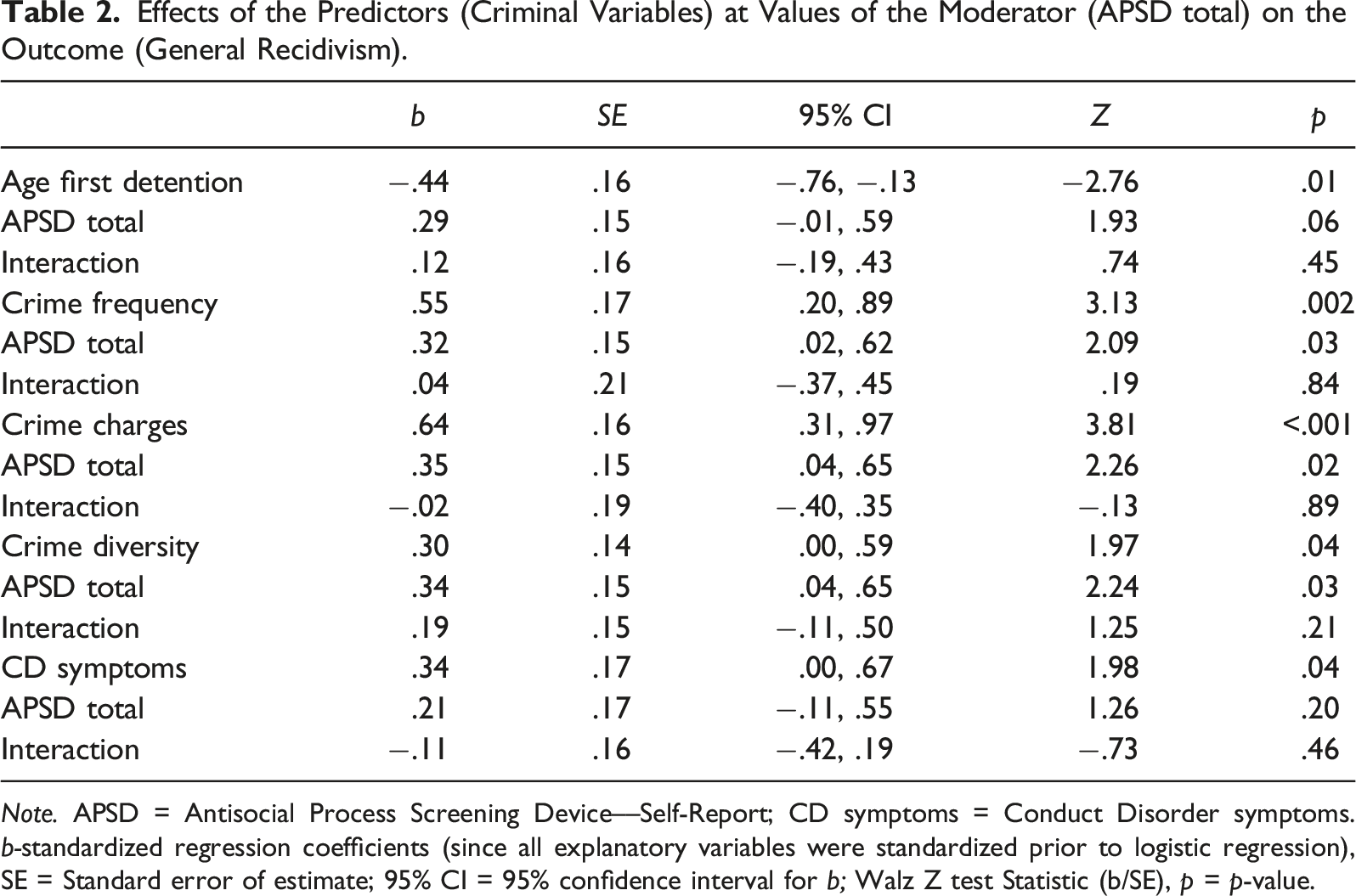
Note. APSD = Antisocial Process Screening Device––Self-Report; CD symptoms = Conduct Disorder symptoms. b-standardized regression coefficients (since all explanatory variables were standardized prior to logistic regression), SE = Standard error of estimate; 95% CI = 95% confidence interval for b; Walz Z test Statistic (b/SE), p = p-value.
Effects of the Predictors (Criminal Variables) at Values of the Moderator (APSD Total) on the Outcome (Violent Recidivism).

Note. APSD = Antisocial Process Screening Device – Self-Report; CD symptoms = Conduct Disorder symptoms. b-standardized regression coefficients (since all explanatory variables were standardized prior to logistic regression), SE = Standard error of estimate; 95% CI = 95% confidence interval for b; Walz Z test Statistic (b/SE), p = p-value.
Effects of the Predictors (Criminal Variables) at Values of the Moderator (CU Traits) on the Outcome (General Recidivism).
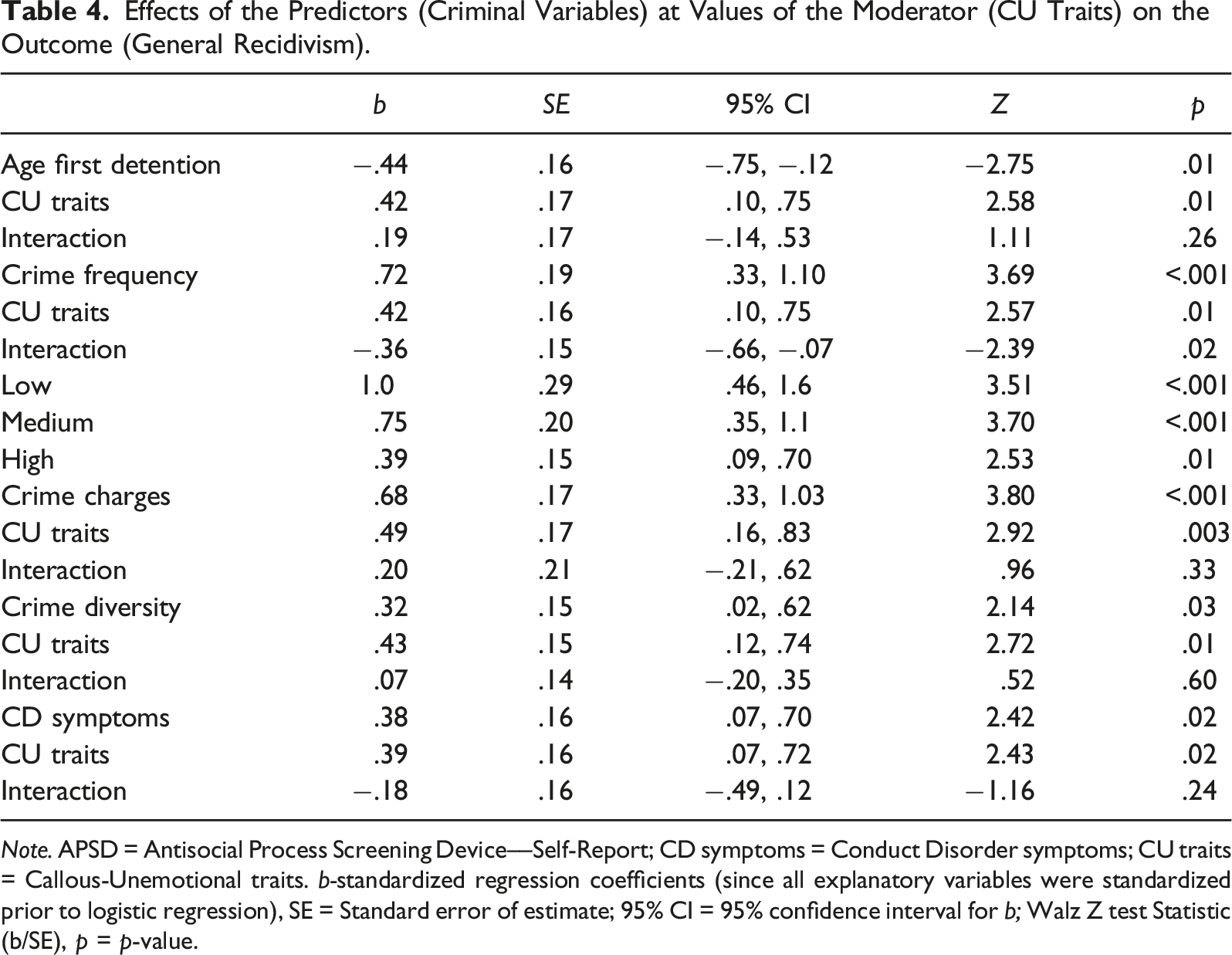
Note. APSD = Antisocial Process Screening Device––Self-Report; CD symptoms = Conduct Disorder symptoms; CU traits = Callous-Unemotional traits. b-standardized regression coefficients (since all explanatory variables were standardized prior to logistic regression), SE = Standard error of estimate; 95% CI = 95% confidence interval for b; Walz Z test Statistic (b/SE), p = p-value.
Effects of the Predictors (Criminal Variables) at Values of the Moderator (CU Traits) on the Outcome (Violent Recidivism).
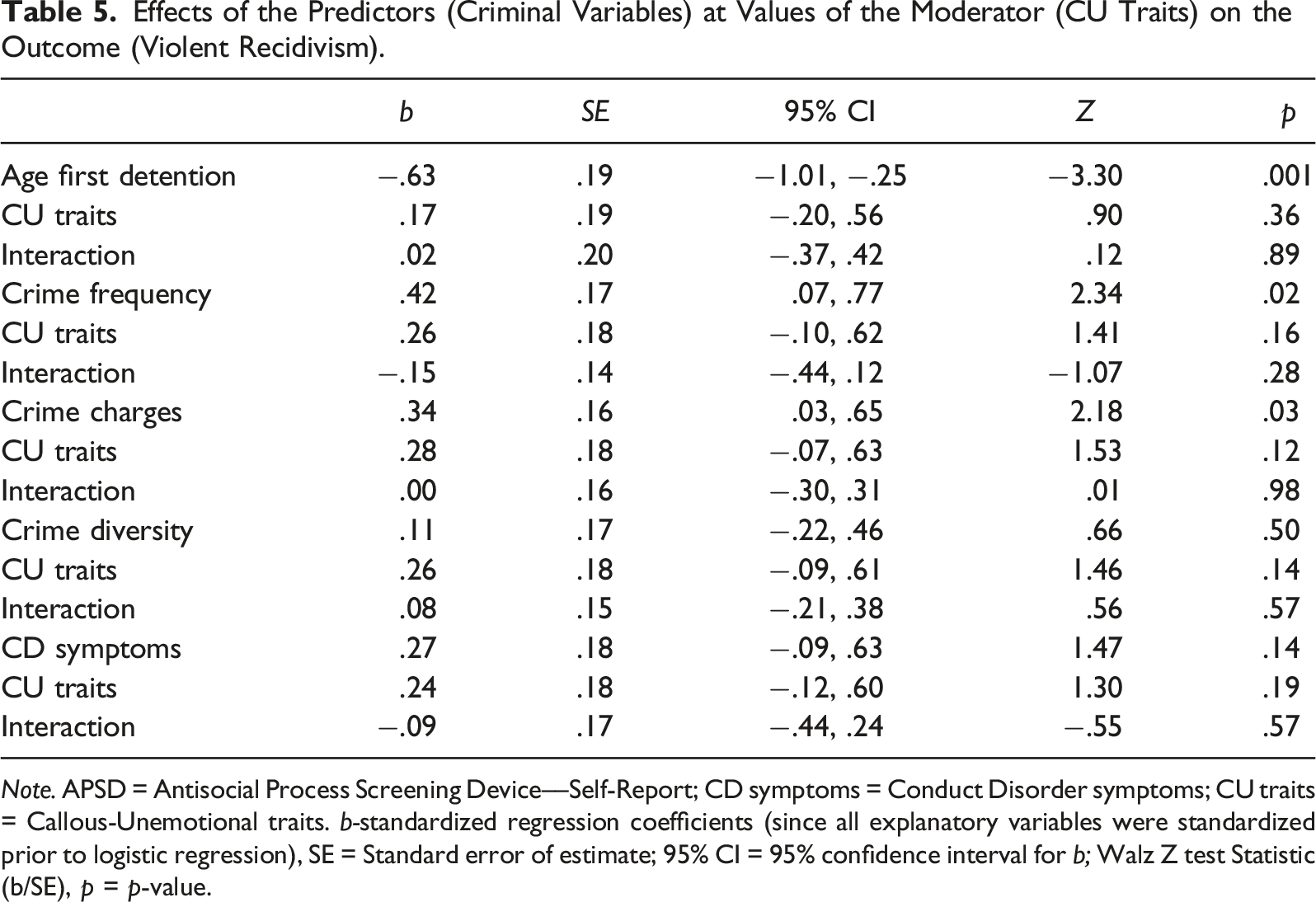
Note. APSD = Antisocial Process Screening Device––Self-Report; CD symptoms = Conduct Disorder symptoms; CU traits = Callous-Unemotional traits. b-standardized regression coefficients (since all explanatory variables were standardized prior to logistic regression), SE = Standard error of estimate; 95% CI = 95% confidence interval for b; Walz Z test Statistic (b/SE), p = p-value.
Effects of the Predictors (Criminal Variables) at Values of the Moderator (Impulsivity) on the Outcome (General Recidivism).
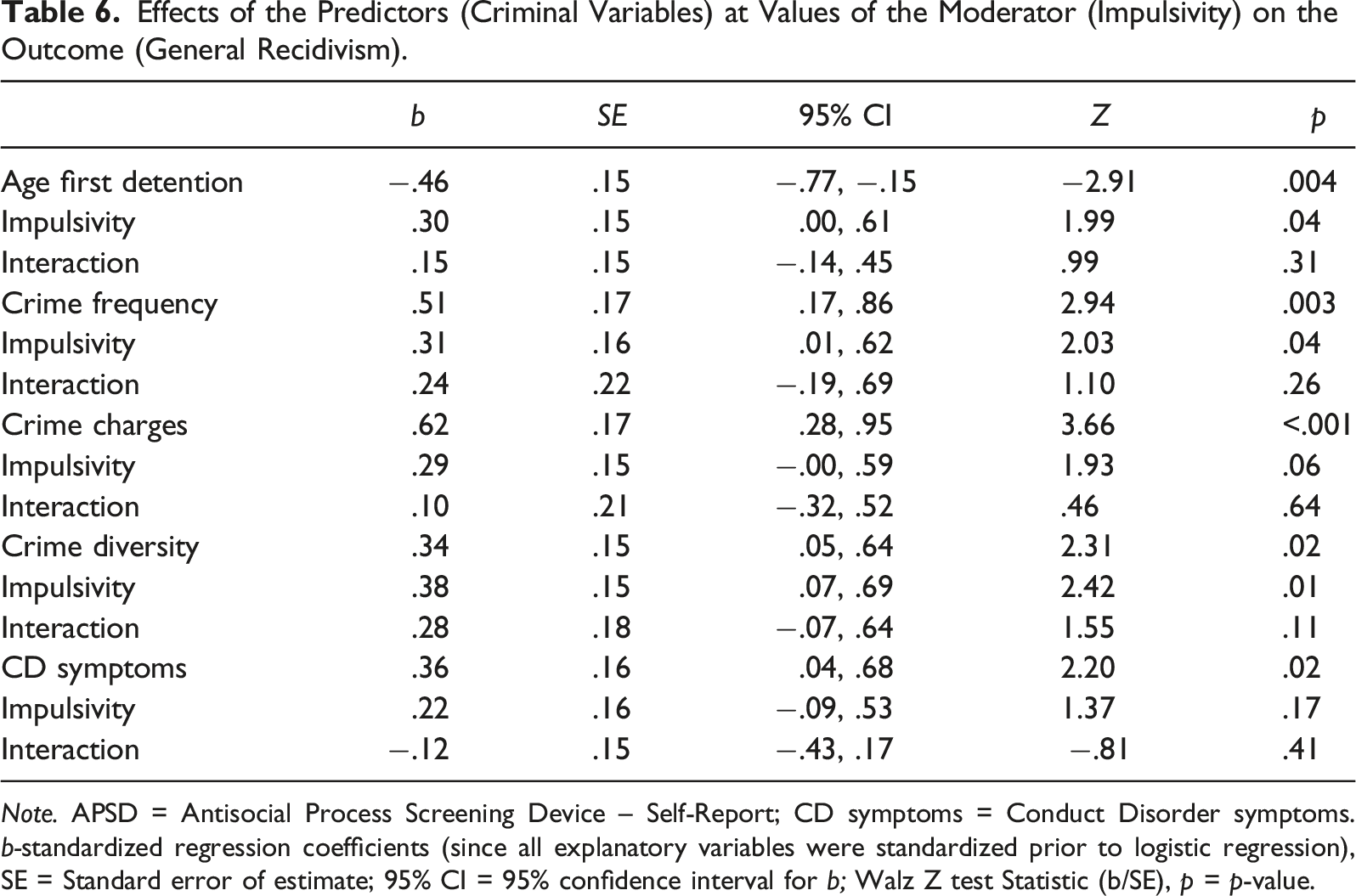
Note. APSD = Antisocial Process Screening Device – Self-Report; CD symptoms = Conduct Disorder symptoms. b-standardized regression coefficients (since all explanatory variables were standardized prior to logistic regression), SE = Standard error of estimate; 95% CI = 95% confidence interval for b; Walz Z test Statistic (b/SE), p = p-value.
Effects of the Predictors (Criminal Variables) at Values of the Moderator (Impulsivity) on the Outcome (Violent Recidivism).
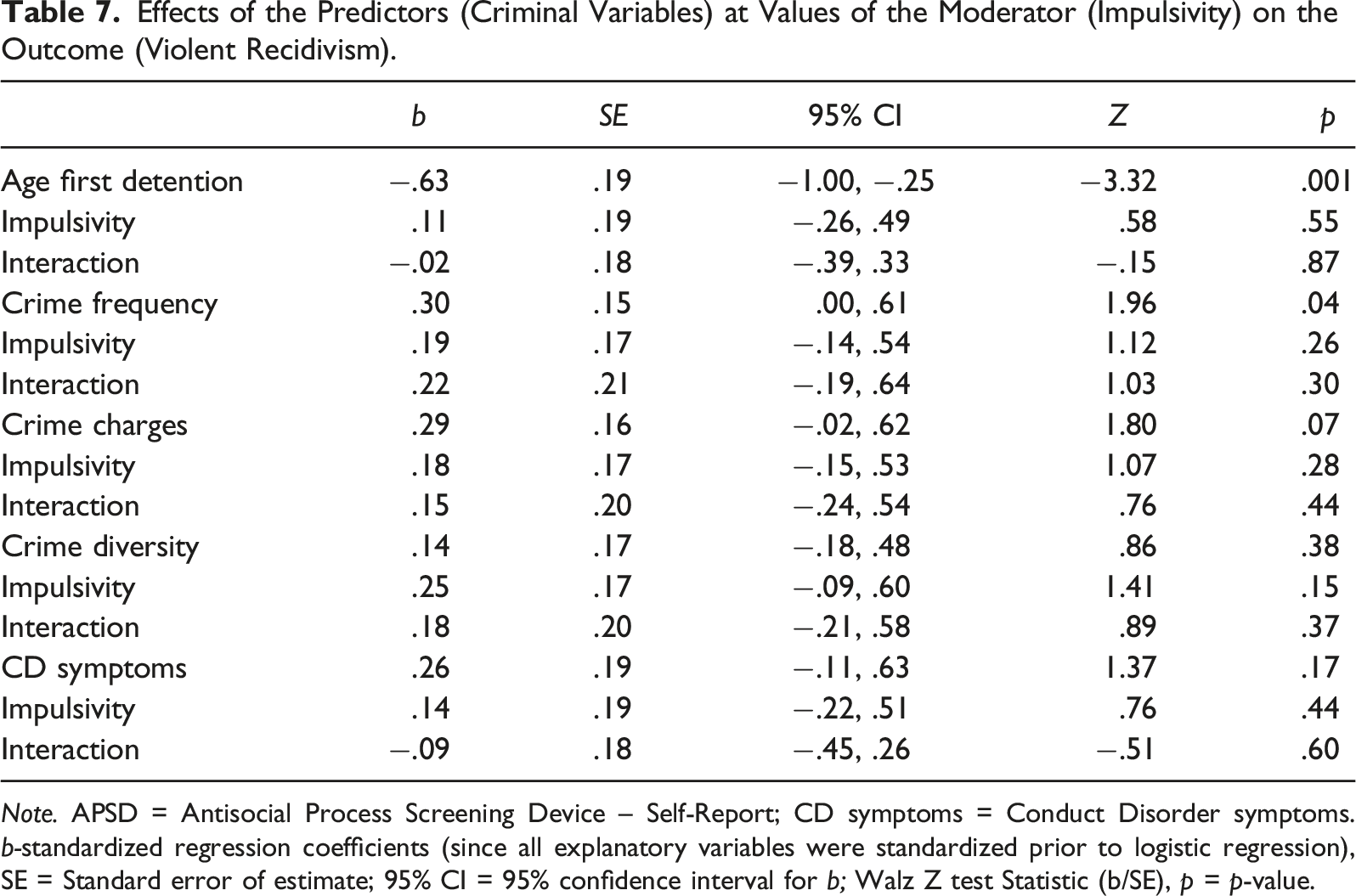
Note. APSD = Antisocial Process Screening Device – Self-Report; CD symptoms = Conduct Disorder symptoms. b-standardized regression coefficients (since all explanatory variables were standardized prior to logistic regression), SE = Standard error of estimate; 95% CI = 95% confidence interval for b; Walz Z test Statistic (b/SE), p = p-value.
Discussion
The present investigation examined whether psychopathic traits moderated the associations between delinquent history predictors on general recidivism and violent recidivism. Contrary to expectations, the Antisocial Process Screening Device––Self-Report total score and its Callous-Unemotional, Impulsivity, and Narcissism factor scores did not moderate the relationships between the criminal variables and general and violent delinquency recidivism outcomes. The only exception to this was the interaction between crime frequency and callous-unemotional traits in predicting general recidivism. Although not supportive of our hypotheses, the limited associations between psychopathic features and recidivism among youth measured using a self-report format (e.g., APSD-SR, Youth Psychopathic Traits Inventory––YPI, YPI-Triarchic-Short) was consistent with most prior research (e.g., Colins et al., 2012b; Colins et al., 2017; Colins et al., 2020; Pechorro et al., 2019; Pechorro et al., 2021), but discordant with other research (e.g., Goulter et al., 2018; Salekin, 2008). On the other hand, research has demonstrated that psychopathy as conceptualized by the PCL: YV using a rating scale format is predictive of recidivism (Gretton et al., 2004; McCuish et al., 2015), even after removing its antisocial factor (e.g., Vitacco et al., 2005; Walters et al., 2008), but effects that are significant are seen among boys not girls (Colins et al., 2017; Vincent et al., 2008).
We offer the following discussion points to interpret these findings and their implications for research and practice. First, although psychopathic features strongly differentiate offenders from non-offenders (Coid et al., 2009; Neumann & Hare, 2008) in the community and also differentiate within the delinquent population (Pechorro et al., 2014; Ray et al., 2020; Vaughn et al., 2020), it is also true that the uniqueness of psychopathic traits likely reduces when considering the bevy of risk factors that youth in juvenile detention centers experience. Youth in custody face a variety of family, socioeconomic, trauma, educational, and psychiatric hardships (Abram et al., 2003; Beaudry et al., 2021; Teplin et al., 2002; Trulson et al., 2016) of which psychopathic personality functioning is but one, thus its effects are less remarkable when considering recidivism. We suspect the explanatory potential of psychopathy was somewhat limited based on the small and frequently nonsignificant correlations with violent recidivism, crime frequency, crime charges, and crime diversity in the first part of our analyses.
Second, the youthfulness of our sample also likely contributed to the weak associations between psychopathic traits and recidivism. The average age of the youth in our data is age 16 years, which is not enough time to develop the kind of habituated and truly pathological antisocial disposition that is seen in the most severe adult offenders (see, DeLisi et al., 2021; Pyrooz & Decker, 2019; Skarbek, 2014). Older offenders with repeated confinement experiences, recurrent gang and security threat group involvement, and institutional misconduct are at great risk for general and violent recidivism, but those offenders are not found in these data. This points to the importance of longitudinal designs when examining the prolonged developmental course of psychopathic personality features.
Third, it is possible that the absence of an APSD antisocial factor significantly lessened its predictive validity as a moderator of recidivism outcomes. Some studies suggest that the psychopathy-criminal recidivism link is significantly affected by the presence of an antisocial factor (see e.g., Kennealy et al., 2010), and that psychopathic traits measures lacking an antisocial factor have little predictive validity in youth forensic samples when considering relevant antisocial/criminal variables (e.g., Cauffman et al., 2009; Colins, Vermeiren, Vahl, et al., 2012; Pechorro et al., 2021). Although there is still a considerable ongoing debate as to what are the core traits of psychopathy (see Crego & Widiger, 2022; DeLisi, 2016), recent reviews continue to include the antisocial factor as an essential part of the construct (De Brito et al., 2021) despite the decades-old criticism that it tends to generate a tautology in terms of predicting future antisociality/criminality (Cooke & Michie, 2001).
Even considering the overall lack of moderation effects by the APSD and its factors, an important finding worth mentioning is the absence of a Conduct Disorder x Callous-Unemotional traits interaction strongly suggested by some authors as being particularly important (Frick et al., 2014; Salekin, 2016). Indeed, callous-unemotional traits did not moderate the Conduct Disorder-recidivism association, a finding that goes against the view that youth with high callous-unemotional traits and Conduct Disorder are at higher risk of a persistent criminal career, but is consistent with some previous studies (Colins & Van Damme, 2020; Colins et al., 2020). The notable exception was that callous-unemotional traits moderated the crime frequency-general recidivism link. Considering the limitations of the APSD in measuring callous-unemotional traits (Pechorro et al., 2016; Poythress et al., 2006), it would have been import to examine this topic with a specific callous-unemotional traits measure such as the Inventory of Callous-Unemotional Traits (ICU; Essau et al., 2006).
Fourth, there are practical implication for the supervision and treatment of juvenile offenders despite the generally nonsignificant associations between psychopathic features and recidivism. Irrespective of the empirical association between psychopathy and subsequent delinquent conduct, it is advantageous for caseworkers, juvenile probation officers, juvenile detention officers, and aftercare agents to recognize the basic features or traits of psychopathy especially since many of those features (e.g. recalcitrance or low treatment amenability, deception and manipulation, empathy deficits, emotional regulation problems) are themselves impediments to rehabilitation and successful return from out of home placements (see, Salekin, 2010). In addition, the typical conditions of various juvenile justice system corrective measures include monitored sobriety, school attendance, GED training/completion, vocational training, and other forms of counseling, all of which when successful serve to increase an individual’s stake in conformity and reduce likelihood of recidivism (Bouchard & Wong, 2018; Weaver & Campbell, 2015). These supervision and treatment modalities and the prosocial experiences that they mandate have the additional potential benefit of modifying psychopathic features.
In terms of the limitations of the current study, we must mention the marginal reliability of some of the APSD factors, namely the Callous-Unemotional factor and Impulsivity factor, that may have influenced the results by introducing measurement error. A second limitation is that we relied on official records provided the Portuguese Ministry of Justice, that may underestimate the real frequency of offending. The use of a self-report delinquency measure would have been important because it is known that some offenses are frequently underreported in official data. A third limitation was that time at risk was not specified, thus we cannot exclude that it affected our results. A final limitation is that we only used the APSD (that is reported to have some psychometric limitations in terms of validity and reliability; see e.g., Ebrahimi et al., 2021; Pechorro et al., 2013), and other measures could have been examined also (e.g., YPI, ICU).
Footnotes
Acknowledgments
We wish to thank the staffs of the Navarro de Paiva, Bela Vista, Mondego, Olivais, Santo António, Padre António Oliveira, Santa Clara, and Prisão-Escola de Leiria detention centres for their collaboration.
Declaration of Conflicting Interests
The author(s) declared no potential conflicts of interest with respect to the research, authorship, and/or publication of this article.
Funding
The author(s) received no financial support for the research, authorship, and/or publication of this article.
