



Abstract
Drawing on the conservation of resource theory, the current study builds and tests a moderated-mediation model that explores the potential costs of engaging in interpersonal helping—a common type of organizational citizenship behavior. Specifically, this research argues that interpersonal helping induces emotional exhaustion, which adversely affects task performance. The study also examines impression management and prosocial values motives as conditional moderators among these relationships. Using multisource field data across two time periods, results suggest that an impression management motive is likely to strengthen the proposed relationships, whereas a prosocial values motive is likely to weaken them. Theoretical and practical implications as well as future research avenues are also discussed.
Keywords
Good deeds come in many forms and shapes and may include helping a friend move in, assisting a stranded motorist, giving an elderly person a ride, and volunteering for a charity. Within organizations, similar deeds exist, and they exemplify what is commonly known as organizational citizenship behavior (OCB; Organ, 1988). Specifically, OCB is an “individual behavior that is discretionary, not directly or explicitly recognized by the formal reward system, and in aggregate promotes the efficient and effective functioning of the organization” (Organ, Podsakoff, & MacKenzie, 2006, p. 3). Examples of OCB include helping coworkers with their workload, expressing concerns and courtesy toward others, orienting new employees when it is not required, and volunteering for organizational events. Because of their innate positive nature, research has steadily focused on the positive topographies of these behaviors and has, therefore, identified many positive antecedents and outcomes (see Bolino, Klotz, Turnley, & Harvey, 2013; Podsakoff, Whiting, Podsakoff, & Blume, 2009).
An emerging stream of research, however, has begun to suggest that engaging in these “good deeds” may not “go unpunished,” indicating that OCB may be followed by negative outcomes for employees who engage in them. The investigation of the dark side of OCB is not surprising given that early research has alluded to the notion that engaging in OCB may be detrimental to the individuals performing these behaviors (e.g., Organ & Ryan, 1995). In addition, extant research consistently suggests that today’s organizations are increasingly relying on and encouraging their employees to go above and beyond their actual job responsibilities in order to secure the bottom line. Indeed, Bolino and Turnley (2005) noted that “the ideal worker is an employee who not only demonstrates high levels of task performance but also engages in high levels of contextual performance or OCB as well” (p. 740). Logically, then, this emerging research suggests that over time there may be some negative ramifications for employees who find themselves engaging in these types of behaviors.
Nevertheless, empirical research is still scant when it comes to investigating what happens to employees who frequently engage in OCB. Although it remains underdeveloped, this emerging research has primarily been devoted to examining the following two areas. First, a growing number of studies have focused on the personal and professional costs of engaging in OCB (Bolino et al., 2013). For example, Bolino and Turnley (2005) found that higher levels of OCB are associated with higher levels of employee role overload, job stress, and work–family conflict. Likewise, Bergeron, Shipp, Rosen, and Furst (2013) found that, when controlling for time spent on task performance, those who spent more time (i.e., hours) engaging in OCB had lower salary increases and advanced more slowly than those who spent less time engaging in OCB. Generally speaking, this emerging body of research demonstrates that engaging in OCB may have an adverse impact on the employees performing these types of behaviors.
Second, while most research studies provide arguments that citizenship behavior and task performance may be positively associated, recent research has just begun to better understand this ambiguous association. Particularly, recent research suggests that engaging in citizenship behaviors may come at the expense of performing core tasks. Notably, a number of studies have found that engagement in OCB may have a negative (or a curvilinear) association with task performance at both the individual level as well as at the group and organizational levels (e.g., Bachrach, Powell, Collins, & Richey, 2006; Bergeron et al., 2013; Ellington, Dierdorff, & Rubin, 2014; Mackenzie, Podsakoff, & Podsakoff, 2011; Podsakoff & MacKenzie, 1994; Rapp, Bachrach, & Rapp, 2013). Although these findings demonstrate valid arguments for the association of OCB and task performance, research that fully investigates the mechanism by which OCB may adversely influence task performance is still in its infancy (e.g., Bolino et al., 2013).
Therefore, the purpose of this study is to extend the emerging research on the dark side of OCB by combining both areas discussed above. In other words, this research will examine the personal and professional costs of engaging in OCB as well as investigate the extent to which the performance of OCB detracts from one’s performance of the core task behaviors of his or her job. Specifically, the current study has at least two key goals: First, it examines how interpersonal helping, a common type of OCB, may contribute to employee emotional exhaustion, which subsequently diminishes employee task performance. Interpersonal helping is a prevalent citizenship behavior directed at organizational members and “focuses on helping coworkers in their jobs” (Moorman & Blakely, 1995, p. 130). Examples may include going out of the way to assist coworkers with work problems or helping coworkers feel welcome at work. Furthermore, engagement in citizenship behaviors, particularly interpersonal helping, requires a considerable amount of personal resources (e.g., Bergeron, 2007; Bolino, Hsiung, Harvey, & LePine, 2015; Ellington et al., 2014). Accordingly, the current research also draws on the conservation of resources (COR) theory (Hobfoll, 1988, 1989) as its primary theoretical lens to demonstrate that interpersonal helping is likely to be associated with employee emotional exhaustion attributable to a high level of resource consumption, which then adversely affects task performance.
Second, given that research demonstrates that employees typically engage in citizenship behaviors for various reasons (i.e., motives), the current study introduces citizenship motives as moderators among these relationships. Indeed, as noted by Takeuchi, Bolino, and Lin (2015), “citizenship motives play an important role in understanding the occurrence of OCBs” (p. 1244). As discussed in the sections below, it is likely that citizenship motives (viz., impression management and prosocial values motives) will either alleviate or exacerbate the effect of employee citizenship behavior on emotional exhaustion and task performance. Thus, we argue that interpersonal helping may not always lead to increased emotional exhaustion and reduced task performance; but rather, such relationships may depend on the motives behind engaging in OCB.
Overall, the current study contributes to existing theory and research in at least three important ways. First, the study expands on the developing research on the dark side of OCB by examining how interpersonal helping may adversely affect various employee outcomes including emotional exhaustion and task performance. To do so, this study draws on COR (Hobfoll, 1988, 1989) to demonstrate that interpersonal helping consumes resources, which comes at the expense of employees’ well-being and their core tasks. Second, this study explores the notion that emotional exhaustion is likely the mechanism linking interpersonal helping to reduced task performance—a theoretically plausible research gap that received little attention to date. Third, research has yet to investigate the interactive effects of citizenship motives combined with performing citizenship behaviors. Therefore, the current study focuses on exploring the moderating effects of both impression management and prosocial values motives in relation to engaging in interpersonal helping. Ultimately, a moderated-mediation model is developed (Figure 1) whereby citizenship motives will conditionally influence the strength of the indirect effect between interpersonal helping and task performance through emotional exhaustion. The theoretical model is tested using multisource field data across two time periods.
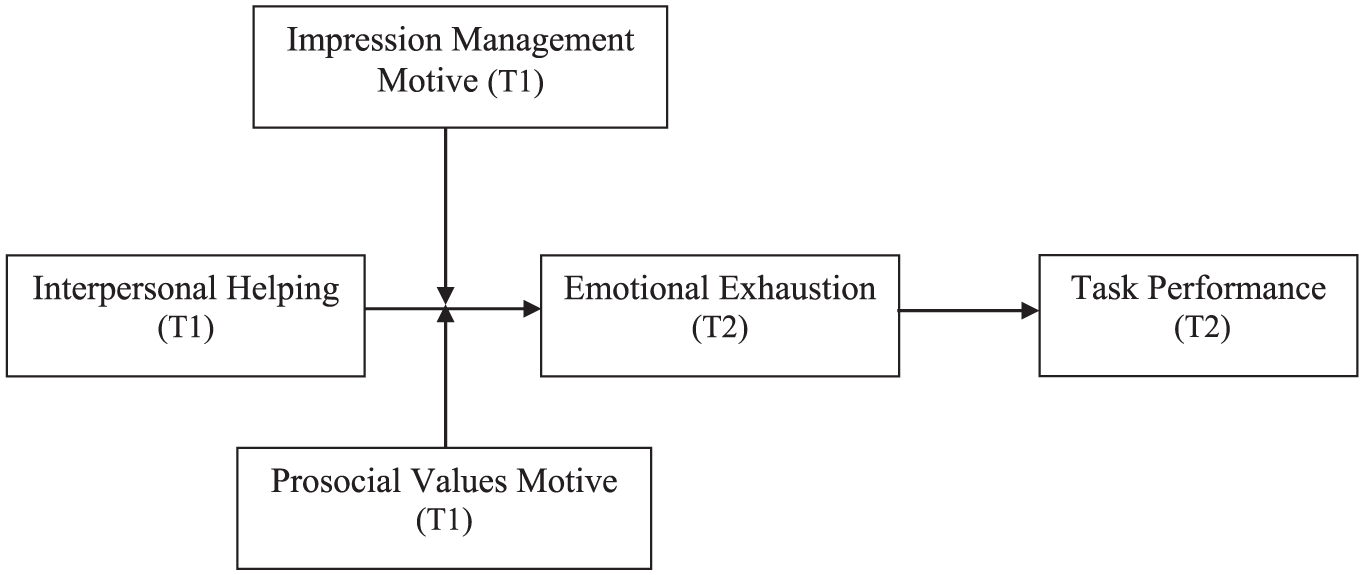
Hypothesized theoretical model.
Hypotheses Development
Interpersonal Helping and Emotional Exhaustion
Conservation of resources theory (Hobfoll, 1988, 1989) postulates that individuals are generally motivated to acquire and protect personal resources. These resources can be anything they value including objects, conditions, personal characteristics, time, and energy. According to COR, when resources are lost, depleted, or threatened to be lost, individuals are more likely to experience stress or burnout. In addition, COR suggests that individuals are likely to minimize further losses by protecting their remaining resources once they experience any stress or burnout. Given that employees performing OCB are generally constrained by resources (Bergeron, 2007), and in line with recent research applying COR theory to investigate outcomes of OCB (e.g., Bolino et al., 2015), the current study uses a resource-depletion perspective in explaining the adverse effects of engaging in interpersonal helping. Particularly, based on COR, the current research argues that high levels of interpersonal helping are likely to be associated with emotional exhaustion due to a high level of resource consumption.
Emotional exhaustion is the main component of burnout and is often referred to as a state of physical and psychological depletion (Shirom, 1989; Wright & Cropanzano, 1998). Research suggests that emotional exhaustion coexists with feelings of lack of energy, fatigue, anxiety, and frustration (e.g., Maslach, & Jackson, 1981). Research also suggests that emotional exhaustion arises due to high work demands and constant workplace hassles (Cordes & Dougherty, 1993; Wright & Cropanzano, 1998). Hence, when employees’ current workload becomes excessive and common, employees are more likely to be vulnerable to experiencing high levels of emotional exhaustion (see Cordes & Dougherty, 1993).
Consistent with COR theory, engagement in OCB is likely to deplete personal resources. Given that interpersonal helping entails activities that go above and beyond an employee’s actual work responsibilities (e.g., helping coworkers with their workload and going out of their way to listen to coworkers’ problems), performing these acts is likely to consume resources, primarily in terms of time and energy. Indeed, extant research has conceptually and empirically supported this notion. For example, Bergeron (2007) argued that employees typically consume additional resources to perform OCBs, which inhibits employees from successfully performing other main roles. Empirical research has also established that performing OCBs consumes resources leading to work stress (Bolino & Turnley, 2005) and fatigue (Bolino et al., 2015). Notably, research has also alluded to the idea that engaging in OCB may lead to employee burnout (Bolino & Turnley, 2003); however, empirical research has yet to examine this assertion. Along these lines, and to the point where interpersonal helping consumes resources, performing such activities is likely to result in emotional exhaustion.
Recent research has begun to investigate the specific nature of interpersonal helping—a common type of OCB that happens on a daily basis among coworkers (Lanaj, Johnson, & Wang, 2016). According to these authors, interpersonal helping depletes excessive resources given that “[it] requires mindset switching, perspective taking, emotional regulation and support, problem-solving, and behavioral flexibility” (p. 1099). In the same vein, Lin, Ilies, Pluut, and Pan (2017) have demonstrated that helping is, indeed, a resource-depleting behavior because it places a demand on employees’ resources at work. Following this exact logic, and according to COR (Hobfoll, 1988, 1989), interpersonal helping is likely to contribute to feelings of emotional exhaustion due to the high level of resource consumption needed to engage in such behavior.
Altogether, employees who engage in interpersonal helping are expected to experience emotional exhaustion because numerous demands from numerous work roles will compete for the same units of time and energy with a fixed pool of resources (e.g., Bergeron, 2007; Bergeron et al., 2013; Hobfoll, 1988, 1989; Hockey, 1997). Consequently, emotional exhaustion should arise in employees who must frequently allocate resources to continually interact with and help coworkers. Some preliminary research evidence has supported this notion. For example, research has found that nurses who regularly interacted with patients and dealt with their problems were more likely to experience emotional exhaustion (e.g., Van Yperen, Buunk, & Schaufeli, 1992). Indeed, this seems to be problematic in many helping professions (e.g., teachers, social workers), where too much helping is often offered (Cordes & Dougherty, 1993). Therefore, one would expect that direct and regular interaction with one’s coworkers can be emotionally taxing, resulting in high levels of emotional exhaustion. Based on the empirical and theoretical underpinning discussed above, the following is hypothesized:
Emotional Exhaustion and Task Performance
Conservation of resources theory also explains what happens to employees when they are confronted with stress or burnout (e.g., Wright & Cropanzano, 1998). Specifically, COR posits that as employees experience a loss of resources, they become more vulnerable to additional losses and, consequently, seek to protect their remaining resources (Halbesleben, Neveu, Paustian-Underdahl, & Westman, 2014; Hobfoll, 1988, 1989, 1998). For example, an employee might choose to conserve his or her resources by reducing the amount of effort put into actual work, resulting in lower levels of task performance (e.g., Halbesleben & Bowler, 2007; Wright & Cropanzano, 1998). Indeed, a substantial amount of research has examined the association between employee emotional exhaustion and employee task performance (Cropanzano, Rupp, & Byrne, 2003; Grant & Sonnentag, 2010; Wright & Cropanzano, 1998). This body of research suggests that emotionally exhausted employees possess insufficient resources, lack the energy to complete their tasks, feel frustrated and drained from work, and are always tired and restless. Accordingly, employees are expected to contribute less to their core tasks or merely do the bare minimum as a way to cope with exhaustion. Thus, the following is hypothesized:
The Mediating Role of Emotional Exhaustion
Hypothesis 1 predicts that interpersonal helping is positively associated with emotional exhaustion, whereas Hypothesis 2 predicts an adverse association between emotional exhaustion and task performance. Taken together, these hypotheses specify a theoretical model by which interpersonal helping indirectly attenuates task performance by contributing to emotional exhaustion. This is in line with COR theory (Hobfoll, 1988, 1998) and prior research on burnout (e.g., Halbesleben & Buckley, 2004), which suggests that multiple work demands greatly deplete personal resources resulting in strain and negative reactions to strain, with these reactions being discouragement and distraction from core tasks at work. While employee interpersonal helping may directly interfere with performing core tasks, we argue that it is the experience of emotional exhaustion that will incite employees’ task performance to suffer. We identify emotional exhaustion as the tipping point that triggers the reduction in task performance because employees who remain energized by the OCB they initiate are able to multitask in a way that allows them to help others and continue to meet the core demands of their job. Emotional exhaustion, however, presents a barrier to the efficient allocation of one’s resources, a requirement for the successful completion of both OCB and core tasks. Furthermore, COR suggests that when employees feel a depletion in their resources, this exhaustion will prompt them to shift into a protective mode whereby they more closely monitor their exertion and begin to identify obligations, including core tasks, where it is possible to conserve their depleted resources. Therefore, the following is hypothesized:
The Moderating Roles of Citizenship Motives
While the influence of interpersonal helping on task performance is proposed to occur through the mediating process of emotional exhaustion, it is expected that not all employees are equally likely to experience emotional exhaustion and, thus, reduced levels of task performance. Specifically, interpersonal helping can be costlier to some employees than others depending on the level of resource consumption connected to interpersonal helping. To explore this assertion, research advises, “One must consider the underlying purpose or purposes that motivate people to engage in citizenship behaviors” (Takeuchi et al., 2015, p. 1240). For example, people have varying levels of intrinsic and extrinsic motivation. Individuals who are primarily driven by extrinsic outcomes would likely engage in interpersonal helping because they would foresee that behavior leading to a benefit for them in the future. Conversely, individuals who are intrinsically motivated would likely engage in interpersonal helping because they derive satisfaction from assisting others and see value in being a good colleague. Relatedly, research has identified various motives behind engaging in OCB. For example, research suggests that employees may be motivated to engage in OCBs for either impression management motives or prosocial values motives (e.g., Grant & Mayer, 2009; Rioux & Penner, 2001; Takeuchi et al., 2015). Despite these expectations, an examination of the moderating influence of these motives on OCB outcomes is still lacking.
Impression Management Motives
Scholars have widely recognized impression management as a motive for engaging in OCB (e.g., Bolino, 1999). Typically, those who engage in OCB for impression management reasons do so to enhance their own image in front of their supervisors or coworkers. For example, an employee may engage in interpersonal helping in an attempt to look busy or to avoid appearing irresponsible (Rioux & Penner, 2001). These employees largely strive to boost or maintain their image and tend to care less about actually helping others. Notably, people high in the impression management motive constantly monitor their every move (Bolino, 1999), appear to deny incompetence (von Hippel et al., 2005), and have a strong need for self-presentation and self-regulation (Leary, 1995; Leary & Kowalski, 1990; Vohs, Baumeister, & Ciarocco, 2005).
Consistent with COR theory (Hobfoll, 1988, 1989), impression management can largely be viewed as a demand on the job. An employee engaging in interpersonal helping for purely impression management motives is likely to deplete additional valuable resources in an effort to keep up with his or her goal of being perceived favorably. The fact that individuals possessing high levels of impression management motives constantly try to regulate, control, and watch every move during their social interactions can be psychologically taxing. Research suggests that the act of impression management itself is a vigorous action that requires excessive resources due to high levels of self-regulation (e.g., Vohs et al., 2005). As one might expect, extant research has concluded that managing impressions consumes important personal resources (e.g., Vohs et al., 2005; Wagner, Barnes, & Scott, 2014).
When employees are driven by impression management motives, they are extrinsically motivated. In other words, these employees are likely to engage in interpersonal helping because they are expecting some sort of future rewards (e.g., bonuses, promotions, vacations, etc.). Such expectations are likely to consume psychological resources as employees are continuously focused on planning for a future impact (i.e., extrinsic pleasure), which is likely to contribute to feelings of tension as well as exhaustion. In this regard, engaging in interpersonal helping for impression management reasons can be taxing, but mandatory for extrinsic goal attainment, resulting in further depletion of personal resources. As a result, it is expected that high levels of impression management motives will further exhaust employees’ psychological resources as they engage in interpersonal helping—exacerbating the positive effect on emotional exhaustion and the negative effect on task performance. Hence, we hypothesize a pattern of moderated-mediation as depicted in Figure 1.
Prosocial Values Motives
A substantial amount of research has indicated that prosocial values motives are related to OCBs (e.g., Grant & Mayer, 2009). Those who engage in OCB for prosocial values reasons are driven by intrinsic motivation and derive a sense of satisfaction from serving others. In other words, the interpersonal helping they engage in is not predicated on a cost–benefit analysis of the self-interested outcomes that may result from the helping behavior. For example, employees may engage in interpersonal helping because they truly care about their coworkers and strictly enjoy interacting with them (Rioux & Penner, 2001). Unlike those who are motivated by impression management motives, people with prosocial values motives are less concerned about enhancing their image, have genuine concerns about helping others, and recognize that helping gives them a sense of personal satisfaction. Because they find serving others to be enjoyable, people high in prosocial values motives may in fact seek out opportunities to help their coworkers (see Grant & Mayer, 2009).
Consistent with COR theory (Hobfoll, 1988, 1989), employees engaging in interpersonal helping for prosocial values motives are less likely to deplete psychological resources because they are simply driven by the mere joy of performing the behavior and making a prosocial impact on others. As a result, they do not feel as though their personal resources are threatened, but rather view assisting others, including their coworkers, as a resource investment. Indeed, Lanaj et al. (2016) argued that the prosocial impact that results from helping coworkers is likely to embody a key psychological resource during such interactions. Notably, research also shows that those who found their work to be interesting and enjoyable have experienced lower levels of strain and exhaustion (e.g., Fernet, Guay, & Senécal, 2004; Grant & Sonnentag, 2010; Kammeyer-Mueller, Simon, & Judge, 2013). This notion is consistent with prior research indicating that employees with prosocial motives are less likely to experience emotional exhaustion and more likely to view their jobs positively (e.g., Grant & Sonnentag, 2010; Low, Cravens, Grant, & Moncrief, 2001). As noted by Lin et al. (2017), “helping behaviors at work are particularly likely to generate affective resources for those people who have higher prosocial motivation” (p. 49).
Motivated by prosocial values, an employee is likely to engage in helping because he or she is seeking intrinsic rewards (e.g., happiness, satisfaction, enjoyment, etc.). Such feelings are likely to generate positive experiences (i.e., intrinsic pleasure), which is likely to mitigate feelings of stress or exhaustion. Lanaj et al. (2016) argued that “such positive experiences reduce stress and generate resources by fulfilling basic needs for relatedness and competence, and by providing self-affirming value to actors” and that the “prosocial impact of helping redirect attention away from the resource-intensive nature of helping toward its meaningful influence on beneficiaries” (p. 1099). As a result, it is expected that high levels of prosocial values motives will rejuvenate employees’ personal resources as they engage in interpersonal helping—improving the adverse effect on emotional exhaustion and on task performance. Therefore, akin to Hypothesis 4, a pattern of moderated-mediation is hypothesized (see Figure 1).
Method
Sample and Procedure
In this study, data were collected from focal employees and their immediate supervisors in several organizations in the Midwestern United States in a number of industries such as health care, information technology, manufacturing, business administration, and education. To collect the data, we asked business administration students enrolled in various business courses to serve as organizational contacts in exchange for extra credit. Specifically, students were asked to reach out to individuals in various organizations and ask them to participate in this study and serve as the focal employees. Those invited to participate were also instructed to invite their immediate supervisors to complete a supervisor survey. All the participants were working adults who worked for 20 hours or more per week in their organizations. This approach to data collection is consistent with existing research methodology for data collection in the organizational behavior literature (e.g., Eissa & Wyland, 2016; Grant & Mayer, 2009; Greenbaum, Mawritz, & Eissa, 2012; Mayer, Kuenzi, Greenbaum, Bardes, & Salvador, 2009; Piccolo, Greenbaum, Den Hartog, & Folger, 2010). All the surveys were administered via the Internet and were completed across two time periods. At Time 1 (T1), measures of interpersonal helping, impression management motive, prosocial values motive, control variables, and demographic information were collected. Time 2 (T2) commenced roughly 4 weeks later and contained measures of emotional exhaustion and task performance. We took a number of steps to ensure the anonymity and accuracy of responses as employed by research using similar methodology of data collection (e.g., see Greenbaum et al., 2012; Judge, Scott, & Ilies, 2006).
Ultimately, 409 business students were asked to send the survey to an employee already in the workforce. Approximately, 208 responses were received from the employees. The employees then requested participation from their immediate supervisors, to which 204 responded in the affirmative. This data generated 174 usable responses from subordinate–supervisor dyads, with a 42.5% overall response rate. The employee respondents were 51.8% male and largely Caucasians (76%). They were 78.1% employed full-time, had an average age of 33.90 years, and an average of 6.7 years of tenure. The supervisor respondents were 59.1% male and largely Caucasians (80%). They were 95.5% employed full-time, had an average age of 42.87 years, and an average of 11.94 years of tenure.
Measures
Interpersonal Helping
At T1, the supervisor participants rated their focal employees on interpersonal helping. As noted by Ellington et al. (2014), this type of citizenship behavior has proven to demonstrate a high level of resource consumption on the part of the employee (e.g., Nielsen, Bachrach, Sundstrom, & Halfhill, 2012; Rapp et al., 2013), which fits the context of the current study. The supervisor participants were asked to indicate how often their subordinates engaged in interpersonal helping behaviors using the five-item scale developed by Moorman and Blakely (1995). Sample items included “Goes out of the way to help coworkers with work-related problems” and “Adjusts his or her work schedule to accommodate other employees’ requests for time off” (α = .91). Responses were made on a 7-point scale ranging from 1 (never) to 7 (all the time).
Citizenship Motives
At T1, the focal employee participants rated their own citizenship motives by indicating how important each of the statements was in their decision to engage in citizenship behaviors, ranging from 1 (not at all important) to 7 (extremely important). The impression management motive was measured with a 10-item scale developed by Rioux and Penner (2001). Sample items included “Because I fear appearing irresponsible” and “Because I want a raise” (α = .92). Similarly, the prosocial values motive was measured with a 10-item scale developed by Rioux and Penner (2001). Sample items included “Because I want to help my coworkers in any way I can” and “To have fun with my coworkers” (α = .95).
Emotional Exhaustion
At T2, emotional exhaustion was measured by the focal employee participants using the 21-item scale of the Burnout Measure developed by Pines and Aronson (1988). Sample items included “Tired,” “Wiped out,” and “Can’t take it anymore” (α = .98). Respondents indicated how often they experienced emotional exhaustion within the past month on a 7-point scale ranging from 1 (never) to 7 (always).
Task Performance
At T2, task performance was assessed by the supervisor participants using the seven-item scale developed by Williams and Anderson (1991). Sample items included “Adequately completes assigned duties” and “Meets formal performance requirements of the job” (α = .96). Responses were made on a 7-point scale ranging from 1 (strongly disagree) to 7 (strongly agree).
Control Variables
We wanted to rule out the possibility that individual differences may influence the proposed relationships; thus, we included measures of employee agreeableness and positive affectivity in our model to reduce any biases related to such differences. Both personality and mood predispositions have been shown to affect social interaction at work. For example, research has shown that individuals high in agreeableness and positive affectivity were more likely to engage in citizenship behaviors (e.g., Ilies, Fulmer, Spitzmuller, & Johnson, 2009; Ilies, Scott, & Judge, 2006); thus, it would be vital to eliminate such possibility in examining our relationships. Agreeableness was assessed using eight items from Saucier (1994). Employees were asked to indicate how accurately a number of traits described them including “Cooperative” and “Sympathetic” (1 = extremely inaccurate, 7 = extremely accurate; α = .84). Positive affectivity was assessed using Watson, Clark, and Tellegen’s (1988) 10-item scale. The measure asked respondents to indicate how often they experience various feelings and emotions at work (e.g., interested, enthusiastic). Responses were made on a 7-point Likert-type scale ranging from 1 (never) to 7 (always; α = .93). Control variables were collected at T1 of the data collection.
Results
Descriptive Statistics
The means, standard deviations, Cronbach alpha reliabilities, and intercorrelations among the key variables of the study are shown in Table 1.
Descriptive Statistics, Reliability Estimates, and Study Variable Intercorrelations.
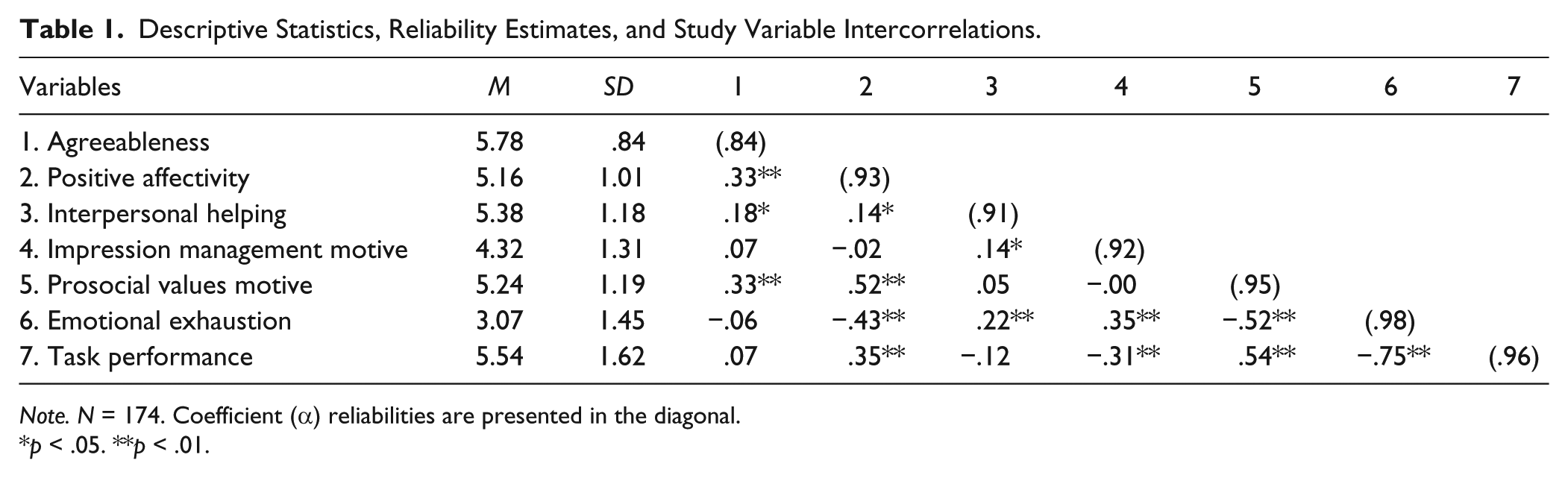
Note. N = 174. Coefficient (α) reliabilities are presented in the diagonal.
p < .05. **p < .01.
Analytical Approach
To test the full moderated-mediation model, the SPSS macro (PROCESS; Hayes, 2013) was used as recommended by Hayes (2013). The SPSS macro is a modification of the SPSS macro created by Preacher, Rucker, and Hayes (2007). Specifically, Model 4 was used to test the mediation hypothesis as well as Model 7 to test the moderated-mediation hypotheses. The entire moderated-mediation model was run twice, once for each of the moderators. Last, prior to hypotheses testing, continuous measures were mean-centered as suggested by Aiken and West (1991).
Tests of Mediation
Hypotheses 1 to 3 were tested with a simple mediation (Preacher et al., 2007). The results for Hypotheses 1, 2, and 3 are presented in Table 2. Consistent with both Hypotheses 1 and 2, interpersonal helping was positively associated with emotional exhaustion (b = .38, t = 4.41, p < .01), and emotional exhaustion was negatively associated with task performance (b = −.87, t = −13.55, p < .01). This provides support for both Hypotheses 1 and 2. Additionally, consistent with Hypothesis 3, interpersonal helping was found to have an indirect effect on task performance through emotional exhaustion (−.33). This indirect effect was also tested with a Sobel test and a bootstrapped 95% confidence interval (CI). Results revealed that the indirect effect was significant (Sobel z = −4.18, p < .01) and that a bootstrapped 95% CI did not contain zero [−.54, −.15]. Thus, Hypothesis 3 was supported.
Regression Results for Simple Mediation.

Note. N = 177. Unstandardized regression coefficients are reported. Bootstrap sample size = 5,000. LL = lower limit; CI = confidence interval; UL = upper limit.
p < .05. **p < .01.
Tests of Moderated Mediation
The results for Hypotheses 4 and 5 can be found in Tables 3 and 4, respectively. Consistent with Hypotheses 1 and 2, interpersonal helping was positively associated with emotional exhaustion for the model with the impression management motive (b = .33, t = 4.04, p < .01) as well as for the model with the prosocial values motive (b = .22, t = 2.66, p < .01). Emotional exhaustion was also negatively associated with task performance for both of these models (b = −.88, t = −13.54, p < .01). Consistent with Hypothesis 4, results demonstrate that impression management motives moderated the association between interpersonal helping and emotional exhaustion (b = .19, t = 3.44, p < .01). This association was stronger when the impression management motive was higher. Results also show that prosocial values motives moderated the association between interpersonal helping and emotional exhaustion (b = −.21, t = −4.20, p < .01). This association was weaker when the prosocial values motive was higher. The simple slopes for the impression management and prosocial values motives were plotted (Figures 2 and 3) at the mean as well as at one standard deviation below and above the mean. As shown in these figures, the slope of the association between interpersonal helping and emotional exhaustion was stronger for employees high in impression management motives (t = 5.08, p < .01), while the slope was weaker and nonsignificant for employees low in impression management motives (t = .78, ns). Conversely, the slope of the association between interpersonal helping and emotional exhaustion was stronger for employees low in prosocial values motives (t = 5.81, p < .01), while the slope was weaker and nonsignificant for employees high in prosocial values motives (t = −.25, ns).
Impression Management Motive: Regression Results for Overall Model.
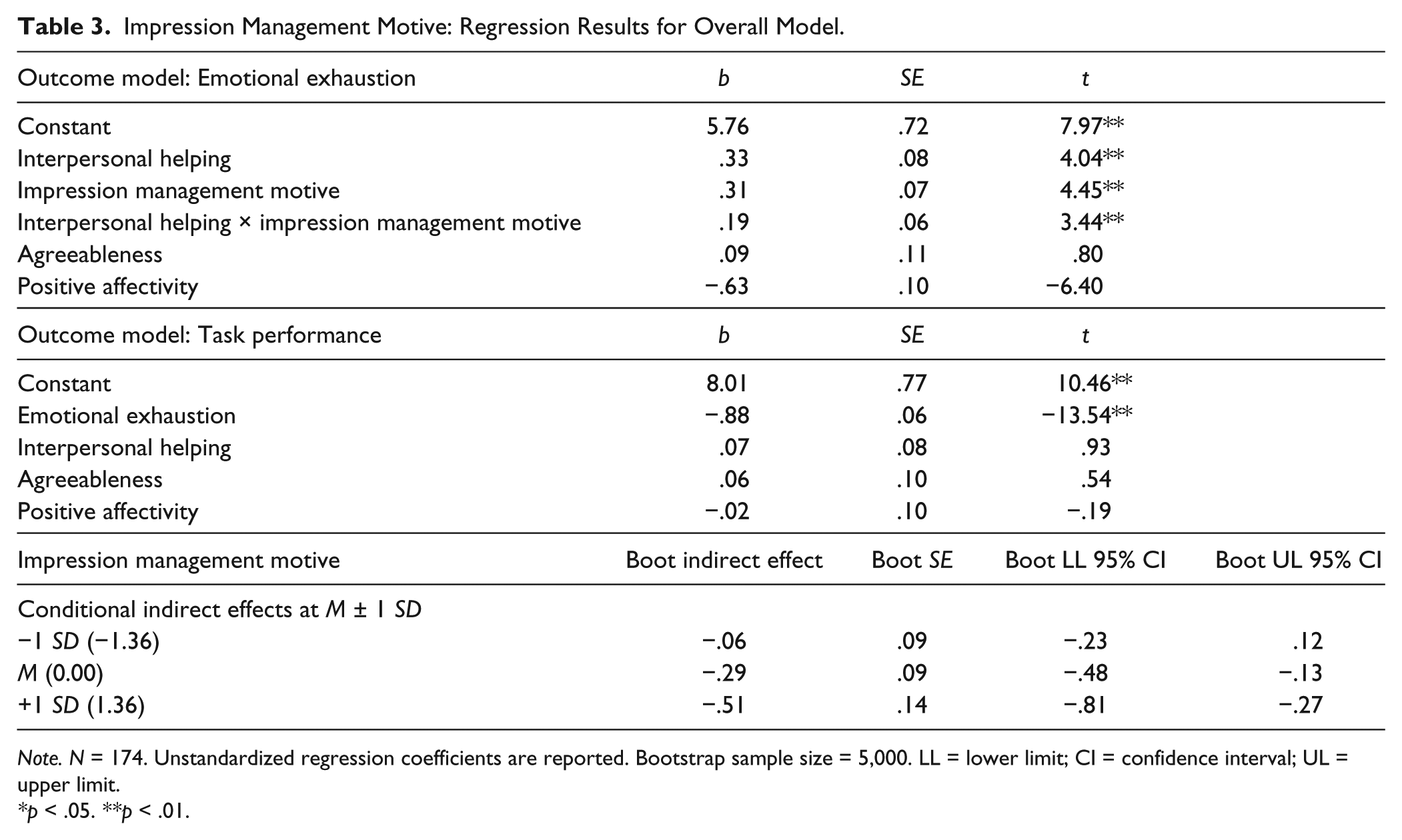
Note. N = 174. Unstandardized regression coefficients are reported. Bootstrap sample size = 5,000. LL = lower limit; CI = confidence interval; UL = upper limit.
p < .05. **p < .01.
Prosocial Values Motive: Regression Results for Overall Model.

Note. N = 174. Unstandardized regression coefficients are reported. Bootstrap sample size = 5,000. LL = lower limit; CI = confidence interval; UL = upper limit.
p < .05. ** p < .01.
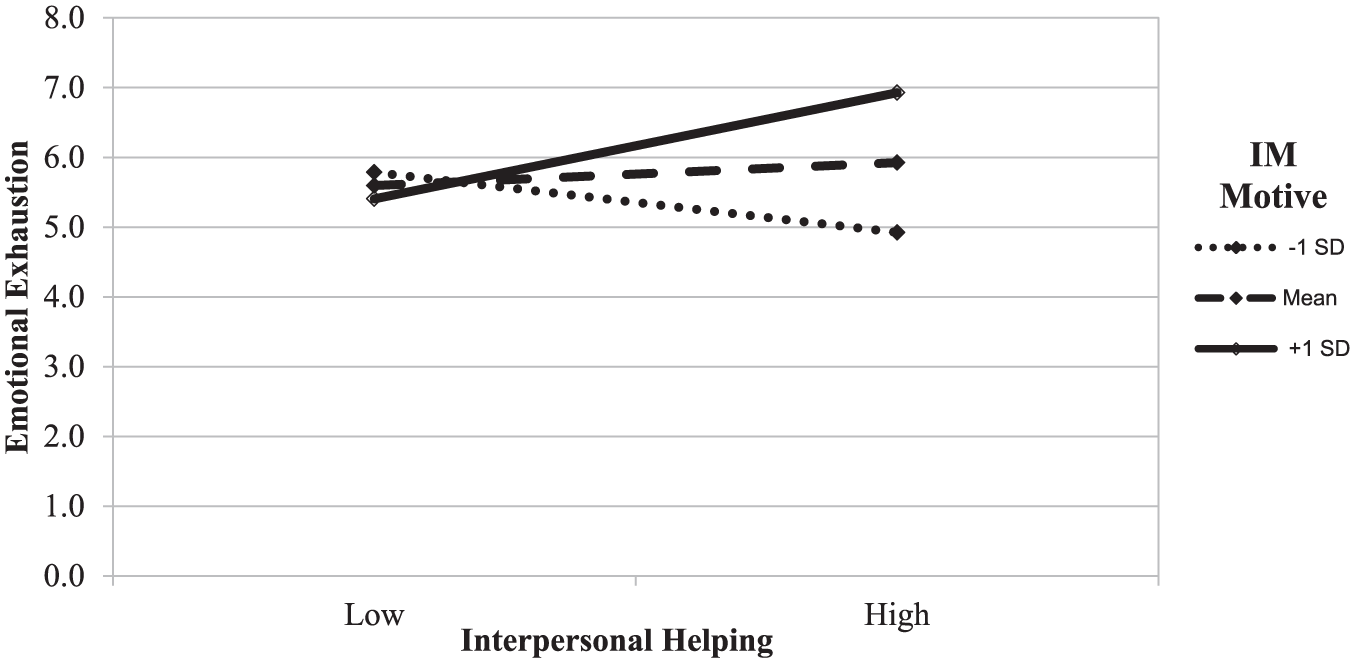
Interaction of interpersonal helping and impression management motive on emotional exhaustion.
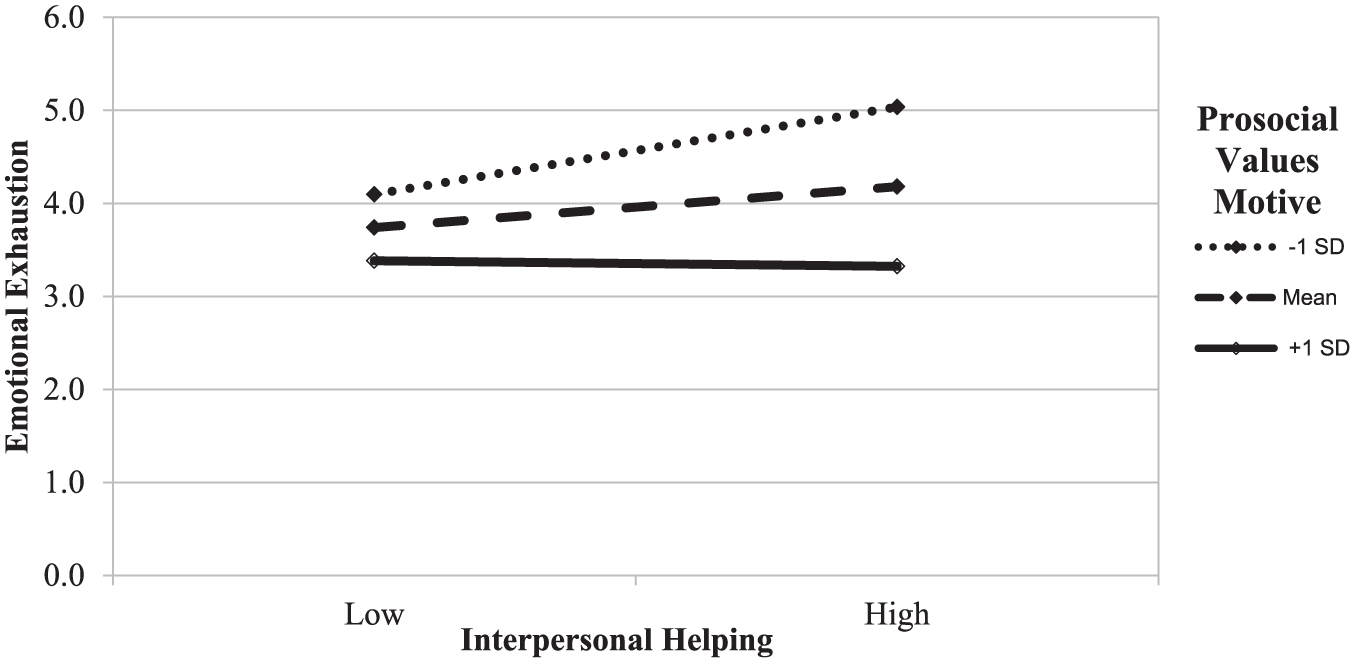
Interaction of interpersonal helping and prosocial values motive on emotional exhaustion.
In addition, the conditional indirect effects of interpersonal helping on task performance through emotional exhaustion were examined at three levels of the moderators. As indicated in Tables 3 and 4, the conditional indirect effect of interpersonal helping on task performance at the three values of impression management motives is significantly different from zero at one standard deviation above the mean (+1 SD; point estimate −.51, 95% CI [−.81, −.27]) and becomes subsequently weaker at the mean and nonsignificant at one standard deviation below the mean. These results provide strong support for Hypothesis 4. Likewise, the conditional indirect effect of interpersonal helping on task performance at the three values of prosocial values motives motivation is significantly different from zero at one standard deviation below the mean (−1 SD; point estimate −.43, 95% CI [−.63, −.24]) and becomes subsequently weaker at the mean and nonsignificant at one standard deviation above the mean. These results provide strong support for Hypothesis 5.
Discussion
Drawing on COR theory (Hobfoll, 1988, 1989), this study was designed to examine how and when engaging in good deeds at work, namely interpersonal helping—a common type of OCB, is likely to be costly. In line with the hypotheses presented, the results demonstrate that engaging in interpersonal helping is associated with high levels of emotional exhaustion, which in turn is associated with low levels of task performance. Moreover, as predicted, the association between interpersonal helping and emotional exhaustion was stronger when employees engaged in helping behaviors for impression management motives as opposed to prosocial values motives. The results also demonstrate that the indirect effect of interpersonal helping on task performance, through emotional exhaustion, holds only when the impression management motive is high and only when the prosocial values motive is low. Overall, our results support our moderated-mediation model as shown in Figure 1.
Accordingly, this research contributes to the existing organizational behavior literature in several important ways. First, given that OCB is positive in nature, prior research on OCB has typically focused on identifying several positive antecedents and outcomes that help with the effective functioning of the organization. However, recognizing that many types of citizenship behaviors are likely to consume resources, researchers have recently called for studies that may shed light on the notion of the dark side of engaging in OCB. Hence, this study provides empirical support to the most recent theoretical arguments suggesting that engaging in interpersonal helping—a specific and prevalent type of citizenship behavior (e.g., Lanaj et al., 2016), may be emotionally taxing and may contribute to increased burnout as well as reduced task performance (e.g., Bergeron, 2007; Bolino & Turnley, 2003). Second, because research still lacks a complete picture on how citizenship behaviors and task performance may be associated with each other (Bolino et al., 2013), scholars have called for studies that examine the point at which a positive behavior, such OCB, may become negative or harmful at work (e.g., Bolino et al., 2013; Pierce & Aguinis, 2013)—particularly in relation to job performance. This is in keeping with the notion of “too much of a good thing” may be costly (Grant & Schwartz, 2011, Pierce & Aguinis, 2013). Indeed, Grant and Schwartz (2011) have noted that current scholars must examine when and why “too much of a good thing,” such as OCB, may become detrimental. Thus, the current study contributes to our understanding of the specific mechanism by which OCB becomes negative. Specifically, in accordance with COR theory (Hobfoll, 1988, 1989), this research has used multisource field data, across two time periods, to explain that interpersonal helping may indirectly affect task performance through the process of being emotionally exhausted, which is attributed to resource consumption on the part of the employee. That is, it is the mechanism of emotional exhaustion through which OCB is negatively associated with task performance.
Furthermore, this research contributes to the literature by addressing the contention that engagement in citizenship behavior may not lead to higher levels of emotional exhaustion and diminished task performance in all cases. This contention is a response to recent research calls to investigate what strengthens or weakens the association between citizenship behavior and task performance, especially when citizenship behavior is commonly performed within organizations. Along these lines, and as discussed earlier, employees may have various motives for going the extra mile. The study results suggest that as employees engage in citizenship behavior, such as interpersonal helping, those who are high in impression management motives or low in prosocial values motives tend to experience higher levels of emotional exhaustion. The results also demonstrate that interpersonal helping may affect task performance through the process of burnout. However, this effect may hold only for those who are high in impression management motives and low in prosocial values motives. This contribution sheds light on the fact that individuals may have varying tolerance for engaging in OCB. Specifically, engaging in interpersonal helping may become problematic only when employees possess high levels of impression management motives or low levels of prosocial values motives.
Practical Implications
This research provides a number of implications for practice. First, organizations must be vastly aware that too much of a good thing, such as interpersonal helping, may not always translate into desired outcomes. For example, although prior research has established that engaging in citizenship behaviors may be beneficial to employees and their organizations (e.g., Podsakoff et al., 2009), the current study confirms that commonly engaging in OCB may adversely affect the well-being of certain employees, which ultimately affects the organization’s bottom-line. Therefore, it is particularly important for both managers and organizations to pay close attention to how employees allocate their attentional and regulatory resources among multiple organizational roles as well as understand that overperforming one role (e.g., helping) may come at the expense of under-performing in other important work roles.
Organizations must also pay particular attention as to why employees choose to perform citizenship behaviors in the first place. For example, the results of this study suggest that those who are high in impression management motives are more likely to experience detrimental effects when they engage in interpersonal helping. Furthermore, as suggested by prior research, OCBs are more likely to be of a low quality when these employees are motivated by impression management to perform them as opposed to those who are motivated by prosocial values (e.g., Bolino, 1999; Bolino et al., 2013). Thus, this study provides additional support to the notion that managers and organizations must further understand and examine the motivational forces of their employees as they engage in citizenship behaviors.
Additionally, the potential long-term consequences of these findings may be impactful for both employees and their organizations. For example, employees who are driven by impression management motives to engage in interpersonal helping may find that their efforts to impress others and gain future impact lead them to perform below expectations on the specific duties of their position. This reduction in performance would undermine any benefits they are hoping to gain through engaging in OCBs. Looking at the long-term implications of these findings for the organization, it would suggest that time and effort aimed at creating a company culture where helping is valued across the board would be resources well spent. If the organization creates a norm of helping behaviors across the organization and educates its employees on the value of helping one another to achieve successes, our results would suggest that desired OCBs would be less likely to lead to a reduction of employee resources and, therefore, would be less likely to lead to emotional exhaustion and declining task performance.
Limitations and Future Research Avenues
As noted above, the present study makes multiple contributions to the existing literature. Nevertheless, the study does have some limitations, and these should be considered as we offer direction for future research in this area. First, the current study did have the advantage of using multisource data across two time periods. However, despite the ability to make causal inference (e.g., Podsakoff, MacKenzie, Lee, & Podsakoff, 2003), it is important to acknowledge that the time-lagged data was separated by nearly 1 month (i.e., T2 data were collected roughly 4 weeks after the T1 data). It is possible that the time separation was not sufficient to allow for the appearance of emotional exhaustion and subsequent decline in performance. Future research could provide additional insights by examining these relationships over a longer period of time, which could provide further support to our hypothesized moderated-mediation model. Also, future research would benefit from replicating our results by using different methodologies such as experimental designs to provide further support to the validity of our model.
Second, although this study has relied on COR theory as its theoretical basis to explain how and when engagement in interpersonal helping may consume resources, the study did not explicitly measure the actual availability of employee resources. It would be useful, therefore, to measure the accessibility or availability of resources to confirm that this is indeed the principal process by which the hypothesized associations are likely to occur. This investigation is essential given that the essence of COR theory lies in investigating resource consumption. For example, the availability of organizational or social support, such as supervisor or spouse support, may prove to be useful in illuminating this process. In addition, future research could also benefit from exploring other theoretical foundations that may provide added insights into the process presented in our model. For example, the Job Demands–Resource model (Demerouti, Bakker, Nachreiner, & Schaufeli, 2001) may offer insights regarding how and when employees would feel taxed by their engagement in OCB. The Job Demands–Resource model focuses on various conditions at work and incorporates both positive and negative predictors of employee well-being. Nevertheless, we followed prior research in our theorizing by using COR to examine the negative consequences of engaging in OCB (e.g., Bolino et al., 2015).
Furthermore, while OCB is defined as being voluntary, recent research has examined the notion that some organizations in today’s workplace expect employees to engage in OCBs and, therefore, brings into question the voluntary nature of these behaviors. Suffice to say that OCBs, particularly interpersonal helping, may drain more personal resources when employees feel like they are being forced to engage in these helping behaviors. As suggested by Bolino, Turnley, Gilstrap, and Suazo (2010), when employees are under pressure to perform OCBs, it increases the likelihood of these behaviors leading to job stress. However, the current study did not use a self-reported measure of organizational expectations or citizenship pressure; thus, it would be empirically difficult to assess the extent to which the respondents felt obligated to engage in OCB versus feeling a proactive desire to help. Future research could, therefore, expand our understanding of this issue by including measures of citizenship pressure (Bolino et al., 2010) to provide explanation to our proposed relationships.
This study also focused on a specific type of citizenship behavior, namely interpersonal helping, which could also be a limitation. Other types of citizenship behaviors may be more or less demanding and necessitate higher or lower levels of resource consumption. For example, one could expect citizenship behaviors such as sportsmanship or altruism (Organ, 1988) to consume fewer resources, but citizenship behaviors such as taking charge (Morrison & Phelps, 1999) to consume more resources. Consequently, future research should seek to explore the current theoretical model by exploring various types of OCBs. Additionally, while we controlled for employee agreeableness and positive affectivity to reduce the effect of individual differences on the proposed relationships, future research would benefit from exploring various individual differences and their impact on the variables in the hypothesized model. For example, future research could explore the role of personal talents, strengths, and abilities as well as the capacity to resist or be resilient to emotional exhaustion while engaging in OCB.
Finally, whereas the current study used survey respondents from various industries in its data collection (which could help improve the generalizability of the results), the study did not take into consideration the specific context in which the citizenship behavior was performed. For example, in some industries such as nursing, education, or the military, interpersonal helping may prove to be more demanding. That is, resource consumption due to performing OCBs could be evidently higher in some industries when compared to others. Indeed, research has shown that context is crucial in examining the impact of citizenship behaviors on various outcomes (e.g., Ellington et al., 2014; Rubin, Dierdorff, & Bachrach, 2013). Therefore, future research would benefit from investigating how different organizational contexts may come into play when exploring the relationships between interpersonal helping, emotional exhaustion, and task performance.
Conclusion
As organizations continuously encourage their employees to go above and beyond their call of duty, this study confirms that there may be potential costs connected to engaging in a common type of OCB, namely interpersonal helping, including increased emotional exhaustion and reduced task performance. However, the results also indicate that not all employees are equally likely to suffer these costs. Specifically, those who were motivated by impression management to engage in interpersonal helping were more likely to suffer the adverse effect of these good deeds as opposed to those who did so but were motivated by prosocial values. Ultimately, the implications of this study to theory and practice are evident. OCBs are purportedly beneficial to the effective functioning of the organization through increased social capital, efficiency, and productivity (Bolino, Turnley, & Bloodgood, 2002; Organ, 1988). However, in line with recent research, the results of this study are counterintuitive. Researchers and practitioners alike must reexamine the notion that doing good deeds always results in desirable outcomes.
Footnotes
Declaration of Conflicting Interests
The author(s) declared no potential conflicts of interest with respect to the research, authorship, and/or publication of this article.
Funding
The author(s) received no financial support for the research, authorship, and/or publication of this article.