



Abstract
This study conceptualizes team–member exchange as a mediator and transformational leadership as a moderator to understand the role of proactive personality in two types of proactive behaviors (affiliative and challenging). Considering the issue of common method variance, data were collected following a multitemporal and multisource research design, and the hypotheses were tested on a sample of 210 participants. The results showed that after controlling leader–member exchange, team–member exchange mediated the relationship between proactive personality and employees’ proactive behaviors. In addition, transformational leadership strengthened the positive relationship between the team–member exchange and challenging proactive behavior. Moreover, transformational leadership had a stronger moderating effect on challenging proactive behavior than affiliative proactive behavior. Strengths, limitations, practical implications, and directions for future research are discussed.
Keywords
Introduction
As the work environment becomes increasingly complex and dynamic, organizations are at an advantage in terms of effectiveness and survival if employees engage in behavior not formally required by the employment contract, such as by demonstrating initiative and proactivity (Crant, 2000; Li et al., 2010). To survive in this environment, organizations need employees to exhibit proactive behavior that both maintains stability and initiates change (Li et al., 2017; Shin et al., 2017), such as through helping (smoothing organizational functions) and voice (changing the organization's status quo) (Parker et al., 2010).
An important antecedent influencing employees’ initiative and proactivity is proactive personality (Bateman & Crant, 1993; Fuller & Marler, 2009; McCormick et al., 2019; Parker et al., 2006, 2010). Proactive personality refers to a disposition in which people take personal initiative to influence and change their environment (Bateman & Crant, 1993; Crant, 2000). Prior research notes that proactive personality positively affects various beneficial individual and organizational outcomes such as organizational citizenship behavior (OCB: e.g., Bergeron et al., 2014; Li et al., 2010; Spitzmuller et al., 2015) and voice (e.g., Crant et al., 2011; Fuller & Marler, 2009; Liu et al., 2013). Despite that proactive personality matters for employees’ proactive outcomes, little is known about how and when a person with proactive personality will be most successful in engaging in proactive behaviors (McCormick et al., 2019).
From the relational perspective, an individual's behavior is affected by significant others (Chen et al., 2006) such as a leader (Sonnentag & Pundt, 2016). Previous research pointed out that proactive personality influences employees’ OCB by enhancing leader–member exchange (LMX; Li et al., 2010). However, in the workplace, these significant others are not only represented by the leader, but also by other members with whom they work. Members’ behavior is influenced both by the leader and other members (Katz & Kahn, 1978), and coworkers have a greater influence on employees than supervisors (Chiaburu & Harrison, 2008). Today, as organizations adopt a more team-oriented structure, the quality of the exchange relationship between employees might play a crucial role in them achieving their goals. Indeed, except leaders, employees spend most of their time getting on with their coworkers (Halbesleben, 2012). Thus, the neglected coworker's side of the relationship such as team–member exchange (TMX; Seers, 1989) should also be considered when examining the influence of proactive personality on employees’ behavior through this relationship (Parker et al., 2010). Therefore, this study proposes that in addition to LMX, TMX might mediate the relationship between proactive personality and employees’ proactive behaviors.
Research (e.g., Campbell, 2000; Li et al., 2010; Parker et al., 2019) showed that proactive people do not always exhibit beneficial behaviors for organizations (e.g., Grant et al., 2009). Therefore, it can be meaningful to examine when proactive employees are effective and benefit their organization and team, or in other words, when are proactive employees wise (Parker et al., 2019)? However, little is known about the conditions under which such proactive behavior can benefit rather than harm organizations. Thus, examining the conditions that foster or hinder individual exhibits of proactive behavior is important for extending the understanding of proactive personality (Parker et al., 2010). Prior studies examined various boundary conditions (e.g., Erdogan & Bauer, 2005; Fuller et al., 2006; Li et al., 2010), but few considered leadership style as a possible moderator (Parker et al., 2010). Thus, as previous research suggests (Parker et al., 2010), this study expects that transformational leadership (Bass, 1985), which emphasizes other-interest and changes the status quo, plays a moderating role and influences the relationship between proactive personality, TMX, and proactive behaviors.
This study extends the research on proactivity in several ways. First, it responds to McCormick et al. (2019) call to reveal the underlying process between proactive personality and proactive behavior. Moreover, it answers the call by Fuller and Marler (2009) to examine types of social exchange relationships proactive employees pursue other than LMX. Researchers suggest that in addition to LMX, the exchange relationship among employees deserves more attention (Banks et al., 2014). Therefore, this study examines the relational mechanism by including TMX as a mediator to reveal how proactive personality influences employees’ proactive behavior. As Van Dyne et al. (1995) point out, extra-role behaviors provide significant added benefits to organizations and are essential for organizational effectiveness and survival (Li et al., 2017; Shin et al., 2017). As such, this study examines two types of extra-role proactive behaviors—helping behavior and voice—and provides an integrated model to examine how the influence of proactive personality on beneficial behaviors increases or decreases through TMX. Second, the study addresses the “when” question regarding the conditions under which proactive employees exhibit behaviors beneficial to the organization. Leaders often have great power to affect employees’ behaviors (Bono & Yoon, 2012). Therefore, it is reasonable to consider leaders’ leadership style as a moderator that fosters or hinders employees’ behaviors. As suggested (Parker et al., 2010), this study considers an often-studied leadership type, namely transformational leadership, as a moderator of the relationship between proactive personality, TMX, and proactive behaviors. In short, this study proposes a moderated mediation model to examine how TMX mediates the relationship between proactive personality and two types of proactive behaviors, and how transformational leadership moderates these mediating relationships.
Theory and Hypotheses
Proactive Personality, Helping Behavior, and Voice
The construct of proactive personality originates from the interactionist perspective (Bandura, 1986), which contends that the person, behavior, and environment continuously influence each other. Buss (1987) argued that “persons are not passive recipients of environmental presses” (p. 1220). Proactive persons take action to influence their own environments (Bateman & Crant, 1993; Parker et al., 2010, 2019). According to Bateman and Crant (1993), people with a high proactive personality are relatively unconstrained by surrounding environmental forces. As such, they try to affect environmental changes by scanning for opportunities to take action and show initiative, persisting until they reach the goal of change. In contrast, people with low proactive personality are relatively passive, show little initiative, and rely on others to be the forces of change. They inactively adapt to and endure their environment, even if they do not like it.
Proactive employees are highly committed to organizational goals and show a sense of responsibility for organizational success (Campbell, 2000). They are willing to actively help their organizations and coworkers (Li et al., 2010), and engage in activities beyond formal role responsibilities. Moreover, to accomplish these goals, unlike those more passive, proactive employees might think that helping others will help them achieve their goals. Therefore, they are also willing to assist (e.g., helping behavior) other coworkers. Similarly, proactive employees are willing to make recommendations (e.g., voice) to improve current work efficiency, even if such suggestions contain some degree of risk that might damage interpersonal relationships. Previous research found that proactive personality positively affects employees’ helping behavior (e.g., Bergeron et al., 2014; Li et al., 2010; Spitzmuller et al., 2015) and voice (e.g., Crant et al., 2011; Fuller & Marler, 2009; Liu et al., 2013). Thus, this study proposes that proactive employees will engage in more helping behaviors and voice. Thus, the following hypotheses are proposed.
Proactive Personality and TMX
Katz and Kahn (1978) proposed that in the workplace, employees’ behavior is shaped by the leader and other employees. Seers (1989) further highlighted that research often focuses on examining the leader's influence on employees, but not on the possible influence of coworkers on employees. Thus, the construct of TMX was proposed (Seers, 1989). TMX refers to “individual member's perception of his or her exchange relationship with the peer group as a whole” (Seers, 1989, p. 119). On the one hand, compared to low TMX employees, those with high TMX receive more assistance and feedback from coworkers (Seers, 1989). On the other hand, to maintain this high exchange relationship, high TMX employees must provide their information and assistance when requested by coworkers (Lai et al., 2018; Seers et al., 1995). Thus, teams with high TMX among coworkers are more likely to demonstrate smooth and effective work procedures (Banks et al., 2014; Lai et al., 2018). Earlier research operationalized TMX as a group-level variable (e.g., aggregate individual-level data to the team level; De Jong et al., 2014), but consistent with our proposition that TMX is influenced by proactive personality, this study operationalizes TMX as an individual-level variable. This operationalization is also consistent with Seers’ definition (1989), which defines TMX as a personal perception, and with operationalization in previous studies (e.g., Lai et al., 2018; Shih & Wijaya, 2017).
Except for leaders, employees usually spend most of their time working with each other; thus, it is important that they develop good relationships with their coworkers (i.e., high TMX) (Halbesleben, 2012). Moreover, when the resources given by leaders are insufficient, employees may view the relationship with coworkers as a valuable resource, because a good relationship with coworkers (i.e., high TMX) can offer help and assistance, and help them accomplish their tasks (Lai et al., 2018). Thus, as discussed (Bateman & Crant, 1993; Parker et al., 2010), proactive employees might take actions to affect their environment. This study proposes that this might include making a change to their exchange relationship with coworkers. Proactive employees are interpersonally effective, trustworthy, and possess interpersonal competence and skill. Thus, they might proactively improve their exchange relationship with coworkers when they feel this relationship is desired. Specifically, proactive employees might take the first step and actively assist or help coworkers whether they request help or not. Because proactive employees are highly committed to organizational goals, coworkers are more likely to assist as a reciprocal favor (Blau, 1964). As such, through their interpersonal and task skills, they may easily develop a positive loop and cultivate high-quality exchange relationships with coworkers. Although there is insufficient direct support for the relationship between proactive personality and TMX, prior research indirectly supports a positive relationship between proactive employees and LMX (Fuller & Marler, 2009; Li et al., 2010). Moreover, Thompson (2005) indicated that proactive personality might increase individuals’ social network building. Thus, this study proposes that employees with proactive personality might more easily develop high TMX with coworkers. Thus, the following hypothesis is proposed.
The Mediating Role of TMX
Proactive employees might exhibit more helping behavior and voice than passive employees because they develop high TMX with their coworkers. As mentioned, proactive employees more easily develop high TMX with coworkers because of their interpersonal and task skills. Once they establish these high-quality social exchange relationships, in keeping with social exchange theory (Blau, 1964), they must continuously reciprocate by providing their assistance and work-related expertise to coworkers (Lai et al., 2018). For example, helping others might be a reciprocal means of repayment (Love & Forret, 2008). Prior research also reported a positive relationship between TMX and OCB (Malingumu et al., 2016). In addition, once employees develop high TMX with coworkers, offering valuable suggestions for improving the effectiveness of organizational operations could be a means to reciprocate. Indeed, employees with high TMX relationships might decrease their consideration of the risk of damaging interpersonal relationships when they engage in voice (Parker et al., 2010). However, research has maintained that TMX increases employees’ willingness to exhibit more voice (e.g., Shih and Wijaya, 2017). Therefore, this study proposes that TMX might mediate the positive relationship between proactive personality, helping behavior, and voice. Thus, the following hypotheses are proposed.
The Moderating Role of Transformational Leadership
Trait activation theory reconciles trait and situational perspectives, emphasizing that personality traits require relevant situations in which to express trait-relevant behaviors (Kenrick & Funder, 1988). In other words, the expression of trait behavior depends on a trait-relevant situation. In the workplace, the leader has authority over employees (Bono & Yoon, 2012) and can be viewed by employees as a representative of the organization. Furthermore, leaders’ behaviors signal the behavior the organization approves of, which employees should imitate. Thus, as Parker et al. (2010) suggested, this study views transformational leadership as a trait-relevant situation that induces and navigates proactive employees to exhibit relevant behavior.
Proactive employees have various tasks, interpersonal competencies and skills, and may effectively perform even when not exhibiting behavior beneficial to the organization (Campbell, 2000). However, when proactive employees work with a transformational leader, their behavior might be guided by transformational leadership behavior, ultimately becoming more beneficial. Transformational leadership comprises four leadership behaviors: idealized influence, inspirational motivation, intellectual stimulation, and individual consideration (Antonakis & House, 2002). Transformational leaders use these four behaviors to create a favorable working situation for proactive employees. For example, collective goals of idealized influence might shift employees’ behavior from self-consideration to collective consideration, and inspiration and motivation might enhance employees’ ambitions to achieve set goals. Personal consideration makes employees feel valuable to and supported by the organization. Furthermore, proactive employees often have a strong internal commitment to the goal (Parker et al., 2010), which can make it difficult for them to understand that other employees are not as committed to changing the status quo (Parker et al., 2019). However, based on the trait activation theory, under transformational leadership, proactive employees are more likely to be motivated and inspired to shift from self-consideration to collective consideration. That is, they consider and care about the interests of others. Moreover, seeing leaders pay attention to each employee and offer them various levels of emotional support might also cultivate proactive employees that care about others’ interests.
In addition, proactive employees are self-starters in terms of changing their surrounding environment (McCormick et al., 2019). However, transformational leaders do not encourage employees to challenge the status quo blindly, but help them apply new ways of viewing old problems and invite intellectual solutions. This might navigate proactive employees’ behavior toward their collective goals and help them conceptualize long-term solutions for any problems encountered. Thus, they are more likely to get along with and work efficiently with coworkers, and more willing to assist each other, because they focus on collective goals and vision, and aim to achieve them. As a result, high TMX might flourish. Therefore, in a high transformational leadership situation, the positive relationship between proactive personality and TMX will be stronger than that in a low transformational leadership situation. Thus, the following hypothesis is proposed.
To maintain the quality of TMX and reciprocate coworkers’ assistance, high TMX employees exhibit more helping behavior and voice than low TMX employees. In addition, this study proposes that these relationships proliferate in a transformational leadership situation. For helping behavior, because transformational leaders emphasize collective goals and other-interest, high TMX employees are more likely and willing to help coworkers as a means of reciprocity. In addition, researchers noted the vital role of leaders in enhancing employees’ voice (Mowbray et al., 2015). Specifically, transformational leaders emphasize changing the status quo and creating new solutions for old problems. Therefore, high TMX employees might provide their valuable suggestions as reciprocation. Moreover, transformational leaders provide personal consideration and support to each employee, which decreases the perception of risk and costs associated with voice (Ashford et al., 2009; Detert & Burris, 2007; Morrison, 2011), and increases the willingness to engage in it. Therefore, in a high transformational leadership situation, the positive relationship between TMX, helping behavior, and voice will be stronger than in a low transformational leadership situation. Thus, the following hypotheses are proposed.
Method
Sample and Procedure
The data for the study were collected from different departments of one hospital in Taiwan. Because of concerns associated with common method variance (Podsakoff et al., 2012), a time-lagged research design was adopted and data collected from two different sources. Moreover, data were collected in two separate waves one month apart.
First, we contacted the leader of each department and explained the purpose of the study and how to administer the two-wave data collection. In the first wave, information on participants’ proactive personality, perception of their leaders’ transformational leadership, and demographic information was collected. One month later, in the second wave, information on TMX was collected from participants, and on voice and helping behavior from their leaders. In addition, to make participants feel more comfortable in completing their questionnaire, we provided them with a sealable envelope in which to return the completed questionnaires. We also assigned each participant with an identification number to match the questionnaires in each wave.
The total sample size was 328 participants. However, after eliminating invalid questionnaires (e.g., incomplete questionnaires), the final sample size was 210 participants (response rate was around 64%). In this sample, 87.1% of the participants are female, and nearly 90% have a college diploma or above. The average age was 31.34 years, and 83.8% have worked in their current positions for more than 1 year.
Measures
The measures of this study were rated on a five-point scale ranging from 1 (strongly disagree) to 5 (strongly agree).
Proactive Personality. Participants completed a 10-item measure developed in a previous research (Seibert et al., 1999) to evaluate their proactive personality. One sample item is “I am constantly on the lookout for new ways to improve my life.” The alpha coefficient was .83.
Transformational Leadership. Participants completed a 14-item measure comprising four dimensions (core transformational leader behavior, high performance expectations, providing individualized support, and intellectual stimulation; MacKenzie et al., 2001) to evaluate their perception of their leaders’ transformational leadership style. The overall alpha coefficient was .91.
TMX. Participants completed a 10-item measure (Seers, 1989) to evaluate their exchange relationship with coworkers. The alpha coefficient was .83.
Voice. Leaders completed a six-item measure (Van Dyne & LePine, 1998) to evaluate each subordinate's voice behavior. The alpha coefficient was .90.
Helping Behavior. Leaders completed a three-item measure (Van Dyne & LePine, 1998) to evaluate each subordinate's helping behavior. The alpha coefficient was .95.
Control Variables
Although previous research (Li et al., 2010) found that the LMX mediates the relationship between proactive personality and employees’ OCB, few studies examined the mediating effect of the LMX on the relationship between proactive personality and voice. However, based on prior research on proactive personality and LMX (e.g., Fuller & Marler, 2009; Van Dyne et al., 2008), we believe that the LMX mediates this relationship. Furthermore, studies have emphasized the complex relationship between LMX and TMX on employees’ outcomes (Banks et al., 2014; Lai et al., 2018). Thus, this study controlled LMX as a potential mediator. Participants completed a seven-item scale (Graen & Uhl-Bien, 1995) to evaluate LMX in the first wave of data collection. The alpha coefficient was .92.
Confirmatory Factor Analysis
A series of confirmatory factor analyses (CFAs) were conducted to ensure the discriminant validity of our measures before testing the hypotheses. In addition, because LMX was relatively highly correlated with transformational leadership, we included LMX in the CFA test to ensure its discriminant validity with the other variables. The results in Table 1 indicate that the two-factor model was better than the null model (Δχ2 = 149.13; df = 1; p < .001), and the three-factor model better than the two-factor model (Δχ2 = 1657.3; df = 3; p < .001). The baseline model was better than the three-factor model (Δχ2 = 3448.93; df = 16; p < .001). In addition, we also estimated the average variance extracted (AVE) for transformational leadership and LMX. The results of the AVE were .46 and .53 for transformational leadership and LMX, respectively. Although the AVE for transformational leadership did not reach the benchmark of .50 (Fornell & Larcker, 1981), it was close. As such, the results of the CFA and AVE support the discriminant validity of the measures used in this study.
Confirmatory Factor Analysis.
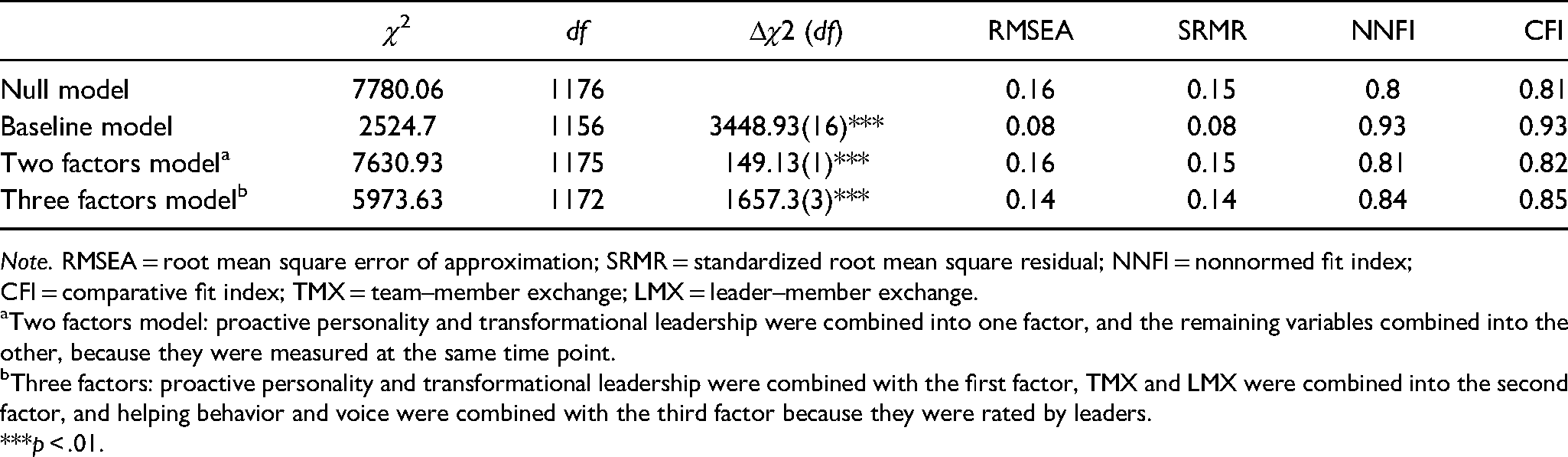
Note. RMSEA = root mean square error of approximation; SRMR = standardized root mean square residual; NNFI = nonnormed fit index; CFI = comparative fit index; TMX = team–member exchange; LMX = leader–member exchange.
Two factors model: proactive personality and transformational leadership were combined into one factor, and the remaining variables combined into the other, because they were measured at the same time point.
Three factors: proactive personality and transformational leadership were combined with the first factor, TMX and LMX were combined into the second factor, and helping behavior and voice were combined with the third factor because they were rated by leaders.
***p < .01.
Results
Means, Standard Deviations, and Correlations
Table 2 provides the means, standard deviations, and correlations between the variables in the study. The alpha coefficients of the variables are presented on the diagonal.
Descriptive Statistics and Intercorrelations Matrix of the Study Variables. a
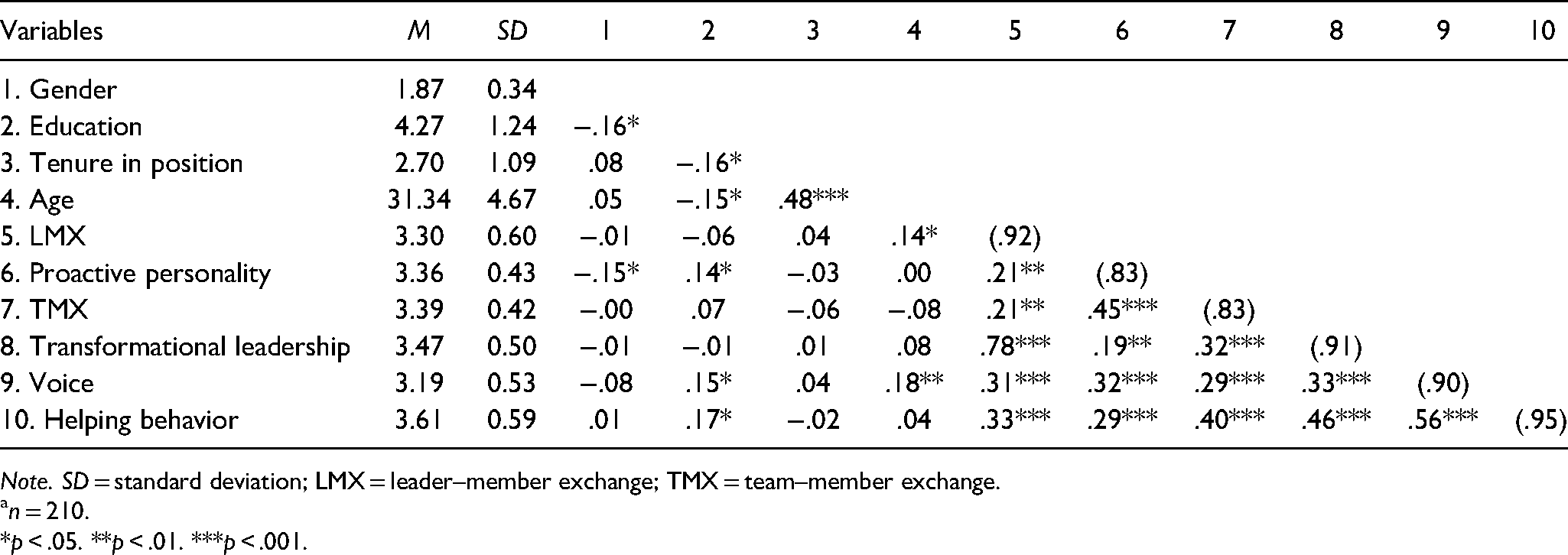
Note. SD = standard deviation; LMX = leader–member exchange; TMX = team–member exchange.
n = 210.
*p < .05. **p < .01. ***p < .001.
Hypotheses Testing
Figures 1 and 2 show our theoretical model and moderated mediation results for helping behavior and voice, respectively.
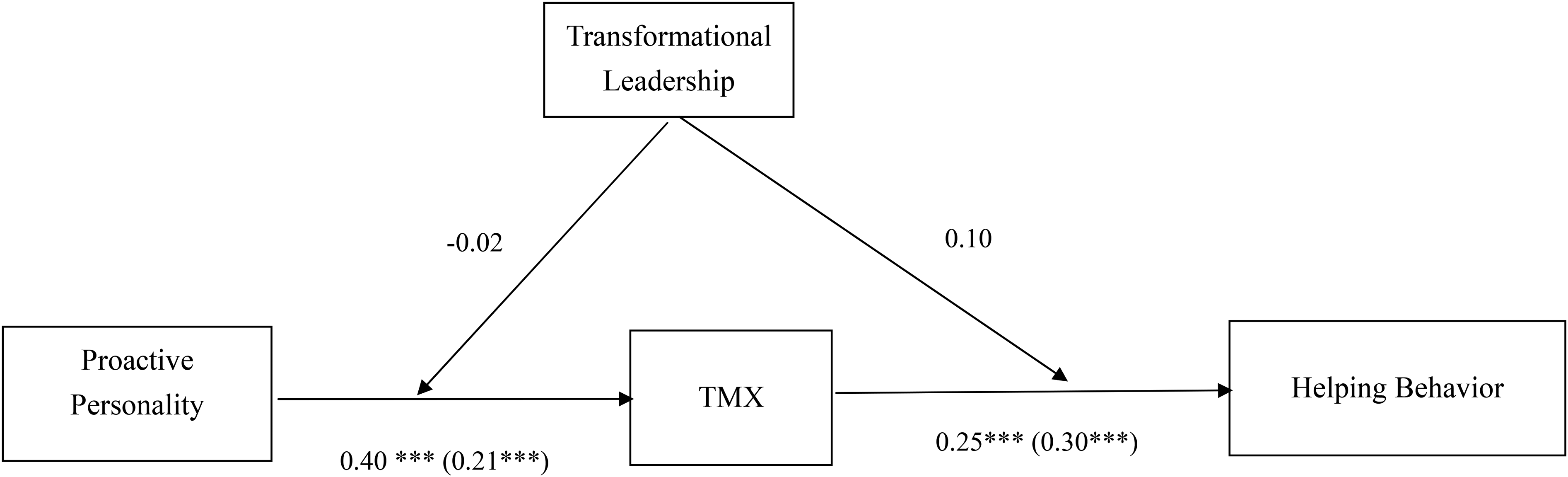
Theoretical model with moderated mediation results for helping behavior.
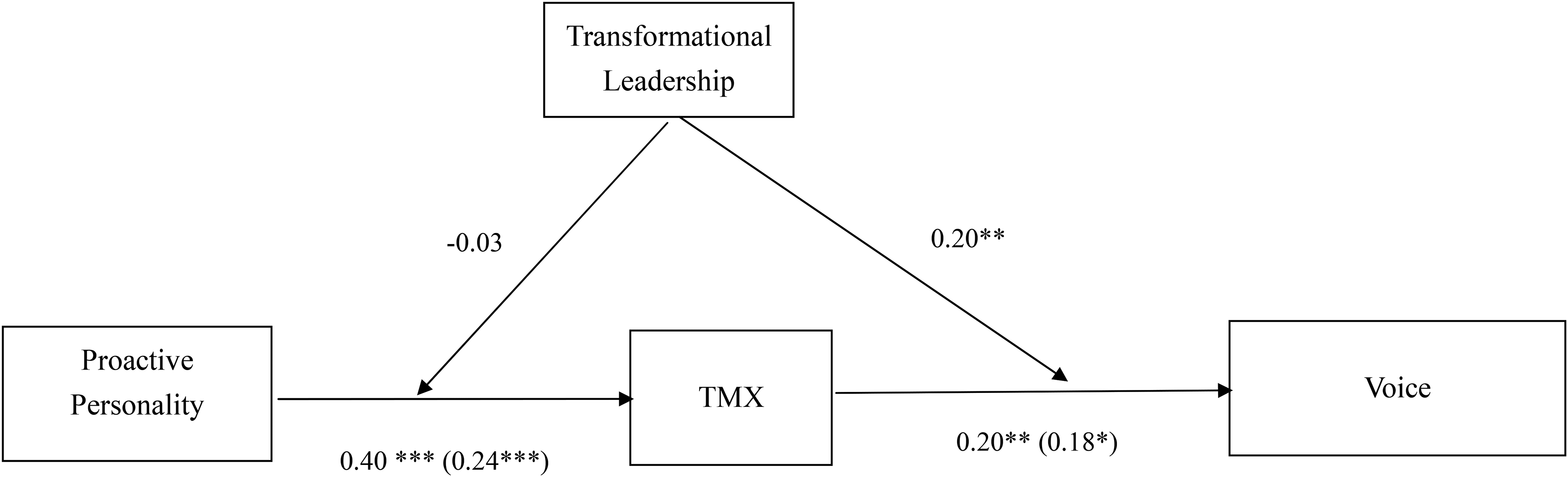
Theoretical model with moderated mediation results for voice.
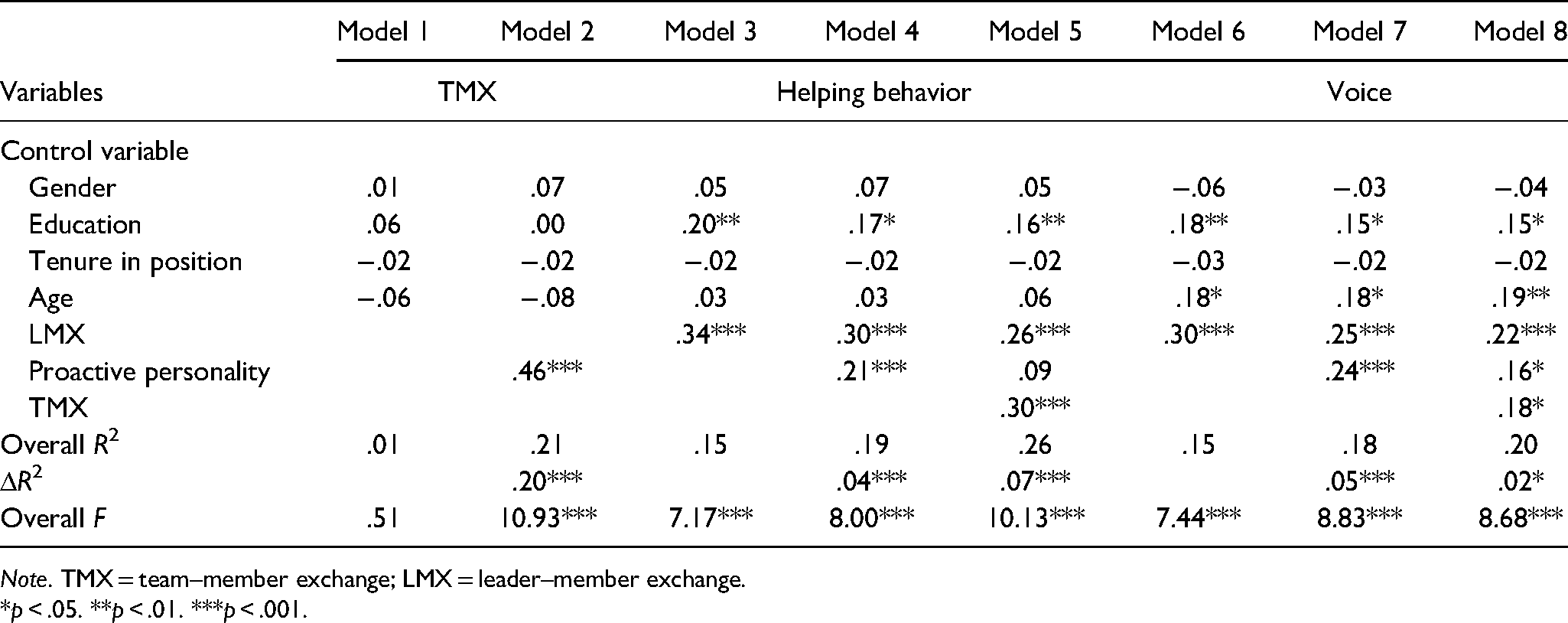
Hypothesis 1a postulated that proactive personality positively affects helping behavior. Table 3 provides the results. The results of model 4 indicate that proactive personality is significantly related to helping behavior (β = .21, p < .001). Hypothesis 1b proposed that proactive personality has a positive effect on the voice, as shown in Table 3. The results of model 7 indicate the significant relationship between proactive personality and voice (β = .24, p < .001). Therefore, Hypotheses 1a and 1b were supported. Hypothesis 2 proposed that the proactive personality is positively related to TMX. As Table 3 shows, according to the results of model 2, proactive personality has a positive effect on TMX (β = .46, p < .001). Thus, Hypothesis 2 was supported.
Hierarchical Regression Analysis of the Meditation Effects.
Note. TMX = team–member exchange; LMX = leader–member exchange.
*p < .05. **p < .01. ***p < .001.
Hypotheses 3a and 3b contended that TMX mediates the relationship between proactive personality, helping behavior, and voice. The results are reported in Table 3. In model 5, after entering the control variables, LMX, and proactive personality, we added TMX. The results show that TMX was significant (β = .30, p < .001), but proactive personality became not significant (β = .09, n.s.) in the model. Combining the results for Hypotheses 1a and 2, TMX mediates the relationship between proactive personality and helping behavior. Similar to model 5, we added TMX in model 8. The results indicate that TMX was significant (β = .18, p < .05), and proactive personality remained significant (β = .16, p < .05). Combining the results of Hypotheses 1b and 2, TMX partially mediates the relationship between proactive personality and voice. Moreover, as Preacher and Hayes (2004) suggested, a bootstrapping analysis was conducted to test these mediation effects. The results showed that both mediation effects were significant (for the mediation effect of helping behavior, ab = .19, 95% CI [0.09, 0.29], p < .05; for the mediation effect of voice, ab = .10, 95% CI [0.02, 0.18], p < .05). Thus, both Hypotheses 3a and 3b were supported.
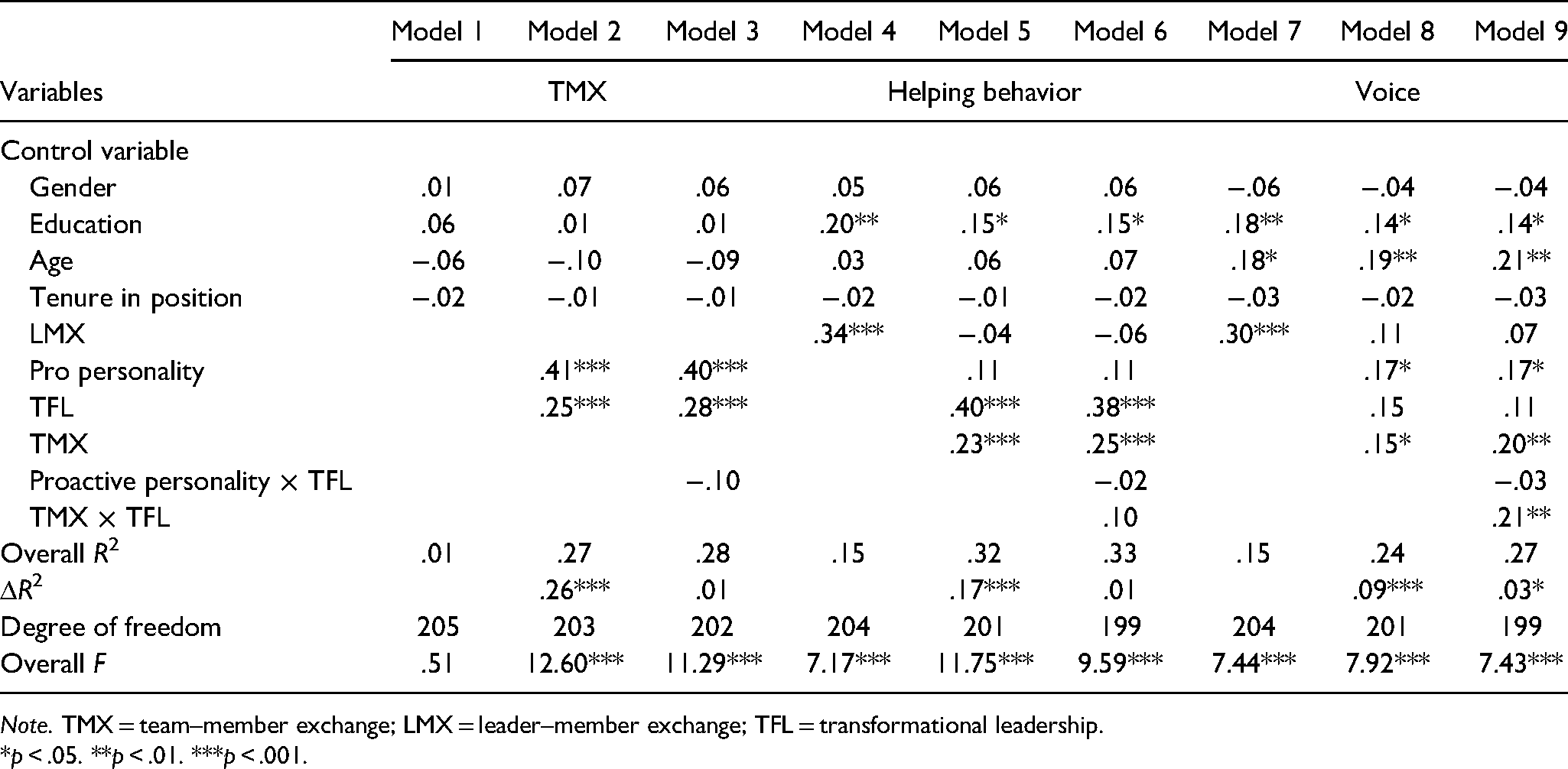
Hypothesis 4 posited that transformational leadership strengthens the relationship between proactive personality and TMX. The results are shown in Table 4. The coefficient of the interaction term (i.e., proactive personality × transformational leadership) in model 3 was not significant (β = −.10, n.s.); thus, Hypothesis 4 was not supported. Hypotheses 5a and 5b stated that transformational leadership strengthens the relationship between TMX, helping behavior, and voice. Table 4 also provides the results for Hypotheses 5a and 5b. For helping behavior, in model 6, as suggested by Edwards and Lambert (2007), the interaction term of TMX and transformational leadership was added as well as the interaction term of proactive personality and transformational leadership as the control variables. The coefficient of the interaction term of TMX and transformational leadership was not significant (β = .10, n.s.). Therefore, Hypothesis 5a was not supported. Similarly, for voice, in model 9, the coefficient of the interaction term of TMX and transformational leadership was significant (β = .21, p < .01); therefore, Hypothesis 5b was supported.
Hierarchical Regression Analysis of the Interaction Effects.
Note. TMX = team–member exchange; LMX = leader–member exchange; TFL = transformational leadership.
*p < .05. **p < .01. ***p < .001.
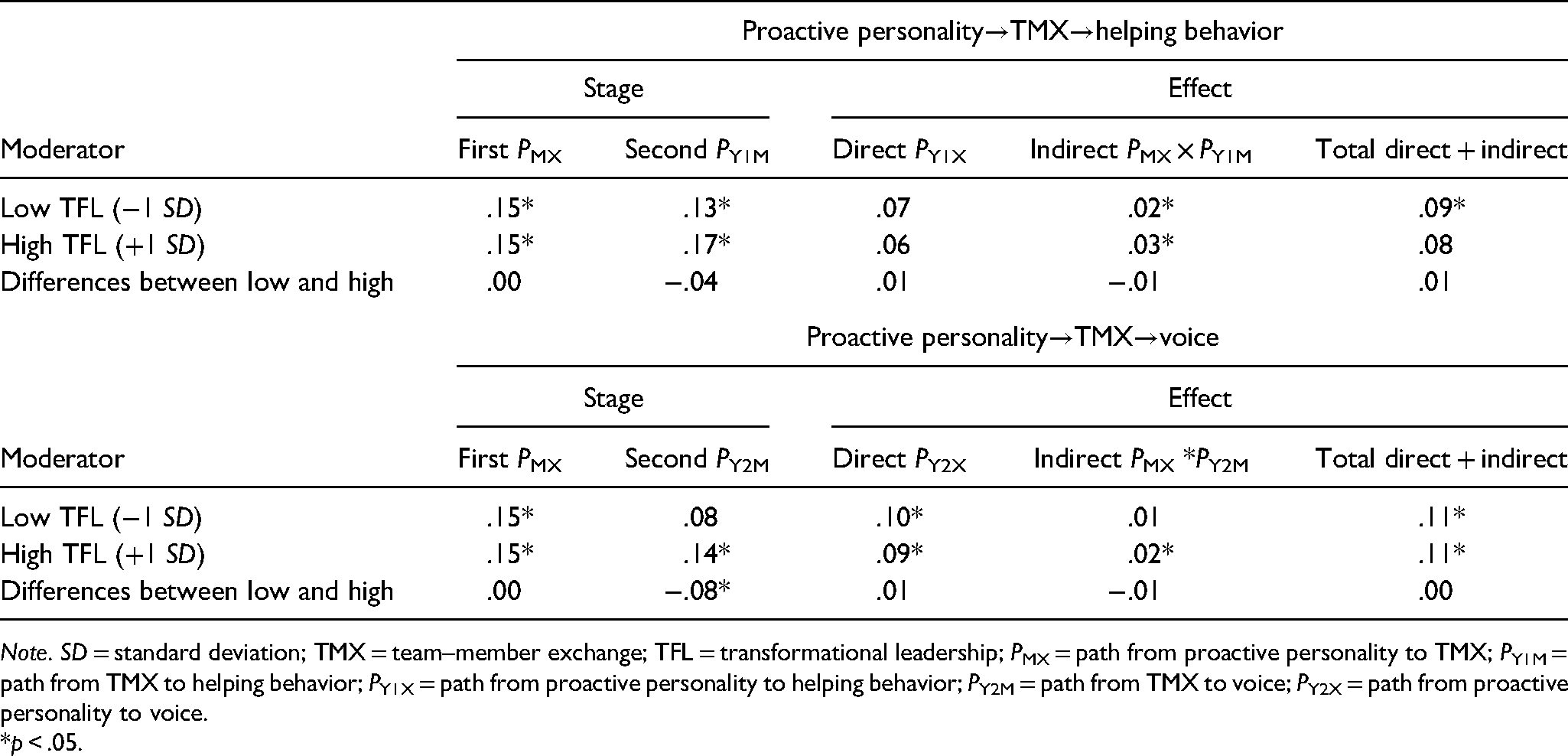
Moreover, the moderated path analysis approach (Edwards & Lambert, 2007) was adopted to test the moderated mediation effect of Hypotheses 5a and 5b. Because the moderation effect of the first stage was not significant (i.e., Hypothesis 4), following previous research (e.g., Tepper et al., 2008), we fixed the first stage as the same coefficient for both helping behavior and voice. Table 5 reports the results for helping behavior. However, the results do not support the second-stage moderation effects (Δβ = −.04, n.s.). In contrast to helping behavior, the results in Table 5 support the second-stage moderation effects of voice, revealing the significant moderating effects of transformational leadership, because the path from TMX to voice differed significantly across different levels of transformational leadership (Δβ = −.08, p < .05). Moreover, the slope test also reveals that TMX is significantly related to voice (β = .14, p < .001) when transformational leadership is high. This moderated path analysis and slope test provide additional support for Hypothesis 5b, but not Hypothesis 5a. Figure 3 was plotted to graphically present this positive moderating effect. As Figure 3 shows, the positive relationship between TMX and voice is more pronounced in a high rather than low transformational leadership situation.
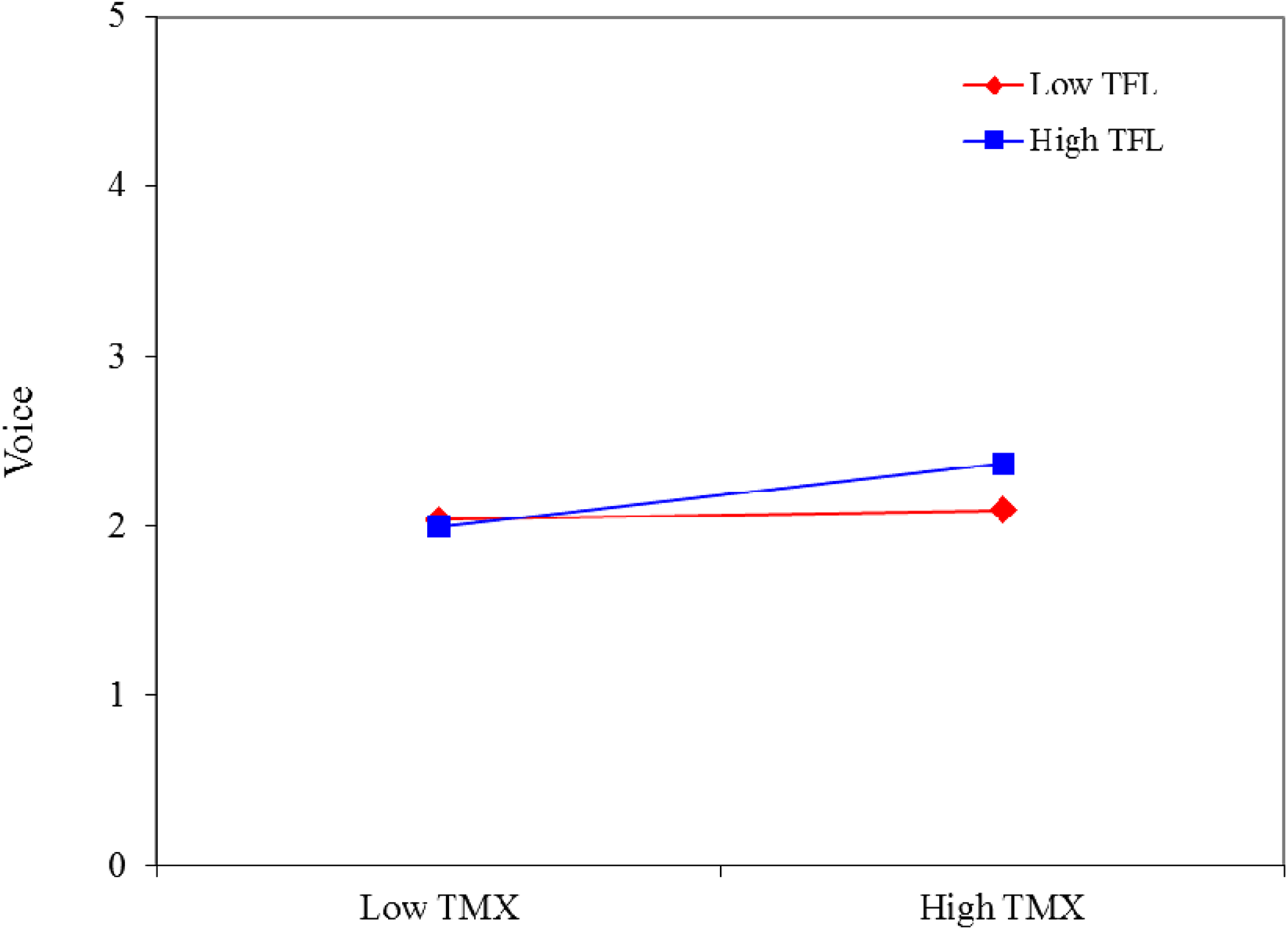
Interactive effect of TMX and transformational leadership on voice.
Results of the Moderated Path Analysis.
Note. SD = standard deviation; TMX = team–member exchange; TFL = transformational leadership; PMX = path from proactive personality to TMX; PY1M = path from TMX to helping behavior; PY1X = path from proactive personality to helping behavior; PY2M = path from TMX to voice; PY2X = path from proactive personality to voice.
*p < .05.
Discussion
This study proposes a moderated mediation model to reveal how and when proactive employees exhibit beneficial proactive behavior rather than counterproductive behavior. Specifically, the results indicated that proactive employees take the initiative and want to develop high-quality exchange relationships with coworkers. Moreover, this relationship affects their willingness to exhibit helping behaviors and voice. Considering the moderating effect of transformational leadership, the results revealed that transformational leadership enhances the influence of TMX on employees’ helping behaviors and voice, but does not affect the relationship between proactive personality and TMX. We also found that as a change-oriented leadership style, the moderating effect of transformational leadership is greater on the relationship between TMX and voice than on helping behavior.
Theoretical Implications
The first contribution of this study is that we respond to the call by McCormick et al. (2019) to examine the underlying process between proactive personality and proactive behavior. We also address Fuller and Marler’s (2009) call to investigate the types of social exchange relationships proactive employees pursue other than LMX. Seers (1989) highlighted the focus of previous research on the influence of exchange relationships with leaders on employees’ behavior while ignoring the possible influence of the exchange relationship with coworkers. To date, most studies still only consider the influence of the exchange relationship with leaders on shaping employees’ behavior (e.g., Li et al., 2010), overlooking the influence of the exchange relationship with coworkers. Thus, we proposed a moderated mediation model to examine how proactive employees develop exchange relationships with coworkers and the influence of this relationship on their willingness to demonstrate proactive behavior.
This study found that after controlling the prefunding influence of LMX, TMX still has an incremental effect on mediating the relationship between proactive personality and helping behaviors and voice. These findings indicate the incremental effect of TMX on employees’ proactive behavior and highlight that proactive employees not only pursue better exchange relationships with their leaders, but also create better working relationships with their coworkers. These findings are consistent with Katz and Kahn’s (1978) role theory, which suggests that leaders and coworkers influence employees’ behavior. In addition to taking actions and showing initiative to affect the surrounding environment such as their relationship with a leader (i.e., LMX), proactive employees might also change the relationship with those with whom they work (i.e., TMX). Research showed that because of leaders’ authority in promotions or rating performance (Bono & Yoon, 2012), it is naturally important for employees to develop a good relationship with their leader (i.e., high LMX; Sonnentag and Pundt, 2016). However, our findings indicate that in the workplace, developing a good relationship with coworkers is also important for both employees and the organization. That is, the results revealed that the quality of TMX influences employees’ willingness to engage in proactive behavior. High TMX employees receive more assistance from other coworkers than low TMX employees; however, they must also help their coworkers as an act of reciprocity. Thus, one way in which high TMX employees are likely to reciprocate is by exhibiting more helping behavior. In addition, high TMX might signal a safe and trusting interpersonal relationship with coworkers, which might encourage high TMX employees to choose voice as a means of reciprocity, even when such behavior might damage the interpersonal relationship. In short, our results revealed that proactive employees might try to develop good exchange relationships with both leaders and coworkers. Therefore, future research should consider TMX as an important variable that shapes employees’ behavior.
The second contribution of this study is that we revealed the conditions that facilitate proactive employees in exhibiting beneficial behavior for the organization. From the viewpoint of leaders and coworkers, proactive employees are not always welcome in working teams or the organization (Campbell, 2000; Parker et al., 2010, 2019), because their behavior (e.g., voice) often changes the status quo. From the viewpoint of proactive employees, engaging in proactive behavior, especially voice, is accompanied by the risk of damaging interpersonal relationships (MacKenzie et al., 2011; Van Dyne & LePine, 1998; Van Dyne et al., 1995). Thus, this study proposes that for leaders and coworkers, transformational leadership might orientate proactive employees’ behavior toward collective goals, and for proactive employees, offer a safe environment in which to engage in voice.
Based on the trait activation theory (Kenrick & Funder, 1988), when proactive employees work with a change-oriented leader, they are more likely to influence and change their environment. However, our results did not support this moderating effect. One possible explanation is internalization (Parker et al., 2010). Nearly 83% of our participants have worked in their current positions for at least 1 year. Thus, these employees might be familiar with their leaders’ leadership style, and understand which behaviors are encouraged or prohibited. In addition, leaders’ goals and values might also be instilled in employees’ minds, becoming a guideline for behavior. Based on the attraction selection attrition theory (Schneider, 1987), people attract, select, but do not attrite the organization, because their behavior patterns are similar. Specifically, employees choose to stay in an organization because they accept their leaders’ goals, values, leadership style, and behavior. In other words, when employees leave an organization, it might not be because of their job, but because of their leaders (Buckingham & Coffman, 1999). Therefore, after working together for a while, transformational leadership has no influence on the TMX of retained proactive employees, because they have internalized their leaders’ goals and values, and behave according to the expectations of transformational leaders.
There is also another explanation. Our results showed no moderating effect of transformational leadership on the relationship between proactive personality and TMX, and the relationship between proactive personality and the two proactive behaviors. Although the latter relationship is not one of our main hypotheses, these results are similar to the arguments of leadership substitutes theory (Kerr & Jermier, 1978), which suggests that individual differences (e.g., proactive personality) substitute the influence of leadership. Both transformational leadership and proactive personality display similar characteristics (e.g., emphasis on changing the status quo); therefore, they are substitutes, but not complementary. In other words, the inefficiency of transformational leadership could result from the similarity between its characteristics and those with a proactive personality. However, this does not imply that transformational leadership is useless. Kerr and Jermier (1978) pointed out that “substitutes exist for some leader activities but not for others” (p. 400). As such, when working with proactive employees, the influence of transformational leaders (e.g., intellectual stimulation) may be trivial and focused on only a few activities (e.g., setting goals). Future research should replicate our model to investigate the relationship between proactive personality, transformational leadership, and other relevant outcomes.
Furthermore, our results reveal that transformational leadership enhances the positive relationship between TMX and voice, but not the relationship between TMX and helping behavior. There are two explanations for these results. The first stems from the nature of TMX. Seers (1989) argued that high TMX employees receive more assistance from coworkers than those with low TMX. However, to maintain this high exchange relationship, high TMX employees must assist their coworkers when asked (Lai et al., 2018; Seers et al., 1995). Thus, even though transformational leadership emphasizes collective goals and other-interest, it has no further influence on TMX and helping behavior. In contrast, transformational leadership provides new opportunities to high TMX employees to reciprocate coworkers’ help, namely voice. Transformational leaders ask employees to exceed expectations and change the status quo, and also help and support them to change to achieve these aims. Therefore, high TMX employees are more likely to view voice as a valuable means of reciprocity and become willing to engage in more such behaviors.
The second explanation for the different moderating effects of transformational leadership on helping behaviors and voice is that transformational leadership is change-oriented (Eisenbach et al., 1999), not maintenance-oriented. This emphasizes changing employees’ behaviors and the expectation that they exceed expectations (Bass, 1985). This implies that transformational leaders encourage employees to engage in challenging proactive behavior (e.g., Duan et al., 2017), not just affiliative proactive behavior. Van Dyne et al. (1995), Van Dyne and LePine (1998), and MacKenzie et al. (2011) consider helping behavior an affiliation-oriented form of OCB, and voice a challenge-oriented form of OCB. Specifically, affiliative proactive behavior emphasizes cooperative, interpersonal, and being other-oriented (Van Dyne & LePine, 1998), and tends to preserve or solidify relationships (Van Dyne et al., 1995). Furthermore, challenging proactive behavior is change-oriented and emphasizes ideas and issues. This behavior might be risky and damage the relationship with others because it criticizes the status quo (MacKenzie et al., 2011; Van Dyne & LePine, 1998; Van Dyne et al., 1995). Thus, when employees perceive that their coworkers approve of and trust them, and that the leader encourages them to share their ideas or make suggestions, they will more likely engage in challenging proactive behavior. In contrast, high TMX already indicates that employees are willing to assist each other when needed. As such, even though transformational leaders emphasize collective goals and encourage employees to work together to attain them, the influence of transformational leadership on the positive relationship between TMX and affiliative proactive behavior is limited. Thus, transformational leaders enable high TMX employees to engage in change-oriented behavior (e.g., voice), but not maintenance-oriented behavior (e.g., helping behavior). Taken together, future research should consider the influence of other leadership styles such as abusive supervision (Tepper, 2000) on the relationship between proactive personality, TMX, helping behavior, and voice.
Practical Implications
This study provides several practical implications for organizational leaders. First, for many years, leaders have been told that they should try to develop high LMX with all—or at least most—employees (Graen & Uhl-Bien, 1995), and expect that employees engage in behavior beneficial to the organization (e.g., OCB and voice; Li et al., 2010). Our results suggest that proactive employees not only try to change their relationship with their leaders, but also want to develop high exchange relationships with coworkers. For proactive employees, the exchange relationship with coworkers might represent an informal resource that differs from the formal resources obtained from leaders. For them, this can be employed to achieve set goals. Therefore, when leaders’ resources are limited, they should encourage employees to develop good relationships with each other and monitor the interaction between employees. To achieve this aim, organizations should provide training programs such as trust exercises to enhance employees’ trust in each other. Moreover, when assigned tasks are interdependent, good exchange relationships among employees help the team work more smoothly and effectively to achieve set goals. Thus, leaders should not focus only on the relationship between employees and their individual performance, but also on the working relationships among employees.
Second, because of its various benefits to the organization, prior research recommends that organizations train leaders to be transformational leaders (Liao et al., 2010). However, our results reveal that transformational leadership is not universal for all employees. That is, compared to passive employees, proactive employees try to change their environment, decreasing the influence of transformational leadership, which emphasizes changing the status quo (Eisenbach et al., 1999). Thus, leaders should use different ways to manage different types of employees. When leaders work with proactive employees, they might only need to offer a clear goal or vision and play a monitoring role, not a transformational one. In contrast, when working with passive employees, leaders might engage in a more transformational leadership style to encourage them to exceed expectations.
Third, our results suggest that the support of leaders and coworkers is critical for employees’ engagement in voice. By definition, voice is often accompanied by risk and cost, possibly to the detriment of interpersonal relationships (MacKenzie et al., 2011; Van Dyne & LePine, 1998; Van Dyne et al., 1995). Therefore, organizations should provide supportive leadership training programs (e.g., transformational leadership; Parker et al., 2010) for leaders, and offer interpersonal relationship training programs for employees to develop good relationships with each other. Moreover, to retain employees’ suggestions and ideas, for low TMX employees or those working with a nontransformational leader, organizations should establish formal communication channels and evaluation procedures to measure the potential of suggestions and ideas and provide feedback. This procedure should also reward valuable suggestions and ideas, but not punish failure. These actions may increase employees’ willingness to engage in more voice.
Limitations and Directions for Future Research
Despite the theoretical and practical implications, this study has several limitations that should be noted. Similar to previous research (e.g., Li et al., 2010; Parker et al., 2006, 2010), this study addressed proactive personality as a distal antecedent of two types of proactive behavior, but ignored other individual differences that might influence these behaviors. For example, in their meta-analysis research, Chiaburu et al. (2011) found that the five-factor model (FFM) of personality traits can predict helping behavior and voice. Thus, we suggest that when examining the relationship between individual differences and proactive behavior, except proactive personality, future research should consider all FFM traits or at least three of them (i.e., emotional stability, extraversion, and openness) as potential control variables.
This study employed employees’ workplace relationships to reveal the underlying processes of proactive personality and proactive behavior. Furthermore, it suggested TMX as a mechanism other than LMX. However, we ignored the exchange relationship between employees and the organization (Anand et al., 2010), namely perceived organizational support (POS; Eisenberger et al., 1986). POS refers to the extent to which employees perceive that the organization values their contributions and cares about their well-being (Eisenberger et al., 1986). This may positively relate to extra-role behavior (Rhoades & Eisenberger, 2002). Based on the assumption of proactive personality, proactive employees take the initiative to develop high exchange relationships with their current organization, which might further influence their proactive behaviors. Therefore, we recommend that future research considers POS as another underlying process in addition to LMX and TMX.
Finally, another limitation was that most of our participants are female; thus, our results should be explained and generalized with caution to other occupations and industries that may not be characterized by such an unbalanced ratio between males and females. Accordingly, we encourage future research to replicate this study by using different data sources in different occupations and industries. Furthermore, our results might be affected by the specific cultural context. Based on Hofstede (1980, 2001), Taiwan is a collectivistic society (i.e., a tight social network in which people take care of the members of a broader ingroup and are loyal to it), which is different from western society. This might have different impacts on employees, for example, they may develop high TMX. That is, in this cultural context, proactive employees might view their group as a family and try to be one of them. Therefore, employees need to develop a high social exchange relationship with other team members. Accordingly, future research should consider national culture as an important factor and investigate our theoretical model in a different cultural context.
Footnotes
Declaration of Conflicting Interests
The authors declared no potential conflicts of interest with respect to the research, authorship, and/or publication of this article.
Funding
The authors disclosed receipt of the following financial support for the research, authorship, and/or publication of this article: This work was supported by the Ministry of Science and Technology (grant number MOST-107-2410-H-020-011-SS3).
