




Abstract
Metformin use may be associated with reduced risk of all-cause mortality as well as prevent the onset of diseases of aging, namely cardiovascular diseases (CVD), cancer, and dementia. We systematically reviewed recent studies to determine whether metformin can promote healthspan in people with type 2 diabetes mellitus (T2DM). A comprehensive literature search was conducted using Medline, Embase, and Scopus for randomized controlled trials (RCTs) and cohort studies evaluating the effect of metformin on the incidence of all-cause mortality. Publications investigating metformin’s effects on CVD, cancer or dementia were included. Search was restricted to English-only publications between 2016 and 2021. Full-text review, data extraction, and assessment of risk of bias using the Newcastle–Ottawa Scale were undertaken. Of 130 articles reviewed, 27 met the inclusion criteria. All 27 studies are observational cohorts, and no RCTs met the inclusion criteria, so causality cannot be inferred. No RCTs met the inclusion criteria. Five studies investigated the effects of metformin on all-cause mortality, 17 on the incidence of cancer, 3 on CVD, and 4 on dementia. Data heterogeneity precluded meta-analysis. Included studies were of high quality with NOS scores of 6–9. Metformin use in individuals with T2DM was associated with reduced risk of all-cause mortality, incidence of CVDs, and dementia. Metformin was associated with a reduced risk of prostate cancer but otherwise effects varied with cancer type and remain inconclusive.
Introduction
Aging is the result of molecular and cellular damage that has accumulated over time. 1 It is a natural, inevitable process characterized by a progressive loss of cellular homeostatic mechanisms leading to functional decline and a growing risk of disease. 2 The global population of older adults is predicted to increase dramatically and reach 2 billion by 2050. 3 As such, it is expected that the global health system will face a greater burden from long-term conditions (LTCs) like metabolic diseases, neurological disorders, and musculoskeletal conditions since these all share age as an underlying risk factor. Furthermore, as one ages, they are more likely to experience more than one condition at any one time, reducing the quality of life and increasing the risk of dying. 4
As people are living longer, there is an increasing interest in research that evaluates interventions that reverse or minimize the effects of aging and diseases of aging—geroprotectors. Many genetic, dietary, and pharmacological interventions have been proposed as strategies to modify the aging process. A successful geroprotective candidate would promote healthy aging and reduce LTCs and ultimately prolong lifespan. 5 Several agents have been investigated as geroprotectors. Of the proposed candidates, metformin—a popular antidiabetic drug—makes an attractive and feasible geroprotective agent due to its ease of administration and availability. 6 Metformin is a biguanide derivative widely used for its antihyperglycemic effects in the management of type 2 diabetes mellitus (T2DM). The antihyperglycemic effects of metformin are due to its suppression of hepatic gluconeogenesis and promotion of hepatic insulin sensitivity, which act together to reduce blood glucose levels. 7 It is recognized by the American Diabetes Association as the first-line treatment option for individuals who are newly diagnosed with T2DM. 8 Due to its extensive use and tolerability, repurposing metformin is an attractive option to develop for antiaging purposes. 9
Metformin may have pleiotropic effects beyond diabetes control that promote longevity. Recently, metformin was extensively studied in efforts to elucidate the mechanism behind its pleiotropic effects. Preclinical studies demonstrate that metformin activates adenosine monophosphate-activated protein kinase (AMPK), 10 which inhibits its downstream target mammalian target of mTOR (rapamycin). 11 Metformin also inhibits mTOR through AMPK-independent mechanisms. This is important as aging suppresses AMPK activation and subsequently leads to mTOR activation. As a result, mitochondrial dysfunction occurs as well as reduced autophagy, increased cellular senescence, and chronic inflammation.12,13 These processes fundamentally drive aging as a risk factor for LTCs. Therefore, as AMPK activation or mTOR inhibition is promoted by metformin use, it may theoretically alter the biology driving aging and age-related diseases. In vitro studies suggest that metformin not only directly affects the AMPK/mTOR pathway but also can influence cellular homeostatic processes downstream of AMPK/mTOR. Evidence from in vivo studies demonstrates that metformin might extend the lifespan of organisms such as C. elegans, silkworm, and laboratory mice.14–16 At a molecular level, it is postulated that cancer and dementia result from defective autophagy processes as one ages. 17 Metformin may therefore reduce the risk of cancer and dementia by inducing autophagy processes,13,18 and protects against CVDs as it has direct anti-inflammatory and antioxidant effects at a systemic level. 19
In human studies, a large systematic review demonstrated that T2DM individuals who received metformin had significantly lower all-cause mortality than those receiving nonmetformin therapies and the nondiabetic population, reduced incidence of CVD in T2DM patients as well as reduce cancer rates when compared to the nondiabetic subgroup and in T2DM individuals, metformin might be associated with reduced risk of developing dementia.20,21 This was consistent with other recent updated meta-analysis.22,23 It is therefore reasonable to associate the effects of metformin on all-cause mortality with its potential effects in preventing or delaying the development of LTCs such as CVD, cancer, and dementia.
Findings from the systematic reviews mentioned above have several limitations. Studies included were almost entirely observational, included participants with preexisting comorbidities such as coronary artery diseases and chronic kidney diseases, potentially confounding mortality risk; for dementia studies, the studies measured cognitive impairment rather than dementia incidence and diagnosis. As a large body of research was published in the last five years focusing on metformin’s potential geroprotective effects with inconclusive and conflicting evidence,24–27 there is a need for a new systematic review.
The present systematic review aimed to determine the effect of metformin on all-cause mortality and diseases of aging, namely CVD, cancer and dementia in people with T2DM, by evaluating and synthesizing research conducted on metformin and aging between January 2016 and July 2021.
Methods
The present systematic review was registered with PROSPERO, International prospective register of systematic reviews, at the Centre for Reviews and Dissemination, University of York, York, UK (Registration ID: CRD42021257049).
Search strategy
The search for published literature was carried out using the Medline (OVID), Embase, and Scopus databases in July 2021. Our search was restricted to English-language articles published from 2016 onwards. This timeframe was chosen as a previous review had conducted a search up until 2016. 20 The search strategy consisted of the keywords “metformin,” “mortality,” and “aging (aging),” and keywords related to CVD, cancer, and dementia. Synonyms, alternative spellings, and related terms were used as additional search terms. Where appropriate, the search terms were mapped to relevant subject headings, such as MeSH terms. Subsequently, subject headings and search terms were combined using Boolean operators. Two researchers carried out the search strategy in each database independently, and only studies that met the inclusion criteria based on the consensus review by both researchers were incorporated in the review. Details of the search strategy are included in Supplementary Appendix 1.
Outcomes
The primary outcome of the present review was all-cause mortality. The secondary outcome was the incidence or onset of diseases of aging, namely, CVD, cancer, and dementia. Studies on disease-specific mortality were excluded, as well as those that reported on the prevalence of these diseases. The research question to be answered by the present review is: “What effect does metformin have on incidence of all-cause mortality and incidence or onset of diseases of aging, specifically CVD, cancer and dementia?”
Inclusion Criteria
Population
Studies were eligible for inclusion if participants were aged 40 years and over and of any gender or ethnicity with T2DM. This age restriction was applied to increase the proportion of outcome measures attributable to age, as the review outcome was focused on the disease of aging. Studies wherein participants were specifically recruited to have a diagnosed comorbidity, for instance, cancer, were excluded. Studies where participants had a prior incidence of the health condition of interest were also excluded. If studies only had a subset of participants that met the inclusion criteria, the study was included if disaggregated data could be obtained.
Exposure
Studies where participants were prescribed metformin of any dosage or formulation for a minimum of 6 months continuously were included. However, those with prior exposure to metformin who had discontinued use for longer than 6 months were excluded.
Comparator
Controls were any participants who did not receive metformin. This included the general, nondiabetic population or patients receiving other therapies including other antidiabetic medications for diabetes. However, those with prior exposure to metformin who had discontinued metformin use were excluded.
Design
Experimental studies (including RCTs and controlled clinical trials) and cohort studies (both prospective and retrospective) published in the period 2016 to 2021 were eligible for inclusion. Studies published in abstract-only format, unpublished data, and other types of observational studies, such as case reports, case–control studies (except for nested case–control studies with full-cohort analysis), and cross-sectional studies, were excluded. Case–control studies were excluded since our primary outcome was mortality, and cross-sectional studies were eliminated as these assess prevalence. Secondary literature such as systematic reviews and meta-analyses was excluded.
Data Extraction
Abstract and full-text screening
Titles and abstracts of retrieved studies were imported into the systematic review online software COVIDENCE, released by Cochrane. 28 Titles and abstracts were screened on COVIDENCE by two researchers independently, with a third researcher to resolve disagreements until consensus was obtained. The inclusion criteria were employed to identify potentially relevant full texts. These full texts were reviewed against the inclusion criteria to identify eligible studies for inclusion. References of all included studies were manually checked to identify any additional relevant studies.
Data were extracted for all included studies on COVIDENCE using a data collection template developed by the researchers through discussion with the research team and based on previous literature. Results were recorded descriptively, with continuous data reported as means or medians and the outcome measures as numbers or percentages. The data collection template are provided in Supplementary Appendix 2.
Risk of bias assessment
Two researchers independently assessed the quality of included studies by using the Newcastle–Ottawa Scale (NOS). 29 A third researcher was involved to resolve any discrepancies that were then resolved by consensus discussion. The risk of bias assessment scale for cohort studies was used since all included studies were cohort studies. The effect of diabetes was the single important factor to be controlled, since our findings rely on the assumption that any outcome differences are attributable to metformin’s effect beyond diabetes control. The threshold for adequate follow-up was set as 80% based on recommended follow-up thresholds in cohort studies. 30
Results
The initial search identified 11,597 records. After removing 2129 duplicates, 9468 records were screened based on their title and abstract. Of these, 9338 studies were excluded, leaving 130 full texts to be reviewed. Of these, 27 studies met the inclusion criteria. No additional studies that satisfied the inclusion criteria were identified from a manual search of the reference lists of included studies. The Preferred Reporting Items for Systematic reviews and Meta-Analyses (PRISMA) diagram depicting search results, details, and reasons for exclusion is provided in Figure 1.
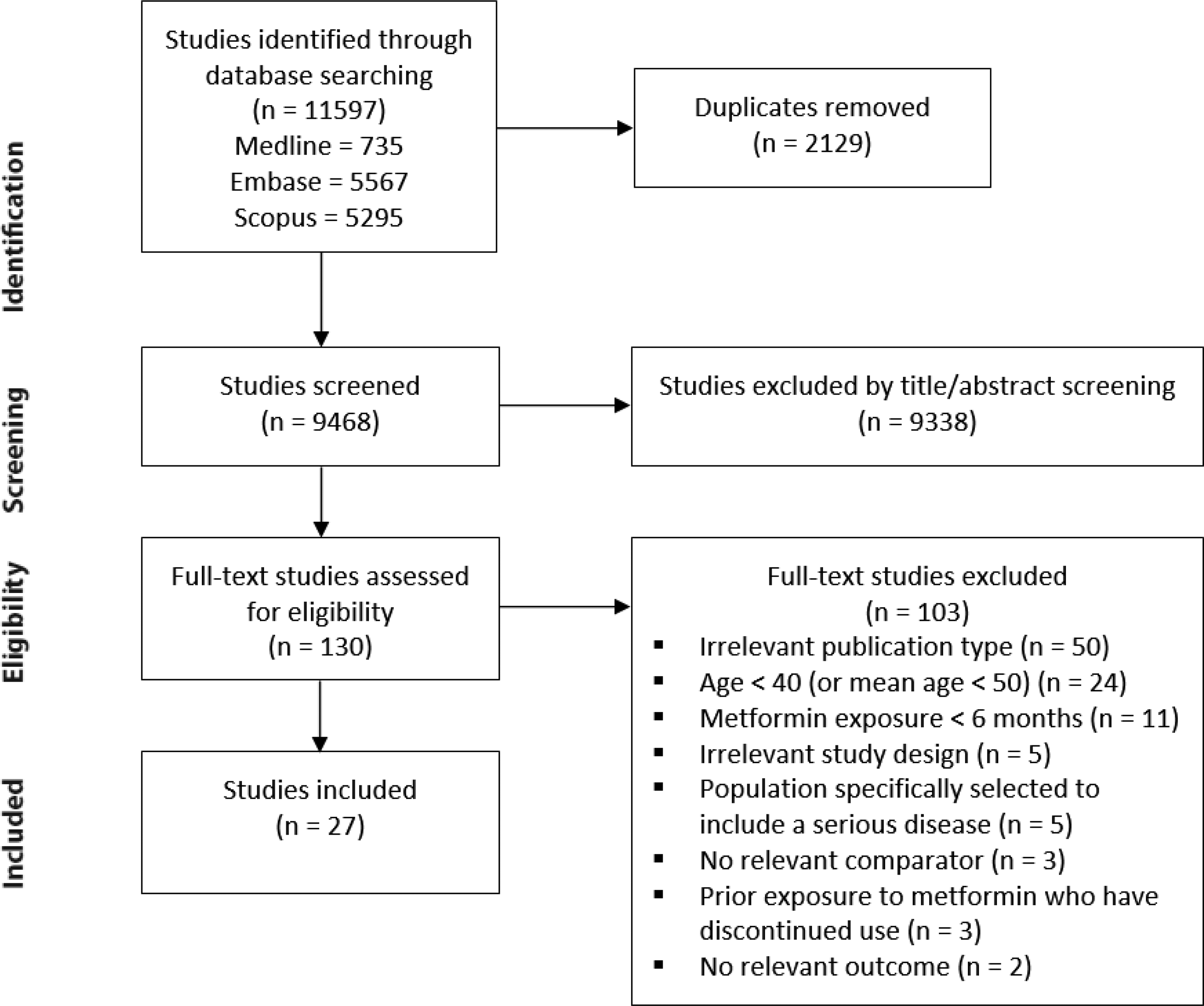
PRISMA flow diagram.
All studies were retrospective cohort studies except for two, which were prospective cohort studies.31,32 Overall, 5 included studies reported data on all-cause mortality, 17 on cancer, 3 on CVD, and 4 reported on dementia. Only 11 studies adjusted for diabetes control, that is, through measures of HbA1c or prior hospitalizations related to diabetes. Full details of exposure and comparator groups and other study characteristics are included in Table 1.
Full Details of Exposure and Comparator Groups
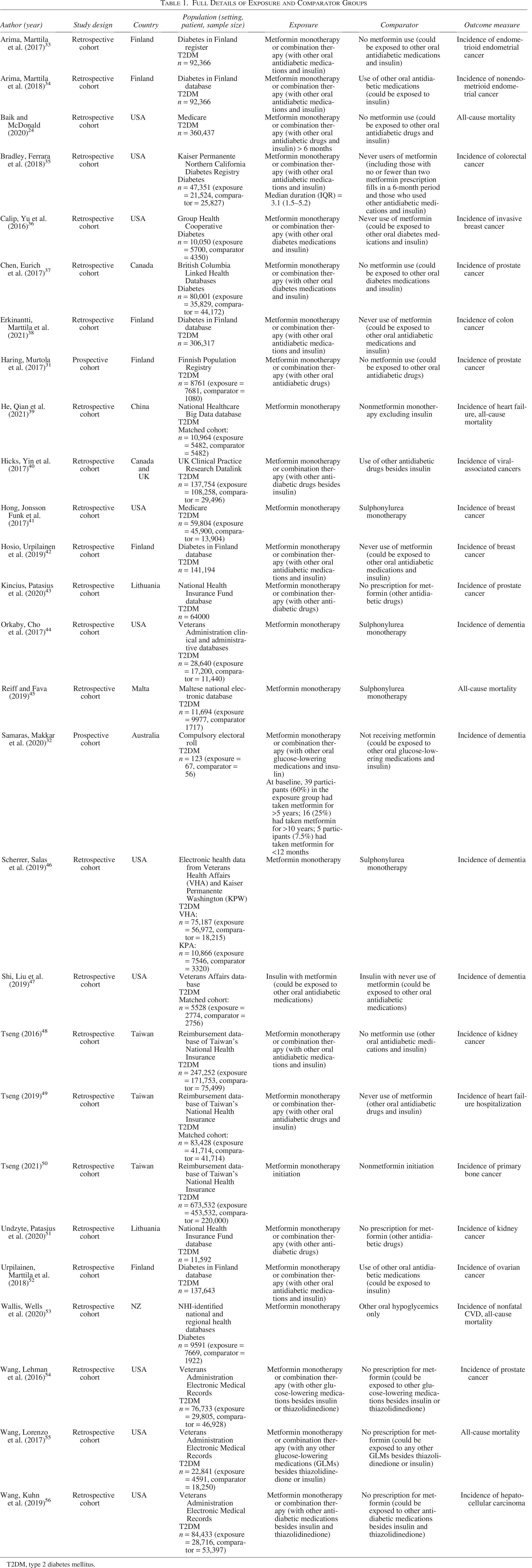
T2DM, type 2 diabetes mellitus.
Effect of metformin on mortality and diseases of aging
Studies exploring metformin effects on all-cause mortality demonstrated reduced mortality rates. Similarly, metformin had a consistently beneficial effect on the incidence of nonfatal CVD, especially heart failure, and its positive effects on reducing dementia risk were fully or at least partially supported by all relevant studies. Included studies investigated ten different types of cancer in this review. Metformin was associated with a lower incidence of prostate cancer. Metformin was not associated with reduced risk of breast cancer. The limited number of studies precludes drawing a conclusion about metformin effects in other cancer types.
All-cause mortality
All studies that investigated the effect of metformin on all-cause mortality compared patients with diabetes being treated with metformin versus those who were treated with other antidiabetic medications. These studies recruited T2DM patients, except for Wallis and colleagues, 53 where no data on diabetes type were available, although the authors assumed that most participants had T2DM, as >90% of older people with diabetes had T2DM according to The Health Quality & Safety Commission NZ 2019. Comparator groups included sulphonylureas, 45 other oral hypoglycemic agents39,53 and nonmetformin users who have been exposed to other oral hypoglycemic agents with or without insulin.24,55 One cohort was matched at baseline, resulting in the two groups sharing similar characteristics except for age and coronary heart disease. Age and coronary heart disease were adjusted for after matching. 39 In the study by Reiff and colleagues, 45 metformin users had a significantly higher LDL-cholesterol and triglycerides than nonmetformin users. However, the study did adjust for LDL-cholesterol.
The studies with sulphonylurea controls (absolute risk reduction [aRR] associated with sulfonylurea controls = 2.11, 95% CI 1.66–2.69, p < 0.001), nonmetformin users (adjusted hazard ratio [aHR] = 0.93, 95% CI 0.91–0.96, p < 0.001), and controls treated with oral hypoglycemics other than metformin (aHR = 0.52, 95% CI 0.39–0.69, p < 0.0001) found that participants with diabetes taking metformin had significantly lower all-cause mortality than patients with T2DM who were not treated by metformin. Similarly, Wallis and colleagues 53 found that controls treated with other oral hypoglycemics had higher all-cause mortality compared to metformin monotherapy, although the difference was nonsignificant (aHR = 1.37, 95% CI 1.26–1.50). Wang and colleagues 55 studied an exclusively male cohort, and their findings of metformin being associated with decreased mortality (adjusted odds ratio = 0.53, 95% CI 0.50–0.57) may not be generalizable. Encouragingly, He and colleagues 39 reported that men and women experienced similar protective effects of metformin against all-cause mortality. Finally, all effect sizes favored metformin versus nonmetformin comparators.
Diseases of aging
Cancer
Overall, 17 studies were conducted on metformin and cancer incidence and risk. All studies that investigated the association between metformin use and cancer were conducted among T2DM.
Prostate cancer
Four studies investigated the incidence of prostate cancer. Comparator groups included other antidiabetic medications 43 and nonmetformin users, who could have been exposed to other oral hypoglycemic agents with or without insulin.31,37,54 Haring and colleagues and Kincius and colleagues demonstrated significant reductions in prostate cancer risk (aHR = 0.80, 95% CI 0.67–0.96 and standardized incidence ratio [SIR] = 0.71, 95% CI 0.68–0.75, p < 0.001; respectively).31,43
Two research groups analyzed their findings by race or ethnicity. Chen and colleagues 37 observed that Chinese metformin users had an increased risk of prostate cancer (aHR = 1.41, 95% CI 1.05–1.89). In the second study by Wang and colleagues 54 compared to nonusers, metformin use was associated with a significant reduction in prostate cancer incidence among Hispanics (aHR = 0.62, 95% CI 0.49–0.80, p < 0.01) but not among non-Hispanic American white males nor among African Americans. However, due to methodological limitations in both studies using surname algorithms to identify individuals’ race or ethnicity, these findings need to be cautiously interpreted.
Breast cancer
The relationship between metformin use and the incidence of breast cancer was investigated in three studies. All three studies did not demonstrate a beneficial effect on reducing breast cancer incidence.
While the studies differed in design including choice of comparator, age of participants at baseline, comorbid conditions, duration of exposure, and cancer histopathological type none showed a significant effect of metformin. The adjusted HRs were all close to the null. Furthermore, in subgroup analyses, there was no protective effect association across age groups or ethnicity.36,41,42
Kidney cancer
Two studies investigated the effect of metformin on the incidence of kidney cancer.48,51 Both studies reported that metformin use was associated with a reduced risk of kidney cancer compared to the comparator group.
In both studies, participants were T2DM patients, and the comparator group was users of other medications. Undzyte and colleagues 51 did not adjust for any baseline variables, a significant limitation of the study since the association between metformin and kidney cancer could have been confounded by factors including age and comorbidities. Nevertheless, these authors reported a nonsignificant decrease in risk of kidney cancer with metformin treatment compared to other antidiabetic medications users.
Colon cancer
Colon cancer was investigated in two studies35,51 wherein both found no association between metformin and the risk of colon cancer (aHR = 1.01, 95% CI 0.90–1.14 and aHR = 0.90, 95% CI 0.76–1.07, respectively).
In subgroup analyses by Bradley and colleagues, 35 no clear pattern of decreasing risk was seen with increasing total duration of metformin use. However, there was a significant decrease in risk in long-term users-5 or more years—among males.
Other cancers
The following cancers were each investigated by a single study: endometrioid cancer, nonendometrioid endometrial cancer, ovarian cancer, viral-associated cancers, primary bone cancer, and hepatocellular carcinoma. All six studies recruited a T2DM cohort. Wang and colleagues and Tseng and colleagues50,56 supported metformin in reducing the incidence of hepatocellular carcinoma and primary bone cancer, respectively. In the study by Tseng, 50 the risk of primary bone cancer was lower in metformin initiators compared to initiators of other antidiabetic agents (aHR = 0.830, 95% CI 0.686–1.004), although falling short of statistical significance (p = 0.055).
The other studies reported no significant difference in their findings between the exposure and comparator groups.
Cardiovascular disease
Three studies were identified that explored the effect of metformin on CVD.39,49,53 The studies focusing on T2DM patients were all conducted in different countries: China, Taiwan, and New Zealand. All three studies supported metformin use being associated with a reduction in cardiovascular-related negative outcomes, despite being conducted in different health care settings.
Metformin users demonstrated a significant association with a lower risk of heart failure hospitalization in the study by Tseng 49 (aHR = 0.57 [95% CI 0.526–0.620; p value < 0.0001]). Such a beneficial effect was especially significant when metformin had been used for more than ∼2.5 years in the second and third tertiles of cumulative duration of metformin therapy. He and colleagues 39 showed a similar adjusted HR of 0.61 (95% CI 0.52–0.73; p value < 0.0001) for heart failure associated with metformin use. A consistent reduction in heart failure risk was observed across age groups and gender as well. Lastly, Wallis and colleagues 53 showed that compared to metformin users (reference aHR 1.0), users of other oral hypoglycemic agents were at an increased risk of nonfatal CVD (aHR = 1.17, 95% CI 1.08–1.28).
Dementia
Our search yielded four studies that investigated the association between metformin and dementia.32,44,46,47 All studies reported beneficial effects of metformin in terms of reducing the incidence of dementia.
In these studies, dementia diagnosis was based on a multidisciplinary consensus panel consisting of psychiatrists of old age, neuropsychiatrists, and neuropsychologists using established DSM-IV or incident dementia as two or more ICD-9-CM diagnostic codes recorded on electronic records.
In two of the studies, there was a signal-a nonstatistically significant relationship—for an association between patients’ age and the effects of metformin. Scherrer and colleagues demonstrated that metformin use was associated with a lower risk of dementia compared to sulfonylurea users. This reduction was statistically significant among Veterans Health Affairs patients (aHR = 0.95, 95% CI 0.78–0.99) but not among Kaiser Permanente Washington patients (aHR = 0.89, 95% CI 0.73–1.07). Furthermore, in age-stratified analyses, metformin was associated with a lower dementia risk in Veterans Health Affairs patients aged 65–74 years but not among those aged 50–64 years and ≥ 75 years. 46 Similarly, according to Orkaby and colleagues 44 there was lower risk of dementia than sulfonylurea use in veterans under 75 years of age (aHR = 0.89, 95% CI 0.79–0.99, p = 0.033), but no difference in those ≥ 75 years (aHR = 0.96, 95% CI 0.87–1.05, p = 0.332).
Samaras and colleagues study was the only study that compared T2DM patients with a nondiabetic subgroup. Findings showed that incident dementia rates were similar between diabetic metformin users and nondiabetic participants (HR 1.74 [95% CI 0.52–5.90; p = NS]) with nonsignificant differences. 32
One limitation that may hinder generalization of these positive findings is the very small proportion of females who were included in two studies, with 2.2% in Shi and colleagues’ study and around 1% for the study by Orkaby and colleagues.44,47
Risk of bias assessment
A summary of the critical appraisal of included studies using the NOS for cohort studies is provided in Table 2. The overall quality of the studies was good, as none of the studies had a total score below 6 out of 9. The highest score was 8 out of 9. Of the NOS domains, comparability was most often downgraded.
Summary of Critical Appraisal of Included Studies Using the Newcastle–Ottawa Scale for Cohort Studies
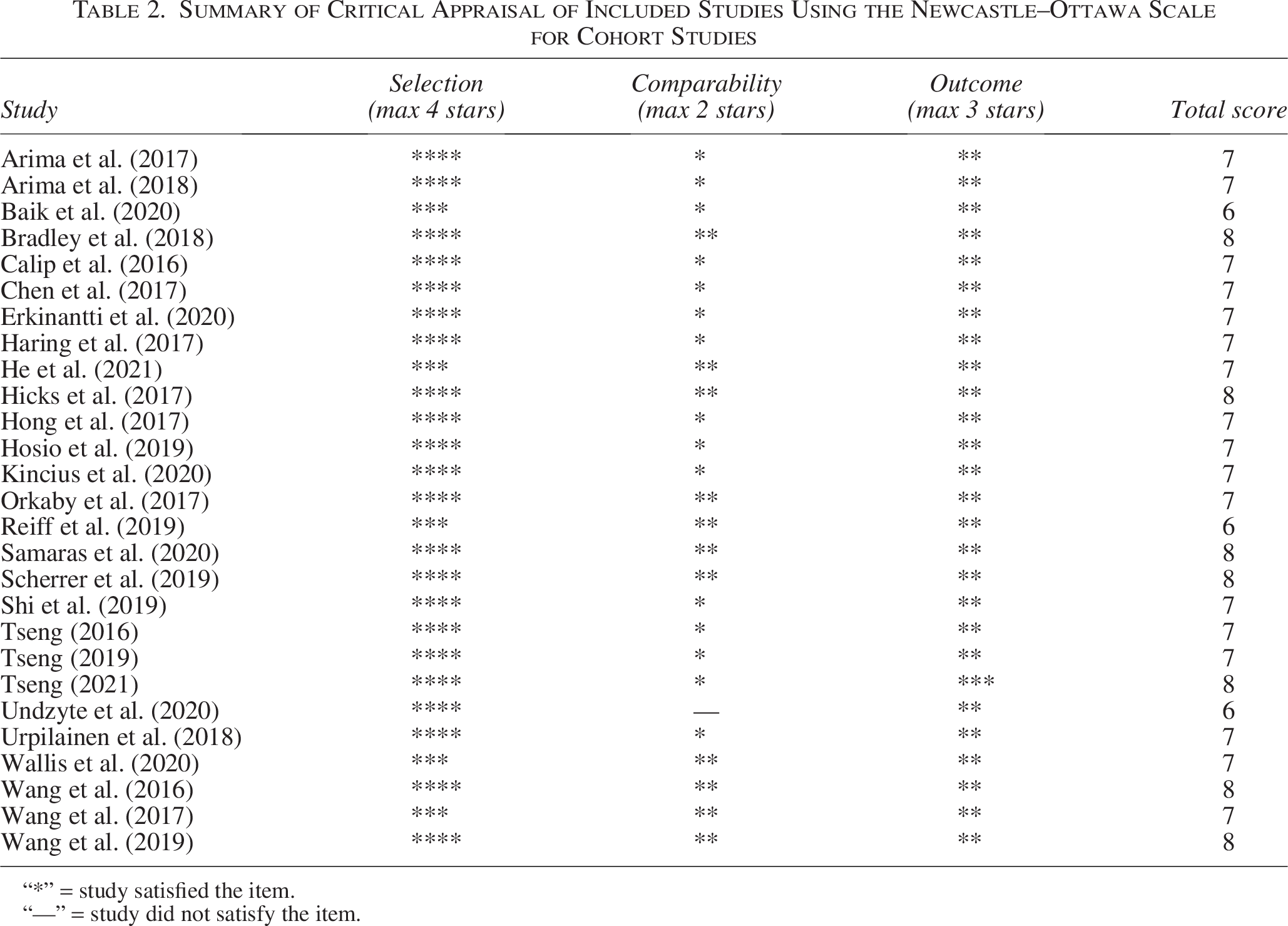
“*” = study satisfied the item.
“—” = study did not satisfy the item.
Discussion
The present systematic review explored in detail 27 studies derived from an extensive search of English-only publications between 2016 and 2021. This is a refinement of earlier published work. To the best of our knowledge, this is the most comprehensive analysis of over 2,250,000 T2DM patients exposed to metformin. All 27 studies are observational cohorts, and no RCTs met the inclusion criteria, so causality cannot be inferred.
All studies exploring metformin effect on all-cause mortality supported metformin use in terms of its association with reduced mortality rates. Similarly, metformin had a consistently beneficial effect on the incidence of nonfatal CVD (especially heart failure), and its positive effects on reducing dementia risk were fully or at least partially supported by all the included studies. Studies in this review investigated ten different types of cancer. Overall, metformin was associated with a lower incidence of prostate cancer. Studies herein analyzed did not support the use of metformin in reducing the risk of breast cancer. For other cancer types, there were insufficient numbers of studies investigating the association between metformin and the risk of other cancer types. Metformin’s effect on diseases of aging have been shown to be dependent on the duration of exposure to metformin, with longer duration associated with a larger reduction in incidence, as clearly demonstrated by Shi et al. and Tseng.47,49
Interpretation of findings and relevance to existing literature
This systematic review demonstrated that metformin use has positive effects on reducing the risk of all-cause mortality in T2DM individuals when compared to sulphonylureas, 45 other oral antidiabetic medications39,53and nonmetformin use.24,55 Results from a subgroup analysis by He and colleagues 39 suggests metformin may be associated with reduced risk of all-cause mortality regardless of gender. Our results are supported by a systematic review that performed a meta-analysis and reported a favorable outcome for metformin use in reducing all-cause mortality. 20 However, another systematic review and meta-analysis of RCTs published in 2020 (23) was inconclusive, with statistical significance only reached after exclusion of RCTs that compared metformin with sulphonylureas, GLP-1 receptor agonists or SGLT2-inhibitors.
Cancer
The effects of metformin on cancer risk are shown to be dependent on cancer type. Studies generally supported metformin in reducing rates of prostate cancer.31,37,43,54 It has been recently demonstrated in animal studies that metformin has an inhibitory effect on the proliferation of prostate cancer cell lines. The mechanism of such an effect was related to autophagy. Metformin also induces the activation of AMPK, markedly promoting expression of LC3II, and down-regulating the expression of p62/SQSTM1. 57
In the present analysis, no studies supported metformin in reducing breast cancer rates.36,41,42 Lack of effect on breast cancer incidence was in line with a systematic review by Franciosi and colleagues who reported no change in cancer risk for patients using metformin. 58 However, the present analysis is in contrast to the meta-analysis by Campbell and colleagues.20,58 In the analysis by Campbell and colleagues, the positive effect on breast cancer incidence was found in diabetic patients taking metformin compared to diabetic patients who were not taking metformin. However, after excluding one of these studies due to its unadjusted data, the reduction in breast cancer incidence was not statistically significant. In addition, when comparing the incidence of breast cancer in diabetics being treated with metformin to diabetics being treated with sulphonylurea a nonsignificant increase in breast cancer for metformin was found. It would thus seem that our findings—when analyzed in depth—are no different than the two major analyses taken in the last decade.
Gender differences may exist for metformin therapy in favor of reducing the incidence of cancers affecting males. Positive results were shown in our prostate cancer studies cancer31,37,43,54 and a hepatocellular carcinoma study conducted among men. 56 On the other hand, breast, endometrial, and ovarian cancer studies showed no association between cancer incidence and metformin use.33,34,36,41,42 A meta-analysis by Tang and colleagues 59 demonstrated a reduced risk of endometrial cancer in women. Clustering cancer types into male or female hormone-related groups clarifies the findings but due to the contrasting findings in female hormone-related cancers, only prostate cancer stands out. We may tentatively suggest that, on the whole, the influence of gender on metformin’s effects on cancer types remains inconclusive.
Cardiovascular disease
The reduced rates of all-cause mortality observed in metformin users may be attributed to its geroprotective effect of delaying or preventing other age-related diseases like CVD. Our systematic review shows that metformin use is associated with reduced risk of CVD in T2DM individuals receiving monotherapy compared to those receiving nonmetformin therapies. The applicability of our finding is strictly limited to the incidence of nonfatal cardiovascular outcomes, namely ischemic heart disease, cerebrovascular event, transient ischemic attacks, peripheral vascular disease, and congestive heart failure. Across all three studies,39,49,53 findings were independently reported from three countries, Taiwan, China, and New Zealand, demonstrating relative consistencies. Cautiously, we must note that there remains a possibility that the significant effect reported concerning reduced heart failure risk is a direct result of overestimation in comparator groups rather than of metformin’s effect.
Dementia
Concerning dementia prevention, this systematic review highlighted that metformin was associated with reduced risk of dementia when compared to sulfonylurea therapy44,46 and nonmetformin use32,47 in patients with T2DM. Previous studies have used outcomes such as cognitive ability or decline as a proxy for dementia; our review used the incidence rate of dementia as part of our inclusion criteria, which improves the validity of our findings. A recent systematic review 21 demonstrated a reduction in dementia risk associated with metformin use is in line with our conclusions.
An unexpected finding of the present analysis is that metformin had differential effects in different age groups, albeit an inconsistent one. There may be an age-related effect but caution is needed when generalizing these findings to the general population, and larger studies with a more balanced male-to-female ratio are needed.
Quality of included studies
The risk of bias revealed that our included studies were of high quality. However, a number of studies did not adjust for confounders like body mass index and obesity. More importantly, only 11 studies adjusted for diabetes control, that is, through measures of HbA1c or prior hospitalizations related to diabetes. This might hinder our ability to attribute findings solely to the pleiotropic effects of metformin beyond diabetes control, as any difference in outcome measures between metformin and nonmetformin groups among a diabetic population may be confounded by diabetes. Furthermore, most of the included studies reported follow-up periods of less than 5 years, which may not be long enough to examine diseases of aging and effects on mortality.
Strengths and limitations of our review
This review provides a comprehensive and systematic assessment of literature from 2016 onwards exploring the effects of metformin on the incidence of all-cause mortality and diseases of aging in people with T2DM. Validity of this review is enhanced by the collaborative work of multiple authors in developing a search strategy, identifying and analyzing the eligible studies. However, there are limitations inherent in the available information and thus in this review. First, the search was restricted to English-language publications. All included studies were observational despite our attempts to locate RCTs. Of note, several studies were conducted by the same research group, which may potentially pose a bias, particularly if design flaws are repeated across studies. For instance, many studies conducted by the same research groups did not adjust for diabetes control.
The studies were of high heterogeneity in their inclusion criteria, outcome definitions, adjusted confounders—especially diabetes control—and outcome measures. These confounders are not insignificant. The limited adjustment for these variables constrains conclusions about pleiotropic “antiaging” effects beyond glucose lowering. A key limitation in included studies is the potential for residual confounding. One important source is confounding by indication: the choice of diabetic therapy is not random but reflects clinical characteristics that may themselves influence outcomes. In addition, the healthy user bias, whereby individuals who adhere to medications are also more likely to engage in healthier behaviors overall. For example, more than 10 cancer types were investigated, and the diagnostic criteria for each cancer type differed across the studies, which made them difficult to compare. Similarly, CVD endpoints differed as some measured hospitalizations while others focused on the incidence of cardiovascular events. Three of the four dementia studies recruited participants from the Veterans Affairs database and had overlapping study periods. The possibility of using the same cohorts of people meant that statistical comparison was not possible since each participant should only be represented once to prevent overestimation of the results. Meta-analyses and sensitivity analyses excluding studies with no adjustment for diabetes control to find the true effect of metformin were not possible to conduct in this review, leading to lower reliability of results, limiting internal and external validities. Finally, the majority of included studies had a follow-up period of less than 5 years, which may have resulted in wrongly estimating long-term effects.
Suggestions for future research
Cohort studies allow us to merely form associations between outcome and exposure. As such, RCTs are required to confirm these associations between metformin use and all-cause mortality and the incidence of age-related diseases. It is important to acknowledge that there are two RCTs that investigate metformin’s geroprotective effects. The Metformin in Longevity Study (MILES) (ClinicalTrials.gov Identifier: NCT02432287) investigated whether metformin affected the gene expression profile of nondiabetic adults aged over 60 years of age. Participants were randomized to receive metformin and placebo in either order for 6 weeks, with a washout period of two weeks in between. Results from MILES demonstrated changes in the gene expression of muscle and adipose tissue, suggesting that it alters the biology of aging in humans. However, these findings are limited by their small sample of 16 participants and short duration of metformin use. 60 The Targeting Aging with Metformin (TAME) study is an RCT underway which aims to investigate whether metformin use is associated with reduced risk of all-cause mortality in the nondiabetic population. It will also investigate whether metformin influences the incidence of CVDs, cancer, and cognitive decline. The TAME study will involve 3000 nondiabetic individuals aged 65–79 to be followed up over six years in order to justify aging as a new indication for metformin. Results from this study will provide a better representation of metformin’s geroprotective effects in the nondiabetic geriatric population; however, it is still yet to be launched. If supported, it would be a significant achievement as a new generation of drugs can be introduced to promote healthy aging for our globally aging population. 61
Conclusion
This study provided a current review of literature from 2016 onwards exploring the effect of metformin on healthspan-related outcomes, all-cause mortality, and diseases of aging, with a focus on CVD, cancer, and dementia in people with T2DM. Those studies with a focus on all-cause mortality supported the use of metformin. Metformin was found fully or partially beneficial for reducing the incidence of nonfatal cardiovascular events and dementia. Ten different types of cancer were evaluated for metformin’s effect; the prostate cancer rate was reduced among users. The incidence of breast cancer was not reduced by metformin, though more studies are required to examine the effect of metformin on other types of malignancies. There was high heterogeneity among the studies, which was a barrier to conducting this meta-analysis. All 27 studies are observational cohorts, and no RCTs met the inclusion criteria, so causality cannot be inferred. Future research should investigate metformin as an antiaging drug in the general, nondiabetic population using cohort and RCT study designs.
Current observational evidence supports metformin as first-line in T2DM and suggests possible geroprotective effects but does not yet justify routine use solely for antiaging in nondiabetic individuals.
Authors' Contributions
A.C. and G.C.: conceived and designed the study. Y.B. and X.W.: developed the study methodology. B.L., I.W., M.W., R.A-.J., S.K., H.F., and K.B.: collected the data and performed the statistical analyses and interpreted the results. Y.B.: drafted the manuscript. All authors critically reviewed and revised the manuscript for important intellectual content. All authors contributed to the interpretation of findings, approved the final manuscript, and agree to be accountable for all aspects of the work.
Footnotes
Author Disclosure Statement
No competing financial interests exist.
Funding Information
The School of Pharmacy, University of Auckland, New Zealand, as part of the Bachelor of Pharmacy dissertation project, funded this study (PHARMACY 789). This funding source had no involvement in the study design; in the collection, analysis, and interpretation of data; in the writing of the report; and in the decision to submit the article for publication.
Supplemental Material
References
Supplementary Material
Please find the following supplemental material available below.
For Open Access articles published under a Creative Commons License, all supplemental material carries the same license as the article it is associated with.
For non-Open Access articles published, all supplemental material carries a non-exclusive license, and permission requests for re-use of supplemental material or any part of supplemental material shall be sent directly to the copyright owner as specified in the copyright notice associated with the article.
