



Abstract
This study conducted analytical and semiexperimental research with the purpose of testing if art video games serve as a form of transmission of social representations and feelings. Accordingly, a free-association questionnaire was used after participants played the game The Graveyard. The associative method was paired with item hierarchization and clustering techniques using a structural approach. The data were analyzed using mixed methods (frequency analysis, semantic weight, and categorical clustering). Additionally, a cluster analysis was conducted to determine connections between representations. Afterward, categories were compared with the representations the game designers wanted to transmit to the players. The results of the research confirmed the possibility of accessing people’s social representations using a video game as stimulus. Cluster analyses depicted that these representations were emotionally linked and socially shared among the players without regard to age or gender. The relation with the designers’ representations about the game was found to be not significant.
Introduction
With a wide variety of genres, consoles, and computers, the current video game industry is emerging as a powerful media form. Video games, just as other forms of mass media, influence the people who use them. This growth of value in video games as pervasive media increases its relevance for researchers to study their impact on players, particularly for researchers concerning mental, social, and physical health.
The present research focuses on art games, understood as a form of video game with the purpose to provide the player an experience of reflection outside the gameplay. Art games go beyond the normal experience of playing by focusing on aesthetic looks, concepts, and plots, rather than competence. Thus, players focus on expressing an idea or a feeling the designer (artist) wants to transmit to the audience. Accordingly, this research departs from the hypothesis that art games provide a specific and accurate form of representations by considering an unleashing of the emergence of feelings. At the same time, these representations can be studied in order to understand the emergent feelings of the player while playing.
In that order of ideas, it is possible to state, as Bineham (1988) does, that some kinds of ideas or feelings are imposed by the designer of the game in order to transmit some information to the players. Art games are, therefore, a way to extend the representation of shared beliefs, except that for the case of art games they produce specific and shared feelings instead of being a way to impose ideas.
The concept of art game is relatively new. Thus, there are difficulties defining whether video games can be (1) art themselves, (2) composed of art pieces (e.g., graphics and music), or (3) “not art.” For the present research, the definition of art game is circumscribed in the same spheres of interactive art and interactive fiction. These spheres, as described by Montfort (2006, pp. 731–735), are the kinds of computer programs in which the player can interact with a world where he or she is implicated, influencing the events that occur.
The current research addresses the subject matter in two steps. In the first step, a theoretical approach to art games is conducted, emphasizing the following three subjects: (1) the definition of art games in the sphere of the interactive art, (2) the relationship between representations and emotions, and (3) the relationship between art representations and social representations. The second step builds around the methodological proposal for the study, considering both quantitative and qualitative analyses as well as the research findings.
Art Video Games and Interactive Art
Prior to discussing the articulation between art and video games, it is necessary to introduce the component that connects video games and art, human–computer interaction (HCI). Indeed, in both video games and interactive conceptual art, one of the critical points for artists and game designers is the communication between the machine (or the art work stage) and the people who interact with it. HCI is the nodal point where two different types of languages (for the computer: vectors, mathematics, programming languages, and algorithms; for the human: linguistics, metaphors, psychology, communication, and body movement) converge to understand each other, not only in their proper terms, but also in terms of a third person, the designer (Mignonneau & Sommerer, 2005).
In fact, the main goal of a work of art is to create a bond (emotional or intellectual) with the interacting person. To create this bond, it is essential to comprehend the techniques of computer production, such as graphics, algorithms, or movement capture 1 as well as the purpose and consequences of those actions so that the artist can provoke feelings and reactions in the person interacting with the game. In order to achieve this goal, the artist uses both audiovisual and narrative expressions as well as branching options 2 (Ziegfeld, 1989). These elements empower the artist to guide the perspective of the person, creating a path that specifically fits for that person and producing the emotions and responses the artist wants to produce. This technological interaction allows the viewer to become part of the art work (Niesz & Holland, 1984).
In spite of the close relation video games and fine arts appears to have—not only in the aesthetics, but also in the areas of narrative, politics, and philosophy (Cannon, R., in Clarke & Mitchell, 2007)—there is disagreement with the idea that video games can be by themselves a means of art. On the one hand, some people agree that video games may contain art elements, such as graphics or music, or even political subversion (Lowood, in Clarke & Mitchell, 2007), but they are not art in themselves. On the other hand, as Hershman (1993, pp. 131–132) considers the new technologies an extension of traditional art, authors are creating an engaging two-way dialogue between the artist and the viewer, allowing both to explore new realities.
According to Hershman, HCI and the new technologies have given a turn to contemporary art, taking observers out of their passive and contemplative places to put them in the center of the art work; placing, at the same time, art into daily life. Coulter-Smith and Coulter-Smith (2006, p. 176) add in this respect that, contrary to traditional art where there is a genius producer, the game entails a different referent, where the artist is not the maker of an art piece, but rather the creator of a space that will interact with a viewer.
In summary, it is possible for video games to be pieces of art, but in order to be so they should extend beyond the position of being games containing art pieces and focus on creating a user experience that takes the player toward interactive art—that is, an emotional–intellectual interactive experience created by binding together elements from the graphic and music arts as well as narrative.
Emotions and Representations
The main goal of art is to transmit ideas and perspectives; art achieves this by means of emotional engagement. In order to awaken definite emotions, the artist makes use of metaphors as a way of transmitting feelings, culture, and knowledge (Grodal, 2009). The cultural knowledge awakened by the metaphors is associated with particular feelings chosen by the artist. Conversely, emotions can bring out mental images, knowledge, and metaphors, reinforcing the subjective impact of the work.
As stated in psychological theories such as those of Eysenck and Keane (2003), there are some primary, phylogenetic feelings transmitted and inherited from ancestors of Homo sapiens. They develop on each subject ontogenetically and get “attached” to certain representations (Grodal, 2009). The dyad feeling–representation is susceptible to evolving over time; it is also capable of transmitting to other people. Even more, this dyad can be shared within a group, passed from culture to culture or generation to generation by means of narratives, pictures, music, and so on. In semantic parameters, representations are not alone; they have not only social and political canons but also emotional backgrounds.
Concerning video games and art, the present work argues that the main value of art games is the transmission of feelings, especially feelings that are socially shared, as stated by theorists such as Squire (2006). The content, shared in the shape of explicit or tacit ideas, penetrates the person who engages with the art work in an emotional manner. The same principle applies in the case of art video games.
The present work wields the argument that art games pass on social feelings; in other words, these games transmit socially shared emotions in the same way a person in an art exhibition shares feelings with others watching the same work of art.
Defining Art Games
It is possible to set out a definition for art video games as a form of video game in which the main purpose of its designer is to give the player a reflection experience transcending the gameplay. This experience can be philosophical, political, or ideological, and it is bound to the player by an affective wrap. The game itself should contain all the characteristics of a game (e.g., having a goal, choices, uncertain outcomes, rules, etc.), but at the same time, it must be structured in such a way that the player gets engaged in an experience beyond the game, which is an aesthetic experience. As defined by McLuhan (1964, in Rockwell, 2002, p. 345), “Games are popular art, collective, social reactions to the main drive or action of any culture. Games, like institutions, are extensions of social man and the body politic, as technologies are extensions of the animal organism.”
Representations, Social Representations, and Art
In the present work, mental representations theory is considered an optimal way to access both inner and shared feelings. The theory of mental representations has been a field of interest for the social sciences, and especially for psychology as it can bridge the gap of understanding between the physical reality and the human mental reality (Holyoak & Morrison, 2005). Mental representations trigger chains of associations unfolding networks of thinking, knowledge, and mental and emotional inner states. In addition, they obey certain meanings (semiotics), which are not solely a product of each person but socially constructed and shared (Mauss & Durheim, 1903).
Accordingly, Moscovici (1961, in Araya, 2002) defines shared representations as social representations, making reference to a point between individual cognitive representations and collective cognitive representations. Thus, social representations theory argues that some representations are socially shared within a group, defining its organization and sense of community. This definition binds together psychological and sociological perspectives of the human mind (Howarth, 2006). This is assertively explained by Jodelet in the following manner: Social representations are images that condense manifold meanings that allow people to interpret what is happening; categories which serve to classify circumstances, phenomena, and individuals with whom we deal, theories which permit us to establish facts about them. When we consider social representations embedded in the concrete reality of our social life, they are all the above together. (Jodelet, 1991, in Howarth, 2006, p. 67)
In order to make use of the social representations in a work of art, empathy, meta-representation and semantics are necessary to enable the strategic elicitation of feelings. While empathy corresponds in this strategy to an individual perspective, both the meta-representational and semantic aspects belong to socially shared experiences, and they enable the construction of certain feelings desired by the artist.
Objectives and Hypotheses
The main objective of the study is to inquire how video games, particularly art video games, work as an art form by eliciting some representations in the people playing them. What is more, the current study aims to analyze how those representations are linked to the emotions that are triggered when a person elicits the representations via video gaming.
The second objective of the study is to prove how these representations and feelings are socially shared among the people playing the game and assisted by the game designers.
To carry out the objectives of the study, the following hypothesis system has been defined: A video game, particularly an art game, serves as a representation elicitor. The set of representations elicited is at the same time linked to emotions, which emerge when the representations are produced. The representations (therefore the emotions) elicited by the stimulus are collectively shared as representations of the content of the game. Representations and feelings can be accessed by using social representation methodologies as they are shaped in the way of social representations. There is a connection between the message of the game and the representations that emerge during the gameplay, so it is possible to determine whether the art games can transmit the developer’s representations and emotions to players.
Research Design and Framework
The following sections introduce the methodological approach for the study of socially shared emotions produced by art games, using social representation methodologies to access the representations elicited in the players while playing the game.
The study design is quasi-experimental and cross-sectional (Bryman, 2012, pp. 59–63). People constituting the sample were asked to play a game once; immediately afterward, they were asked to fill out a free-association questionnaire (Jung, Pawlowski, & Wiley-Patton, 2009; Tsoukalas, 2006). This procedure was done only once with each participant. The results were processed by using an analytical approach (Araya, 2002; Milligan & Hirtle, 2003), starting from theories about video games as art and social representation theories used to reach people’s representations and feelings after being exposed to a game (Abrudan & Prundaru, 2009; Jung et al., 2009). Then the processed results were contrasted, looking for tendencies and similarities. After this, the representations elicited by the game were compared with the game designers’ intentions. The study is also exploratory (Behrens & Yu, 2003; Milligan & Hirtle, 2003) because it proposes to characterize the representations and feelings of a group of people after playing an art game.
The approach of the study is structural (Araya, 2002; Jung et al., 2009), implying that social representations are structured in the form of hierarchies, maintaining a stable relationship among them. The mentioned structure is specific for every representation and it is organized around a central nucleus determining its meaning (Guimelli, 1993). In that sense, the study states that the representations are connected and interact in specific ways.
Sample
The sample for the research consisted of 33 participants. Nonrandom snowball sampling was used to select the sample. This sampling method was selected because only people fulfilling the inclusion criteria were allowed to participate in the study, so members of the whole population did not have the same probabilities for being chosen. Snowball sampling was used due to the difficulty in accessing the population (Bryman, 2012).
Participants in the study fulfilled the following inclusion criteria: male or female between 18 and 50 years of age, with a secondary school education or pursuing higher education. The subjects of the sample should have never before played the game The Graveyard (2008; see Appendix A, Figures A1 and A2). In addition, players were required to have a knowledge of the English language.
For the research, the demo version of the game was used, because the complete version of the game has the possibility of the death of the main character, and it can change the game experience for each participant; this allowed for a more precise stimulus exposure, controlling random events. Furthermore, this decision was made because not all the players could have access to the paid version of the game.
Variables and Operationalization
The following variables were analyzed during the study operationalized in the manner shown below:
Elicitation of representations and feelings: Measured in a nominal manner by using the frequency and interrelation of the players’ productions in the free-association questionnaire (Araya, 2002; Jung et al., 2009; Márquez, 2005).
Hierarchization of representations and emotions: Measured with the value given by people to a definite representation or feeling created by the game. For this, the participants used numbers from 1 to 7, 1 being the most prevalent during the gameplay, and 7 the least. This is an ordinal and discrete variable.
The duality of this measurement (elicitation and hierarchization) is due to the difference in representation elicitation (unconscious and conscious; see Tsoukalas, 2006, pp. 965–966). Whereas unconscious representations tend to appear in order of significance in an ordinal manner, conscious references tend to appear in a different manner after the person has reflected on them, and can be measured as an appraisal (Araya, 2002; Jung et al., 2009; Milligan & Hirtle, 2003).
Cluster of meanings: Compared, in a nominal way, these are the word representations a person states along with their intentions, this is done in order to ensure that the measure of the feelings is done correctly (e.g., themselves, the avatar, the game, the computer, etc.; Goldstone & Kersten, 2003; Jung et al., 2009; Shannon, 2008).
To control the confounding variables, the performance of the player in the game was used as a referent for his or her answers. This was done because both the performance and the mechanics of the game were found to interfere with the answers of the players in the pilot testing sessions.
Validity and Reliability
Two central validity criteria were assessed in the study (Bryman, 2012, pp. 46–50): (1) Measurement validity was evaluated by means of the correspondence between the quantitative analysis carried out with two different statistical analysis tools, namely, the Statistical Package for Social Sciences (SPSS) and the Software for Social Network Analysis (UCINET 6.303; Borgatti, Everett, & Freeman, 2002). (2) Internal validity was supported by the theoretical framework social representations, as well as the different techniques used in social representation studies with a structural approach to collect and analyze information (Araya, 2002; Jung et al., 2009).
For the reliability of the study, qualitative analysis was used. Qualitative analysis highlighted the degree to which the information converged into clusters related to the theme of the video game. It also showed how the information is scattered or dissociated from the game. Qualitative analysis for the current study is considered to be a mixed method (Eid, 2006; Schmitt, 2006), consisting of a fusion of content analysis, analytic induction, and grounded theories under the use of binary agreement. This propounds to create a consensus of the participant’s answers as well as determine its homogeneity, thus assessing the reliability of the study.
Conditions and Material
Stimulus
The Graveyard (2008) is a game created by Tale of Tales. In this game, the player takes the role of an old lady slowly walking through a graveyard. The game environment is styled as black and white scenery, while sounds of nature are played on the background (see Appendix A, Figures A1 and A2). In the demo version of the game, the lady goes to the chapel of the graveyard, sits on a bench, listens to a song, and then leaves. In the paid version of the game, there is a probability that the lady dies during this process. For the study, the demo version was used.
Evaluation material
Three evaluation techniques were used in order to conduct the research, namely, a free-association questionnaire, a hierarchy questionnaire technique, and a cluster of meanings technique.
Free-association questionnaire. Based on an induction term (in this case, the game has the role of elicitor stimulus), participants were asked for terms, adjectives, or expressions that came to mind while playing (Araya, 2002, p. 59; Jung et al., 2009, pp. 602–603).
Hierarchy questionnaire technique. Based on the free-association questionnaire, participants were asked to weight their production and give a measure to the terms. The present study used a 1–7 scale, 1 being the most significant and prevailing feeling while gaming, and 7 being the least prevailing (Araya, 2002, p. 64).
Clustering of meanings techniques. With this technique, the study assures that the representation elicited by the game refers to a specific topic and not another, preventing biases on the analysis. For example, the player can say “frustration” as an emotion while playing, but the isolated word does not allow the interviewer to know if it is frustration as a product of the game content or because the game crashed. For this, each participant was asked for a term related to the feeling expressed.
Instrument and Procedure
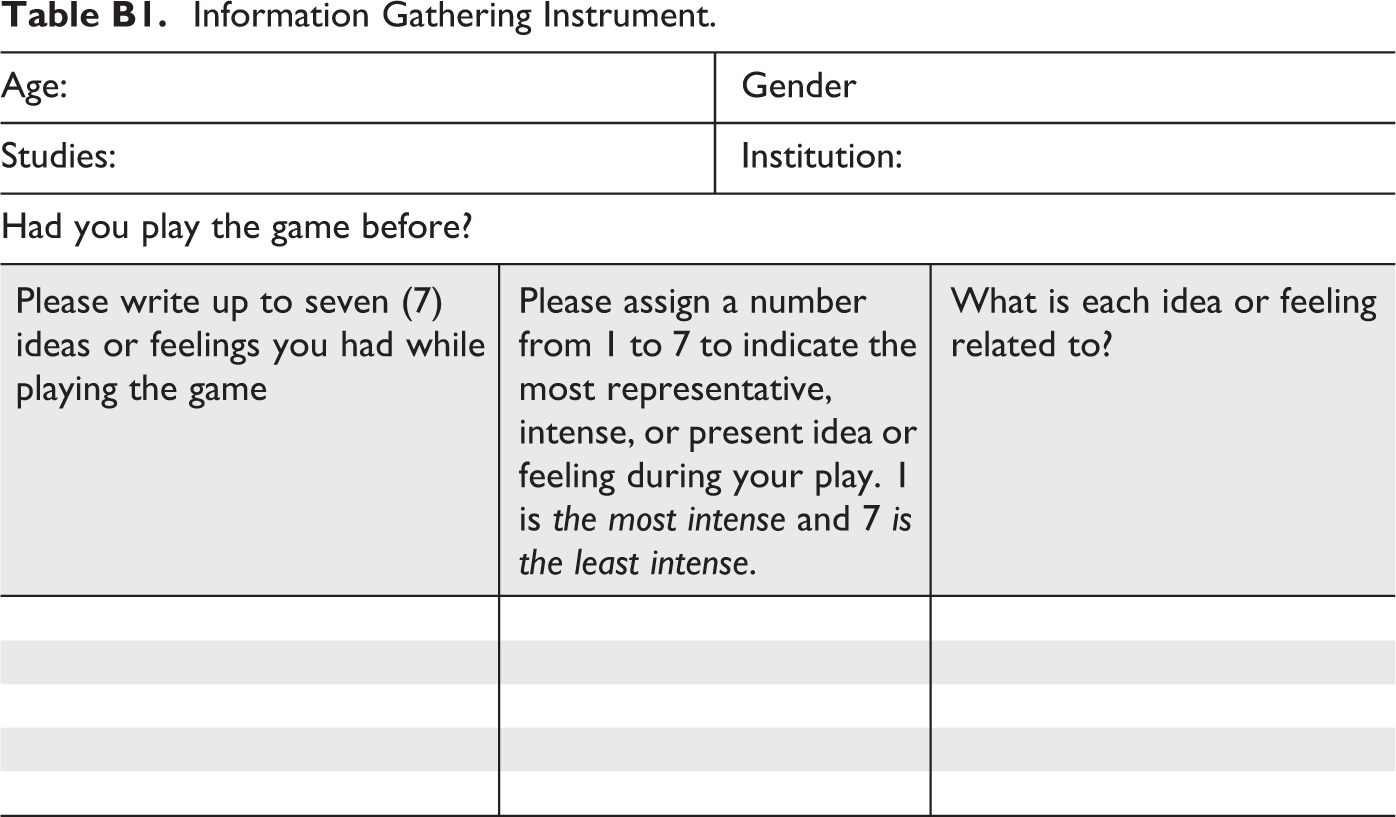
The instrument to collect the information consisted of three columns. In each column, the participant found an explanation about what to do. In addition, the interviewer explained the procedure to the participant and answered any questions the participant could have. The instrument had seven rows in which the participant wrote up to seven feelings they had during the gameplay. Filling the seven rows was not mandatory, although it was mandatory to ponder correctly and give a correct correlation to all the emotions written in the form. The instrument can be seen in Appendix B.
Data Analysis
The quantitative and qualitative information collected was introduced in Microsoft (MS) Excel 2007 databases in order to organize it and process it with statistical programs.
For the quantitative analysis, the SPSS was used in order to determine the reliability of the instrument as well as the distribution of the population’s answers. The frequency of occurrence of some terms was analyzed with this software, as well as the distribution of weights among the representations. The Software for Social Network Analysis was used in order to determine the clustering of the elements in a statistical way (Jung et al., 2009).
For the qualitative analysis, the program NetDraw included in UCINET was used to show the relationship between the elements in a graphic manner. 3 After that, the function K-means 4 was applied in order to determine the cluster with more affinity to a meaning core. The resulting graph was interpreted under the social representation theory and the meaning clusters previously defined by the participants with the cluster of meaning technique. After this procedure, macro-structures of meaning/representation and its organization were found.
Ethics
All the ethical considerations were taken for a study of minimum risk in an adult population, that is, informed consent, privacy, data management, and data collection were taken as stated by the Danish Social Science Research Council 2002. 5 A copy of the informed consent form can be found in Appendix C.
Method
The research consisted of 33 respondents, 23 males and 10 females, aged from 19 to 43. The average age was 26. One response was discarded from the data collected for not fulfilling the inclusion criteria. The response instructions were sent via mail to the participants, along with the questionnaire and the link to download the game. Each respondent was asked to play the game The Graveyard (2008). After finishing the game, the participants were given a questionnaire to fill out with their personal and socio-demographic data and a confirmation of not having played the game before. The questionnaire was also used to state emotions and thoughts about the game, including what elicited them. The form also included an informed consent document.
Data Coding
To make analysis of the data possible, a series of steps to code it was carried out. First, the data were coded in MS Excel spreadsheets. For the quantitative analysis, the data were classified by using semantic and content analysis (Bryman, 2012, pp. 288–307; Krippendorff, 2004). To perform this filter, the qualitative data analysis software AtlasTi was used. The filtration process was executed 3 times. The first time, it was based on synonyms (e.g., sad–depressed). The second time, the analysis was implemented by using a semantic approach by context, as pointed out by the participants in the third column of the formulary (e.g., loss of a loved one—death). The third analysis consisted of grouping concepts in broad semantic-related categories (e.g., health—vulnerability, inability). The purpose of this last filter was to increase the reliability of the analysis of the respondents’ elicitations. There were 19 groups of representations after the third filtering process. Following the filtering, the data were coded in SPSS in order to carry out the quantitative analyses. UCINET was used for the cluster analyses.
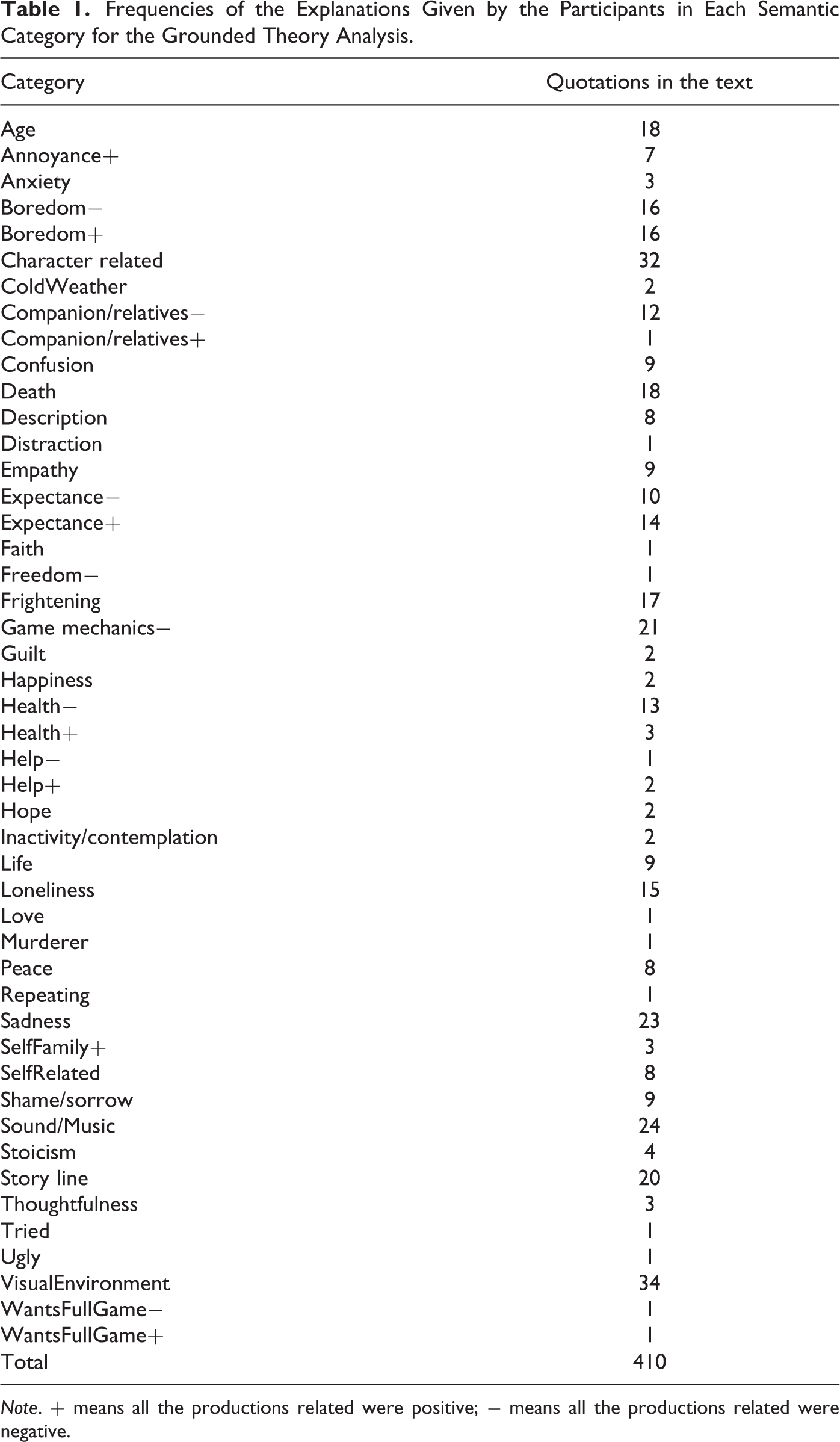
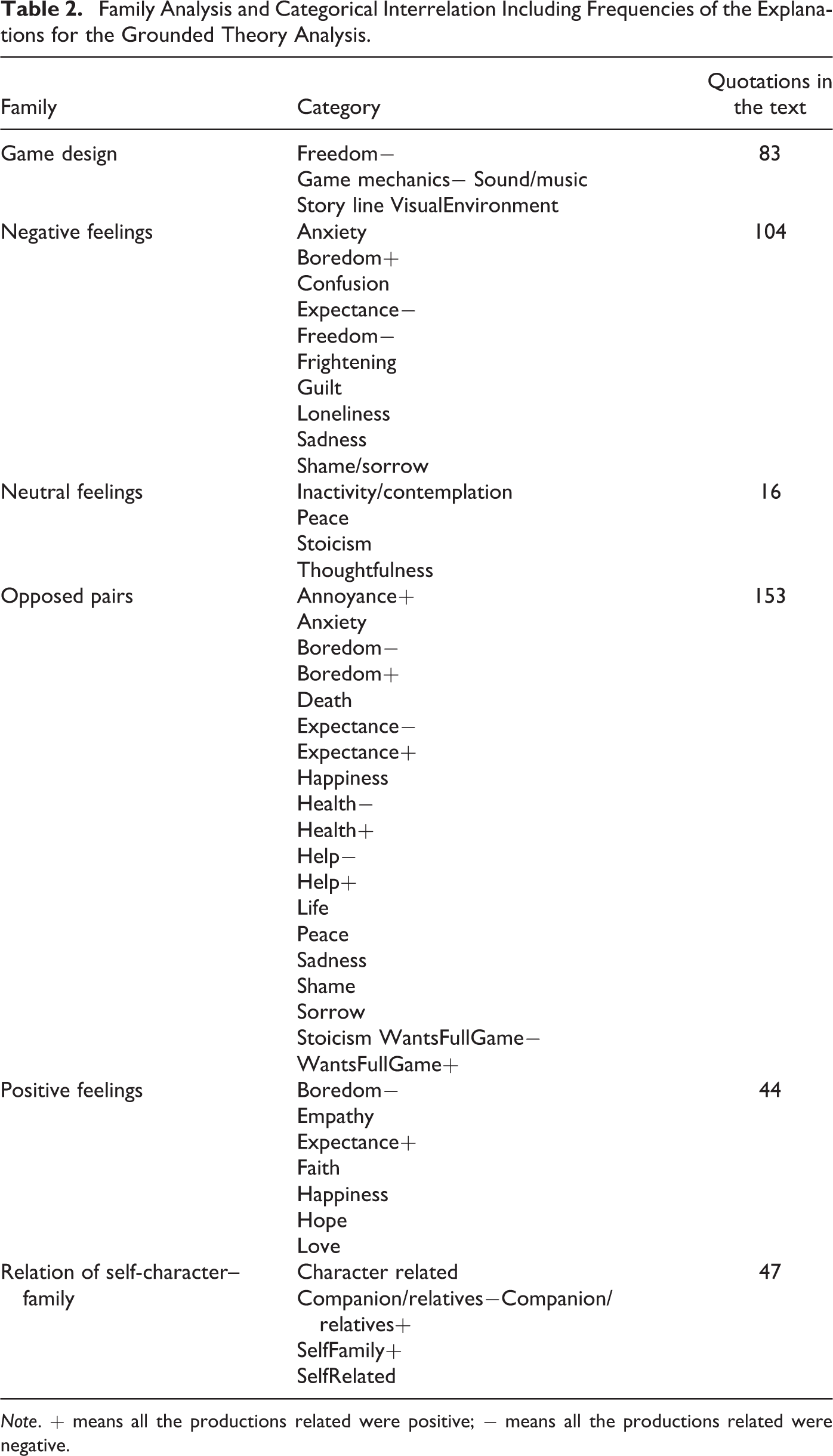
In addition, two types of qualitative analyses were made, a grounded theory and analytical induction analyses. The grounded theory analysis was used to find categories emerging from the participants’ answers. This was done by performing a semantic analysis of the participants’ classifications. To carry out this analysis, explanations of the answers of the participants were used. What is more, the codes were arranged from the main categories that emerged from the participants. After that, the codes were interrelated in order to maintain a structural meaning consistency in the consequent analyses. Lastly, a family analysis was made by using the codes found and linking them by using the previous formed structures as criteria. The final product can be seen in Tables 1 and 2.
Frequencies of the Explanations Given by the Participants in Each Semantic Category for the Grounded Theory Analysis.
Note. + means all the productions related were positive; − means all the productions related were negative.
Family Analysis and Categorical Interrelation Including Frequencies of the Explanations for the Grounded Theory Analysis.
Note. + means all the productions related were positive; − means all the productions related were negative.
Analytic induction was conducted based on an interview carried out with the designers of the game The Graveyard (2008) as well as propositions related to the research hypothesis. Some explicit categories, such as the purpose of the game, were extracted from the interview. Afterward, those categories were confronted with the participants’ elicitations in order to recognize how much they were linked to the game designers’ intentions.
The cluster analysis consisted of a conjunction between quantitative and qualitative methods. First, the quantitative analysis data, the categories, and their positions on the answer sheet were coded in the statistical analysis program UCINET. The program uses Bayes networks’ methods to find clustering and structural relations within the terms. After this analysis, a K-means analysis was carried out to determine the salient nuclei and their relations strength. The data depicted by this analysis are qualitative graphs; accordingly, they were interpreted based on the answers of the participants. Four analyses were carried out by using this method, two for the unconscious (immediate) responses and two for the conscious (pondered) responses. The main analyses used the first filter employed in the quantitative analysis, as it was the basis of the categories analyzed. The subsequent analyses consisted of a division between applications of the second and the third filters, in order to falsify the hypothesis and discern the stability of the created structure of the representations, thus supporting the reliability of the study.
Results
Quantitative Analyses
A total of 172 answers were given by the 33 respondents. Figure 1 shows that 29 answers referred to a state of contemplation, which had the highest frequency, representing 17% of the responses. The next-most frequent state, with 22 answers, was sadness, with 12.8% of the responses. There were moderate responses about altruism, boredom, game environment, expectation, fear, and health, which varied in frequency between 10 and 17 answers. In a broad perspective, the game mainly elicited feelings of sadness and contemplation about life.
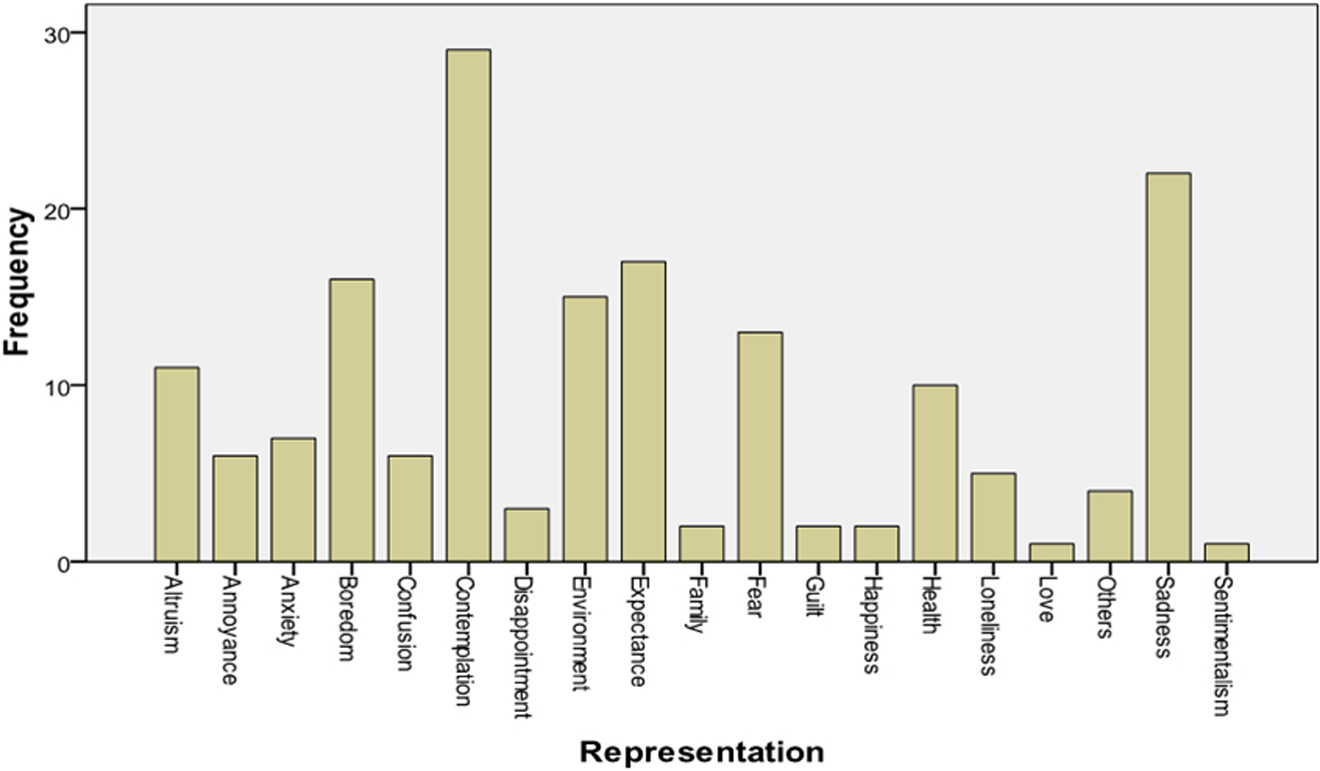
Frequency of the categorized elicitations.
However, in order to get more inferential results, the order of the answers was considered as a factor determining vividness and accessibility of the representation, according to the theoretical framework (Araya, 2002; Jung et al., 2009). The answers given in the first column of the questionnaire were multiplied by their order both for pondered and for nonpondered data in order to calculate their intensity, testing whether there were gender and age differences. The representations were processed as interval data, allowing deeper and more insightful analyses.
The t-test for gender differences depicts no significant differences between male and female responses (p > .05). However, it should be noted that the representation of game environments is slightly different (t = 1.17, p = .096) between genders because there were no female respondents eliciting representations of the game environment. Moreover, female respondents did not express representations of disappointment, family, or happiness. These results showed that the representation can be transmitted in the same manner regardless of gender.
To measure the interaction between age- and value-adjusted representations, a Pearson Product Moment Correlation (r) was used. In view of the relatively limited sample size, only six pairs of age and representations were analyzed, which were sufficient (n ≥ 9) for statistical analysis. Those representations were altruism, boredom, a state of contemplation, expectation, fear, and sadness. No significant correlations were found between those pairs, supporting the fact that there was no relationship between age and the representations elicited.
Then, the data were reprocessed according to the priorities assigned to the representations by participants in the second column of the formulary, so that the effect of the voluntary cognitive process could be measured. First, gender diversity was tested again by t-tests to confirm the hypothesis. The results showed the existence of a significant answer difference in the representation of “other” between males and females (t = 2.07, p = .05). In addition, the analysis showed differences in the game environment (t = 1.76, p = .093) and health (t = 1.89, p = .73) representations between the genders. Despite the fact that they were not statistically significant, the results denote that male respondents’ answers, compared to those of female respondents, were more influenced by aspects of the game environment and the representation of health. In addition, there were no significant correlations between age and representations in the prioritized data. Thus, age and gender showed no effect on the representation elicitation symmetry.
Impacts of the prioritization were measured by using paired-sample t-tests in order to examine the individual representation differences before and after the prioritization process of the respondents in the second columns of the questionnaires. The results showed that there were no statistically significant differences between prioritized and nonprioritized data. However, two pairs provided slight differences before and after this process: sadness (t = 1.93, p = .699) and expectation (t = −2.01, p = .066). From this, it can be inferred that the representations of sadness prior to the process was less intense than the one after the process; in contrast, the representation of expectation prior to the process was rated higher than its prioritized counterpart.
Qualitative Analyses
For the grounded theory analysis, three groups were found to be prevalent in the research. The first group was related to general categories that cannot be interpreted as related to social representations, the second group related to emotions and intentionality, and the third group related to game mechanics (see Table 1).
The most prevalent categories found in the first group were visual environment, character related, and sound/music. The visual environment group, with 34 appearances in total, refers to the participant’s reaction to the visual environment of the game, both in an emotional (e.g., Horrible atmosphere of the game) and in a descriptive (e.g., graves) manner; furthermore, some of the answers pointed to this category in a direct form (e.g., graphic design). The character-related group, with 32 appearances, alludes to the main character of the game (e.g., I feel sad about this old lady, I better walk more slowly, maybe she should have been the one to die for the way her life turned out to be). The sound/music category, with 24 appearances, refers to the sound as an originator of an emotional state (e.g., The lyrics of the song evoked a sense of pity in me for the loneliness of the old lady and her acute awareness of mortality, Setting, color tone, the old character, and of course background music have aroused this feeling. I have felt like why is life so lonely?). However, some answers were of a personal nature and, although they involved sound, they were not strictly related to the sound of the game but to the subjective feelings of the participant (e.g., the graveyards are calm, all the noise was outside). Those three categories correspond to general categories; thus, they cannot be interpreted as social representations.
A second group of categories consists of the representations referring to emotions and intentionality (see Table 1). This intentionality is channeled in the character and aesthetics. Sadness, with 23 appearances, was a frequent representation. This is a particular evocation because it is not a category pointing directly at something in the game, but highlighting an emotion, internal (nostalgia—all my past) or external (sadness—she is old and alone).
The third group, game mechanics, with 21 quotations (see Table 1), is an important category as well, not only for its prevalence, but because it is not a representation. Game mechanics is what makes the gameplay possible, but it is also a confounded variable. This category was coded with a minus symbol, meaning that all the related productions were negative; however, it does not have a counterpart (e.g., Restriction of scenario and unavoidable of mortality, Nothing is happening, she is walking incredibly slow). This category was found to interfere with the gameplay and hence with the transmission of representations.
Based on the previous analysis, 11 associative networks were created. From these, one was chosen as the most representative network emerging from the analyses, that is, the relation with the character network. It depicts how the main character is the catalyst for most of the representations of the participants (see Figure 2).
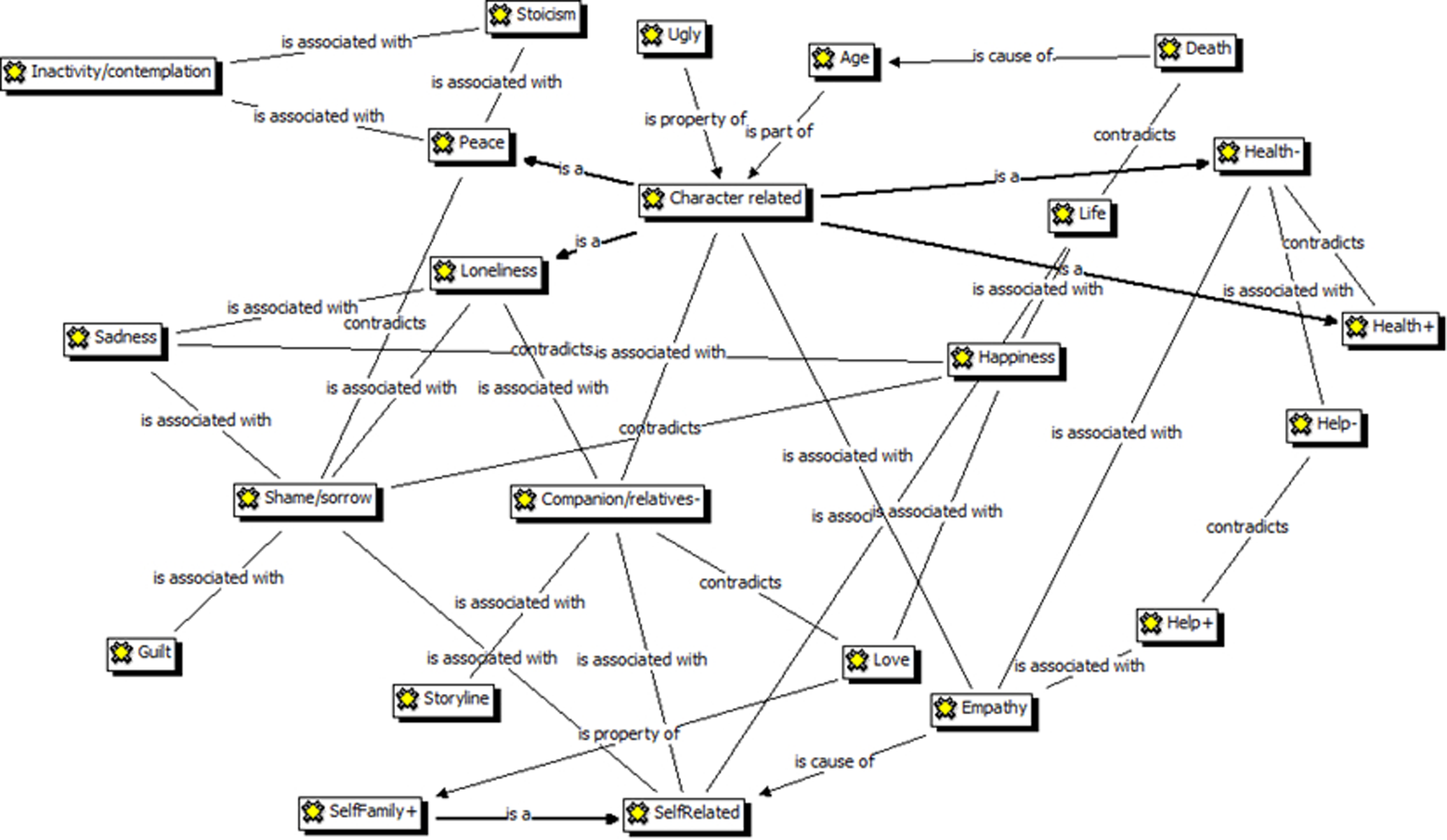
Relationship network of the meanings related to the character.
It is possible to see how the main character is linked directly with some representations such as peace, loneliness, ugly, age, health, empathy, and relatives. Besides, representations such as sadness, which are dominant in the study, are not directly linked to the main character; instead, they are associated with other feelings, such as loneliness. This means that when people play the game, they refer to the state of the main character as a lonely character and that leads to the conclusion that she is sad. She is not seen directly as a sad person but sad for a cause (e.g., she is old and alone, she has lost somebody, sense of compassion—for the poor and alone lady). Nevertheless, the sadness answer is related to other categories (e.g., absence of sign of happiness, Everyone passed away.… Only a woman was among numerous dead bodies, Drama—The song used in this game is so powerful with meaning. The lyrics are somehow poetic to me and bring awareness about the truth of life). This network also contains other subnetworks marking a relationship between the player and the game, such as SelfRelated and SelfFamily+.
For the analytic induction method, categories derived from the designers’ point of view as well as the hypotheses of the researchers were used (see Table 3). The most prevalent categories were “game related,” with 62 appearances. This was followed by the category “character related,” with 52 quotations. After that, the categories of playing style (45 quotations), environment related (43 quotations), and aesthetics (42 quotations) were the most frequent. The appearance of these categories as the most common ones in the analytic induction analysis was congruent with the findings in the grounded theory analysis. The first category, game related, was found to be associated with the playing style in a negative way, signifying that the game did not match some respondents’ playing styles. Those answers were seen in the previous set of analysis as boredom, but when using the categories proposed by the designers and researchers, the boredom category was semantically divided between game related and character related. In contrast, the character-related as well as the environment-related categories point to some representations people intentionally put on the main character or the environment. These are at the same time linked with the aesthetics category.
Frequencies of Explanations Given by the Participants in Each Semantic Category for the Analytic Induction Analysis.
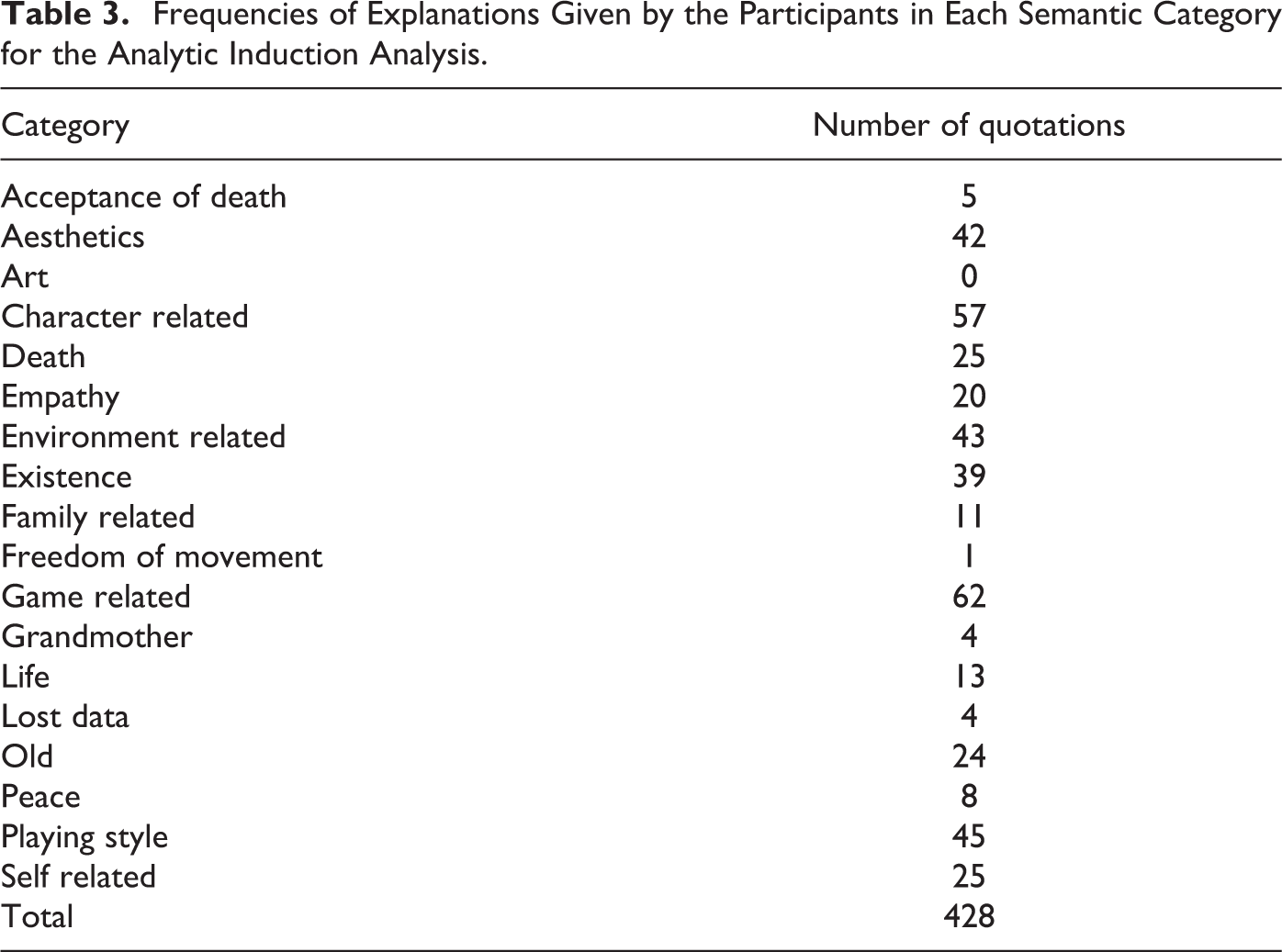
For analytic induction, two categories merit attention, namely, art, with zero appearances and lost data, with four appearances. Art disappeared from the categories that emerge from the game designers’ interview, as it was semantically absorbed by the category of aesthetics. The category of lost data belongs to the items that were impossible to categorize using the categories derived from the game designers’ interview.
In this method, the families were created by grouping the codes using their relationships (see Table 4); for instance, all the codes derived from the designer’s interview were grouped under the family of designers’ representations, allowing control and order to be maintained over the data, as well as giving independence to the cluster of representations within the answers of the participants. This family, for instance, contains 11 representations proposed for the designers as the main goal of the game (the representations expected to be produced on the players when they play), plus one category that was dismissed (art) because it was absorbed by the category of aesthetics. The art category was put in the family of dismissed categories because it does not add to the category of designers’ representations.
Families of Categories Including Frequencies of Explanations for the Analytic Induction Analysis.
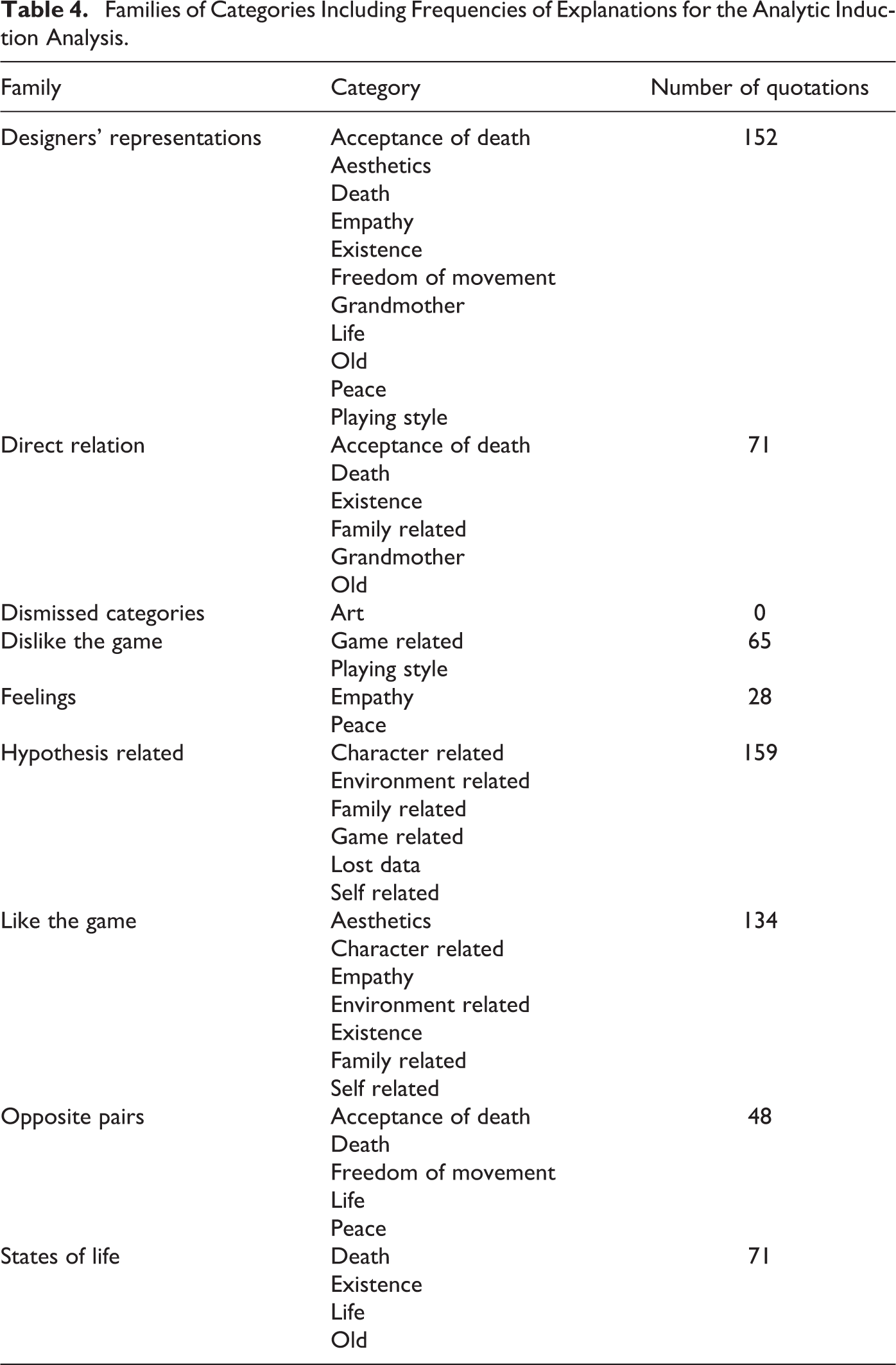
Two families were analyzed with the analytic induction method, that is, designers’ representations (Figure 3), and hypothesis related (Figure 4). The configuration of these two families is congruent with the results previously presented as well as the theoretical framework. From this, it can be inferred that the player accesses the designers’ representations based on aesthetic elements, as can be appreciated in Figure 3. Meanwhile, the hypothesis-related category is related to the falsifiability of the study, stressing the relationships among the player, the main character of the game, the self, and the family (Figure 4).
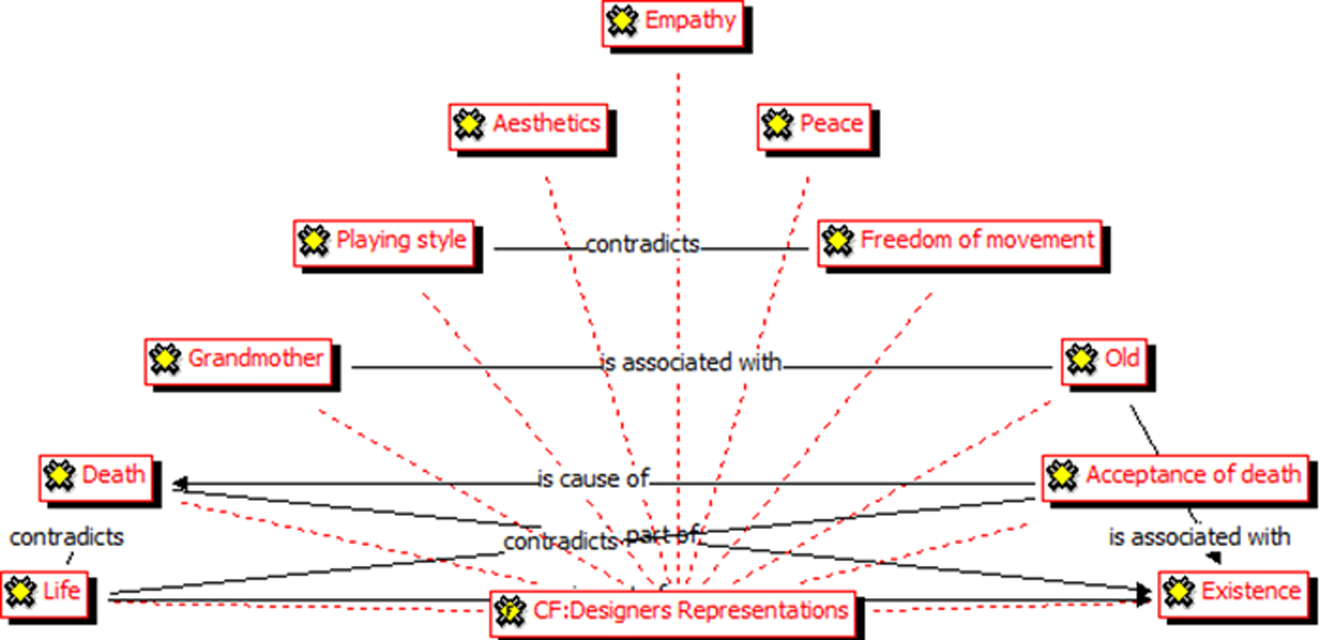
Relationship network of the meanings related to the representations of the designers.
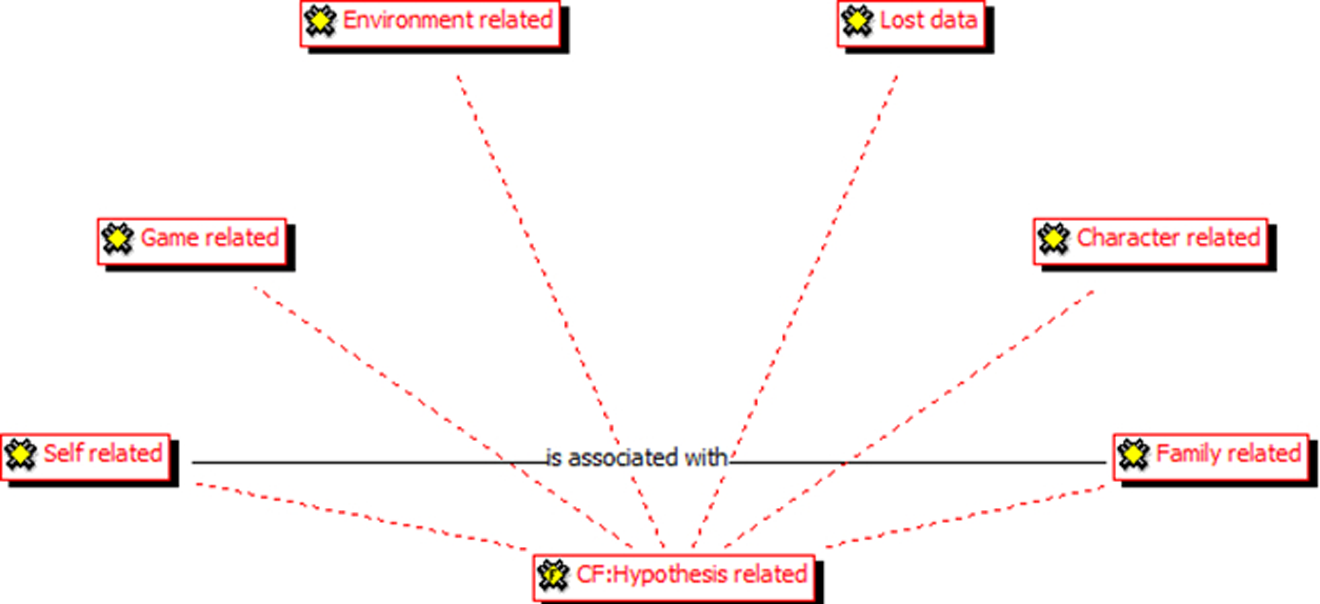
Relationship network of the meanings related to the study hypotheses.
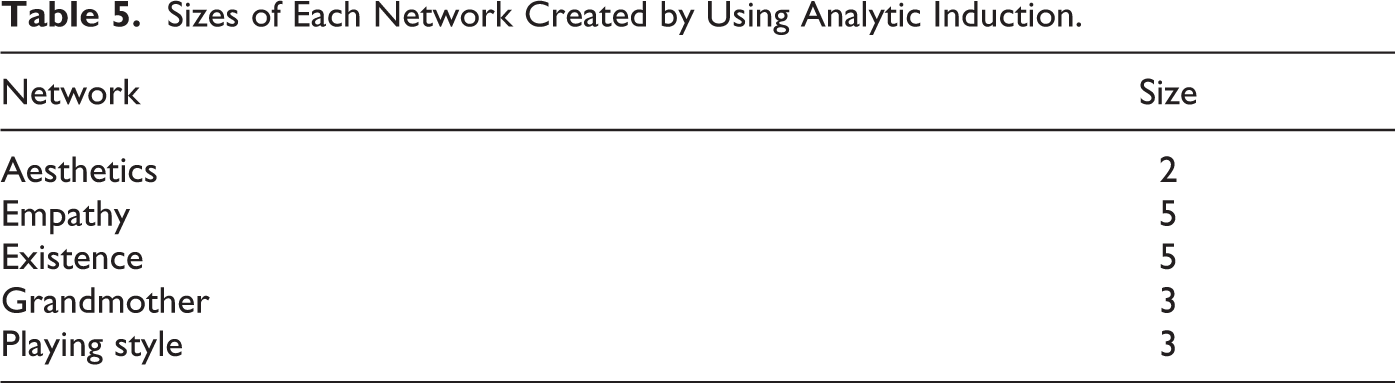
Some meaning networks were created by using the analytic induction method (see Table 5). Nonetheless, none of them were strong enough to draw conclusions about how the social representations were structured in relation to the intentions of the game designers. In order to delve into this matter, a cluster analysis was conducted.
Sizes of Each Network Created by Using Analytic Induction.
Cluster Analyses
Cluster analysis is a statistical method that allows grouping observations so that each observation possesses attributes similar to the other groups (Tryfos, 1998). The present study makes use of K-means cluster analysis with an average linkage. This method allows one to spot relatedness of groups of representations by using the mean distance (weight) of the respondents’ expressions. The K-means analysis is defined by Mooi and Sarstedt (2011) as an algorithm to perform cluster analysis with the characteristics of not being hierarchical and allowing the comparison of variations within clusters.
For the cluster analysis in the current research, the following four aspects were taken into account: the unconscious (direct) representations, the conscious (pondered) representations, the unconscious representations under the family filter, and the conscious representations under the family filter. For all four aspects, only the first three representations elicited (or the ones pondered as one, two, and three for the conscious representations) were used, as theoretically they are the most salient representations elicited by the participants. This management of the data was done in order to compare and contrast different representations and their associations, showing the main cores of the representations produced by the game. The data were introduced in a UCINET database and then analyzed by using NetDraw software. In NetDraw, the data were processed as follows: first, the undesired elicitation times were deleted to isolate only the ones required for the study. Second, the isolated nodes were deleted to prevent interference. Third, the K-means analysis was carried out. Finally, a principal component graph-theory layout was used in order to depict the K-means strength graphically.
Figure 5 depicts the most prevalent representations for the first three elicitations in the cluster analysis. These representations are arranged in three layers in which each representation (circle) is linked to an elicitation time (square). According to the distance, the farther the nodes (circles) are from the squares, the less related they are. In addition, the blue nodes representing the first layer are representations shared by the participants in the first three elicitations. Here, only the blue node layer is described because it contains the representations and emotions that are socially shared among the participants of the study, whereas others are only partially shared and might not be proper social representations. The different layers for all the representations were analyzed within the study, but only those considered relevant are depicted here.
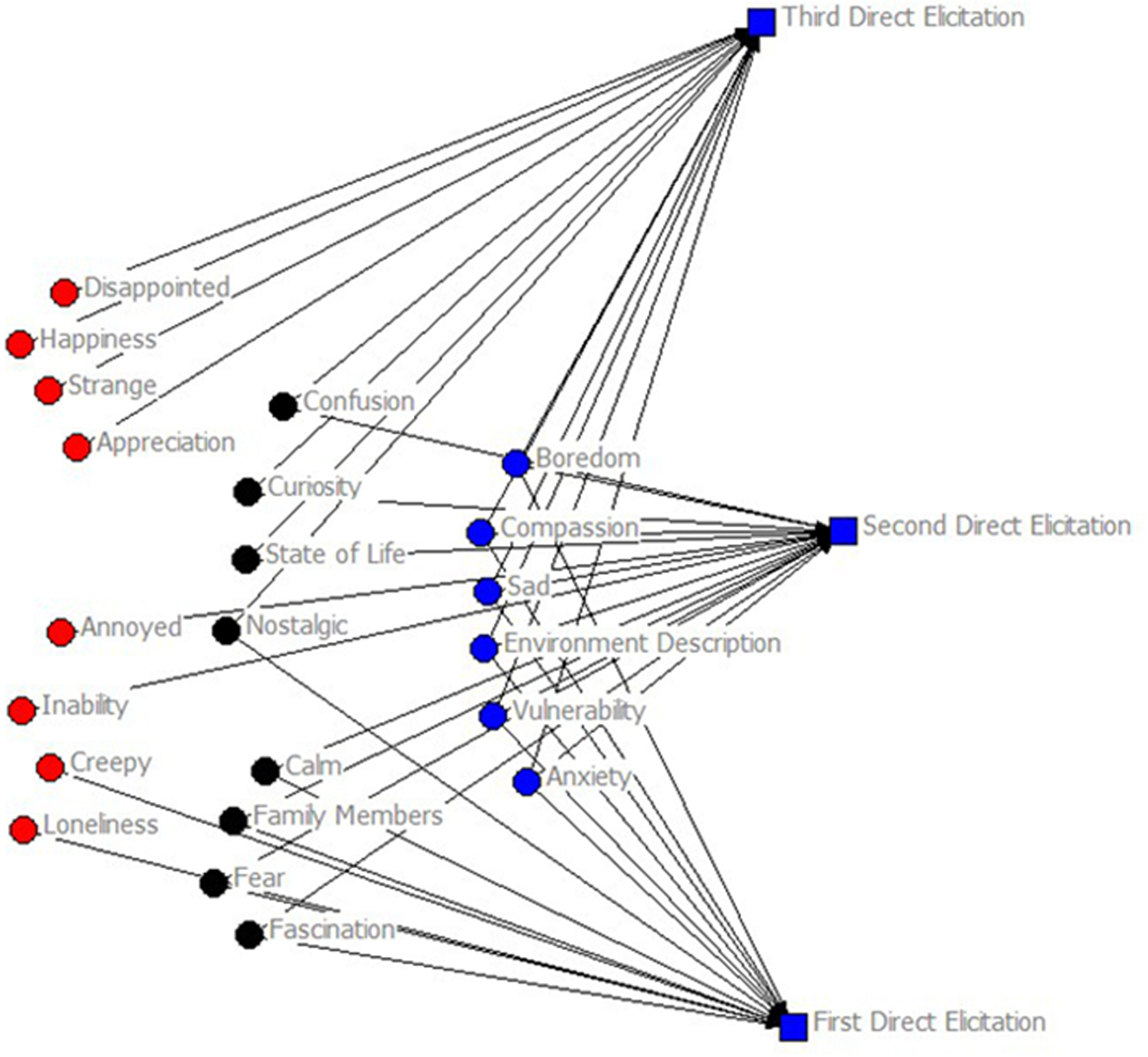
K-means analysis of the unconscious representations.
In Figure 5, it is possible to observe how the representations and feelings of boredom, compassion, sadness, vulnerability, and anxiety are strong representations shared in the first three elicitations by the participants. The category of environment description, in contrast, is not relevant as a representation, but points out how people tend to describe what they see when they are asked about the game.
Following the characteristics of the study, Figure 6 depicts the categories of sadness, boredom, anxiety, calm, state of life, creepy, and compassion as the shared representations and feelings people have reflected about the game. Contrary to the case in the unconscious elicitation, the fact that the environment description category is present here points toward how the environment of the game is linked with the representations elicited by it.
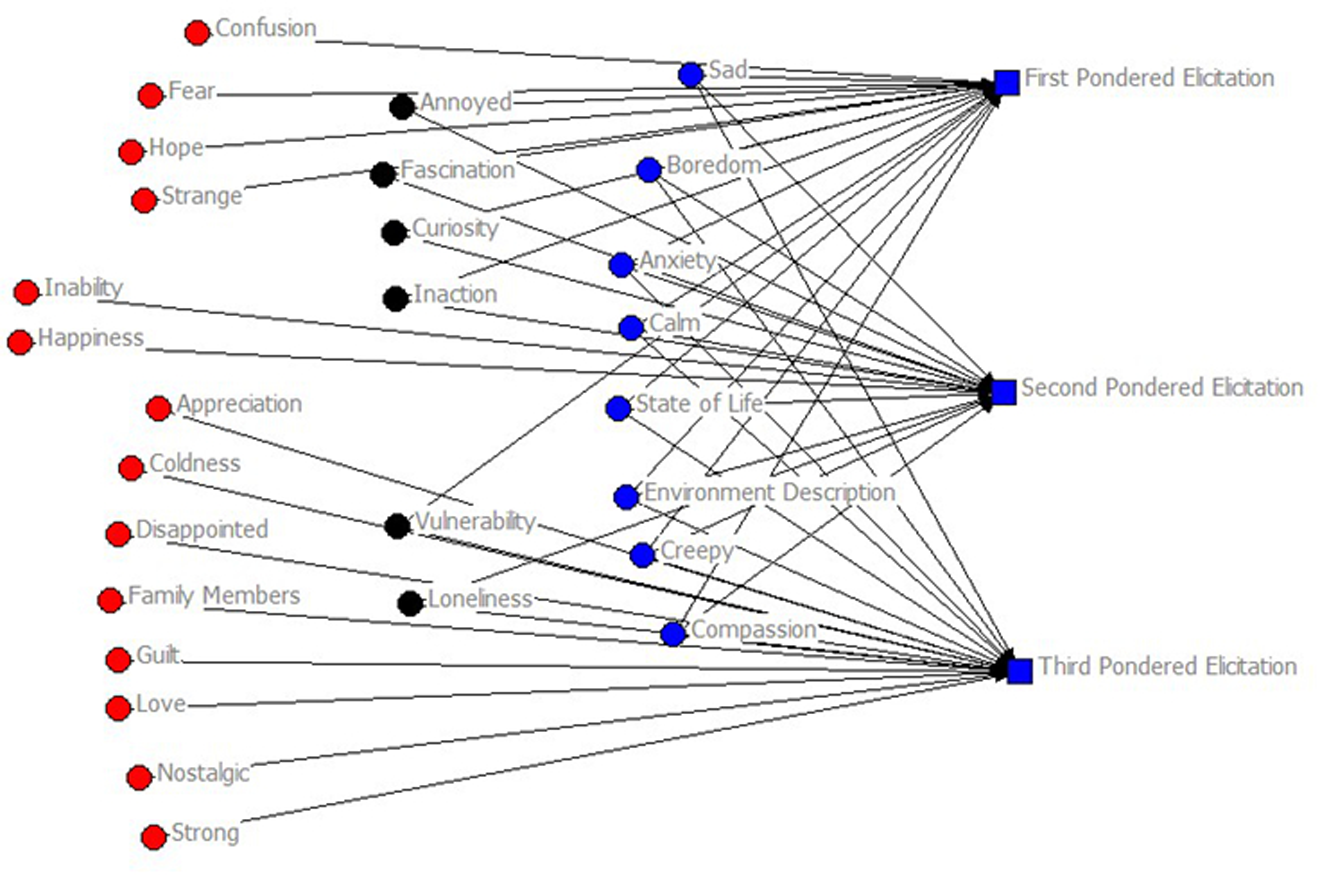
K-means analysis of the conscious representations.
It is possible to find the most nuclear representations elicited by people while playing the game by synthesizing the two analyses. These categories are boredom, compassion, sadness, and anxiety. In addition, the environment of the game is producing those representations and feelings.
For the unconscious cluster analyses based on the family filter applied in the study, it is possible to find (see Figure 7) the main categories of representations corresponding to the first elicitations of the participants, namely, environmental description, altruism, anxiety, boredom, contemplation state, health, and sadness. The same analysis carried out with the pondered data depicted in Figure 8 shows altruism, anxiety, boredom, health, sadness, loneliness, fear related, environment description, and contemplation state as the most significant categories. It is possible to observe how, contrasting Figures 7 and 8, the first seven categories present in Figure 7 are shared by all the participants in both kinds of analyses.
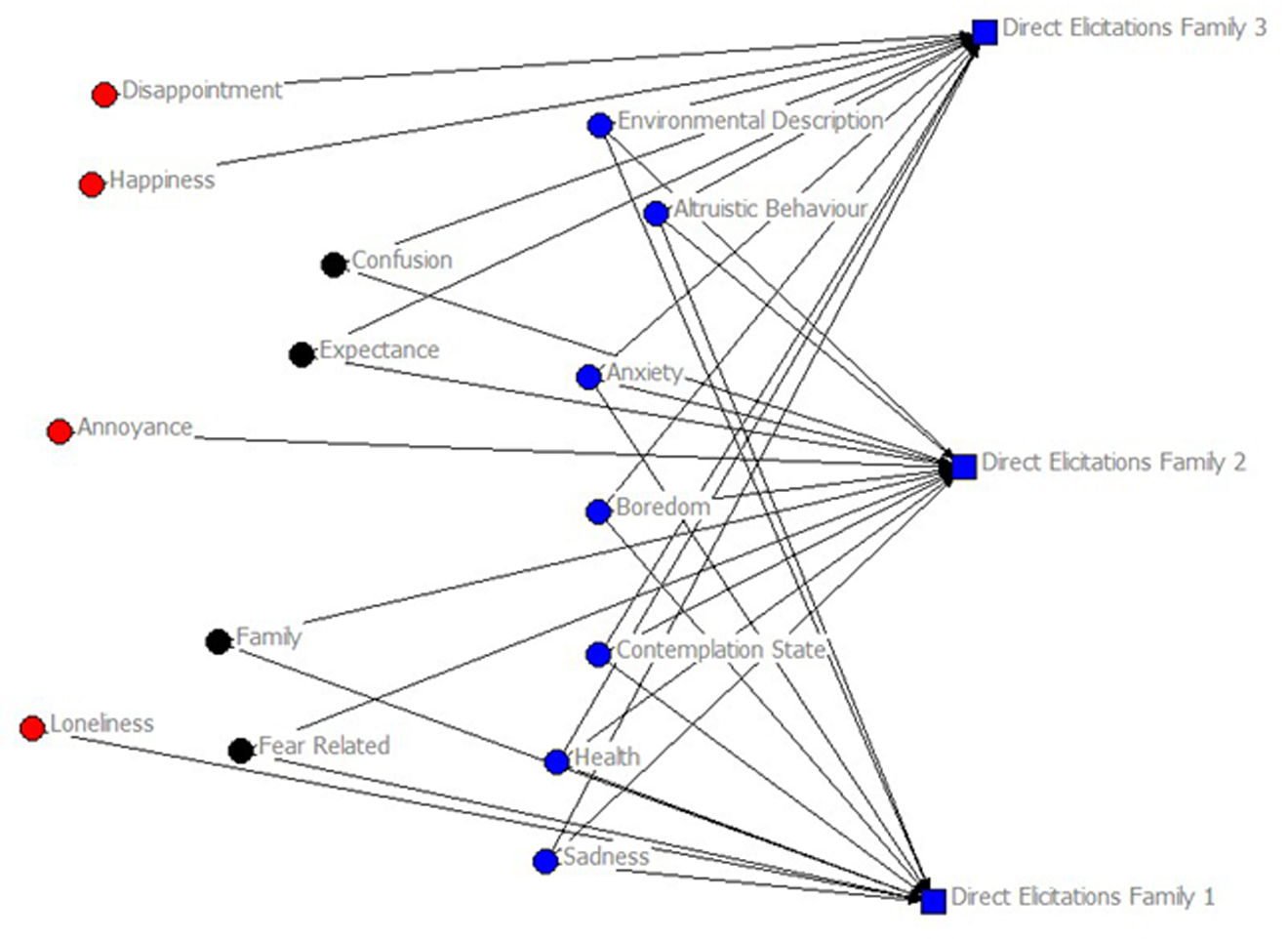
K-means analysis of the unconscious families.
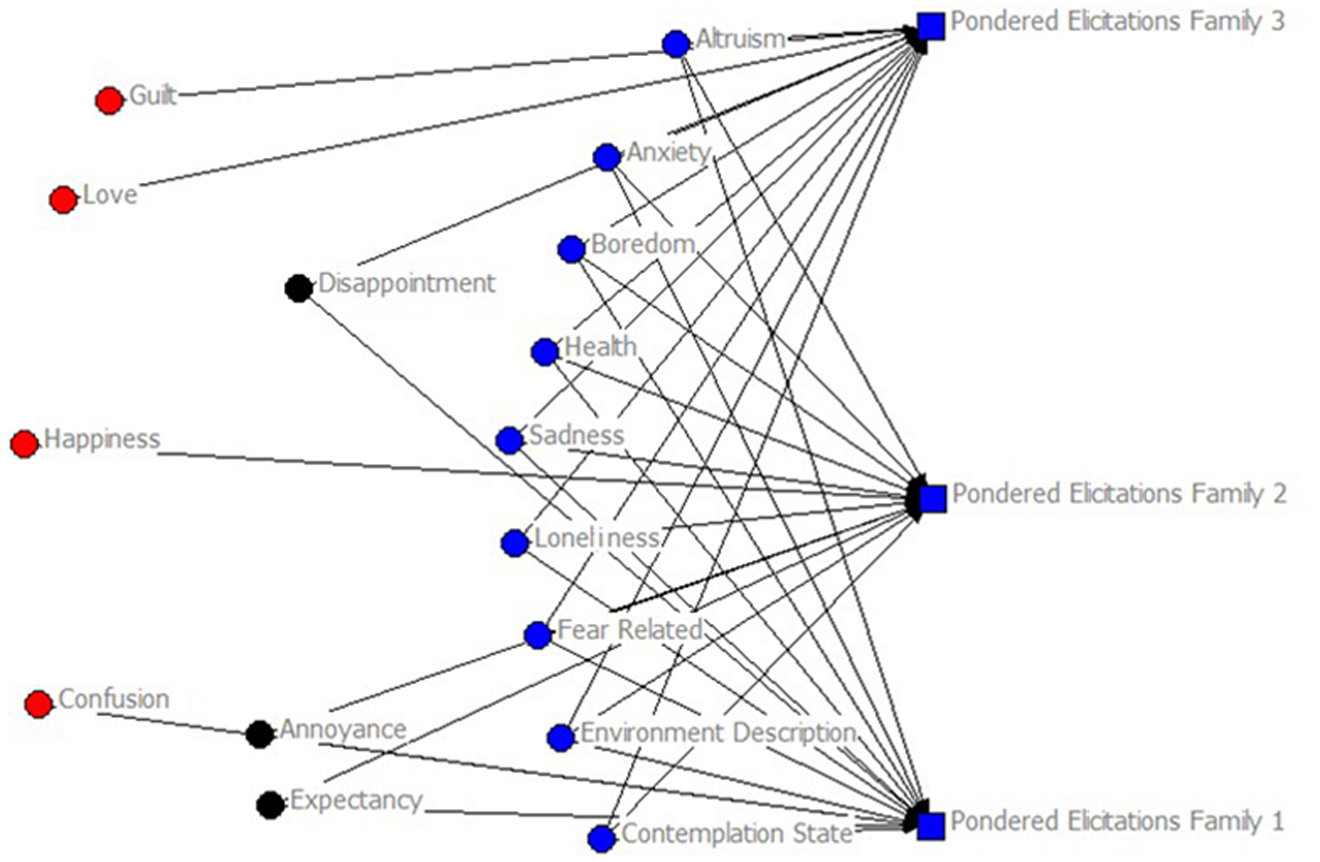
K-means analysis of the conscious families.
In addition, for the representations and emotions found as the central cores, it is possible to state how they relate with the designers’ intentions, as pointed out in Table 4. From the 11 representations depicted by the designers, the core categories found were related to two of them: “aesthetics”, by means of the environmental description, and “playing style” in a negative way, found in the category boredom. The core categories were found to be related to the research hypothesis (see Table 4), covering four out of six categories: character related by means of projected representations and feelings such as loneliness; environment, when players are describing the environment of the game; the self, by allusion to such inner emotional states as fear and anxiety; and the game, by means of the boredom category, related to the gameplay.
Findings
The study shows that there are no significant differences or correlations of the representation among the samples in various ages and genders; nevertheless, there are a few trends, implying the variation in some kinds of representation such as visual environment of the game and health. Also, the result of the prioritization effect implies that conscious and unconscious thought are not different.
The results also illustrate that to a large extent, the answers are related to sensorial objects (i.e., auditory and visual objects appeared in the game). However, some representations, such as sadness, go much deeper into interpretative and subjective feelings related to the game purpose. Another prevalent representation that appears in the analysis is game mechanics, which is an obstacle to game appreciation because only negative meanings were provided.
A number of networks were created by the analysis of grounded theories, by which the relationship between the meanings can be inferred. Most significant, the network of relationships between the meanings illustrates the complex relations of the main character and a broad range of feelings and properties in terms of a causal association. However, another predominant representation, sadness, is not directly related to the main character. Congruence between the grounded theories and the analytic induction techniques is considerably high in both the categorization process and the process of classifying the categories in families.
It is possible to conclude by the revision of the four cluster analyses that the internal structure of the representations is stable, especially the core representations. This conclusion provides the reliability to assure that the cluster of representations, as well as elements related to them, creates a structure that is socially shared in the form of representations when the game is played. It is also possible to state that those representations are shaped in the form of emotions. This can be inferred by the meaning’s nature that, being intentional, can be attached to objects or simply emerge.
Discussion and Conclusions
In general, the results of the study depict a connection with the theoretical framework, supporting the hypothesis that there are representations that can be transmitted by playing art video games and that they are shared among some people, in spite of differences in their ages, genders, and even cultures. However, the representations shared among participants were not similar to the ones that game designers expected.
The results suggest that game mechanics are important in order to transmit the representations and for the player to get the intended meaning. Moreover, the mechanics role is so important that part of the results shows representations linked to the game mechanics, ignoring other elements present in the game.
Another finding of the study, not included in the hypotheses system, was how the main character of the game is connected with the players. The character serves as a catalyst for the player’s emotions, both allowing the projection of the player’s feelings and serving as a personal point of reference within the game. Concerning this point, the researchers suggest making further studies about how the main characters can affect the emotions of the art game players.
In addition to the last point, it was found that the representations elicited were intentional, particularly those related to emotions, meaning that the player was not a passive observer whose emotions were triggered by the game, but they also created a story or a succession of events supporting the emotions they were feeling.
Based on the results of the present study and the theoretical framework, it is possible to say that there exists a link between social representations and video games, and this link is worth studying, not only because of its psychosocial implications, but also because of the implications for the social representation theory. In addition, the use of video games as an elicitor of social representations points to another methodology in social representation studies, linked not to the verbal association but to a broad field of such nonverbal references as sound and visual effects.
More studies in the connected fields of psychology, communication, and mass media can provide better tools and experimental backgrounds for psychology—in this case, the social psychology theory of social representations. These studies can provide, as well, advances in communication theory and research—for this case, video game industry. Following this line of research can improve the potential of video games as well the kind of messages transmitted by them and the video game industry. This includes the refinement of mechanics, quality assurance research, and target audience game experience. Theories and methodologies derived from those studies can improve and ease further studies in media violence and marketing, among other factors.
Although the results of the present research show a good correlation and description of the representations linked to one art game, the researchers suggest carrying out more research in the field, using a larger sample, different art games, and more control of variables within the sample. Group playing sessions or in vivo evaluation are suggested. The study could benefit from other sampling types, such as random or quota instead of snowball, this in order to better control for the usage of technology, knowledge about art, and expectations by the population, thus expanding the generalizability of the results.
Footnotes
Appendix A
Appendix B
Information Gathering Instrument.
| Age: | Gender | ||||
| Studies: | Institution: | ||||
| Had you play the game before? | |||||
| Please write up to seven (7) ideas or feelings you had while playing the game | Please assign a number from 1 to 7 to indicate the most representative, intense, or present idea or feeling during your play. 1 is the most intense and 7 is the least intense. | What is each idea or feeling related to? | |||
Appendix C
Acknowledgment
The authors would like to thank Nicoleta Sirbu, MA in Cognition and Communication, for her collaboration in the project.
Declaration of Conflicting Interests
The author(s) declared no potential conflicts of interest with respect to the research, authorship, and/or publication of this article.
Funding
The author(s) received no financial support for the research, authorship, and/or publication of this article.