




Abstract
This article examines the Japanese action puzzle game Catherine, arguing that the game presents a social narrative that comments on Japan’s pressing issue of a declining birthrate and aging population. It also theorizes a strategy for player involvement based on “distanced” (self-reflexive and meta) engagement. Through an examination of the narrative, characters, and gameplay, supplemented with national fertility survey data from Japan, the article argues that Catherine subverts classic game tropes and fosters player engagement with a socially relevant diegesis. Simultaneously, the unique meta-gameplay elements utilize what I term “distanced engagement” to encourage the player to critically self-reflect on both the game scenario and their role as a player. In this way, the article considers how the unique relationship between story and distanced engagement allows video games like Catherine to function as impactful and interactive social narratives.
Keywords
The Japanese are going extinct. According to the Web Clock of Child Population in Japan (Nihon no kodomo jinkō tokei) hosted by Tohoku University, the country will have one child remaining on June 7, 3664 (Yoshida, Ishigaki, & Mail Research Group, 2014). After this date, as a sensationalist Fox News broadcast proclaims, the entire nation will “go the way of the dinosaurs” (Piper, 2012). If the above-mentioned scenario seems familiar, that is because a human population bordering on extinction has served as the theme for many dystopian novels and films (Children of Men, 2006; I Am Legend, 2007; and The Book of Eli, 2010). However, in the case of Japan, this situation that once seemed purely speculative is in fact becoming a more plausible future due to the country’s widely publicized ongoing social crisis of a declining birthrate coupled with an aging population, known in Japanese as shōshi kōreika. While the logic behind this alarmist countdown clock is undeniably flawed, as it presupposes that population statistics in Japan will remain utterly static over the next millennium, there is little doubt that the country is facing a population crisis. 1
What if this troubled future could be averted? What if the Japanese people could be brought back from the brink of extinction? This is the central speculative question that informs both the narrative and the gameplay structures of Catherine (Kyasarin), a mature-rated action puzzle video game developed by the Japanese game company Atlus and released for the PlayStation 3 and Xbox 360 gaming consoles in February 2011 (Atlus, 2011). Catherine was subsequently fully localized and made commercially available in North America later that year and in Phase Alternate Line (PAL) territories in 2012. The game was a critical but not a commercial success and, to this day, remains a cult favorite among Japanese, North American, and European gamers.
Influential media theorist McLuhan (1964) states, “Games are popular art, collective, social reactions to the main drive or action of any culture” (p. 235; emphasis in the original). Indeed, McLuhan’s assertion echoes our common understanding of political or allegorical storytelling in entertainment works. Few would deny that contemporary Japanese video games, much akin to other pop cultural media such as manga (print comics) and anime (animation), might serve as useful reflections of the country and culture from which they came.
However, contemporary video games complicate McLuhan’s notion of social relevancy in entertainment. As an inherently active medium, video games require interaction between the scripted simulation authored by the game creator and the unique play style of the user (Cremin, 2012). Sicart (2013) writes that to “play” is to “inhabit a wiggle space of possibility in which we can express ourselves—our values, beliefs, and politics” (pp. 8–9). His description of “ethical gameplay” is useful in that it acknowledges video game design as ethically (and, I would add, culturally and politically) relevant (p. 24). Furthermore, Sicart argues that simulation-based representation is capable of promoting social understanding through gameplay. In ethical gameplay scenarios, players must navigate a game’s unique moral system, and this allows for the experience of “fringe themes” that may in turn engender meaningful self-reflection “beyond the calculation of statistics and possibilities” (pp. 23–24).
This article discusses Catherine as a gamic “social narrative” that not only comments on Japanese society but also conduces toward real-world self-reflection and perhaps even action by the player. I argue that Catherine accomplishes this through the interplay of socially relevant characters and themes with what I term “distanced engagement.” Distanced engagement bolsters the potency of the social narrative by openly employing self-reflexive and meta-gameplay elements, nonlinearity, and ludonarrative dissonance. The result is an immersed yet still critically self-reflective player. By analyzing this gamic engagement dialectic in Catherine, I will show that the game does not function simply as a static social allegory for Japan’s population woes. Rather, Catherine encourages players to identify with the socially relevant narrative and characters while, at the same time, also remain acutely aware that they are playing a piece of electronic entertainment and thus maintain a critical space for contemplation and self-reflection.
Playing with Social Narratives and Distance in Video Games
The issue of whether video games can affect players on an individual emotional level is a contentious one. Recently, Ash (2012, 2013) has written a series of articles on “affective design,” arguing that video games attempt to generate particular emotional responses through their material and aesthetic construction. For Ash, an individual player’s affective engagement is only present if the video game can capture and sustain both her somatic and her analytic attention (2013, p. 34). Full attentive engagement with a game eventually engenders, according to Ash, a form of “affective vulnerability,” where players open themselves up to the game world and characters and are thereby open to emotional connection (2013, p. 45).
Galloway (2004) also allows for the possibility of player empathy provided that his central “congruence requirement” is met. This requirement is that the real-world social reality of the game player must in some way align with the procedural reality of the game in order for the social narrative to become emotionally resonant. Still, some scholars challenge empathetic engagement with video games entirely. This is the case for scholar Newman (2002) who argues that players identify with game characters not based on the appearance or characterization of the avatar (traditional sites of empathetic engagement) but rather through the unique set of techniques and capabilities that they afford the player.
What Ash, Galloway, and Newman’s arguments all suggest is that emotional engagement with a virtual world or virtual character is incredibly complex, dependent on a variety of factors, and highly personalized with each player. It is likely impossible to speak of how a particular video game might affect all users. In this article, I am interested in how game texts invite player empathy and present social narratives. However, rather than locate my arguments solely in emotional resonance and affective responses for a specific player, I take the approach of examining the interplay of narrative, cultural sensitivity, character design, and gameplay that I argue work together to engage the player.
Japanese cultural critic Azuma Hiroki has already applied concepts of empathy in his discussions of otaku (individuals who indulge in subculture) and video games. Azuma (2009) generally characterizes postmodern pop cultural consumption in Japan as motivated by an ongoing search for a grand narrative that does not exist (a “grand nonnarrative” in Azuma’s terms; p. 86). While video games can never allow the user to fully reconstruct epistemological meanings of the world owing to their status as simulations, they do provide, according to Azuma, crucial “small instances of empathy” (p. 116). That is, in the best Japanese video games, the player “identifies with, feels empathy for [characters and situations], and is sometimes emotionally moved” (p. 85). Azuma sees these moments of empathy exemplified in dating simulation games, 2 a genre to which Catherine holds several similarities. However, rather than focusing solely on romance, Atlus’ game highlights the many different ways that a gamic social narrative might engage players.
For example, Catherine often follows Galloway’s theory of congruence by presenting, as I will argue, characters and narrative situations that are proximate to the lives of many young Japanese. Yet, Catherine also utilizes a strategy common to manga and anime and mediates its social narrative through fantasy and Sci-Fi tropes. During these fantastical nightmare segments, the game remains socially relevant, yet the one-to-one congruence between the gamic reality and the social reality of the player breaks down.
In addition, Catherine bares a resemblance to what Bogost, Ferrari, and Schweizer (2010) term “newsgames,” or gamic experiences “at the intersection of videogames and journalism” (p. 6). Bogost et al. divide newsgames into categories meant to mirror traditional print journalism. These include “editorial” newsgames that present a clear authorial or political opinion or “documentary” newsgames that investigate a real-world social event. While Catherine does have an infographic interface built into the gameplay, the game on a whole resists easy genre classification and does not fully fit into the categories of “editorial” or “documentary” newsgames. Catherine does not attempt to persuade players with an “embedded bias” (p. 6) nor does the game provide an unadulterated and factual investigative report on a real social event (pp. 6–7).
Bogost’s (2007) related discussion of “serious games” designed to “invoke, support, doubt, or debate [the] validity or desirability, or universality” of an existing situation (p. 58) could certainly be used to describe Catherine generally. However, here too the emphasis is placed on the rhetorical power of games leading the player to specific value judgments. While many games do function rhetorically as Bogost outlines, in a Japanese video game such as Catherine, the social narrative does not exist to challenge a single established worldview but rather encourages players to influence the social narrative as they see fit through nonlinearity and branching narrative choices.
If a game’s social narrative is one primary tool to draw players into the game, then “distanced engagement” is conversely the detached construct that makes the artifice of the game visible and keeps the player aware that they are voluntarily engaging in fantasy play. Distance in gaming can take many forms, perhaps the most ubiquitous being the classic arcade “high score” screen that showcases the vestiges of other human players (represented by their initials and points) in a leaderboard. Distanced engagement may be caused by extra-diegetic factors, such as a physical game controller that requires the mastery of many buttons and skilled hand–eye coordination in order to manipulate. Or, it may be caused by intentionally self-reflexive or parodic (meta) elements existing within the game design itself, such as when Psycho Mantis famously manipulates the player’s DualShock controller and reads memory card data from within the television during Metal Gear Solid (Konami Computer Entertainment Japan, 1998). In either instance, failing to manipulate the controller successfully or suddenly coming face-to-face with a game character who reminds you how many times you have saved your progress breaks the fourth wall and brings the artifice of the game to the fore. It is in this interval of distance that I argue players have the ability to critically self-reflect on both themselves as game players and the game’s social narrative as a whole.
Fine (1983) builds on Goffman’s (1974) concept of “frame analysis” (pp. 181–185) in order to theorize the “framed self.” Fine looks at tabletop role-playing games (RPGs) such as Dungeons & Dragons and argues that play necessitates a bracketing of one’s socially and culturally constructed sense of self in order to create a fantasy self. It is this bracketing process that engenders the possibility for critical self-reflection. Fine writes, “The awareness context of each framed self, the ease of moving to other frames of meaning, and the ambiguities inherent in situations with several levels of meaning permit an examination of relationships among experiences on each level in the game” (p. 4). In other words, it is only when the player is made aware of the game mechanisms through distance that she can critically reflect on what the game itself means.
Bogost (2007, pp. 332–333) addresses this interval of distance (what he labels the “simulation gap”) by coining the term “simulation fever” to refer to the unease that results from the disparity between the “simulation and the player’s understanding of the source system it models.” Put another way, players experience a “nervous discomfort” stemming from a disagreement between the simulation and their understanding of the real world (Bogost 2006, p. 136). A skilled designer may cultivate particular forms of simulation fever in order to strengthen the rhetorical stance of their games or convey a particular political message (Bogost 2006, p. 122). I position distanced engagement as an inherently beneficial construct within Japanese game design that can be utilized to promote thoughtful and positive self-reflection for the player. Rather than foreground the disparity between the game world and the real world, distanced engagement enhances a game’s level of immersion by purposefully spotlighting the constructed nature of the game system, thereby further integrating the player’s own subjectivity into an already highly fictionalized game world.
This article presents an original theory for how social narratives and distanced engagement can work in tandem to strengthen the impact of a game’s underlying commentary. While distanced engagement is not unique to Japanese game design, it is used more often and in different ways than in many Western games. Oftentimes, this takes the form of a clever and comedic meta-narrative coupled with a creative use of interface to align the player’s real-world actions with the in-game scenario. Thus, I argue Catherine presents a potentially new paradigm for understanding player engagement through social narratives. The game invokes a general cultural consciousness that is easily comprehensible and socially relevant yet heavily influenced by fantasy and Sci-Fi tropes. Furthermore, Atlus’ quirky action puzzle game supplements the narrative and character design with “distanced” gameplay mechanics intended to invite player self-reflection and creativity rather than promote a clear ideological stance.
Playing Catherine
Before proceeding, it is necessary to first explain the main gameplay mechanics and story of Catherine. Created by the Atlus Persona Team, a Japanese game design studio best known for its ongoing traditional turn-based RPG series Shin Megami Tensei: Persona (1996–present), Catherine represents the team’s first departure from that genre. Labeled as an “action puzzle” game in official promotional materials, Catherine is one part puzzle game, one part dating sim. There is a healthy dose of anime thrown into the mix as well, since key story scenes are delivered via fully voiced animated segments produced by the acclaimed animation house Studio 4°C. The result is a unique and peculiar video game that marries the often one-dimensional gameplay conventions of puzzle games and dating sims with a broader social narrative about contemporary Japan.
In Catherine, players enter into an internationalized vision of contemporary Japan 3 and control the avatar of 32-year-old Vincent Brooks, a poorly paid systems engineer at a nondescript technology company who lives alone in a messy studio apartment. Vincent’s longtime girlfriend is 32-year-old, career-driven Katherine McBride, a manager for an apparel company. Vincent has been a faithful boyfriend to Katherine for over 5 years but shows no interest in career promotion or settling down and starting a family, despite her repeated requests. A drunken one-night stand at the local bar, the Stray Sheep, introduces Vincent to the mysterious Catherine, a hypersexualized and flirtatious 22-year-old, with whom he begins an accidental affair (Figure 1). This initiates a strange love triangle where Vincent must carefully manage both relationships while trying to figure out what he desires most in life: a stable yet predictable family life with Katherine, or the youthful spontaneity promised by his new fling. At the same time, a series of unexplained deaths have the entire town on edge. As young men begin dying in their sleep, a rumor circulates that if you experience a strange recurring nightmare you will die in real life.

The three main characters: Katherine McBride (left), Vincent Brooks (center), and the mysterious Catherine (right). ©ATLUS ©SEGA. All rights reserved.
However, as the game’s story progresses, the player learns the true secrets behind the nightmares. They are in fact a set of “Great Trials” created by Ishtar, the Babylonian goddess of fertility who governs the world’s love. Ishtar has employed an immortal demigod named Dumuzid, masquerading as Thomas “Boss” Mutton, the dapper older bartender who owns the Stray Sheep, to devise a treacherous nightmare world and condemn to it men who are the “lowest of the low.” These are men who are involved in stable monogamous relationships yet are not fully committed to establishing a family by procreating with their partner. It is revealed that the goal of the Great Trials is thus to separate aimless, uncommitted men from fertile young women.
As Boss informs Vincent, given that a woman reaches the peak of her fertility around 27, uncommitted men who do not father children are simply “holding back the future of the species.” Boss thus employs the mysterious Catherine, a shape-shifting succubus from the Netherworld to catch men with adulterous proclivities and bring about the end of their stable relationships through a messy affair. The ex-girlfriend will then be free to begin a new relationship with another man, resulting in population-saving childbirths. In 700 years of trials, only three men have escaped the nightmare world alive and regained their true love.
Interactive scenarios in Catherine alternate between two opposing gameplay styles. During the daytime, players control Vincent as he visits his local watering hole, the Stray Sheep. Vincent can perform a series of limited activities all within the spatial confines of the bar. He can order and drink cocktails, make small talk with his group of childhood friends and other bar patrons, change the background music on the virtual jukebox, or watch TV news reports that chronicle the ongoing saga of the so-called “Woman’s Wrath” nightmare curse (Figure 2). The goal of these sections is to interact with the various nonplayer characters in the game, including Vincent’s two girlfriends, and select dialogue responses and actions from various multiple-choice menus that will in turn influence the relationship outcomes and bring about one of eight different game endings.
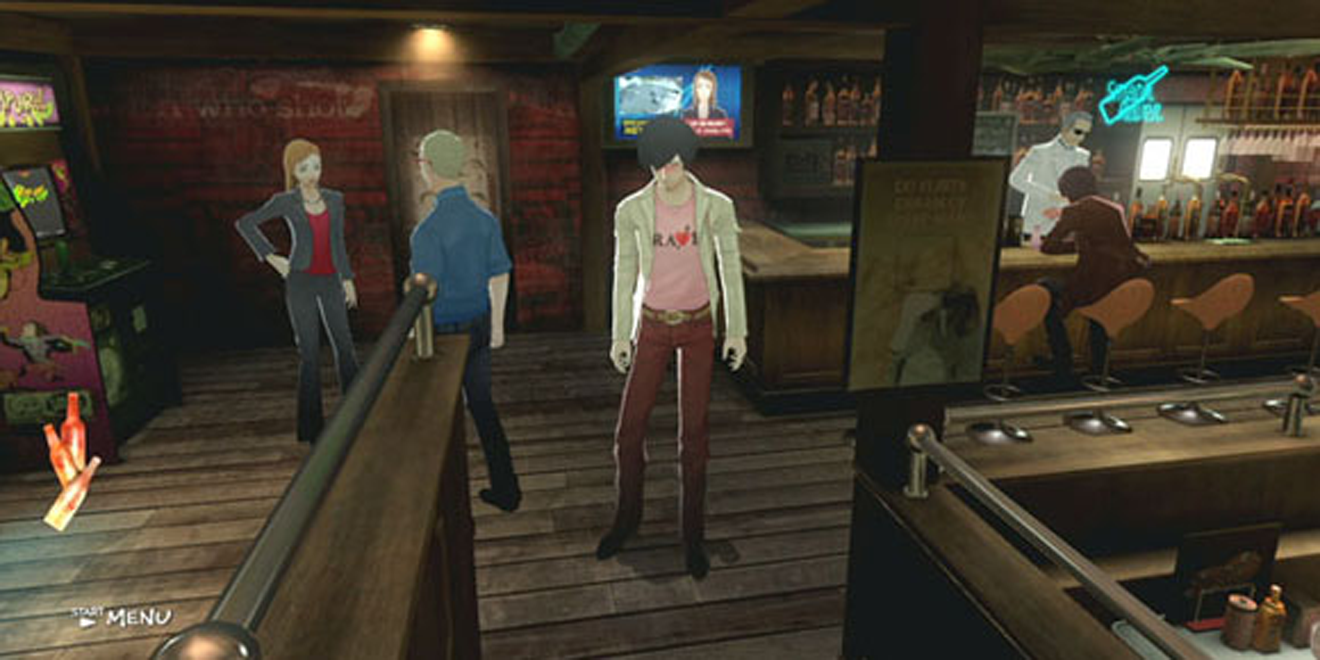
Vincent at the Stray Sheep bar during the daytime gameplay segments. ©ATLUS ©SEGA. All rights reserved.
Once Vincent leaves the bar, the player is thrown into the game’s nighttime nightmare puzzle sections, which account for the majority of the game’s playtime and challenge. Vincent finds himself trapped in a nightmare where he must climb to the top of a large tower of blocks without falling to his death. These puzzle sections have a gameplay style reminiscent of the strategic world navigation in Q*bert (Gottlieb, 1982) mixed with the spatial reasoning and geometric construction of Tetris (Alexey Pajitnov, 1984). Players must push and pull blocks to create stairs that allow Vincent to successfully navigate to the landing at the top of each level’s tower while avoiding various enemies, booby traps, and boss characters along the way (Figure 3). As the player climbs, the bottommost rows of blocks continually fall away, forcing the player to make split-second decisions in order to successfully navigate the tower and escape from the nightmare back into the real world.
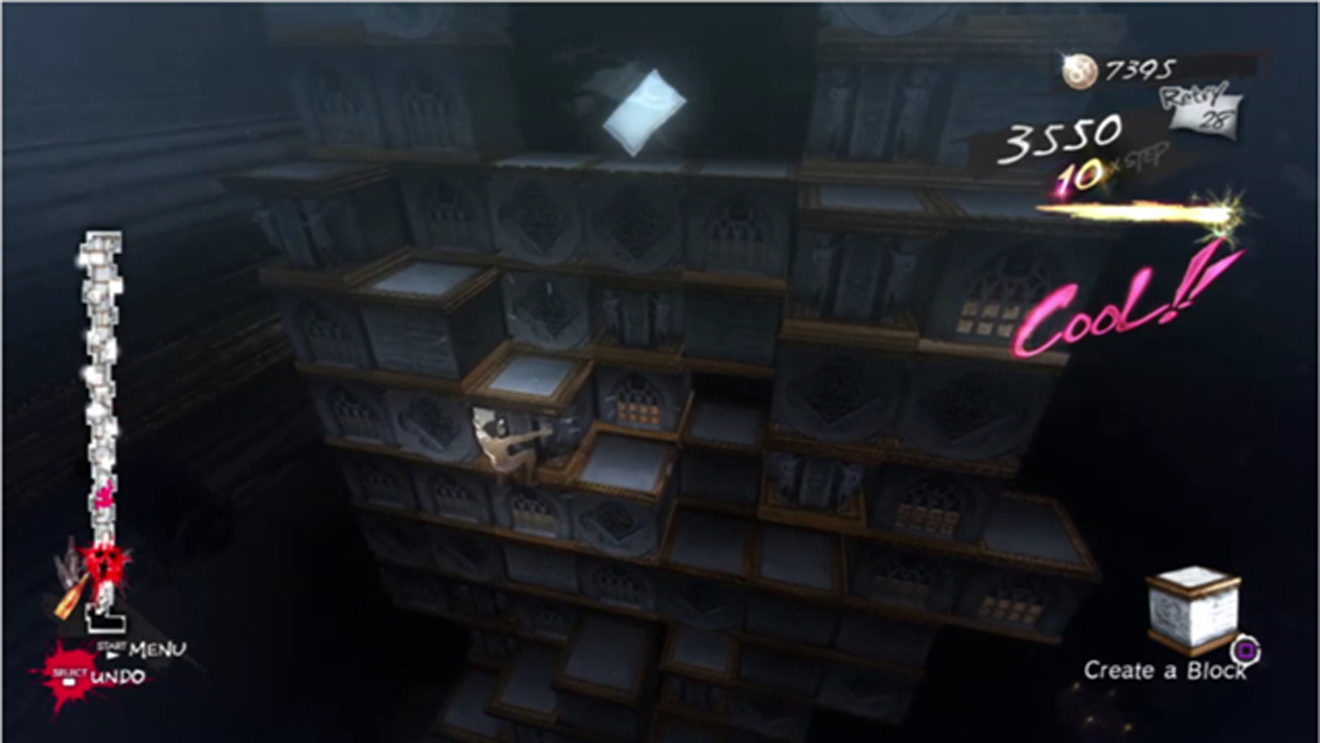
Vincent climbs a treacherous tower of blocks during the nighttime nightmare gameplay sections. ©ATLUS ©SEGA. All rights reserved.
Catherine as Social Narrative
Throughout the game’s animated cutscenes, Vincent and Katherine’s relationship is depicted as a socially relevant commentary that reflects the changing nature of romantic relationships and gender roles in contemporary Japanese society. In an interview with Dengeki Games Monthly (2011, March), Hashino Katsura, the game’s director, remarked that Catherine was created with the universal themes of love and the problems of marriage in mind. He explains, “While love is a popular theme in movies and TV shows, there aren’t many games that tackle adult love issues in a serious manner, so we thought it would be interesting [to do so in Catherine].” Beyond the broad themes of love and marriage, Soejima Shigenori’s character designs for Vincent and Katherine, coupled with the performances of the voice actors, and unique in-game events work together to reflect the larger cultural consciousness of many real-life Japanese adults. At a base level, the 32-year-old Vincent and Katherine mirror the average age of the 35-year-old Japanese gamer. On top of this, Vincent’s characterization represents an interesting amalgamation of two competing visions of masculinity in Japan: the “salaryman” and the “herbivore man.” Meanwhile, Katherine, as an independent, responsible, and career-driven mature woman, represents a more authentic and socially relevant female characterization that diverges from many action and fantasy tropes of female game heroines.
One key scene illustrates how Catherine presents a more honest rendering of couples life than most video games. In this scene, Vincent and Katherine meet up during their lunch break for tea and pastries at the Chrono Rabbit café. The scene begins with Katherine removing Vincent’s sunglasses, stating “You think you look good in those?” Her dominant position in the relationship is further emphasized when, after Vincent takes a phone call, Katherine criticizes his recent purchase of a new cell phone model and computer. She scolds, “You always throw your money away … Well, it’s okay, since you’ve been working hard … but you need to make sure you’re saving up.” The impetus for this argument is Katherine’s confession that her period is running late and that she believes she might be pregnant. While this is revealed not to be the case later in the game, during the scene, both characters accept the possibility, and Vincent in particular is visibly shocked by the prospect of becoming a father. Katherine reinforces her status as an independent career woman when she articulates her desire to go back to work shortly after having the baby. She is even worried that she might have to take maternity leave. “We’ll just have to split up the housework,” she concludes, after already appointing herself in charge of the joint bank accounts.
In just this short animated scene, one can clearly see how Vincent and Katherine represent a new kind of Japanese couple, one where the woman may be the primary breadwinner, or both partners are working, and the man is expected to exhibit what Chen (2012) calls the “3 Cs”: possess a comfortable income, be good at relationship communication, and cooperate with housework and childcare duties (p. 296).
Bogost (2011) argues that if games are to foster empathy for real-world situations, players should be cast as the “downtrodden rather than the larger, more … powerful [characters]” (p. 19). Indeed, Vincent’s characterization is atypical of traditional action game heroes, and players are cast as an oftentimes anxious and depressed central progtagonist. Hashino (2011) describes Vincent as a “cool bum.” The game’s instruction manual informs the player that Vincent “doesn’t need to wear a suit or a tie for his job, since he has no contact with his business’s customers” (p. 5).
Dasgupta (2013) defines the Japanese “salaryman” (company worker) as, “The figure of the urban, middle-class, white-collar [worker] loyally toiling away for the organisation in return for an implicit guarantee of life-time employment stability” (¶ 5). According to Dasgupta (2000), the salaryman came to represent both the “corporate ‘ideal’ and masculine ‘ideal’” during the postwar bubble economy (p. 192). Vincent spends day after day in a dead-end job, every bit the image of company loyalty as the postwar salaryman but with none of the social benefits afforded to previous generations. Despite stable employment, the player learns that Vincent is strapped for cash, lives in a messy studio apartment, and has no real responsibilities at work and therefore no hope for seniority-based promotions or lifetime employment. In short, Vincent is a contemporarily relevant image of the salaryman categorized by what Chen (2012) calls a “loss of authority, loss of seduction, and loss of genius” within the social landscape of postbubble Japan (p. 294).
However, Vincent’s characterization also appears to share some traits in common with a separate, widely publicized masculinity known as the “herbivore man” (sōshoku danshi, lit. “grass eating man”). The term was coined by freelance writer Fukasawa Maki in a 2006 article for Nikkei Business. Herbivore men are happy being in the company of women but remain uninterested in relationships that involve either long-term commitment such as marriage or physical intimacy such as sex. As the term subsequently exploded in popularity among Japanese media outlets, “herbivores” were depicted as feminized men in their 20s and 30s who were frugal and had an interest in personal grooming. In Fukasawa’s view, herbivores are the type of men who will lie beside a woman and cuddle up at night, only to leave in the morning without having sealed the deal. Fukasawa (2006, October 13) writes, “It’s not that they want nothing to do with love or sex, they’re not actively pursuing it—the herbivore man is uninterested in craving meat.”
Even game director Hashino admits to have taken some inspiration for the game’s story from the phenomenon of the herbivore man. He states, “At that time, men who didn’t bother with love and relationships and found them too much trouble were interviewed in books and magazine articles. It feels like we put these type [of characters] all around Vincent” (Hashino, 2011).
Vincent does share some personality traits with the herbivore man such as a fear of commitment. Yet, as with the salaryman subjectivity, he does not fully fit the stereotype. Vincent avoids adult responsibilities such as marriage and procreation, yet he does not possess the aversion to sex integral to Fukasawa’s definition. Much to the contrary, Vincent has plenty of sex. He relishes his nighttime activities with both his long-standing girlfriend and the woman with whom he is having an affair. Thus, while Vincent’s characterization clearly draws on both the salaryman and herbivore man archetypes, he cleverly serves to subvert both identity categories and create a new paradigm. This is productive within the context of a social narrative as masculinity is a spectrum and gender identity is fluid. Since Vincent’s trials and tribulations more closely mirror what many actual adult players may be experiencing in Japanese society today, his characterization becomes that much more engaging and relatable.
Other relevant aspects of the social narrative become apparent when one considers the ongoing economic stagnation in Japan and the constellation of obstacles to having and raising children in the country today. Suzuki (2012) theorizes three main barriers to childrearing in Japan, including the increasing cost of education and the global economic recession. However, the primary cause for family changes in Japan is often attributed to the rising female labor force and the opportunity cost of children for female professionals (pp. 65–66). With a monthly child allowance of just 13,000 Yen (approximately US$107) to parents with children under 15 as of 2010, many young Japanese women report that they simply do not want to quit their jobs and end their careers just to have kids (Suzuki, 2012, p. 75).
The interplay between social relationships, birthrate, and the economy is further demonstrated during certain in-game events. For example, one of the actions Vincent can perform in the daytime gameplay sections is to check his account balance at the bar ATM. This will always result in a line of dialogue where Vincent laments his lack of savings and ponders internally how he will be able to support a family. Players must also manage their various in-game relationships by texting via a smartphone interface. Players select multiple-choice responses from a set list in order to compose and send text messages to both young and old K/Catherine. Texting sympathetic or dismissive messages, or refusing to respond altogether, will shape Vincent’s relationship with each woman throughout the game. With this gamic interface for relationship management, Catherine further comments on the detached, often virtual nature of modern-day dating and relationships. In the aforementioned café cutscene, Vincent is anxious and inarticulate in his face-to-face meeting with Katherine. However, emotionally he comes alive during the texting segments and is able to sincerely apologize for a mistake or open up about his fears and anxieties with the proper player input. In this way, Catherine deftly uses a gamic interface to reference the growing global trends in online dating and using social media platforms for managing one’s love life.
Through their characterization and narrative progression, Vincent and Katherine do not simply reinforce preexisting Japanese gender identities such as the salaryman or housewife. Rather, their representation, both individually and as a couple, is more contemporarily resonant with Japanese society. For the unmarried male or female Japanese player, Catherine reflects the real-world social situation of all those who are striving hard in their job yet still worried about relationships, children, and the future. It is rare in a mass-market commercial video game to see frank discussions about the changing nature of the Japanese family.
The Monstrous Unborn
If the daytime gameplay segments and animated cutscenes in Catherine serve to heighten the relevance of the social narrative vis-à-vis a larger Japanese cultural consciousness, then the nighttime nightmare sections are a testament to the power of the subconscious as a tool for working through one’s anxieties. Throughout the puzzle sections, Vincent must overcome grotesque, larger-than-life boss characters that serve as a terrifyingly warped reimagining of spousal commitment and childrearing. As Vincent scurries up the tower, he must constantly push, pull, and arrange blocks into a staircase formation in order to ascend to higher levels and avoid the collapsing floor beneath him. At a metaphorical level, players are tasked with spatially rearranging Vincent’s mental blockages in the form of a path that can be successfully traversed for self-betterment and escape from harm. Harm comes in the form of various booby traps as well as the skyscraper-sized level ending boss characters that chase after Vincent and attempt to fling him off the tower to his death. The characterization of two such bosses, “Doom’s Bride” and “The Child,” further emphasizes that the diegetic game world of Catherine reflects the current cultural climate in Japan regarding marriage and childbirth, albeit in a patently fantastical manner.
Doom’s Bride, the boss of Stage 5, is described in the official game literature as a “monster wearing a veiled wedding dress.” Known in Japanese by the title “Pure White Bride” (junpaku no hanayome), she is a nightmarish version of Katherine in a frayed wedding dress wielding a butcher knife. Possessing piercing red eyes and dark veins that stain her skin, the bride’s overall appearance illustrates how one’s fear over marital commitment might become warped and terrifying within the subconscious (Figure 4). Throughout the boss battle, Doom’s Bride shouts insults at Vincent as he climbs, such as, “You really are a loser!” and “Trying to escape your responsibility?!”
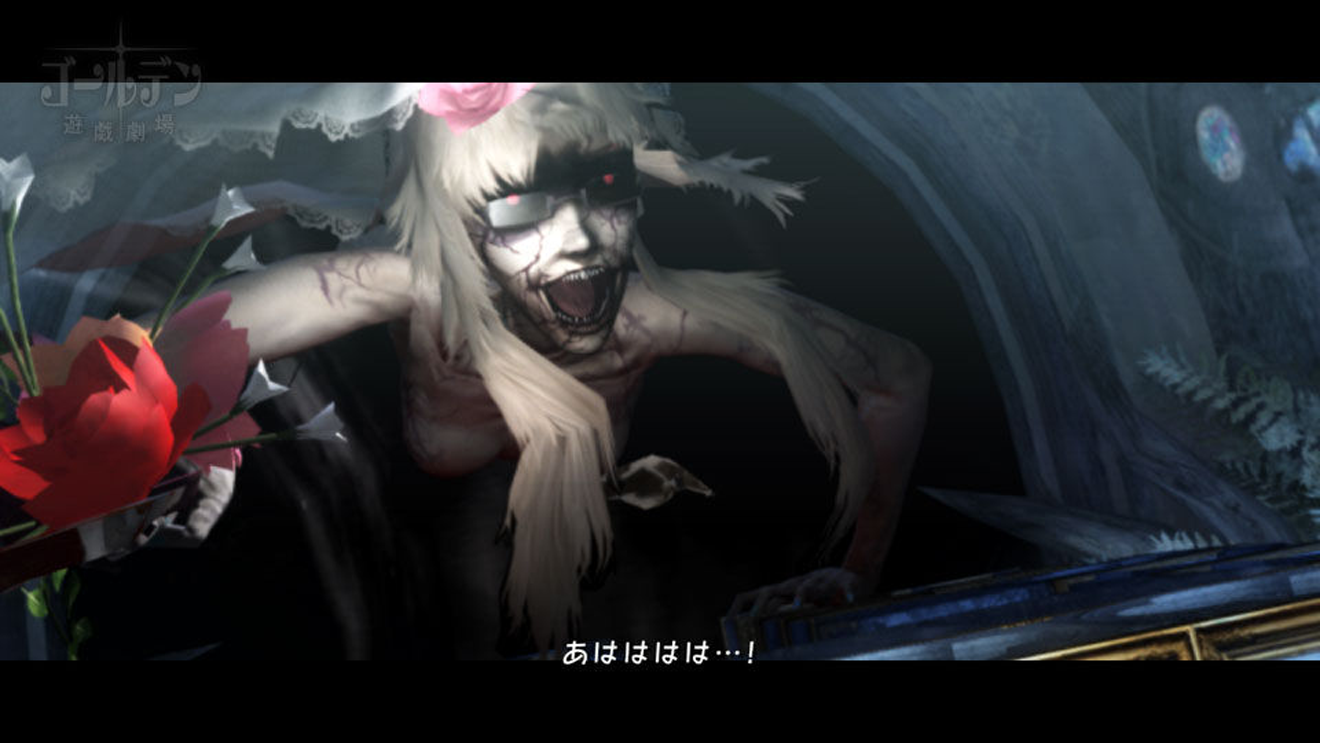
“Doom’s Bride,” the boss character from Stage 5, is a terrifying vision of marriage and spousal commitment. ©ATLUS ©SEGA. All rights reserved.
Visually, Doom’s Bride is a pastiche of different influences. She echoes the appearance of the traditional Japanese monster (yōkai) Ubume, a woman who dies in childbirth. In contemporary manga and anime, Ubume is often depicted as an undead mother with child in arms, clothed in white, and dripping with blood (Papp, 2011, p. 35). More generally, Doom’s Bride fits into a long literary and artistic trajectory of representing the menstruating maternal body and childbirth as abject. In the words of Kristeva (1982), the maternal body is created through “a violent act of expulsion through which the nascent body tears itself away from the matter of maternal insides” (p. 101).
The depiction of boss characters such as Doom’s Bride, while clearly otherworldly in representation, becomes more significant when one considers the real-world concerns Japanese players may have about adult life. This is evidenced by a recent 2011 survey conducted by the National Institute of Population and Social Security Research in which Japanese singles stated their attitudes about marriage and childbirth. According to the survey results, 48.7% of male and 60.5% of female respondents aged 18–34 stated that their main worry about marriage was “whether or not I will be able to maintain my daily rhythm and lifestyle” (p. 8). And, while this survey question does not specifically reference children as a separate variable, it is reasonable to assume that childrearing represents one of, if not the most, salient impediments to one’s daily rhythm, especially where sleep and work are concerned. Doom’s Bride could thus be read as the monstrous embodiment of larger Japanese societal fears.
The second boss character worthy of examination is The Child. The character design was inspired by Australian sculptor Ron Mueck’s representation of a newborn titled “A Girl” (Kihara, 2011, p. 154). This boss appears in two different forms during the game: First, in Stage 4 as an undead baby (Figure 5) and again in Stage 6 as a comically deadly baby cyborg with blood-soaked chainsaws and concealed gatling guns springing from its body (Figure 6). Interestingly, the Japanese titles for these bosses are “Fetus” (taiji) and “Terrifying Fetus” (osorubeki taiji), respectively, which emphasize a much stronger link to what Kristeva (1982) terms the “abject fetus” born from the bowels of “abomination” (pp. 101–102). While this link to bodily reproduction is somewhat lessened in the North American game version, The Child still clearly functions as a symbol of Vincent’s fear of fatherhood and loss of his own autonomy.
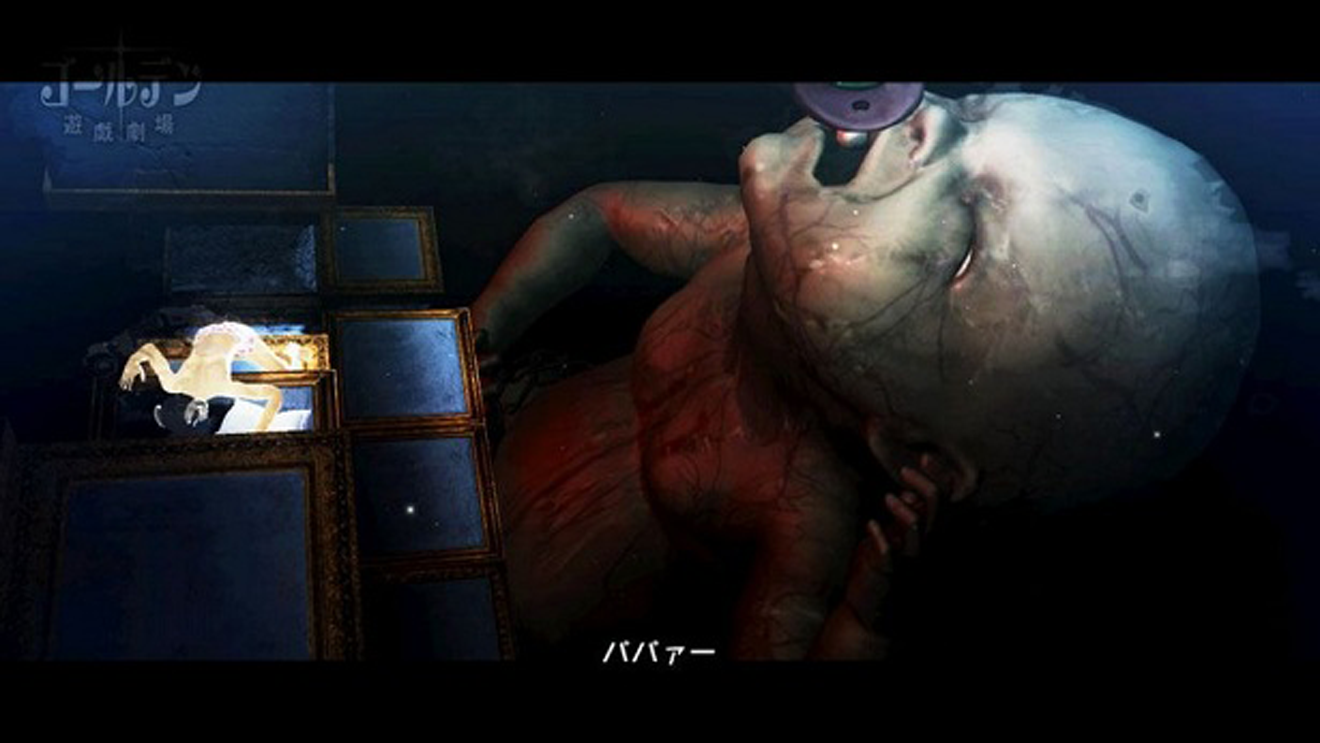
Boss character “The Child” (Stage 4). ©ATLUS ©SEGA. All rights reserved.
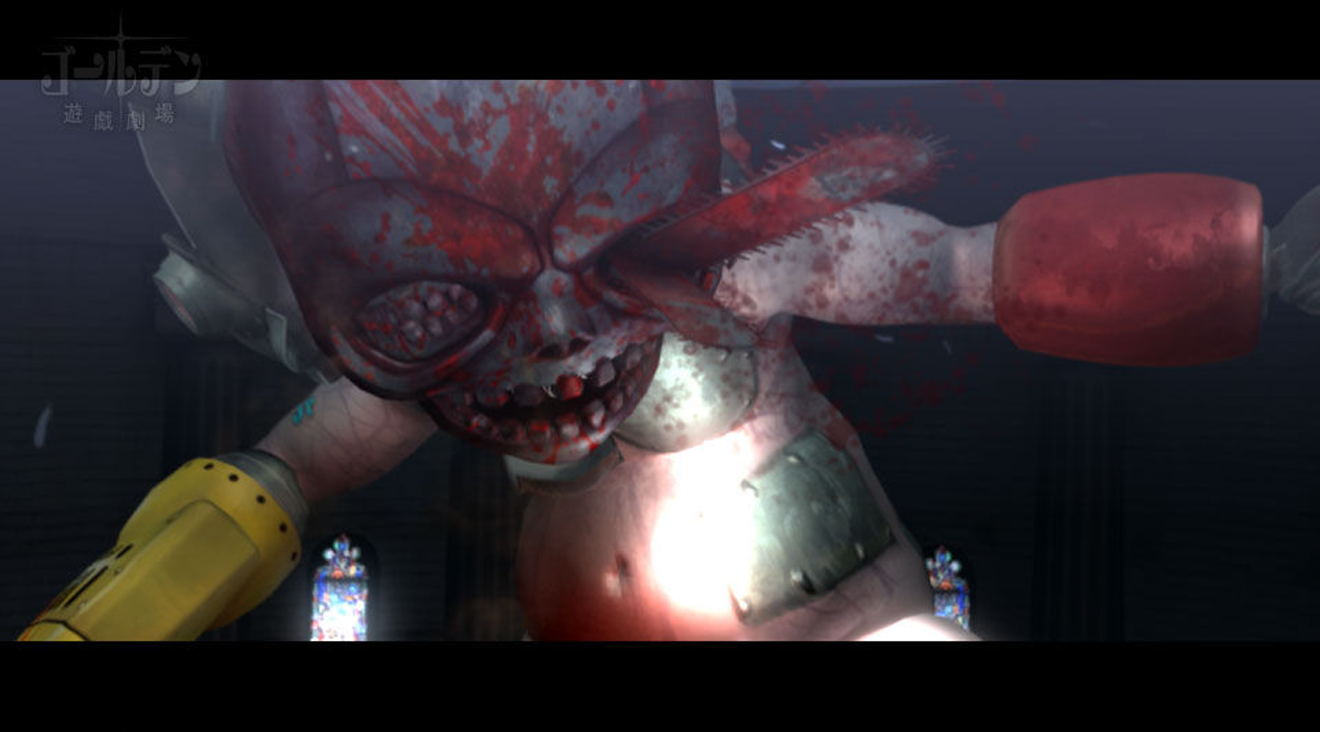
The Child’s alternate form “Child with a Chainsaw” (Stage 6) highlights the grotesque visuality of childbirth within the nightmare world. ©ATLUS ©SEGA. All rights reserved.
Throughout the boss battle, The Child whines, “Don’t leave me! Da-daddy!” and “Why are you wunning [sic] away?” Results from the same 2011 fertility survey cited earlier indicate that only 33.6% of Japanese men and 47.7% of women aged 18–34 cited children as a “merit of marriage” (p. 29). While a direct North American comparison cannot be made, a recent 2013 Gallup poll of Americans aged 18–40 revealed that 93% already had or wanted to have children (Newport & Wilke, 2013). Here again, Catherine presents a highly imaginative version of a real social concern in Japan today, namely, if having children is an attractive part of marriage.
The linearity of the daytime gameplay segments and animated cutscenes directly contrasts with the replayability of the nightmare puzzle sequences. Within the nightmares, where the player dies, resets, and replays these boss battles before ultimately achieving victory, the monstrous images are sterilized and the player becomes desensitized to what once represented a frightening adulthood. This process of repetition recalls Freud’s (2011) story of the game fort-da (“gone”-“there”), in which his grandson simulates both the frightening departure and comforting return of his mother by repeatedly throwing and retrieving a wooden spool on a string (p. 57). Freud locates in children’s play the capacity not only to repeatedly act out a traumatic action but also to gradually lessen the associated fear by replacing it with a repetitive positive action over which the player has some control (p. 58).
Video games may provide players with a safe space from which to engage with (and eventually overcome) even the most terrifying of scenarios through their own choices in a nonlinear narrative. Through the narrative device of the nightmare and the trial and error gameplay of the puzzles, both Vincent and the player are afforded the opportunity to work through their problems from within the simulation. Unique social narratives such as Catherine suggest a possible method for coping and working through trauma via interactive means and also perhaps achieving emotional catharsis through gameplay.
Distanced Engagement in Catherine
In theorizing patterns of narrative consumption, Japanese cultural critic Ōtsuka Eiji argues that video games and other pop-cultural media attract consumers by engaging them at two sites of narrative development: the “small narrative” and the “grand narrative.” Ōtsuka (2010) explains, “The ‘small narrative’ [is] the concrete commodity or single episode of a drama, and the ‘worldview,’ ‘program,’ or ‘system’ … in this work [is what] I’ve been calling the ‘grand narrative’” (p. 109). In video games, the totality of the data programmed into the software (including the complete world, backstories of all the supporting characters, hidden secrets, etc.) constitutes the grand narrative. The small narrative is what any single player experiences during any one playthrough (Ōtsuka, 2010, p. 108). For Ōtsuka, it is the player’s desire for mastery over the game and the associated thrill of discovering all the intersections and secrets of the grand narrative that drives pop-cultural consumption.
Azuma builds on Ōtsuka with his project on “gamic realism” (gēmuteki riarizumu). Gamic realism is characterized by the absence of a concrete beginning, middle, or end due to the unique ability of video games to “pluralize” (fukusūka) narrative possibilities through nonlinearity and branching stories (Azuma, 2007, p. 142). Video game narratives can be reset, end a variety of ways, or never end at all. Precisely for these reasons, Azuma believes that game stories increasingly function as “meta-narratives” (meta monogatari) that are aware of, or draw attention to, their own structure and form (2007, p. 115).
Self-reflexivity and meta-narrative are the primary methods through which Catherine achieves distanced engagement. Every dialogue and story choice the player makes in the game affect an on-screen morality meter that in turn impacts the story’s ending. Catherine utilizes a very unusual gameplay device that serves to not only repeatedly distance the player from the small narrative throughout the entire game but also clearly engender self-reflection about the larger social narrative. This is achieved through church confessional scenes. As if the game could not get any stranger, after the successful completion of each puzzle level in the nightmare world, Vincent enters a Catholic confessional and speaks with Astaroth (an avatar representing the cruel side of fertility goddess Ishtar) who plays the role of the priest. In another unexpected inclusion, present in the background of the booth is a picture of Vincent crucified on the Venus symbol (♂; Figure 7).
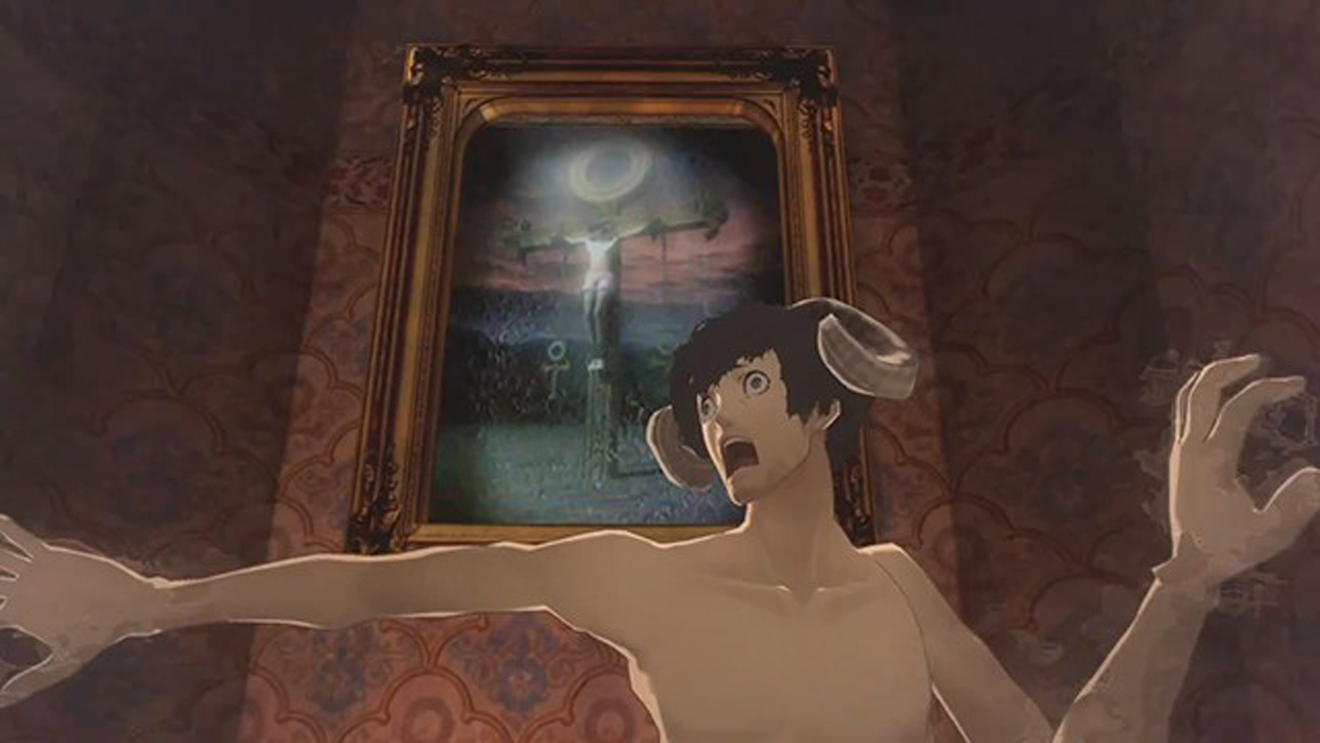
Vincent in the confessional with the crucifixion painting in the background. ©ATLUS ©SEGA. All rights reserved.
During these confessional segments, the player must always pull one of two rope levers to answer a simple A or B opinion question related to love, relationships, or personality. The player’s poll answer is then logged and displayed as a pie chart. If connected to the Internet, answers are indexed against a database of what other players answered during their first playthrough (Figure 8). This allows one to compare their answers with others and see how their opinions stack up. The Japanese game version also has the capability of sorting response data by gender.
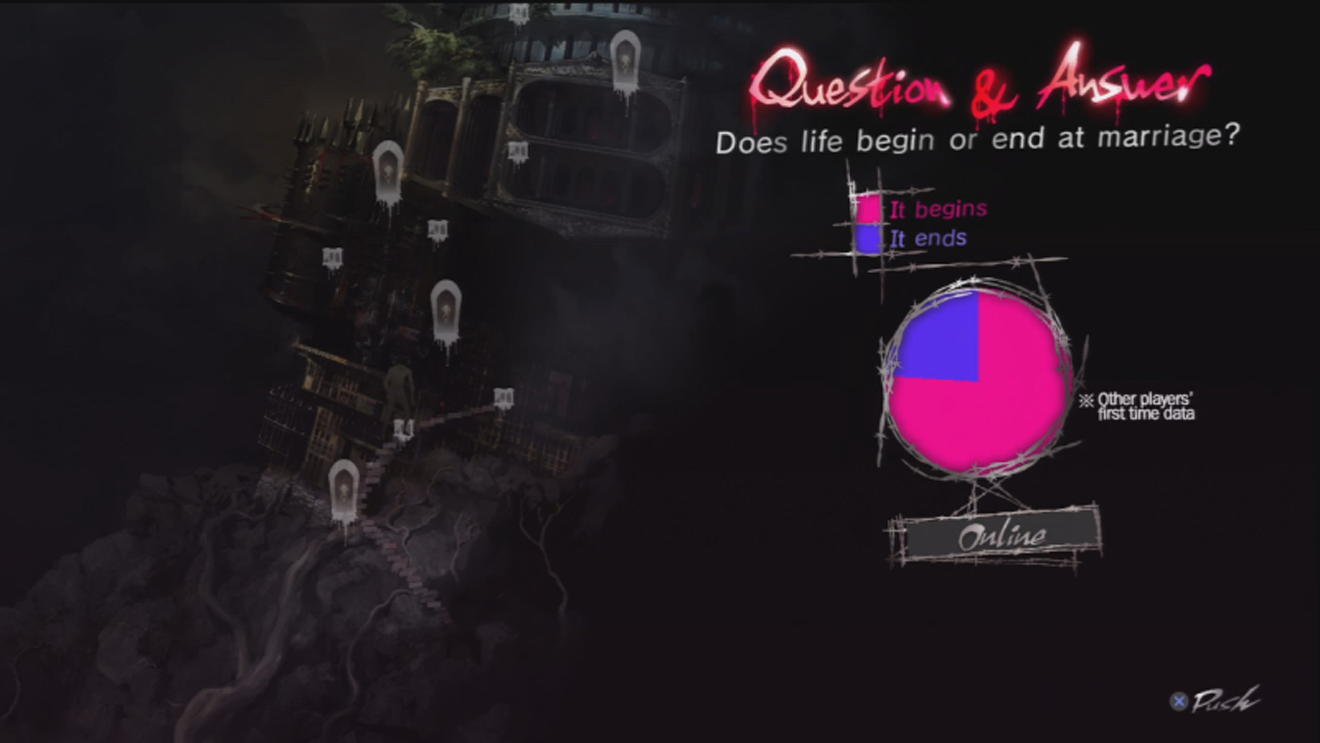
The results of the confessional poll displayed as a pie chart. An online database allows players to compare their responses with others. ©ATLUS ©SEGA. All rights reserved.
Some confessional questions are clearly humorous, such as, “Is popping bubble wrap fun?” and “Could you have sex with an attractive ghost?” However, other questions clearly echo the Japanese governmental fertility surveys cited throughout this article. These include questions on cohabitation: “Is it okay to live with your partner without ever intending to marry them?” (answers: not a chance/yes indeed). Also present is the question “How does a life of no responsibility sound?” (answers: sign me up/no way), which is very similar to the question about marriage worries where respondents answered that they wanted to maintain their daily rhythm and lifestyle. Finally, the question “Is romance annoying?” (Shōjiki, ren’ai yari kekkon wa mendōkusai?; answers: I hate it/I wuv it [sic]) uses the Japanese word mendōkusai in its phrasing. Mendōkusai, which can be translated as “tiresome,” or “annoying,” is the very same word that many young Japanese men and women now use to describe their relationship aversions or phobias in news articles and on TV (Haworth, 2013, October 20). For many young Japanese, romantic relationships have become mendōkusai, and here is the very same world utilized in Catherine to strengthen the relevancy of the social narrative.
While these are just a small sample of the question possibilities in Catherine, they all serve to encourage the player’s distanced engagement. The gameplay mechanic of voting in a poll clashes dramatically with the intense puzzle sections that come before and forces the player to reflect on their own values and how they wish to shape the story. Further, the indexing and pie chart construction force the player to compare their opinions with that of other players in the real world and also acknowledge that they are just one of many “men” who have scaled these towers and answered these questions for the gods.
These two conflicting gameplay styles could be viewed as a form of “ludonarrative dissonance,” in which the game’s mechanics and the game’s fiction are set in opposition to each other. Game developer and critic Hocking (2007) coined this term in reference to the first-person shooter Bioshock (2K Boston, 2007). He argues that when gameplay and narrative are misaligned, the resulting disjuncture “all but destroys the player’s ability to feel connected to either [the gameplay or the narrative], forcing the player to either abandon the game in protest … or simply accept that the game cannot be enjoyed as both a game and a story.”
Particularly insulting to Hocking as a player is that Bioshock introduces a narrative twist halfway through the game that seems to mock the user for having believed in the game’s fiction of free will at all. Hocking laments that Bioshock is taking itself seriously and does not include this twist for meta or comedic reasons. Indeed, the puzzle and polling sections of Catherine could be seen as poorly integrated into the game’s overarching social narrative. However, a crucial difference between Hocking’s critique of Bioshock and Catherine is that the latter consciously uses these jarring, alternative design choices precisely for meta-narrative and comedic purposes. Catherine wants to make players laugh and think at the same time. Because of this, the distanced engagement of Japanese game design capitalizes on the feeling of ludonarrative dissonance and redeploys it as a useful tool for player creativity and immersion.
Ōtsuka writes that consumers of pop culture are “tricked” into believing that they are experiencing a small narrative in the form of an individual product. He states, “What is being consumed is not an individual drama or thing but the system itself that was supposedly concealed in the background” (Ōtsuka, 2010, p. 109; emphasis in the original). While Azuma argues that Japanese consumers have largely given up searching for any sort of grand narrative behind the media they consume, the distanced engagement in Catherine could represent a creative new attempt to reintroduce a grand social narrative into a genre commonly associated with superficial traits and tropes. Due to the distanced engagement present, the player must contemplate the social commentary of the game in real time and critically self-reflect on their own life and values in order to complete the in-game polls and progress through the game. Thus, what would remain simply a one-dimensional experience of the social narrative in passive media such as literature and film becomes something inherently more interactive, reflective, and nuanced in Catherine.
In Lieu of a Conclusion: Multiple Endings
This article has provided both a possible theoretical framework for elucidating factors underlying game engagement and an in-depth analysis of a specific socially relevant Japanese gaming text. As this article has shown, Catherine does not function simply as a static reactionary story. Rather, it actively hooks the player through its social narrative and distanced engagement. As a social narrative, Vincent Brooks’ bizarre love triangle subverts established video game tropes and engages players through socially relevant characterizations that reflect large changes in Japanese society. With regard to distance, the self-reflexive and meta-narrative elements continually force the player to be cognizant of the fact that they are playing a video game. This is accomplished via the confessional gameplay segments and online indexing of poll answers as well as the occasional breaking of the fourth wall in character monologues. Meta-gameplay such as this purposefully detaches the player from the game world and encourages them to think about their real everyday life and actions. Indeed, one cannot progress through the game if they do not answer the polls and the sheer act of answering elicits self-reflexivity from the player. It is the synthesis of these two forms of engagement that give video games like Catherine the potential to function both as effectual social narratives and also potentially encourage real social change through player self-reflection.
Catherine contains eight separate game endings. No one ending is considered canonical, so players have the ability to shape the narrative and end the story as they see fit. There are three endings that deal with Katherine, three that deal with Catherine, and two variations of a “freedom” ending. A “good” Katherine ending has Vincent and Katherine get back together and begin planning their wedding. A “bad” Catherine ending has Vincent proposing marriage to the succubus, getting rejected, and later getting hit by a car. Which ending the individual player sees depends on the poll and dialogue choices made throughout the game and a player must replay the entire game and adopt a different play style, or visit YouTube, in order to view the additional endings.
Azuma reasons that players of video games with multiple endings do not experience the narrative as disjointed. Rather, “they emotionally relate to the world of the work as if the randomly selected choice before them at a given moment is the only destiny” (Azuma, 2009, p. 85). If each game ending is experienced by the player, in that moment, as the one and only possible ending, then the presence of eight different endings in Catherine allows the game to be that much more effective and affective for different players. It is impressive that Catherine was able to resonate with and find a cult following both in Japan and abroad considering that the central narrative is still about masculinity and delivered from the perspective of the heterosexual male protagonist.
I would like to close with a discussion of one of the two “freedom” endings. In the “true freedom” ending, Vincent becomes burned out on relationships altogether and decides to not get back together with either Katherine or Catherine. Sitting in the Stray Sheep, Vincent reveals to Boss that he has finally realized what he wants in life. He confesses, “What you said about the prosperity of the species triggered something. When I was younger … I guess I figured … something would happen to, you know … validate my lifestyle. But that didn’t happen. Instead of adapting to life, I got all scared by the slightest decisions. But … Things are different now. I finally feel that I can progress” (ellipses in the original). Much like the players themselves, Vincent is made to self-reflect through his participation in the Great Trials.
Vincent takes out a loan from Boss and wagers it on the upcoming WrasslInsanity 49 women’s wrestling tournament. He bets on the unlikely jobber Feather who, despite the odds, ends up winning the tournament. A few days later he is shown to have moved out of his apartment and is in the Spaceport high above the town, thus revealing that the entire game narrative has taken place in a fabricated town on a space colony. Vincent has used his winnings to go on a space tourism voyage that is repeatedly advertised on posters throughout the game. While this turn of events may seem incredibly bizarre and farfetched from a narrative standpoint, Azuma (2009) reminds us, “It is [the otaku] who may be said to be socially engaged and realistic in Japan today, by virtue of not choosing the ‘social reality’” (p. 27).
By including an ending where Vincent rejects both the hegemonic masculinity of the salaryman and the hip, alternative masculinity of the herbivore man, Catherine opens up a space for and reflects the identities and lifestyle choices of many kinds of players, including otaku. Looking up toward the spaceships as they fly by waiting to take Vincent on a new adventure to a distant planet, this game ending presents the possibility of a postnational, postracial Japanese future in the solar system. This vision of Japan has limitless potential and is in direct competition with the inflexible Web Clock that began this article. Vincent concludes the game by breaking the fourth wall and speaking directly to the player. He asks us, “Why live a life without doing what you want? That’s just a recipe for a life of misery.” In this way, the virtual character we have come to care about over the past 15 hours of gameplay steps out of the game to tell us to take charge of our own lives in a way that can only be described as a beautiful integration of social narrative and distance.
Footnotes
Acknowledgments
I would like to acknowledge the help and support of Sharalyn Orbaugh, Nicolette Lee, James Welker, and Joan Russo, all of whom read and provided feedback on earlier drafts of this article. I would also like to thank the two anonymous reviewers for pushing my writing and argument to a point of further clarity. Finally, I would like to extend my gratitude to Rachael Hutchinson and the presenters at the Japanese culture and video games panel at the Association for Asian Studies conference who kindly listened to and provided feedback on a presented version of this article.
Declaration of Conflicting Interests
The author(s) declared no potential conflicts of interest with respect to the research, authorship, and/or publication of this article.
Funding
The author(s) received no financial support for the research, authorship, and/or publication of this article.