



Abstract
Scholars and critics have praised the video game, Papers, Please (PP), for raising critical awareness of sociopolitical issues, including immigration. To begin to determine whether PP stimulated public discussions of pertinent social issues, I adopt insights and techniques from cultural sociology to study how posters in an online forum engage with PP. I use computational topic modeling to reveal the topics forum members discuss and qualitative content analysis to gain a deeper sense of how posters explore these issues. I find the forum does discuss social issues, including immigration. Sociopolitical topics, however, are far from the forum’s primary focus. Moreover, posts primarily rely on the same limited set of immigration frames that major U.S. media outlets use. These findings demonstrate how a game’s social meanings will be shaped not only by the game’s design but also by social factors internal to the public under analysis and broader social dynamics.
In August 2013, 3909, a small video game development studio run by Lucas Pope released Papers, Please (PP) to commercial success and critical acclaim. In PP, the player assumes the role of an immigration officer responsible for reviewing immigrants’ travel documents in a fictional country. Popular video game media outlets lauded the game with praise, including what many video game critics considered to be PP’s important messages about immigration (Peele, 2013). Influential outlets for cultural commentary also praised PP for similar reasons (Nemati, 2013). Not to be left out, scholars applauded PP for raising critical awareness of a variety of pertinent social issues, including the moral deficiencies of dominant social structures and the dehumanizing effect of immigration policies (Formosa, Ryan, & Staines, 2016; Kelly, 2018; Lohnmeyer, 2017; Morrissette, 2017).
Although official sales numbers are not available, interviews with Lucas Pope indicate that PP was a commercial success (“The making of: Papers, Please,” 2014). Consequently, it would be understandable if scholars urging broader society to recognize video games’ sociopolitical significance interpreted PP’s success as evidence for the medium’s capacity to raise critical awareness of social issues (Belman & Flanagan, 2010; Bogost, 2007; Farber & Schrier, 2017; Gee, 2003). It would be a mistake, however, to draw this conclusion solely from sales figures and claims from scholars relying on their own interpretations. As Farber and Schrier (2017) argued, for the field to gain a concrete understanding of why certain games promote critical awareness requires empirical investigations into the game’s reception in specific social contexts.
In this work, I draw from research in cultural sociology on the aesthetic public sphere (Jacobs, 2012; McKernan, 2015; Wu, 2017). Similar to certain game scholars, aesthetic public sphere scholars study the capacity of entertainment media to stimulate sociopolitical discussions. Aesthetic public sphere scholars, however, adopt a theoretical orientation that recognizes how an entertainment text’s social meanings vary and will be shaped not just by the text’s features but also by social factors internal to the public under analysis and broader social dynamics. Consequently, the only way to ascertain a game’s social impact is to empirically examine the game’s reception within particular publics.
To illustrate the insights game scholars can gain from adopting methods from cultural sociology, I examine the public reception of PP in an online game forum. My analysis is focused on identifying how often posters address sociopolitical issues and the ways that posters engage with these issues. I am particularly interested in how often posters engage with immigration issues and the immigration frames present in these discussions.
Consistent with some scholars’ claims about PP and the sociopolitical potential of games in general, I find that the forum does occasionally discuss social issues, including immigration. However, sociopolitical topics are far from the forum’s primary focus and often remain at an abstract and distant level when they do appear. Moreover, forum members primarily rely on the same limited set of immigration frames that major U.S. media outlets use to discuss immigration issues. In the concluding sections, I discuss the methods game scholars should use to better study games’ sociopolitical contributions and how instructors can best use games to help raise critical awareness of social issues given these findings.
Why Study Immigration Frames in Discussions of PP?
Scholars have documented a wide range of serious issues pertaining to immigration. Researchers have explored the life-threatening issues that push many people to migrate, including political violence, poverty and lack of economic opportunity, inequality, and other forms of oppression (Cuban, 2018; Kvittingen, Valenta, Tabbara, Baslan, & Berg, 2018; Pelek, 2018). Additionally, in many major immigration destination countries, large proportions of the public harbor anti-immigrant attitudes, support restrictionist policies for immigrants and asylum seekers, and hold views of immigrants consistent with racial and religious stereotypes (English, 2019; Flores, 2018; Gravelle, 2017; Gravelle, 2019; Konitzer, Iyengar, Valentino, Soroka, & Duch, 2019; Marfouk, 2019). Research suggests that harsh anti-immigration policies and exclusionary practices do not deter immigration but encourage many immigrants to enter via more dangerous routes (Bloemraad & Provine, 2013; Hammond, 2011).
The way news media cover immigration has a major impact on the broader public’s understanding of immigration (Benson, 2013; McCombs, 2004). Prior work suggests that anti-immigration discourses that portray immigrants as threats, criminals, and terrorists appear prominently in major U.S. media outlets and politics (Farris & Silber Mohamed, 2018; Kim & Wanta, 2018; Massey & Sánchez, 2010) and that these anti-immigration discourses often contain a racial dimension (Hammond, 2011). In a rigorous analysis, Benson (2013) finds that U.S. immigration news coverage between the mid-1970s and mid-2000s focused decreasingly on how the structural inequality of the global economy contributed to the massive migration from the Global South to the Global North. Benson also finds that U.S. media coverage during this period focused increasingly on the discrimination and daily hardships that immigrants experience as well as how immigration may threaten public order. Benson argues this decrease in coverage of the global economy’s role hinders the U.S. public from fully understanding the causes of pressing immigration issues.
Given the significant role media coverage plays in shaping public knowledge, critics and scholars’ claims that PP promotes a critical understanding of immigration issues warrant investigation. PP would be providing a vital contribution if it has stimulated public discussions that overcome the limitations of traditional media coverage. Furthermore, an exploration of PP’s public reception in an online forum will provide a valuable contribution to our understanding of video games’ social significance.
Why Study Video Games’ Sociopolitical Significance?
For over two decades, scholars have argued that games may raise awareness and promote a critical understanding of social issues. According to Gee (2003), games require players to assume new identities that can result in a deeper understanding, including of other groups’ experiences and struggles. Bogost (2007) describes how designers can use games’ “procedural rhetoric” to challenge powerful systems and ideologies by exposing how they operate or how they could operate. Belman and Flanagan (2010) encourage educators and activists to take advantage of these features to develop “games for good” (p. 5) that raise awareness and empathy for social issues.
Game scholars operating from a “representation matters” framework have argued that games exploring the experiences and issues of members from marginalized groups can help make their identities more visible as well as help us see the world differently and imagine new possible worlds (Shaw, 2014, 2017). For example, Leonard (2019) explores the significance of how Watch Dogs 2 and Mafia III present diverse portrayals of Black characters and critically examine racism, resistance, and justice. Additionally, Tulloch, Hoad, and Young (2019) study how Gone Home includes representations of gender and sexuality consistent with the riot grrl ethos to counter hegemonic norms.
Scholars have drawn from these theories on video games’ social potential in their praise for PP. Before summarizing this scholarship, I will briefly describe PP. Players in PP assume the role of an immigration officer in the fictional communist country of Arstotzka in the 1980s. The player must examine immigration documents, granting entry to those with proper paperwork and denying entry to those that lack proper documentation. The player’s daily income is based on the number of applicants they correctly process. To continue to the next day, the player must earn enough money to support their family’s housing, food, and other needs. PP’s challenge lies in the increasingly complex rules that player must follow. As the game progresses, the number and type of documents that immigrants must submit increase and vary by country of origin. The player must identify discrepancies in these documents under a tight time limit. Players must also worry about inadvertently granting terrorists entry. To help detect potential terrorists, players eventually can use a body scanner to identify concealed weapons.
PP’s visual aesthetics are similar to the stereotypical portrayals of Soviet countries in U.S. popular culture. The color palette is dreary and heavy on grays and browns. Characters generally have solemn expressions. PP occasionally presents scenarios where the player must choose between following the rules or helping immigrants in dire situations. For example, one immigrant that lacks the proper paperwork begs the player to grant them entry and claims that they will be murdered if they return home. A different immigrant that lacks proper documentation claims they need life-saving surgery that isn’t available in their home country. According to the game’s rules, granting these immigrants entry would result in reduced pay. In these instances, the player must make a choice between helping the immigrants and hurting their family or vice versa.
Scholars have praised PP for providing players with a powerful rumination on several social issues. Formosa, Ryan, and Staines (2016) examine how PP forces players to critically engage with four major moral themes including dehumanization, privacy, procedural fairness and moral consistency, and loyalty. Lohmeyer (2017) praises the game for prompting players to reflect on the experience of living and working in a totalitarian state, the tensions that exist at national borders, and the anxieties of crossing into another nation. Morrissette (2017) praises the game for illustrating Max Weber’s exploration of how obedience, rationality, and efficiency trump morality in modern bureaucracies. Kelly (2018) argues that PP offers a critique of the dominant “work-as-play” ideology and demonstrates how this ideology can force people to deny individuals access to necessary resources (e.g., safety, livelihood) due to these individuals’ perceived inability to provide sufficient economic compensation for the requested resources.
The scholarly work on PP provides a rich exploration into the critical themes that may be present in the game. However, the insights that we can draw about PP’s broader sociopolitical significance from this research is limited since these scholars rely on their own interpretations rather than empirical analyses of PP’s wider reception. It is certainly possible that the scholars’ interpretations are not unique and that many of PP’s players had similar experiences. However, without empirically studying players’ reception of the game, we are only left with assumptions, as nuanced as they may be. Such interpretive work must be coupled with an examination of how groups respond to PP to gain a stronger understanding of how PP and video games in general may stimulate sociopolitical awareness and discussion. Farber and Schrier (2017) voice a similar critique in their literature review on games and empathy and note there is currently very little empirical evidence on how, when, and why certain games may promote empathy. Farber and Schrier encourage more research on a variety of factors that may impact a game’s capacity to promote empathy, including audience characteristics and the broader cultural context.
To help move this field forward, I study the audience reception of PP in one popular video game fan forum. I am particularly interested in examining when and how participants in this forum explore immigration and other sociopolitical issues in their discussions of PP. Research of this nature will allow us to move past our own interpretations of the game’s social significance and provide empirically grounded insights into the meanings players derive from PP. Such research will contribute insight into how particular game design characteristics combined with the social characteristics of particular spaces impact the reception of games that tackle sociopolitical issues. To do so, I rely on insights from scholarship in cultural sociology on aesthetic public spheres.
Video Games and Aesthetic Public Spheres
Cultural sociologists have increasingly turned their attention to examining how entertainment texts may stimulate sociopolitical discussions (Jacobs, 2012; Jacobs & Wild, 2013; McKernan, 2015; Wu, 2017). To do so, these cultural sociologists draw from Habermas’s (1989) work on the role popular media have historically played in fostering public spheres. Unfortunately, the bulk of the conventional public sphere research has largely ignored entertainment media and instead focused on what researchers characterize as the world of “serious” news and current events. Jacobs (2012) outlines three major reasons why public sphere scholars should study entertainment texts and publics including (1) entertainment texts and “serious” texts exist in an intertextual world where they repeatedly reference and respond to each other, (2) entertainment texts often explicitly address broader sociopolitical concerns, and (3) entertainment texts’ dramatizations may help render serious topics more engaging or comprehensible to a wider public relative to the mundane and dense ways that conventional news media often cover social issues. Cultural sociologists in this research area define entertainment publics where discussions extend beyond entertainment or aesthetic matters to address broader sociopolitical concerns as aesthetic public spheres.
Cultural sociologists have analyzed several examples where entertainment publics have functioned as aesthetic public spheres. For example, Wu (2017) explored how Chinese reality television shows and television dramas stimulated discussion in mainstream news outlets and online forums on a variety of pressing social issues, including economic and political inequality, the professional and domestic challenges many of the younger generations currently face, as well as corruption and injustice. Additionally, McKernan (2015) documented how the popular video game Resident Evil 5 stimulated a debate in an online forum over racism’s continued significance.
The aesthetic public sphere literature provides a valuable framework for scholars interested in examining how video games may stimulate critical awareness of serious issues. This framework’s grounding in the research on public spheres makes it sensitive to the fact that civil society contains a multitude of publics and that these publics may interpret events or texts differently (Fraser, 1992; Jacobs, 2000). For game studies, this framework allows for a sensitivity to the fact that a video game will never have a universal meaning across civil society or even within a single public sphere and that the particular ways in which a public interprets a game and its significance will be influenced by both social factors internal to the public and overarching dynamics present in civil society (McKernan, 2015).
In this work, I draw upon the aesthetic public sphere framework to study public discussions about PP on the online video game fan forum NeoGAF. During the period under analysis, NeoGAF was one of the most popular video game fan forums in the United States. Moreover, video game developers followed and participated in forum discussions to gain insight into fans’ reception of their games. Game journalists followed the forum to learn about the topics that currently interested their audience (Ashley, 2011; Oxford, 2010). Consequently, an analysis of this forum’s reception of PP provides valuable insight into the types of discussions that PP stimulated in popular game spaces in American civil society.
My analysis is guided by three research questions. First, what topics do forum members explore in their discussions about PP? Second, how much attention do forum members devote to sociopolitical issues? An answer to these two questions will provide a sense of whether and to what extent PP stimulated discussion of sociopolitical issues in this forum. This leads to my third research question—How do fans discuss contemporary immigration issues? An analysis of the ways that forum members discuss immigration issues will provide insight into the extent to which PP promotes a critical discussion of immigration in this public.
Data and Methods
To explore PP’s reception on NeoGAF, I used NeoGAF’s search feature to identify any threads that included PP in their title and posts that mentioned PP in other threads from the beginning of NeoGAF’s archives to November 2015. This search query yielded a total of 1,853 posts, including 1,175 posts from 2013, 525 posts from 2014, and 153 posts from 2015.
I then performed an initial scan of a sample of the posts (47%) to gain a preliminary sense of the topics that posters discussed. This scan indicated that posters touch upon a variety of topics including PP’s design, the experience playing PP, the platforms PP is on, and technical aspects of PP. Additionally, a small subset of the posts examined sociopolitical topics including posts about bureaucracy, authoritarianism, and immigration. This scan demonstrated that forum discussion about PP was multifaceted and amenable to computational and interpretive analyses.
To answer my research questions, I used computational and qualitative techniques. To answer the first research question, I performed Latent Dirichlet Allocation (LDA) topic modeling on the data set. LDA topic modeling is a computational form of content analysis that relies on machine learning techniques to identify the distribution of topics across a corpus (Bail, 2016; Blei, 2012). LDA topic modeling identifies the co-occurrence of words that repeatedly appear across the documents in a corpus. Researchers using LDA topic modeling treat these word clusters as a probabilistic indication of the topics each document addresses. Due to its automated nature, topic modeling allows researchers to extract meaningful insights from large data sets that would be difficult for researchers to explore with more conventional qualitative approaches. This technique’s inductive approach makes it capable of identifying key topics in the corpus that researchers may not have originally set out to examine (Evans, 2014). Given that I also conducted a qualitative content analysis of the entire corpus, I relied on topic modeling as a sense-making technique to familiarize myself with the corpus and be sensitive to the variety of topics present in the forum’s discussion.
I used the R packages, tm version 0.7-6 (Feinerer, Hornik, & Meyer, 2008) and topicmodels (Grün & Hornik, 2011) to run LDA topic modeling on the corpus. I followed standard practices for preprocessing textual data (Bail, 2016; Graham & Auckland, 2015; Grün & Hornik, 2011). I eliminated stop words, condensed words to their stems, and removed words that rarely appeared in the corpus or appeared in a large proportion of the documents based on their tf–idf score (Grün & Hornik, 2011). I also removed words explicitly related to PP (e.g., papers, please, video, game) and NeoGAF user names. 1 Consistent with standard practices, I relied on computational and qualitative validation techniques to determine the number of topics to include in my topic modeling (Evans, 2014). I first calculated the harmonic mean (Graham & Auckland, 2015) for topic models with between 2 and 100 topics. The results identified 25 topics as the harmonic mean. I then carefully examined the 25 topics and determined the model did not provide much insight. Strictly aesthetic matters dominated the most popular words for many of the topics, and the output failed to reflect the diversity of topics that I encountered while conducting my qualitative content analysis of the corpus. I then examined the results of running between 2 and 25 topics and determined that a 10-topic model was appropriate.
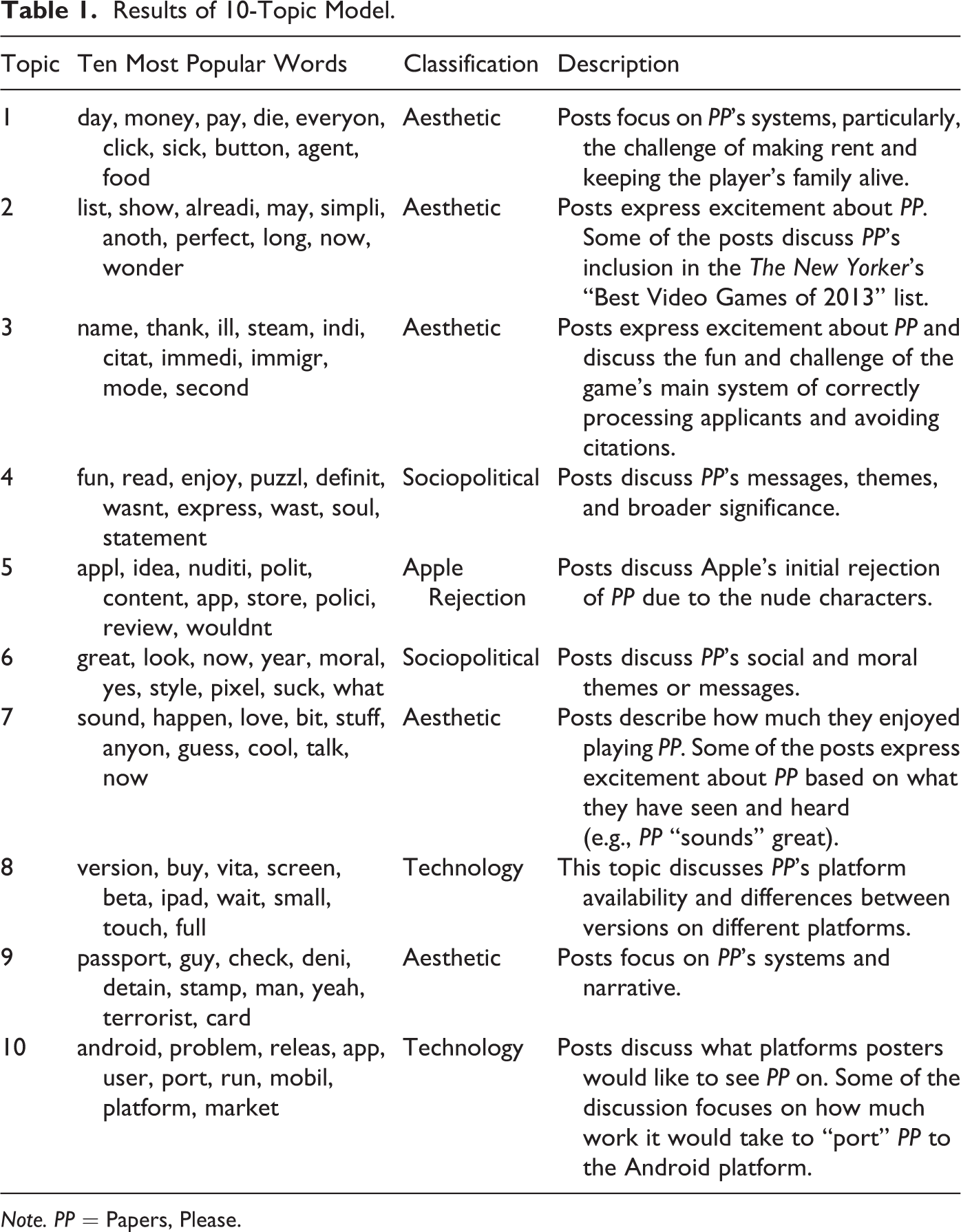
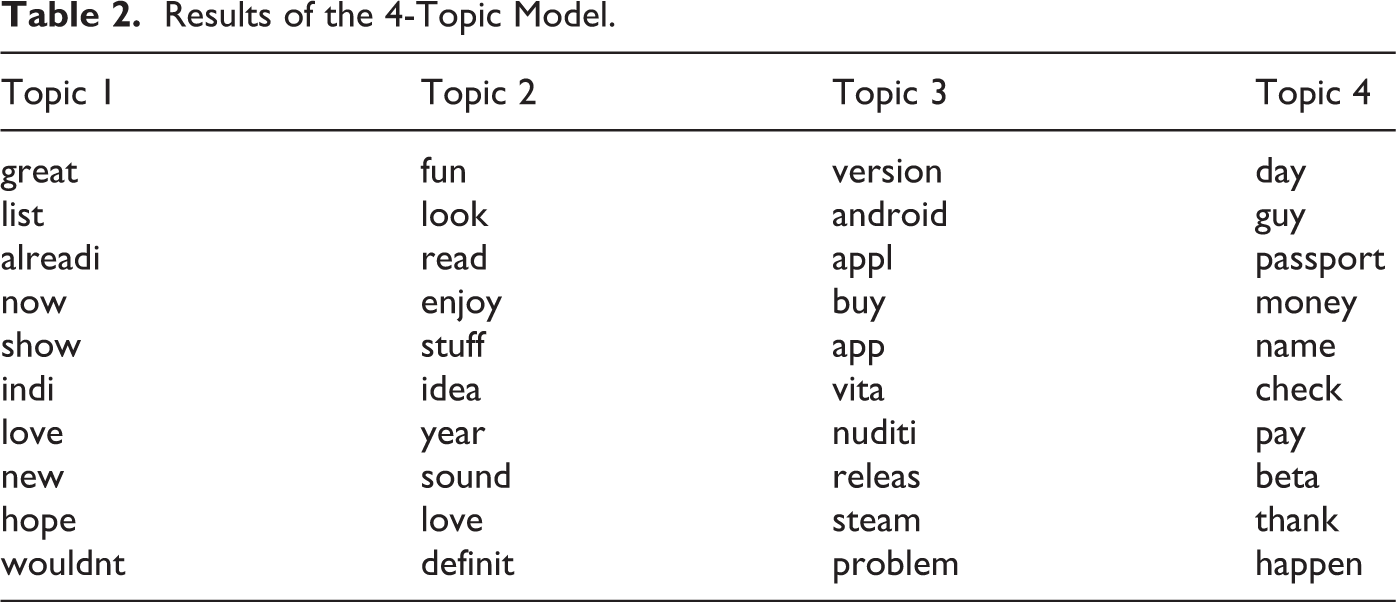
The 10-topic model identified multiple unique topics in the corpus including aesthetic topics, technological matters, and topics pertaining to sociopolitical issues (see Table 1). Relative to the 10-topic model, models that contained less than 10 topics tended to collapse different types of subjects (e.g., aesthetic matters, technological inquiries, and sociopolitical discussions) into single topics (see Table 2). In models that contained more than 10 topics, the key words that provided good indications of the subject matter of each topic in the 10-topic model became increasingly dispersed across several topics and it became more difficult to determine the subject matter of each topic. Moreover, the number of words that appeared in the 10 most popular words for multiple topics increased as the topics included in the models grew. Only two words appeared in the 10 most popular words for multiple topics in the 10-topic model. The 16-topic model included 17 words that appeared in the 10 most popular words for multiple topics and the 25-topic model contained 27 words that appeared in the 10 most popular words for multiple topics. This increase in the number of repeat popular words made it difficult to determine the differences between topics.
Results of 10-Topic Model.
Note. PP = Papers, Please.
Results of the 4-Topic Model.
To answer my second and third research questions, I relied on conventional qualitative content analysis techniques (Altheide, 2000). I focused first on identifying all the posts in the corpus that engage with sociopolitical issues. To qualify as engaging in sociopolitical discussion, a post must connect PP to broader social issues (e.g., immigration, human rights, national security, and political and economic systems). I coded each post that mentions a social issue as 1 and posts that did not include such discussion as 0. I then identified all the sociopolitical posts that discuss immigration issues following the same coding scheme. To evaluate the reliability of my coding for identifying posts that discuss immigration issues, a colleague and I both coded a 10% random sample of all the sociopolitical posts. Our reliability (88.5% agreement; α = .7; 26 cases) was above the recommended threshold for drawing tentative conclusions (Krippendorff, 2004).
To analyze the sociopolitical posts that do not discuss immigration issues, I conducted multiple close readings of each post to identify the social issues and themes that recurrently appear in these posts and how the posters engage with these topics. To analyze the immigration posts, I relied on insights from Benson’s (2013) work on the frames in media coverage of immigration. Benson identifies 10 different frames and groups them into three overarching categories including the immigrants as victims frame, the immigrants as heroes frame, and the immigrants as threats frame. The immigrants as victims frame emphasizes how turmoil and disasters have pushed immigrants to leave their home countries and the hardships they encounter in their daily lives. The immigrants as heroes frame focuses on the positive aspects of immigration including immigrants’ cultural and labor contributions. The immigrants as threats frame describes the allegedly negative aspects of immigration including accusations that immigrants take jobs from native workers or reduce wages, threaten public health and safety, and disrupt national cohesion. After multiple readings of each immigration post, I classified each post based on whether the post contained each of the three overarching frames. I then conducted an interpretive analysis to explore how posts use these frames to engage with immigration issues. To evaluate the reliability of my coding for identifying the immigration frames, a colleague and I both coded a 20% random sample of all the immigration posts. We had 100% agreement on the immigrants as victims and immigrants as heroes frames. Our reliability for the immigrants as threats frame (90% agreement, α = .747, 10 cases) was above the recommended threshold for tentative conclusions (Krippendorff, 2004). I consider it essential to provide an accurate account of how the forum discusses PP. Consequently, I have not fixed grammatical errors or replaced troubling language in the examples I share from my analysis.
Topics of Discussion in Posts About PP
To examine the results of the 10-topic model, I classified each post based on what the topic model identified as the topic with the highest probability for that post. I then examined the posts based on this classification to determine the focus of each topic. The results indicated the discussion focused on four overarching topics including aesthetics, technological concerns, sociopolitical commentary, and Apple’s initial rejection of PP (see Table 1).
Several of the topics focused on PP’s design and the aesthetic experience playing the game. Topic #1 explored the game’s systems and how challenging it can be to pay rent and care for the player character’s family. Other topics examined PP’s narrative and game systems (Topic #9), expressed excitement about playing the game (Topics #3 and #7), and discussed PP’s inclusion in The New Yorker’s list of the “Best Video Games of 2013” (Topic #2). Two other topics (Topics #8 and #10) focused on PP’s technological aspects, including the platforms PP is currently on. Topic #5 centered on Apple’s initial rejection of an iPad version of PP due to the game’s alleged pornographic content.
The 10-topic model identified two topics where discussion expanded to broader sociopolitical issues. Topic #4 included a discussion of the game’s messages and themes that occasionally explored PP’s broader social significance. For example, the 10-topic model identified Topic #4 as the primary topic for the following post: The game gets serious credit from me for making me feel like a border agent. There aren’t very many games where I feel like I’m there, or roleplay…. [P]laying Papers, Please, I find myself talking to myself and reading the dialogue in a bad Russian accent. I hear their sob stories and only care about brushing them aside to earn more money. And a few times I’ve been begged not to call the guards, but knowing the money is on the line I always call. The game sends a very clear message about the dehumanizing effects of these sorts of conditions and this sort of job, and it really has made an impact on me.
Topic #6 also occasionally explores what posters consider to be PP’s important social and moral themes or messages. For example, the 10-topic model identified Topic #6 as the primary topic for the following post: For a middle eastern person living in USA, Papers Please is too good and too depressingly close to the actual situation to play anymore. The searches, scans, the fear of being rejected, and getting stranded at the airport are still very real for every trip back to home even after 6 years.
Distribution of Broad Topics Across the Corpus.
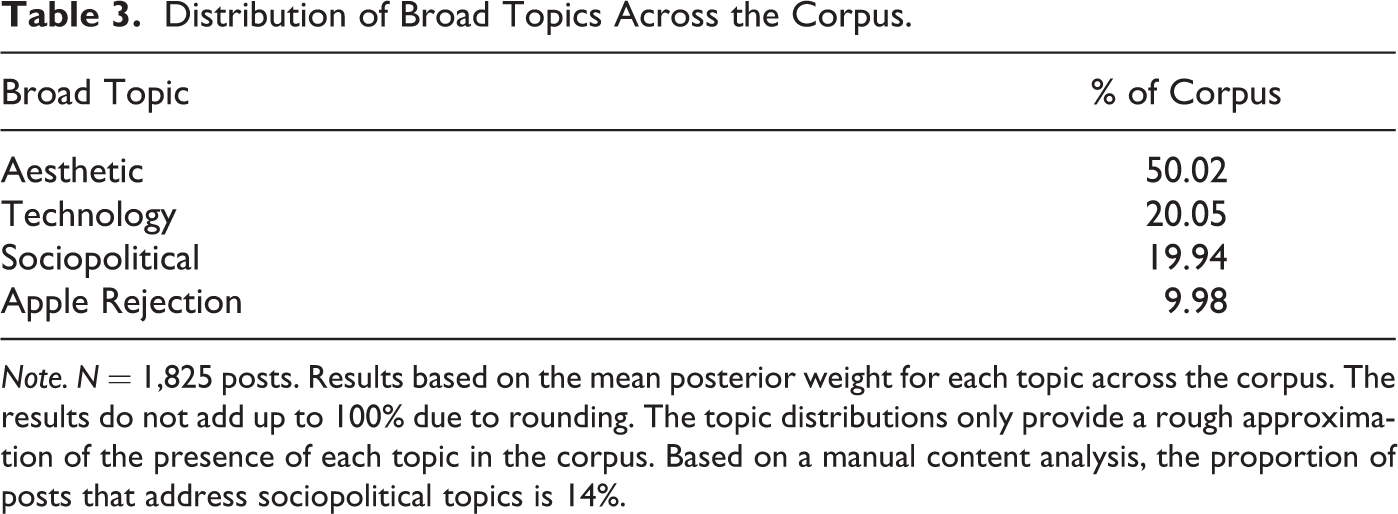
Note. N = 1,825 posts. Results based on the mean posterior weight for each topic across the corpus. The results do not add up to 100% due to rounding. The topic distributions only provide a rough approximation of the presence of each topic in the corpus. Based on a manual content analysis, the proportion of posts that address sociopolitical topics is 14%.
I then manually identified all the posts in the corpus that engaged with sociopolitical topics and issues. In total, 14% of the posts (258 of the 1,825) discussed sociopolitical issues. I examined the correlation between my manual coding and the topic distributions (see Table 4). The result indicated that two different topics have weak, positive relationships with posts that include sociopolitical discussions, including Topics #4 and #6. Given that my initial analysis indicated that posts with a primary topic classification of Topics #4 or #6 occasionally discussed sociopolitical issues, I concluded that the 10-topic model provided a sufficient overview of the topics present in posters’ discussions.
Spearman’s ρ Correlation of Sociopolitical Discussion With Topic Distributions.
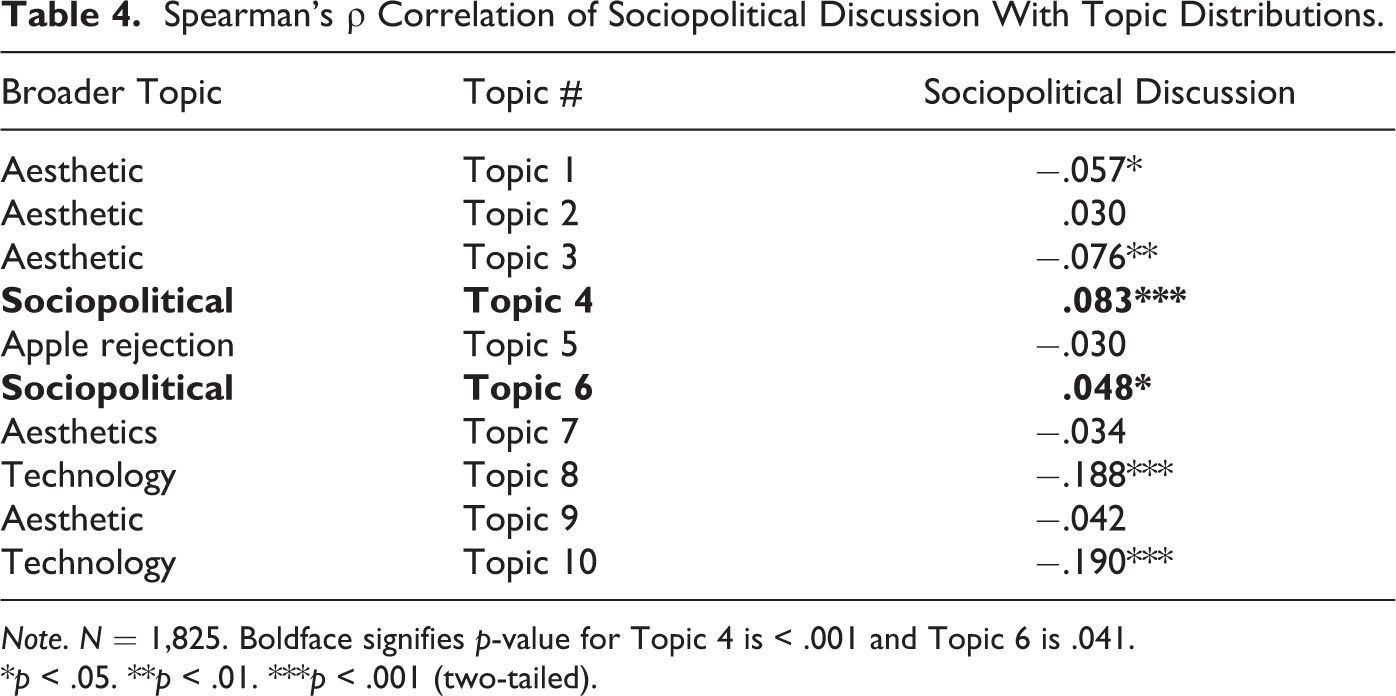
Note. N = 1,825. Boldface signifies p-value for Topic 4 is < .001 and Topic 6 is .041.
*p < .05. **p < .01. ***p < .001 (two-tailed).
Interpretive Analysis of How Posters Discuss Sociopolitical Issues
Although topic modeling identified instances where posters discuss sociopolitical issues, it was unable to distinguish between the social issues or how posters frame them. In this section, I rely on qualitative techniques to examine the sociopolitical topics that posters discuss.
What Is a Game’s Purpose?
Before examining the posts that tackle sociopolitical issues, it is worth briefly exploring one of the most popular discussion points in this sample—whether PP is fun to play. An entire thread is devoted to this debate. The thread, titled “Papers, Please is a bad game and I don’t get the appeal” (2013), accumulated 351 posts (19% of the corpus).
In the initiating post, the thread’s creator explains why they consider PP to be a “bad game.” The poster considers PP to be “one of the worst games” they’ve played all year. They find the core game mechanic to be boring, and they dismiss critics’ argument that this mechanic serves the game’s theme—“that living under an oppressive government sucks.” The poster claims that they were unaware that people “needed to be convinced” of such an obvious message. The poster concludes with the following statement: But it [PP] also doesn’t drive home whatever message it’s trying to send. Tyrannical governments suck. We sacrifice a lot for our loved ones to the point of hurting others. Ok. That’s true. But I feel exactly the same about those concepts now as before playing….In the end, I’m trying my hardest to do well at a game that isn’t fun when I could easily be playing something better. What am I missing?
Several posters insist that the entire purpose of playing video games is to have fun. According to this framework, games that prioritize other types of experiences are failures. One poster states, “It’s [PP] about the message, not the gameplay. Which is why I don’t like it either. If I want a message, I’ll read a book.” Other posters demand games do more than provide fun experiences. Posters championing this position applaud PP for its valuable message (I will examine what posters believe this message to be in a subsequent section). One poster describes PP as “a game with something to say, something more substance than a mere diversion. It’s of a type we could do with more of.”
This thread’s focus serves as a valuable reminder that game designers and game fans that try to stimulate sociopolitical discussions in prominent game publics may still face an uphill battle. For the moment, games and/or fans that raise such topics often become enmeshed in broader debates over the purpose of games.
Discussions on Bureaucracy and Political Systems
Among the posts that engage with sociopolitical topics, immigration is not one of the most common topics discussed. Posters predominantly examine what they consider to be PP’s portrayal of working in a bureaucracy or living in an authoritarian or communist country. Beginning with the former, posters relate the arbitrary rules and large amounts of documents that players must process in PP to the experience of working in a bureaucracy. For example, one poster explains that “The process of having to look around these fake documents with semi-arbitrary designs imitates the real bureaucratic challenge in a way that comparing numbers between columns could not.” Posters describe working in a bureaucracy as monotonous and soul crushing. One poster conveys this sentiment in the following post: “A huge chunk of this game is reflecting the mundanity and futility of the protagonist’s life.”
Posters occasionally praise PP for what they describe as the game’s realistic portrayal of working as an immigration officer. One poster describes PP as a “nightmare” that “realistically mixes the stress and critical thinking of a immigration officer.” By treating PP as realistic, posters suggest that working as a border agent is stressful and taxing.
The other most popular topic explores how PP illustrates the hardships of living in an authoritarian and/or communist state. Beginning with the former, posters often equate the player’s struggle in PP to follow the rules and keep their family alive to what they consider life to be in a fascist or authoritarian regime. For example, the following post describes what they believe PP gets right about living in such a regime: That’s where Papers, Please is an amazing game—everything about it reflects how miserable it is to work under an oppressive environment…. The family is an abstraction because they divert your attention away from the oppression that everything else in the game forces on you. If you had time to see your family then your focus is no longer on work; an oppressive regime would only want you to focus on work to make sure the country is following that regime’s plan. Your family is a non-factor to that government as long as they can work too.
Consistent with aspects of Morrisette’s (2017) and Lohmeyer’s (2017) interpretations, a small portion of posters treat PP as offering insight into the dangers and challenges of working in a bureaucracy and living in an authoritarian state. However, the focus of these discussions remains on what posters presume life would be like if they were in the player character’s situation. In their discussions on authoritarianism and communism, these posters do not relate these themes to issues in the United States or other democratic countries.
Discussions on Immigration
Among the posts that address sociopolitical topics, roughly 19% (50/258) explore immigration issues (2.7% of the corpus). The majority rely on the “immigrant as victim” frame (48/50 posts). These posts focus on immigrants’ suffering. Posters relate what they describe as the dire circumstances that push characters in PP to immigrate to the horrible circumstances that force many humans to migrate in the real world. The following post illustrates this sentiment: A good majority of its story is simply communicated through the mechanics of the game: rigorous, needless bureaucracy forces the player to reject hundreds of regular, desperate humans from crossing the border…. We’ve got real-world ideas floating around in the player’s head now. If this was an actual simulator of a shitty immigration officer, like what I witnessed when coming to America for holidays twice (thanks NYC and my brown skin), you’d be able to ask the immigrant questions not just about the purpose of visit and for how long but also: “The relatives you’ll be living with, what are all their names?” “Will they be feeding you for free?” “What is the age of each of them?” “What jobs do all of them do?” “What are their pay grades?”
A different poster includes an excerpt from an article about PP on the pop culture website The Mary Sue (Chambers, 2013). In the article, the author chronicles their partner’s failed attempts to successfully immigrate to the United States before the Supreme Court determined the Defense of Marriage Act was unconstitutional. This post introduces a more specific dimension to the forum’s discussion of immigration issues, namely, the difficulty same-sex partner’s face when trying to immigrate.
These accounts are consistent with what Benson (2013) defines as the “humanitarian” and the “racism/xenophobia” forms of the victimization frame. Consistent with the humanitarian frame’s focus on the hardships immigrants’ experience, these posts portray immigrants as twice victimized, including the traumatic experiences that compel many to attempt to immigrate and the horrible treatment immigrants endure upon arrival. Additionally, in accordance with the racism/xenophobia frame, a few of the posts explore the racial dimensions of the immigration experience.
Features from the “immigrant as threat” frame (Benson, 2013) appear in a subset of the posts on immigration (17/50 posts). Posters relate PP to what they consider as immigration’s threat to national security. One poster praises PP for illustrating the “different sides of the privacy vs security and individual needs vs society needs.” Similarly, a different post praises PP for the “tough shit” that immigration officers deal with, including “potential terrorists.” It is worth mentioning, however, that most of these posts (15/17 posts) also include features from the immigration as victim frame. For example, the previous post goes on to describe immigration officers as being in the difficult position of having to identify terrorists while also potentially prohibiting desperate people from immigrating.
It is possible that the frequency and manner in which PP posts engage with immigration issues changed in response to events that occurred during the period under analysis. For example, Donald Trump’s entrance into the 2016 presidential election in May 2015 shifted media coverage to focus on anti-immigration themes pertaining to the alleged necessity of a border wall with Mexico and deportation (Sussman, 2017). To explore this possibility, I examined if the distribution of sociopolitical posts discussing immigration and the immigration frames present in these posts changed across the 3 years under analysis. In all 3 years, the proportion of sociopolitical posts discussing immigration remained in the distinct minority (see Table 5). A χ2 test of independence determined that the relationship between the distribution of sociopolitical posts that discuss immigration issues and the year the posts were published was not significant, χ2(2, n = 258) = 3.940, p = .139. Among the sociopolitical posts that do discuss immigration, the immigrant as victim frame appeared in almost every post across the 3 years. 2 The immigrant as threat frame increased from 33% of the immigration posts (14/40 posts) in 2013 to 66% in 2014 (2/3 posts) and then decreased to 14% in 2015 (1/7 posts), but the small number of immigration posts in 2015 and 2016 prohibits drawing any strong conclusions from this change (see Table 6).
Distribution of Sociopolitical Posts Discussing Immigration.

Note. ns = not significant (based on a χ2 test of independence).
Distribution of Immigration Frames in Posts Discussing Immigration.
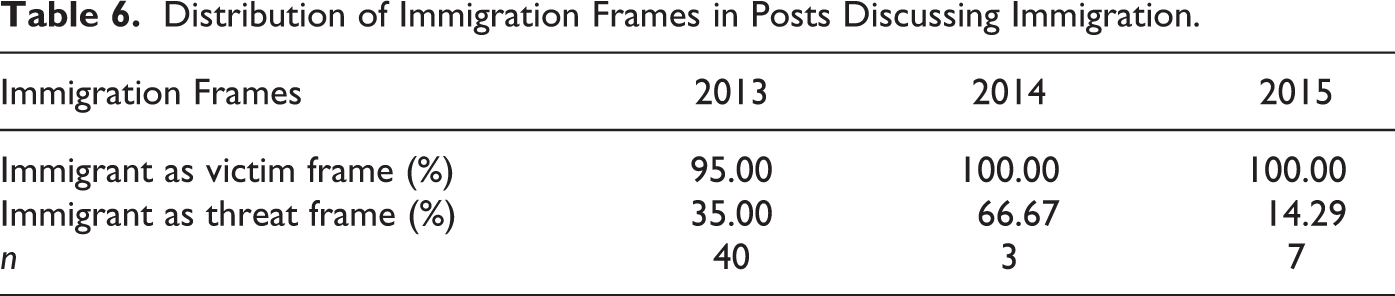
These findings indicate that in certain instances forum members engage in a critical discussion of immigration issues. On the other hand, key frames that may be important for countering stereotypical portrayals and promoting a deeper understanding of immigration issues are absent from the discussion, including the global economy form of the victimization frame and the hero frame. The global economy form of the victimization frame focuses on the international social factors that contribute to global poverty, underdevelopment, and inequality. According to Benson (2013), this frame is essential to promoting a deeper understanding of the social factors that contribute to immigration issues and the identification of effective solutions. Additionally, posters never rely on the “immigrant as hero” frame. Consequently, posters never discuss the possible positive aspects of immigration. Overall, the way posters discuss immigration is similar to how prominent U.S. news outlets covered immigration in recent years, including less of a focus on the global economy form of the victim frame and the hero frame.
Discussion
My analysis indicates that forum posts on PP cover an array of topics including discussions on PP’s aesthetic and technological aspects, Apple’s initial rejection of an iPad version of PP, and even sociopolitical issues. To a certain extent, my analysis supports critics’ and scholars’ claims about PP’s social significance. PP inspired posters to explore what they consider to be the perils of modern bureaucracies, the dangers of authoritarian and/or communist regimes, as well as certain immigration issues. In this way, PP contributes to an aesthetic public sphere.
The extent to which PP stimulated sociopolitical discussion should not be overstated. Only 14% of posts on PP address sociopolitical concerns. Furthermore, there are some limitations in how posters engage with these issues. Posters rarely relate PP’s potential themes to issues in the United States or other democratic countries besides discussions of working in bureaucracies, rarely discuss immigration issues, and instead predominantly provide abstract critiques of authoritarianism and communism. Posters’ narrow focus may have been influenced by the developer’s decision to set PP in a stereotypical communist country. Posters may have related PP to issues in the United States or other democratic countries if the setting was more evocative of these places.
The forum’s limited focus on sociopolitical issues demonstrates how a public’s internal dynamics help shape that public’s reception of a game. Consistent with prior work on popular gaming spaces, the predominant focus in these posts remains on fun and other aesthetic or technological matters. PP does not entirely displace this focus. Indeed, posts engaging with sociopolitical issues often become ensconced in the perennial debate in some popular gaming publics over the purpose of games (Condis, 2014; McKernan, 2015, 2019).
My analysis indicates that PP does promote a critical discussion of immigration issues among the small proportion of posts that address immigration. These posts predominantly rely on the immigration as victim frame to discuss some of the hardships that immigrants face. Posters do not use frames that past work has identified as vital for raising critical awareness, including the global economy form of the victimization frame or the immigrant as hero frame (Benson, 2013). Consequently, in this forum, PP does not necessarily promote a stronger critical understanding but stimulates a discussion that is reiterative of the predominant way major U.S. media outlets cover immigration. This finding illustrates how the most prominent immigration frames in mainstream media outlets permeate into more peripheral spaces such as this entertainment public and thus demonstrates how broader social factors contribute to a game’s reception. Additionally, the way that posters discuss immigration issues may have been shaped by the developer’s decision to place players in the role of the immigration officer rather than as the immigrant. The player never views the immigrant’s experience, including the factors that led to their migration or their life after migrating. It is possible forum discussions may have included other immigration frames if the game included sections from an immigrant’s perspective.
For scholars studying how games can raise awareness and promote critical understandings of social issues, this study highlights the need to expand beyond one’s interpretation of the game and empirically examine the game’s reception in public spaces. The meaning of a game will vary and at least be partially shaped by social factors unique to particular communities and the broader societies they reside in. It is highly unlikely that any scholar can fully identify the various meanings of a game for society writ large through their own interpretation of the game alone, as nuanced as one’s interpretation may be. It is only through careful examinations of how particular communities or public spaces respond to games that we will be able to identify the proper design features and social environments necessary for games to promote a deeper understanding of social issues.
For instructors or activists interested in using games to help raise awareness of pressing social issues, my findings suggest that it is unlikely that any game can lead to a deeper understanding across a diverse population or multiple communities by itself. These are complex issues that will be difficult for a single game to address in a way that overcomes each community’s own social dynamics. Consistent with findings on educational and training games (Sitzmann, 2011; Wouters, van Nimwegen, van Oostendorp, & van der Spek, 2013), it may be best to pair games with supplementary material and activities to help a wider audience discuss and better understand these issues. Optimistically, my findings demonstrate that PP encouraged some forum posters to publicly engage with certain social issues. This reception and understanding might be strengthened and widened under the careful guidance of an experienced instructor and proper supplementary resources.
This study has limitations. The forum under analysis has multiple unique characteristics that may have impacted the reception of PP. The majority of visitors to the forum are from the United States, Canada, and the United Kingdom (Neogaf.com competitive analysis, marketing mix and traffic, 2019). Popular forums in other parts of the world may have different responses to PP. Additionally, during the time period under analysis, NeoGAF had a reputation for being a heavily moderated forum with minimal tolerance for what the moderators considered to be racist or homophobic language (Oxford, 2010). It is possible that posters in online spaces with more lax moderation rely more heavily on different immigration frames or would have reacted more harshly to posters attempting to discuss what other forum members considered to be “political” issues. To gain a deeper understanding of the public reception of PP, future research must explore discussions of PP in different communities and different kinds of public spaces.
It is also possible that the way forum members engaged with PP and subsequently the immigration frames present in their discussions changed in response to more recent events, especially given the pursuit and implementation of restrictive immigration policies in the United States and elsewhere. Future work should expand the time period to provide an analysis that is more sensitive to how changes in the broader political environment may influence the way publics engage with PP and/or other games involving immigration.
Future work should also explore how design features may influence the ways different audiences engage with immigration issues, such as a game similar to PP but from the perspective of an immigrant and/or a game set in the United States. Future work should follow a similar methodology to explore the public reception of games tackling different social issues as well. Overall, works in these areas will further strengthen our understanding of the design and social factors that influence how different communities engage with games that address social issues. This knowledge can then be used to help design successful interventions that incorporate games to promote deeper understandings of social issues.
Conclusion
Overall, my analysis demonstrates the capacity of games to help stimulate discussion of social issues. Forum members voluntarily bring up sociopolitical topics in their discussions of a commercial video game. These posters were not instructed to engage in such discussions but did so in a public forum of their own accord. However, my analysis suggests that games by themselves will most likely not promote a deeper understanding of social issues across a diverse population. Forum members only occasionally address social issues and the posts that do discuss these issues are often vague and rely on the same limited set of immigration frames that major U.S. media outlets use. For game scholars, these findings highlight the need to compliment any textual interpretation of a game’s sociopolitical significance with an empirical analysis of how specific communities engage with the game. Doing so will allow us to not only learn more about games’ sociopolitical potential but also the different communities that form around the games under analysis.
Footnotes
Author’s Note
Preliminary versions of parts of this research project were presented at the Eastern Sociological Society Annual Conference in 2017 and the Media Sociology ASA Preconference in 2018.
Acknowledgments
I would like to thank Jingsi Christina Wu, Scott Coull, Elham Pourtaher, and Jennifer Stromer-Galley for their helpful comments, support, and encouragement throughout the research process. I would also like to thank the anonymous reviewers for providing detailed and encouraging feedback that helped to greatly improve this manuscript.
Declaration of Conflicting Interests
The author(s) declared no potential conflicts of interest with respect to the research, authorship, and/or publication of this article.
Funding
The author(s) disclosed receipt of the following financial support for the research, authorship, and/or publication of this article: This research was partially supported by The Sage Colleges’ Schacht Faculty Research Grant.
