




Abstract
Gaming is an increasingly acceptable outlet for recreation, social engagement, and professional practice. Despite this acceptance, perceptions of “gamers” have been slower to evolve. The traditional stereotype associated with the “gamer” label has persisted in popular culture and acts to perpetuate and reinforce the negative elements associated with gaming. The stereotype’s persistence begs the question of whether current gamers see themselves as having stereotypical traits and whether non-gamers would attribute these traits to game players. This study uses an established model of social perception to explore differences in perceptions of the gamer stereotype and game players among both self-identified gamers and non-gamers in the United States. The results show differences in perceptions between the stereotype and game players, reflecting persistence of the stereotype and recognition that it is not universally applicable to players themselves. Self-identified gamers also perceived themselves as exhibiting more positive and less stereotypical traits than “gamer” implies.
The communities formed from the growth of the video game industry represent an increasingly acceptable form of social engagement. Research has shown that digital gaming offers a number of positive social, vocational, and educational rewards (Schelfhout, Bowers, & Hao, 2019). Despite the growing acceptance of gaming as a recreational, creative, and social medium, popular perceptions of the gaming audience have been slower to evolve. The traditional stereotypes associated with the “gamer” label have persisted in popular culture, including the characteristic image of a gamer (game player) as a white, heterosexual, “nerdy” male who is technically proficient but socially awkward, idle, and unmotivated (Deshbandu, 2016; Kowert, Festl, & Quandt, 2014). This image of gamer homogeneity has persisted in spite of increasing evidence to the contrary; in the United States alone, a recent industry report argues that “Video game players represent a diverse cross-section of the American population spanning every age, gender, and ethnicity” (Entertainment Software Association, 2019).
As the gamer identity is a socially constructed identity, the stereotypical perception of “gamer” has the potential for negative social impacts. Despite recognition of positive gaming outcomes, prior scholarship has also identified the negative effects of gaming culture. These negative effects include the potential for hegemonic masculinity (Schelfhout et al., 2019), online harassment (Xue, Newman, & Du, 2019), racism (e.g., Ortiz, 2019), sex stereotyping (e.g., Ivory, Fox, Wadell, & Ivory, 2014), and gender discrimination (Dowling, Goetz, & Lathrop, 2019; Schelfhout et al., 2019), all of which have been at least partially attributed to self-reinforcing gamer stereotypes. As gaming has become more social and more diversified in conjunction with wider societal movements toward tolerance and acceptance, the persistence of traditionally stereotypical perceptions and behaviors remains a negative aspect of gaming culture.
The persistence of the traditional gamer stereotype, as well as the negative behaviors often attributed to it, begs the question as to whether the traditional view of “gamer” is still widespread among both non-game players and current game players. A related question involves whether current game players see themselves as having the traits traditionally associated with the stereotype and whether non-gamers would attribute stereotypical traits to game players. Answering these questions can help to uncover what elements of the stereotype remain persistent, as well as determine whether individuals identifying as part of a social group—gamers—draw distinctions between the traditional perception of that group identity and their own self-identity. Such information may be useful for devising strategies to address the existing perceptions and potentially negative social impacts associated with gaming cultures, both within gaming communities and other contexts.
This study extends the existing literature on the gamer identity by using an established model of social perception (the semantic differential) to examine modern perceptions of the “gamer” stereotype and game players among both current gamers and non-gamers in the United States. The purposes of the current study are threefold. First, this study explores differences and similarities in perceptions of the gamer stereotype and of game players among both self-identified gamers and non-gamers in the United States, considering both traditional and nontraditional “gamer” characteristics. Second, the study explores factors which may impact these differences or similarities in perceptions, including gender, frequency of gameplay, and gamer identification. Third, this study examines whether or not self-identified gamers apply to themselves the traits commonly associated with the gamer stereotype. The results suggest that while the more negative elements of the stereotype are well recognized by gamers and non-gamers alike, self-identified gamers perceive themselves in a more positive, progressive light than the traditional “gamer” label often implies. However, the results also indicate that perceptions of game players themselves may require additional time and cultural change in order to be more positive, especially among non-gamers. As a point-in-time examination of stereotype perceptions, the measures employed by this study can also form a foundation for a longitudinal examination of both perceptions of game players and the persistence (or decline) of the traditional gamer stereotype.
Background
The Gamer Stereotype
Prior research has suggested that concrete definitions of “gamer” are difficult to find (Deshbandhu, 2016), though game players are colloquially referred to by the “gamer” label, including those individuals who play digital games for professional reasons or for leisure (Shaw, 2012). According to Juul (2010), the term “gamer” emerged in the 1980s as an emphasis on gameplay as a measure of game quality became dominant. This emphasis on gameplay quality has manifested in a common differentiation between “hardcore” gamers, who work to master more complex, male-oriented, and (often) more emotionally negative games, and “casual” gamers who focus on more positive, easy to learn, limited-duration games which often appeal to a broader audience (Chess & Paul, 2019; Leaver & Willson, 2016). This differentiation has come under considerable critique as being unrepresentative, misleading, and too simplistic (e.g.Leaver & Willson, 2016; Shaw, 2012; Vanderhoef, 2013) as well as reinforcing existing biases against causal games and gamers (Chess & Paul, 2019). However, the negative perceptions of the traditional gamer stereotype are closely aligned with the negative traits and effects often associated with the “hardcore” gamer identity which, until recently, had been the focus of gaming discussions, academic, and otherwise (Chess & Paul, 2019).
Over time, the label “gamer” has emerged as both a symbol of pride for many game players as well as a negative, exclusionary stereotype. A stereotype is generally considered to be an overgeneralization of a concept, individual, or group which includes cognitive, emotional, and evaluative components (Bąk, 2001; Jenaro, Flores, & López-Lucas, 2018). Stereotypes are important as they contribute to the formation of attitudes toward others. This includes assigning characteristics to others, forming expectations of their behaviors, and feeling emotions toward them (Jenaro et al., 2018). The traditional gamer stereotype has many characteristic traits, including but not limited to age (adolescent), race (white), gender identity (cisgendered and male), sexual orientation (heterosexual), social aptitude (socially awkward and isolated), physical traits (overweight and unattractive), achievement (professionally unsuccessful or idle), and/or motivation (unmotivated) (Deshbandhu, 2016; Evans & Janish, 2015; Kowert et al., 2014; Shaw, 2012; Stone, 2019).
The Stereotype and Masculine Gaming Culture
The traditional “gamer” stereotype and its associated characteristics have influenced external perceptions of gaming as well as the internal dynamics which develop and reinforce gaming culture. The traditionally male perception of a “gamer” has led to accusations that gaming culture exhibits hegemonic masculinity (Schelfhout et al., 2019). This hegemony is said to be reinforced within the gaming culture in multiple ways. Critics argue that the majority of mainstream games are male-centric in terms of content (e.g., sports and violence), development, and marketing (Anthropy, 2012; Dowling et al., 2019; Evans & Janish, 2015; Euteneuer, 2016; Ochsner, 2019) and often lack diverse representations (Gardner & Tanenbaum, 2018; Passmore, Yates, Birk, & Mandryk, 2017), including a shortage of LGBTQ games and characters (Condis, 2015; Evans & Janish, 2015; Shaw, 2012). While the increase in casual games is seen as having the potential to broaden and diversify the gaming audience, some have argued that changing the gaming culture also requires more than just a diversity of games—it requires changes in group representations within those games (Cote, 2018).
The traditional “gamer” stereotype sees game players as technically adept individuals who are obsessive about games and gameplay (Kerr, 2006; Shaw, 2010). These so-called “hardcore” gamers, with their emphasis on technical mastery as coin of the realm, are also said to contribute to the masculine gaming culture (Newman & Vanderhoef, 2016). The emphasis on technological mastery aligns with masculine notions of strength and domination, offering privilege within the group to those who possess it (Dowling et al., 2019; Taylor, 2012). The emphasis on technological mastery and skill is a tenet of the so-called “geek” or “nerd” culture (Burrill, 2008; Salter & Blodgett, 2017). According to Kendall (2011), the image of a stereotypical “nerd”—a socially inept, white male who can master the complexity of computing technology—reinforces the notion that computing technology is a masculine arena. As Massanari (2017) argues, “To discuss geek and nerd culture is to discuss masculinity – in particular, white male masculinity” (p. 332).
Negative Effects of the Traditional Gamer Stereotype
Besides potentially reinforcing a hegemonic masculinity with gaming culture, the persistence of the traditional stereotype can negatively influence both perception and behavior. Stereotypes lead to the formation of attitudes, which mediate between an environmental stimulus and behavioral responses (Arias González, Arias Martínez, Verdugo Alonso, Rubia Avi, & Jenaro Río, 2016). In terms of the gamer stereotype, the perpetuation of the stereotype by the mainstream media and by some elements of the gaming community stands in contrast to the significant statistical evidence that gamers are not simply adolescent, white, heterosexual males (Myers, 2019; Williams, Yee, & Kaplan, 2008). The perpetuation of the negative stereotype may also serve to further the perception of gaming as a “second class” citizen in cultural production, a view that is said to be prevalent in the gaming community (Myers, 2019). Similarly, the traditional negative stereotype within the gaming culture can act as a means of exclusion. The perpetuation of the stereotype, and the behaviors associated with the identity, can lead to an identification of some gamers as “more important” in the culture (Cote, 2018).
Among gamers, perceptions that members believe so-called “outsiders” have about them can influence self-perceptions about the group and its relations with external actors. Identities, including the stereotypical “gamer” identity, can serve as a source of mobilization even if the underlying morality of the group identity does not align with societal norms (Dowling et al., 2019; Lamont, 2000). For example, the discourse surrounding the GamerGate controversy demonstrated how perceived critiques of the gamer identity can both mobilize a group and lead to increased hostility and even threats of violence toward those perceived as outsiders (Dowling et al., 2019; Evans & Janish, 2015; Myers, 2019; Steltenpohl, Reed, & Keys, 2018). Initially perceived as a debate over ethics in game journalism, the GamerGate controversy resulted in pushback by traditionally stereotypical gamers against perceived efforts to expand and diversify gaming culture (Evans & Janish, 2015). This pushback involved severe harassment of members of the feminist game community, including game designers, reviewers, social commentators, and scholars (Cote, 2020). The controversy brought many long-standing issues and debates surrounding sexism, misogyny, and discrimination in gaming culture out into the open.
Hostility to gamers of nontraditional groups including but not limited to women, minorities, and nonbinary gender orientations has manifested within gaming communities as harassment, sexism, and marginalization (Cote, 2017; Gray, Buyukozturk, & Hill, 2017; Ivory et al., 2014; Shen, Ratan, Cai, & Leavitt, 2016; Ortiz, 2019). These negative actions can serve to perpetuate stereotypical behaviors associated with the gamer stereotype by excluding people who do not fit the traditional profile, either intentionally or indirectly by reinforcing negative/stereotypical perceptions (Paaßen, Morgenroth, & Stratemeyer, 2017; Vermeulen, Van Bauwel, & Van Looy, 2017; Yee, 2008). Online gaming environments are said to be especially fertile ground for gender, racial, and sexual harassment (Cote, 2017), given the prevalence of trash talk and anonymity (Fox & Tang, 2014).
The perception of gaming spaces as masculine, white, and cisgender means that members of other groups are sometimes seen as intruders against whom the space must be defended, often through the aforementioned negative actions (e.g., Cote, 2017). This defensive mentality even extends to particular games and game preferences. For example, casual games are often dismissed as “not real games” and thus less important than their hardcore counterparts within gaming culture. This perception makes it easy for community members to dismiss or denigrate those who play casual games or other nontraditional (i.e., “hardcore”) games, thus leading to various forms of exclusion, marginalization, and harassment (Chess & Paul, 2019; Consalvo & Paul, 2019; Cote, 2020). The negativity toward casual games, which are often associated with a female audience, can also help to reinforce the traditional “gamer” identity—young, white, and male (Cote, 2020; Dowling et al., 2019). Group determination of what counts as a “real game” continues to evolve, and these beliefs help to drive not only what games are available, but also who plays them, who is welcome within gaming spaces, and what the ideal image of a “real” gamer looks like. This is a form of gatekeeping which can lead to more exclusion and toxicity in gaming spaces (Consalvo & Paul, 2019).
Social and Demographic Influences on Gamer Identity
The movement toward online gaming has opened up new points of entry for nontraditional gamers to participate in gaming culture, both in terms of the types of games available as well as the social communities which have sprung up around these games. Consequently, the evolution of gaming spaces and cultures has led to an evolution in both realities and perceptions of a typical “gamer.” For example, as gaming has become more social through large multiplayer gaming environments like World of Warcraft and through mobile games such as Mario Kart Tour, stereotypical perceptions of the socially isolated, socially awkward gamer have been challenged. The interconnected nature of the modern gaming culture—replete with large and active online gaming communities which can provide social support, a sense of community, and an outlet for identity formation and expression—means that greater opportunities exist for building relationships, social capital, and a sense of belonging (O'Connor, Longman, White, & Obst, 2015; Zhang & Kaufman, 2015). The increasingly social nature of gaming culture stands at odds with stereotypical perceptions of gamers—that is, the obsessive player (Kerr, 2006; Shaw, 2010) whose gaming activities result in the negative social outcomes (e.g., lack of social support and occupational failure) often attributed to the stereotype (Kowert et al, 2014).
An individual’s gaming identity is a socially constructed identity; social group membership influences identify formation and vice versa (Neys, Jansz, & Tan, 2014). The ability of peer interactions in today’s gaming culture, coupled with the diversity of game subcultures, genres, communities, and game experiences available to players, helps to shape the formation of gamer identities; as Shaw (2015) points out, “Gamer identity is highly defined by sociality.” Gaming choices are fueled by individual motivations, such as achievement or escapism (Neys et al., 2014; Yee, 2006). These choices lead to differing gaming communities, and the direct and indirect communication within these chosen communities serves to facilitate identity construction (Xue et al., 2019). Prior research has suggested that game players also form their gamer identity through such things as the specific games or genre of games played (De Grove, Courtois, & Looy, 2015; Deshbandu, 2016; Shaw, 2010) or the frequency of game talk and/or game play (De Grove et al., 2015; Stone, 2019). The diversity of influences and experiences available to game players has led some scholars to argue that there is no such thing as a “general” gamer identity (Braun, Stopfer, Muller, Beutel, & Egloff, 2016), despite the persistence of the gamer stereotype in popular culture.
Prior research has also found that common demographic factors such as age (De Grove et al., 2015; Shaw, 2012) and gender (De Grove et al., 2015; Evans & Janish 2015) can act as predictors of affiliation with the gamer identity. For example, the frequency at which gamers play has been shown to predict the level of stereotypical beliefs held by female gamers (Vermeulen & Van Looy, 2016). Men are said to perceive a stronger connection between their gender identity and their gamer identity than women and, thus, are more likely to describe themselves in stereotypical terms (Taylor, 2012). This is often attributed to the perceived hostile nature of gamers and gaming communities to women. Existing research suggests that race does not play a significant role in gaming identity (De Grove et al., 2015; Shaw, 2012) despite the volume of research identifying the transference of racial prejudice to gaming outlets (e.g., Gray, 2012; Harrell, 2009; Higgin, 2009; Ortiz, 2019).
Uncovering the Modern Meaning of the Stereotype
Connotative meanings, which can exist at individual and/or group level, are those positive or negative meanings individuals associate with a specific word (Murphy & Zajonc, 1993). Meaning is a product of prior knowledge and prior interactions (Kintsch, 1994) and can dictate the emotional involvement of an individual in a specific group or situation (Gaskins, 1996) as well as behavioral response. For the “gamer” label, these meanings and perceptions can be formed through self-reinforcing activities, discourse, and social interactions found in elements of gaming culture. As gaming has become more diverse and mainstream, a reexamination of the perceptions of the gamer stereotype can shed light on whether the traditional view of “gamer” is still widespread and whether the label is considered synonymous with game players in general.
One technique for measuring perceptions of stereotypes is the semantic differential (SD) technique originally developed by Osgood (1952) and Osgood, Suci, and Tannenbaum (1957). This technique uses a series of opposing or “bipolar” adjectives to uncover individuals’ attitudes and beliefs about the meaning of specific concepts, including stereotypes (Kervyn, Fiske, & Yzerbyt, 2013). When presented with a series of bipolar adjective pairs, individuals are asked to rate a specific subject—such as a topic (e.g., “Abortion”), a label (e.g., “Liberal”), or a group (e.g., “Fraternity Men”)—using a five- to nine-point scale. The scale represents a continuum of sorts between the bipolar adjectives, and the individual’s rating suggests the level of agreement with one pole (adjective) or the other, including neutrality if the “middle” option is selected.
Prior research has shown the opposing adjectives often fall into three dimensions (factors): evaluation, potency, and activity. Evaluation involves the judgmental adjectives individuals apply to concepts, objects, or other phenomena. Examples of opposing adjective pairs include good/bad or attractive/unattractive. Potency refers to ability, strength, or power; examples include strong/weak or small/large. Activity refers to such things as movement, excitement, or agitation; examples include active/passive or fast/slow (Burt & Stapleton 2010; Kervyn et al., 2013). When measuring attitudes about social objects like stereotypes, Osgood et al. (1957) put forth the idea that the potency and activity dimensions combine to form a single dynamism dimension.
Purpose and Research Questions
This study extends the existing literature on the gamer identity by examining modern perceptions of the “gamer” stereotype and game players in general, considering both traditional “gamer” characteristics as well as traits from more recent literature. The purposes of the study are threefold. First, this study uses an established model of social perception—the semantic differential—to explore differences and similarities in perceptions of the gamer stereotype and of game players among both self-identified gamers and non-gamers in the United States. Second, the study explores factors which may impact these differences or similarities in perceptions, including gender, frequency of gameplay, and gamer identification, which are common differentiating factors in gaming identity studies. Third, this study examines whether or not self-identified gamers apply to themselves the traits they feel are part of the gamer stereotype.
By examining the characteristics reported by both self-identified gamers and non-gamers alike, this study strives to uncover the current meanings associated with the “gamer” label, whether the traditional view of “gamer” is still widespread, and whether the label is considered synonymous with game players. The study explores the following research questions: RQ1: Do perceptions of the gamer stereotype differ from perceptions about game players? RQ2: Do perceptions of the gamer stereotype and game players differ by gender and/or gamer identification when controlling for frequency of gameplay and age? RQ3: Do self-identified “gamers” apply acknowledged traits of the gamer stereotype to themselves?
Methods and Procedures
Sample and Data Collection
Study recruitment came from two primary contexts in order to increase the diversity of the sample. In both cases, recruitment involved a request to take a custom electronic survey. The custom survey was delivered through Penn State university’s Qualtrics server. The survey was open to all adults aged 18 years and above. All study methods and procedures were approved by the Penn State University Office of Research Protections.
Recruitment for the survey occurred via social media posts (Twitter, Facebook, and Reddit) from both the author(s) and members of the research team. Readers of the posts were also encouraged to share these posts and the recruitment information to their own social network. In addition, students from five campuses of a large, single public university in the United States were recruited. Students were recruited though direct email requests from course instructors during the fall of 2019. The specific courses used for recruitment included both general education and major-specific courses in the humanities, sciences, social sciences, and engineering. Additional students were recruited online via the university’s Study Finder site. The student portion of the sample represented a sample of convenience, though prior literature suggests this is not uncommon (e.g., Sherry, Lucas, Greenberg, & Lachlan, 2006; Worth & Book, 2015).
Semantic Differential Measures
Adjective Pairs for the Semantic Differential (SD).
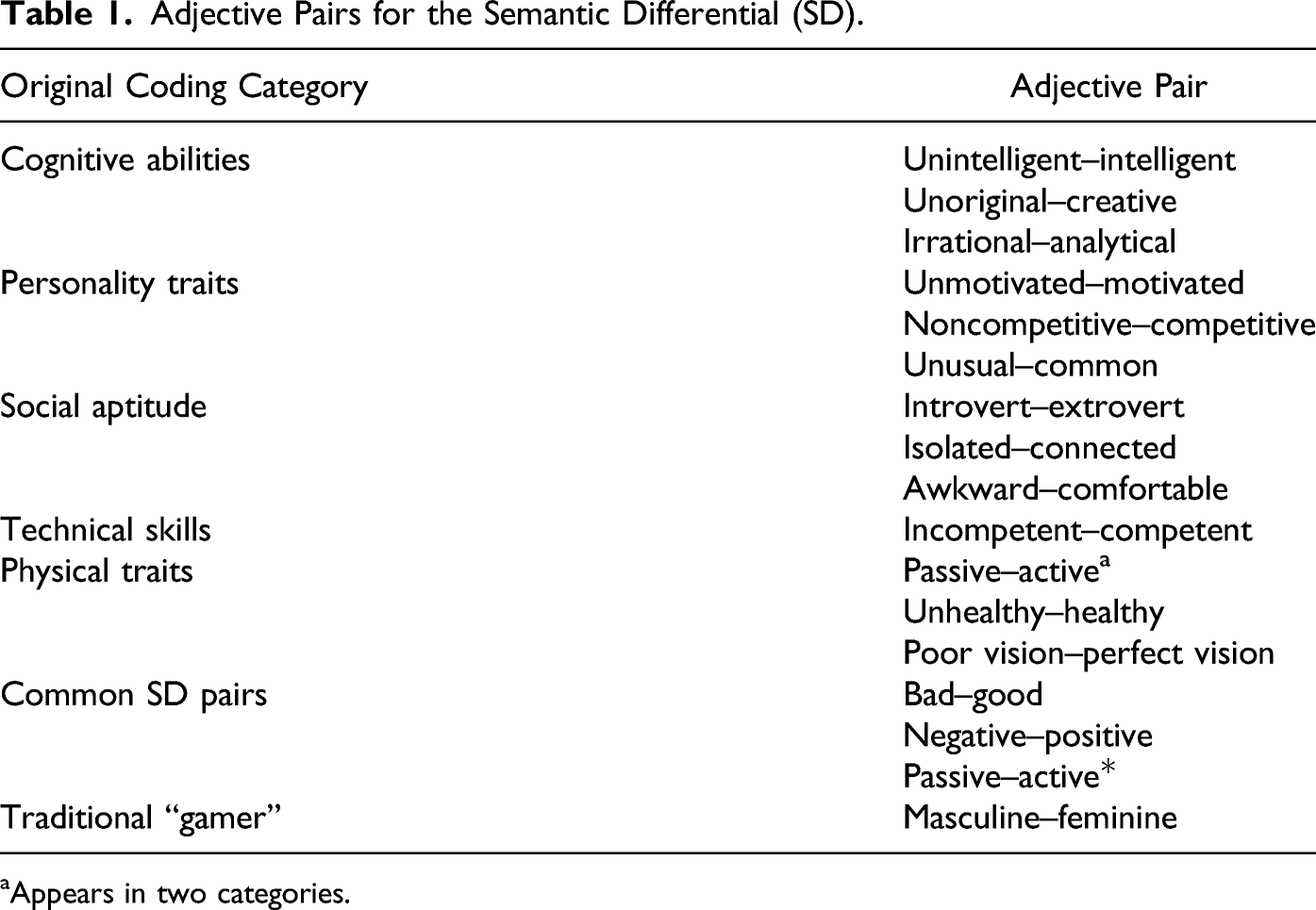
aAppears in two categories.
A set of three independent raters were asked to categorize each pair into one of the three accepted dimensions for a semantic differential—Evaluation, Potency, and Activity. Analysis of the ratings found an average pairwise percentage of agreement of 80.39%. The average pairwise Cohen’s kappa value was 0.672, and Krippendorff’s alpha value was 0.677, indicating that these 17 bipolar adjective pairs are an acceptably reliable measure.
A pilot test with 26 respondents was carried out to test the internal consistency of the semantic differential scales for the three social constructs (the gamer stereotype, game players, and self-assessment). Examination of Cronbach’s alpha values found the differential to be a reliable measure for each of the three social constructs—the gamer stereotype (a = 0.81), game players (a = 0.81), and self (a = 0.84). Feedback was also solicited from the respondents, who suggested changes in the horizontal presentation of the pairs; specifically, that one pair be presented before one other. Once this reordering was applied, the survey was distributed to the participant population.
Survey Design
The following note was added to the survey to help mitigate any confusion among participants about the meaning of the term “video game”: For the remaining questions on the survey, please note that the term “video game” is defined as “an electronic game in which players control images on a video screen” (Merriam-Webster). This includes console, computer, handheld, online games, and other digital games.
Besides a set of standard demographic questions, participants were asked to record their frequency of video game play (average hours per week). Participants’ sense of gamer identity was assessed as an index value based on a four-item scale, adapted from Doosje, Ellmers, and Spears (1995) and Kowert and Oldmeadow (2015). Participants responded to four separate statements (I consider myself to be a gamer, I am pleased to be a gamer, I identify with other gamers, and I feel strong ties with other gamers) using a seven-item Likert scale (1 = Strongly Disagree, 2 = Disagree, 3 = Somewhat Disagree, 4 = Neither Agree nor Disagree, 5 = Somewhat Agree, 6 = Agree, and 7 = Strongly Agree). Responses were averaged to produce the “gamer identity” value for each participant. This scale was found to be strongly reliable (Cronbach’s a = 0.91).
Procedures and Data Analysis
Survey data were examined using SPSS and used to test the stated hypotheses. For RQ1, a paired samples t-test was conducted to uncover significant differences between perceptions of the gamer stereotype and game players in general. For RQ2, a multivariate analysis of covariance (MANCOVA) was conducted to determine the effect of gender and gamer identification on mean perceptions of two social constructs (the gamer stereotype and game players) while controlling for age and frequency of gameplay. For RQ3, a paired samples t-test was conducted to uncover significant differences between perceptions of the gamer stereotype and self-assessments.
Results
The study was conducted between September 2019 and March 2020. The survey collected 389 responses, though there was significant survey attrition; only 274 respondents (70.44%) completed the survey. The remaining 115 responses (29.56%) were removed from the subsequent analyses. The results reported in the following sections are based on the number of responses for the specific question(s) as not everyone who completed the survey completed every question.
Demographics
Study participants included 166 individuals who identified their gender identity as male (61.48%, n = 270), 98 who identified as female (36.30%), and six who identified as neither male nor female (2.22%). Participants reported an average age of 27.18 years (median = 22.00, SD = 11.77, n = 269). Diversity by race and ethnicity was limited. A total of 75.84% (n = 269) participants self-identified as white/Caucasian, 15.24% as Asian or Pacific Islander, 11.15% as Latino or Hispanic, 3.72% as African American or black, 2.60% as Middle Eastern or North African, 1.49% as American Indian or Alaska Native, and 3.35% as “Other.” A total of 10.04% self-identified as more than one race or ethnicity. Participants reported they play video games for an average of 11.09 hours per week (median = 6.00, SD = 14.07, n = 272).
Factor Analysis
Three principal component analyses (PCAs) with varimax rotation were conducted to see if the three-dimensional structure found in prior studies—evaluation, potency, and activity—could be replicated with the survey response data along the three constructs. All analyses failed to replicate the common three-dimensional structure. For the responses to the gamer stereotype, the Kaiser–Meyer–Olkin measure verified the sampling adequacy, KMO = 0.870. Bartlett’s test of sphericity confirmed that the correlations were sufficiently large for PCA, χ2(136) = 1732.037, p < 0.01. The PCA resulted in a four-factor solution accounting for 60.55% of the variance. For responses to the “game players” construct, the sample was found to be adequate, KMO = 0.858, and the correlations were sufficiently large, χ2(136) = 1825.238, p < 0.01. The PCA resulted in a four-factor solution accounting for 60.54% of the variance. For the responses to the “self” construct, the sample was found to be adequate, KMO = 0.849, and the correlations were sufficiently large, χ2(136) = 1721.314, p < 0.01. The PCA resulted in a five-factor solution, based on eigenvalues and scree plot, accounting for 65.12% of the variance. The factor variables did not align with either of the initial rater categorizations for the three categories (evaluation, potency, and activity) in any of the analyses.
Given the inability to replicate the three-dimensional structure found in prior research, as well as the diversity in the factors that were produced from the three analyses, the decision was made to average the 17 semantic differential variables into a one-dimensional measure for each of the three scales. The differential for each of the three social constructs was found to be reliable—for the gamer stereotype (a = 0.85), game players (a = 0.86), and self-assessment (a = 0.83).
Differences in Perceptions of the Social Constructs
Mean ratings for the gamer stereotype (M = 3.94, SD = 0.85) scale were found to have a moderate correlation with mean ratings for game players (M = 4.23, SD = 0.77; r = 0.49, p < 0.01, n=263) and a weak correlation with ratings for the self-assessment (M = 4.66, SD = 0.86; r = 0.25, p < 0.01, n = 265). The mean ratings for the game player scale were also found to have a moderate correlation with the self-assessment mean ratings (r = 0.38, p < 0.01, n = 262).
Paired Samples t-Test Results: Gamer Stereotype Versus Game Players.
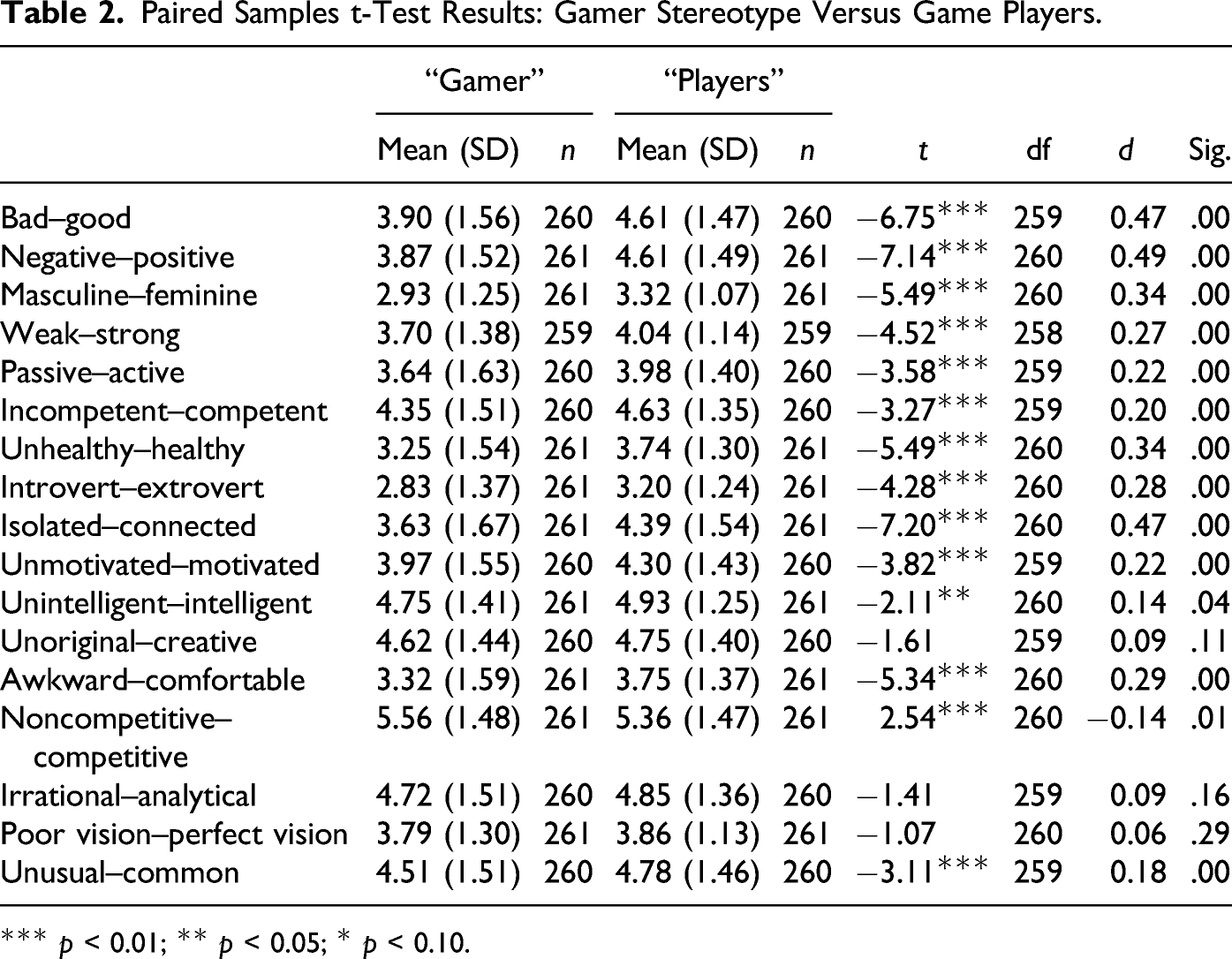
*** p < 0.01; ** p < 0.05; * p < 0.10.
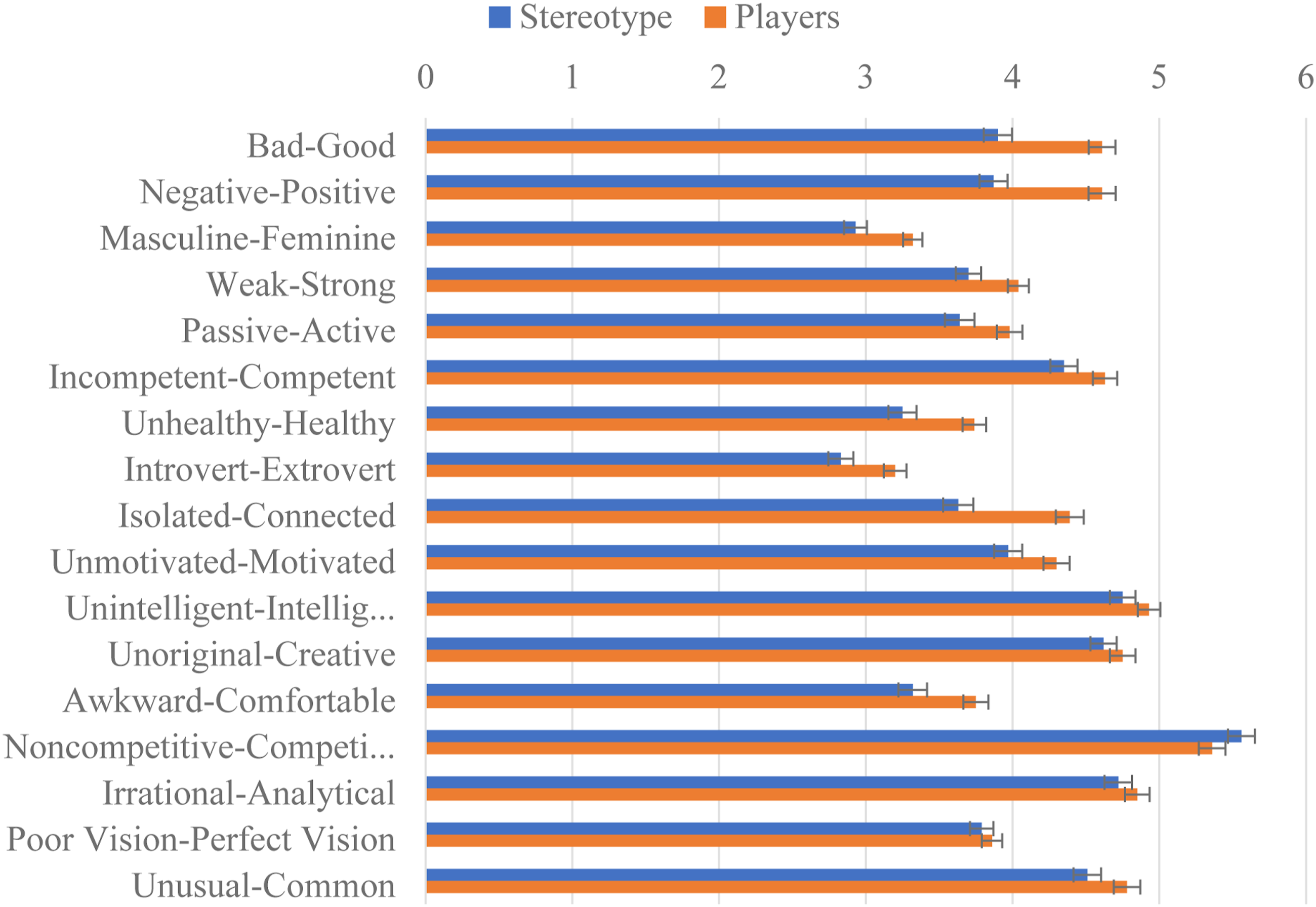
Semantic differential means: gamer stereotype versus game players.
Demographic and Gaming Profile Impacts
To facilitate analysis for RQ2, a categorical scale for Gamer Identity was constructed from the mean value of the aforementioned gamer identity statements (I consider myself to be a gamer, I am pleased to be a gamer, I identify with other gamers, and I feel strong ties with other gamers). The Gamer Identity categories were meant to signify the general level of perception of the participants with a gamer identity using three levels: mean values less than 4.0 were considered to be in the Non-Gamer category, values between 4.0 and 4.999 were considered to be Neutral, and values of 5.0 and beyond were considered to be in the Gamer category. The resultant distribution included 37.27% Non-Gamer (n = 271), 16.24% Neutral, and 46.49% Gamer.
Gender is one of the more common differentiators of gaming-related attitudes and behaviors in the literature. In order to assess the impact of self-reported gender identity on responses to the gamer stereotype and game player perception scales, the decision was made to transform the three-category gender identity measure (Male, Female, and Other) into a two-category measure due to the low percentage of participants who reported a nonbinary identity (1.86%). The resultant distribution included 61.48% (n = 270) who identified as Male and 38.52% who did not identify as Male.
Multiple Comparisons and Mean Differences in Perceptions by Gamer Identity Controlling for Age and Frequency of Gameplay.
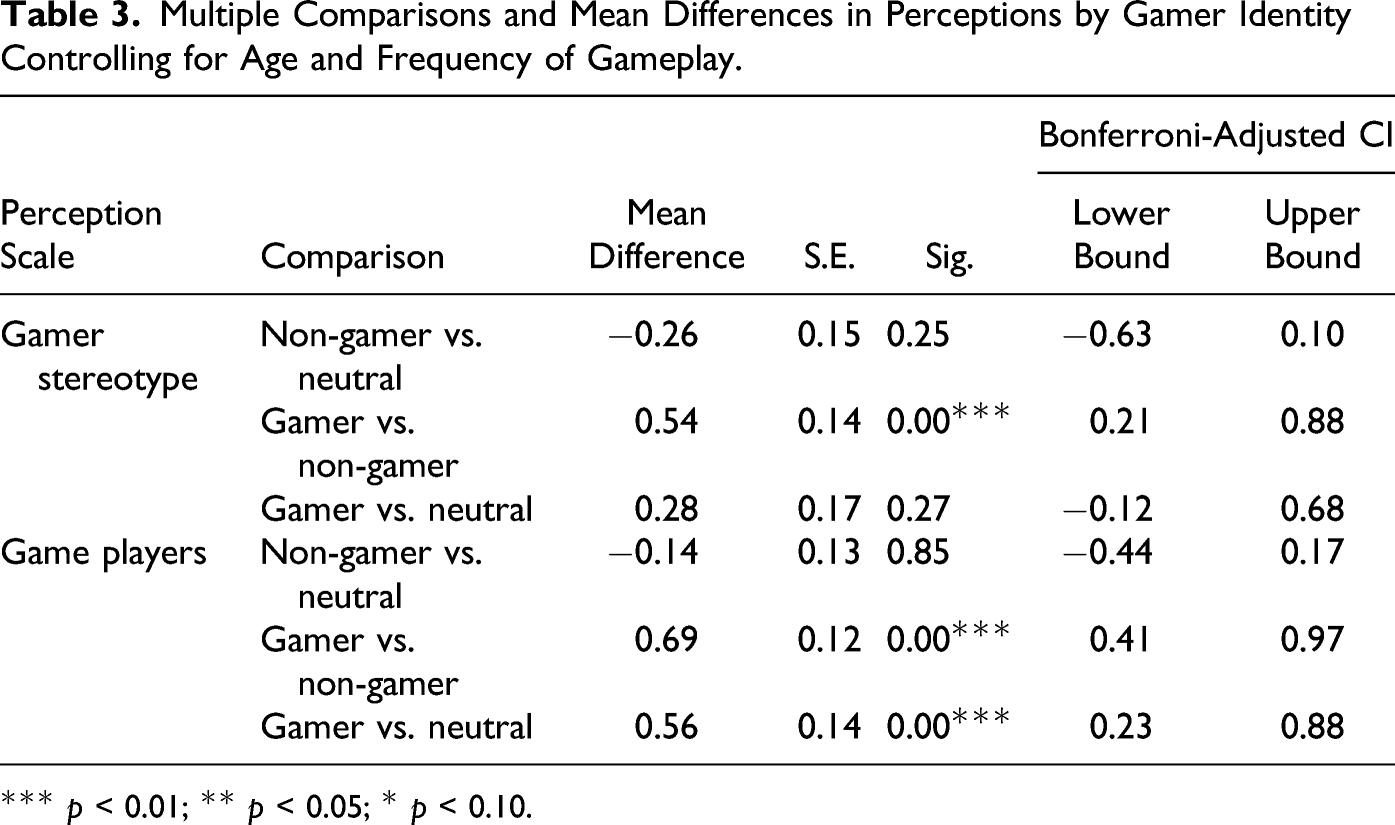
*** p < 0.01; ** p < 0.05; * p < 0.10.
The results show that participants in the Gamer category have a significantly higher perception of game players than those in the Non-Gamer category. Perceptions of the gamer stereotype were also significantly higher for participants in the Gamer category than those in either the Non-Gamer or Neutral categories.
Gamers: Do They Apply Stereotype Traits to Themselves?
To investigate RQ3, a paired-samples t-test was conducted to compare the ratings for the 17 bipolar adjective pairs among two social constructs (scales)—the gamer stereotype and the self-assessment—for those cases which had a Gamer categorization for the Gamer Identity measure. Five of the adjective pairs and corresponding responses were transformed so that the lower end of the scale represented adjectives consistent with the gamer stereotype, as identified in Stone (2019).
Paired Samples t-Test Results—Gamer Versus Self-Assessments (Gamers Only).

Note: Italicized pairs were reordered/recoded to place stereotypical traits on the lower end of the scale.
*** p < 0.01; ** p < 0.05; * p < 0.10.
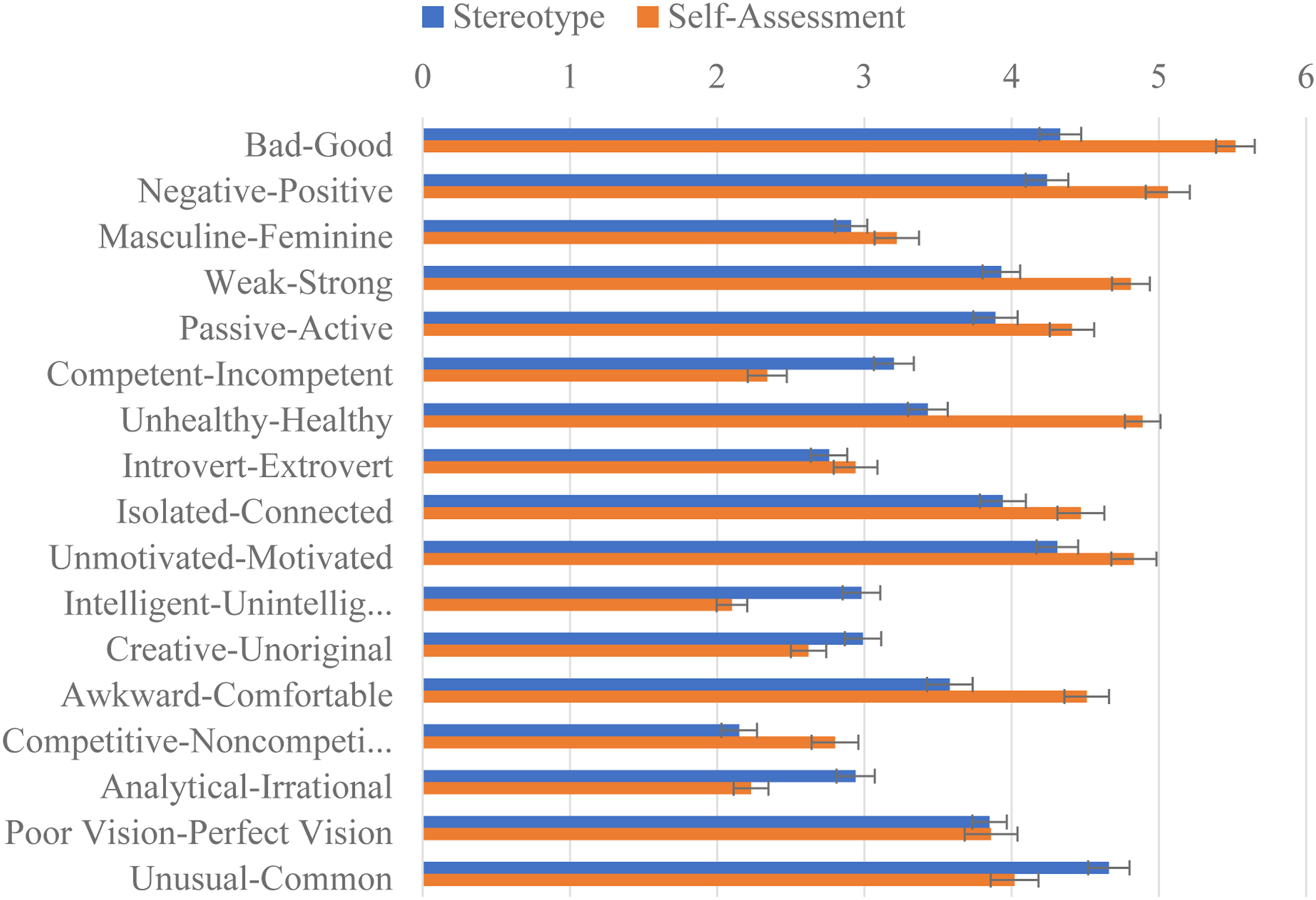
Semantic differential means: gamer versus self-assessments (gamers only).
Discussion
The study analyses found significant differences in perceptions of the gamer stereotype and game players among all participants. For all but one adjective pair (Noncompetitive–Competitive), the gamer stereotype was more strongly associated with traits on the left-hand end of the scale. These traits (with the exception of masculine) generally describe limited social, physical, and economic prospects (e.g., weak, unhealthy, unmotivated, and introvert) and in many cases reflect traditional tropes about gamers.
These gamer versus game player results lead to two conclusions. First, the negative nature of the gamer stereotype persists and is well recognized, and both gamers and non-gamers alike are aware of these “negative” traits and their relationship to the traditional stereotype. This awareness differed significantly, however, by the category of participant: self-identified gamers had significantly more “positive” (higher) perceptions of the gamer stereotype than self-identified non-gamers or “neutral” participants, when controlling for age and frequency of play.
Second, though game players are more strongly associated with traits on the right-hand end of the differential—including greater social aptitude, cognitive ability, and health—the modest mean ratings for all adjective pairs suggest that the overall perception of game players may still have some negativity to overcome. The MANCOVA results found that self-identified gamers had significantly higher perceptions of game players than non-gamers, when controlling for age and play frequency; this makes sense as regular participation in gaming activities would logically indicate a more positive perception of the activity and its’ participants. The increasingly social and collaborative natures of games both massive (e.g., League of Legends and Final Fantasy Online) and mobile (e.g., PUBG Mobile, Candy Crush, and Pokémon Go), as well as the persistence of many players in these environments, would indicate that players have at least a tolerance for the personalities and behaviors of other gamers within the space. However, the aforementioned negative activities sometimes associated with gaming communities (e.g., harassment, racism, and sexism) may dampen the positive perception of game players by gamers and non-gamers alike. For non-gamers, these perceptions may be influenced by popular culture artifacts, mainstream news reports, prior experience, and/or personal interactions with game players, among other things. Future research would be wise to investigate whether gamers and non-gamers separate perceptions of the activity of gaming from the perceptions of game communities and players, including themselves.
Do Self-Identified Gamers Apply Stereotypical Traits to Themselves?
The results also show self-identified gamers have significantly different perceptions of the traditional gamer stereotype and themselves. In short, self-identified gamers in this study do not see themselves as fitting the stereotype. Directionally, a majority of the ratings were significantly smaller (i.e., stereotypical) for the gamer stereotype. The smaller ratings for the cognitive abilities of the gamer stereotype indicate that self-identified gamers see themselves as more intelligent, creative, and more capable of analytical thought than stereotypical gamers. Self-identified gamers also found themselves to be more strongly associated with technical competence than the gamer stereotype (p < 0.01). This stands in contrast to popular perceptions of gamers and labels that overlap at least partially with “gamer” (e.g., nerd, geek, and techie), where members are often seen as technically proficient as well as highly intelligent. The social ineptitude associated with the gamer stereotype was found to persist, however. Self-identified gamers strongly associated both Isolated (p < 0.05) and Awkward (p < 0.01) with the gamer stereotype, while Introvert was a nonsignificant association.
As with the gamer versus game player results, the gamer-specific differential means for gamer versus self were relatively modest. The largest mean rating difference (1.46) was for the Unhealthy-Healthy adjective pair, as well as the largest effect size (d = 1.02). One of the other Physical category pairs (Passive-Active) also had a significant difference, with the stereotype being seen as more Passive than the participant’s own self-assessment. Traditional gaming is considered a sedentary activity, though recent efforts to integrate more active gaming elements—such as motion controllers and VR—as well as the now-common practice of mobile gaming are reflective of the growth of the medium as well as an awareness of gamers’ desires to physically expand their gaming experiences. This strong differential would suggest that present gamers see the traditional stereotype of the couch-bound game player as being distinct from their own reality as active gamers.
The differences in perception indicate that self-identified gamers perceive the stereotype as having little to no basis in reality. The stereotype is seen as more associated with traditional “gamer” traits. The significant differences between the self-assessment ratings and the stereotype ratings may signal a desire to forge a more positive identity for both gamers and the activity of gaming. The evolution of gaming, both in terms of player demographics and the nature of the games played (e.g., casual, social, and mobile), as well as progressive social movements necessarily have an impact on the perceptions that gamers and non-gamers alike have on gaming identity. Indeed, negative perceptions of the stereotype within the gaming community may act as a backlash against a false narrative, one that members of the community may feel allows the general public to devalue their chosen identity as well as their recreational/professional activities.
In order to combat this false narrative, a counternarrative is needed. Part of this counternarrative will involve a continued spread of positive stories on gaming and game players, including tangible and intangible benefits of the activity. As gaming in all its forms (including but not limited to mobile, VR, online, and console-based) becomes more embedded in societal practices—such as in training and development, business modeling, recreation, and education—and the diversity of game genres, representations, and preferences expands, perceptions of gaming and gamers should continue to evolve. However, perception is just one element of the equation. Beyond this, continued efforts to control and/or eliminate the negative elements of gaming culture (e.g., harassment and discrimination) and to create safe, accessible, and enjoyable gaming communities for all will further push the traditional gamer stereotype into the background. Future research should be conducted into the linkage between the growth of gaming in social, cultural, business, and educational domains and evolving perceptions of gaming and gamers.
Limitations of the Study
Limitations of the study include the sampling population, composed primarily of young adults from the United States. Efforts were made to expand the diversity sample beyond this group through social media (e.g., Twitter, Facebook, and Reddit) though the demographic information collected suggests a younger and, in some ways, more homogeneous sample. Future work should consider different methods in order to increase the odds of a larger and more diverse population, especially in terms of race, ethnicity, and gender identity, or a study which incorporates international perspectives—which may differ significantly from US perspectives—or perhaps a qualitative study on a specific gaming community. As such, the reduced diversity in the sample may limit the generalizability of the findings. The survey attrition can also be considered a limiting factor. The length of the survey, especially the three semantic differentials, was a likely cause of the attrition though concerns over length did not present during the pilot test. As data collection will continue over time, future research will attempt to inform potential participants more accurately about the survey length and resultant expectations.
A final limitation of the study would be concerns over stereotype threat. The survey instrument constructed for this study attempted to limit those concerns through the use of a semantic differential, which allowed participants to choose perceived characteristics along a bipolar continuum (i.e., “positive” and “negative” adjectives, with points in between). In addition, at no point during the survey were participants explicitly told the characteristics of the traditional gamer stereotype. However, these concerns cannot be fully diminished due to the collection of self-reported perceptions.
Conclusion
There has been a growing acceptance of gaming as a recreational, creative, and social medium since the inception of the first home consoles in the 1970s. However, perceptions of the gaming audience— so-called “gamers”—have been slower to evolve thanks to sometimes misleading characterizations in the mainstream media and popular culture. This study used an established model of social perception—the semantic differential—to explore differences in perceptions of the gamer stereotype and game players among both gamers and non-gamers, as well as differences in self-perceptions and the stereotype. The information obtained from this study may be useful for devising strategies to address the popular perceptions and potentially negative social impacts associated with gaming cultures, both within gaming communities and other contexts. In the long-term, continued data collection can help to uncover the persistence or decline of the traditional gamer stereotype over time.
The results of the study show distinct differences in perceptions between the gamer stereotype and game players, one that offers hope that the traditional gamer perceptions—for example, male, socially inept, and physically unfit—will dissipate over time. The stereotype is considered to be more strongly associated with more traditional “gamer” traits than game players, as well as traits which indicate limited social and other abilities. This finding suggests both the persistence of the negative stereotype as well as a growing recognition that game players, in general, do not fit that stereotype. Self-identified gamers were also perceived themselves as exhibiting less stereotypical traits than the “gamer” label often implies, suggesting a belief that modern gamers see themselves in a more positive, progressive light—that is, they see the obsessive, socially awkward “nerd” caricature as a relic of the past. Future work should consider how these perceptions evolve in light of the growing inclusion of gaming in society, as well as distinctions players make between the activity of gaming and their perceptions of gaming, gamers, and gaming communities.
Footnotes
Acknowledgments
The author(s) would like to thank Ms. Elizabeth Nelson, Reference & Instruction Librarian at Penn State Lehigh Valley, and Mr. Christopher Trenge, undergraduate student at Penn State Lehigh Valley, for their assistance with data collection.
Declaration of Conflicting Interests
The author(s) declared no potential conflicts of interest with respect to the research, authorship, and/or publication of this article.
Funding
The author(s) received no financial support for the research, authorship, and/or publication of this article.
