




Abstract
This case examines the challenges facing a high school principal in a struggling suburban district in the Rust Belt. This school is faced with declining achievement of entering students and a loss of both teaching and support staff. In this context, the principal struggles with the assignment of non-professional duties, which do not fall under the work of either teachers or counselors but are critical to the successful operation of the school. Educators should engage in dialogue not only about how to address accountability pressures in light of diminished resources but also about the role of counselors, a topic that is rarely addressed in educational leadership programs but one that is important as counselors, teachers, and administrators are increasingly asked to engage systemically in school improvement.
School leadership ranks second only to teaching as a school-related factor affecting student learning (Leithwood, Seashore, Anderson, & Wahlstrom, 2010). Given this influence, recent scholarship has identified that successful school leaders focus on “the core technology of schooling, or learning, teaching, curriculum and assessment” (Murphy, Elliot, Goldring, & Porter, 2007, p. 179). Such focus necessitates protecting time for instructional activities and shielding teachers from any distractions that might interfere with it. This need to protect teachers’ time, along with a host of other pressures on school leaders, including declining budgets, instructional and managerial regulations, and the day-to-day emergencies that arise in schools, can lead them to delegate tasks to staff members who fall outside the bounds of their professional roles. These tasks, however, often fall disproportionately to school counselors (Leuwerke, Walker, & Shi, 2009). Although the work of school counselors has historically been challenged by role conflict and confusion, resulting in the distribution of non-counseling duties to counselors (Leuwerke et al., 2009; Lieberman, 2004), the phenomenon of allocating non-counseling duties to counselors now also appears to be a feature of accountability pressures on school leaders who have more duties to distribute than time or personnel to handle them. The distribution of non-counseling duties to counselors has deleterious effects; students who do not receive adequate counseling services are more likely to delay college or make uninformed decisions about post-secondary life, are less likely to receive financial aid, and are more likely to be disappointed in their choice of college (Johnson & Rochkind, 2010). This case study asks educators to examine the challenges facing one principal in a struggling suburban district as she attempts to improve student achievement and continue to provide support for vulnerable students while balancing the time and resources needed for instructional improvement with the distribution of non-professional duties of teachers and counselors in her high school.
Background
The Edgewood School District, which includes four schools (an elementary school, an intermediate school, a middle school, and a high school), is located in an inner-ring suburb of a city in the Northeastern United States. Inner-ring suburbs are “low-density, single-family, residential suburban areas built between 1950 and 1969” (Leigh & Lee, 2005, p. 15). Geographically in the Rust Belt, Edgewood for many years resembled a fairly typical suburb, with small single-family homes, a tight-knit community, and a predictable and stable school system that graduated most students. After the Second World War, Edgewood experienced rapid population growth and industrial development. In Edgewood and around the country, buying a home in the suburbs became easier and less expensive than renting an apartment in the city for many families, encouraged by the Federal Housing Administration and the Veterans’ Administration Loans (Hanlon, 2010).
For decades, students from Edgewood typically went on to factory work, but over the last generation, the area has suffered, as many nearby have, with the effects of deindustrialization. Deindustrialization has led to job loss and instability as well as a “brain drain” of potentially strong young people (Florida, 2005; Mitra & Halabi, 2012). As a result of this process of deindustrialization, Edgewood and many similar once-thriving inner-ring suburbs have begun to fall into decline. Indeed, inner-ring suburbs are “increasingly vulnerable to socioeconomic decline and exhibit symptoms of decline similar to those found in inner cities (white flight, population loss, and increased poverty)” (Leigh & Lee, 2005, p. 13). Between 1980 and 2000, the number of inner-ring suburban residents living in poverty increased by more than 800,000; 73% of the inner-ring suburbs where poverty increased were located in the Rust Belt areas (Hanlon, 2010). As poverty rises, the area’s tax capacity decreases, affecting school funding and, as some suggest, school performance (Frankenberg & Orfield, 2012; Hanlon, 2010)
These changes have affected Edgewood in significant ways. First, there has been a decrease of students in the district. This decrease has led to cuts in the teaching force as well as to other school positions such as social workers and counselors. Edgewood High School was hit particularly hard; the school lost its social worker, who had been with the school for many years, and funding to replace the position was not available. Equally challenging, the high school was forced to lay off nearly 20% of the teaching staff in 2010. Figure 1 shows the change in student enrollment between 2006 and 2012. Figure 2 shows the trend in teacher numbers over time.
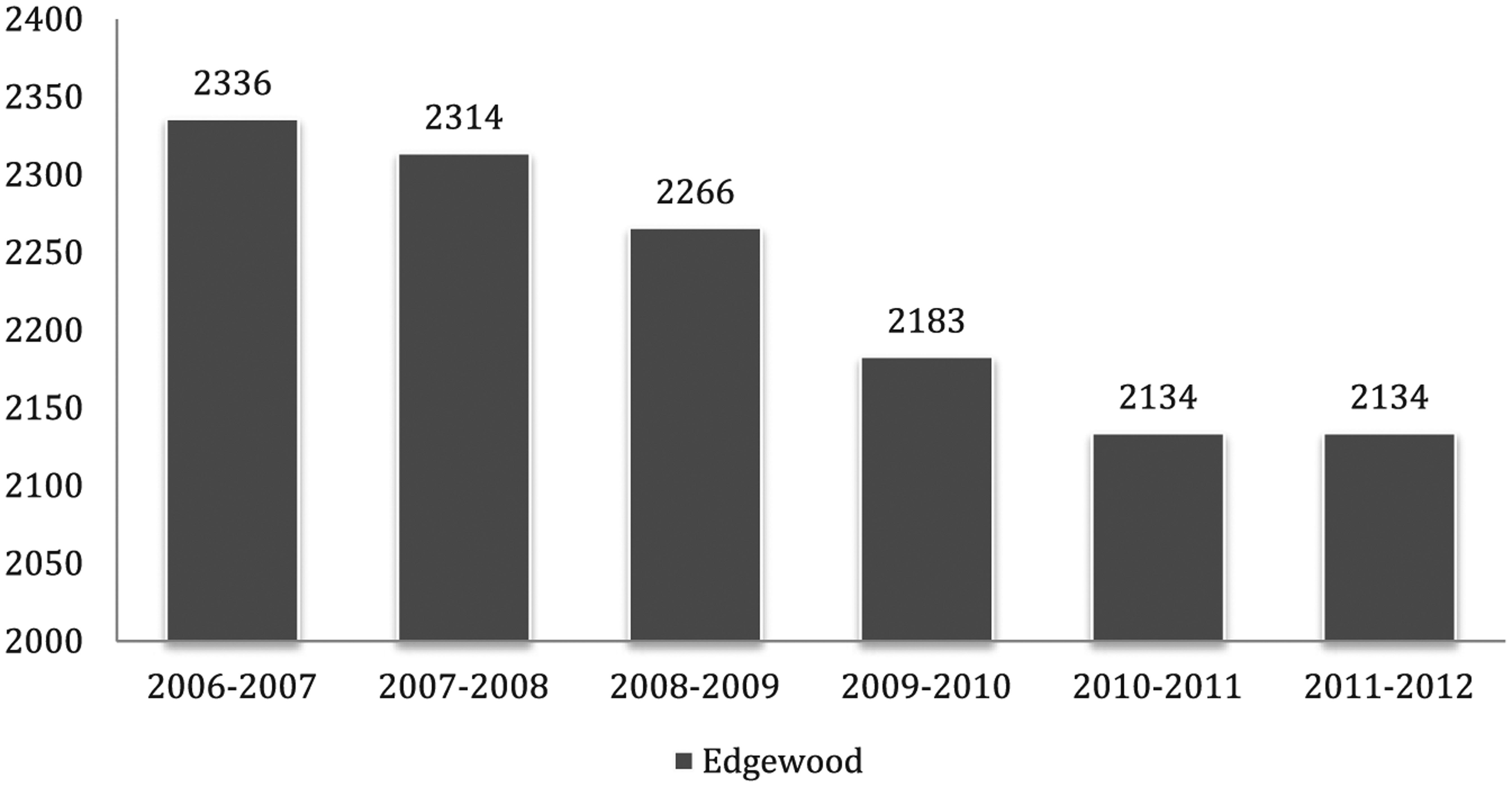
Total student enrollment.
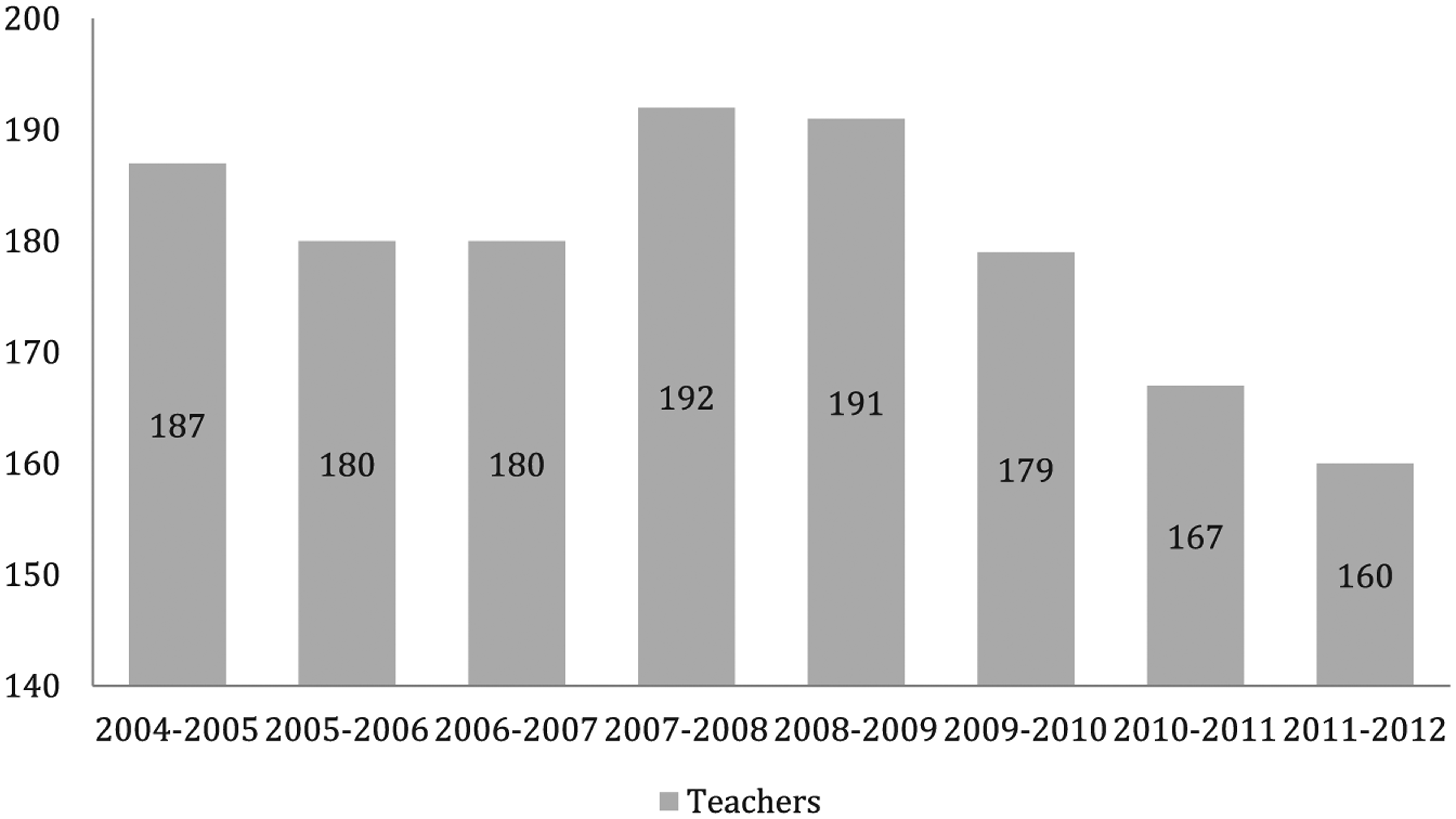
Number of teachers over time.
These numbers are similar at Edgewood High School. The total number of students in the school dropped from 815 in 2006-2007 to 711 in 2011-2012, and the number of teachers dropped from 61 in 2006-2007 to 48 in 2011-2012.
Second, rising poverty has contributed to an increase in the number of students who receive free lunch in Edgewood. The district has experienced a sharp increase in the number of students facing food and shelter instability. This shift has necessitated extra time on the part of counselors to ensure that students receive the support they need. Figure 3 shows the changes in the percentage of students receiving free lunch in Edgewood between 2006 and 2012.
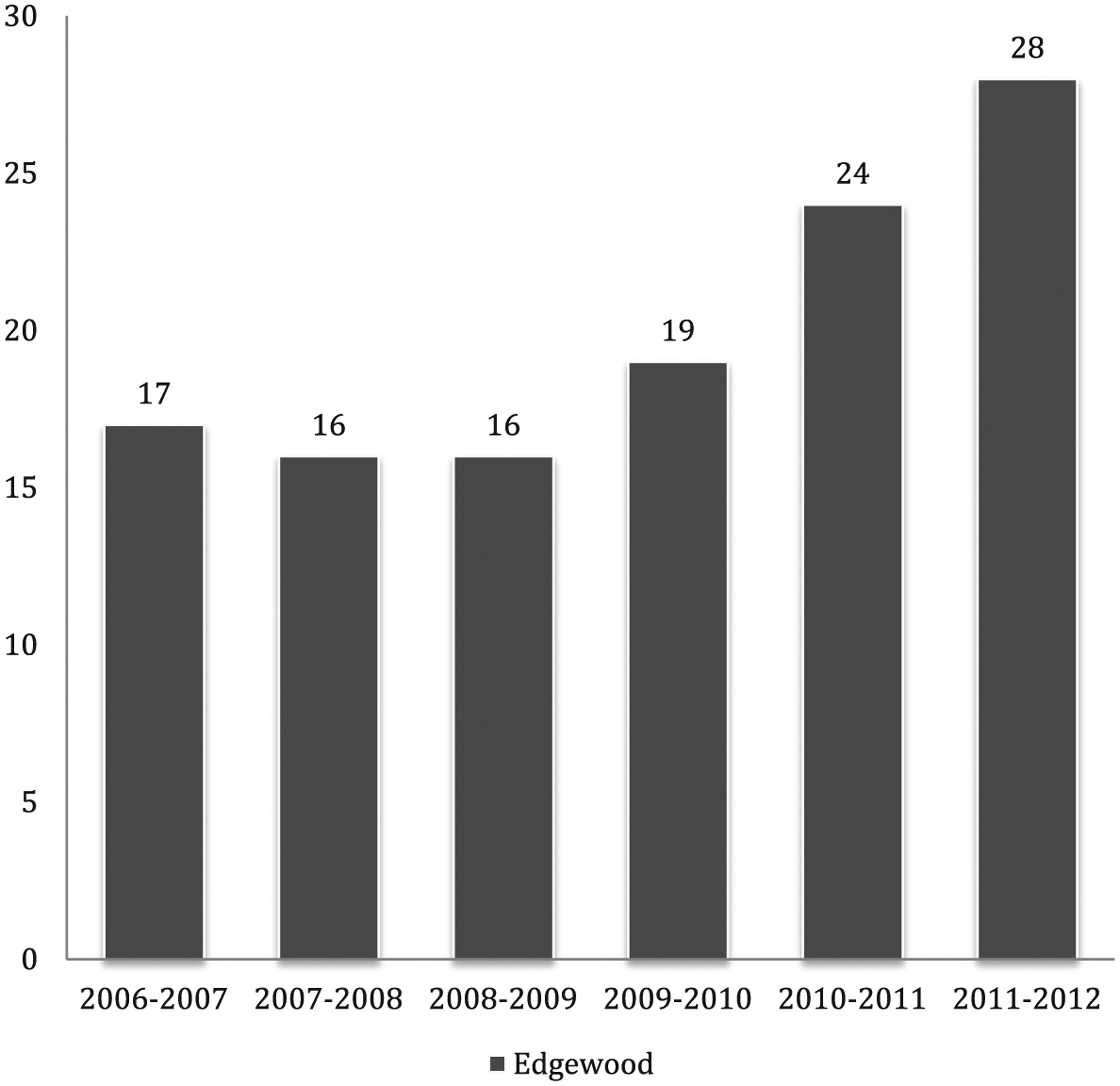
Percentage of students receiving free lunch over time.
Edgewood is also becoming increasingly more diverse, while experiencing decline in the numbers of White students enrolled in the district. Between 2006-2007 and 2011-2012, the number of African American students rose from 125 to 161, and the number of Hispanic/Latino students rose from 18 to 51. At the same time, the number of White students decreased from 2,149 to 1,815. These trends parallel similar trends in other inner-ring suburbs, as described earlier. Figure 4 shows the number of African American students in the district, Figure 5 shows the number of Hispanic/Latino students, and Figure 6 shows the number of White students.

African American students in Edgewood District over time.
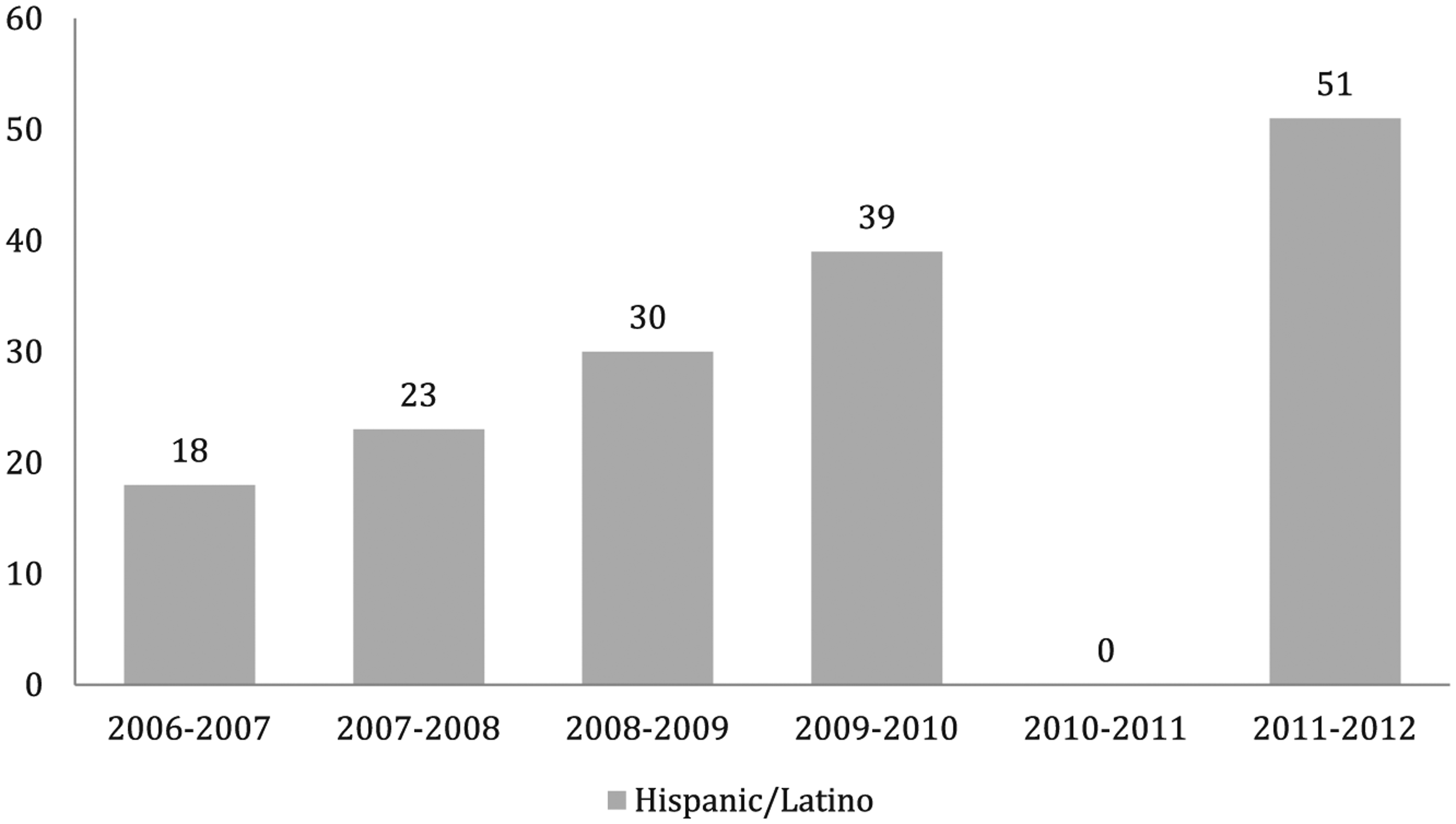
Hispanic/Latino students in Edgewood District over time.

White students in Edgewood District over time.
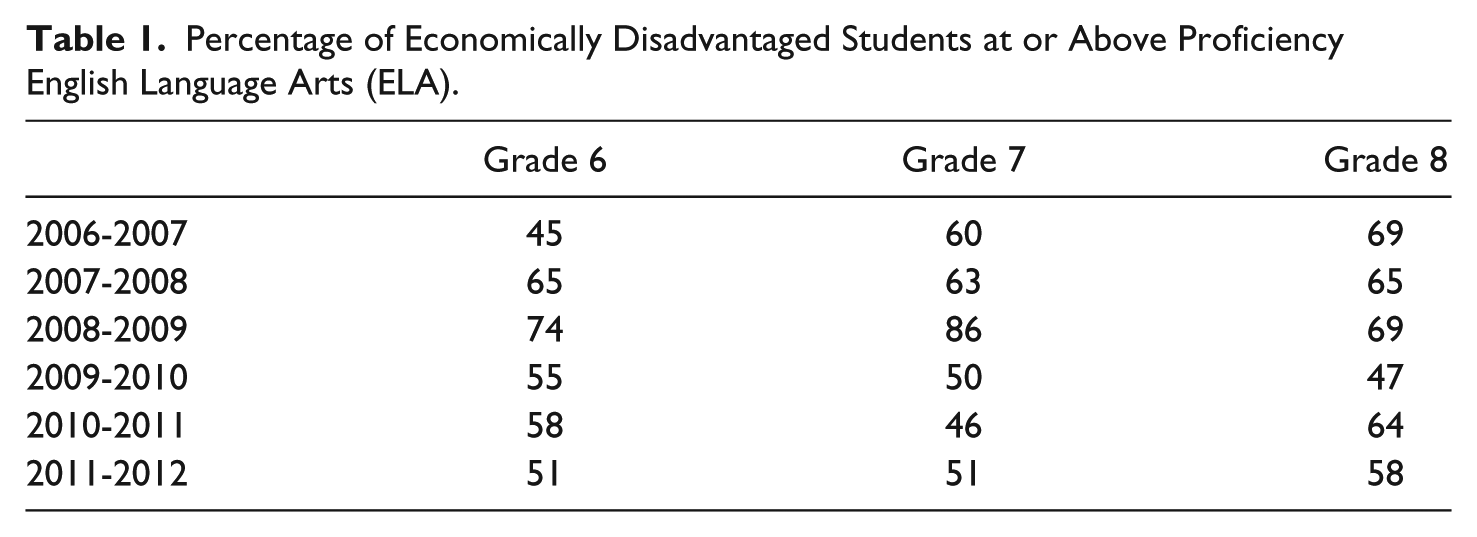
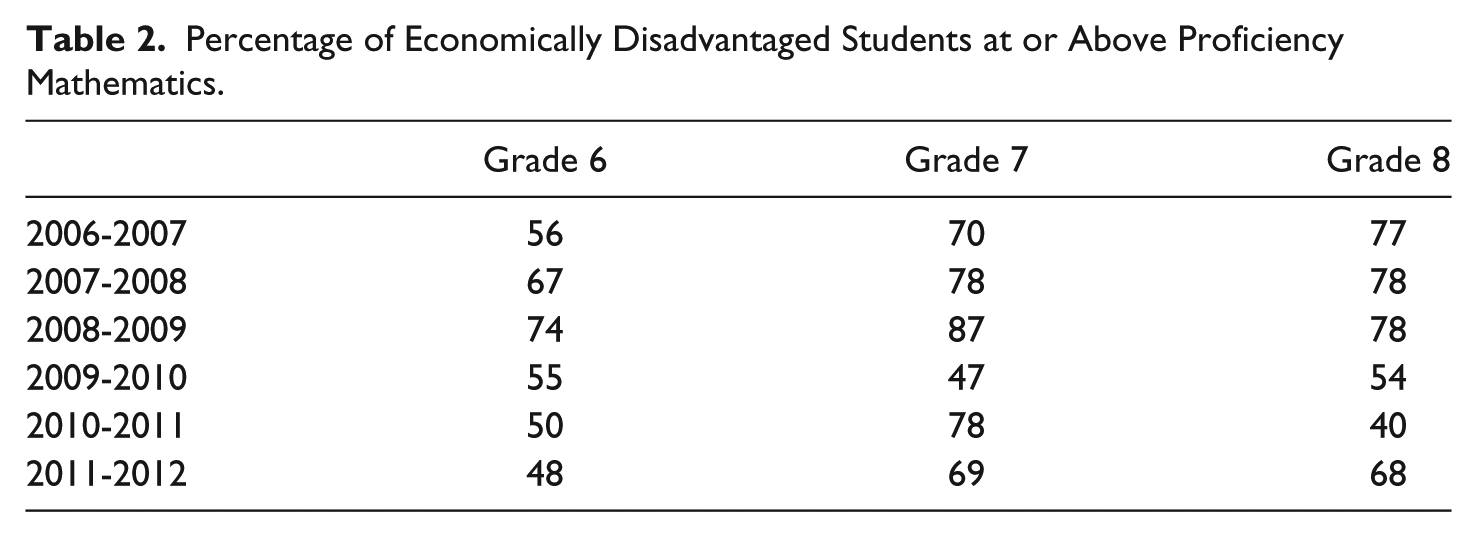
Finally, although student achievement overall in the district has remained relatively stable, students who are economically disadvantaged have experienced a noticeable decline in performance. This trend was particularly true in both English Language Arts and Mathematics in Grades 3 through 8 in Edgewood. In these areas, student performance peaked in 2008-2009 and has since been on a steady decline. In this same time, performance at the secondary level remained relatively stable. However, with students from the lower levels moving up into the secondary level in the district, educators and administrators continue to be concerned about performance. Tables 1 and 2 show economically disadvantaged students who perform at or above proficient levels in Grades 6, 7, and 8 in English Language Arts and Mathematics state examinations, as this is the body of students who will move into Edgewood High School.
Percentage of Economically Disadvantaged Students at or Above Proficiency English Language Arts (ELA).
Percentage of Economically Disadvantaged Students at or Above Proficiency Mathematics.
These powerful forces in Edgewood have presented difficult challenges for school leaders in the district, and in particular the principal of Edgewood High School, Susan Ross, who is now forced to make decisions about how best to serve and support a changing population of students with fewer and fewer human and fiscal resources. One decision that Susan has made is to ask school counselors to perform several tasks that are not considered counseling duties. Edgewood High School has three counselors: Alison, Beth, and Carla. All have been working as counselors for more than 15 years. The duties Susan asked the counselors to pick up include attendance and extracurricular activity eligibility monitoring, as the shrinking budget has meant a loss in administrative support in the front office. These duties were asked of counselors in addition to the work they are already doing. Teachers were not asked to pick up similar extra duties.
On one hand, research supports a strong focus on and marshaling of resources toward instructional leadership to raise achievement for students (Hallinger, 2011; Murphy et al., 2007). Principals are encouraged to ensure that distractions to teachers’ work are minimized to facilitate this goal. On the other hand, minimizing distractions for teachers does not minimize the overall presence of distractions. As a result, the work gets pushed onto the list of other people’s responsibilities. Increasingly, these other people are school counselors, who are asked to pick up the kind of work that might serve as a distraction to teachers, including attendance and discipline (Fitch, Newby, Ballestero, & Marshall, 2001; Leuwerke et al., 2009). In Edgewood, a district teetering between a once stable past and an uncertain future, this challenge is at the top of issues of concern for school and district leadership.
Case Narrative
As the end-of-the-day bell rang and students piled out the red front doors of the school, Susan Ross, principal of Edgewood High School, found herself at her desk, wondering how she could have handled a tricky situation with the school counseling team that occurred just after lunch that day in a different way. She knew that it had not gone as she had hoped, and she was concerned not only about her relationship with her counseling team but also about the teachers and students in the high school, who already found themselves under high levels of pressure to maintain current test scores amid rising poverty and declining achievement at the lower levels in the district.
Susan Ross had been the principal of Edgewood High School for more than 8 years and assistant principal before that, but in the years before her administrative roles, she had been a school counselor. In some ways, she felt that her prior experience gave her insight into the work of counselors in her building. At the same time, Susan was aware that the job of counselor had changed since her experience. Recent guidelines set forth by the American School Counselor Association (ASCA, 2005) define four roles for counselors: individual student planning, responsive services, curriculum, and system support. Individual student planning involves goal setting/decision making; academic planning; education on understanding of self, including strengths and weaknesses; and transition plans. This area should involve approximately 25% to 35% of a counselor’s time. Responsive services involve individual and small-group counseling; individual/family/school crisis intervention; conflict resolution; consultation/collaboration; and referrals and should also command approximately 25% to 35% of a counselor’s time. Curriculum tasks include academic support, including organizational, study, and test-taking skills; goal setting and decision making; career awareness, exploration, and planning; education on understanding self and others; peer relationships, coping strategies, and effective social skills; communication, problem-solving, and conflict resolution; substance abuse education; and multi-cultural/diversity awareness. School guidance curriculum, at the high school level, should involve between 15% and 25% of a counselor’s time. Finally, system support should take between 15% and 20% of a counselor’s time. System support includes tasks such as professional development; consultation, collaboration, and teaming; and program management and operation.
Susan respected that perhaps the roles of counselors were different than they had been when she was a counselor, and because she trusted her counselors as professionals, she felt she gave the counselors fairly wide berth in terms of their roles. Even so, she had been working with the counselors over the course of the past school year to examine their work and how they might better support students. The counselors were in the process of developing a new counseling curriculum, which provided an opportunity to discuss both what they had been doing and what they believed they ought to be doing.
In the process of developing their curriculum, the three counselors—Alison, Beth, and Carla—each analyzed the time spent on the various areas of their work. What they discovered was that some of the duties they had been assigned over the last year were affecting their ability to provide the quality of counseling services to which they aspired. Throughout the course of developing their curriculum, they had pointed out these concerns to Susan. First, the counseling team had been acting as de facto social workers, as the district had been forced to lay off the high school social worker in the latest round of budget cuts. The need for social work in the district was acute, with steeply rising poverty and rising levels of homeless students in the district. Now, in addition to their typical counseling duties, the counselors were working with families to get the needed support in a period of crisis, and many students required intense individual counseling, which left the counselors with less time to support the broader student body.
Second, in addition to acting as social workers, a role for which they had some affinity but no real training, they were also teaching classes in the Freshman Transition program, a new program designed to ease students moving into the high school. The counselors were happy to work with students in this role but also felt that they were teaching too many classes in the program as compared with subject-area teachers who were supposed to be equally involved. The counselors were concerned not only that they were teaching classes when they were not actually teachers, but that this work, while part of their curriculum support duty, was extending beyond the recommended guideline of 15% to 25% of their time.
It was in this context that Susan’s challenge arose. In a regular scheduled meeting between the counselors and Susan, she had asked the counselors to take on the additional role of attendance, and specifically the job of handling attendance in the morning, including making sure that all students were present and accounting for students who were not present by making calls home. In the past, this role had been handled by administrative support staff in the front office, but with budget cuts in the district, there was just not the same level of administrative support in the building. Having the counselors take on this role filled several voids. First, because the counselors’ schedules were more flexible than teachers’ schedules, it was somewhat easier for her to schedule them to do attendance during the first period. This move helped ensure that teachers could focus on academics and not on duties such as attendance which could potentially service as distractions to their instructional work. Second, Susan believed that putting counselors in charge of attendance might alert them to students who were having issues at home that made it difficult for them to come to school. This type of alert was exactly what she felt the counselors needed, given what she believed to be their current emphasis on college. As poverty rose in the district and more and more students found themselves in unstable housing situations or even worse, homeless, the counselors could be more aware of who might need extra help. Without the support of the social worker at Edgewood High School, this need was more critical than ever.
In addition to attendance, Susan had also assigned the job of extracurricular activity eligibility monitoring to the counselors. This task involved having the counselors make sure that students’ grades were high enough and their attendance regular enough to participate in sports. Although the counselors might have been amenable to taking on the attendance work, they were less so regarding eligibility monitoring. Susan felt that if there were students who were failing two or more classes—the lowest standard for eligibility—that perhaps the counselors might be able to look at the situation and alert the leadership team as to any challenges that might be occurring in the students’ lives. The counselors, however, felt that this task was outside the bounds of their professional roles. Given the prior concerns the counselors had voiced regarding social work and Freshman Transition, these new duties represented a challenge too great for them. On some level, Susan agreed—she knew that she probably could have assigned this task to a secretary. However, given the already stretched workloads of the entire school staff, she hoped, to some degree, that perhaps the counselors would see monitoring eligibility as a way to merge tasks, allowing them to both keep an eye on struggling students while also helping Susan to ensure that students were eligible to play.
When Susan mentioned these expanded duties to the counselors, all three counselors reminded her of the new ASCA professional guidelines. Beth spoke for the group, urging Susan to reconsider. Beth’s primary concern was that the counselors could not take on a new duty without the release of another. She reminded Susan that when a teacher takes on a non-instructional duty, such as cafeteria duty, they typically have some other duty removed. Going one step further, Beth told Susan that adding administrative work such as extracurricular activity eligibility monitoring or taking daily attendance keeps the counseling team from being able to help the most vulnerable students. With the rise in the number of such students, this concern was of utmost importance. Even more so, given the other non-counseling duties the team had already been assigned, these extra roles affected the quality of services the counselors felt they could provide to the general school population.
Susan told the counselors that given current state testing, she was under pressure to maintain, or even improve, student achievement. Even though scores at the high school remained steady, scores in the elementary and middle grades were dropping. In light of these challenges, Susan reminded the counselors that she had to focus strongly on ensuring that the teachers were given all of the instructional support they needed, and at whatever cost.
Even as she said this, Susan struggled. She knew that any decision she made regarding these extra duties would have a negative impact. Asking the counselors to take on the work meant they would have to spend some of their time away from students. Asking the teachers would mean they would have to spend time away from instruction. Asking anyone else might mean spending money the district did not have. She made the choice to ask the counselors, believing it to be the best choice given her circumstances. She still wondered, though, what other option she might have exercised.
Teaching Notes
This case examines the challenges facing a high school principal in a struggling suburban district in the Rust Belt. This school is faced with declining achievement of entering students and a loss of both teaching and support staff. In this context, the principal grapples with the assignment of non-professional duties, which do not fall under the work of either teachers or counselors but are critical to the successful operation of the school. She knows that as a building leader, her work should be guided by the Interstate School Leaders Licensure Consortium (ISLLC) Standard 3, which says that a school leader should “Promote the success of every student by ensuring management of the organization, operation, and resources for a safe, efficient, and effective learning environment” (Council of Chief State School Officers, 2008, p. 6). Her decision to utilize counselors to fill a gap reflects a desire to work up to this standard, to ensure that the school is run efficiently and in a way that promotes the highest level of learning for students currently at Edgewood High School as well as those who will come through the doors in the next few years. However, this decision is not without costs.
Educators should use this case to engage in dialogue not only about how to address accountability pressures in light of diminished resources but also about the role of counselors, a topic that is rarely addressed in educational leadership programs but one that is important as counselors, teachers, and administrators are increasingly asked to engage systemically in school improvement. One way for school leaders to think about these challenges, as they certainly are not unique to Edgewood, is through the lens of leadership for learning. Leadership for learning privileges organizational management over a narrow focus on classroom instruction (Horng & Loeb, 2010). Creating and nurturing an environment where engagement takes center stage is prioritized over compliance (Wagner, 2001). Ultimately, leadership is shared and serves to empower others in the school (Hallinger, 2011). A leader who is learning-focused is “aggressive in identifying and removing barriers that prevent colleagues from doing their work well” (Murphy et al., 2007, p. 184), and works to ensure that disruptions to instructional time are minimized. To do so, leaders attempt to assign academic subjects times that are least likely to be interrupted by school events and protect teachers from distractions from the school office (Murphy et al., 2007).
Although successful leaders work to protect teachers’ time, the duties that might distract them still exist in the school and must be attended to. A growing body of research suggests that counselors typically undertake these duties, in particular tasks such as attendance and discipline. None of these duties explicitly fall within the professional roles of counselors. Indeed, principals frequently request that counselors perform duties that they are not trained for and do not align with their professional standards (Leuwerke et al., 2009).
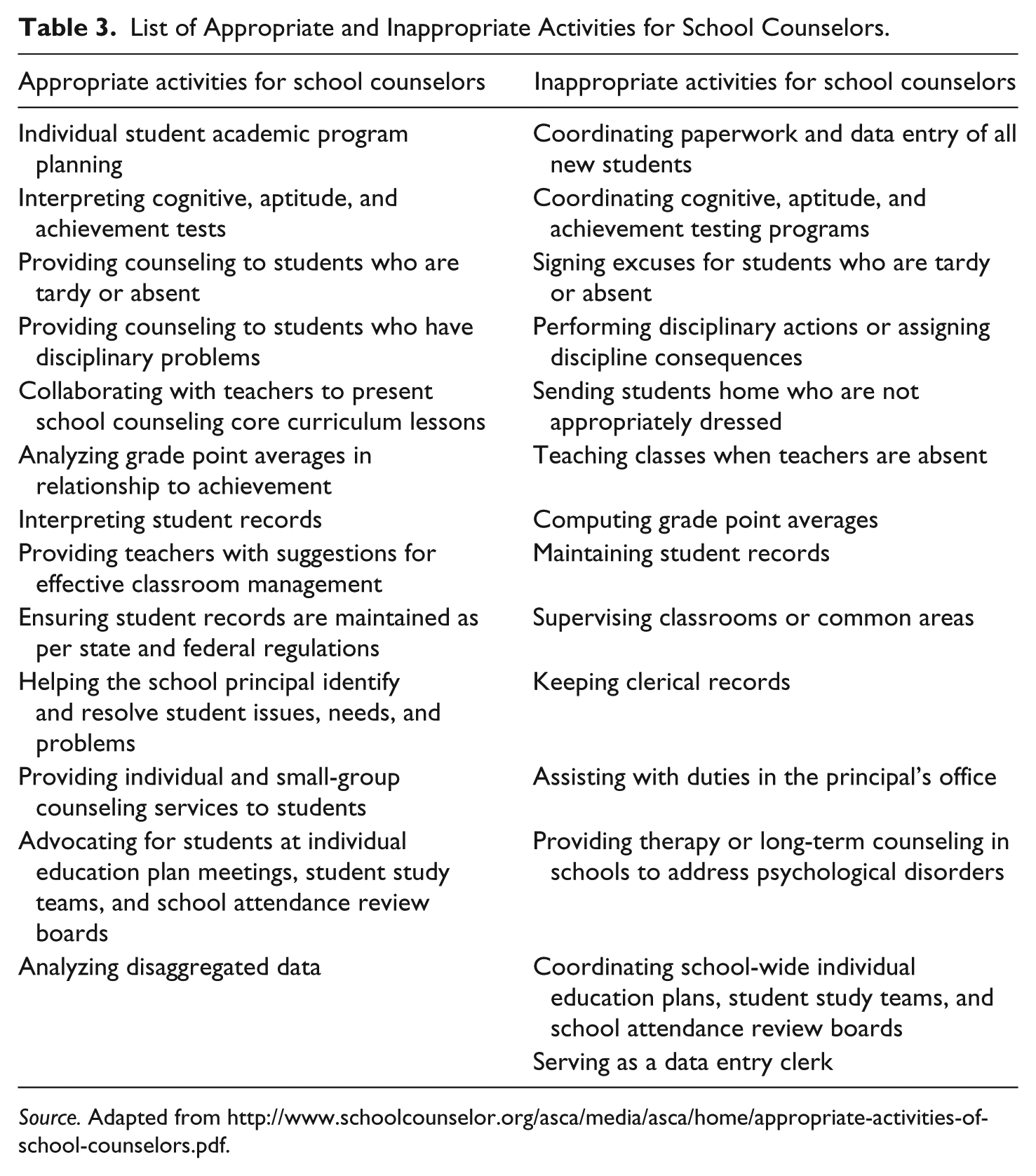
Susan Ross is aware that the duties she is asking her counselors to perform fall outside the roles of counselors. First, she has prior experience as a counselor and understands that administrative duties are not counselors’ work. Second, ASCA has published clear guidelines for appropriate and inappropriate roles for counselors. Table 3 identifies these duties.
List of Appropriate and Inappropriate Activities for School Counselors.
Susan is caught between doing what she understands to be the best practice for her teachers—minimizing distractions and focusing on instruction—and what she understands to be the best practice for her counselors. The counselors, in this case, are left with role conflict—between what they know they should do and what they are asked to do.
Creating an environment where teachers and counselors can both work to their full professional capacity must be a priority of school leaders. Lieberman (2004) suggested, “The ultimate responsibility for the appropriate and effective utilization of all school based personnel resides with the school principal” (p. 552). If this is indeed the case, what should principals like Susan Ross, who are caught between embracing best leadership practices and supporting best counseling practices in a context of diminishing resources, do?
Discussion
This case is designed for use with school leaders or emerging school leaders. Data are presented both about the changing district in which the case takes place and various stakeholders’ responses to the changes and to the work asked of them in the context of change. It raises important questions about how school leaders can support the professional work of both teachers and counselors, particularly in times when resources are limited and pressure is rising to improve student achievement. The case also provides a space for students of educational administration who are considering future school leadership roles to ponder the broader challenges they will undoubtedly face as they begin their work in schools, in particular how to balance and allocate resources in a context where fewer resources exist.
Below are a few discussion prompts that would be appropriate for conversation in leadership preparation classrooms or professional development sessions that highlight the growing challenges facing school leaders as they work to support student achievement in schools amid diminishing fiscal and human resource availability. For this activity, students should be arranged in small groups to discuss the issues.
Recent scholarship has identified critical capacities needed for school leaders to be successful, including
the ability of leaders (a) to stay consistently focused on the right stuff—the core technology of schooling, or learning, teaching, curriculum and assessment and (b) to make all the other dimensions of schooling (e.g., administration, organization, finance) work in the service of a more robust core technology and improved student learning. (Murphy et al., 2007, p. 179)
These same authors suggest that a key function of leadership is protecting time for instructional activities and shielding teachers from any distractions that might interfere with instructional time. The question must then be asked, if teachers are to be protected from distractions, who must then handle them? Susan Ross, like many other school leaders, has opted to utilize counselors for these duties. As seen in the case, the impact of this assignment is detrimental to the work of counselors. How else could Susan distribute the “distractions?” In small groups, develop an alternative plan for Susan to handle the duties of attendance and eligibility. Who should take on the roles? What are the costs and benefits of this choice? What resources are required?
Protecting the time of teachers is part of a series of practices linked with successful school leadership, including focusing on teaching and learning, acting as instructional resources for teachers, and becoming active participants in and leaders of teacher development (Robinson, Lloyd, & Rowe, 2008). School success is also linked with the distribution of leadership practices (Crum & Sherman, 2008; Dinham, 2005; Leithwood, Harris, & Hopkins, 2008; Spillane, 2005). Here, leadership practice is not just limited to roles but is most robustly defined as “a product of the interactions of school leaders, followers, and their situation” (Spillane, 2005, p. 144). In thinking about how to improve performance in Edgewood, what actions might Susan take beyond the distribution of non-professional roles? What instructional and professional resources might be utilized to improve practice? Whom might she utilize as mentors, both for teachers and counselors? What might distributed leadership look like in Edgewood?
Research in counseling suggests that counselors themselves must advocate and lead in schools (Dollarhide, Smith, & Lemberger, 2007; Janson, Militello, & Kosine, 2008). In addition to counselors advocating for themselves, how might school principals improve the status of counselors in the school?
What does a strong and sustainable school look like? What informs your belief about these criteria? In what ways does Edgewood High School meet these criteria? Beyond professional development, what else might Susan Ross do to strengthen the capacity of her school?
Discussion of how to support counselors rarely occurs in educational leadership programs. To support counselors, these kinds of conversations are critical. More than 50% of aspiring school leaders believe that duties such as registration and record-keeping are part of counselors’ work (Fitch et al., 2001). Shoffner and Williamson (2000) found that aspiring principals viewed counselors as staff members whose role was to complete duties requested by the principal rather than as independent professionals who have their own duties and responsibilities. How might educational leadership programs include the role of counselors in their preparation classes? Where in the ISLLC standards does supporting counselors fit? What kinds of skills can leadership programs provide that would equip school leaders to undertake the process of engaging both teachers and counselors in school-wide decision making?
Footnotes
Author’s Note
This case is based on a multi-year ethnographic study in a real school district. The research was conducted with support from a Civic Engagement Research Fellowship. All names, including the name of the district and all personnel, have been changed.
Declaration of Conflicting Interests
The author(s) declared no potential conflicts of interest with respect to the research, authorship, and/or publication of this article.
Funding
The author(s) disclosed receipt of the following financial support for the research, authorship, and/or publication of this article: This study was supported by a University at Buffalo Civic Engagement Research Fellowship (2011-2012) and Civic Engagement Research Dissemination Fellowship (2012-2013).