




Abstract
Despite legal challenges, universities are increasingly using holistic admissions practices to accomplish affirmative action and increased student diversity. The admissions committee of the college of nursing at an elite university grapples with the potential outcomes of adopting a holistic admissions process. The case offers the legal and theoretical contexts surrounding affirmative action in higher education. The reader is prompted to consider the value of diversity in the university setting, and the legal and ethical perspectives surrounding admissions practices.
Many selective institutions of higher education in the past decade have changed their admissions processes to adopt individualized holistic review of applicants (Hossler et al., 2019). Holistic admissions include consideration of a variety of applicant factors, with the intent of selecting students likely to be academically successful as well as to contribute to the school by bringing their unique selves. Nonacademic factors that may be considered include geographic background, cultural diversity, membership in a minority or underrepresented population, extracurricular activities, and extenuating circumstances such as academic achievement while working full-time or caring for family members (Coleman & Keith, 2018). One of the primary aims of holistic admissions is to increase student diversity, and studies have shown that this aim can be accomplished without compromising other student outcomes such as graduation rate (Sandlin, 2019).
Health care professions are under a particular impetus to increase diversity. Numerous studies, such as the landmark Sullivan Report (Sullivan, 2004) describe the lack of diversity in the health care workforce and the correlation with health disparities. The nursing profession has struggled to build a workforce that represents the demographics of the population it serves (National League for Nursing, 2016). Historically, nursing has been a female profession, and since the era of Florence Nightingale, the majority of registered nurses have been white women (Waite & Nardi, 2019).
Increasing the diversity of the nursing workforce begins with increasing the diversity of the pipeline: nursing students. Admission to nursing school is selective: in 2018, schools declined as many as 38% of qualified applicants due to limitations in faculty, clinical placements, and other resources (National League for Nursing, 2018). Traditional admissions procedures emphasized academic performance such as grades and standardized test scores to identify applicants for admission. With a large pool of qualified applicants, schools have the opportunity to consider other applicant attributes.
Following the lead of medical schools, nursing schools have started to adopt holistic admissions practices (Glazer et al., 2016). Organizations ranging from nursing accreditation to government agencies, such as the American Association of Colleges of Nursing (AACN) and the Human Resources and Services Administration (HRSA) Nursing Workforce grant programs provide support and education on holistic admissions (AACN, 2020a; U.S. Department of Health and Human Services, 2020). Holistic admissions practices offer the potential for nursing schools to increase the diversity of their students, and thus increase the diversity of the profession.
Theoretical Context
Although holistic admissions projects in health care professionals education have been reported on since 2001, the Association of American Medical Colleges (AAMC) began to formalize the process and provide workshops on how to implement holistic admissions in 2010 (Glazer et al., 2014). The AAMC has created a framework for holistic admissions, including the AAMC Experiences-Attributes-Academic Metrics Model (AAMC, 2013). This model illustrates the dimensions by which a student might be evaluated for admission to an academic program, going beyond academic performance to consider personal characteristics, demographic factors, and life experiences. The AACN has adopted the Experiences-Attributes-Academic Metrics Model and applied it to holistic admissions for nursing education.
The AACN framework for holistic admissions in nursing education includes core tenets to guide the process: driven by institutional mission, considering diversity as a necessary component of excellence, aligned with goals for the workforce, and guided by data (AACN, 2020b). In a holistic admissions process based on this framework, selection criteria are chosen in alignment with the mission of the school, and applicants are considered for their individual potential to contribute to the incoming class of students, their long-term potential to contribute to the nursing profession, as well as their potential for academic success. Race and ethnicity are among the factors that may be considered in the holistic admissions process.
Legal Context
Since the Civil Rights Act of 1964, federal legislation that prohibited discrimination by employers, the legality of discrimination in university admissions has been examined. Holistic admissions and similar admissions processes have been challenged in court many times since the 1970s (Kramer, 2019). Here are some examples, historic and current:
Regents of the University of California v. Bakke (1978)—The University of California medical school had an admissions quota that reserved spots for qualified applicants based on race. Mr. Bakke, a white man who was denied admission to the school, argued that this policy was illegal and the Supreme Court agreed.
Grutter v. Bollinger (2003)—Ms. Grutter, a white woman who was denied admission to the University of Michigan law school, argued that the school had used race as the main factor in admissions. The Supreme Court disagreed, finding that the school’s holistic admissions process legally included race as one of many factors.
Fisher v. University of Texas (2016)—Ms. Fisher, a white woman who was denied admission to the University of Texas, argued that the school’s admissions process, which included consideration of race, was illegal. The Supreme Court upheld the school’s right to consider race as one of several factors.
Students for Fair Admissions Inc. (SFFA) v. Harvard University (2019)—the SFFA organization argued that Harvard’s race-conscious admissions policy discriminated against Asian American applicants. The U.S. District Court in Massachusetts found in favor of Harvard. The SFFA is appealing the case.
Urban Universities for Health (2016) suggests general guidelines for legally defensible admissions processes that include consideration of race and ethnicity. These guidelines include:
The mission statement of the school clearly defines diversity as an institutional goal, specifying that race and ethnicity are necessary components of that diversity.
Clear demonstration that the consideration of race and ethnicity is limited, and part of a larger group of factors being considered.
An evaluation plan including ongoing collection of evidence to compare outcomes with goals, to continue to make the case that race-conscious admissions practices are necessary to meet institutional goals.
Evidence from other sources that affirm the school’s process.
Case Context
Greentree University is an elite private institution in the southern United States, which has a College of Nursing offering several degrees. Greentree’s mission statement is: The College of Nursing is dedicated to preparing excellent nurses to work on interdisciplinary health care teams. The College of Nursing provides an environment that fosters research, learning, and service in health care settings of all types. The faculty provide an environment that supports students to become scholars and effective communicators who are responsible to the nursing profession and the community. The nursing programs provide preparation for the practice of nursing within a culturally diverse community.
The student body at Greentree University College of Nursing has the following demographics:
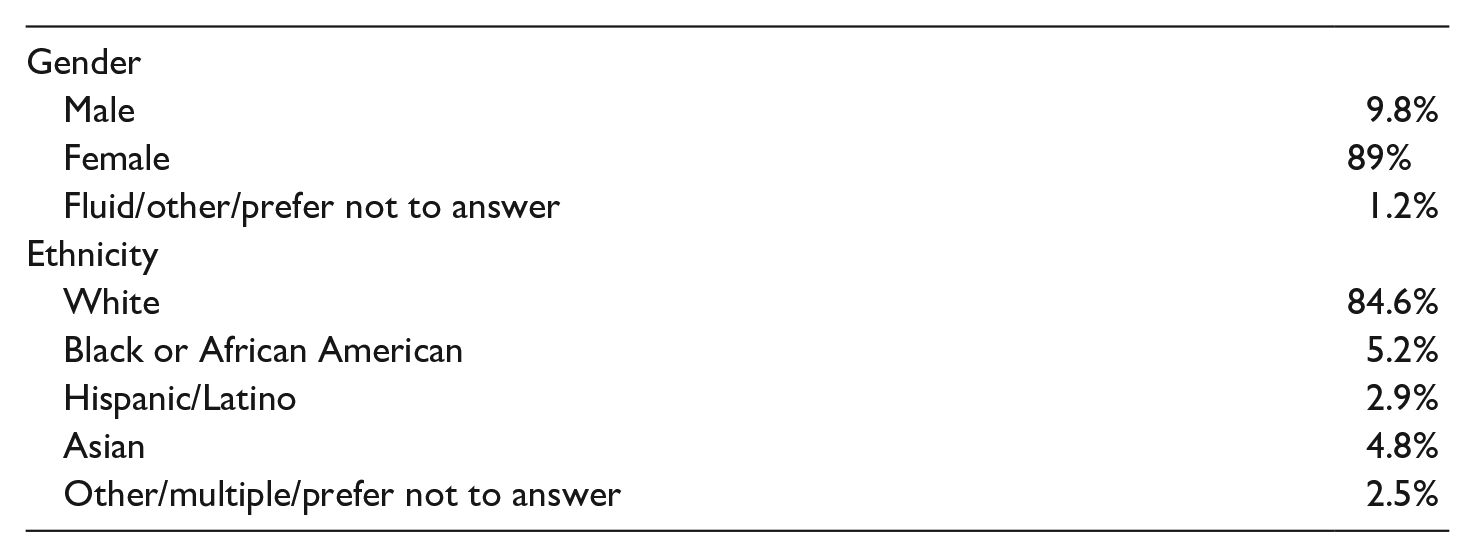
The College of Nursing admits students twice each year. Typical applicant pools consist of at least 300 potential students that meet the minimum criteria for admission: grade point average (GPA) at least 3.0 on a 4-point scale, entrance exam score above 75%, and completion of selected prerequisite courses.
Based on case law, Greentree’s legal counsel has advised that the admissions process must be in alignment with the university’s mission and strategic plan. They also state that detailed documentation of the admissions process must be kept, and that documentation should clearly show all of the criteria considered. Finally, legal counsel has advised that demographics such as race, ethnicity and gender may not be the only or primary characteristics used to identify applicants for admission.
Greentree University employs faculty on a tenure track as well as by contract (clinical faculty). The Admissions Committee includes members from various tracks and programs in the College of Nursing. The members of the Admissions Committee are:
Brittany Russo, committee chair, white, cisgender, heterosexual single female, assistant clinical professor, has been at the school for 3 years.
Melanie Miller, white, cisgender, heterosexual single female, professor with tenure, has been at the school for 17 years.
Jermaine Lee, black, cisgender, heterosexual married male, assistant clinical professor, has been at the school for 6 years.
Shaun Murphy, white, cisgender, homosexual married male, assistant professor, has been at school for 5 years and is preparing to submit his application for tenure in the next year.
Jennifer Carter, white, cisgender, heterosexual married female, associate professor with tenure, has been at the school for 15 years.
Case Narrative
This scene takes place during a meeting of the Admissions Committee.
“Now that we finished the old business, the next item on the agenda is to talk about increasing diversity in the classes that we admit.”
“I think that’s a great idea. We say that we care about diversity, but I keep noticing when I look around the classroom that almost all of our students are white females.”
“Is this about that conference you went to, Brittany? Were the other schools at that conference peer institutions to Greentree? I’m just curious.”
“Yes, the conference was amazing! They presented great data. There are schools that are very highly ranked that are doing holistic admissions and they are still having great outcomes. I think there are some things we could definitely try here at Greentree. Our process is so focused on grades and entrance exam scores.”
“Well, we know that the best predictors of success in nursing school are previous grades and standardized test scores. We owe it to the students to admit those who can succeed—it’s no good to waste their time and money if they aren’t capable of succeeding in our program.”
“You must know that there is evidence that those standardized tests are not culturally sensitive and aren’t as predictive for minority students. We really need more students of color in our program and we really need more male students! Shaun, you’re the advisor for the Men in Nursing student group, what do you think?”
“I agree, Jermaine, we could really use more men in the program. I’m not sure if this holistic admissions is the way to do it. We might do better to increase our recruitment efforts at high schools, college fairs, and events like that . . .”
“Here is an outline from the presentation I saw at the conference. What they are doing is having things like interviews and essays and letters of reference weigh more heavily in the applicants’ rubrics. So, for example, maybe a student who had to work or take care of younger siblings during high school didn’t get the best grades but demonstrated leadership potential or resilience. We might want a student like that for our program, even if their grade point average was a bit lower.”
“That’s an interesting approach. We could potentially consider some of those applicants who have less than perfect grades, if we had a really defined way of capturing other attributes that they have that might lead to success. Of course, we still need to prioritize the rock star students, with the perfect grades. It’s only fair to reward that top group with admission offers.”
“I just think it is really important that we don’t lower our standards.”
“That’s a good point, Jennifer.”
“Is it really lowering our standards if we take a student with a 3.7 grade point average, who has overcome challenges in life and who is from an underrepresented group, rather than another white female with a 4.0 GPA who never did anything but go to school and get good grades?”
“I’m all in favor of diversity, but we had better tread carefully if we are going to start admitting students based on their race or ethnicity. Haven’t schools gotten sued for that sort of thing?”
“It’s more complicated than that—holistic admissions is not about admitting students based just on race or ethnicity. It is about using race, ethnicity and other characteristics to help us choose among equally qualified applicants, and it can lead to a more diverse student body. How about if I share some articles with the committee about this. We can talk more about it at our next meeting.”
Teaching Notes
This case can be used with students taking courses in educational leadership or administration. It may also be valuable to prompt discussion in faculty groups such as admissions committees. The case prompts the reader to reflect on the value of diversity in the university setting, and to consider how admissions practices may increase or decrease diversity in the student body. The reader may also evaluate different perspectives on holistic admissions, represented by the characters of the admissions committee members. After reading the case, choose from the following discussion questions and activities.
Discussion Questions
What are the benefits of increasing diversity in the student body? Are there any downsides?
Is it fair to privilege applicants who are from diverse backgrounds? What do you think of the argument that past practices have privileged the white majority? Discuss moral/ethical aspects of affirmative action and holistic admissions.
Do you agree with Jermaine’s statement that standardized tests are not culturally sensitive and do not predict academic performance for minority students? What evidence is there for or against his statement?
What populations of potential students does each type of admissions potentially disadvantage?
How might a holistic admissions process be created for this school? What could it look like?
What are some barriers to implementing a holistic admissions process? What are some facilitators?
How do factors such as recruitment and retention of diverse students affect diversity? In what ways might these factors influence diversity in the student body as much or more so than holistic admissions?
Class Activities
In small groups—Develop a holistic admissions rubric for Greentree University’s College of Nursing.
Create a presentation intended to persuade the faculty that the school should adopt holistic admissions practices.
Class debate—argue the need for holistic admissions versus an admissions process that focuses only on academic accomplishments.
Footnotes
Declaration of Conflicting Interests
The author(s) declared no potential conflicts of interest with respect to the research, authorship, and/or publication of this article.
Funding
The author(s) received no financial support for the research, authorship, and/or publication of this article.
