



Abstract
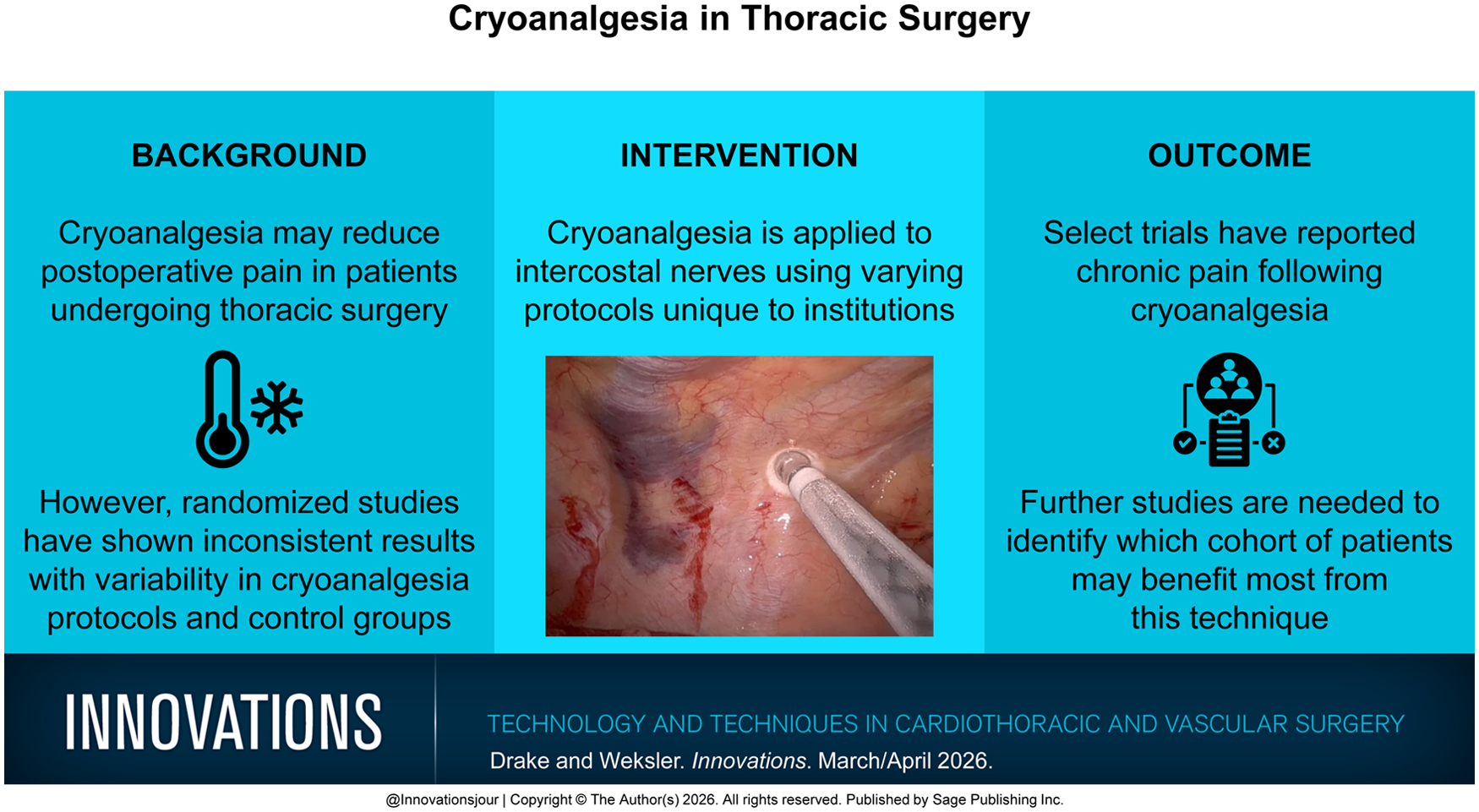
Cryoanalgesia is a technique for reducing postoperative pain that involves freezing peripheral nerves while preserving their ability to regain function over time. The technique has been used for decades, and randomized trials have shown a reduction in pain and opioid use in some patients undergoing thoracotomy and pectus excavatum repair. In these trials, outcomes were highly dependent on the control groups. Randomized studies of patients undergoing minimally invasive thoracic surgery have failed to show the same results. Furthermore, several studies have reported chronic pain and neuropathic-type pain in patients treated with cryoanalgesia. In this review, we discuss the electrophysiologic and histopathologic basis of cryoanalgesia, highlight randomized trials of cryoanalgesia in thoracic surgery, and outline potential pitfalls, such as chronic pain, to offer insight into which patients may benefit most from cryoanalgesia and potential future directions of study.
Keywords
Get full access to this article
View all access options for this article.