



Abstract
Background
Mindfulness-based interventions (MBIs) applied in the field of occupational therapy (OT) have shown promising results, particularly in enhancing emotional well-being, stress regulation, and pain management. However, to the best of our knowledge, a systematic review of the existing research on MBIs in the context of OT is lacking. This review aims to: (1) outline the types and components of MBIs applied in OT; and (2) summarize the current empirical evidence on their effectiveness in OT practice, focusing on health-related and OT-related outcomes.
Methods
Seven databases were searched with key terms related to mindfulness and OT, including PubMed, Web of Science, Embase, Cochrane Library, CINAHL, PsychInfo and Medline. The review included randomized controlled trials (RCTs) and quasi-experimental studies published in English covered the period from the inception of the databases to October 2024. Exclusion criteria included articles that were not peer-reviewed, lacked outcome data, or were not applied in OT. The Joanna Briggs Institute methodology was employed for the systematic review, which included critical appraisal and narrative synthesis.
Results
A total of 10 studies were included in this review. The critical appraisal scores ranged from 50 to 91.67 (mean = 74.31), with RCTs scoring between 50 and 91.67 (mean = 73.33), and quasi-experimental studies between 62.5 to 88.89 (mean = 75.28). The interventions categorized were creative and art-based mindfulness activities (n = 2), structured MBIs (n = 3), and multi-modal MBIs (n = 5). MBIs demonstrated significant effectiveness in improving mental health, particularly overall mental health levels, and may offer potential benefits in promoting activity and participation. However, no significant additional benefits were observed for physical health, cognitive function, or health-related quality of life.
Conclusion
MBIs are evidence-based interventions that can effectively improve mental health, particularly in overall health levels, and may promote activity and participation. Occupational therapists can incorporate approaches, such as creative and art-based mindfulness activities, structured MBIs, and multi-modal MBIs, in their daily practice. Further exploration and integration of these interventions into OT education and practice should be encouraged.
Keywords
Introduction
The concept of occupational therapy (OT) originated from the mental health reform movement in Europe and North America (Newton, 2007). With the development of evidence-based practices and scientific advancements, OT has continuously enriched its theories and frameworks, expanding to a broader range of settings, including clinical environments, communities, and schools. In the fourth edition of the Occupational Therapy Practice Framework (OTPF-IV), OT is defined as the application of daily occupations to individuals or groups across various health levels, aiming to promote health, participation, and well-being (“Occupational Therapy Practice Framework: Domain and Process-Fourth Edition,” 2020).
Mindfulness, which originated from Eastern meditation traditions over 2,000 years ago, has evolved significantly. As its religious connotations diminished and its scope expanded, the descriptions and specific forms of mindfulness in current research have varied (Quaglia et al., 2015). However, two fundamental characteristics remain consistent in mindfulness-based interventions (MBIs): focusing attention on the present moment and adopting an open, non-judgmental attitude (Creswell, 2017). Existing research has demonstrated that MBIs, when designed to address specific health issues, can be effective (Chen et al., 2021; Liu et al., 2019; Son & Choi, 2018).
Theoretically, modern OT emphasizes the necessity of holistic care. The OTPF-IV recognizes mindfulness meditation as a specific “occupation” within the categories of health management, rest and sleep, providing guidance on the scope and applications of mindfulness in OT interventions (“Occupational Therapy Practice Framework: Domain and Process-Fourth Edition,” 2020). Additionally, current mental health policies have shifted from a medical model to a rehabilitation-oriented approach, with a focus transitioning from clinical recovery to personal recovery (Leamy et al., 2011). Unlike clinical recovery, personal recovery aims to assist individuals in regaining and developing a sense of meaning in life despite illness and functional limitations by transforming their attitudes, values, emotions, goals, skills, and roles (Anthony, 1993). This aligns with the aims and processes of occupational therapy.
Practically, an increasing number of studies suggest that integrating mindfulness into OT practice can enhance clients’ occupational function and performance (Dochod, 2022; Orita et al., 2015; Smith et al., 2024). This may be because mindfulness can improve psychological and cognitive traits, such as character strengths, positive emotions, and self-awareness (Aghaziarati et al., 2023; Berdida et al., 2023; Hadash et al., 2023). Furthermore, the improvements in brain structure and function induced by MBIs, such as increased gray matter concentration in the thalamus and hippocampus, can maintain and even enhance these characteristics (Leung et al., 2013; Sevinc et al., 2019). These changes can help reduce negative symptom experiences, increase participation and performance in occupational processes, and ultimately strengthen the therapeutic potential and effectiveness of OT interventions (Bertisch et al., 2014; Majani, 2011). Recent review studies support the idea that incorporating mindfulness into daily occupations may change the way individuals think about and engage in occupations, thereby enhancing occupational presence, awareness, engagement, well-being, and fulfillment, ultimately promoting health and well-being (Goodman et al., 2019).
Current OT practice has sought to integrate MBIs across various health levels, yielding positive results in areas such as emotional improvement, stress and pain management. These outcomes are highly consistent with the core goals of OT, which focus on enhancing function, participation, and well-being. Given the theoretical alignment between mindfulness and OT, it is necessary to systematically review the application of MBIs in the field of OT. However, existing literature is scattered, with significant variations in study designs, and there is a lack of comprehensive reviews on the intervention structure, application forms, and effectiveness of MBIs in OT. This gap limits both clinical implementation and theoretical development. Therefore, this study aims to: (1) outline the types and components of MBIs applied in OT; (2) summarize the current empirical evidence on the effectiveness of MBIs in OT practice, focusing on health-related and OT-related outcomes.
Methods
The methodology proposed by the Joanna Briggs Institute (JBI) (Tufanaru et al., 2020) was adopted, and the systematic review was conducted in accordance with the Preferred Reporting Items for Systematic Reviews and Meta-Analyses (PRISMA) guidelines (Moher et al., 2010). The review protocol was registered with PROSPERO (ID: CRD42024606350). This method involves designing a search strategy, conducting title and abstract screening, performing full-text reviews, critical appraisal, and narrative synthesis (Aromataris & Munn, 2017).
Selection Criteria
Eligibility for inclusion was determined according to the following selection criteria: (1) randomized controlled trials (RCTs) and quasi-experimental studies; (2) the intervention aligns with the concept of MBIs: a psychological intervention focused on mindfulness, involving consciously attending to present-moment experiences; (3) applied within the field of OT (including OT research, education, and practice); (4) published in English.
Exclusion was determined according to the following criteria: (1) non-empirical studies; (2) review studies, conference papers, theses, dissertations, books, protocols, etc.; (3) articles not subjected to peer review; (4) studies lacking outcome data; (5) not applied within the field of OT.
Search Strategy and Study Selection
A search strategy was developed in collaboration with an academic research librarian and one of the study authors. The search covered the period from the inception of the databases to October 2024. Following PRISMA guidelines (Moher et al., 2010), seven databases were searched: PubMed, Web of Science, Embase, Cochrane Library, CINAHL, PsychInfo and Medline. Search strategies were translated and adapted for each database using platform-specific command language, controlled vocabulary, and appropriate search fields. Terms related to occupational therapy (i.e., occupational therapy*, ergotherapy, paediatric occupational therapy) were combined with terms related to mindfulness (i.e., mindfulness*, theory of mind, mind-body therapies) using the Boolean operator ‘AND.’ In addition to database searching, the reference lists of all included articles were manually searched to identify additional eligible studies not retrieved through electronic searches. After the initial search, duplicate references were removed using EndNote X20 software. Titles and abstracts of the remaining records were screened by two independent investigators. Full texts of potentially eligible studies were then assessed against the inclusion and exclusion criteria. Any disagreements were resolved through discussion with the corresponding author.
Critical Appraisal
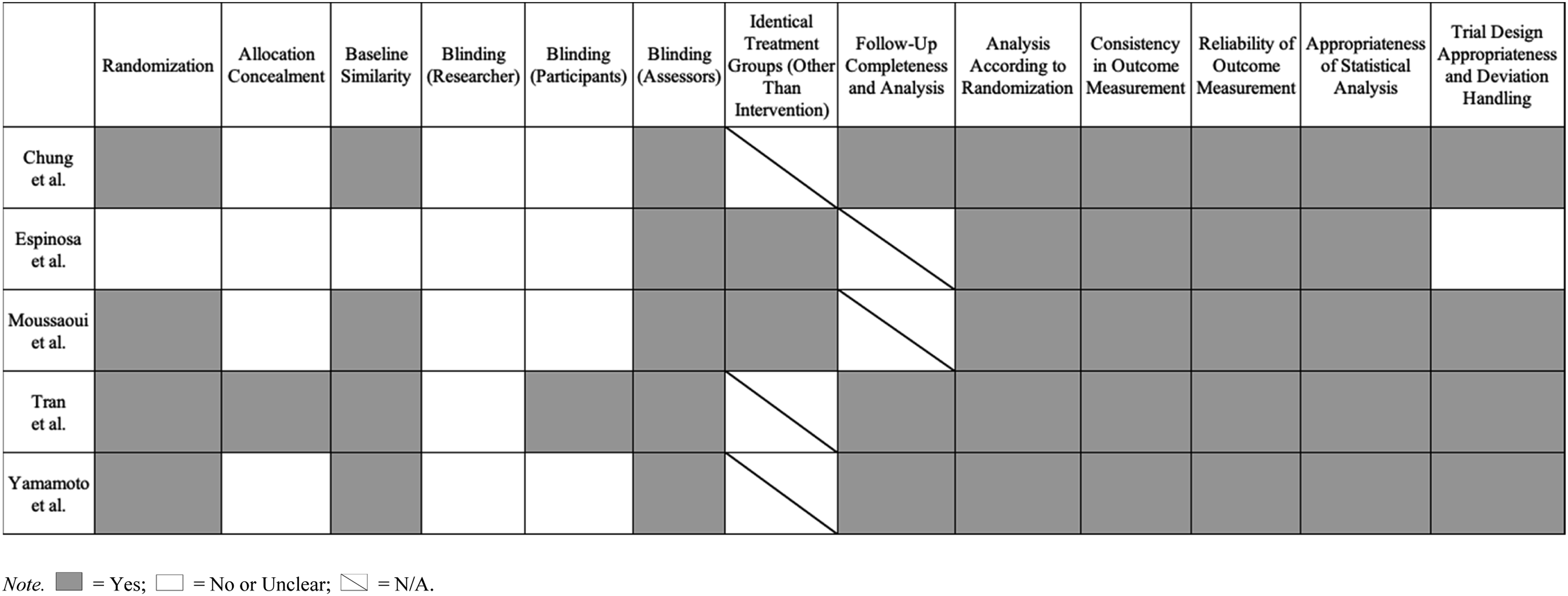
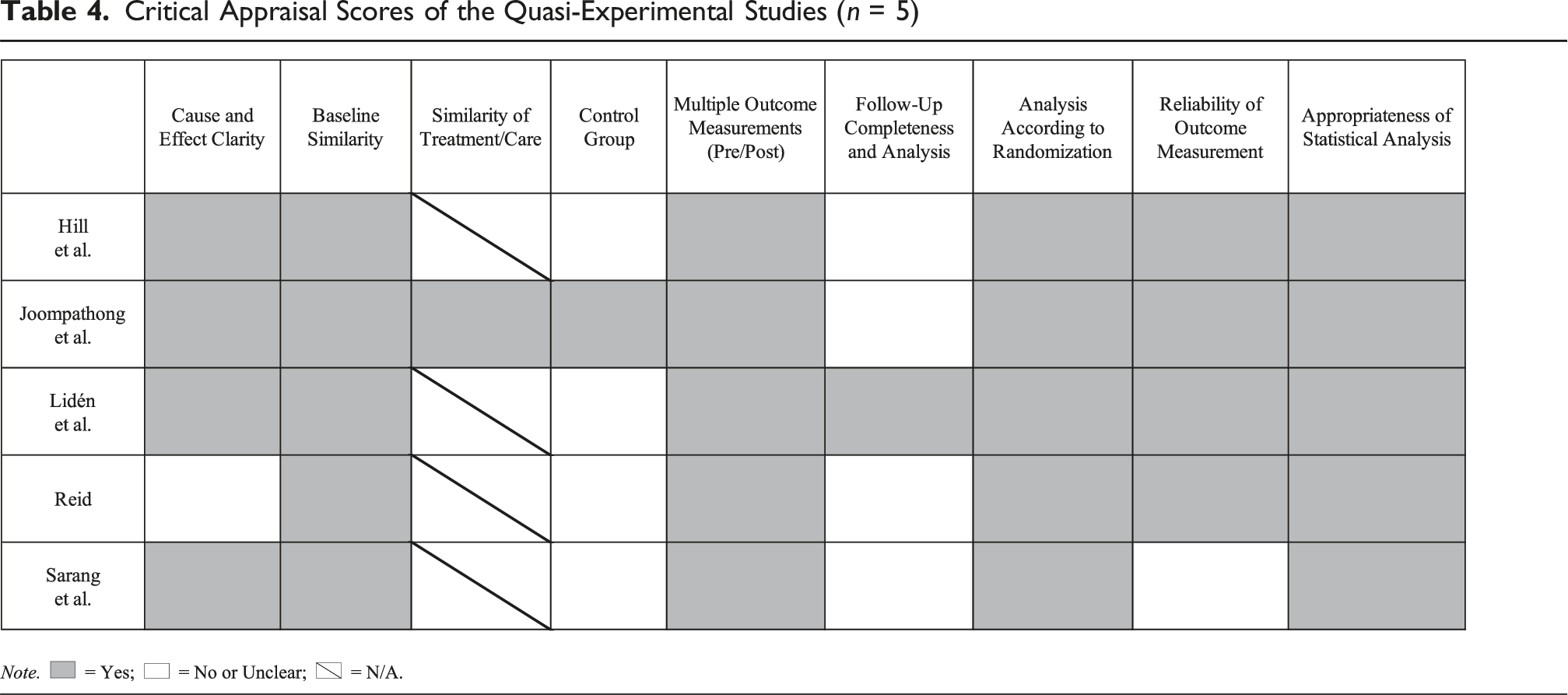
A critical appraisal of the included studies was conducted using the relevant Joanna Briggs Institute (JBI) assessment tools (Tufanaru et al., 2020). Specifically, RCTs were evaluated using the JBI Critical Appraisal Checklist for Randomized Controlled Trials, which includes 13 items; quasi-experimental studies were evaluated using the JBI Critical Appraisal Checklist for Quasi-Experimental Studies, which includes 9 items. Each item was rated as “Yes,” “No,” “Unclear,” or “N/A.” A score of 1 was assigned for items rated as “Yes,” and a score of 0 was assigned for items rated as “No” or “Unclear.” Total scores were calculated for each study and converted into percentage scores ranging from 0 to 100. In cases where certain checklist items were deemed not applicable to a given study, the percentage scores were calculated based on the reduced number of applicable criteria to ensure comparability across study types. Appraisals were conducted independently by two investigators. Any disagreements were resolved through discussion with the corresponding author.
Data Extraction
Data were extracted from the included studies using a customized form developed in Covidence. One investigator conducted the scoring process, and another independently extracted the following information: study, country, study design, participants, sample size, comparator, intervention, outcomes measured, and findings. Any disagreements were resolved through discussion with the corresponding author.
Narrative Synthesis
The included studies were categorized by an investigator based on the intervention types and components of each study. The classifications were reviewed and discussed by the research team to ensure consistency. Subsequently, the included studies were: (1) summarized in a descriptive table; (2) described in detail narratively according to intervention type; (3) categorized by the domains of outcomes measured for each intervention; (4) assessed for the effectiveness of MBIs based on their findings and presented visually. Any disagreements were resolved through discussion with the corresponding author.
Results
An initial search identified a total of 605 articles, of which 502 were duplicates and removed. After reviewing the titles and abstracts, 84 articles remained. After full-text review, 10 studies were included in this systematic review. A summary of the study selection process and reasons for exclusion are presented in the PRISMA flow diagram in Figure 1. PRISMA flow diagram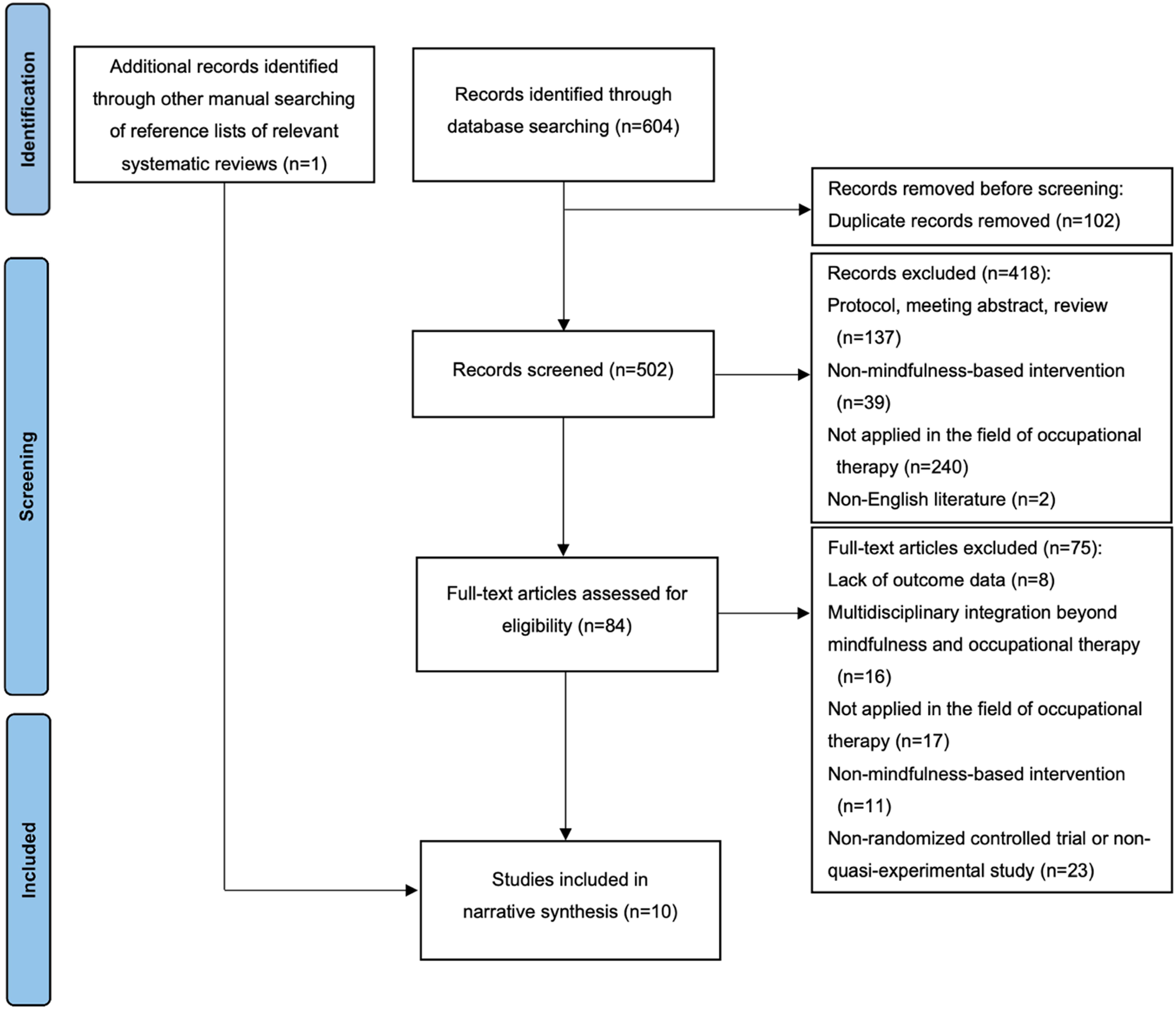
Study Characteristics
Summary of Included Studies (n = 10)
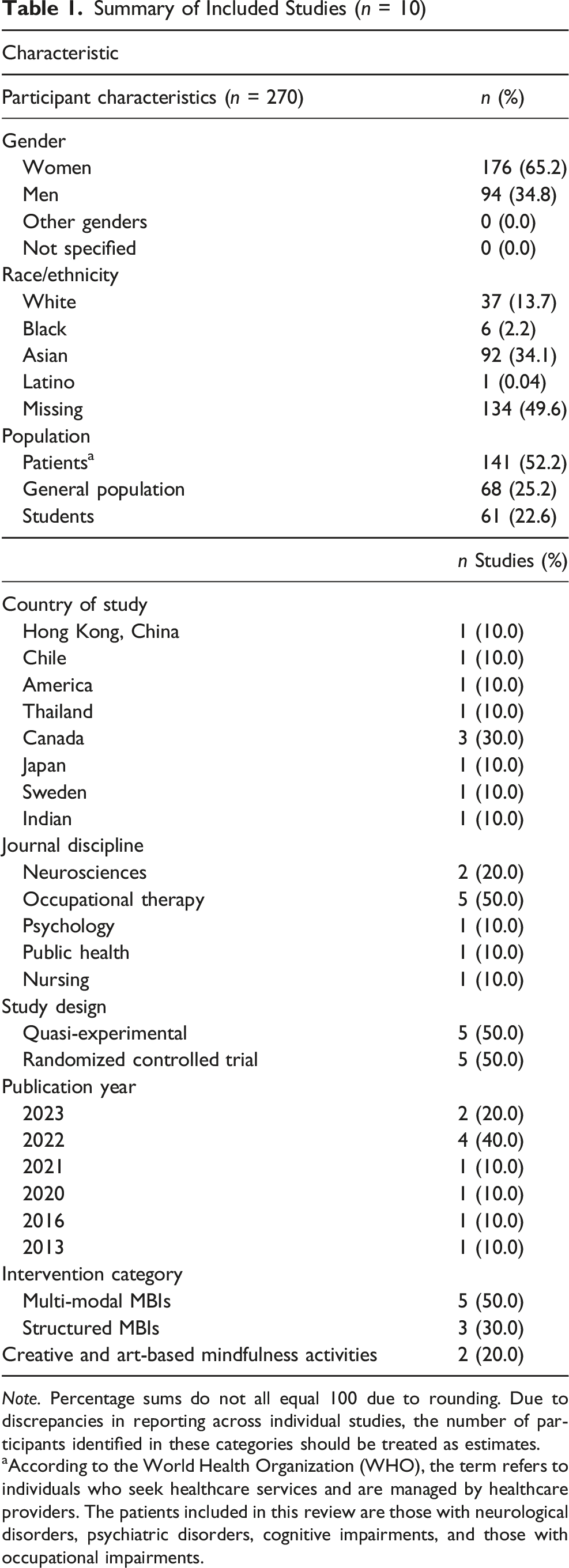
Note. Percentage sums do not all equal 100 due to rounding. Due to discrepancies in reporting across individual studies, the number of participants identified in these categories should be treated as estimates.
aAccording to the World Health Organization (WHO), the term refers to individuals who seek healthcare services and are managed by healthcare providers. The patients included in this review are those with neurological disorders, psychiatric disorders, cognitive impairments, and those with occupational impairments.
Detailed Description of the Characteristics of Individual Studies (n = 10)
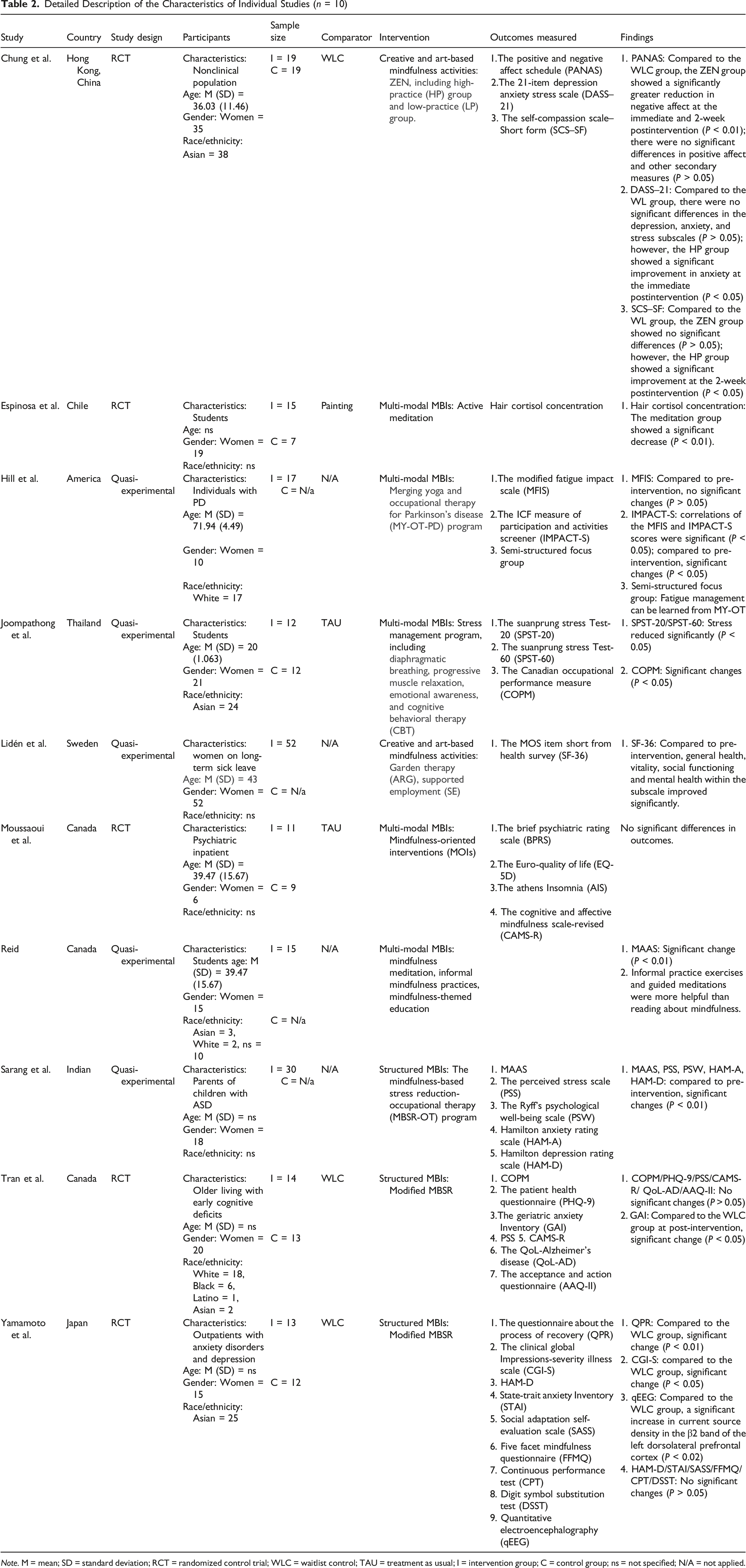
Note. M = mean; SD = standard deviation; RCT = randomized control trial; WLC = waitlist control; TAU = treatment as usual; I = intervention group; C = control group; ns = not specified; N/A = not applied.
Participant Characteristics
The studies included in this review comprised a total of 270 participants, with 198 in the MBIs group and 72 in the control group. A full summary of the participants characteristics in included studies is provided in Table 1.
Critical Appraisal
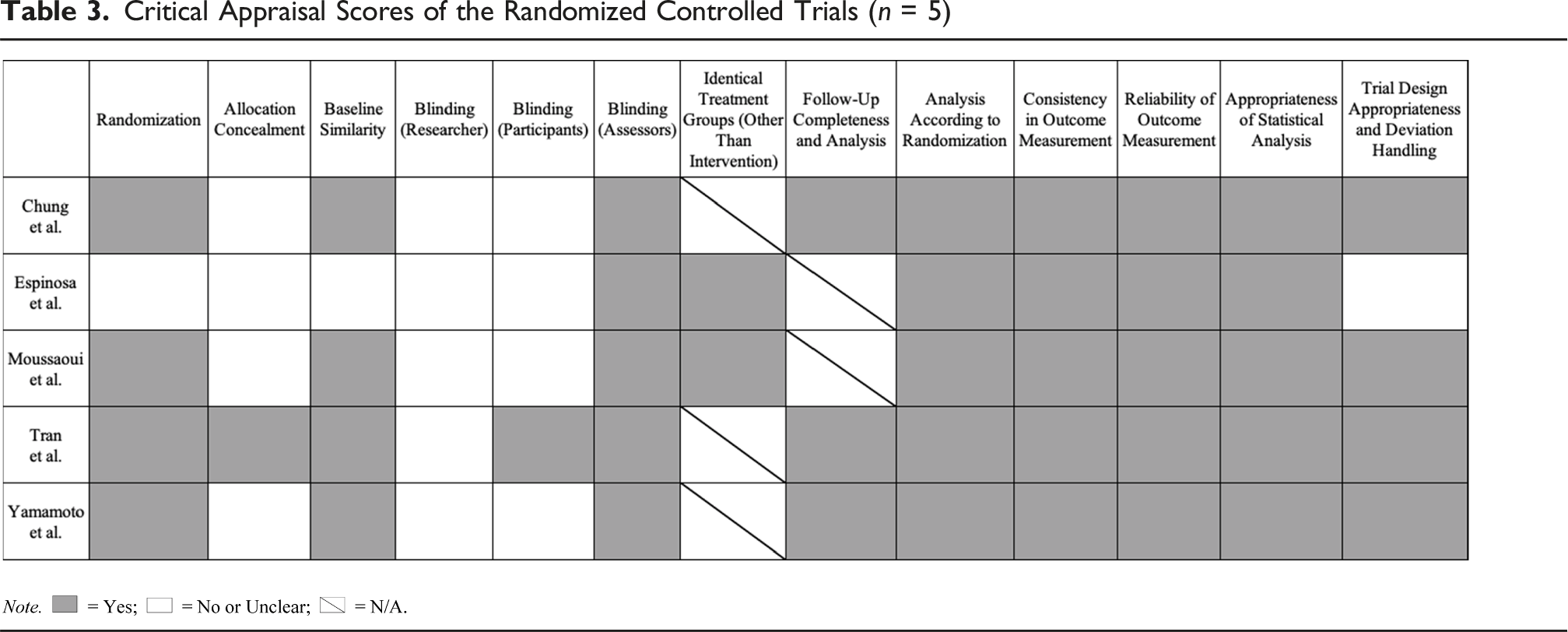
Critical Appraisal Scores of the Randomized Controlled Trials (n = 5)
Critical Appraisal Scores of the Quasi-Experimental Studies (n = 5)
Narrative Synthesis
Due to the inclusion of both RCTs and quasi-experimental studies in this review, along with significant differences in outcome measures, the types and components of the mindfulness interventions, a meta-analysis could not be conducted. Consequently, the findings are summarized narratively. The studies were categorized into creative and art-based mindfulness activities (n = 2; 20.0%), structured MBIs (n = 3; 30.0%), and multi-modal MBIs (n = 5; 50.0%).
Creative and Art-Based Mindfulness Activities
Creative and art-based mindfulness activities were evaluated in two (20.0%) of the studies included in this interview (Chung et al., 2022; Lidén et al., 2016). These interventions combine artistic or creative activities with mindfulness.
There are two studies conduct the traditional occupational therapy tool of crafts. Craft belongs to the category of skilled work and is an art that requires specialized skills and knowledge, particularly manual art (Simpson & Weiner, 1989). Initially aimed at improving mental health, craft was later adopted by occupational therapists as a therapeutic medium for improving functional impairments. It was the first occupation used by occupational therapists as a therapeutic tool (Mitchell, 1995). In the study by Mee et al. (Mee & Sumsion, 2001), case studies revealed the benefits of manual crafts on both physical and mental well-being. Harris indicated craftwork allows clients to “do” with both purpose and meaning, and as a therapeutic medium, it provides a pathway to achieve client-centered goals (Harris, 2010).
Chung et al. evaluated the effectiveness of Zentangle (ZEN) in enhancing adult well-being (Chung et al., 2022). ZEN is a meditative drawing practice created by Roberts and Thomas in 2003, aimed at promoting self-relaxation and improving attention (Roberts & Thomas, 2012). Practitioners combine five basic strokes to draw repetitive, structured patterns, focusing on the doodling process, with no right or wrong outcomes. This process incorporates two core elements of mindfulness: awareness and non-judgment (Kabat-Zinn, 2003). The authors assessed the impact of ZEN on well-being through positive and negative emotions, depression, anxiety, stress, and self-compassion. The results reported a significant reduction in negative emotions (P < 0.01). Additionally, higher frequency of practice showed more pronounced effects on reducing anxiety and improving self-compassion (P < 0.05). These findings suggest that ZEN may play a role in enhancing adult well-being, with more frequent practice potentially yielding greater benefits.
In another study, the authors evaluated the Four-Leaf Clover Project (FLC), an intervention that combined two validated methods: the Alnarp Rehabilitation Garden (ARG) and supported employment (Lidén et al., 2016). Women on long-term sick leave worked with vocational coaches to plan job searches and participated in activities such as hands-on gardening, craftwork, body awareness exercises, and mindfulness practices. The researchers used the MOS item short form health survey (SF-36) to evaluate the effectiveness of this intervention on health-related quality of life (HRQoL) and found significant improvements in general health (GH), vitality (VT), social functioning (SF), and mental health (Lidén et al., 2016; Ware & Sherbourne, 1992). This suggests that the FLC program may be an effective method for reducing socially induced distress and enabling individuals to return to work and everyday life.
Structured MBIs
Structured MBIs were evaluated in three (30%) of the studies included in this review (Sarang et al., 2020; Tran et al., 2023; Yamamoto et al., 2023). These interventions are based on systematic and well-established MBIs, such as MBSR and MBCT, and are characterized by a clear structure, fixed duration, and specified time frame. All the structured MBIs in the studies were based on MBSR and consisted of relatively recent literature published from 2020 onwards.
Recognized as the most common mindfulness training method, MBSR was developed by Kabat-Zinn in 1979 for patients with chronic pain (Kabat-Zinn, 1990). The standard MBSR course spans eight weeks, consisting of weekly 2.5-h group sessions and a six-hour daylong retreat. Additionally, participants are required to complete six days of homework each week, practicing 45 minutes daily with guidance from CDs and assigned tasks (Janssen et al., 2018). Extensive evidence supports the effectiveness of MBSR in improving mental health and quality of life (Hofmann et al., 2010; Khoury et al., 2015).
Two studies focused on patient populations. One study evaluated an occupational therapy program incorporating mindfulness (MOT), which involved a modified MBSR practice along with craft activities such as clay modeling and painting (Yamamoto et al., 2023). This quasi-experimental study measured well-being using standardized scales and assessed brain function changes using quantitative electroencephalography (qEEG) to explore the effectiveness of MOT in outpatients with anxiety disorders and depression. Participants completed an 8-week intervention with follow-up assessments at 18 weeks. The results indicated that, compared to the control group, the MOT group experienced significant improvements in rehabilitation levels (P < 0.01), with benefits persisting over the long term. Additionally, there was a significant increase in current source density in the β2 band of the left dorsolateral prefrontal cortex (P < 0.02). These findings suggest that MOT can enhance subjective well-being and overall functioning, offering a viable option for individuals whose symptoms have improved but who continue to face challenges in social and occupational domains.
In a second study, researchers investigated the effectiveness of an MBSR program led by occupational therapists to improve perceived performance, satisfaction, and mental health among older adults with mild cognitive impairment (MCI) (Tran et al., 2023). Results showed a significant reduction in anxiety levels post-intervention (P < 0.01), while other outcomes did not show significant improvement (P > 0.05). This suggests that mindfulness training may help reduce anxiety in individuals with early cognitive impairment. However, its long-term effectiveness and impact on stress levels, quality of life, cognitive and emotional mindfulness, and self-perceived satisfaction in daily activities for older adults with MCI require further investigation.
The remaining study focused on caregivers of children with autism spectrum disorder (ASD). The Mindfulness-Based Stress Reduction-Occupational Therapy (MBSR-OT) program, based on MBSR principles, was tailored to meet the needs of parents of children with ASD (Sarang et al., 2020). In MBSR-OT, parents attended weekly sessions with different themes over eight weeks, covering topics such as “coming to our senses”, “exploring our edges”, and “coming home to our bodies”. This program aimed to evaluate the effectiveness of MBSR-OT in improving the psychological functioning of ASD caregivers. The authors reported that parents who completed the program showed significant improvements in stress, anxiety, depression, mindfulness, and mental health, indicating that the program effectively promotes psychological functioning. Notably, both Chung et al. and Sarang et al. found that longer practice durations resulted in more significant benefits for improving mental health (Chung et al., 2022; Sarang et al., 2020).
Multi-Modal MBIs
A total of five studies (50.0%) included in this review evaluated the effectiveness of multi-modal MBIs (Espinosa et al., 2022; Hill et al., 2021; Joompathong et al., 2022; Moussaoui et al., 2022; Reid, 2013). These mindfulness interventions are not strictly based on systematic MBIs but instead incorporate various elements of mindfulness practices—such as meditation, breathing exercises, and mindful movement—into OT programs to achieve OT goals.
Moussaoui et al. designed a program referred to as mindfulness-oriented interventions (MOIs) (Moussaoui et al., 2022). In this study, psychiatric patients participated in a brief 10-min MOI each weekday, alongside receiving routine occupational therapy. The MOIs included an introduction to mindfulness, mindful breathing, and mindful movement. However, the results showed no significant improvements in psychiatric symptoms, quality of life, sleep, or mindfulness compared to those who received only routine treatment. These findings suggest that MOIs, when implemented for a short duration and independent of OT, may not offer additional therapeutic benefits.
The remaining four studies aimed to cultivate the participants’ self-management skills to achieve core OT goals, such as improving function, adjusting cognition, and reconstructing occupational roles. Mindfulness is recognized as a powerful tool for managing stress across various health levels, and the acquisition of mindfulness skills can provide individuals with strategies for self-management (Bishop, 2010; Kabat-Zinn, 2010; Madhav et al., 2014).
Joompathong et al. developed a stress management program using four techniques —diaphragmatic breathing, progressive muscle relaxation, emotional awareness, and cognitive behavioral therapy (CBT) — within the framework of the Canadian Model of Occupational Performance and Engagement (CMOP-E) (Joompathong et al., 2022; Townsend & Polatajko, 2007). The program aimed to reduce stress among university students and enhance their occupational performance. The results revealed a significant reduction in stress levels and improvement in occupational performance capabilities (P < 0.05), suggesting that this program may serve as an effective stress management solution.
Two additional studies also focused on stress management skills training for students, particularly healthcare professional students (Espinosa et al., 2022; Reid, 2013). Reid’s online mindfulness course provided mindfulness meditation training for occupational therapy students, along with education on mindful communication, mindful movement, compassion, awareness, fostering reflective practice and self-care skills (Reid, 2013). Another study utilized a biological marker — hair cortisol concentration — to assess the impact of a positive meditation-centered OT program on healthcare professional students’ stress levels (Espinosa et al., 2022). Both studies reported a reduction in stress levels, highlighting the potential of mindfulness in preventing academic and career-related stress among healthcare students, thereby promoting engagement in academic learning and the development of professional practice skills.
The final study designed an intervention called Merging Yoga and Occupational Therapy for Parkinson’s Disease (MY-OT-PD), aimed at managing fall risk (Hill et al., 2021). This intervention consisted of 14 sessions over 8 weeks, with 2 sessions per week (including one week off for a holiday break). Each session involved 75 minutes of yoga and 60 minutes of group occupational therapy. Hill et al. explored the impact of MY-OT on participants’ fatigue, activity levels, and participation. The quantitative results showed significant improvements in the ICF Measure of Participation and Activities Screener (IMPACT-S) (P < 0.05) (Mwm et al., 2010), while qualitative indicated that PD patients took conscious actions for fatigue management. The study demonstrated the effectiveness of the community-based MY-OT-PD program in enhancing activity, participation, and fatigue management.
Effectiveness of Included Interventions on Key Outcomes
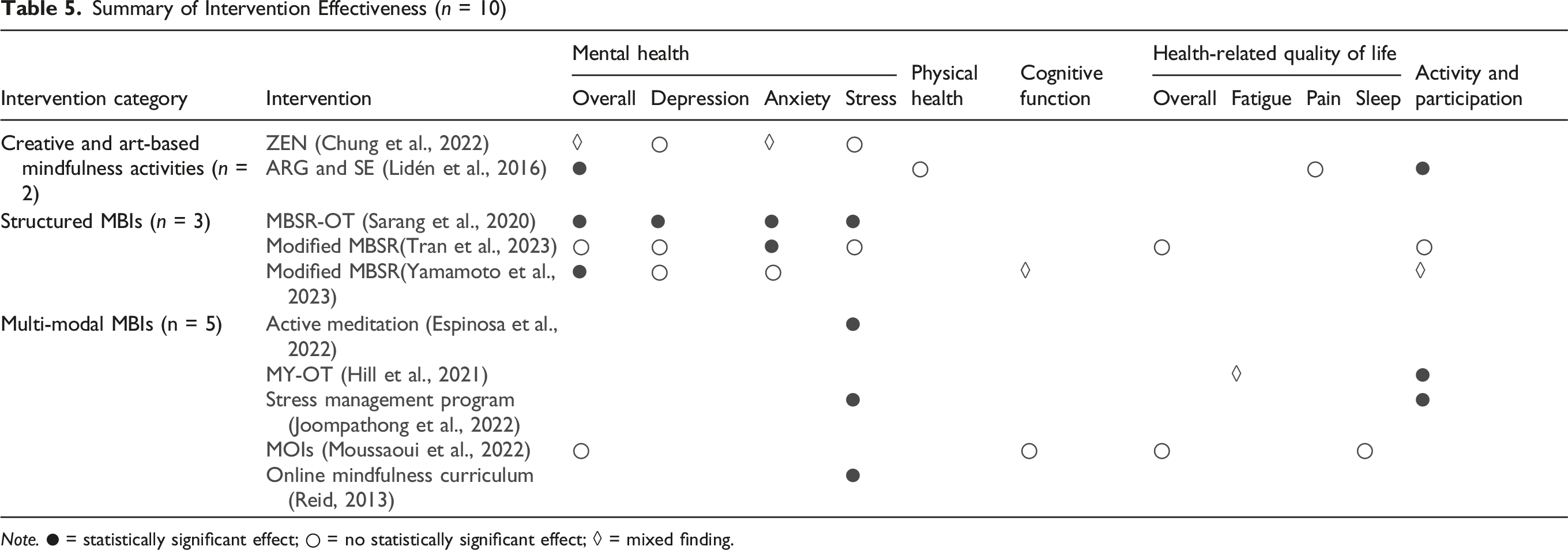
In addition to the narrative synthesis of the included studies, a visual summary is also provided in Table 5, illustrating the effectiveness of these interventions on health-related and OT-related outcomes. Overall, the studies evaluating the effectiveness of MBIs in occupational therapy indicate that, when compared to pre-intervention or control groups: (1) MBIs show significant effectiveness in improving mental health, particularly in overall mental health levels (n = 8). (2) MBIs may offer potential benefits in promoting activity and participation (n = 4). (3) No significant additional benefits have been observed in physical health, cognitive function, or health-related quality of life (n = 5). Summary of Intervention Effectiveness (n = 10) Note. ● = statistically significant effect; ○ = no statistically significant effect; ◇ = mixed finding.
Discussion
Currently, mindfulness practice has been widely adopted in healthcare. However, within the multidisciplinary intervention framework of OT, the theory and research on the application of MBIs in OT are still in their early stages. This highlights the need to further explore how mindfulness can be integrated into OT and its effects. A scoping review has suggested that future research should prioritize empirical studies on the application of mindfulness in occupational contexts (Goodman et al., 2019).
Through this review, a range of empirical studies, including RCTs and quasi-experimental studies, involving creative and art-based mindfulness activities, structured MBIs, and multi-modal MBIs, was identified and evaluated. The finding of this review further suggests that the integration of mindfulness into occupational therapy constitutes an evidence-based and effective intervention that can significantly enhance mental health, particularly overall mental well-being, and may offer benefits in promoting activity and participation (Chung et al., 2022; Espinosa et al., 2022; Hill et al., 2021; Joompathong et al., 2022; Lidén et al., 2016; Reid, 2013; Sarang et al., 2020; Tran et al., 2023; Yamamoto et al., 2023). This is likely due to mindfulness elements such as attention, open-mindedness, and self-awareness, which help reduce negative symptoms and enhance individuals’ ability to acquire the necessary occupational skills and patterns, thereby improving occupational performance and ultimately enhancing both mental and occupational health (Fogel, 2022; Nassif et al., 2023; Snir Melamed et al., 2022). The results of the five studies included in this review involved activity and participation (Hill et al., 2021; Joompathong et al., 2022; Lidén et al., 2016; Tran et al., 2023; Yamamoto et al., 2023), with three using outcome measures directly related to OT (Hill et al., 2021; Joompathong et al., 2022; Tran et al., 2023). Although two studies showed no significant effects or mixed findings, which may have been influenced by factors such as participants’ high baseline levels, the personalized nature of the scales, and the small sample sizes (Tran et al., 2023; Yamamoto et al., 2023). Consequently, the existing research highlights the potential of MBIs to provide additional benefits in OT-related outcomes.
However, existing studies have not demonstrated significant additional benefits of MBIs for physical health, cognitive function, or health-related quality of life. Notably, the research in these areas is limited to only 1–2 studies, providing insufficient evidence. Therefore, this systematic review is unable to draw definitive conclusions regarding the effectiveness of MBIs in these domains.
Overall, the existing evidence supports the feasibility of integrating mindfulness into OT interventions and their effectiveness in improving mental health-related and OT-related outcomes. However, how to select appropriate intervention durations and frequencies to optimize effects still requires further exploration in future research. This review provides insights and a framework for integrating mindfulness into the field of OT. In practice, therapists can use the classification in this review as a basis to select or combine components according to the specific circumstances and needs of individuals to achieve optimal intervention methods.
Research and Practice Implications
Some of the studies included in this review lack a control group, making it difficult to determine whether applying MBIs in OT can yield additional benefits. Moreover, the total number of studies included is limited, which highlights the need for more efficacy-driven RCTs. Current studies predominantly focus on psychiatric domains or aim to improve mental health. Future research should place greater emphasis on examining the effectiveness of MBIs for other health-related outcomes (e.g., physical health, cognitive function, and quality of life) and OT-related outcomes. Specifically, more evidence is needed to support the potential additional benefits of MBIs for OT-related outcomes. Furthermore, most existing studies rely primarily on scales and semi-structured interviews for outcome measures, which may introduce social desirability bias or self-report bias. However, two studies utilized physiological indicators, such as qEEG (Yamamoto et al., 2023) and hair cortisol concentration (Espinosa et al., 2022), demonstrating greater objectivity and cross-cultural applicability, which can help uncover underlying physiological mechanisms. Therefore, future research could combine physiological indicators with scales and interviews to yield more comprehensive research outcomes.
The findings of this review indicate that the application of MBIs in the field of OT is an effective, evidence-based intervention for improving mental health and promoting activity and participation. Occupational therapists can view occupation as an optimal opportunity to introduce and guide clients in mindfulness practices (Smith et al., 2024). Integrating mindfulness into OT practice may not only enhance clinical intervention effectiveness but also reduce patients’ economic and time costs, thereby increasing the accessibility of these services (Yamamoto et al., 2023). Additionally, this underscores the necessity of incorporating mindfulness into the professional curricula and continuing education for occupational therapists. Professionals who have been exposed to mindfulness are more likely to integrate it into their practice and recognize it as a viable strategy for self-care and personal development (Reid, 2013; Stew, 2011).
Limitations
While our team conducted a thorough search, the search strategy may have gaps that resulted in the omission of some studies. Additionally, the concept of mindfulness movement is not clearly defined and encompasses a wide range of activities. Any form or level of physical activity that incorporates mindfulness principles can be classified as mindfulness movement, including yoga, tai chi, and qigong (La Forge, 2005). This review did not supplement the existing literature on mindfulness movement.
Other limitations of this review include the considerable heterogeneity among the included studies and the relatively small number of studies, which necessitates cautious interpretation of the findings. The included research predominantly represents female participants, with women outnumbering men by a factor of two. Furthermore, the results mainly reflect contexts from North America and Asia, with only two studies representing samples from Chile (Espinosa et al., 2022) and Sweden (Lidén et al., 2016). There is a need for larger-scale and more numerous studies to gain a more comprehensive understanding of the effectiveness of MBIs in the field of OT and the potential challenges that may arise.
Conclusion
MBIs are evidence-based interventions that can effectively improve mental health, particularly in overall health levels, and may promote activity and participation. Therefore, further exploration and application of MBIs in the field of occupational therapy should be encouraged. Therapists can integrate mindfulness principles into occupational therapy by adapting established MBI frameworks to specific OT settings, combining daily occupations with mindfulness practices, or exploring other related approaches to assess their specific benefits for occupation-related outcomes. Occupational therapists support individuals with diverse health needs across various practice environments, making it essential to integrate mindfulness into their education and practice. This integration is likely to provide more effective interventions for clients, offer strategies for occupational therapy practitioners, and supply evidence for researchers, creating a positive feedback loop.
Key Message
The content of MBIs can be categorized into three types: creative and art-based mindfulness activities, structured MBIs, and multi-modal MBIs. The application of mindfulness in occupational therapy practice can effectively improve mental health, particularly in overall health levels, and may promote activity and participation; however, there is insufficient evidence regarding its significant additional benefits for physical health, cognitive function, or health-related quality of life. Current related studies exhibit significant heterogeneity, and the limited number of studies necessitates larger-scale and more numerous empirical research efforts. Occupational therapy researchers and practitioners should consider integrating mindfulness into their interventions with clients and recognize the importance of incorporating it into professional curricula and continuing education.
Footnotes

Funding
The authors received no financial support for the research, authorship, and/or publication of this article.
Declaration of Conflicting Interests
The authors declared no potential conflicts of interest with respect to the research, authorship, and/or publication of this article.