



Abstract
Introduction
The aims of the World Federation of Occupational Therapists (WFOT) include the promotion of research for advancing public protection and access to quality evidence-informed occupational therapy. As a Federation of occupational therapy organisations, WFOT was requested by national member associations to conduct a global consultation to assist them in engaging occupational therapists in research in their country by identifying priority issues and sharing research participation strategies.
Method
A two-phase mixed methods study involving an online needs analysis survey of representatives of each national member organisation of WFOT; followed by a consultation with WFOT member organisation representatives attending a WFOT Council meeting to identify strengths, weaknesses, opportunities and threats (SWOT) for research engagement.
Results
Strengths for research engagement were identified as the broad scope of practice of occupational therapy; growing research capacity; and increasing access to evidence. Weaknesses included the availability of time and resources; and access to external supports. SWOT participants identified opportunities for developing a robust research culture within the profession, as well as strategies to continue to promote access to research evidence. Threats to occupational therapist research engagement centred upon low expectations among some occupational therapy stakeholders regarding the use and generation of research.
Conclusions
Findings suggest a culture change is needed to better involve occupational therapists in research. Building research capacity is dependent not only upon nurturing individual research skills and motivation, but also on advocating for organisations involved with the profession to foster, produce and use research. Recommendations for key occupational therapy stakeholders were identified from the findings to create not only the required research competence and confidence, but also the environments and supports that are conducive to such involvement.
Introduction
Increasing societal expectations for high quality outcomes delivered in a cost-effective manner necessitate ongoing research in the provision of health services (World Health Organization, 2000). Research fosters innovation and effectiveness through the generation of new knowledge to guide and advance service delivery. Findings of research can identify and support safe practices, enhance outcomes, develop robust health policy and prepare for emerging health challenges (Biermann et al., 2025).
Occupational therapy is a profession that promotes health and wellbeing by assisting people to participate in important every day occupations such as caring for themselves and others, working, or engaging in leisure activities. Occupational therapists work in a broad array of environments to facilitate engagement in the occupations that people want, need or are expected to do (WFOT, 2025b). Research is integral to occupational therapy to continuously develop the knowledge base of the profession, as well as to generate evidence of its unique value and contribution (Sandhu et al., 2018). As autonomous professionals, occupational therapists are accountable to provide evidence of the quality and effectiveness of the services they provide (Leland et al., 2015).
Proponents of health research use advance a quintuple aim of using evidence from scientific inquiry, including to improve population health, increase equity of service, enhance user satisfaction, save money and reduce stress and burnout within the health workforce (Nundy et al., 2022). For society, benefits of research use in occupational therapy include improved intervention processes and outcomes, both in terms of occupational participation and economic value (Jones et al., 2021; Pighills et al., 2013). The occupational therapy workforce gains through professional development, organisational influence, job satisfaction and career opportunities (Royal College of Occupational Therapists, 2019; White et al., 2013).
As the professional organisation representing occupational therapists at the global level, the World Federation of Occupational Therapists (WFOT) has a long history of initiatives designed to advance research in occupational therapy. WFOT is a federation with occupational therapy organisations as members, the majority national associations (62/111, 56.2%) located in low- or middle-income countries (WFOT, 2024). Initiatives of WFOT to advance occupational therapy research date from 1960 and include the establishment of a foundation award, peer-reviewed journal, position statement, research programme and international occupational therapy research priorities (WFOT et al., 2017). In addition, the WFOT Minimum Standards for the Education of Occupational Therapists require education programmes to prepare graduates able to evaluate the relevance and trustworthiness of research findings, apply evidence to practice and justify practice using theory and research results (WFOT, 2016). WFOT also expects that all occupational therapists graduating from occupational therapy education programmes approved by the Federation using the Minimum Standards have the competency to participate in research on topics related to the profession, including occupation, social participation, health, wellness, human rights, inclusion and enablement (WFOT, 2016). The Minimum Standards are used by the Federation to approve over 1000 occupational therapy education programmes across the world (WFOT, 2025a).
Despite the societal and professional benefits, WFOT and other professional organisations are challenged in their efforts to promote research in occupational therapy (Di Bona et al., 2017; Jesus et al., 2022; Thomas & Law, 2013). The literature identifies both personal factors (e.g., interest, knowledge and motivation), as well as external barriers to research engagement in occupational therapy, such as availability of time, employer support, research funding and peer mentoring (Dwyer et al., 2023; Eriksson et al., 2020; Thomas & Law, 2013).
To complement efforts of WFOT at the international level to promote research participation, member organisations with low research engagement requested the Federation conduct a global consultation to assist them to identify issues and strategies to enhance the engagement of occupational therapists in research in their country. It was proposed that the findings may share information regarding successful research engagement practices of other organisations, identify gaps in existing services, and stimulate improvements in occupational therapy research supports available at national and local levels from member organisations and other stakeholders. Therefore, the overall purpose of this study was to identify priority issues and strategies for enhancing the engagement of occupational therapists in the development and use of research.
Methodology
Ethics
The study was evaluated using the online Health Research Authority Decision-Making Tool (UK Research and Innovation and National Health Service, 2022). As the study was determined to be a quality improvement initiative, ethics approval for this consultation was not required. Oversight was provided by the WFOT Board of Directors for the study was that undertaken by a project team of the Federation. The study was conducted according to ethical principles with measures taken to ensure consent and privacy of collected data.
Design
A two-phase mixed methods approach was undertaken that involved: • Conducting an online needs analysis with WFOT member organisations regarding engagement of occupational therapists in research in their country. • Discussing the results of the needs analysis at a meeting of WFOT member organisations to identify strengths, weaknesses, opportunities and threats (SWOT analysis) for research engagement in the profession.
For the purposes of the study, research was broadly defined as a continuum of activities related to the generation and use of knowledge, ranging from locating, selecting and implementing evidence for practice, to leadership of large-scale research investigations (Pighills et al., 2013).
Participants
Online Needs Analysis
One WFOT representative of each of the 100 national organisations that were members of the Federation at the time of the study was requested to participate in the needs analysis (WFOT, 2025c).
SWOT Analysis
All representatives of member organisations attending the in-person 2024 WFOT Council meeting were invited to participate in the SWOT analysis. Not all member organisations of the Federation sent a representative(s) to the WFOT Council meeting for reasons such as organisational capacity, despite availability of WFOT funding for some associations to attend. Other organisations had more than one representative.
Data Collection
Online Needs Analysis
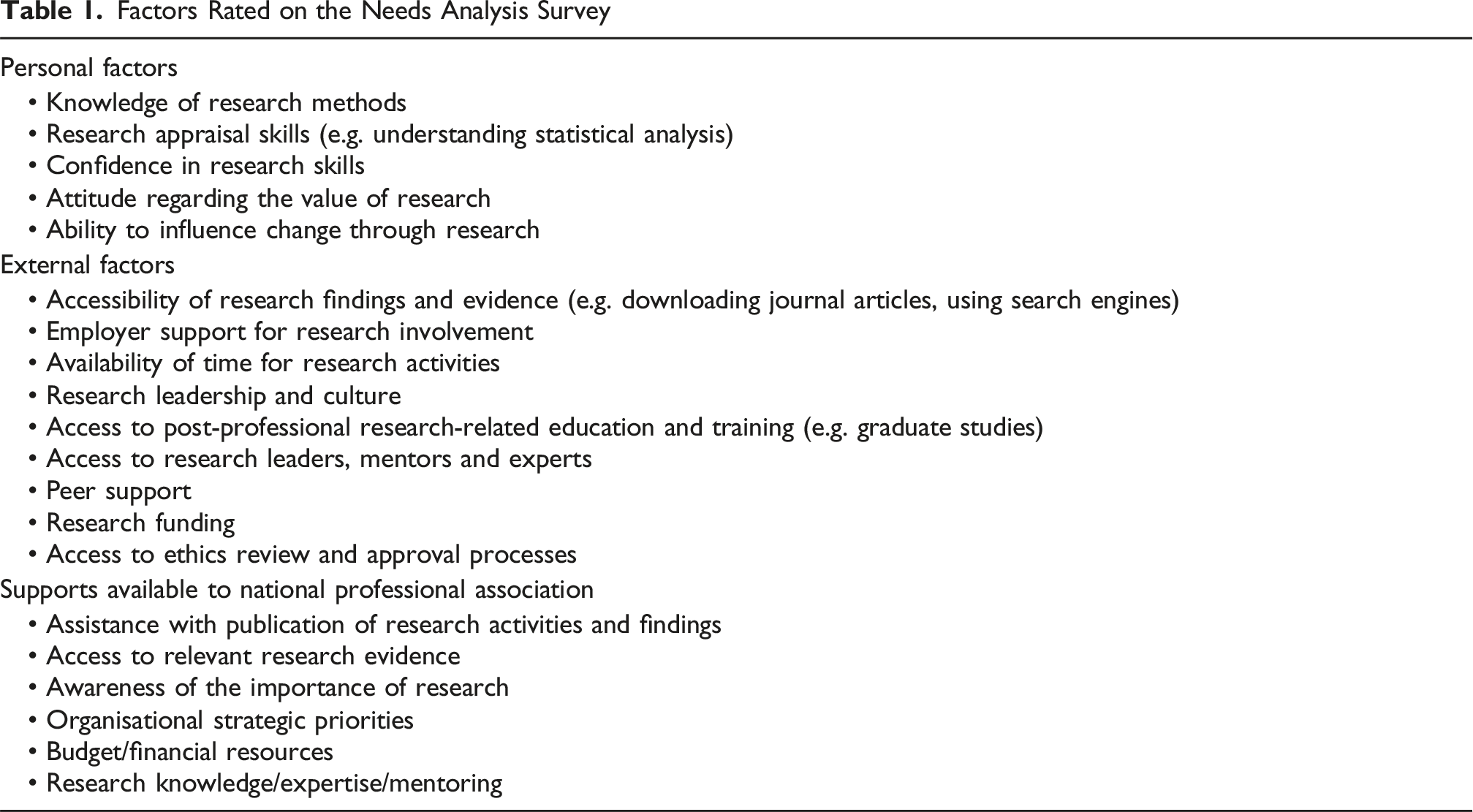
The initial phase of the member organisation consultation involved collection of data using an online survey. The survey was developed by members of the WFOT project team based on knowledge of international occupational therapy practice and relevant research literature (Di Bona et al., 2017; Dwyer et al., 2023; Eriksson et al., 2020; Thomas & Law, 2013). The survey questionnaire was developed using Survey Monkey software (SurveyMonkey Inc, 2023) for completion by WFOT member organisation representatives. A link to the questionnaire was circulated by email to members of WFOT 15 November 2023, with a follow up email sent as a survey reminder a week prior to the response deadline of 22 December 2023.
Factors Rated on the Needs Analysis Survey
SWOT Analysis
For the second phase of the study, the results of the needs analysis were provided to all member organisation delegates attending a WFOT Council Meeting, held 29 February to 3 March 2024. Participation in the SWOT analysis was voluntary for the delegates attending the meeting. Member organisation delegates attending the SWOT analysis were made aware that their anonymised feedback would be used by WFOT to develop a report of findings.
Following a presentation of the results of the first study phase by the session facilitator, all delegates present at the meeting were divided into groups for the SWOT analysis. The groups had mixed representation of delegates from high-, middle- and low-income countries. Each of the small groups was assigned to use the needs analysis findings to identify issues relating to either strengths, weaknesses, opportunities or threats for engaging occupational therapists in research. One person in each small group recorded the group discussion. The facilitator served as a resource to participants during the 45-min discussion and at the end of the session, gathered the written notes from each small group. The discussion notes were subsequently sent to the project lead for analysis.
Data Analysis
Online Needs Analysis
Results of the needs analysis data were analysed quantitatively by calculating an average score for all respondents for each question. The Chi-Square Test of Independence was then used to determine the statistical significance of the number of respondents in high versus low- or middle-income countries that rated the internal and external factors as below the average score for each of the questions. The World Bank Classification of Countries by Income was used to determine the country income level of the respondents (2024).
SWOT Analysis
Thematic analysis was used for identifying, analysing and reporting themes recorded in the notes of the SWOT analysis for the second phase of the study. An iterative process was used for initial familiarisation with the data, followed by coding and theme identification, and final refinement of the themes (Creswell & Poth, 2023). The data were initially organised according to the SWOT categories of strengths, weaknesses, opportunities and threats. Items included in each category were coded to cluster similar responses, for example, under the headings of ‘nature of the occupational therapy profession’, ‘education’ and ‘access to evidence’ for strengths of the profession. A theme was chosen and subsequently refined to optimally describe the clustered responses.
Results
Needs Analysis
Response Rate
Respondents from 39/100 (39%) member organisations from across the world completed the online needs analysis survey. High income countries (HIC) were overrepresented in the survey sample with responses received from 23/46 (50%) of WFOT high income member organisations; responses were received from 16/54 (30%) of low- or middle-income countries (LMIC). The highest number of responses were received from countries in Europe (13/39, 33%), followed by 9/39 (23%) in both the Americas and the Asia-Pacific region. The remaining 8/39 (21%) were received from African and East Mediterranean countries. The survey was most frequently completed by WFOT member country delegates (28/39, 72%), although another member organisation representative completed the questionnaire for 11/39 (28%) countries.
Internal Factors Impacting Research in Occupational Therapy
On average, respondents indicated occupational therapists in member organisation countries valued research for occupational therapy at a moderately high level (Figure 1), thus identifying this factor as the highest rated incentive for research engagement. The moderately high average score regarding research methods knowledge also suggests the research competencies of occupational therapists encourage research involvement. Further analysis of this factor, however, indicated a statistically significant number of respondents in LMIC provided ratings lower than the average score when compared with HIC respondents. Respondents in LMIC therefore indicated occupational therapists in their country were less likely to find their level of research knowledge was an advantage to engage in research. Factors influencing involvement of occupational therapists in research activities. *Statistically significant for the number of below average scores for LMIC versus HIC respondents, p < .05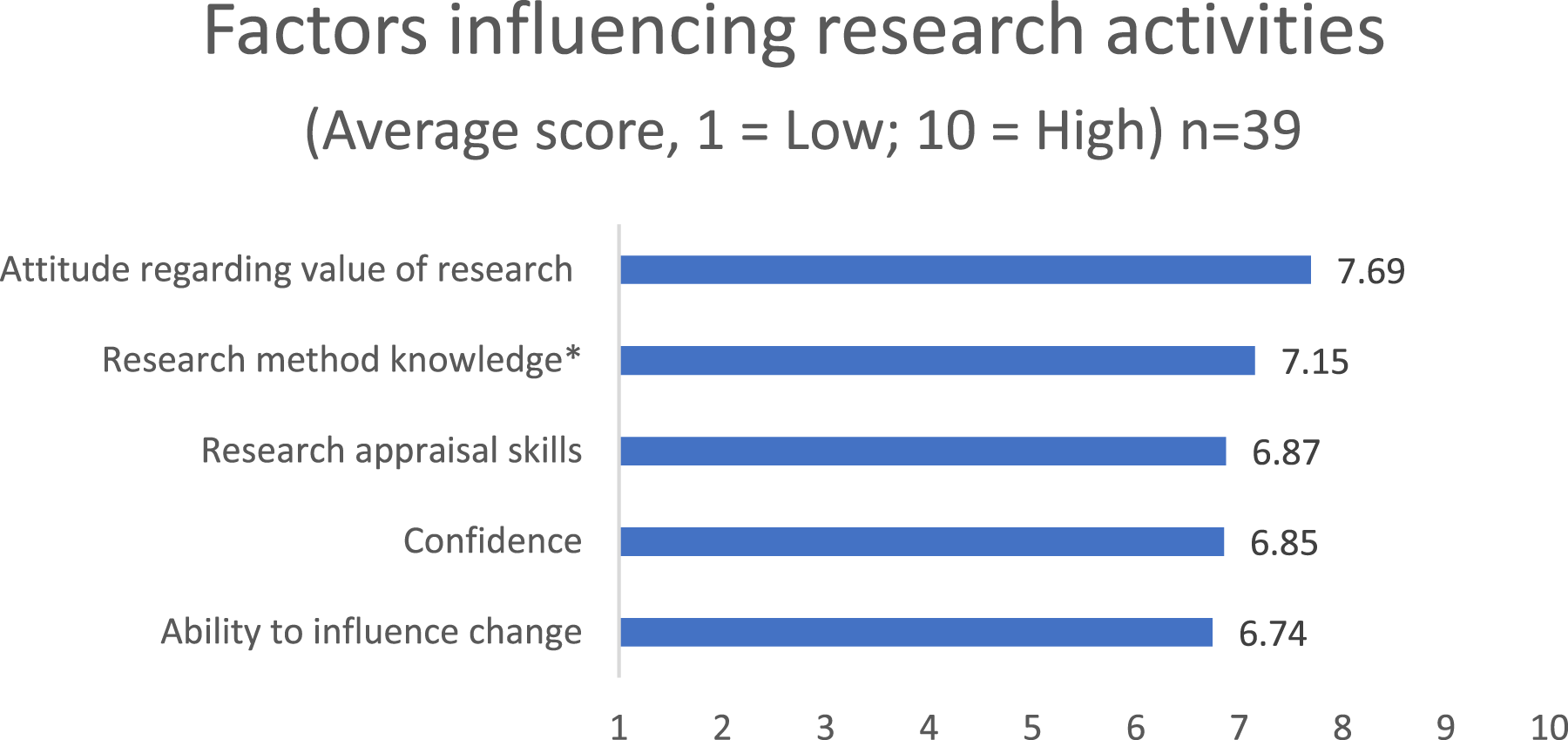
Scores at a medium level were received for respondent perception of research appraisal skills, as well as with confidence with research, and the opportunity to influence change as a result of research. The scores suggest that performance levels of occupational therapists in these areas are less likely to stimulate research engagement. No statistically significant differences were found between respondents from different income levels on these factors.
Availability of Local Supports
Average scores for the availability of local supports for research were rated at a medium level, with no statistically significant differences between countries of differing income (Figure 2). Availability of local supports for research activities of occupational therapists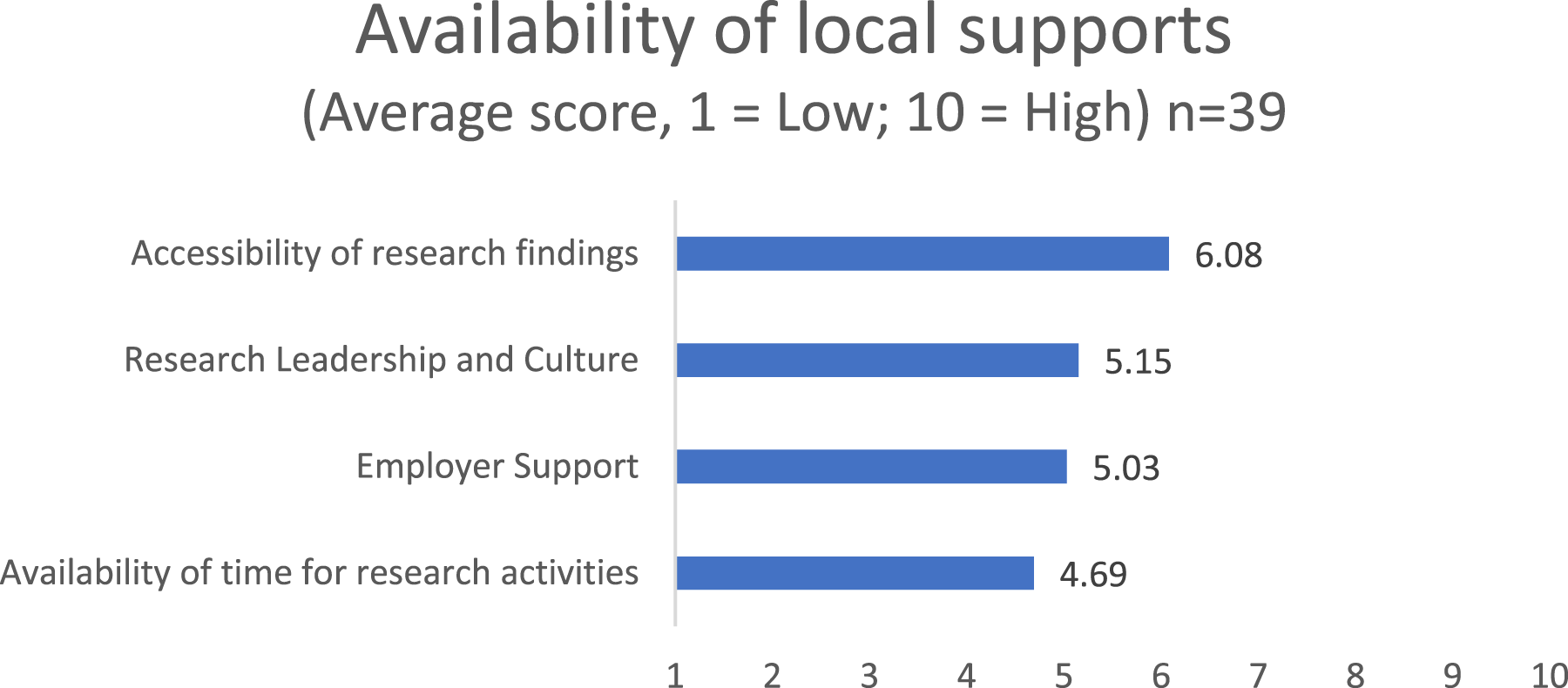
External Supports Available
A medium level of availability of national or regional supports was reported for all respondents for access to post-professional research education, peer support and research leaders and mentors, with moderately low ratings for availability of research funding. A statistically significant number of respondents in LMIC provided ratings below the moderately low average score for assistance with publication of research activities (Figure 3). No statistically significant differences were found among countries of differing income levels for scores of the availability of other external supports. Availability of supports at the national or regional level for occupational therapy research. *Statistically significant for a higher number of below average scores for LMIC versus HIC respondents, p < .05
Rank ordering identified the most important strategies for national associations to promote research engagement of occupational therapists involved developing research competence and confidence, and promoting the use of evidence in practice. Strategies receiving lower rankings involved the development of evidence to optimise outcomes, inform the evidence base and demonstrate the value of occupational therapy.
To stimulate research engagement, member organisations were reported to most frequently offer conferences, continuing professional education and research journals. Other strategies used by national associations (in descending order of frequency) included advocacy, creation of special interest groups, research guidelines/summaries, needs analyses, research funding, research awards, dedicated research strategies and mentoring programmes.
Respondents indicated that their national organisation had a moderately high level of appreciation of the importance of research, a finding aligned with the earlier results for the same question regarding their occupational therapist members. A medium rating was received for availability of other resources for promoting research engagement, with a statistically significant number of respondents in LMIC providing ratings lower than the average score for access to relevant research evidence and financial resources (Figure 4). No statistically significant differences were found among countries of differing income levels for scores on other research resources. Resources of national organisations to engage in research. *Statistically significant for a higher number of below average scores for LMIC versus HIC respondents, p < .05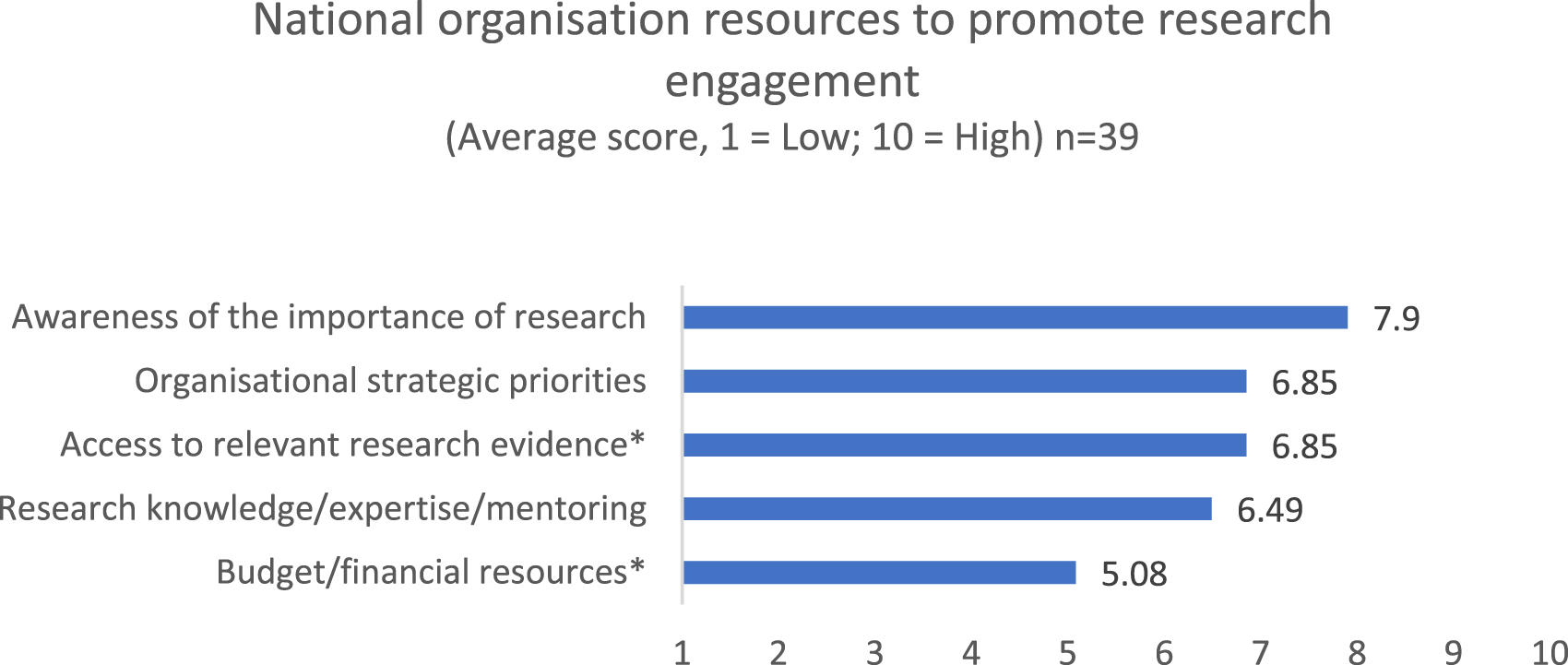
SWOT Analysis
Participants
A total of 53 participants represented 32 member organisations. High income countries were over-represented with 38/53 (72%) of the participants. Once again, the European region was most highly represented with 17/53 (32%) of participants, followed by the Americas and Asia-Pacific regions, both with 15/53 (28%) of participants. The remaining participants were from the African (4/53, 8%) and Eastern Mediterranean regions (2/53, 4%).
Strengths
SWOT Analysis Themes and Sample Quotes
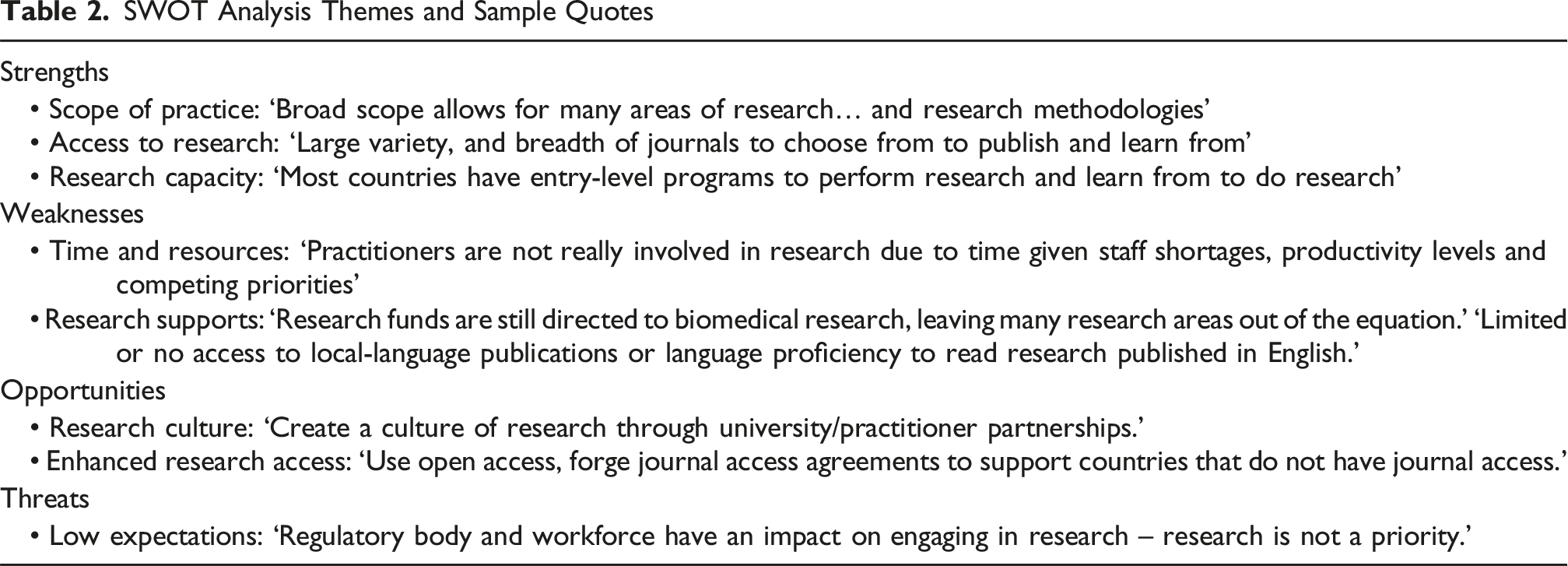
The availability of entry-level education programmes in most WFOT member organisation countries was seen as a benefit to develop research capacity of occupational therapists, for example through student supported research projects and mentorship programmes. Links between education programmes and fieldwork supervisors facilitates mentoring relationships for research involvement. Participants emphasized the importance of a focus on research in the curricula of all occupational therapy entry-level education, particularly to gain proficiency as consumers of research for evidence-based practice. Occupational therapy-specific research training is also available through post-professional education programmes, primarily in HIC.
Access to occupational therapy research evidence was reported to have improved in the last decade with the growth of occupational therapy-related journals. A large variety and breadth of journals provide a range of theory and research to guide occupational therapy practice, although disparities were identified in publication trends among HIC and LMIC, owing to factors such as limited access to local-language publications and costs for journal subscriptions.
Weaknesses
Weaknesses of the profession for research engagement reported by SWOT participants clustered around the availability of time and resources and access to external supports. Staff shortages, demanding productivity levels and competing priorities associated with occupational therapy clinical practice were noted to interfere with involvement in research utilization and development. As research is generally not seen as an employer priority in clinical practice, occupational therapists often must use their personal time for research-related activities. The long-term nature of the research process from study design to data collection, analysis and reporting also acts as a deterrent. Most occupational therapy researchers are therefore employed in higher education where time for involvement in research is supported; a weaker culture for engaging in research permeates occupational therapy practice, unless practical applications of the results are evident.
Occupational therapists were reported to struggle with obtaining external supports needed for research engagement, particularly for funding of occupational therapy specific research.
High levels of competition among interdisciplinary team members were reported for accessing funding, with monies more frequently allocated for biomedical research. Although qualitative methods are often better suited for occupational therapy research topics, higher levels of respect and funding are received for studies using quantitative methodology. A lack of peer mentors and limited opportunities to join research teams, particularly in LMIC were also identified as factors that may marginalise occupational therapy researchers. Peer consultation was seen as particularly necessary for navigating ethical issues faced by researchers, such as the rise of predatory journals and use of AI. Disparities in publication trends were reported to exist among countries of different income levels, with the majority of research generated and published in HIC. The findings of this published research were questioned for applicability to populations in LMIC.
Opportunities
To encourage involvement in research, SWOT participants suggested strategies for developing a robust research culture within the profession, as well as methods to continue to promote access to research evidence. Recommendations were made regarding the establishment of career pathways for those interested in research careers, as well as development of partnerships and mentoring relationships between universities and clinical settings. Participants indicated relationships may be forged both within and outside of occupational therapy for leveraging existing infrastructure and knowledge for conducting research. In HIC, participants reported research funding available through national occupational therapy organisations or regional research groups was helpful to facilitate research involvement of occupational therapists.
Opportunities for enhanced research access for LMICs not easily able to obtain publications included translation of research papers and use of open-access publications. Journal exchange agreements among professional associations in HIC were noted to provide member access to a broader range of research publications.
Threats
SWOT participants identified threats to occupational therapist research engagement centred upon low expectations among some occupational therapy stakeholders regarding the use and generation of research. A lack of regulatory requirements for continuing education, a weak emphasis in education for building research capacity and low employer support for engaging in research were cited as disincentives for occupational therapists to be involved in research in some countries of all income levels. For non-English speaking occupational therapists, a lack of local-language research publications was also a deterrent, impacting their ability to identify relevant evidence for their practice.
Discussion
Results of the WFOT member organisation consultation indicated that occupational therapists place a high value on research for the development of the profession, although have lower levels of confidence in their research appraisal skills, as well as in their ability to influence change using research. Differences were found among countries with different income levels, with confidence lower regarding occupational therapists’ knowledge of research methodology in LMIC.
While occupational therapists in all jurisdictions may value research and evidence use, this consultation suggests that they do not necessarily become actively engaged in the research process, particularly in LMIC. Professional organisations have responded by providing resources to increase awareness, knowledge and confidence needed for research engagement. Past studies support promotion of research involvement through continuing education, for example with journal clubs and special interest groups, as well as by offering networking opportunities at conferences, workshops and forums for occupational therapists to engage with researchers, policymakers, and professional leaders (Eriksson, 2013, 2020).
The findings of this study indicate that impediments to research engagement for occupational therapists extend beyond intrinsic factors such as interest, knowledge and motivation; the nature of the work of occupational therapists, as well as their practice settings, and accessible resources were also found to affect research involvement. The results align with past studies that found a lack of time and resources, weak management support and an absence of leadership challenge the research engagement of occupational therapists (Birken et al., 2017; Dwyer et al., 2023; Karlsson & Tornquist, 2007). Such barriers were present in all member organisation countries in the survey, although most pronounced in LMIC where access to research funding and peer networks was lower. Occupational therapists in non-English speaking countries were also reported to have challenges in finding research evidence and resources for their local language and culture.
Despite the many negative influences, it is promising that the research literature suggests multifaceted approaches are effective to enable research engagement (Di Bona et al., 2017; Eriksson, 2020). Findings of this study are consistent with the literature. SWOT participants identified a multi-stakeholder approach can promote ongoing participation in research and use of best available evidence in the provision of occupational therapy.
All occupational therapy stakeholders, including educators, regulators, employers, professional associations and researchers were seen to have integral roles for promoting ongoing participation in research and use of best available evidence in the provision of occupational therapy. The advancement of occupational therapy as a profession was seen as dependent upon research use and engagement; without growth and utilisation of the occupational therapy evidence base, recognition of occupational therapists was expected to falter and fall behind peer professionals.
Multi-Stakeholder Recommendations to Enhance Research Engagement
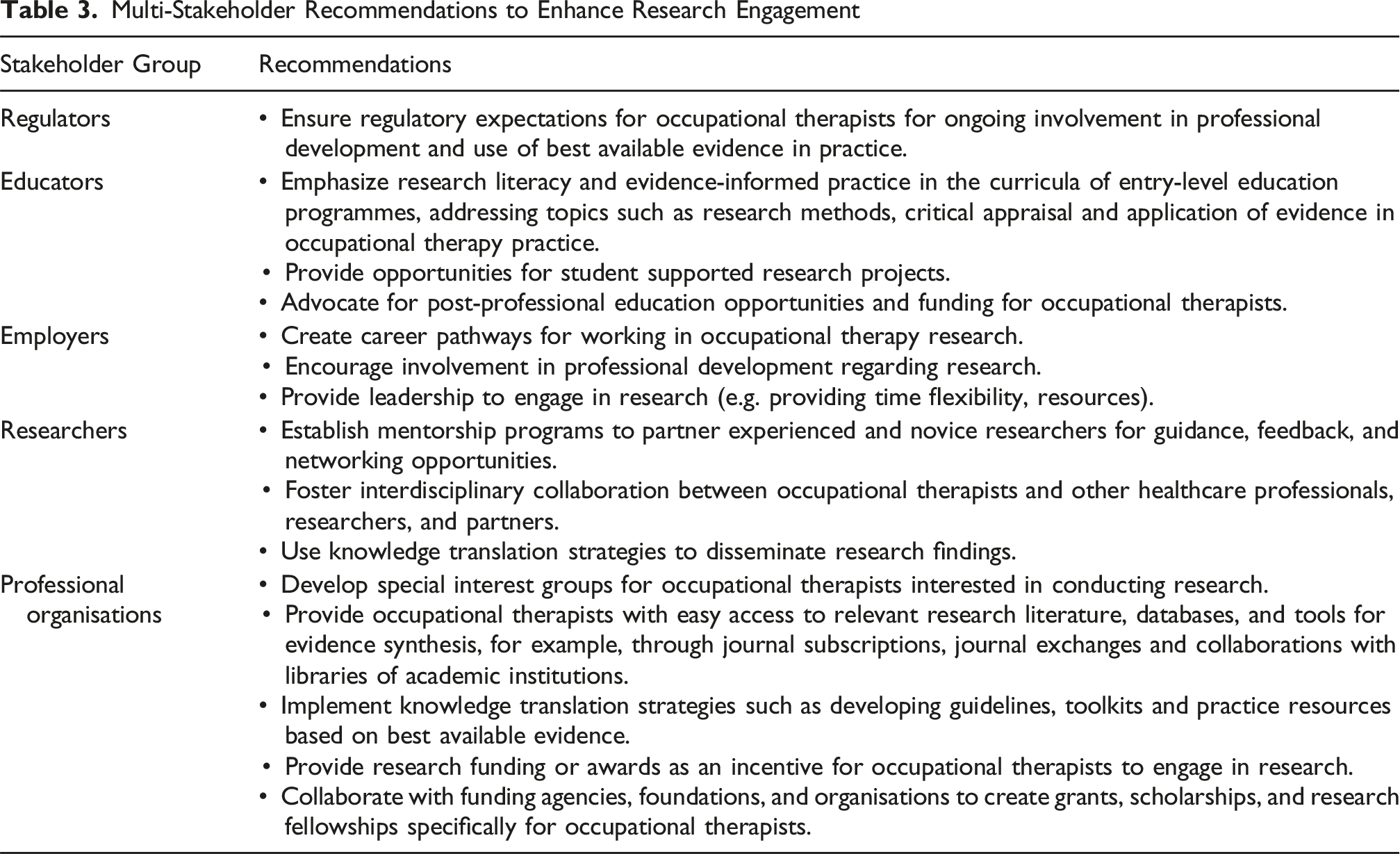
As a basis for all other actions, SWOT participants identified the need for the establishment of clear regulatory expectations and standards for ongoing involvement of occupational therapists in professional development and use of best available evidence in practice. Such expectations were seen as foundational for generating interest and motivation to create a strong culture of research within the profession. Professional organisations can engender this culture shift through research funding or awards as an incentive for occupational therapists to engage in research. Advocacy was recommended for funding initiatives to support occupational therapy research projects; such initiatives may involve collaboration with funding agencies, foundations, and organisations to create grants, scholarships, and research fellowships specifically for occupational therapists. Suggestions were made to increase knowledge of occupational therapists of relevant research evidence through journal subscriptions, journal exchanges, collaborations with libraries of academic institutions and knowledge translation strategies such as developing guidelines, toolkits and practice resources based on best available evidence. Online tools may be used to translate research literature in unfamiliar languages. Research engagement also can be engendered through developing networks for occupational therapists interested in conducting research and establishing mentorship programs to partner experienced and novice researchers for guidance and feedback opportunities (Dwyer et al., 2023). Such peer support increases confidence by providing opportunities for sharing thoughts and experiences and engaging in guided reflection in a safe environment (Di Bona et al., 2017). Reflection is known to be an important element of evidence use and generation; occupational therapists must be able to reflect upon areas of strengths and weakness to appropriately change their practice based on theory and relevant research (Eriksson, 2013; Thomas & Law, 2013).
Needed support for research engagement extended to the occupational therapy education community in this study. The integration of research literacy and evidence-informed practice in the curricula of entry-level education programmes was noted as integral, addressing topics such as research methods, critical appraisal and application of evidence in occupational therapy practice. Partnerships among students, academics, researchers, and the clinical community can promote self-efficacy in doing research and promotes integration of research into clinical practice, for example, through fieldwork opportunities and student-supported research projects (Thomas & Law, 2013). Improving accessibility to post-professional occupational therapy education opportunities relating to research design, statistical analysis, and interpretation of research findings has been particularly identified in the research literature to build research interest and capacity (Brown et al., 2010; Thomas & Law, 2013).
Establishment of research as an institutional priority, collaborative researcher-practitioner relationships, provision of time and funding for research activities have been shown to effective in the workplace to increase involvement of occupational therapists in research (Dwyer et al., 2023). For example, elements of management support particularly valued by occupational therapists in a study by Di Bona et al. included leadership encouragement for research involvement; information technology assistance; links to research departments; and provision of protected time for research activities (2017). Employers may also foster the establishment of career pathways for working in occupational therapy research.
Researchers have a role to forge relationships that stimulate research engagement. Effective collaboration between occupational therapy clinicians and other healthcare professionals, researchers, and partners can drive research interest, motivation and involvement (Daniels et al., 2021; Eriksson, 2013).
Limitations
The results of this consultation need to be interpreted with caution as not all WFOT member organisations participated in the needs analysis survey and SWOT analysis. HIC were also overrepresented in the results of both components of the consultation. The findings reflect the information that was known to the respondents and was shared with WFOT. It is possible that findings reflect incomplete or inaccurate information, particularly as the survey was offered only in the English language. English was not the primary language for a number of the individuals responding to the survey.
Conclusions
While the benefits of research engagement are clear, a lack of occupational therapist involvement was identified in this consultation as a threat to the advancement of occupational therapy as a profession. The findings of the consultation indicate that building research capacity is dependent not only upon nurturing individual research skills and motivation, but also on developing the ability of organisations involved with the profession for facilitating, producing and using research. Participants in the SWOT analysis advocated for a culture change within the profession in order to better involve occupational therapists in research. The commitment of all occupational therapy stakeholders was identified as necessary to create not only the required research competence and confidence, but also the environments and supports that are conducive to such involvement. Findings of this study include recommendations for collaboration action of regulators, educators, professional organisations and researchers for enhancing research engagement. The best interests of the population, as well as the profession are served by encouraging research engagement and extending the evidence base in areas of needed or desired development for quality and effective occupational therapy.
Footnotes
Acknowledgements
WFOT would like to acknowledge the assistance of Dr. Lynette Mackenzie, WFOT Director - Research who served as facilitator for the SWOT analysis and provided input into the development of the needs analysis survey, as well as WFOT member organisation representatives from across the world who contributed their input to the findings.

Ethical Considerations
Ethics approval was not required for this consultation.
Consent to Participate
Participation in the SWOT analysis was voluntary. Member organisation representatives attending the SWOT analysis were made aware that their anonymised feedback would be used by WFOT to develop a report of findings.
Consent for Publication
Survey respondents were asked to consent to sharing their personal information, as well as the publication of their anonymised data.
Funding
Funding for the publication of this paper was provided by the World Federation of Occupational Therapists.
Declaration of Conflicting Interests
The authors declared no potential conflicts of interest with respect to the research, authorship, and/or publication of this article.