



Abstract
Concrete surface quality plays a critical role in the durability, aesthetics, and long-term performance of exposed concrete elements, particularly in architectural and bridge structures. Numerous studies have investigated the mechanical and durability properties of concrete; however, the combined influence of formwork material, release agent, and curing regime on surface quality and near-surface performance remains insufficiently addressed within an integrated framework. This study experimentally evaluates the coupled effects of concrete type (normal concrete and self-compacting concrete), formwork material (ABS, PVC, wood, MDF, and iron), mold release agent, and curing condition on mechanical performance, durability-related indicators, and surface quality. The study integrates strength-related tests, abrasion resistance, water absorption, Schmidt hammer rebound, water droplet contact-angle measurements, and qualitative surface assessment within a unified experimental program. A comprehensive experimental program was conducted using standardized test methods on laboratory-scale specimens cast under controlled conditions. Compressive strength, rebound index, water absorption, abrasion resistance, and surface wettability were evaluated, and surface appearance was assessed through systematic visual inspection. The results indicate that formwork material and release agent significantly influence near-surface density, abrasion resistance, and aesthetic quality. Polymer molds combined with appropriate release agents generally produced denser surfaces and improved durability-related performance, whereas wooden molds without release agents resulted in inferior surface quality. Although the tested self-compacting concrete mixture exhibited overall favorable trends, certain normal concrete configurations achieved comparable or higher compressive strength depending on mold conditions. Overall, the findings indicate that surface quality and durability-related performance are governed not only by mixture design but also by formwork–concrete interaction and curing practice. This study provides practical guidance for selecting formwork systems and curing strategies in applications involving exposed concrete surfaces.
Keywords
Introduction
Concrete is the most widely used construction material worldwide owing to its strength, durability, and versatility.1–6 As a composite material composed of cement, aggregates, water, and often chemical admixtures, its performance is strongly governed by mixture design, curing conditions, and construction practices.7,8 Among its various applications, architectural concrete plays a significant role in facade cladding, where both mechanical performance and aesthetic quality are equally important.9–11 Architectural concrete must meet structural and durability requirements against environmental actions such as frost, rainfall, temperature variations, and humidity.9,12,13 It must also satisfy aesthetic expectations, including uniform texture, flatness, and color consistency. Similar performance and appearance requirements apply to bridge structures, where large areas of exposed concrete are directly subjected to moisture, temperature variations, de-icing salts, and abrasion. In bridge elements such as piers, abutments, barriers, and precast components, near-surface concrete quality is critical for both aesthetics and durability. Surface defects and increased porosity accelerate water and chloride ingress, thereby compromising long-term serviceability.9,10,14 Consequently, understanding the influence of formwork systems, release agents, and curing regimes on surface quality and durability indicators is directly applicable to improving the performance of concrete used in bridge infrastructure. SCC is a highly flowable material that can fill formwork without external vibration. It often provides improved surface finish and placement quality compared to conventional concrete, depending on mixture design and casting conditions.15–17 Nevertheless, despite its mechanical and workability benefits, SCC may exhibit durability-related challenges depending on its mixture composition and near-surface pore structure. Porosity governs water absorption and the ingress of aggressive agents (chlorides, sulfates, CO2, and microorganisms), thereby influencing strength development, abrasion resistance, and service life. 18 Compressive strength, measured through destructive testing, remains the most widely investigated property in concrete research and is strongly influenced by porosity, curing conditions, and microstructural changes.19–24 In this context, abrasion resistance is increasingly recognized as a critical durability parameter for exposed concrete surfaces. Abrasion primarily affects the concrete’s outer layer, influencing both aesthetics and long-term performance. 14 Studies have shown that factors such as aggregate type, water-to-cement ratio, and cement composition play key roles in improving abrasion resistance.25–28 In parallel with strength and durability, surface quality has become a key consideration in architectural concrete. Defects such as bugholes, non-uniform color, and poor flatness negatively impact the visual perception of concrete facades and, consequently, the overall appearance of the building envelope.24,29,30 The final surface quality is determined not only by mix design but also by the interaction between concrete and formwork systems, including the selection of release agents and formwork materials. 31 Recent advances have introduced innovative solutions, such as polymeric skins and permeable textile formworks, which aim to improve surface aesthetics and minimize water retention.32–34 However, most existing studies address either visual quality or isolated durability indicators, without quantitatively linking surface appearance to durability-related performance. Two key gaps can therefore be identified in the current state of the art. First, most studies examine mechanical properties, durability indicators, or surface quality independently. Integrated experimental frameworks that jointly assess these aspects remain limited. Moreover, the combined effects of formwork material, release agent, and curing regime on abrasion resistance and water absorption remain insufficiently quantified under comparable conditions. Addressing these gaps is particularly relevant for exposed concrete elements in bridge structures, where surface-related deterioration mechanisms directly affect service life and maintenance strategies. The present study addresses these gaps through a comprehensive experimental evaluation. It investigates the effects of concrete type (normal concrete and self-compacting concrete), formwork material, release agent, and curing regime on mechanical performance, durability-related indicators, and surface quality. Durability-related properties—including water absorption and abrasion resistance—are assessed alongside surface-related metrics such as visual appearance and water droplet behavior. This approach provides a dual evaluation framework linking near-surface density to both durability and wettability. By integrating mechanical, durability-related, and surface-quality indicators within a single experimental program, the study provides practical guidance for optimizing formwork selection and curing strategies for exposed concrete applications. Some preliminary results were previously reported in a non-English publication 35 ; the present work substantially extends that study by incorporating additional test parameters, comparing normal and self-compacting concretes, and establishing correlations between durability and surface quality.
Research significance and paper organization
The durability and surface quality of concrete are critical parameters in modern construction, particularly for exposed concrete elements where long-term performance and maintenance demands are strongly influenced by near-surface properties. Previous studies have extensively investigated either mechanical performance or surface-related characteristics of concrete. However, the combined influence of formwork type, release agents, and curing regime on both durability and surface quality has received comparatively limited attention
Materials and methods
This section describes the materials, mixture proportions, formwork systems, curing regimes, and experimental procedures adopted in this study. The experimental program was designed to systematically evaluate the influence of concrete type, mold material, release agent, and curing condition. Their effects were assessed on mechanical performance, durability indicators, and surface quality.
Mixture design and proportions
Normal concrete mix proportions.
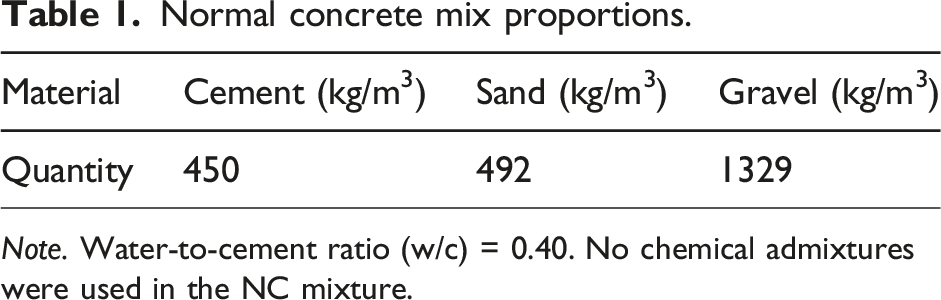
Note. Water-to-cement ratio (w/c) = 0.40. No chemical admixtures were used in the NC mixture.
Self-compacting concrete mix proportions.
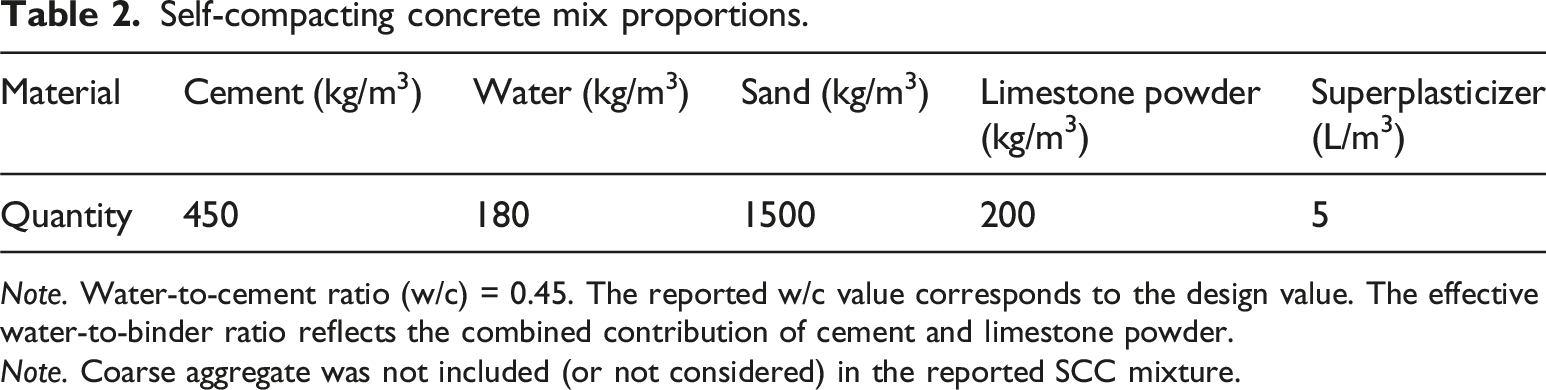
Note. Water-to-cement ratio (w/c) = 0.45. The reported w/c value corresponds to the design value. The effective water-to-binder ratio reflects the combined contribution of cement and limestone powder.
Note. Coarse aggregate was not included (or not considered) in the reported SCC mixture.
Specimen dimensions and corresponding tests.
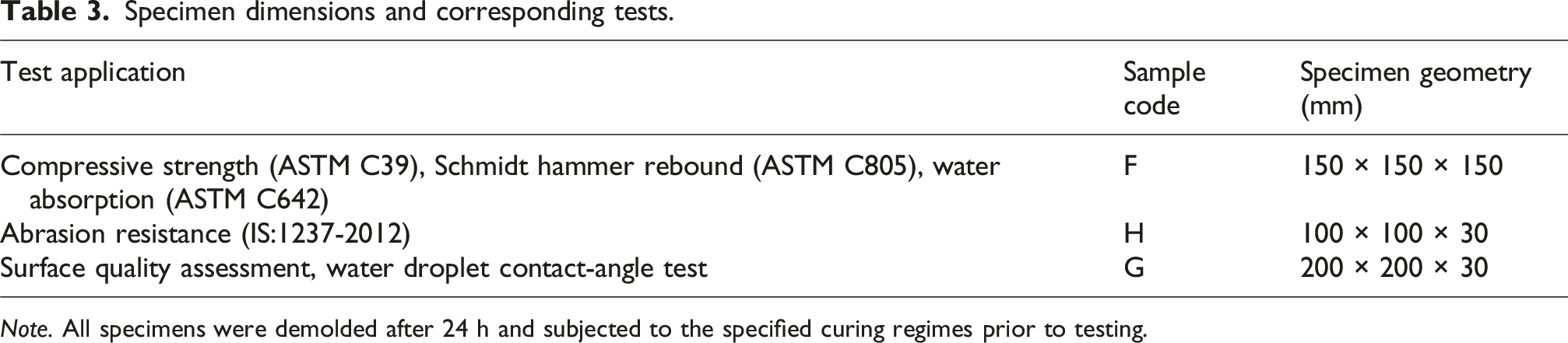
Note. All specimens were demolded after 24 h and subjected to the specified curing regimes prior to testing.
Normal concrete (NC)
To produce normal concrete (NC), sand, gravel, and cement were weighed according to the mix proportions (Table 1) and placed in a mechanical mixer. In the initial stage, the dry constituents were blended for approximately 1–2 min. Subsequently, the prescribed amount of water was gradually added, and mixing continued for about 3 min until a homogeneous mixture was obtained. The fresh concrete was then placed into pre-oiled steel molds using a suitable release agent. Casting was performed in three successive layers. Each layer was compacted using a vibrating table to ensure uniformity and minimize entrapped air voids, in accordance with ASTM C192. 38 After 24 h of casting, the specimens—including both cubic and mosaic-shaped samples—were demolded. Cubic specimens were transferred to a water-curing tank maintained at 20 ± 2°C. Additional mosaic samples were stored under laboratory ambient conditions to investigate curing effects.
Self-compacting concrete (SCC)
For the production of SCC, the pre-weighed dry constituents—sand, cement, and stone powder—were first introduced into a mechanical mixer and blended for approximately 1–2 min. Subsequently, a premixed solution of water and superplasticizer was gradually added. Mixing continued for 3–4 min until a homogeneous and highly flowable SCC mixture was obtained. The fresh SCC was then cast into pre-oiled molds treated with a release agent, without the need for vibration, in accordance with the principles of SCC placement (EFNARC guidelines 39 ). After 24 h, the specimens were demolded. Cubic and mosaic-shaped samples designated for curing were immersed in a water tank maintained at 20 ± 2°C. Additional mosaic specimens were stored under laboratory ambient conditions for comparative assessment.
Materials and mold systems
Specifications of mold oils.

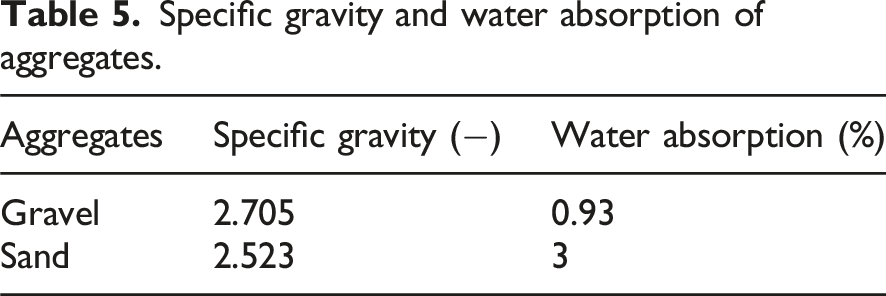
Specific gravity and water absorption of aggregates.
Experimental methods
Compressive strength test
The compressive strength of concrete was evaluated in accordance with ASTM C39
42
using 150 × 150 × 150 mm cubic specimens. After 28 days of water curing at 20 ± 2°C, the specimens were surface-dried and centrally aligned in a calibrated hydraulic compression testing machine with a maximum capacity of 2000 kN. Axial load was applied continuously at a controlled rate of 0.25 ± 0.05 MPa
Schmidt hammer rebound test
The surface hardness of the concrete was assessed using the Schmidt rebound hammer in accordance with ASTM C805. 36 Prior to testing, specimen surfaces were cleaned and smoothed to remove dust and laitance. The test was performed on 150 mm cubic specimens at the age of 28 days, under laboratory ambient conditions. To minimize edge effects, impacts were applied at least 25 mm away from specimen edges and corners. For each specimen, 10–15 rebound readings were recorded at different points on the surface, and the median of the valid readings was calculated. Outliers exceeding ±20% of the mean were discarded. The rebound number was used primarily as a comparative rebound index reflecting relative surface hardness and near-surface uniformity among specimens. Manufacturer-provided correlation charts were consulted to express rebound values in terms of an “equivalent compressive strength”; however, these values are not intended to represent absolute strength predictions. Rebound–strength correlations are known to depend on mixture composition and surface condition. Therefore, Schmidt hammer results are interpreted mainly in a relative sense and are used only to support trends observed from destructive compressive strength testing. For each test condition, measurements were repeated on a minimum of three specimens, and the reported results represent mean values. Rebound test points were selected in a quasi-random manner across the central region of each specimen surface. Visible defects, edges, and corners were avoided to account for surface heterogeneity while ensuring repeatability.
Water absorption test
The water absorption of concrete was determined in accordance with ASTM C642.
28
After 28 days of water curing, specimens were first weighed in a saturated-surface-dry (SSD) condition to obtain the saturated mass (Ws). Subsequently, the specimens were oven-dried at 105 ± 5°C for 24 h until a constant mass was achieved, which was recorded as the dry mass (Wd). The water absorption percentage was calculated using equation (2):
Abrasion resistance test
The abrasion resistance of concrete was determined in accordance with IS:1237-2012,
43
which specifies the method for evaluating the wear resistance of cementitious materials. Mosaic-shaped specimens (100 × 100 × 30 mm) were cut from the larger slabs using a precision concrete cutting machine to obtain uniform dimensions and smooth test surfaces. Abrasion testing was performed using a rotating disc abrasion-testing machine equipped with an abrasive sheet, with corundum powder uniformly distributed on the disc prior to each test. The machine was operated at a speed of 75 revolutions per minute (rpm), and each test cycle was carried out for 1 min under constant load. Each specimen surface was subjected to three successive abrasion cycles under identical conditions. The initial mass of each specimen (W1) was recorded prior to testing, and the mass after each cycle (W2) was measured with an electronic balance (accuracy ±0.01 g). The depth of wear (t) was calculated using the equation (3):
Water droplet contact-angle test
The wettability of the concrete surface was evaluated using a water droplet contact-angle method adapted from Savukaitis et al. 29 The test quantifies absorption kinetics and surface permeability through droplet behavior over time. Droplet placement locations were selected on visually representative areas of the specimen surface, away from edges and visible surface defects. For each specimen, measurements were repeated at multiple locations, and the reported values represent averaged results to reduce the influence of local surface heterogeneity. Three droplet configurations were examined: (i) a small droplet formed by merging three successive drops (≈0.05 mL), (ii) a large droplet formed by merging 20 successive drops (≈0.30 mL), and (iii) a spilled droplet of 0.5 mL applied at two points on the surface using a syringe positioned at 110°. Droplets were carefully placed on the specimen surface, and digital images were captured at predetermined intervals (0, 1, 5, 10, 15, 30, 40, 50, and 60 min) with a high-resolution camera. Image-analysis software was employed to determine the contact angle and total absorption time. Contact angle values were extracted from the captured images by fitting a baseline at the solid–liquid interface and measuring both left and right contact angles of the droplet profile. The reported contact angle corresponds to the average of the left and right angles for each droplet. To account for surface roughness and heterogeneity inherent to concrete, measurements were repeated at multiple locations and on replicate specimens, and the results are reported as mean values. Local surface irregularities may influence instantaneous droplet shape. However, the adopted averaging procedure allows reliable comparative assessment of near-surface density and wettability trends. All measurements were conducted at 22–23°C. Two curing conditions were considered: (i) water-cured specimens tested at 28 days and (ii) air-dried specimens cured in water for 28 days and subsequently stored under laboratory ambient conditions for 7 additional days (tested at 35 days).
For each curing condition and droplet type, a minimum of three replicate measurements were performed, and results are reported as mean values together with standard deviations. This method provided a quantitative measure of the surface density and permeability of the concrete specimens. The water droplet contact-angle method was selected as a surface-sensitive technique capable of capturing near-surface densification and absorption kinetics, which are directly influenced by formwork interaction and curing conditions. Bulk sorptivity tests (e.g., ASTM C1585) and electrical resistivity measurements reflect averaged transport properties over a larger depth. In contrast, the droplet-based approach emphasizes the behavior of the outermost concrete layer. Therefore, this method is used in the present study as a complementary, comparative indicator of surface permeability and wettability rather than as a substitute for standardized permeability tests.
Surface quality assessment
The qualitative characteristics of concrete surfaces were assessed following the methodology adapted from Khayyat et al. 19 Photographs of the specimen surfaces were taken at two ages: 1 day (early-age evaluation) and 28 days (mature condition). Two curing regimes were considered: water-cured specimens, photographed after immersion curing, and specimens exposed to laboratory ambient conditions. Images were captured under both controlled laboratory lighting and natural outdoor light to minimize illumination-related bias. Surface quality evaluation focused on three aesthetic indicators relevant to architectural concrete: (i) visible pores (bugholes), (ii) color uniformity, and (iii) surface gloss or brightness. To improve reproducibility and reduce subjectivity, a semi-quantitative visual rating rubric was adopted. Each surface was classified according to predefined qualitative categories for each indicator, as follows: bughole density (low: almost pore-free; moderate: isolated visible pores; high: frequent visible pores), color uniformity (uniform, slightly non-uniform, non-uniform), and surface gloss (glossy, semi-matte, matte). All specimens were evaluated using the same classification criteria and imaging conditions, allowing consistent comparative assessment of the influence of mold type, release agent, and curing regime on surface appearance. No universally standardized method exists for architectural concrete surface evaluation. Therefore, this semi-quantitative approach was selected as a practical and reproducible compromise between descriptive visual inspection and fully quantitative image analysis. It should be noted that the surface quality assessment was performed on laboratory-scale specimens with limited exposed surface areas. These specimen dimensions were selected to ensure controlled and repeatable comparisons among different formwork materials, release agents, and curing regimes. Accordingly, the surface quality results provide comparative trends under identical conditions. They should not be interpreted as absolute judgments of full-scale architectural surface performance.
Results and discussion
Abbreviations used for specimen identification parameters.
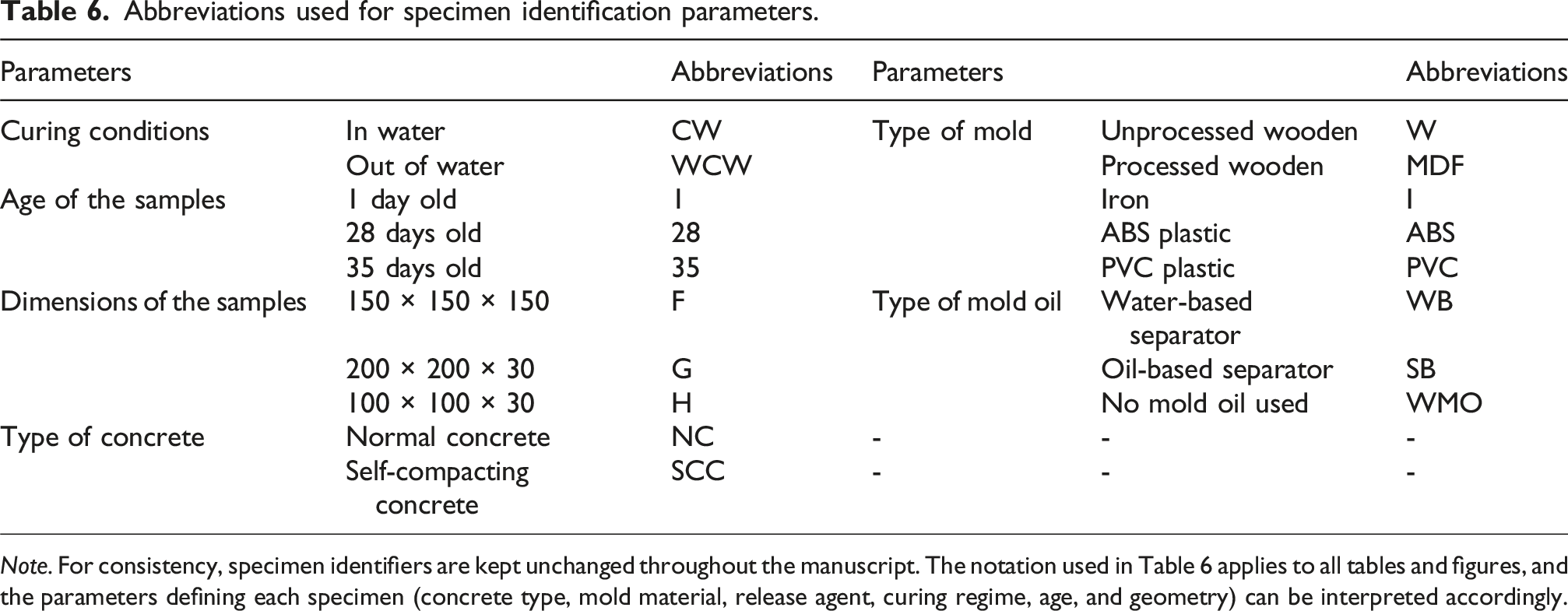
Note. For consistency, specimen identifiers are kept unchanged throughout the manuscript. The notation used in Table 6 applies to all tables and figures, and the parameters defining each specimen (concrete type, mold material, release agent, curing regime, age, and geometry) can be interpreted accordingly.
Compressive strength
Compressive strength, rebound-based equivalent strength, and water absorption of NC and SCC specimens at 28 days (water curing). Values are reported as mean ± SD (n = 3).
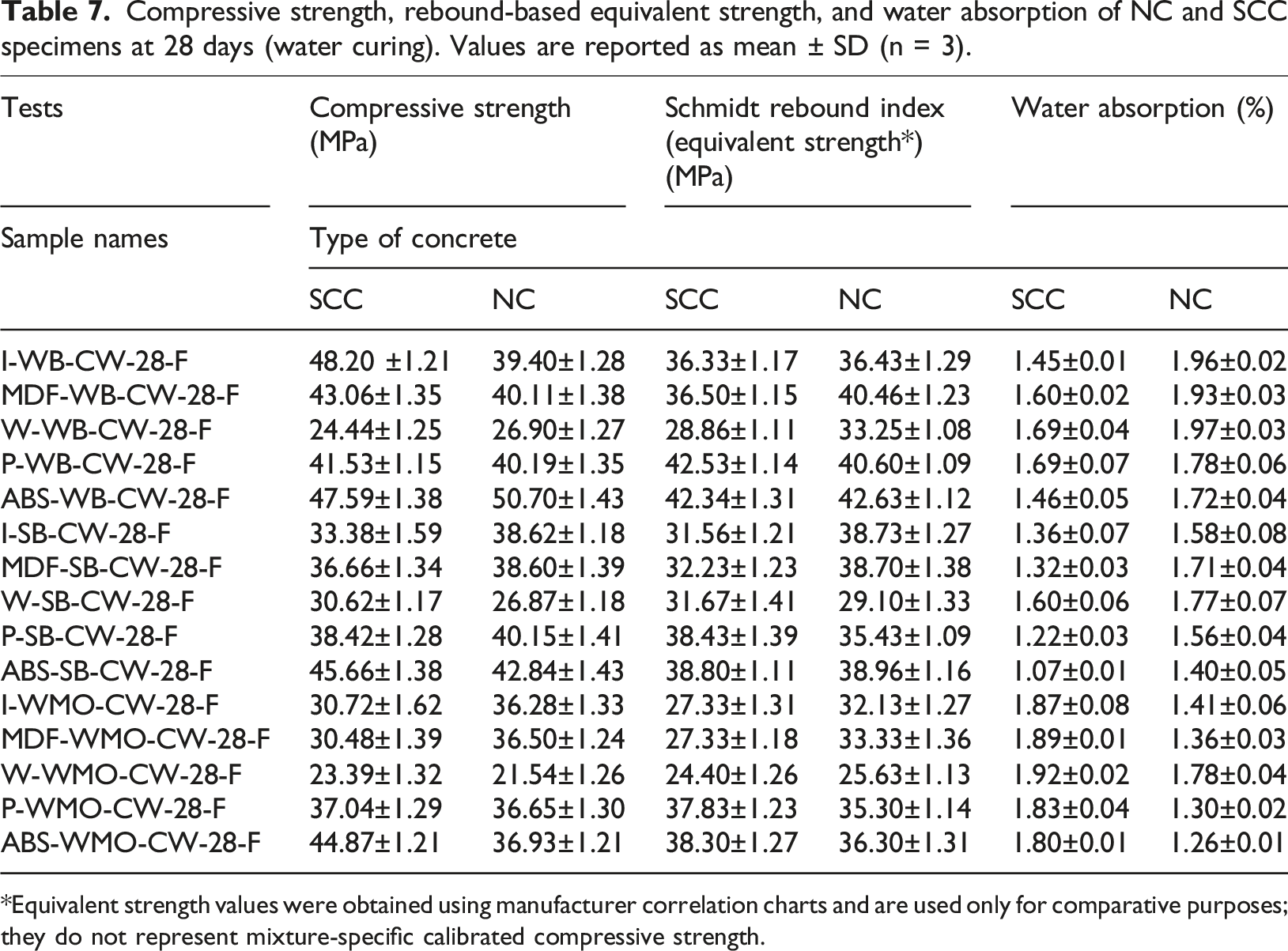
*Equivalent strength values were obtained using manufacturer correlation charts and are used only for comparative purposes; they do not represent mixture-specific calibrated compressive strength.
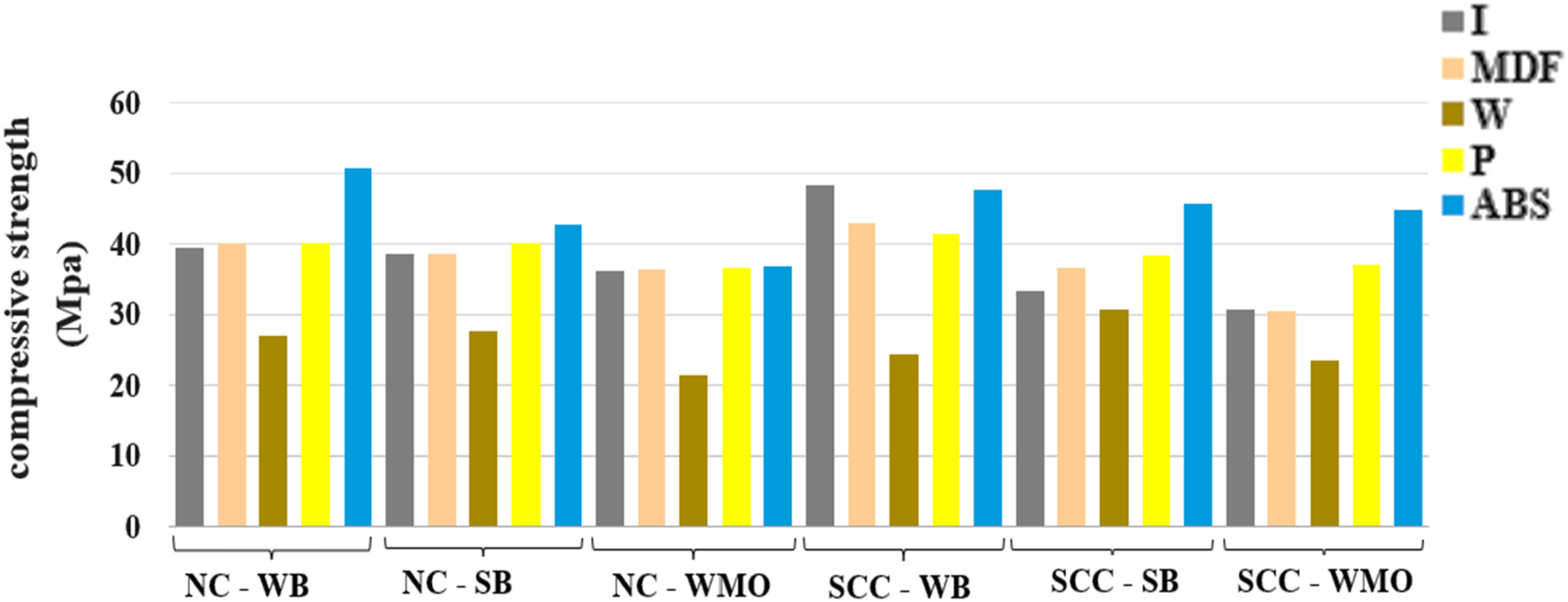
Compressive strength results of NC and SCC specimens at 28 days under water curing (CW). Values represent mean ± SD (n = 3).
Schmidt hammer rebound
The Schmidt hammer rebound values for NC and SCC specimens are summarized in Table 7 and illustrated in Figure 2. The results reveal trends consistent with the compressive strength data. This confirms the suitability of the rebound hammer as a nondestructive strength index. In both mixtures, the lowest rebound values were consistently recorded in specimens cast in wooden molds (W), attributable to the water absorption and irregular surface texture of wood, which promote non-uniform curing and localized surface defects. Conversely, the highest rebound values among NC specimens were observed in NC-WB-ABS-28-F, while the best performance among SCC specimens was recorded for SCC-WB-PVC-28-F. The superior results of ABS and PVC molds can be attributed to their non-absorbent and smooth surfaces, which limit moisture loss during casting and produce denser near-surface zones. Interestingly, despite the enhanced workability and compaction of SCC, the maximum rebound index overall was measured in the NC-WB-ABS-28-F specimen, reflecting the influence of mold–concrete interaction beyond mixture type. This observation aligns with previous findings by Megid and Khayat,
19
who also reported significant surface-quality effects associated with polymer molds. Overall, the rebound hammer results confirm that mold material and release conditions exert a measurable influence on surface hardness and, by extension, the apparent compressive strength of concrete. The strong agreement with destructive strength results reinforces the validity of the Schmidt hammer as a complementary nondestructive tool for evaluating both NC and SCC. Accordingly, Schmidt hammer results are discussed herein as comparative rebound indices reflecting relative surface hardness and near-surface uniformity, rather than as independent measures of compressive strength. Schmidt hammer rebound indices of NC and SCC specimens at 28 days under water curing. Results are presented as mean ± SD.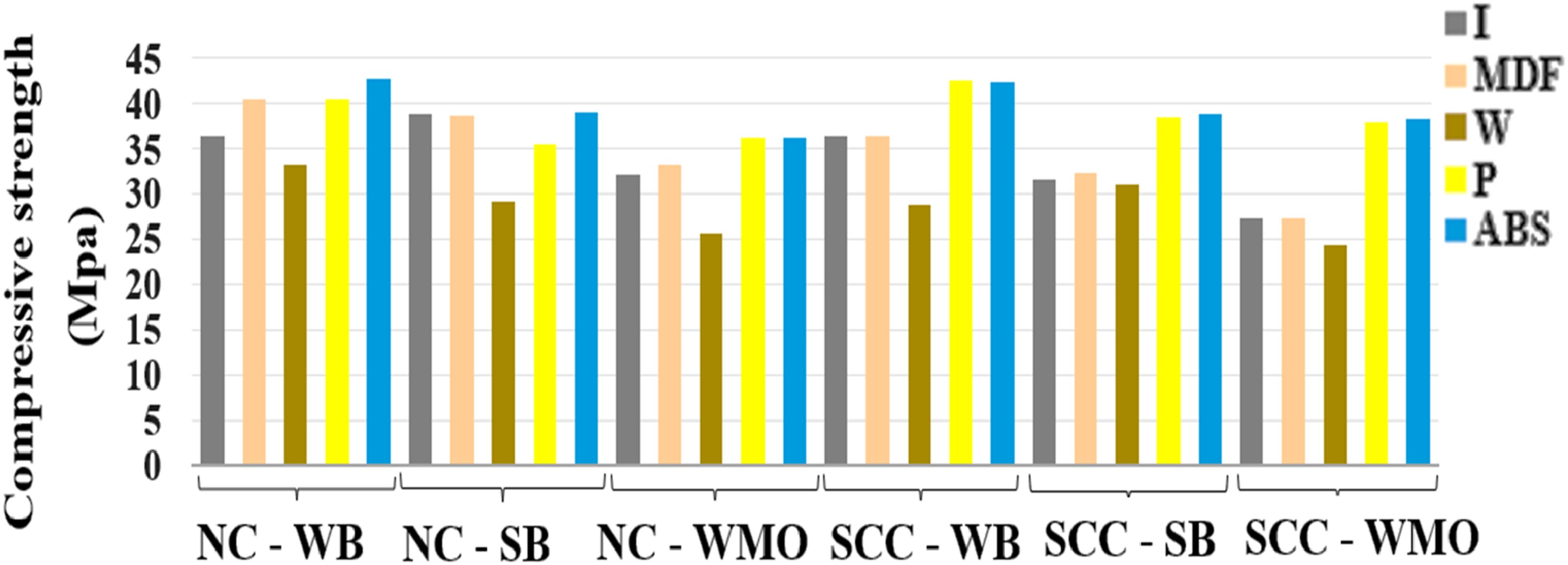
Water absorption percentage
The water absorption percentages of NC and SCC specimens are reported in Table 7 and Figure 3. The results demonstrate clear differences between mixtures, mold materials, and release agents. This reduction can be attributed to the improved particle packing and reduced bleeding typically associated with SCC mixtures, which contribute to a denser near-surface transition zone and lower capillary porosity. Across all samples, SCC absorption values ranged from 1.07% to 1.92%, while NC values were higher, ranging from 1.26% to 1.97%. On average, SCC absorbed ≈12–15% less water than NC under identical curing and mold conditions. The lowest absorption was recorded for ABS-SB-CW-28-F (SCC: 1.07%, NC: 1.40%), confirming the beneficial effect of polymer molds combined with oil-based release agents. The smooth, non-absorbent ABS mold surface limited moisture exchange during casting, thereby enhancing surface density. The highest absorption was observed in W-WMO-CW-28-F (SCC: 1.92%, NC: 1.78%) and MDF-WMO-CW-28-F (SCC: 1.89%, NC: 1.36%), highlighting the negative effect of wooden molds without release agents. The absorbent nature of wood likely increased water loss at the mold–concrete interface, producing higher porosity and weaker surfaces. Comparisons between SCC and NC under identical conditions (e.g., ABS-WB-CW-28-F) showed that SCC consistently performed better, with reductions in absorption of The results of the water absorption test of the samples.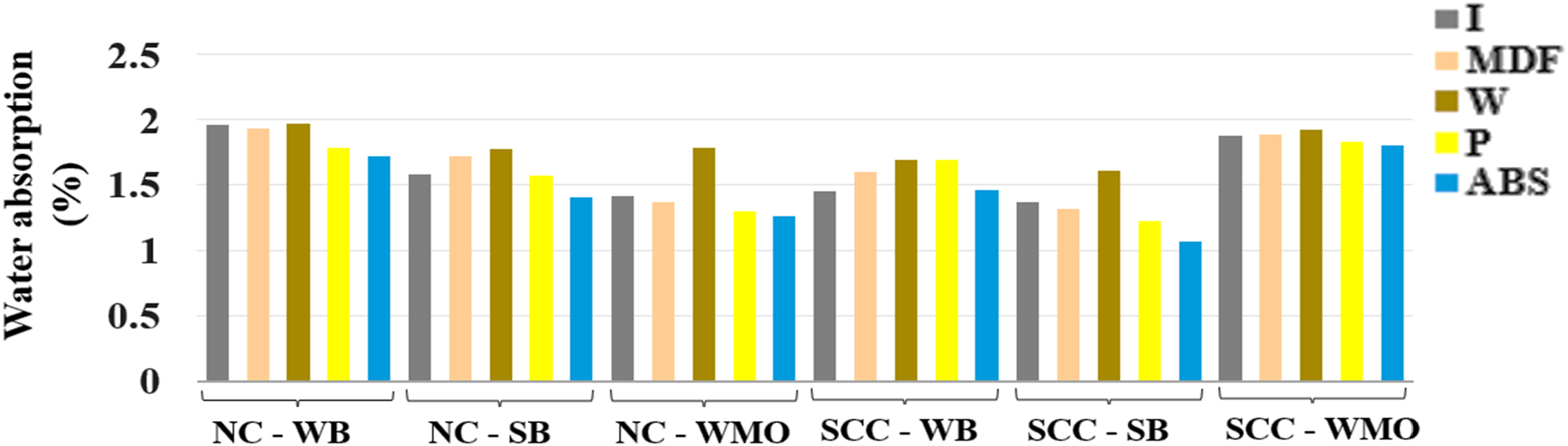
Abrasion resistance
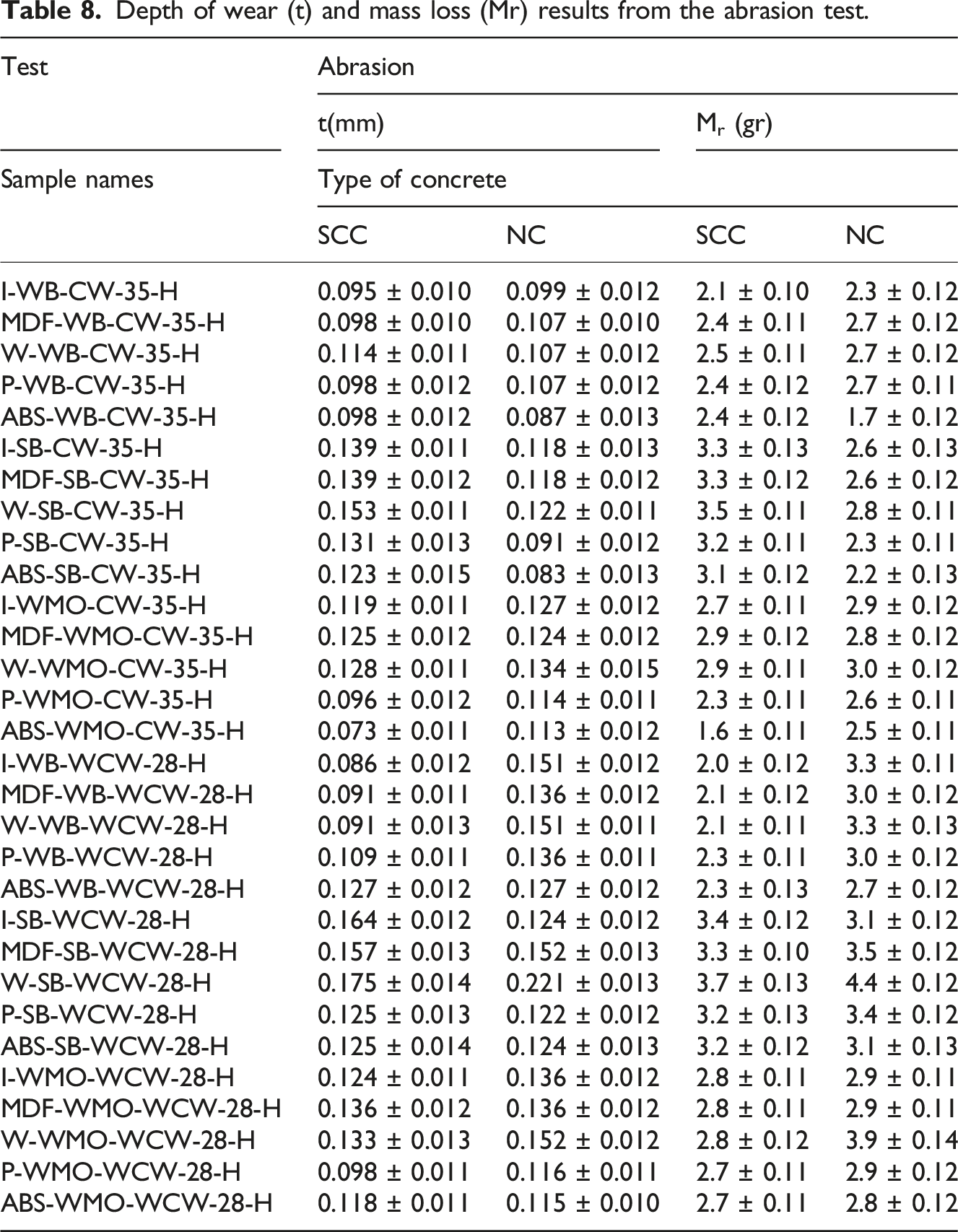
Depth of wear (t) and mass loss (Mr) results from the abrasion test.
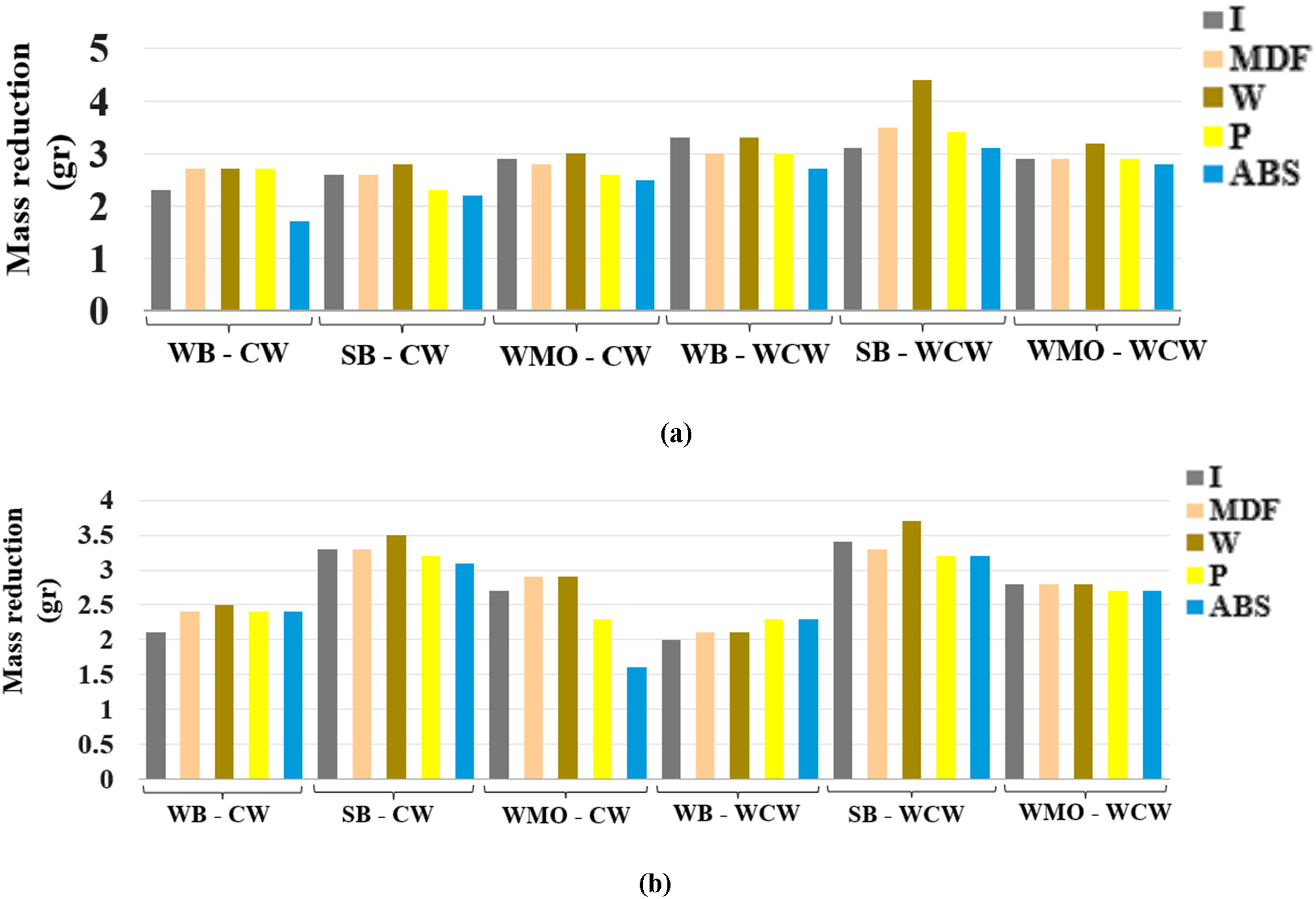
Mass reduction (Mr) of NC and SCC specimens under (a) CW-35 and (b) WCW-28 curing conditions. The y-axis represents mass loss in grams, and the x-axis denotes specimen identification based on mold type and release agent.
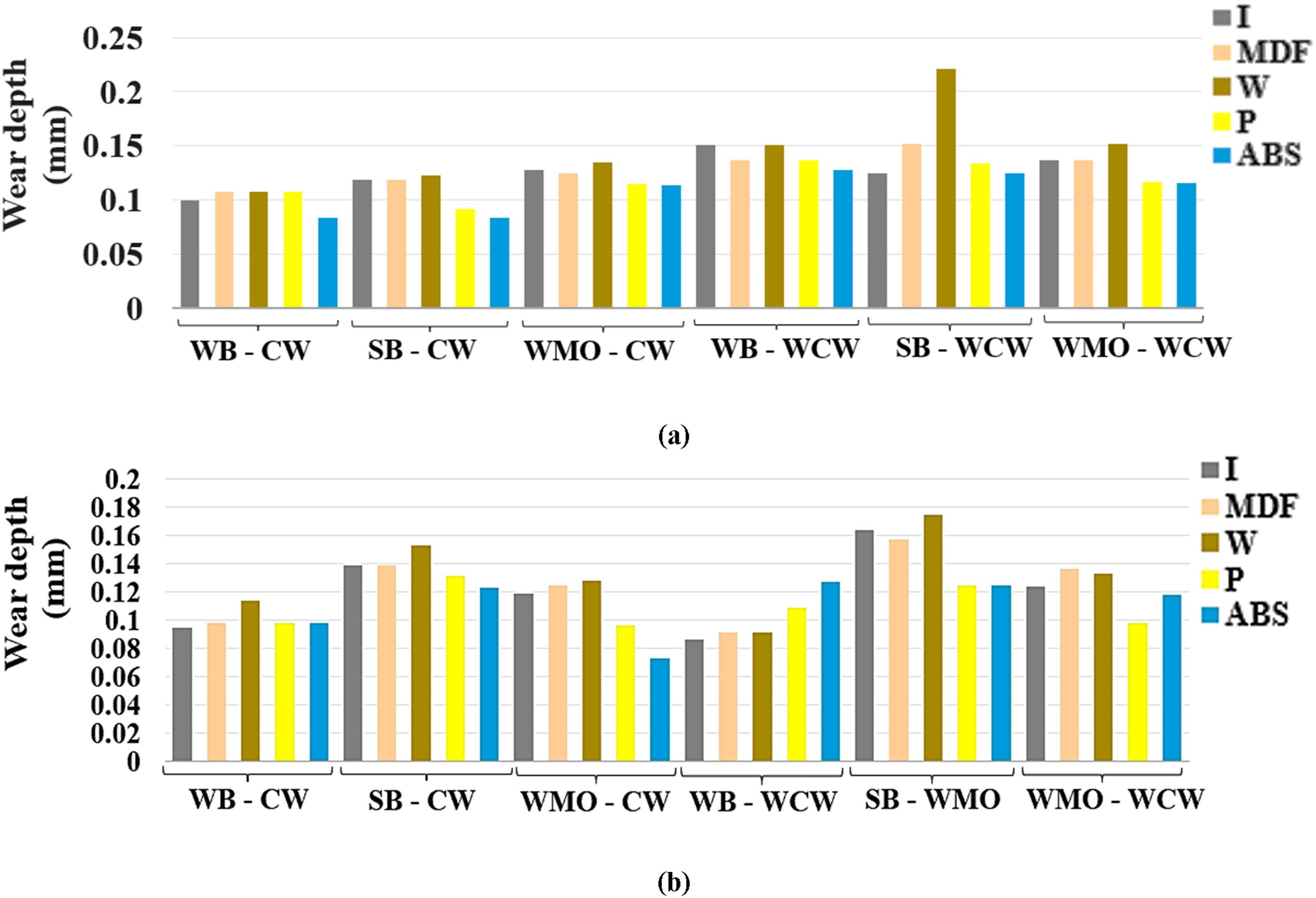
Depth of wear (t) of NC and SCC specimens under (a) CW-35 and (b) WCW-28 curing conditions. The y-axis shows the wear depth in millimeters, and the x-axis corresponds to specimen identification.
Mass reduction due to abrasion
According to Table 8 and Figure 4, mass loss values for SCC ranged between 1.6 and 3.0 g, while NC specimens ranged between 1.4 and 3.9 g. On average, SCC exhibited ≈15–20% lower mass loss compared to NC under identical conditions. This improvement can be attributed to the denser particle packing and reduced bleeding in SCC, which enhance the cohesion of the surface layer and reduce material detachment during abrasion. Under water curing (CW), the lowest mass loss was recorded for SCC-WMO-CW-ABS-35-H (1.6 g) and NC-WB-CW-ABS-35-H (1.7 g). Under without water curing (WCW), the best performance was found in SCC-WB-WCW-I-28-H (2.0 g), while NC samples in the same condition showed higher losses, with NC-WB-WCW-ABS-28-H (2.7 g). The highest mass loss was consistently observed in specimens cast in wooden molds without release agents. This confirms the detrimental effect of absorbent formwork on surface durability.
Depth of wear after abrasion cycles
The depth-of-wear results (Table 8, Figure 5) confirm the superior abrasion resistance of SCC. Wear depths ranged from 0.073 to 0.175 mm for SCC and 0.083–0.221 mm for NC. The best performance was achieved by SCC-WMO-CW-ABS-35-H (0.073 mm), which was ∼12% lower than the best NC specimen (NC-SB-CW-ABS-35-H, 0.083 mm). Among WCW specimens, SCC again performed better, with SCC-WB-WCW-I-28-H (0.086 mm) compared to NC-WMO-WCW-ABS-28-H (0.115 mm). The worst abrasion resistance was observed in NC specimens cast in wooden molds without release agents, where the wear depth exceeded 0.20 mm. Interpretation: These findings demonstrate that SCC consistently achieves lower wear depths and reduced mass loss. This behavior reflects its denser and more homogeneous microstructure. Furthermore, the use of polymer molds (ABS, PVC) and release agents (WB, SB) significantly enhanced abrasion resistance, whereas wooden molds without release agents resulted in poor surface performance. These observations are consistent with the porosity–durability relationship reported by Liu et al. 14 and Horszczaruk. 26
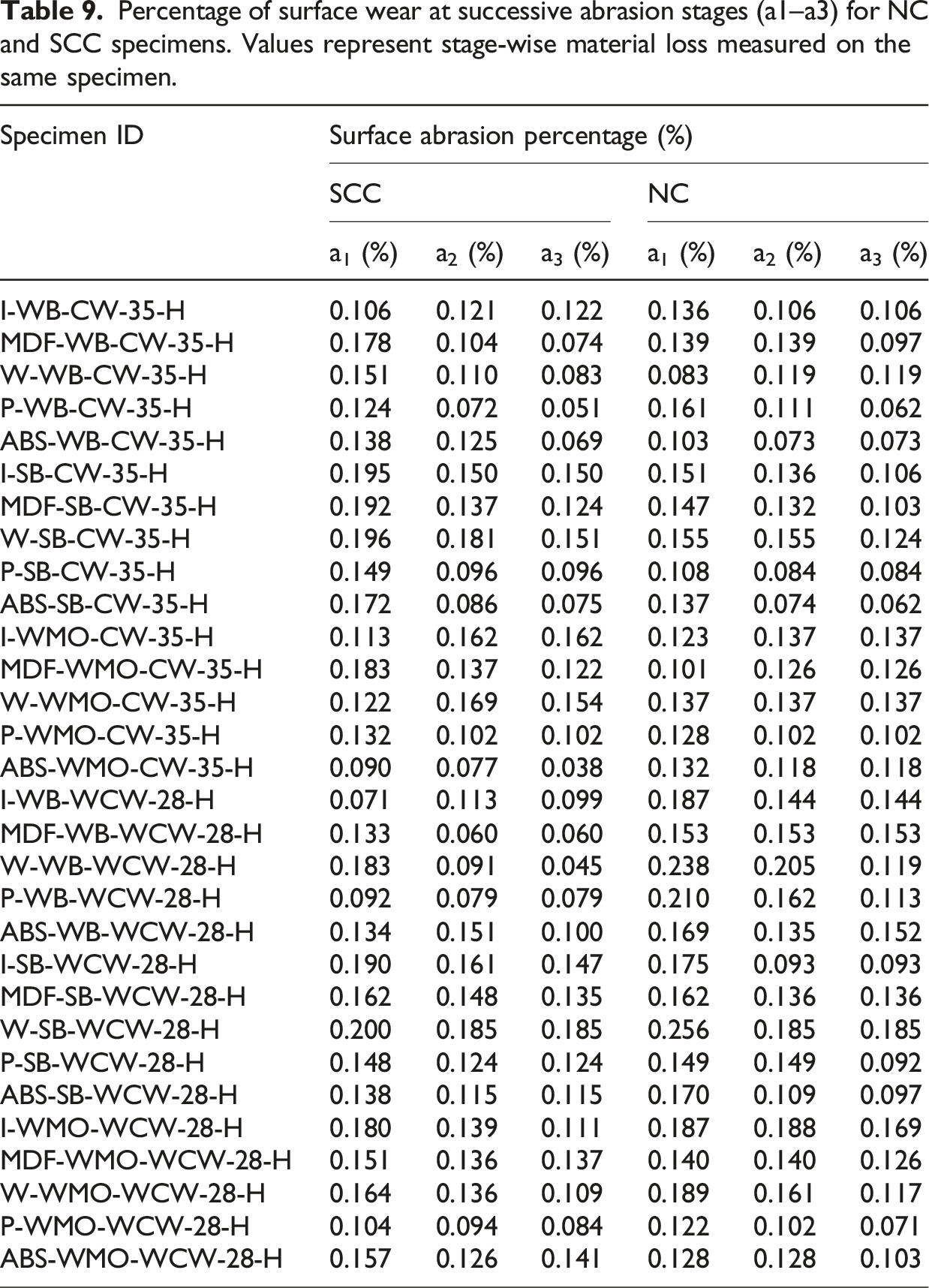
Percentage of abrasion
Percentage of surface wear at successive abrasion stages (a1–a3) for NC and SCC specimens. Values represent stage-wise material loss measured on the same specimen.
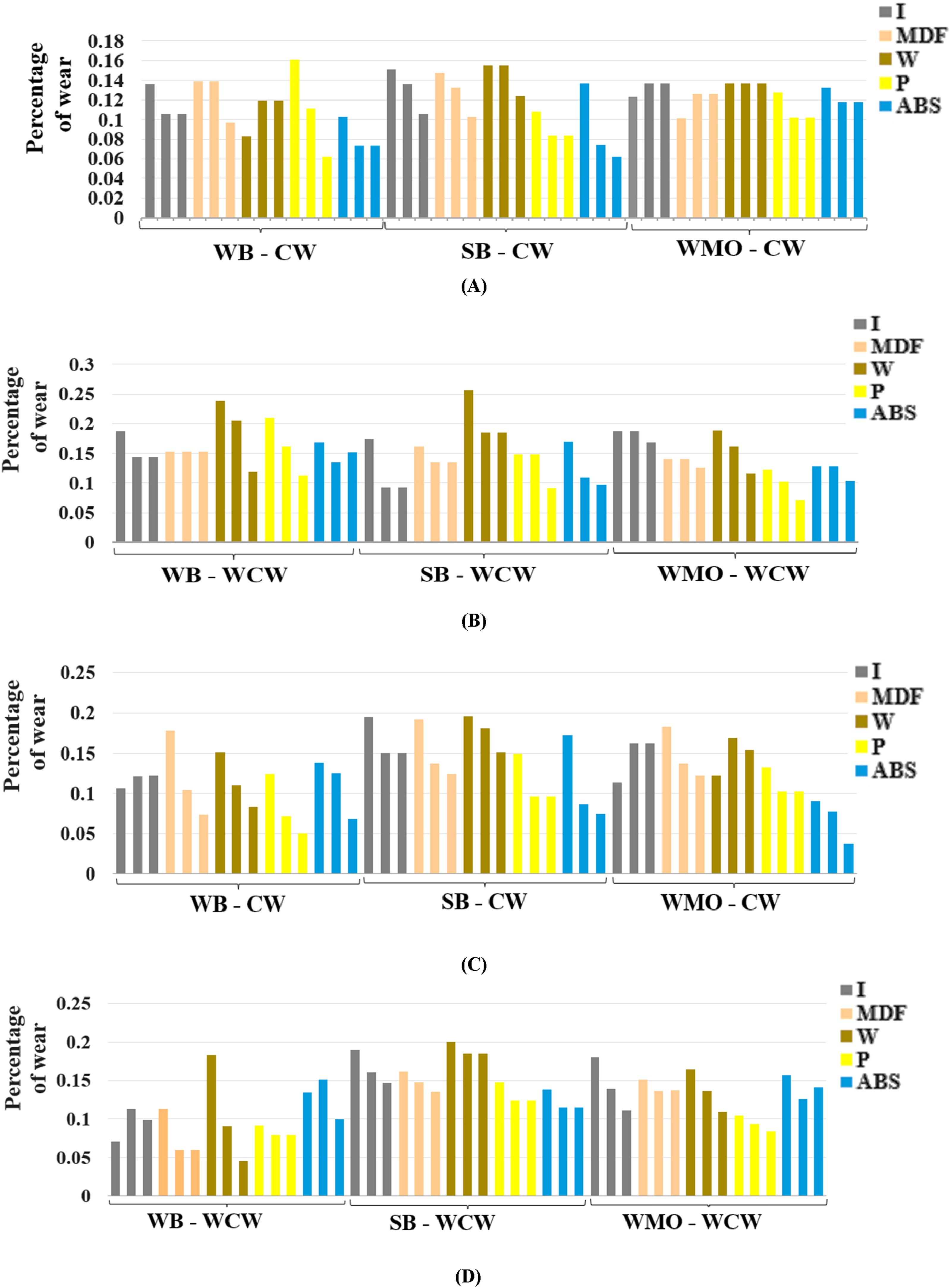
The results of the wear percentage of the samples at each stage of the wear test: (A) NC-CW-35-H, (B) NC-WCW-28-H, (C) SCC-CW-35-H, (D) SCC-WCW-28-H.
Qualitative assessment of sample surfaces
Representative images of NC and SCC specimens at 1 and 28 days, under both water-cured and non-water-cured conditions, are shown in Figure 7. The visual assessment revealed clear differences in surface luster, pore distribution, and color uniformity, influenced by curing regime and mold type. Curing regime: Water-cured specimens generally exhibited reduced surface luster and non-uniform coloration, which can be attributed to moisture retention on the surface. It also indicates that curing-related moisture migration affects surface reflectivity and pigment distribution in the early stages of hydration. By contrast, non-water-cured specimens displayed more uniform coloration, although their luster diminished with age and was nearly absent at 28 days. Mold influence: Wooden molds (W) left visible grain marks on the concrete surface, adversely affecting aesthetic quality. In contrast, polymer molds (ABS) provided smooth surfaces with minimal defects, consistent with earlier reports.12,14,20 The best-performing samples were NC-WMO-WCW-ABS-G among NC specimens and SCC-WMO-WCW-ABS-G among SCC specimens. These samples exhibited surface luster, absence of pores, and uniform color. The SCC sample in particular exhibited superior overall appearance compared to its NC counterpart. Age effect: Across all specimens, luster decreased significantly from 1 to 28 days, suggesting that early-age visual properties may not be reliable indicators of long-term surface aesthetics. Overall, the results highlight that both mixture type and formwork system strongly influence surface quality. SCC generally outperformed NC, providing smoother and more uniform surfaces. These findings align with previous studies emphasizing the role of mold–concrete interaction and release agent selection in governing architectural appearance.29,30 High-resolution representative surface images of NC and SCC specimens cast in different mold systems under water-cured (CW) and non-water-cured (WCW) conditions at 1 and 28 days. All images were captured under consistent lighting and camera settings to allow qualitative comparison of surface pores, color uniformity, and surface gloss.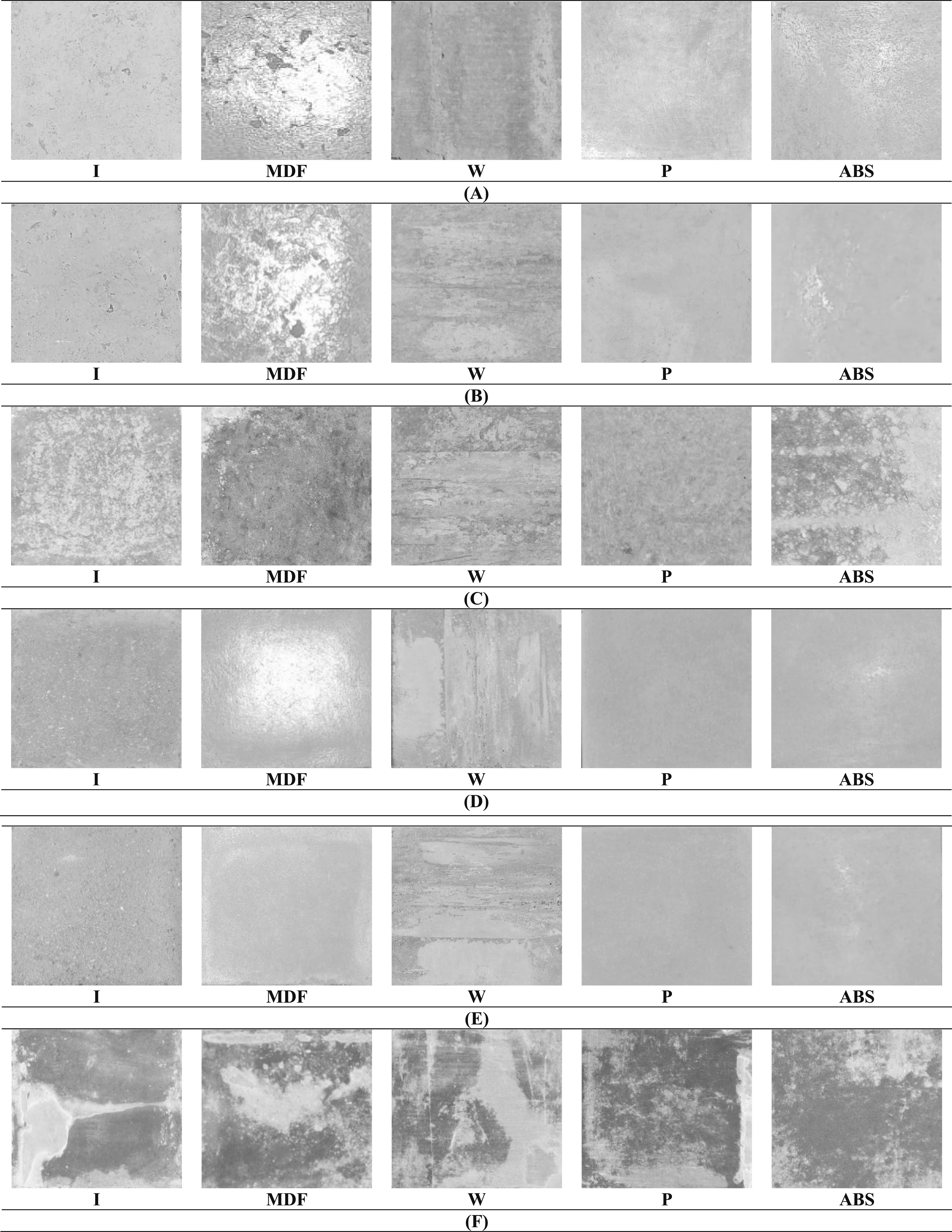
Water droplet contact-angle test
The water droplet test was conducted in three configurations: ABSS (small droplet), ABSC (large droplet), and ABSF (flowing droplet). Representative results are shown in Figure 8. The measurements showed that specimens with higher density exhibited larger initial contact angles (t = 0) and longer droplet absorption times. This reflects lower surface porosity. Ordinary concrete (NC): The specimen NC-WMO-CW-ABSS recorded an initial contact angle of 31° with a complete absorption time of 15 min. In contrast, NC-WMO-CW-ABSC exhibited a lower contact angle (23°) but required 60 min for absorption, suggesting that, although the immediate surface layer was more absorptive, the underlying matrix exhibited relatively higher density. Self-compacting concrete (SCC): The specimen SCC-WMO-CW-ABSS displayed a markedly higher initial contact angle of 53° and a complete absorption time of 60 min, demonstrating superior near-surface density. This behavior is consistent with the reduced bleeding and improved particle packing typically associated with SCC mixtures. Similarly, SCC-WMO-CW-ABSC showed a contact angle of 22° and absorption time of 60 min, confirming enhanced overall compactness. Comparison NC versus SCC: SCC specimens consistently outperformed NC, with higher contact angles and longer absorption times, particularly in water-cured ABS molds without release agents. These findings highlight the advantage of SCC in achieving both surface density and durability. Droplet flow (ABSF): In denser specimens, droplets spread uniformly without rapid penetration or irregular dispersion. This behavior further indicates reduced surface porosity and improved surface cohesion. A consistent trend was observed between the initial abrasion percentage (a1) reported in the Percentage of abrasion section and the droplet absorption behavior. Specimens with lower a1 values generally exhibited larger contact angles and slower absorption rates. This trend suggests that abrasion resistance and wettability are governed by a common parameter, namely, near-surface density and porosity, rather than representing a statistically calibrated correlation. Images of the results of water droplet tests on the surface of some samples: (A)NC-WMO-CW-ABSS-G-35, (B)NC-WMO-CW-ABSC-G-35, (C)SCC-WMO-CW-ABSS-G-35, (D)SCC-WMO-CW-ABSC-G-35, (E)NC-WMO-CW-ABSF-G-35, (F)SCC-WMO-CW-ABSF-G-35.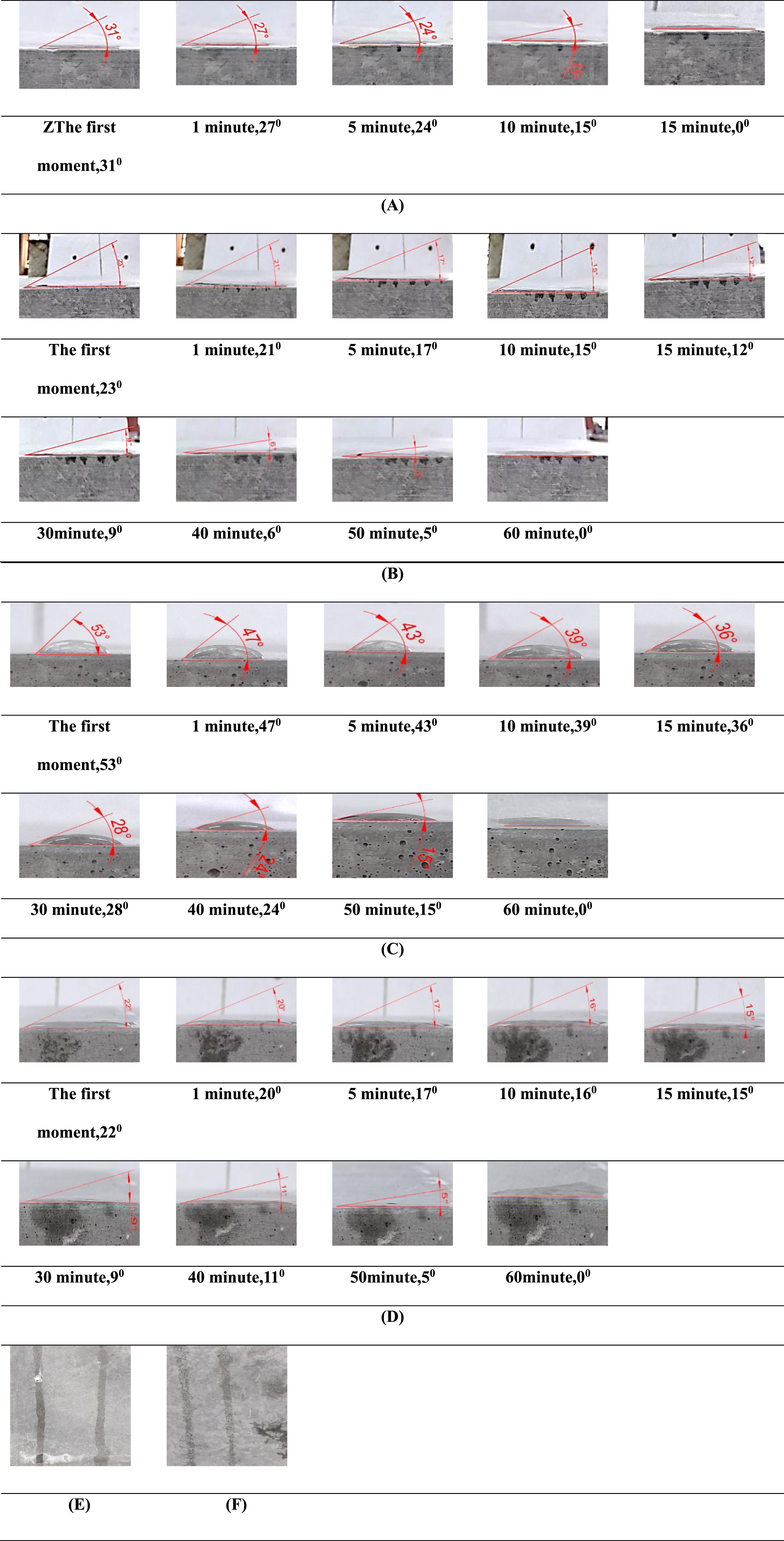
Overall discussion
Across the investigated test program, the tested SCC mixture generally exhibited improved performance trends compared to the tested NC mixture, particularly with respect to durability-related and surface-sensitive indicators such as water absorption, abrasion resistance, and droplet behavior. However, differences in compressive strength were configuration-dependent rather than uniform across all formwork and release-agent combinations. Several NC specimens, especially those cast in smooth, non-absorbent polymer molds with appropriate release agents (e.g., NC-WB-ABS-28-F), achieved compressive strength values comparable to or exceeding those of the tested SCC mixture. These outcomes do not contradict the general advantages of SCC. Rather, they reflect the combined effects of mixture composition, specimen scale, and mold–concrete interaction. In small cube specimens with a high surface-area-to-volume ratio, surface-related effects are amplified. Under certain polymer mold and release-agent configurations, the high flowability of SCC may promote locally paste-rich near-surface layers. This may slightly moderate the apparent compressive strength measured on small specimens. In contrast, vibrated NC can achieve more effective particle packing adjacent to the mold wall under these conditions, resulting in a denser near-surface zone and higher measured compressive strength. Within the scope of the tested mixtures and curing regimes, polymer molds (ABS and PVC), particularly when combined with water- or solvent-based release agents, generally provided more favorable performance trends across mechanical, durability-related, and surface-quality indicators. Beyond surface smoothness and non-absorbency, polymer molds and compatible release agents may influence hydration conditions at the mold–concrete interface. This may improve the quality of the near-surface interfacial transition zone (ITZ). Conversely, wooden molds—especially when used without release agents—were associated with increased surface porosity, higher abrasion loss, and less uniform surface appearance due to moisture extraction and surface heterogeneity. Iron molds exhibited intermediate behavior between polymer and wooden molds. Water curing generally enhanced compressive strength indicators and abrasion resistance but was sometimes associated with reduced surface luster and color uniformity, indicating a trade-off between durability-related performance and surface aesthetics. From a practical perspective, this trade-off suggests that polymer molds combined with compatible release agents and adequate curing are preferable when durability and permeability resistance are prioritized, whereas architectural or exposed concrete applications require careful balancing of curing practice, mold selection, and release-agent compatibility to achieve visually uniform surfaces. From an engineering practice perspective, balancing durability and surface aesthetics requires project-specific prioritization rather than a single universal solution. For infrastructure elements primarily governed by durability demands (e.g., bridge piers, barriers, and exposed structural components), the results suggest prioritizing polymer molds combined with compatible release agents and continuous curing to minimize near-surface porosity, abrasion loss, and water ingress, even if minor reductions in surface luster occur. Conversely, for architectural or visually exposed concrete surfaces where uniform appearance and surface finish are critical, controlled demolding, compatible release agents, and post-curing surface protection measures (e.g., hydrophobic treatments) may be employed to preserve visual quality while maintaining acceptable durability performance. In applications where both durability and aesthetics are critical, an integrated strategy is recommended. This strategy should combine polymer formwork, optimized release-agent selection, and tailored curing and surface-treatment practices to achieve balanced performance.
Limitations and future work
The results of the present study should be interpreted within the scope of the experimental program. All tests were conducted on laboratory-scale specimens under controlled conditions; therefore, surface-related effects may be more pronounced than in full-scale structural elements. Accordingly, the findings should be regarded as comparative indicators of near-surface performance. They should not be interpreted as direct predictors of in-situ structural behavior. The normal concrete (NC) and self-compacting concrete (SCC) mixtures investigated differed in mixture composition and workability concept. As a result, comparisons between NC and SCC reflect the performance of the tested mixture systems rather than an isolated effect of concrete type. In addition, compressive strength was measured on small cube specimens, for which mold–concrete interaction and surface effects may have a greater influence than in real structural members. Durability-related assessment focused on surface-sensitive indicators, including water absorption, abrasion resistance, and water droplet behavior, which primarily reflect near-surface density and permeability. Standardized durability tests addressing key long-term mechanisms for bridge concrete were not directly evaluated. These include chloride ion penetration, freeze–thaw resistance, and long-term performance beyond 28 days. Moreover, interpretations related to porosity, near-surface density, and interfacial transition zone (ITZ) quality are inferred from macroscopic indicators, as no microstructural analyses were performed. Future research should incorporate larger-scale specimens, controlled mixture designs, extended exposure durations, standardized durability tests, and microstructural characterization. These efforts will help validate and generalize the observed trends.
Conclusions
This study experimentally investigated the combined influence of concrete type, formwork material, release agent, and curing regime on the mechanical performance, durability-related indicators, and surface quality of concrete. Based on the results obtained under the investigated laboratory conditions, the following conclusions can be drawn.
It should be emphasized that all conclusions presented in this study are derived from macroscopic mechanical, durability-related, and surface-performance tests conducted under laboratory conditions. Accordingly, discussions related to porosity, near-surface density, and interfacial transition zone (ITZ) quality are intended as indirect interpretations inferred from these macroscopic indicators rather than direct microstructural characterization. (1) The near-surface performance of concrete is governed not only by mixture composition but also by construction-related parameters, including mold material, release agent, and curing practice. These factors significantly influence surface density, permeability-related indicators, and aesthetic quality. (2) Under comparable formwork and curing conditions, the tested self-compacting concrete (SCC) mixture generally exhibited more favorable trends in rebound index, water absorption, abrasion resistance, and water droplet contact-angle behavior compared to the tested normal concrete (NC) mixture. However, selected NC specimens achieved compressive strength indicators comparable to or exceeding those of SCC, demonstrating that appropriate mold selection and surface conditions can partially offset mixture-related differences. (3) Polymer molds (ABS and PVC), particularly when combined with compatible water- or solvent-based release agents, were associated with denser near-surface zones, reduced abrasion, lower water absorption, and improved surface appearance. In contrast, wooden molds—particularly without release agents—produced higher surface porosity, lower abrasion resistance, and less uniform visual quality. (4) Water curing generally enhanced compressive strength indicators and abrasion resistance compared to specimens exposed to laboratory ambient conditions. However, water-cured specimens often exhibited reduced surface luster and color uniformity, indicating a potential trade-off between durability-related performance and architectural surface aesthetics. (5) Surface-sensitive tests, including abrasion percentage and water droplet contact-angle measurements, showed consistent trends and provided complementary comparative indicators of near-surface density and permeability. These methods are effective for evaluating relative surface performance but should not be interpreted as substitutes for standardized bulk transport or durability tests.
Overall, the findings highlight that achieving high-performance architectural and exposed concrete requires an integrated approach that considers mixture design alongside formwork system selection, release agent compatibility, and curing strategy. Future studies should extend this work to larger-scale specimens, controlled mixture designs, and long-term environmental exposures to validate and generalize the observed surface-performance relationships.
Footnotes

Funding
The authors received no financial support for the research, authorship, and/or publication of this article.
Declaration of conflicting interests
The authors declared no potential conflicts of interest with respect to the research, authorship, and/or publication of this article.