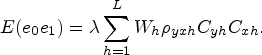
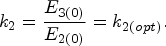
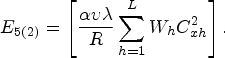
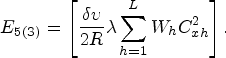
This paper addresses the problem of estimating the population mean using auxiliary information under post stratified sampling. We have suggested a generalized class of estimators for population mean in post stratified sampling. Expressions of bias and mean squared error of suggested class of estimators up to the first order of approximation have been obtained. We have obtained the optimum values of scalars under which the class of estimators attained its minimum mean squared error. Efficiency conditions are obtained under which the suggested class of estimators is better than the usual unbiased estimator, combined ratio estimator and difference estimator. We have also studied the properties of some members of the proposed class of estimators. We have further compared the minimum mean squared error of the suggested class of estimators with that of the members. An empirical study is carried out through a natural population data. Empirical study gives insight on the magnitude of the efficiency of the members of the developed class of estimators.
It is known fact that in case of heterogeneous population stratified sampling technique is used for selecting a good representative sample of the population. In stratified random sampling the entire heterogeneous population is divided into homogeneous groups, usually termed as strata. Then the units are sampled at random from each stratum. Here the size of the sample is predefined. Use of stratified random sampling requires the size of the strata as well as sampling frame for each stratum. When stratified sampling could not apply for the estimation purpose because of unknown frames of each stratum then the use of post stratification is well recognized. In stratified setup, strata sizes are manageable but list of stratum units are often hard to get. Moreover stratum frames may incomplete or overlapping or several population units may fall under multiple strata while classification. Under these circumstances post stratification is a useful sampling design. The post stratification is as precise as the stratified sampling with proportional allocation subject to the condition of a large sample. Jagers et al. (1985) advocated that the post stratification with respect to relevant criteria may improve estimation strategy subsequently over the sample mean or ratio estimator.
Notations and Definitions
Let us consider a finite population of N units, which can be uniquely partitioned into L strata of size such that . Let be the (study, auxiliary) variables respectively. The strata weights , (h = 1, 2,…, L) are assumed known. Let , denote the values of variables respectively, for unit in stratum and , denote strata means. A simple random sample of size n is drawn without replacement from the population which results into the configuration denoting the number of units in the sample falling in stratum h, . Assume that n is large enough so that the probability of nh being zero is small [i.e., =0]. Now let us define
, , , ; , , is a weighted mean of strata regression coefficient of y on x; with and , where , For given configuration of sample we have
Using the results from Stephan (1945) for ; we get the following results to the first degree of approximation (fda):
where and (sampling fraction).
For detailed study on conditional and unconditional post-stratification, the reader is referred to Holt and Smith (1979) and Espejo and Pineda (1997).
Review of Some Existing Estimators of Population Mean Using Auxiliary Information in Post Stratified Random Sampling
Combined Ratio and Product Estimators in Post Stratified Random Sampling
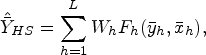
The usual unbiased estimator can be improved through the knowledge of population mean of the auxiliary variable x. This led Ige and Tripathi (1989) to suggest combined ratio and product estimators based on post stratification and using auxiliary variable x for population mean of y, respectively, as
It can be easily shown that and are more efficient than if and respectively, hold good.
Separate Ratio and Product Estimators in Post Stratified Random Sampling
If , the hth stratum mean of the auxiliary variable x in the population is known, then the separate ratio and product estimators (based on post stratification and using auxiliary variable x) for of y, are respectively, defined by
It can be easily seen that the separate ratio estimator and the separate product estimator are more efficient than if the conditions and
hold good respectively, where and
Combined Ratio-type and Product-Type Exponential Estimators in Post Stratified Sampling
It can be proved that the combined ratio-type exponential estimator and combined product-type exponential estimator are more efficient than if the conditions and are respectively satisfied.
Separate Ratio-Type and Product-Type Exponential Estimators in Post Stratified Sampling
Chouhan (2012) suggested the following ratio-type and product-type exponential estimators for of y respectively as
It can be observed that the separate ratio-type exponential and product-type exponential estimators are better than as long as the conditions and are satisfied, respectively.
Combined Dual to Ratio and Product Estimators in Post Stratified Sampling
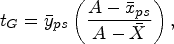
Motivated by Srivenkataramana (1980) and Bandyopadhyaya (1980), one can define the combined dual to ratio and product estimators in post stratified sampling for of y respectively as
It can be looked upon that the estimators and are more efficient than if the conditions and are respectively hold true.
Further it is easy to see that and are better than and respectively if the conditions and hold good.
Finally, it can be observed that is more efficient than and if
Further it can be seen that is more efficient than the unbiased estimator and if
Dual to Separate Ratio and Product Estimators in Post Stratified Sampling
Following the same procedure as adopted by Srivenkataramana (1980) and Bandyopadhyaya (1980), one can define the dual to separate ratio and product estimators in post stratified sampling for of y respectively as
where with
It is easy to see that under proportional allocation is more efficient than and if .
It can be further proved that under proportional allocation is more efficient than and if
Dual to Combined Ratio-Type and Product-Type Exponential Estimators of the Population Mean in Post Stratified Sampling
Following the same procedure as adopted by Srivenkataramana (1980) and Bandyopadhyaya (1980), one can define a dual to combined ratio-type exponential and product-type exponential estimators for of y, respectively as
The estimator is more efficient than and if the condition hold true.
Further it can be shown that the is more efficient than and if the conditions hold good.
Dual to Separate Ratio-Type and Product-Type Exponential Estimators for Population Mean in Post Stratified Sampling
In a similar fashion one can also define the dual to separate product-type exponential estimator for of y as
It can be easily looked upon that is more efficient than and as long as the condition is satisfied.
The estimator is more efficient than and if the conditions and are respectively hold good. Thus the condition is sufficient for the estimator to be more efficient than the estimators and as is tipically true in sample survey situations.
The estimator is better than if while it is more efficient than if
Further, the estimator is more efficient than if while it is better than if .
Lone and Tailor (2014) have also obtained the conditions under which is more efficient than , , and .
A Family of Combined Estimators in Post Stratified Sampling
where are either constants or functions of known population parameters of the auxiliary variable x, such as standard deviation , coefficient of variation , skewness , kurtosis and correlation coefficient etc., and are constants.
The family of estimators is capable of generating a large number of combined estimators of of y by making appropriate choices of the values and b.
Onyeka (2012) obtained MSE of the family of estimators to the fda as
where .
The MSEs of the estimators , , , , , , , , , , , , , , , can be easily obtained just by putting the suitable values of the scalars .
Onyeka (2012) obtained the optimum value of and the resulting minimum MSE of as
where and .
Onyeka (2012) has shown that the family of estimators is more efficient than and at the optimum condition. He has also remarked that none of the special cases of the family of estimators is more efficient than the optimum estimator.
Separate Ratio-Type Estimators in Post Stratified Sampling When the Coefficient of Variation and Kurtosis of the Stratum in the Population are known
Bacanli and Aksu (2012) obtained the MSEs of the above estimators and computed the efficiency of each estimator in post stratification with respect to the corresponding estimator in stratified random sampling using the data from 2000 population and housing census of Turkey which was carried out by the Turkish Statistical Institute. They have shown that the estimators in post stratified sampling yield the highest efficiency i.e., the estimators in post stratified sampling have smaller MSEs than the separate ratio estimator in stratified random sampling.
Dual to Ratio Estimators of Population Mean in Post Stratified Sampling Using Known Value of Some Population Parameters
where is a transformed sample mean of the auxiliary variable x, based on the transformed variable and satisfying the relationship and are same as defined earlier for .
The MSE of the proposed estimator to the fda is given by
where and .
Onyeka (2013) obtained the optimum value of and thus the resulting minimum MSE of is given by
where and are same as defined earlier.
It is observed that the minimum MSE of , is same as the approximate variance of the usual post stratified regression estimator , indicating that the efficiency of the proposed class of estimators, , just like the class of estimators , proposed by Onyeka (2012), may not be improved beyond the efficiency of the customary regression-type estimator in post stratified sampling.
Onyeka (2013) have also obtained the conditions under which the estimators dominates the estimators , , and .
Improved Separate Ratio and Product-Type Exponential Estimators in Case of Post Stratification
Motivated by Upadhyaya et al. (2011), Lone and Tailor (2015) proposed a separate ratio-type exponential and separate product-type exponential estimators for of y in the case of post stratification as
for the optimum values of and respectively, where , , , and are same as defined earlier.
Lone and Tailor (2015) have shown that the estimators and , say, based on ‘estimated optimum’ values have the same MSEs to the fda as of the minimum MSEs of the estimators and respectively.
They have also obtained the conditions under which the suggested estimators and is more efficient than , and .
Classes of Combined and Separate Estimators of Population Mean in Post Stratified Sampling
where is a function of such that and satisfies the certain regularity conditions as given in Srivastava (1971).
The minimum MSE of for the optimum value is given by
where is the first order partial derivative of the function with respect to about the point .
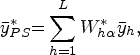
Singh and Vishwakarma (2010) have shown that the separate class of estimators is superior to . They have further demonstrated that unless the regression coefficient is the same from stratum to stratum, is better than at optimum condition.
Vishwakarma (2017) suggested an alternative to conventional ratio estimator for as
where A being a constant.
The estimator is a member of due to Singh and Vishwakarma (2010). The properties of the estimator can be studied easily from .
Classes of Separate Estimators of Population Mean in Post Stratified Sampling
We note that for and the estimator reduces to the estimators , and Agarwal and Panda (1993) estimator respectively.
Vishwakarma and Singh (2017) have obtained the bias and MSE of the class of estimators . Assuming ‘a’ is a scalar such that , the minimum MSE of is obtained for optimum value of ‘ ’. They have obtained the conditions under which the estimator (at optimum condition) is better than the sample mean , (unbiased estimator in post stratified sampling) and the estimator with due to Agarwal and Panda (1993).
Ratio-Cum-Product-Type Estimators for Population Mean in Post Stratified Sampling
Ratio-Cum-Product-Type Estimators of Finite Population Mean in Post Stratified Sampling
Consider a finite population U of size N which is divided into L strata of size , ,…, such that . Let (y,x) be the (study, auxiliary) variables respectively correlated positively with y and z be the another auxiliary variable, negatively correlated with y. Let be the observation on ith unit in hth stratum for y and and be the observations on ith unit of the hth stratum for auxiliary variables x and z respectively, then and are the hth stratum mean and population mean of the variables (x,y,z) respectively.
Tailor and Mehta (2019) obtained the bias and MSE of to the fda and derived the conditions under which the estimator is more efficient than , and due to Tailor et al. (2017).
A Two Parameter Ratio-Product-Ratio Estimator in Post Stratified Sampling
For estimating of y in case of post stratification, following the procedure adopted by Chami et al. (2012), Singh and Nigam (2022) proposed a two parameter ratio-product-ratio estimator:
where are real constants. For , ((1,0) and (0,1) and (0,0) and (1,1)), the proposed estimator respectively reduces to , and .
Singh and Nigam (2022) obtained the conditions under which the estimator has smaller MSE than that of , , and some other existing estimators.
Further they have compared the estimator with different estimators such as , , separate product estimator and with other estimators. The conditions are obtained under which is more efficient than the estimators , , and other estimators.
A Ratio-Type Exponential Estimator for Population Mean Under Post Stratification
To the first degree of approximation, the correct MSE expression of is given by
The optimum value of k that minimizes the MSE of :
where are same as defined earlier.
Thus the correct minimum MSE of is given by
where is same as defined earlier.
It can be easily shown that the estimator is better than , and .
Ratio and Ratio Estimators for Population Mean in Demonstration of Post-Stratification
Let (x,z) be the auxiliary variates positively correlated with the study variable y. Assuming that the population means of (x,z) of stratum, h = 1,2,…,L; are known; Mehta and Tailor (2024) proposed the ratio and ratio estimator for of y under post stratified sampling as
The properties of the estimator are studied by them up to the fda. Conditions are obtained under which the suggested estimator is better than and the combined ratio estimator . They have shown empirically that the estimator is more efficient than and with considerable gain efficiency.
Estimation of Population Ratio Using Auxiliary Information
Estimation of Population Ratio in Post Stratified Sampling Using variable Transformation
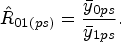
Onyeka et al. (2015a) proposed six combined-type estimators of the population ratio in post stratified sampling as
where with and b is a suitable chosen constant.
Onyeka et al. (2015a) have obtained the efficiency conditions under conditional and unconditional arguments.
Onyeka et al. (2015a) has conducted the empirical study to examine the merits of their suggested estimators. He has shown that empirical results confirm the theoretical results in the context of estimators envisaged by him.
Separate-Type Estimators for Estimating Population Ratio in Post Stratified Sampling Using Variable Transformation
Onyeka et al. (2015b) proposed six separate-type estimators of the population ratio in post stratified sampling as
where with .
Onyeka et al. (2015b) have also derived the efficiency conditions under conditional and unconditional arguments.
Onyeka et al. (2015b) has conducted an empirical study to examine the merits of their suggested estimators.
Estimation of Ratio of Two Population Means Using Auxiliary Information in Case of Post Stratification
Let and be the study and auxiliary variables respectively. Let and be the population means of the study variables and the auxiliary variables respectively. It is desired to estimate the ratio of two population means using information on two auxiliary variables . Let and be the unbiased estimators of and respectively based on post stratified sampling. It is assumed that the population means of the auxiliary variables are known in advance.
The conventional estimator of the population ratio in post stratified sampling is given by
Tailor and Mehta (2018) have derived the conditions under which the estimators and dominate over the conventional estimator .
Proposed Generalized Class of Estimators for Population Mean in Post Stratified Sampling
We suggest the following class of estimators
where are either real numbers or function of known parameters of the auxiliary variable x such as (coefficient of skewness), (coefficient of kurtosis), (standard deviation of x), correlation coefficient and . Scalars take values (−1, 0, 1), d is suitably chosen scalar and are suitably chosen constants such that the sum of the constants need not be unity i.e., . A large number of estimators for can be generated for different values of .
In order to derive the bias of T up to fda, we set
Thus, we have and , and the relative estimators are given by
Thus the proposed class of estimators is better than , and as long as the conditions given in (29), (30) and (31) respectively hold good.
Further from (7), (16), (21) and (26) we have that
if
where
if
where
if
where
Thus the suggested class of estimators is superior to the estimators , and as long as the conditions (32), (33) and (34) are satisfied respectively.
One may also define the following separate class of exponential-type estimators for population mean based on post stratified sampling as
where are either real numbers or function of known parameters of the auxiliary variable x of the stratum such as , , and . Scalars take values (−1, 0, 1), being suitably chosen scalar and are suitably chosen constants such that the sum of need not be unity i.e., . A large number of estimators for can be generated for different values from the suggested class of estimators for various suitable values of .
Numerical Illustration
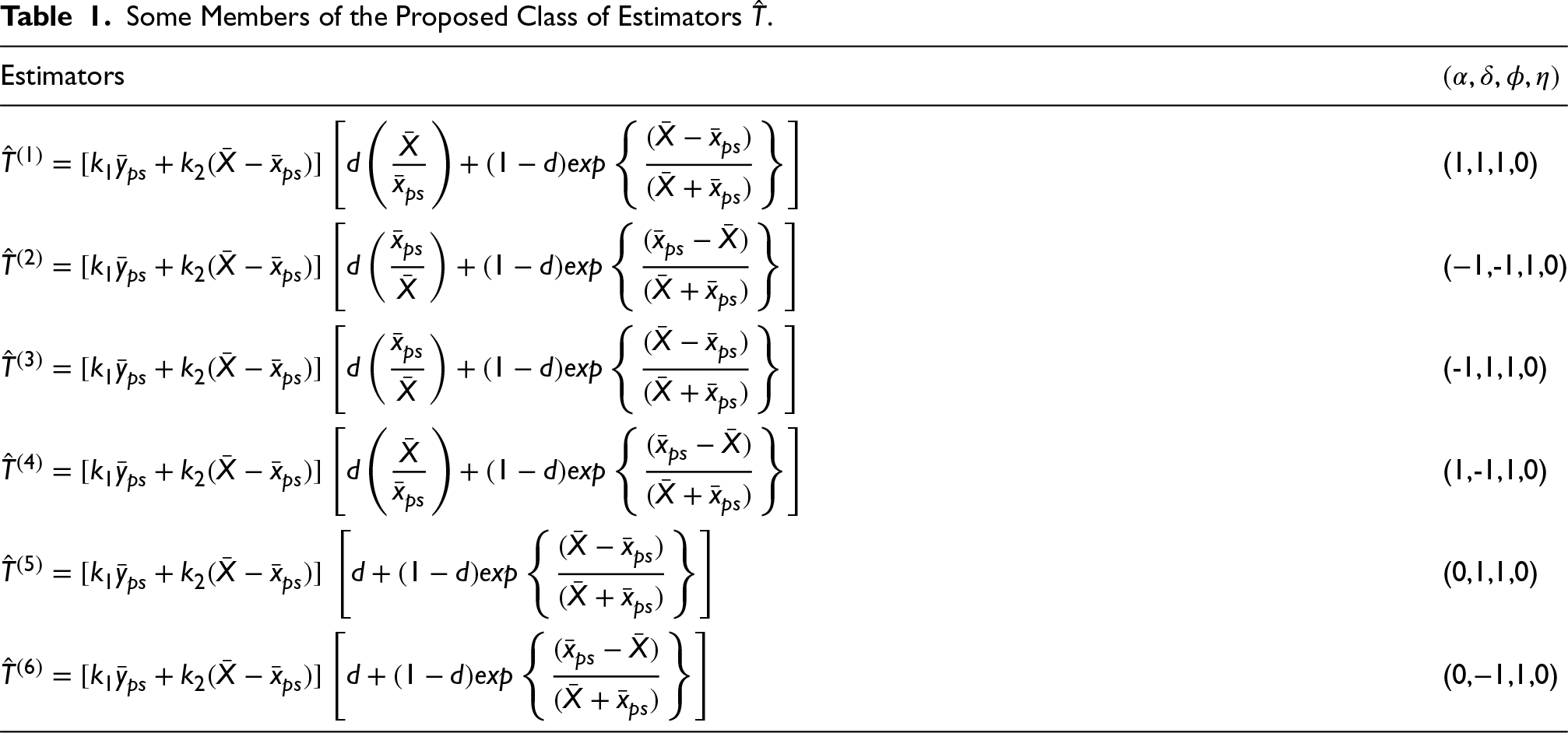
From the suggested class of estimators we can generate several numbers of estimators for different combinations of constants . Some members of the suggested class of estimators are given in Table 1 below.
Some Members of the Proposed Class of Estimators .
Estimators
(1,1,1,0)
(−1,-1,1,0)
(-1,1,1,0)
(1,-1,1,0)
(0,1,1,0)
(0,−1,1,0)
For numerical illustration we consider a data set previously discussed by Onyeka (2012) such as
Table 2 shows the percent relative efficiencies (PREs) of the estimators , , , , and relative to . It is observed from Table 2 that the estimator is better than and with considerable gain in efficiency, while it is better than , , and with very marginal gain in efficiency.
PREs of Different Estimators , , , , , with Respect to .
Estimators
100.0
216.9
302.9
303.1
303.0
303.1
303.1
303.2
Table 3 presents the PREs of different members of the suggested class of estimators with respect to as given in Table 1. It is observed from Table 3 that
The estimator has higher PRE than , , , , and for some selected values of d in the range [−13,13].
PRE of Different Members of the Proposed Class of Estimators with Respect to .
*
−13
−11
−9
−7
−5
5
7
9
11
13
PRE
633.6
408.5
340.5
314.5
305.2
304.28
311.1
331.7
358.2
546.7
*
−14
−12
−10
−8
−6
4
5
8
10
12
PRE
648.6
412.5
342.2
315.3
305.6
304.5
307.1
333.0
387.9
554.0
*
−4
−3
−2
2
3
PRE
407.6
324.1
305.1
305.1
324.1
*
−4
−3
−2
−1
3
4
5
PRE
768.1
382.8
318.2
304.1
314.0
364.9
629.4
*
−13
−11
−9
−7
−5
5
7
9
11
12
13
PRE
637.8
409.3
340.7
314.6
305.3
304.9
311.2
331.6
384.8
440.4
544.1
*
−12
−10
−8
−6
−4
6
8
10
12
14
PRE
639.9
410.1
341.1
314.8
305.4
304.4
311.4
332.1
385.1
548.2
*Stands for the proposed estimators are better than the estimators , , , , and
The highest PRE (633.6%) is observed at d = −13 followed by PRE (546.7%) at d = 13.
The estimator is more efficient than , , , , and for some selected values of d in the range [−14,12].
The largest PRE (648.6%) is observed at d = −14 followed by PRE (554.0%) at d = 12.
The estimator is more adequate than , , , , and for some appropriately chosen values of d in the range [−4,4].
The largest PRE (407.6%) is observed at followed by PRE (324.1%) at .
The estimator is better than , , , , and in the range [−4,5] for selected values of d.
The maximum PRE (768.1%) is observed at d = −4 followed by PRE (629.4%) at d = 5.
The estimator is better than , , , , and for selected values of d in the range [−13,13].
The largest PRE (637.8%) is looked upon at d = −13 followed by PRE (544.1%) at d = 13.
The estimator is better than the estimator , , , , and for suitable values of d lies in the range of [−12,14].
The highest PRE (639.9%) is seen at d = −12 followed by PRE (548.2%) at d = 14.
It is further observed that the estimator has largest PRE (768.1%) at d = −4 among the estimators , , , , , , , and .
From the above discussion finally we conclude that there is enough scope of selecting the constant
d in each member of the proposed class of estimators for obtaining estimators better
than the estimators , , , , and .
Thus we recommend the studies included in this paper for theoretician as well practitioners for their use in the context of upliftment of the literature and practice.
Conclusion
In this article we have presented review of some existing estimators related to the estimation of population mean/ratio of two means using auxiliary information under post stratified sampling. The review presented in the paper is very useful to the researchers engaged in this area. We have further proposed a class of combined exponential-type estimators for estimating the population mean of the study variable y using auxiliary information under post stratified sampling. In addition to ratio, product and difference-type estimators it includes a large number of estimators of of y. Expressions for bias and MSE of the suggested class of estimators have been derived up to first order of approximation. Asymptotic optimum estimator (AOE) is investigated along with its MSE formula. Theoretical comparison of the suggested class of estimators is also presented with other well-known estimators. Results of the proposed class of estimators have substantial gain in efficiency over usual unbiased estimator , combined ratio estimator , difference estimator and the estimators , and . The niceness of the suggested class of estimators is that it unifies results of several estimators at one place. This will help researchers to get results (i.e., bias and MSE) of an estimator belong to the proposed class of estimators easily. An empirical study is also carried out in the favor of proposed study. Thus we recommend the use of proposed class of estimators in practice.
Footnotes
Acknowledgements
The authors are grateful to the learned referee for his valuable suggestions regarding improvement of the paper.
ORCID iD
Pragati Nigam
Funding
The author(s) received no financial support for the research, authorship, and/or publication of this article.
Declaration of conflicting interests
The author(s) declared no potential conflicts of interest with respect to the research, authorship, and/or publication of this article.
References
1.
AgarwalM. C.PandaK. B. (1993). An efficient estimator in post stratification. Metron, 51(3-4), 179–188.
2.
BacanliS.AksuE. E. (2012). Ratio estimators in post stratified sampling. Turkish Journal of Population Studies, 34(1), 3–15.
3.
BahlS.TutejaR. K. (1991). Ratio and product-type exponential estimators. Inform. Optimize. Sci, 12(1), 159–164.
4.
BandyopadhyayaS. (1980). Improved ratio and product estimators. Sankhya, 12(C, 142), 45–49.
5.
ChamiP. S.SinghB.ThomasD. (2012). A two parameter ratio-product-ratio estimator using auxiliary information. ISRN Probability and Statistics, 2012(1), 1–15.
6.
ChouhanS. (2012). Improved estimation of parameters using auxiliary information in sample surveys [PhD Thesis]. Vikram University, Ujjain, M.P., India.
7.
EspejoM. R.PinedaD. (1997). On variance estimation for post-stratification: A review. Metron, 55, 209–220.
8.
HoltD.SmithT. M. F. (1979). Post stratification. Journal of Royal Statistical Society A, 142(1), 33–46.
9.
IgeA. F.TripathiT. P. (1989). Estimation of population mean using post stratification and auxiliary information. Abacus, 18(2), 265–276.
10.
JagersP.OdenA.TrulssonL. (1985). Post stratification and ratio estimation, usages of auxiliary information in survey sampling and opinion polls. International Statistical Review / Revue Internationale de Statistique, 221–238.
11.
KhoshnevisanM.SinghR.ChauhanP.SawanN.SmarandacheF. (2007). A general family of estimators for estimating population mean using known value of some population parameter(s). Far East Journal of Theoretical Statistics, 22, 189–191.
12.
KoyuncuN.KadilarC. (2009). Ratio and product estimators in stratified random sampling. Journal of Statistical Planning and Inference, 139(8), 2552–2558.
13.
LoneH. A.TailorR. (2014). Dual to separate ratio type exponential estimator in post stratification. Journal of Statistics Applications and Probability, 3(3), 425–432.
14.
LoneH. A.TailorR. (2015). Improved separate ratio and product exponential type estimators in the case of post stratification. Statistics in Transition, 16(1), 53–64.
15.
LoneH. A.TailorR. (2016). A class of estimators of population mean in case of post stratification. Pakistan Journal of Statistics and Operation Research, 12(1), 111–124.
16.
MehtaP.TailorR. (2024). Ratio and ratio estimator for population mean in demonstration of post-stratification. Journal of Statistics Applications & Probability Letters, 11(1), 21–26.
17.
OnyekaA. C. (2012). Estimation of population mean in post stratified sampling using known value of some population parameter(s). Statistics in Transition-new Series, 13(1), 65–78.
18.
OnyekaA. C. (2013). Dual to ratio estimators of population mean in post stratified sampling using known value of some population parameters. Global Journal Inc. (USA), 13, 2. version 1.0.
19.
OnyekaA. C.IzunobiC. H.IwuezeI. S. (2015a). Estimation of population ratio in post stratified sampling using Variable transformation. Open Journal of Statistics, 5(1), 1–9.
20.
OnyekaA. C.IzunobiC. H.IwuezeI. S. (2015b). Separate type estimators for estimating population ratio in post stratified sampling using Variable transformation. Open Journal of Statistics, 5(1), 27–34.
21.
PandeyB. N.DubeyV. (1988). Modified product estimator using coefficient of variation of auxiliary variate. Assam Statistical Review, 2(2), 64–66.
22.
Rather Ul IslamK.Jeelani IqbalM.ShahY. M.RizviS. E. H.SharmaM. (2022). A new ratio type estimator for computation of population mean under post-stratification. Journal of Applied Mathematics, Statistics and Informatics, 18(1), 29–42.
23.
SinghM. P. (1967). Ratio-Cum-Product method of estimation. Metrika, 12(1), 34–42.
24.
SinghG. N. (2003). On the improvement of product method of estimation in sample surveys. Journal of Indian Society of Agriculture Statistics, 56(3), 267–275.
25.
SinghH. P.KakranM. S. (1993). A modified ratio estimator using known coefficient of kurtosis of an auxiliary character (unpublished).
26.
SinghH. P.NigamP. (2022). A two parameter ratio-product-ratio estimator in post stratification. Pakistan Journal of Statistics and Operation Research, 18(1), 273–296.
27.
SinghH. P.TailorR. (2003). Use of known correlation coefficient in estimating the finite population mean. Statistics in Transition, 6(4), 555–560.
28.
SinghH. P.TailorR.TailorR.KakranM. S. (2004). An improved estimator of population mean using power transformation. Journal of Indian Society of Agriculture Statistics, 58(2), 223–230.
29.
SinghH. P.VishwakarmaG. (2010). Estimation of mean using auxiliary information and post stratification. Communications in Statistics-Theory and Methods, 39(19), 3456–3471.
30.
SisodiaB. V. S.DwivediV. K. (1981). A modified ratio estimator using coefficient of variation of auxiliary Variable. Journal of Indian Society Agricultural Statistics, 33(1), 13–18.
31.
SrivastavaS. K. (1971). A generalized estimator for the mean of a finite population using multi auxiliary information. Journal of American Statistical Association, 66(334), 404–407.
32.
SrivenkataramanaT. (1980). A dual to ratio estimator in sample surveys. Biometrical Journal, 67(1), 199–204.
33.
StephanF. (1945). The expected value and variance of the reciprocal and other negative powers of a positive Bernoulli an Variable. The Annals of Mathematical Statistics, 16(1), 50–61.
34.
TailorR.LoneH. A.PandeyR.KumarM. (2016). Ratio-cum-product type estimator of finite population mean in case of post stratification. Mathematical Sciences Letters, 5(1), 103–106.
35.
TailorR.MehtaP. (2018). Estimation of ratio of two population means in case of post-stratification. International Journal of Computer Sciences and Engineering, 6(11), 233–236.
36.
TailorR.MehtaP. (2019). A ratio and ratio exponential estimator for finite population mean in case of post-stratification. Journal of Statistics Applications & Probability, 8(3), 241–246.
37.
TailorR.TailorR.ChouhanS. (2017). Improved ratio and product-type exponential estimators for population mean in case of post-stratification. Communications in Statistics-Theory and Methods, 46(21), 10387–10393.
38.
TutejaR. K.BahlS.TripathiT. P. (1995). Sampling strategies for population mean based on post stratification and multivariable auxiliary information [Paper presentation].Proc.-III, Int. Symp. Optimiz. Statist, Aligarh Muslim University, India, 56–61.
39.
UpadhyayaL. N.SinghH. P. (1999). Use of transformed auxiliary Variable in estimating the finite population mean. Biometrical Journal, 41(5), 627–636.
40.
UpadhyayaL. N.SinghH. P.ChatterjeeS.YadavR. (2011). Improved ratio and product exponential type estimators. Journal of Statistical Theory and Practice, 5, 285–302.
41.
VishwakarmaG. K. (2017). An alternative to ratio estimator in post stratification. Communications in Statistics-Theory and Methods, 47(8), 1989–2000.
42.
VishwakarmaG. K.SinghH. P. (2017). Estimation in post stratification [Paper presentation]. Proceedings The National Academy of Sciences, India.