




Abstract
This article explores the researchers’ responsibilities who engage in participatory action research (PAR) based on the values of epistemic justice and social inclusion. We illustrate that the PAR researcher has to deal with unexpected back-stage dynamics. These are typically hard to handle and often brushed under the carpet. We discuss these complex dynamics referring to a PAR study including photovoice with older adults living in precarious situations. We encountered four dynamics: a) building trust among co-researchers who mistrust institutions; b) resistance to preconceived plans; c) gaining voice and emotional recognition; and d) dealing with group conflict. In essence, we had to ‘slow down’ in order to take the people and the process of empowerment seriously (versus focusing on the endpoints and following our plan and the rules of the method). It also meant we had to speak up and find ways to re-plan and re-negotiate the budget within our research institutions. We conclude that slowing down and speaking up are ways to navigate the backstage processes of PAR and to respect the underlying principles of epistemic justice and social inclusion.
Introduction
In contemporary societies, we struggle with complex and interrelated challenges such as population ageing, health disparities, poverty and polarization. At the intersections of these issues, precarious living conditions emerge and a growing number of older adults are affected by such circumstances. The concept of precarity captures the insecurities and risks that accompany economic and social transformations, the vulnerabilities produced by globalization and neo liberalization, and the erosion of social protection (Grenier et al., 2017). More concretely, people in precarious conditions lack security in, among other things, employment, social protection, mobility, income and representation (Gavanas & Calzada, 2016). Adults living under these conditions experience lives marked by pervasive uncertainty and instability (Waite, 2008). Precarity implies “both a condition and a possible rallying point for resistance” (p. 426). It is thought that these conditions can build up over a lifetime and affect later life grotesquely (Donnelly, 2021; Grenier et al., 2019; Settersten, 2020; Tenquist et al., 2024). The effects of precarity in later life are reflected within the academic sphere, where older adults experiencing precarious living conditions remain underrepresented.
A potential approach to address this issue is through Participatory Action Research (PAR). PAR is a research approach that sees research as a relational process through which new knowledge is produced collectively and where impact and change aren’t just by-products but deliberately pursued (Abma et al., 2019). In the short term this impact often concerns new and more positively charged relationships, interactions and self-image, in the medium term it concerns new collective actions and interventions, and in the long term this can ultimately result in a better quality of life for people (Abma et al., 2017; Bendien et al. 2022; Littlechild, Tanner & Hall, 2014). PAR can reach people usually not represented in scientific research (Verhage et al., 2024), often denoted as ‘hard to reach’ or ‘hidden’ populations (Shaghaghi et al., 2011).
In addition to the impact of PAR, this approach does justice to diverse stakeholder perspectives, and decision-making about the research and related action is democratic. Stakeholders are actively involved in the co-creation of knowledge for social change in all phases of the research (Abma et al., 2017, 2019). In other words, within PAR, those affected by the problem that’s being studied, maintain agency, from developing research questions to analyzing and reporting the data (Blair, Minkl & Minklr, 2009; Cornish et al., 2023). The dialogue between stakeholders is a way to mobilize different sources of knowledge to understand pressing issues and initiate local change. Specifically, this research approach pays attention to ‘unheard voices and angles, avoids confrontations leading to binary dilemmas, absorbs all wisdoms and contributes to making sense of the world in a different way’ (Alvarez-Pereira, 2019, p. 10). Thus, PAR is considered to be an effective research approach to incorporate the perspectives of marginalized groups and ensure inclusive services (Casado et al., 2020; Cotterell & Buffel, 2023; Walsh et al., 2021).
Based on this moral ambition and social commitment, PAR researchers often conduct research with groups that are not well represented in research and policy and that occupy a marginal position in society. The study we are writing about here, concerns groups of older adults who find themselves in a precarious situation and who have so far been underrepresented in research and policy. They live in poverty, face health problems, experience discrimination and negative interactions with institutions. Space for their voice in research and policy can contribute to epistemic justice, a term which refers to knowledge justice where all people are recognized as bearers of knowledge, which is seen as a fundamental human capacity and right (Fricker, 2007). In addition to the regular ethical principles (privacy, etc.), the commitment to epistemic justice goes hand in hand with the responsibility of the PAR researcher to pay attention to the everyday ethical issues that may arise in practice (Banks and Brydon-Miller, 2019; Groot & Abma, 2020). These are only sparsely described in the literature, and we would like to join Lennette et al.'s plea to no longer ‘sweep them under the carpet’ in order to learn from them (Lenette et al., 2019). Other research too, points us to the vital potential that reflexive learning from previous research has for improving inclusion of marginalized groups (Backhouse et al., 2016).
In this article, we therefore zoom in on the backstage processes that we experienced in research with older people in precarious conditions, and how we as researchers dealt with these processes. We will show that this was a joint effort. In this way, we hope to contribute to an emerging literature embracing the messy complexities of participatory research and related co-creation approaches (Cook, 2009, 2021; Philips, 2024). Ultimately, this will hopefully help to improve PAR practices and through this, to more inclusive research and policy.
Methodology
The aim of this study was twofold. Firstly, to gain insight into how regained resilience and trust can contribute to the well-being and meaningful participation of older people in precarious situations and to initiate democratic and collective action for a more age-friendly neighborhood. Secondly, to learn more about backstage dynamics that emerge in PAR with older adults in precarious situations and how researchers can navigate them. We worked on these aims by conducting a participatory action research in which two teams of older adults living in precarious conditions were established in two Dutch cities. These older adults, in collaboration with academic researchers, studied their own lives and co-developed knowledge about our topic as well as initiating local change. In this article, we focus on the second aim. For the latter we opted for a case study approach to structurally reflect on data that we collected from recorded group dialogues in which the academic researchers discussed difficulties regarding the PAR process. Issues in PAR are context-bound (Banks & Brydon-Miller, 2018). Therefore, we describe and reflect in detail the particulars of situations in the PAR process (Abma & Stake, 2014).
Setting and Recruitment
The research team conducted this study in two metropolitan neighborhoods, namely Laak in The Hague and the Indische Buurt in Amsterdam. The choice was determined by the following criteria: • The two selected districts are located in a metropolitan context and are known as multicultural neighborhoods, where many residents live in relative poverty, with many health issues. We chose for a metropolitan context, because of a growing body of research that suggests that urban development has created stronger and new inequalities in the lives of older adults (Philipson, 2021). More in general, ageing and urbanization coincide, resulting in more older people living in cities (Schuurman et al., 2024; WHO, 2007). • Because of a relatively short duration for a PAR study like ours, a search was made for areas with which the researchers were already familiar and had existing networks.
For the recruitment, snowball sampling method was utilized. The researchers used existing networks with organizations and contact persons in the chosen neighborhoods. We identified several stakeholders who were important because they had built relationships of trust with the older adults we were seeking. These stakeholders were local residents, volunteers, professionals in care and welfare and municipal officials. The researchers conducted individual interviews with potential co-researchers and identified suitable locations for future meetings. Eventually, we brought together seven men and women in a team in Laak, whereas 10 women made up the team in the Indische neighborhood. In the rest of the article we denote them as co-researchers, because they were actually researching their own lives (Abma et al., 2019).
The Co-Researchers
Demographic Data of the Co-Researchers

The Research Process as Planned and Executed
We opted for various qualitative methods, including photovoice, because this method gives maximum control to co-researchers, offers space to address sensitive topics and is accessible to co-researchers who are less verbal or less proficient in the language (Mysyuk & Huisman, 2020). Photovoice invites co-researchers to take pictures of what is important to them and select the most meaningful pictures to articulate their story. They can then show them to policymakers for further dialogue. In line with Liebenberg (2018), we see photovoice as a method that is embedded in PAR (Abma et al., 2019, 2022; Duijs et al., 2022).
We structured our PAR process into a number of phases, where findings from each phase informed the next one. This iterative way of working gave us the opportunity to work collaboratively with the group of co-researchers in a structured manner, while maintaining flexibility, ensuring that nothing was predetermined. The method gave maximum space for the co-researchers to shape the content and actions. The original research plan consisted of six phases spread over 10 months. The aim of the first phase was to get to know the neighborhood context, create support for the research and recruit co-researchers for PAR. In the second phase, we focused on group formation of the teams of co-researchers. This process was supervised by a scholarly artist to explain the principles of photovoice to the co-researchers. Through photo-voice, the co-researchers talked about their lives and experiences in the neighborhood. The third phase was about exploring a so-called ‘pressing issue’ and making future plans for collective action around this issue and the fourth phase focused on consultation with other perspectives, with the aim to share the agenda of the co-researchers with local professionals and policy makers and to further explore the issue and actions. The fifth phase involved a heterogeneous dialogue between policy makers and representatives of the co-researchers to translate the ideas and issues of the co-researchers into policy. In the end, the actual implementation ended up being 13 months. In the findings we reflect on this delay.
Group Dialogues
To pursue the central research objective of this article (second aim), the research team came together eight times during the execution of the PAR process. In these two or three hour meetings, which took the form of group dialogues, we focused on ethical dilemmas that emerged in the PAR study. The dialogues had an open character, which meant no specific themes were introduced by the moderator, but the researchers could bring in difficult issues they faced in their day to day experiences in the PAR process to discuss them together and find support and/or courses for actions. Sometimes we spoke informally and openly about issues, and other times we used more structured forms of reflection, like moral deliberation or creative methods, depending on the nature of the submitted topics and needs of the researchers. We chose for this iterative way of working to connect seamlessly to whatever happened in the two teams of co-researchers and academic researchers. In retrospect, the first author dived back into the recorded group dialogues and subsequently analyzed which corresponding dynamics were at play in the PAR projects in both neighborhoods. These were critically read by the other team members.
The academic research team consisted of a scholarly artist/photographer researcher (JS) and ten academic researchers in several stages of their career (beginning, advanced), and with various disciplinary backgrounds (sociology, psychology, anthropology, cultural gerontology, care ethics, social work, nursing). Besides one man, all of us were female; our ages ranged from twenty eight to sixty-plus. Three of us had a bi-cultural background (Dutch-Moroccan, Dutch-Turkish and Dutch-Russian) and two of us were Muslim. Some were Christian but not actively practicing their religious background, others had no religious background.
Ethical Considerations
This study was conducted in accordance with the principles of the Declaration of Helsinki (see wma.net) and the ethical guidelines of the International Collaboration for Participatory Health Research (ICPHR): https://www.icphr.org/position-papers--discussion-papers (Banks & Brydon-Miller, 2018). Beforehand, an oral explanation was given about what it meant to participate in the study and what the study was about. Because of our goal to involve various older people who are not normally involved in traditional research due to language problems, we chose to use two information letters. A simple letter was tested by the Reading and Writing Foundation, and an extensive letter, intended for the co-researchers of the PAR teams, which they could discuss with family or friends. If the potential co-researcher agreed, he or she signed the appropriate consent form.
The Medical Scientific Review Board of division 3 of the Leiden Medical Center assessed the present research as research that does not fall within the scope of the Medical-scientific Research Involving Human Subjects Act (no. 23-3044).
Findings
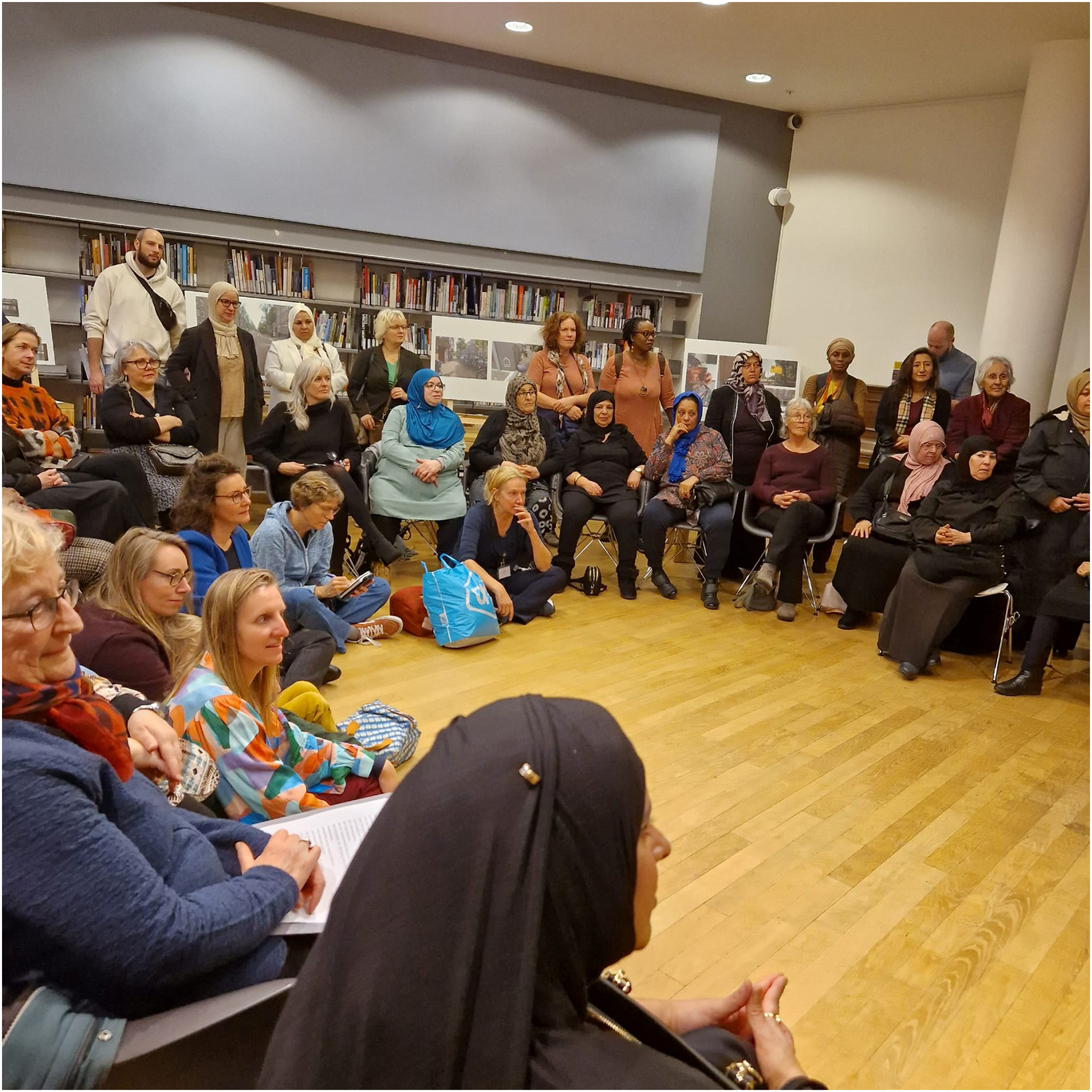
Within ten months, we managed to form a group of co-researchers in both neighborhoods who worked together on a photovoice project in which they made their experiences visible through photos. The photo material was presented in a photo exhibition in both districts. The co-researchers were enthusiastic afterwards and we saw that they had become a tight group, had individually more control over their lives, and that they had discovered new forms of participation. While before they were mainly concerned with surviving and performing tasks for others (like informal care and work), they were now motivated to do non-utilitarian activities that gave them positive energy and joy. The co-researchers and researchers came a long way to get to this point and were proud of the exhibitions (Image 1 and Image 2). There was a lot of interest in this from other residents, but also from local policymakers, civil servants, healthcare and welfare professionals and the media. We even organized a meeting in a governmental institution in The Hague, the center of national policies and government officials, in order to inform them as well about the lifeworld of older adults in precarious situations. So much for the front-stage processes, and everything that went well. Dialogues inspired by the photos at the photo-exhibition inone of the neighborhoods Listening to stories at the photo-exhibition in the other neighborhood
In the rest of this section we will reflect on the difference between the planned research process and what actually happened due to several back-stage dynamics. In Figure 1, we visualize the process as planned versus the implementation. The figure shows that the co-researchers did not go from a personal story and collective concerns to working on a pressing issue, instead they went back to their personal narrative. In one neighborhood, because they dearly wanted to share these stories again, and reflect on them afresh. In the other group a conflict occurred that led the co-researchers to go back to their personal narrative. While this caused a delay, it also led to a more profound understanding of their experiences, and thus a heightened personal and mutual understanding. Initial planning and factual implementation
Below we describe the backstage dynamics that led to delays: a) building trust with a group that distrusts institutions; b) resistance to preconceived plans; c) gaining a voice and finding emotional recognition; and d) dealing with internal group conflicts. We also describe the actions we undertook to deal with these dynamics, as well our reflexive thoughts about them.
Building Trust
Firstly, making contact and building trust with residents who have had no or mainly bad experiences with research and public authorities was much more emotionally and time-intensive than expected for all parties involved. We saw that older people experienced many setbacks in their daily lives and also humiliations in interactions with authorities. This formed a barrier to participating in our research.
In one of the neighborhoods, the researchers were able to make contact with the older residents, because they lived in the same neighborhood, knew and respected the culture and traditions of the residents and spoke their language (Arabic and Turkish). Doors that remained closed to anonymous investigations literally opened. Older people became curious about the research (for the researchers’ reflections, see the vignette below). This created the opportunity for a follow-up conversation and ultimately led to the decision to participate in the study by residents who had never done so before.
We, the two researchers (ZB and DU) working in the Indische Buurt, are not Western and Muslim. In terms of appearance, we are recognizable as such to the residents of Amsterdam East, which can work to our advantage. At the same time we have our identity as researchers. It was important how we positioned ourselves at the beginning of the interaction with the residents of the neighborhood, but also how we guarded our own boundaries. We sought rapprochement as researchers and not as care providers or friends. We strove for a common language, in which recognizing and respecting 'codes' was important. It was good to have a colleague as a team member. This way we could share our impressions with each other and also present our dilemmas to each other.
Building trust not only took time, but also required the right approach. In the other district this turned out to be a lot more difficult. The researchers searched a long time for an entrance, which they finally found through a sports coach. The following vignette illustrates the struggle to find people who wanted to join the project:
Although we (MD and EK) both lived in The Hague, and researcher (EK) had also worked as a district nurse in Laak several years before the study, we were not that familiar with the neighborhood and its residents. In fact, given the inequality in living situations in The Hague, we were not seen as insiders because we came from a different (well-off) neighborhood.
When we did speak to older people, for instance in community centers and on the streets, we often picked up a sense of hostility. One thing that was often said when we explained what our research was about, was: “Why Laak again?” indicating that the residents of the district felt stigmatized for their living situation.
Moreover, Laak had been an area of interest for a significant number of studies and municipal surveys. Residents shared with us how they contributed to these studies but received no feedback on their participation, and how this lack of follow-up demotivated them to participate in any type of research.
Eventually, we found an entry point through the neighborhood sports coach, who exercised weekly with a group of older adults from Laak. We could come by and ‘pitch’ our project to them after the sports activity. Initially, people didn’t really want to participate, but after some encouragement and reassurance from the neighborhood sports coach that this was something they could do, this was a project meant for them, something they might actually enjoy participating in, they were convinced and agreed to participate.
In both neighborhoods it was crucial to take enough time for a ‘normal’ conversation with potential co-researchers. The facilitating researchers created a communicative space and, if necessary, listened to a person’s entire life story. This not only required an extensive amount of extra time, but also a certain willingness of the researchers to attune themselves to the living environment of the residents played an important role in the decision of the residents to participate in the project. An example was that one of the researchers (a white young highly educated Dutch woman), who is vegetarian, decided to eat a sausage when she joined drinks with potential co-researchers after their weekly soccer training, because in her own experience that vegetarian choice could form a barrier in the approach between residents and researcher. This was a well-considered choice and is what we call consciously people-oriented and inclusive action.
Another example is how one of the researchers in Amsterdam used to work on a laptop when talking to people. This was an efficient way to make fieldnotes of the conversations. However, the co-researchers felt this was instrumental and disrespectful; it gave them the feeling that the researcher was primarily interested in collecting data, and not in the co-researchers as persons. The laptop also symbolized a formal approach of professionals getting their information for external purposes. As soon as this became clear, the researcher decided to chat and have informal conversations without using her laptop. This helped her to establish a relationship of trust. See Image 3. From here on we started the photovoice workshops and photovoice workshops. See Image 4 and Image 5. Informal conversations to reach out and involve people Discussing creative ways to visualize your story Learning about photography


Resistance
Secondly, the original planning assumed that the co-researchers, based on their photos, would talk about neighborhood problems and thus gradually identify pressing issues in the neighborhood that hindered participation. We assumed that it would work well to start with a concrete pressing issue. Yet, the co-researchers openly opposed this plan. They wanted to remain close to their personal stories and were less focused on changes in the neighborhood. One of the reasons for this was that for many of them it was the first time that they could share their story so widely with others who really took an interest in them. In addition, they had little trust and confidence in the people and institutions that would have to take up the actions with them, because of the many negative experiences from the past, as the vignette below shows. As a result, the process of moving from one’s own story to a general narrative took much more time than the intended planning. In our eyes, they really took agency about the research and our planning and adjusted it to what they needed and found important.
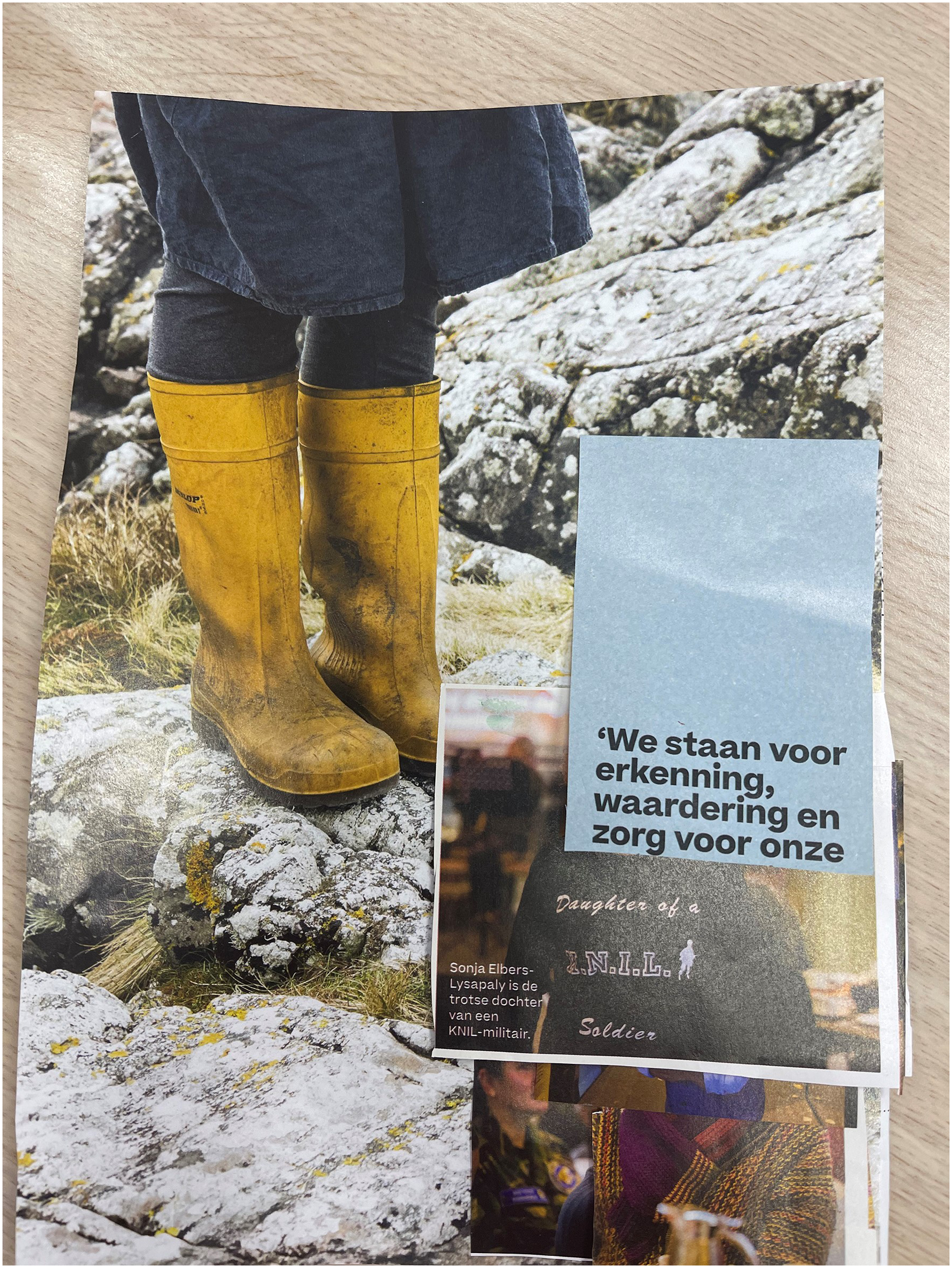
The research team took this experience very seriously, and organized an internal co-creative session to talk about the resistance among the co-researchers. Curiously, the theme of slowing down (‘Vertragen’) was prominent on one of the posters. On that poster was also the theme of Deep listening. The other poster showed how the researchers felt they were ‘standing in the mud’. So, we had already foreseen very early what might be needed and how this felt. See Image 6 and Image 7: Slowing down, deep listening and standing in the mud.
From the start on, our co-researchers vocalized many issues in their neighborhood that should be changed for the better, like garbage that blocked way for people using wheelchairs or walkers. For most of the co-researchers, it was exactly these concerns that made them decide to participate in this project; they deeply cared about the place they lived in. However, when we (EK and MD) tried to dive deeper in these issues and started talking about what we collectively could do about them, the co-researchers, to our senses, changed direction all of a sudden and didn’t want to continue working on action plans any longer. For us researchers, this was very challenging, since it felt like we worked in circles instead of actually getting somewhere. According to the schedule, we were already behind and we really needed to get some input for these action plans we had to make. I (EK) remember trying all kinds of ways to get this input, which ended up being only frustrative for all parties; for us researchers because it didn’t help and for the co-researchers because we kept asking the same things meanwhile having other needs.
Of course, their reaction was not isolated. Later, when we got to know each other better, the co-researchers told us stories of how before they weren’t taken seriously, even feeling humiliated by the local authorities. It was only by taking (sometimes a lot of) time, ask questions and more questions that we were able to understand their reaction. But more importantly, through this, we created a sense of trust, that here in this group we do listen to each other. Eventually, our co-researchers as a group realized that they didn’t just need the authorities, but could create change by seeing and hearing each other and standing strong together.
The theme of Slowing down (Vertragen) and deep listening in a co-creation session with the academic researchers The other theme of standing in the mud
Finding a Voice and Emotional Recognition
As we have illustrated, the co-researchers, in contrary to our expectations, were unable to immediately take the step from sharing personal experiences to formulating shared pressing issues. They needed encouragement to overcome fears to talk in public about their experiences and share their stories. Sometimes they doubted whether their personal story was relevant at all for others, and negative past experiences of ignorance and neglect inhibited them to speak up. Some also needed time to find their voice and tell their story for the first time in their lives.
As soon as they began to trust the group and felt they were in a safe space, they wanted to keep and cherish that setting of telling and retelling their stories to each other. It was the safe communal space wherein they were heard and felt seen. Rushing to a pressing issue did not resonate with their longing to belong. On top of that, personal stories often involved complicated and sometimes traumatic experiences that required processing. Think of discrimination and racism, abuse, disturbed family relationships. These narratives were often moving and emotional and it took time to comfort the storytellers. See Image 8 and Image 9. Sharing photo-stories in Laak Sharing photo-stories in The Indische Buurt

Initially, the stories about precarity generated images of the older adults as victims: they were not seen or heard in their own neighborhood nor by the various authorities. They also sometimes struggled with negative self-image. Reflecting on one’s life was thus not that easy. Also, because it often evoked painful life events that had been stalled away, but were never properly processed. The artistic element underlying the photovoice method addressed this self-image and painful life events in a sensitive way: photographing enabled the co-researchers to share painful issues from their lives, such as overload due to informal care or health problems, in an indirect and therefore confidential way. In addition, photovoice provided something extra, namely the opportunity to learn new skills, which made the co-researchers curious and created a sense of confidence.
However, the value of the photovoice sessions went deeper. Taking pictures and then discussing them offered a safe space for self-reflection and insight into one’s own feelings. It was precisely because of the tailoring to individual needs and the resistance of some co-researchers that a safe and secure atmosphere was created in which everyone could be themselves. This formed the basis for sharing stories and photos and led to mutual emotional recognition, and gave the co-researchers the opportunity to (re)discover their own voice. This process happened at a different pace and with different challenges for each co-researcher, and ultimately led to a sense of ownership over their story, resulting in a form of empowerment and personal growth, from vulnerabilities to resilience, as the following fieldnote shows:
At the beginning of the investigation, Fred’s (pseudonym) head was still full of intense memories of the last part of his mother’s life, for whom he was an informal caregiver. Sometimes he did not want to participate in an exercise because it was too confrontational. But later, after the last meeting, he emailed: ‘I have indeed come a long way and I no longer feel the need to dwell on what happened. In my picture, my parents are now the ones who were my father and mother. Not those who were struggling against death in such a dehumanizing way. The photo session was part of my recovery.’ (Field note, Laak)
Together with these reflections, a lot of emotions came to the surface. Obviously, this was in the first place hard for the co-researchers themselves, but they also left a huge impact on the researchers: When we had overcome the first wave of resistance, our group finally became stronger and tighter. This also meant that they began to tell their stories. We as researchers were happy, for our research ends we needed these stories. But what came next was everything except happiness; it was tears and harsh pain that came to the surface. I (EK) remember feeling confused; was this supposed to happen? What should I say? What is my role here? The fact that I used to be a nurse was both helpful and confusing here: I had my experiences with helping (older) people, but as a matter of fact it’s now researching that I am here for. Also, I wondered: these problems, these severe traumas, don’t they require more specialistic expertise? Aren’t we making things worse? With all this meddling in old wounds? Is it ethical to let them go through all this because we wanted this research?
The reflection above shows that the roles of the PAR researcher are often versatile, that lines with other professions can be very blurred. This led to confusion and moral distress to the researchers, but more seriously, it could potentially harm participants. To do justice to the co-researchers in our project, we not only had to take extra time for them, but also create space for ourselves; to discuss foregoing (ethical) questions, reflect on them, sometimes really plough through them in order to be able to work through all these emotions and care well for everyone involved.
Group Conflict
Fourth, a dynamic emerged within one of the groups that required extra time and intensive attention from the facilitators, including polarization that manifested itself in racist comments during a group meeting. This conflict could potentially lead to the breakup of the group. Unfortunately, the conflict occurred at a time when the co-researchers were developing a shared group identity and just before a summer break. It concerned statements that one of the co-researchers experienced as racist. At the time the statements were made, the facilitating researchers were unable to intervene. Later they were called by the co-researcher who felt personally assaulted, asking the researchers to address this issue in the group. The researchers feared that this would cause the entire group to fall apart.
Although painful and difficult to handle, the researchers knew they could not ignore the discriminatory comments; they felt these had to be discussed, especially because one of the co-researchers felt personally attacked. The co-researchers with a Dutch background felt relaxed and safe; they had understood and internalized the principles of PAR: everyone has the right to express their own opinion. They made the hurtful comments without thinking about it and without any intention to offend their fellow group member. After all, she was part of the group; and they were not talking about her, but about others. Only when the co-researcher showed her emotions did the conflict become public: no one wanted to be called a racist and it was difficult to admit that the choice of words had been insensitive.
It was a messy process and I cannot even recall what actually happened. I think this was exemplary for the process. So much was going on: we had to attune to each and every person and people were changing their minds all the time (wanting to stay and then wanting to leave the group and vice versa). I also realized that the whole issue of racism was a societal problem and something we could not solve as researchers.
What I do remember is how sad it made me feel to hear that the co-researcher with a migrant background told me she went through something similar a few years back. Once she was part of a Rummikub group, which she really enjoyed and deeply felt a part of – just like our research project. However, when members of the Rummikub group shared discriminatory statements, her sense of belonging evaporated. She shared with us how it is ‘always the same; you feel like you belong somewhere, but in the end, you are and always will be an outsider’. Now she had to go through this again, and I felt really bad about that. I felt responsible for bringing her in that position.
On the other hand, I also felt for the co-researchers who related about everything they experienced. We had asked them to share their stories, and to bring everything to the table. Why were some ideas not welcome? This is not to say that those discriminatory remarks were okay, but some problems such as the illegal housing of guest workers were real and experienced as problematic for the neighborhood. These people felt marginalized and unheard by institutions; were we going to silence them once again? Again, I felt responsible for bringing people in this situation.
The co-researchers heard that one of them felt offended, and indicated that they had never meant it that way. First, the incident seemed to be over. Yet all kinds of emotions appeared to have simmered during the summer, especially among the co-researchers who had made the hurtful comments, which then completely got out of hand during the first meeting after the holiday. One co-researcher, for instance, turned furious and left the meeting, slamming the door. As a result, three out of seven indicated that they wanted to stop with the project immediately.
The facilitating researchers tried to handle the tensions through individual conversations with all co-researchers. So instead of having group sessions as planned, they decided to listen to each and every one and understand the underlying emotions and feelings. The facilitators also helped the co-researchers to see the positive aspects of the group and their fellow co-researchers. This strengthened mutual respect. The time-out and the care taken of all group members created an opening to meet again and re-build trust. Looking back, the conflict was seen by the entire team (all co-researchers eventually reversed their decision to leave the team) as a valuable experience that brought the group closer together and made it more resilient. It emphasizes the power of open communication, reflection and understanding, and resulted in greater solidarity within the group. In addition, it exposed the deep-rooted problems of discrimination and prejudice in the neighborhood.
Renegotiation
The dynamics we have described above led to a slowing down of the process in order to attune to the rhythms of the groups and the individuals and to give them the chance to own the process of participation instead of being led into it. To make this possible we not only had to adjust our plans as researchers, but it also required negotiations within our research organizations. Since at a certain moment the time and budget was up, we foresaw that co-researchers would again be disillusioned if the project would not bring them what was promised. Continuation of the project and extra budget was not something that was easily realized. The urgency not to let this happen was the motor for renegotiations. The research team had to make a moral appeal, argument, write letters, negotiate, and make a new plan and budget to finish the project in a way that took the co-researchers and their knowledge seriously. We succeeded in this (extra time and extra budget), however, it required considerable additional effort from all members of the team to make this happen.
Discussion
In this article we discussed the backstage dynamics in a PAR study with older adults living in precarious conditions. We outlined the delay that occurred due to: a) building trust with a group that distrusts institutions; b) resistance to preconceived plans; c) gaining a voice and finding emotional recognition; and d) dealing with internal group conflicts. The whole process has touched us as relative outsiders on an emotional level; to be a part of the group, to gain trust and become part of their lives was very special. We felt the importance of telling one’s story and having a voice, especially when there has not been much space for sharing those. We saw how important it is to feel safe to share their story, to discover lines in their life-stories, to find time to reflect and (re)find oneself. It helped the co-researchers to become the authors of their stories and leave things behind, like in the story of the co-researcher who talked about ‘a new beginning’, leaving the pain of the last phase and death of his parents behind him.
Theoretically speaking, we can explain the delay that occurred as a process of acquiring and witnessing hermeneutic justice, two aspects of epistemic justice. Miranda Fricker (2007) coined the concept of epistemic (in)justice, which refers to knowledge injustice that arises when people are structurally not recognized as bearers of knowledge simply because of certain characteristics such as language limitations, psychiatric vulnerability, or having a migration background. Fricker (2007) considers knowing reality and being known as an authoritative knower to be a fundamental human capacity and right. Testifying and sharing your experiences as well as interpreting those experiences and placing them in a meaningful context and story takes time, and often entails that stories have to be retold in order to gain meaning (Baur & Abma, 2011). In other words, a process of giving meaning starts in which all kinds of chaotic and unprocessed experiences have to be forged into a meaningful story. This is not solely an individual intrapsychic process (processing pain, trauma and rebuilding one’s self-image), but also includes regaining trust in ‘opaque institutions’ (Carel & Kidd, 2014). Such institutions become resistant to epistemic evaluation and understanding by its agents and users, which can result in discrimination and racism (Hengelaar et al., 2024). It takes time, relational empowerment and positive experiences to regain trust.
Participating and giving a voice can be done with different methods and activities. We certainly do not want to advise using photovoice as standard in all neighborhoods from now on. Photovoice is perhaps one of the best-known creative approaches (Wang and Burris, 1994; Wang and Burris, 1997; Liebenberg, 2018; Abma et al., 2022; Duijs et al., 2022), but can also ignore the needs of citizens. Methodological choices require flexibility, continuous coordination and sometimes deviation, and responsiveness to participants’ needs, even at the cost of extra time (Groot et al., 2023). The core principle remains that research should start from citizens’ capacities and desires, aiming to foster meaningful participation and bridge the gap between citizens and government.
Contrary to our expectations, the groups were not so interested in taking action to improve their neighborhoods, at least not the concrete actions that the researchers had in mind (e.g. making streets greener). The co-researchers particularly valued ‘belonging’, being a member of a group and feeling at home. This was more important to them than taking action. Sense of belonging is an essential aspect of subjective well-being (Raman, 2023), which can be described as a fundamental human need characterized by feelings of value, inclusion, and connection to social groups, places, and experiences (Allen et al., 2021; Gere & MacDonald, 2010). In other words, the slowdown and reasons for the ‘delay’ required flexibility from both researchers and research authorities to give the process a chance and to not lose co-researchers, but have taught us a lot about lived experiences of older people in precarious situations and what they understand by meaningful participation. Moreover, we interpret the resistance of the co-researchers as an expression of agency and resilience, reflecting their capacity to articulate their needs and perspectives and exert control (Janssen et al., 2011). Considering precarity and resilience together allows for a more nuanced understanding of how older adults navigate uncertainty and adversity, emphasizing their agency and adaptability rather than framing them as passive victims. This example illustrates that however vulnerable in various aspects, (older) adults in precarious conditions are often strong and resilient (Lima et al., 2023; Masten & Wright, 2009; Santos).
We also saw that tensions arose in one of the groups, which we can explain with Paulo Freire’s concept of ‘horizontal violence.’ Freire (2018) referred to ‘violence’ between people who project their frustration and anger about what has happened to them in life onto the other. Instead of seeing the experiences in the light of structural circumstances (poverty, racism, etc.) they blame their experiences on newcomers in order to avoid feeling pain and trauma (Becher & Visovsky, 2012; Groot & Abma, 2020). This was the background in which the conflict in one of the groups took place. This conflict almost escalated and the group could have fallen apart. The researchers had to deviate from their plans again and find ways to discuss the conflict on the spot. They did this through individual conversations with the co-researchers, and managed to keep the group together.
We have shown that back-stage processes generate a lot of emotions, both among co-researchers as well as the academic researchers. Both emotional work (Groot-Sluijsmans, 2021) and ethics work (Banks, 2016; Groot & Abma, 2020) are essential in PAR. Within this work, researchers are confronted with all kinds of questions that cannot be dealt with through methods and techniques set out in handbooks. For example renegotiating money and time, but also uncertainties such as How far can we go grubbing in one’s severe life experiences? What have we promised our co-researchers? Can we make that happen? People make moral appeals and as researchers, we feel responsible to attend to those appeals, because we know these people as well and have built a relationship with them over time. Yet, we are not always in the position to improve situations. Instead of concrete action, compassion is needed in such situations (Duijs et al., 2019).
In academic culture, deadlines often create a sense of urgency, reflecting a broader ‘psychology of speed’ and acceleration (Kidd, 2021; Vostal, 2014). Our experience with the co-researchers highlighted that fostering empowerment cannot be rushed, as building trust in participatory action research requires time and patience (Armstrong et al., 2022). By slowing down, we were able to attend to the diversity of experiences, emotions, and unexpected challenges that emerged (Montreuil, Fréchette & Sofranos, 2020), transforming an uncertain experiment into a meaningful project in which we generated in-depth, inclusive insights about how regained resilience and trust can contribute to the well-being and meaningful participations of older adults in precarious conditions.
The delay required the researchers to enter into negotiations within their organizations, a process that was not without difficulties. In retrospect, Michel Foucaults’ concept of parrhesia (1983) can be helpful to understand this. Parrhesia means: ‘free-spokenness, truth telling or free speech’ and is about discourse and truth. Parrhesia is a way of bringing an issue of social or epistemic injustice to the table, and to question well-rehearsed knowings, taken-for-granted notions, habits and routines. Bringing up the matter of the older adults in precarious situations can be seen as parrhesiastic resistance (Foucault, 2011). The parrhesiastes is speaking the truth from an ethical point of view and takes the courage to challenge the dominant power or discourse. In our case example the risk is that the researchers can be seen as persons who are not capable of doing research in a proper way. At the same time, the research team felt the urge to speak up, because something was at stake in a moral way: they wanted to keep their promise and commitment to epistemic justice and social inclusion. Parrhesia can be confrontational but the intention is not to be disrespectful or to blame others. It is not strategic or given in by power or status, but rather a way of speech that is open, genuine and honest. The prime intention is to draw attention to something that might be unfair. This was also the virtue that motivated the researchers to address the issue of discrimination and group conflict, and to start a reflexive writing process resulting in this paper. We notice resemblances with the intensive and shared reflexivity by Wisselink et al. (2025) and her research team, including the emotion work and power ambiguities.
We conclude that speaking up – in the sense of parrhesia – and slowing down are ways to navigate backstage processes in PAR.
Footnotes
Acknowledgement
We would like to acknowledge the openness and enthusiasm of the co-researchers.

Ethical Considerations
This study was conducted in accordance with the principles of the Declaration of Helsinki (see wma.net) and the ethical guidelines of the International Collaboration for Participatory Health Research (ICPHR): https://www.icphr.org/position-papers--discussion-papers (Banks & Brydon-Miller, 2018). The Medical Scientific Review Board of division 3 of the Leiden Medical Center assessed the present research as research that does not fall within the scope of the Medical-scientific Research Involving Human Subjects Act (no. 23-3044).
Consent to Participate
Before the start of this study, an oral explanation was given to potential co-researchers about what it meant to participate in the study and what the study was about. Because of our goal to involve various older people who are not normally involved in traditional research due to language problems, we chose to use a simplified and an extensive letter, which the potential co-researcher could discuss with family or friends. If the potential co-researcher agreed, he or she signed the appropriate consent form.
Consent for Publication
In the oral and written consent procedure, consent for publication was included and given by all participants.
Funding
The authors disclosed receipt of the following financial support for the research, authorship, and/or publication of this article: This work was supported by the Social and Cultural Planning Office granted 18 January 2024.
Declaration of Conflicting Interests
The authors declared no potential conflicts of interest with respect to the research, authorship, and/or publication of this article.
Data Availability Statement
Data from this study will not be shared to protect the privacy of the participants. When questions emerge about the data, please contact the corresponding author.