



Abstract
A generic drug is a pharmaceutical drug that is equivalent to a brand-name product in dosage, strength, route of administration, quality, performance, and intended use, but does not carry the brand name. Generic medicines are those where the original patent has expired and which may now be produced by manufacturers other than the original innovator company. A generic drug must contain the same active ingredients as the original brand-name formulation. The present review article describes the generic drug registration and approval process for two ASEAN countries Vietnam and Philippines.
Keywords
Introduction
A generic medication is a prescription medication that shares the same chemical components as a medication that was first covered by a chemical patent. Following the expiration of the patents on the original medications, generic medications may be sold. Generics function as well in terms of the medical profile because the active chemical component is the same. The active pharmaceutical ingredient (API) in a generic medication is the same as that in the brand-name medication, but there may be differences in the manufacturing method, formulation, excipients, colour, taste, and packaging. Has the same active ingredient and quality but costs less.1,2
Vietnam
Vietnam is one of the pharmaceutical market with the fastest growth rates over 98 million citizens making it an attractive market for investors. The Vietnam pharmaceuticals market is segmented by drug type, product type, application, distribution channel, competitional landscape, and regional distribution. Based on drug type, the market is further divided between generic drugs, and branded drugs. Generic drugs are anticipated to hold the largest revenue shares of the market and dominate the market segment in the upcoming 5 years. The accessibility for the generic drugs is wider as compared to branded drugs. In 2020, the pharmaceutical industry in Vietnam was to be worth $10 billion USD. According to market research company IBM, Vietnam’s pharmaceutical market might be worth US$16.1 billion in 2026. The industry, according to IQVIA, also saw a 2% increase year over year, generating a compound annual growth rate (CAGR) of 6% between 2018 and 2020. The fact that FDI logistic companies and foreign pharmaceutical companies are not allowed to distribute pharmaceutical products directly and must instead sell their products to domestic pharmaceutical distributors presents one of the biggest challenges for foreign pharmaceutical businesses operating in Vietnam. The regulatory authority of Vietnam is Ministry of Health (MOH) and the Drug Administration of Vietnam (DAV) is one of the divisions under the Ministry of Health (MOH).3–5
Generic drug registration process in Vietnam 6
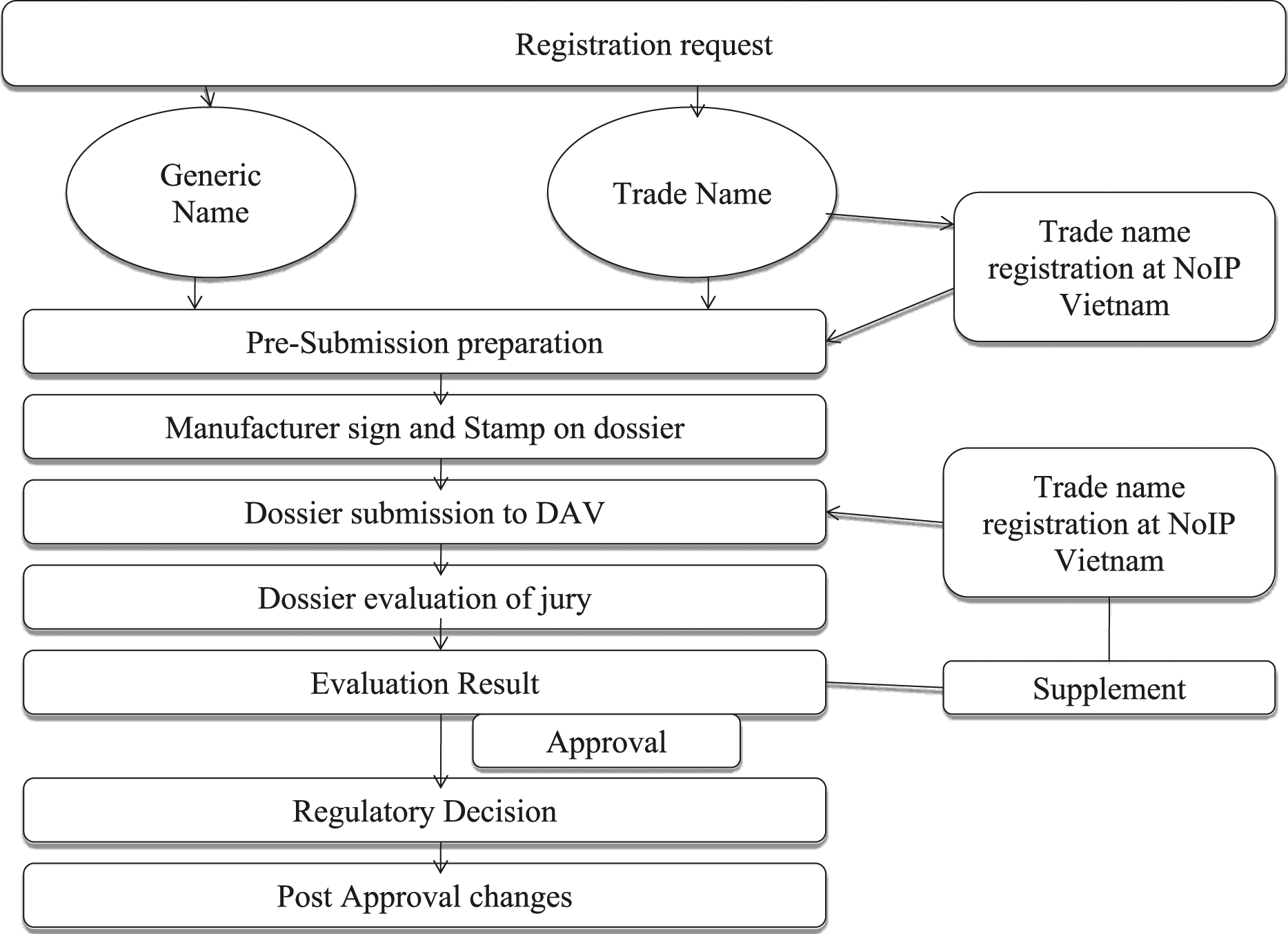
Generic drug registration requirements in Vietnam 6
Legal basis
- Law on Pharmacy 2016; - Circular No. 35/2018/TT-BYT stipulating good manufacturing practices for drugs and medicinal ingredients; - Decree No. 54/2017/ND-CP detailing a number of articles and measures to implement the pharmaceutical law; - Circular 32/2018/TT-BYT regulating the registration of circulation of drugs and medicinal ingredients.
Dossiers
The administrative dossier, including: 1. Application form; 2. Power of attorney (if any); 3. Certificate of eligibility for pharmacy business. 4. Documents required by foreign registration authorities. (Not necessary if the registrant is a manufacturer whose name and address are given on the CPP of the registered medicine or if the registrant has been publicly disclosed); 5. Permit for foreign registration establishments to open a representative office in Vietnam. (Not necessary if the registration base has been made public); 6. The Form 7/TT Certificate of CPP issued in conjunction with this Circular. 7. Examples of drug labels and dosage instructions anticipated to be distributed. 8. Drug labels and usage instructions samples are actually being distributed in the nation of manufacture or the CPP; 9. Records on the evaluation of GMP compliance for the circumstances listed in Article 95 of Decree No. 54/2017/ND-CP, which are applicable to foreign producers of drugs and medicinal ingredients when registering for distribution in Vietnam; 10. Legal documents from the producer of excipients, capsule shells, herbal ingredients, and pharmaceutical ingredients (as per the schedule); 11. The testing facility’s GLP certificate, for the scenario described in Clause 17 of Article 23 of Circular 32/2018/TT-BYT; 12. Documents certifying the origin of raw materials (GACP, CEP, domestic herbal sources, imported herbal sources, etc.), protection titles, contracts on the transfer of industrial property object rights, and related documents (if any).
7
Approval timeline
A generic drug’s approval typically takes 14–22 months from the date the application dossier is submitted. Vietnam’s evaluation period for new and generic medicine approvals is shorter than that of developed nations. The application submission procedure is rigorous, nevertheless.
Application fees
The authorities the filing fee for marketing authorization applications in Vietnam ranges from $220 to $300 USD, depending on whether the medicines need to maintain data confidentiality, have a bioequivalence dossier, or have a clinical dossier. 8
Philippines
The Philippines pharmaceutical industry is emerging as one of ASEAN’s potentially attractive markets due to its growing population, financial prospects, government initiatives, increasing acceptance of generic medicines, improving patient access and care, and disease prevention and management programs, among others. The Philippines pharmaceutical market was valued at $3.3 billion in the year 2020. The Philippines pharmaceutical market is primarily driven by imports, and multinational companies dominate the market. The market is expected to grow at a CAGR of more than 1% during the period 2017–2026. The regulatory authority of Philippines is Food and Drug Administration (FDA) formerly the Bureau of Food and Drugs is a health regulatory agency under the Department of Health.9,10
Generic drug registration process in Philippines 11
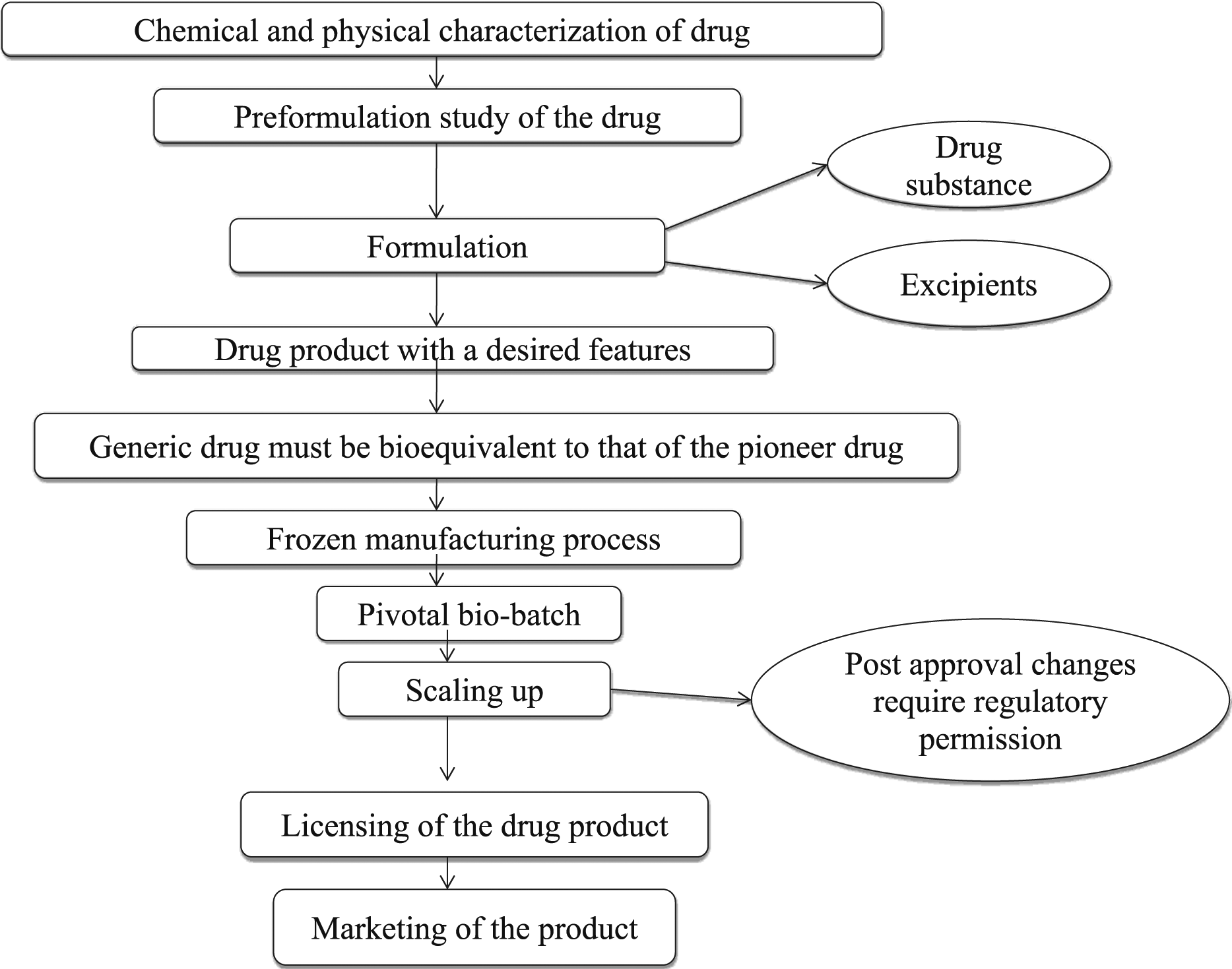
Generic drug registration requirements in Philippines 11
1. Letter of application 2. Copy of valid certificate of brand name clearance. 3. Copy of valid agreement between manufacturer and trader/distributor/importer/exporter 4. Unit dose and batch formulation: A complete list of names and quantities of all active and non active ingredients shall be stated per unit dose. 5. Technical specifications of all raw materials: • Name of the material. • A description of the material, including biological, chemical and physical characteristics. • Composition of the material, including additives and processing aids. • Country of origin. • Method of production. 6. Certificate of analysis of active raw material(s): An official document that shows the results of scientific tests on a product such as a food or drug, listing the chemicals, etc. It contains and the quantities of them. 7. Certificate of analysis of finished product: Documents issued by Quality Assurance that confirms a regulated product meets its product specification. They commonly contain the actual results obtained from testing performed as part of quality control of an individual batch of a product. 8. Technical specifications of finished product. 9. Full description of the methods used and the facilities and controls in the manufacture, processing and packaging of the product. 10. Details of the essay and other test procedures for product including data analysis. 11. Detailed report of stability studies to justify claimed shelf life. 12. Sufficient samples in market or commercial presentation for laboratory analysis (as per M.C.20 s 1994) and representative sample for PSD. 13. Unattached generic labelling materials; label, box, insert, blister/strip foil. 14. For imported drug product: a) Certificate of free sale from country of origin: A Free Sale and Commerce Certificate is a certificate issued for export of any other item which is not restricted or prohibited for export confirming that the product is freely sold in the country but without any indication that the product is evaluated for safety and efficacy and is registered for use in the country. b) Government certificate attesting to the status of the manufacturer as to competency, reliability of personnel and facilities.
Approval timeline
Depends on the requirement for inspection, fulfillment of required documents, category of generic drugs, and many other such factors. 12
Approval fees
The processing fee depends on the type of product and whether the drug product is manufactured locally or manufactured overseas and imported. 13
Conclusion
In the current review article, two ASEAN countries, Vietnam and Philippines were selected as emerging regulatory markets. Both the countries follow ACTD and their country-specific regulations for generic drugs approval. These countries are paying more attention and providing more importance to healthcare, and also, there is also more demand for generic medicines and life-saving medicines. These ASEAN countries are not much regulated as like US, EU, Japan, Canada, etc. This could be due to a lack of harmonization of pharmaceutical regulations in the respective regions. If they have the regulations, some countries are failing to implement those regulations. Among the two ASEAN countries, both has well-implemented drug regulations and stringent rules concerning the quality and safety of generic drugs. The current study provides a simplified overview of generic drugs regulations and approval process
Footnotes
Acknowledgement
The authors would like to thank the Principal, SNJBs SSDJ College of Pharmacy, Chandwad for providing Library and Internet facility for completing this review article.
Declaration of conflicting interests
The author(s) declared no potential conflicts of interest with respect to the research, authorship, and/or publication of this article.
Funding
The author(s) received no financial support for the research, authorship, and/or publication of this article.
