



Abstract
New technologies are widely used in several domains of human activity and business, including education, because of their positive impact on information management and service delivery. Considering technology’s ability to provide for advanced and updated technological tools and applications, information and communication technologies (ICT) have been increasingly incorporated into school administration, in order to improve the organization of official data and to facilitate administrative transactions. This research aims to determine the level of technological infrastructure present in Greek kindergarten schools and also to examine the extent to which this equipment meets their administrative needs, as well as the conditions that influence the implementation of ICT in school management.
Keywords
Introduction
In recent years, information and communication technologies (ICT) have been considered as the driving force behind the realization and implementation of our information society’s contemporary goals, since they: (1) constitute a significant financial domain affecting almost all economic transactions; (2) extensively influence productivity and competitiveness; (3) are proficient in ensuring and facilitating the connection and effectiveness of information services and systems; and (4) are a valuable device for restricting the social exclusion phenomenon and for promoting social and geospatial coherence (Taylor and Williams, 1991; European Committee, 2004; Vandenbroucke, 2007).
Within this framework, ICT sustains a dominant position in several sections of human activity. In view of its contribution to instant and prompt information and to effective and efficient transactions, new technologies are being adopted in almost all professional domains, including education; ICT enters the school environment progressively, aiming to adopt technological applications not only in the teaching and learning process but also in the management of the whole school, as an organization (Mooji and Smeets, 2001). As Baron and Bruillard (2003), European Schoolnet (2005), Vandenbroucke (2007) and Drent and Meelissen (2008) underline, new technologies in education may be considered to be:
a facilitator of educative innovation, as ICT disconnects learning and teaching from time and space limitations, and adjusts them to students’ personal needs;
a means to information literacy, since it provides the members of the educational community with ICT knowledge and social/communication skills;
a tool for administrative modernization, based on the fact that ICT equips school administration with technological tools, allowing for the electronic and/or digital management of official information.
Focusing our study on the third parameter, that is, using ICT in school administration, we may notice that new technologies are being adopted for the development of information systems containing e-applications for the organization and management of administrative tasks and for the delivery of updated and prompt administrative transactions (that is, electronic registry; electronic curriculum; digital class material; remote monitoring of students’ progress). Telem (2003) points out that information systems provide tools that contribute to the better and more immediate execution of administrative work. More specifically, using an information system in school administration provides for data integration derived from several information sources, for decision making (Hicks 1990), as well as for the management of: (1) school information (planning and development, security, legal issues and public relations); (2) student information (for example, registrations, curriculum, grades, absences); (3) teaching information (for example, training seminars, administrative task allocation); (4) information on general issues (for example, student excursions, catering services, social events); (5) information on additional school functions (seminars, school library); and (6) general administration information (for example, teacher transfers, salary payments, infrastructure management, budget management) (Carter, 2005).
As such, the implementation of ICT facilitates the effectiveness of administrative services and reinforces the communication channels within the school community via a network (Intranet and Internet). As Haddad and Jurich (2002) indicate, new technologies:
assist school administration in the efficient management of official functions, in the enhanced supervision of student progress, as well as in the improvement of school resources management;
contribute to an easier and friendlier management of complicated and multilevel administrative transactions; and
promote communication between school units, parents, and principal administration, and therefore cultivate responsibility on the part of school management, transparency in administrative actions, as well as the interlinking of school networks.
Indeed, official records and the information that is produced as a result of administrative activities call for an electronic management system that has the ability to contribute to instant information and knowledge exchange, provide for collaboration whenever needed, facilitate the management of digital objects, support electronic and internet based communication and provide access to several information sources. As Shepherd and Yeo (2006) point out, information management systems ensure: (1) the efficient usage of the available data regardless of time and space limitations; (2) prompt and reliable access; (3) protection against physical damage or destruction; and (4) the creation of an information ‘pool’ containing all the evidence needed for administrative transactions, completed or ongoing. Thus, information management systems ensure several advantages, which may be arranged and presented as follows (Ministry of Internal Affairs, Public Administration and Decentralization, 2001):
minimal handling of printed material;
digitization of records and transactions, and thus easier and more speedy data flow;
time improvement with regard to searching, sending and receiving records and data;
more secure record and data saving;
reduction of the storage space needed;
more efficient and flexible access to classified records, whenever needed;
quality upgrade of the available services.
Within this framework, ICT may be considered as a means of creating an information core, characterized by interoperability and uniformity, able to gather and manage all the incoming and out coming official information, according to international standards. Hence, ICT may provide for:
the storage, organization, classification and management of administrative information and records, according to international formats;
the interconnection of the electronic registry with administrative transactions and the information needs of legislation;
the digital input of official records and the workflow of administrative transactions;
the prompt and convenient updating of the inserted data;
the ability to search for information with multiple indexes from different databases; and
an interface to be modified according to personal needs and preferences.
Consequently, information management systems ensure notable benefits for school administrations, which may be exploited through ICT, in order to provide quality upgraded networks for the organization and exchange of official information and communications, capable of supporting a great volume of data, as well as a high level of speed and efficiency in the services provided (Norcia, 2002). However, several forces running at the micro- and mid-level of a school unit considerably affect the implementation of ICT in the school environment (Pelgrum, 2001). According to the relevant literature (Ritchie and Rodriguez, 1996; Lawson and Comber, 1999; Kirkman, 2000; Vandenbroucke, 2007) the most significant parameters that influence the efficient introduction of ICT in the school environment are considered to be:
the creation and adoption of a school policy, regarding the strategy followed for introducing ICT into the school environment. More analytically, the establishment of an ICT policy - which includes the aims, the methodology, as well as the foreseeable benefits from using new technologies in everyday working life - may be considered as a significant parameter for the efficient introduction of technological tools and applications. Within this framework, school policy on ICT should be characterized by comprehensiveness, clarity and a broad perception, in order to optimize the influence of ICT on a school unit (Bozeman and Bretschneider 1986). As Strassman (1995) and Mintzberg and Quinn (1991) point out, a policy must analytically present an organization’s goals and pose clear directions as to how these objectives will be implemented.
The purchase of suitable infrastructure; in this domain we refer to issues that include the acquiring of appropriate hardware and software, including information management systems. Specifically, the purchase of technological means, tools and applications must be based on nations’ interoperability frameworks, and on the conditions and prescriptions that these frameworks determine, in order to ensure compatibility in communication and the ability to exchange machine-readable data. However, we must underline the fact that, apart from the preordained technical specifications, an information system needs to be easy to handle, accessible from different sources, allow admission rights according to the user’s administrative function, etc. (Baker, 2005).
Proper staffing for secretarial support. The assignment of technologically skilled personnel in school administration or the appointment of an educator specialized in management issues and new technologies may be considered another significant parameter. However, Greek legislation for primary education, act no. 1566/1985 (Greek Parliament, 1985) appoints secretarial support only to large school units. However, school administration is not impersonal; the school principal, the assistant director and the educators involved in school administration significantly influence the quality of the services provided. Thus, their technological background and knowledge may be considered another significant parameter. Moreover, the personnel stability and coherence may be included among the conditions that influence the school’s effective service provision (Georgogiannis et al., 2005; Mlekanis, 2005; Saitis, 2005). Indeed, frequent staff mobility impairs the smooth functioning of the school unit, since: (1) most of the school administrations’ decisions are communal and are therefore based on the personnel’s efficient collaboration and communication; and (2) ICT usage depends on, among other things, the personnel’s technological skills and capabilities. Therefore, when a school’s personnel change frequently, the aforementioned conditions need to be regularly adjusted in repeated alterations, while the effectiveness of communication and collaboration between educators and the manager has to be reviewed often.
Personal values and beliefs; human habits and opinions regarding new technologies comprise determinant criteria for putting ICT into service (Baron and Bruillard, 2003). As Baylor and Ritchie (2002) underline, technology will not be sufficiently exploited if technology users do not have the ability, the knowledge and the spirit to use and incorporate electronic means and tools in their work on a daily basis. Therefore, principals’ attitudes towards new technologies (Mooji and Smeets, 2001) may be considered a significant parameter determining the way in which ICT will be applied in everyday school work (Tsitouridou and Vryzas, 2004). At this point, we may clarify that such research referring to human parameters affecting ICT adoption in studying and learning, along with their conclusions and recommendations, can also be scientifically used in the domain of school administration, as human attitudes and beliefs towards ICT are common, whether they are teachers or principals. Indeed, those human parameters affecting the adoption of ICT in learning, that is, refusing to use technological tools, a fear of ICT, a lack of technological skills, technophobia (Paraskeva et al., 2008; Rosen and Weil, 1995), are also the same human parameters influencing the usage of ICT in school administration (Cooke and Greenwood, 2008).
Constant professional training; in order to maintain proper staffing levels, professional education on ICT is becoming a fact of life for school administrators aiming to efficiently incorporate new technologies into the school environment, and allow the principals to meet the technological responsibilities that their leadership role imposes (Flanagan and Jacobsen, 2003). Professional training is more urgently needed when the school principal not only has the responsibility to organize, manage and supervise the introduction of ICT in the school unit (Kara-Soteriou, 2009; Kennedy Manzo, 2009), both in the domains of teaching-learning and administration, but also when he/she has the duty to implement new technologies for the accomplishment of administrative tasks and the processing of administrative transactions. In this case, the lack of ICT handling skills is certainly a restraining factor for introducing new technologies smoothly and successfully (Smeets, 2005), as the possession of technological knowledge affects not only principals’ way of working and how quickly and precisely they respond to official requirements and transactions with the educational hierarchy (that is, Ministry of Education, Office of Primary Education), but also the services provided to the educational community (that is, colleagues, parents, students).
Hence, we may say that there are some parallels between education and management. As Anderson (2008: 10) points out, ‘it is not accidental that the leading edge thinking about both education and organizational management tends to focus upon similar issues. Both attempt to anticipate the future where new forms of ICT are ubiquitous and knowledge is the dominant commodity’. In this regard, the research of Gulbahar (2007: 944) presents the key parameters and proposes a roadmap, including in-service training, for both teachers and administrators to efficiently incorporate ICT in their everyday work, so as to promote ‘effectiveness in both administrative and teaching–learning processes’.
The difference between ICT in teaching-learning and in administration, in terms of professional training, may be noticed in the level of practical application, where the requisite skills and knowledge of relevant software applications differ according to the implementation domain, namely, teaching-learning or school administration. At this level, theme-related searches have been realized (North et al., 2000) whereby training programmes on the use of information management systems were examined and presented, analysing the parameters needed in order to make the system more effective and productive. Since then, an initiative for teacher training has been established in the UK, which includes principals’ training as ICT leaders. It is the UK SLICT training programmeme, which focuses ‘on strategic leadership…and on the development of absolute confidence in …[principal’s] own informed professional judgment to facilitate learning in… [his/her] school’ (National College for School Leadership, 2010: 2).
Securing an appropriate place, suitably designed and equipped for electronic material and infrastructure. This parameter addresses the principal’s ability to organize all the necessary tools at his/her disposal for instant and prompt accomplishment of administrative functions, without the need to visit different places, that is, for sending an email, a fax or printing a document. The placing of technological infrastructure interspersed throughout the school unit or packed into a small office may result in: (1) difficulties completing official tasks; (2) time delay in administrative transactions; and (3) accessibility problems. On the contrary, a suitably tidy location may contribute to the prompt and timely service of the school community, as well as a time reduction in the execution of necessary administrative tasks. International studies raise the issue of accessibility to suitably designed locations that house technological equipment as one of the practical parameters influencing how frequently the available technological infrastructure is used. For example, Ritchie and Rodriguez (1996) point out that a physical hindrance, such as placing a computer in a room not easily or immediately accessible, negatively influences the usage of the technological infrastructure.
Last but not least, securing adequate and sustainable finances. This parameter refers to issues of economic means and allocation for covering financial needs that are derived from introducing ICT into the school administration; that is, the rendering of technical in-house and ongoing assistance, the ability to upgrade technological infrastructure and software applications according to the latest technical specifications, the eventuality of purchasing additional electronic material and infrastructure, the ability to provide constant professional training and education, and so on.
Summing up the parameters associated with ICT initiation in a school environment, Ely (1999) and Mooij and Smeets (2001) define the following criteria: (1) a dissatisfaction with the current form of management and school administration; (2) ICT knowledge and skills; (3) available financial resources; (4) available time; (5) a system of praise, rewarding and motivation; (6) determination and commitment; and (7) leadership.
Therefore, ICT implementation in school administration requires specific conditions; otherwise the adoption of new technological tools leads to a state of frustration in which, on the one hand, the lack of ICT knowledge and management skills contribute to the partial- or non-exploitation of a technology’s potential and, on the other hand, management and organization issues are raised due to the absence of adequate finances and infrastructure. As Tearle (2004) underlines, two key points influence the satisfactory adoption of ICT: (1) the organization characteristics (that is, the culture); and (2) the model that is to be implemented for the management of this initiation. As such, the introduction of new technologies in school administration needs to be based on a certain policy, defining clearly the essential parameters and the desirable objectives.
Studying the available Greek literature relevant to the role of ICT in education, we may realize that, although several articles and surveys have been published (indicatively Dagdilelis [2005] and Saiti and Prokopiadou [2009]), the adoption and impact of new technologies in the school administration of primary schools have not been systematically examined. The current study focuses on the contribution of ICT to the administration of Greek kindergartens. More specifically, this article aims to:
determine the extent to which new technologies are used in school administration; and
examine the parameters influencing the adoption and implementation of new technologies in Greek kindergartens.
Data and Methodology
A survey was conducted to collect primary source data for this research. Questionnaires were administered to 230 kindergarten principals. From those, 183 questionnaires were fully completed (response rate: 79.6 per cent). The sample was randomly selected from 12 Greek regions (including the metropolitan region of Attiki, Athens). Since the data are not sufficiently rich to allow for a deeper study, further analysis is needed in order to confirm the results. The statistical analyses used included the following.
Descriptive statistics (percentages) a regression model is used to examine the extent of the relationship between an outcome (dependent variable) and a suspected cause (independent variable). Ordinary least squares (OLS) is an econometric estimation method, which produces estimates for the unknown regression parameters…and minimizes the sum of squares (Cryer and Miller, 1994: 584). As Ezell and Land (2005: 943) point out ‘…the OLS estimator produces the best linear unbiased estimate of the relationship between each independent/explanatory variable (also known as a regressor or predictor) and a continuous dependent variable (also known as the regressand or response variable) while simultaneously eliminating the linear effects of the other included independent variables’.
Probit regression analysis under the probit model, the estimated value of the dependent (response) variable is interpreted as the probability of the factors that determine whether or not the management of administrative information is based on an information system as identified by the values of the independent variables. Thus probit analysis allowed for the measurement of the impact of each variable on the factors that determine whether or not the management of administrative information is based on an information system. Probit Analysis is useful when a dichotomous variable is thought to be influenced or caused by levels of some independent variable(s) and is particularly well suited to experimental data.
Results
From the sample of 183 kindergartens, 43.7 per cent were full day schools, while 56.3 per cent were not. Regarding the size of the kindergartens, 56.3 per cent were two-post, 39.9 per cent one-post and only 3.8 per cent were three-post. More particularly, 36.1 per cent of the kindergartens had up to 20 pupils, 44.8 per cent had between 21 and 40 pupils and 19.1 per cent had over 40 pupils. Over one-half of the kindergartens (54.1 per cent) were located in urban areas, 24.6 per cent in rural and 21.3 per cent in semi-urban areas.
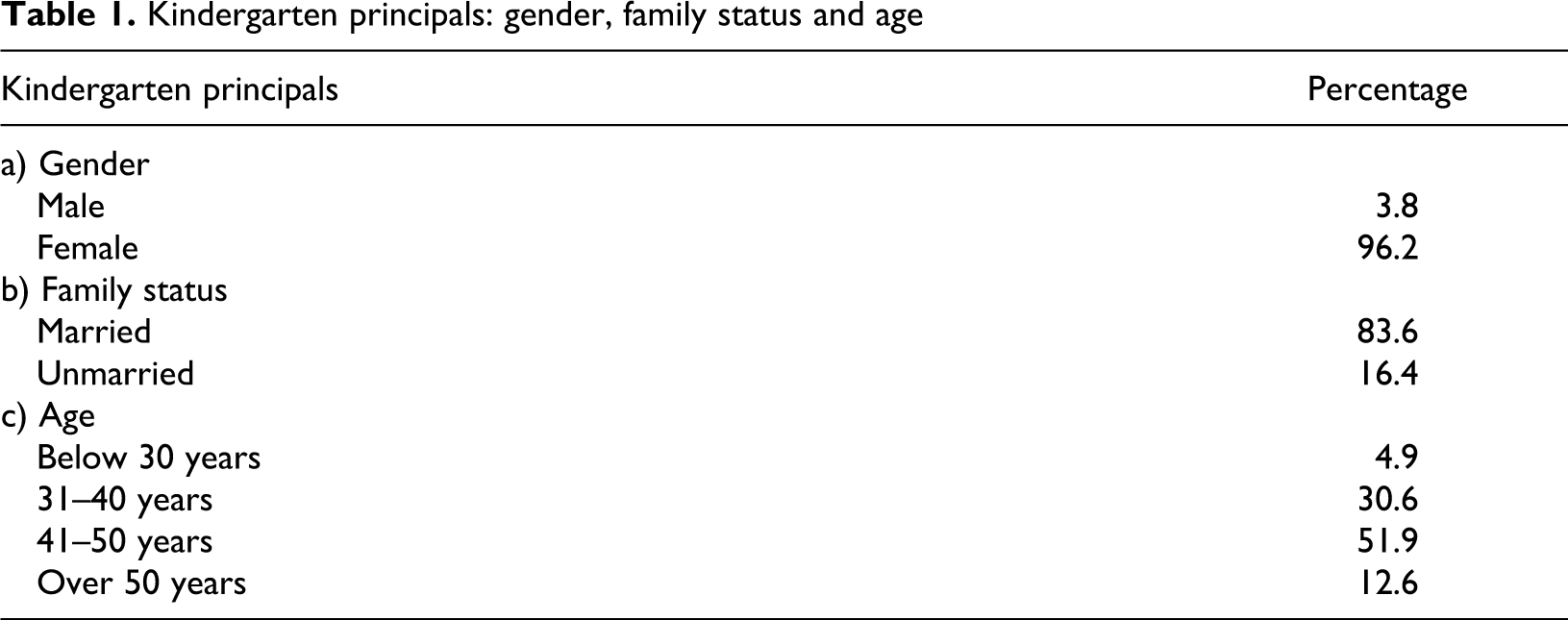
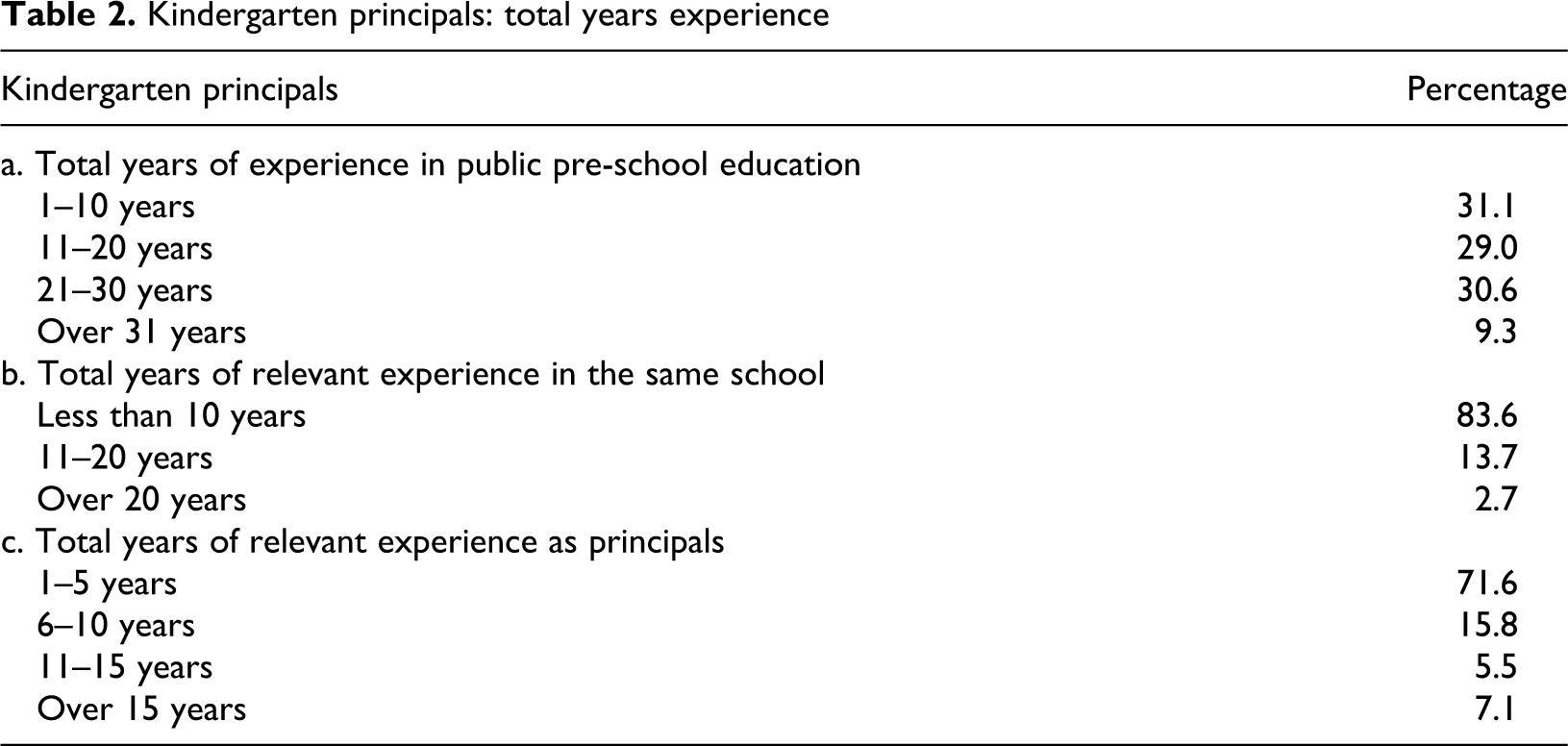
The composition of the sample regarding the respondents’ gender, family status, age, total years of experience in pre-school public education, total years of experience in the same school and total years of relevant experience as principals, is described in Tables 1 and 2.
Kindergarten principals: gender, family status and age
Kindergarten principals: total years experience
The types of technological equipment that the kindergarten in the sample solely used for administrative purposes, is presented in Table 3.
Technological equipment used solely for administrative purposes

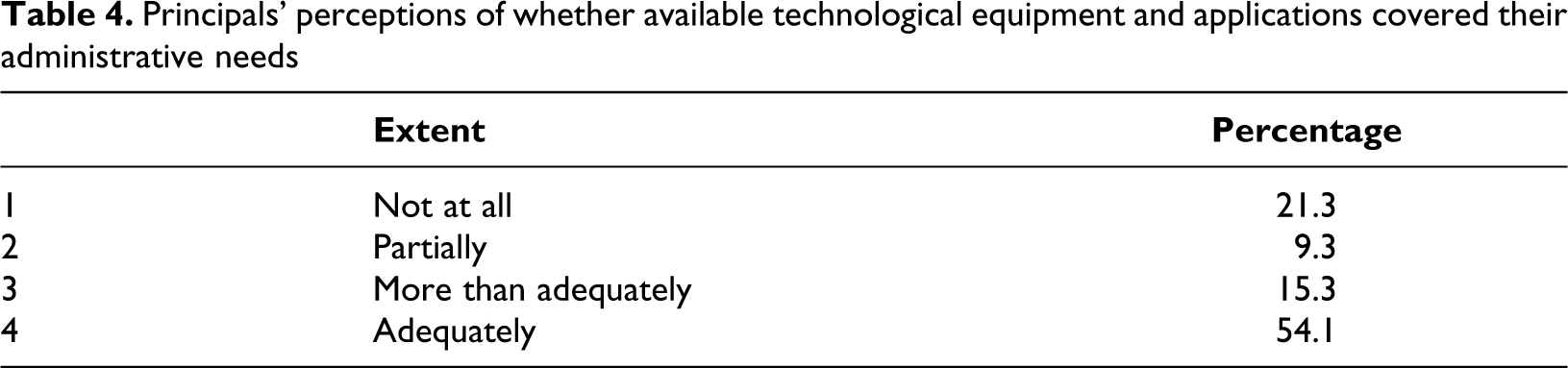
Over one-half of the respondents (53.6 per cent) reported that the technological equipment was located in their office, 38.8 per cent stated a teaching classroom and 4.4 per cent reported some other location. Moreover, regarding technical support, over one-half of the respondents (59.6 per cent) reported that this was carried out by a technician from a private company, 27.3 per cent noted an expert educator in ICT, and only 3.8 per cent indicated a person appointed by the prefecture authorities exclusively for technical support. Principals’ perceptions regarding the extent to which the available technological equipment and applications in kindergartens covered their administrative needs is described in Table 4.
Principals’ perceptions of whether available technological equipment and applications covered their administrative needs
Those who responded either ‘not at all’ or ‘partially’ in the last question were asked to specify the reasons for the lack of technological equipment in their kindergarten. Their answers focused mainly on two reasons: poor management on the part of the Ministry of Education in the distribution of the available equipment to kindergartens (32.2 per cent) and limited financial support from the State (31.7 per cent).
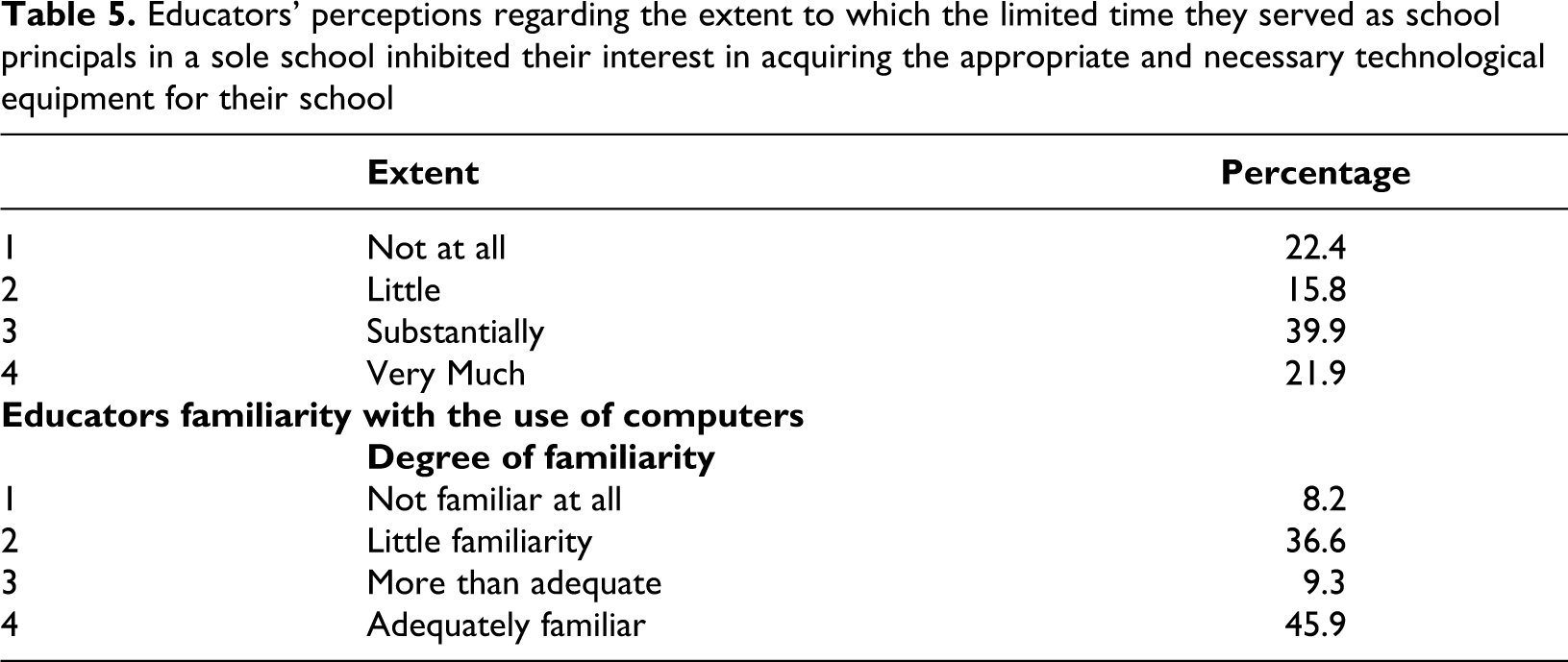
Educators’ perceptions regarding the extent to which the limited time they served as a school principal in a sole school inhibited their interest in acquiring the appropriate and necessary technological equipment for their school and their familiarity with the use of computers, are presented in Table 5.
Educators’ perceptions regarding the extent to which the limited time they served as school principals in a sole school inhibited their interest in acquiring the appropriate and necessary technological equipment for their school
For those who answered either ‘more than adequate’ or ‘adequate’, they were asked to give the main reason for their proficiency in using computers. The responses focused on three major points: attending the training programmes of the Ministry of Education in computer science (41.0 per cent), personal interest (43.2 per cent) and attending private training programmes in computer science (17.5 per cent).
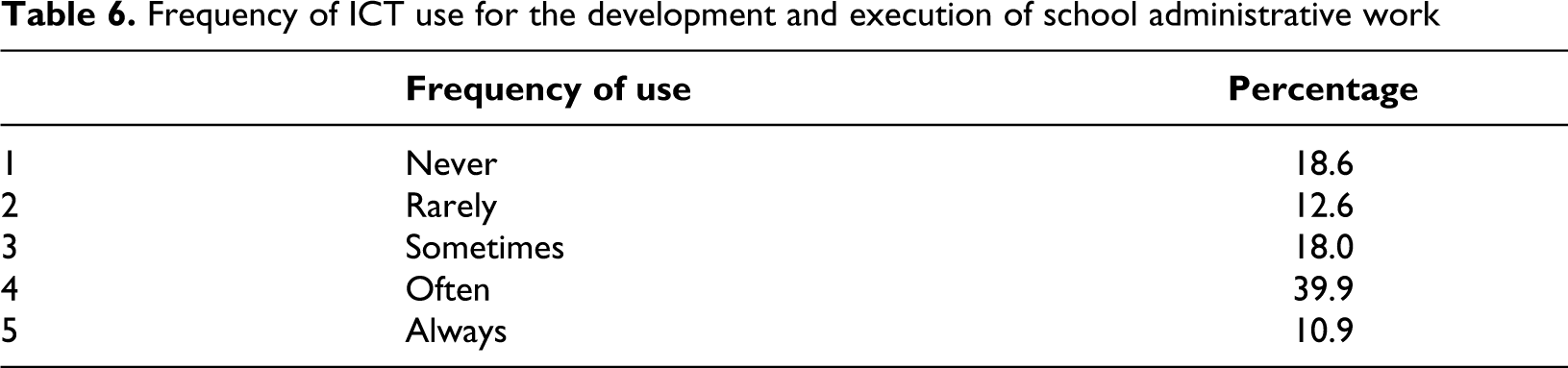
On the contrary, for those who quantified their knowledge and familiarity with computers as either ‘little’ or ‘none at all’, a question was included regarding the reasons for this. There were three main responses: the training programme they had attended was inadequate (18.6 per cent), they were either approaching retirement (8.2 per cent) or had not attended any relevant training programme because there was no such programme in their area (6.6 per cent), or they had applied to attend a training programme but their application was not accepted by the service in charge (6.6 per cent). Table 6 presents the frequency of ICT use for the development and execution of school administrative work.
Frequency of ICT use for the development and execution of school administrative work
As to the type of school administrative work that was realized with a computer, the majority (74.9 per cent) reported the typing and printing of official records, 48.1 per cent claimed the curriculum, 31.1 per cent stated the maintenance of student information databases, 29.0 per cent reported official communication (for example, with parents) via emails, 26.2 per cent claimed the creation of a file containing legislation regarding school administration, and 16.9 per cent reported the registry.
When questioned as to whether or not the management of the administrative information was based on an information system, only 10.9 per cent replied positively while the remaining 89.1 per cent answered negatively. For those who answered positively, they were asked to define whether or not their kindergarten had an Internet connection; 13.7 per cent replied positively and 86.3 per cent answered negatively. From those who had internet connectivity in their kindergarten, 13.7 per cent use it to provide parents with information regarding their pupils’ progress, 10.4 per cent use it to provide educators with general information and 8.2 per cent use it to provide members of the school community with information regarding kindergarten activities.
When asked to identify, in order of significance, the factors that contributed to the effective introduction of ICT in school administration, the responses focused mainly on four aspects: the training of the educators in the use of ICT (34.4 per cent), appropriate planning by the Ministry of Education for the distribution and the maintenance of technological equipment (23.0 per cent), encouragement of the educators to use technological equipment (20.8 per cent) and a suitable place for the location of the technological equipment (20.8 per cent).
OLS Regression Models and Probit Regression Model
A regression model was run in order to investigate ‘the degree of educators’ familiarity with computers’ using this as the dependent variable in the model. It was quantified by asking the respondents to rate their familiarity with computers from 1 (none) to 4 (very familiar). The independent variables were: the age and the gender of the respondents; their perception on the importance of ICT to school administration; how frequently they used ICT for their administrative tasks; and whether or not the management of their administrative information was based on an information system. The age of the respondents was given a value, ranging from 1 for the younger ages up to 4 for those aged over 50 years. The gender was a dummy variable that took the value 0 for women and the value 1 for men. The respondents were also asked to rate the importance of the introduction of ICT into school administration from 1 (none) to 4 (very important). The same happened with the frequency of ICT use for administrative activities, whose value ranged from 1 (never) to 5 (always). Finally, ‘whether or not the management of administrative information was based on an information system’ was used as a dummy variable that took value 1 when the respondents replied positively and 0 for negative answers.
The regression results from Table 7 reveal that all the independent variables are statistically significant and have positive signs, with the exception of the age of the respondents, which has a negative sign. The results indicate that, when the respondents consider the introduction of ICT in kindergarten administration of vital importance, then they are more likely to be more familiar with the use of computers. Moreover, educators who are younger and male are more likely to be more familiar with the use of computers. Furthermore, when the educators use technological equipment for administrative tasks more frequently and when the management of the administrative information is based on an information system, then educators are more likely to be more familiar with the use of computers.
OLS: Dependent variable – the degree of educators’ familiarity with computers
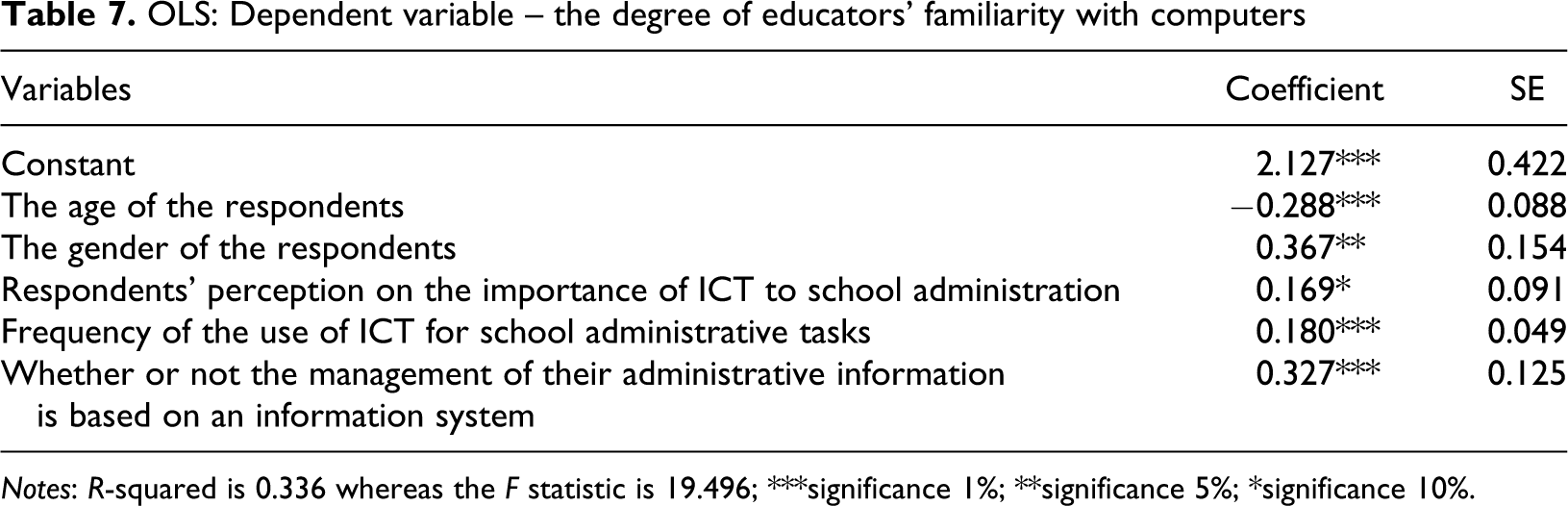
Notes: R-squared is 0.336 whereas the F statistic is 19.496; ***significance 1%; **significance 5%; *significance 10%.
Another OLS regression model was run in order to investigate the factors that determine the frequency of ICT use for the development and execution of schools’ administrative work. With this aim, the dependent variable in the model was the frequency of ICT use for administrative tasks. In this variable, respondents rated the frequency of use from 1 (never) to 4 (always).
In this model, seven independent variables were used. The first two independent variables were the respondents’ perception of the importance of ICT in school administration, and whether or not kindergartens have computers in their technological infrastructure. The first independent variable, that is, principals’ perception of the importance of ICT in school administration, was quantitative, since the respondents rated their answer from 1 (worthless) to 4 (vitally important). The second independent variable, that is, computer presence in kindergartens’ infrastructure, was a dummy variable that took the value 1 when the respondents replied positively and 0 when they answered negatively. The remaining four independent variables referred to the administrative tasks that are performed via computer, that is, the typing and printing of official records, the curriculum, student information databases, and official communication (for example, with parents) via emails. These variables were also dummies that took the value 1 for a positive answer and 0 when the respondents replied negatively. Finally, the extent to which the available technological equipment and applications in kindergartens covered their administrative needs was also included as an independent variable in the model. This variable was quantitative since the respondents rated their answer from 1 (not at all) to 4 (very much).
According to the results in Table 8, it is clear that the model performed very well, since all independent variables are statistically significant and have a positive sign. In particular, when the respondents consider the introduction of ICT in administration to be of vital importance and when schools have computers in their infrastructure, then it is more likely that kindergartens will use their technological equipment more frequently for administrative purposes. Moreover, when administrative tasks (that is, the typing and printing of official records, the curriculum, student information databases, and official communications via email) are performed via computer, then it is more likely that the technological equipment will be used more frequently for administrative purposes.
OLS: Dependent variable – frequency of the ICT use for the development and execution of school administrative work
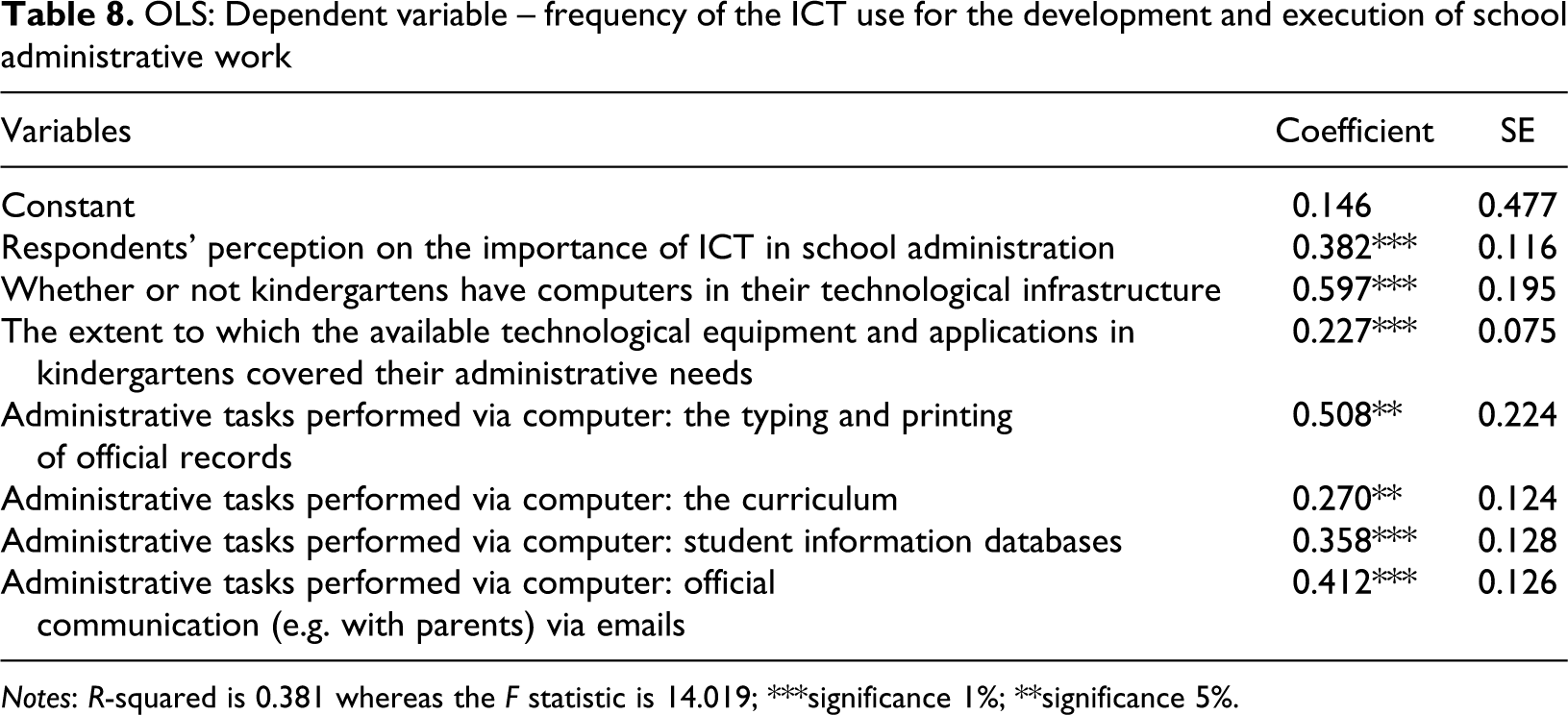
Notes: R-squared is 0.381 whereas the F statistic is 14.019; ***significance 1%; **significance 5%.
Furthermore, a probit model was run in order to define the factors that determine whether or not the management of administrative information is based on an information system. This was a dependent variable that took the value 1 when the respondents answered positively and 0 in all other cases. The first two independent variables included in this probit model were the kindergartens’ two most popular administrative activities performed via computer, namely student information databases and the curriculum, which took the value 1 when the respondents answered positively and 0 in all other cases. Additionally, the other three independent variables were: the level of respondents’ familiarity with computers, ranging from 1 (none) to 4 (very familiar); whether the technological equipment was located in the respondents’ office, taking the value 1 when the respondents answered positively and 0 in all other cases; and whether technical support was given by an expert educator, taking the value 1 when the respondents answered positively and 0 in all other cases.
The results from Table 9 show that three independent variables are statistically significant and have a positive sign. The exceptions are whether or not the technical support was provided by an expert educator, and when the administrative activity performed on a computer was (the preparation/planning of) the curriculum. The empirical results indicate that, if student information databases are organized and maintained on a computer when the technological equipment is located in the office of the head of the kindergarten and when principals are familiar with the use of computers, then the management of administrative information is more likely to be based on an information system.
Probit regression: Dependent variable – whether or not the management of administrative information is based on an information system
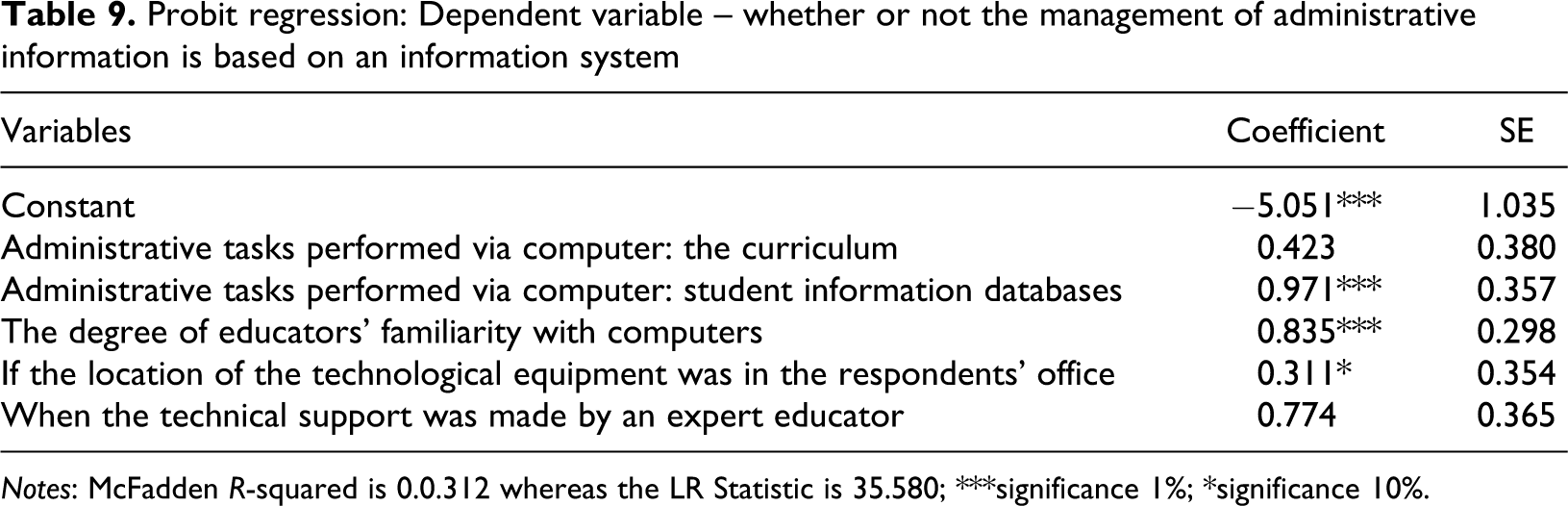
Notes: McFadden R-squared is 0.0.312 whereas the LR Statistic is 35.580; ***significance 1%; *significance 10%.
Discussion
With regard to ICT utility in school administration, the research data show that almost all of the questioned kindergartens’ principals consider new technologies to be important for the efficient management of the school. This result is confirmed by several theme-related surveys (Emvalotis and Tzimogiannis, 1999; Kinigos et al., 2000; Selwood and Pilkington, 2005; Hadjithoma and Karagiorgi, 2009) that reveal the positive attitude of educators towards the usefulness of ICT in contemporary education. The aforementioned outcome may be considered as extremely encouraging for present-day school administration, as the attitude and beliefs of the principals contribute significantly to the level and extent that new technologies are used in the everyday working environment. According to international studies (Lawson and Comber, 1999; Kirkman, 2000; Cloke and Sharif, 2001; Flanagan and Jacobsen, 2003; Tondeur et al., 2008b) principals’ feelings and beliefs towards technological innovations partially determine the effective introduction and adoption of ICT into the school environment. In addition, writers such as Gilmore (1994), Ritchie and Rodriguez (1996), Robbins (2000), Cuban (2001), Yuen et al. (2003), Albirini (2006) and Paraskeva et al. (2008) highlight human beliefs as one of the most important parameters for the successful and efficient usage of the capabilities that technological tools and software provide in everyday work.
Of particular interest is the discovery derived from the OLS model indicating that, when principals consider the introduction of ICT into school administration as vitally important, then they are more likely to be more familiar with the use of technological equipment. This result comes as no surprise since, as we have already mentioned, educators’ opinions and attitudes towards new technologies significantly influence the level and extent of ICT exploitation. Therefore, an environment for a positive disposition towards ICT principals needs to be nurtured, and the technological means and tools provided, in order to effectively introduce new IT knowledge and thereby improve familiarization.
With reference to the location of the equipment for administrative use, our research reveals that in almost half of the schools sampled, this equipment is not housed within the principal’s office, even though the principal is the qualified and responsible person for the school’s administrative processes. However, the location of the equipment is a vital parameter for the implementation of new technologies in everyday administrative work whereby prompt access to the available infrastructure facilitates, reinforces and increases the usage of technological equipment and applications. International studies raise the availability and accessibility issue as one of the practical factors that influence the extent of technological equipment usage (Tearle, 2004; Franklin, 2007). According to Tondeur et al. (2008b), there is a close relationship between the exploitation of ICT capabilities and computer availability, stating that the location of the school equipment is directly connected with the extent of its usage. This opinion is reinforced in a study by Ritchie and Rodriguez (1996), indicating that physical obstacles such as the location of computers and gadgets in places not easily and promptly accessible negatively affect the usage of the available equipment.
Regarding technical support for schools’ computer equipment, the current research’s outcomes show that the vast majority of the kindergartens sampled maintain a similar sort of technical assistance - either an external technician from a private company or from the responsible prefecture authorities, or an in-house expert educator. This result is in accordance with research conducted by Johnson et al. (2005) and Kitchen et al. (2007), according to which technical assistance in schools was provided either by the Ministry of Education’s ICT helpdesk or an ICT co-coordinator, or external suppliers (through equipment guarantees), or by a technician of a private company. This finding may be considered as positive since, according to several studies (Condie and Simpson, 2004; McGarr and O’Brien, 2007; Plomp et al., 2007; Bisaso et al. 2008; Eteokleous, 2008), ensuring the quality and permanency of technical assistance constitutes one of the important factors for the efficient introduction and exploitation of new technologies’ capabilities. As Mahony (2005) and Carter (2005) underline, the lack of sufficient technical support considerably affects the usage of new technologies on the part of educators, since educators’ concerns over dealing with technical problems or difficulties tend to induce feelings of insecurity and cautiousness, which intensify in the absence of a technician (Demetriadis et al., 2003).
Concerning the extent to which the available technological equipment covers the school’s administrative needs, our research shows that in the majority of the schools sampled, the technological equipment adequately or more than adequately responds to contemporary administrative needs. This finding comes as no surprise, due to the fact that the school units have adequate means in technological infrastructure, as we have already identified in the ‘findings’ section. However, in a research being realized among all members of the European Union (Empirica, 2006), the percentage of Greek educators agreeing or strongly agreeing with the statement that their school is properly equipped, is notably more limited (59.3 per cent) compared to our percentage (69.4 per cent). This difference may be due to the fact that during the intervening time between the two studies, the school units have been supplied with a greater quantity and quality of technological means, tools and software, and/or upgraded the available infrastructure; thus, educators’ satisfaction on the availability of technological equipment for administrative tasks would have improved.
Whelan’s research (2008) arrives at similar conclusions that schools in urban areas maintain a digital advantage compared with schools in rural areas. Indeed, the lack of technological infrastructure in some Greek kindergartens may be attributed to (as also stated by the principals sampled - see ‘Findings’ section) the lack of a unified central policy that governs the planning and distribution of the appropriate hardware and software to schools across Greece, taking into consideration the particular needs and demands of each school unit. Moreover, the limited financial resources that the schools are provided with influence the provision, maintenance and upgrade of the existing technological equipment; school units often find that they simply cannot afford to cover their ongoing expenses and buy new hardware and software.
Therefore, at present, the acquisition of technological equipment is mainly determined by the financial aptitude of the school committee and the willingness and vision of the principal, depending on the time served at the same school. As our research reveals, the majority of the principals questioned believe that the limited time spent serving as a principal in a specific school inhibits the desire to acquire the appropriate and necessary technological equipment.
However, the principal of a school unit is considered to be one of the most essential parameters for the effective and efficient introduction of ICT in the school environment (Hall and Hord, 2001; Picciano, 2002; Yuen et al., 2003; Robertson et al., 2006). They are responsible for: (1) determining the framework within which new technologies are about to be introduced into everyday school life; (2) implementing the school policy on ICT; (3) taking strategic decisions; and (4) promoting a collaboration and team spirit for accomplishing the school’s aims. As Laferriere and Breuleux (2002) mention, a school administration’s duties regarding ICT may initially be strictly technical (supplying and installing equipment), but thereafter would become more pedagogical (confronting ICT as a technological phenomenon) and finally settle down to organizational and administrative ones (developing and refining a common vision and goal).
With reference to the level of familiarization with the usage of ICT, our research shows that more than one-half of the educators sampled have adequate or more than adequate knowledge. This finding may be characterized as positive, since the ability to use the available technological equipment is considered one of the parameters that influence the efficient and effective introduction of ICT within the school environment (Wood et al., 2005; Dawson, 2008). The aforementioned result is in agreement with the findings of other relevant research (Politis et al., 2000), according to which the lack of self-confidence in computer, Internet and software handling may be characterized as a cause for not using new technologies.
The level of familiarization with ICT is connected with knowledge and abilities regarding the function of technological infrastructure, which in turn ensure a sense of trust in managing technological means and tools. Theme-related studies raise the issue of self-confidence as a determinant in using and exploiting the abilities of new technologies. Indicatively, the research of Hennessy et al. (2005) underlines the fact that educators fully realize the tangible benefits of ICT only when they feel confident in their knowledge and skills.
Nevertheless, the time served in education is logically connected with the age of educators. Within this framework, the OLS model shows that younger people tend to be more proficient in the usage of new technologies. This result is confirmed by the findings of relevant research, according to which people at a younger age feel more familiar with the implementation of ICT, have greater self-confidence in their technological skills, as well as a more positive attitude towards new technologies (Vicente and Lopez, 2006; Jimoyiannis and Komis, 2007; Williams and Coles, 2007). A possible explanation for this result may be the fact that younger educators are more likely to have used computers, and generally new technologies, during their student life, having received the necessary training via the university curriculum (Mahony, 2005). Moreover, educators that are about to retire may not have the same interest as their younger colleagues in acquiring new knowledge and skills. Conversely, a study by Baron and Bruillard (2003) reveals that younger educators do not necessarily have a more positive attitude towards ICT compared with their older colleagues. This opinion is in accordance with Waite’s (2004) research, which highlights the fact that more and more educators are feeling confident in their technological knowledge and skills, regardless of their age.
Additionally, the OLS model on the level of computer familiarization and the gender of educators reveals that male educators are more likely to be proficient in the usage of new technologies, even though the male representation in this research is only 3.8 per cent. This finding is in agreement with the results of relevant research in which male educators: (1) feel more confident in their computer abilities (Lee, 1997; Galanouli et al., 2004; Rekabdarkolaei and Amuei, 2008); (2) retain a more positive attitude towards ICT (Roussos and Politis, 2004; Oosterwegel et al., 2004; Jimoyiannis and Komis, 2007); and (3) use new technologies more often as an information tool in their everyday work (Tondeur et al., 2008b). However, it is worth mentioning several relevant searches (King et al., 2002; Shapka and Ferrari, 2003; Waite, 2004) that present evidence that, as time passes, the gap between men and women regarding ICT knowledge and familiarization is bridged.
Concerning the foremost reason for educators’ computer literacy, the research data reveal that ICT familiarization is mainly derived from attending a theme-relevant training programme. This outcome is confirmed by a relevant study (Soulis, 1999), in which the majority of the sample stated that they had acquired the necessary technological skills via training programmes. Specifically, several studies (indicatively, Waite, 2004; Condie et al., 2005; Karagiorgi and Charalambous, 2006; Murphy et al., 2007; Rekabdarkolaei and Amuei, 2008) underline the contribution of continuous ICT training to develop a positive attitude towards new technologies, to decrease the sense of technophobia, to limit educators’ differentiation between ages and genders, as well as to strengthen the self-confidence in technological knowledge and skills. Within this framework, international research (Almas and Krumsvik, 2007; Gulbahar, 2007; Ryymin et al., 2008; Cooke and Greenwood, 2008) considers the ICT training issue to be a vital one, not only for providing the educators with the required computer knowledge, but also for acquiring information literacy, in order to introduce ICT effectively within the school environment.
Even so, it is important for educators’ training to include a wide range of ICT knowledge and skills, in order to cover all personal needs and demands that ultimately ensure the successful introduction of new technologies in school administration; the result of our research, which shows that educators attribute their limited ICT familiarization mainly to insufficient training, is indicative of this. Moreover, the specific outcome is in agreement with related work (Soulis, 1999; Galanouli et al., 2004), according to which the training provided is considered to be unsatisfactory with regard to its profile, content and knowledge dissemination. Within this framework, several studies have been initiated (indicatively, Chapman, 2000; Kirschner and Davis, 2003; Martinez-Balleste et al., 2004; Galanouli et al., 2004; Waite, 2004; McNerney et al., 2006; Tondeur et al., 2007; Gulbahar, 2007; Voli and Erjavec, 2008; Wen and Shih, 2008), in order to determine the parameters necessary to provide efficient and effective ICT training as well as any drawbacks, and subsequently to identify a viable solution as a model for an effective training programme on new technologies.
Besides training programmes, our research reveals another key factor influencing educators’ computer knowledge: their personal interest in computers. This outcome is confirmed in a study by Simpson et al. (2005), which highlights that the technological skills and the extent to which new technologies are used depends significantly on personal interest, on the level of enthusiasm, and on the feeling of commitment possessed by educators. Moreover, Bisaso et al. (2008) research underlines the fact that principals’ culture and attitude towards ICT may be considered as significant parameters influencing the level and the extent of using information management systems. Furthermore, this finding is also in accordance with the result of our first OLS model previously discussed, according to which, when principals consider ICT introduction in school administration as vitally important, then they are more likely to be more familiar with the use of technological equipment, since they get involved or are interested to be involved with technological means and tools in a systematic way.
Moreover, the OLS model on the level of computer familiarization and the frequency of ICT use for administrative work, as well as the adoption of an information management system, reveals that educators are more likely to be more familiar with technological means and tools when they frequently use an information management system and the available technological equipment for their daily administrative work. This opinion is confirmed by several studies (Schiller, 2003; Tearle, 2004; Simpson et al., 2005; Wood et al., 2005) remarking on the fact that the systematic use of computers contributes to the proficiency in technological applications and to the acquisition of self-confidence in technological skills and knowledge.
With reference to the frequency of ICT usage for administrative work, the research data reveals that the majority of kindergarten principals use the available technological means and tools for managing the school administration’s work. This result is considered positive, as new technologies contribute to the simplification and backup of administrative work (Yuen et al., 2003). However, important parameters for the exploitation of technology’s capabilities are, among other things, the attitude of educators towards ICT and the existence of the necessary technological equipment. This opinion is reinforced by the OLS model results, according to which ICT is frequently used for administrative purposes when kindergarten principals consider the introduction of new technologies to school administration as of vital importance, and when the school is equipped with computers.
Of particular interest is the OLS model discovery concerning the more frequent usage of ICT for administrative work whereby some management activities are being developed and maintained in a computerized format. This result is indicative of the fact that principals recognize the benefits to be gained from ICT, and thus not only continue but increase the usage of technological tools for daily administrative purposes.
Still, according to our research, technological equipment is mainly or partially used for typing official records, while the vast majority of kindergartens’ principals do not use an information system for organizing and managing the entirety of administrative work. Yet, in order to fully exploit ICT, it is important to introduce a management information system within the school’s administration, and not just have isolated applications for all the reasons we have already addressed in the introduction of this article.
It is worth noticing the probit model discovery concerning the increased possibility of using an information management system when the school administration uses databases for the organization and management of official data (student information), and the technological equipment is located within the principal’s office, as well as when the educators sampled are familiar with ICT. As we have already discussed and analysed, several parameters are required in order to effectively introduce and exploit new technologies in school administration, including computer literacy and a proper place for the housing of technological infrastructure.
Within this framework of the essential conditions for the well-organized and proficient usage of ICT in school administration, our research data show the training and instruction of educators on ICT usage to be of primary concern, followed by the Ministry of Education’s appropriate planning of the distribution and maintenance of the technological equipment among kindergartens, the encouragement of educators in ICT usage, as well as the establishment of a suitable place for the housing of ICT.
Conclusion
In conclusion, the introduction and adoption of ICT in school units ensures an advanced electronic administrative framework. Bureaucratic work gives way to information management systems for the modelling and organization of administrative procedures, which align school administration with the principles and strategies of our information society. Within this framework, school units’ administrations are called to be equipped with technological infrastructure and provide the educational community with upgraded electronic/digital applications.
However, our research findings reveal that the school units sampled have to deal with several parameters (such as, a financial shortfall for acquiring, maintaining and upgrading technological infrastructure or a lack of personnel skilled in ICT) which in turn have an impact, to a varying extent, on how effectively ICT is adopted in the school environment. In practical terms, this means that addressing one factor alone does not necessarily bring about the successful adoption of technological initiatives in everyday work. However, it would result in the definition of a more appropriate framework for the ‘modification’ of school administration from its more traditional form to a more advanced and upgraded technological environment.
Based on these findings, we may state that, on the one hand, ICT usage in school administration is of vital importance for providing advanced administrative services and, on the other hand, due to the absence of basic parameters, principals are unable to sufficiently exploit technological capabilities for the benefit of their administrative work. Therefore, it is important to:
develop and adopt a unified central policy for acquiring and allocating technological equipment among schools in Greece;
create a school policy defining the necessary conditions and parameters for ICT adoption, taking into consideration the particular characteristics of each school unit;
allocate the necessary financial sources for equipment acquisition, maintenance and upgrading;
provide kindergartens with a unified and standardized information management system for all administrative transactions, which will ensure compatibility and interoperability for the organization and machine-readable information/data sharing;
ensure a permanent in-house technical assistance for the maintenance of the existing equipment;
provide educators with an organized, thematically focused and ongoing training programme for the instruction of all responsible school community members in the implementation of ICT in school administration;
eliminate the phenomenon of changing school units frequently while serving as a principal.
In conclusion, we may observe that the introduction of ICT into contemporary education is a reality, considering the valuable benefits that school units have gained by using advanced technological tools in everyday work. However, it is important to create the environment necessary for the successful and efficient adoption of new technologies in school administration, taking into consideration that school management is regarded as one of the main factors contributing to a school’s effective function.