



Abstract
This paper examines the relationship between leadership roles and skills in secondary schools in Greece. Drawing upon a sample of 124 secondary public school principals, a structured questionnaire was developed to measure leadership roles and skills. The Competing Values Framework (CVF) was adopted to operationalize the eight leadership roles. The threefold classification of skills by Katz (1974) was enriched by a fourth categorization in order to identify principals’ skills. The results indicate that Greek principals are inclined to perform the roles of innovator, director, monitor and facilitator more intensely, giving less attention to the broker, producer, coordinator and mentor roles. The importance of the innovator role in explaining the variance of two of four skill categories was confirmed; while the monitor role was strongly associated with human skills. The administrative skills were negatively associated with the facilitator role while the conceptual skills were not found to be correlated to any role. It is argued that understanding the nature of the associations could enable education policy makers and principals to pursue these roles and behaviors, thereby contributing to improvement of the school.
Introduction
In recent decades educational organizations have sought to meet the changing requirements of the policy environment and to guarantee high quality education. These changes, which are promoted in most educational systems, have resulted in increased demands being placed on school principals. The workload difficulties that principals face are expected to increase further in the coming years as a result of the forces of globalization, the introduction of market-based initiatives in schools and the complexity of schooling. Other factors that may add to these problems are the economic and political expediencies that often permeate the education system and require particular abilities and skills and behavioral complexity, as well as the increased expectations and demands from all those connected to a school (Weller, 1998; James and Vince, 2001: 313). Because managerial roles are embedded in the contextual specifications of practices and traditions in each country, principals operate in very different manners (Pearson and Chatterjee, 2002:704). As a result, the workload for principals includes diverse aspects such as managerial, instructional, political, social and moral (Vandenberghe, 1995); principals find themselves required to possess a range of specialized abilities.
This paper is structured as follows. The next section presents information about the education system of Greece and elaborates on the definitions and measures of leadership and skills. This is followed by a description of the research methodology and details of those participating in the study of the principals’ leadership profile. This is followed by statistical analysis of the data collected and a presentation of the relevant findings. Conclusions and management implications for secondary education are discussed in the final section.
Literature review
Principals’ roles
School principals operate on the boundary between the administration of education and the actual delivery of instruction to children. Following the traditional tendency of dichotomy in teachers’ work (Boyle and Woods, 1996: 550) the principal serves as a liaison between the school and central or district level government, as the school instructional leader and a member of the organizational hierarchy (Daresh, 1998: 325). The role of the principal is defined in most cases as that of a middle manager because the principal is the connecting link between central administration and the classroom and between parents and teachers (Myers and Murphy, 1995: 14). Principals have been characterized as a combination of administrator–manager and educational leader (Brederson, 1989); as such, they have to make difficult choices between instructional leadership and managerial tasks (Portin et al., 1998). However, identification of the two main roles that a principal performs is not uniformly accepted by researchers (Lee et al., 1992: 244); it is claimed that principals are affected by factors within and outside the school environment, such as teachers, students, parents, committees and other groups, central and regional offices, all playing ‘conflicting’ roles. In addition, most school leaders usually do not become principals in order to be managers and thus they regard these two roles as being disconnected (Goodwin et al., 2003; Walker, 2009).
Traditionally, the principal’s role was that of a manager, which included the responsibilities of maintaining safe schools, overseeing the budget, complying with regulations and mandates, coping with teachers, students, parents and so on.(Portin et al., 1998; Walker, 2009). Principals were then asked to become ‘instructional leaders’ by setting goals, maintaining discipline and evaluating results for students; and have recently been encouraged to be facilitative leaders, by building teams and creating networks (Ojo and Olaniyan, 2008: 22). As schools make efforts to adapt to rapidly changing conditions, the role of the principals is constantly evolving. Analysis of evaluations of principals confirms that they are occupied with various roles in order to achieve a school’s goals. There is a rich tapestry of metaphors of the principalship as well as frequent changes of metaphors of school leadership over the years (Ojo and Olaniyan, 2008). The distinction between the principal as a program manager (in the 1960s and 1970s) and as an instructional leader (in the l980s) and eventually a transformational leader (in the1990s) has been emphasized (Vandenberghe, 1995: 31). A principal has been variously described as a politician and facilitator, a broker, a negotiator, a missionary promoting social change, an educator, a moral steward; or as a professional manager (Brederson, 1989; Eden and Hertz-Lazarowitzp, 2002: 215–211; Murphy, 2002). In addition, the principal’s role has expanded to include that of entrepreneur, community organizer and builder in addition to that of instructional and moral leader (Walker, 2009).
Furthermore, the manner in which principals respond to their duties is determined by contextually based issues: it could be characteristic of a manager, disciplinarian, visionary, facilitator, transformer, budget analyst, instructional expert; or all of these (Catano and Stronge, 2006: 224). Although being a good manager was once sufficient, the principal’s job has now expanded to include accountability, student achievement and resource allocation. As a result, a new type of leader has emerged who also fulfills the responsibilities of an instructional leader, an accountability facilitator and a manager (Scott and Webber, 2008). Thus, principals’ roles encompass more diverse duties and expectations, ranging from instructional leader to financial manager, policy developer, decision maker, staff mediator and negotiator, and marketer (Scott and Webber, 2008: 762). Moreover, principals are required to be good teachers, change agents, evaluators, effective disciplinarians and lovers of progress (Ojo and Olaniyan, 2008: 177).
In the highly centralized and bureaucratized Greek educational system, compliance with the directives of the country’s Ministry of Education’s is crucial for effective management of a school and therefore the role of principals is generally very limited. All educational policy decisions – that is, the curriculum, goals, standards, funding and programming of the school maintenance – are made centrally and controlled by a hierarchical bureaucratic process. Principals find themselves occupied with the application of laws and the observance of newsletters and generally meeting bureaucratic obligations, because their work is overseen by the Ministry of Education, with allocation of responsibility for administration being vague and principals not having the power necessary for the enforcement of punishments and rewards (Saitis et al., 1996). The Ministry of Education is responsible, among other items, for the selection and placement of principals on the basis of bureaucratic and political criteria rather than their qualifications. As such, the centralized system in Greece has greater government involvement in the selection of principals and less with preparation of principals than is seemingly the case with other, less centralized systems (Athanasoula-Reppa and Lazaridou, 2008). The main administrative bodies are the teachers’ council and the school council; other bodies include the pupils’ and parents’ council and the school committee responsible for financial management. The principals are assisted in their duties by one or more vice-principals. As a result, principals need to deal with a large number of stakeholders and therefore to strive to achieve consensus. Their influence with regard to the educational personnel of a school is slight, mainly because of the legislative vacuum that exists in connection with the evaluation of teachers (Papanaum, 1995: 7; Saitis et al., 1997: 72).
Overall, the principals’ role appears to be complex and demanding, involving elements of leadership and management seemingly replete with conflicts given that all schools have their own particular circumstances to be addressed.
Skills
Complex skills, abilities and competences are required of principals in order to execute the activities and functions which are inherent in their position (Catano and Stronge, 2006: 223; Grissom and Loeb, 2009). Consequently, the skills can be defined in the context of the position to be filled. In this sense, the term skill refers to ‘any of the behaviors or abilities that an individual has’ (Kingsley, 2000: 296) or ‘the ability to do something in an effective manner’ (Yukl, 1994: 235).
The definition of ‘skill’ has broadened considerably; nevertheless, the policy discourse surrounding skills continues to generate dilemmas and contradictions. There is a shift from the traditional view of skills involving high level educational qualifications or ‘hard’ technical abilities towards the ‘soft’ relationship skills such as communication, problem solving, team working, and so on (Payne, 2000: 354). In the UK in particular it seems that the notion of skills remains ‘indefinable’ as the boundaries between skills and competences become increasingly fuzzy because of the implementation there of National Vocational Qualifications (Payne, 2000: 354–355). According to the UK approach competence is defined as ‘the ability to perform activities within an occupation to the standards expected in employment’ (Thompson and Harrison, 2000: 838). In a model developed in the USA the concept of competences includes personality traits, motives, cognitive and interpersonal skills and that all these compose an underlying characteristic of a person causing superior performance (Boyatzis, 1982).
With regard to the classification of skills, the approach proposed by Katz (1974), according to which the technical, human or interpersonal skills and conceptual or cognitive skills are considered essential to execute effective leadership, is widely accepted.
More specifically: ‘Technical skills’ refers to the ability to use tools and analytical techniques for a specialized activity such as developingawareness of issues related to that activity; for example, methods, processes and techniques (Daresh and Playko, 1994: 38; Yukl, 1994: 251). ‘Human skills’ refers to the ability to understand the feelings and behavior of others, to communicate effectively and to establish cooperative relationships (McCredie and Shackleton, 2000: 110; Robertson 1998: 362). ‘Conceptual skills’ are related to general analytical ability, logical thinking and understanding of the entire organization as a system (O’Reilly and Chatman 1994: 603; Yukl, 1994).
According to a similar typology by Field (1990, to Kingsley, 2000: 296) skills are classified as cognitive (thinking or knowing), perceptual (sensing) and psychomotor (doing) skills. A combination of technical, conceptual and interpersonal skills has been defined as administrative skills (Worral and Cooper, 2000: 37–38). According to this point of view, delegation, planning, organizing, negotiating, problem-solving, time management and so on are regarded as managerial skills (Eden and Hertz-Lazarowitzp, 2002: 215; Yukl, 1994: 235). In addition, social skills and self-awareness have been investigated in the context of managerial skills (Daresh and Playko, 1994: 38; Goleman, 1998: 95).
Skills should be assessed either directly on the basis of job analysis or by means of constructing professional behavior standards (Kingsley, 2000: 296; Ouston, 1993). For example, following analysis of an activity job tasks can be identified, from which the necessary qualities or abilities of the person can be more easily assessed.
In the field of educational management, classifications of school leadership tasks are emphasized (Hall et al., 1989; Leithwood and Montgomery, 1986).
In particular, the tasks of head teachers in secondary education can be organized into four broad categories: educational (technical) management;conceptual and operational; human; and external management (Field, 1985: 309–321). Categorizing the managerial roles and the different ways in which these are interpreted by managers provided insights into the required skills (Jones, 1988: 52; Pearson and Chatterjee, 2002: 696). As a result, it has been argued that a manager or a leader should possess a blend of conceptual, technical, and human relations skills in order to be successful (Burke and Collins 2001: 246).
The competing values model1
In order to implement the leadership roles the Competing Value Framework (CVF) was adopted (Quinn, 1988). This involves mapping of an organizations’ leadership profiles, which can be widely accepted because it is empirically validated through multidimensional scaling (Quinn, 1988; Quinn and Rohrbaugh, 1983; Quinn et al., 1996). The Competing Values Model of managerial leadership has recently received renewed attention (Belasen and Frank, 2008; Cameron et al., 2006).
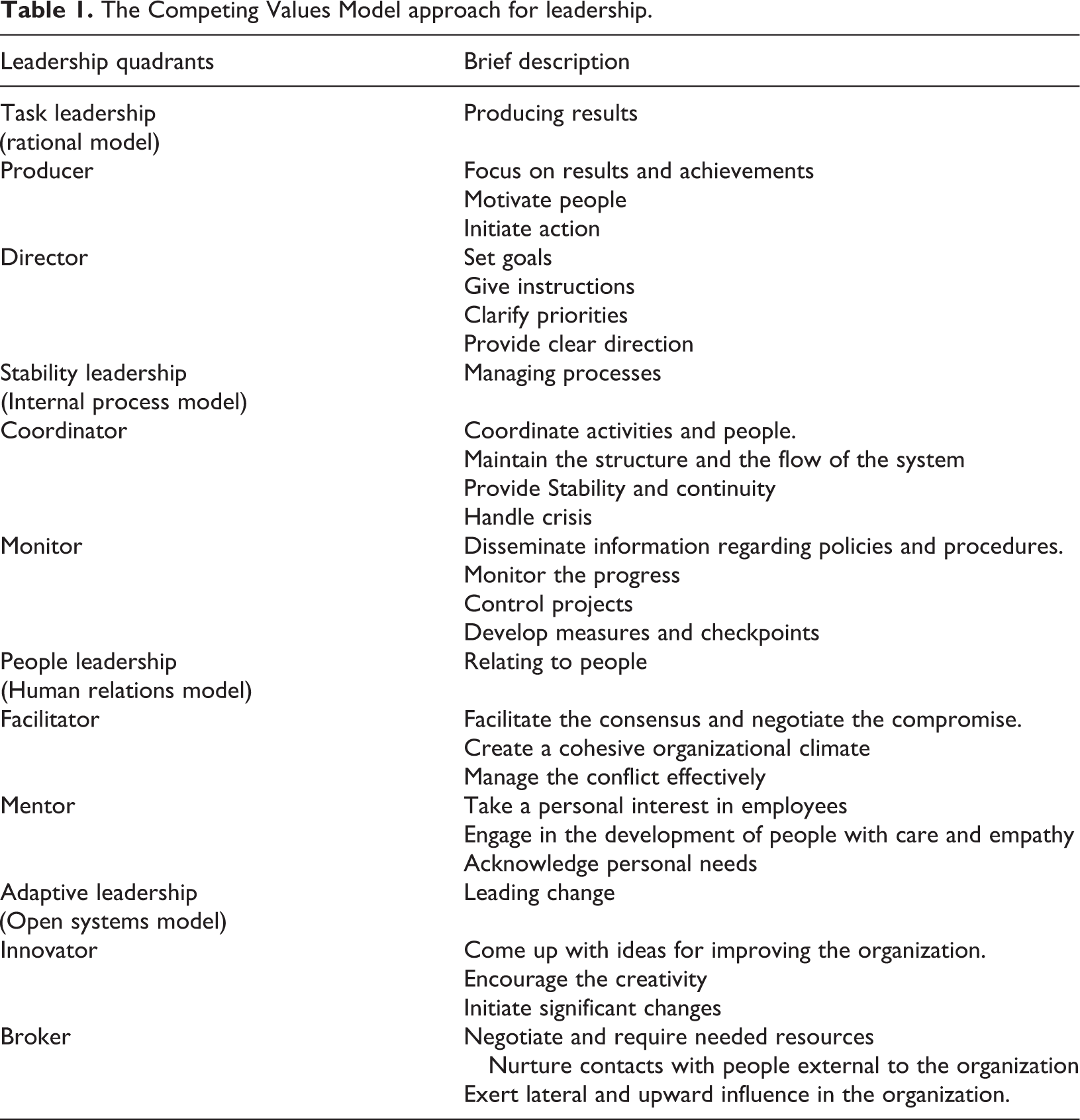
Each continuum of the CVF stresses a value that is opposite to the value at the other end of the range. It is constructed according to two dimensions (flexibility versus control; internal versus external focus), defining four quadrants and eight leadership roles. The framework involves two axes: the vertical axis ranges from flexibility/spontaneity to predictability/structure, the horizontal axis from internal to external focus. Each quadrant of the framework represents one of four major models of organization and management theory. Each model has a perceptual opposite. For instance, the adaptive leadership (leading change) quadrant emphasizes a flexible structure and an external focus. Its exact opposite is the stability leadership (managing processes) which emphasizes a stable structure and an internal focus. Quinn locates his eight operational roles within the quadrants – two to each quarter (Quinn et al.,1996). The model is shown in Figure 1; and Table 1 provides a description of each quadrant and a description of its accompanying leadership role (adapted from Quinn et al. 1996).
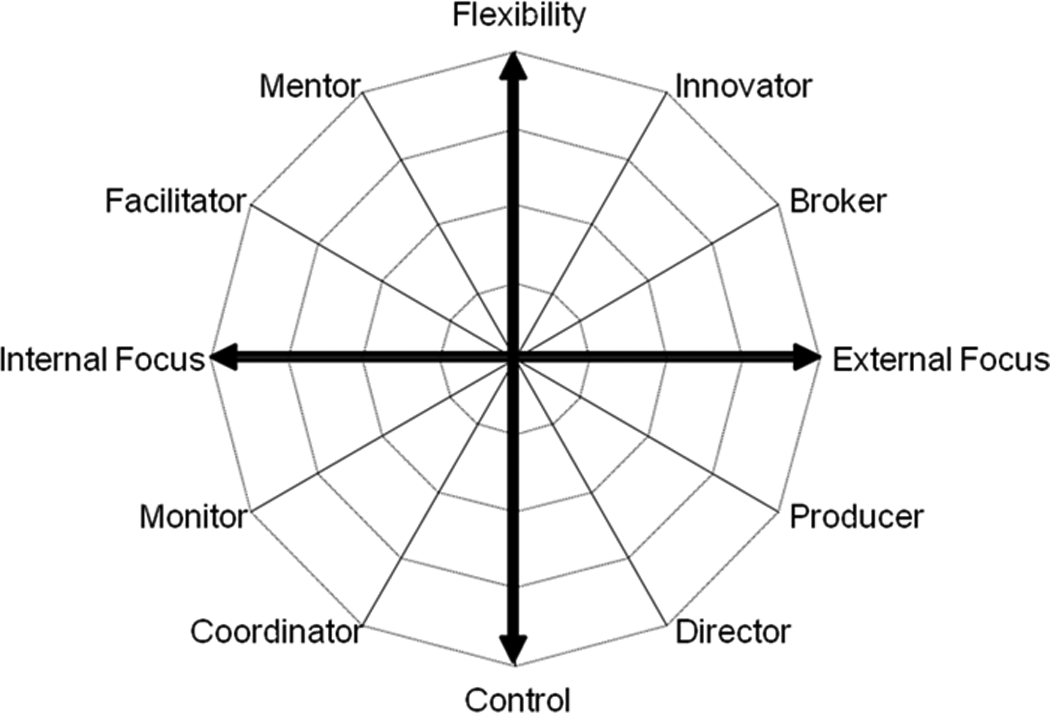
Leadership roles (adapted from Quinn, 1988).
The Competing Values Model approach for leadership.
Summarizing the current literature suggests that the work of principals is differentiated from that of leaders in other organizational settings due to the complex organizational characteristics of schools (Greenfield, 1995). In particular, analysis of evaluations of principals confirms that they are occupied with various roles in order to achieve the school’s goals. Principals therefore have to possess diverse skills to be effective both as managers for their schools and, at the same time, as educational leaders enhancing student performance.
Methodology
To examine the principal’s roles in this study, CVF was used: this model explains the various managerial roles required for personal effectiveness in complex environments in terms of skills ‘…necessary to perform each role ’ (Vilkinas and Cartan, 2000: 507).
Specifically, the current study seeks to: Describe and explore the leadership profile of principals by utilizing a comprehensive and diagnostic framework such as the Competing Values Framework; and Investigate the relationship between leadership roles and skills.
Building on the competing values approach for leadership, this study attempts to shed light on the leadership roles, skills and behaviors which are associated with improving the efficiency of the principals and their effectiveness in their schools and which are supportive in an imposed development or change process.
Investigating the managerial–leadership roles and the relative contribution of skills, and identifying their relationship is considered indispensable in the educational system.
Sample and demographic characteristics
The research was focused on randomly selected principals of secondary public schools in the Thessaly region. Some 124 secondary schools were involved, of which 70 were junior high schools (approximately 56%) and 54 were senior high schools (approximately 44%).
There was a response rate of approximately 97% of valid questionnaires: this high rate of return is believed to be due to the presence of the researcher during the distribution and collection of questionnaires.
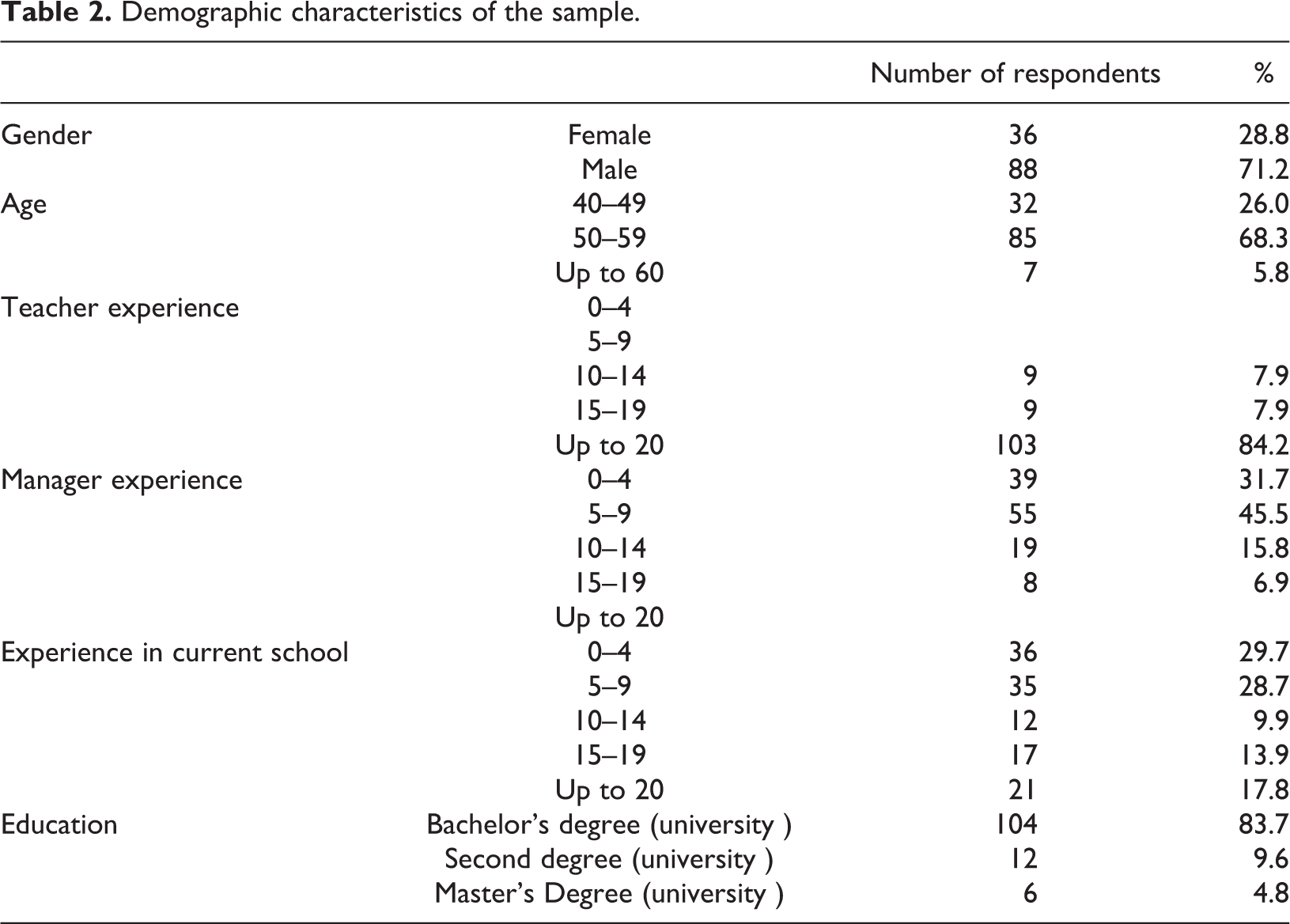
Other demographic characteristics of the sample are shown in Table 2.
Demographic characteristics of the sample.
Questionnaire design
The research instrument was a structured questionnaire based on a seven-point Likert–type scale, which was developed to measure leadership roles, skills and behaviors. Based on the advantages of the CVM, the leadership roles scale was articulated by items suggested by Quinn (1988) and developed by Quinn et al. (1990) and Denison et al. (1995). Further support for the basic structure of the CVM to be a two-dimensional model with four quadrants was also found in several studies and various applications (for example, Vilkinas and Cartan, 2000, 2006). Existing scales were altered to fit the domain and objectives of the research. Thus, some items were reworded, with extra, complementary items being added.
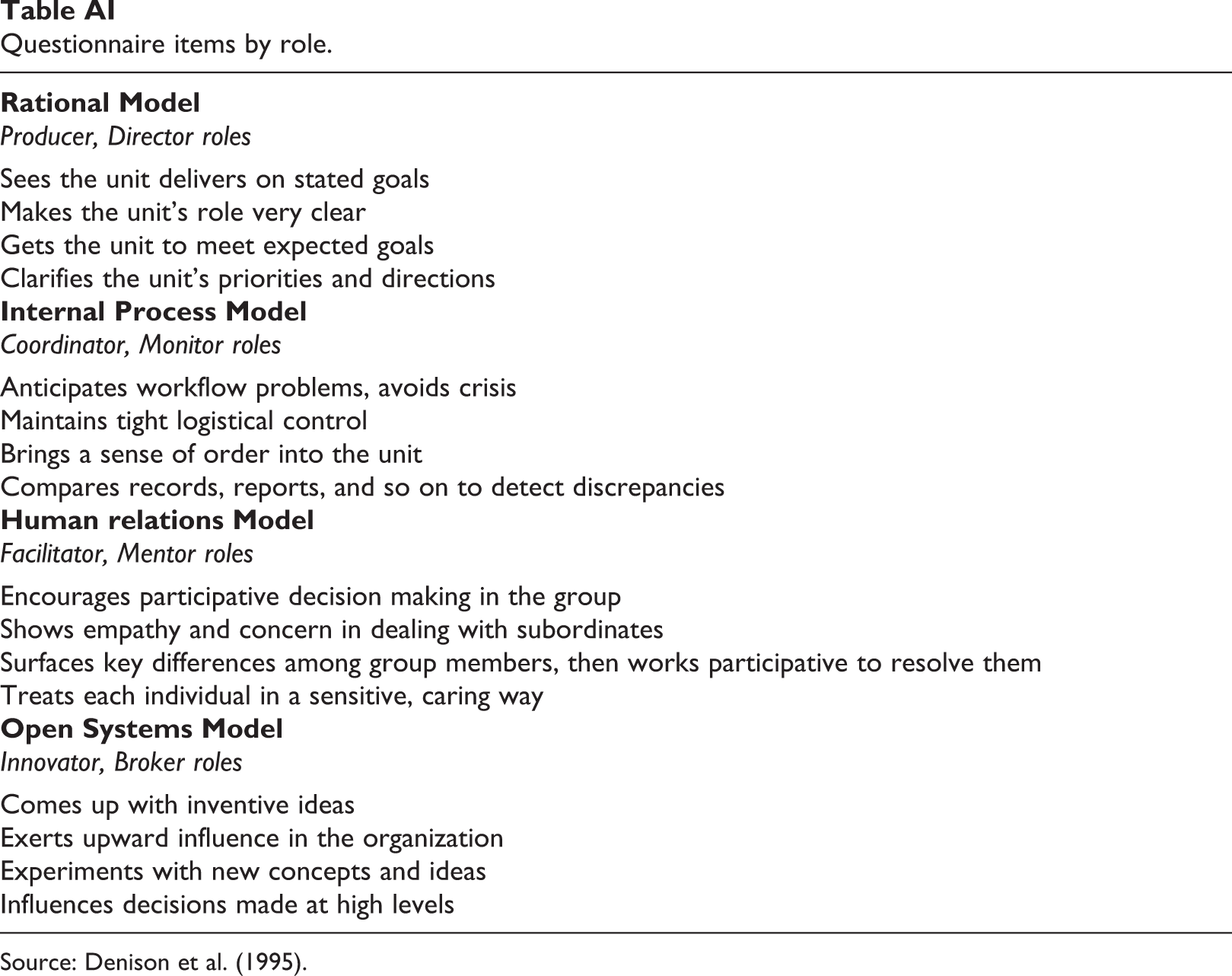
More specifically, each scale presented two items (descriptive phrases) that could be used to describe the effectiveness of a manager in a certain role (see Appendix 1).
In this questionnaire modified items are included to capture the diversity of education.
For example, with regard to the innovator role, the items were formulated as follows: ‘Encourages the introduction of innovations in the actions of the school’, and ‘Contributes, to school improvement efforts allocating duties and responsibilities in a creative way’.
Responses were recorded on the seven-point Likert scale ranging from 1 (‘almost never’) to 7 (‘almost always’). Principal Component Analysis (PCA) was conducted to identify latent factors within leadership roles. Mean scores were used for each role of the eight CVF roles: the scores for both items were summed and divided by two to generate the mean score for that role. The mean values, standard deviations and alpha coefficients for each scale are shown in Table 5.
Skills were categorized by adopting the skills classification as proposed by Katz (1974). Management skills were also included, as proposed by Burke and Collins (2001). The relevant estimation of principals’ skills made by Daresh and Playko (1994) was taken into account.
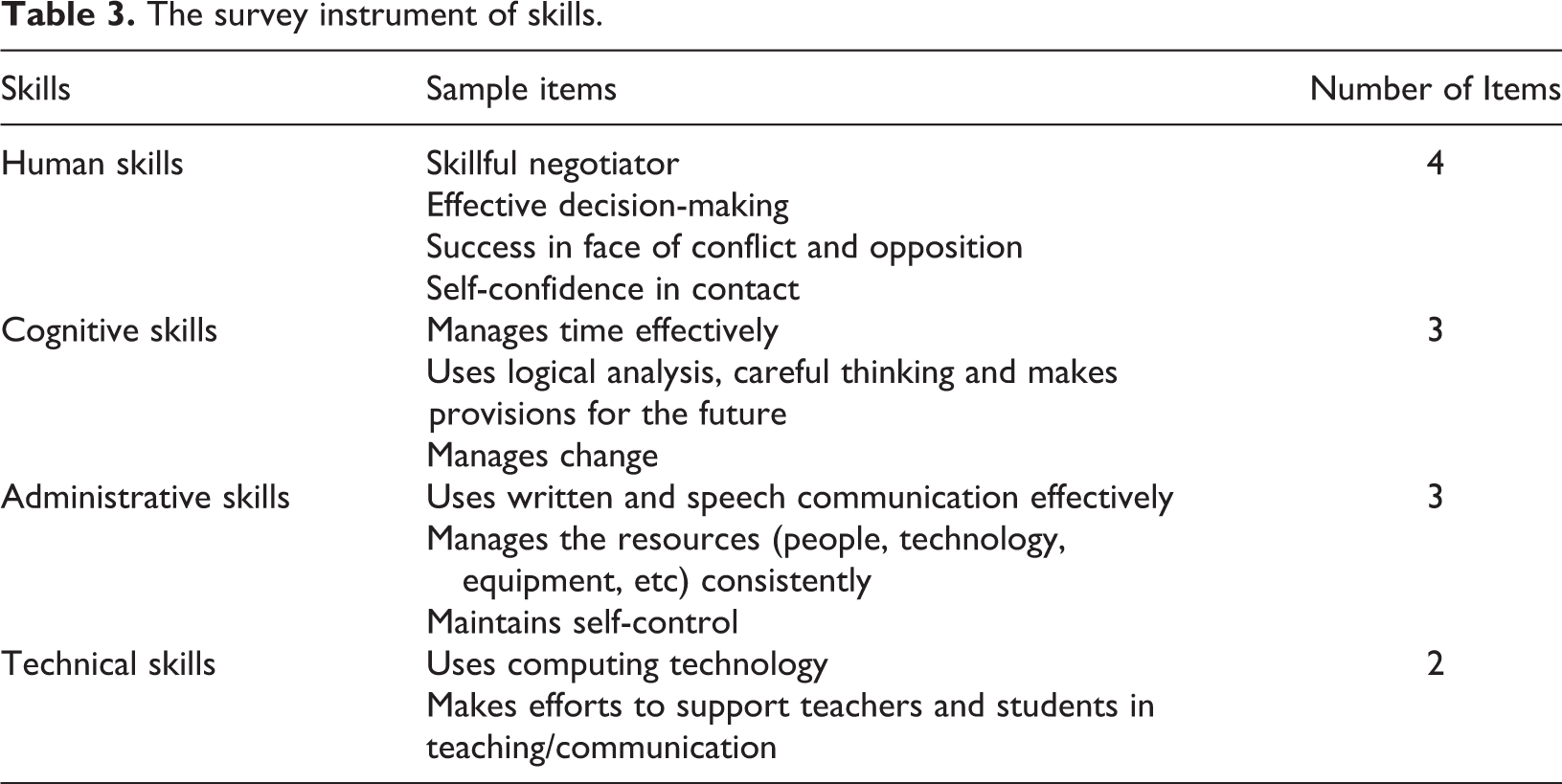
A measure for the skills was developed. The skills scale offered twelve items for the respondents to consider. Responses were recorded on the same seven-point Likert scale used for the eight operational roles. Principal Component Analysis was conducted to identify latent factors within the skills scale. The sub-scales used for the measurement of skills in secondary school are described in Table 3; and the mean values, standard deviations and alpha coefficients for each sub-scale are shown in Table 5.
The survey instrument of skills.
Statistical analysis and results
Leadership profiles of secondary public school principals
Regarding leadership roles, the participating principals considered the facilitator (mean = 6.38) and the director (mean = 6.30) roles as those most frequently adopted; they largely discounted the producer (mean = 5.40) and the mentor (mean = 5.97) roles. The CVM-based instrument, applied as a diagnostic tool, reveals that these schools were deficient with regard to roles emphasizing effectiveness, high productivity, taking a personal interest in employees, clarifying roles and defining expectations; and with regard to coordinating activities and people in connection with the producer, mentor and coordinator roles.
A t-test analysis was used to assess the statistical significance of the differences among the means calculated for different roles. The results, summarized in Table 4, indicate that all that identified roles have statistically significant differences at the level of p < 0.001.
Results of t-test analysis among leadership roles.
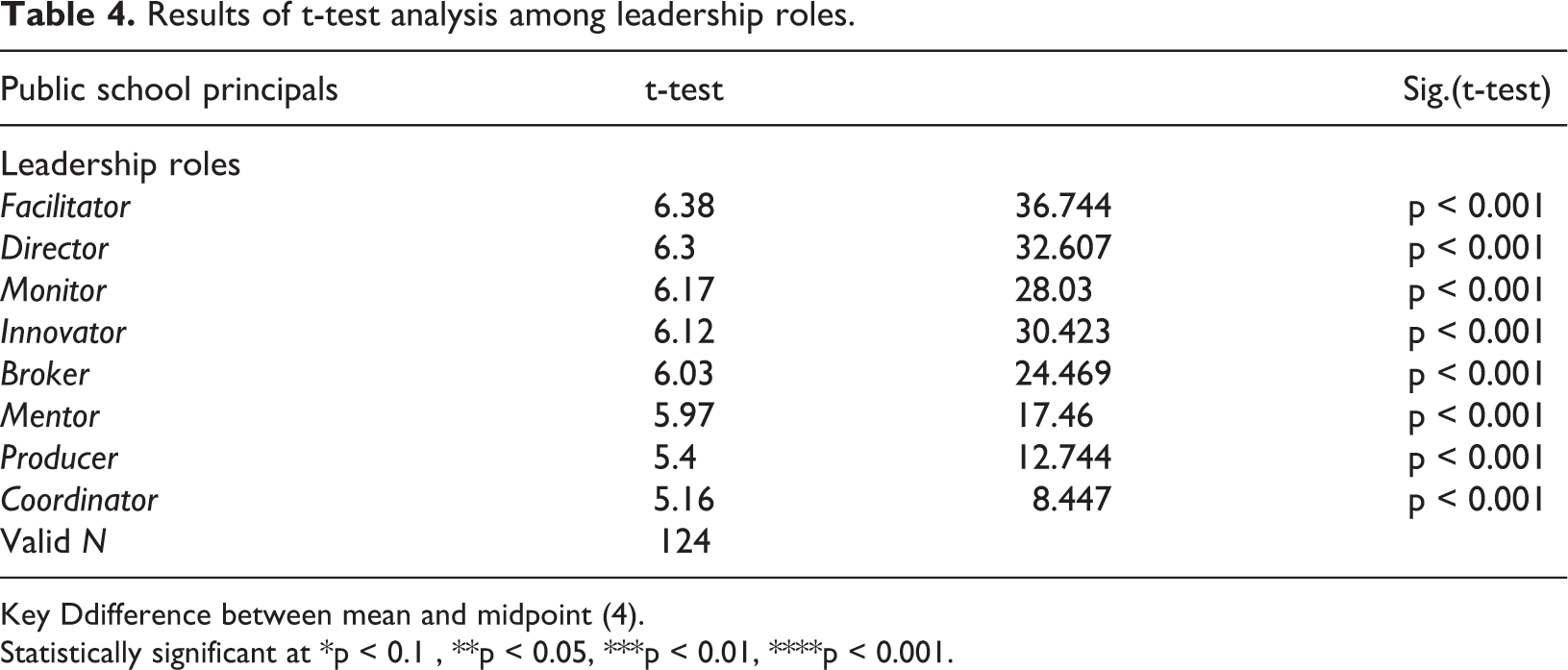
Key Ddifference between mean and midpoint (4)
Statistically significant at *p < 0.1 , **p < 0.05, ***p < 0.01, ****p < 0.001
The findings suggest a bias towards one of the two roles proposed by each CVM quadrant. More specifically, participants preferred the facilitator to the mentor (human relations model, HR), the director to the producer (rational model, RM), the innovator to the broker (open systems model, OS) and the monitor role to the coordinator (internal process model, IP). A graphic representation of the findings across the emerging leadership profiles is presented in Figure 2.
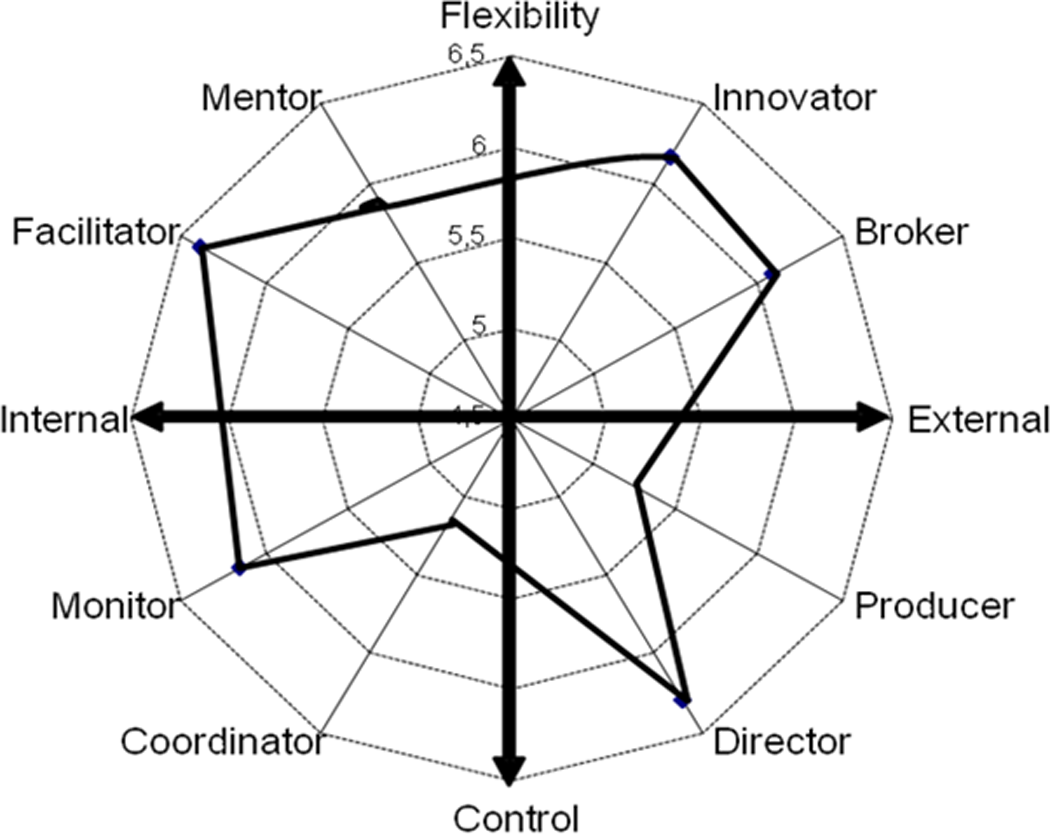
Leadership profiles of principals.
Principal component analysis
Principal Component Analysis (PCA) was conducted to identify latent factors within leadership roles. Eight factors were extracted from the data, as it is shown in Table 5. These principal components accounted for over 85% of the total variation. A cut-off of 0.50 was used for item scale selection and a normalized varimax rotation was adopted to produce a simple and interpretable structure. Following an inspection of the items’ loadings on each factor, eight distinct principal components were identified, corresponding to the eight managerial roles. Similarly, PCA was performed to identify latent factors within the skills scale and to verify the reliability and validity of the emerging dimensions. Four factors with eigenvalues greater than one (Kaizer, 1960, 1974) were extracted from the data, accounting for over 72% of the total variation
Descriptive statistics and internal reliability analysis of all scales.
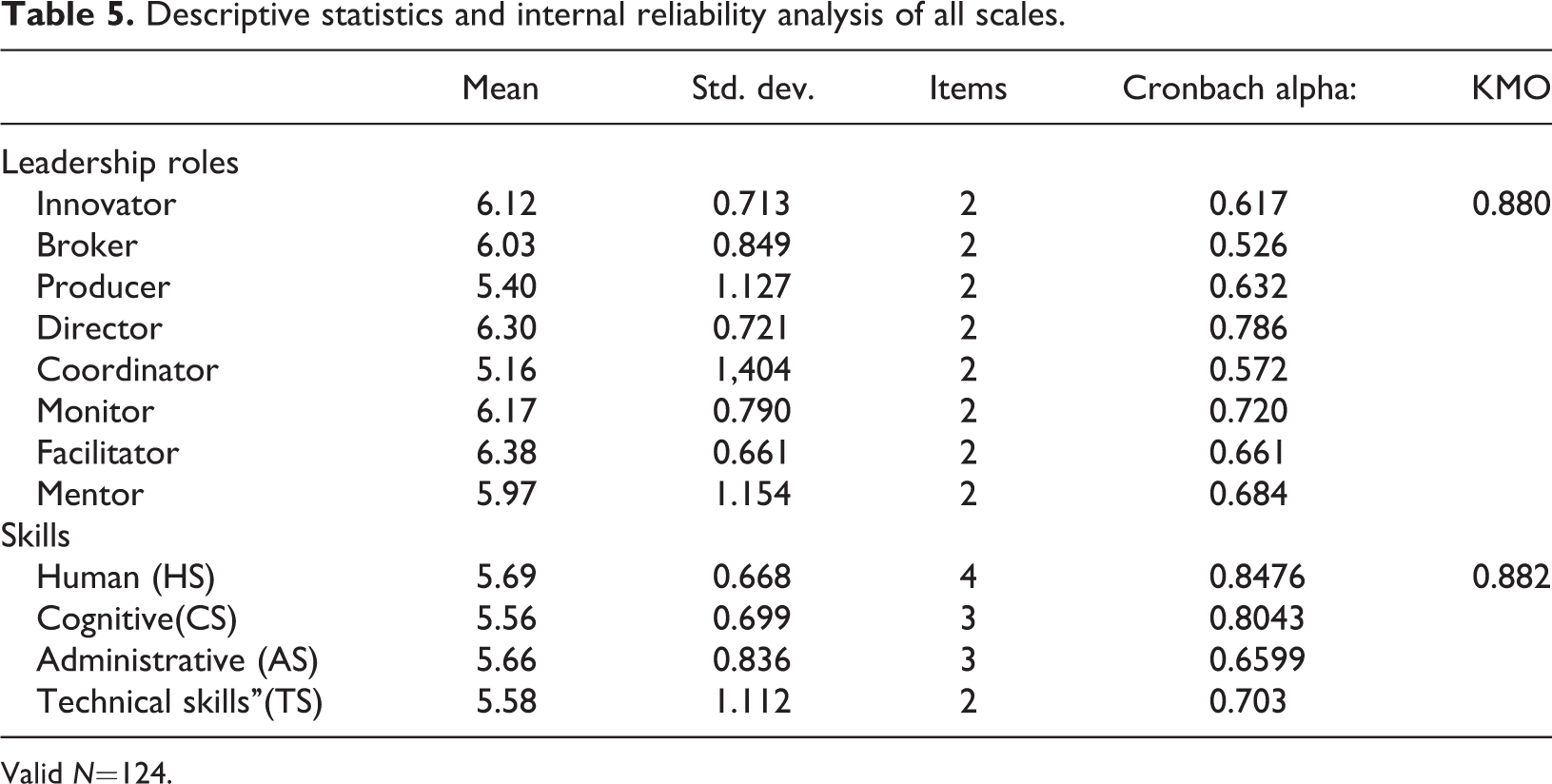
Valid N=124
Inter-item analysis was used to verify leadership roles and skills scales in order to identify the internal consistency or the reliability of the analytical instrument used. Specifically, Cronbach’s alpha coefficient was calculated for each scale, ranging approximately from 0.58 through 0.84 (Table 5). Thus, all sub-scales exceeded the minimum acceptable reliability level of 0.5 as recommended by Flynn et al. (1990). Consequently, the construct validity of the underlying factor structure of the skills instrument, as well as that of the CVF roles was largely confirmed.
Multiple regression analysis
Four multiple regression analyses were conducted, one for each taxonomy of skills as the dependent variable, testing their relationships with leadership roles. Age, gender, studies, teacher experience, manager experience, experience in current school and education were included as control variables. The results indicate that the predictor variables have captured a significant proportion of change in the dependent variables, explaining 20% variance in administrative skills, 14% variance in cognitiv
No major problems of multi-collinearity arose between the independent variables because the Variance Inflation Factors were significantly below the three-points limit suggested in the literature (Myers, 1990; Stevens, 2002). The results of these regression analyses (standardized betas, adjusted R square, significance levels) are shown in Table 6. The data were also examined for outliers, skewness, kurtosis and multivariate normality.
Results of regression models testing the relationships of leadership roles and skills.
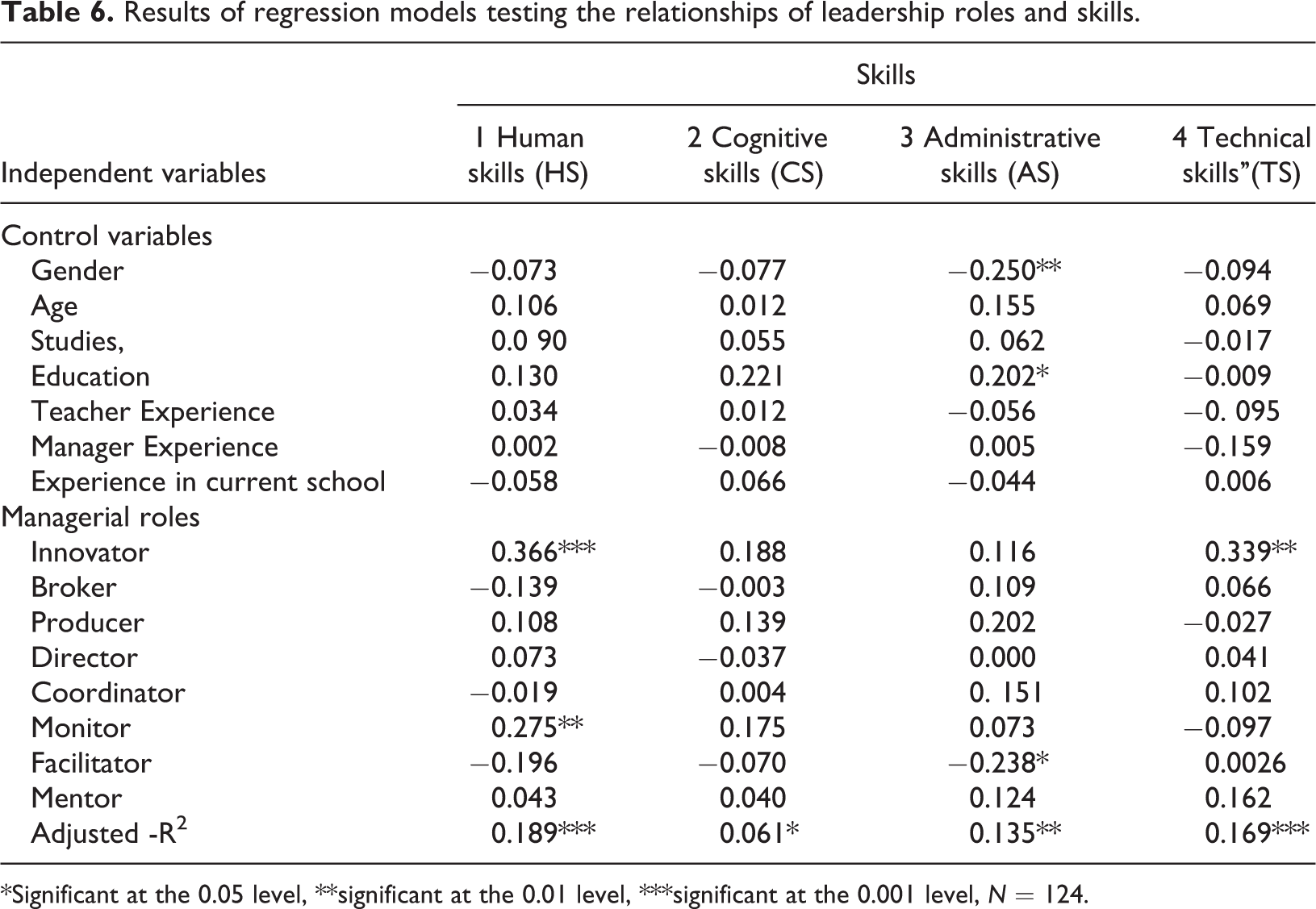
*Significant at the 0.05 level, **significant at the 0.01 level, ***significant at the 0.001 level, N = 124.
In model 1, the values of standardized betas reveal that innovator (stand. B = 0.366) and monitor (stand. B = 0.275) are significantly and positively related to human skills. In model 2, the cognitive skills are not related to any role. Examining the administrative skills (model 3), facilitator (stand. B = -0.238) is significantly and negatively, strongly positive associated with the facilitator role. With regard to technical skills (model 4), only innovator exerts a strong positive relationship (stand. B = 0.339). Consequently, innovator and monitor were found to be the most powerful predictors of human skills, while facilitator is negatively strongly associated with administrative skills and innovator positively related to technical skills.
Discussion
Identification of profile of principals’ roles
The findings reveal that the participating secondary education principals fill all the roles. However, they frequently adopt a role from each quarter respectively. More specifically, in the open systems model they select the innovator rather than the broker role. The Greek educational system is currently subject to a new program of reform. Changes imposed by the Ministry of Education, such as the use of information technology, introduction of an evaluation system and programs to foster entrepreneurship presuppose the existence of a consensus not only for successful implementation but also for teacher acceptance. The innovator role, which is focused on adoption of new ideas, and entrepreneurship, facilitates the implementation process of innovative systems and programs. In addition, principals have a responsibility to represent the school to external constituents and to present ideas to the upper hierarchical levels of education. Generally, principals attempt to promote a positive image of their school to their local community and to the hierarchical upper levels. Nevertheless, they establish good relationships mainly with parents and partially with the local community, the latter due to limited interest of the community in building coalitions and networks with principals and schools. The short-term prospects and the temporary involvement of parents and students, together with the frequent transfer of principals to different schools, can result in superficial participation, inhibiting the development of in-depth personal relationships with the internal and external environments (Greenfield, 1995: 62; Pashiardis and Orphanou, 1999:247).
Principals also choose a director role rather than that of producer in the rational goal model. Principals and teachers have civil servant or semi-civil servant status in the highly centralized Greek educational system. According to the existing legislation, school teachers must engage with the administrative teachers’ council: this council is authorized to make decisions about planning, control and evaluating school activities (EURYDICE, 1990: 104). Principals of Greek schools have to achieve agreement, provide direction and consensus among council members, tasks assigned to the director role. Moreover, they attempt to use effectively the limited financial resources provided by the government to secure the necessary agreement of other administrative bodies. As a result, the participating principals adopted the director role, characterized by a control orientation.
Regarding the performance of educational organizations, the focus on outcomes and students achievements, priorities of the producer’s role, are of central importance in many countries. The principals in Greek schools failed to provide insights of value into their daily practices that would foster an environment supportive of high student achievement such as developing personnel, facilitating leadership and recognizing ultimate accountability. One reason for this is probably the incomplete legislative framework, because the development of the system for evaluation of teachers suffers from a major dispute between teachers and government bodies: it was found that teachers did not accept limitations to their classroom autonomy arising from evaluation criteria (Pashiardis and Orphanou, 1999: 244). In addition, although the schools do not have adequate physical facilities, no rewards are provided for achieving exceptional educational goals and so principals lack the incentives to promote excellence.
The results of this study highlight the preference of principals for the monitor role within the internal process model. Traditionally, monitoring of work performance is a core activity in the Greek Civil Service (Kufidu et al., 1997: 247). In schools, the monitoring of performance work is interpreted as alignment of teaching activities to all government decrees (Pashiardis and Orphanou, 1999: 243). In other countries (for example, the USA and the UK) principals have been responsible for ‘whole school planning’ (Hargreaves and Hopkins, 1991). By way of contrast, the coordinator role is expected to maintain, structure, schedule and coordinate the system; however, principals seem to be burdened with a variety of workloads – mainly, it seems, routine paperwork (Abdullah et al., 2009).
The facilitator role is more frequently adopted than that of mentor with regard to the human relations model. Principals attempt to establish a positive educational environment and to foster collective effort by managing the interpersonal conflict effectively. However, they tend to avoid any in-depth investigation of the underlying causes of teachers’ conflicts, preferring instead to maintain a neutral position rather than actively engaging to achieve a settlement, in the apparent hope that resolution of conflict will occur without their interference (Pashiardis and Orfanou, 1999: 244; James and Vince, 2001: 313). Whilst it has been argued that a principal must be prepared and encouraged to exercise leadership in schools (Pashiardis, 1995, 2004; Bush and Jackson, 2002), the lack of a robust legislative framework to support them, in conjunction with prevailing cultural values, can hinder the exercise of leadership roles. Indeed, successful leadership requires a pervasive ethic of care which promotes sound relationships and builds competence in creative thinking, characteristics of the mentor role (Scott and Webber, 2008). Principals need to achieve the goals established for their schools, demonstrating a degree of emotional sensitivity to the needs and aspirations of their colleagues as well as the parents and students served by their schools (Leithwood, 2005; James and Vince, 2001: 309).
The results of this present research indicate that the principals in our study recognized the roles of innovator, director, monitor and facilitator as the dominant leadership roles in their schools. They did not exhibit a greater degree of behavioural complexity in order to respond appropriately to a wide range of situations and to be effective (Hooijberg, 1996; Hart and Quinn, 1993; Trivellas and Dargenidou, 2009).
Roles and skills comparison
One central finding of this survey is that there are many striking similarities regarding the importance of skills and the understanding of the set of roles performed by managers (Belasen and Frank, 2008; McCredie and Shackleton, 2000).
Furthermore, the multiple regression analysis results indicate that administrative skills are negatively related only to the facilitator role. The human relations model shares the orientation towards flexibility and internal focus. This role is considered to be flexible in the resolution of problems and supportive in building consensus towards its practical application. The results of this study clearly indicate that the participating principals maintain order, purpose, direction and coherence. Because many aspects of school policy are determined by the school board, at local or district level, a large part of the principal’s time is spent dealing with these agencies because they have to negotiate and achieve a compromise solution (Brewer, 1993: 282). Although facilitating teamwork is considered to be the main priority in executing managerial tasks in the school environment, the lack of time available to the principal prevents this desirable cohesion. Principals believe that the increasing amount of time spent on managerial tasks is at the expense of instructional leadership tasks (Walker, 2009).
A reason for the above may be that in Greece the school principals are teachers who have not accepted specialized training in school administration, because they are not obliged to hold a degree in management. Thus it is not obligatory for a principal to have the technical and professional capabilities that are required for the exercise of administrative, managerial and leadership roles (Athanasoula-Reppa and Lazaridou, 2008). In this sense it could be argued that principals fail in their leadership roles because they are promoted to their posts on the sole basis of their technical competence without consideration being given to their interpersonal abilities (Abdullah et al., 2009).
However, principals may have had experience in school management, in the position of a vice-principal, although experience in an assistant principalship is not a prerequisite for promotion to the position of principal. These features of the local context seem to affect the principal’s role because the expectations of the system force the principals’ performance to be based on maintenance rather than improvement-oriented activities. Nevertheless, it is important for principals to identify how to promote school improvement (Grissom and Loeb, 2011).
It is worth noting that human (so-called ‘soft’) skills are strongly related to the monitor and innovator roles. Middle managers must have good human relations skills because they function as communication links (Belasen, 1998: 5). There is increasing emphasis on the importance of interpersonal communication for managers in educational organizations, because education management ‘is a highly interpersonal activity’ (Calabreseand and Zepeda, 1999: 7; Hunt et al., 2000). In practice, managers spend a large part of their time meeting and talking with others: communication therefore becomes an essential aspect of the manager’s role and has been found to be one of the important reasons behind the differential performance of schools (Hargie et al. 1994; Khetarpal and Srivastava, 2000). However, whilst principals seem to possess and use high-level interpersonal skills, it appears that the latter does not always occur (Dinham, 2005: 348). From this perspective, a growing body of evidence suggests that educational managers do not know how to use the relevant information in order to improve the educational process in the schools and classrooms. Administrators will need to learn how to do so, using data derived from a network of personal relationships (Chapman, 1998: 620–621). Generally, the principals regard themselves primarily as managers; they find their role as educational leader difficult to perform. Although the educational system is more decentralized in other countries, principals elsewhere are more ‘formal’ leaders, responsible both for producing results and for their staff (Hansson and Andersen, 2007).
In a centralized administrative structure such as the Greek education system, school principals use their interpersonal skills to achieve internal control, alignment with school goals and the implementation of innovations. With regard to managerial leadership in bureaucratic systems, there can be difficulties for principals in implementing externally imposed changes because of the professional role of teachers (Bush, 2007: 396). Indeed, principals may need assistance in redefining the scope, intensity and range of behaviors and skills associated with managerial leadership: the lack of such help may lead to their possible failure. However, some principals appear unable to master the necessary skills for providing leadership and personnel management (Pashiardis and Orphanou, 1999: 242). The reasons for this could be problems of communication between education managers (principal, vice principal) and staff in the organization of meetings, the flow of information and the use of appropriate communication channels (Hunt et al., 2000) However, successful principals are all expected to be effective and skilled communicators, able to listen to the internal and external stakeholders and share their thoughts and visions, building leadership capacity in their school (Leithwood, 2005; Slater, 2008).
Technical and human skills are positively and significantly related to the innovator role. Because the schools in the educational system in Greece are currently subject to a new program of reform, the fact that the innovator role presupposes changes, such as the adoption of information technology and facilitating the implementation innovative systems and programs in teaching practices, must be taken into consideration. Change in educational matters becomes manageable if there are principals who can manage change (Pashiardis and Orphanou, 1999: 247–248); even principals who disagree with the changes can be supported to fulfill the innovator role. There should be a balance between implementing the changes and exercising management–leadership. Accordingly, principals must have the requisite technical skills in order to manage effectively in all situations, adjusting their behavior to fit the situation and vary it as conditions change. The decision-making process is thus a conjoined task with teachers and the principals adopt, by cultural tradition, the role of ‘the first among equals’ (Creemers et al., 1989). In addition, the school principals in Greece are always teachers who continue to teach, although their teaching hours are gradually reduced as the size of the school increases. All of this requires a range of professional and leadership skills and knowledge in order to exercise the power needed to pursue change strategies.
This does not imply that conceptual skills are not related to any role. Although top managers are expected to possess greater conceptual skills, because they make complex decisions which affect the organization as a whole, these conceptual skills must be balanced against the functional skills that are essential for middle-management decision making at the unit level (Belasen, 1998). Cognitive flexibility is of central importance for the person who occupies the position of principal, as he/she becomes a more useful source of guidance in problem solving, and increases the ability to recognize patterns of events or cause-and-effect relationships (Leithwood, 1995, 2005). It has been noted that principals who are successful leaders possess a high degree of intelligence and imagination (Dinham, 2005). However, teachers perceive that their principals rarely show open-mindedness regarding problem-solving (Pashiardis and Orphanou, 1999: 245), a finding perhaps related more to the research analysis since administrative skills were regarded as a combination of the three skills (conceptual, functional and administrative). Conceptual skills may therefore indirectly influence roles through administrative skills. Another interpretation might arise from the increasing requirements of contemporary principal roles.
Thus the implications of this study may be related to the training and leadership development of school principals. In leadership development programs the importance of self-knowledge regarding managers’ behavior is often emphasized. Principals in Greek schools may modify their behaviour in order to achieve organizational goals and initiate and implement organizational and pedagogical innovations after securing the agreement of teachers.
Conclusions
In this study an attempt has been made to provide an insight into the leadership profile of principals in secondary education in Greece, currently involved in a new program of reform. In order to initiate and implement organizational and pedagogical changes successfully, the actions and behaviors of school managers are crucial. The study investigates the relationship between principals’ skills and roles and how a principal might be effective through the use of different roles and skills. There is widespread support for the argument that managers who balance competing leadership roles will tend to be more successful than those who display a limited number of roles (Hooijberg, 1996; Hart and Quinn, 1993). This latter, unbalanced leadership approach, observed in our study, reveals some weaknesses in the behavior of principals of Greek schools with regard to effectiveness which, we would argue, should be addressed by developing corresponding supporting managerial competences and skills (Trivellas and Ceraki 2008).
Given the complexity of the role and behavioral demands of principals, we argue that more management and leadership training is needed. Management development programs must focus mainly on cognitive and reflective skills. Principals should learn how to be reflective educators as well as effective leaders, to help ensure the development of an orderly and quality school environment (Catano and Stronge, 2006). Effective education management remains a persistent problem in terms of political constraints in educational decision making (Chapman, 1998: 624). We suggest that decentralization, together with school-based management, as being adopted in many countries, should be implemented in Greece (Pam, 2010): central government in Greece should enact laws concerning the adoption of a more decentralized educational system and an increase in funding for education. Attention must be given to the system used for the selection and promotion of principals and to their preparation and evaluation. A highly democratic and consensus type of leadership profile of the principal could be adopted: the case of Portugal is a typical example (Pasiardis et al., 2005). There is a somewhat odd belief that a school principal must be a good teacher but also that to be a good principal is not considered a prerequisite (Eden and Hertz-Lazarowitz, 2002: 215). In addition,we suggest that an evaluative framework for monitoring the quality of schooling, with the participation of all stakeholders, should be established.
The findings of this present study indicate that the complex behavioral requirements of leaders should undergo a shift towards more transformational roles (facilitator, mentor, innovator and broker); that is, to reflect a people-oriented and adaptive leadership rather than the stability-based and task-oriented styles currently prevalent in contemporary secondary education. The ability to undertake critical analysis and deal with problems such as time management and overcoming constraints appear to be important prerequisites for professional secondary school principals. We suggest these are topics that merit further investigation.
Footnotes
Appendix 1
Questionnaire items by role.
|
|
| Producer, Director roles |
| Sees the unit delivers on stated goals |
| Makes the unit’s role very clear |
| Gets the unit to meet expected goals |
| Clarifies the unit’s priorities and directions |
|
|
| Coordinator, Monitor roles |
| Anticipates workflow problems, avoids crisis |
| Maintains tight logistical control |
| Brings a sense of order into the unit |
| Compares records, reports, and so on to detect discrepancies |
|
|
| Facilitator, Mentor roles |
| Encourages participative decision making in the group |
| Shows empathy and concern in dealing with subordinates |
| Surfaces key differences among group members, then works participative to resolve them |
| Treats each individual in a sensitive, caring way |
|
|
| Innovator, Broker roles |
| Comes up with inventive ideas |
| Exerts upward influence in the organization |
| Experiments with new concepts and ideas |
| Influences decisions made at high levels |
Source: Denison et al. (1995)
Acknowledgements
The author would like to thank Professor Aggelos Tsaglagganos, Professor Stella Kufidu and Assistant Professor Eugenia Petrides for their useful insights and support during this research. Also many thanks are due to Asisstant Professor Panagiotis Trivellas for his useful comments on the statistical analysis performed.
Funding
This research received no specific grant from any funding agency in the public, commercial or not-for-profit sectors