



Abstract
School site leadership has commanded the attention of researchers and policymakers in Anglo-American jurisdictions for at least two decades, but little is known about how many other parts of the globe have addressed this topic. This paper reviews published research and policy documents related to school leadership in Latin America between 2000–2016. Applying rapid mapping techniques used for scoping studies, we review 359 research and policy documents and give ‘coherent, meaningful shape’ to what we know and what we don’t know about school leadership in the region. Attention in research and policy to school leadership in Latin America was relatively slow to arrive: whilst it grew steadily in the first decade of this century it remains low compared to other regions of the world. We provide an overview of the school leadership policy environment in several countries, describing recruitment, selection, evaluation, and job responsibilities of principals; relevant leadership frameworks; and requirements for training or professional development. We speculate on what might explain the diverse ways that school leadership has been taken up in the region: degree of school system centralization; policy borrowing; stage of development; technocratic problem solving; and neoliberal accountability.
Introduction
For at least two decades, policymakers and school reformers in North America and the UK have embraced school leadership as a lever for school improvement, investing in a range of high profile initiatives including leadership standards, leadership centres, and changed expectations for preparation of school level leaders. Since ‘leadership is second only to classroom teaching as an influence on pupil learning’ (Leithwood et al., 2008: 7) among within-school factors, and since accountability pressures to raise scores on student achievement tests have risen, it stands to reason that ‘various stakeholders have increased their expectations from school leaders demanding, for instance, higher academic results and performance standards’ (Pashiardis and Johansson, 2016: 1). It likewise is understandable that the English language scholarly literature on school leadership has both broadened and deepened in the first two decades of this century.
What of the rest of the world? A comparative perspective on school leadership that connects other parts of the globe to these policy and research trends is missing even though ‘it is increasingly obvious that more research concerning the needs of educational leaders within a specific cultural context is definitely necessary in order to prepare successful and effective school leaders’ (Pashiardis and Johansson, 2016: 12). In this article introducing the Latin American Special Issue of Educational Management Administration and Leadership we seek to address that gap by providing a multifaceted examination of school leadership in Latin America, identifying both what we know and what we don’t know about the state of the field. Using systematic research review methods, this paper represents an effort to put the disparate research in this area into a ‘coherent meaningful shape’ (Hallinger, 2012: 145). We examined policy and research on school level leadership in Latin America from 2000 to 2016, and found that (a) until recently there has been a relative silence with regards to school leadership in Latin America, and (b) a recent interest in school leadership in Latin America is now becoming evident. For scholars of comparative education, both of these findings are interesting and raise questions. What connections can be observed between the range of educational systems (from highly centralized to decentralized, for example) in Latin America and the timing of the arrival of this particular policy remedy in different jurisdictions? Latin America is so diverse; why would we expect to see any commonalities across education policy initiatives at all?
Regional background and educational context
Education researchers from outside Latin America often know little about this populous, culturally diverse part of the world and even less about its schools. With systems ranging from Cuba (and its context of fully centralized government control) to Chile (where schools operate within an explicitly competitive market model), the day-to-day work of school leaders in Latin America varies greatly. In terms of school principals, for example, the degree to which they are viewed alternately as professionals with a specialized job description, or as bureaucrats, or as teachers with additional school level chores, varies greatly. Regionally, we see new investment in educational leadership across this range of contexts. Latin America’s experiences therefore highlight the broad appeal of educational leadership as a tool for school improvement.
Several distinctive characteristics of Latin America and its education systems are worth considering here. First, Latin America includes more than 500 million people and is made up of a wide and diverse range of countries, from Brazil and Mexico, which are gigantic in both land mass and population, to Nicaragua and Uruguay, which are small. Nevertheless, all countries in Latin America struggle with legacies of colonial rule and the common problems of the concentration of wealth and high levels of poverty, given that Latin America is the most unequal region of the planet (Rivas, 2015). Also, of the 500+ millon people, approximately 120 million are of African descent and 40 million are Indigenous; both tend to be concentrated at the bottom of this unequal class structure and suffer from discrimination (Telles and Bailey, 2013).
‘By the end of the twentieth century, all South American countries had reached the United Nations Millennium Development Goals for 2015 in education, with most children enrolled and completing primary education, and basic literacy reaching almost 100 percent of the young population’ (Schwartzman, 2015: 3–4). At the same time, ‘quality of education remains critical’ (Schwartzman, 2015: 4) with PISA results from the first decade of the 21st century showing 60% or more of students below standard in mathematics and 40% or more below standard in language (Schwartzman, 2015: 4). These difficulties in the quality and equity of education not only come from the social context in which most families live – and have lived – but also derive from the limited capacities found within schooling systems, starting with the classroom teaching skills of many teachers (Bruns and Luque, 2015). The growing middle classes in Latin America are demanding greater access to high quality secondary and post secondary schooling (Rivas, 2015), putting pressure on policymakers to tackle issues of quality, system improvement, and obstacles to access simultaneously.
Another characteristic shared by Latin American education systems are powerful national teacher unions. Most began in the 1960s during a period of educational expansion, are ideologically from the left, include all public teachers and thus are the largest group of public workers, and are generally powerful enough to oppose education reforms and even influence national policy and elections (Corrales, 1999; López, 2008; Palamidessi, 2003; Tedesco and Tenti Fanfani, 2002). Any examination of the work of school level leaders in Latin America must therefore consider the influence of teachers’ organized labour.
Attention to school level leadership in the region
Policies emphasizing school leadership – including rewriting the job descriptions of school level leaders in ways that emphasize more ‘instructional’ and less ‘managerial’ leadership – are relatively new in Latin America and are not without controversy (Weinstein et al., 2014). In part the controversy derives from the fact of low levels of professionalization of school principals (Murillo and Roman, 2013); do principals have the baseline pedagogical knowledge or organizational authority to provide feedback to teachers? In addition, efforts to build teacher capacity or improve instructional quality, insofar as they involve teacher evaluation or incentives, generate resistance and questions about fairness and transparency (López, 2008), and often unions become involved.
We note that there is little published research about school leadership in the Latin American context, even in countries paying greater attention to leadership, such as Chile. Some might argue that this simply mirrors a larger trend: there is little published research in any subject area in Latin America compared to other parts of the world. For example, the Scimago database lists 10,699,739 publications for Northern America, but only 1,386,009 for Latin America (all subject areas, all subject categories, 1996–2015). This may indeed be so: we would have to conduct a different study to determine this. However, we hypothesize that research publications on school leadership per se is lower in Latin America than on other topics, but we also show in this paper that the interest in school leadership is growing – not only in research but also in policy.
We also find that a little more common is work that examines ‘school management in developing countries’ (Galiani and Perez-Truglia, 2014, emphasis added), focused on ‘the system through which schools are organized to manage their resources’ (Galiani and Perez-Truglia, 2014: 193–194). In other words, management in this research has been defined in ways that highlight systems rather than the work of managers. In this article we start with a different level of analysis; we foreground the work of school leaders to understand better how a diverse region views their potential to contribute to school improvement. As most of the literature we found focuses on school principals, we had to write more about school principals than other school leaders, such as vice-principals or teacher leaders. In the text, we use ‘leader’ when referring to all school leaders (principals, vice-principals, teacher leaders and others) and ‘principal’ when referring only to school principals.
Methods
The purpose of this paper is to describe and analyse the educational policy directions as well as the research published on school leadership in Latin America from 2000–2016. Consistent with Hallinger’s (2012) call for high standards and greater methodological transparency in reviews of the literature in educational leadership and management, we devote several paragraphs here to our approach.
We engaged in a systematic search of documents and publications based on rapid mapping techniques used for scoping studies (Arksey and O’Malley, 2005). Our baseline was the work of Fernandez-Hermosilla (Fernandez-Hermosilla, 2015), which gathered, classified and reviewed 181 publications in English and Spanish on school leadership and improvement in Latin America from 2002 to 2013. We updated that data set to include references from Brazil (in Portuguese) and we expanded the date parameters to 2000 to 2016. Because we were interested in the ways school reforms, either explicitly or implicitly, changed the work of school level leaders, we also reoriented our search terms to pick up work on policy, reform, changing system contexts, and the institutionalization of new roles for school leaders in different countries. We searched EBSCO (276 results) and PROQUEST (122 results) using the specific search string: ‘Latin America’ and ‘school leadership’or’principalship’or school near leadership’. We also hand searched four specific education journals: Pensamiento Educativo (PEL), Revista Iberoamericana sobre Calidad, Eficacia y Cambio en Educación (REICE), Revista Internacional de Educacion para la Justicia Social (RIEJS), and Revista Iberoamericana de Educación (RIE).
Furthermore, we searched websites of educational organizations that traditionally engage in research in this region. We examined UNESCO, the World Bank, PREAL (Partnership for Educational Revitalization in the Americas), OEI (Organización de Estados Iberoamericanos), International Development Bank, Organization for the Economic Cooperation and Development (OECD), and CIPPEC (Centro de Implementación de Políticas Públicas para la Equidad y el Crecimiento). We reviewed specialized websites such as Fundacao Victor Civita (Foundation Victor Civita/Brazil), and we searched the websites of Ministries of Education of Argentina, Brazil, Chile, Colombia, Costa Rica, Ecuador, Mexico, Peru and Venezuela for information on school leadership. Finally, we contacted researchers from Brazil, Chile, Colombia, Costa Rica, Ecuador, Mexico and Peru directly, via email, to collect publications we may have missed and to solicit information that would help us understand better the different national contexts.
Our review and analysis in this paper is based on a total of 367 documents. Of those, 302 are journal articles, scholarly books and other ‘grey’ literature (i.e. reports, theses, conference papers) specifically related to school leadership research and policy in Latin America. The 65 remaining documents refer to overall education policy in the region, including laws, manuals/handbooks, reports and other government publications.
We classified documents by country, year, type of publication and data (empirical, normative/theory, literature review); we assembled the data on a spreadsheet. We reviewed all document titles, abstracts and, when available, the methodology sections to extract the type of data used by authors. In the case of foundational documents, those providing broader reviews of leadership literature and/or policy for one or more countries in the region (i.e. Avalos, 2011; Mariano et al., 2016; Torres-Arcadia et al., 2016; Weinstein et al., 2014), the whole document was analysed. Research team members held weekly meetings for four months and compared notes and preliminary analysis via a shared drive. Step one of the analysis was to identify the regional trends; step two was to identify confirming or disconfirming illustrations from specific countries; step three was to suggest possible explanations for the trends and contradictions, going back to the scholarly literature on school leadership and comparative education for contextualization; step four was writing the article, with each member of the research team taking turns as a critical reader to identify gaps and inconsistencies in argument and evidence.
What we learned about research on school leadership in Latin America
Although research interest on school organization in the region dates back almost 80 years (Galarza, 1939), we found surprisingly little contemporary research focused squarely on school leaders or school leadership. This finding is consistent with that of Oplatka who concluded that ‘the research on educational leadership in Latin America is extremely limited (at least in English)’ (Oplatka, 2016: 8). Nevertheless, our scan, which does include publications in Spanish and Portuguese, indicates that the number of publications has grown dramatically in the last decade, with a drop off after 2014 (see Figure 1). Our review also found that references to school leaders and management arise primarily within the context of other discussions, mainly education policy reforms. Articles about decentralization, school-based management, democratization of schools, school improvement reforms or school effectiveness sketch the impact on or relevance for school leaders. However, leadership per se is infrequently the main topic of research. Brazil illustrates this issue clearly; about three out of every ten articles focused on leadership as the main topic. Those few studies that do examine leadership are often case studies of leadership characteristics, practices and problems encountered by principals. These types of studies are commonly found in Chile and Mexico, and more frequently after 2005 (in Chile: Horn and Marfán, 2010; Weinstein and Muñoz, 2012; and in Mexico: García et al., 2010; Patrón and Cisneros, 2011 1 ). There are even fewer studies including quantitative larger scale studies attempting to connect school leadership and students results (exceptions are Volante, 2010; Valenzuela and Horn, 2012).
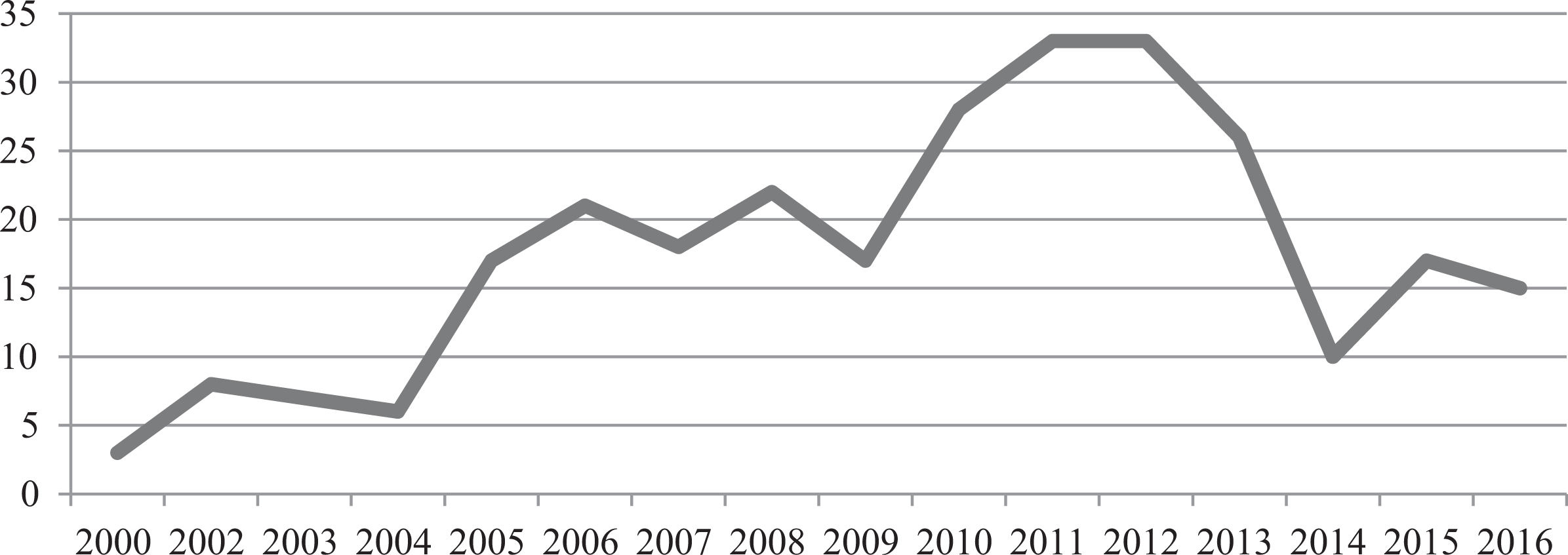
School leadership research, number of publications between 2000–2016.
Our review found that most research (Castillo, 2005; Gil-García et al., 2008; Montt, 2012; Murillo, 2006; Rodriguez-Molina, 2011) relied on leadership frameworks such as ‘transformational’ and ‘instructional’ leadership, and focused on the formal administrative roles in schools. Although some studies indicate the importance of teams and other teachers as school leadership, studies in Latin America thus far mostly investigate the leadership practices of principals without considering other members of the leadership team or using distributed leadership as a framework, with a few exceptions (Ahumada, 2010; Bolivar, 2010).
Latin America is also diverse and heterogeneous in terms of research production. In this regard, similarly to what has been described in a recent review (Weinstein et al., 2014), we found three groups of countries: Prolific countries such as Chile, Brazil and Mexico where there is a substantial body of publications on school leadership and it is possible to identify trends; Countries with evident but heterogeneous interest in school leadership and fewer publications, such as Argentina, Costa Rica, Cuba, Colombia or Venezuela; and Countries with almost no research on this topic, such as Bolivia, Ecuador, Panama and Peru.
Countries with prolific research production: Chile, Brazil, and Mexico
As Figure 2 demonstrates, Chile far outpaces the rest of the region in terms of research production in this area. Chilean research includes studies about principals’ characteristics and practices, leadership effects on student results, common leadership problems, and professional development; researchers use both qualitative and quantitative methodologies, the former mostly case studies and often with representative populations (Weinstein and Muñoz, 2012; Weinstein et al., 2014). Chilean research related to school leaders also integrates topics on school improvement (Bellei et al., 2014), external technical assistance for school improvement (Bellei et al., 2009), education and leadership policy and school management in general (Bravo et al., 2008; Weinstein and Muñoz, 2013).

Number of publications on school leadership research by country.
In contrast, Mexican research has primarily examined school principals’ practices and needs for professional development at elementary and secondary schools and at different localities, without nationally representative samples (Weinstein et al., 2014). The set of Mexican research papers also shows an emphasis on novice principals, likely thanks to Mexico’s participation in the International Study of Principal Preparation (ISPP) (García et al., 2010, 2011; López-Gorosave et al., 2010). A recent review of research on leadership in Mexico identified four areas of emphasis: (1) professional development, (2) definition of the position, (3) work load, and (4) work relationship with teachers (Torres-Arcadia et al., 2016). However, this review does not specify how much research had been dedicated to each area and indicated that there was still an important gap of knowledge regarding training and professional development programs.
Brazil provides a different perspective. Findings regarding school leadership appear primarily as a secondary emphasis in studies of education policy reforms sustained since the 1990s – i.e. decentralization and school democratization. These reform studies mention the impact of such policies on principals’ practices and on school management (Mariano et al., 2016). Another review suggests leadership research in Brazil focused mostly on principals’ training, practices and recruiting (Weinstein et al., 2014). Our own search leads us to believe leadership has not been studied deeply as a field of research on its own in Brazil. We agree with Mariano et al. (2016) that international leadership frameworks have less influence in Brazil than in Chile and Mexico.
To understand why these three very different countries are the most prolific in terms of school leadership research, we note that they were the only three Latin American countries participating in TALIS 2013, which dedicates a full chapter to comparing school principals from participating countries (OECD, 2014). Joint efforts come from universities, research centres and the government providing funding for developing knowledge on the topic. Chile, the outlier, not only has most obvious policy involvement over time, it also has recently funded two leadership development and research centres with the task of training leaders and producing the necessary knowledge and evidence to guide their work (Ministerio de Educación de Chile, 2016). These centres are diagnostic of the advanced level of system investment in school leadership and an indication that nationally there are researchers and policymakers with the capacity to engage the topic.
Countries with an emerging interest in school site leadership
In Argentina, studies collect evidence on principals’ demographic characteristics (Weinstein et al., 2014) with some interest in understanding the role, goal and priorities they have in the context of socio-economic inequalities, increasing social problems affecting schools, and a changing school population that includes historically marginalized population (de Podestá et al., 2005; Tiramonti and Nobile, 2013). Only recently has there been an interest in describing different leadership styles (Hirschberg, 2015). Another example is Costa Rica which, after 2007, created centres of education research and development involving the professional development of principals and teachers administrators. The small number of publications (12) we were able to find about leadership are primarily theoretical, and highly influenced by the instructional leadership framework (Chacón, 2011; Vargas, 2010). There are a few empirical studies (case studies) focused on leadership practices and professional development of principals (for examples, see Camacho Alvarez, 2012; García, 2007).
Cuba is distinctive in many ways and although its education system has received some international attention, there is scarce evidence about the role school leadership plays. The school system performs highly on the UNESCO regional standardized tests developed by LLECE (Murillo, 2008). International researchers seeking to understand Cuba’s educational results have looked at the role of principals only indirectly, finding that they dedicate more time to guiding teaching and following pedagogy and curriculum than their Latin American peers (Carnoy, 2007; Murillo, 2012). Publications about leadership in Cuba describe competencies, training and policy from a normative point of view (Santiesteban and Valiente, 2011; Valiente et al., 2013).
We found just a few examples of small-scope empirical studies from Venezuela and Colombia. The Venezuelan work explores transformational and instructional leadership styles (Pérez, 2012), competencies (Maduro and Rietveldt, 2009) and policy and professional development from a normative point of view (Monarca, 2013; Rodriguez and Meza, 2006). Colombia is an interesting case. At the policy level there seems to be growing system interest in advancing leadership as a core priority of school improvement efforts, even more so than in Brazil or Mexico. In Colombia, there is an important participation of the business sector, specifically sponsored by Fundacion por empresarios de la educacion de Colombia – Exe [Entrepreneurs’ Foundation for Colombian Education], in supporting leadership development in partnership with public institutions (Weinstein et al., 2015). At the research level, however, we found very few publications. Other reviews about Colombia likewise suggest scarce evidence: ‘local and low extent studies centered on professional development needs, profiles, skills and development, and their role on change’ (Weinstein et al., 2014: 18).
Countries with little or no apparent research on school leadership
We found next to no research on school site leadership from other countries in Latin America, such as Bolivia, Ecuador, Panama or Peru. We did locate Peruvian research on school efficacy (Cueto and Secada, 2003; Cueto, 2004) and educational leadership at the political level (Contreras, 2009).
Multi-country research on school leadership
Cross-national comparisons have provided much of the research base for understanding school leadership in the region. UNESCO is one of most prolific and directly involved organizations in understanding leadership (i.e. Rojas, 2006; Vaillant, 2015; Weinstein et al., 2014; Weinstein et al., 2015). The Organization for Economic Cooperation and Development (OECD) is also actively involved in promoting the importance of school leadership through research (Pont et al., 2006). Other organizations such as the International-American Development Bank (IADB) and the World Bank have shown some interest on school leadership and management (Borden, 2002: Barrera-Osorio et al., 2009; DiGropello, 2006; Rodriguez and Hovde, 2002).
In spite of the available data provided by participations in international assessments from UNESCO and OECD, comparative analyses on school leadership and their characteristics are still scarce (Murillo and Martínez Garrido, 2015; Murillo and Román, 2013; Vaillant and Rodríguez, 2015). Furthermore, for most countries there are neither baseline descriptive statistics of school leader demographics nor analyses linking school leadership responsibilities to system priorities with few exceptions (see Weinstein et al., 2014). In contrast, we found that across the region most of the evidence is gathered in small-scope studies, leaving gaps in our understanding at the system level.
Policy development: school leadership in Latin American countries
An examination of the research patterns emerging from Latin America on the topic of school leadership provides one diagnostic of the concept’s relevance, but not the only one. To understand better the importance Latin American jurisdictions placed on school leadership, we also needed to look at policies. In this section, we provide the reader with a brief overview of school principal policies from a range of Latin American countries. This snapshot is based on ‘grey’ literature (i.e. government reports) as well as information found on education ministry websites, up-to-date as of September 2016. Our overview covers Argentina, Chile, Costa Rica, Colombia, Ecuador, Peru and Mexico. This sample is a mix of large and small countries, with different experiences of centralization and decentralization in the education system, variations in national wealth and inequality, and different histories of economic growth. We briefly describe the following: job description, selection, and professional development and supports.
Job description
In Latin America education laws that regulate the teaching profession also dictate school leaders’ functions and roles, selection processes and minimum requirements for the job, professional development requirements and their regulations, and the assessment for school leaders (Weinstein et al., 2014). For the role of school principal, these aspects are explained next and summarized in Table 1. Overall, we note that national laws suggest principals are the ‘maximum authority responsible for guiding and the functioning of the school organization’ (Weinstein et al., 2014: 22).
Summary of policies affecting school leaders in Latin America, 2016.

Notes:
1: AR = Argentina, CL = Chile, CR = Costa Rica, CO = Colombia, EC = Ecuador, PE = Peru, MEX = Mexico.
2: Standards are
3: Standards for practice were recently created, but without an assessment process associated.
4: Only for principals in secondary education.
5: Only in some provinces.
6: It depends on the province.
7: Induction is mandatory.
8: In order to become a principal and move up in the promotion ladder PD is required, although not many institutions offer specialized education for principals.
9: Only for teachers starting at the job under the new code established in 2002.
Although the policy snapshot shows regional attention to principals’ functions and roles, comparative policy research also reminds us that principals in Latin America are relatively ‘under professionalized’ compared to principals in other parts of the globe. Using UNESCO SERCE (Second Regional Comparative and Explanatory Study) data Murillo and Román’s (2013) study of principals’ use of time in 17 countries found that 57.3% worked full time (40 hours a week or more) in the role. In other words, in these 17 countries, more than 40% of principals held a second job in the school, often as teachers. In addition, other factors might explain this phenomenon, such as the number of rural schools in the region, these being generally smaller organizations lead by teachers who do not hold a formal title of leadership.
There is great variation across countries in the explicit emphasis placed on ‘instructional leadership’ for principals. For example, policies in Chile ask principals to supervise classroom practice directly as part of their job (Weinstein and Muñoz, 2012), and Cuban principals seem to be quite involved in supporting teachers (Carnoy, 2007; Murillo, 2012), but in many countries the references to responsibilities related to instructional leadership were negligible for school principals.
All in all, a recurring observation of the school change and school effectiveness literature from Latin America is that school principals are administrators, not leaders (Pozner et al., 2000; Vaillant, 2011). Oplatka (2004) suggested that this is a tendency across the ‘developing’ world: school principals are administrators who implement mandated change; they do not initiate it. It seems the job descriptions emphasize mainly or only administrative duties. Data from primary schools in Argentina, Brazil, Chile, Paraguay, Peru and Uruguay published by UNESCO (Rivas, 2015: 142) show that while decisions about student discipline and evaluation are made at a school-level, often decisions regarding teacher selection, teacher firing and teacher salaries are not. Far more common among most countries were mandates to manage personnel, infrastructure, and relationships with parents, and to provide necessary information to superiors.
Selection
Countries in Latin America generally require principals to have previous experience in the classroom and a professional degree in education – with exceptions such as Colombia, which requires an undefined degree and work experience of at least four years; and Chile, which requires three years of experience in the classroom and any Bachelor’s degree of eight semesters (Weinstein et al., 2014). There is a history of viewing the principalship as ‘a political appointment related to the election process more than with competence’ (Mariano et al., 2015, cited in Oplatka, 2016: 9), but there have been recent policy changes which emphasize greater transparency and standardization in hiring. Argentina, Colombia, Ecuador, Mexico and Peru use a combination of merit-based competitions and/or examinations. Costa Rica and Chile are attempting to increase the standardization of processes by using merit-based selection assessed by central government agencies.
Given the limited autonomy that principals in Latin America seem to have, we were surprised to find great diversity in the degree to which their hiring was managed centrally or are decentralized. (We expected to see mostly centralized hiring.) In Argentina local provinces regulate the eligibility process and there is no role for central government (an illustration of how many decisions in Argentina’s federal system are made at the provincial level); in Chile and Peru there is a shared governance approach where the local level has the final decision; in Ecuador a school committee, made up of parents, students and teachers, participates in assessing the school management plan presented by the candidate; and in Costa Rica, Colombia and Mexico there is a fully centralized process whereby candidates are scored by judges to decide about the final appointment.
Professional development and supports
Professional development (PD) for school principals in the region is provided by different actors. In Argentina, Chile and Peru professional development is primarily private and mostly unregulated, while in Costa Rica it is primarily public (ministry-based), and in Colombia, Ecuador and Mexico both sectors offer training. Different countries emphasize professional development at different phases of school principals’ careers. In Argentina, principal PD is required in some provinces; induction is mandatory in Colombia; in Ecuador training is important to move up the promotion ladder and become a principal; and Peru has introduced a three year National Program for Professional Development of Principals including induction period, specialization, and reinforcement (Ministerio de Educacion Peru, 2014).
Although there is a extensive recognition of the need for credentials, which are valued by every system explicitly or implicitly in their selection processes, there is also agreement that the training and professional preparation that principals receive is of mixed quality at best (Muñoz and Marfán, 2011; Torres-Arcadia et al., 2016). Some go as far as to say that poor training received in higher education institutions is ‘a sizeable part of the difficulties experienced’ by principals in the region (Gomes et al., 2016: 78). Even with concerns of the value of PD, it does seem worrisome that principals with less preparation are, on average, more represented in the poorest and isolated schools (Murillo and Martínez Garrido, 2015).
Several countries (Chile, Colombia, Ecuador, Peru, Mexico) have frameworks and/or standards defining roles and functions to set expectations for leadership practice, but these are not always aligned with, nor hold the power of, law. In Ecuador the frameworks and bylaws differ; in Mexico, the selection processes for principals are being changed in association with profiles and standards (SEP, 2016; Torres-Arcadia et al., 2016). Only Colombia shows alignment between standards and the assessment processes (Weinstein et al., 2014).
Another aspect that has been changing quickly in the last decade is the process by which principals are being assessed and evaluated. A central government institution independent from Ministries of Education implements some of these assessments nationally – for example, in Mexico by the National Institute for Evaluation in Education (INNE) and in Ecuador by the National Institute of Evaluation. In both cases evaluations have been implemented once in the past six years, which indicates a new development (Weinstein et al., 2014). In other countries (Argentina, Chile, Costa Rica and Colombia), evaluations are conducted annually by direct supervisors or the employer at the local level. The type of system used also varies, from implementing an assessment aligned with national standards of practice (Colombia) to the use of criteria developed by each employer (Argentina, Costa Rica and Chile). Lastly, there are places like Peru where systematic evaluation of principals has not been implemented.
We can safely conclude that the degree to which the principalship has been professionalized, with specific managerial and instructional responsibilities and expertise, and standards for selection into the profession, varies greatly in Latin America. We observe some potential contradictions in the way that policy is developing. On the one hand, credentials and selection processes for principals are of growing importance; on the other, there are doubts about the quality and relevance of the education behind just those credentials. Stated more bluntly: given the nascent attention to school level leaders as a specialized profession, just who do policymakers imagine can provide principals with useful professional development and preparation for the job?
Analysis and discussion: understanding the state of the field
While collecting and analysing the data about school leadership research and policy in Latin America we identified patterns in knowledge production and dissemination and we debated possible explanations for the trends that we saw. The storyline is basically this: first, we noted that Latin America has come to school leadership as an area of research and policy focus only recently; second, a small set of Latin American countries, led by Chile, accounts for a majority of the school leadership publications in this century, meaning the published record of leadership for most countries is very thin; and, third, in the few places where there are policy efforts to emphasize leadership, their points of reference appear to be Anglo-American leadership concepts and researchers. Focusing on school site leadership as a policy phenomenon – as a case – is also a good way to test out a handful of prevailing ideas about how and why, more generally, educational policy in Latin America emerges in the ways that it does. In the following paragraphs we briefly address some of these ideas and raise questions about whether the degree of system centralization/decentralization, policy borrowing, neoliberal technocratic problem solving, or some other comparative/developmental educational policy argument best explains what we found. Since our paper’s contribution is primarily to provide a descriptive state of the field, the ideas that follow are necessarily speculative.
Baseline: low attention to leadership in research and practice
After about two decades of standard-based reform and test score accountability, and with the lessons of effective schools research (eg Edmonds, 1979) clearly in mind, state governments (like California) and private foundations (like Wallace) in North America turned to principal leadership as an instrument to address some of the intractable problems of school improvement. The same did not happen in Latin America. As Vaillant (2011) noted, concern for school leaders was recent in Latin America compared to the rest of the world. As one illustration, we note that in the 2015 edited volume Education in South America (Schwartzman, 2015), there are no index references for ‘leadership’, or ‘principals’, or ‘administration’. It is hard to imagine a similar edited volume on education in North America or the UK with nothing to say about school level leadership. Similarly, there are virtually no easily available basic statistics regarding principals (number of principals, average age, gender, etc.) for most countries in Latin America. We found very little baseline information from UNESCO statistics or individual country databases. Whether this is cause or effect of the lack of research in the area we cannot determine, but we can conclude that there is little systematic investigation into the work of principals in most countries in the region.
Do system centralization and decentralization explain regional trends in leadership policy?
Many organizations (e.g. Inter-American Development Bank, PREAL, UNESCO, World Bank) bemoan what they deem the excessive centralization of Latin American education systems and propose decentralization as a way of improving education. We wondered if centralization might therefore be one explanation for the historical lack of attention to school level leaders in Latin America, and if decentralization might explain the turn to leadership as a policy focus. After all, in a centralized education system, where the most important decisions are made by a national Ministry of Education, a school principal may be primarily a bureaucratic middle manager implementing decisions made by others – not exactly the definition of a leader.
The Anglo-American emphasis on school level leadership assumes some relative autonomy and discretion in local decision-making that Latin American principals simply may not have. Borden says, ‘even with the implementation of reforms that decentralize education, school principals in Latin America and the Caribbean are still only exercising the administrative dimension of school leadership’ (Borden, 2002: 5, emphasis added). According to Vaillant ‘In many Latin American countries, there is excessive centralism and lack of autonomy among principals and teachers when performing their tasks’ (Vaillant, 2011: 572).
The point here is not that principals in jurisdictions outside Latin America are freed from administrative chores or constraints on their autonomous leadership. In fact, among scholars of educational leadership in North America there is a great deal of attention paid to the tensions between managerial and instructional leadership (see Cuban, 1988; Flessa, 2012; Neumerski, 2012; Pollock and Cameron Hauseman, 2016). The difference to understand here is one of degree: in Latin America, where attention to school site leadership as a lever for school improvement is nascent, fundamental expectations about principals’ work are still firmly anchored, often by legislation, to limited administrative tasks.
So, if centralization works against a focus on school leadership, does decentralization lead to an emphasis on school leadership? Our investigation shows that the link is not so clear or direct. Decentralization was the focus of education reform in Latin America in the 1990s (Gajardo, 2012; Rivas, 2015) and, according to Gajardo (2012), decentralization reforms are most advanced in Argentina, Brazil, Chile and Mexico. Interestingly, Chile and Mexico are the Latin American countries that began focusing policies and research on school leadership the earliest (Fernandez-Hermosilla, 2015). Argentina has a relatively decentralized education system, but it does not seem that decentralization policies per se triggered an interest in school leadership (de Podestá et al, 2005; Hirschberg, 2015; Tiramonti and Nobile, 2013). The link between decentralization and leadership seems clear in the case of Ecuador, where a large decentralization project began in 2012 (Ministerio de Educación del Ecuador, 2012a), and standards related to school leaders were published the same year (Ministerio de Educación del Ecuador, 2012b). The link is less obvious, though, in places like Cuba, which is not decentralized yet has invested in leadership (Carnoy, 2007).
It is also important to note that decentralization or school-based management does not always involve giving school principals more decision-making power: often in Latin America, decentralization has transferred responsibilities from central government agencies to local school committees of teachers, parents and students, not to principals (for an example, see Barrera-Osorio et al., 2009). Furthermore, rural schools are an important sector in Latin America and in many rural schools there is no official school principal. These are generally small organizations with one, two or a few teachers assuming all responsibilities. This could also explain the absence of research on school leadership in countries where the figure of a principal is not central to the school organization.
We can safely conclude that the degree of system centralization affects the working conditions and responsibilities of school principals. But, if decentralization were the primary driver of Latin American interest in school level leadership, we would expect to have seen it sooner and in more countries.
Policy borrowing
From its origins as a field of study, comparative development education has sought to understand why educational jurisdictions in such different places sometimes take up such similar policies. ‘Which educational systems tend to be objects of emulation, i.e. serve as reference systems or “reference societies”?…and why?’ (Steiner-Khamsi, 2012: 8). Scholars call this policy ‘borrowing and lending’ (Steiner-Khamsi, 2016), the processes through which knowledge from one political setting (past or present) is used to develop policies in another (Waldrow, 2012). Over time, organizations in the same ‘field’ come to resemble one another via the process of institutional isomorphism (DiMaggio and Powell, 1983), whether intentionally seeking to emulate one another or not. One possible explanation for the growing regional attention to school level leadership in Latin America is that it is one way for the education system of one country to signal its legitimacy. Sometimes this movement is called harmonization, whereby education systems align with the ‘space’ they want to join (Steiner-Khamsi, 2012). For our purposes it is worth considering that policy actors in very different contexts may, by following local incentives to solve local problems, end up embracing the same small set of answers as their very different neighbours. Given the diversity in Latin America, sameness might be weirder than difference.
The dynamics of policy lending and borrowing are also shaped by influential international organizations; these organizations advocate certain reforms and not others and, in some cases, the reforms they promote are tied to loans (Steiner-Khamsi, 2012). In addition, in Latin America there is little national funding for conducting research; often, research is funded by international organizations. The OECD, as previously mentioned, promotes school leadership as a key factor for school improvement (also see Hopkins et al., 2011). Thus it is possible that school leadership is gaining currency because international organizations have advocated particular reforms, such as school-based management, that led to an interest in school leaders, and/or that international organization funding creates the incentive for countries to focus on school leadership.
There are risks to policy borrowing, of course. Harris et al., (2016), although not focusing on Latin America, noted a global trend toward the prevalence of a small set of approaches to leadership development and preparation across a diverse, cross-national set of schools and systems. They critiqued the potential blind spots that were reinforced by this policy borrowing and they raised questions about the cultural and contextual factors that take a back seat. Referring to the ways that policymakers worldwide apply what they consider to be the lessons from the best performing systems, Harris et al. concluded that, ‘While high quality leadership may indeed be an important contributor to school and system performance, how it is understood, enacted and performed is, ultimately, culturally and contextually defined’ (Harris et al., 2016: 8). Pashiardis and Johansson (2016: loc 445) 2 likewise pointed out that ‘policy initiatives that work well in one country cannot necessarily be transferred across national borders’.
Given this contextual information – that policy borrowing is common but it also has limitations – the Chilean principal leadership framework (now called the Marco Para la Buena Direccion y Liderazgo Escolar, 2015) is a particularly interesting illustration of the ascendance of particular leadership models and ideas. Although it is beyond the scope of this paper to trace the lineage of the Chilean framework in detail, we note that the categories of principal leadership emphasized in the framework are applied from the work of Leithwood and colleagues(Leithwood et al., 2008) which also formed the foundation for the Ontario Leadership Framework (see Leithwood, 2012). The parallels between the two frameworks are explicit. Our review also encountered a framework recently developed in the Framework for Sound Performance for School Leaders (Marco de Buen Desempeño del Directivo) (2013) which embraces the same core concepts. The embrace of frameworks by ministries/departments of education could itself be considered a mode of policy borrowing, with the framework content making the link all the more explicit.
Leadership and a system’s ‘developmental stage’
When trying to understand both why Latin America lagged other parts of the world in taking up school leadership initiatives, as well as why now there is growing interest in the topic, we considered the question of how an education system’s ‘developmental stage’ might explain its willingness or ability to invest in school leadership. Pashiardis and Johansson (2016) stated that ‘depending on the country’s stage of development as well as on the education system’s phase of evolution in the different contextual domains, different definitions of success and effectiveness will be applicable’ (Pashiardis and Johansson, 2016: loc 450). In the words of Mourshed et al., (2010: 24): ‘We observe dominant clusters of interventions that all improving systems carry out at each journey stage on the long path from poor to excellent’. We tried to figure out whether investments in school leadership policies emerged in particular ‘phases of evolution’ in different countries, and wondered whether we should count them as ‘interventions’ systems make as they move from ‘poor to excellent’.
There are clearly differences in the development and capacities of educational systems in Latin America, but these differences do not neatly explain why some countries are investing in school leadership and others are not. After reviewing the available evidence we do not conclude that countries must necessarily reach a developmental tipping point before they are able take up school leadership, nor do we conclude that there is always some sort of baseline quality in place before systems begin to expand their interest in school leadership. We do however notice the following:
On international tests such as PISA, Latin America as a region has low scores. Argentina, Brazil, Chile, Colombia, Costa Rica, Mexico, Peru and Uruguay participated in PISA 2012, and in all subjects Latin America scored in the lower third of the ranking (Bos et al., 2013). If baseline system effectiveness were necessary before policymakers showed interest in school leadership, we wouldn’t see it anywhere in Latin America. Yet our paper shows that there is demonstrable and growing interest in school leadership in some Latin American countries.
Latin America’s experience with school leadership is not uniform; some countries began focusing on leadership before others. Chile, for example, with a high standard of living and the best comparative education results in the region, may be better positioned to emphasize and support school level leadership frameworks and standards than other countries struggling with fundamental questions of access. So while Barber and Mourshed (2007: 40) noted that ‘school reforms rarely succeed without effective leadership, both at the level of the system and at the level of individual schools’, we believe that a full explanation of the links between reform policies, school leadership, and school improvement in Latin America requires more research.
Instructional leadership as technocratic problem-solving
Maybe the reason for greater attention to school leadership in Latin America is the result of policymakers’ rational decision-making. As Stone (2012: 11) stated, rational decision-making is the most popular and most pervasive model for decision-making in policy whereby policymakers: (a) identify objectives, (b) identify alternative courses of action for achieving objectives, (c) predict the possible consequences of each alternative, (d) evaluate the possible consequences of each alternative, and (e) select the alternative that maximizes the attainment of objectives. From this mode of thinking, policymakers in Latin America focus on leadership now as a way to address access and quality problems that have been resistant to other solutions. Although it is not a sophisticated argument to make, it is possible that policymakers view school level leadership as the ‘alternative that maximizes the attainment of objectives’.
Almost all countries in Latin America have participated in regional student achievement tests such as SERCE (Flotts et al., 2015), and some have participated in international tests such as PISA (Bos et al., 2013). Analyses from these tests point to leadership – especially instructional leadership – as a factor that positively influences students’ test scores. Based on PISA 2012 data for Latin American countries, Vaillant and Rodríguez Zidán concluded ‘learning results improve where there is instructional leadership and principals guide and intervene designing the curriculum to be delivered’ (Vaillant and Rodriguez Zidán, 2015: 253).
Treviño et al. concluded from analyses of SERCE 2006 data that, ‘When the principals focus their work on instructional leadership and promoting learning in schools, their activity has a positive impact on students’ academic achievement’ (Treviño et al., 2010: 15). Blanco et al., writing about Latin America, said that, ‘instructional leadership is essential for efficient schools’ (Blanco et al., 2008: 67). Murillo (2008) also concluded that leadership must focus on student learning for schools to improve. In short, it is certainly possible that Latin American policymakers could be focusing on educational leadership because regional research has shown it has an impact on student learning, and policymakers are looking for new ways to improve their educational systems.
Neoliberal accountability leads to a focus on principals
Some scholars seeking to understand the current policy environment note that the limited range of policy options popular at any given time seems to share an underlying ideology. In this context, Joshee argued that, ‘neoliberalism is the engine that has been driving the globally structured education agenda’ (Joshee, 2008: 32). Scott, examining the racial politics of market based reforms in the USA, noted that, ‘conservatives and neoliberals see schools as wasteful, ineffective, and not sufficiently focused on results…[they] believe traditional public systems need to be reinvigorated by the private sector…and also favour entrepreneurial approaches that center testing to make judgments about teacher and school leader compensation’ (Scott, 2016: 13). Scholars of the ‘New Public Management’ emphasize precisely this point by drawing attention to the ways public institutions are increasingly asked to do more with less, to provide consumer choice and satisfaction, and to understand market-style incentives such as competition as being linked to improvement (Ward, 2011). Investments in entrepreneurial, results-driven, school level leadership are consistent with this set of ideas.
This phenomenon is especially obvious in Chile, where principals are subject to double accountability (Weinstein et al., 2016): accountability within the competitive education marketplace, whereby they must compete for enrolment each year in order to receive the per student funding used to run the school; and they must also increase achievement scores because both their work and the school are evaluated by the ministry according to these results. Similar changes are occurring in Brazil: schools are now evaluated according to the IDEB index – student assistance and students’ scores on national tests (Prova Brazil) (Ministério da Educação, 2016). With these evaluations comes greater attention given to principals who are, implicitly in some cases and explicitly in others, expected to deliver results. Thus, Latin America could be focusing on educational leadership to have someone specific to ‘hold accountable’ and be responsible for improving schools. After all, one of the most highly visible ways to show that you’re taking organizational results seriously is to make changes at the top of the organizational chart.
Although we are not able in this primarily descriptive paper to disentangle with certainty root causes, we believe that it is important to consider a range of ideas that might explain why an interest in school level leadership is emerging now in Latin America, and why it is taking particular shape in particular countries. It is unlikely that there will be a sole regional explanation; in fact, various combinations of factors will explain why school leadership research and practice look different in different parts of the region.
Conclusions
We began the research for this paper already aware that ‘school leadership issues are becoming increasingly debated and explored in an international and comparative context’ (Pashiardis and Johansson, 2016: loc 220–221). Our paper adds to this comparative body of work by drawing much-needed attention to Latin America.
We know that Latin American jurisdictions, like others in the developing world, have embraced a small set of leadership ideas. Prior research suggests that a reliance on (usually) US-based scholarship limits the development of more contextually-informed conceptualizations of school leadership (see Brundrett et al., 2006; Hallinger and Kantamara, 2000; Karstanje and Weber, 2008; Litz, 2011; Oplatka, 2004, 2006). Two of the dominant Anglo-American leadership ideas being taken up in Latin America warrant special attention and critique.
First, in the mainstream literature, even during this era of ‘distributed leadership’ scholarship, a typical takeaway is that the single most important educational leader is the school principal. The Latin American experience suggests that paying attention solely to the principal to the exclusion of management teams or the faculty as a whole will lead to a distorted idea of who school leaders are and how they lead. For example, as previously noted, in many schools, especially in rural areas, there are perhaps only one or two teachers who must teach all grades and also somehow meet the responsibilities of a principal. On the other hand, in larger schools there are often various leadership positions. For example, unlike North American schools, Chilean institutions rely upon a unique administrative structure where leadership is shared between Directores (principals) and Jefes de Unidad Tecnica Pedagógica (technical unit pedagogical heads) (Flessa 2014: 2).
Second, in North American literature there is often a simplified vision of the principal as ‘instructional leader’ that portrays the individual concerned as working directly or in a coaching role with teachers to improve their practice. In a Latin American context, finding such a principal would be extremely challenging. But does that mean there are no ‘instructional leaders’ in Latin American schools? No. There is reason to think that defining ‘instructional leadership’ in a way that will be legible in Latin American schools will require viewing the phenomenon as including managerial, institutional decisions and sharing of expertise from multiple sources rather than solely one-on-one pedagogical mentorship from the principal. We are identifying a problem consistent with the one described by Neumerski (2012), and we believe that questions about who school leaders are and what leadership in support of instruction looks like may have substantively different answers in Latin America than in the countries that have originated the majority of school leadership scholarship. In short: the emphasis on administrative management in the principalship in Latin America is a feature, not a bug, of the system. Platitudes about instructional leadership that do not recognize this reality are unlikely to gain much traction in Latin America.
There are other blind spots in the body of research that we reviewed. Although there is a relatively well established body of research on teachers’ organized work (unions) in Latin America (i.e. Corrales, 1999; López, 2008; Palamidessi, 2003; Tedesco and Tenti Fanfani, 2002), we did not find examples of school leadership scholarship engaging with it. Principals in Latin American public schools grapple daily with the possibilities and constraints of school leadership in unionized public schools; scholarship that describes both the philosophical and practical implications of greater investment in principals as pedagogical leaders, and what that means for teachers, would be welcome.
We also note that the theme of leadership for educational equity remains underdeveloped regionally. Surprisingly, we found next to no specific reference to race or ethnicity in our literature review on school leadership, although we suspect it does affect educational opportunity and the work of school principals in the region, as it does worldwide. There is certainly a large body of Latin American scholarship about race, racism and educational opportunity for indigenous peoples; our observation is that the nascent body of research on school leadership does not seem to engage it. Learning more about how school leaders confront questions of race and indigeneity in their schools – for good or bad – would help build a more comprehensive knowledge base for this diverse region.
Oplatka (2016) offered a comprehensive template for building the Latin American knowledge base in educational leadership. He suggested that research should be conducted to help improve school leadership in Latin America (Oplatka, 2016: 11–13), that Latin American research can provide new insights to the field (Oplatka, 2016: 13) and a critical view of both existing research based on European concepts as well as a critical view of traditional arrangements include nepotism, corruption and political considerations (Oplatka, 2016: 14) are necessary. To his list we would add that in order to develop a knowledge base about leadership preparation and professional development researchers and practitioners in Latin America would do well to consider evidence of impact, not only intention or participant satisfaction.
Pashiardis and Johansson (2016) reminded us that principals’ work is highly context dependent. After reviewing the scholarship from 2000-2016 in Latin America we come to a conclusion similar to theirs, namely that, ‘the future of the study of school leadership and its effects on student achievement is not simply more statistical analyses and large international studies. The way forward…is to advance through a study of the unique characteristics of the context of each educational system, its history, culture, and local needs’ (Pashiardis and Johansson, 2016: loc 336–337).
Footnotes
Declaration of Conflicting Interests
The authors declare no potential conflicts of interest with respect to the research, authorship, and/or publication of this article.
Funding
This research received no specific grant from any funding agency in the public, commercial or not-for-profit sectors.
Notes
References
Supplementary Material
Please find the following supplemental material available below.
For Open Access articles published under a Creative Commons License, all supplemental material carries the same license as the article it is associated with.
For non-Open Access articles published, all supplemental material carries a non-exclusive license, and permission requests for re-use of supplemental material or any part of supplemental material shall be sent directly to the copyright owner as specified in the copyright notice associated with the article.
