




Abstract
Leaders’ ethical behaviours and conducts are prerequisites for an effective change. The purpose of this qualitative comparative case study was to explore ethical leadership practices in selected transformed schools from Selangor, Malaysia. Two schools (a primary school and a secondary school) were selected as study sites. Data were collected through interviews, observations, and document reviews. Interviews were conducted with 28 participants including school heads (2), school administrators (3 + 3 = 6) and schoolteachers (10 + 10 = 20) selected from both schools using purposive sampling. The constant comparative analysis method was used to analyse the data. Analysis revealed demonstration of friendly and trusting relationships, openness to school members, professional commitment, acting as role model, and warranting ethically appropriate conducts as important ethical leadership practices. This study has value for policy and practice pertaining to school transformation; the implications, strengths and limitations of the study and recommendations for future research have been discussed as well.
Introduction
Organisations, including schools, are increasingly more dynamic, turbulent and globally interconnected. This has forced leaders to be more proactive towards reforms so that they can survive and thrive (Lai, 2014; Waite, 2016). Ethical behaviours and conducts on the part of leaders are essential prerequisites for effective change. According to Burnes and By: Leaders cannot achieve sustainable and beneficial change for their organisations unless they act in an ethical fashion and adopt ethically compatible approaches to changes that meet not only their own individual (egoistic) needs, but also produce utilitarian outcomes in terms of the greatest good for the greatest number of stakeholders (Burnes and By, 2012: 240).
Due to the aforementioned issues, a substantial and growing body of research is found in the recent literature that is aimed at developing an understanding regarding the ethical dimensions of leadership in schools (Arar et al., 2016; Langlois et al., 2014) and of the role of leadership in school change (Fullan, 2011; Hallinger, 2003; Leithwood et al., 2008). However, only a small number of these studies focussed on leaders’ ethical practices in times of change (Burnes and By, 2012). Ethical leadership may vary in socially and culturally different societies (Arar et al., 2016), “because ethics are culturally derived” (Stefkovich and Begley, 2007: 209). Current research on ethical leadership is largely but not exclusively based in Western countries and organisations other than schools (Babalola et al., 2017; Barkhordari-sharifabad et al., 2017; Hansen et al., 2013; Kalshoven et al., 2013; Zhu et al., 2015). Moreover, a limited number of qualitative studies are available on ethical leadership (Barkhordari-sharifabad et al., 2017), and some researchers recommend more qualitative research studies (Arar et al., 2016). Thus, there is a limited amount of qualitative research on ethical leadership in schools in the Malaysia context. The current qualitative case study aimed at filling some of this gap by exploring the ethical leadership practices in two selected schools in Malaysia that experienced change and transformation.
Context of the study
The Malaysian government intends to transform the education system to bring it at par with the standards in the developed countries. In line with these aspirations the Malaysian Education Blueprint 2013–2025 was developed to outline a comprehensive reform programme for the system in order to meet new demands and increasing expectations (Ministry of Education Malaysia, 2013). The journey of this reform consists of three waves. Wave 1 (2013–2015) mainly focussed on: (i) taking short-term initiatives involving reforms in curriculum and assessment methods aligned with international standards; and (ii) improving the quality of teachers and principals via coaching and enhancing recruitment criteria. Waves 2 and 3 (2016–2025) are more focussed on system-wide transformation and excellence via innovations, school autonomy and professional development, accountability and curriculum reforms.
The blueprint aims at five system-wide outcomes, encompassing access, quality, equity, unity and efficiency and six student aspirations – skills and attributes that students would need – which are knowledge, thinking skills, national identity, leadership skills, ethics and spirituality, and bilingual proficiency. To deliver on the aspirations, the Ministry of Education (MoE) identified 11 shifts for transforming the education system (www.moe.gov.my). The shifts not only focus on the intellectual development of students, teachers, leaders and other personnel, but also prioritise ethical, cultural, emotional (Shifts 2 and 10), social (Shift 8) and financial (Shift 9) dimensions as well.
The MoE consider school leaders as one of the most significant contributors towards school transformation and change (Harris et al., 2017). For this purpose, an institution called Institut Aminuddin Baki (IAB) has been given the responsibility of providing pre-service and in-service professional development training to school leaders working in secondary and primary schools (Bajunid, 2004). The MoE has also changed the appointment methods of school leaders from previously tenure-based selection to leadership competencies. Therefore, from 2013 onwards, it is compulsory for school leaders to complete the National Professional Qualification for Educational Leaders (NPQEL) to be able to keep their job as school leaders.
The NPQEL is based on the leadership competencies in six domains, which are: (i) instructional and achievement; (ii) policy and direction; (iii) personal effectiveness; (iv) resources and operation; (v) people and relationship; and (vi) change and innovation (Rosnarizah et al., 2009). These domains are extensive and are developed using the literature on leadership. However, the emphasis on ethical or moral practices and behaviours by school leaders is underrepresented. Aminah (2012) claims that Malaysian leaders are moral agents, transformational and instructional leaders, and financial managers. Rahimah and Ghavifekr (2014) argue that the Malaysian school leadership for the 21st century should be more inclined towards moral or ethical leadership. Nevertheless, school leaders in Malaysia are mainly regarded as instructional leaders that influence the performance of the schools and students (Harris et al., 2017).
Ethical leadership and change
Ethical leadership has been considered central in terms of encouraging organisational members towards change (Babalola et al., 2014). According to Gill (2002), leaders need to demonstrate ethical behaviours, such as honesty and trustworthiness in order to influence others to change. Kanokorn et al. (2013) argue that due to the rapid changes around the world, it is essential to prioritise ethical leadership behaviour in schools. Ethical leadership has been defined as “demonstration of normatively appropriate conduct through personal actions and interpersonal relationships and the promotion of such conduct to followers through two-way communication, reinforcement and decision making” (Brown et al., 2005: 120). It is the sum of distinct but interconnected components of ethical behaviours and practices of leaders (Kalshoven et al., 2011), and includes integrity, treating employees fairly, maintaining high ethical standards, and holding employees accountable for ethical conduct in an organisation (Brown et al., 2005). The concept also includes fairness in decision-making and development of a trusting relationship with organisational members (Trevino et al., 2000; Yates, 2014).
Leaders need to alter the mind-sets, beliefs and practices of the school members to initiate and effectively manage change (Anderson and Anderson, 2001; Levy and Merry, 1986). Change is impossible without “felt-need”, which “is an individual’s inner realisation that it is necessary. If felt-need is low, introducing change becomes problematic” (Burnes and By, 2012: 242). An ethical leader influences the “felt-need” of organisational members by influencing their mind-sets, beliefs and practices, while establishing a strong ethical message to maintain the values of an organisation (Trevino et al., 2000). Moreover, ethical leadership is an influential process to achieve a shared purpose via ethical means (Prince II et al., 2009).
Leaders, in order to transform their schools, build a shared school vision, offer support to school members, model the best professional practices and values, clarify expectations, build strong interpersonal relationship, create a conducive school culture and involve school members in decision- making and problem-solving (Leithwood, 1994; Leithwood et al., 2006; Yukl, 2012). Ethical leadership has been found to positively affect the attitude, beliefs and commitment of school members, which ultimately affect organisational performances, including that of schools (Brown et al., 2005; Hansen et al., 2013; Kalshoven et al., 2011).
In addition to this, it has been found that leaders’ ethical leadership influences different aspects of schools that ultimately influence schools’ performance. For example, change is hard to achieve without fostering creativity and innovation in schools (Hallinger, 2005; Leithwood and Jantzi, 2000; Urick and Bowers, 2013; Yukl, 2012). Ethical leadership has been found to facilitate organisational creativity in schools as well (Yılmaz, 2010). Moreover, ethical leadership influences organisational members’ commitment, helping attitude, innovation, creativity, job satisfaction, job autonomy, shared decision-making, team effectiveness, and leader–member exchange quality (De Hoogh and Den Hartog, 2008; Kalshoven et al., 2013; Mahsud et al., 2010; Sabir et al., 2012; Yates, 2014; Yidong and Xinxin, 2013; Yılmaz, 2010).
Along with changing other aspects of schools, ethically responsible leaders need the courage to alter the root causes of unethical structures and processes (Duignan, 2006). This warrants the application of ethically sound practices in the organisations via rewards and punishments (Zhu et al., 2015). Ethical leaders not only apply rules and norms in their schools, but also the ethics of care, justice, equality and respect. They focus on fostering an ethically sound climate in their schools by resolving ethical dilemmas and generating ethical manners (Arar, 2016; Stefkovich and Begley, 2007), and establish a non-violent working environment in their organisations by practicing justice, respect, trustworthiness and sincerity (Yılmaz, 2010). They give voice to their colleagues and clarify roles, responsibilities and expectations (Kalshoven et al., 2011). Ethical leaders work for “students’ best interest”, which involves treating all students fairly via justice, respect and care (Stefkovich and Begley, 2007).
Methodology
This comparative qualitative case study (Yin, 2009), takes an inductive approach (Corbin and Strauss, 2008) to explore the ethical leadership practices in two transformed schools from Selangor, Malaysia. The two case schools were selected for this study using a purposive sampling technique. The selected schools had experienced extensive change in terms of students’ performance, school working culture, infrastructure, status 1 and recognition during the last five years.
In order to select the schools, during the first phase, some educators and school practitioners were informally consulted to make sure the schools met the criteria. The MoE websites and school portals were helpful for this as well. It should be pointed out that schools listed as high-performing schools were specifically not selected because the focus of this study was mainly on extensive change, rather than static excellent performance. However, School B (SB), experiencing an extensive change by receiving two statuses and numerous other achievements in a year, is considered as a transformed school.
In the second phase, some of the schools that were initially listed as transformed schools were contacted. The purpose and the criteria of the study were conveyed to the schools and permission was availed verbally from the schools’ respective heads.
In the third phase, the aims, objectives, procedure, criteria and list of the schools were sent to the Educational Planning and Research Division, MoE Malaysia to obtain permission for data collection. Permission was also sought from the Selangor State Department of Education and District Department of Education. Figure 1 shows the characteristics of selected schools and the dimensions that have experienced change.
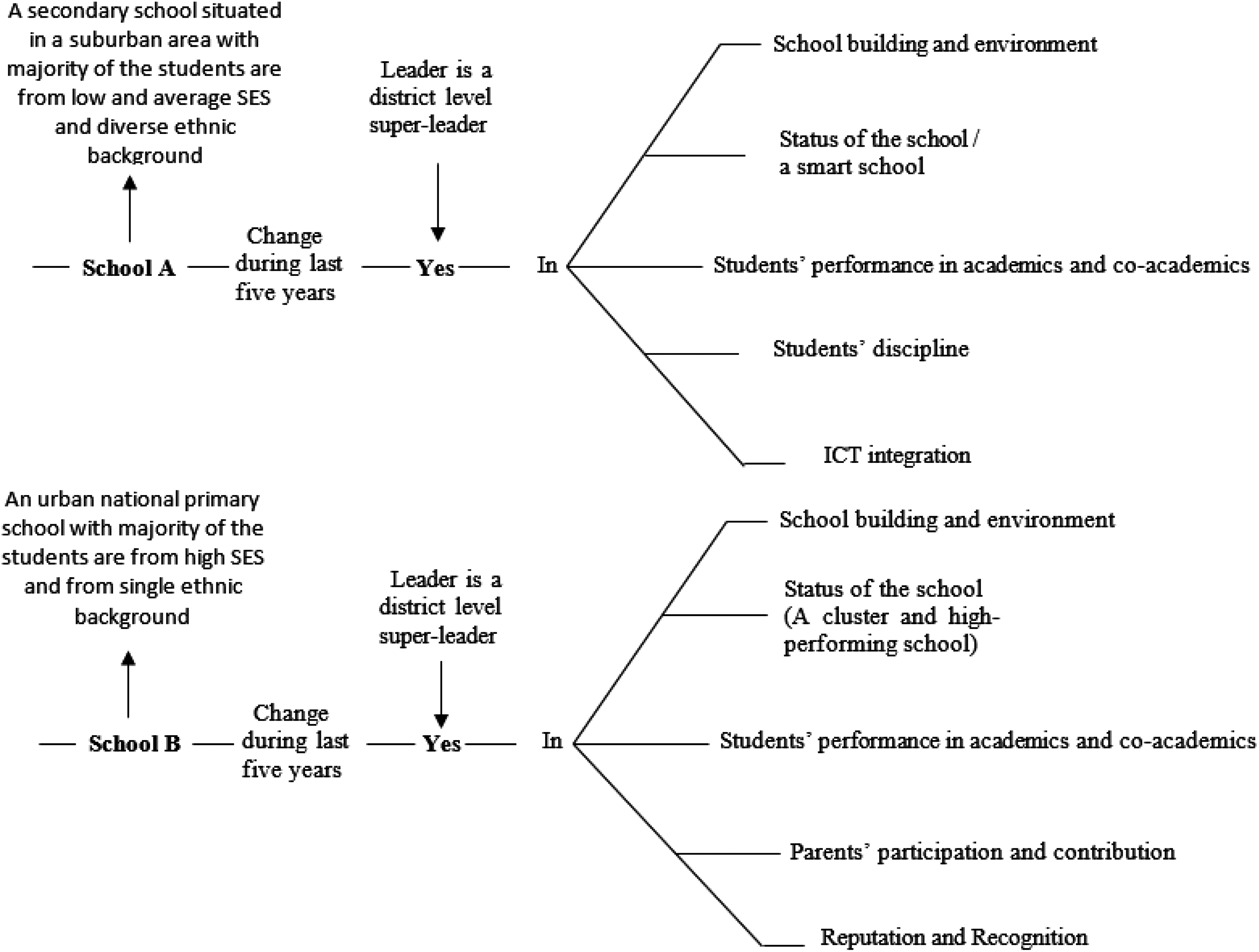
The characteristics of selected schools and dimensions in which they have experienced change.
A variety of data collection tools were used in the process of data collection. These tools included semi-structured interviews, observations and document reviews. The actual data collection process was preceded by a pilot study. The pilot study included two observation sessions and two interviews with teachers from two national schools selected for the pilot study. The pilot study aimed at an initial familiarisation with the Malaysian school settings and at developing an insight into the feasibility and usefulness of the data collection tools for obtaining authentic data. The pilot process led to a review and refinement of the interview protocol and the observation guide. For instance, some of the interview questions were restructured making them simpler and more direct. Observation guides were also modified by adding items related to initial findings from observation during the pilot study.
The pilot study process was followed by the formal data collection process. For interviews, the respective school heads (2), 6 administrators (senior assistants, heads of the panels and heads of the departments) and 20 teachers were selected via purposive sampling from both schools. To select well-informed participants (Yin, 2009) and obtain reliable and authentic information, teachers and administrators with more than five years working experience with the school heads were selected.
The consent forms were completed by the participants and anonymity and confidentiality were assured to them, as well as their right to withdraw from the study at any stage. The interviews were tape recoded and transcribed. The interview transcriptions were shared with the participants to validate the accuracy and authenticity of the data. For observations, School A (SA) was visited from 21 January to 3 March 2016, while SB was visited from 21 March to 11 April 2016. A total of 34 hours’ sessions was observed in both schools, ranging from 2–9 hours per session (a total of 225 hours). Guideline questions for observation sessions were constructed, and a diary was kept for notes and memos. Documents, school artefacts, plans, notices, minutes of the meetings, magazines and reports were considered as important documents for review.
The interview transcripts, observation field notes and documents were uploaded into ATLAS.ti 7 as primary documents (P-Docs) so that they could be explored, managed, extracted, compared and congregated into meaningful pieces of data systematically. Data analysis was done in two stages. At the first, it was based on constant comparative analysis (Corbin and Strauss, 2008), where each case was analysed separately (within-case analysis (Yin, 2009)). At this stage, each primary document was read more than once and coded openly, where every bit of data that seemed useful was selected and coded (Merriam, 2009). The initial codes were reviewed and validated by experts. The codes that emerged from the data via open coding were analysed for similarities and differences. Similar codes were combined to form categories and subcategories. Then, the categories were compared, and the main themes and propositions developed. During the second stage, the cases were compared to determine the similarities and differences (cross-case analysis). The methodology of the research is summarised in Figure 2.
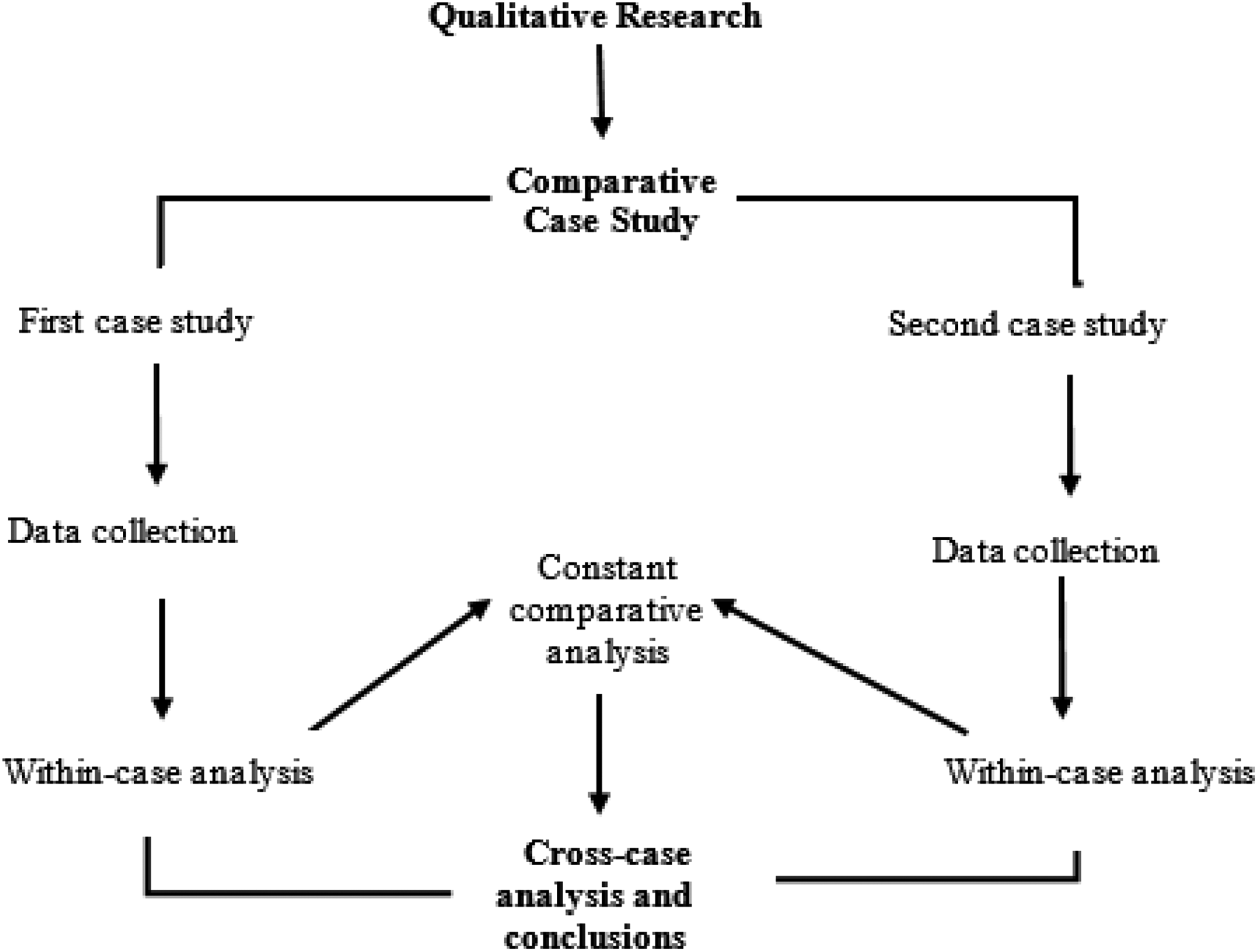
The summary of research methodology.
The subsequent part of this paper details the cross-case comparison of the ethical leadership practices in both schools.
Findings
The ethical leaders demonstrate ethically appropriate values and practices in schools and promote such behaviours and values among the members (Zhu et al., 2015). The data revealed that leaders in both transformed schools demonstrated ethically appropriate values and practices. The existence of such ethical values and practices helped leaders develop the following dimensions of ethical leadership in their respective schools. In Malaysia, primary school leaders are called headmistress/headmasters, while secondary school leaders are called principals. Therefore, in the findings, a leader from SA is referred to as principal, while a leader from SB is referred to as the headmistress, and both are collectively being referred to as leaders.
Demonstrating a friendly and trusting relationship
The leaders in both schools had a friendly and trusting relationship with teachers, staff, management team, parents and other school members. They created a productive communication and friendly relationship with school members via ethical practices showing warmth, respect and care. From field observation, the principal from SA could be found greeting everyone nicely, regardless of whether they are students, teachers, parents, staff members, canteen workers, or cleaners (A-P16:1; 7:7). A Chinese teacher, comparing this with the treatment of her previous principal, pointed out: She is very fair. She does not see me as Chinese, and as such, is required to do more work. Before coming to this school, I was teaching at a primary school, and due to the fact that the principal there was aware that I am Chinese, young and single, I was forced to take on more responsibilities. I think of this as being duly unfair (A-P5:52; 14:14). She [the headmistress] is very good at her job. If we face any difficulty or problem, we can go to her and talk it out or outright solve the problem at hand. This is very motivating, and she is more like a parent and a friend than a superior…(B-P2:23; 38:38).
Being open to school members
The leaders were also considered as being open. For instance, a teacher from SB regarded her headmistress as being less autocratic and more open (B-P14:22; 47:47). A teacher from SA said, “This principal is quite open, if a teacher is having a problem, s/he can take it to her” (A-P6:48; 34:34). Another teacher claimed, “If I have a problem, I will talk to her and she advises me accordingly” (A-P 8:51; 53:53). Thus, the leaders kept their doors open for school members so they could approach them in need. The school members were quite comfortable talking and sharing with the leaders. The leaders listened to their personal problems affecting their work, or their work-related problems, and provided suggestions on how to overcome those problems.
Being committed to their profession
Being committed to the job is a moral obligation of leaders who place their full effort and energy to the tasks that they have at hand. The findings also indicated that leaders in both schools were fully dedicated to their profession as leaders, guides and managers. They could be seen coming early and staying late in their schools. They were committed to bringing out the best of teachers, staff and students through empowering, sharing, problem-solving and feedback. The teachers considered the principal in SA as a “very hardworking person” (A-P3:50 57:57), “showing full commitment” (A-P34:48; 56:56). The principal from SA, in her message in the annual report of the school, also suggested teachers to demonstrate integrity by showing full commitment towards teaching in school (A-P85:11; 24:24). The teachers from SB also highlighted the fact that the headmistress was committed to her school. A teacher reflected, “The headmistress is the one who prepared everything, sometimes she used to go home late, at 7–8 pm…,” (B-P6:33; 66:66).
Acting as a role model
Data analysis revealed that the leaders “walked the talk”. They demonstrated what they wanted their school members to do and have. They had developed trust and earned respect from the school members by trusting and respecting them. This is evident from interviews in both schools. For example, a teacher from SA claimed that she liked the principal’s way of leadership, and that it “is helping other teachers by doing it first, and showing them how to do it afterwards” (A-P4:46; 83:83). Another teacher said, “She [the principal] leads by example. One example is greeting the students every day early morning, where she will also join us in doing so. Anything she wants us to do, she will do it first” (A-P7:57; 70:70).
Similarly, the headmistress from SB said, “When we want to do something, we must do it first. I must go to class on time and I must come to school early if I want others to do so” (B-P4:17; 21:21). An administrator said that the headmistress did not order them to perform something, but she was a type of leader who could show them first by doing it herself, and then asking them to do it afterwards (B-P2:23; 38:38). A teacher asserted, “she [the headmistress] also showed the teachers that she could be a model or example for other teachers on how to do something” (B-P9:9; 17:17).
Warranting ethically appropriate conducts in schools
The findings also revealed that leaders emphasised promoting ethical conducts and behaviours in school and preventing unethical conducts. In order to create a culture that promoted ethical conduct in the school, they used rewards to appreciate ethically appropriate conducts and punishments to prevent unethical conducts. They would not compromise on ethical issues, and therefore might not hesitate to take actions to minimise such practices. Both leaders first used soft approaches, such as suggestions, consultations and counselling to prevent unethical behaviours and approaches. A teacher from SA said, “She usually calls you to her office, but will not chastise you, instead, she will first offer some advice,” (A-P4:65; 101:101). The panel head from SB argued, “The headmistress will call her/him to her office for a discussion…” (B-P2:27; 43:43).
The stern approaches included sending letters or circulations, transfers and terminations. As a senior assistant mentioned: She will tackle problems using soft approaches, such as giving advice while simultaneously reminding the individual about the consequences they would face. If this does not work, she will then refer to the circular for further actions (A-P34:52; 58:58). …If a teacher comes in late, first, I ask PK 1 [senior assistant academics] to deal with it. If she is unable to, then I will deal with it. I will assess the situation and see what can be done, or I might chastise the individual concerned, depending on the situation (B-P4:25; 31:31).
The findings also indicated that leaders from both schools were very firm in discipline-related issues. The discipline and counselling units handled minor student disciplinary issues. However, if the issues were major, such as fighting, they would take appropriate actions. The principal from SA declared this in an informal discussion, “The one [student] found guilty will be terminated from the school. Then, their parents will have to appeal to the district education office, and if approved then the student is allowed to enter school again” (A-P1:16; 12:12). While during the field observation in SB, the parents of a group of students who were found throwing stones on each other were called in to school (B-P28:3, 9:9).
Moreover, to minimise discipline issues the principal from SA was found making some wise decisions. For example, in a meeting she advised, “In an effort to overcome discipline problems, place the last class from Form three to Form five near the discipline room” (A-P35:6; 231:231).
Discussion
The findings of this inductive exploratory study suggest that leaders in selected transformed schools demonstrated strong ethical leadership behaviour. The dimensions of ethical leadership include demonstrating a friendly and trusting relationship, being open to school members, being committed to their profession, acting as a role model, and warranting ethically appropriate conducts in their schools. A true and long-lasting change is embraced internally via shared ownership for consequences (Zmuda et al., 2004). Ethical leaders appeal to school members internally for changes (Fullan, 2001; Trevino et al., 2000). The data showed that the ethical leadership of the school leaders influenced the behaviours, practices and commitment of schoolteachers. They showed their trust and affection for leaders due to the leaders’ ethical leadership. Crum and Sherman (2008), while exploring the best practices of leaders, found that the leaders in transformed schools not only acknowledge the importance of trust, but also developed trust in their schools. Similarly, in another study, it was found that leaders in transformed schools demonstrate openness and honesty in their schools (Sanzo et al., 2011). Hence, the literature in the school context strongly supports the influence of ethical leadership on the progression of transformation in schools (Kanokorn et al., 2013).
Leaders’ ethical values include care, openness, honesty, fairness and trusting relationship with teachers, staffs and parents (Liu, 2016). When teachers find leaders to be transparent, unbiased and morally fair, they develop strong confidence in them and will follow what the leaders plan and decide for the school. For example, in both schools, the teachers mentioned that although decision-making is shared, they have full confidence and support for their leaders if they plan or decide about something involving the schools. The presence of ethical values in leaders’ behaviour intrinsically motivate teachers for positive transformation.
Leaders, by demonstrating ethical practices, help school members acquire ethical behaviours. For example, in both schools, punctuality was the main concern of the leaders and they were trying their utmost to overcome this concern. If the leaders themselves would not be punctual, how could they know if the teachers were punctual or not? Similarly, commitment and dedication to the school and tasks are behaviours for the leaders to display to other school members. With assurances, if the parents find leaders committed to the improvement of the school and their children’s education, they would wish to contribute financially, morally and technically, all of which will ultimately help the school’s transformation (Aziah and Abdul Ghani, 2012).
Moreover, leaders need to be alert for unethical practices taking place in their schools. Absenteeism, failing to fulfil the duties and obligations and discipline-related issues such as bullying are some of the unethical behaviours mentioned by the participants. Leaders, due to their ethical leadership, try their best to diminish such unethical practices by preventing and discouraging them. Leaders, by preventing such behaviours, attempt to develop a morally rich school culture that is conducive to teachers’ and students’ professional growth and learning for the sake of school transformation.
Previous literature supports the findings of this study. For example, Brown et al. (2005) argued that integrity, maintaining ethical standards, treating employees justly and fairly, developing and maintaining trust, accountability and transparency, are some of the behaviours demonstrated in ethical leadership. Ethical leadership has been identified as a contributing factor in different aspects of organisations that directly and indirectly affect the process of transformation as it influences teacher performance, commitment, social exchange, team effectiveness, interrelationships, optimism for the future and the prevention of unethical conducts (De Hoogh and Den Hartog, 2008; Joosten et al., 2013; Kalshoven et al., 2013; Mahsud et al., 2010; Zhu et al., 2015).
In summary, in order to transform schools, leaders need to possess strong ethical leadership characteristics. Thus, change and leaders’ ethical practices often correlate (Burnes and By, 2012).
Implications of the findings
This study contributes to the field of leadership and change in several ways. First, it adds to the current literature on ethical leadership in a school context, especially at a time of change and reform (Burnes and By, 2012). We argue that the process of change itself is challenging due to uncertainty, resistance, ambiguities and anxieties (Fullan, 2001; Zmuda et al., 2004). Successful school leaders, demonstrate tolerance, care, respect and justice to tackle challenges related to transformation of their schools. This study implies that in the Malaysian context the MoE and IAB could design programmes and courses focussed on ethical leadership in order to support extensive change and reform in the education system of Malaysia. Castro and Moore (2015) argue that the continuous training of ethical leadership is critical. From interviewing the principals, they confirmed that their pre-service training helped them in being ethical in different situations. Yılmaz (2010) claimed that leaders need proper trainings on ethical leadership to create an ethically sound environment based on harmony, admiration, freedom and respect. Training based on ethical decision-making would make school leaders more reflective and be able to integrate ethics in their daily routine practices in schools (Arar, 2016). This has implications for possible changes in pre-service and in-service teacher training programmes in terms of inclusion of curricular material related to the development of ethical leadership orientations.
Current and future school leaders may benefit from the findings of this study. The findings of this study may provide an insight to school leaders, teachers and academics regarding the vital role that ethically oriented school leadership can play in the successful transformation of schools. The study could also have implications for other schools with similar contexts in Malaysia and elsewhere.
Recommendations for future studies
This study may also open new vistas for future studies expanding on this and similar issues of interest. The data for this study were collected from the multiple participants; however, the voices of parents and students were not included. Future researchers may include their opinions for a more authentic and rich data on ethical leadership. The findings of this study cannot be generalised to a large population and other contexts, due to its qualitative nature. Large-scale quantitative studies may be conducted in other contexts. The relationship between ethical leadership and school members’ commitment to change, resistance to change, job satisfaction, organisational citizenship behaviour and motivation to teach would be interesting areas to explore as well. Exploring the influence of ethical leadership on students’ commitment to schools and their performance could be crucial in this case. Due to the inductive exploratory nature of the study, we allowed all possible themes to emerge from the data. Future researchers may use different theories and models to study specific dimensions of ethical leadership (e.g., Kalshoven et al., 2013; Starratt, 1991). Finally, the data were collected from two Malaysian national schools from the State of Selangor. Future researchers could also include vernacular schools, international schools, boarding schools, religious schools and schools from states other than Selangor.
Footnotes
Declaration of conflicting interests
The authors declared no potential conflicts of interest with respect to the research, authorship, and/or publication of this article.
Funding
The authors received no financial support for the research, authorship, and/or publication of this article.
