



Abstract
While research on education for sustainable development (ESD) is expanding, empirical evidence on its impact and outcomes remains very limited. Moreover, the facilitating role of the school organization, while extensively documented in literature on school management and school effectiveness, is lacking. In this study we present and qualitatively validate a framework for an ESD-effective school, previously developed via a critical review of ESD and school management literature. This framework consists of eight characteristics: sustainable leadership, school resources, pluralistic communication, supportive relations, collective efficacy, adaptability, democratic decision-making and shared vision. Via semi-structured interviews, the framework for an ESD-effective school was theoretically validated via a sample of 19 teachers and school leaders with expertise in ESD. The findings from the interviews show that the participants largely confirm the framework and the individual characteristics are recognized by the sample. There were relevant differences between the respondents in terms of positioning the different characteristics within the framework. Specifically, views on pluralistic communication differed from the initial conceptual framework.
Keywords
Introduction
Education is viewed as a key solution in transforming today’s unsustainable reality into a sustainable future (Van Poeck et al., 2019; Wals et al., 2017). With research on education for sustainable development (ESD) expanding, it becomes clear that a single solution for ESD implementation is not readily available. Moreover, empirical evidence on the impact and outcomes of ESD remains much needed (Boeve-de Pauw et al., 2015; Laurie et al., 2016). Several scholars therefore call for a more systematic and empirical perspective on ESD (Boeve-de Pauw et al., 2015; Bormann and Nikel, 2017; Singer-Brodowski et al., 2019; Waltner et al., 2018).
While an array of ESD literature is available, research on school organizations in relation to ESD has received scant attention. While school organizational aspects can influence, for example, classroom practices for ESD (Sinakou et al., 2019), the impact of a school’s organizational characteristics on these and other educational outcomes of ESD in compulsory education is not well documented (Boeve-de Pauw and Van Petegem, 2017; Mogren and Gericke, 2017a; Scott, 2009). This lack of literature stands in contrast with evidence from educational management and effectiveness literature, that acknowledges the influence of the school organization on educational outcomes (Creemers and Kyriakides, 2008; Huang et al., 2018; Scheerens, 1990; Teddlie and Reynolds, 2006). While a call for monitoring and evaluating ESD was launched at the end of the United Nations Decade of Education for Sustainable Development (UNESCO, 2014; Wals, 2009), a tangible framework for ESD school effectiveness is, although vital, still lacking.
In this study, we present and validate a conceptual framework for ESD school effectiveness comprising of eight school characteristics, potentially facilitating ESD. These characteristics stipulate the outlines of a school organization that is effective toward ESD. Based on our previous critical literature review (Verhelst et al., 2020) and evidence from school effectiveness research (e.g. Sammons et al., 1995), we hypothesize that these characteristics facilitate ESD school effectiveness. This study aims to validate whether these characteristics are recognized by teachers and school leaders of ESD active schools in Flanders, Belgium. A qualitative validation allows us to check the real-world applicability of the framework and triangulate the conceptual framework with the views of people who have experience and expertise in ESD. Moreover, this adds to the theoretical validity of the framework (Maxwell, 1992) and will in turn augment our understanding of an ESD-effective school.
A proposed framework for an ESD-effective school
The conceptual framework described in this study was developed through a critical review of relevant literature on school management and school organization in combination with existing literature on ESD (see Verhelst et al., 2020). This conceptual framework refers to the organizational level of schools, referring to all processes and entities within the school that transcend the classroom, individual student and individual teacher levels of the school.
The framework for the ESD-effective school (Figure 1) consist of eight characteristics, situated on two levels: the subcontextual level and the central level. The subcontextual level refers to the school and its internal organizational context, not the larger context in which the school organization itself is situated (e.g. political context, cultural context, economic context). This level contains sustainable leadership and the school resources, shaping the organizational context. The six central characteristics are pluralistic communication, supportive relations, collective efficacy, adaptability, democratic decision-making and shared vision. The three main principles of ESD as an educational ideal – holism, pluralism and action-orientation (HPA) – are reflected in all of the organizational characteristics, hence these characteristics express the organizational culture and values. Holism implies a combination of environmental, social and economic perspectives within a time and spatial dimension (Boeve-de Pauw et al., 2015; Öhman, 2008). Pluralism revolves around recognizing different viewpoints and establishing a dialogue between these (Boeve-de Pauw et al., 2015; Lijmbach et al., 2002; Rudsberg and Öhman, 2010). Action-orientation refers to the motivation and ability to undertake action, frequently labelled as action competence (Mogensen and Schnack, 2010).
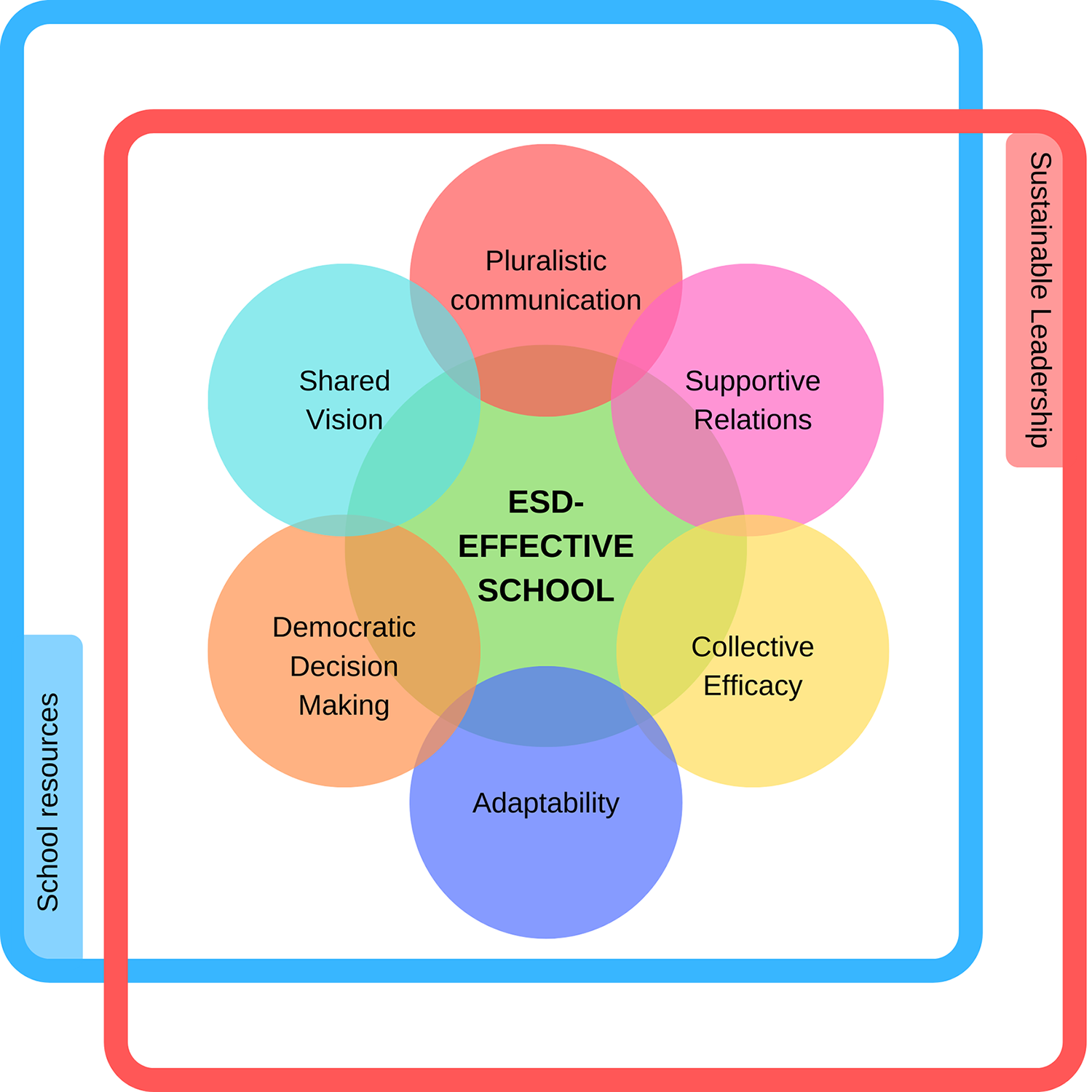
A framework for the ESD-effective school.
The first subcontextual characteristic, sustainable leadership, refers to leadership that ought to be holistic, involving an integrated view of the past, present and future, locally and elsewhere (Hargreaves and Fink, 2006). The role school leadership plays, be it the principal or leadership distributed among the school team (Spillane, 2005), can be manifested both on the level of the teaching and learning within the school and in the leadership in the school as an organization (Carr, 2016). In the present framework of the ESD-effective school, school leadership is seen as the organizational educational leadership that has influence on the teaching and learning within the school via the organizational workings of the school. This perspective is substantiated by the findings of Witziers et al. (2003), who reported very small direct effects between educational leadership and student outcomes and larger effects for leadership-specific behaviour as a mediated effect, such as defining and communicating the mission, contributing to the school as an organization. In an ESD-effective school, the subcontextual characteristic of sustainable leadership refers to leadership that is holistic and involves an integrated view of the past, present and future, locally and elsewhere (Hargreaves and Fink, 2006). This definition of sustainable leadership that goes further than the temporal aspect is underlined by Fullan (2006) who also concludes that investing in this sustainable leadership will provide school organizations with leaders who can see and act with the larger system in mind when investing in the development of people and the organization. For example, sustainable leadership that develops the professional structures of the school will enable teachers to go even further than what is presently possible, thus facilitating continuous learning within the school organization (Fullan, 2006). Sustainable leadership leads to a long-term holistic strategy that combines the best of past traditions with innovations for the future, without it depleting available resources for future development (Bottery, 2012; Hargreaves and Fink, 2006; Iliško and Badyanova, 2014). Moreover, as implementing ESD asks for different leadership perspectives (Mogren and Gericke, 2017b), sustainable leadership involves the ability to adapt the appropriate leadership style, given the specific time and context and taking holistic, pluralistic and action-orientated perspectives into account. The transactional and transformational leadership model offers three potential leadership styles (Bass, 1985; Bass and Riggio, 2006). The laissez-faire style indicates the absence of leadership. However, this absence is not necessarily negative. To illustrate, school leaders may deliberately take a step back and allow teachers to take the lead for ESD in the school. Secondly, transactional leadership involves the exchange of rewards. Finally, transformational leadership is a proactive style that builds on four elements: idealized influence, inspirational motivation, intellectual stimulation and individualized consideration (Antonakis et al., 2003). For instance, when communicating and implementing a long-term holistic strategy, individualized consideration and support by the leadership contributes to the transmission of this strategy among the school staff as they see that their concerns are being acknowledged (Antonakis et al., 2003; Bass and Riggio, 2006; Leithwood and Riehl, 2005).
The second subcontextual characteristic, the school resources, comprises of three components: time management, professional structures and physical structures. Time management signifies the planning and scheduling of different subjects and the allocation of timeslots. Efficient time management facilitates pluralistic, interdisciplinary and integrated teaching and learning for ESD (Mogren and Gericke, 2017a). Next, the professional structures of the school refer to the different professional positions within the school and how they are grouped and organized (Hoy et al., 2013). The professional structures can enable pluralistic and holistic teamwork (Mogren and Gericke 2017a), and an ESD-effective school will indeed organize the professional structures so that they facilitate the other organizational characteristics and ESD effectiveness. Lastly, the school’s physical structures embody the infrastructure and financial resources of a school (Kuzich et al., 2015; Schelly et al., 2012). In an ESD-effective school, these resources will facilitate the other characteristics of the school.
Between the two subcontextual characteristics, a reciprocal relationship exists in the sense that sustainable leadership and the resources of the school together create the context within the school for the central characteristics, hence they are situated on the subcontextual level. This relationship is characterized by the fact that the course of action of the school leadership is influenced by the resources of the school, and, maybe more importantly, by the ability of the leadership to link different parts within and beyond the school organization (Fullan, 2006). Sustainable leadership steers and allocates the school resources in order to facilitate ESD in the school. For example, when the teaching staff at a school is diverse, this creates opportunities for the sustainable leadership to put a policy on diverse teaching teams (professional structures) into practice. If the teaching staff is more homogenous, such a policy will be harder to achieve. Leo and Wickenberg (2013) stated the following about this reciprocal relationship:
Principals should work with the structure of the school to: manage the resources to promote development in terms of arranging timetables and schedules to promote cross-curricular activities (i.e. time management); organize the teachers in different teams promoting cross-curricular activities (i.e. professional structures); and allocate budget for in-service teacher training on topics related to the vision (i.e. physical structures). (Leo and Wickenberg, 2013: 419)
Secondly, the supportive relations in an ESD-effective school provide an integrated way of working toward and working together on ESD-related issues. Four types of supportive relations can be distinguished. Support within the school team contributes to knowledge sharing and facilitates the development of a collective initiative toward ESD (Bennell, 2015; Henderson and Tilbury, 2004; Iliško and Badyanova, 2014; Kuzich et al., 2015). A second type is supportive relations between schools. These can be on a regional, national or international level and provide participating schools with insight into their own workings via peers, collegial learning and opportunities for knowledge sharing and increased motivation (Henderson and Tilbury, 2004; Mogren and Gericke, 2017a). Thirdly, support between school leaders from different schools can also provide opportunities for knowledge sharing and exchanging ideas, and will contribute to ESD within the school (Leo and Wickenberg, 2013; Mogren and Gericke, 2017a). The fourth type is supportive relations with external partners, such as the (local) community, parents, guidance services and external experts (Bennell, 2015; Mogren and Gericke, 2017a).
Democratic decision-making, the third central characteristic, involves all relevant stakeholders in the decision-making process (Bennell, 2015; Hargreaves and Fink, 2006; Nikel and Lowe, 2010). The principle of pluralism substantiates decision-making with different opinions, viewpoints and critical self-reflection, resulting in democratic decision-making. A democratic manner of decision-making can facilitate a school climate open to ESD implementation (Mogren et al., 2019). Moreover, actively involving relevant stakeholders (e.g. teachers and pupils) in the decision-making process leads to positive outcomes regarding school effectiveness (Harber and Trafford, 1999; Leithwood and Mascall, 2008).
The shared vision of an ESD-effective school reflects the common, school-wide understanding of what ESD means and how the school is motivated toward ESD. The presence of a shared understanding and vision toward ESD are vitally important for an integrated and school-wide effective school policy toward ESD (Boeve-de Pauw and Van Petegem, 2011a; Leo and Wickenberg, 2013; Mogren et al., 2019). The HPA principles are vital in developing such a vision. Next to an understanding of what is meant by ESD, it is important that the school is motivated to invest in it. Three types of organizational motivation, linked to the motivational theory of Deci and Ryan (2008), can be exhibited (Boeve-de Pauw and Van Petegem, 2011b; Kavadias and Dehertogh, 2010). The first type, amotivation, signifies the lack of motivation, meaning schools do not view ESD as their task and do not engage in ESD activities. The second motivation type, external motivation for ESD, refers to schools that experience and respond to an external pressure for ESD. Lastly, internal or autonomously motivated schools experience ESD as an inherent part of their organization: an internalized motivation will, in this scenario, be their key driver to invest in ESD.
An ESD-effective school knows how to adapt to internal and external demands and opportunities for change (MacBeath and Mortimore, 2001), making adaptability the fifth central characteristic. Notably, responding to such demands does not always lead to change. A holistic perspective in this ensures that valuable aspects of the past are not neglected when changing the present toward a more effective future (Hargreaves, 2007). When a change is needed, a transmissive or transformative implementation strategy can be used. These concepts are similar to single and double loop learning (Argyris, 1976; Argyris, 2002). The transmissive approach, related to single loop learning, focusses on implementing new aspects within existing school procedures (Hargreaves and Fink, 2004; Mogren and Gericke, 2017a). On the other hand, the transformative approach, related to double loop learning, will adapt and develop the working procedures of a school (Hargreaves and Shirley, 2009).
The sixth central characteristic of the ESD-effective school is collective efficacy (Bandura, 1997; Hoy et al., 2013). An ESD-effective school will be convinced that their collective efforts positively influence student outcomes. This idea concerns perceived ability rather than actual ability (Bandura, 1997). Collective efficacy greatly affects student achievement and school effectiveness (Hoy et al., 2013; Leithwood and Mascall, 2008; Leithwood and Jantzi, 2008). A school will arguably be more effective when it comes to ESD if it experiences a strong sense of collective efficacy as an organization.
Research objective
Maxwell’s (1992) conception of theoretical validity concerns an abstract and conceptual understanding of a phenomenon that can be substantiated by, but goes further than, the interpretation of people involved in the phenomenon. To check the theoretical validity of our ESD-effective school framework, we compare the conceptions of experts on ESD in the school organization with the described framework. Our primary research question is as follows: To what extent do teachers and school leaders with expertise in ESD reaffirm the framework of the ESD-effective school? Answering this question, via consulting people who have expertise in ESD at their school, will provide the information needed to check the validity of the framework.
Research methodology
Given the scope of this study, a qualitative research method generating rich data was necessary. Data collection via interviews allows for interaction between the researcher and the participant, which will augment the understanding of the subject and the different viewpoints (Cohen et al., 2011).
Sample selection
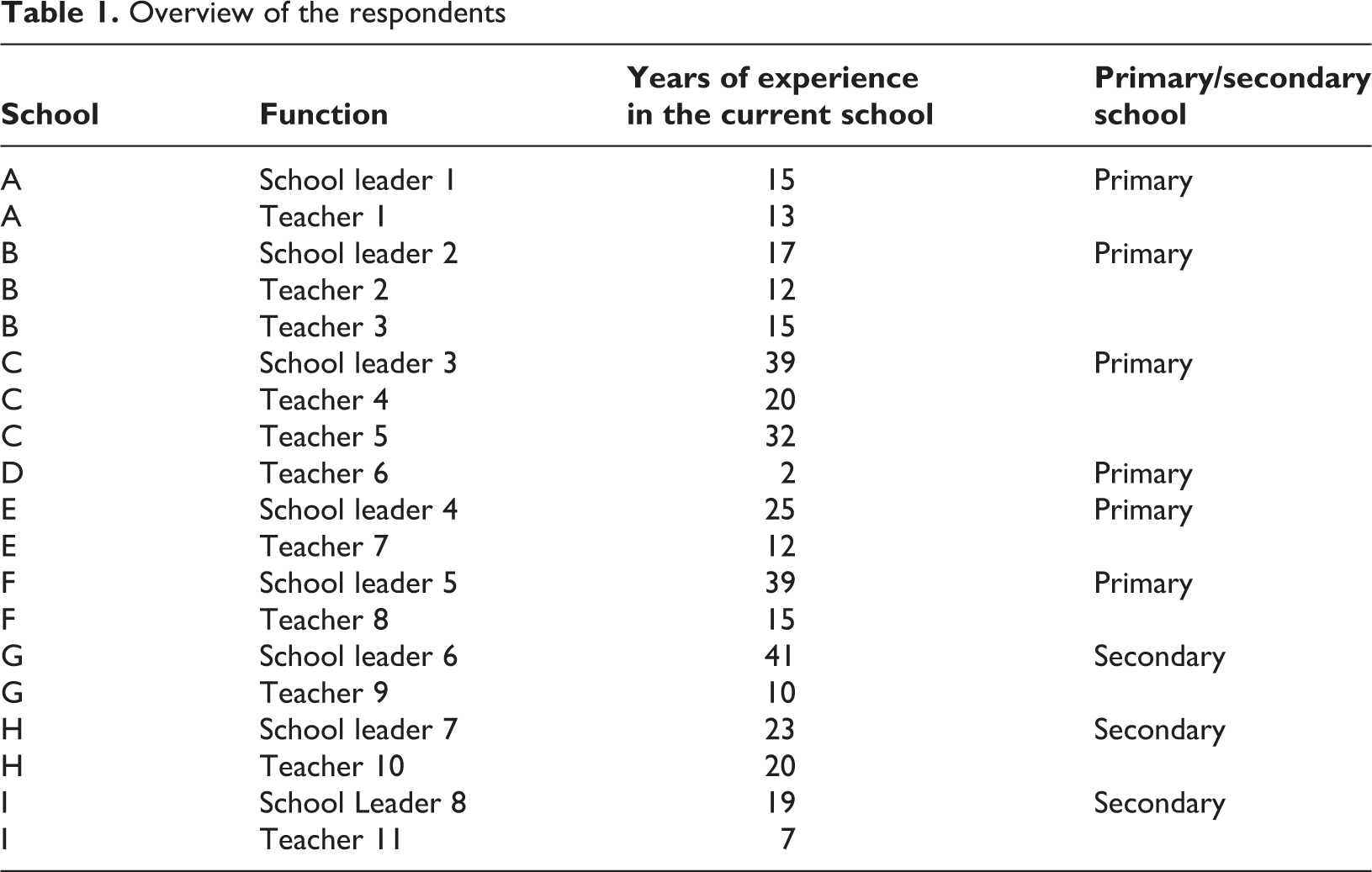
We specifically looked for school leaders and teachers with expertise and experience in the area of ESD. To obtain an apt sample, we used purposive sampling (Patton, 2015). The supervisory committee of the research project was consulted in order to obtain a suitable sample. This committee consists of 17 external organizations (e.g. educational umbrella organizations, university-colleges, pedagogical support services), all situated in Flanders, and which have expertise with sustainable development and/or ESD and access to a broad network of schools. Moreover, they are familiar with our project and research goals. Via the representatives in the supervisory committee, we obtained the contact information of schools that they identified as being suitable for our qualitative study. These schools were knowledgeable and active regarding ESD within their organization and therefore able to provide in-depth information on the topic (Ball, 1990). Initially, 10 schools were sampled for our study, but due to time constraints, one school cancelled their participation after the interviews were scheduled. This led to a total of nine schools that participated in our study: six primary schools and three secondary schools. The participating schools varied from governmental to independent (faith-based) schools, and from schools in a (segregated) urban area to a uniform school in a rural area. All participating schools are recognized and (directly or indirectly) financed by the government of the Flemish community. We asked for at least one teacher and the school leader to participate in the interviews and left open the option to interview more than one teacher within a school, should participants be willing to. In total, 19 respondents were interviewed: eight school leaders and 11 teachers. In school D, only a teacher was interviewed, as the school leader was unavailable and rescheduling the interview within a reasonable timeframe was not feasible. Table 1 provides an overview of the respondents, their experience within the school, and the educational level of the school. At the time of our study, most respondents had at least 10 years of experience in the school. To ensure the participants’ privacy, we have kept the individuals and schools anonymous. We refer to each interviewee as a ‘school leader’ or ‘teacher’ and include a number (1, 2, 3, 4, etc.). Prior to the interview, respondents were notified about how their personal data would be collected and used in this study via an informed consent. Respondents maintained the right to stop their participation at all times, though none of them appealed on this right.
Overview of the respondents
Data collection
Data was gathered via semi-structured interviews allowing for a systematic way of asking questions without eliminating relevant information that was not included in the interview guide (Patton, 2015). To ensure the validity of the interview guide (Maxwell, 2005), three pilot interviews were conducted with a former school leader, a primary school teacher and an educational supervisor (all with expertise in ESD). The interviews themselves consisted of two parts. The first section started with clarifying how the school stands toward ESD and its Holism, Pluralism and Action principles. After this introductory question, the interview covered the eight characteristics of the ESD-effective school. The characteristics were not explicitly named during this part of the interview to prevent socially desirable answers. For example, when inquiring about supportive relations, the respondents were asked why external partners are of importance for schools investing in ESD. In the second section, interviewees participated in a think-aloud exercise that featured cards for each of the characteristics. The respondents were asked to freely organize the cards and discuss why they choose a certain configuration. This information was linked with their statements from the first half of the interview and offered us insight into how the respondents perceived the relations between the different characteristics.
To address the issue of social desirability, all of the respondents were informed that the interviews did not have the objective to ‘evaluate the functioning of the school’ and that it was our sole intention to get an insight into the respondents’ perceptions of ESD in the school. During the interview itself, we used repeated questions and open-answer questions to circumvent the risk of socially desirable answers.
Analysis of the data
The recordings were transcribed for analysis. After a process of reading and re-reading, the transcripts were coded in NVivo (Version 12 Pro). A coding tree (Appendix 1), derived from the framework for the ESD-effective school, was used to deductively code the data (Benjamin and William, 1999). Via selective coding, specific fragments were assigned to the coding tree. Subsequently, a combination of selective and open coding was used to go through the data again. Relevant fragments were coded in NVivo when there was no existing node in the coding tree (Cohen et al., 2011). Through the use of peer examination when constructing the coding tree, and two researchers for analyzing the data, the internal validity of this study was addressed (Cohen et al., 2011). To check the reliability of the data analysis, we double coded 10% of the data. This process resulted in 90% agreement between the coders. Taking chance into account, a substantial agreement with a .62 kappa value was found (Landis and Koch, 1977).
Findings
Overall, the respondents report similar conceptualizations of the different characteristics of an ESD-effective school as described in the theoretical framework. Almost all of the respondents indicate that their ideal ESD school incorporates the eight characteristics presented in the framework. None of the respondents present features of a school organization that could not be linked to one of the described characteristics. However, the connection between the different characteristics and the influence they have on each other was not completely clear among the respondents. For example, several respondents felt pluralistic communication was of a different nature compared with the other central characteristics. When reading and interpreting these results, one must be aware of the fact that our sample is situated in a specific context and thus the results are also contextually depended and cannot be automatically generalized to other contexts. Nevertheless, these findings do provide valuable insights in the perceptions of teachers and school leaders on the conceptual characteristics of an ESD-effective school, contributing to our conceptual understanding of the ESD-effective school organization.
Sustainable leadership and school resources
All of the respondents note the value of sustainable of leadership, whether via the school leader or via teacher leaders. Although several respondents indicate that it is not easy to set out a long-term course for ESD, they all highlight the importance of sustainable leadership as it supports the school policy toward ESD.
Sustainable leadership is more than just a function; [it] is broader. It’s people following, striving and embodying a certain vision for the long term. (School leader 7)
The importance of a holistic dimension toward ESD initiatives is also illustrated by the following citation of a school leader who describes that it is easy to implement new ideas but hard to make these sustainable over time. This school leader notes that he believes that it is important for the leadership to preserve the good ideas and not replace them when a new idea comes around. We ought to guard that what happens is then salvaged and that’s not always easy…The new ideas are always good, but the sustainability [over time] should be taken into account. (School leader 1)
The majority of respondents see the ability to apply the appropriate leadership style for a given situation as an important asset of sustainable leadership. The school leaders recognize the different styles and note that these allow for different strategies of leadership, such as taking a step back to give the teaching staff the initiative to implement ESD-related projects or ideas, offer support or facilitate where needed. Both school leaders and teachers specifically point out that they find transformational leadership important in order to inspire the team to invest in and contribute to ESD. However, transformational leadership is not limited to the school leaders themselves. From the school leaders’ perspective, via a deliberate laissez-faire approach, school leaders can give teachers the autonomy to take on an inspirational, motivational, influential or intellectually stimulating role in ESD leadership. Nevertheless, even when taking a step back, the school leaderships’ support for ESD remains important, according to our respondents.
Our [former] school leader gave me a carte blanche, but action was needed on a higher level. And as a teacher, I’m just a pawn; it’s really hard for me to have an impact on that level. So I hope when we get a new school leader after the holidays, that he or she will support us when it comes to ESD. (Teacher 6)
Both teachers and school leaders note the school leaders’ responsibility for allocating the right resources at the right time, location and to the right individual(s) in order to facilitate ESD. Nearly every participating school leader believes that this is a requirement for an ESD-effective school. According to the school leaders, this flexibility to move around the available resources aids their application of ESD. Though this flexibility applies to the three types of resources, a clear example can be found in terms of time management: the respondents stated that being flexible with timing, such as shifting the timetable, makes it easier to work together with other colleagues and/or participate in training opportunities with external partners.
As a school leader, I make sure that there is time available. So if one of the teachers wants to go to an ESD-related training, for example, I make sure that his or her classes are covered. (School leader 4)
The presence of teacher teams dedicated to ESD or a related educational area (e.g. environmental education, citizenship education) in almost every school illustrates the importance of professional structures. All of the respondents agree that it would be ideal if a teacher team acts as a facilitator that motivates and supports the school team for ESD. Furthermore, the respondents declare that a heterogeneous group composition, including teachers from different subjects, and of different ages, races/ethnicities and genders, would be an asset to these teacher teams.
A majority of the respondents state that they believe it is important to enhance the physical infrastructure of the school as a way to demonstrate the sustainability values of the school. For instance, enhancement can occur through involving students when transforming the playground into a green playground. One of the schools discovered its opportunity to have an open debate and discussion about it. During the development, as well as after the finalization of the project, those involved felt a sense of ownership regarding the new ‘green’ playground.
We found that our old concrete playground did not match our values. And, as we have limited resources for our infrastructure, we looked for external funding for the playground. It takes time and paperwork, but the old concrete playground is now replaced with a ‘green’ one. (Teacher 11)
Central characteristics
When asked about pluralistic communication, the participants unanimously expressed the view that such communication stimulates people to actively engage with different perspectives. Moreover, the incorporation of different perspectives in communication is deemed necessary by the majority of the sample when setting up ESD initiatives, since incorporating pluralism in the communication will make it easier to involve different perspectives, thus enabling a more holistic approach.
Well, I think that the more viewpoints you put forward, the wider one’s own viewpoint gets. And this leads to a more…well, yes, if you only know of one way of looking and thinking about something, you can’t really understand it. So I think that we as a school should look for as many different aspects and incorporate all of these in the way we talk about things. (Teacher 7)
Several respondents conveyed that a pluralistic way of communicating has a positive impact on a school’s efforts toward ESD and that this specific way of communicating presents opportunities to start a dialogue with and among students. According to our respondents, it also increases the opportunity to involve students in democratic decision-making.
Most of the respondents also emphasized the importance of supportive relations and illustrated that by working together on ESD projects or even knowing each other’s projects, strong inter-school team support can contribute to the development of common ground for ESD. According to several of the respondents, this ‘teamwork’ could, in turn, facilitate the development and anchoring of the shared vision. A number of teachers and school leaders indicated that the added value of the external relations can differ. Although nearly everyone reaffirmed the many opportunities these external relations impart to ESD initiatives, not every external partner offers the same assets for ESD. Beyond securing extra financial means, the external partners’ expertise about ESD or SD-related topics is considered highly valuable by the respondents.
For example, from ‘Kleur Bekennen’ [Kruit, a knowledge center for World Citizenship Education] we’ve got[ten] some financial resources, but the most important asset was their guidance and coaching. They were really there for us! (School leader 4)
The respondents’ statements varied regarding parents as external partners. Some viewed them as an asset to ESD, as they actively help the school via direct support or highlight the principles of ESD at home. Others, though, perceived them as a hindrance, as some parents’ views of sustainable development (SD) differ from a school’s implementation of SD. Most respondents noted that it is important to incorporate the parents to be involved with the school. In doing so, according to our respondents, there are opportunities for dialogue that might aid in overcoming potential barriers for ESD at the school.
We aim to get ESD at our school as broad as possible and involve everyone that should be involved. Together with Djapo [educational organization with expertise in ESD], we organize evening sessions to get the teachers, parents and students together. And, in fact, that’s the ideal scenario for me: we ought to open up the school to the neighbourhood. (School leader 4)
In nearly all of the cases, the teachers and school leaders reported that supportive relations with other schools and school leaders are a valuable source of inspiration and ideas. For instance, some of the respondents conveyed that they try to have their school serve as an example for other schools that may want to set up ESD initiatives. However, as to partnerships with other school leaders, none of the school leaders stated that this is a priority for them.
All of the respondents agreed on the need for a common school-wide understanding of ESD. According to them, the lack of a shared vision of ESD can be a hindrance to the ESD effectiveness of a school. Seeing that, as stipulated by a respondent, ‘without a common vision, it is easy to lose track’, a clearly defined understanding of the concept could contribute to the awareness that ESD is a broad concept that needs a holistic view, without falling in the trap of labelling everything as ESD. Moreover, if all the members of a school have a solid understanding of what ESD means for them as a school organization, it becomes easier to be motivated to put effort into ESD initiatives. One of the respondents notes that if the school’s vision on ESD contains a clear understanding of ESD, other teachers will more easily see ESD as a part of their job.
That way, everyone is aware of it [ESD]. Without the need to ask about it, everyone is aware that it [ESD] is a part of their job. And you can choose where, when and how you incorporate it [ESD] in your job, but it should be incorporated. For us, it just makes sense that it [ESD] is a part of the job. (School leader 5)
Although the benefits of a clear understanding of ESD are highlighted by the majority of the respondents, some respondents also mentioned that this development of a shared understanding can be a potential pitfall, as it is easy to develop a one-sided (environmental-focused) view of ESD. Nevertheless all respondents agreed that a shared vision toward ESD would be an essential characteristic of a school working on ESD.
Most of our colleagues used to refer to the ecological perspective when talking about sustainability. So when we decided to shift from environmental education to ESD, we really broadened our horizon with different perspectives on sustainability…I think that it’s important to make this shift as a team, to get to this consciousness. That’s the first step in developing a vision. (School leader 1)
Besides the statement that a clear understanding of ESD will contribute to the motivation toward ESD, as illustrated by the above citation of School leader 5, most respondents were familiar with the different types of motivation related to ESD. The majority of the sample stated that an internal motivation provides the best foundation for ESD within a school. Nevertheless, several respondents indicated that external motivation could help to get colleagues acquainted with ESD, which (potentially) leads to the more desirable internal motivation. Additionally, most of the teachers and school leaders reported that a sense of societal necessity is an important source of motivation regarding ESD. This source of motivation (e.g. ‘We need to do something because it is needed for the better of the society and our planet’) often evolves into an internalized motivation within a school.
If I’m told what to do by someone else, I won’t like doing it and I will only do the minimum of what is expected. But in the ideal situation, it is ought to be a tad more than what is expected. People have to want it themselves. Then you really notice the difference and people will put much more effort and energy in it. That’s just amazing! And as to ESD, for us it’s just normal to do it. It’s who we are. (School leader 4)
The bigger part of the respondents emphasized the importance of a support base for ESD and conveyed that this is achievable through a democratic method of decision-making. As previously noted in both our conceptual framework and testimonials of respondents, pluralistic communication that involves relevant stakeholders can be facilitating for this democratic decision-making process. The respondents listed several positive outcomes of democratic decision-making. First, by including relevant stakeholders in the process, ideas and initiatives have the opportunity to grow and mature. A number of respondents explicitly stated that this is important for ESD. Second, when relevant stakeholders participate in the decision-making, actively or informed, a sense of ownership can be established. In turn, this ownership could facilitate the development of a shared vision of ESD. Third, a democratic method aids in making decisions more sustainable and holistic and allows for a pluralistic way of making such decisions.
If you want a decision to last, it should be a collective story…It’s also important to take note of who participates in the decision. In a diverse school like ours, you can’t expect three or four people to represent everyone’s opinion. (School leader 7)
Adaptability was viewed by our respondents as an important, though difficult to achieve, ESD-effective school characteristic. According to the respondents, choosing when and when not to act on an opportunity is a major strength of an ESD-effective school. This ability precludes the school team from being overburdened by initiatives. The importance of the school leader in shaping the context for the central characteristics is clearly reflected in the adaptability of the school. For example, if a school leader simply forwards every proposition that the school receives to teachers, ESD working conditions will greatly differ from those in a school in which a clear strategy exists for how demands are addressed. The following citation of a school leader illustrates this:
We get a lot of emails and phone calls from all types of organizations who ask us to partake in their initiatives. It’s our job to filter those out…Via consulting the team, we make a decision: shall we engage with this or that initiative or not? Is it achievable for the team, and, if not, will it be achievable in the future? (School leader 8)
The respondents noted that ESD-effective schools need to sense when and how to adapt. They illustrated that the ability to choose when and how to adapt (single loop strategy or double loop strategy) is clearly linked with organizing a school in order to achieve the ESD vision and goals the school has put forward. Several respondents also stressed the need to take different perspectives into account when evaluating the current way of working, with an emphasis on the temporal dimension.
We always take into account where we came from and where we want to land. That’s an important perspective for us when we want to change things at school. (Teacher 7)
The respondents’ answers contributed to the conceptual description of collective efficacy seeing that many of them noted that if a school believes it has a positive effect on students’ competencies that are linked to sustainability, it will be likely to be successful in regard to achieving the presupposed learning outcomes for ESD. They held the common view that an ESD-effective school requires some sort of idealism if it wants to succeed in the ESD goals it set out to achieve for students. For example, one teacher stated that the ability of a school to believe it has an effect on ESD is one of its major strengths. However, another teacher noted that collective efficacy is a vicious circle: if a school is convinced of its positive effect, it continues making an effort. If a school does not believe it can make a difference, it will not put forth additional effort. Consequently, there will be no effect, and the school’s belief that it cannot make a difference is strengthened. The respondents shared the opinion that a collective sense of efficacy shows genuineness.
If you are convinced of something yourself, of the way you do it, the content, the message you bring, you can lift your students to a higher level. If you radiate positivity, it doesn’t matter if it’s the teacher, the school leader, or the cleaning staff, you notice that the children are happy to come and learn at school. (School leader 2)
While the respondents deemed a sense of collective efficacy an important feature of an ESD-effective school, they expressed concern regarding the influence a school can have on children when their parents are not open to the sustainability of ESD. One common view was that when parents did not support ESD, the positive effects of the school were cancelled out. However, it is interesting that respondents who sensed a high level of collective efficacy stated that they use ESD to reach the parents via the children. As several respondents explained, when they are able to teach children about sustainability and ESD, they can also try to inform the parents about it.
Structuring of the characteristics of an ESD-effective school
During the final part of the interview, respondents were asked to organize cards depicting the different school characteristics while expressing their thoughts aloud. The results provide insight into how the respondents see the different characteristics in relation to each other. While none of the respondents provided a viewpoint that fully contradicts the structuring of the characteristics in the original framework, it is worth noting that several respondents put emphasis on the importance of pluralistic communication. As stated by a number of respondents, pluralistic communication has a significant influence on the other characteristics, whether they are central or contextual. For example, in order to develop a shared vision or make decisions in a democratic way, a pluralistic way of communication is necessary.
I think that in the decision-making process, people should have the opportunity to state and communicate their viewpoint even if it’s not in line with what everyone else is thinking. You need both the people who agree and those who don’t agree in the dialogue to set up the shared vision. (School leader 7)
In the interconnectivity of the central characteristics, pluralistic communication plays an important part in bridging the different characteristics, according to some of the respondents. As communication is seen as vital in order to attain the other characteristics of the ESD-effective school, it is argued by the respondents that it could also be seen on a different level compared with the other characteristics. Moreover, one respondent raised the point that in a school that invests in ESD, pluralistic communication is ‘the sauce around everything’.
Conclusions and discussion
This study aimed to qualitatively validate the proposed framework for an ESD-effective school and did so in the context of both primary and secondary Flemish schools. It focused on a primary research question: ‘To what extent do teachers and school leaders with expertise in ESD reaffirm the framework for an ESD-effective school?’ The respondents in this study agreed with the proposed characteristics in the framework for an ESD-effective school. As none of the interviewees brought forth additional characteristics, our hypothesis that the eight identified characteristics make up the organizational traits of an ESD-effective school was strengthened. It is also to be noted that school leaders, as well as teachers, highlighted the importance of the eight characteristics in the framework. Furthermore, the results reaffirmed that school leadership and school resources, and the connection between both, can be conceptualized on a higher hierarchical level than the other characteristics. It is encouraging to compare the results from our study with the fifth principle of Hargreaves and Fink (2004), which describes sustainable leadership as a developer of human and material resources. Moreover, our findings are also in line with the role of the school leader as an agent between the school and the wider community (Carr, 2016). Also, sustainable leadership, and the need for an integrated and holistic perspective to leadership, was reflected in the statements of the respondents. The respondents noted, in line with the framework for the ESD-effective school, that sustainable leadership is broader than the person of the school leader themselves, and that being aware of the past and future contributes to a policy on ESD. Thus, based on the testimonials of our sample, we would argue that sustainable leadership and school resources, and their reciprocal relationship facilitating ESD, can indeed be situated on the subcontextual level of the ESD-effective school. This reciprocal relation is also reflected in the educational leadership literature, with examples such as Leo and Wickenberg (2013), Hargreaves and Fink (2004) and Fullan (2006). Our findings regarding the central characteristics are overall consistent with what is described in the proposed framework and with the literature on which it was based. For example, when considering collective efficacy, the respondents in this study echoed the positive effects described in the literature (Hoy et al., 2013; Leithwood and Mascall, 2008; Leithwood and Jantzi, 2008). The benefits of supportive relations within and among schools, and the need for a shared vision that our respondents put forward, is similar to the results found in the study by Pepper (2013), who interviewed school leaders (e.g. school principals, teacher leaders) on leadership for sustainable schools.
Although the evidence from our study has clear connections to the characteristics of the framework, we also found that the interconnectivity between the different characteristics sometimes differs regarding how the respondents conceptualized the interconnectivity and how it is described in the conceptual framework. As the results indicate, pluralistic communication might not completely fit in with the other characteristics on the central level. Many respondents conveyed the need for pluralistic communication within other central and contextual characteristics. Since this statement was much more explicit than other statements about the interconnectivity between the different characteristics, it is potentially better to regard pluralistic communication more as an agent that enables a school to implement the other characteristics. However, to allow for a better understanding of how the relations between the characteristics of the ESD-effective school are manifested, further research is needed. This way, we can obtain further insight into how specific characteristics (positively or negatively) steer other characteristics. Furthermore, a greater focus on pluralistic communication as a catalyst for both the central and contextual characteristics can potentially lead to interesting findings that can expand our understanding of an ESD-effective school. Another finding that could be further investigated would be the relationship of the school with the parents, and specifically on the collective efficacy of the school. This could, by extension, also influence the educational outcomes of ESD within the school. Addressing these gaps will allow for the empirical connection of ESD school characteristics with the actual learning outcomes of the school. This type of school effectiveness research will contribute to a more empirical way of looking at ESD, which several ESD scholars have requested (Bormann and Nikel, 2017; Singer-Brodowski et al., 2019; Waltner et al., 2018).
In terms of the limitations of the study, the generalizability of the findings has to be taken into account. While our sample and the perceptions of our respondents were more than adequate to provide empirical evidence on the conceptual framework for an ESD-effective school, they were situated in a specific context. Seeing that our sample was situated in Flanders, a Western European region with a distinct educational system, the results should be situated within this context. Although we were interested in our respondents’ perceptions on the characteristics, not the specific situation within the school, it is evident that these perceptions are also contextually dependent. Concerning the reliability of our study, we obtained a fairly high kappa value (.62). While the nature of qualitative research does not guarantee an entirely objective and verifiable result (Choy, 2014), this kappa value tends to indicate that our study does offer reliable insights into the conceptualization of an ESD-effective school. By involving several researchers in this study, both actively in the analysis of the data and from the sideline as critical peers, we were provided with critical feedback on our work, thus further ensuring the reliability of the results. Nevertheless, further research is necessary in order to enhance the generalization of our proposed framework. Seeing that the availability of academic sources on educational management and administration tends to be predominantly situated in the Anglo-American tradition (Hallinger and Kovačević, 2019) and the fact that our study only included Flemish schools, we encourage future research – both qualitative and quantitative – to investigate how this framework holds its ground in different contexts across the globe. The application and potential adaptation of the framework for the ESD-effective school to different contexts would not only enrich the framework itself, it would also allow for comparative research on ESD in different contexts. That said, with almost every respondent being an experienced and well-informed teacher or school leader, the purposefully selected sample allowed for rich and in-depth perspectives into the conceptualization of an ESD-effective school.
In conclusion, ESD remains fairly uncharted terrain when it comes to educational management and educational effectiveness. Many of the concepts of these two research areas have already undergone extensive examination. With our study, we sought to connect these particular research areas, though further progress in the field of ESD can occur by linking the existing knowledge of educational management and organizational science to the concepts and ideas in ESD research. The findings in this study further our understanding of how a school can be organized to ensure ESD effectiveness and should inspire more empirical and effectiveness studies in the field of ESD.
Footnotes
Acknowledgements
We would like to thank our colleague Evelyn Goffin for her assistance and feedback with the coding of the data.
Declaration of conflicting interests
The author(s) declared no potential conflicts of interest with respect to the research, authorship, and/or publication of this article.
Funding
The author(s) disclosed receipt of the following financial support for the research, authorship, and/or publication of this article: This study is part of the VALIES project and is funded by the Flanders Research Foundation under grant agreement S010317N within the Strategic Basic Research program. This project focusses on the valorization of integrated and action oriented ESD at Flemish primary and secondary schools.
