




Abstract
Instructional Boundary Management is an area of school leadership comprising activities that simultaneously involve instructional leadership and boundary management. This study explores principals’ Instructional Boundary Management during COVID-19. Data collection consisted of semi-structured interviews with a diverse sample of 33 Israeli elementary school principals. Data analysis indicated that principals felt an increasing need to carry out most Instructional Boundary Management activities during COVID-19. The findings suggest that COVID-19 influenced principals’ needs through the following three factors: the challenges that COVID-19 posed to teachers, the challenges that COVID-19 posed to students and parents, and the transition from face-to-face instruction to distance learning. These findings reveal the mechanisms through which COVID-19 affected Instructional Boundary Management activities, explaining how and why COVID-19 has led to a greater need for principals’ Instructional Boundary Management.
Keywords
Introduction
COVID-19 is an extraordinary public health crisis that has sent shockwaves across the globe. Therefore, it has significantly impacted a wide range of areas of life, including education (Schleicher, 2020). Learning has been interrupted and disrupted for most of the world's students, and existing opportunity gaps have intensified (Dorn et al., 2020). Therefore, COVID-19 has confronted school leaders worldwide with a period of exceptional challenge (Beauchamp et al., 2021), changing the nature of school leadership (Pollock, 2020), which “has shifted on its axis and is unlikely return to ‘normal’ anytime soon, if ever at all” (Harris and Jones, 2021, p. 245).
Joining other research efforts (e.g. Bush, 2021; Grissom and Condon, 2021; Harris and Jones, 2021), this study explores school leadership during COVID-19. Specifically, this study focuses on principals’ Instructional Boundary Management (IBM), which comprises school leadership activities that simultaneously involve instructional leadership and boundary management. The premise of IBM is that instructional leadership and boundary management have a significant area of overlap. Thus, IBM is about principalship activities that contribute directly to the improvement of teaching and learning (instructional leadership) and at the same time regulate the boundary between the school and its environment (boundary management) (Shaked and Benoliel, 2020).
Because instructional leadership is different in elementary schools versus high schools (Gedik and Bellibas, 2015; Louis et al., 2010), this study focused on elementary schools. Therefore, the study was conducted in elementary schools. Specifically, the study was conducted in the Israeli national school system, which serves about 1.8 million students in nearly 5000 schools (Israeli Ministry of Education, 2021). The first wave of COVID-19 in Israel lasted from February to May 2020, including the school system's (full and then partial) lockdown from 12 March to 19 May. The second wave lasted from July to November 2020, including the school system's (full and then partial) lockdown from September to December. The data for this study was collected from September to November 2020 with the goal of answering the research question of how COVID-19 shaped Israeli principals’ IBM.
Despite the importance of IBM to school effectiveness (Shaked and Benoliel, 2020), this framework has not yet been adequately investigated. The available knowledge on the impact of COVID-19 on school leadership is also in its infancy. Importantly, the influence of COVID-19 has not been investigated regarding instructional leadership and boundary management, which comprise the IBM framework. Hence the importance of this study, which holds both theoretical and practical implications.
Theoretical background
IBM
The framework of IBM is based on the argument that instructional leadership and boundary management have a significant area of overlap (Shaked and Benoliel, 2020). IBM is a synthesis of instructional leadership and boundary management, where the two different frameworks merge with each other rather than compete for the principal's attention and limited time. Instructional leadership is relevant to principals’ efforts to promote the core activities of education—teaching and learning—to improve students’ academic performance (Hallinger et al., 2020; Neumerski et al., 2018). According to this leadership approach, principals are expected to actively participate in applying the best teaching methods and be intensively involved in curricular and instructional topics (Liu et al., 2021; Park & Ham, 2016). Top priority should be given to student learning and academic success, while other areas should remain a lower priority (Glickman et al., 2017). At the same time, boundary management involves the internal and external activities of principals, which aim to regulate the boundary that separates the school from its environment (Thomson and Thomson, 2013), balancing the permeability of the school boundary (Benoliel, 2017; Caffyn, 2013). On the one hand, principals can maintain a loose boundary around the school through external activities, promoting the search for new information, mobilizing support and legitimacy, and increasing teachers’ awareness of changes in the school environment. On the other hand, by maintaining a tight boundary around the school, principals can engage in internal boundary activities to strengthen the teachers’ sense of belonging, protect the school from information overload, and limit external pressures (Kohansal, 2015). Through boundary management, principals can ensure that the school boundary does not become either too tightly delineated or too permeable (Benoliel and Somech, 2018). Principals have a hand in quite a few behaviors that simultaneously serve as both instructional leadership and boundary management. These behaviors make up the domain called IBM (Shaked and Benoliel, 2020).
From the IBM perspective, the instructional leadership and boundary management do not require a division of the principal's limited time but rather are performed in parallel by the same actions (Shaked and Benoliel, 2020). The management of instruction and school boundaries merge, and the conceptual distinction between them is blurred. Instructional leadership deals with the questions of what and why, while boundary management addresses the questions of how and with whom. Therefore, IBM is related to these two frameworks together, consisting of principals’ behaviors that simultaneously involve instructional leadership and boundary management. IBM can be seen as instructional leadership at the service of boundary management, with instructional leadership actions enabling the establishment and negotiation of school boundaries, determining inter- and intra-relationships within the school and between the school and its environment, and creating the levels of differentiation and integration necessary for effective school functioning. At the same time, IBM can also be seen as boundary management at the service of instructional leadership, with principals striving to better teaching and learning through communicative actions; the school boundary results from recurring patterns of instructional leadership. Therefore, IBM as a whole entity is created by integrating the improvement of school academic performance with balancing the tension between internal and external demands (Shaked and Benoliel, 2020).
Conceptually, IBM relies on two educational leadership frameworks: instructional leadership and boundary management. On the one hand, the instructional leadership framework claims that principals should play a significant role in leading curriculum and instruction (Hallinger and Wang, 2015; Rigby, 2014). From this perspective, the principal should prioritize tasks such as setting school goals that result in student progress, helping teachers develop the knowledge and skills needed to increase student achievement and independence, and using multiple sources of information to assess performance (Brazer and Bauer, 2013; Glickman et al., 2017). On the other hand, the boundary management framework argues that in today's schools, which become more and more open to their environments, principals should pay considerable attention to the management of their school boundary. They should have at their disposal strategies by which they manage the critical boundaries both inside and outside the school (Benoliel, 2017; Benoliel and Somech, 2018). These two frameworks might be seen as embodying different perspectives on school leadership. One might claim that the frameworks of instructional leadership and boundary management focus their gaze on dissimilar aspects of principalship, which are separated both conceptually and functionally. From this point of view, enacting instructional leadership and engagement in boundary activities are two unconnected challenges faced by contemporary educational leaders. However, IBM argues that these two frameworks have a significant area of overlap. Specifically, it specifies quite a few principalship behaviors that serve as instructional leadership enactment and boundary management simultaneously. It seems that the management of instructional programs and school boundaries may somewhat merge with each other; thus the conceptual distinction between them should be softened.
Our starting point is the typology of Druskat and Wheeler (2003), which illustrates how boundary management includes both internal and external boundary activities (Benoliel, 2020; Somech and Naamneh, 2019). This typology uses the same terms (e.g. Relating, Scouting, and Persuading) for both internal and external activities, although it may be confusing, to show that internal and external boundary management are made of the same building blocks. This typology was adapted and validated for schools by Benoliel (2017). According to Shaked and Benoliel (2020), IBM consists of internal and external activities. Internal activities of IBM are Instructional Relating
The internal and external activities of IBM.
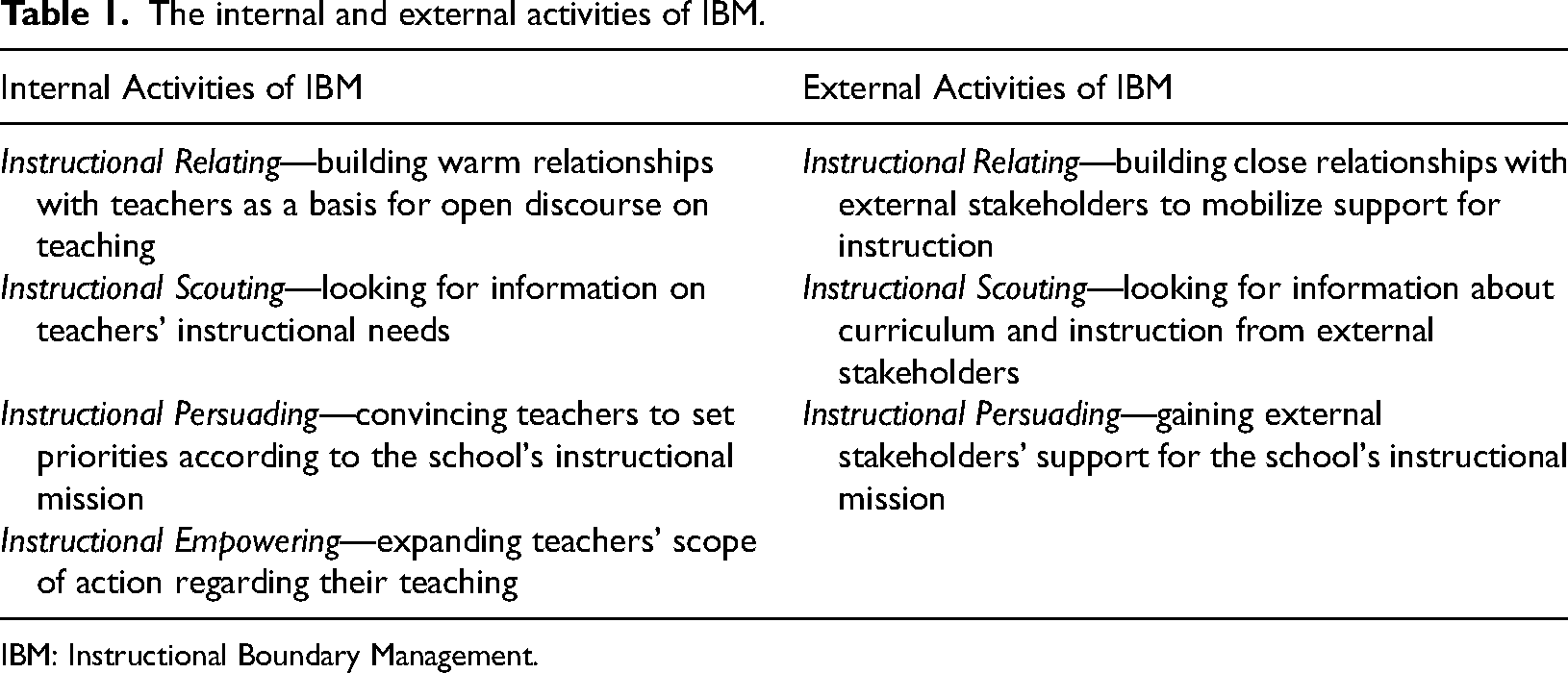
IBM: Instructional Boundary Management.
Figure 1 (Shaked and Benoliel, 2020) illustrates the construction of IBM. The two ellipses represent the two frameworks of instructional leadership and boundary management. The external arrows suggest that instructional leadership and boundary management respond to different issues. Instructional leadership mainly seeks to answer what and why, suggesting the area of content in which the principal should engage—curriculum and teaching, and offering the reason for this—because learning and achievement are the ultimate goals of school education. Boundary management primarily seeks to answer how and with whom, detailing the partnerships required for this and what needs to be done to nurture these partnerships. The two ellipses representing the two frameworks are located on both sides of the school boundary. Significantly, these two ellipses have a notable overlap area, representing IBM, including internal and external activities.
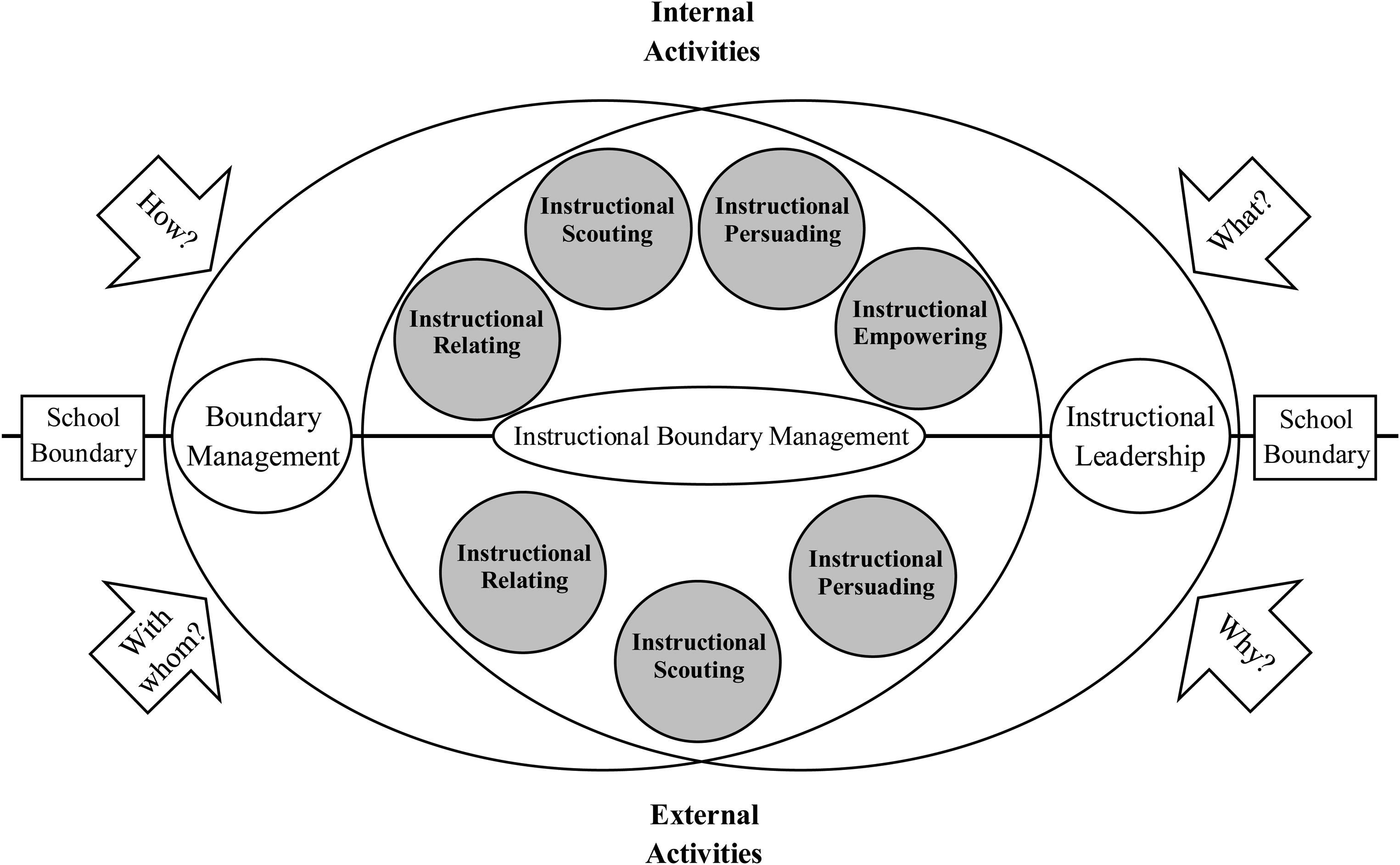
The construction of Instructional Boundary Management (IBM).
IBM during COVID-19
COVID-19 significantly influenced school leadership (Grissom and Condon, 2021; Harris and Jones, 2021). Notably, its influences are relevant to both instructional leadership and boundary management. Regarding instructional leadership, Pollock (2020) argued that principals have expanded their roles regarding safe education and setting the context for future education, while at the same time developing their instructional leadership to include digital instructional leadership. According to Keleş and colleagues (2020), principals as instructional leaders used technological support for teachers, academic support for students, psychosocial support, and parent communication in solving the problems they encountered during COVID-19. McLeod and Dulsky (2021) found that school leaders prioritized essential standards and leveraged all nonteaching staff members to support students in order to increase the teachers’ ability to focus on instructional practices. Over time, professional learning expanded from an almost-pure technology focus to include virtual instructional strategies.
With regard to boundary management and partnership building, Harris and Jones (2021) proposed several insights into school leadership practices during COVID-19. Among other things, they claimed that communities will be a crucial resource for school leaders. There will be a need to forge stronger bonds with parents and community groups. This claim may be seen as reflecting the external boundary activity of relating. They also asserted that due to COVID-19, school leadership has shifted considerably toward distributed, collaborative, and networking practices because more school leaders, at all levels, are needed to connect, learn, and share their methods (see Harris, 2020). This may be viewed as the internal boundary activity of empowering. McLeod and Dulsky (2021) noted that school leaders centered their leadership during COVID-19 around communication and family engagement strategies. They identified the need for frequent, often daily communication with teachers, students, and parents and were deeply involved in attempts to take care of their staff members. Staff bonding events solidified the ties among educators and created strong foundations upon which instructional capacity could be built. Thus, they engaged in both the internal and the external boundary activity of relating. Moreover, school leaders repeatedly recognized their reliance on collective wisdom across organizations and geographic boundaries. They intentionally looked to what was happening elsewhere, tapping into their networks and connecting with experienced colleagues, which reflected the external scouting boundary activity (McLeod and Dulsky, 2021). Insofar as COVID-19 shaped both instructional leadership and boundary management, this study explores how COVID-19 influenced principals’ IBM, which combines these two areas.
In recent years, scholars have argued that educational leadership research should involve a deeper examination of contextual factors (Hallinger, 2018; Miller, 2018). The existing literature illustrates how the influences of COVID-19 on school leadership have varied across countries. Australian school leaders have navigated the tensions of accountability versus autonomy, equity versus excellence, the individual versus the collective, and welfare versus workload (Netolicky, 2020). South Texas school leaders were generally confident in their readiness to serve students, staff, and parents to the best of their abilities during COVID-19, but felt a lack of resources. The extent of inequality among students has complicated their experience (Varela and Fedynich, 2020). In the UK, school leaders have dealt with the multiple difficult and ambiguous situations of COVID-19 with resilience that relied heavily on the strengths of preexisting structures and teams. They were required to provide effective emotional and moral leadership in an unfamiliar and rapidly changing territory. They have developed pragmatic, versatile, and personally calming approaches to communication with parents, teachers, students, and various external stakeholders, all of whom have also encountered exceptional circumstances with varying degrees of resilience (Beauchamp et al., 2021). In New Zealand, the challenges faced by school leaders included preparing students and staff for distance teaching and learning for an unknown length of time, supporting the well-being of students and teachers, and communicating clearly and compassionately with all stakeholders. School leaders’ initiatives included strengthening online teaching and learning, distributing leadership, and resetting direction (Thornton, 2021). Given the importance of context to understanding the impact of COVID-19 on school leadership, this study focused on exploring how COVID-19 influenced principals’ IBM in the Israeli context.
Method
The Israeli context
The study participants were Israeli school principals, who are expected to serve as instructional leaders entrusted with improving the education of their students (Capstones, 2008). The implementation of an instructional leadership policy has had a profound impact on principal preparation programs, which have been redesigned to train potential principals as instructional leaders (Israeli Ministry of Education, 2018). However, there is still a dissonance between the considerable emphasis on instructional leadership in preparation programs and the subsequent training and socialization experiences of principals. For example, the guidance given to novice principals usually focuses on technical and administrative issues, rather than issues related to curriculum and instruction (Oplatka and Lapidot, 2018). Similarly, instructional leadership receives much less emphasis in the professional development courses offered to in-service principals (Nets, 2017).
The data was collected from September to November 2020, during the second wave of COVID-19 in Israel. The school year began in the Israeli school system on 1 September, except in the cities where the effects of COVID-19 were particularly intense. Due to the exacerbation of COVID-19, a 3-week national lockdown was imposed on 18 September, including a nationwide school closure. The school system moved to distance learning, which typically included full online instruction, using video conferencing platforms such as Zoom and Google Meets, and learning management systems, such as Google Classroom and Canvas. Grades 1–4 returned to school on 1 November and the class size was limited to 18 children. Students were required to present a health declaration signed by their parents, wear masks throughout the day, and eat their meals spaced far apart from one another. Grades 5–6 returned to school on 24 November, grades 11–12 on 29 November, and grades 7–10 on 6 December. After the winter break, in 20 December, more than 220,000 students in grades 5–12 returned to distance learning in cities with a large number of COVID-19 cases.
Participants
Instructional leadership differs between elementary schools and high schools (Louis et al., 2010). This may be associated with various school characteristics, such as the number of students (high schools are often larger than elementary schools), or teacher specialization (high-school teachers usually teach only one subject) (Hallinger, 2012). Since instructional leadership cannot be examined in the same way in elementary and high schools (Gedik and Bellibas, 2015), this study focuses on elementary schools.
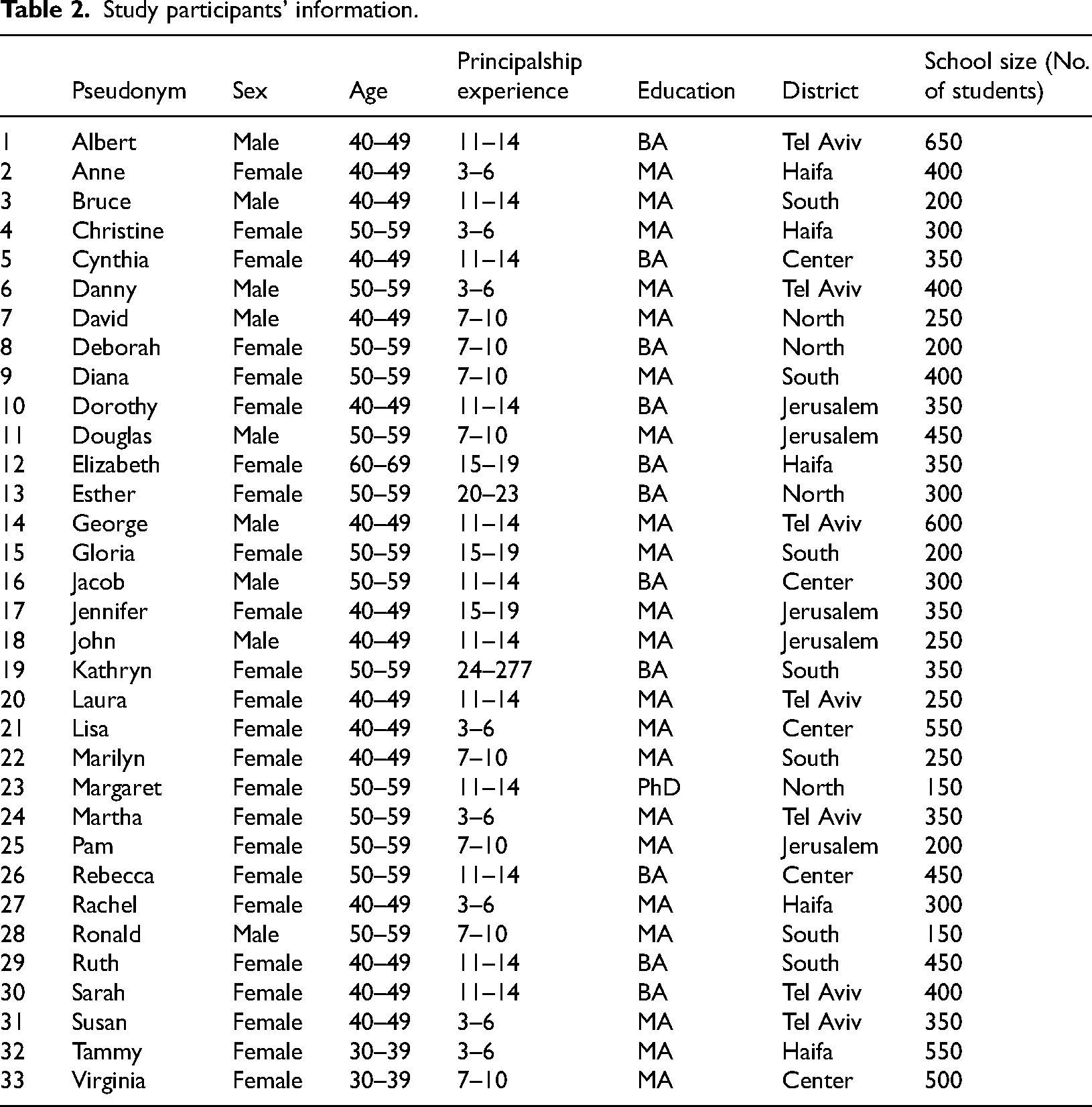
The sampling for this study was intended to create a sample similar to the population of elementary school principals in Israel in terms of their age, sex, seniority, and education, as well as their schools’ size and district and their students’ socioeconomic status. To construct the study sample, six superintendents from all six school districts in Israel were asked to recommend possible participants. The principals who participated in the study matched the characteristics of the larger population of elementary school principals in Israel. Accordingly, the present study included 24 females and nine males, who were between 33 and 60 years old, and their average age was 48.94. They had 3–27 years of school leadership experience, with an average of 10.45 years. Ten principals had a bachelor's degree, 22 had a master's degree, and one had a doctorate. Table 2 presents the characteristics of the study participants.
Study participants’ information.
For ethical reasons, all the participants were informed that their participation was voluntary and that they could leave the study at any time (no one left). They were promised confidentiality (pseudonyms were assigned) and were asked to provide written consent based on an understanding of the purpose of the study.
Data collection
This study was qualitative because the interview methodology and content analysis are most appropriate when existing knowledge about the phenomenon under investigation is limited (Merriam and Tisdell, 2016). The data was collected through semi-structured interviews aimed at exploring the principals’ IBM during COVID-19. The researchers, in their role as interviewers, developed and used an interview protocol, which included pre-planned questions and targeted topics. However, the interviews were also conversational, with new questions arising from previous responses whenever possible. The interviewer could, therefore, “respond to the situation at hand, to the emerging worldview of the respondent, and to new ideas on the topic” (Merriam and Tisdell, 2016, p. 111).
The interviewers deliberately refrained from mentioning the terms “instructional leadership” and “boundary management” so as not to prompt the interviewees to frame their discussions in this light. Interviewers used open-ended questions such as “What ensures quality instruction in your school?”; “How do you understand your responsibility for students’ learning and achievement?”; “What relationships do you have with people and entities as part of your principalship?”; and “As a principal, how do you respond to external influences and expectations?” The interviewers tried to come to the interviews with deliberate naiveté, which means to “exhibit openness to new and unexpected phenomena, rather than having readymade categories and schemes of interpretation” (Kvale and Brinkmann, 2009, p. 28). All the interviews were audio-recorded and transcribed verbatim.
During each interview, the researchers jotted down ideas to themselves, the length of a few words or at most a line or two, about the meaning of the data being collected. As soon as possible, they also wrote a conceptual memo, usually no more than a page long, which represented theoretical insights that occurred to them. Then they tailored the next steps of data collection according to these insights, redirecting their inquiries in order to examine or refine them. For example, when the researchers saw in the first interviews that the need for instructional empowering did not increase during COVID-19, they added the following question to the interview protocol: “How does COVID-19 influence teachers’ autonomy and responsibility?”.
Data analysis
The goal of data analysis was to bring order, structure, and meaning to the raw data mass. To do this, the researchers first read the collected data several times to get to know them. The necessary sorting was then performed to look for statements related in some way to IBM during COVID-19. As explained by Miles and colleagues (2014): “Data condensation is not something separate from analysis. It is a part of analysis. The researcher's decisions – which data chunks to code and which to pull out… are all analytic choices” (p. 12). Then, the statements identified in the previous step were linked to the activities of IBM identified by Shaked and Benoliel (2020). Therefore, it was concept-driven rather than data-driven coding (Saldaña and Omasta, 2018). Then, follow-up interviews were conducted as needed, to clarify questions that arose during data analysis. Recognizing the importance of reflective journals in qualitative research (Ortlipp, 2008), the researchers wrote a personal reflective research log throughout the study to ensure critical thinking.
Findings
The current study explored the influence of COVID-19 on the principals’ IBM. Qualitative data analysis revealed that interviewees pointed to an increasing need for most IBM activities during COVID-19. Specifically, the following sections describe the impact of COVID-19 on the various internal and external IBM activities, supported by participant excerpts.
Internal IBM activities
Instructional Relating
Instructional relating is about building positive relationships with teachers to enable an open discourse on teaching. The need for instructional relating as an internal activity, which was mentioned by 11 study participants, increased during COVID-19 because of the challenges the pandemic posed to teachers. Sarah asserted: “COVID-19 shakes my teachers, like everyone else. I need to make sure they're okay.” The principals mentioned challenges that everyone faced during COVID-19, such as health concerns, uncertainty, and financial instability, as well as challenges arising from the transition to remote teaching, as articulated by John: “Teaching has never been easy. However, the transition to online education has made teaching much more complicated and stressful than ever. As I want caring teachers, I have to care for them.” The instructional relating activity was seen by the study participants as a prerequisite to ensuring teaching quality and protecting instructional time, as explained by Robert, with 5 years as a principal: “The teachers have many good reasons not to invest in teaching. Our good relationship significantly contributes to their commitment to student learning.” Ruth said: “I ask my teachers about their coping with the challenges of COVID-19. It allows me also to have respectful conversations with them about the quality of teaching and learning.” The principals also demonstrated fairness to the teachers, as expressed by Rebecca: “I want my teachers to know that my demands from all of them are the same. I do not address the difficulties of one teacher more than of others because the situation is difficult for everyone.”
Instructional Scouting
Instructional scouting refers to looking for information about the instructional needs of teachers. The need for instructional scouting increased during COVID-19 because of the significant change in teaching methods. As an internal activity of IBM, instructional scouting involved paying attention to the teachers’ instructional needs and difficulties that arose due to the shift to remote teaching due to COVID-19. This internal activity came up in interviews with 16 study participants. The principals claimed that the teachers needed help to cope with the fundamental change in teaching. Diana argued: “A lot of the teachers’ practice was dependent on them being there and leading the students through certain things. Teachers need a lot of help to adapt to the new method.” Under these circumstances, the principals felt a responsibility to reach out to the teachers, as explained by George: “It is important for me to be aware of the needs of the teachers in these challenging times when their instruction is changing so drastically.” The principals described themselves as initiating communication with the teachers to acquire information about their challenges and needs. They asked the teachers about the challenges of remote teaching during meetings with teaching staff and casual conversations. Lisa related that she also asked the school middle leaders to find out how the teachers were coping: “Teaching online is a radical departure from classroom teaching. For my help to be tailored to the teachers’ needs, I asked the grade-level coordinators to check with the teachers what help they needed most to handle the new way of teaching.”
Instructional Persuading
Instructional persuading means convincing teachers to set priorities according to the instructional goals of the school. The need for instructional persuading increased because of the variety of challenges faced by both students and parents during COVID-19. The study participants engaged in instructional persuading in response to the claim that student learning and achievement are not a top priority during COVID-19. As an internal activity of IBM, which was mentioned in interviews with 12 principals, instructional persuading was designed to address the teachers’ claims that emphasizing quality teaching and curriculum was not appropriate during COVID-19. For them, the students’ emotional stress and social isolation, as well as their parents’ complaints (see below), required a short-term waiver of the requirements for learning and achievements. Opposing this position, the participating principals tried to convince the teachers that COVID-19 should not be allowed to cause long-term academic damage. They tried to justify their policy by talking to the teachers about the need to be goal-oriented and focus on student academic performance. Anne said: “I explained to the teachers that we cannot throw away a significant portion of the school year. We must get the most out of learning during COVID-19 to reduce learning loss.” Esther said: “I took advantage of various opportunities to talk to teachers about the efforts that should be made to maximize learning during COVID-19.”
Instructional Empowering
The meaning of instructional empowering is expanding teachers’ scope of action regarding their teaching. Analysis of the data did not find that principals’ need for instructional empowering increased during COVID-19.
External IBM activities
Instructional Relating
Instructional relating refers to building healthy relationships with external stakeholders to gain support for instruction. Study participants did not mention an increased need for instructional relating (as an external activity) during COVID-19.
Instructional Scouting
Instructional scouting means searching for information about curriculum and instruction from external stakeholders. As noted above, the need for instructional scouting increased during COVID-19 because of the significant change in teaching methods. With regard to instructional scouting as an external activity of IBM, it involved searching for information from external parties to acquire knowledge that might improve teaching during COVID-19. This external activity was mentioned by 14 study participants. As noted above, the participating principals considered the shift to distance learning as a substantial change. To facilitate the transition to distance learning, the principals sought information from external sources. Albert consulted with fellow principals: “I asked other principals in town and got a lot of good tips for online teaching.” Elizabeth asked the superintendent for advice: “The superintendent advised me to keep teaching as routine as possible. That was great advice.”
Instructional Persuading
Instructional persuading is about mobilizing the support of external stakeholders for the instructional goals of the school. As mentioned above, the need for instructional persuading increased because of the challenges students and parents faced during COVID-19. The participating principals employed instructional persuading in light of the claim that student learning and achievement were not top priorities during COVID-19. Instructional persuading as an external activity of IBM, which ten participants of this study mentioned, aimed to convince parents of the importance of learning during COVID-19. Some parents asked to reduce the scope of learning and the learning load. Rachel said: “Some families found it difficult to help their children learn. They were not available for it, nor were they versed in the material being studied. They claimed it was simply impossible and demanded that we reduce the children's learning.” Similarly, Jennifer said: “The parents said they could not equip each child with a computer for the whole day. They asked that each child learn only part of the school day.” Against this background, the principals explained why it was not worthwhile to reduce the scope of learning during COVID-19, attempting to get the parents to understand and identify with school policy. Jacob described himself as explaining to parents that “this approach has long-term consequences. If we give up learning, their children will later have to give up higher education, employment, and income.” Pam said: “I explained to the parents that when COVID-19 ends, no one will give their children any academic relief. They will be required to have the same knowledge and skills as students at other times.”
Discussion
This study examined how principals in Israeli elementary schools engaged in IBM during COVID-19. The findings suggested that principals who participated in this study felt an increasing need for most IBM activities during COVID-19. Moreover, the findings indicated that COVID-19 affected principals’ need for IBM through its three areas of impact: the challenges that COVID-19 posed to teachers, the challenges it posed to students and parents, and the transition from face-to-face instruction to distance instruction.
The present analysis revealed that the challenges that COVID-19 posed to teachers have made principals feel a growing need to carry out internal instructional relating. Against the backdrop of these challenges, the principals who participated in this study described themselves as cultivating caring relations, building trust among school members, and demonstrating fairness to faculty staff in the decision-making process. They aspired to be attentive, taking into account the teachers’ feelings and desires and responding as positively as their values and resources would allow. This is similar to the findings of McLeod and Dulsky (2021), who described educational leaders around the world as quickly identifying the importance of taking care of their staff's needs. From the point of view of the participants in the current study, internal instructional relating provided a valuable means to protect instructional time and hold effective conversations with teachers about curriculum and instruction. This point of view reflects an understanding that the influence of principals on students is mainly indirect (Murphy et al., 2016). Principals improve student learning and outcomes by influencing teachers’ teaching strategies and by increasing teachers’ motivation, loyalty, satisfaction, and other factors that, in turn, influence student outcomes (Benoliel, 2020; Liu & Hallinger, 2018; Louis et al., 2010; Sebastian et al., 2016). For this reason, a healthy principal-teacher relationship is necessary for instructional leadership (Le Fevre and Robinson, 2015; Robinson, 2010). Thus, it seems from our findings that internal instructional relating, which improves principal-teacher relationships, provided the foundation for enhancing learning and academic results during COVID-19.
This study's findings indicated that the challenges that COVID-19 posed to students and parents have made principals feel an increasing need to carry out both internal and external instructional persuading. To avoid waiving instructional goals, internal instructional persuading involved convincing the teachers to set priorities in line with the school's goals and develop a common instructional perspective on teaching during COVID-19. This internal instructional persuading involved mainly principals persuading teachers rather than a dialog in which principals were also willing to be persuaded. External instructional persuading involved convincing the parents that giving up or limiting learning during COVID-19 was not recommended. The principals believed that the challenges of the students and parents did not justify giving up teaching goals. They emphasized the instructional tasks at hand, even in disruptive times like COVID-19, taking only partial account of the parents’ requests and the challenges the students were facing. These findings might be seen as a rigid approach by principals to prioritizing the academic achievement of students over the well-being of students and teachers, which has been shown to be a priority in some of the studies reviewed above (Thornton, 2021. See also Arnold et al., 2021, p. 307, who found school leaders prioritizing “compassionate and humanizing goals” above all else). However, principals who participated in this study did not ignore the need to address the well-being of teachers and students. They combined this with preventing complete neglect of learning and achievement. According to the present findings, principals tended to identify the need for frequent communication with teachers, as well as with students and parents, and for forging stronger bonds with parents. This is in line with recent research acknowledging the frequent and ongoing interaction by principals with students, teachers, and parents (Harris and Jones, 2021; McLeod and Dulsky, 2021). Principals therefore focused their internal and external communication, at least in part, on instructional persuading. This also has important implications for social justice because instructional leadership is an equity-driven approach that promotes excellence for all students, ensuring that each and every student achieves at high levels. Instructional leadership contributes to reductions in social injustice because it strives rigorously to lead all students to high academic performance, regardless of diverse students’ potentially marginalizing characteristics.
Finally, the findings of the current study suggested that the transition from face-to-face instruction to distance instruction has made principals feel a growing need to carry out both internal and external instructional scouting. Internal instructional scouting involved searching and gathering information about the strengths and weaknesses of the teachers and the problematic issues the teachers faced. The participating principals described themselves as initiating internal communication with teachers more frequently in order to acquire information about internal experiences and needs that arose as a result of COVID-19. External instructional scouting involved searching for input from external stakeholders, such as fellow principals and superintendents. In some cases, external instructional scouting reflected resistance to a cross-cutting policy, which does not necessarily fit the specific context of the school. Principals as mediating agents sometimes looked for ways to “bend” the policy requirements to suit the unique circumstances of their schools (see Shaked and Schechter, 2017). As noted above, previous research found that school leaders relied on collective wisdom across organizational boundaries, connecting with experienced colleagues (McLeod and Dulsky, 2021), and generally seeing the community as a crucial resource (Harris and Jones, 2021). This study links these findings to instructional leadership. Moreover, the findings of this study reinforce preliminary results on the expansion of instructional leadership to include digital instructional leadership (Pollock, 2020). The study found that using internal and external instructional scouting, the principals acquired digital and technological skills so as to provide the teachers with the support needed to teach remotely.
The links between the implications of COVID-19 and principals’ increased need for IBM activities, found in this study, are summarized in Table 3. These links are, in fact, the mechanisms through which COVID-19 influenced principals’ needs for IBM activities, explaining how and why COVID-19 had an impact on the principals’ needs for IBM.
The implications of COVID-19 and increase in the principals’ IBM.

IBM: Instructional Boundary Management.
Identifying these links enables us to understand why some IBM activities were not affected by COVID-19. Our findings indicate that COVID-19 shaped IBM through its three main implications—challenges to teachers, challenges to students and parents, and a shift to distance learning. These challenges were relevant only to five IBM activities—internal instructional relating, internal instructional scouting, internal instructional persuading, external instructional scouting, and external instructional persuading—and not to two others—internal instructional empowering and external instructional relating. It is possible that external instructional relating is more appropriate for relaxed times, whereas in times of stress and crisis, the focus is mainly on internal instructional relating. Principals who were preoccupied with survival rather than development and who possibly focused more on individuals and their needs than on the school organization, forfeited internal instructional empowering and external instructional relating.
Although studies on school leadership during COVID-19, conducted in different countries around the world, did not use the IBM framework, differences regarding external relating can be seen. While this study did not identify an increase in principals’ need for external relating during COVID-19 in Israeli principals, school leaders in the UK were found to develop approaches to communication not only with teachers, but also with parents and other external stakeholders (Beauchamp et al., 2021). For school leaders in New Zealand, on the other hand, communicating in an understandable and compassionate way with all stakeholders was challenging (Thornton, 2021). Since we know that context significantly influences school leadership (Hallinger, 2018; Miller, 2018), we can assume that the interaction of COVID-19 with the characteristics of the national context leads to different results.
The implications of COVID-19, whose influence on principals’ IBM was revealed in this study, do not characterize this pandemic only. The two first implications—challenges for teachers and challenges for students and parents—are common in many challenging situations. A shift to distance learning—the third implication—can be caused by many factors, not just COVID-19. Therefore, the findings of this study are relevant not only to COVID. Practically, the findings of this study substantiate the necessity of IBM for contemporary school principals, suggesting that IBM is especially needed in times of crisis, when both teachers and students face extraordinary challenges, and also when shifting to distance learning. Therefore, IBM should be seen as an essential framework for effective school leadership, not just on regular days, but also in difficult or dangerous situations. Discussing IBM with prospective and in-service principals may be found to be valuable.
Compared to previous studies, this study provides new data on IBM during COVID-19. Nevertheless, it has some limitations. First, the data was collected in a specific context: the Israeli school system, which has specific characteristics related to instructional leadership (Shaked et al., 2021). Therefore, further research in different sociocultural contexts would be advisable to establish their inter-contextual and international trustworthiness. Second, as with any self-reporting, the current methodology offered little control over the temptation for the participants to give socially desirable answers. Further research using methods such as direct observation would hopefully serve to complement the principals’ self-reporting with more objective data on their instructional leadership practices. Interviewing teachers and school middle leaders might also complement the principals’ self-reporting. Third, this study reflects the situation at a specific point in time—the period between September and November 2020, during the second wave of COVID-19 in Israel. Therefore, it does not allow an examination of a change in the principals’ IBM throughout the different stages of COVID-19. Fourth, this study did not identify a correlation between IBM and the characteristics of the study participants, such as gender, experience, and education. Future research would do well to investigate differences between principals in IBM during COVID-19, which might be revealed in a study using a larger number of participants.
Conclusion
This study contributes to research efforts to explain how principals responded to COVID-19 and what forms of school leadership practice emerged. Specifically, this study explored principals’ IBM during COVID-19. Qualitative data analysis indicated that for Israeli principals of elementary schools, COVID-19 made most IBM activities more necessary. The findings explain how and why COVID-19 impacted the principals’ need for IBM through its three significant implications: the challenges faced by teachers, the challenges faced by students and parents, and the shift to distance instruction. Since these implications do not characterize COVID-19 only, this study identified the mechanisms that increase the need for IBM.
Footnotes
Declaration of conflicting interests
The author(s) declared no potential conflicts of interest with respect to the research, authorship, and/or publication of this article.
Funding
The author(s) received no financial support for the research, authorship, and/or publication of this article.
