



Abstract
This systematic review sought to expand our knowledge of the increasing research studies focusing on the empirical link between school leadership and student achievement. Using five different data sources (Scopus, WoS, ERIC, Google Scholar, and Retrospective Reference Harvesting Procedure), we created a data set of 144 journal articles. Descriptive analysis of bibliographic data and content analysis of full texts were employed in the review process. The results revealed instructional leadership as the most frequently used school leadership model in the relevant research. There has been a growing tendency to use the direct effect model with the increase in the studies from non-English speaking western societies. Indeed, the use of rational and organizational variables has dominated the mediating effect studies, while moderating effect studies as well as exploratory and explanatory type of studies have not received much attention. Based on these results, a framework representing the broader picture of the current research on the relationship between school leadership and student learning is provided. In addition, several recommendations were made, aiming to build the research capacity in furthering our understanding of how school leadership practices impact student learning and achievement.
Introduction
Over the past several decades, particularly following the release of the famous Coleman Report in the United States (Coleman et al., 1966), one of the most common aims of educational research has been revealing the school-level factors that might influence student learning outcomes. School leadership has since emerged as a prominent variable in this area of research. Consequently, many researchers in the field of educational administration have developed a profound interest in understanding the contribution of school leadership to student achievement. These scholars have reported either direct (Gümüş, Bellibaş, et al., 2021; Agasisti et al., 2020; Chen et al., 2022; Urick and Bowers, 2014) or indirect (Hallinger et al., 1996; Leithwood et al., 2020; Özdemir, 2019; ten Bruggencate et al., 2012) influence of leadership models, practices, and qualifications on student achievement. Thus, they have reached the conclusion that leadership matters for student achievement.
The decades of accumulated empirical studies have encouraged researchers to conduct review research to summarize the findings that link school leadership and student achievement. Existing literature reviews have largely focused on either the synthesis of key findings (Grissom et al., 2021; Hallinger and Heck, 1996; Leithwood et al., 2020) or meta-analysis (Robinson et al., 2008; Shen et al., 2020; Tan et al., 2022). Researchers who conducted meta-analyses were concerned with the size of the impact of specific leadership types or sets of leadership practices, while others focused on reviewing the conceptual and methodological progress of research on school leadership and school improvement (Hallinger and Heck, 1996), alongside the nature of the relationship between leadership and student achievement (Hallinger and Heck, 1998). Moreover, additional reviews specifically aimed to synthesize the findings from the relevant research. For example, Leithwood et al. (2004) developed a strong claim that leadership is only second to teachers in influencing student achievement based on quantitative research findings, while a more recent review of research in the United States focused only on longitudinal and experimental studies reported that school leadership might even be more important than teachers since it influences the school as a whole rather than a single classroom (Grissom et al., 2021).
Overall, there has been an increasing trend of reviewing the existing research on the association between school leadership and student achievement. However, the field has been missing a systematic review with a broader perspective to map out the nature of the relevant literature. By employing both descriptive and integrative perspectives, such a review would present the nature of the literature in relation to different topical foci, conceptual models, and methodological approaches, as well as possible weaknesses and gaps. We expect that this review could provide useful directions and guidance for researchers who are interested in investigating the link between school leadership and student achievement.
Our goal, then, is to expand the existing knowledge about the research focusing on the empirical link between school leadership and student achievement, as well as to identify the gaps in the relevant research based on a comprehensive review of existing literature. The research questions guiding our review are:
What are the common methodological approaches used in the relevant studies? Which topical foci (leadership models or practices/behaviors) are predominant in the relevant research? How are the related studies conceptually framed?
Conceptual framework
The present study was framed around the available review studies in the field of educational administration (Bellibaş and Gümüş, 2019; Gumus et al., 2018; Hallinger and Kovačević, 2019). Bellibaş and Gümüş (2019) identified three types of review studies in the field. The first type focuses on mapping the existing research by revealing the most cited studies, co-citations, keywords, growth trends, geographic distribution, authors of the related studies, etc. For example, Hallinger and Kovačević (2019) identified the most influential documents and authors, geographic distribution, schools of thought, and topical foci of the whole corpus of the educational administration field based on 22 journals by using descriptive statistics as well as citation, co-citation, and keyword analyses. The second type of review study employs a content analysis approach to describe topical foci, methodological approaches, and conceptual models (Hammad et al., 2022). The third type of review uses an in-depth synthesis of existing studies to summarize their key findings (Gümüş, Hallinger, et al., 2021; Oplatka and Arar, 2017). There also exist mixed-methods review studies that combine different approaches into the same study. Gumus et al. (2018), for example, identified the extent to which varying leadership models are studied in the field, changes in the trends of research over time, the most influential researchers, etc. along with the most used methodological approaches and the purposes of the relevant studies.
In the present study, we used a conceptual framework adhering to the second type of review study mentioned above. More specifically, our review focuses on three broad components of the relevant research studies: methodology, topical foci, and conceptual models (see Figure 1). We adopted a hybrid approach of inductive and deductive coding by systematically integrating data-driven codes with ones that were previously developed by the theory (Fereday and Muir-Cochrane, 2006) in order to carry out the content analysis (see Method section for details).
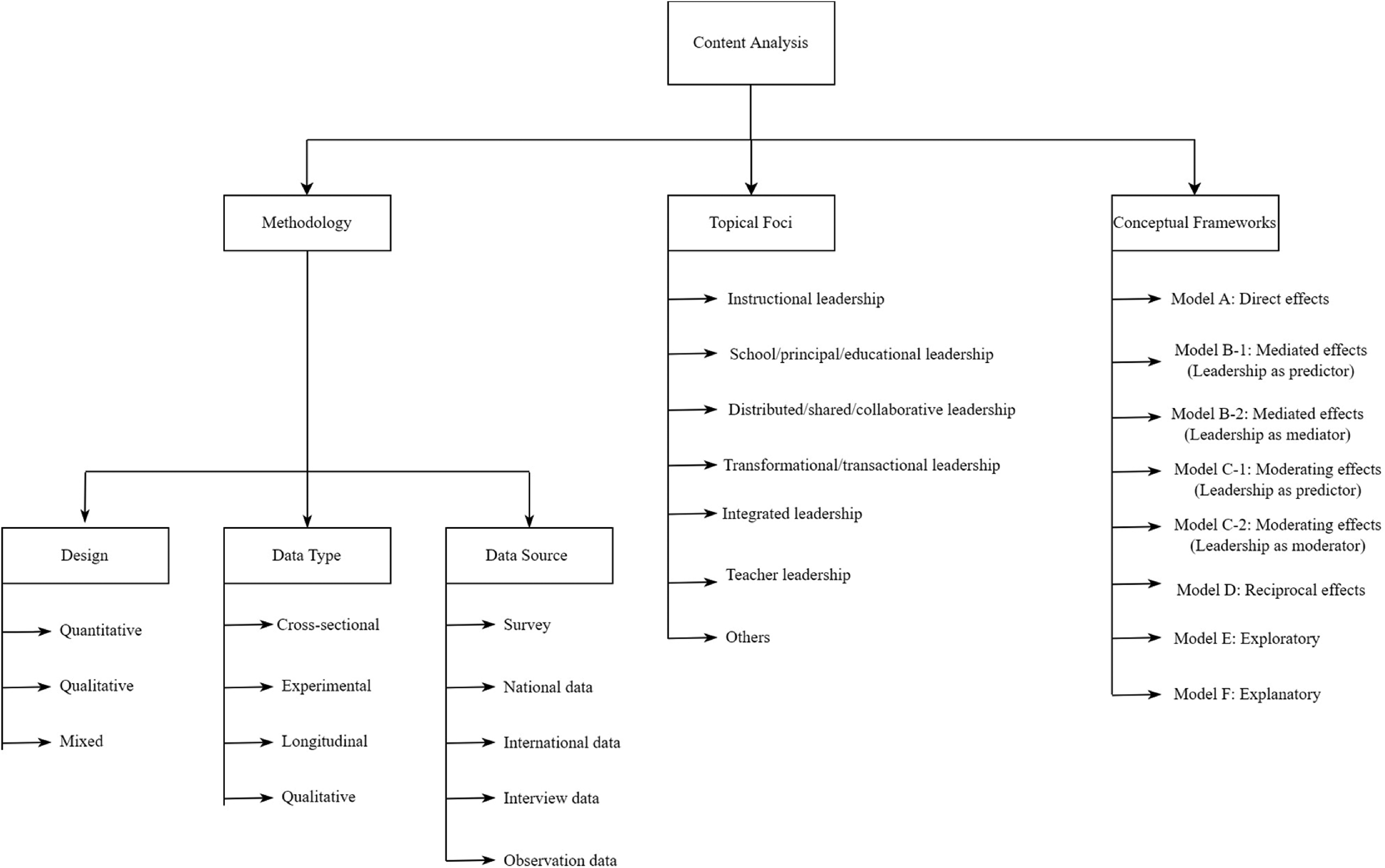
Conceptual models of the systematic review.
The content analysis for the methodology component involved three categories: design, data type, and data source. The design category included quantitative, qualitative, and mixed-method research types. Four categories of data types were identified: cross-sectional, longitudinal, experimental, and qualitative. Finally, categories for data sources included survey data, national/regional level secondary data, international data, interview data, and observation data.
The topical foci component focused on the type(s) of leadership examined in each study. To identify these topical foci, we began the coding process with the most frequently studied leadership types highlighted by Gumus et al. (2018), including distributed/collaborative leadership, instructional leadership, teacher leadership, and transformational leadership/transactional leadership. Then, during the analysis process, we added further categories (e.g. integrated leadership and school/principal/educational leadership) as they emerged from the data.
For the conceptual models component, we started with the framework developed by Hallinger and Heck (1996), which was adapted from Pitner (1988), and includes the following models: Model A: direct effect; Model A-1: direct effect with antecedents; Model B: mediated effects; Model B-1: mediated effects with antecedents; and Model C: reciprocal effects. However, we made small revisions to this framework to better represent the existing literature. Our renewed framework included eight models: Model A: direct effects model; Model B-1: mediated effects (leadership as predictor); Model B-2: mediated effects (leadership as mediator); Model C-1: moderating effects (leadership as predictor); Model C-2: moderating effects (leadership as moderator); Model D: reciprocal effects; Model E: exploratory; and Model F: explanatory.
Finally, we employed the “four paths model” developed by Leithwood et al. (2020) to further investigate the studies in the Model B (mediated effects) category. The paths included rational (e.g. classroom instruction, academic press, and disciplinary climate), emotional (collective efficacy, teacher trust, and teacher commitment), organizational (collaborative structures and culture), and family (parents’ social and intellectual capital, communication between parents and children) paths. Based on our analysis, we extended this framework by revising the “family path” as a “community-family path” and incorporating a fifth path focusing on the student (e.g. student engagement and motivation).
Method
Identification of sources
This research followed the PRISMA (Preferred Reporting Items for Systematic Reviews and Meta-Analyses) guideline (Moher et al., 2009) to identify relevant studies. Most of the recent reviews and meta-analyses in the field of EDLM were also guided by this approach (Hallinger and Kovačević, 2019; Shen et al., 2020; Tan et al., 2022), however, the authors conducting these studies chose to review research from various sources. Some EDLM researchers use Scopus as it provides a larger repository of peer-reviewed journals within the field of EDLM than WoS (Hallinger and Kovačević, 2019; Kılınç and Gümüş, 2021), while others apply what Hallinger (2013: 134) calls a “bounded search procedure” by delimiting their review to core international EDLM journals (Hallinger and Chen, 2015). Since the present study aimed to provide a comprehensive overview of the research on school leadership's effects on student achievement, we used five different data sources (Scopus, WoS, ERIC, Google Scholar, and Retrospective Reference Harvesting Procedure). The following inclusion/exclusion process was used to identify the relevant sources:
We adopted an open-ended search strategy that did not limit the search to a specific period. Thus, the search collected studies from 1981, when the first relevant article on the topic was published, through 2020. The review included only research articles that aimed to illuminate the association between school leadership and student achievement and that were published in peer-reviewed journals. Thus, we eliminated other documents, such as book chapters, book reviews, and conference proceedings. Only full texts written in English were included. TITLE-ABS-KEY ("school administrator*" OR "school manager*" OR "school administration" OR "school leader*" OR "principal*" OR "teacher leader*") AND ("student* read*" OR "student* math*" OR "student* achievement" OR "student* outcome*" OR "student* learning" OR "school outcome*" OR "academic achievement").
We conducted the search and selection process in three stages. The first stage focused on identifying relevant articles. We conducted several search strings before choosing the final one, which yielded the most comprehensive data set. We then searched titles, abstracts, and keywords by using the following terms:
The review began with a Scopus search, which yielded 1942 potentially relevant hits. We continued with WoS and ERIC and detected 1333 journal articles in WoS and 4597 in ERIC. After eliminating 734 WoS articles that were duplicated by Scopus and 1629 ERIC articles that were duplicated by Scopus and WoS, the initial search resulted in a corpus of 5509 articles: 1942 from Scopus, 599 from WoS, and 2968 from ERIC. In the second stage, two members of the research team reviewed the titles and abstracts of the 5509 articles for relevance and excluded those that did not fit the selection criteria. However, the two researchers came to differing conclusions about the relevance of the studies in the corpus: Reviewer A identified 169 eligible articles out of 1942 from Scopus, while Reviewer B identified 196. Thus, all members of the research team met to assess these conflicting reviews. After two meetings, we came to a consensus on which articles would be most relevant for full-text analysis (147 articles from Scopus, 45 from WoS, and 18 from ERIC, for a total of 210 articles). In the third stage, all members of the research team separately reviewed the full texts of the 210 articles to double-check whether they were directly related to the scope of the current review.
After reading the full texts, it became apparent that some of the articles were clearly outside the scope of the review. For instance, our search detected an article by Shapira-Lishchinsky (2020) because it contained the phrases “principal” and “student achievement.” While the abstract appeared relevant, the full text showed that the study predominantly discusses the effect of ethical school practices on science achievements; therefore, the paper was excluded from the review in this stage. This step narrowed the corpus to 127 journal articles. Then, we extended our search using key terms such as “school principal” and “student achievement” in the Google Scholar search tool. During this process, we scanned 50 pages, with each page showing 20 potentially relevant sources, following a strategy employed by previous reviews (Hallinger, 2018). After eliminating the results that duplicated those of previous searches, this process added 13 more articles to the corpus, increasing the number of reviewed articles to 140. After the Google Scholar search, we executed a retrospective reference harvesting procedure to confirm that we had not missed any relevant studies (Pigott and Polanin, 2020). This strategy incorporated four additional articles into the corpus, bringing the final total to 144 eligible articles that fit with our research questions. Figure 2 shows the PRISMA flow diagram.
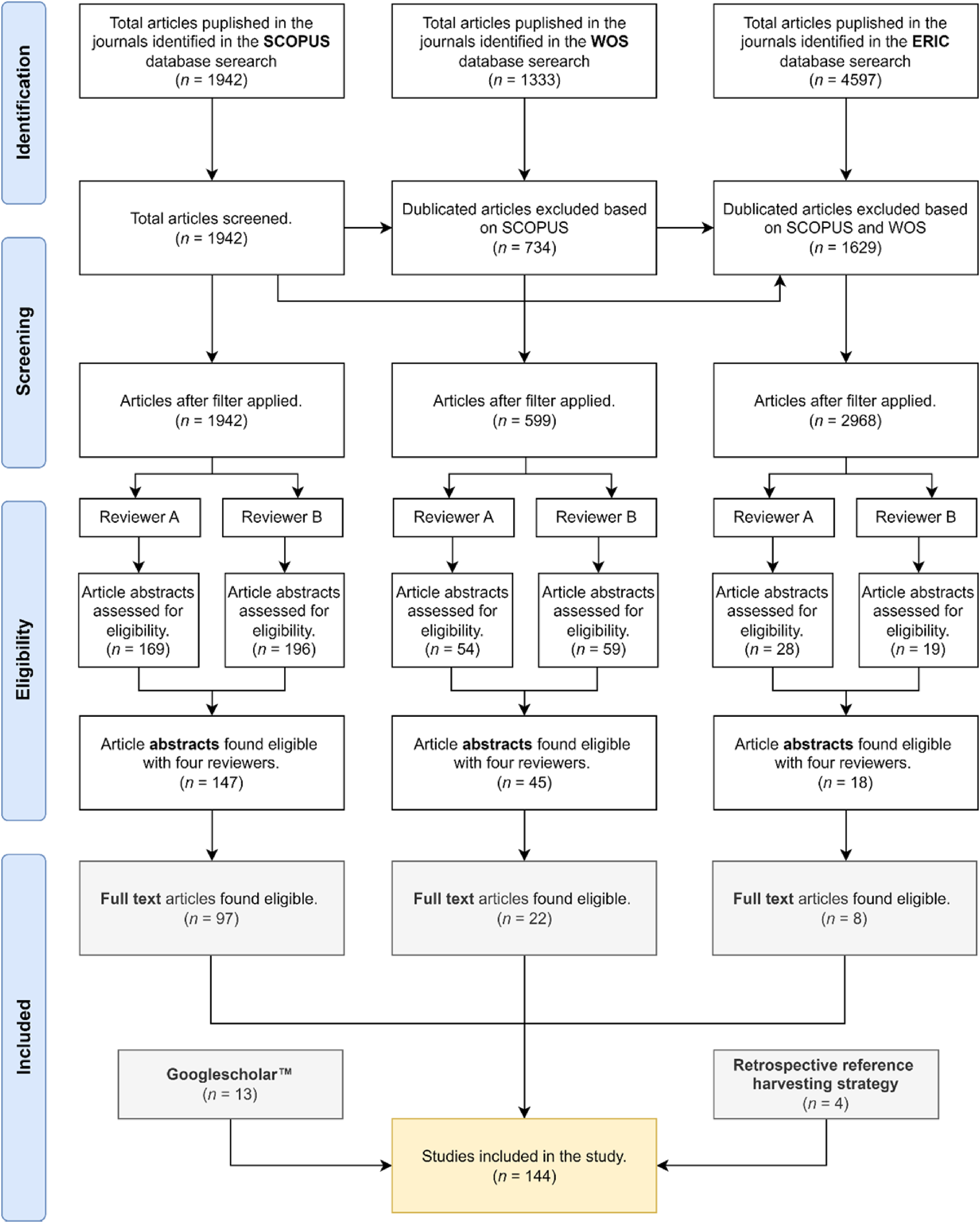
PRISMA flow diagram of the study.
Coding procedures and analysis
During coding, we used Google Sheets to record the following details for each article: methodological design (quantitative, qualitative, mixed-methods), type of data (cross-sectional, longitudinal, etc.), source of data (survey, national, etc.), leadership model, conceptual model (direct, mediated, moderating, etc.), mediating path (rational, emotional, organizational, etc.), and mediating variable (classroom instruction, teacher commitment, etc.). The initial codes were informed by the literature related to leadership models (e.g. Hallinger and Murphy, 1985; Robinson et al., 2008), conceptual models (Hallinger and Heck, 1996; Pitner, 1988), and mediating variables (Leithwood et al., 2020). Then, we generated descriptive codes (Saldaña, 2016) using a hybrid approach (see Appendix A), including both initial codes available in the literature and new codes that emerged from the data. For example, for the conceptual model of the articles, we used codes from the literature such as the direct effects (A), mediated effects (B), and reciprocal effects (D); and for those articles that did not fit these categories, we created data-driven new codes such as moderated effects (C), exploratory (E), and explanatory (F).
Two members of the research team reviewed the articles and recorded data related to each article on separate Google Sheets (see Appendix B). Afterward, we organized an online meeting of all members of the research team to discuss the conflicts between the two data sets. When a disagreement emerged, we revisited the article and extracted the related information to determine the most appropriate category. We used Excel for coding and descriptive statistics, as well as to create graphics of trends. We then used content analysis to synthesize the relevant information regarding the topical foci, conceptual models, and methodological dimensions of the reviewed studies.
Findings
Description of data set
Before answering our research questions, we present the key features of the reviewed studies, including their growth trajectory and geographic distribution. We first illustrate the growth trajectory of the related research by dividing the publication years of the articles in the dataset into five-year increments. Figure 3 shows the number of articles published between 1981 and 2020, categorized as Period 1 to Period 8. As the figure demonstrates, the related research sharply increased during two periods: after 2005 and after 2015.
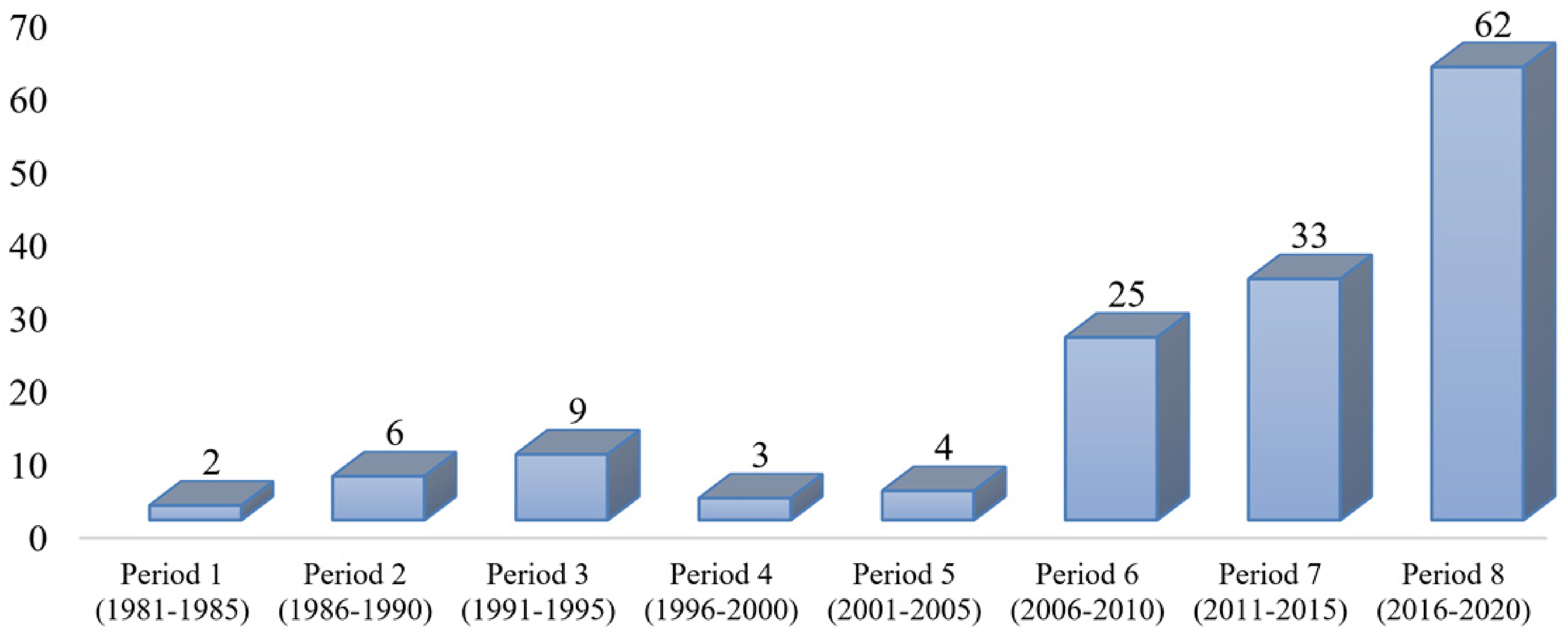
Number of articles.
Figure 4 also shows which countries have contributed to the growth of research on this topic. The results show that most of the studies were conducted in the United States, while Canada, China, Hong Kong, Australia, and Turkey have also contributed to the production of knowledge about how school leaders improve student achievement.
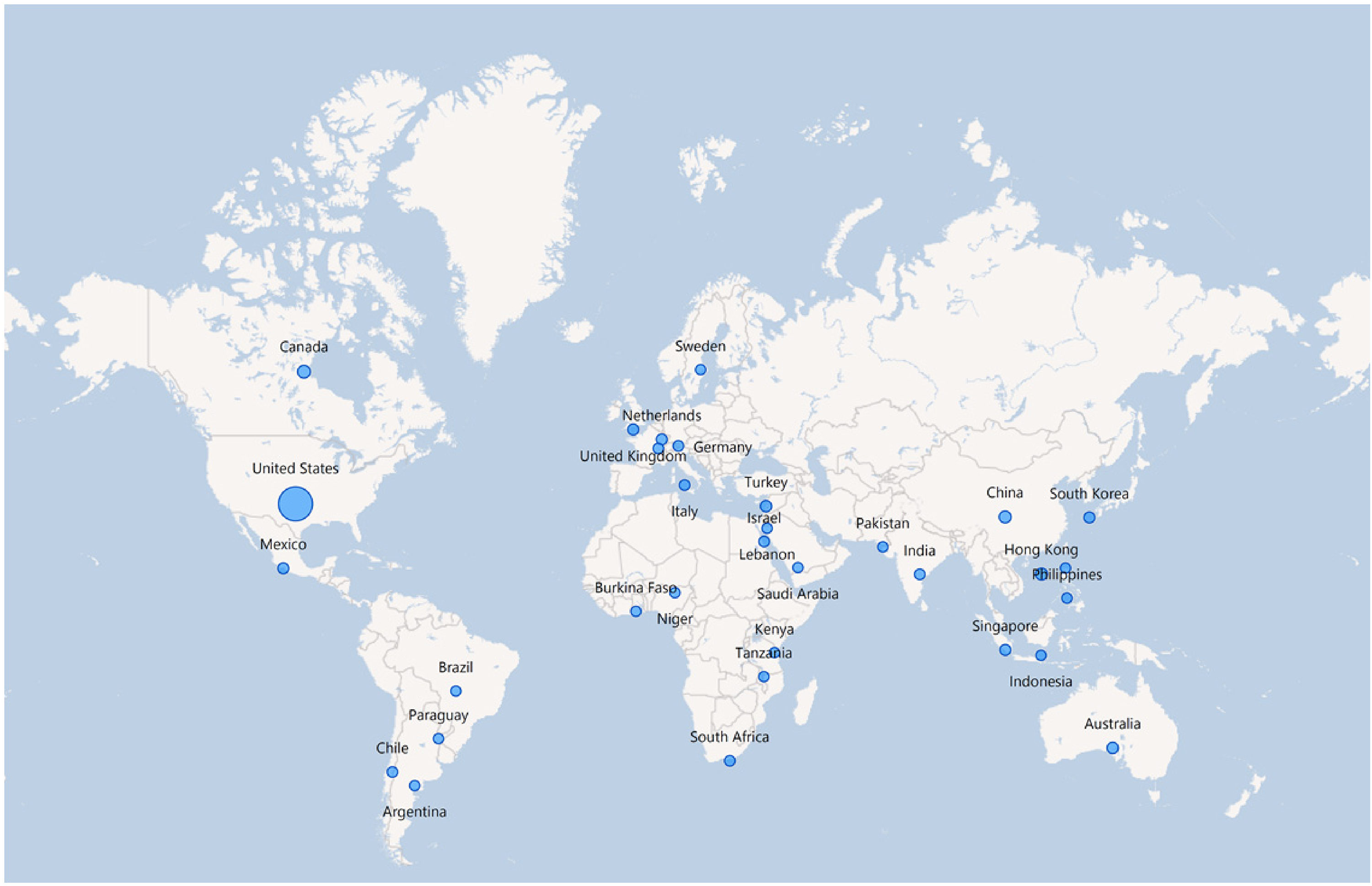
Countries.
Methodological approaches
Our first research question addressed common methodological approaches used in the relevant studies. We classified all 144 articles according to their methodological design (see Figure 5). Figure 5 illustrates that quantitative research is the most frequently used method for exploring the relationship between school leadership and student achievement (e.g. Leithwood et al., 2020; Zhu et al., 2020). Only nine studies employed qualitative methods (e.g. Gentilucci and Muto, 2007), while six employed a mixed-methods approach (e.g. Day et al., 2016; Leithwood et al., 2006; San Antonio, 2008). This pattern points to a greater dependence on quantitative research than previously revealed for the overall EDLM studies in different parts of the world (Hallinger and Chen, 2015; Hammad et al., 2022; Özdemir, 2019). This result, however, is not surprising given the positivist nature of the study topic and relevant research questions.
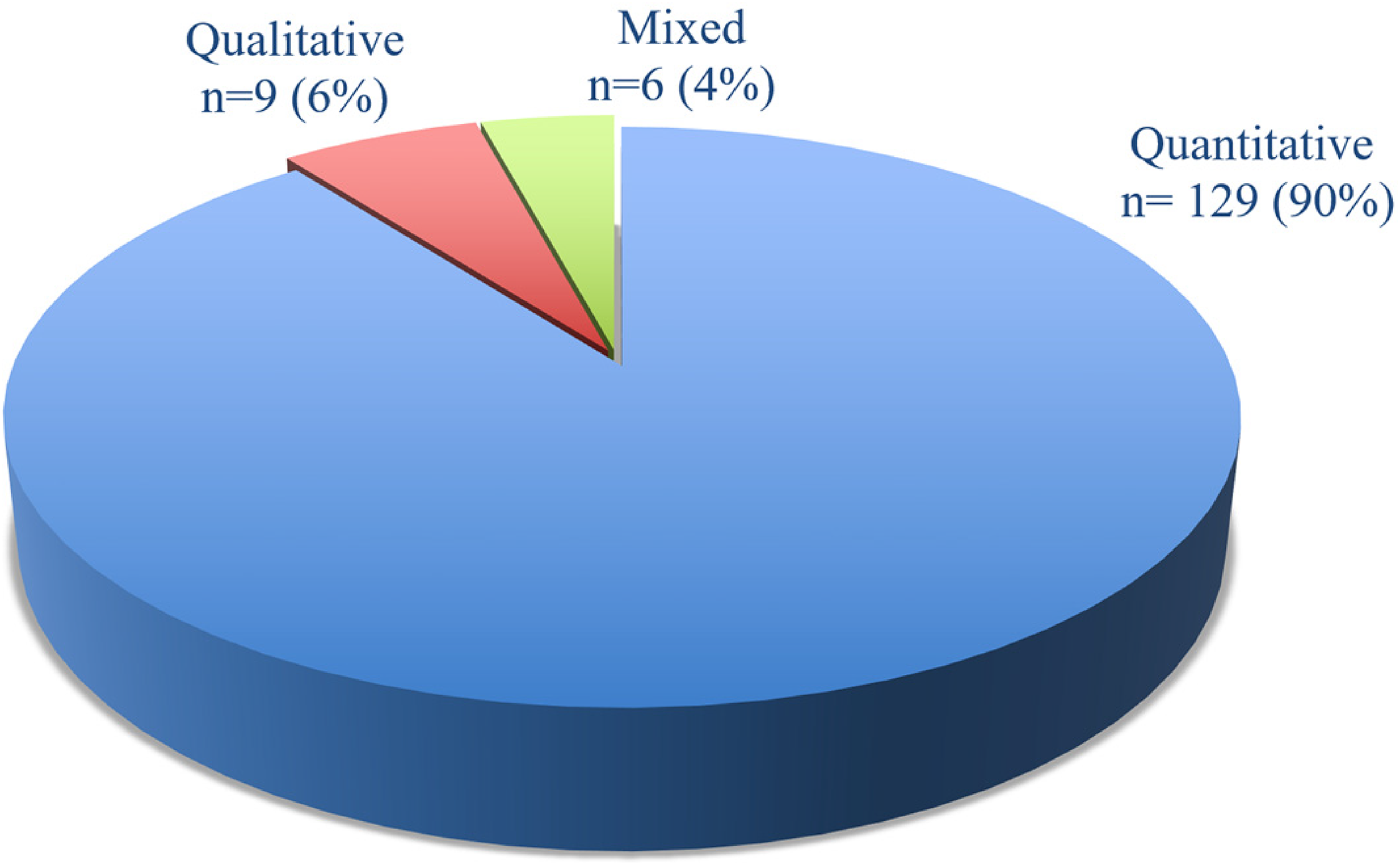
Methodological designs of studies.
We also investigated the various methodological dimensions of the empirical studies in our data set. As seen in Table 1, these studies heavily relied upon cross-sectional data. While surveys were the most popular data collection method across contexts (Bellibaş and Gümüş, 2019; Kwan, 2020; Ross and Gray, 2006; ten Bruggencate et al., 2012; Zhu et al., 2020), many researchers also benefited from national/regional level secondary data, particularly in the United States (Kraft et al., 2016; Urick and Bowers, 2014) and a few other contexts, such as Canada (Coelli and Green, 2012), Italy (Agasisti et al., 2019), and China (Zheng et al., 2017). Over the last few years, using international data sets like the TIMSS or PISA has also become more popular. Among the 15 studies that used either TIMSS or PISA data, 12 were published between 2017 and 2020. While some of these studies focused on a single country, such as the United States (Wu et al., 2020a), Singapore (Huang et al., 2019), or South Africa (Zuze and Juan, 2020), others either used pooled data from various countries (Tan, 2018; Urick et al., 2021) or selected and compared a few countries (Chen et al., 2022; Yılmaz Fındık and Kavak, 2017).
Methodological dimensions of empirical studies in our data set.

Note(s): Some studies used national and survey data together. We included this studies both survey and national categories.
Topical foci
The second research question aimed to investigate which topical foci are predominant in the relevant research. More specifically, we analyzed which leadership models have been studied most frequently in the related literature, as well as how leadership was defined in more generic conceptualizations (e.g. school, principal, and educational leadership). We conducted descriptive statistics, including frequencies in the analysis. Figure 6 reports the school leadership conceptualizations in the reviewed studies.
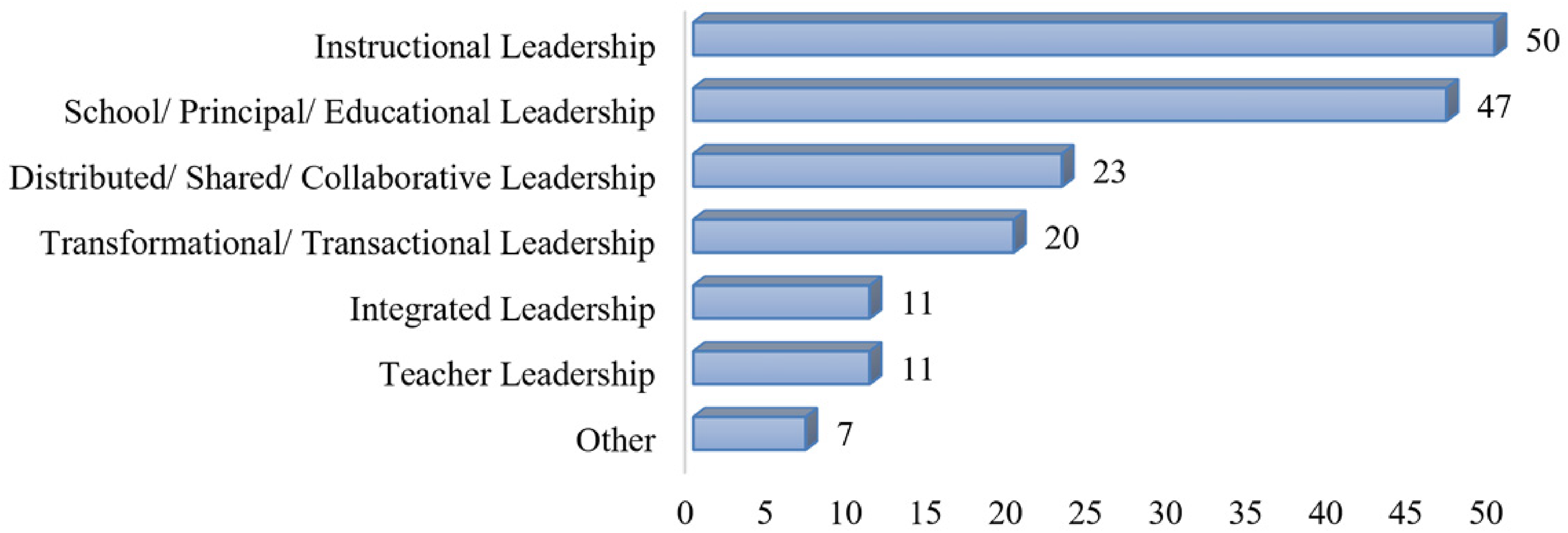
Leadership focused in reviewed studies. Note(s): 1. Other = Organizational, visionary, supportive leadership, etc. 2. Total numbers of models are higher than total numbers of assessed articles since some articles include more than one model.
As shown in Figure 6, instructional leadership was the most popular leadership model used in school leadership and student achievement research (Mitchell et al., 2015; Qadach et al., 2020). Many studies also focused on the various dimensions of school leadership/management or characteristics of leaders without referencing any specific leadership model (Heck and Reid, 2020; Yılmaz Fındık and Kavak, 2017). Research using the collaborative/distributed (Heck and Hallinger, 2010) or transformational leadership models (Kitur et al., 2020) follows these two types of studies in terms of volume. While several studies also included different leadership models with the aim of comparing their effects (Louis et al., 2010), very few studies used an integrated leadership approach (Kwan, 2020), despite increasing attention to the promise of a “multi-leadership style approach” in educational research (Urick and Bowers, 2014: 103). The teacher leadership model was also surprisingly rare, utilized in a few empirical studies (Lin et al., 2020; Sebastian et al., 2016) despite the fact that the overall research attention on this topic has increased over the years according to recent reviews of the relevant literature (Nguyen et al., 2020). Lastly, our review revealed several less frequently studied leadership conceptualizations, including visionary leadership (Mora-Whitehurst, 2013), democratic leadership (San Antonio, 2008), and caring leadership (Louis et al., 2016).
The studies that used generic leadership conceptualizations—such as school, principal, or educational leadership/management—showed a significant variation on several fronts. First, a few studies in this group mainly focused on specific leadership practices related to the improvement of teaching and learning without directly using instructional leadership conceptualization (Bellibaş and Gümüş, 2019; Chen et al., 2022; Marfan and Pascual, 2018). Similarly, some core instructional leadership dimensions, such as setting a learning vision and goals, monitoring teaching and learning, providing feedback to teachers, and promoting professional development were often used in the related studies as sub-dimension(s) along with other practices (Agasisti et al., 2019; Kraft et al., 2016; Supovitz et al., 2010). In addition to these elements related to instructional leadership, various other principal practices, behaviors, or attitudes have also been used in this line of inquiry, including principal support (Ma and Wilkins, 2002); principal trust (Sebastian and Allensworth, 2012; Supovitz et al., 2010); supportive and directive principal behavior (Hoy et al., 1990); managerial practices such as strategic direction, staff management, and resource management (Walker et al., 2014); shared decision-making (Heck and Reid, 2020; Ma and Wilkins, 2002); and leader efficacy (Leithwood and Jantzi, 2008).
The topics outlined above are mostly based on the variables used in quantitative studies. Accordingly, the main goal of such studies is to reveal the effects of the aforementioned leadership-related factors on student achievement, either in direct or indirect ways. A few studies also used these leadership factors as mediators/moderators between other contextual factors and student achievement (see the Conceptual Models section for more discussion on this). While such goals are obvious for quantitative studies, we wonder how qualitative and mixed-methods studies differ from quantitative ones in terms of their topical foci, as well as their approaches to the overall focus of the relationship between school leadership and student achievement. We therefore investigated such studies in more detail. Qualitative studies in this area largely focus on understanding the specific practices or behaviors of school leaders from principals themselves and/or other stakeholders such as teachers and students. While some of these studies focused on one or more cases that were identified as successful schools or principals (Barker, 2007), others took a broader perspective and differentiated their study targets (Gentilucci and Muto, 2007; Mackey et al., 2006).
Compared to the other two groups, mixed-methods studies had a greater diversity of topical foci and aims. Leithwood et al. (2006), for example, used qualitative case studies to build a school improvement processes model for student achievement, including school leadership as a dimension, before testing the model with a quantitative approach. In another comprehensive study, Day et al. (2016) integrated multiple strategies to investigate the relationship between school leadership and student achievement. Focusing on effective/improved schools from a range of socio-economic backgrounds, authors used survey data to link the perceptions of principals regarding changes in various leadership dimensions over the previous three years as well as changes in student achievement. Following this qualitative study, they conducted an in-depth investigation of 20 selected schools to better understand the role of school leadership in the process of improving student achievement. Relying on the same data set, Gu et al. (2018) investigated the relationship between senior and middle leaders’ perceptions of leadership in their schools and changes in student achievement. To add qualitative nuance, the researchers used four case studies of schools from different socioeconomic backgrounds to investigate how school principals use external policy demands to build staff capacity and influence student achievement.
Conceptual models
Our last research question seeks to identify how the related studies are conceptually framed. To answer this question, we investigated which conceptual models were most frequently used in research on the relationship between school leadership and student achievement and how different topical foci were utilized within each model (Figure 7).
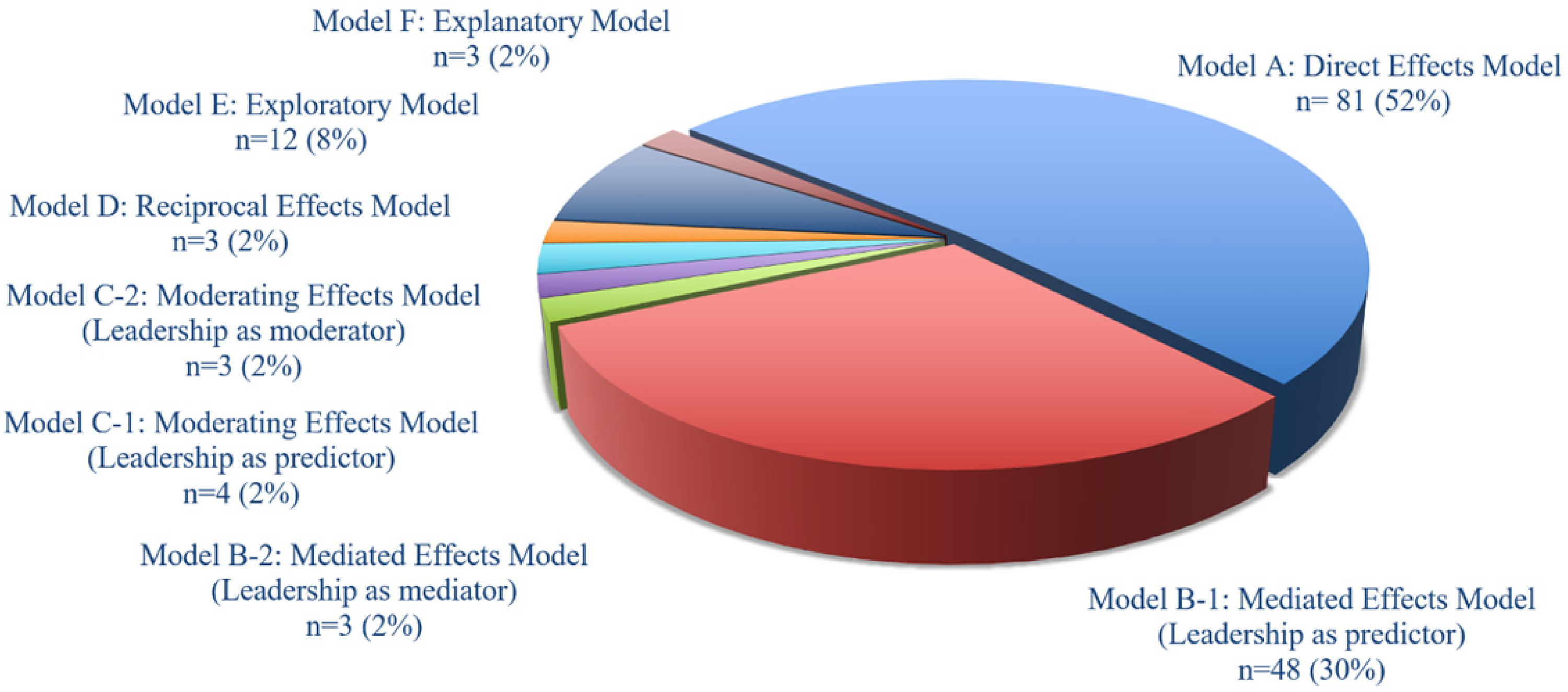
Conceptual models in use for research on the relationship between leadership and student achievement.
Despite long-standing assertions of the power of indirect-effects models for building an understanding of how and to what extent principals influence student achievement (Hallinger and Heck, 1996; Leithwood et al., 2010), our results show that researchers opted to perform direct-effects models in more than half of the studies in our corpus (n = 81). When we examined the variables used in these indirect-effects models, we found that 48 articles were based on a mediated effects model, using leadership as a predictor (Model B-1). We classified these studies in terms of their use of various paths from school leadership to student achievement. As shown in Figure 8, the most investigated path in such studies is the organizational path (n = 40), followed by the rational (n = 27), emotional (n = 21), student (n = 8), and community-family (n = 4) paths.

Mediating paths in the relationship between leadership and student achievement.
We also identified the most frequently used mediating variables in each path, illustrated in Figure 9. Classroom instruction, school conditions, and teacher commitment were the most used variables in three popular paths: organizational, rational, and emotional, respectively.
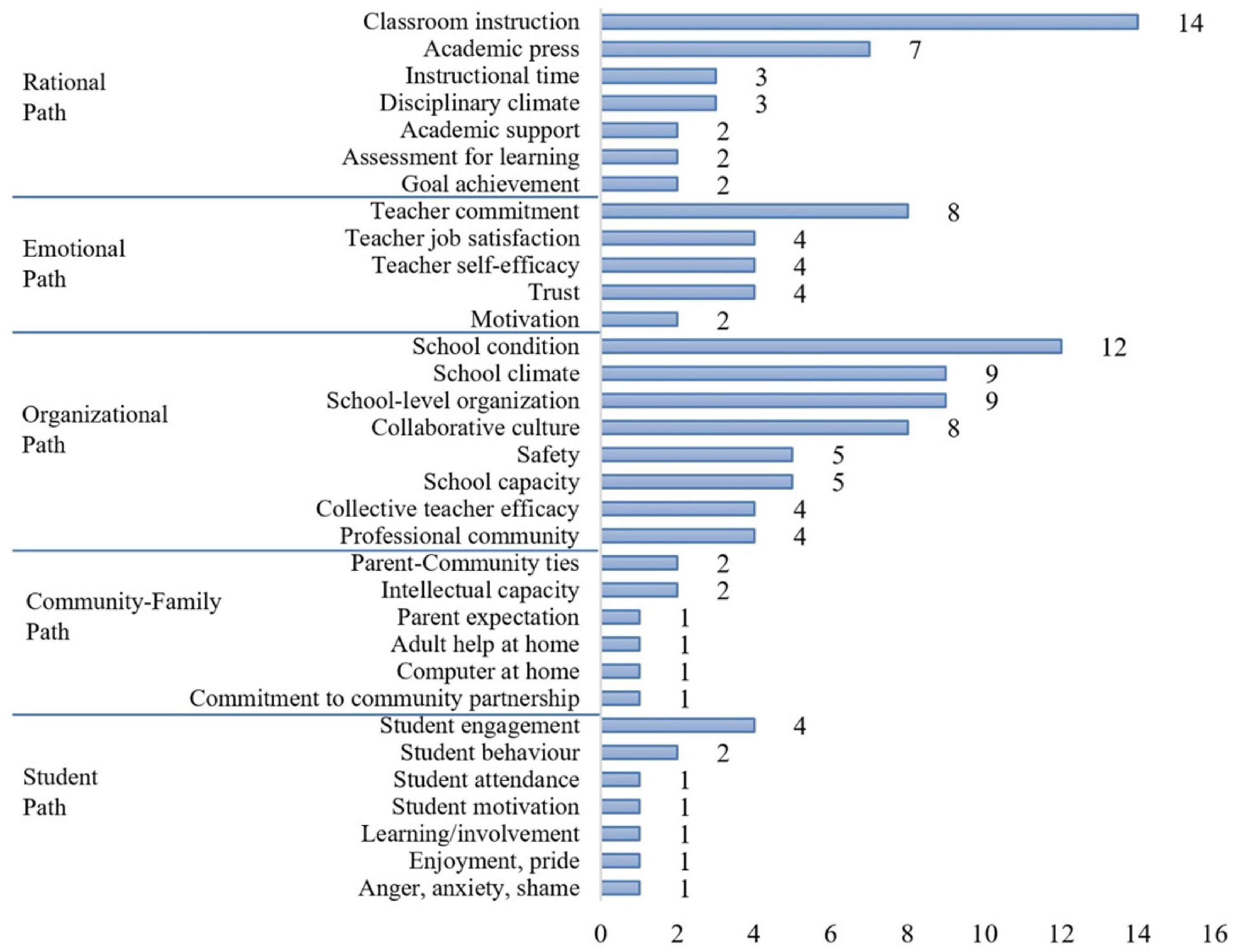
Mediating variables in each path.
The variables grouped under the rational path mostly refer to the knowledge, skills, and practices of teachers. In this path, classroom instruction (Leithwood et al., 2020; Özdemir, 2019), academic press (Leithwood et al., 2010; Mitchell et al., 2015), and instructional time (Leithwood et al., 2020; Zhu et al., 2020) were the most frequently used mediating variables. The emotional path refers to the feelings, dispositions, or well-being of staff. Teacher commitment (Ross and Gray, 2006), job satisfaction (Dutta and Sahney, 2016), and self-efficacy (Wu et al., 2020b) were variables employed in several studies in this area. The organizational path emphasizes the working conditions and organizational environment of a school. Under the organizational path, school conditions (Gu et al., 2018), school climate (De Maeyer et al., 2007), school-level organization (Day et al., 2016), collaborative culture (Leithwood et al., 2020), and collective teacher efficacy (Qadach et al., 2020) have been among the studied variables. Moreover, the community-family path category included limited research using such variables as parent or community ties (Sebastian and Allensworth, 2019; Sebastian et al., 2016), parent expectations for children's success at school and beyond, parents’ social and intellectual capital, and forms of communication between parents and children (Leithwood et al., 2020) to mediate the link between school leadership and student achievement. Mediating variables related to the student path, such as student engagement, have also been explored in a few studies (e.g. ten Bruggencate et al., 2012).
Four articles in the corpus employed a mediated effects model, treating leadership as a mediator (Model B-2). For example, Leithwood et al. (2019) used this approach to investigate school districts’ influence on student achievement through school leadership. Researchers have also examined whether and how principal leadership mediates the effects of political context (Ulfatin et al., 2022) and student home resources (Urick et al., 2021). Moreover, we identified one article that incorporated two conceptual frameworks into the same study by treating leadership as both a mediator (Model B-2) between parental involvement and student achievement, and a predictor that influences student achievement through grouping for instruction (Model B-1) (Hallinger et al., 1996).
In Model C, we identified two distinct types of moderating effects models. While some studies sought to identify how the effects of school leadership on student achievement differ according to various contextual variables (Model C-1), others were interested in how school leadership differentiates the effects of other factors (Model C-2). For example, Kwan (2016) found that trust moderates the relationship between school leadership and student outcomes, while Heck and Hallinger (2014) investigated how school leadership moderates the effects of individual teachers on student achievement within their classes. Mulford and Silins (2011) used school type and size as moderators between accountability and evaluation at school and student achievement, along with principals’ hours of work as a moderator between capacity building at school and student empowerment. Additional studies used latent class analysis to create subgroups of leaders (Agasisti et al., 2019) or students (Agasisti et al., 2019; Tan, 2018) to investigate the differentiated effect of leadership on student achievement, rather than using moderating variables. Finally, we found three quantitative studies (Heck and Hallinger, 2010; Heck and Reid, 2020; Wiedermann and Sebastian, 2020) that conceptualized leadership as a reciprocal effect (Model D).
In investigating the conceptual models of the qualitative and mixed-methods studies, we created two additional models: exploratory (Model E) and explanatory (Model F). All the qualitative studies were coded as exploratory since they focused on exploring effective leadership behaviors for heightened student achievement. While some of the mixed-methods studies (Handford and Leithwood, 2019; Leithwood et al., 2006) also used an exploratory model by applying a qualitative approach followed by quantitative investigations, others used an explanatory model by employing a qualitative approach based on prior quantitative results (Day et al., 2016; Gu et al., 2018; San Antonio, 2008).
Finally, several studies integrated more than one type of commonly used model. For example, Wu et al. (2020a) utilized two types of model, including the direct effect of school leadership on student achievement and the moderating roles of school background variables in this effect. Similarly, Wu et al. (2020b) used three models in the same study, including a two-level direct effect model, mediated effect model, and moderation effect model (see Table 2).
A summary of the research on the relationship between school leadership and student achievement.

Note(s): T/P: teacher or principal; SES: socioeconomic status, including family income, parent education, occupation (some studies included free and reduced-price lunch program as a proxy for the SES); SEM: structural equation modeling; MSEM: multilevel structural equation modeling; HLM: hierarchical linear modeling.
Discussion
Limitations
The main limitation of this review study stems from its sample of only English-language documents. Although working with a dataset of English-language documents is a common practice for review studies in the field, the absence of documents published in other languages from the dataset reduces the comprehensiveness of our corpus. We, therefore, recommend that scholars from different regions review the relevant studies published in local languages and compare their results with our findings.
Interpretation of findings
First, our results showed that quantitative research is the most frequently used approach for investigating school leadership's effects on student achievement. This finding is not unexpected, since quantitative research methods provide data-driven power for illuminating the empirical links between school leadership and student achievement. Furthermore, this result could also be attributed to the availability of advanced statistical methods, such as multilevel SEM, that enable researchers to investigate different models conceptualized as between- and within-school variables. Although qualitative and mixed-method approaches are deemed more appropriate for gaining deeper insights into any given phenomenon, the use of such methods is less common, as also indicated by previous reviews (e.g. Bellibaş and Gümüş, 2019). We, therefore, encourage scholars to provide methodological diversity in their research to better illuminate whether and how leadership influences student achievement, as well as to investigate the roles that cultural, institutional, contextual, and personal factors play in this relationship.
The results revealed that most existing research on the study topic uses cross-sectional data, most often collected through surveys. This finding is at odds with growing cautions against the limited use of longitudinal models since cross-sectional research falls short of providing a detailed picture of leadership's effects on student achievement (Parise and Spillane, 2010). Leadership is a school-level phenomenon that is shaped by the effects of a set of factors while it influences a wide variety of teacher- and school-level constructs, which indicates a need for the use of reciprocal influence models through the longitudinal data (Hallinger and Heck, 2010; Heck and Hallinger, 2010). Indeed, our results also suggest that there is a growing tendency among researchers, especially in the United States and other English-speaking Western countries, to employ national/regional level secondary data as well as data from international assessments like the TIMMS and PISA. Availability of such data may accelerate knowledge production and extend the literature by bringing evidence from various parts of the world (e.g. Huang et al., 2019; Tan et al., 2022). However, it is also important to note that international assessments generally have a cross-sectional and non-experimental nature (Gamazo and Martínez-Abad, 2020), thereby preventing causal inferences regarding the association between leadership and student achievement (Tan et al., 2022).
While researchers report that distributed/shared leadership has become the most studied leadership model in educational research during the last two decades (Gumus et al., 2018), the results in the present study indicate that research on the link between school leadership and student achievement has been predominantly based on the roots of the knowledge base of instructional leadership. This trend was also reported by several previous reviews that affirmed the relevance of instructional leadership in leveraging student achievement (Hallinger and Heck, 1996; Robinson et al., 2008). This is possibly because of the nature of instructional leadership that emphasizes the direct involvement of school leaders in the improvement of teaching and learning efforts. Instructional leadership emerged as an important model to enhance student achievement in disadvantaged contexts. Therefore, researchers tend to consider it essential for school improvement and student learning, while other leadership models (e.g. transformational leadership) are regarded to have a second-order effect orientation (Hallinger, 2003).
Furthermore, a significant number of reviewed studies measured school leadership by addressing several aspects of leadership behavior, instead of using a unique leadership model. This is partly because some previous reviews surfaced the relative contributions of specific dimensions of principal leadership, such as principal support for teacher learning, as the most influential path for achieving student learning (Robinson et al., 2008), which encouraged educational leadership scholars to incorporate varied principal leadership dimensions under the title of school leadership (e.g. Kraft et al., 2016; Marfan and Pascual, 2018). It is surprising, however, that integrated leadership models received relatively less attention from scholars (Kwan, 2020). Although some researchers wrote about the possible benefits of adopting an integrated or hybrid model of leadership in various school settings (e.g. Bush, 2014; Day et al., 2016), limited research has attempted to validate an evidence-based connection between these leadership approaches and student achievement (Urick and Bowers, 2014).
Our content analysis showed that most researchers continue to rely upon the direct-effects model, despite growing recommendations for the use of indirect-effects models (Louis et al., 2010). Among the mediated-effects model studies that employed leadership as a predictor, we identified organizational, rational, and emotional paths as the most studied paths, while little research has sought to validate the mediating role of student and community-family paths. Interestingly, although previous studies have evidenced a large amount of variation in student outcomes caused by family-related variables (e.g. Leithwood et al., 2010), the researchers in our corpus largely ignored the community-family path. Furthermore, few studies used the mediated-effects model including leadership as a mediator to examine how contextual factors influence school processes and outcomes through the mediating role of principal leadership. The results of this research validated the significant mediator effect of leadership between parent involvement (Hallinger et al., 1996), political context (Ulfatin et al., 2022), and student home resources (Urick et al., 2021) and student achievement. Finally, while a growing amount of research has been devoted to moderation analysis that surfaces the moderation role of key contextual factors in the relationship between leadership and student achievement, many other contextual factors (e.g. cultural context and political context) remain unexplored. Moreover, little attention has been paid to the possible moderating role of school leadership between various school- or student-level factors and student achievement.
Implications
School management and leadership scholars reached a clear consensus regarding the importance of school leadership for school improvement and student achievement. Yet, there has been (and will continue to be) a growing focus on understanding “how” such influence actually takes place (Leithwood et al., 2020). The results of this study are important as they carry a considerable potential to provide direction for researchers interested in these “how” questions. Further research, therefore, should consider the following issues. Overall, diversifying the existing conceptual and methodological approaches, as well as topical foci, seems necessary to move forward with the relevant research.
While a substantial body of scholarship has indicated that the relationship between leadership and student achievement is largely indirect, there is a growing tendency toward examining a more direct effect. We suggest that future studies design indirect effect models by expanding upon the most popular mediating variables, such as classroom instruction or teacher commitment. The family and student paths, in particular, could benefit from significant research attention as a set of mediation variables, since current studies largely ignore them. Similarly, research investigating the mediating and moderating roles of school leadership has been very limited. Based on the results of the existing studies, we believe that the question of how school leadership might mediate the effects of contextual factors, district leadership, and policymaking decisions deserves more attention. Moreover, as research on the relationship between leadership and student achievement has diversified to include various contexts (e.g. nations, school types, SES, etc.), further research focusing on moderation effects could be particularly helpful for revealing whether and how the influence of school leaders differs depending on macro- and micro-level contextual factors, as well as student characteristics (Gümüş et al., 2022; Smith and Gümüş, 2022).
In terms of topical foci, most of the existing conceptual models test the effects of a single leadership model, such as instructional leadership. However, recent literature shows evidence that “leadership does not happen in a vacuum” (Harris and Jones, 2021) and that integrating various leadership models could better fit real-life educational scenarios. We, therefore, recommend that educational leadership scholars employ integrated leadership perspectives in their studies to understand how leadership might influence school improvement and student achievement.
From a methodical standpoint, our results showed much of the existing work in this line of research depended on cross-sectional data, thereby lacking the potential to inform the causal association between principals and student learning outcomes. Though this problem was originally highlighted by scholars a decade ago, it continues to prevail. We, therefore, encourage scholars to incorporate longitudinal and experimental studies that could inform the cause–effect relationships. Additionally, the proportion of research from non-western societies has grown over the past decade. Some of these studies have concluded that perceptions regarding what constitutes effective leadership might vary across different national contexts. The available knowledge about principals’ influence on student achievement can also be enriched through subsequent research on what “effective leadership” looks like in various non-western contexts by using qualitative and mixed-methods approaches.
Footnotes
Declaration of conflicting interests
The authors declared no potential conflicts of interest with respect to the research, authorship, and/or publication of this article.
Funding
The authors received no financial support for the research, authorship, and/or publication of this article.
